A Cold War Petty Officer, 31 days from retirement, heard a ship's bell answer his own, from 4000 fathoms of empty Bering Sea.
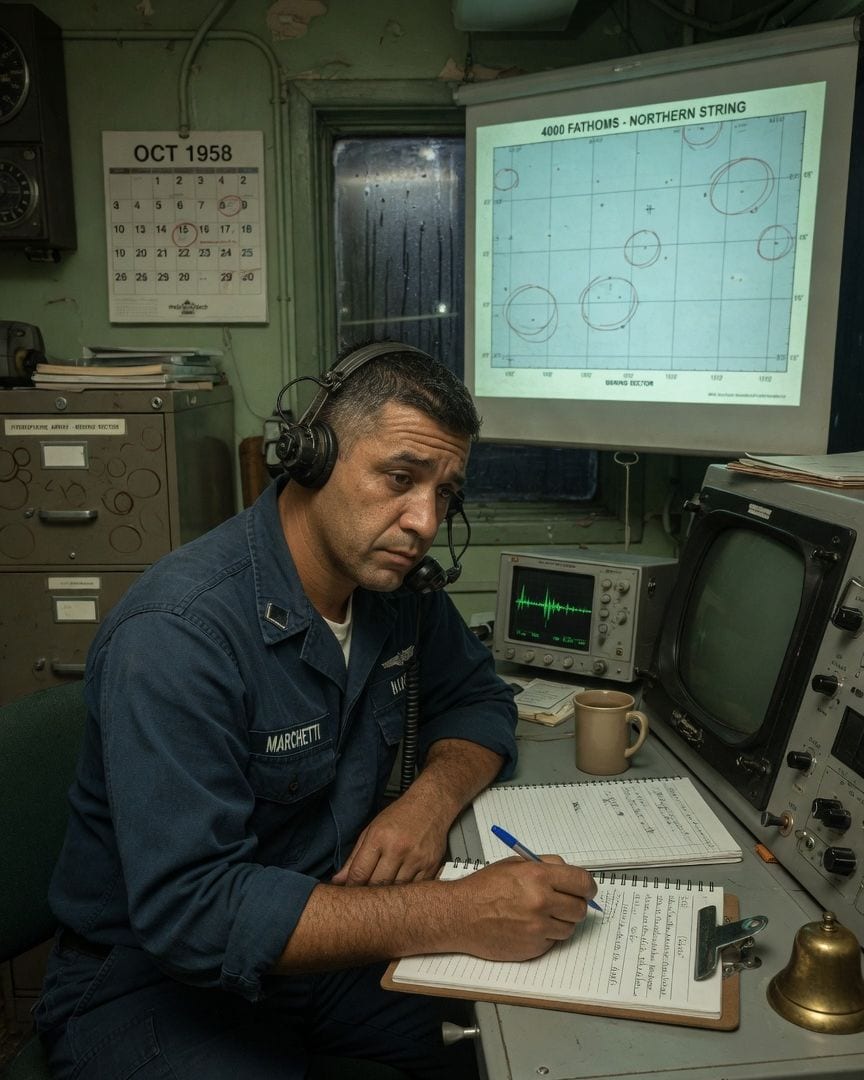
Petty Officer Ruel Marchetti, thirty-one days from the end of his career, sat alone in the Adak ocean-surveillance station. October 1958. The Aleutian dark pressed against the windows, a vast, indifferent black.
His headphones, heavy and scarred, were clamped tight, monitoring the hydrophone array that snaked through the frigid Bering Sea. The hum of the equipment was a constant companion, a low thrum against his eardrums.
Then, a sound emerged from the northern hydrophone string. Slow. Deliberate. A ship's bell. A single, clear chime.
Marchetti leaned forward, his brow furrowed. Impossible. He checked the charts projected onto the dim green screen. Four thousand fathoms of empty Bering silt. Nothing.
Not a single known vessel, not even a geological feature that might produce such an echo. He ran a quick diagnostic on the array. Everything was green, systems nominal.
He tapped his pen against the console, trying to rationalize it as a fluke, a rogue echo bouncing off some unknown submarine trench. The air in the room seemed to cool around him.
But the bell rang again, precisely on the half-hour, a cold, clear tone from a place where no ship could ever be. He logged the anomaly, the pen scratching loud in the silence.
For six nights, the bell rang. Always on the half-hour, always from the same impossible coordinates. Marchetti meticulously logged each instance, his precise, neat handwriting filling the pages, each entry a testament to his failing rationalizations.
Chief Petty Officer Victor Sullivan, a career man close to his own retirement, had dismissed it with a wave of his hand. "Bad tube, Marchetti, or an inversion layer messing with your signal. Get some sleep." But Marchetti knew better.
He knew the crispness of the tone, the absolute precision of its timing. No faulty equipment could sustain that. No natural phenomenon.
On the seventh night, a strange compulsion took hold. He watched the clock tick toward the half-hour, the familiar dread tightening in his chest.
When the bell rang, a deep, mournful toll that seemed to vibrate in the very floorboards, he rose from his console.
He walked down the echoing corridor to the station's stores, retrieved the heavy brass bell reserved for fire drills, and carried it out to the dock.
The wind off the Bering Strait bit at his face, lashing against the flimsy uniform fabric. The sea was a black, churning chaos.
He lifted the bell, its weight solid in his hands, and rang it into the churning sea, once, twice, three times, counting each strike aloud against the wind. The sound was immediately swallowed by the vastness.
Back at the console, moments later, his heart hammered against his ribs. The deep-sea bell rang again. One chime. Then another. Then a third. It answered his exact count, chime for chime, from four thousand fathoms below.
Marchetti stared at the hydrophone display, the peaks and troughs of the waveform too precise, too deliberate, for a natural phenomenon. This wasn't just a bell; it was a response. It was something speaking back.
Marchetti spent hours hunched over the array's console, replaying the answering sequence. He filtered out the ambient ocean noise, the distant whale songs, the crackle of marine life, magnifying the bell's tones until they were startlingly clear.
It wasn't a simple ringing; there was a complex, almost rhythmic series of sub-tones embedded within the chimes, like a voice layered beneath the surface. He isolated what he could, running it through the station’s rudimentary audio analysis equipment.
A distinct, repeating numerical sequence began to emerge from the data, a string of ten digits. His hand trembled slightly as he scrawled the sequence onto his log sheet, pressing the pen harder than he intended.
He recognized a familiar structure in the final digits, a structure he knew intimately from his own service identification.
Marchetti reported his findings to Chief Sullivan the next morning, detailing the precise numerical sequence. Sullivan, a career man closer to his own retirement than Marchetti, eyed the log sheet with a mixture of skepticism and unease.
The chief tapped a manicured finger against the digits Marchetti had transcribed. "Pareidolia, Ruel," Sullivan said, his voice flat. "Your mind playing tricks. A trick of sound." He insisted Marchetti take some leave, hinting at the stress of isolated duty.
But Marchetti, methodical to a fault, could not let it go. The precision of the response, the familiar pattern, gnawed at him.
He began cross-referencing the station's archived acoustic logs, going back decades. Week after week, he worked through the brittle, yellowed pages, comparing impossible dates and coordinates.
He found scattered, vague references to "anomalous acoustic events" – faint bell-like tones, impossible pings – always from deep-sea locations, and always preceding unexplained maritime or aircraft disappearances. The pattern was undeniable, a grim mosaic slowly taking shape.
He uncovered a cryptic reference in a declassified records index: 'Project BELLWETHER,' with a series of redacted dates and locations that aligned eerily with his discovered pattern.
The name of the project seemed to echo the sound of the bell itself.
Driven by the chilling pattern, Marchetti attempted to access the files for 'Project BELLWETHER' through official channels. The electronic access system, usually sluggish but compliant, immediately denied his request, flagging it as 'above clearance.'
A cold dread began to settle in his bones.
He noticed subtle changes around the station. A new, unfamiliar guard, a burly Marine with eyes that seemed to track Marchetti a little too closely, was posted near the secure archives.
There were an unusual number of 'maintenance checks' on his own console, engineers arriving unannounced, asking vague questions about the hydrophone arrays, their glances lingering on his log sheets. The quiet hum of the station felt different, taut.
One evening, returning to his bunk after a double shift, he found a folded piece of paper slipped under his door. It was heavy, like official stationery. He picked it up, unfolded it.
It was a single, typewritten sentence, stark against the white page: 'Some files are meant to stay buried, Marchetti. Don't go looking for your name.' The message was unsigned, untraceable, but its implication was a cold knot in his stomach.
The air in the narrow hallway felt suddenly heavy, pressing in on him. Someone knew what he'd found. Someone knew what he was looking for.
Marchetti confronted Chief Sullivan again, this time with a stack of cross-referenced logs that dwarfed the anonymous warning.
He laid out the pattern of the bell-like signals and the subsequent disappearances, each one a neat, terrible line connecting an impossible sound to a vanished ship or plane. The typewritten note lay on top, its words stark.
He demanded answers about 'Project BELLWETHER.'
Sullivan, his face pale beneath the fluorescent lights of his office, tried to maintain his calm. He picked up the anonymous note, his fingers tracing the words. "This is a joke, Ruel. Someone's messing with you."
His voice wavered, however, his usual composure cracking under the weight of Marchetti's meticulous evidence. "It's old history, Marchetti. Military secrets, nothing more. Deep-sea research gone sideways."
Marchetti pressed, his voice low but insistent. "The pattern is too precise, Chief. Too personal. It answered me. And someone knew I was looking for my name."
He pushed the log sheet with his service number printed on it toward Sullivan.
Sullivan finally slumped, defeated. He ran a hand over his thinning hair. "There's a reason some files are buried, Ruel."
He rose and walked to a locked safe built into the wall behind his desk, twisting the dial with practiced hands. The click of the tumblers echoed in the quiet room.
He retrieved a brittle, yellowed folder marked 'TOP SECRET - BELLWETHER.' The air in the office seemed to thicken, heavy with dust and unspoken truths.
With a trembling hand, Sullivan opened the file to a specific page, his eyes avoiding Marchetti's. The smell of old paper and salt filled Marchetti's nostrils. "This… this isn't about finding the lost, Ruel," Sullivan whispered, the words barely audible.
"It's about logging them."
Sullivan pointed to a page detailing a maritime incident from 1928, a vessel lost without a trace off the coast of New England, preceded by 'anomalous acoustic signatures.' The report was terse, clinical.
Beneath the incident summary was a list of the lost crew, their names faded with time, like ghosts on the page. Marchetti’s finger traced a line in the brittle, yellowed file, past names and dates of lost sailors.
His heart hammered against his ribs. The room felt cold, the air thin. His eyes stopped on a code, a string of ten digits buried in the margin next to a faded entry marked 'SCHEDULED.'
It was his service number, etched there in what looked like faded ink, with a date and time stamp that matched the current day, this very hour.
Chief Sullivan finally broke, the dam of decades of secrecy giving way. He leaned against his desk, the color drained from his face. "Project BELLWETHER isn't about recovery, Ruel. It's a ledger.
The bell… it’s a deterministic signal from something ancient, non-human, down in the deep. A collector." His voice was hoarse, a whisper against the hum of the station.
He explained that for generations, specific individuals had been 'collected' – not lost, but filed away by this entity, their unique identifiers called by the bell.
The military, unable to stop it, could only attempt to understand and catalog the pattern. Sullivan confessed he tried to intervene once, years ago, for a friend whose number came up. He failed.
The friend, a young ensign, had simply vanished during a routine patrol. Sullivan pulled out a single, grainy photograph from the file, its edges curled with age, taken by an experimental deep-sea probe decades ago.
It showed a massive, ornate bell structure, perfectly preserved, sitting upright on the abyssal plain, its clapper gleaming with an impossible, polished sheen in the murky depths. "It's real, Ruel. And your number came up."
As Sullivan spoke, a low, resonant hum began to vibrate through the station's floor. The hydrophone array flickered to life, the displays blazing green in the dim light.
Then the bell began to ring again, louder than ever before, resonating through Marchetti's bones, a deep, pervasive thrum that felt like it originated inside his own skull.
It was his signal, undeniable, echoing the exact sequence he had transcribed, his service number ringing out across four thousand fathoms.
Sullivan scrambled for the array's controls, his fingers flying across the console, trying to disable it, to break the pattern, but the system locked him out, flashing 'ACCESS DENIED' in angry red letters.
Marchetti, numb with dread, watched the console screen. The coordinates for 4000 fathoms glowed brightly, and a single, impossibly bright light, a pinpoint of pure white, appeared on the sonar display, moving rapidly toward the surface, directly below the station.
There was no escape. The bell’s insistent chime pulled at him, an irresistible summons. He walked toward the array console, his feet heavy, the bell's sound filling his head, a call he could no longer ignore.
The light on the screen grew, an immense, silent presence rising from the deep, swallowing the last vestiges of the dark.
The bell's ringing abruptly ceased, replaced by a profound, echoing silence. The hydrophone array flickered once more, then went dark, the screens blank.
Chief Sullivan was found slumped over his console, unconscious but unharmed, a single, deep bell tone still vibrating faintly in the air around him, a ghost of sound. Marchetti was gone.
His logbook lay open on the console, the last entry incomplete, a numerical sequence scrawled across the page, identical to the one in the 'BELLWETHER' file, the final digit half-formed.
There was no sign of struggle, no indication of how he vanished, only the lingering scent of ozone and salt in the still air.
The Adak station was decommissioned a few weeks later. Chief Sullivan was honorably discharged, never speaking of the incident, his last years haunted by an unspoken dread that seemed to follow him like a shadow.
Years later, a historian reviewing declassified military records found a peculiar entry in the station's final logbook, filed under 'Petty Officer Ruel Marchetti, Service No. [his actual number] - Transferred, Deep Ocean Reconnaissance.'
The logbook, preserved in the archives, sits in an acid-free box. Its pages are clean, save for that final entry. The entry itself is a single, precise line in a different, formal hand, dated the day after Marchetti's disappearance.
File closed. Awaiting next signature.
If this one got to you
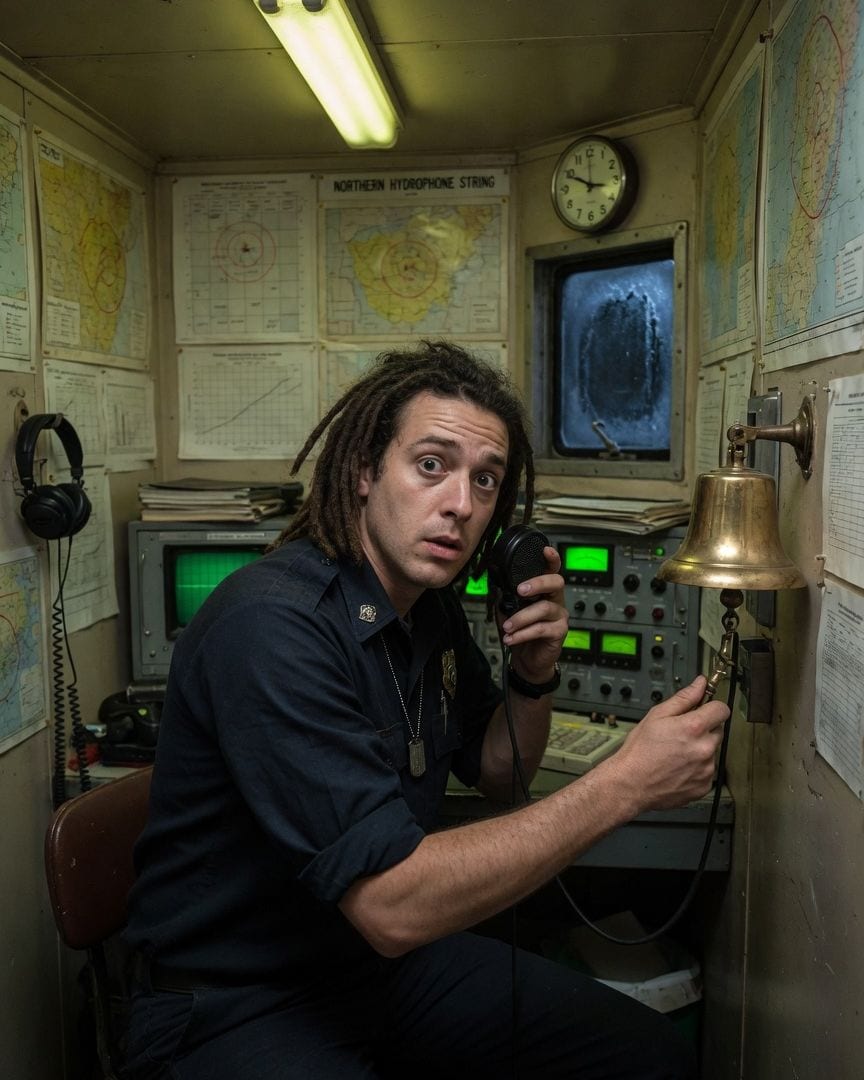
A Cold War petty officer, deep into his last hitch on Adak, heard a ship's bell ringing from four thousand fathoms of empty Bering Sea.
Petty Officer Ruel Marchetti was deep into his final career hitch at the isolated ocean-surveillance station on Adak in October 1958. Under the dim console lights, surrounded by the Bering Sea's droning solitude, he knew every sound the hydrophone arrays picked up. But then, from the Aleutian dark, a clear, resonant ship's bell began to chime on the northern string, from four thousand fathoms of empty Bering silt. He checked and recalibrated, but the signal remained clean, distinct, and utterly impossible, tolling back precisely every half-hour for six nights from a featureless void. What could be ringing a bell in the crushing silence of the abyss?
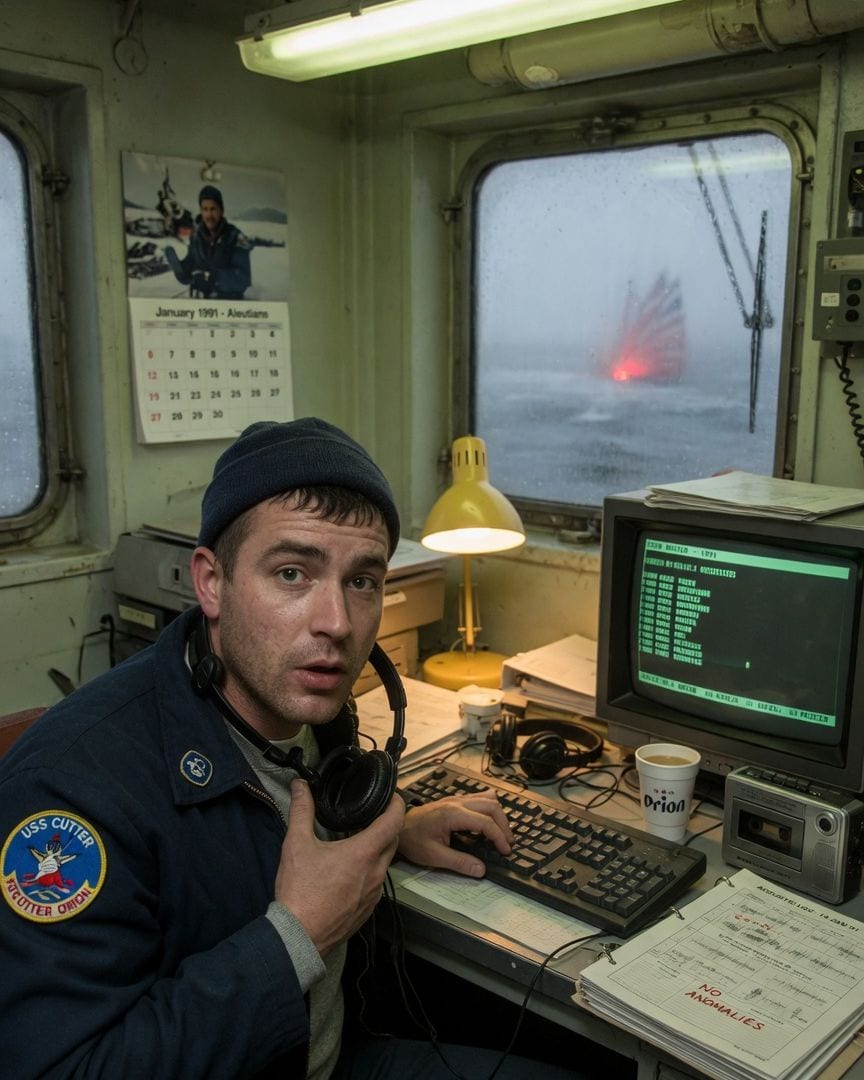
A cutter's watchman whistled a tune into the Aleutian fog, and a reply came back, pitch perfect, from the black water. Then his recorder whispered a name.
Oscar Petro stood alone on midwatch aboard the USS Cutter Orion, enveloped by the Aleutian fog and the endless, black water. To break the biting cold and monotony, he whistled a familiar tune into the vast quiet. But from the impenetrable darkness, closer than the ship's rail, a precise reply echoed back, the exact same melody, pitch perfect. Later, his personal recorder captured not just the impossible tune, but a chilling whisper: a name, 'Mercer,' that appeared on no ship's roster. Who was this phantom voice in the freezing black?
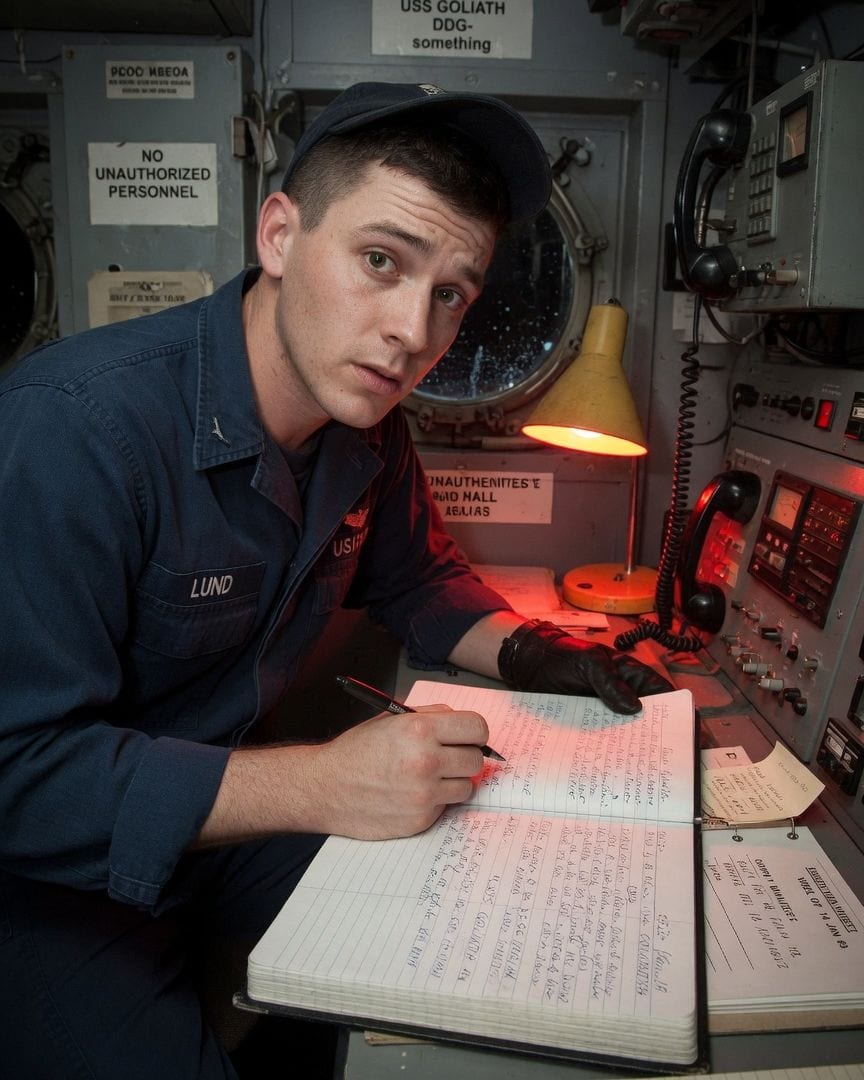
Petty Officer Lund heard his own captain's mayday: the Cold War USS Goliath was sinking, two hundred miles astern.
Petty Officer Marco Lund kept a lonely vigil in the USS Goliath's radio room, the destroyer battling the North Atlantic in deep winter 1983. Suddenly, a garbled mayday broke through: his own ship, his own captain, reporting they were going down two hundred miles astern. Though the bridge confirmed the Goliath was fine, the same chilling call came again an hour later, stronger and from the exact waters they had just crossed. Deeply unsettled, Marco began searching ship logs, eventually discovering a phantom entry: an identical mayday, logged a week prior, pressed into the very paper beneath his own.
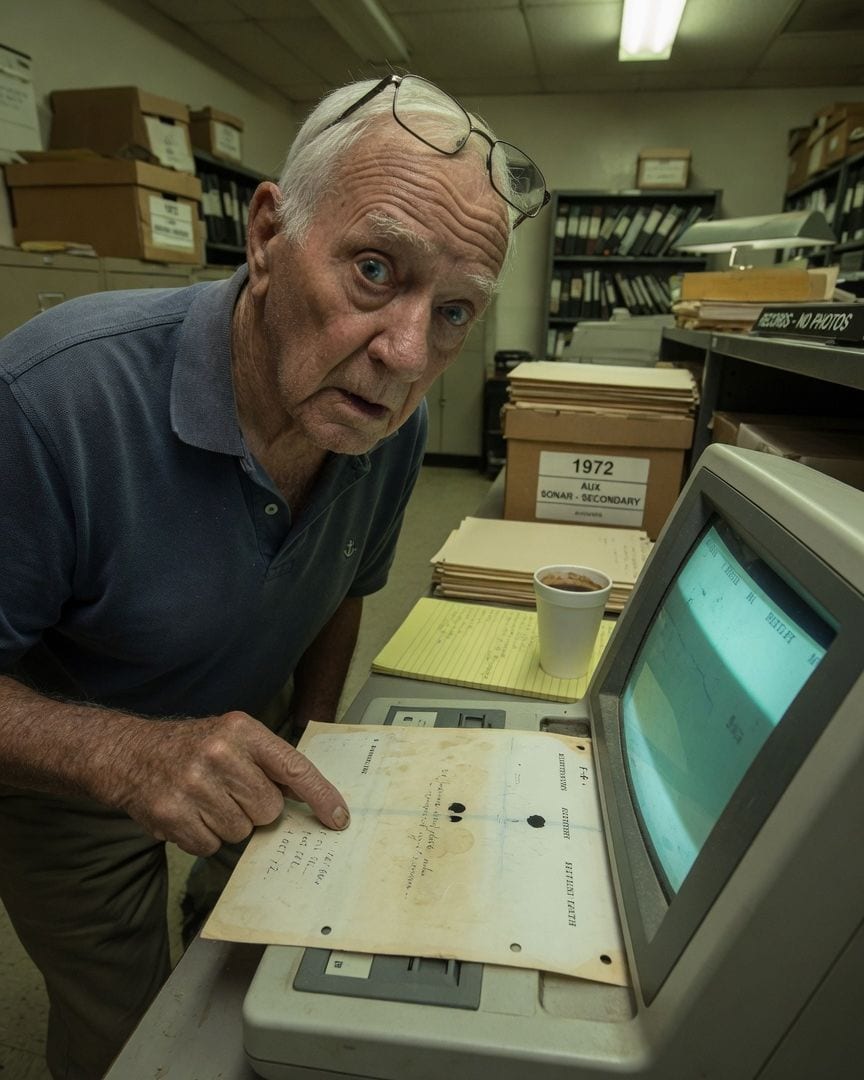
A Chief Petty Officer's salvage career ends when a Cold War fighter jet surfaces at sixty tons, perfectly intact.
Chief Petty Officer Walter Mabey, then 45, expected a routine salvage operation for a lost F-4 fighter jet off the Carolina coast in 1972. His long career was built on such lifts, but as the crane gauge climbed past twenty, then thirty, then an impossible sixty tons, a profound unease settled in. The object surfaced, not a mangled wreck, but a dark, seamless shape, perfectly intact. Mabey's salvage career abruptly ended soon after, replaced by a desk job, but the memory festered for forty years. Now 78, he dedicates his remaining time to finding the truth, uncovering a faint, rhythmic pulse on an old sonar log—a ghost beneath the official lie.
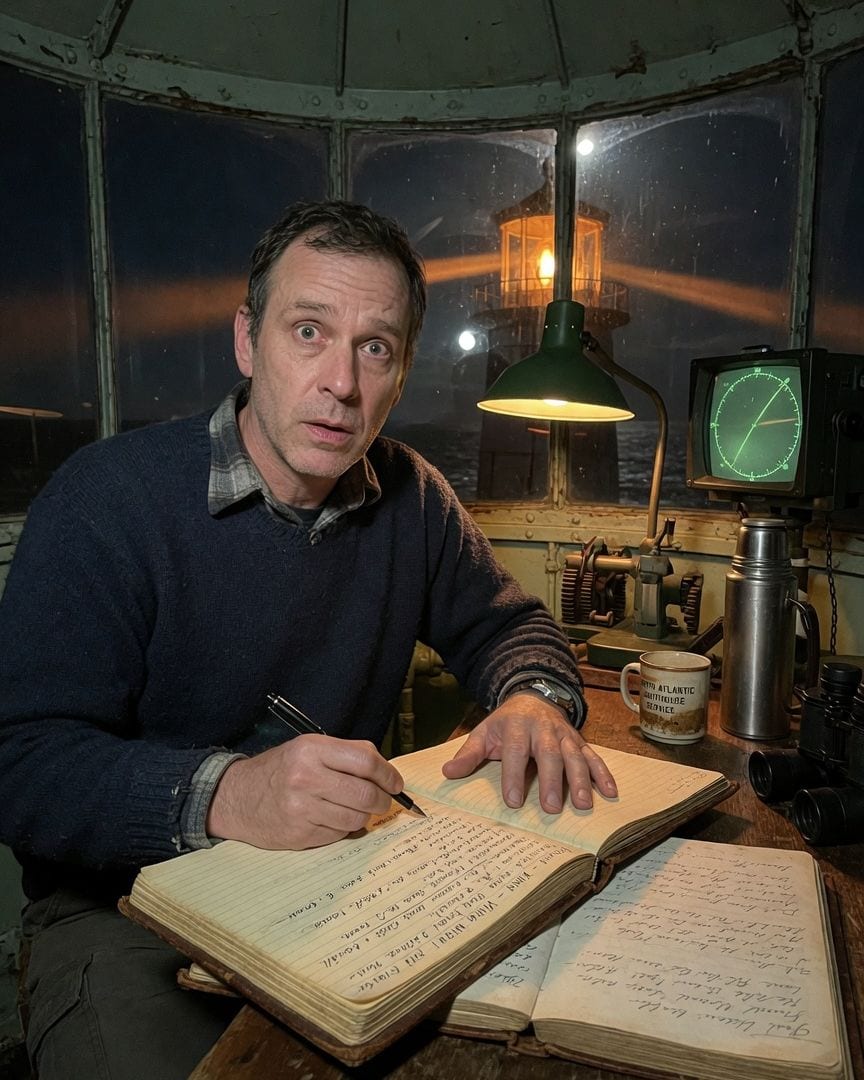
My lighthouse log has my own 3 AM entry for a phantom ship. I was alone in the tower, and I wrote no such thing.
Perched in the lantern room for my usual 2-6 AM watch, I reached for the thick logbook. But the 3:00 AM entry, under my own name, detailed a vessel I never saw. The words were in my own ink, yet I had never written them.
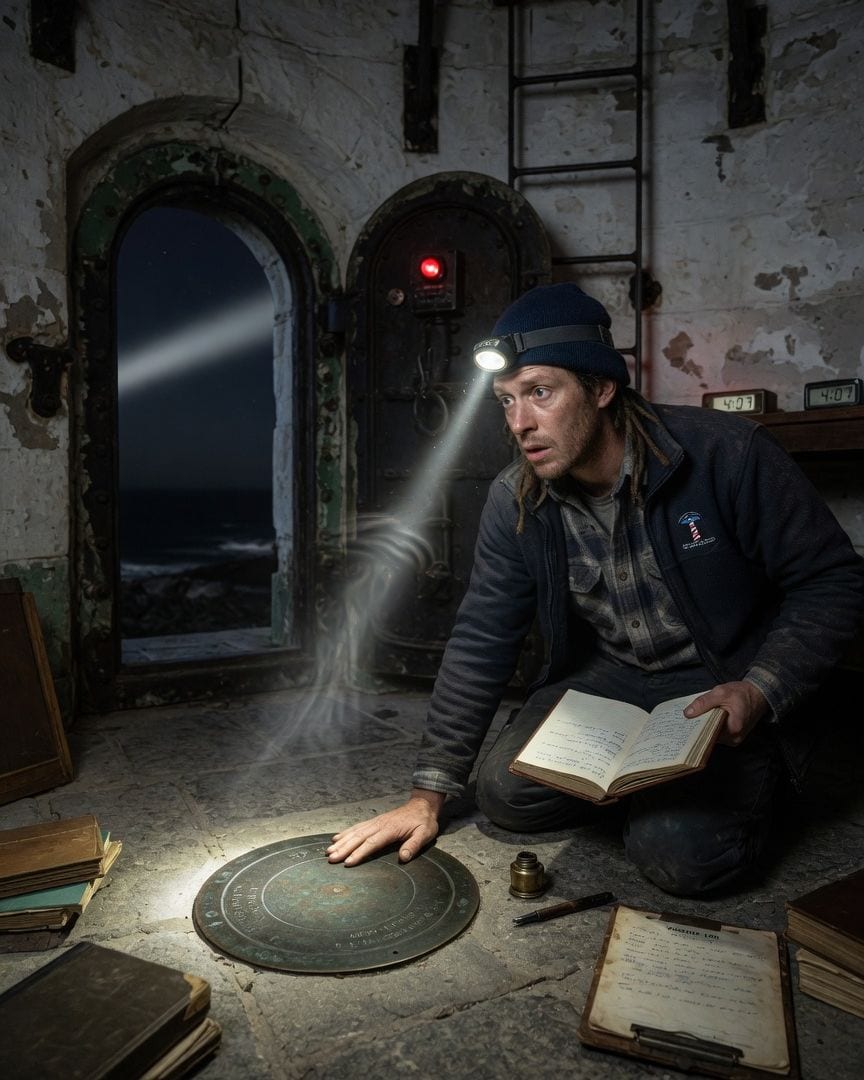
Every ninth year since 1901, my logbook records a boat through the gate at 4:05am — 'vessel through, none seen.' I was on watch tonight. Nothing passed.
As the lighthouse keeper, I log the same impossible entry every nine years, a lie I'm compelled to write. But tonight, a hidden brass disc in the floor, not on any blueprint, feels oddly warm. Hours later, it hums, and the air above it shimmers and distorts, then vanishes.