A Cold War sergeant, alone at his remote fell hut, hears a 1957 voice describe his future burn. Then he finds the 'classified' items waiting.
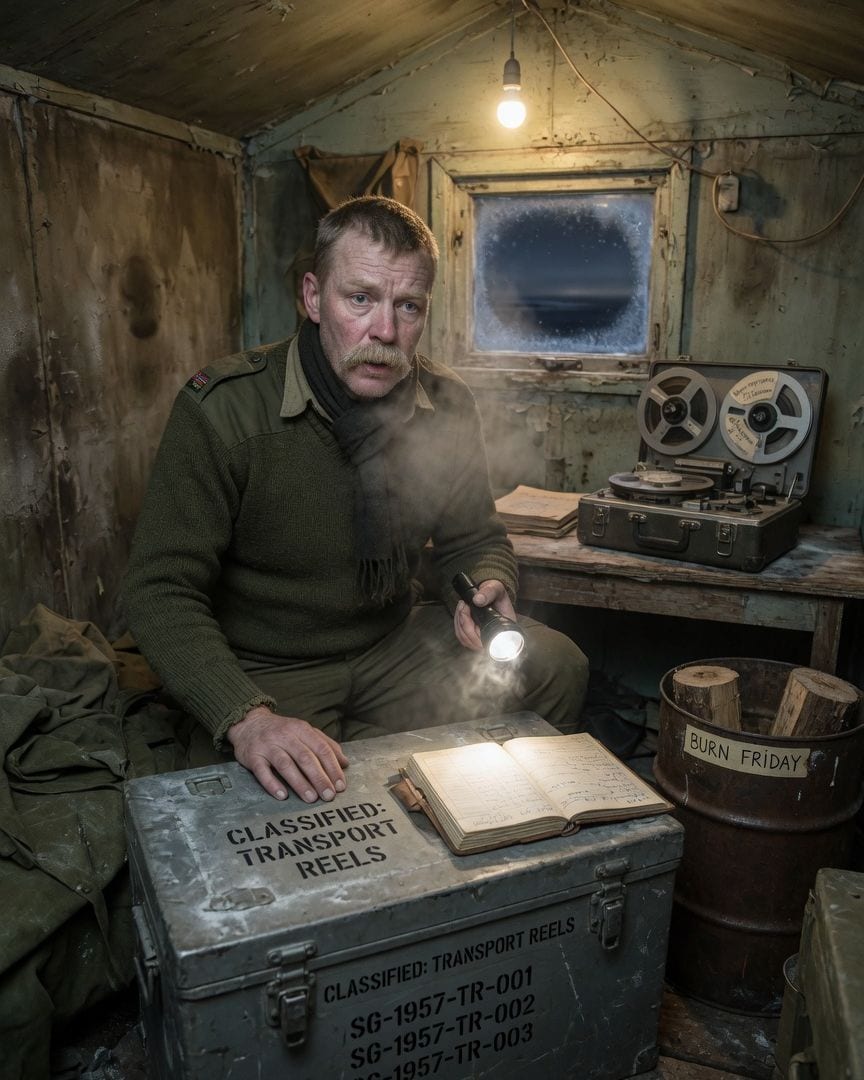
Sergeant Pell Ostrander, alone in the Norwegian fell hut in 1986, shivered. The resupply had already turned back, leaving him with the silence of the Barents Sea and a stack of old reels slated for the burn barrel Friday.
He threaded the first, labeled 'Barents ionospherics from 1957', with nothing to lose but a night. He turned the reel deck on, and it whirred to life.
A man’s voice, a dry baritone, crackled through the speaker, reading mundane station log entries. “0800, wind 15 knots, clear skies. Watch change, Private Jensen relief.” The voice was calm, almost bored, reciting the day’s unremarkable details.
Ostrander leaned closer, listening to the static and the distant past. Then, a beat later, the voice read: “Friday, 1600. Burn barrel contents: three sealed transport reels, two comms logs.”
Ostrander checked his watch. It was Wednesday. His breath plumed in the frigid air, condensation clinging to his mustache. He glanced at his own burn barrel, currently holding only the two comms logs he’d prepared.
There were no 'sealed transport reels' to speak of in the hut, certainly not three of them. He rewound the tape, the hiss of static filling the small, cramped space, and played the section again.
“Friday, 1600. Burn barrel contents: three sealed transport reels, two comms logs.”
Friday. Three reels. He was standing in the exact same fell hut, on a Wednesday, with only two comms logs ready for disposal. The chill in the hut deepened, no longer just from the outside air.
Ostrander, a methodical man for whom routine was a lifeline in this isolation, felt a prickle of unease that he immediately tried to rationalize. A mislabeled tape, perhaps.
A common name for another, long-disused station, although the 'Site Gamma' designation on the reel was unique. He pulled out the hut’s historical logbook, a thick, leather-bound volume, its pages brittle with age and smelling faintly of mildew.
He flipped carefully through the fragile paper to 1957. He found entries for the days leading up to the tape's 'Friday'. The weather, the wind, the names of the watchmen – they matched the tape’s early, mundane details perfectly.
No mistake there. The records clearly indicated Site Gamma.
He then consulted his own current logbook, the one he meticulously filled each day with observations, supply tallies, and scheduled maintenance. His entry for the scheduled Friday burn listed only the two comms logs. No 'sealed transport reels'.
The specific detail of 'three sealed transport reels' was too precise for a simple error, too specific for a generic location. He knew this hut, this equipment, these procedures inside and out. He knew what was here, and what wasn't.
The rational explanation felt thin, like ice over deep water, ready to crack.
He began to search the hut, systematically, opening storage lockers, checking under bunks, running his hand along dusty shelves, searching for anything—any object, any container—that would account for those missing reels.
He peered into every dark corner, pulled back every loose panel, his flashlight beam cutting through the dim interior. He was looking for anything from the tape's 'Friday' that might be present on 'Wednesday'.
The hut, usually a comfort, now felt like it was holding its breath.
In a dusty corner of the hut's cramped supply closet, behind some old canvas tarps, Ostrander’s flashlight beam caught something glinting. It was a heavy, dull-grey metal box, unlike any standard issue storage container he'd ever seen.
It had a strange, almost archaic design, with heavy-duty latches and a thick, welded seam. He pulled it out, grunting with effort, dragging it into the center of the small room.
On its lid, stenciled in faded black paint, were the words 'CLASSIFIED: TRANSPORT REELS' and below them, a series of alphanumeric codes: 'SG-1957-TR-001', 'SG-1957-TR-002', 'SG-1957-TR-003'.
The exact serial numbers of the 'extra, sealed transport reels' the 1957 voice had mentioned burning on Friday. He ran his hand over the cold metal, his breath fogging in the frigid air.
The box was still sealed, its contents unknown, sitting right there on Wednesday, waiting for its appointed burn.
Ostrander, the heavy box still in his hand, felt the cold dread solidify. He reported his findings up the chain, carefully detailing the tape, the log discrepancies, and the discovered box.
He spoke of the strange foresight, the physical impossibility of it all. His superiors, however, were less impressed. They dismissed it as a relic, a clerical error, perhaps even a bizarre prank from a previous posting.
"Sergeant," his commanding officer had said, his voice flat over the crackling comms, "there's an old supply roster from '57, lists those boxes as 'lost in transit.'
Someone found them, decided they were scrap, and a junior clerk probably put them on the burn sheet by mistake. Get rid of it, Sergeant, and stick to your ionospherics." The conversation ended with a click.
Unconvinced, Ostrander knew he couldn't simply burn the box. Not yet. He requested access to the 1957 station records, citing a need for 'historical context' for his current inventory.
He hoped to find more about the 'sealed transport reels' or the specific voice on the tape. The request was denied without explanation, simply flagged as "not approved."
Frustrated but undeterred, Ostrander decided to investigate on his own, using the hut’s limited, secure comms. The system was slow, clunky, but mostly reliable.
He began cross-referencing names from the 1957 log with other declassified records, searching specifically for the voice’s unique cadence and the name 'Nathaniel Calloway', who the log indicated was the station chief in 1957.
He found Calloway listed as transferring from Site Gamma to a 'Special Records Unit' in the early 1960s. After that, Calloway vanished from all official records, as if he’d never existed. No pension, no death certificate, no forwarding address.
The trail was cold, but Ostrander noticed a disturbing pattern: other personnel associated with that 'Special Records Unit' also seemed to disappear from records, often without explanation, over the subsequent decades. It was too consistent to be random.
A system was at play, not a series of unfortunate accidents.
Ostrander’s unauthorized inquiries didn't go unnoticed.
His comms unit, usually reliable despite its age, began to experience 'intermittent failures' at critical moments – just as he was about to send a query about Calloway, or when he tried to access a restricted database.
The screen would freeze, pixels scrambling, then clear as if nothing had happened. The hut's generator hummed louder than usual, a new, unsettling thrum that vibrated through the floorboards.
A week later, he received an anonymous, untraceable message on a secure channel. It wasn't text, but a single, distorted audio clip. It was the 1957 voice, clear despite the digital artifacting, repeating the phrase, "The file is current."
It was unsettling, a direct message from the past, or from whatever agency now monitored the past, a chilling confirmation that his actions were being watched.
Another week passed. A supply drop arrived unexpectedly early. The pilot, a brusque man Ostrander knew from previous rotations, gave him a strange, appraising look. "Orders from up top," the pilot mumbled, avoiding eye contact as he offloaded crates.
"To check on your morale, Sergeant. Apparently, you’ve been… curious." The man lingered a moment too long, his gaze sweeping the small hut, before turning and heading back to his chopper.
Ostrander felt a growing sense of being observed, his isolation turning from a comforting solitude to a chilling surveillance. Every static hiss on the radio, every flicker of the hut’s lights, felt like a deliberate intrusion.
He realized his actions were being tracked, perhaps even anticipated. The system, whatever it was, knew he was digging. It knew what he had found, and it was watching him. He was no longer just investigating; he was being investigated.
The air in the hut felt thick, heavy with unseen eyes.
Desperate, Ostrander remembered Janet Vaughn, a retired archivist he’d briefly met years ago, known for her meticulous work and quiet defiance of bureaucratic protocol.
He managed to establish contact, carefully explaining his predicament over a scrambled line, omitting the more fantastical details about the tape. He focused on Nathaniel Calloway and the 'Special Records Unit'.
Vaughn, intrigued by the mention of the unit and Calloway's disappearance from records, agreed to quietly look into it. Her voice was calm, almost too calm, which Ostrander found unnerving.
After several tense days, she called back, her voice tight with suppressed alarm, the connection surprisingly clear. "Pell," she began, "I found a fragmented, highly redacted file on your Calloway. Most of it’s blacked out, beyond any standard classification.
But there’s one unredacted notation: 'Subject initiated 'Omega Protocol' for Site Gamma, 1957. Status: FILED'." She paused, and the silence on the line crackled with a new, heavier meaning. Then she continued, her voice barely a whisper.
"The 'Omega Protocol,' Pell, it wasn’t about finding missing personnel or equipment. It was about recording their pre-determined disappearance. Making them official."
Ostrander felt a cold wave wash over him, a physical tremor starting deep in his bones. "Recording?" he asked, his voice hoarse, barely recognizable.
"Yes," Vaughn confirmed. "This unit wasn't about prevention or recovery. It was about documentation. Making sure the paperwork was in order for things that were… going to be lost. Or, more accurately, would be lost."
She explained that she found similar protocols associated with other remote sites and specific dates, stretching back decades, a chilling pattern of calculated, official disappearances.
The 'ionospherics' on the tape were just a cover, a bureaucratic designation to explain away the unit's true purpose. The files, she concluded, were a ledger of scheduled disappearances.
The specific objects, the dates, the locations – it wasn't a clerical error. It was a system, meticulously documenting events before they happened, making them official. A cold hand seemed to reach through the phone line and grip his heart.
Vaughn, her voice still a tight whisper, had one last, unsettling detail to share. "There's more, Pell. Tucked away in the digital records, within Calloway's fragmented file, I found a small, encrypted sub-file.
It was recently accessed, within the last forty-eight hours." Ostrander's blood ran cold. He knew his inquiries had been noticed. He knew his comms had been monitored. "What was it?" he demanded, the word a desperate plea.
"It was labeled," Vaughn said, her voice catching, "Project OSTRANDER, P. (Site Gamma, 1986)." She paused, and the silence on the line stretched, thick with dread.
The generator outside the hut suddenly sputtered, plunging the room into momentary darkness before flickering back on, making the shadow of the metal box on his desk jump.
"Pell," she said, her voice barely audible over the renewed hum, "it's dated for next week. It's empty, but the access log shows a 'final entry' flag. And it's not a transfer order."
Ostrander stared at the flickering screen of his comms unit, the line dead. His own name. His own station. A file waiting to be written. The cold metal box from 1957, now sitting on his desk, felt like a prophecy.
He was no longer just investigating a pattern; he was part of it. His own disappearance, his own 'filing,' was already scheduled.
Ostrander, reeling, understood with a clarity that brought a physical ache to his chest. The 'files' weren't just historical records of disappearances, but a pre-written ledger, an institution that knew what was going to happen and meticulously documented it.
The burn barrel wasn't just for disposal; it was a ritual, a final act of bureaucratic closure on things already filed away.
The extra reels in the 1957 tape’s log weren't a mistake; they were a prevision of his own fate, already accounted for, already listed for disposal.
The metal box in his closet, containing those 'sealed transport reels,' was a physical manifestation of his own predetermined 'filing.'
He was a future entry in the very system he was investigating. The 'Omega Protocol' wasn't about recording a disappearance; it was about processing it, ensuring that the documentation was complete, even before the event.
Nathaniel Calloway wasn't just an archivist; he was a 'file clerk' for fate, a person who knew the system too well and ultimately became part of it. Ostrander realized the system didn't cause the disappearances, it validated them.
It made them official. His own life, his own existence, had become a data point, an entry in a ledger that had been signing off on people like him for decades.
He was just the latest name on a very old, very patient list. The hut itself seemed to sigh around him, settling into a new, complicit silence.
Ostrander made a desperate decision. He would not be filed. He would not become another entry in their cold ledger. He prepared to abandon the hut, to disappear on his own terms before the file could be completed.
He gathered his essential gear: a small pack, his rifle, and the original 1957 reel, the evidence that had started it all. He thought about the empty file with his name on it, dated for next week.
He had to move now.
As he was about to open the hut door, his hand on the cold metal latch, he heard it. A faint, rhythmic tapping outside, like a slow, deliberate drumbeat on the packed snow.
Thump. Thump. Thump. It wasn't the irregular crunch of an animal, or the sharp clang of machinery. It was the sound of heavy boots, approaching the hut with an unnerving, measured pace. It stopped right outside his door.
He froze, listening, his heart hammering against his ribs, rattling his whole frame. A shadow, long and indistinct, fell across the small, grimy windowpane. It wasn't a resupply team. It wasn't a concerned superior.
It was the system, coming to finalize his entry. He backed away from the door, his hand instinctively reaching for the heavy metal box from the closet, the one containing the 'extra, sealed transport reels' from 1957.
He gripped it, its cold weight oddly comforting in his hand, like a shield, or perhaps, a final, grim connection to the fate that awaited him.
He pressed his back against the far wall, the only sound in the hut his ragged breathing, and the almost imperceptible creak of the floorboards as whatever was outside shifted its weight.
The air in the hut grew heavier, pressing in on him, cold and metallic.
The next day, the scheduled supply drop found the Norwegian fell hut empty. Ostrander’s logbook lay open on his desk, the entries up to Wednesday meticulously filled, ending with a precise inventory of the hut.
The burn barrel sat untouched, the usual number of reels beside it, exactly as Ostrander had recorded, waiting for Friday. There was no sign of a struggle, no forced entry, no indication of a hurried departure. Just an absence.
The only anomaly noted in the pilot's report, later filed under 'Routine Observations, Site Gamma', was a faint, metallic smell in the air, like ozone and old iron, lingering around the empty hut. No one questioned it further.
A week later, Janet Vaughn received a package at her home. Inside was the original 1957 reel, along with a crude, hand-drawn map of the fell hut's surrounding terrain, marking a single, isolated spot with a stark 'X'.
There was no note. She pulled up the 'Project OSTRANDER, P.' file on her secure terminal. It was no longer empty. A single, final entry was dated yesterday, listing 'Sergeant Pell Ostrander, Site Gamma. Status: FILED. Disposition: Unknown.'
She closed the file, her gaze drifting to the map, a tiny X marking a hollow in the snow.
The X on the map was exactly where the burn barrel should have been.
If this one got to you
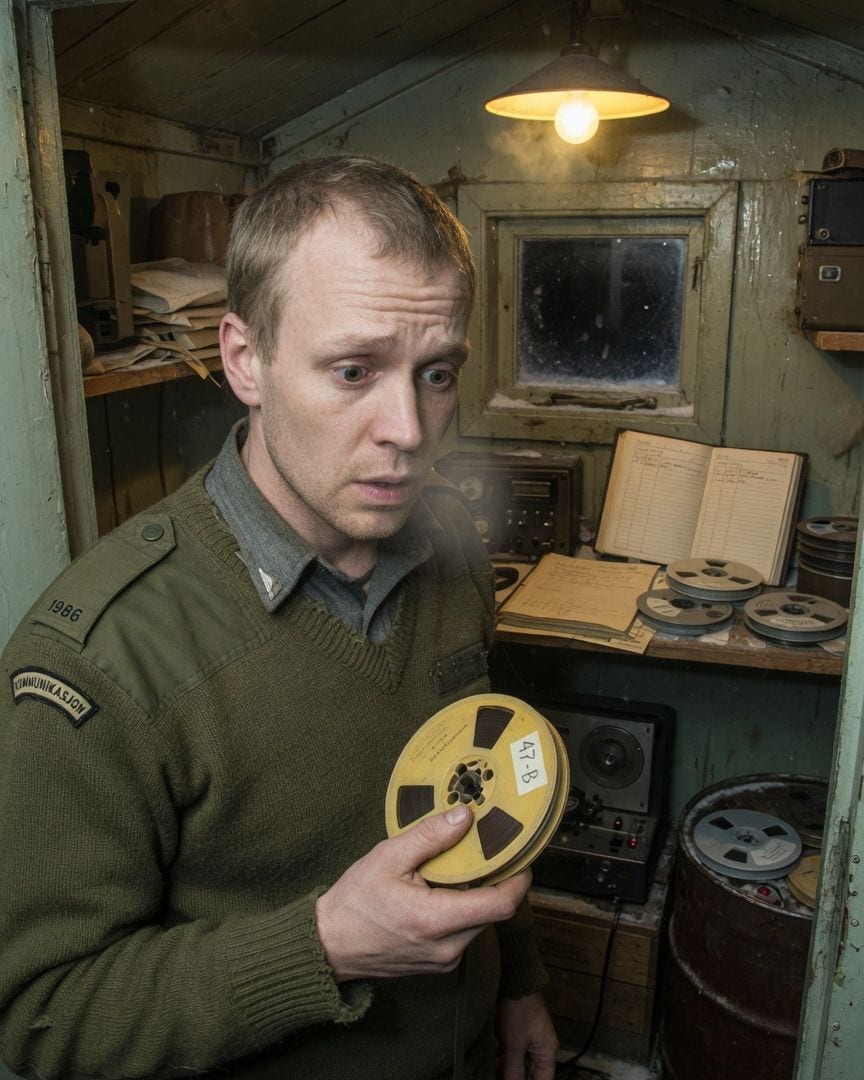
A Cold War specialist heard a tape describing tomorrow’s burn, then found the missing reel. It was warm and humming in his hand, on Thursday night.
Sergeant Pell Ostrander, a methodical communications specialist, shivered in the damp chill of a remote Norwegian fell hut in 1986. It was his last night before the facility was decommissioned, and the last resupply chopper had left him alone with crates for tomorrow's burn. Playing an old magnetic tape, Ostrander heard a station log for his very outpost. The calm voice on the recording began to read "Friday's entries," detailing a disposal count for the next day – yet it was only Thursday night. Moments later, he discovered a specific missing reel, unnaturally warm and thrumming with a faint vibration in his hand.
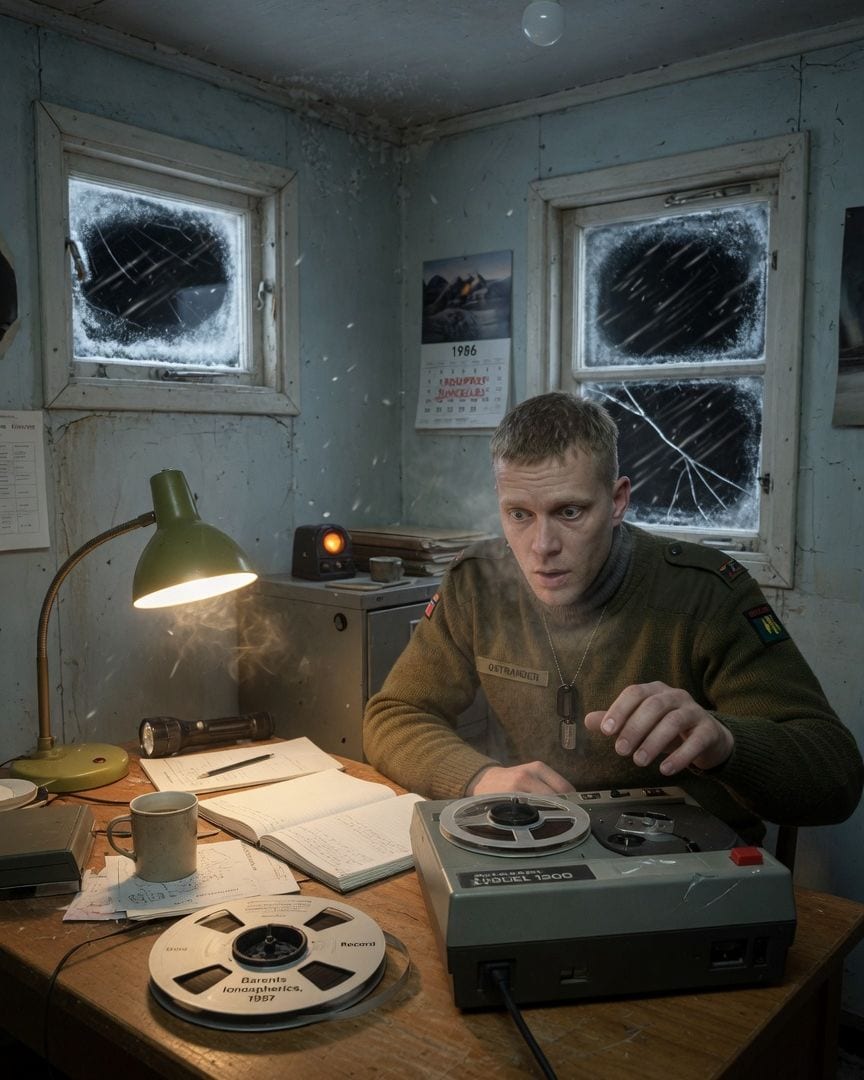
A Cold War sergeant in a lonely fell hut plays a 1957 reel. It names his service number and a fresh scratch he just made.
Sergeant Pell Ostrander, a methodical man of thirty-five, was isolated in a Norwegian fell hut in 1986, with only the generator's hum and a stack of old reels to burn by Friday. The arctic quiet led him to play a 1957 tape, expecting static. Instead, a calm voice filled the small space, detailing his exact hut, its generator, and the snow outside. His heart hammered when the voice read the log for this coming Friday, describing the record burn and more reels than he counted. But the dread truly landed when the voice named his service number and described a fresh scratch he had just made on the playback machine.
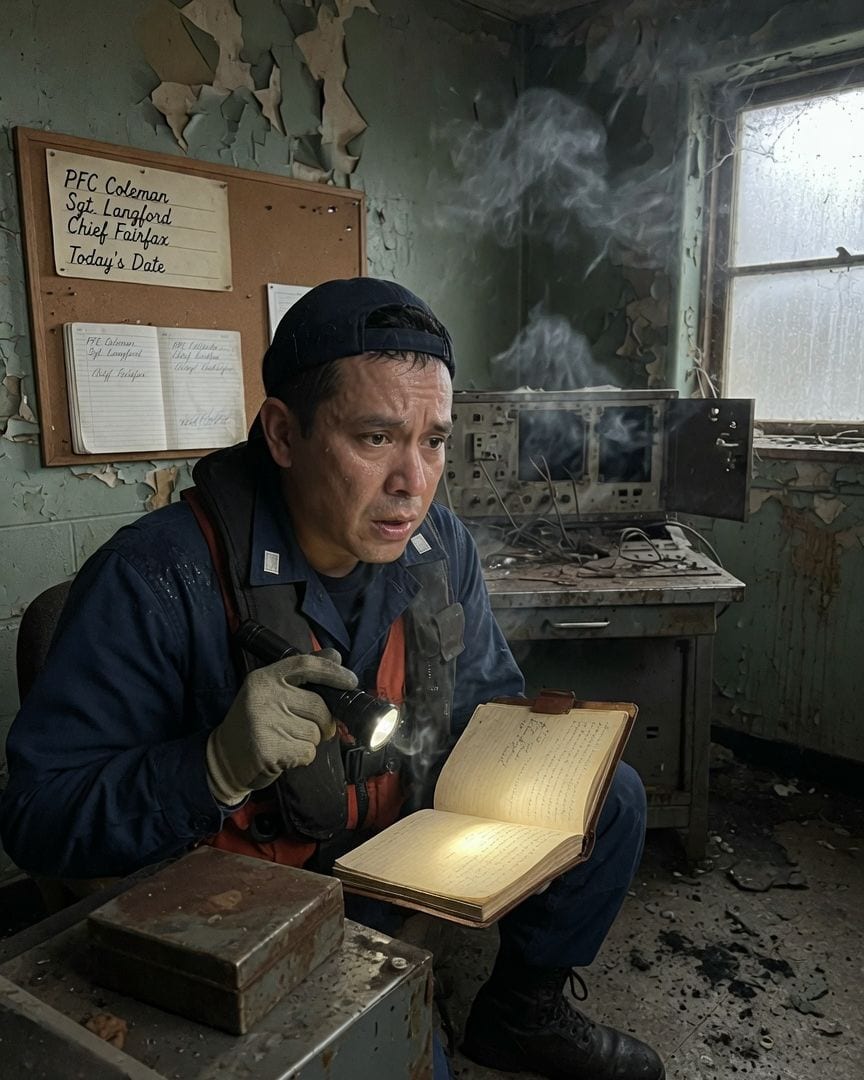
On a final survey, a Coast Guard lieutenant spots smoke from a Cold War station abandoned since 1996. Its mess hall is set for dinner.
Lieutenant Victor Ferro led a final survey team to a long-abandoned LORAN station in the desolate Aleutian fog, a last check before its demolition erased it from memory. But as their boat neared the black-sand beach, a thin plume of smoke curled from the galley stovepipe – from a station officially decommissioned nearly thirty years prior. Inside, the mess hall was eerily neat, tin plates set for a meal, and on a corkboard, a crisp, freshly-inked watch bill listed names unknown to any Coast Guard roll, past or present. The station log lay open to the current date, bearing the same impossible signatures. Who was here, and for whom was dinner being prepared?
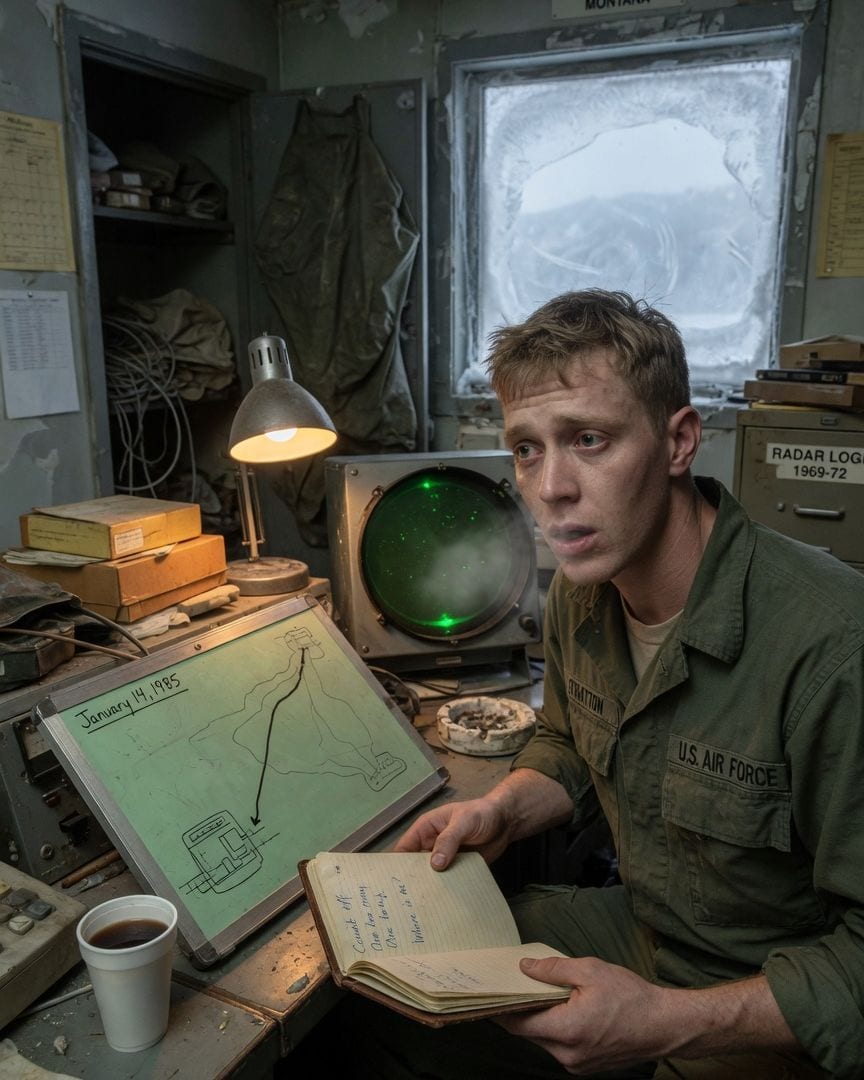
Airman Lars Stratton found an old Cold War manifest listing one name twice: 'Bernard Radcliffe' transferred and 'Bernard Radcliffe' still present.
Airman Second Class Lars Stratton was counting down his final weeks at Echo Station, a desolate Cold War outpost due for mothballing. He longed for home, far from the bitter Montana winds and the constant hum of static. Inside the dim radar shack, he logged the usual nightly ghost blip, a faint contact appearing at 2300, just as it had every winter since 1987. This night, a metallic tang like old blood lingered in the air, raising the hairs on his arms. Seeking distraction, Lars later discovered a leather-bound logbook from 1971, detailing the same 2300 contact, but with chilling notes and a manifest listing one airman's name, Bernard Radcliffe, twice—once transferred, once present. Was he truly alone in the silent, remote station?
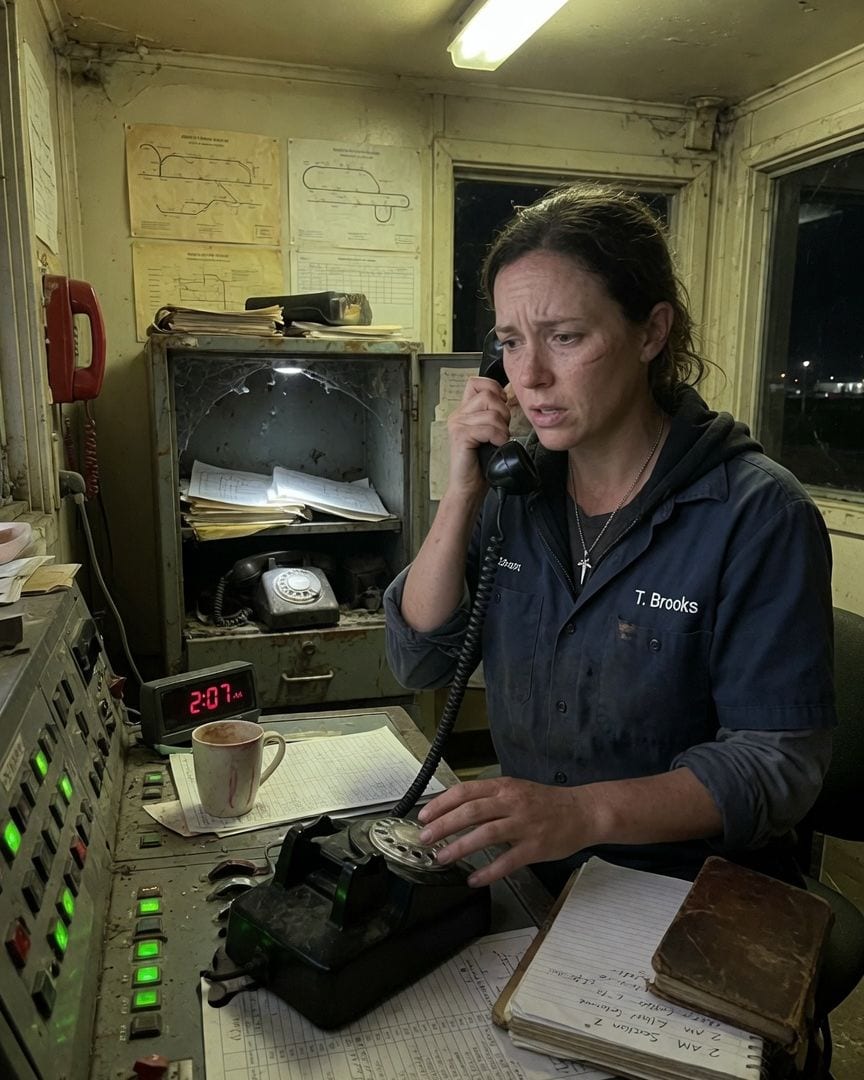
My signal box gets a 2 AM call every night from a man whose section was demolished eleven years ago. Now I found his logbook with today's date.
My night shift at the signal box is quiet and precise, defined by the routine 2 AM call from Ellis confirming Section 7 is clear. But when I asked my duty manager to log it, he said Section 7 hasn't had a track walker in eleven years, not since its cabin and phone were demolished.
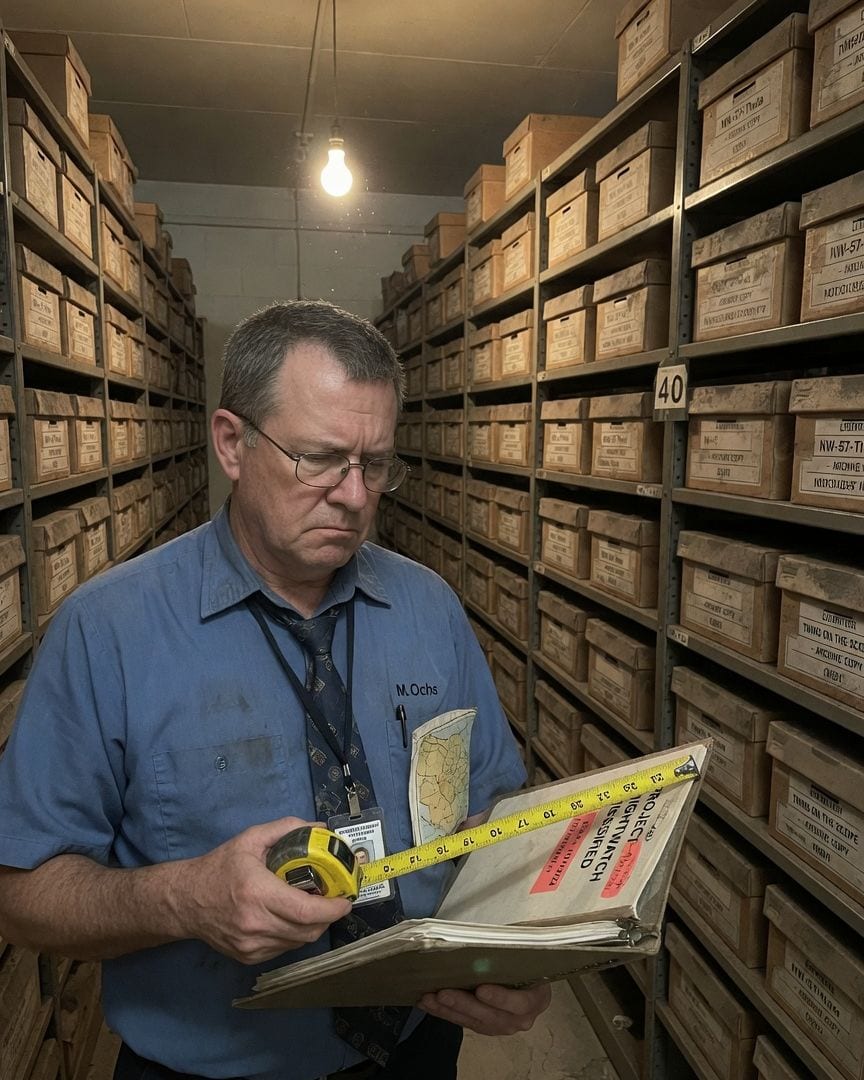
A Cold War records clerk on his final patrol found Aisle 40 stretched 61 feet longer, lined with unknown boxes. Inside one: 'PROJECT NIGHTWATCH - CLASSIFIED' with a fresh timestamp.
Marlin Ochs, a creature of habit after nineteen years at the St. Louis federal records depot, faced his final patrol through Aisle 40 before its scheduled pulping. His routine walk, usually 92 precise strides, suddenly stretched to an impossible 119, making the aisle 61 feet longer than its blueprint. The extra section felt colder, lined with dust-laden boxes bearing alien classification codes and no manifest. Inside one, he found a metal-bound file: 'PROJECT NIGHTWATCH - CLASSIFIED,' dated 1957, but with a timestamp just hours old.