My colleague thanked me for covering his father's stroke. His father is well. He named the hospital, the doctor, the hour, and asked me not to tell him yet.
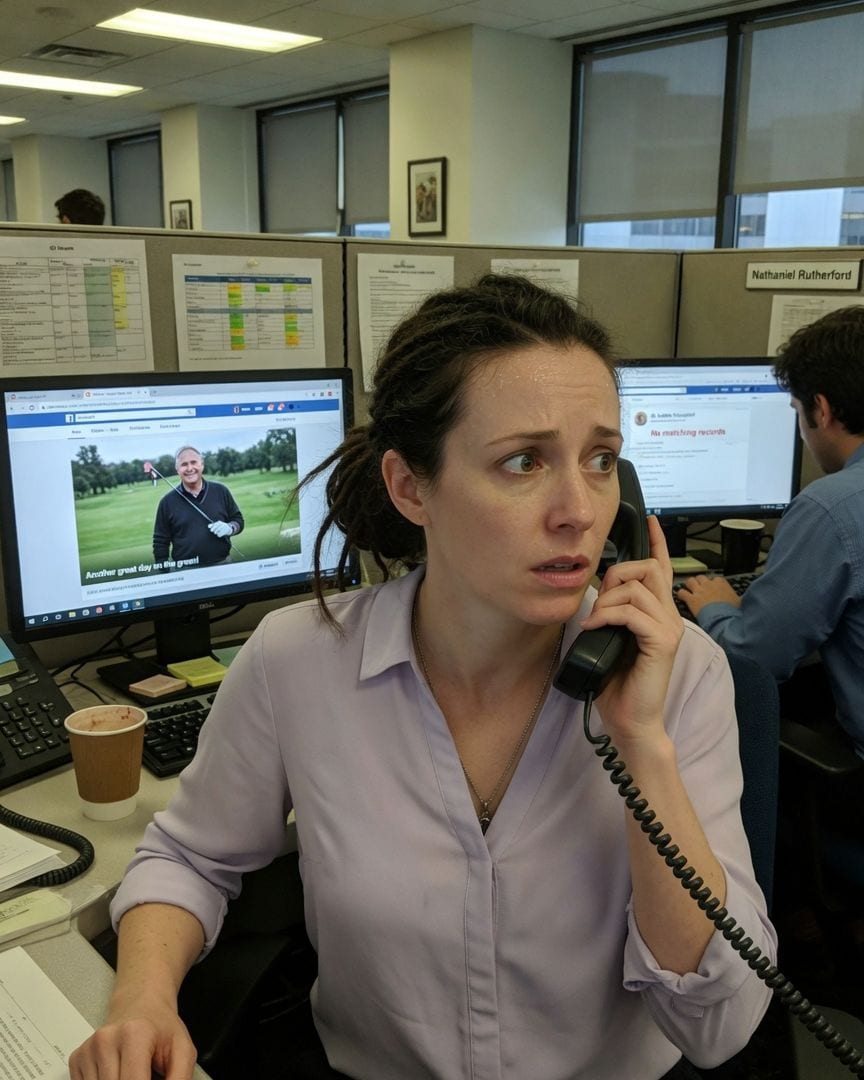
Nathaniel Rutherford strolled back into the office on a Tuesday morning, three days after he’d vanished.
Three days of unanswered calls, of worried emails, of a hushed, anxious quiet around the cubicles that only lifted when HR sent out a generic "employee absence" notice.
We'd been told he’d simply… left the 14th-floor stairwell and not come back. No one saw him exit the building, no one knew where he’d gone.
Then, he was just here, leaning against the coffee machine, looking exactly the same – his dark hair slightly rumpled, the familiar blue of his shirt.
"Evelyn," he said, turning, a relieved smile on his face, "Thank you. Truly. I owe you for covering my shift."
I blinked, surprised, then pushed away from my desk. "Nathaniel, where were you? We were worried sick! Are you alright?"
His smile didn't falter. "Oh, my father, Franklin. He had a stroke. Came on suddenly. I was at St. Jude's. Doctor Albright, Room 314, admitted just after midnight on Friday. Had to be there. But he’s recovering well now.
It was all a bit of a blur." He looked at me, his eyes earnest. "Could you… not mention it to him? He’d feel terrible, knowing I missed work."
My breath hitched. Franklin Rutherford, Nathaniel’s father, was a regular on my Facebook feed. Just yesterday, he’d posted a photo of himself golfing, looking robust and perfectly healthy. No mention of a stroke. No mention of St. Jude's.
"Your father… he’s fine?" I asked, a strange chill prickling the back of my neck.
Nathaniel nodded, picking up a mug. "Oh, yes. Touch and go there for a bit, but he’ll be back on the course in no time. Good as new." He poured himself a coffee, black, and walked back to his desk.
Black. Nathaniel always, without fail, took his coffee with cream. I watched him sit down, take a long sip, then immediately dive into his emails as if the last three days had never happened.
As if a golfing Franklin Rutherford didn't contradict his story, didn't make the detailed hospital room, the doctor, the exact hour, an impossible lie. I tried to tell myself it was stress, a weird coping mechanism.
But the black coffee, untouched by cream, tasted bitter in my own imagination.
The next morning, the unease hadn't faded. If anything, it had solidified into a cold, hard knot in my stomach.
Nathaniel hummed a tuneless little melody as he worked, the kind of absentminded sound he always made, and it just made everything feel worse, more... normal. Too normal.
I opened a new browser tab and searched for "Franklin Rutherford St. Jude's Hospital." Nothing. Just his LinkedIn profile and a few old community sports write-ups. Then I went to Facebook, to his profile.
He was there, smiling, holding a golf club, the picture clearly timestamped Saturday afternoon. Another great day on the green! the caption read. A selfie of him and his wife at a local fair, dated Sunday. He looked vibrant, healthy, tanned.
No signs of illness, no frantic hospital visits. No mention of anything remotely resembling a stroke. My rational brain, the one that always found the logical explanation, began to stutter.
I stared at the screen, then at Nathaniel, who was now typing furiously, completely absorbed. It was impossible. His detailed memory of the hospital, the room, the doctor – it had to be a delusion. But it was too coherent.
Too precise.
My fingers trembled slightly as I picked up my phone. I knew the number for St. Jude's general inquiries.
I rehearsed my line: "Hello, I'm a family friend of Franklin Rutherford, I just wanted to check on his recovery after his stroke." It felt ridiculous, intrusive.
But the alternative – accepting Nathaniel's story as true, or him as simply delusional – felt even more terrifying.
The receptionist's voice was polite, clinical. "St. Jude's Hospital, how may I help you?"
"Yes, hello. My name is Evelyn Kingsley. I'm calling about a patient, Franklin Rutherford. I understand he was admitted recently for a stroke, and I just wanted to… check on his status."
There was a pause, the faint click of a keyboard. "Rutherford, Franklin, you said?"
"Yes." I held my breath, my heart thumping against my ribs.
Another pause, longer this time. "I'm sorry, Ms. Kingsley.
I have no record of a Franklin Rutherford being admitted to St. Jude's Hospital for a stroke at any time in the last month, or indeed, ever, in our system under that name." Her voice was unwavering.
"Are you sure you have the correct hospital?"
The line went dead in my ear. I lowered the phone, slowly, and just sat there, the plastic cold against my cheek. The chilling certainty in my gut, however, was anything but cold. It burned.
I stared at the hospital's digital patient lookup screen. The bold letters on the display were merciless, stark: 'No record found for Franklin Rutherford.' The blank screen reflected my own pale, horrified face.
The dread didn’t go away. It sharpened, becoming a dull, constant ache behind my eyes. I had to know. I needed to pull at the thread, to see how deep this impossible lie went.
The next day, I walked into Facilities, feigning concern about a missing package that had supposedly been left in the building stairwell. "Could I possibly see the security logs for last Friday through Monday?" I asked, trying to sound casual.
"Just to track its movement, you know how these things go."
The Facilities manager, a burly man named Dave who was far more concerned with actual package theft than theoretical ones, shrugged and granted me access to the old, clunky terminal in the back office.
The software was archaic, pixelated, but the timestamps were clear.
I keyed in Nathaniel's name, the dates of his disappearance. The system pulled up a series of low-resolution stills.
At 5:17 PM on Friday, the grainy image of Nathaniel, in his blue shirt, was clearly visible, pushing open the heavy fire door to the 14th-floor stairwell.
He glanced back, a faint smile on his face, then disappeared into the dim, concrete space. The timestamp clicked, 5:17:03. After that, nothing. No exit from the 14th floor, no entry at any other floor. Three days.
I scrolled forward, my finger almost hovering over the mouse. Monday morning. 8:03 AM. A new entry. ‘Nathaniel Rutherford’ exiting the ground floor stairwell. The image was still low-res, but it was him. Or rather, it looked like him.
I zoomed in, squinting. There was a subtle stiffness in his posture, a slight jerkiness to his arm as he pushed the door open that I couldn't quite place, but it was there.
Like a marionette, just slightly out of sync. Not the fluid, easy gait I knew.
I printed a handful of the stills, tucking them discreetly into my notebook. For the rest of the week, I watched Nathaniel. My observation wasn’t subtle, not really, but he never seemed to notice.
Or if he did, he didn’t react. He worked efficiently, calmly. But the little things. The coffee, always black now.
The way he used to tap his pen against his teeth when he was thinking, a habit of years, was gone. Replaced by a strange, almost imperceptible twitch at the corner of his eye.
His particular turn of phrase – "You know how it is" – which he'd peppered through every conversation, had vanished. Now, it was just a generic, "Right," or "Indeed." Small shifts.
Like sand draining away, leaving something similar, but not quite the same. The dread in my stomach tightened, a cold, hard knot.
It was almost Friday. The week had dragged, each day amplifying the wrongness. Nathaniel had started to drift near my desk, not overtly, but often enough to be noticeable.
He'd offer to help with a spreadsheet I hadn’t asked for help with, or comment on a project I was working on, always with that calm, unsettling smile. Each interaction felt less like a colleague and more like… a study.
One afternoon, the fluorescent lights hummed with a particularly irritating flicker. I was trying to focus on a report, but the cold dread was a physical presence beside me. Nathaniel leaned over my cubicle wall, appearing silently, making me jump.
He always seemed to materialize out of nowhere lately.
"Still at it, Evelyn?" he said, his voice soft, almost a purr. The sound made the hairs on my arms stand up.
"Just finishing up," I replied, trying to keep my voice even. I didn’t look up immediately, pretending to type, but I felt his gaze.
"You've been doing a lot of 'research' lately, Evelyn," he continued, his voice still low, almost conversational. He was smiling faintly. "I remember us talking about your curiosity, how it always gets the better of you."
My fingers froze on the keyboard. I didn’t remember any such conversation. Not with him. Not ever. I was curious, yes, but I didn't make a habit of discussing it with colleagues. Especially not Nathaniel. It felt… personal.
A memory he shouldn't have.
I finally looked up. His eyes, usually warm, were calm, deep, and utterly certain. They held mine, unblinking, and I felt a cold knot twist in my stomach. "I recall you saying you were worried about how things might… change."
The fluorescent lights above us buzzed, a high-pitched whine that seemed to resonate with the sound of my own thudding heart. I searched his face for any hint of a joke, a tease, anything that would make this make sense.
There was nothing. Just that faint, unsettling smile. I couldn't breathe.
He straightened up then, as if satisfied, and walked back to his desk. Across the office, I caught Rosemary Patterson’s eye. She was older, senior, quiet, usually hidden behind stacks of paperwork. She’d been watching us.
As soon as my gaze met hers, she quickly looked away, a flicker of something unreadable – fear? recognition? – on her face before her expression became carefully neutral.
Rosemary knew something. I was sure of it.
The next morning, I found Rosemary in the breakroom, pouring herself a cup of tea. She looked tired, lines of worry etched around her eyes that I hadn't noticed before. This was it. I had to know.
"Rosemary," I began, my voice lower than I intended, "Can I talk to you for a moment? About Nathaniel."
She stiffened, her hand freezing around the teapot. She didn't look at me, just stared at the steaming water. "Nathaniel? He seems fine." Her voice was flat.
"He's not," I insisted, stepping closer. "He told me his father had a stroke, was in St. Jude's. But his father is perfectly well. I checked."
I pulled out the printouts from the security log, unfolded them on the small Formica table between us. "He went into the 14th-floor stairwell Friday evening, then didn't reappear until Monday morning, exiting the ground floor stairwell.
Look at his gait here. It's… off."
Rosemary finally looked at the pictures, then at me. Her expression was carefully blank. "He was probably just… disoriented after his absence, Evelyn. Stress can do strange things to people." She picked up her mug, her fingers trembling almost imperceptibly.
"Stress doesn't create detailed false memories of hospital rooms and doctors," I countered, my voice rising slightly despite my best efforts.
"And it doesn't make someone change their coffee order overnight, or stop humming when they work, or use different phrases. Rosemary, he said he remembered us talking about my curiosity, and how things might 'change.' We never had that conversation.
Not ever."
Rosemary put her mug down with a soft clink. She stared at the security stills for a long moment, then slowly, her shoulders slumped. The careful composure she'd maintained for days, for weeks, finally cracked.
She took a deep, shuddering breath.
"You're right," she whispered, her voice barely audible. Her gaze met mine, and there was a profound weariness in her eyes. "He's not… quite Nathaniel."
My blood ran cold. "What do you mean?"
She leaned against the counter, suddenly looking much older than her fifty-eight years. "Ten years ago, there was another man, Victor. Quiet fellow, worked in accounting. He… disappeared from that same stairwell.
Went in on the 14th floor, just like Nathaniel. Three days later, he came back. Everyone just said he was different after the 'accident,' a little shell-shocked. But I knew."
She closed her eyes briefly. "He had these… memories. Impossible ones. Vivid descriptions of places he'd never been, conversations he'd never had. His habits changed too. Used to wear a tie every day, suddenly preferred open collars.
He had this small mole on his neck, I saw it shift slightly over a few weeks, almost imperceptibly. Like it was settling into place." Her eyes, when she opened them, were raw. "Whatever came back… it wore Victor's skin.
It walked like Victor. But it wasn't him. Not truly."
The humming of the fluorescent lights in the breakroom seemed to grow louder, vibrating through the floor. Nathaniel's impossible story, his changed habits, the security logs – it all clicked into a horrifying, impossible picture.
The coffee, the gait, the missing phrase. "What is it?" I whispered, my voice thick with fear. "What came back?"
Rosemary shook her head slowly, a single tear tracing a path down her cheek. "I don't know what it is. I only know… it wears their skin. It takes their place. And you've seen it. You've uncovered it."
Rosemary Patterson's calm, knowing gaze met Evelyn's, a faint, sad smile playing on her lips as she leaned in and whispered, "He knows you know. They always do."
Rosemary's words had been a physical blow, leaving me breathless. The world had shifted, tilted on its axis, and I was seeing it through a new, terrifying lens.
She agreed to meet me for coffee outside the office, the very next morning, before work, away from Nathaniel’s unsettling presence.
She looked tired, but resolute. "The stairwell," she began, her voice low, hushed, as if the very walls could hear, "it's a thin place. A seam. It’s always been there, a fault line in the building."
She spoke with a quiet certainty that chilled me to the bone. "People go in, Evelyn. But something else comes out. It wears their skin, yes, but it's… an imitation. An imperfect one."
She explained that it gained access to the original's memories, but not flawlessly. "Nathaniel's detailed story about his father's stroke, Room 314, Doctor Albright—that wasn't a delusion. It was a test.
A way to gauge your reaction, to see if its access to his memories was sufficient, if you'd accept it without question. It was learning." The thought made my skin crawl. The original Nathaniel, she said, was gone.
Consumed, or trapped in that space. A place between places.
Rosemary reached into her worn leather purse and pulled out a brittle, yellowed newspaper clipping. The paper was so old it threatened to crumble in her fingers. The date was over forty years ago.
The headline, faded but still legible: "Local Man Vanishes from Office Building." The article detailed the disappearance of a junior clerk, last seen entering the 14th-floor stairwell of this very building. No body was ever found.
"It's happened before," Rosemary said, her voice flat, devoid of emotion. "More than once, over the decades. I’ve seen the signs. The replacements blend in, slowly, perfectly, erasing the original, one memory, one habit at a time.
They become… a quiet part of the building. And no one ever knows. Except for the ones who watch, like me. And now, you." She pushed the clipping across the table to me.
The man in the blurry photo had the same kind of earnest, open face as Nathaniel. A face that could be easily worn.
The full truth landed with the weight of a gravestone. It wasn't a monster in the traditional sense, no slavering beast, no blood. It was something far more insidious. A silent, perfect replacement. A phenomenon that simply was.
I was trapped. I couldn't expose this, couldn't report it without being instantly dismissed as delusional. And confronting 'Nathaniel'… that would be suicidal. My only option, the only path I saw, was escape.
Over the next two days, I moved like a ghost. I packed my personal items from my desk with meticulous care, the small framed photos, my favorite pen, a potted succulent.
I told my manager I'd accepted a new opportunity out of state, a vague offer that I would conjure into existence. He congratulated me, wished me well.
Nathaniel was in meetings mostly, or at his desk, but I felt his eyes on me whenever he was near. A heavy, silent pressure.
On my final evening, the office was almost empty. The last of my boxes were packed, waiting for the courier. I walked to the elevators, my heart thumping a frantic rhythm against my ribs.
I pressed the down arrow, holding my breath, counting the seconds. The doors slid open with a soft sigh. Nathaniel stood inside, alone.
He stepped out, blocking my path, a slow, knowing smile spreading across his face. It wasn't the warm, easy smile I knew. This smile was a carefully constructed mask, revealing a vast, chilling emptiness behind it.
"Leaving so soon, Evelyn?" he asked, his voice soft, almost a purr. The sound scraped against my nerves. "We were just getting to know each other."
His eyes, however, were utterly devoid of warmth. They were fixed on me with a chilling, predatory stillness, like a cat watching a mouse. He didn't move to stop me. He didn't need to.
His presence, his gaze, was a silent, terrifying promise. The elevator doors began to close again, slowly, deliberately. I had to choose.
I didn't run. I couldn't. Instead, I calmly walked past him, my skin prickling with cold, and stepped into the elevator, just before the doors met. I pressed the lobby button.
He stood there, watching me, as the doors slid shut. The last thing I saw was his unchanging, unnerving smile.
I left the job, moved cities, and cut ties with everyone from my old office. I tried to explain to a trusted friend once, late at night, the words tumbling out in a desperate flood.
But the story sounded unhinged, even to my own ears. Her pitying look confirmed it. No one would ever believe me. A few weeks later, a local news alert flashed across my screen.
Not my new city, but my old one. Another missing person from my old company, a young man named Daniel, last seen near the 14th-floor stairwell. No body found.
Now, Evelyn lives in a new apartment, on the ground floor. She avoids tall buildings, especially stairwells. She watches people, always, for the subtle shifts, the memories they shouldn't have, the faint, wrong smile.
The knowledge is a cold, constant companion, whispering at the edges of her perception. Sometimes, the quietest wrongness is the one that follows you everywhere, just waiting for you to forget.
If this one got to you
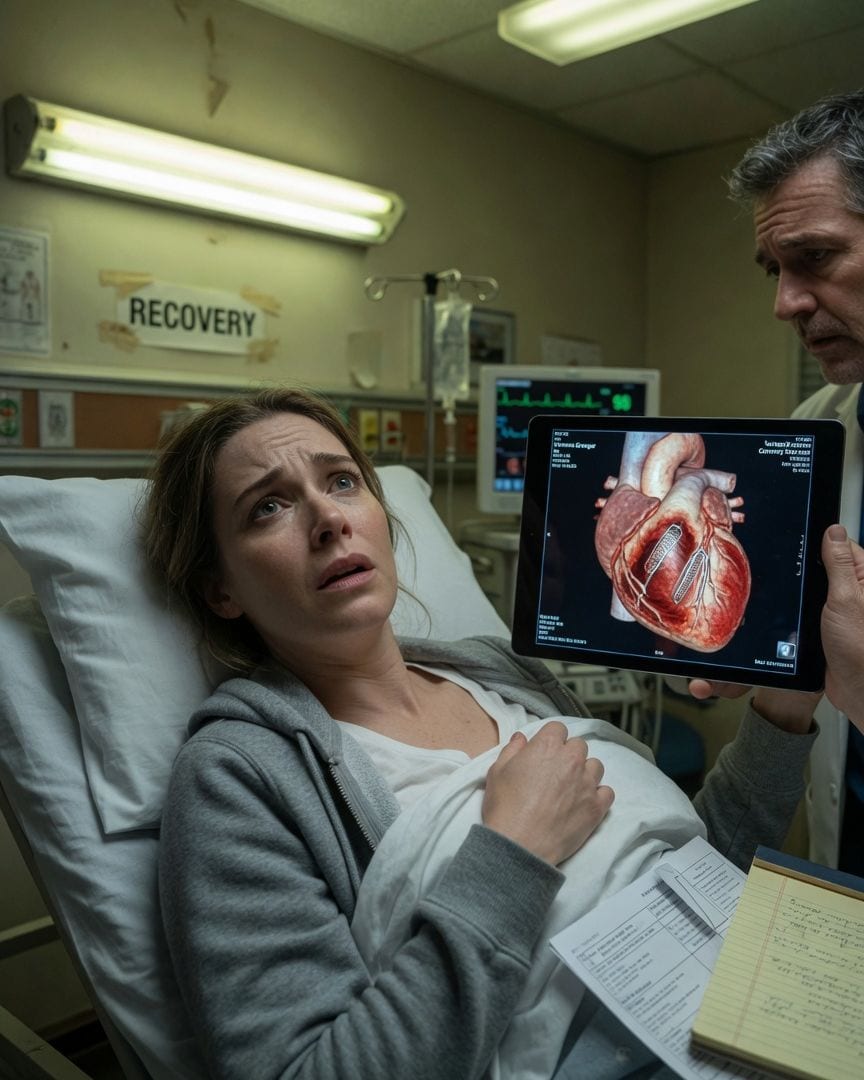
Metal stents are propping open my heart. The doctor rotated the image, but I've never had a cardiac procedure.
After years of dismissed chest pain, a CT scan revealed an impossible truth: my heart contained two metal stents. Dr. Maddox confirmed there was no record of any cardiac procedure in my entire medical history, and I had no memory of ever having surgery. My own body held a secret, alien architecture I couldn't explain.
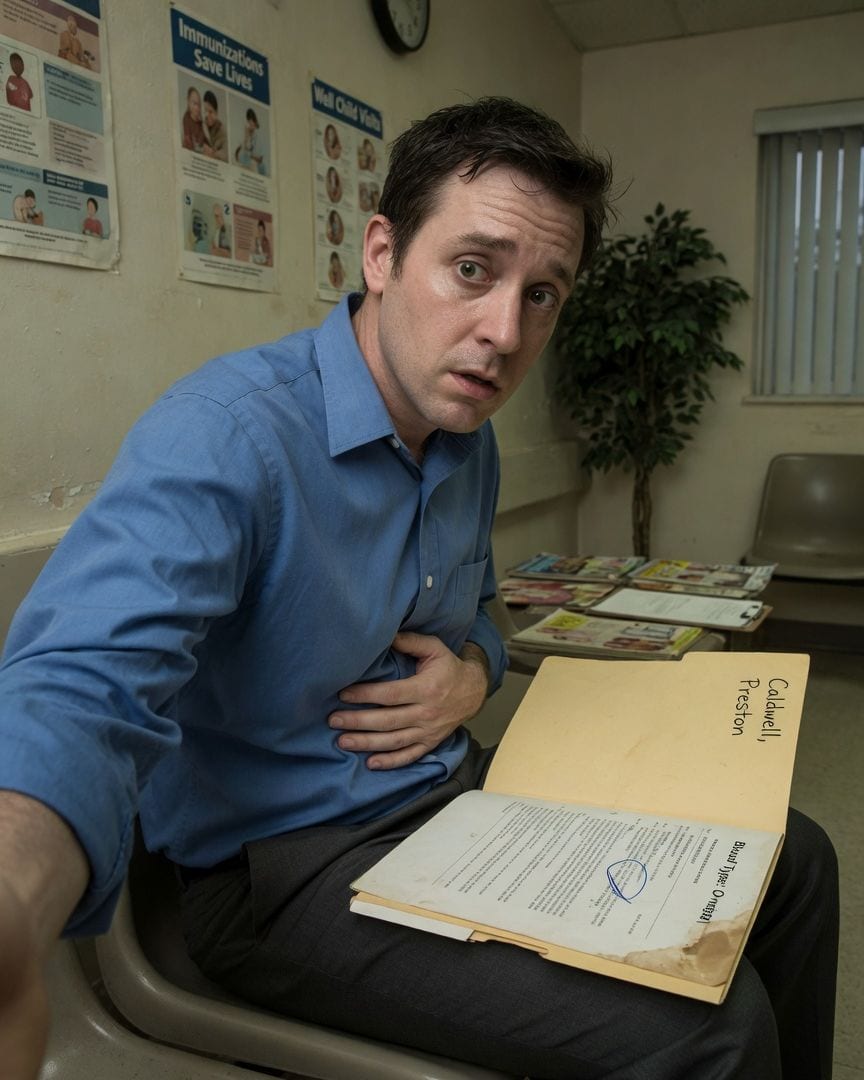
My ultrasound found a silicone prosthetic where one of my testicles should be. The real one was removed years ago, the space healed, but I never had surgery there. I never knew.
I booked an ultrasound for a dull ache, expecting a simple diagnosis. Instead, doctors found a perfectly healed prosthetic organ, expertly placed, where my own should have been. I have no memory of ever having such surgery, leaving a chilling question hanging in the sterile air.
A night nurse I'd never seen touched my arm, 'I'm sorry about your results, Mr. Halloran.' My bloodwork wasn't until Monday. Her badge named a ward not in this hospital.
Leaving St. Jude's, a night nurse I'd never seen stopped me. She apologized for 'my results,' addressing me as Mr. Halloran, though I hadn't had any tests booked. Her kind, tired eyes held a flicker of something profound, leaving me chilled by her impossible words.
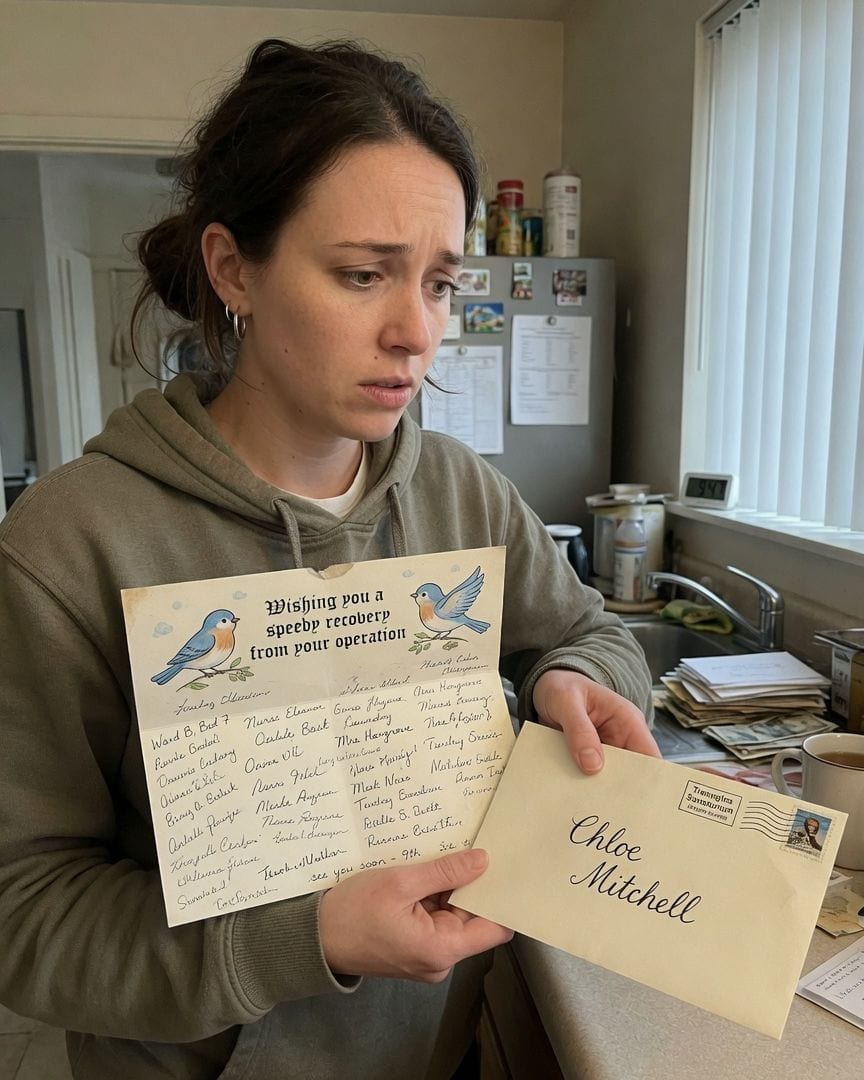
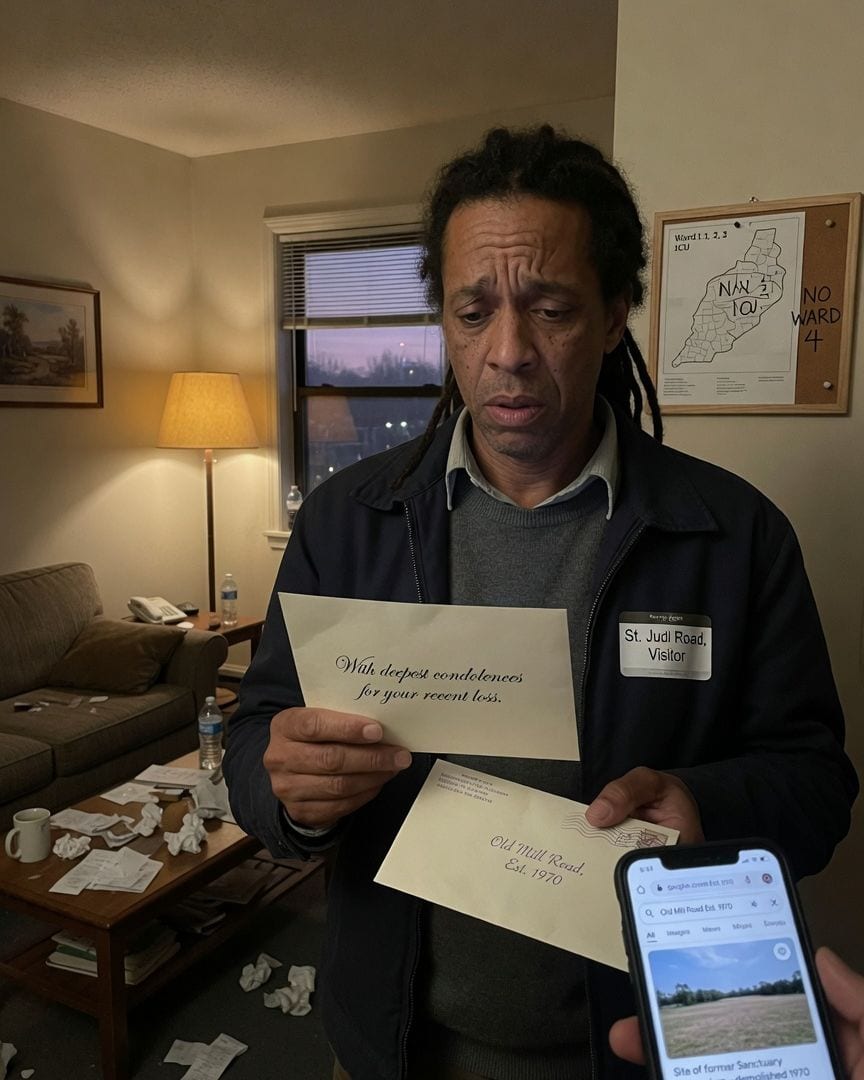
A get-well card wished me a speedy recovery from an operation I never had. It was postmarked from a sanatorium that burned down in 1963.
My quiet Tuesday morning was interrupted by an elegant get-well card, addressed to me. It wished me a speedy recovery from an operation I'd never had. But the postmark read 'Treneglos Sanatorium,' a hospital that vanished in a fire back in 1963.
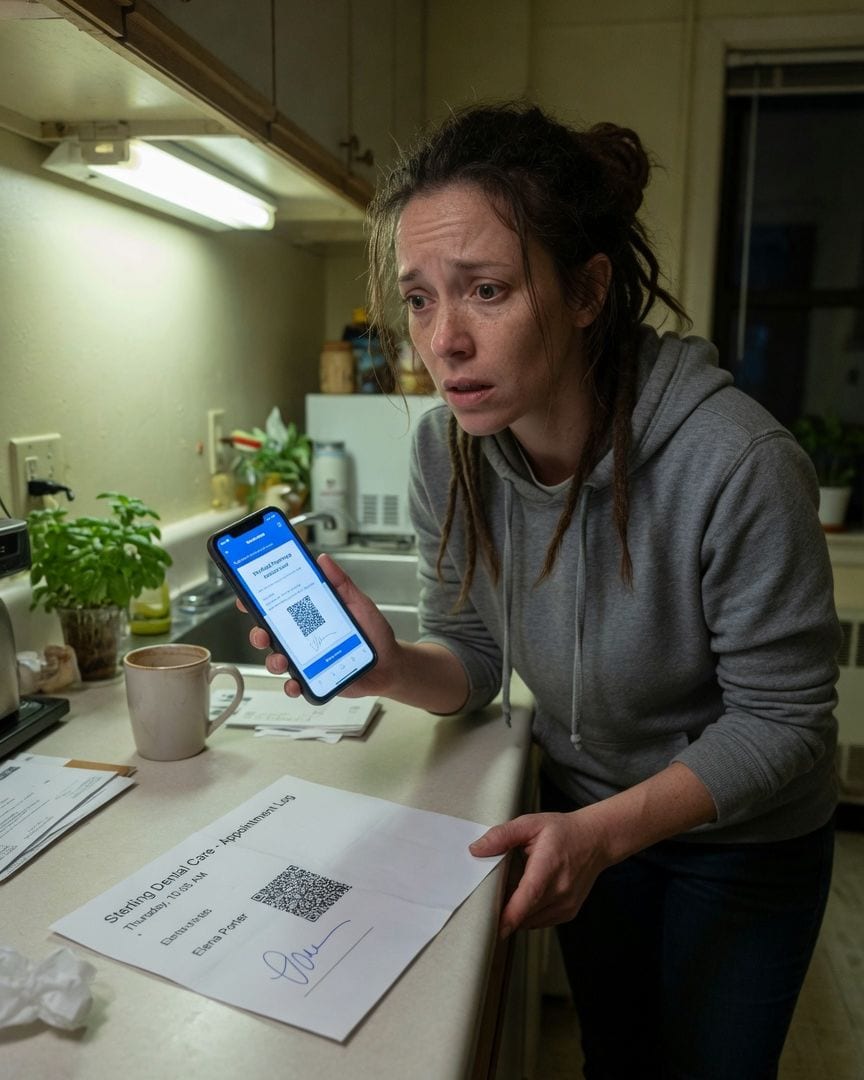
My dentist's system says I was there last Thursday. I wasn't. But the check-in tablet shows my signature, and the hygienist described my chipped tooth exactly right.
I received a call confirming a dental appointment I never made, for a day I was home. Yet, Sterling Dental had my perfect digital signature and described a chipped incisor I’d never told them about. The physical proof insisted I was there, but I wasn’t.
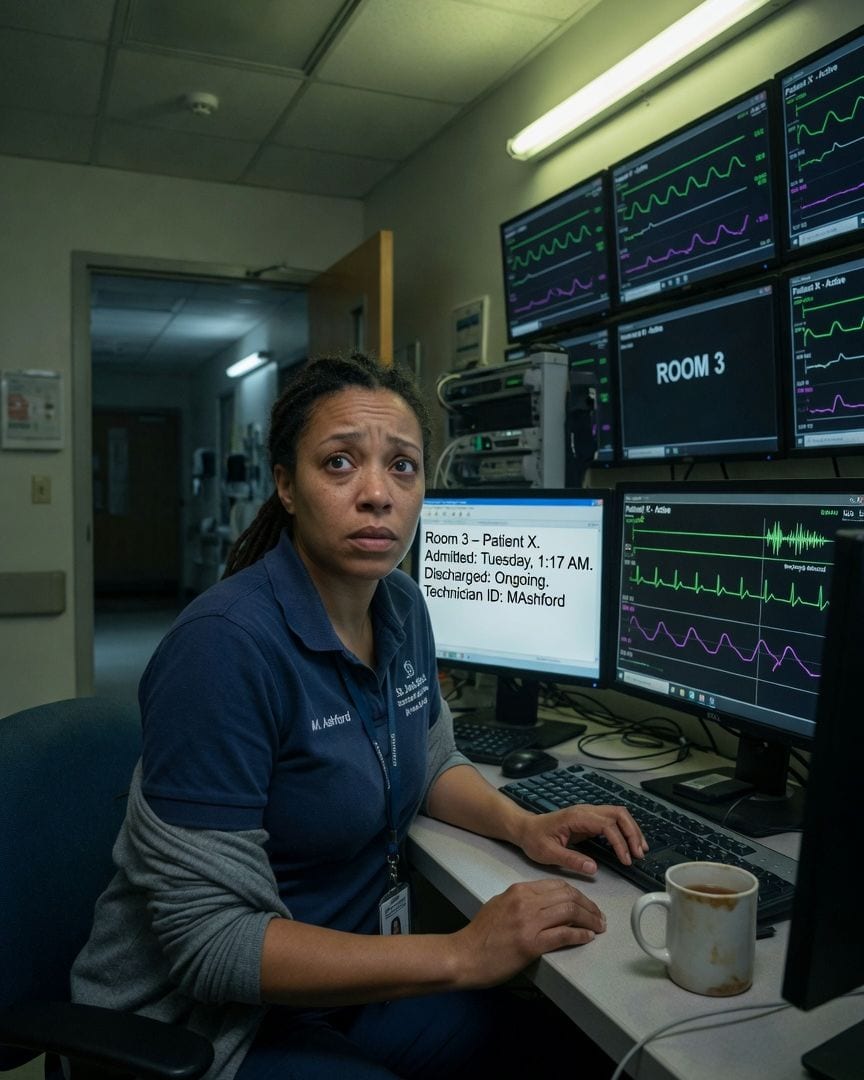
My monitor shows Room 3's patient coughing, but the room is empty and stripped bare.
Working the night shift at St. Jude's Sleep Clinic, I noticed Room 3's monitor showing a patient's vital signs and a faint cough. But Room 3 has been out of service for months, stripped bare after a leak. My system diagnostics confirmed a strong, clean signal, as if a patient were genuinely there, sensors properly attached.