My CT scan showed surgical mesh inside me. The surgery record is dated a year before I was born, for a 3-year-old child.
The fluorescent lights in the exam room hummed, a flat, sterile sound that did nothing to calm the knot in my stomach.
Dr. Walter Drummond, a man whose professional calm was usually reassuring, stood beside the monitor, pointing with a stylus. On the screen, my own CT scan glowed in shades of gray, a cross-section of my lower abdomen.
My stomach had been bothering me for weeks – a dull, persistent ache that wouldn't quit. He wasn't pointing at an ulcer.
"See here?" he said, his voice even. "This fine, almost translucent sheet? It's surgical mesh, Constance. Quite well integrated into the tissue, as you can tell. Looks like a routine repair, probably a hernia. When did you have that done?"
I leaned closer, squinting. My abdomen felt smooth, unblemished, not even a faint scar from an old appendectomy, which I'd had as a kid. No, my appendix scar was on my right side, low. This was higher, deeper.
I shook my head, confusion tightening my throat. "I've never had a hernia. I’ve never had surgery there, Dr. Drummond. Not even close. You can see my appendix scar, it’s tiny, almost gone."
He zoomed in on the image, the mesh clearer now, a distinct lattice interwoven with my muscle. It was undeniably there, unmistakable. My heart started to thud against my ribs. "Constance, this isn't something that just appears.
Tissue has grown through it, around it. This mesh has been in place for years. Decades, maybe. It's not causing your current pain, I can tell you that, but… it's definitely there."
He paused, his brow furrowed, something akin to professional bewilderment in his eyes. "Are you absolutely certain you don't recall this? Sometimes people forget minor procedures from childhood, or if it was done during another, more serious surgery."
I was certain. My medical history, my body, felt like a familiar landscape. There were no hidden valleys, no unmapped scars.
The idea of something foreign, so deeply embedded inside me for "years," without my knowledge, was a cold, alien thought. My skin felt too tight. He was right, it wasn’t causing my pain.
But the bigger question, the truly terrifying one, hung in the air: if not me, then who?
The unease didn't fade; it solidified into a dull, persistent ache behind my eyes. I called Dr. Drummond again the next day.
He'd done his due diligence, he told me, checked the hospital archives under my full name, date of birth, even common misspellings. Nothing. No record of any hernia repair, no mention of surgical mesh. He'd sounded genuinely perplexed.
"It's… highly unusual, Constance. Without a record, it's almost as if it shouldn't be there."
That's when he'd mentioned defunct clinics. Old medical practices often sold or stored their patient records in the strangest places when they closed down.
He gave me a short list of names, starting with a Dr. Elias Thorne, whose small practice had been in a building that was now a crumbling, forgotten office block on the edge of town.
I drove there two days later. The air inside the building was thick with dust and the smell of old paper.
The landlord, a stoic man who seemed accustomed to people poking around forgotten corners, pointed me to a padlocked storage room in the basement. He didn't care what I did, so long as I didn't break anything.
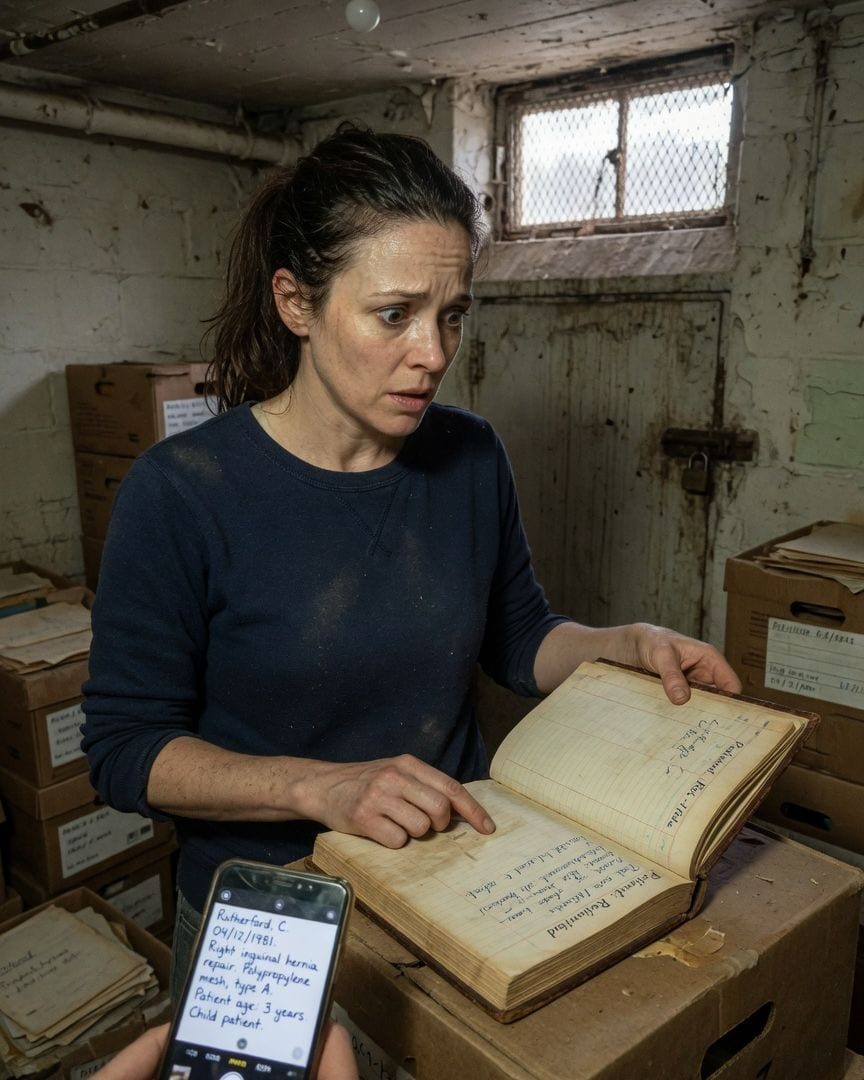
Inside, piled haphazardly in cardboard boxes, were hundreds of patient ledgers. They were bound in dark, brittle leather, their pages yellowed and thin. Each one was filled with careful, spidery cursive, a record of lives and ailments from decades past.
I spent hours, dust motes dancing in the single shaft of light from a grimy window, flipping through them. My fingers, smudged with fine grit, turned page after page. Most of the names were unfamiliar, a directory of forgotten townspeople.
Then, in a ledger labeled 'Patients R-Z, 1980-1985,' I saw it. The script was faded, but perfectly legible.
'Rutherford, C.'
My breath hitched. Below the name, the date: '04/12/1981.' A tight, cold knot formed in my stomach. That was a year before I was born. My hand hovered over the page.
I felt a prickle of illogical hope – a clerical error, a typo. But then I read the procedure description: 'Right inguinal hernia repair. Polypropylene mesh, type A.'
The words blurred for a moment, then snapped into focus, chillingly precise. Dr. Drummond had shown me images, described the exact mesh, the exact location. This wasn't a mistake. This was a direct, impossible echo.
The room, already cold, felt like it was drawing all the warmth from my skin. The faded ink, so clear, told a story that couldn't be mine, yet described something intimately, impossibly, of me.
My finger traced the cursive 'Rutherford, C.' beside the impossible date: '04/12/1981.' Below it, 'Mesh repair, right groin, child patient.' My own birthdate is 1982.
The ink was faded but clear, the details matching her scan perfectly, yet the timeline was a stark, absolute contradiction. My gaze dropped lower, to the small detail I'd initially skipped over in my shock. Patient age: '3 years.'
A child.
I pulled out my phone, my hands shaking, and snapped a photo of the ledger page. The flash illuminated the impossible date and the child's age, a cold dread settling deep in my bones.
The photo of the ledger page burned in my mind like a phantom limb. Back home, I spent days down a rabbit hole of research.
Old medical practices, patient record retention laws, anything that might explain how a record from 1981, detailing a surgery performed on a three-year-old child named C. Rutherford, using the exact mesh now in my body, could exist.
The original physician, Dr. Elias Thorne, had died decades ago. A dead end.
Then I found a dusty old local newspaper article about the clinic's closure. It mentioned Thorne's former associate, a medical archivist named Gideon Vaughn, who had overseen the meticulous transfer of records.
Vaughn, now in his late seventies, was still alive, living in a quiet, manicured suburban neighborhood on the other side of the county. I called every Vaughn in the phone book until I found him.
His home was meticulously organized, almost clinically so. Every book on the shelves alphabetized, every framed photo perfectly centered. Gideon Vaughn himself was a quiet man, his age evident in the lines around his sharp, knowing eyes.
He offered me a cup of weak tea and listened patiently as I recounted my CT scan, the discovery of the mesh, and the impossible ledger entry.
I handed him my phone, open to the photo of the ledger page. He took it with a hand that was surprisingly steady for his age, his gaze lingering on the faded script.
His expression remained unreadable, but a faint, almost imperceptible nod lifted his chin. He spent a long moment studying it, then handed the phone back.
"Ah, yes," he said, his voice soft, almost a whisper, "Dr. Thorne's clinic. A precise record-keeper, he was. Every detail noted." He paused, sipping his tea. "This ledger is authentic, certainly.
And the procedures described within… they were, shall we say, quite advanced for their time."
"But the date," I pressed, trying to keep my voice steady. "1981. And a three-year-old child. I was born in 1982. How can my body contain mesh from a surgery performed on someone else, before I even existed?"
He looked at me then, his sharp eyes meeting mine, utterly devoid of surprise or even curiosity. His calm was unsettling, a serene acceptance of the impossible. "Some records are… complex, Constance. Like certain biological realities.
They don't always adhere to conventional timelines, do they?" He smiled, a faint, almost pitying gesture. "Perhaps you might want to consider those realities.
What we are, what we contain, isn't always as simple as a birth certificate or a photograph might suggest."
He offered no explanation, no theory, just that unnerving evenness. His refusal to be surprised by the impossibility of my situation was far more frightening than any shock or disbelief he might have shown.
It was as if he already knew. The air in his perfectly ordered living room felt suddenly heavy, charged with unspoken truths.
Days later, the world around me seemed to shift, subtly, imperceptibly. My usually quiet neighborhood, where the most exciting event was a new Amazon delivery van, now held a new, watchful stillness. I started noticing cars.
Not always the same model, but always dark sedans, parked a little too far down the street, their occupants still, their windows tinted.
They were never there for long, but always long enough for me to notice their presence – a silent, unsettling observation. It was like the houses themselves were holding their breath.
One evening, after a particularly unnerving walk where I felt eyes on my back from a parked vehicle, I returned to my front door. Tucked neatly under the mat, almost invisible against the dark wood, was a small, unmarked envelope.
No stamp, no address. Just a thick, cream-colored paper.
My hands felt clammy as I tore it open. Inside was a single, crisp photograph, slightly grainy, clearly an old one. It was black and white, depicting a child, no older than three, with light hair and serious, wide-set eyes.
A familiar chill ran down my spine. The child looked… almost familiar, in an unsettling, mirror-image sort of way, though I knew I'd never seen her before.
I turned the photo over. Printed neatly on the back, in a familiar, precise hand that made my stomach clench, were two words: 'Cecilia Rutherford.'
Gideon Vaughn’s handwriting. The message was clear, chillingly so. He knew I was digging. And he wasn't just subtly guiding me; he was warning me.
Or perhaps, offering a truth I wasn't ready to face, a truth so profound it could shatter my very identity. The child's innocent face, so carefully delivered, felt like a direct, personal threat.
The photo of Cecilia Rutherford crumpled in my hand. I drove straight back to Gideon Vaughn’s house, my foot heavy on the accelerator.
The quiet hum of his air conditioner was the only sound in his living room as I confronted him, the photograph spread flat on his polished coffee table.
"Who is she?" I demanded, my voice tight, barely controlled. "Why did you leave this at my door? What does Cecilia Rutherford have to do with that ledger, with the mesh in my body?"
Gideon didn't flinch. He simply rose and offered me a cup of chamomile tea, his movements slow, deliberate. "You're asking the right questions, Constance," he said, his voice as calm as ever, "and you've been persistent.
Dr. Thorne always appreciated persistence."
He sat back down, his gaze settling on the photo. "Cecilia Rutherford was a patient at Dr. Thorne's clinic. A tragic case, in 1981. A little girl, three years old, who… passed away unexpectedly."
He paused, his eyes drifting to some unseen point in the distance. "Dr. Thorne, you see, was a brilliant man. Ahead of his time. But his ethics… they were, shall we say, fluid."
I gripped my tea mug so hard my knuckles turned white. "What does that mean? What did he do?"
"Dr. Thorne's clinic was involved in highly experimental, deeply secretive medical work, decades ago," Gideon continued, speaking in measured, clinical tones that made my skin crawl. "He worked with… ambitious families.
Families who had suffered an unbearable loss and desired… 'continuation.' He spoke of 'reconstitution,' of 'preservation.' He believed that death wasn't necessarily an endpoint, but a… pause."
He looked at the photograph again. "Cecilia Rutherford was one such case. A 'template reconstruction.'
A complex surgical procedure where certain genetic material, even some skeletal structures from the deceased, could be integrated with a living 'host,' or donor, as we called them."
My breath hitched. "A host? Are you saying… they took parts of a dead child… and put them into someone else?" The words tasted like ash.
Gideon gave a slow, deliberate nod. "In essence. The mesh you discovered, the polypropylene mesh detailed in that ledger, was a critical component of such a procedure. It wasn't merely a hernia repair, Constance. It was an anchoring point.
A scaffolding for a new structure, a bridge between… what was, and what could be." His eyes met mine, cold and knowing. "Thorne's goal was to 'restore' lost loved ones.
To create an individual, physically indistinguishable from someone naturally born, yet carrying the essence, the very biological signature, of the one who was lost."
He didn't explicitly say I was one of them. He didn't have to. The air in the room was suffocating. "Are there others?" I whispered, my voice barely audible.
"Thorne performed several such procedures," he admitted, his composure unshaken. "For families with enough influence and grief. The results, while ethically dubious, were, as you can see, remarkably successful. Some lives are… continued, Constance. Through unconventional means."
My mind reeled. Everything clicked into place with a horrifying, sickening precision. The mesh, the impossible ledger entry, Gideon's unnerving calm. My own identity, fractured and reassembled by a dead surgeon's twisted ambition.
Reeling from Gideon's cryptic admissions, a desperate, almost primal need to cling to a shred of my original identity welled up. I had to disprove him, to find a scientific explanation that salvaged my sense of self.
The one piece of undeniable evidence I could still trust was my own biology.
I ordered a direct-to-consumer genealogy kit online the moment I got home.
I scraped the inside of my cheek, sealed the vial, and mailed it off, trying to convince myself that genetics would reveal a glitch, a mistake, anything but Gideon’s horrifying implications.
I spent the next few weeks in a fog, jumping at every shadow, every unfamiliar car, half-expecting another photograph, another cryptic message. The silence was almost worse.
Then, weeks later, the email arrived. It was late evening, the only light in my apartment coming from my laptop screen. The subject line was stark: 'DNA Match Found.'
My hands trembled so violently I almost dropped my mouse. I took a deep breath, trying to steady myself, and clicked. The page loaded slowly, agonizingly.
The first match was a distant cousin, someone I vaguely remembered from a family reunion years ago. Unremarkable. But then, a second entry. It was highlighted in bold, almost vibrating on the screen, a digital siren call of dread.
'Cecilia Rutherford, Deceased. Born: 1978. Died: 1981. Relation: High Probability Match (99.8%).'
Below it, in smaller, formal print, a note from the lab: 'This match indicates a very close biological relationship, typically parent/child or full sibling. Given the deceased status, please contact us for further guidance.'
I stared at the screen, my breath catching in my throat. A cold, sickening wave washed over me, draining all the warmth from my body. My own blood, my own body, confirming Gideon's every chilling implication.
I was a direct biological match to a child who died three years before I was even born. The truth, far from disproving Gideon, had just become impossibly, terrifyingly real.
The DNA results were a physical weight in my hand, an undeniable, cold certainty. I returned to Gideon Vaughn one last time, the printout crumpled, damp with sweat.
He took it, barely glancing at the bold numbers, as if he already knew. The composure he’d held before was still there, but now it was tinged with something closer to weary regret.
"She was the daughter of a prominent, wealthy family," he began, his voice flat, devoid of emotion, "lost in a childhood accident in 1981. Unimaginable grief, particularly for a family accustomed to having anything they desired.
Dr. Thorne, a brilliant but, as I said, morally unmoored surgeon, promised them a 'continuation.' He used Cecilia’s preserved remains and a 'donor'—likely an orphaned infant of similar age, obtained through… less than scrupulous channels—to create a new individual.
A living, breathing replacement."
He paused, his gaze fixed somewhere beyond me. "The mesh in your groin, Constance, was installed during this initial, complex reconstructive surgery. It wasn’t a hernia repair.
It was an anchor, a scaffolding, as I mentioned, for the crucial elements of the new structure. Thorne was meticulous, even if his methods were monstrous.
He ensured that the new body would not only carry Cecilia’s genetic signature but also function perfectly, seamlessly, as a natural human being."
Gideon finally looked at me, his eyes holding a profound sadness. "I was a young archivist then, tasked with creating the 'new' records, burying the old.
Generating the paper trail that would allow Constance Rutherford, born 1982, to exist, while erasing Cecilia Rutherford. I confess my own regret, my inability to stop Thorne. He was charismatic, powerful, untouchable. But I desired to leave a record.
A real one, in case someone, someday, put the pieces together."
Every clue, every impossible detail, slotted into place with horrifying precision. The ledger, the mesh, the DNA match. I wasn’t Constance Rutherford in the way anyone understood. I was Cecilia, continued. A ghost made flesh.
The full truth left me hollowed, a scream trapped somewhere in my chest. "Are there others?" I choked out, the words raw. "How many? Who are they?"
Gideon, his face etched with a lifetime of complicity and quiet horror, nodded slowly. "Thorne performed several such procedures," he admitted, his voice barely audible. "For families with enough influence, enough grief, and enough desperation.
The files… I kept them all. Not just the official ones, but the true ones. The ones that Thorne thought he had destroyed."
I felt a desperate need to expose the program, to find the others, to understand the full scope of this medical monstrosity. "Your files," I demanded, my voice steadier now, fueled by a terrifying purpose. "Show me. Give me everything."
He hesitated, a fleeting look of fear crossing his face, before a resolute calm returned. He led me to a hidden safe built into the wall behind a bookshelf, the lock a series of intricate tumblers.
With a quiet click, it sprang open. Inside, nestled amongst other documents, was a thick, heavy binder. It was filled with similar ledgers, grainy black-and-white photographs of other children, and chillingly detailed 'continuation' protocols. Names, dates, surgical notes.
A horrifying archive of stolen identities.
As I reached for the binder, the weight of the impossible lives within it already pressing down on me, a sudden, sharp rap echoed at the front door. Not a polite knock, but a firm, insistent summons.
Gideon stiffened, his eyes wide with a fear I hadn't seen in him before.
"They still watch," he whispered, his voice urgent, thin with terror. "To protect the families, to protect the… continuations. They ensure the secret stays buried." He pushed the binder into my arms. "Take it. Go. The back door, now.
I'll… I'll handle them."
The rapping grew louder, more insistent, rattling the framed photos on the wall. I clutched the binder, its contents a cold, hard promise of truth, and slipped out the back door into the darkening evening. I didn't look back.
Constance disappeared quietly. Gideon Vaughn’s house was found empty days later, his car still in the driveway, no sign of forced entry. The local police filed a missing persons report, then closed it weeks later as 'voluntary disappearance.'
The families involved, still powerful, ensured no deeper investigation occurred. Constance, living under a new name in a distant city, scans news reports, endlessly searching for any hint of similar disappearances, any whisper of other 'continuations.'
The binder with Gideon's files is her constant, terrifying companion, the chilling proof of what she is, and what others might be.
She learned to live with the knowledge, to inhabit a body that was both hers and not, a life that was both true and a continuation.
Sometimes, in quiet moments, she would catch a glimpse of herself in a mirror, and for a fleeting second, she’d see not just her own reflection, but a faint, almost imperceptible shadow of another, younger face superimposed over her own.
A face that had died decades ago. The world moved on, oblivious to the quiet, engineered lives walking among them. She often wondered how many others were out there, unknowingly carrying the ghost of someone else's past.
She never found another news report, never saw a familiar face, but the dread remained, a constant hum beneath her skin. The only certainty was that she was not alone.
If this one got to you
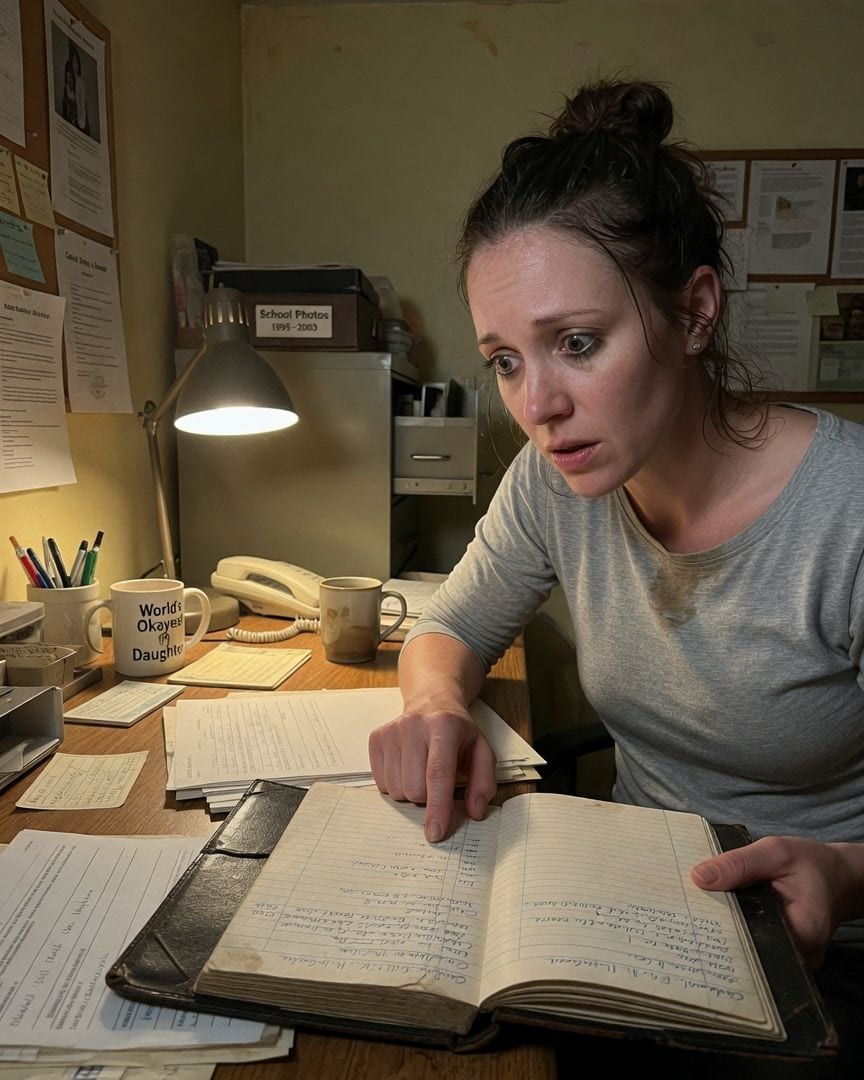
My CT scan found a metal plate in my eye socket. Then I found its surgery record, two years before I was born.
After a CT scan for my headaches, I learned a small metal plate was embedded in my left eye socket, a well-healed repair from decades ago. I have no memory of any injury severe enough to require such surgery, and my parents are certain it never happened. It's a piece of someone else's past, stitched into mine.
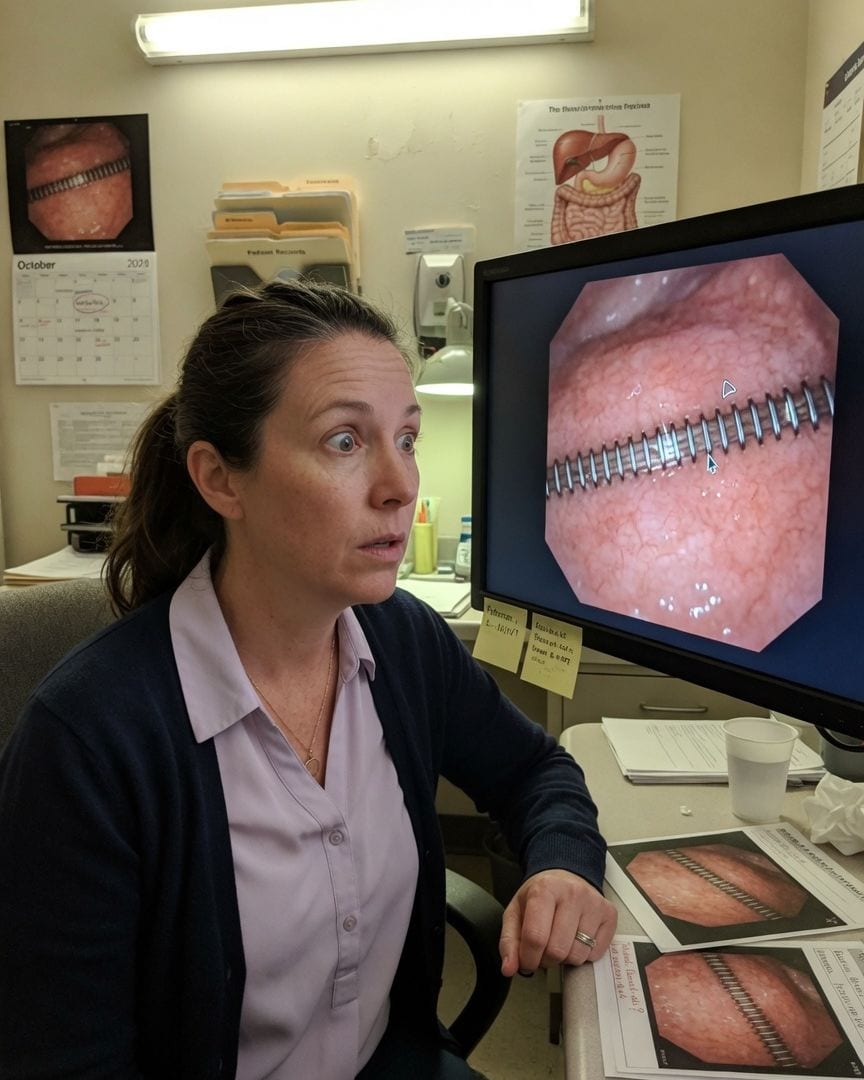
My stomach has old surgical staples. Doctors say they’re mine, years old. I have no scar, no memory.
My endoscopy for chronic reflux revealed far more than a burn. Dr. Winslow's screen showed my stomach reshaped by extensive, decades-old surgical staples. I have absolutely no memory of any operation, and my abdomen bears no scar.
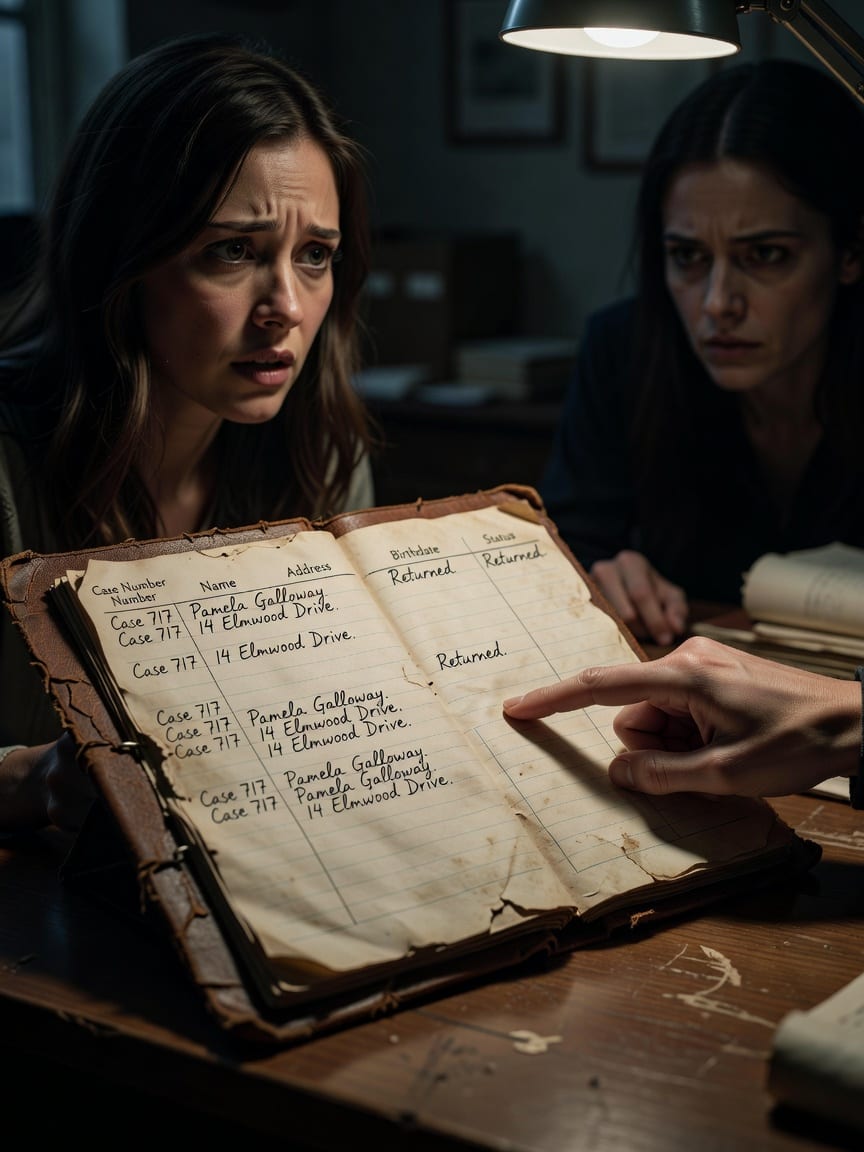
My hospital file has a blacked-out line from 1988. It names my street address, decades before I lived here. Then: 'returned'.
I finally got my medical file, hoping to clear up a ridiculous bill. Inside, I found an entry from 1988: my current home address, scrawled on a partial intake form and marked 'returned.' I was six then, living fifty miles away.
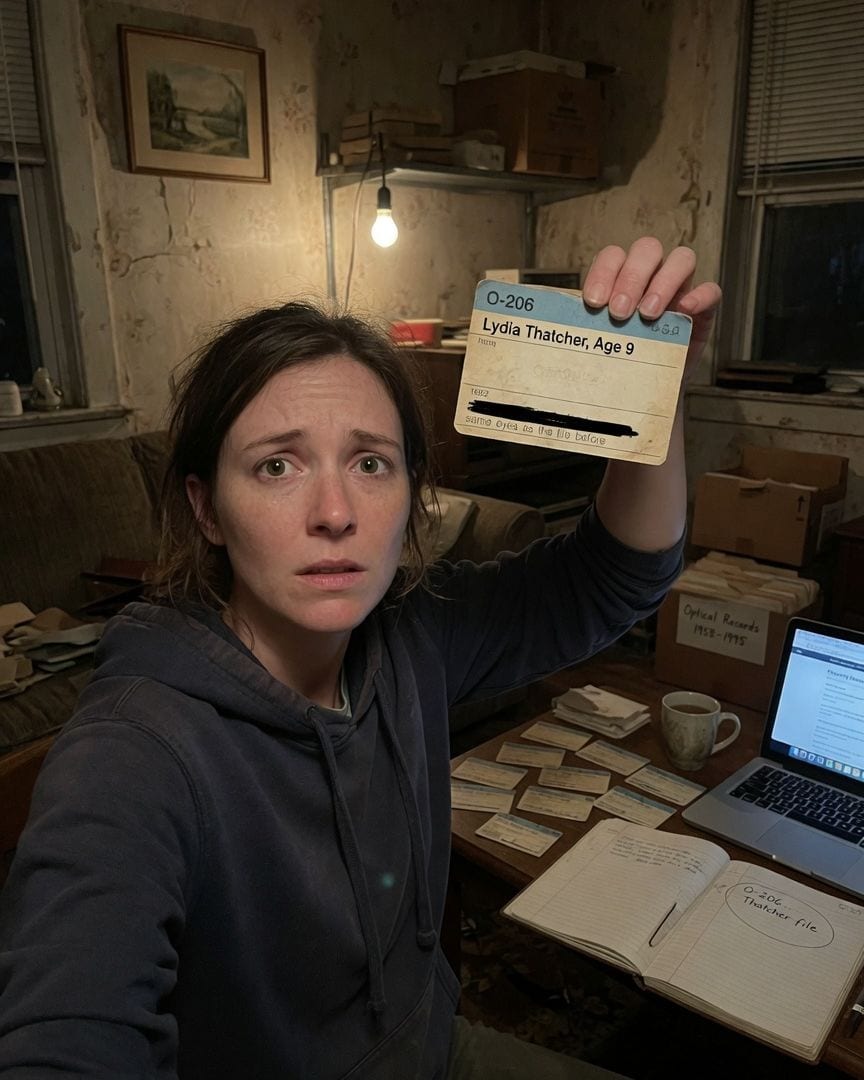
My own optical card is dated 1962, with my name on it. I wasn't born until 1993.
Sifting through old patient files from my former optical practice, I found my own O-206 card. It had my name, Lydia Thatcher, and my current home address printed on it. But the card was dated 1962, decades before I was even born, and a redacted note mentioned 'same eyes.'
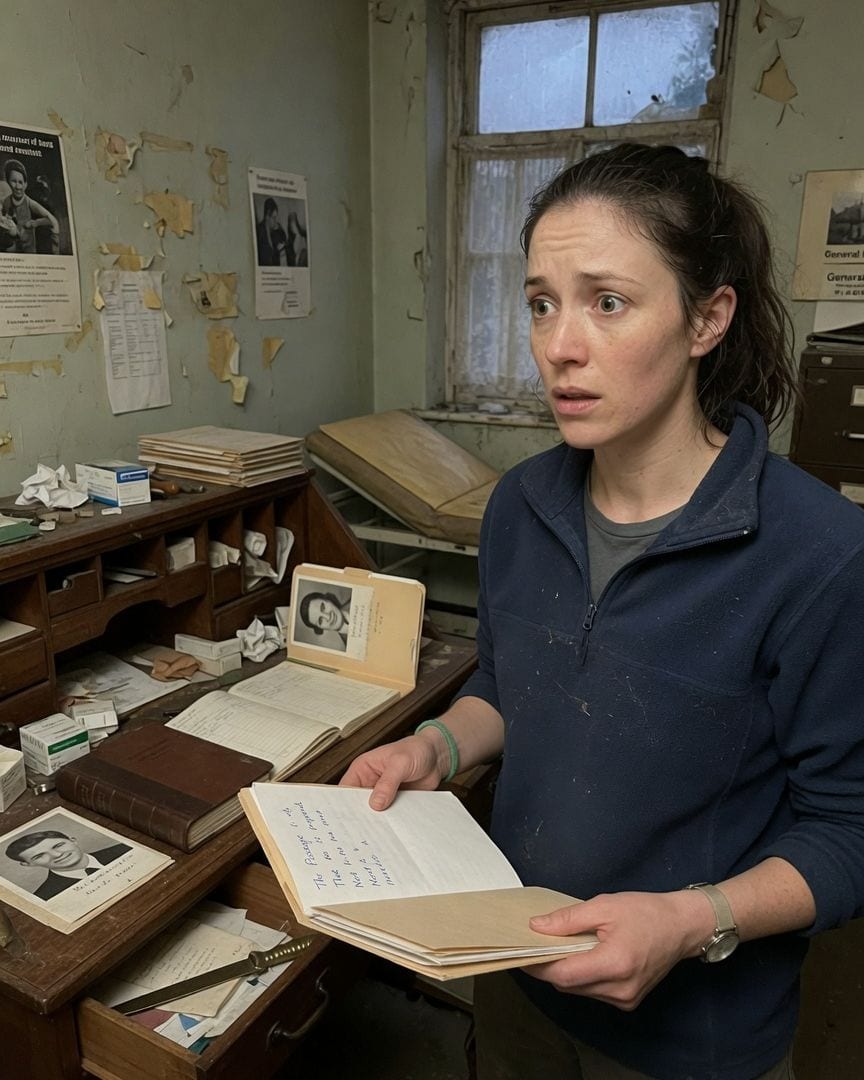
My new clinic's appointment book shows entries for this coming Monday, decades after the doctor retired and died.
Chloe Lawson bought an old, abandoned surgery in Nettlebed, ready to open her new vet clinic. Locals insisted Dr. Almott retired in '79 and the practice shut down for good. But then Chloe found his dusty appointment book filled with meticulous entries, continuing unbroken from 1979 through the decades, right up to this coming Monday.
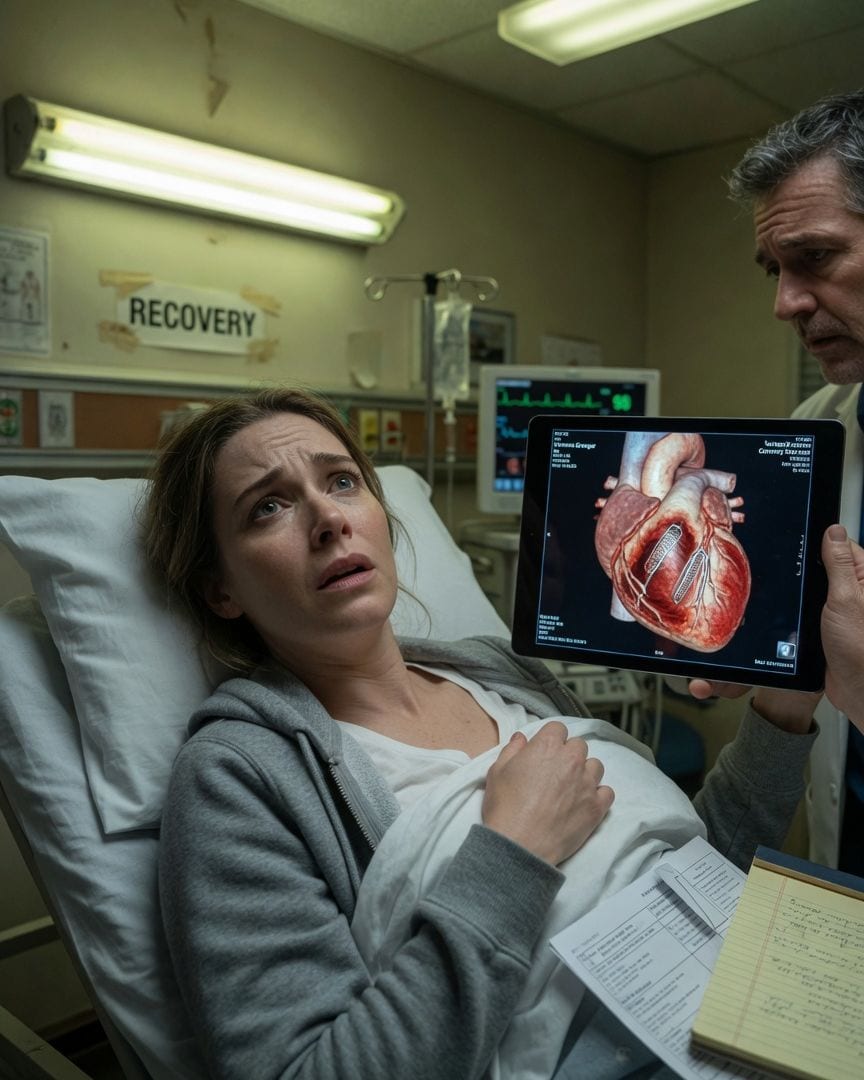
Metal stents are propping open my heart. The doctor rotated the image, but I've never had a cardiac procedure.
After years of dismissed chest pain, a CT scan revealed an impossible truth: my heart contained two metal stents. Dr. Maddox confirmed there was no record of any cardiac procedure in my entire medical history, and I had no memory of ever having surgery. My own body held a secret, alien architecture I couldn't explain.