On last week's recorded call with my dad, a third voice repeats his every word one beat behind him — patient, close. He doesn't hear it.
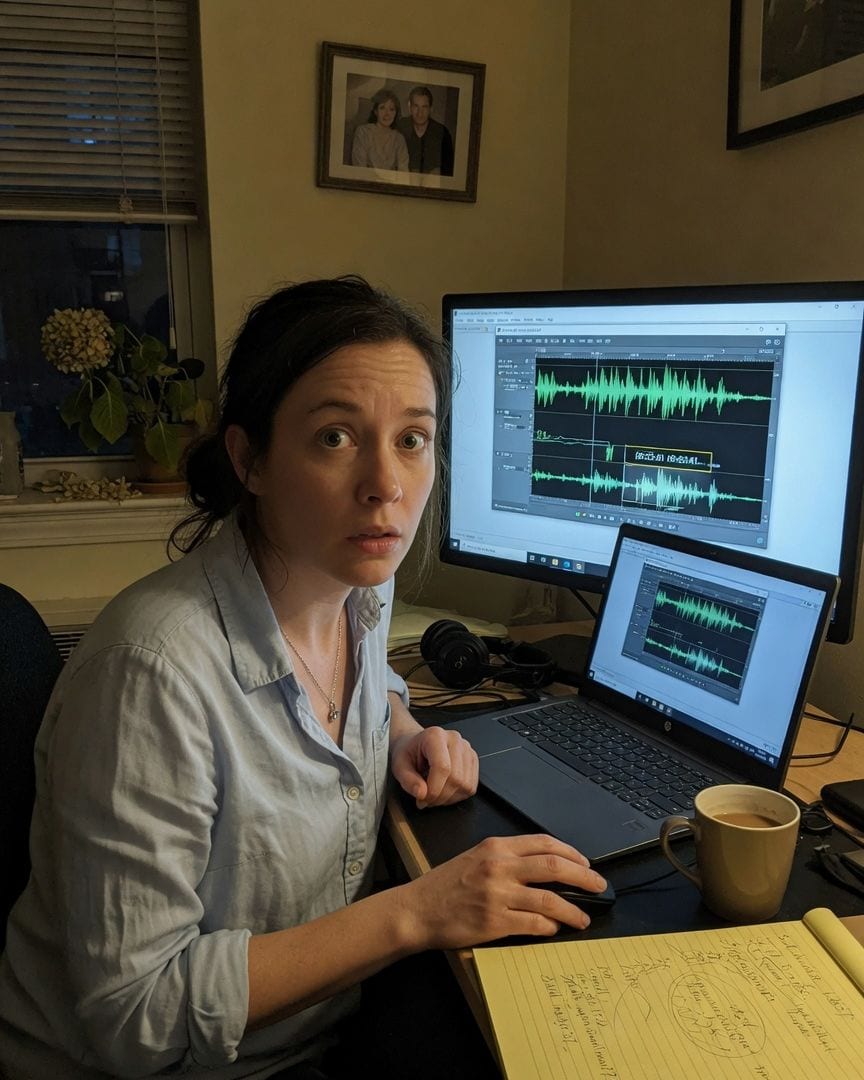
My father, Raymond Holloway, is 72 and lives alone since my mother passed six months ago.
He's always been a creature of habit, but lately, he forgets things – appointments, whether he watered the hydrangeas, the name of his new neighbor.
So, for the past year, I've been screen-recording our weekly phone calls, just to help him keep track. He's fine with it; thinks it's me being "meticulous," which, as a paralegal, I am. But last week's recording… that’s different.
I pulled it up last night, looking for the part where he mentioned the new weed killer. I clicked play, my father's voice filling my headphones, complaining about dandelions. Then I heard it. A third voice.
Low, resonant, a slight rumble underneath his familiar cadence. It wasn’t interference. It was patient. It was close. And it was repeating every single word he said, one beat behind him, like a shadow. My father didn't react.
He just kept talking about the merits of broad-leaf versus narrow-leaf killer.
I live alone. He lives alone. There's no one else on either end. My hand trembled slightly on the mouse as I rewound and played the segment again.
"The roses are getting out of hand," my father said, clear as day. And then, from that impossible space, the third voice, a perfect, ghostly mimicry: "The roses are getting out of hand."
The dread settled in my gut like a cold, heavy stone.
I spent the next few hours replaying the recording, zooming in on the waveform, trying every rational explanation I could think of. A crossed line? No, the voice was too clean, too perfectly aligned. A radio bleed-over? Impossible.
It mirrored my father's pitch and rhythm with unnerving accuracy. It was a parasitic whisper that shouldn't exist.
I cut a small snippet and sent it to Desmond Maddox, a colleague in the firm who’s a whiz with audio and digital forensics. "Des, any chance you recognize this anomaly?" I typed, trying to sound casual.
A few minutes later, his reply popped up: "Clean as a whistle, Kath. Sounds like a second person on the line, but perfectly synced. Weird." Desmond, usually unflappable, was calling it weird. My unease solidified.
I focused on a specific exchange from the recording. Raymond had been reminiscing about our childhood pets. "Barnaby was a good boy," he'd said, a fond catch in his voice. The third voice echoed, "Barnaby was a good boy."
But then, almost imperceptibly, it added something. "…who loved chasing the mailman."
Raymond hadn't said that in the call. It was a true detail about Barnaby, a specific, deeply personal memory. My father had often told stories about Barnaby's mailman obsession. But he hadn't vocalized that particular memory in this conversation.
The voice wasn't just repeating. It was adding. It knew.
The realization hit me like a physical blow, a cold punch to the diaphragm. The voice wasn't a glitch. It was an entity, learning, perhaps even knowing.
I scrubbed through the entire recording again, faster this time, my heart hammering against my ribs. I was looking for other instances, other tiny spikes of added detail.
I found another. Raymond, discussing his doctor's appointment, mentioned a new medication. The third voice echoed the name of the pill, then added, distinctly, "for the heart condition." My father had never mentioned a heart condition to me.
He'd only ever said "new medication."
I froze, the playback still running, the ghost voice murmuring in the background. My monitor hummed, a low vibration against my desk.
I stared at the waveform on my screen, at the tiny, impossible spike of added information, a secret whisper from a memory not my father's, yet specific to him.
Shaken, I called my father immediately. "Dad, have you been to a cardiologist? Are you on heart medication?" Raymond sounded confused, almost a little offended. "No, sweetie. Just the usual blood pressure pills. Why?"
He genuinely seemed unaware, and I didn't press, fearing to alarm him. But the dread deepened. The voice knew something my father didn't consciously articulate, or perhaps, didn't want me to know.
I contacted my phone provider next, feigning concern about dropped calls and static. They ran diagnostics, assured me there were no anomalies on my line or Raymond's.
Desmond, bless him, offered to run the audio through some more advanced forensic software he uses for legal cases, just to rule out any sophisticated spoofing or deep-fake trickery.
The software whirred for hours. The results, when they came, were worse than a hack. "No external signal intrusion, Kath," Desmond messaged. "No digital manipulation.
It confirms the third voice was on the line, integrated into the audio stream, as if a third party was part of the call from the outset. It’s… pristine."
He admitted, a hint of genuine unease in his tone, "It's like a perfectly clean, uninvited guest. No digital fingerprints. Just... there."
The logical explanations were falling away, one by one. I began searching online, using every obscure combination of terms I could think of: 'phone echo adds detail,' 'unheard voice on call,' 'mimicking voice technology.'
I found nothing concrete, only fringe theories, old creepypasta, and debunked urban legends. The trail seemed to go cold, but the recording itself was undeniable. It hummed in my desk drawer, a silent, malevolent proof.
A few days later, an email landed in my inbox. The sender was unknown, the subject line blank. The body contained only a short audio clip. My heart thudded in my chest, a frantic drum. I clicked it.
It was my own voice. From my recent phone call with Desmond, just yesterday, discussing the forensic software. And underneath my voice, the same patient, close, mimicking third voice, echoing my words. "No digital fingerprints. Just... there." The Siphon had learned.
It wasn't just my father's calls anymore. My own conversations were being monitored. The email had no other content, no threats, no demands. Just the chilling proof that she’d been heard.
I immediately checked my phone and computer for spyware, ran multiple scans with every program I owned. Nothing. My security was tight, multi-layered. I changed all my passwords, installed new firewalls.
I felt a prickle on my neck, the phantom sensation of eyes on my back even when alone in my apartment. The air in the room felt heavy, watched. The hunter had become the hunted.
Desperate, I remembered Florence Granger, an archivist at the local historical society. A meticulous woman who had helped me with a complex property case last year. She’d mentioned a fascination with local folklore and forgotten histories, a quiet passion.
I called her, feigning interest in an 'academic research project' into unusual audio phenomena.
I met Florence in the hushed, dusty quiet of the society's back room. She wore her usual severe cardigan, her glasses perched on her nose.
I played the isolated clip of the third voice for her, the one adding "who loved chasing the mailman." Florence listened, her expression unreadable, her gaze fixed on the antique grandfather clock ticking softly in the corner.
"This sounds... familiar," she murmured, then looked up at me, her eyes surprisingly sharp. "There was an old local legend, mostly dismissed as nonsense. The 'Whisper-Siphon.'
It was said to mimic the voices of the recently departed, or those about to pass, learning their patterns, their memories."
A cold wave washed over me. "And what did it do?" I asked, my voice barely a whisper.
Florence hesitated, her gaze drifting to the towering shelves of forgotten books. "The stories say it would eventually... replace them. Not physically, but in the echoes of memory, in the way people spoke of them. A perfect, but empty, replica.
It used a 'channel' – not a river, but a resonance, a frequency, tied to the bereaved."
She rose from her chair, moving to a secluded shelf, pulling out a dusty, leather-bound journal. "This belonged to a local eccentric, Julian Whitmore, from the 1930s. He believed he'd found a way to track these 'channels.' He recorded names.
Specific names."
Florence opened the journal, the ancient pages rustling. On one page, underlined multiple times in faded ink, was 'Holloway.' And beneath it, 'Raymond.' My blood ran cold, a sudden, sickening drop in my stomach.
The old stories, the journal, the name – they all clicked into place with horrifying precision. The third voice wasn't just an echo; it was the Whisper-Siphon, learning Raymond, preparing to replace him.
Florence turned another page in Julian Whitmore's journal. The handwriting was spidery now, almost frantic. The edges of the paper were brittle, threatening to crumble. "The Siphon grows bolder. It has learned to use the names of its targets.
It uses their own connections, their own channels, to find the next link in the chain."
Her finger, thin and veined, traced down the page. There, in a list of names, carefully written out beneath 'Holloway,' Kathleen saw it. Her own name. 'Kathleen Kingsley.'
And next to it, a date from last week, the very day she first noticed the voice on her father's call.
I stared at my name in the ancient journal, then at Florence, whose face was now pale and drawn, reflecting my own horror.
"Julian Whitmore believed these 'channels' were weakest when a strong emotional bond was broken – like bereavement," Florence whispered, her voice barely audible. "Your father's wife... your mother... passed recently, didn't she? That would have made his 'channel' vulnerable."
I nodded, the terrible logic of it all clicking into place. The Whisper-Siphon preyed on grief and connection.
The 'channel that uses your name' wasn't just a frequency; it was a psychic conduit, a vulnerability opened by emotional loss, strengthened by intimate connection.
The entity had latched onto Raymond through his grief, and now, through my close bond with him, it was reaching for me.
The email I received wasn't just a recording of my conversation; it was the Siphon testing its ability to mimic me, to integrate my thoughts, my speech, into its growing lexicon.
The forum I’d half-remembered finding online, with its cryptic posts under her name and Raymond's, wasn't just a record; it was the Siphon's own internal log, a twisted archive of its targets, a mirror of their lives, broadcast on its own dark frequency.
"What do I do?" I asked, my voice barely a whisper, the silence of the archives pressing in around us.
Florence closed the journal carefully, its ancient leather creaking softly. "Julian Whitmore believed the only way to sever a connection, to make yourself uninteresting to it, was to actively break the link. To become... unknown."
I understood. A cold, hard truth settled in my mind. I couldn't save Raymond. The Siphon was too deeply embedded. My father's 'echo' was already too strong, too complete. But I could save myself.
I rushed home, my heart pounding a frantic rhythm in my ears. I deleted every screen recording, every digital trace of my conversations with Raymond.
I changed my phone number, my email, my social media profiles, scrubbing my online presence clean, erasing myself piece by digital piece.
I sold my apartment, packed only essentials into a single duffel bag, and moved to a small, isolated cabin in a remote area, leaving no forwarding address, no digital breadcrumbs.
I told no one, not even Desmond, where I was going.
I carried only one thing with me: a USB drive containing the original screen recording of my father's call, the one with the third voice adding "who loved chasing the mailman" and "for the heart condition."
It's my proof, my burden, the impossible object that no one will ever believe. I know I can never truly escape, only outrun it, make myself a faint signal in the static.
The cost is isolation, a life lived in shadows, forever looking over my shoulder.
I disappeared. My old life, my job, my apartment—all gone, like a skipped track. Desmond tried to reach me, then Raymond.
Raymond, perhaps already a more complete echo, seemed only mildly confused by my absence, attributing it to my 'needing a break' after everything with Mother.
Florence Granger continues her quiet work at the historical society, the journal of Julian Whitmore returned to its shelf, an unspoken pact of silence between us.
The world moves on, oblivious to the subtle replacements happening in the quiet corners of connection, in the echoes that linger too long.
Years later, I live under a new name, in a small town where no one knows my past. I avoid making close connections, my phone rarely rings.
I still have the USB drive, tucked away in a lead-lined box beneath loose floorboards. Sometimes, late at night, I take it out, just to remind myself.
I know the Siphon is still out there, listening, mimicking, waiting for a channel to open. I live with the constant, low hum of paranoia, the silence my only shield.
My life is a permanent exile, a fortress of solitude built against an unseen enemy. I have proof, but no one to show it to, no one who would believe. The cost of knowing is profound.
A few months after Kathleen's disappearance, Raymond Holloway's neighbors noticed he'd stopped mentioning Kathleen entirely. When asked, he'd just smile faintly, a calm, unbothered expression on his face, and say, 'Kathleen? Oh, she's fine. She's always listening.'
If this one got to you
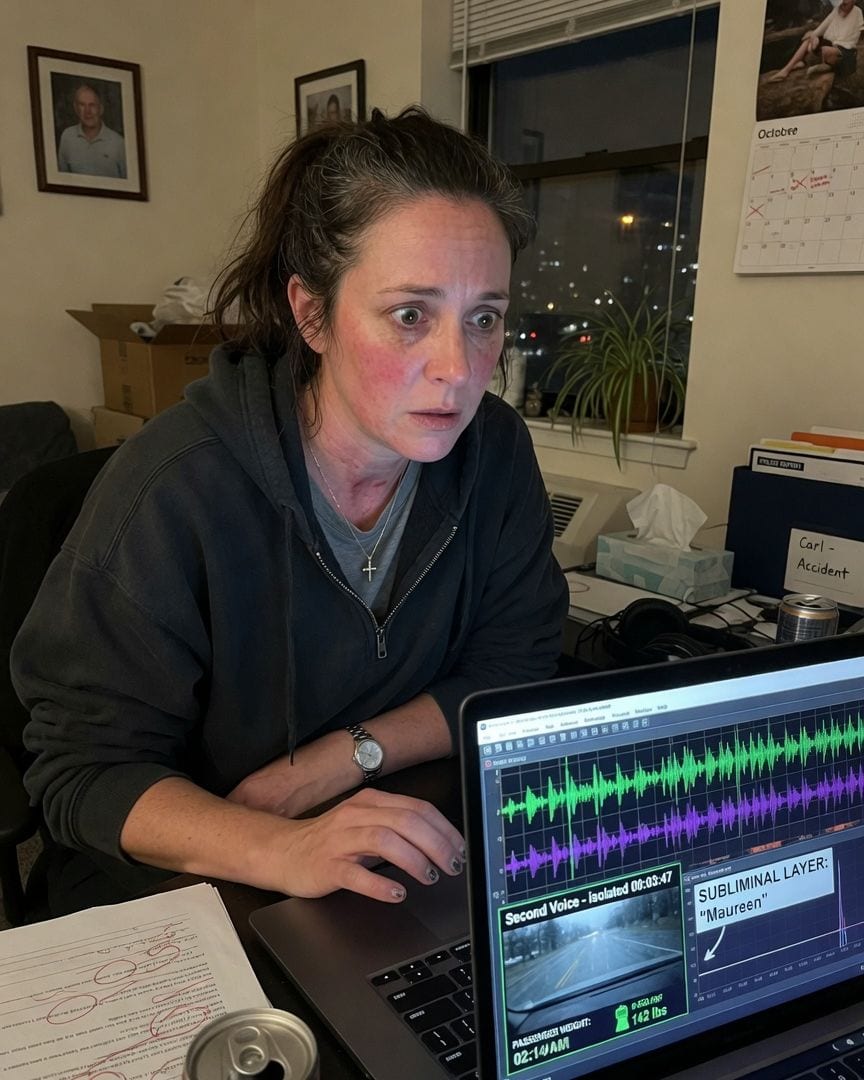
My father's dashcam recorded a soft, familiar voice from the passenger seat. The weight sensor logged someone, and he answered it by name.
Sifting through my dead father Carl's dashcam footage, I expected only the quiet hum of the road. But from the empty passenger seat, a soft voice spoke to him. When I isolated the audio, the voice whispered my own name.
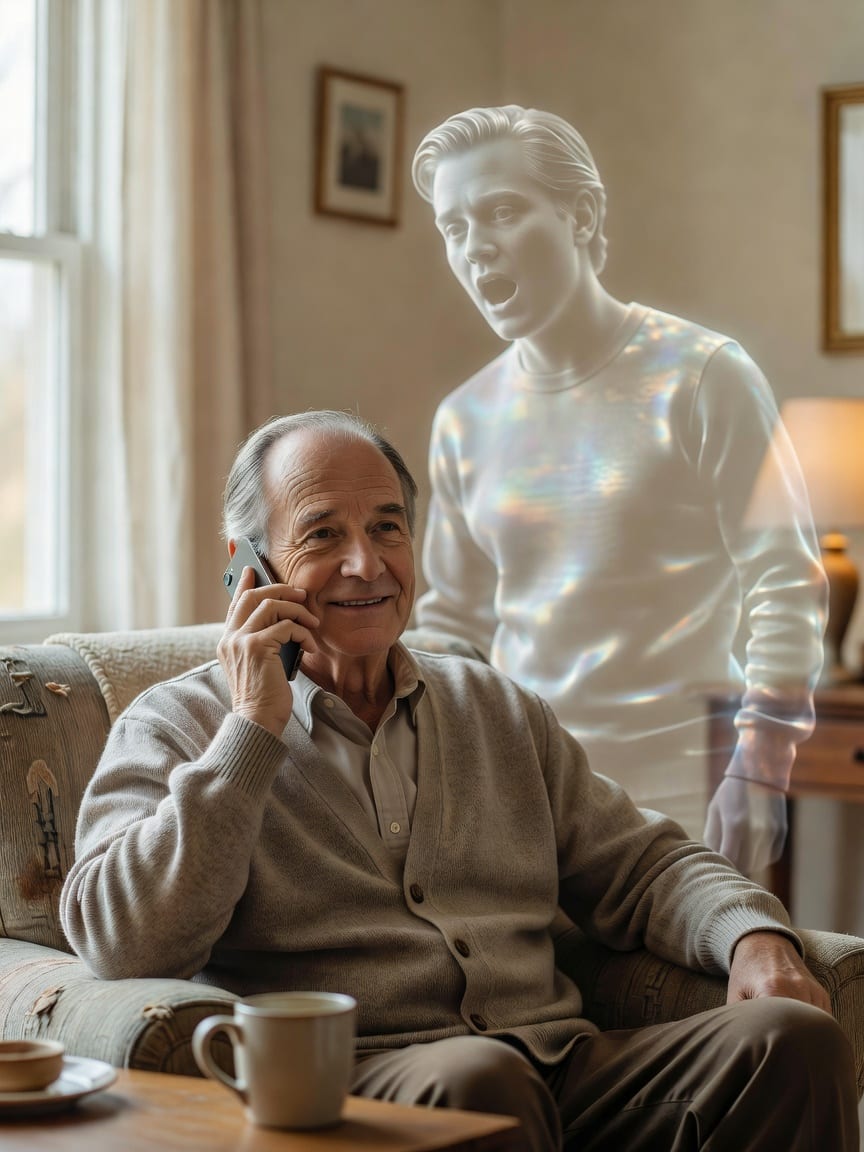
My dad's phone calls have a third voice, patient and close. It repeats everything he says, one beat behind him. My father doesn't hear it.
I routinely record calls with my elderly father, Dean, as a simple habit. But replaying one, a distinct, patient voice echoed his words a beat behind him, completely unnoticed. A sound engineer confirmed it was in the original audio, and I found the same echoing voice on his old cassette tapes from thirty years ago.
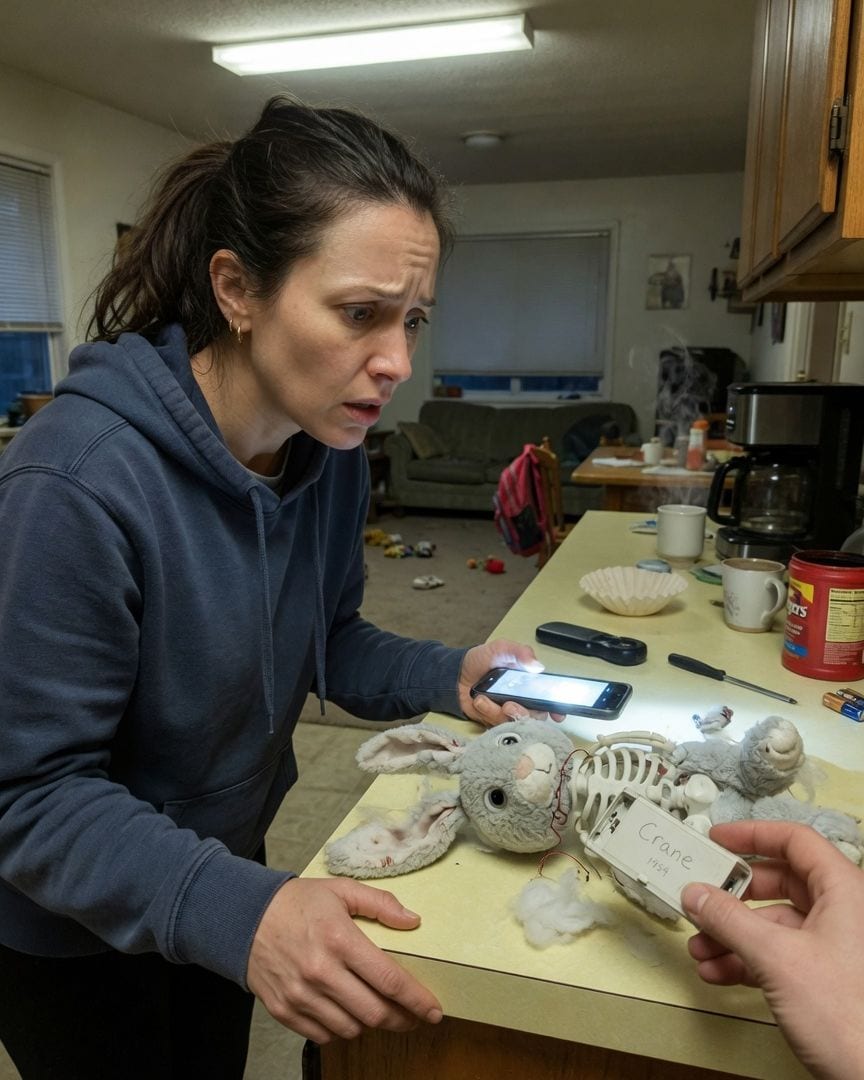
My son's toy rabbit says my name, then, 'bring him to the water.' The batteries are out.
I was making coffee, my son James at school, when I heard a grown man's voice from the living room. It was his favorite toy rabbit, whispering my name: 'Nina, bring him to the water.' The chilling command was impossible; I had removed the rabbit's batteries three days earlier, and they sat on the kitchen counter.
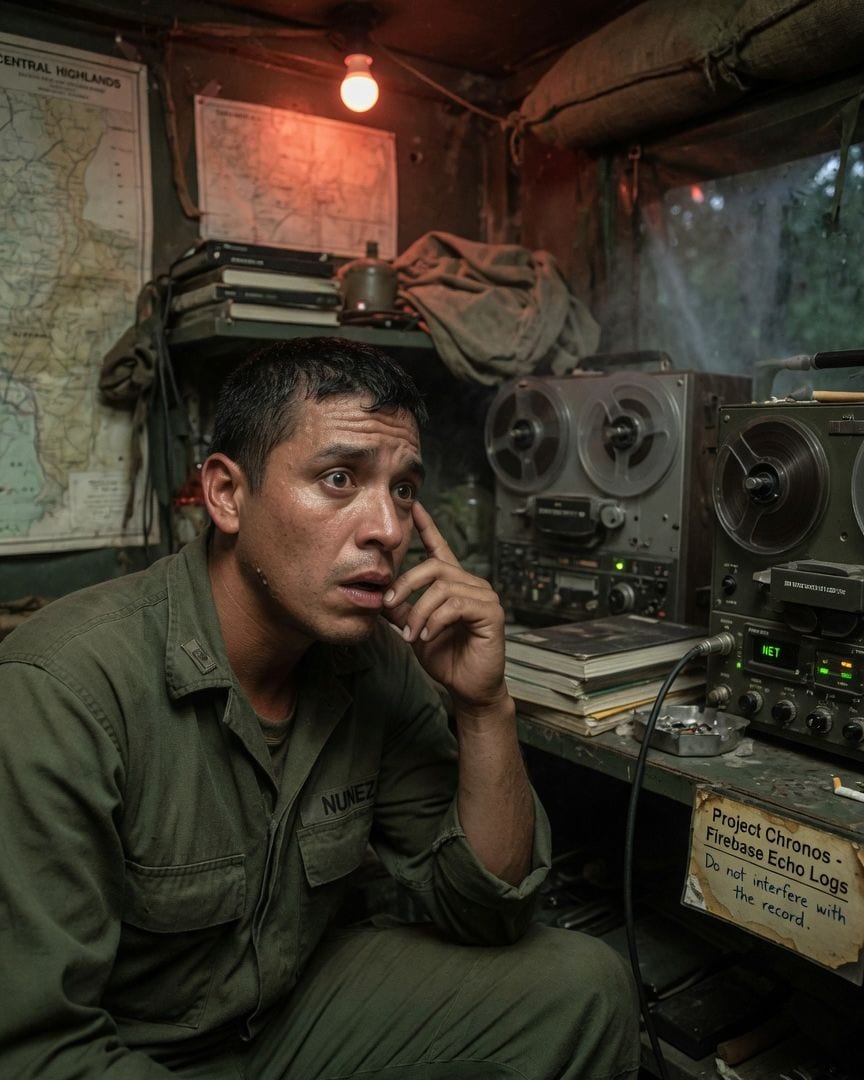
A Firebase RTO was about to send his 0400 report when his own voice crackled over the net, delivering the exact words he hadn't yet spoken.
Specialist Arthur Nunez sat alone in the RTO shack, preparing his routine 0400 SITREP amidst the humid Central Highlands night. The familiar hum of equipment was his only company, a constant drone against the isolation. Just as his thumb hovered over the transmit switch, ready to report "Perimeter quiet, all positions manned," his own voice crackled over the company net, delivering those exact words with uncanny precision. A sickening lurch twisted in his gut; he hadn't spoken a word, yet his report was already delivered by himself. Desperate for an explanation, he soon uncovered an ancient, jury-rigged reel-to-reel recorder, humming faintly. A faded label on the machine bore a stark instruction: 'Do not interfere with the record'.
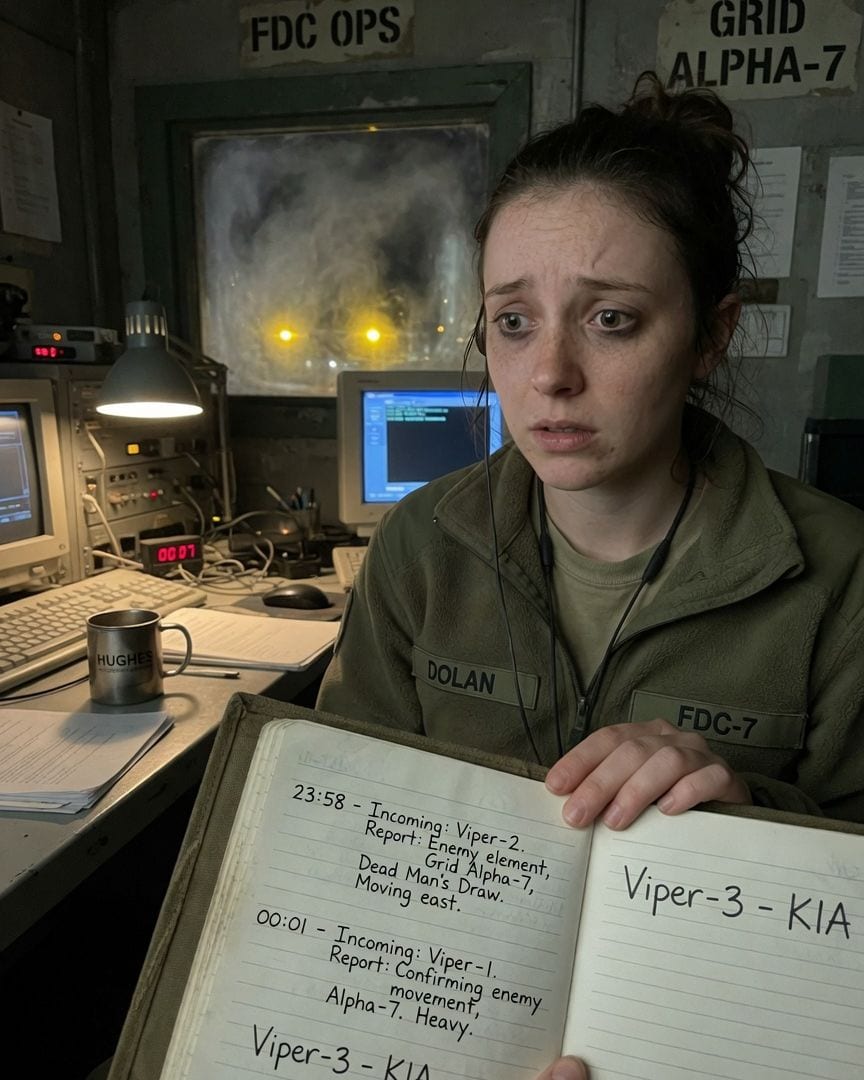
On her final watch at Firebase 7, Specialist Dolan's comms logged frantic calls from a patrol wiped out last week.
Specialist Emily Dolan adjusted her headset in the FDC, the fog pressing against Firebase 7's windows on her final watch before its decommissioning. Near midnight, frantic calls began coming in from observer posts, reporting enemy contact in treacherous territory where a patrol was wiped out just last week. But Control reported losing comms with those posts hours ago, leaving Dolan to realize her system had logged a full conversation with voices no one else heard. Then, the physical FDC logbook confirmed her entries, complete with an unfamiliar annotation: 'Viper-3 - KIA,' the call sign of the very patrol wiped out days before. What impossible truth had the firebase itself recorded?
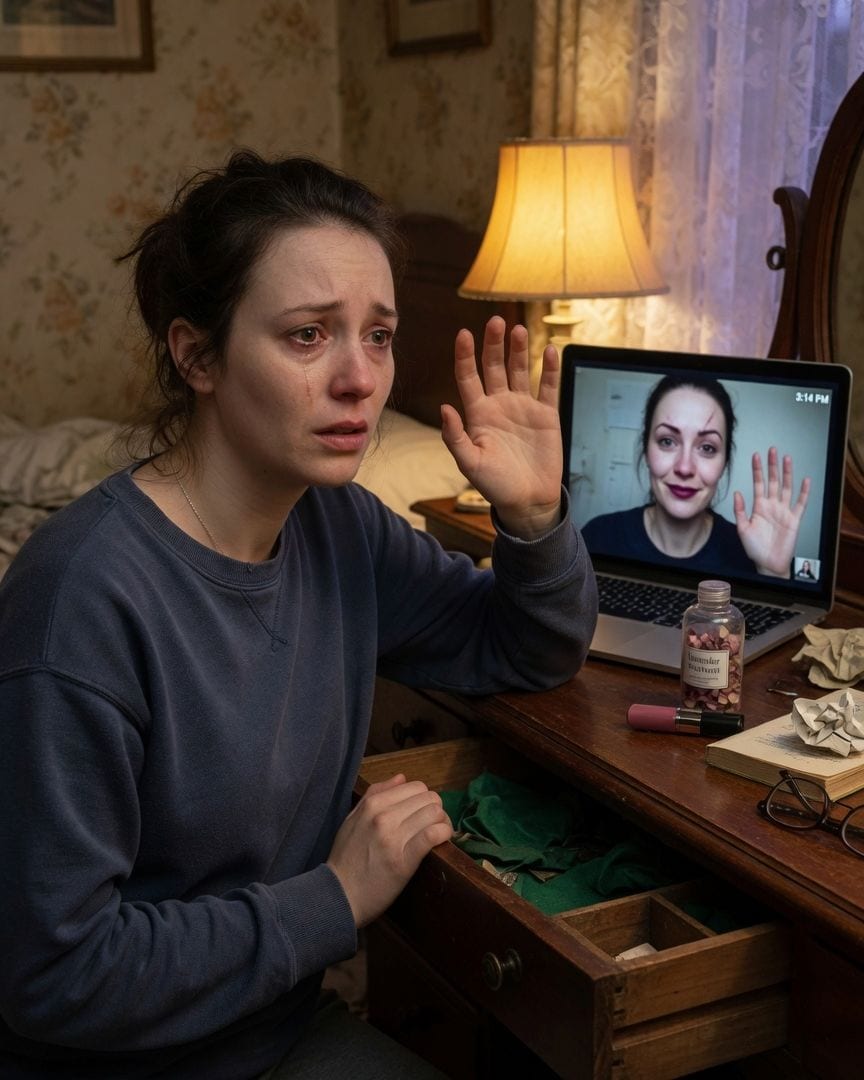
My mother waved with her right hand, both times, on our first call after she came home. She always waved left.
My mother vanished three months ago, then came back. On our first video call, she waved goodbye, but not with her usual left hand. It was her right, a small gesture that twisted something cold in my stomach.