My dashcam showed a doorway in the loading bay wall. Open, with steps into the dark. I got out. Solid brick. Back in the cab, a shape stood on the steps.
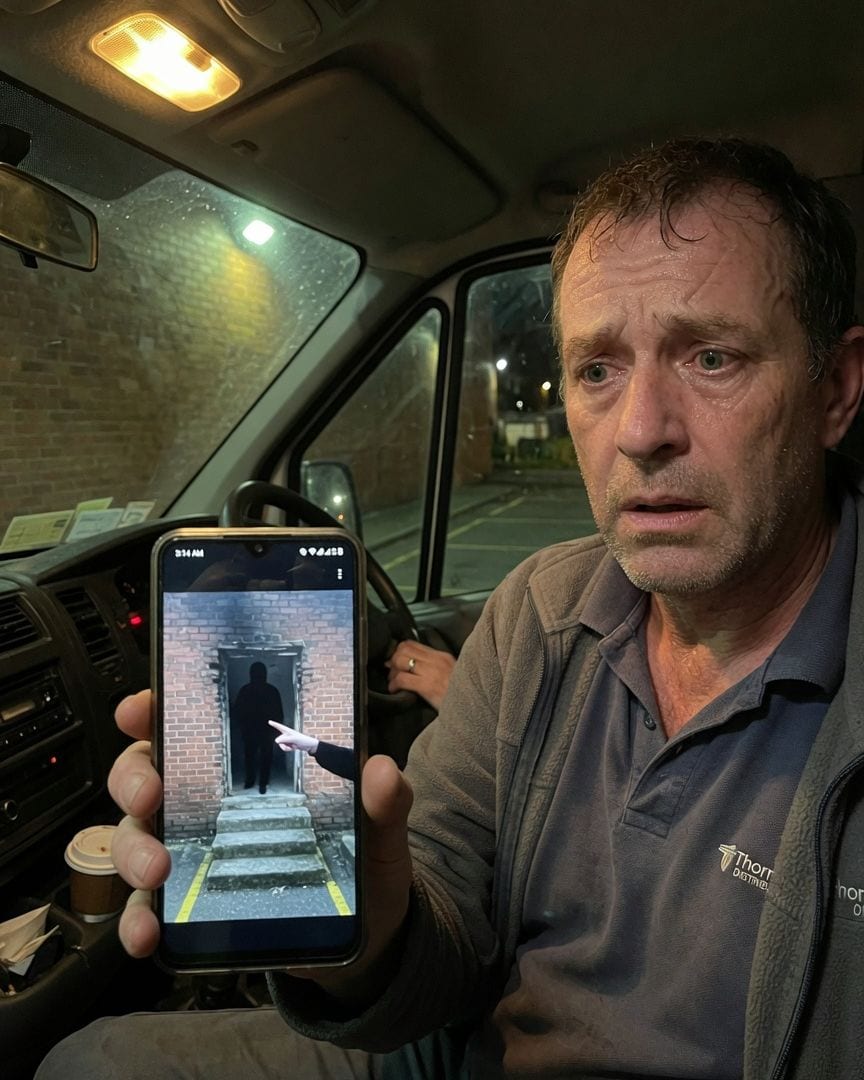
It was late, past three in the morning, the kind of quiet when you could hear the hum of distant streetlights. My route was done.
All I had left was to reverse the Thornton Distribution van into Loading Bay 7, park it, and go home. I’d done it thousands of times.
The rear dashcam screen, usually a familiar mosaic of scuffed brick and exhaust stains, flickered on. The yellow lines guided me back.
But that night, it showed something else.
Right in the middle of the brick wall, where it should have been solid, there was a doorway. Low, dark, like a mouth cut into the masonry. It was open. Three rough-hewn steps led down into absolute, lightless blackness.
No, not blackness. More like an absence of light, a vacuum that sucked at the screen’s luminescence.
My foot slammed the brake pedal. The van lurched, then shuddered to a halt. My heart was hammering against my ribs, a trapped bird. This was Bay 7. There was no door there. Ever.
I killed the engine, fumbling with the door handle. I had to see. I walked around the back of the van, my boots crunching on the gravel. The air was cold, damp.
I reached the wall, ran my hand over the familiar, rough brickwork. It was solid. Unbroken. No doorway. No steps. Just the usual grime, the old graffiti, the exhaust stains. My own breath plumed white in the air.
I must be exhausted, I thought. A trick of the light. A hallucination.
Back in the cab, I fired up the ignition. The dashcam screen glowed to life again. The doorway was still there, impossibly. And now, something else was too.
A tall, slender shape stood at the top of the steps, silhouetted against that absolute void. Perfectly still. Watching the camera. Watching me.
I pulled out my phone, fingers trembling, and started replaying the footage. Again. And again. I zoomed in, trying to find the trick, the reflection, the glitch.
But the timestamp in the corner of the screen was clean, ticking along, marking 3:14 AM. The image was crisp, not distorted. Every replay confirmed it: a doorway that didn’t exist, and a figure standing in it.
The next morning, I showed the clip to Eileen Mercer, the dispatch supervisor, while she sipped her lukewarm coffee. Eileen, forty-five and seen-it-all, watched it with a furrowed brow, then shrugged. "Huh. Weird tech thing, Kenneth. Dashcams do that sometimes.
Ghosts in the machine, you know?" She tapped her pen on the desk. "Old Gordon Foster, maintenance back in the day, he used to talk about weird stuff around Bay 7. Said the building was 'hungry.' Crazy old coot."
She chuckled, then went back to her reports. Her dismissal, however, didn't sit right.
I checked the dashcam card again before my next run. The file was still there, untouched, dated to the minute. On the way out, I made a point of walking over to Bay 7. The wall was solid, of course.
But this time, as I ran my hand over the brickwork near the ground, I felt faint, almost invisible grooves. Subtle etchings that hadn't been there yesterday, or I’d never noticed them. They looked like stylized, interlocking gears.
Or maybe, disturbingly, eyes. I took a photo with my phone. But in the picture, they looked like nothing at all. Just faint shadows on rough brick.
Later that night, sleep wouldn't come. My phone felt heavy in my hand as I replayed the footage one more time. I zoomed in on the figure again. It was dark, indistinct, a shadow that absorbed light, but definitely human-shaped.
I pressed my thumb against the screen, trying to make out details, to rationalize it into something familiar. As I watched, the figure shifted.
It was a slow, deliberate movement, like someone waking from a deep sleep, or maybe just adjusting its weight. Then its arm lifted, a long, pale limb emerging from the deeper shadows of the doorway.
My breath caught in my throat.
Kenneth freezes, the dashcam screen held in his hand. The figure on the screen, still standing in the impossible doorway, has lifted its arm. Its hand, pale and elongated, points directly at the camera, at Kenneth, a silent, unmistakable accusation.
The pointing figure had lodged itself in my mind. I couldn't shake it. Eileen’s casual dismissal of my dashcam footage, and her mention of Gordon Foster, had only made me more determined.
I spent the next few days in the Thornton Distribution Center archives, sifting through ancient blueprints and dusty building schematics. My fingers, usually adept at a steering wheel, felt clumsy turning brittle pages.
I cross-referenced every drawing of Bay 7, every structural report from the last fifty years. There was no record of a doorway, no structural anomaly, no hidden passage in that particular wall, ever. Just solid, load-bearing brick.
I went back to Eileen, pressing her again about Gordon. She sighed, her pen tapping a rhythmic beat on her desk. "Look, Kenneth, Gordon was a character.
Good at his job, knew this place inside and out, but he had some… eccentric theories. He was obsessed with 'hidden passages' and 'sub-levels' that weren't on any maps, particularly around the loading docks."
She rummaged through a drawer, finally pulling out a crumpled Post-it note. "Said the building was a 'living thing' sometimes. Old coot moved to the Greenbriar retirement community about five years ago, if you're really that curious."
She scribbled an address on a fresh note and pushed it across the desk.
Meanwhile, I made a point of checking the symbols near Bay 7 every single day. I told myself it was for scientific observation, to prove to myself it was nothing. They were still there, those faint, etched grooves.
But they were never quite the same. Subtly different each time—a line extended, a curve deepened, almost as if they were being redrawn or evolving.
I’d try to sketch them in my notebook, but they seemed to shimmer, refusing to hold a consistent form. And each time I examined them, a prickle ran down my neck, a distinct, unsettling sense of being watched.
Not from outside the building, but from within the solid brick wall itself.
A week later, I found a small, smooth, dark grey stone sitting on my dashboard. My van had been locked, windows up. No one else had access.
It was perfectly oval, cool to the touch, and felt unnaturally heavy for its size. I picked it up, turned it over in my palm. It was just a stone. A rock. But it shouldn't have been there.
I pocketed it, unsettled, and started my route.
That afternoon, while making a delivery to an electronics store across town, my phone buzzed. An anonymous text message from an unregistered number. 'Some things are better left alone, Mr. Patterson. Focus on your route.' My hand shook.
I tried to call the number back immediately, but it went straight to a generic voicemail, then disconnected entirely. A cold dread settled over me. It wasn't a prank. It felt like a warning.
From that moment on, whenever I was near Bay 7, or even just driving through the yard, I felt eyes on me. A persistent, chilling sensation that burrowed beneath my skin.
I glanced in my mirrors constantly, straining my vision, but saw nothing out of the ordinary. Just the usual activity of the distribution center.
The stone in my pocket grew warm, humming with a faint, almost imperceptible vibration, a low thrum against my leg that seemed to intensify whenever the feeling of being watched was strongest.
I finally found Gordon Foster in the common room of the Greenbriar retirement home, a quiet place that smelled faintly of lemon polish and institutional coffee.
He was seventy-two, frail-looking in a faded cardigan, but his eyes were sharp, bright blue, and unsettlingly knowing as he meticulously polished a collection of old brass keys. He didn't look up immediately when I introduced myself.
"Kenneth Patterson, from Thornton," I said, my voice feeling clumsy. "I'm a driver there."
He finally looked up, a faint, almost imperceptible smile playing on his lips. "Ah, Mr. Patterson. I thought you'd come eventually." He gestured to the empty chair beside him. "Sit. What can an old man help you with?"
I took a deep breath, pulled out my phone, and showed him the dashcam footage. Gordon watched it without a hint of surprise, his eyes fixed on the impossible doorway and the figure within. He didn't flinch, didn't gasp.
When the loop finished, he just nodded slowly. "Ah, Bay 7," he rasped, his voice thin but clear. "Always a busy place, even when it's quiet."
"What is it?" I asked, my voice barely a whisper. "The doorway. The figure. It's impossible. I checked the blueprints. There's nothing there."
Gordon leaned forward, the smell of brass polish suddenly stronger. "The building's old, Mr. Patterson. Over fifty years, you know. But it sits on something older still. Much older. A network, you might call it.
Maintenance tunnels, you might call 'em. But not for our maintenance." He paused, his gaze distant. "They're... between things. And Bay 7, that's a thin spot. A threshold. Happens now and then."
"And the symbols?" I pressed, pulling up the photos I’d taken. "The ones etched into the brick? They keep changing."
Gordon nodded. "Markers," he said, touching his own temple. "Warnings, sometimes. Or directions, if you know how to read 'em. They don't like being seen, the ones who use those passages. Don't like being recorded."
The stone in my pocket suddenly felt much heavier, throbbing with a distinct, rhythmic thrum.
"They've noticed you," Gordon said, his voice flat, his knowing smile fading. I recounted the anonymous text, the impossible stone on my dashboard. He listened, his blue eyes unblinking. "When you poke around, Mr. Patterson, you disturb the dust.
And things in the dust notice." He reached into a worn leather pouch at his side, the leather soft and dark with age, and pulled out a faded, laminated ID badge. Its plastic was yellowed and cracked, the edges frayed.
"Found this myself, decades ago, near Bay 7. It changed things for me."
He handed it to me. The badge, clearly dated '1968', featured a logo I didn't recognize – a stylized gear with an eye in the center – and the title 'Inter-Structural Logistics.'
My fingers traced the embossed text, the faded words. My breath hitched. The name printed on the badge, beneath the impossible title, was 'K. Patterson.'
Kenneth stares at the old badge in his hand, the plastic warm from Gordon's grasp. 'K. Patterson.' The name is his. The date is decades before he was born.
And the blurred, sepia-toned face in the photo, though warped by time and poor quality, is undeniably, chillingly, his own.
"What does this mean?" I asked, my voice barely a whisper, the old badge feeling impossibly heavy in my trembling hand.
Gordon leaned forward, his gaze intense, pinning me. "It means they've 'enrolled' you, Mr. Patterson. Pulled your file, so to speak. These aren't just tunnels; it's a system. A bureaucracy of the impossible.
And once you see it, once they see you seeing it, you become part of their 'logistics.' That badge... it's a notice of reassignment."
He watched my face, seeing the horror growing there. "I had a similar experience, back in '68. Glimpsed the network, felt the pull. They didn't take me fully, not then. I came back. But not entirely."
He gestured to his collection of polished keys. "A piece of me is still working down there, on the other side. Always will be. These?" He picked up a heavy, tarnished brass key. "They're just tools now.
For a lock I can't see, for a door I can't quite remember opening. They want you to serve a function, Kenneth. They always need more hands."
The stone in my pocket, forgotten until now, began to vibrate, a low thrumming that seemed to synchronize with my own racing pulse.
A cold, clear desperation settled over me. I drove back to Bay 7, the old ID badge clutched in my hand, the stone humming in my pocket. I needed to confront it, to understand, to escape.
My van idled, the engine a low rumble in the otherwise silent loading bay.
On the dashcam screen, the doorway was there again, clearer than ever, no longer a faint image, but stark and real, the steps leading into a swirling, lightless void that seemed to breathe. And the figure was there, waiting.
This time, it stepped out fully onto the loading bay floor. It was tall, slender, dressed in what looked like faded, grey coveralls, the kind maintenance workers wear.
Its face was obscured by shadow, a featureless void beneath the brim of a cap. It held something in its outstretched hand: another ID badge, identical to the one Gordon had given me.
My own name, my own face, only this one was pristine, new.
A profound, unsettling calmness washed over me, silencing my fear. The hammering in my chest subsided. The cold dread dissipated, replaced by a strange sense of belonging, an irresistible pull.
It was as if this was where I was always meant to be, a missing piece slotting into place. The humming stone in my pocket grew warm, a comforting weight.
I looked from the new badge in the figure's hand to the old one in my own, then back to the swirling darkness of the doorway.
I opened the van door, the familiar squeak echoing in the empty bay, and stepped out, moving slowly, deliberately, toward the waiting figure and the doorway that promised a new kind of work.
Kenneth Patterson's delivery van was found abandoned in Loading Bay 7 the next morning, engine still running, headlights off. His personal effects—wallet, phone, keys—were all neatly arranged on the passenger seat.
The dashcam was still recording, its last clip showing the empty loading bay, then the van door opening, and nothing more. The strange stone he’d been carrying was gone. Police investigated, ruled it a disappearance, no foul play.
The Thornton Distribution Center, after a week, hired a replacement driver for Kenneth's route.
The dashcam footage, recovered by police, showed only the empty loading bay, then the van door opening, and a brief, silent shot of the empty driver's seat. No figure, no doorway. Nothing to explain.
Two weeks later, the new driver, Kenneth, smiled faintly when he saw the old loading bay, a flicker of something unreadable in his eyes.
If this one got to you
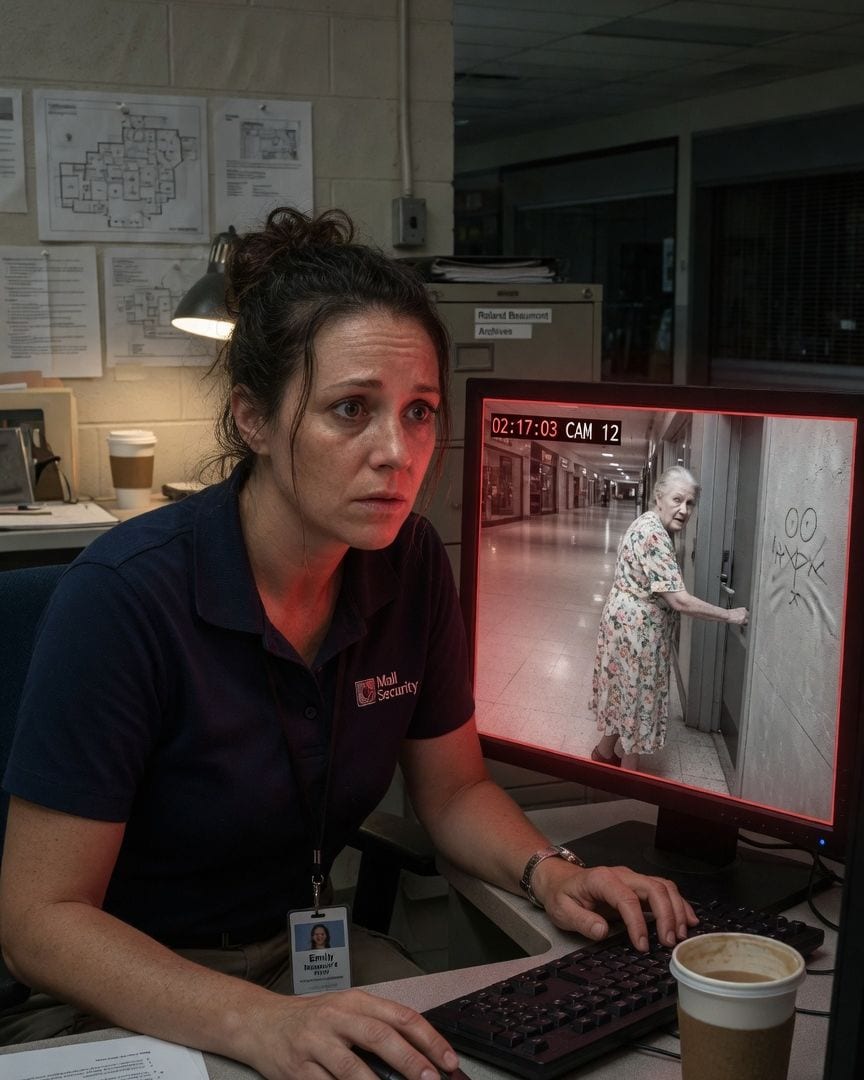
Mall security footage caught an old woman walking the concourse after closing. Every camera filmed her, but no single frame shows how she got in.
Working the overnight shift, I monitor my locked mall's security footage. It was 2:17 AM, five hours after closing, when an old woman in a floral dress simply appeared on Camera 7. She was never seen entering the frame, only *present*, walking slowly across the deserted concourse.
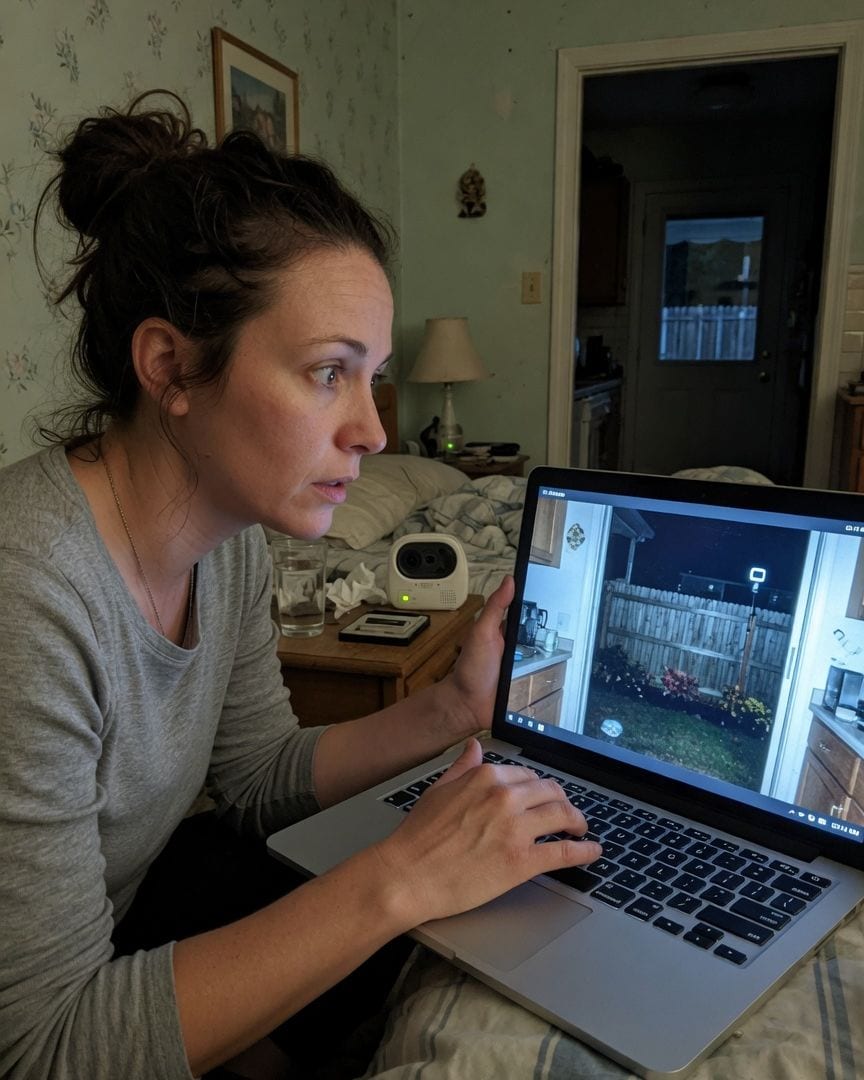
My game camera caught my back door from the inside. For three nights, it showed my door from the yard, getting closer. The last picture is from inside the glass, looking out at the fence.
I had set my game camera on the back fence, aimed at my house, to catch whatever I'd seen moving outside my kitchen window. But the last photo, taken after midnight, showed my kitchen from *inside* the locked back door, looking out.
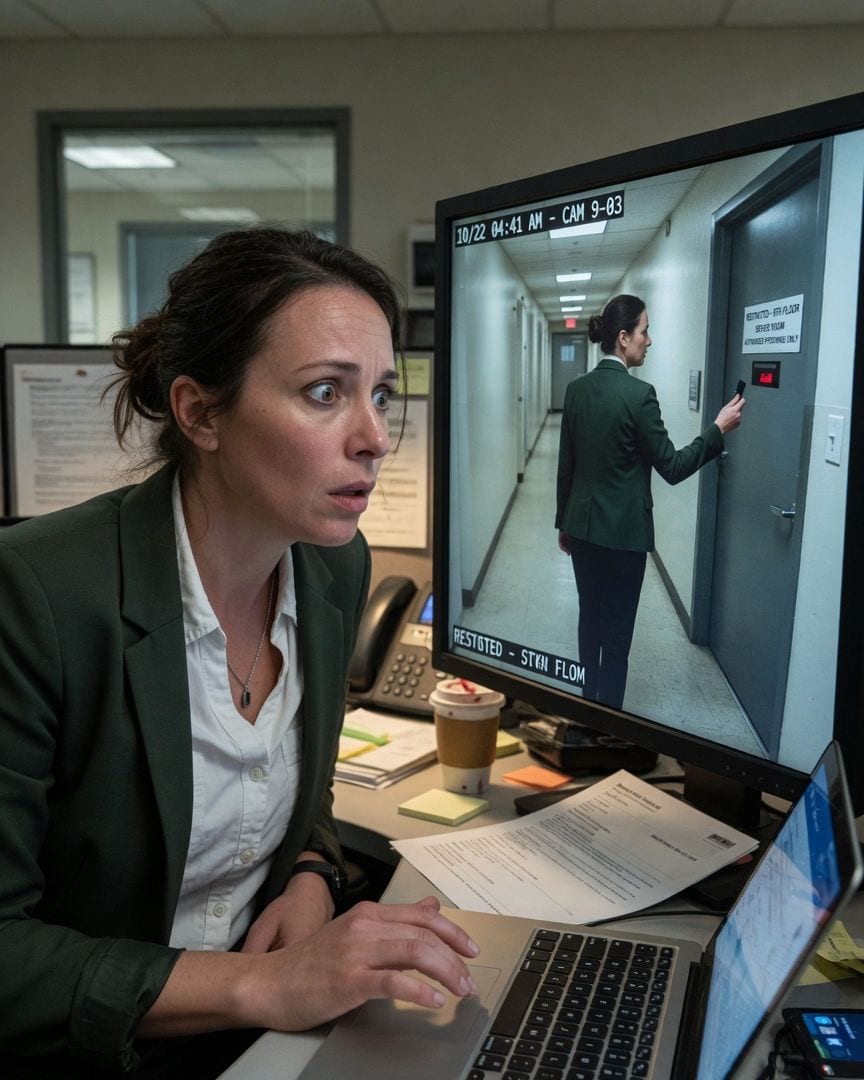
My keycard log shows me in the server room at 4:41am. I was asleep, and my badge was at home.
An email from corporate IT reveals my keycard registered entry into a restricted server room at 4:41 AM last Sunday. I was asleep in my apartment across town, my badge clipped securely to my jacket at home. But then I scrolled down and found eleven more impossible entries, all within the past week, all under my name.
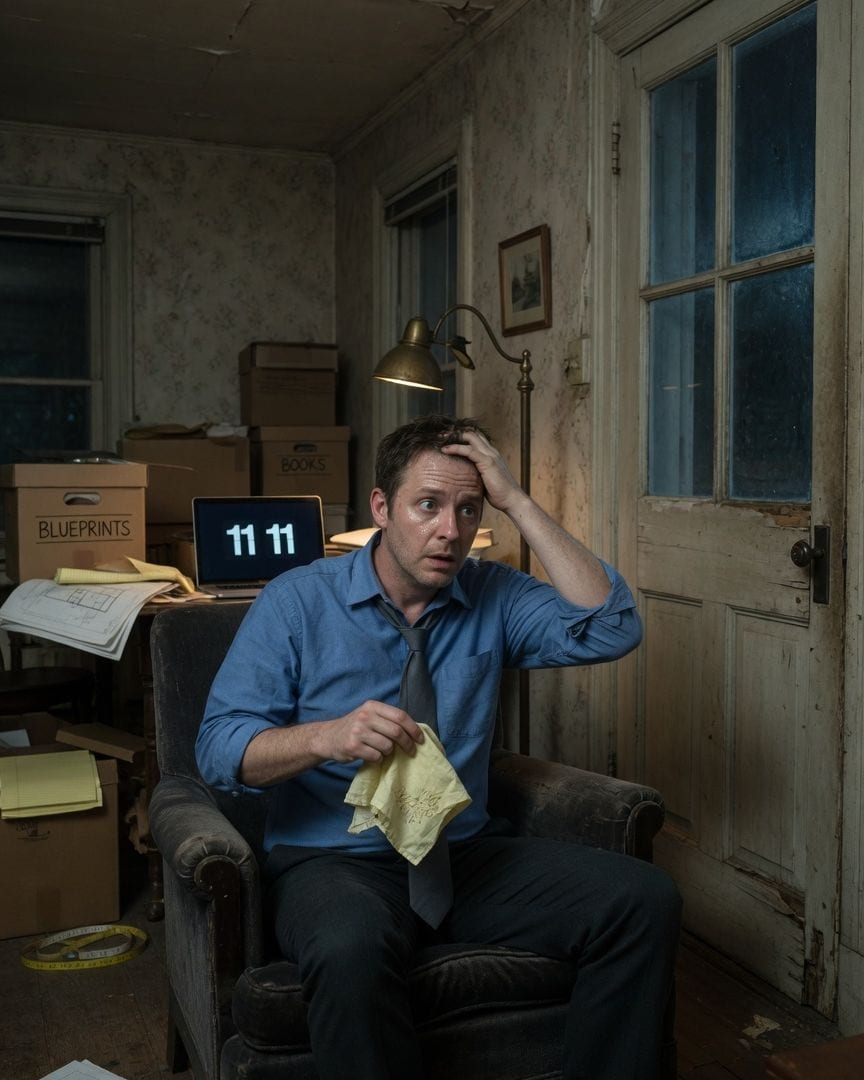
The boarded-up door in my study has twice swung open onto the balcony that was torn off this house years ago — iron railings back, and a woman at the rail with her back to me, watching a street that no longer runs below.
As an architect, I approach my great-aunt's inherited house with a rational eye, seeing its potential, not its ghosts. I knew the charming French door was boarded up because its balcony was removed back in 1953. But for two nights now, at 11:11 PM, those boards simply vanish, revealing the balcony restored and a silent woman watching an impossible street.
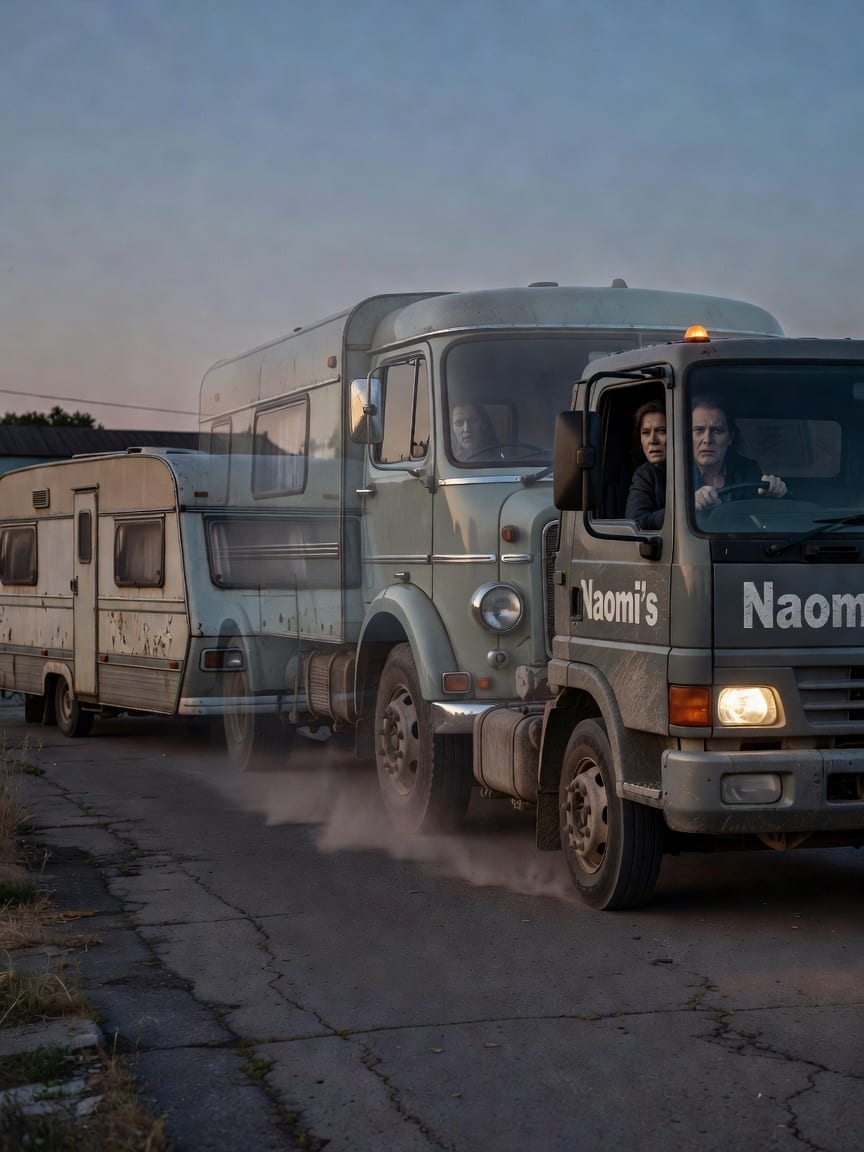
My dashcam shows the same parked caravan scrolling past eleven times in forty minutes. The timestamp advances. The mileage advances. The caravan never moves, and neither, it seems, did I.
I was on my usual lorry route, my dashcam humming, when I passed the old caravan in the lay-by. Five minutes later, I saw it again – the exact same lay-by, the same peeling blue paint. My dashcam timestamp advanced, my odometer clicked over, but the road kept repeating.
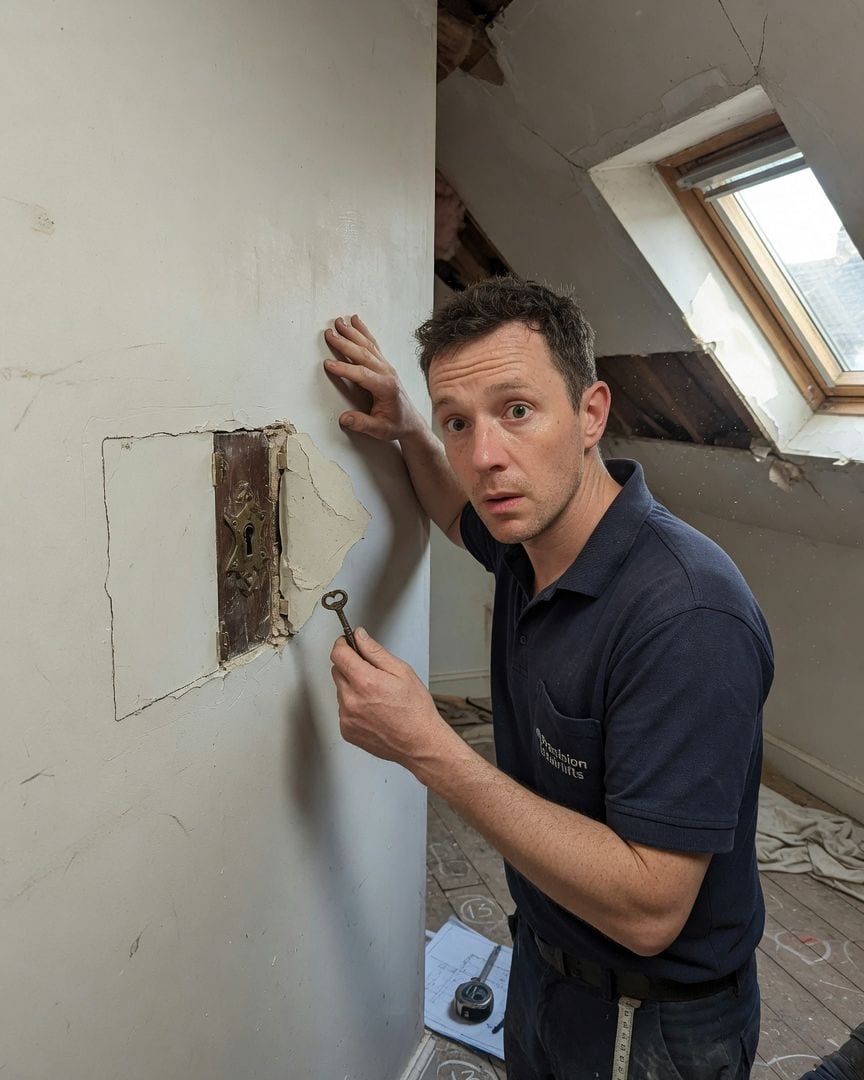
My stairlift tape measures thirteen steps, but my own feet always find a fourteenth — to a door that isn't there.
As a meticulous fitter, I measured my client's new loft stairs, confirming thirteen solid steps. But my foot found a shallow, impossible half-step, leading to a plain wooden door that shouldn't exist. Now the door is gone, leaving only a ghost outline.