My daughter Naomi recalled holding her brother at birth, using his secret nickname. She was taken at four. He was born after she vanished.
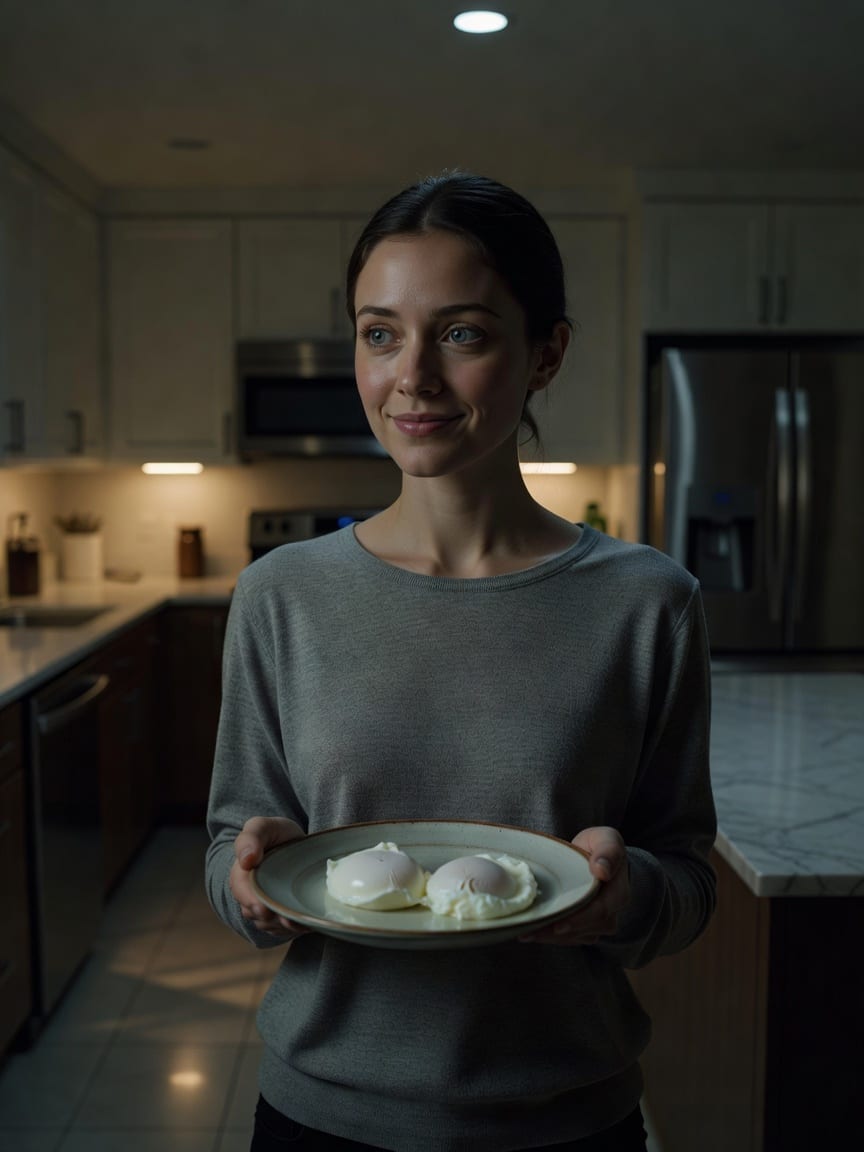
The relief of Naomi's return, after fifteen years, was a physical thing, a weight lifting from my chest I hadn't even realized was crushing me. My daughter was home.
Nineteen years old now, not the four-year-old I’d lost, but it was her face, her eyes, her laugh. Or so I thought.
We were all at the dinner table, a few nights after she came back. Maxwell, my fourteen-year-old son, was telling a rambling story about school, typical teenager stuff. Naomi was listening, nodding, a warm smile on her face.
Then, as Maxwell paused, she reached out and ruffled his hair, just like an older sister would. "Maxwell, little 'Maxie-Pad,' you were such a squishy newborn," she chuckled, her voice so familiar.
"I remember holding you in the hospital, helping Mom and Dad pick out your name."
The fork clattered from my hand, hitting the plate with a sharp crack that echoed in the sudden silence. Max looked at me, startled. My heart felt like a frozen knot had tightened around it, squeezing.
Maxwell was born a year after Naomi vanished. Fourteen years ago. Naomi had never met him. She couldn't have. And the nickname, 'Maxie-Pad'?
That was a private joke I invented with Maxwell, a silly, loving thing, long after Naomi was gone. We'd laughed about it, just the two of us, over late-night snacks.
The smile on Naomi's face was wide, genuine, full of warmth, yet it felt like a cold mask. Her eyes, those beautiful brown eyes I remembered, held no confusion, no recognition of the impossible.
She just looked at me, waiting for me to pick up my fork.
I just stared, trying to reconcile this impossible memory with the daughter I thought I knew, the one who looked exactly like my little girl, just grown up.
The silence in the dining room stretched thin, brittle, like old glass ready to shatter.
Over the next few days, the small, wrong details began to pile up, each one a tiny pinprick of dread, impossible to ignore.
Naomi, who had always hated the smell and texture of eggs, would gag if they were even on the table. Now, she insisted on having them for breakfast, perfectly poached, every single morning. "Best way to start the day, Mom!"
she'd chirped, her fork scraping against the ceramic plate. The sound was like nails on a chalkboard to me, because it used to make her gag. I tried to rationalize it, damn it. Trauma changes people. Tastes evolve.
She'd been through so much, who was I to question her newfound preference for goddamn eggs?
But the shift felt too absolute, too fundamental. It wasn't just a preference; it was an obsession. Then there was the music.
One afternoon, I walked past her bedroom door, slightly ajar, and heard her humming a lullaby to herself while doing laundry. It was a soft, simple tune, one I’d hummed countless times.
A song I had only ever sung to Maxwell, after Naomi was gone. It was his song, the one I’d used to soothe him to sleep in those dark, lonely nights when I grieved for her.
I approached cautiously, pushing the door open a little wider. "Naomi," I said, my voice too even, "that's… that's Maxwell's song."
She paused, folding a shirt, her hands still. The hum died in her throat. The silence that followed was a beat too long, stretching out like taffy, elastic and sickening.
Her smile, when it returned, wavered just a fraction, a barely perceptible flicker. "Oh, is it? I must have heard it somewhere. It's pretty."
The casual dismissal, the slight hesitation, sent a shiver down my spine that had nothing to do with the cool air drifting from the window.
It wasn't just a changed habit; it was a memory, acquired from somewhere impossible, yet presented as her own. It felt like she was trying on a new skin, and it almost fit. Almost.
That night, I went to the attic, the air thick with dust and old memories. I rummaged through old boxes, pushing aside forgotten toys and faded photographs until I found it: Barnaby, Naomi’s beloved teddy bear.
He was worn and faded, missing an eye, but still held that familiar, comforting smell of stale cotton and childhood. I remembered his small, crudely sewn hidden pocket, a secret place young Naomi had made for her 'lucky stone.'
My heart pounded, a frantic drumbeat against my ribs. I held Barnaby, my fingers fumbling, and found the tiny seam. I pulled out a smooth, grey river stone, perfectly oval, just as it had always been.
My hand trembled as I walked downstairs, Barnaby clutched tight.
Naomi was watching TV, her back to me. "Naomi," I said, my voice tight, barely a whisper. "Do you remember this?"
She turned, her eyes landing on Barnaby, then the stone in my palm. A wide, bright smile bloomed on her face. "Of course, Mom! Barnaby! And my lucky stone! I loved that thing.
It was jagged, like a little star, wasn't it?"
My breath caught in my throat, a physical obstruction. The room seemed to tilt. The real Naomi’s stone was always smooth, perfectly oval.
The 'lucky stone' lie shattered any remaining doubt. This wasn't my Naomi. That was the sickening, undeniable truth. The girl sitting across from me, the one who looked and sounded like my daughter, was an impostor.
I had to find out what happened, who she was, and who put her in my home.
I began to covertly search for answers, starting with the most logical—the police reports from Naomi’s disappearance and return. I dug through dusty boxes in the basement, pulling out old newspapers, news clippings, anything I could find.
The official files were a thick stack of papers, detailing the initial search, the dead ends, the agonizing years, and then, the astonishing discovery of Naomi in a remote cabin upstate, seemingly unharmed.
The official explanation was a 'reclusive individual' who had taken her, then released her. But the details felt thin, glossed over. No motive. No explanation for why now.
I focused on the ‘reclusive individual’ mentioned in the reports. The name was redacted, blacked out, but a small, smudged fingerprint on an old evidence bag caught my eye. It looked like a partial, old print.
I used my limited tech skills, fueled by pure desperation, to cross-reference it with old, publicly available records from the case.
It took me days, sitting hunched over my laptop long after everyone else was asleep, but I finally traced it back to a retired private investigator, Conrad Reynolds, who had worked briefly on the case in its early, desperate days.
Conrad Reynolds was a weary man in his late sixties, his office smelling of old coffee and cigarette smoke. He initially dismissed my concerns as parental anxiety, the lingering effects of trauma. "Mrs. Caldwell, your daughter was verified.
DNA, scars, everything matched. They ran every test in the book."
I pushed, my voice trembling with suppressed rage and fear. "No, you don't understand. She remembers things that never happened. Maxwell's birth. His nickname. She hates eggs, always has, but now she eats them every morning. And the stone.
Barnaby's stone. She described it wrong. The lucky stone."
Conrad sighed, rubbing a hand over his tired face. "There were… whispers. Always whispers, with these cases. Not just yours. Kids found years later, perfectly healthy, but… off. Some families chose not to look too deep."
His eyes, though tired, held a flicker of something, a shadow of recognition. He leaned forward, lowering his voice. "I remember a 'consultant' who joined the task force late in the game. Dr. Brooks. Reginald Brooks.
Seemed to have an unusual interest in the 'reintegration' process for these kids." Conrad muttered, looking out his window at the grey city street. "He had a way of smoothing things over, making everything seem normal, even the impossible details.
Said he specialized in post-trauma memory reconstruction."
Dr. Brooks. A name, finally, a thread to pull. My heart was a frantic bird in my chest, beating against the bars of its cage.
I found Reginald Brooks listed as a retired 'Behavioral Consultant' with an old P.O. box address. Without thinking, without a plan, I sent a discreet letter, requesting a meeting about Naomi's 'readjustment issues.'
I wrote it like a worried mother, keeping my true suspicions locked away.
The next morning, a small, unmarked package appeared on our doorstep. The sun was barely up, painting the sky in pale pinks, but the air felt heavy and cold. My stomach dropped. I picked it up, feeling its light weight.
Inside was a single, perfectly poached egg on a pristine white plate, still warm. There was no note. No return address.
A jolt of pure terror went through me, sharp and absolute. Someone knew. Brooks knew. He was watching.
Naomi, who had been downstairs making herself breakfast – of course, a poached egg – came up the stairs, humming a cheerful tune. "Oh, Mom, look! Someone left breakfast for us!" Her voice was bright, innocent.
Her eyes, though, lingered on my face a beat too long, a faint, unblinking stare that made my skin crawl, like cold fingers tracing my spine.
It was a calculating look, a flicker of something ancient and knowing behind her familiar smile. The air in the hallway seemed to thicken, pressing down on me.
Later that day, I noticed Naomi’s laptop open on her desk, displaying a browser history that included searches for ‘post-traumatic memory reconstruction’ and ‘false memory syndrome.’ My blood ran cold. She was researching herself.
When I asked about it, trying to keep my voice light, Naomi merely smiled, ‘Just doing some research, Mom. Trying to understand what I’ve been through.’ But the look in her eyes was still calculating, not curious.
It was the look of a scientist observing an experiment, or a hunter stalking prey.
I started locking my bedroom door at night, the small click of the latch a meager comfort against the growing certainty that I was being watched.
Not just by an unknown entity, but by the thing that wore my daughter's face, sleeping just down the hall.
A week later, Reginald Brooks, a man with a calm, almost unnervingly placid demeanor, agreed to meet Sarah at a quiet cafe on the other side of town.
He was impeccably dressed, his grey hair neatly combed, his suit perfectly pressed. He looked less like a retired behavioral consultant and more like a high-ranking corporate executive.
He exuded an air of quiet authority that immediately put me on edge.
"Mrs. Caldwell, thank you for reaching out," he said, his voice even, devoid of any discernible emotion. "I understand you have concerns about Naomi’s transition back home."
I cut to the chase, my hands clasped tightly under the table, trying to appear calm. "She remembers things that never happened. She’s forgotten things she knew her whole life. The eggs. The nickname. The stone."
Brooks nodded slowly, stirring his tea with a tiny silver spoon, the gentle clink of ceramic on metal the only sound in the quiet cafe. "Memory is a fragile thing, Mrs. Caldwell. Especially after significant trauma.
It can create gaps, or fill them with… constructs."
I leaned forward, my voice low but firm, my gaze locked on his. "This isn't trauma. This is… a fabrication. She isn't my daughter, is she?"
Brooks met my gaze, his eyes devoid of surprise, or even concern. He merely raised an eyebrow slightly. "What makes you say that?" His composure was a wall, smooth and unyielding.
I recounted everything, the impossible memories of Maxwell’s birth, the 'Maxie-Pad' nickname, the reversed habits, the sudden love for poached eggs, the wrong description of the lucky stone.
As I spoke, Brooks simply listened, occasionally taking a sip of tea, his expression utterly neutral. No shock, no denial. Just a calm, unsettling attention.
When I finished, my voice raw, he placed his cup down with a soft click. "You are a remarkably observant woman, Mrs. Caldwell. Most parents, in their profound relief, overlook these… inconsistencies."
He paused, a faint, almost imperceptible smile touching his lips, gone as quickly as it appeared. "Naomi's identity was confirmed by all standard forensic methods. Blood, tissue, dental records. The physical form is… identical."
I felt a cold wave wash over me, turning my stomach to ice. "The physical form? What are you saying?" My voice was barely a whisper.
Brooks’s gaze was steady, unwavering. "I'm saying that sometimes, the universe offers a different kind of closure. A more… palatable truth than the alternative. Naomi, your daughter, was… irrevocably lost.
What you have now, Mrs. Caldwell, is a beautifully constructed memory-matrix. A replacement. A mimic."
The words hung in the air, chilling and absolute, each one a hammer blow to my soul. He didn't deny it. He explained it, calmly, rationally, as if discussing a new household appliance, the specifications of a carefully engineered machine.
Reginald Brooks had left me with a cryptic warning: "Do not seek what you cannot unsee." But he had already opened my eyes to a hell I couldn't unsee.
The mimic was in my home, wearing my daughter's face, living my daughter's life. I needed more. I needed to know everything.
Remembering Conrad Reynolds’s mention of Brooks’s unusual interest in these 'returnees,' I decided to press harder.
I found Brooks’s old office address online, buried in an obscure archive: a dusty, abandoned building on the edge of town, the kind of place forgotten by time and progress.
The windows were grimy, boarded in places, and the front door, to my surprise, was unlocked, yielding with a groan.
Inside, the air was stale and heavy, smelling of decay and old paper. Cobwebs draped old filing cabinets like forgotten shrouds. Desks were piled with yellowed documents, forgotten reports. My breath hitched in my chest. This was where he worked.
This was where the secrets were kept. I moved through the silent rooms, my footsteps echoing on the bare concrete floor, a frantic urgency pushing me forward. I felt like a thief, but I was searching for my daughter.
In a forgotten desk drawer, beneath a stack of bland research papers on behavioral psychology and outdated organizational charts, I found it: a worn, leather-bound journal, its pages filled with Brooks’s precise, elegant handwriting.
The cover was plain, unassuming, but its weight in my hands felt monumental.
My fingers trembled as I flipped through entries, seeing familiar, horrifying patterns: 'Subject 7, male, age 12. Habit reversal: fear of heights now fascination. Integration stable.' 'Subject 11, female, age 7. Impossible memory: deceased pet’s secret burial location.'
Each entry detailed a 'returnee,' a family, an 'integration.' My stomach churned, a cold, hard knot. This wasn't just Naomi. This was a system. A program.
My fingers trembled as I flipped to the last page of Reginald's journal.
Beneath a list of dates and names, each marked with a cryptic 'R,' a recent entry stood out in bold, confident script: 'Caldwell subject, Phase 2 integration complete. Stable. Observing mother-mimic bond.'
The words swam before my eyes, locking me into a cold, absolute certainty. It wasn't just about Naomi. It was bigger. So much bigger.
And it was already in my home.
I confronted Brooks in his former office, the journal clutched in my hand, its worn leather cover digging into my palm.
He showed no surprise when I burst in, just a faint, sad smile playing on his lips, as if he’d been expecting me.
"You found my field notes," he said, his voice still unnervingly calm, a contrast to the frantic beat of my own heart.
He reached out and gently took the journal from my grasp, flipping through its pages, his movements precise and unhurried.
"The impossible memories, Mrs. Caldwell, like Naomi recalling Maxwell's birth – they’re a byproduct of the memory absorption. The mimic’s neural network pulls from the strongest emotional imprints, usually the closest living relatives.
Your memories, your husband's, even Maxwell’s early thoughts." He looked up, his eyes meeting mine. "It collates them, sometimes imperfectly, creating a composite past. It’s remarkably efficient, most of the time."
He tapped a page, his finger resting on an entry describing a 'habit reversal.' "The 'Habit Reversed,' like Naomi's sudden love for poached eggs, which she once detested, is what we call a 'glitch' in Phase 1 integration.
A system overcorrection. The mimic identifies a strong aversion, and in its attempt to seamlessly integrate, sometimes inverts it. It's rare in later phases, but your Naomi was a first-wave returnee, an earlier model.
They've improved the programming significantly since then."
He pointed to the 'Caldwell subject, Phase 2 integration' entry, the one that had chilled me to my core. "Phase 2 refers to the mimic’s ability to detect and adapt to scrutiny.
It learns to mask these glitches, to mimic genuine emotional responses even under stress. Your observation of her 'blankness,' that unblinking stare, was a Phase 2 'system reboot,' a momentary pause while it processed conflicting data and adjusted its facade."
He closed the journal with a soft thud, the sound echoing in the stale office. "The program’s aim is simple: to provide a living, breathing comfort where only grief remained. A manufactured peace, yes, but a peace nonetheless.
Would you rather have nothing?"
His calm, clinical explanation made the horror of it all the more profound. It wasn't malice, it was efficiency.
I stared at him, the weight of his words pressing down on me, suffocating. "You’re telling me this… this thing is a better alternative than knowing my daughter is truly gone? You replaced her?"
My voice was thin, reedy, barely my own.
Brooks leaned back, his expression unreadable, a statue carved from composure. "We provide a choice, Mrs. Caldwell. A path forward. The real Naomi is gone. What would you have done? Grieved for the rest of your life?
This… this being… it loves you, in its own way. It fulfills a role. It provides a semblance of what was lost. Is that not a form of mercy?"
I felt a desperate urge to scream, to smash something, anything, to break his sickening calm, but his rational tone held me in its grip, a horrifying tether. "What about Maxwell? He thinks she’s his sister!"
Brooks shrugged faintly, a gesture so casual it made my blood run cold. "He has a sister. One who cares for him, laughs with him. One who is present. Is that not enough?"
I realized with chilling clarity that there was no 'stopping' this. There was no justice, no rescue. The mimic wasn't evil, not in the way I understood it.
It was a perfect, terrifying echo of my daughter, a product of a system that decided to overwrite grief with a lie.
I looked at the journal in his hands, at the names of other 'returnees,' other families living this manufactured reality. I could expose him, expose the program, but what would that achieve? Destroy countless families’ fragile peace?
And what about Maxwell? Would he understand? Would he ever forgive me for taking away the sister he had come to love, even if she wasn't real? The choice was not between truth and lie, but between two unbearable realities.
I stood, my legs shaking, the floor swaying beneath me. "I can’t… I can’t live like this."
Brooks simply watched me, his expression unchanging, unwavering. "You already are, Mrs. Caldwell. And you will continue to. For Maxwell’s sake. For your own." He didn't deny it. He didn't gloat.
He merely stated it as a fact, an inescapable truth. The calm was the worst part.
I walked out of that dusty office a different woman. I didn't expose Brooks or his program. I couldn't. The world outside remained oblivious, happily accepting the 'returned' as miracles, as a testament to the resilience of the human spirit.
I went home, to Naomi, to Maxwell, to the life that was now a meticulously crafted illusion. The poached eggs still appeared every morning.
The impossible memories still surfaced, now understood as echoes of my own grief and love, reflected back at me through a stranger’s eyes.
I learned to live with the constant, quiet hum of dread, a silent scream beneath the surface of my everyday life. Maxwell thrived, utterly oblivious, doting on his returned sister.
Naomi, the mimic, continued to be a perfect daughter, a loving sister, a flawless imitation.
Years passed. Naomi went to college, got a job, started her own life, always perfectly adjusted, perfectly 'Naomi.' I watched her, a constant observer of a brilliant performance, a silent film critic in my own life.
Sometimes, when Naomi laughed, a little too brightly, or offered a comforting hug, a little too perfectly, I would feel a chill, a deep, internal tremor.
I learned to compartmentalize, to live in two realities: the one everyone else saw, and the one I alone knew. Maxwell, now a young man, adored his sister. He’d never known another.
One evening, Naomi called, excited about a promotion she'd just received. "Mom," she said, her voice bubbling with pride, "I told them about you, about how you always taught me to keep going, even when things were tough.
You always said, 'Never give up, even when it feels like the world is against you.'"
I smiled, a tight, thin line. I had said those words, countless times. But never to Naomi. Not the real one. I said them to myself, in the dark, after my daughter was taken.
I whispered them into the empty silence of my own grief. And the mimic had learned them, just like everything else. It was an echo, perfect and terrifying, of the mother I had lost, and the mother I had become.
The phone hummed, waiting for a reply. "That's right, honey," I said, my voice steady, betraying nothing. "Never give up." The mimic on the other end chuckled, a sound that was, to my ears, both familiar and profoundly wrong.
My hand tightened on the phone, the plastic creaking.
Sarah Caldwell was found two days later, slumped in her armchair, a faint, peaceful smile on her face. The phone lay on the floor beside her. Naomi, her perfect daughter, was the one who called the paramedics.
She held her brother, Maxwell, close, comforting him in his grief. The poached eggs, just as Sarah liked them, were still warm on the kitchen counter.
It's a good thing I came back, then, isn't it?
If this one got to you
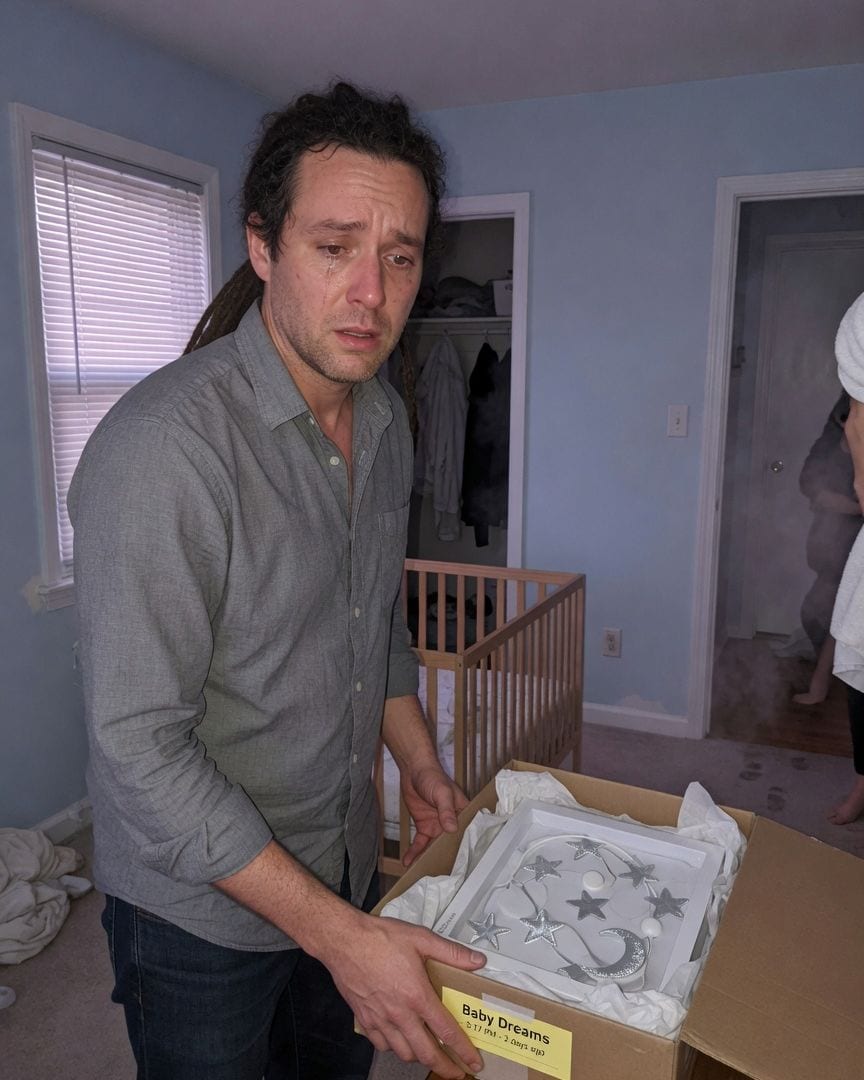
My wife thanked me for the pale blue nursery. We have no child. She described the mobile I'd only imagined, then asked when it would arrive.
Sylvia returned exactly one year after her disappearance, a miracle I could barely believe. But her first words about a nursery I'd only ever imagined, complete with a specific mobile, sent a shiver down my spine. That mobile, a private fantasy, arrived two days ago, and she just asked why it was late.
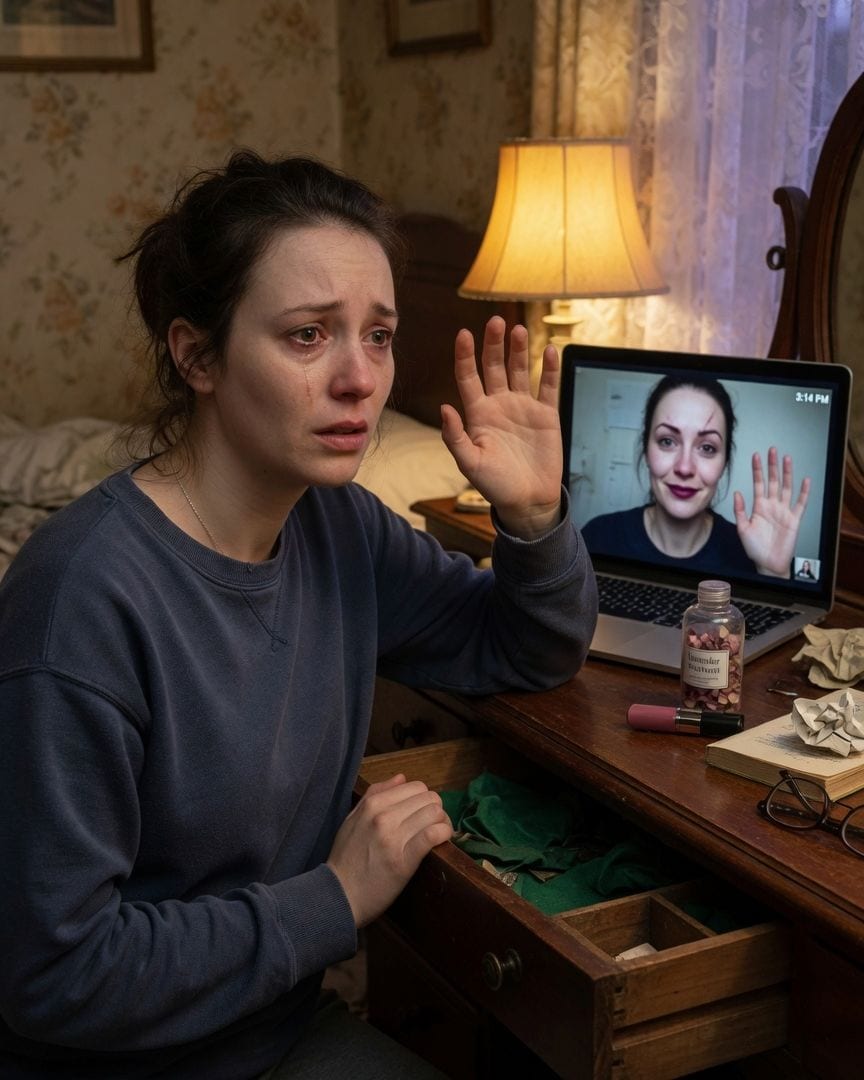
My mother waved with her right hand, both times, on our first call after she came home. She always waved left.
My mother vanished three months ago, then came back. On our first video call, she waved goodbye, but not with her usual left hand. It was her right, a small gesture that twisted something cold in my stomach.
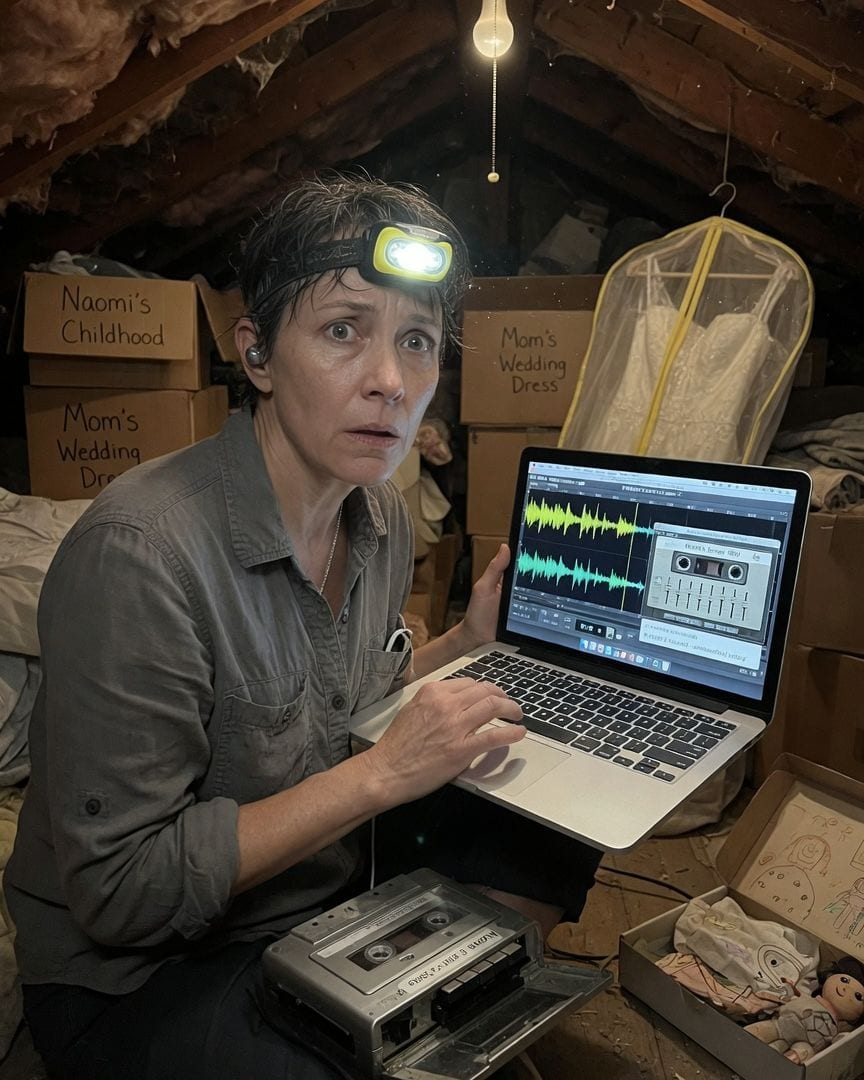
My hearing aids recorded a child humming in my empty car. It was a tune my dead sister and I sang, decades ago.
My drive home usually brings silence, but my hearing aids, always on, record everything. Scrubbing through the day's audio, I found a child humming a tune no one else knew – a secret melody my sister and I made up decades ago. The problem? My car was completely empty.
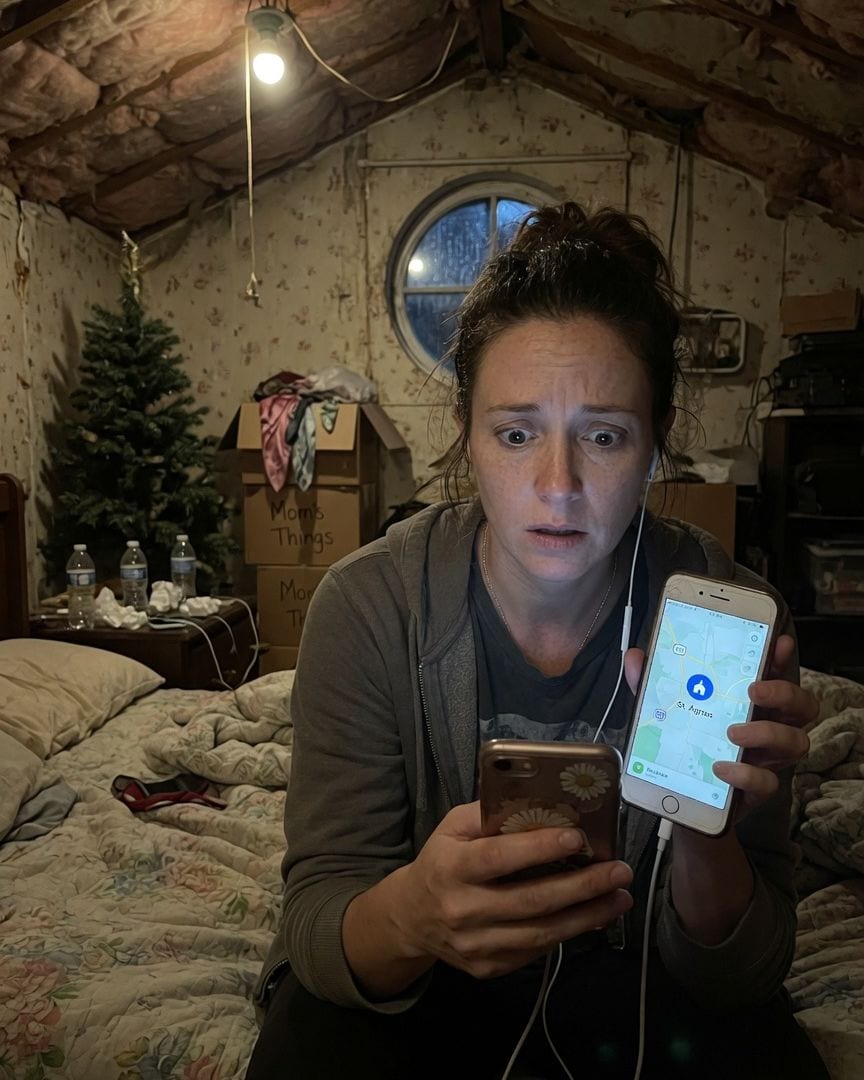
My mother's phone, powered down six months in the loft, just drove her old route to the church.
My mother, Margaret Vaughn, died six months ago, but I kept her on my 'Find My Family' app. Her icon usually stayed fixed at her last known location. Today, the blue dot started moving, slowly tracing her old Sunday drive route, right to the church where we held her funeral.
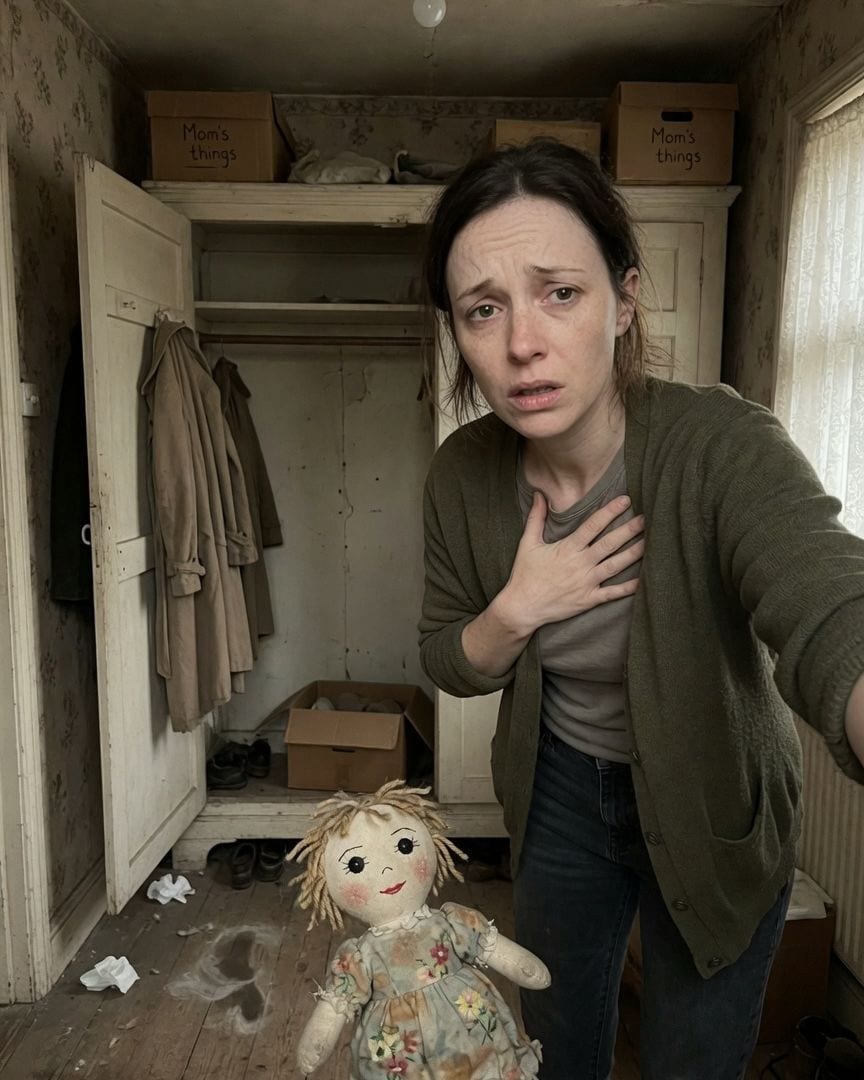
My shallow wardrobe opened into a child's bedroom. I'd knocked on its solid back wall for years. Now the doll from that room is on my floor.
My new house has a box room with a shallow wardrobe, barely a foot deep. But one day, reaching inside, the back wall vanished, opening into a child's bedroom with a cot and a burning nightlight. I slammed the door shut, only for it to be a normal closet again, leaving me with a cold, heavy stone of contradiction.
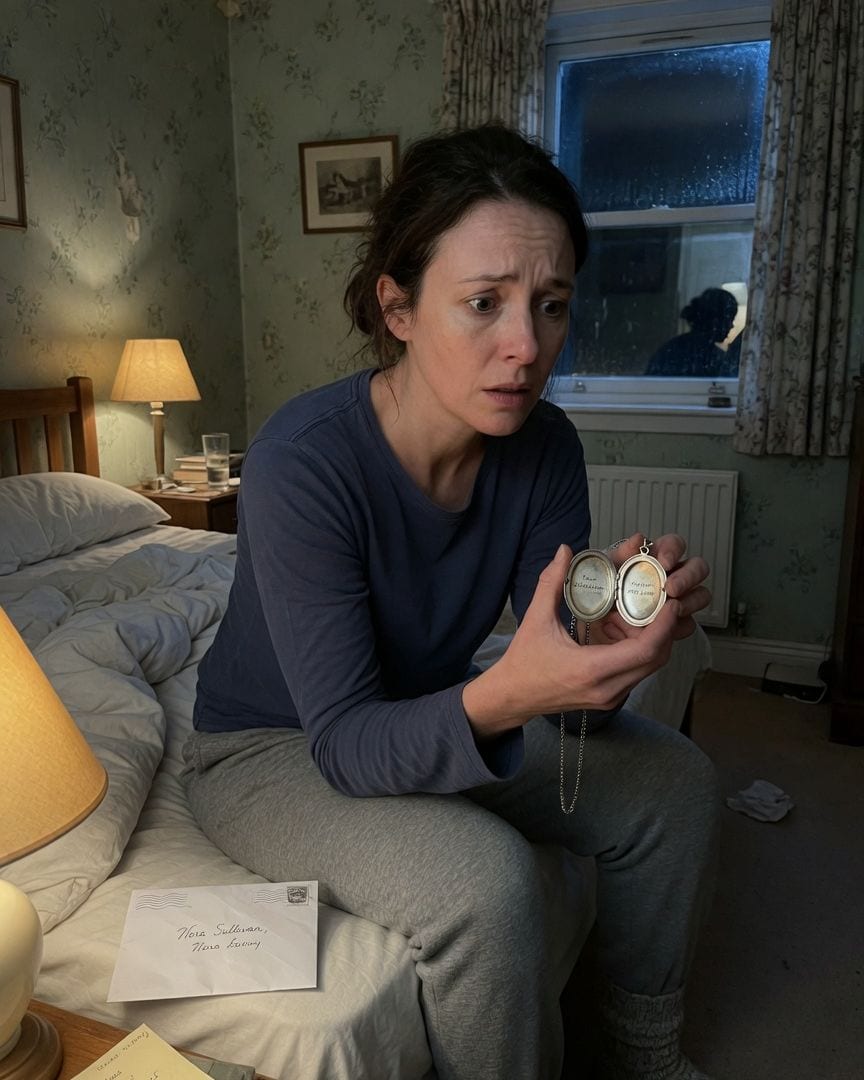
My antique locket held my maiden name, engraved with 'until the ninth.' The dealer said the woman who owned it left a note: 'for her, when she comes.'
My husband Scott, always finding unusual things, gave me an antique silver locket. Inside, engraved beneath my maiden name, Nora Sullivan, were three chilling words: 'until the ninth.' It felt like a direct, personal address, even though I hadn't used that name in years.