My hearing aids recorded a child humming in my empty car. It was a tune my dead sister and I sang, decades ago.
The drive home usually meant silence, or a podcast about true crime. A decompression ritual. I always wore my hearing aids, even when alone, because the world just… fit better with them on.
Their app keeps an audio backup, a mundane record of my day. Useful for dictating notes, or remembering if I actually locked the door.
This Tuesday, it recorded something else.
I was scrubbing through the day's audio, looking for a grocery list I'd dictated, when I hit the 11-minute mark of my afternoon commute.
At first, it was just the usual road noise, the hum of the tires, the faint rumble of the engine. Then, beneath it, a wisp of a sound. A child, humming. Faint, but distinct.
My stomach dropped. The tune. It was an old nursery rhyme, one my sister Naomi and I made up, decades ago. A silly little melody about a dandelion clock and a whispered wish. No one else knew it.
Naomi, gone thirty years.
I pulled over hard, the tires spitting gravel. My heart was pounding against my ribs, a trapped bird. My rational brain screamed: Glitch. Radio bleed. Interference. Anything but what it sounded like. My car was empty. It had been empty. I was alone.
I rewound the audio, isolating those eleven minutes. Played it again. The humming was undeniable. Clear as day. It sounded like it was coming from the backseat, just behind my headrest. A child, humming Naomi's tune.
My hands gripped the steering wheel so tight my knuckles were white. The logical explanations evaporated into thin air, leaving only cold, hard fact: the car was empty. And the sound was there.
Back home, I tore my car apart, looking for any logical explanation. Checked under the seats, in the trunk, even under the hood. Nothing. No forgotten toy, no hidden speaker, no radio left on.
Then I went through my hearing aid app, checking for errors, updates, anything that might corrupt an audio file. Clean. The file was dated, timestamped, and uncorrupted. The humming, a ghost in my phone, persisted.
The tune gnawed at me. It wasn't just a random song; it was ours. It tugged at memories I hadn't touched in years, memories of scraped knees, whispered secrets, and Naomi’s bright, mischievous smile.
And then, a different memory surfaced: an old cardboard box in the attic, packed away with the rest of Naomi's things after… after she left. A box I hadn't opened since I was eighteen.
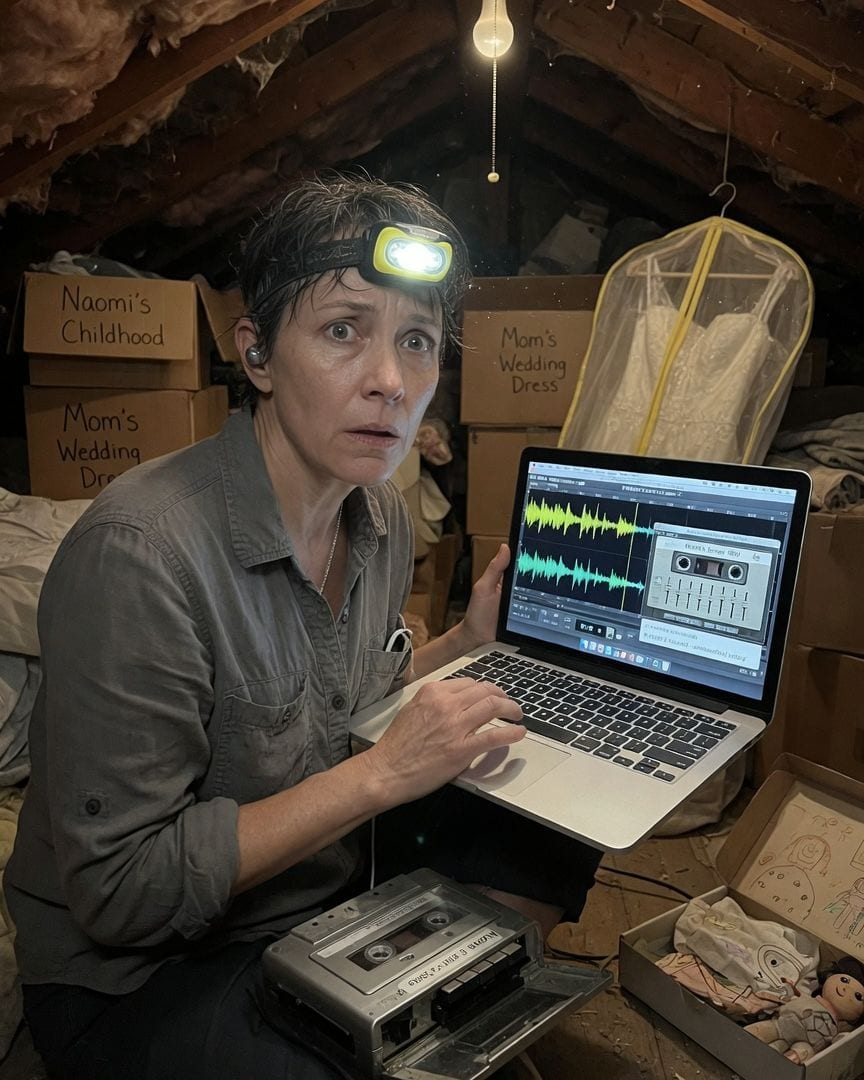
I climbed the creaking attic stairs, the air thick with dust and forgotten things. The box was there, tucked behind a yellowed wedding dress, labeled in my mother’s faded script: "Naomi's Childhood."
Inside, among faded drawings and a broken doll, I found it: a worn cassette tape, the label still mostly legible, "Naomi's Songs."
My hands trembled as I dug out the ancient cassette player from the back of a cupboard, a relic from my own youth. I blew dust off the buttons, powered it on.
The whirring of the tape deck sounded unnervingly loud in the silent house. I pressed play. Mostly static. Then Naomi’s childish, off-key singing, muffled by time. And then, faint, almost buried under the hiss, I heard it. The same tune.
Hummed by a child’s voice. Naomi’s voice.
A wave of grief, cold and sharp, washed over me, immediately followed by an icy spike of unease. A shared childhood memory, I told myself, clutching at the mundane. A coincidence.
I decided to digitize the tape, hoping a cleaner audio would prove it was nothing more than a trick of the ear, a symptom of my own tired mind and aching heart.
I meticulously digitized the old cassette, feeding the ancient recording through advanced audio software. I cleaned up the hiss, boosting Naomi’s voice, isolating her humming from the background static.
The melody grew clearer, sweeter, undeniably Naomi’s, a perfect echo of the sound from my car. It was beautiful, heartbreaking.
But as I fine-tuned the equalization, pushing the audio limits, a faint, almost imperceptible sound emerged beneath the humming. A breath, a low murmur. A distinct ‘second voice.’ It wasn't Naomi. It wasn't human.
It had a strange, layered cadence, like dry leaves rustling, or a broken whisper. It spoke, very softly, but clearly, in response to Naomi’s childish tune.
I froze, my headphones still on, as the faint, inhuman whisper from the digitized old tape repeated, 'She's ours now,' a chilling response to her sister's childhood humming.
The 'second voice' sent a cold dread through me that eclipsed any grief or confusion. It was too distinct to be static, too coherent to be a random sound. Not a trick of the mind.
I spent days trying to identify it, running it through every voice recognition software I could find online, comparing it to audio recordings of every family member I could recall, living or dead. Nothing matched.
The voice had a strange, resonant quality, like multiple whispers speaking as one, layered and ancient.
I couldn't sleep. The humming, the whisper, replayed constantly in my mind. I started researching local disappearances from around the time Naomi vanished, specifically looking for any mention of children or unusual sounds.
The internet rabbit hole was vast and dark. Old newspaper archives from thirty, forty, fifty years ago. Mostly dismissive articles about runaways, or tragic accidents quickly forgotten. But a pattern emerged, subtle at first, then chillingly clear.
Three other children. Not from our immediate town, but from the same general area, within a five-mile radius of the old Langford Estate. All went missing over a span of two decades before Naomi. Two boys, one girl.
All around Naomi's age. The reporting was sparse, the cases cold. No leads, no bodies. Just 'vanished without a trace.' The Langford Estate was a sprawling, abandoned property with a local reputation for being 'unlucky.'
Generations of families had avoided it. Local folklore vaguely mentioned 'singing shadows' or 'whispering winds' around the decaying manor house.
I remembered my mother telling us to stay away from it when we were children, calling it "a place where things get lost."
Then I found a dusty record from the county historical society. Samuel Fairfax. A distant cousin of my mother's, barely remembered.
He used to be the groundskeeper at the Langford Estate, decades ago, before the property fell into complete disrepair and the last owners vanished themselves. The name clicked with a quiet dread.
He would have been there for all of it.
Driven by a desperate, insatiable need for answers, I drove to the overgrown, crumbling gates of the old Langford Estate.
The air was thick and still, heavy with the scent of damp earth and decay, a smell like old, wet paper. The iron gates were rusted shut, choked with ivy.
I left my car by the roadside, my hearing aids still active, silently recording, a habit I couldn't break.
As I walked through the decaying gardens, the path barely visible under years of neglect, the humming started again. Faint at first, then growing clearer, as if echoing from the dilapidated manor house itself.
It was coming through my hearing aids, yes, a replay, but it also felt like it was in the air around me, vibrating in the heavy stillness. I stopped, heart hammering against my ribs, straining to pinpoint the source.
Was it just the recording playing back, or was it here?
Then, the 'second voice' joined in. Not from the previous recordings, not a memory, but live. Directly through my hearing aids. A cold tendril curling into my ear, whispering, 'Monica. You came.'
The sound was impossibly close, intimate, as if someone was breathing right beside my head. A profound, bone-chilling cold washed over me, an undeniable sense of being watched, studied, known.
The decaying roses seemed to lean towards me, their thorns like hungry fingers.
I spun around, my breath catching in my throat. But the grounds were empty. Silent. Except for the humming, and now, the phantom echo of that whisper in my mind. Panic, sharp and metallic, clawed at me.
I scrambled back to my car, fumbling with the keys, my hands shaking so badly I dropped them twice. The 'second voice' was a faint, mocking echo in my head, 'She knows. You know.'
I threw the car into reverse, dust clouding behind me, speeding away from the estate, shaken to my core, certain I was no longer the hunter, but the hunted.
I tracked down Samuel Fairfax a few days later. He lived in a small, quiet house on the very edge of town, the kind of place that looked forgotten by time.
The paint on the house was peeling, the porch swing creaked in a non-existent breeze. He was an elderly man now, well into his seventies, his face a roadmap of deep wrinkles, his eyes a pale, watery blue.
He greeted me with an unnerving calm, as if he’d been expecting me.
I forced myself to keep my voice steady, my hands clasped tightly in my lap to stop their tremor. I played the cleaned-up audio from Naomi's tape, including the 'second voice.'
Samuel listened, his expression unreadable, his pale eyes fixed on the small speaker of my phone. The humming filled his quiet living room, followed by that chilling whisper.
'A child’s song,' he murmured, when the recording ended. 'And an old echo.' His voice was raspy, like dry leaves.
I pressed him, asking about the Langford Estate, the other disappearances, the 'singing shadows' from the folklore. I laid out my findings, watching his face for any flicker of surprise, any denial. There was none.
Samuel sighed, a sound of weary resignation, like a man who had carried a heavy secret for too long.
'Some things are drawn to certain songs, Monica,' he said, his voice soft but firm, surprisingly resonant for an old man. 'Especially the lost ones. Or the ones who don't quite fit.'
He looked at me then, his eyes ancient and knowing, and I felt a chill that had nothing to do with the air conditioning. 'Naomi was singing that tune for weeks before… before she left. We all heard it.
We just didn't speak of it.'
My blood ran cold. 'You knew what it meant?' I asked, my voice barely a whisper, a thread of sound.
Samuel nodded slowly. 'It was a lure. A calling. She answered it.' His gaze was steady, calm. He wasn't confessing. He was simply stating a fact.
My mind raced, connecting the humming in my car, the old tape, the disappearances from the estate, the second voice. It all started to click into a horrifying, impossible picture.
'So she wasn't just gone,' I whispered, the words tasting like ash in my mouth. 'She was… taken?'
Samuel didn't deny it. He smiled faintly, a serene, almost wistful expression. 'She joined the chorus,' he said, the words almost kind. 'A kind of peace, for those who seek it. An eternal song.'
The air in the room suddenly felt heavy, thick with unspoken meaning.
I stared at Samuel, horrified by his serene admission. 'What… what took her?' I demanded, my voice raw. My mind tried to grasp what he was saying, but it slipped away, leaving only dread.
Samuel gestured vaguely around his living room, his hand sweeping across worn furniture, faded photographs, and antique knick-knacks. 'It's always been here, in a way. Waiting for the right voice.'
His gaze finally settled on a specific object sitting on his mantelpiece.
It was an ornate, antique wooden music box, intricately carved with swirling patterns that seemed to writhe and flow in the dim light of the room, like something alive. The wood was dark, polished to a deep sheen.
'She loved this one,' he said, his voice soft, a hint of something uncomfortably warm in his tone. 'Always humming along with it.'
My eyes fixed on the music box. It was old, beautiful, a piece of art. And suddenly, impossibly, deeply menacing. Every line, every curve of its intricate carving, seemed to hum with a silent, terrible energy.
'Does it… does it play that tune?' I asked, my voice barely audible, a thread stretched taut.
Samuel smiled faintly, a knowing, unsettling expression that didn't reach his eyes. 'It plays many tunes, Monica. And sometimes, it plays for you.'
A profound, sickening dread settled over me. This was it. The center of it all. I hesitantly reached out, my fingers brushing the cool, polished wood of the box.
Its surface was smooth, but beneath, I felt an unexpected, almost organic vibration. I picked it up, feeling its surprising weight, heavier than it looked. And with a terrible, growing certainty, I found the small, delicate key on its side.
My thumb and forefinger closed around it, and I wound it, the small mechanism inside clicking with precision.
It began to play. The familiar, eerie tune. Naomi's tune.
But as the melody unfurled, a tiny, almost imperceptible mechanism whirred with an internal, almost organic rhythm within the box’s intricate workings, and the 'second voice' distinctly whispered from within its workings, 'Monica. You found it.'
The music box vibrated in my hands, a living thing, the 'second voice' echoing, not just in my ears, but resonating through my very bones. It wasn't a recording.
The sound emanated from the very heart of the artifact, a direct, undeniable presence. Samuel stepped closer, his calm unbreaking, his pale eyes fixed on me, on the box.
'The Chorus Box,' he explained, his voice resonating with an ancient knowledge that seemed to seep from the very walls of his house. 'It's far older than any of us. It doesn't record; it collects.
It draws in those who are open to its song, particularly children, whose voices are pure, whose minds are… receptive.' He spoke as if describing a natural phenomenon, an undeniable truth.
He explained that the box was a living repository, a collective consciousness of all those it had 'collected' over centuries.
Naomi wasn't taken by an external force; she was drawn in, absorbed into the Box's 'eternal song,' her consciousness becoming part of its intricate, impossible mechanism.
The humming I heard, the tune she and I shared, was a specific frequency, a signature the Box uses to identify and 'call' those connected to previous 'collections.'
Samuel, he revealed, was a 'caretaker,' part of a lineage tasked with ensuring the Box’s continued 'chorus,' believing it offered a unique, peaceful form of immortality.
He gestured to the swirling carvings on the box, which now, under his words, seemed to depict tiny, stylized figures, their mouths open in silent, endless song.
Every clue, every strange detail, every impossible occurrence, snapped into horrifying, coherent focus: the inexplicable humming in my empty car, the chilling 'second voice' on Naomi’s tape, the disappearances from Langford Estate over decades, all tied to this impossible, living object.
The dread was absolute.
I stared at the music box, then at Samuel, my mind reeling, struggling to reconcile the monstrous truth with his serene expression. 'You let her,' I whispered, my voice barely forming the words.
'You let Naomi become part of this… thing?'
Samuel’s expression was one of calm pity, a gentle sorrow for my ignorance. 'She found peace, Monica. A place where her voice would never fade. It is a gift.'
His hand, gnarled and old, extended slowly, not towards me, but towards the music box still clutched in my trembling fingers. 'You've heard its call. You've answered it. Join her.
Your voice, your memories, they can be part of the eternal song.'
A surge of pure, desperate rage and terror ripped through me. I understood the true horror then: I was now the Box’s next target.
My sister wasn't just gone; she was a piece of this monstrous, living artifact, and I was being offered the same fate. My own humming, my own childhood tune, had been the lure.
'No!' I screamed, the sound tearing from my throat, raw and defiant. With all my strength, fueled by thirty years of grief and a sudden, primal terror, I hurled the ornate music box against the stone fireplace.
It shattered with a sickening crack, the polished wood splintering, tiny, impossible gears scattering across the hearth.
For a horrifying instant, a cacophony of whispers erupted from the broken pieces – childish giggles, fleeting fragments of song, and Naomi's familiar humming – a chorus of trapped, bewildered voices, before falling silent.
The air filled with a dry, dusty smell, like old memories burning.
Samuel watched, his face devoid of anger, only a profound, almost sorrowful disappointment. 'You have broken the song,' he said, his voice barely a whisper, a sound like dead leaves rustling. 'But the melody… the melody remains.'
The shattered remnants of the Chorus Box lay scattered on Samuel Fairfax's floor, silent and inert. Wood splintered, gears lay like tiny, dead insects. Samuel himself was gone. Vanished. Without a trace.
The police investigation into his disappearance yielded nothing. They found no evidence of foul play, only my frantic, unbelievable story about a magical music box and a chorus of trapped children.
They looked at me with pity, suggesting stress, grief, and a need for professional help. I gathered the pieces, for some reason, tucking them into a paper bag, and left.
The profound silence that followed felt heavier, colder, than any sound I had ever heard. The humming was gone from my hearing aids, gone from the world. Its absence felt like a gaping wound.
Weeks later, I sat in my car, driving, trying to return to some semblance of normal. My hearing aids were off. I hadn’t listened to them since that day.
The world felt muted, bland without the constant stream of sound, but also safer, quieter. I pulled into my driveway, turned off the engine, and sat for a moment in the sudden, absolute quiet.
A faint, almost imperceptible hum started. Not from the car. Not from outside. It was from within my own ears, a ghost of a sound, a private melody. It was Naomi’s tune. The melody she and I knew so well.
I tried to ignore it, to shake my head, to will it away. It wasn't a recording. It wasn't external. The humming was inside her now, a quiet, persistent melody, and she knew it would never stop.
If this one got to you
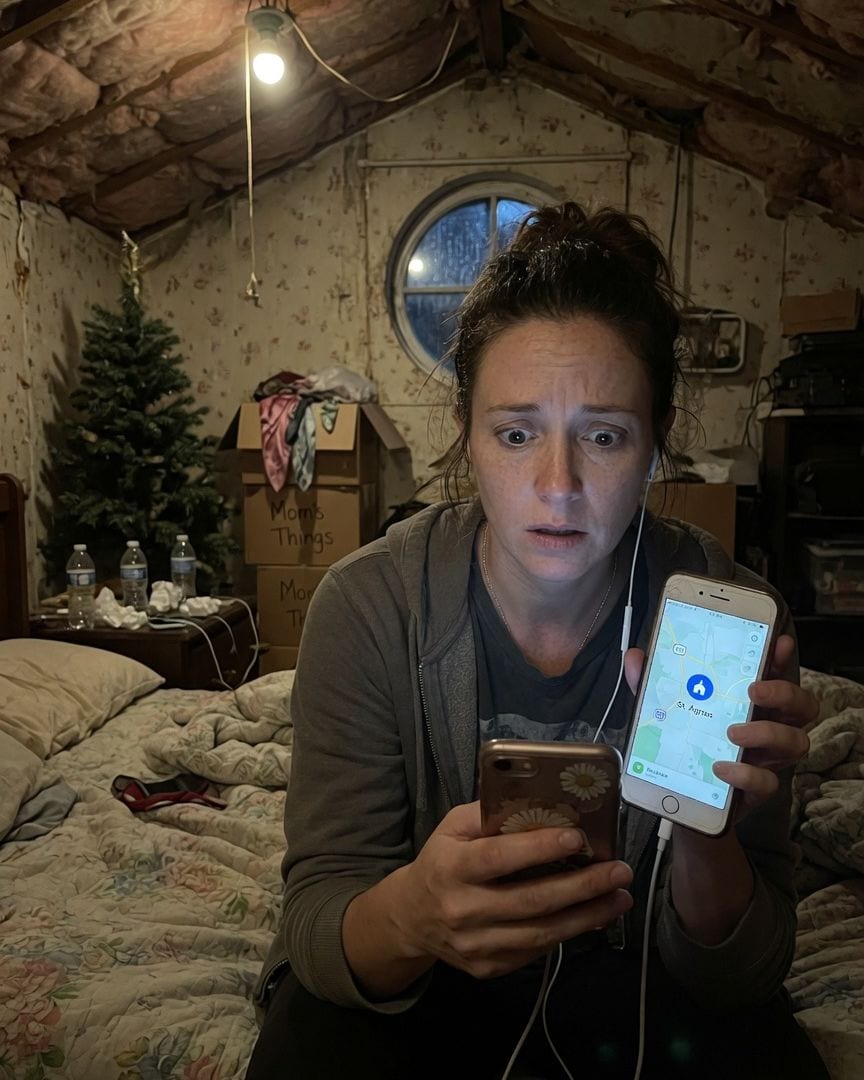
My mother's phone, powered down six months in the loft, just drove her old route to the church.
My mother, Margaret Vaughn, died six months ago, but I kept her on my 'Find My Family' app. Her icon usually stayed fixed at her last known location. Today, the blue dot started moving, slowly tracing her old Sunday drive route, right to the church where we held her funeral.
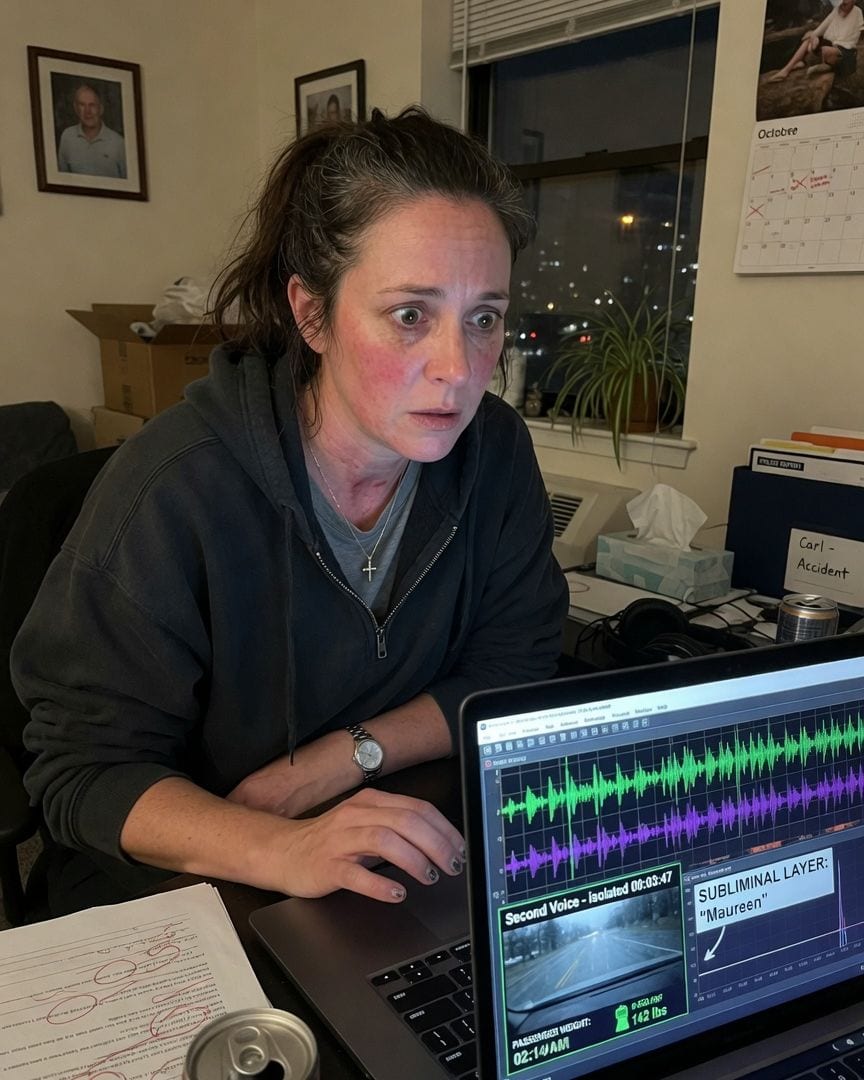
My father's dashcam recorded a soft, familiar voice from the passenger seat. The weight sensor logged someone, and he answered it by name.
Sifting through my dead father Carl's dashcam footage, I expected only the quiet hum of the road. But from the empty passenger seat, a soft voice spoke to him. When I isolated the audio, the voice whispered my own name.
My daughter Naomi recalled holding her brother at birth, using his secret nickname. She was taken at four. He was born after she vanished.
After fifteen years, my daughter Naomi is finally home, and the relief is a physical thing. But at the dinner table, she recalled helping pick out my son Maxwell's name and using a private nickname I'd invented just for him. Naomi vanished a year before Maxwell was even born.
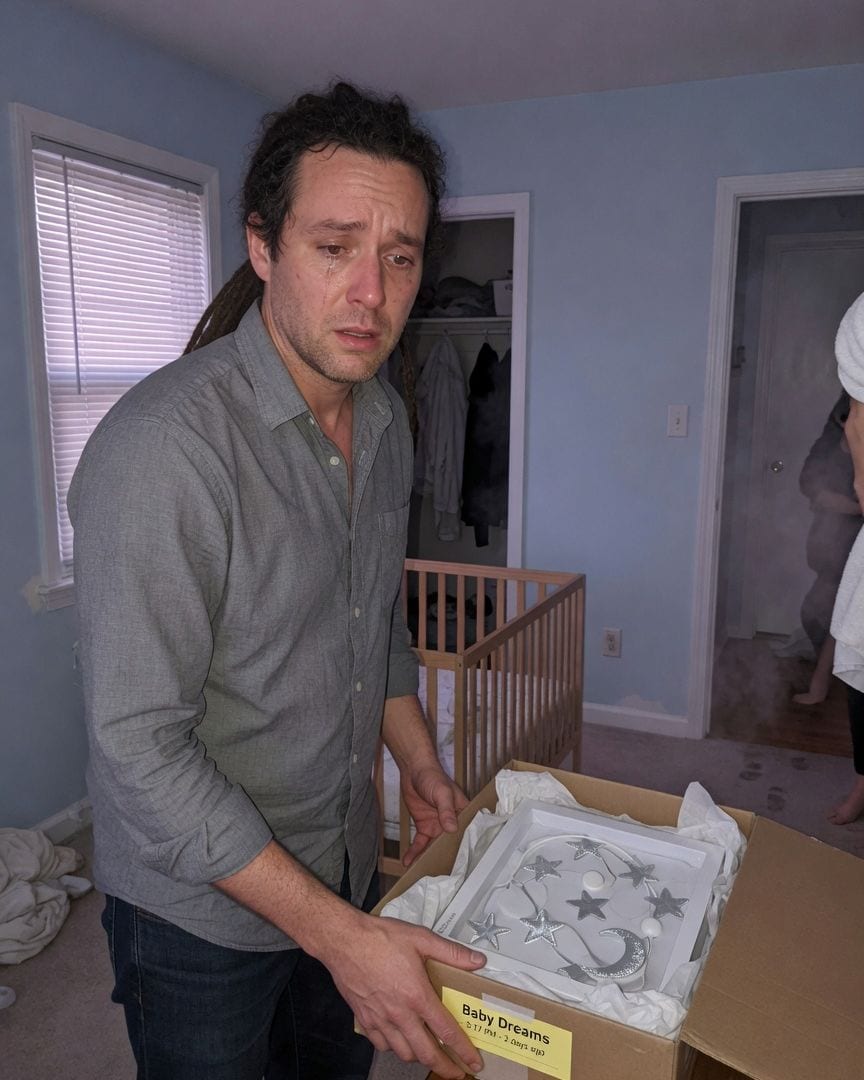
My wife thanked me for the pale blue nursery. We have no child. She described the mobile I'd only imagined, then asked when it would arrive.
Sylvia returned exactly one year after her disappearance, a miracle I could barely believe. But her first words about a nursery I'd only ever imagined, complete with a specific mobile, sent a shiver down my spine. That mobile, a private fantasy, arrived two days ago, and she just asked why it was late.
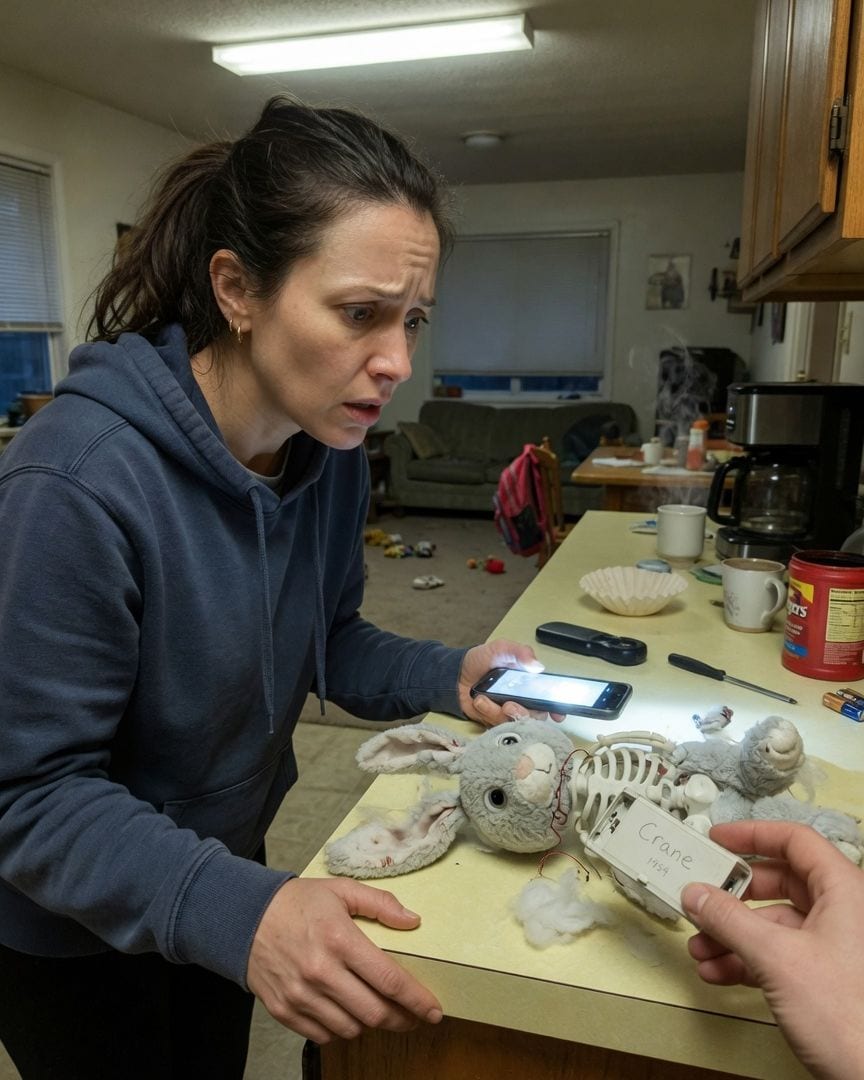
My son's toy rabbit says my name, then, 'bring him to the water.' The batteries are out.
I was making coffee, my son James at school, when I heard a grown man's voice from the living room. It was his favorite toy rabbit, whispering my name: 'Nina, bring him to the water.' The chilling command was impossible; I had removed the rabbit's batteries three days earlier, and they sat on the kitchen counter.
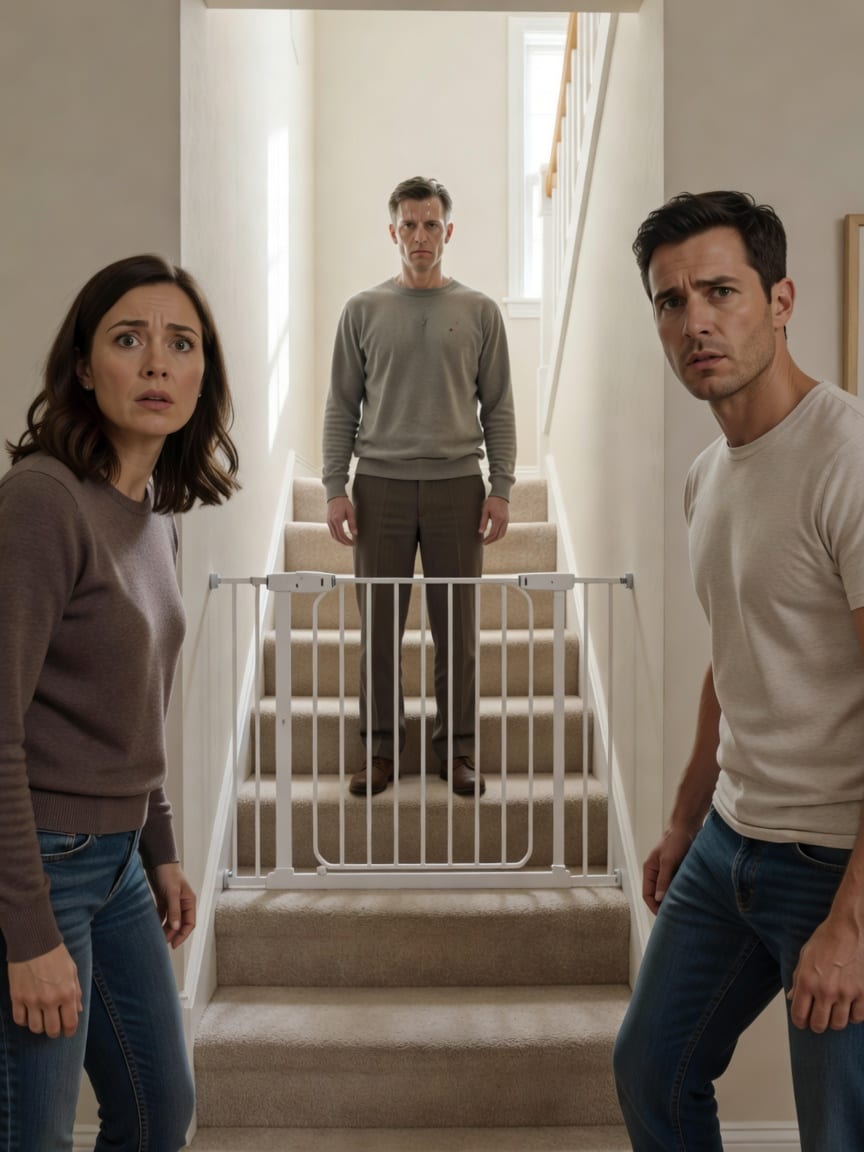
My stair gate latches itself every night. Pressure-fitted tight across my empty stairs, no children live here and no fixings exist on the wall.
I live alone in my inherited house, so the toddler gate at the top of my stairs should not be there. Each morning, I find it perfectly latched and sturdy, despite having hidden it away in the shed the day before. This isn't a quirk; it's a routine, and it isn't mine.