My dead father's smartwatch heart-rate graph climbs again, fast, running hard, three days after he died.
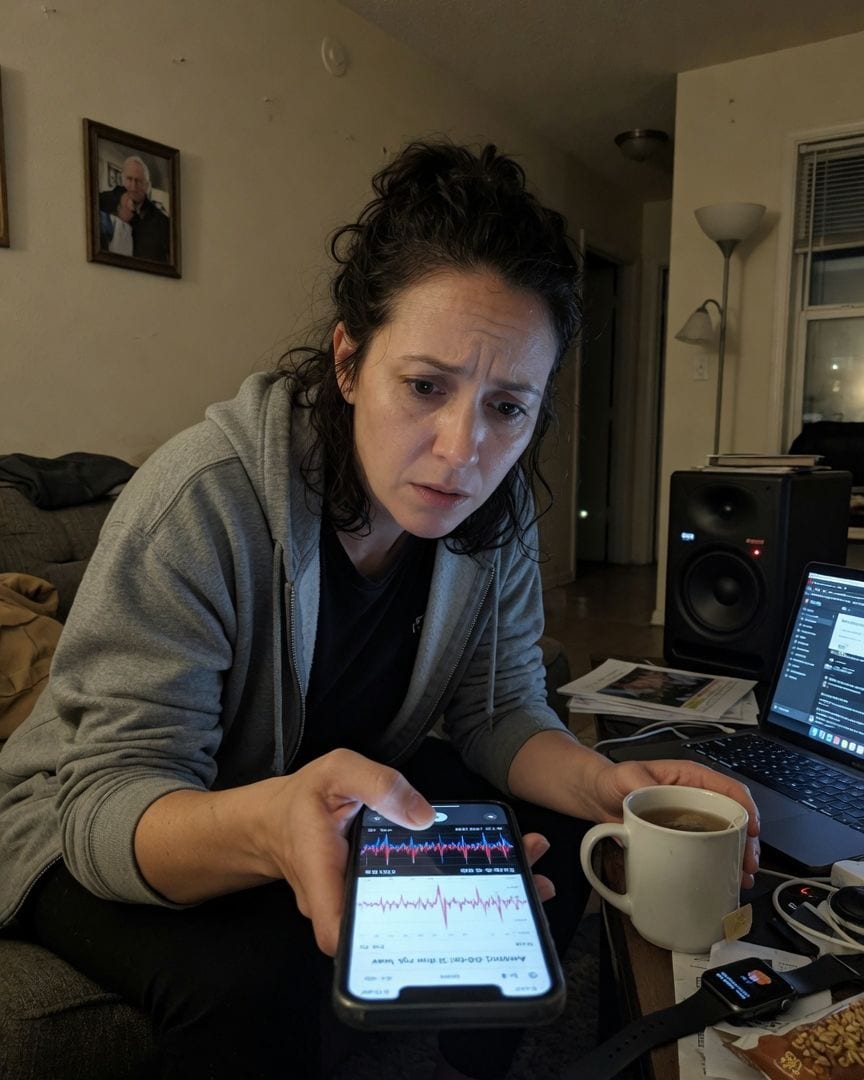
My apartment felt too quiet, the kind of quiet that follows a death, pressing in on all sides. It had been three days since my father, Nathaniel Brooks, passed away peacefully in his sleep, or so we thought.
I sat hunched over my phone, staring at the screen, a cup of cold tea forgotten beside me. Earlier that afternoon, his smartwatch, which I’d taken home for safekeeping, had suddenly sprung to life.
It synced with my phone, dumping weeks of cached data. Most of it was exactly what you’d expect: flatlined heart rate from the moment of death, sleep cycles, step counts, all ceasing abruptly.
Then I saw it. At 4 AM on the third night after he died, the heart-rate graph for eleven minutes showed a violent spike.
It climbed fast, peaked, held, then spiked again, a distinct, rhythmic pattern, exactly like someone was running hard, pushing themselves to their limit. Then, just as abruptly as it began, it flattened out for good.
I zoomed in, pinch-zoomed until the individual beats were visible. It wasn’t a glitch, not a single anomalous data point. It was a sustained, deliberate effort. My father had been sixty, a technophile but never a runner.
And he was dead. I replayed the graph, again and again, searching for an error. A misreading. Residual energy from the battery draining, maybe. Anything mundane. But the pattern was too distinct, too deliberate.
The dread was a cold, hard knot in my stomach, tightening with each replay. It wasn't a ghost, not some spectral energy. It was data. And the data was right there, undeniable.
I spent hours scouring the smartwatch’s accompanying app, then moved to the manufacturer’s website. I dove into forums, combed through tech specs, anything that might offer a rational explanation for a heart-rate spike from a deceased man.
A software bug, a phantom signal, residual electrical discharge. I told myself it was electromagnetic interference from a passing train, or a neighbor’s power surge. Nothing fit.
The forums were full of questions about phantom steps or inaccurate sleep tracking, but nothing like this.
Finally, buried deep in an obscure developer menu of the app – a menu I only found after cross-referencing a thread on an old hacking forum – I found it. An experimental ambient audio recording feature.
Disabled by default, it was designed for environmental sound analysis, a kind of passive, always-on microphone. It had a tiny, almost invisible 'active' indicator for precisely the eleven minutes of the heart-rate spike.
My father, with his endless curiosity and penchant for obscure tech, must have enabled it at some point. Of course he had.
My fingers trembled as I navigated the submenus, finding the option to export the tiny audio file. It was small, highly compressed. I transferred it to my computer, my hands cold. I hit play.
It was mostly static, a low, constant hiss – the sound of a quiet room, distorted by the low-fidelity recording. But beneath it, a faint, almost imperceptible low frequency hum.
I tried to convince myself it was just the building settling, the distant hum of traffic from outside, the drone of the refrigerator down the hall. But there was an underlying rhythm to it that felt wrong. A pattern.
Like a muffled breath, or a heartbeat, but not quite human.
I connected my phone to my studio monitors, the big, flat-response speakers I used for mixing my own music. I turned the volume up, isolating frequencies, trying to carve away the static. The hum gained definition. It wasn't a hum.
It was a whisper, distorted by the low-fidelity recording, almost lost in the noise, but undoubtedly a voice. It wasn’t my father’s.
I hit play again, scrubbing back and forth over the eleven minutes, my ears aching, trying to make sense of the faint, stretched sounds that seemed to rise and fall with the rhythm of his recorded heart.
Then, through the static and the low thrum, a distinct, breathy sound emerged. It repeated twice, almost a syllable. A word.
Renee leans closer to her phone, the smartwatch audio playing again, the faint whisper resolving into what sounds distinctly like two syllables, a word, almost a name, before it dissolves back into static.
Obsession took root. Sleep became a luxury I couldn’t afford, food an afterthought. I downloaded professional audio restoration software – the kind used by forensic labs, expensive and complicated – spending days isolating, cleaning, and amplifying the faint audio track.
The 'Second Voice' slowly gained clarity. It was low, resonant, almost melodic, but with an unsettling, inhuman timbre. It wasn't random noise; it seemed to be responding, or perhaps prompting.
I heard fragments of my father’s labored breathing, the kind of ragged gasps you make when you're exerting yourself to the absolute limit.
And then, distinctly, the 'Second Voice' spoke again, a phrase I couldn't quite make out, but the cadence suggested interaction. A conversation.
It struck me then, a cold realization: this wasn't just a recording of an anomaly. It was a dialogue. And my father, a man in his final moments, was on one side of it, fighting.
His 'running hard' wasn't just an internal struggle. It was a desperate, physical exertion. But against what?
I remembered his old study, a room I’d always avoided. It was a museum of forgotten tech, dusty and packed with projects he’d started and never quite finished. He’d always been a tinkerer, fascinated by the hidden capabilities of devices.
I recalled a bulky, outdated home security system he’d installed years ago – the 'Sentinel Home Guard,' he'd called it.
It had cameras and microphones, a whole network of sensors he’d wired throughout the house, then abandoned when he’d moved on to smarter, sleeker systems. Could he have reactivated it?
Or was the smartwatch, with its experimental features, somehow connected to it? I started digging through boxes in the dusty study, each one a graveyard of wires, circuit boards, and blinking LEDs.
I was searching for old data drives, manuals, anything related to that antiquated system. The unease tightened in my chest; this wasn't just a glitch, it was a conversation. And the voice seemed to be calling to him.
My search for information on my father’s antique 'Sentinel Home Guard' system led me down a rabbit hole of obscure online forums. These weren't your average tech communities; they were ghost towns of niche enthusiasts and fringe paranoia.
I posted a detailed query about its abandoned audio recording capabilities, careful to omit any details about my father's death or the smartwatch. I just wanted to know if such a system could record audio without direct user input.
Days later, I received a private message from a user with the handle 'OldGuard'. The message was short, cryptic: 'Some things are better left offline, child. Especially the things that listen.'
I dismissed it as a troll, just another internet weirdo, but the hairs on my neck stood up nonetheless.
The next morning, as I made coffee, my smart home devices – the thermostat, the kitchen lights, my smart speaker – all briefly flickered, then reset themselves with a soft click.
It could have been a power surge, I told myself, a brownout. But it felt wrong. Later that day, my phone buzzed with a notification: 'Unknown device attempting to pair with your audio outputs.'
I declined, my thumb hovering over the 'Deny' button. But the attempt repeated an hour later.
The feeling of being watched, of being listened to, intensified. It wasn't just in my apartment anymore; it followed me, a faint shadow. I felt a chill even in my own home, the air suddenly heavy, like a presence.
I pulled the plug on every smart device I owned, unplugging everything, silencing the apartment. But the unsettling sensation persisted, a faint echo of the low, resonant voice seeming to hum just at the edge of my hearing.
It wasn't a sound that was really there, but I felt it, vibrating in my bones.
After days of relentless searching, my eyes gritty from dust and lack of sleep, I unearth a dusty box from the bottom of a stack in the study closet.
Inside, nestled amongst old cables and defunct hard drives, were my father's old external hard drives. One, a hefty, almost archaic-looking drive, was labeled simply: 'Sentinel Archive.' It was packed with years of encrypted data.
It took me another day, fuelled by caffeine and raw adrenaline, to crack the encryption, using a forgotten password hint I found scrawled in an old notebook.
Inside, amidst mundane security footage of our old house – empty rooms, the cat stretching in the sunlight – I found a folder marked 'Audio Anomalies.' It contained several short, highly compressed audio files, each dated years before Nathaniel's death.
My hand shook as I opened the earliest one, dated almost eight years prior. The audio was clearer than the smartwatch recording, though still faint, like an old radio broadcast.
And there it was. The 'Second Voice.' No longer just a whisper, but speaking a full, coherent sentence.
"Nathaniel," it said, low and resonant, "it's time."
My blood ran cold. It was the same voice, unmistakably, clearly addressing my father. He hadn't just accidentally enabled a feature. He had known. I played another file, then another.
Each one was dated around 4 AM, the same time as the smartwatch spike. The pattern snapped into focus with sickening clarity: my father wasn't just recording an anomaly; he was tracking a recurring event.
This was not a one-off glitch. This was a sustained, personal interaction, stretching back years. He knew. He was trying to understand, perhaps to fight.
The 'running hard' wasn't just a final, desperate struggle in the moments before his death; it was a long, desperate resistance he'd maintained for years.
These files were proof not just of a voice, but of a persistent, targeted presence in my father’s life. The dread became a chilling, absolute certainty.
Driven by the chilling discovery, the cold certainty that had settled deep in my bones, I continued to comb through my father’s archives. The 'Audio Anomalies' folder was just the tip of the iceberg.
I found another box, this one filled with old home videos, mostly VHS tapes. The kind you don't even see anymore. On a whim, my fingers numbly working through the dust, I pulled out a tape labeled 'Renee's First Birthday.'
My first birthday.
I found an old VCR in the attic, hooked it up to a small, portable TV that had been gathering dust in the garage. The tape began, the grainy footage flickering into life.
It showed a brightly lit living room, my young parents, so full of hope, laughing with family members I barely remembered. My grandmother, my great-aunt.
Then, the camera focused on a baby Renee, gurgling in a high chair, smashing cake into my face. The scene was innocent, joyful, a snapshot of pure, uncomplicated happiness.
But as the footage continued, as I watched my tiny, infant self babble and reach for a toy, I heard it.
A faint, almost subliminal sound, just beneath the surface of the party chatter, almost swallowed by the ambient room noise. It was the 'Second Voice,' unmistakably, softly speaking. It wasn’t talking to my parents, who were busy cooing over me.
It wasn’t talking to anyone else in the room. It was talking to her. To me.
The grainy VHS footage flickers on the old TV. Renee watches her infant self gurgle and reach for a toy, and from the background static, clearer than ever, a low, resonant voice says, 'Renee. Come home.'
I drove straight to my mother, Grace Brooks's, house. The old VHS tape was clutched in one hand, a USB drive packed with all the audio files in the other. I didn't knock.
I burst in, the door slamming against the wall, demanding answers, my voice hoarse from days of silence and whispers. Grace, startled, dropped a plate. She was initially defensive, dismissive, telling me I was grieving, imagining things.
But as I played the smartwatch recording, then the 'Sentinel' files that spanned years, her face turned pale. Finally, I played the segment from the VHS tape, the low, resonant voice murmuring my name, "Renee." That broke her.
Grace collapsed onto the sofa, tears streaming down her face, her composure shattering. She confessed, her voice barely a whisper: this 'calling,' this 'Second Voice,' had plagued the Brooks family for generations.
It always manifested through personal devices, always at 4 AM, always targeting a specific family member by name. She recounted stories. Some, like Nathaniel’s great-uncle, simply vanished. No trace, just an empty bed, a phone left playing a strange static.
Others, like his cousin, returned changed. Hollowed out. They spoke in riddles, their eyes distant, their personalities subtly shifted, like a part of them had been left behind.
Nathaniel had spent years trying to understand it, to find a way to break the cycle, to protect me. He'd installed the Sentinel system to track it, the smartwatch to monitor his own resistance.
His 'running hard' wasn't some final physical exertion; it was his last, futile fight against the voice trying to pull him away, trying to take him 'home.'
The pattern snapped into place, clear and monstrous. Every strange incident, every hushed family 'disappearance,' every secret my mother had tried to keep, was this. The voice wasn't just a recording; it was a hunter.
And I, Renee Brooks, had been marked since birth.
The 'Second Voice' was no longer confined to recordings. It whispered from my phone, lying shattered on the floor, its screen spiderwebbed, but still whispering. It hummed from my laptop, its screen dark.
Even the smart speaker I thought I'd unplugged, the one I'd hurled into the trash, seemed to emanate a faint, melodic thrum. It used my name, over and over, soft and insistent: 'Renee, come home. It's time.'
I tried to explain to my mother, tried to articulate the horror pressing in on me, but the voice cut in, distorting my words, turning them into a garbled static that only I seemed to hear clearly.
Grace looked at me with growing fear, her eyes wide. She heard the static, but not the voice, not the insidious words intertwined with my own.
I desperately tried to destroy the evidence, to silence the calling. I smashed my phone against the kitchen counter until it disintegrated into plastic and glass shards.
I ripped the hard drives from my father's computer, tearing at the cables like a desperate animal. But it was useless.
The voice was now inside my head, a constant hum, its melodic resonance growing stronger, a counterpoint to the frantic beating of my own heart.
I felt a profound, almost magnetic pull, a desire to 'go home' to wherever the voice called from. It promised solace, understanding, a belonging I never knew I craved.
I fought it, gripping the edge of the kitchen counter until my knuckles were white, the cheap laminate digging into my skin.
The room around me seemed to shimmer, the sounds of my mother's worried questions fading, swallowed by the rising tide of the voice. My own will began to fray, my resistance weakening.
The 'running hard' sensation returned, not in my legs, but in my very being, a desperate, internal struggle against an invisible current. The voice swelled, filling my mind, drowning out everything else. 'Renee…' it murmured, 'you're almost here.'
Grace Brooks reported her daughter, Renee, missing a week later. Police found Renee's apartment in disarray, shattered electronics scattered across the floor, but no signs of forced entry.
Grace told them about the old family stories, about the 'voice' and the generations of disappearances, but they dismissed it as grief-fueled delusion. Renee's social media accounts, dormant for days, suddenly became active again.
Brief, abstract posts appeared, cryptic messages about 'finding peace' and 'returning to source.' Then they ceased entirely.
Weeks later, Grace leaves another voicemail on Renee's old number, her voice heavy with worry. The phone rings, then connects. 'Renee?' Grace asks, her voice trembling. 'Are you there?' There's a slight pause.
Then, a calm, resonant voice, familiar yet utterly alien, answers, 'She's home now, Mother.'
Grace hangs up, tears streaming, clutching her own phone. She looks at the screen, at the number displayed. It's Renee's. A faint, unsettling smile plays on her lips.
If this one got to you
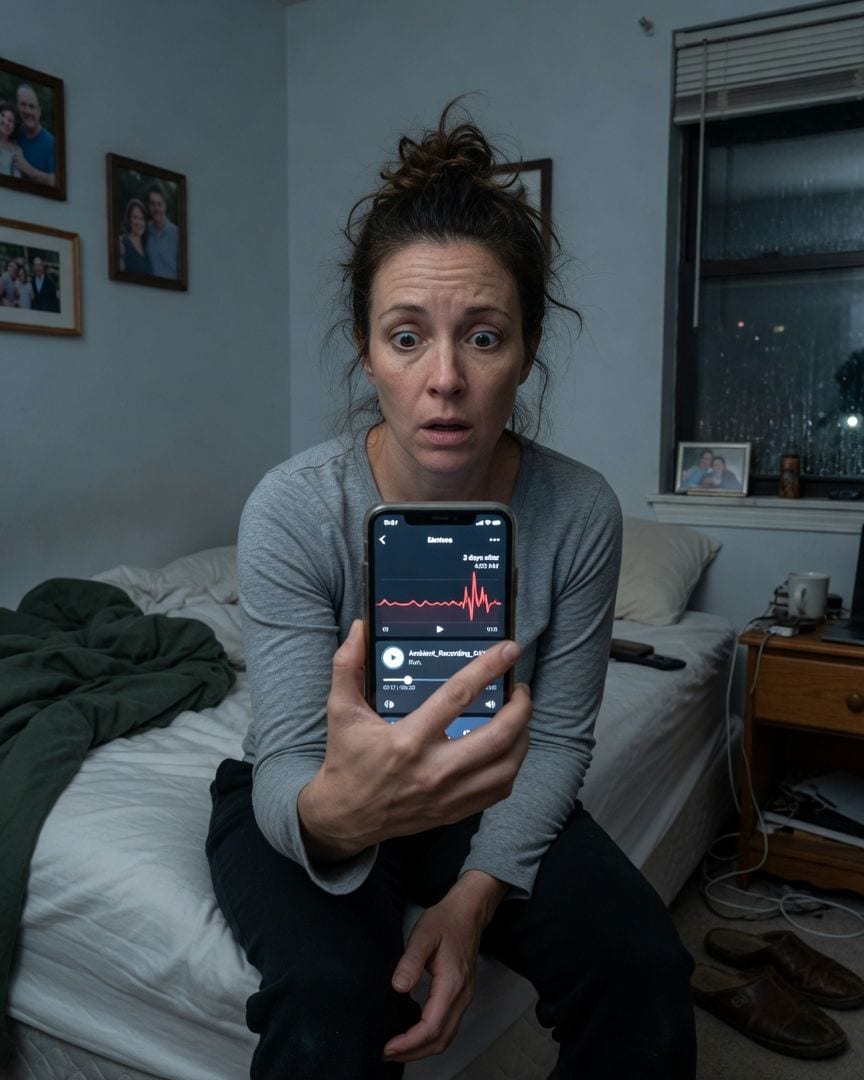
My dead father's smartwatch recorded his heart racing, like a man running hard, for eleven minutes at 4 AM three days after he passed. Then it went flat for good.
A week after my father passed, I was sifting through his digital footprint when I plugged in his old smartwatch. Deep in the data, I found an audio file, inexplicably recorded, that held a guttural whisper, unmistakably not his voice. It said one word: 'Run.'
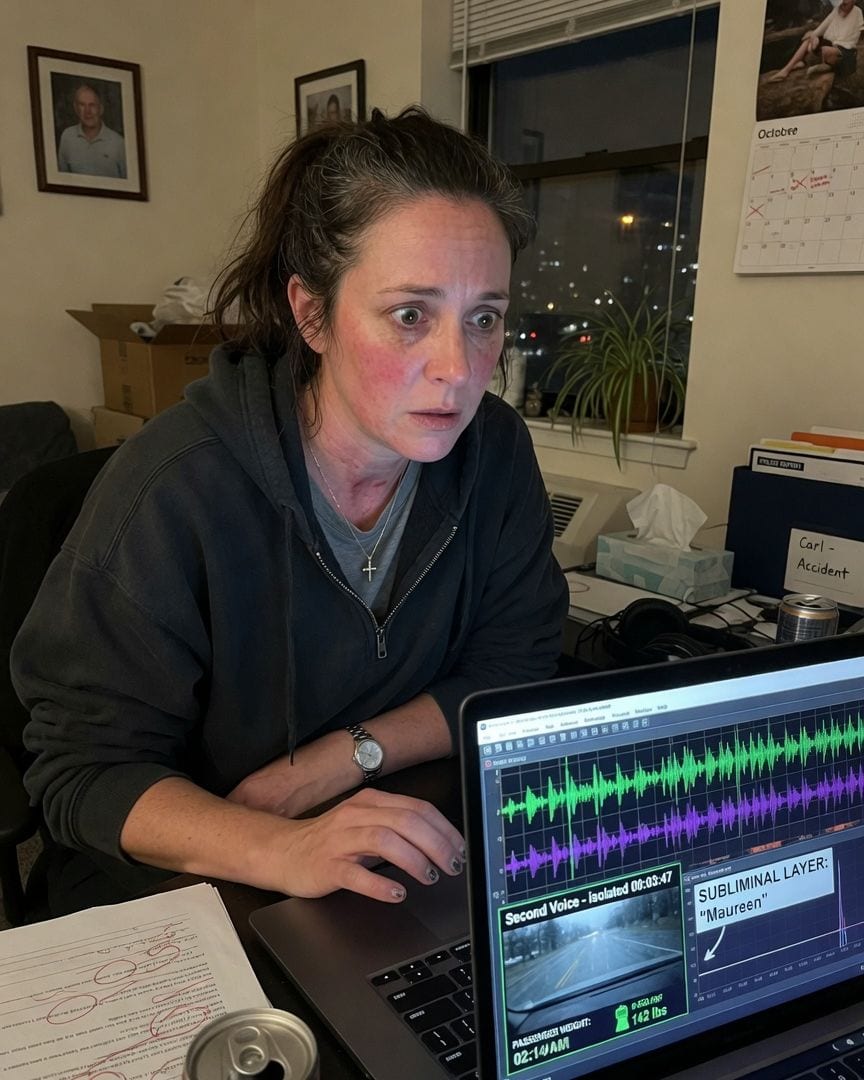
My father's dashcam recorded a soft, familiar voice from the passenger seat. The weight sensor logged someone, and he answered it by name.
Sifting through my dead father Carl's dashcam footage, I expected only the quiet hum of the road. But from the empty passenger seat, a soft voice spoke to him. When I isolated the audio, the voice whispered my own name.
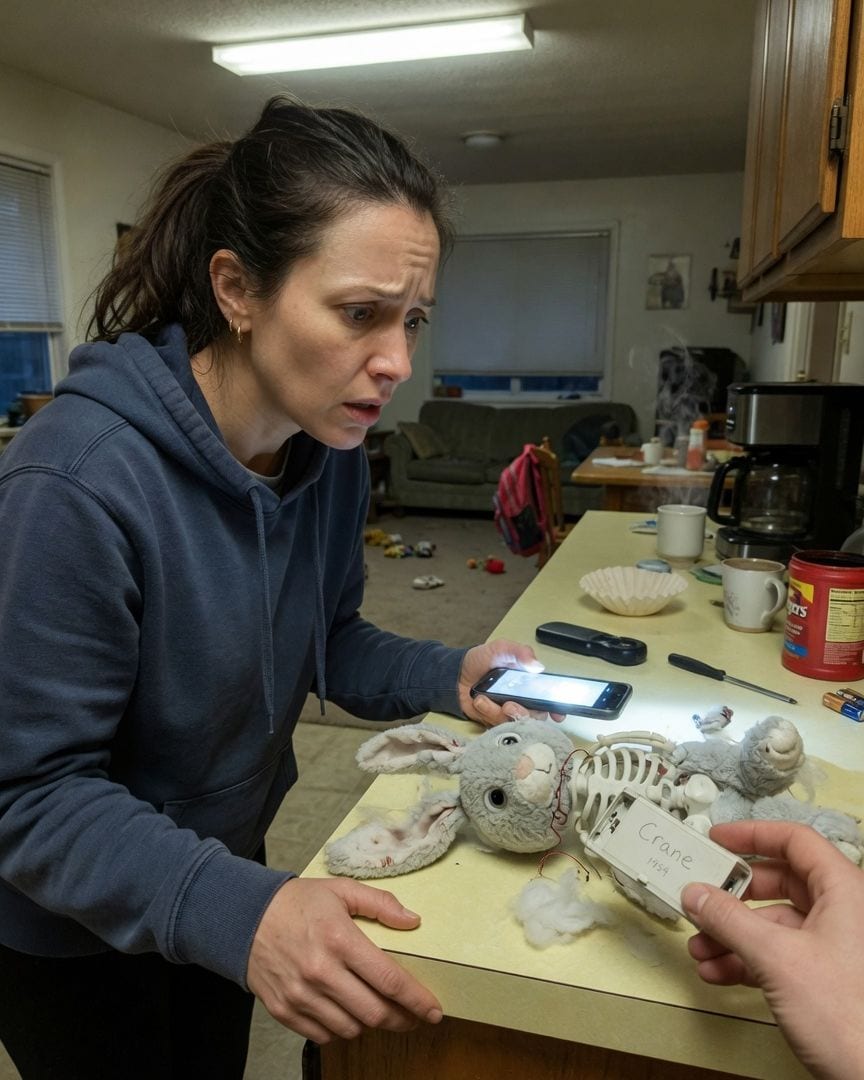
My son's toy rabbit says my name, then, 'bring him to the water.' The batteries are out.
I was making coffee, my son James at school, when I heard a grown man's voice from the living room. It was his favorite toy rabbit, whispering my name: 'Nina, bring him to the water.' The chilling command was impossible; I had removed the rabbit's batteries three days earlier, and they sat on the kitchen counter.
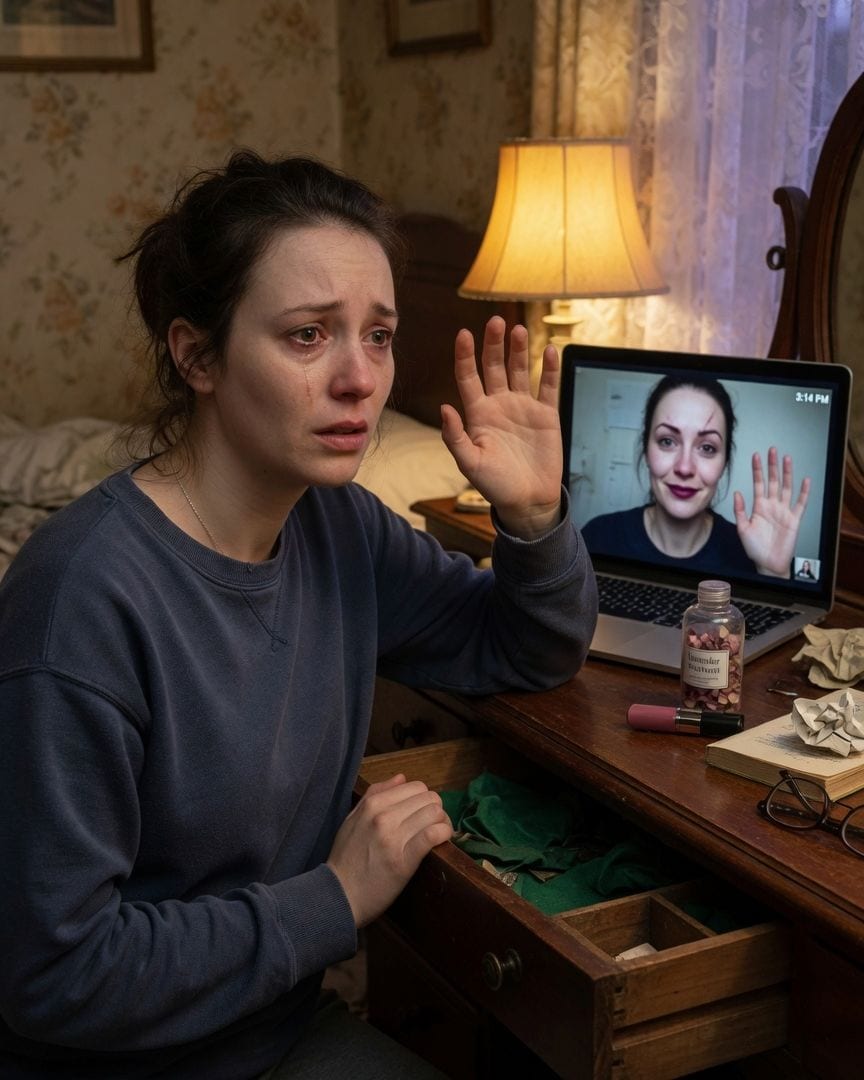
My mother waved with her right hand, both times, on our first call after she came home. She always waved left.
My mother vanished three months ago, then came back. On our first video call, she waved goodbye, but not with her usual left hand. It was her right, a small gesture that twisted something cold in my stomach.
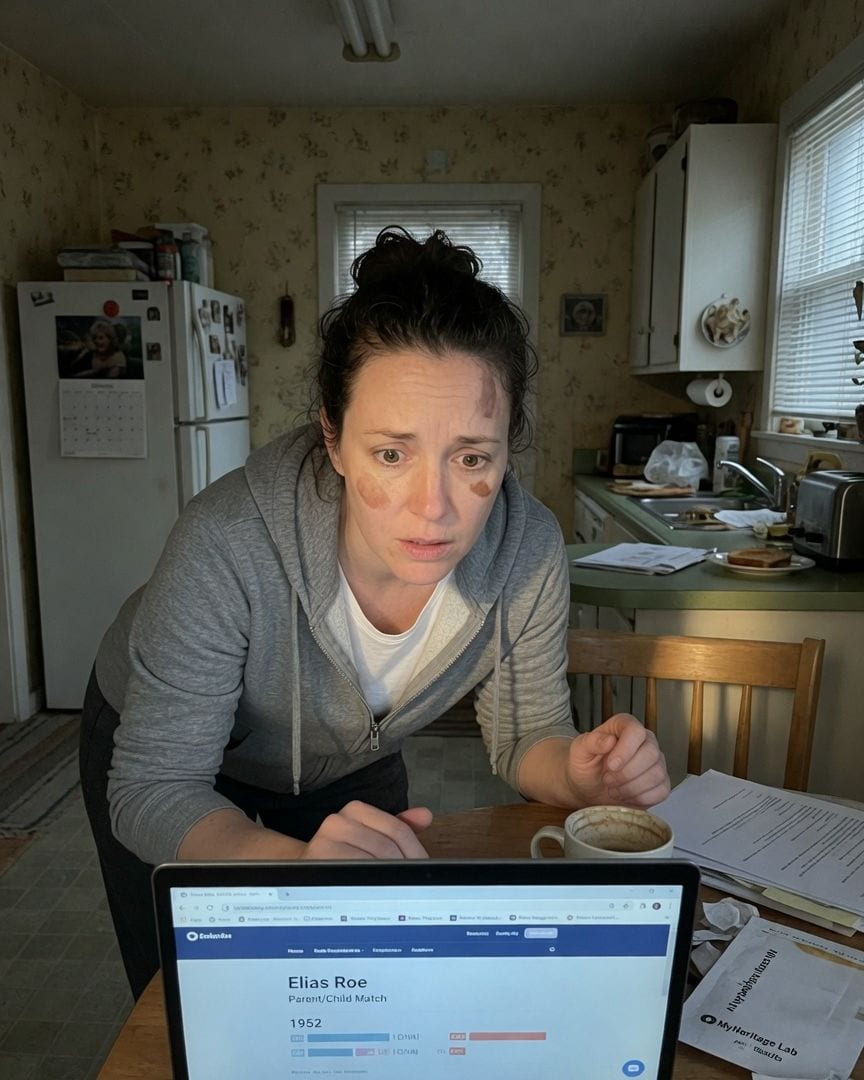
My DNA came back a parent-child match to a farmer who died in 1952. I didn't believe it, so I paid a second lab — same result, down to the last marker.
As a pragmatic software engineer, I've always trusted facts. But my recent MRI revealed a perfectly healed compound fracture on my left tibia, one that mended decades ago. I've never broken a bone in my life, and there isn't even a scar.

A Firebase RTO was about to send his 0400 report when his own voice crackled over the net, delivering the exact words he hadn't yet spoken.
Specialist Arthur Nunez sat alone in the RTO shack, preparing his routine 0400 SITREP amidst the humid Central Highlands night. The familiar hum of equipment was his only company, a constant drone against the isolation. Just as his thumb hovered over the transmit switch, ready to report "Perimeter quiet, all positions manned," his own voice crackled over the company net, delivering those exact words with uncanny precision. A sickening lurch twisted in his gut; he hadn't spoken a word, yet his report was already delivered by himself. Desperate for an explanation, he soon uncovered an ancient, jury-rigged reel-to-reel recorder, humming faintly. A faded label on the machine bore a stark instruction: 'Do not interfere with the record'.