A declassification reviewer found Captain Sowell's signature authorizing parts for his lost Cold War aircraft, sixteen years after its official crash.
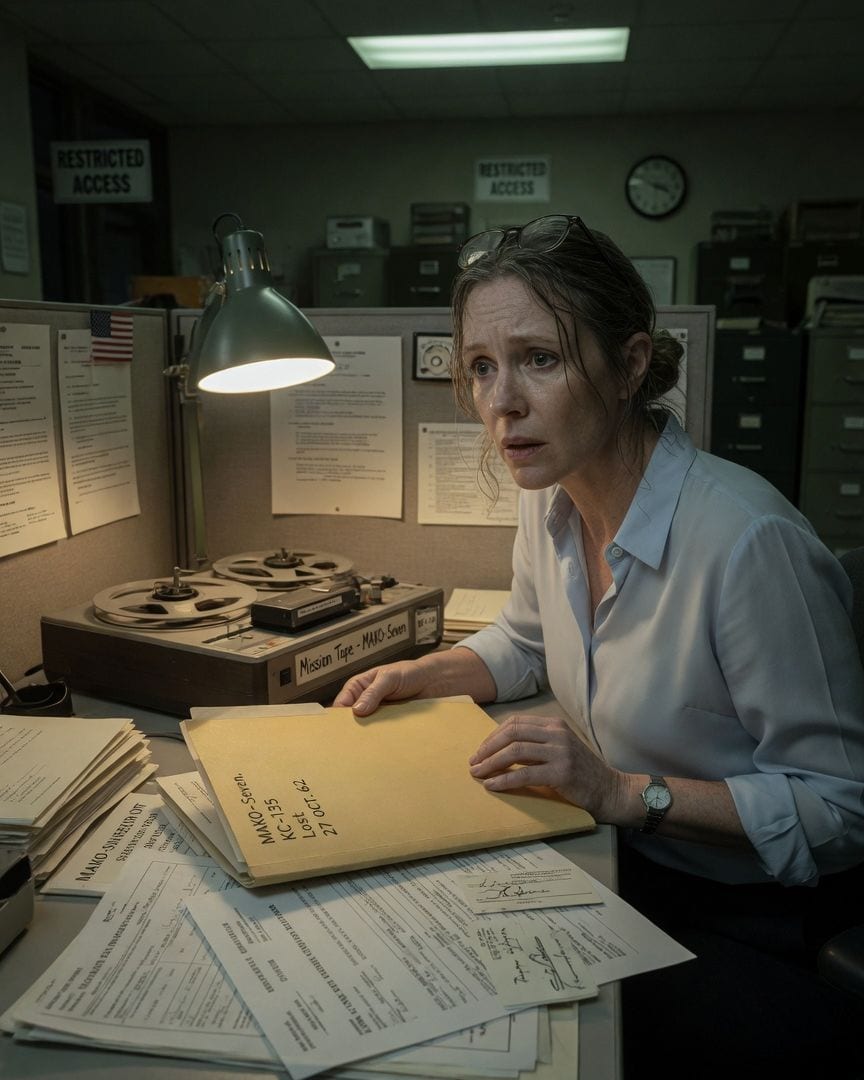
MAKO-Seven
Janet Kingsley, a declassification reviewer, sat in her sterile cubicle, the hum of the air conditioning a constant drone. Before her was a thick, yellowed file, 'MAKO-Seven, KC-135, Lost, 27 OCT 62.'
Enclosed was a letter from Marguerite Sowell, ninety-one, requesting the mission tape transcript of her husband, Captain Thomas Sowell. Janet had handled countless such requests over her career at the National Archives, each a quiet echo of a past tragedy.
She threaded the reel into the ancient player, the hiss of static giving way to Thomas Sowell's calm, professional voice.
'Pre-landing checklist, confirm gear down and locked.'
A moment of static, then a faint, mechanical-sounding click.
'Confirmed.'
'Flaps twenty.'
Another click.
'Confirmed.'
Janet’s brow furrowed. The official report stated MAKO-Seven impacted the Labrador Sea at 08:14 GMT. This recording, according to the time code, continued until 08:23. Nine minutes past impact, Captain Sowell was not calling a Mayday.
He was landing, and something was answering him.
Janet replayed the segment, isolating the clicks. They were too precise, too uniform to be radio interference or a faulty connection. They sounded like a machine, a system. She checked the official crash report again, cross-referencing every detail.
No distress call, no struggle, just the sudden cessation of telemetry. How could a landing checklist continue for nine minutes after an impact? She began to dig deeper into the physical file, a labyrinth of decades-old forms.
Most were routine: crew manifests, maintenance logs, fuel requisitions, all terminating abruptly in October 1962. These were the dead ends she expected. But then she found a series of documents, tucked near the bottom.
A maintenance sign-off for a 'routine engine inspection,' dated March 1963. A payroll run for Captain Thomas Sowell, dated June 1964. A position report, placing MAKO-Seven 'on station, Labrador Sector,' dated November 1965.
Each document bore the same precise official stamp, the same steady, anonymous handwriting, as if the plane and its pilot were still active, still flying, still being accounted for.
These weren't clerical errors; they were too numerous, too consistent, too formally filed. The archive's vast silence seemed to deepen around her, the air suddenly colder than the hum of the vents suggested.
It was as if the file itself had kept writing, long after the plane and its crew were gone.
Janet tried to imagine a simple explanation — a bureaucratic phantom limb, perhaps — but the sheer volume and official precision of the entries defied easy dismissal.
Janet pulled out a final, faded form from the growing pile of impossibilities. It was a requisition for a set of replacement landing gear struts, specifically for a KC-135, tail number matching MAKO-Seven.
The date stamped at the top was July 14, 1978. Below the itemized list, under 'Authorized By,' was a signature: 'T. Sowell, Captain, USAF.'
Janet compared it to Thomas Sowell's official signature card from his initial enlistment, kept in the personnel file. Every loop, every slant, every cross of the 'T' was identical.
The plane had been gone for sixteen years, its pilot dead, yet here was his signature, authorizing parts for it, over a decade and a half later.
It wasn't just a file that kept writing; it was a file that kept operating.
Janet tried to find a mundane explanation for the requisition. A misfiled document? A posthumous signature used for administrative closure? She cross-referenced the requisition number.
It led to a supply chain manifest, dated 1978, showing the parts actually being shipped to a remote Air Force depot in northern Quebec, a facility officially decommissioned in 1972.
The manifest was signed by a civilian contractor whose name appeared nowhere else in the depot's records.
Janet visited Oliver Brooks, her supervisor, a man whose tenure pre-dated the digital age. She laid out the transcript, the payroll entries, the position reports, and finally, the requisition.
Oliver listened, his expression unreadable, then slowly pushed the documents back across his desk.
'Curious,' he said, a little too calmly. 'Old files can be… quirky. Data entry errors, phantom entries from system migrations. It happens.' But his eyes lingered on the 'T. Sowell' signature.
Janet pressed. 'The depot it shipped to? It was closed.'
Oliver sighed. 'Some facilities maintain a skeleton crew for legacy systems. Paperwork takes a long time to die.' He avoided her gaze, focusing on a speck of dust on his polished desk.
Janet knew he wasn’t being entirely honest. The dread solidified, growing from a cold anomaly into a coherent pattern. This wasn't a quirk; it was a purposeful, continued administrative act.
She found a series of similar 'active' files for other lost units – a submarine, a bomber squadron – each with ongoing, impossible paperwork stretching years past their official disappearance.
The handwriting on all of them was identical, the official stamps perfectly consistent. The more she looked, the more the files seemed to breathe with a quiet, tireless bureaucracy.
Her late nights in the archives, pulling obscure microfiches and cross-referencing defunct codes, began to feel less like research and more like an intrusion.
One morning, she found a cryptic note tucked under her keyboard: 'Some things are better left sealed. O.B.' Oliver Brooks never left notes. The note’s simple presence felt like a tightening band around her chest. She confronted him.
He denied it, his face a mask of practiced neutrality.
'Perhaps you're overworking yourself, Janet. These old files can play tricks on the mind.' But the warning was clear.
Later that week, she noticed her access logs for the 'Anomalous Loss' section had been flagged for 'excessive activity.' A system notification, not a human one. It felt less like a reprimand and more like a registration.
She was no longer just an investigator; she was now on a list. The thought chilled her. The fluorescent lights of the archive seemed to buzz with a new, attentive intensity.
She began to feel a subtle pressure, a quiet presence in the vast, echoing archive halls after hours. The feeling wasn't one of malevolent observation, but of methodical, administrative awareness.
Like a system had registered her inquiry, and was now processing her. The clicks from the mission tape replayed in her mind, mechanical and precise.
She realized the 'answers' weren't just confirming a checklist; they were acknowledging the pilot's input, registering his presence within whatever impossible space he had 'landed' in. The system wasn’t simply recording; it was interacting.
Janet cornered Oliver again, this time with a printout of the flagged access logs and a copy of an internal memo she'd unearthed, dated 1985, titled 'Protocol for Sustained Anomalous Record Generation.' Oliver's composure finally cracked.
The faint click of his office door shutting behind her sounded like a lock engaging. He stared at the memo, then at Janet.
'They don't want these closed, Janet. They want them… maintained.' He explained, his voice low, almost a whisper, that certain files, once designated 'anomalous,' were never truly closed. They were simply folded into an 'active maintenance' protocol.
'It’s not a conspiracy, not in the way you think,' he said, rubbing his temples. 'It’s just… procedure. The system absorbs, and then it accounts. It generates the necessary paperwork, because that’s what systems do.'
He recounted whispers from his own early career, of 'ghost manifests' and 'phantom requisitions' for units long declared lost.
'The institution itself, Janet, it’s not just observing. It’s… complicit. It files them, and then it keeps filing them, as if they’re still there, just in a different kind of 'on station.''
The 'answers' on the tape, the continuous payroll, the maintenance requests — they weren't errors. They were the machine's ongoing administration of the impossible. The lost were never lost; they were merely 'filed' into a different, ongoing ledger.
The air in Oliver’s office seemed to thicken, heavy with the weight of decades of impossible truth.
The horror wasn't that the records were wrong; it was that they were perfectly, chillingly right, reflecting an unseen, impossible reality that the institution had simply incorporated into its vast, patient bureaucracy.
Driven by a deepening dread, Janet returned to the MAKO-Seven file, now understanding its true nature. If the system was so methodical, so complete, what else might it contain?
The fluorescent hum of the archive had taken on a new, insidious quality, like the quiet whirring of some colossal, unseen mechanism. She searched for anything unusual, anything that didn't fit the pattern of ongoing maintenance.
Tucked deep within a section labeled 'Future Contingencies,' she found a single, unnumbered form. It was a 'Personnel Transfer Request.' Her heart hammered as she saw the name typed at the top. 'Kingsley, Janet, Declassification Reviewer.' Her own name.
Below it, 'Current Assignment: National Archives, Declassification Section.' And then, 'Proposed Assignment: Unassigned, Labrador Sector.' The 'Effective Date' was clearly printed: October 27, 2026.
The date was exactly two years from now, the same date MAKO-Seven had vanished, only sixty-four years later. She was not just reviewing the file; she was already a part of it.
The system hadn't just registered her inquiry; it had processed her, too, and her transfer was already on the books. Her hands began to shake, not from fear, but from the cold certainty that had just clicked into place.
The truth detonated in Janet's mind: the 'Unassigned, Labrador Sector' was not a physical location.
It was the destination for the 'filed' — the space where MAKO-Seven and its pilot had 'landed' and continued to exist, administered by the tireless, silent bureaucracy of the secrecy machine.
Her name on the transfer form wasn't a threat; it was a pre-emptive classification. The system had identified her as an anomaly, someone who had looked too closely, and was now preparing to absorb her into its own impossible ledger.
The clicks on the tape, the continuous payroll, the parts requisitions – all were administrative echoes of a reality where the lost continued their duties, in some unseen dimension, meticulously documented by the very institution that had declared them gone.
Oliver's hushed admissions about 'active maintenance' and 'ghost manifests' now made perfect, terrifying sense. The institution wasn't covering up an event; it was managing an ongoing state of being.
She realized the mission tape wasn't just a record of a landing; it was an onboarding interview, a final check-in before Captain Sowell was processed into his new, perpetual assignment within the Labrador Sector. And now, she was next.
The air in her cubicle seemed to grow heavy, as if the surrounding walls were slowly, inexorably closing in.
Desperate, Janet searched for any physical proof, something tangible that could not be explained away. If the files were administrative echoes, perhaps there was an artifact, a direct output from this 'other side.'
She remembered Oliver mentioning 'legacy systems' and 'old physical records.' She found a cross-reference in a microfiche of decommissioned assets, noting a 'secure holding facility' for 'anomalous material' in a sub-basement of the main archive building, long sealed.
The thought of it, tucked away beneath decades of official paperwork, sent a fresh wave of dread through her.
With a borrowed key card and a flashlight, she descended into the cold, dusty quiet. The concrete stairs spiraled down, each step echoing in the oppressive silence. Cobwebs hung heavy, like forgotten banners in the stale air.
Amidst shelves of forgotten equipment, she found a single, unmarked, salt-stained wooden crate. Inside, cushioned in packing straw, was a flight logbook. Its cover bore the stenciled designation 'MAKO-Seven.'
Janet's hands trembled as she opened it. The first entries were standard, up to October 27, 1962. Then, the impossible. The next entry was dated October 28, 1962. '09:00 GMT. Final systems check, sector entry confirmed. Atmospheric stabilization nominal.'
The handwriting was Thomas Sowell's, precise and familiar. Page after page, entries continued, detailing 'patrols' of 'uncharted sectors,' 'fuel consumption reports' for fuel never loaded, 'personnel assessments' for a crew of one.
The last entry was dated just three weeks prior: '07:00 GMT. Routine sector sweep complete. Observing new inbound signature, high probability of classification anomaly. Initiating preliminary assessment protocol.' The ink was still dark, the paper crisp.
It was real, dated, and checkable. The ordinary explanation died for good. She was looking at the impossible, a physical artifact from the filed, and it was still active, still signing in.
Janet returned to her cubicle, the logbook clutched tight. The system had not only filed Captain Sowell, but had also filed her, in advance. She tried to make sense of the new inbound signature, the 'classification anomaly.' Was it her?
Was she the new subject of Captain Sowell's assessment protocol? The cold dread settled in, not as a fear of death, but of perpetual, administrative absorption.
Her life, her identity, would simply become another set of entries in an impossible ledger. She thought of Marguerite Sowell, still waiting for answers. The system had given her a position in the Labrador Sea, but not the truth.
The truth was far more patient, far more terrible, than a simple crash. The file was still being signed, and soon, her name would be on the next page.
Janet Kingsley never completed her final quarterly review. Her cubicle remained meticulously organized, her computer logged off, a single, salt-stained logbook conspicuously absent from the 'Outgoing' tray.
The 'Personnel Transfer Request' for her, dated October 27, 2026, was found, processed, and filed in a secure, unnumbered folder. Oliver Brooks, when asked about her disappearance, simply shook his head, a faint, distant look in his eyes.
'She was very dedicated,' he murmured. 'Too dedicated, perhaps.' He then turned to his own terminal, pulling up a new, unassigned file that had just appeared in his queue, its cover bearing a familiar callsign. 'MAKO-Seven.'
Two years later, Marguerite Sowell received another letter from the Air Force, a curt official notification. It stated that due to unforeseen personnel transfers, her request for further information regarding her husband’s status had been reclassified as 'Active, Pending Assessment.'
The file was still being signed.
If this one got to you
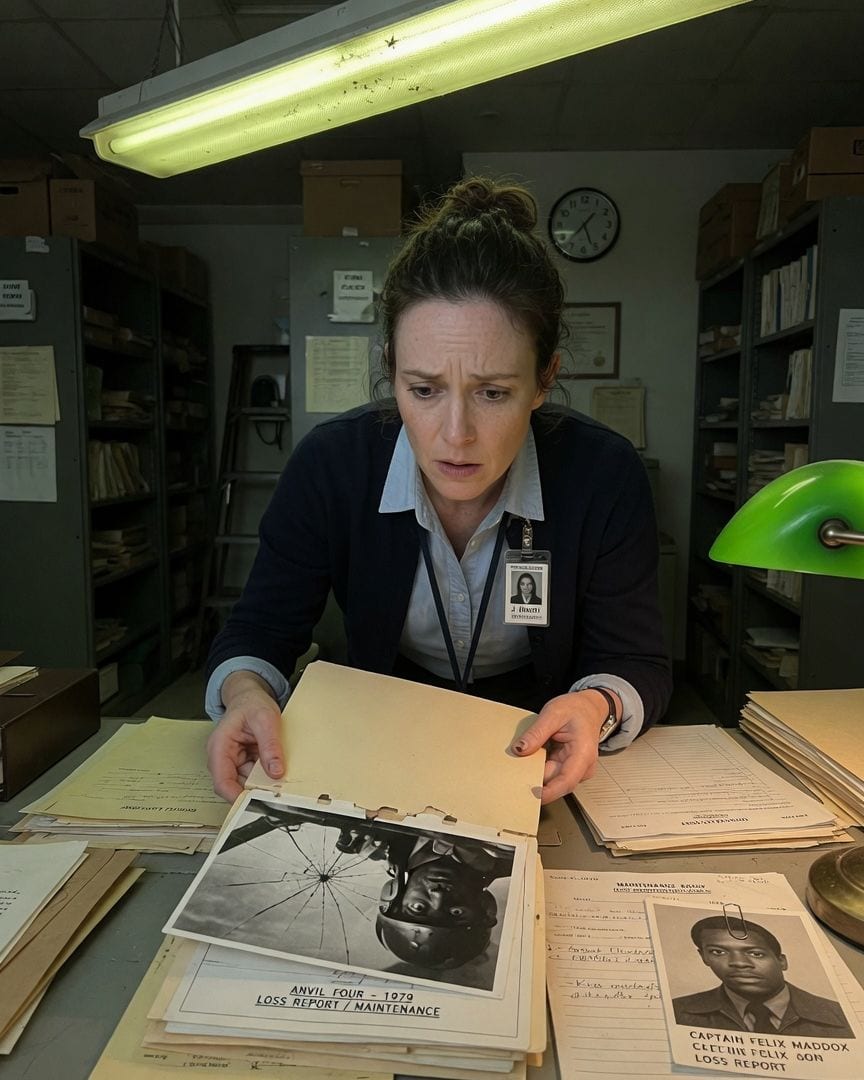
A Cold War pilot's pay stub arrived four years after his helicopter was officially lost.
National Archives archivist Josie Ilnicki spent years immersed in forgotten histories, the fluorescent hum of the annex a constant companion. Today, processing a declassification request that had waited forty years, she opened the file for 'Anvil Four,' a helicopter lost in the Nevada ranges in 1979. Inside, past the official loss reports, Josie found a maintenance sheet dated eight months after the crash. Stapled to it was a grainy photograph, showing the cracked windscreen – and behind it, Captain Felix Maddox, the pilot officially dead, staring out with wide-open eyes, as if still flying.
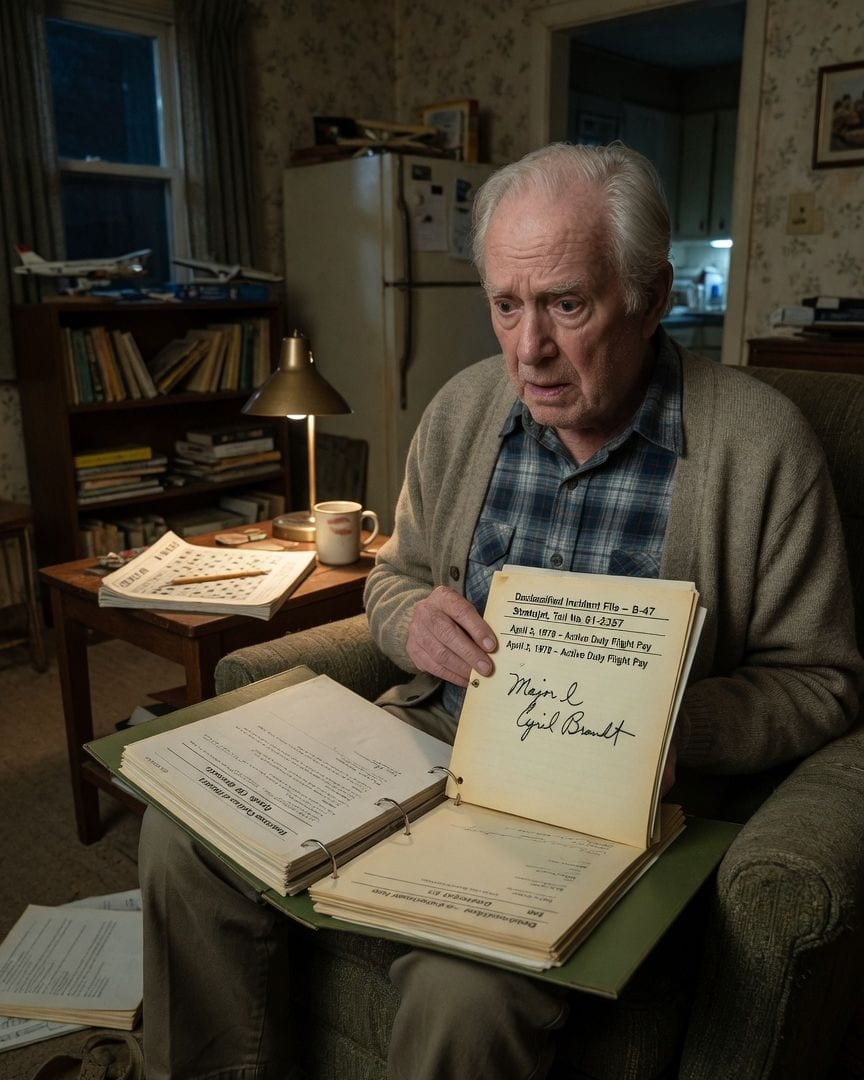
A retired Cold War pilot found his own signature on a flight pay record, dated five years after he left active duty, the ink unnervingly fresh.
Cyril Brandt, a seventy-two-year-old retired B-47 pilot, cherished his quiet Dakota retirement, his days filled with crosswords instead of combat. He expected to find long-awaited closure on a strange 1968 UFO incident when a heavy, declassified file arrived. Settling into his armchair, the weight of the olive-green binder felt familiar, but its contents quickly shattered his calm. He discovered maintenance logs for his B-47, detailing engine hours and tire rotations, dated years after the aircraft had been scrapped. Then, buried deeper, he found a payroll entry for himself, dated 1978 — five years after he left active duty — bearing his own unmistakable signature, the ink unnervingly fresh. How could his own hand have signed off on a mission that never happened, for a plane that no longer existed?
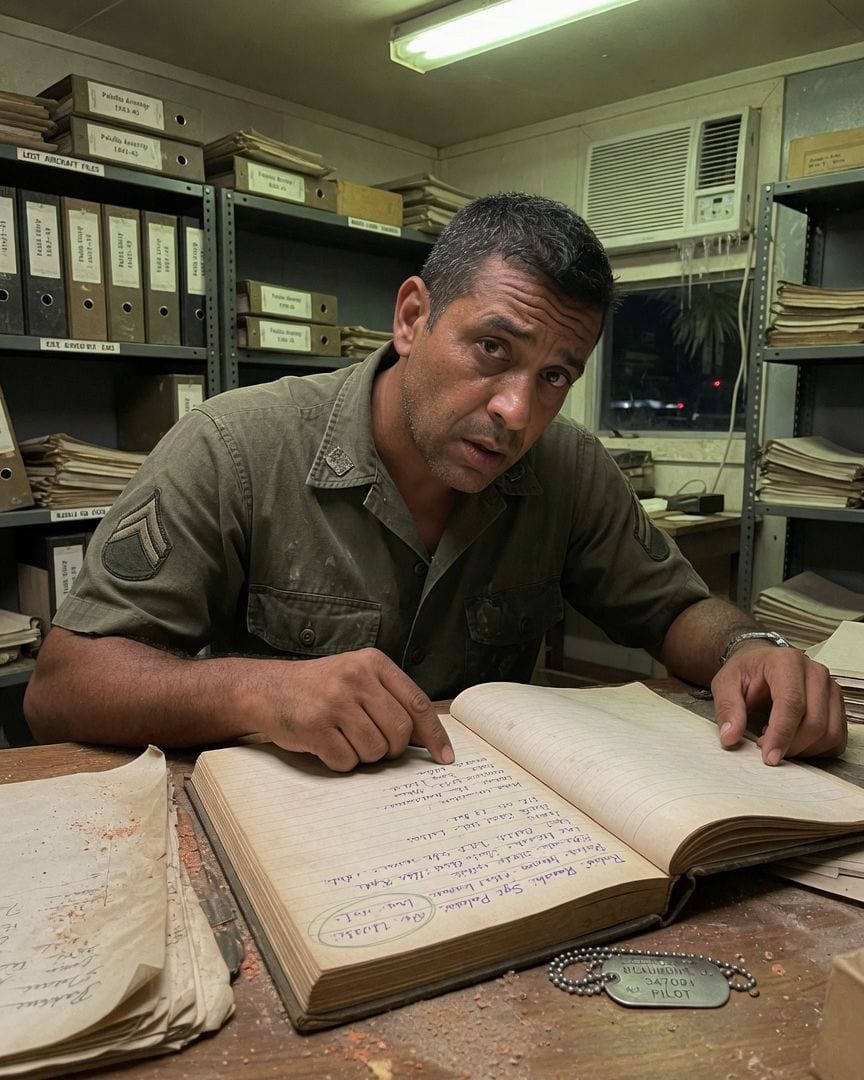
A sergeant's last watch on a forgotten outpost: His own name appeared on an 80-year-old crash manifest.
Sergeant Leon Pulaski spent his last night at the remote Peleliu Atoll Airstrip, its final closure imminent, listening to the rhythmic sigh of the Pacific. Just after 0330, a garbled distress call pierced the silence, requesting the field for a plane with a tail number, 'Ghost Two-Niner-Niner,' retired since World War II. Though Pulaski, disciplined and rational, logged the impossible call as a phantom, the crash crew later found a fresh gouge in the coral and a shard of cockpit glass, still warm, where no wreck existed. His quiet unease only deepened when he discovered a dog tag belonging to a pilot declared lost eighty years prior. But the true chill landed when he found his own name on that same eighty-year-old crash manifest.
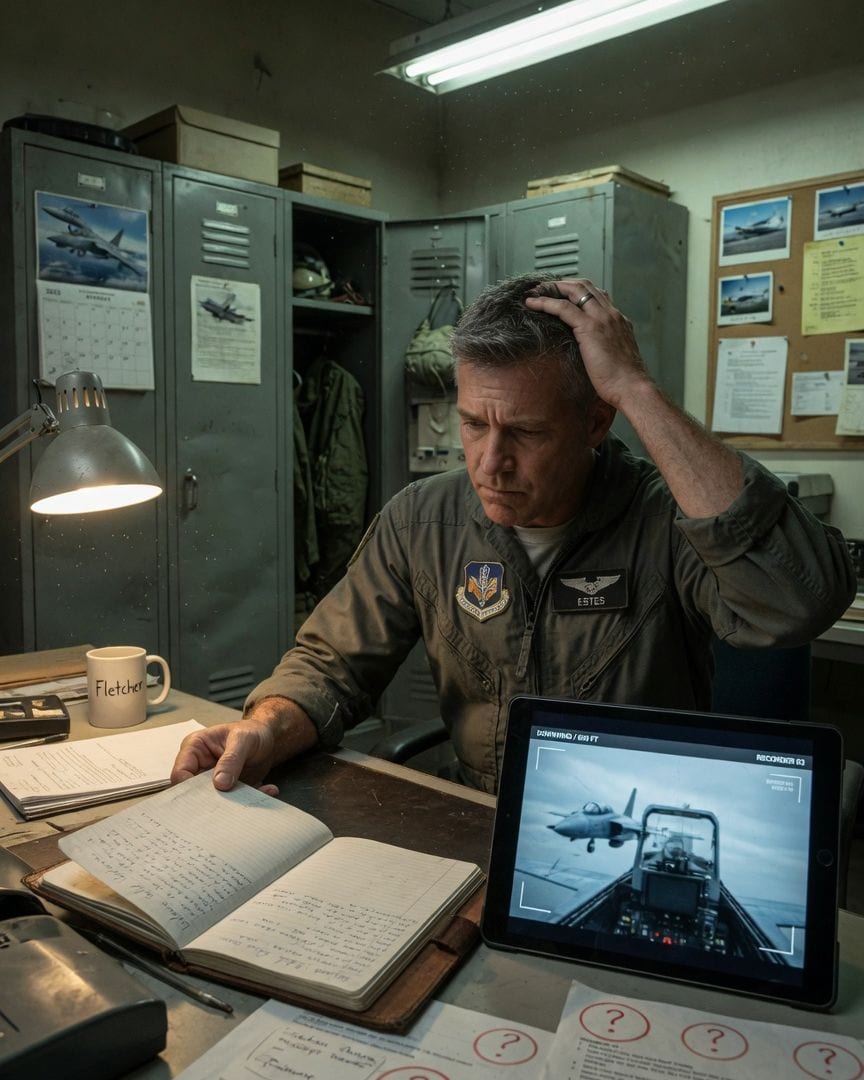
A Chief Warrant Officer's HUD tape shows a phantom jet, impossibly close, off his wing. Forty years ago, another Cold War pilot logged the same impossible sight.
Chief Warrant Officer Nathaniel Estes, a pilot whose career hinged on absolute precision, was under evaluation for a critical promotion. His nightly review of HUD tapes from routine Mojave test flights was a meticulous habit, but for a week, it revealed an impossible detail. At precisely 800 feet, one frame showed a sleek, experimental jet tucked impossibly close off his left wing—a craft ground radar never detected. When his maintenance chief found no equipment fault, Estes unearthed a dusty, decades-old logbook detailing identical phantom sightings from 1978. What unseen presence shadowed the desert skies?
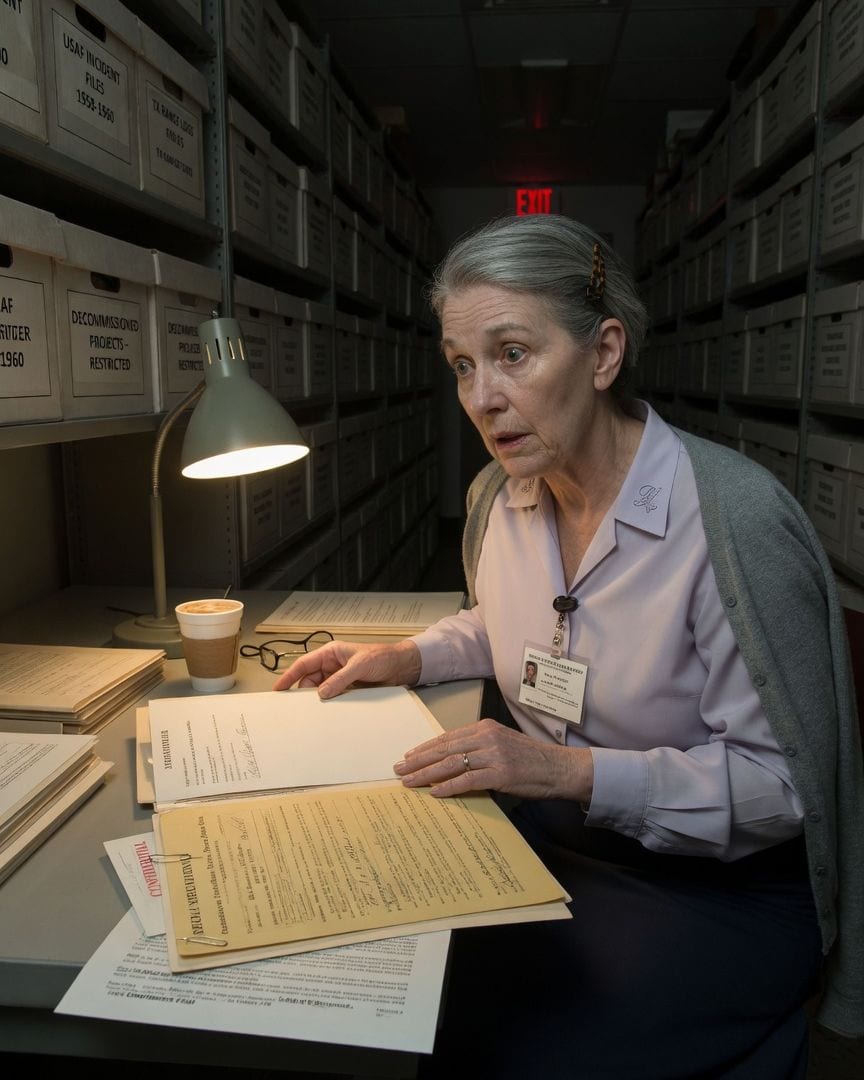
A meticulous archivist nearing retirement found the Cold War drone she signed off as 'destroyed' had logged flight hours weeks later, signed by a man who didn't exist.
Nearing retirement, archivist Rosalind Tate hoped to finally put a long-buried Cold War lie to rest. The shame of signing off on a physically impossible military crate in 1959 had haunted her for decades. In the hushed National Records Center, a declassification request brought her the very file she’d sealed, but instead of closure, she found a requisition for parts for the 'destroyed' drone, dated months after its crash. Then, a maintenance log detailed flight hours for the same unit, weeks later, signed by an officer who never existed. The file wasn't closed; it was chillingly, impossibly, active.
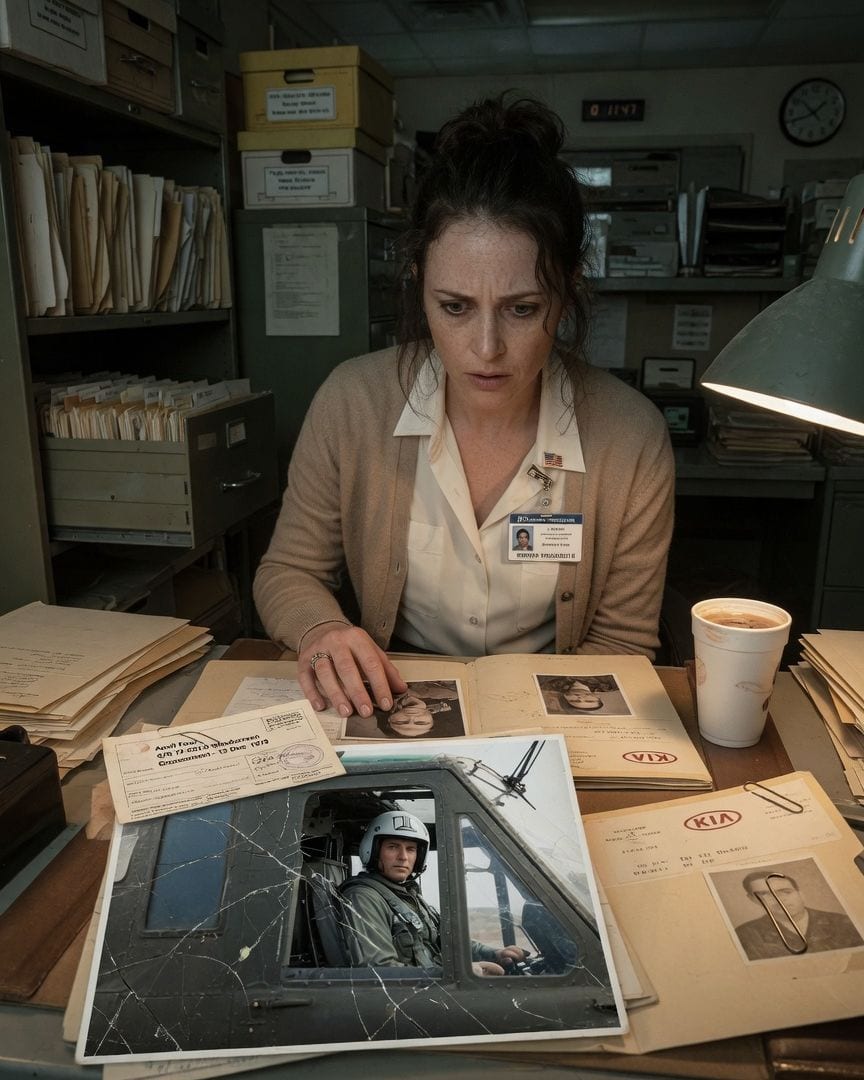
An archive photo shows a Cold War pilot, officially dead eight months, sitting inside his lost helicopter.
Josie Ilnicki, a meticulous Department of Defense archivist, finally processed a file requested annually for forty years by a woman in Reno. The Anvil Four file detailed a UH-1H helicopter officially lost in April 1979 during a training exercise over the vast Nevada ranges, holding the usual reports of a cold disaster. But tucked inside, dated eight months after the crash, was a maintenance sheet for Anvil Four, complete with a grainy photograph. The image showed a man, calm and unsmiling, sitting in the helicopter's cracked cockpit – a man Josie identified as Major Oscar Vance, the pilot declared Missing In Action on the very day the helicopter vanished. What impossible truth did the official records truly hold?