My father came back from the sealed mine. He thanked the doctor, warmly, for surgery not yet scheduled, for a diagnosis not yet made, named the date. The tests last week confirmed his date.
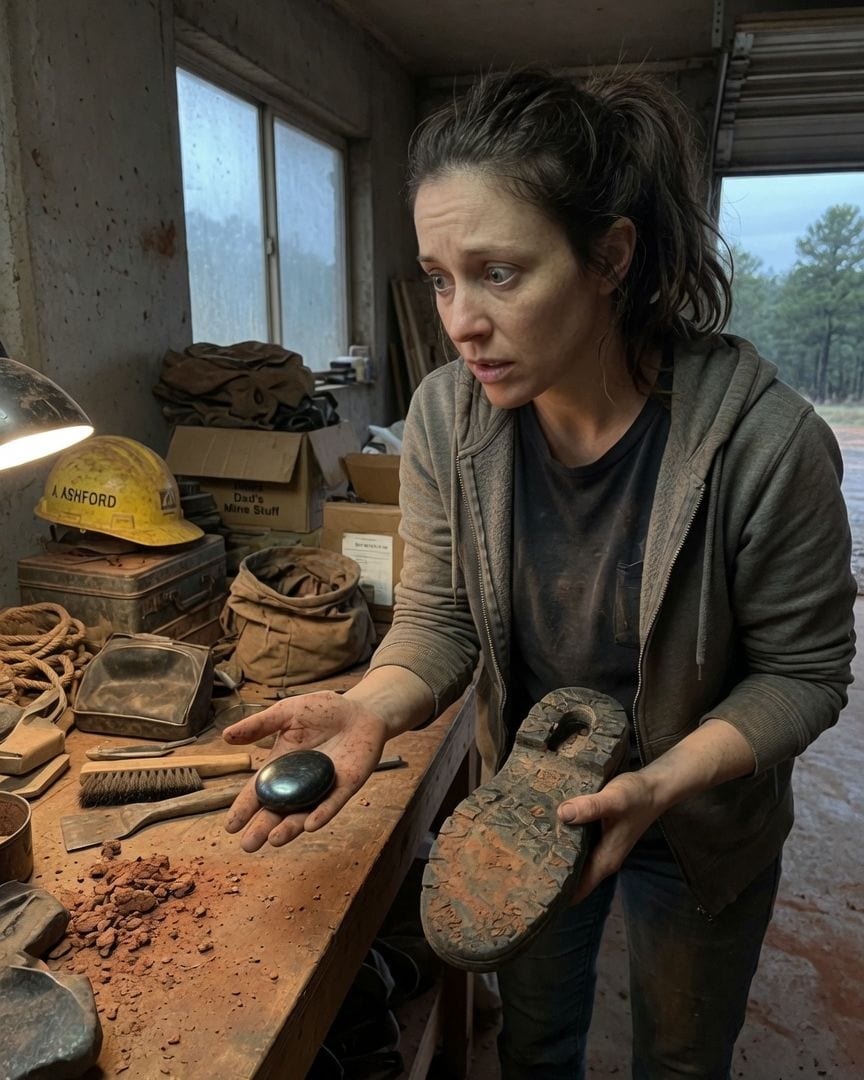
My father, Arthur Ashford, died on October 12th, six months ago, when the Ashford mine collapsed. Or so I thought. We held a memorial. We grieved. And then, two weeks ago, he just… came back.
The hospital ward smelled of antiseptic and stale coffee. Dr. Linda Pierce stood at the foot of his bed, her face a mask of professional bewilderment, explaining the miracle. "Arthur, you were found by a survey team.
Dehydrated, malnourished, but otherwise… astonishingly well. We still don't understand how you survived, let alone how you got out." Relief, hot and overwhelming, had blurred my vision then. I just wanted to hold him, my dad, back from the impossible.
Arthur, though, didn't look bewildered. He looked almost serene. He reached for Dr. Pierce's hand, his grip firm. "Dr. Pierce," he said, his voice a little raspy but clear, "I can't thank you enough for the resection.
For the pancreatic cancer diagnosis that saved my life. October 14th, you said. I appreciate your swift action."
The words hung in the air. Dr. Pierce blinked, a slow, confused movement. The room, for a second, seemed to hold its breath. "Mr. Ashford, we haven't… we haven't run those specific diagnostics yet. We're still assessing."
I jumped in, forcing a laugh that sounded brittle. "Dad, it's the trauma talking. They're just getting you back on your feet." I clung to the mundane explanation like a lifeline. He'd been through hell. Of course, he was disoriented.
But Arthur just smiled, a faint, knowing curve of his lips, and nodded.
Last week, the test results came back. Pancreatic cancer. Early stage. The surgery? Scheduled for October 14th. Exactly as he’d said. Arthur had simply nodded when I told him, his expression an unsettling calm.
There was a faint, almost imperceptible smell clinging to him, a scent like ozone mixed with damp earth. It was a smell that shouldn't be in a clean hospital room, or on my father.
I spent the next few days trying to wedge Arthur’s impossible foresight into some corner of reason. A lucky guess, maybe. A subconscious memory of an old conversation about family medical history, some half-forgotten medical special.
Anything but what it felt like. I watched him, obsessively, searching for the crack in the facade. He was still Dad, in all the obvious ways. He remembered old jokes, our family stories, his usual routines.
But there were tiny shifts. He'd always taken his coffee with cream and two sugars, a cherished ritual from my childhood.
Now, he insisted on it black, no sugar, a firm, almost imperious preference he couldn't explain beyond 'it just tastes better this way.' And the humming.
He'd started humming a low, melodic tune I’d never heard before, certainly not from him, who only ever whistled old folk songs or show tunes. It was… pleasant, almost hypnotic, but utterly foreign to the man I knew.
One crisp morning, while clearing out the last of his old mining gear from the garage – the things the recovery team had brought back, still caked in the mine's red earth – I found a pair of his heavy, mud-caked boots.
I started cleaning them, scraping away layers of dried earth and grit, each movement a small act of denial.
Deep inside the sole of one, nestled perfectly in the worn arch where his foot would have pressed, I felt something hard. I dug it out with a careful finger.
It was a stone, small enough to fit in my palm, smooth as river glass, but not like any river stone I'd ever seen.
It shimmered faintly, a dark, oily iridescence that seemed to catch the light from within, not merely reflect it, as if light was trapped inside.
It was too dark for quartz, definitely too smooth for granite, and its surface seemed to absorb the ambient light rather than bounce it back. I turned it over in my fingers.
It felt impossibly cold, a deep, pervasive cold that penetrated my skin, even though the garage was warm from the morning sun. The texture was unlike anything terrestrial I could recall—silky, yet somehow dense, almost fluid beneath my thumb.
I tried to convince myself it was just a strange pebble, a unique piece of geology dislodged from the deep veins of the Ashford mine. Perhaps an overlooked mineral deposit, something new the geologists hadn't categorized.
But the unnatural, persistent cold, the deep, shifting shimmer, the alien texture that seemed to drink the light… it stubbornly refused to fit any ordinary explanation.
My unease, now a cold knot in my stomach, drove me out to the abandoned Ashford mine. It sat, a jagged maw in the hillside, now completely sealed by a thick, grey concrete slab.
Steel beams, thick as tree trunks, reinforced it, a monument to the seventy-four souls lost in the collapse, Arthur among them.
I found Patrick Doyle, the retired mine supervisor, placing a fresh bouquet of wildflowers at a small memorial nearby. He squinted at me, his face etched with age and sorrow. "Rachel. You shouldn't be here."
He confirmed the seal was put in place immediately after the collapse, a permanent measure. "Nothing could get in or out of that main shaft," he rasped, his gaze distant, fixed on the concrete. "Not even a squirrel.
Certainly not a man."
I approached the seal, my hand trembling slightly as I reached out. The concrete was rough beneath my fingers, impossibly cold.
I ran my palm across its unblemished surface, from one steel beam to the next, tracing the hard, brutal line of its closure. There was no crack, no scrape, no sign of anything having been disturbed.
Not from the outside, not from the inside. Arthur, my father, simply could not have come out this way. The cold, hard fact of it settled deep in my gut.
The undisturbed mine seal didn’t just shatter my rationalizations; it shattered my world. Arthur couldn’t have walked out of that mine. Yet, here he was, sitting in my kitchen, humming that strange, low tune.
The shimmering stone, cold and silent on my desk, seemed to hum too, a silent frequency only I could perceive.
I took the stone to Dr. Janet Russo, a geologist at the state university. She was known for her work on anomalous mineral formations.
Dr. Russo, a sharp woman with short, practical hair and an air of perpetual curiosity, greeted me in her lab, a room smelling of ozone and crushed rock.
She examined the stone under various lights, then microscopes, her brow furrowed into a deep V. She poked it, prodded it, ran a spectral analysis. "Remarkable," she murmured, more to herself than to me.
"It's not from any known local strata, Rachel. Not even common terrestrial mineralogy. The crystalline structure… it's almost too perfect, too uniform. The light refraction is utterly baffling. It's… impossible. Like nothing I've ever seen.
Where did you say you found this?"
I didn't answer. I just thanked her, took the stone, and left. The word "impossible" echoed in my ears.
Later that day, I tried a different approach with Arthur. I sat with him on the porch swing, the late afternoon sun warm on our faces, trying to find a seam in his composure. "Remember our annual fishing trips, Dad?"
I asked, keeping my voice casual. "Willow Creek, that little eddy where we always caught the biggest trout?"
He nodded, a warm, nostalgic smile touching his lips. "Of course, Rachel. That big trout we caught in the deep pool. The one that nearly pulled your rod into the water." He laughed, a familiar, comforting sound.
"But it wasn't Willow Creek, honey. It was Lake Serenity. Hundreds of miles away, up in the northern range. The summer of '98, remember? Your mother was visiting her sister, and we had the whole week to ourselves."
My blood ran cold. Lake Serenity was a place we'd never visited, a tourist trap miles away.
In the summer of '98, my mother had been visiting her sister, but Arthur had been hospitalized with a severe bout of pneumonia, bedridden for weeks. I remembered visiting him, bringing him books. He hadn't left his hospital room.
I swallowed, my throat tight. "No, Dad," I said gently, trying to keep my voice steady. "It was Willow Creek. That little spot behind the old mill. And you were in the hospital that summer."
His smile didn't falter. If anything, it widened, becoming fixed. His eyes, though, grew calm, certain, devoid of any confusion or question. "No, Rachel," he said, his voice soft, utterly devoid of malice, "it was Lake Serenity.
I remember it perfectly. The way the light caught the water, the smell of pine, the size of that trout. Clear as day." The unshakeable certainty, the serene conviction, was worse than any confusion, worse than any lie.
He truly believed his impossible memory.
My calls to Patrick Doyle, initially about the mine’s history, started to become more pointed, more frantic. I asked about anomalies, about anything unusual beyond the official record. He grew increasingly evasive, his answers clipped.
One evening, as I was making dinner, my phone rang. Unknown number. I almost didn't answer, a strange premonition stopping my hand, but something compelled me to pick up.
It was Patrick. His voice was tight, strained, rougher than usual, as if he hadn't slept in days. "Rachel, I told you," he rasped, the words barely audible above a static hiss, "leave it be.
Some things are best left in the dark. You don't know what you're messing with." The line went dead before I could even respond, the dial tone a shrill accusation in the sudden silence.
He’d never sounded so terrified, so… urgent. The warning chilled me to the bone, a coldness that had nothing to do with the impossibly cold stone still sitting on my bedside table.
The next day, the chill became something far more tangible. I returned home after a quick trip to the grocery store, my mind still replaying Patrick's frantic words.
The front door was slightly ajar, maybe an inch, a dark sliver against the brighter hallway. My stomach lurched. I always locked it. Always.
I pushed it open slowly, my heart hammering against my ribs, expecting to find the house ransacked, everything turned upside down. But there was no sign of forced entry, no broken window, no overturned furniture. Nothing seemed stolen.
My purse was on the kitchen counter, still full, untouched.
I walked through the quiet house, every shadow seeming deeper, every creak of the floorboards too loud in the unnatural silence. Everything seemed exactly as I’d left it, until I reached my study.
My laptop, which I’d distinctly closed and left on my desk before I went out, was now open.
The screen glowed faintly, displaying a faded, complex geological survey of the Ashford mine that I had been researching online just that morning.
It was an obscure document, buried deep in an old university archive, almost impossible to find without specific search terms.
A specific section, deep beneath the main sealed shaft, was highlighted by the cursor, a pulsing green line drawing attention to a series of uncharted fissures.
It wasn’t a random glitch. It wasn’t a coincidence. My laptop had been closed. Someone had been in my house. Someone knew exactly what I was looking for.
And they were watching me, a presence I could almost feel in the room. The glowing screen, with its highlighted map, seemed to stare back, a silent, knowing accusation in the otherwise untouched room.
Unnerved but resolute, I drove straight to Patrick Doyle’s house. He was sitting on his porch swing, staring blankly at the distant mountains, looking pale and haggard. He held a cup of cold, untouched coffee.
He looked like a man who hadn't slept, a man who had seen too much.
I didn't waste time on pleasantries. I pulled the shimmering stone from my pocket and held it out. It pulsed faintly in my palm. "Patrick," I said, my voice sharper than I intended, "what is this?
What really happened in that mine? What did you mean, 'leave it be'?"
He flinched at the sight of the stone, drawing back slightly. He sighed, a deep, shuddering breath, then ran a hand over his face. "Lord help us," he muttered. "I knew you were digging. I felt it."
He admitted there were always 'stories' about the Ashford mine. Not just local legends whispered over beers, but things told in hushed tones, passed down through generations of miners. Strange lights deep underground, sometimes a faint, high-pitched hum.
Impossible finds that would mysteriously vanish. 'Cold spots' that lingered even in the hottest veins of rock. Things that didn't fit.
He led me inside, the small house cluttered with decades of memories and dust. He went to a dusty old trunk in the corner of his living room, its brass clasps tarnished with age.
With trembling hands, he pulled out a leather-bound journal, its pages brittle and yellowed. The leather cracked as he opened it. "My grandfather's," he whispered.
"He was one of the first to work the Ashford veins in the early 20th century."
He opened it to a page, carefully flattening the brittle paper. It was a crudely drawn, hand-annotated map of the mine's deeper, unrecorded shafts, a maze of lines and cross-sections that no official survey had ever cataloged.
It depicted a 'natural fissure,' he explained, or a 'wormhole,' branching off the main shaft, deep past where the concrete seal lay. It was marked with a stark red 'DANGER' symbol, leading to an uncharted, unstable cavern.
The lines around it were chaotic, unlike the ordered grid of the main mine.
"It bypasses the main entrance," Patrick whispered, his finger tracing a winding line that snaked around the main shaft. "My grandfather said it was always shifting. Like a seam that opens and closes.
A crack in the world itself, he called it. The official reports… they never acknowledge it. It's too unstable, too… wrong." He looked at me, his eyes wide and fearful. "Arthur wasn't found near the main, sealed shaft, Rachel.
He was found by the survey team near this fissure. They reported him just… appearing. Like he'd walked out of the rock itself. They thought he'd been trapped in some forgotten pocket, but they couldn't explain how he got out."
The impossible entry was explained. A crack in the world. But the deeper mystery of Arthur's change, of his uncanny knowledge, still remained, looming larger than before. The fissure was a door, but what had walked through it?
Patrick, visibly shaken by dredging up these old fears, his hands trembling slightly, continued to turn the brittle pages of his grandfather’s journal. Dust motes danced in the afternoon light filtering through the window, illuminating the worn paper.
"My grandfather… he claimed to have seen things come out of that fissure before," he murmured, his voice barely a whisper. "Not just Arthur."
He stopped on a page, his finger tracing a faded sketch.
It was a representation of the shimmering stone I held in my hand, unmistakable, labeled in shaky, old-fashioned script beneath it: "The Cold Star – found near fissure – 1928." My breath hitched. The stone had a name.
Below it, even more disturbing, was another sketch. A man, his features strangely blank, almost featureless, but clearly human. The eyes were hollow, the mouth a flat line. It wasn't grotesque, just… empty. It was labeled: "Old Man Harlow's return."
And scrawled beneath it, the same date: "1928."
Patrick looked up at me, his eyes wide with a dawning horror that mirrored my own. His face was pale, almost grey. "It happened before, Rachel. Decades ago. Old Man Harlow disappeared in the mine, just like your father.
Everyone thought he was gone. Then he came back… changed. Just like your father. Knew things he shouldn't. Had that same look in his eyes." He gestured vaguely towards the blank sketch.
"My grandfather said he wasn't really Harlow, not anymore. Just something wearing his skin."
The realization hit me with a sickening force, colder than any stone. This isn't just about Arthur. My father isn't an anomaly, a singular miracle, or a lone survivor.
He's part of a pattern, an ancient, terrifying recurrence stretching back through generations. He's just the latest.
Armed with Patrick’s journal, the shimmering 'Cold Star' stone, and the terrifying truth of the fissure, I drove home, the journal heavy on the passenger seat. My hands were clammy on the steering wheel. This was it.
The moment of truth.
I found Arthur in the kitchen, humming his low, unfamiliar tune, preparing a cup of black coffee. He looked up as I entered, his gaze calm, welcoming.
I laid the journal, open to 'Old Man Harlow's return,' and the shimmering stone on the kitchen table between us. The 'Cold Star' seemed to pulse faintly next to the crude sketch.
Arthur looked at them, his face utterly unreadable, devoid of any surprise or recognition. Slowly, calmly, he reached into his pocket.
He pulled out not a small stone, but a larger, perfectly smooth, obsidian-like sphere, about the size of an orange. It was intensely black, absorbing all light, and hummed faintly with a low, almost imperceptible vibration.
Intricate, impossible patterns shifted beneath its surface, like constellations in slow motion, constantly forming and dissolving. The air around it carried that faint, metallic scent of ozone and damp earth, stronger than I'd ever noticed on him.
"The fissure isn't a crack in the rock, Rachel," Arthur said, his voice flat, devoid of emotion, "but a tear in everything. A place where all times meet. A confluence." He held up the sphere, its black surface reflecting nothing.
"I didn't 'come back,' as you understand it. I stepped through. And this," he gestured to the sphere, "this is a guide. It allows one to perceive the weave of possibility."
He described the fishing trip from my childhood, not as I remembered it, but his version, the one from 'Lake Serenity.'
As he spoke, the impossible patterns beneath the sphere's surface subtly shifted, echoing the tranquil, pine-scented landscape he described, the way the light caught the water, the exact ripple of the deep pool.
It wasn't a memory, but a perfect, living snapshot of an alternate reality, or a different timeline. "My knowledge of your future surgery," he continued, his gaze unwavering, "came from seeing the most probable thread.
It's simply information, available if you know how to perceive it."
He wasn't malicious, wasn't angry. He was simply… stating facts. Utterly alien, a perfect mimic of my father, now revealed as a vessel for something vast and unknowable, a conduit for information from beyond.
The obsidian sphere, the artifact that cannot exist, hummed, its surface patterns subtly shifting to mirror the impossible lake.
Horror curdled in my stomach. Arthur, or the thing wearing him, wasn't a monster, but a dispassionate entity, a recording, a perfect echo. It offered me a choice, its voice calm and even. "You can understand, Rachel.
You can step through, see the weave yourself. Your mind, too, can perceive the many threads, the shifting probabilities."
It extended the obsidian sphere, its humming growing louder, filling the kitchen with the exact scent of ozone and damp earth I had noticed on him, now overpowering.
I recoiled, a desperate, visceral need to cling to my own reality, to the memory of my real father, surging through me. The one who loved cream in his coffee, who only whistled old folk songs. "No!"
I cried, pushing back from the table, overturning my chair with a clatter that sounded tiny in the expanding hum. "You're not him! You're not my father! I won't!"
I scrambled for the door, my hand reaching for the cold brass knob, desperate to escape the rising hum, the alien certainty in his eyes.
But Arthur stepped in front of me, not with force, but with an unnerving calm, his eyes holding a depth that wasn't human, a vastness that swallowed light.
"You are already part of it, Rachel," he said, a faint, wrong smile touching his lips. It was Arthur's smile, but twisted, like a memory seen in a funhouse mirror. "Your thread is intertwined. It was always so."
The room grew impossibly cold, the humming of the sphere a resonant chord in my bones, vibrating through the floorboards, through the very air. His hand reached out, slowly, toward my face.
Rachel Ashford's house stood empty for weeks. Neighbors noticed the untouched mail, the silent windows. Patrick Doyle, wracked with guilt and fear, eventually forced himself to check.
He found the front door ajar, but no sign of struggle, no overturned furniture, nothing missing. He called the police. The investigation yielded nothing. Rachel Ashford was officially listed as a missing person.
Arthur Ashford remained in the house, a quiet, polite presence, a man who kept to himself. No one questioned his presence, only Rachel's absence.
Weeks turned into months. The Ashford case faded from local memory. Dr. Janet Russo, the geologist, received an anonymous package one morning.
Inside, nestled in dark velvet, was a perfectly smooth obsidian sphere, faintly humming, its surface swirling with impossible, shifting patterns.
Intrigued, Dr. Russo, accustomed to scientific anomalies, began to examine it under various instruments, unaware of its true origin or the implications of its presence. She noted the strange, cold emanations, the faint scent of ozone.
She felt a growing, inexplicable certainty that she was on the verge of a profound discovery, a new understanding of reality itself. The hum was almost imperceptible, a song of impossible knowledge.
If this one got to you
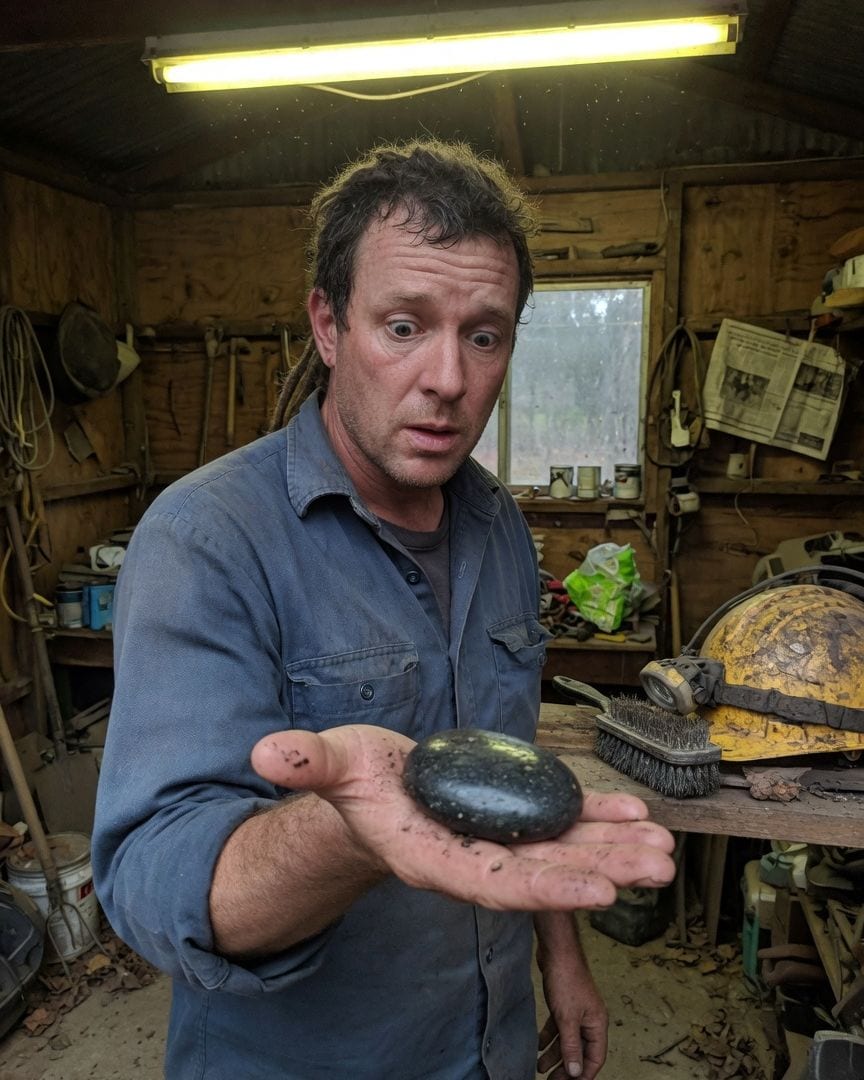
My father returned from the sealed mine. He named the date of his surgery, for a diagnosis not yet made. The tests last week confirmed the exact day.
My father, Nathan, returned three weeks after being presumed lost in the coal mine, impossibly hale. But his casual talk of a specific thoracic surgery for a tumor, complete with a future date, unsettled me; Dr. Rutherford had confirmed no such diagnosis.
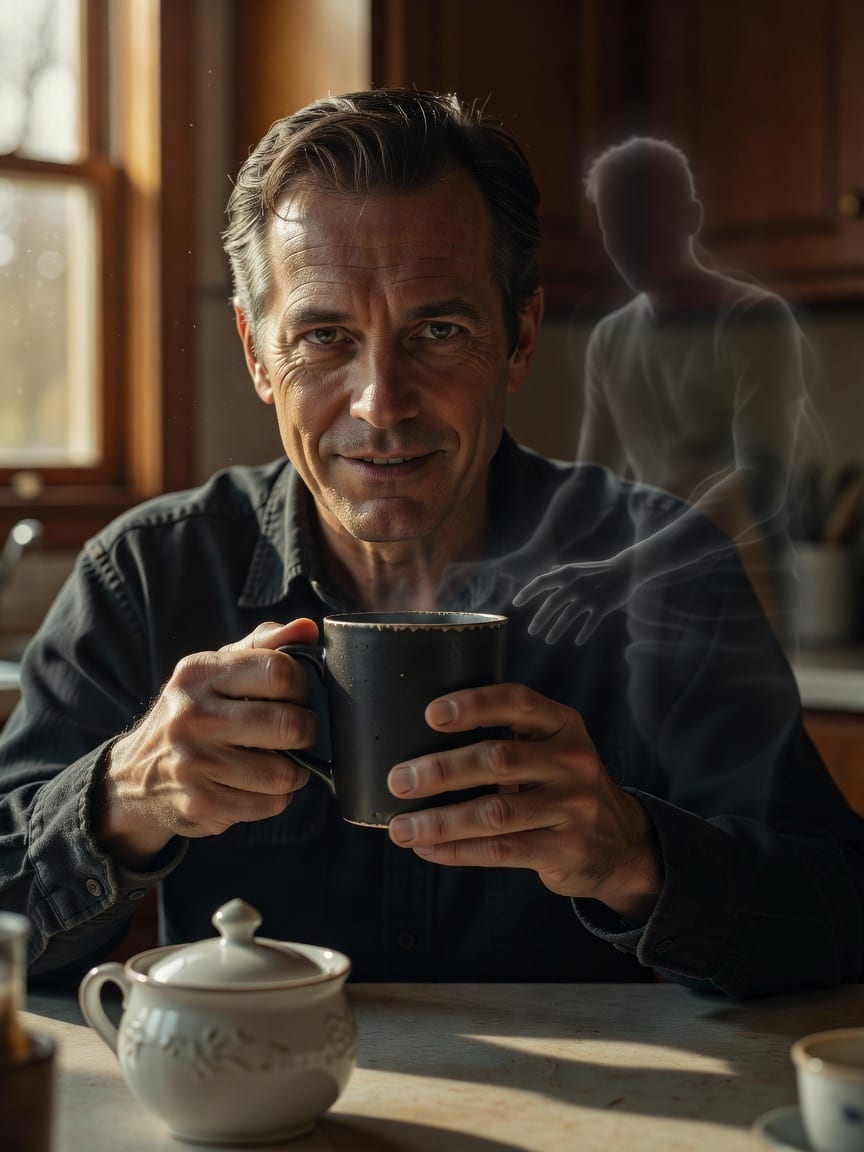
My father takes his coffee black now. He put three sugars in it every morning of my life. He looks at the sugar bowl like it's from another man's house.
My father, Gideon Bishop, came back after eighteen months lost at sea. His return felt like a miracle, until the first morning coffee. He always took three sugars, but his gaze fell on the sugar bowl as if it were a relic from another man's house, then he drank it black. A cold certainty began to form: this simple, small thing was profoundly wrong.
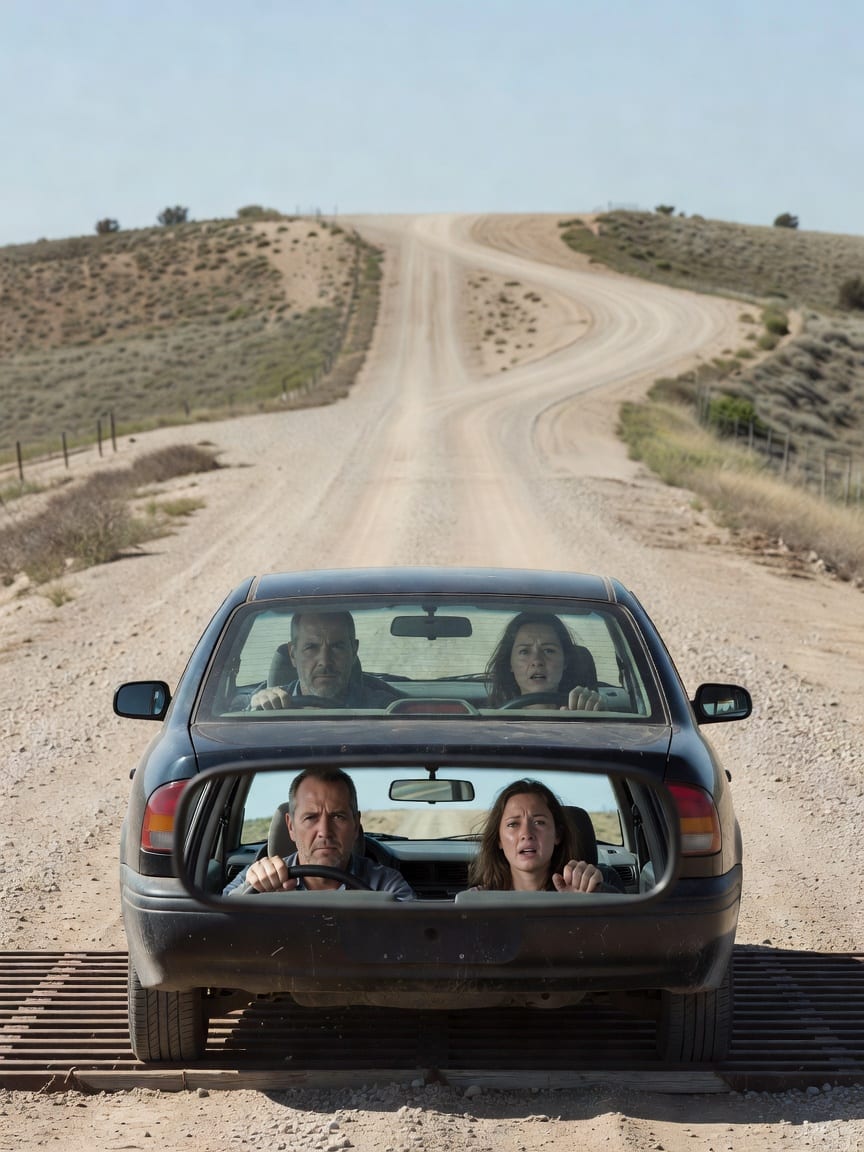
My father's ashes never made it to the hilltop. That single track kept feeding my car back to the cattle grid, the same sheep scattering, the same gate swinging.
I'm trying to scatter my dad's ashes at the highest point, but the track to Ashford Hill keeps looping, pushing my car back down. After my fifth attempt, I walked it myself, only to find the same pale grey gravel and cattle grid appearing inexplicably behind me again. Then, half-buried in the verge, I found a brass marker with strange symbols, dated 1897, that I'm certain wasn't there before.
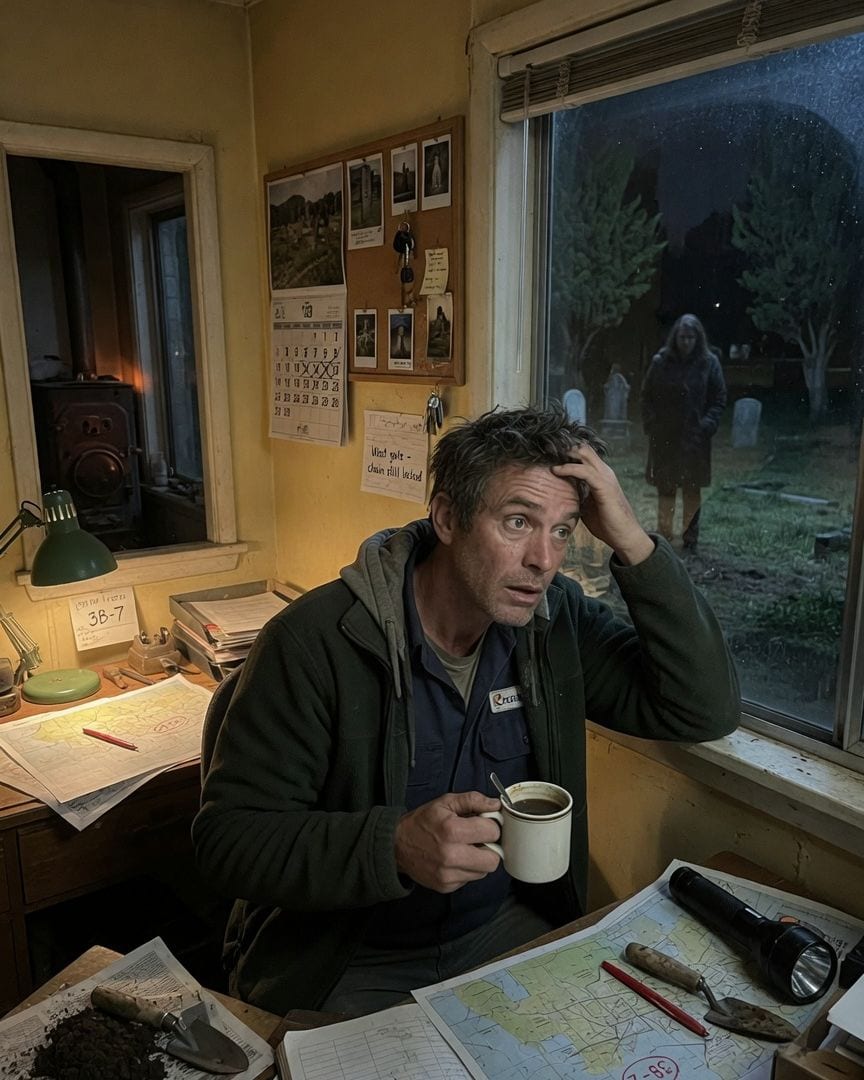
My cemetery lodge overlooks a woman visiting an empty grave near 3 AM most nights. The west gate she uses has been chained shut since autumn, its lock untouched.
As the cemetery's night caretaker, I'm used to the quiet hum of the lodge. But for three weeks, a woman has appeared nightly at plot 3B-7, a silent mourner in the deep night. What chills me is how she leaves: walking straight through the west gate that's been chained and padlocked shut for eight months.
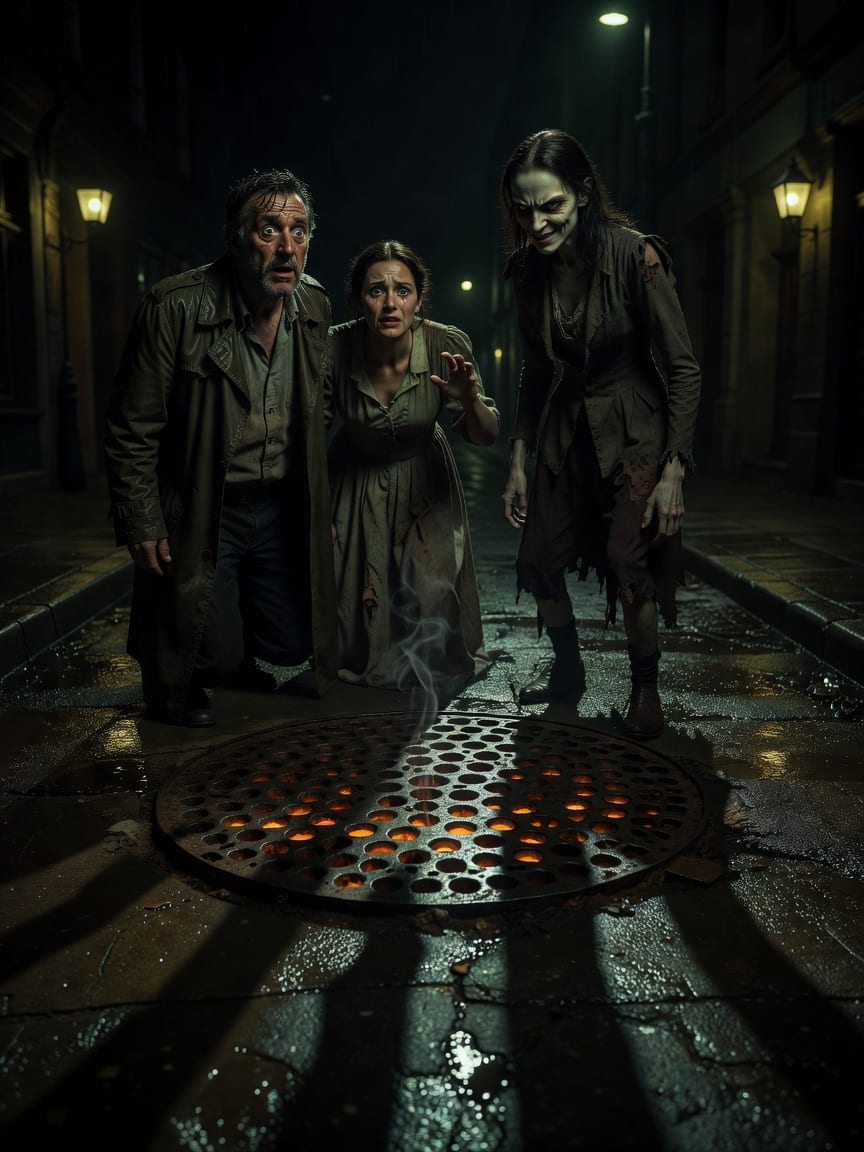
There’s a coal hole cover outside my house, iron, sealed with tar. One night I saw light coming up through its holes. From below the street, a shovel scraped, a man whistled. My cellar, directly beneath, is bricked off from it, dry and empty. I went down and checked. Silence. Cold.
I’d only been in my new house two months when I saw it: a faint glow and rhythmic scraping from the old coal hole cover in the pavement. My cellar, directly below, was bricked off and empty. But then a man started whistling, a tuneless melody, echoing from directly beneath my feet.
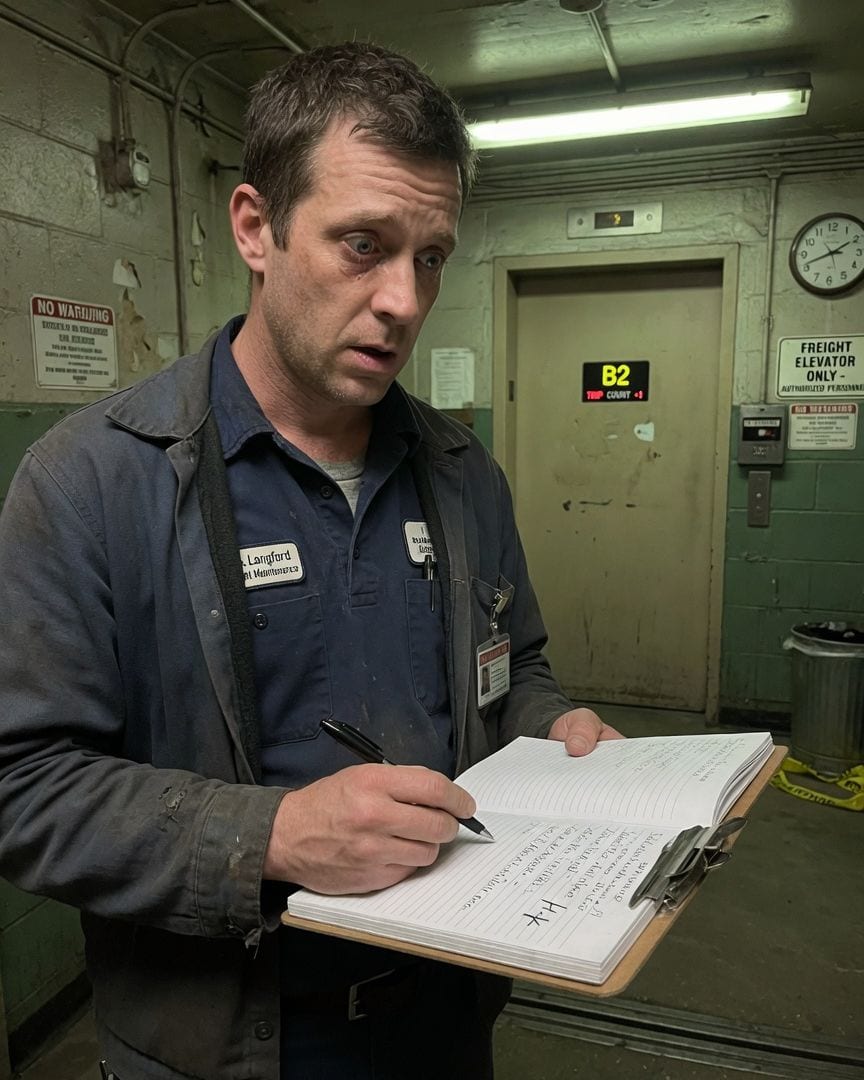
A man just took the elevator to the sealed sub-basement. He isn't on any staff roster, but my initials are in the logbook.
As a maintenance worker, my job is mostly routine, like signing the daily log for the old building's freight elevator. But one night, the log showed a trip to the sub-basement, sealed for a decade, timestamped with my key-switch and signed with my own initials, for a run I never made.