My father returned from the sealed mine. He named the date of his surgery, for a diagnosis not yet made. The tests last week confirmed the exact day.
The fluorescent hum of Dr. Rutherford’s office always made me anxious, but today it was a low, insistent thrum against my skull. My father, Nathan, sat beside me, impossibly hale.
Three weeks ago, he’d been lost, presumed gone in the Blackwood Coal Mine collapse. Now, here he was, six decades old, sitting straighter than me, his face unmarred, his hands clean of the earth that had swallowed him.
He was thanking Dr. Rutherford for an upcoming procedure.
“Really, Thomas,” he said, his voice deep and warm, completely at ease. “That thoracic surgery. I appreciate you getting me in so quickly. October 27th, isn’t it? For the mediastinal tumor. It’s quite the complicated one, I understand.”
Dr. Rutherford’s smile was a strained, thin thing, stretched across a face that usually held a kind, familiar worry. He cleared his throat. “Nathan, we… we haven’t actually confirmed a diagnosis for anything like that.
The scans we ran last week were just initial diagnostics, a baseline after… well, after your ordeal.” He glanced at me, his brow furrowing, a silent question in his eyes. He was as unsettled as I was.
My relief, which had been a heavy, suffocating blanket since his return, was beginning to curdle. My father continued, oblivious to the doctor’s discomfort, or perhaps choosing to ignore it. “Oh, I know. But it’ll be there.
And that’s the date. The team’s already preparing, aren’t they? For the full work-up.” His words carved a cold, impossible certainty into the air, a future already lived.
The office felt suddenly too small, too quiet, the hum of the lights a high, unnatural whine.
Back at the old farmhouse, the quiet settled heavy around us. I watched my father in his favorite armchair, reading the local paper, a picture of contented normalcy. He looked… fine. Physically, utterly fine.
My mind scrambled for a rational explanation for his earlier statements. Had he overheard something before the collapse? A doctor’s conversation perhaps, a casual remark about a patient’s upcoming surgery? No, that didn’t fit.
Dr. Rutherford had been clear: the diagnostic tests for that specific, rare thoracic condition were only ordered after his return, a standard protocol after any severe trauma, just to be thorough. My father couldn’t have known. He simply couldn’t.
I found myself in the old shed, the air thick with the smell of damp earth and disused tools.
I told myself I was looking for his old mining gear to clean it, to scrub away the last traces of the mine that had almost claimed him.
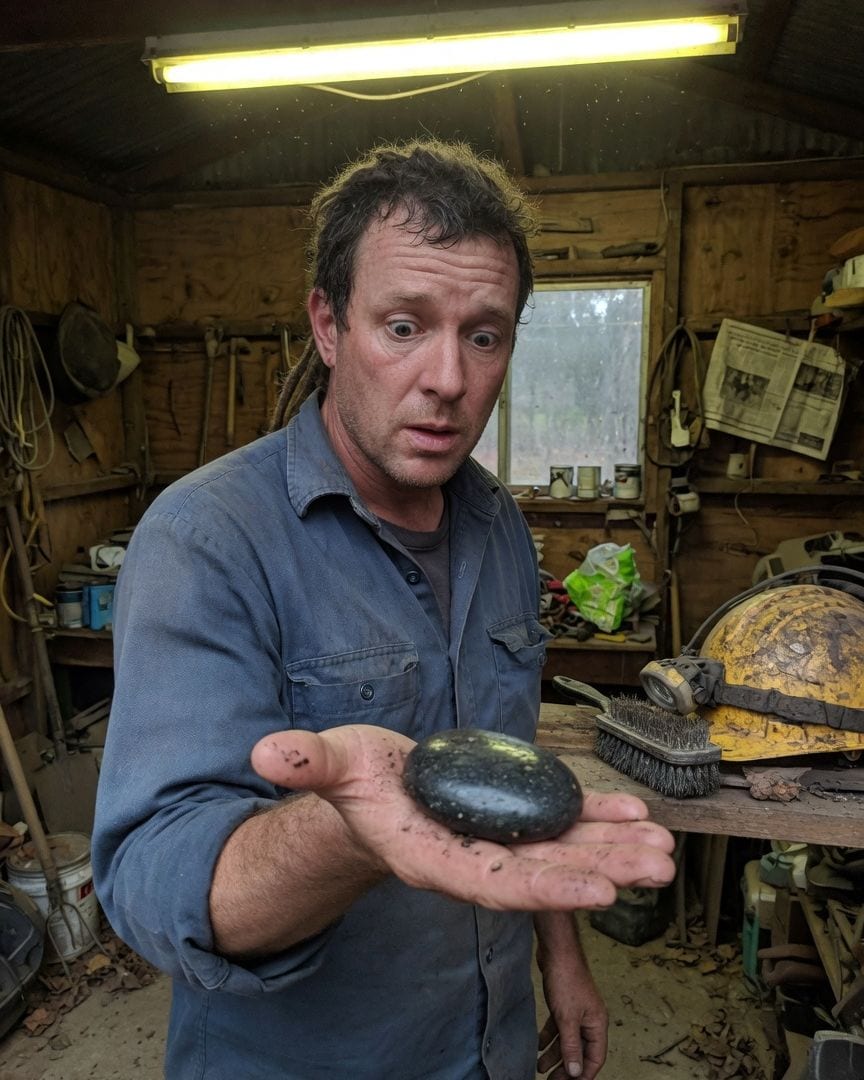
His mud-caked helmet sat on a shelf, still heavy with the damp earth from the mine’s deepest sections.
As I brushed away the crusty grime with a stiff wire brush, something small and hard clinked inside, rolling against the inner shell. I tipped it out onto my palm.
It was a stone. Dark grey, almost obsidian, but with a perfect, unnatural smoothness. No rough edges, no jagged lines like the usual coal or rock from the Blackwood Mine.
It was perfectly rounded, like it had been polished by eons of impossible water. It felt unnaturally cold, a deep, pervasive chill that seeped into my skin despite the warmth of the summer day.
My fingers closed around it, the strange coldness a stark counterpoint to the racing heat in my chest.
As I held it, a memory surfaced, unbidden and sharp, like a shard of ice. Three weeks ago. My mother’s kitchen. The scent of stale coffee and grief.
A hushed, tearful conversation, just the two of us, after Nathan was declared lost.
My mother, her voice thick with unshed tears, had whispered her deepest, unspoken fear: that Nathan might have developed that very rare thoracic condition, the one his own father had suffered from.
I had dismissed it, then, as grief-fueled anxiety, a dark thought born of despair. But the memory was vivid, a private moment, utterly secret.
“Where did you get this?” My voice was barely a whisper, the sound thin and reedy in the quiet living room. I held the dark, smooth stone in my outstretched hand, my gaze fixed on my father.
Nathan looked up from his paper, his eyes clear and calm, utterly devoid of surprise. He glanced at the stone, then back at me. A slow, gentle, familiar smile spread across his face, but it didn't quite reach his eyes.
“Ah, yes,” he said, his voice soft, almost affectionate. “The little comfort.” He reached out, taking the stone from my hand, turning it over in his palm with a possessive care. “You were so worried, weren’t you?
After I was gone. Telling your mother about the cough I used to have, the one I never mentioned. She was so upset, thinking about the worst, wasn’t she? That rare thing… like her father-in-law had.”
He recounted the private conversation, word for word, every hushed worry, every specific anxiety my mother had voiced, even my own placating reassurances.
It was all there, exactly as it had happened, a scene he could not possibly have overheard, could not possibly have known. My breath caught in my throat, a cold knot of dread tightening in my stomach.
Then, with the stone resting in his open palm, he looked directly into my eyes, a serene, unblinking certainty on his face.
“And you’ll decide, won’t you,” he said, his voice almost a pronouncement, “what to do with the house next winter?”
A decision I had not even remotely considered. Let alone spoken aloud.
Shaken to my core, I retreated to my room, the memory of his words echoing in my head. I paced, trying to rationalize it away again. Maybe it was a cruel trick of the mind, a symptom of post-traumatic stress.
Maybe he’d somehow picked up on subconscious cues. I called Dr. Rutherford, trying to frame my father’s impossible knowledge as a peculiar neurological event, a rare side effect of his trauma.
Dr. Rutherford listened patiently, his voice sympathetic, but laced with a faint professional unease. “Monica, his physical recovery is… extraordinary. Unprecedented, actually. But this ‘precognition,’ as you call it, it defies medical explanation.
We’ve run every test we can think of. His brain activity is normal. There’s no sign of a tumor, no unusual neurological markers that would account for… well, for knowing things he shouldn't.
Perhaps it’s a peculiar coping mechanism, a way for the mind to process severe trauma by creating a sense of control?”
I knew, with a chilling certainty, that it wasn’t. The dread in my gut was too sharp, too specific. It wasn't vague, generalized anxiety. It was a cold, precise knowing.
I needed answers beyond medicine, beyond what normal science could explain. I remembered my father, years ago, sometimes idly mentioning 'the old ways' when referring to the mine’s deeper, more mysterious sections.
He’d often spoken of Gerald Marsh, the retired mine manager, as the town’s unofficial historian, someone who knew everything about the Blackwood’s past.
I drove out to Gerald’s house, a small, cluttered place on the edge of town, smelling faintly of old books and pipe tobacco. He was a quiet man, with sharp, knowing eyes that seemed to miss nothing.
I feigned interest in old mine safety records, asking about historical incidents, subtly steering the conversation towards unusual geological features or strange, unexplainable occurrences.
Gerald listened, nodding slowly, occasionally stroking his chin. After a long pause, he finally said, his voice a low rumble, “There were always stories, you know. Old miners’ tales. Of 'whisper stones.' Deep in the sealed sections, they said.
Mineral formations, unlike anything else. Said to hum with a faint, unsettling energy. Superstition, of course. Miners are a superstitious lot.” He chuckled, a dry, rattling sound.
But as he spoke, my gaze caught on something tucked under a stack of old papers on his desk. It was a faded, detailed drawing, meticulously rendered in charcoal, of a stone. Perfectly smooth, dark grey, rounded.
Almost identical to the one I’d found in my father’s helmet.
The setting sun cast long, skeletal shadows across the road as I left Gerald Marsh's house. I glanced back and saw him standing at his window, a motionless silhouette against the fading light.
His expression was unreadable from that distance, but there was a strange, knowing glint in his eyes that seemed to reach me even from across his yard. A shiver, cold and unwelcome, ran down my spine.
The feeling of being watched, of being assessed, persisted all the way home, a prickle on the back of my neck that made me check my rearview mirror every few minutes.
Later that evening, I found Nathan sitting quietly in the living room, just as he had been yesterday.
On the coffee table in front of him, resting on the polished wood, was the very drawing I’d seen on Gerald’s desk – the charcoal sketch of the 'whisper stone.'
I hadn't told him I was going to Gerald's, let alone that I’d seen the drawing. A cold dread seeped into my bones. He wasn't supposed to know.
He looked up as I entered, his gaze calm, his face serene. “Gerald knows a lot about the old ways,” he said, his voice soft, almost a whisper, yet it seemed to fill the room, pushing against the walls.
“You should listen to him, Monica. He has a lot to tell you.” He picked up the drawing, his fingers tracing the outline of the smooth, dark stone with an unnerving tenderness.
The implication was clear: my digging had been noticed. My father, or whatever wore his face, was aware of my every move, my every thought. He wasn't just observing; he was guiding me. Or perhaps, subtly warning me.
I drove back to Gerald Marsh's house the next day, the drawing I’d found with my father, a crude photo of the stone from his helmet on my phone, clutched tight in my hand. I bypassed pleasantries, my voice urgent.
“My father found one of these,” I said, sliding the photo across his desk, beside the faded drawing. “And he knows things he shouldn’t. Things about the future, about my past.”
Gerald’s calm demeanor wavered, just slightly. He picked up the photo, his eyes narrowing. “Coincidence, perhaps, Monica. The ramblings of a traumatized man. The mind can do strange things under duress.”
“No,” I insisted, my voice firmer than I felt. “It’s not. He knew the date of his surgery for a diagnosis that hadn’t been made.
He recounted a private conversation between my mother and me, word for word, a conversation he couldn’t possibly have overheard. And he predicted a decision I haven’t even begun to consider for the house.”
I leaned forward, my hands flat on his desk. “He said you know 'the old ways.' He sent me here.”
Gerald sighed then, a long, weary sound that seemed to carry the weight of decades. He sat back, his gaze fixed on the wall behind me. “It wasn’t just superstition, Monica. The stories… they had a grain of truth.”
His voice was low, filled with a resigned dread. “There were other 'returns' from the Blackwood Mine over the decades. Not many. Maybe one or two every thirty years. But enough to form a pattern.”
He continued, his voice barely audible above the ticking grandfather clock in the corner. “Men who went into the deeper, sealed sections. Beyond where they should have gone. And came back… different. Physically unscathed, just like your father.
But with strange objects. Sometimes with fragmented knowledge of future events. Sometimes with impossible memories.” He paused, then looked at me, his eyes clouded with an old pain. “My own father was one of them. Decades ago.
He was a miner, went deep into the Blackwood. He returned with a stone, much like the one you found.”
Gerald’s hands trembled slightly as he spoke. “Slowly, over years, he began to speak of events decades away. Things that inevitably came true. Small things at first. A neighbour’s new car, a politician’s scandal. Then larger. The mine’s eventual sealing.
His mind… it slowly faded. Not into dementia, not exactly. More like a quiet, knowing disinterest. Always with the stone near him. Always calm.” He ran a hand over his face. “It wasn’t just superstition, Monica. These stones… they’re real.
And they change things.”
Gerald led me to a heavy, rusted metal cabinet in a back room. The air was thick with the smell of damp earth and old paper, a smell that now felt less nostalgic and more foreboding.
He fumbled with a series of old, stiff keys, his hands shaking slightly, the jingle unnaturally loud in the silence. “My father kept this,” he said, his voice flat, devoid of emotion, almost a monotone. “From his things.
He told me to never open it. Never let anyone else touch it. But you… you need to see.”
He pulled out a heavy, rectangular metal case, encrusted with rust, its surface rough and cold. A faded, hand-painted date from over seventy years ago was barely visible on the lid. He handed it to me.
The weight of it was surprising, dense and cold, like a block of frozen metal.
As I struggled with the stiff, rusted latch, my fingers scraping against the rough surface, a faint, almost imperceptible pulse of blue-white light seemed to flicker from within a small crack in the case, a soft, internal glow that winked out as quickly as it appeared.
I finally managed to pry it open, the metal groaning in protest, a sound like an old hinge tearing itself from ancient wood. Nestled within layers of old, brittle cloth, I saw it.
A dark, smooth, heavy stone, larger than the one from my father’s helmet, but identical in its unnatural polish and perfectly rounded edges.
It pulsed with a soft, internal blue-white light, a steady, rhythmic beat that seemed to resonate deep within my own chest. It was the 'whisper stone' from Gerald Marsh's drawing, undeniably real, undeniably active.
Gerald stood beside me, his face unreadable, his eyes fixed not on the glowing stone, but on me, a new, cold certainty in their depths.
Gerald Marsh, his voice now a calm, almost detached monotone, spoke the full, terrifying truth. “The Blackwood Mine, in its deepest, sealed sections, intersected a unique geological anomaly. Not a coal seam, or granite. A vein of these ‘whisper stones.’
They’re not native to Earth, I theorize. Something that fell long ago, or grew from an impossible seam in the bedrock, a place where time… operates differently.”
He gestured to the pulsing stone in the case. “These stones act as conduits. They exist outside the normal flow of time, absorbing and transmitting fragments of future knowledge and past events from those connected to them.
Miners exposed to them, if they survived, sometimes returned with fragmented precognition or impossible memories. Their minds slowly became less their own and more a vessel for the stones’ non-linear data.”
His gaze drifted to the wall, as if seeing decades unfold. “My own father wasn’t just ‘affected’ – he was subsumed.
He spoke of futures that inevitably came true, his personality fading, his consciousness becoming merely a relay for the stones. He was still physically there, but the man… the man I knew was gone.”
Gerald looked at me, his eyes filled with a profound, quiet sorrow. “Nathan, I believe, is undergoing the same process. The stones you hold, the one from his helmet, and this one from my father’s case, they’re not just artifacts.
They are active. And they are connecting. Sharing their impossible knowledge.” The dread in me wasn’t just that Nathan knew the future.
It was that he was the future, or a fragment of it, wearing her father’s face, his true self slowly being overwritten by the temporal current.
Gerald’s warning hung in the air: my father’s 'return' was a ticking clock, a slow erosion of the man I knew.
I rushed home, the larger, pulsing 'whisper stone' from Gerald's case heavy and cold in my hand. My heart hammered a frantic rhythm against my ribs.
I burst through the front door, the old wood groaning a protest that sounded like a sigh. Nathan sat quietly in the living room, just as he always did, reading a book.
But on the coffee table before him, perfectly aligned, were the two whisper stones. The smaller one from his helmet, and the larger, newly acquired one from Gerald’s case.
Both pulsed with a synchronized, internal blue-white light, casting faint, shifting shadows on the walls. The air in the room felt thick, humming with an unseen energy.
Nathan looked up, his eyes clear but distant, an unsettling serenity on his face. “It’s time, Monica,” he said, his voice calm, certain, resonant with a faint echo, as if another voice were speaking just behind his own.
“To decide about the house. The winter will be cold, and the old pipes won’t hold.”
A sickening lurch twisted in my stomach. I realized, with a terrifying clarity, that the 'decision' about the house wasn't mine to make. It was a future event he already knew, already was.
The dread tightened its grip, squeezing the air from my lungs. My father was already gone, replaced by this pattern of knowledge, this conduit for impossible time, this calm, knowing stranger.
I knew then that I could not live with it. I could not live with him.
I lunged for the stones, my intention clear, desperate. To destroy them. To smash them, shatter them, break the connection, to stop whatever was happening. But Nathan, still calm, still serene, intercepted my hand with surprising speed and strength.
His grip was firm, unyielding, my wrist caught in a vise of impossible muscle. “You won’t,” he said, his voice now entirely devoid of her father’s warmth, imbued with a finality that chilled me to the bone.
The two stones on the table pulsed brighter, faster, their blue-white light illuminating his impassive face, stripping away the last illusion of the man I’d known.
I left the town. I couldn't stay in the Ellsworth house, not with what resided there. Nathan remained, a quiet, unchanging fixture in the old farmhouse.
Dr. Rutherford continued to note his baffling, perfect health during infrequent check-ups, even as his lucidity seemed to drift in and out, replaced by an unsettling, knowing calm that offered precise, unprompted details about future local events.
Gerald Marsh kept to his cluttered house, the cabinet now empty. The sealed Blackwood Mine remained sealed, its secrets undisturbed, its geological anomaly humming far beneath the earth.
The 'whisper stones' were never found again, either the ones Monica saw, or the ones Gerald's father possessed. They simply vanished, leaving only the memory of their impossible light.
Monica never returned to the Ellsworth house, or the town.
Sometimes, late at night, a cold dread settles over her, and she wonders about the decision she never made, the winter that surely came, and the man who waited in that quiet house.
She wonders if anyone else noticed the faint, knowing smile in the silence. She tries not to think about it, but the memory lingers, a phantom limb of a life unlived.
A local real estate agent, calling the Ellsworth house months later about a routine property inquiry, received a calm, precise answer about the property's future, a meticulously articulated plan for the next year, delivered in Monica's father's voice, but with a faint, knowing smile in the silence that followed.
If this one got to you
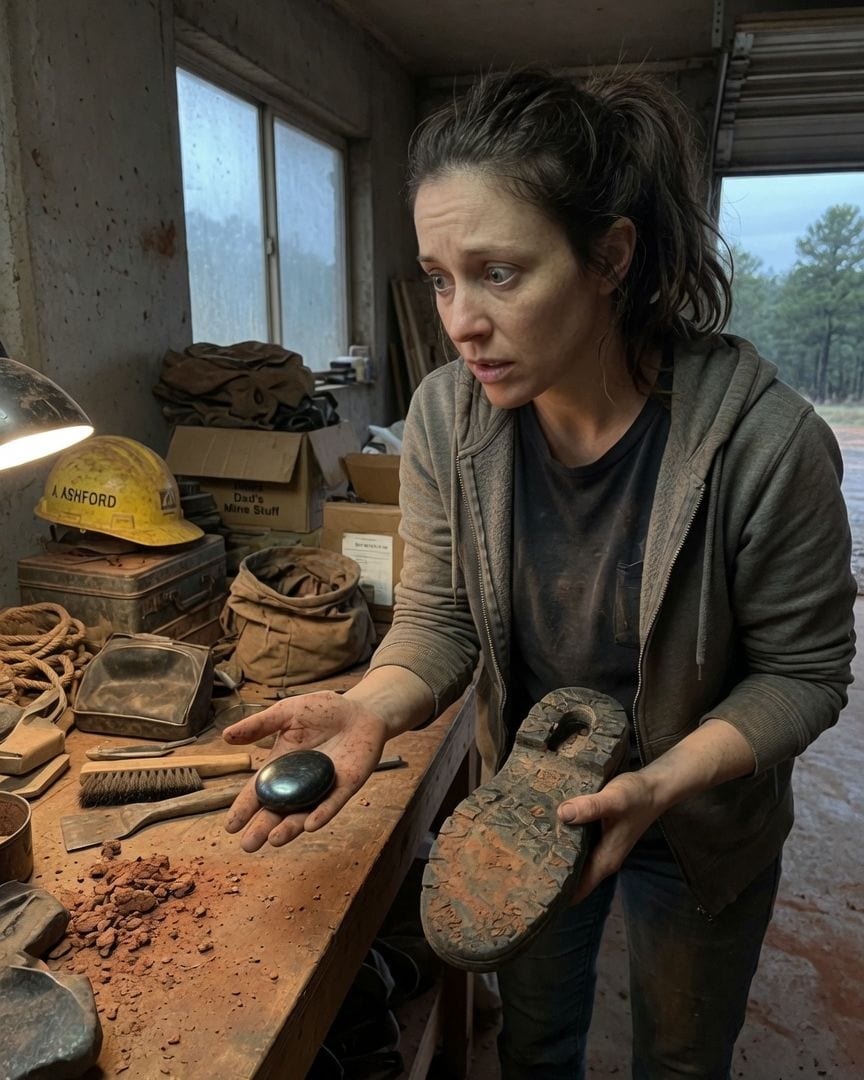
My father came back from the sealed mine. He thanked the doctor, warmly, for surgery not yet scheduled, for a diagnosis not yet made, named the date. The tests last week confirmed his date.
My father died six months ago when the Ashford mine collapsed. Two weeks ago, he simply returned, astonishingly well. But the mine entrance, sealed with concrete and steel immediately after the collapse, showed no crack or sign of disturbance. He could not have gotten out that way.
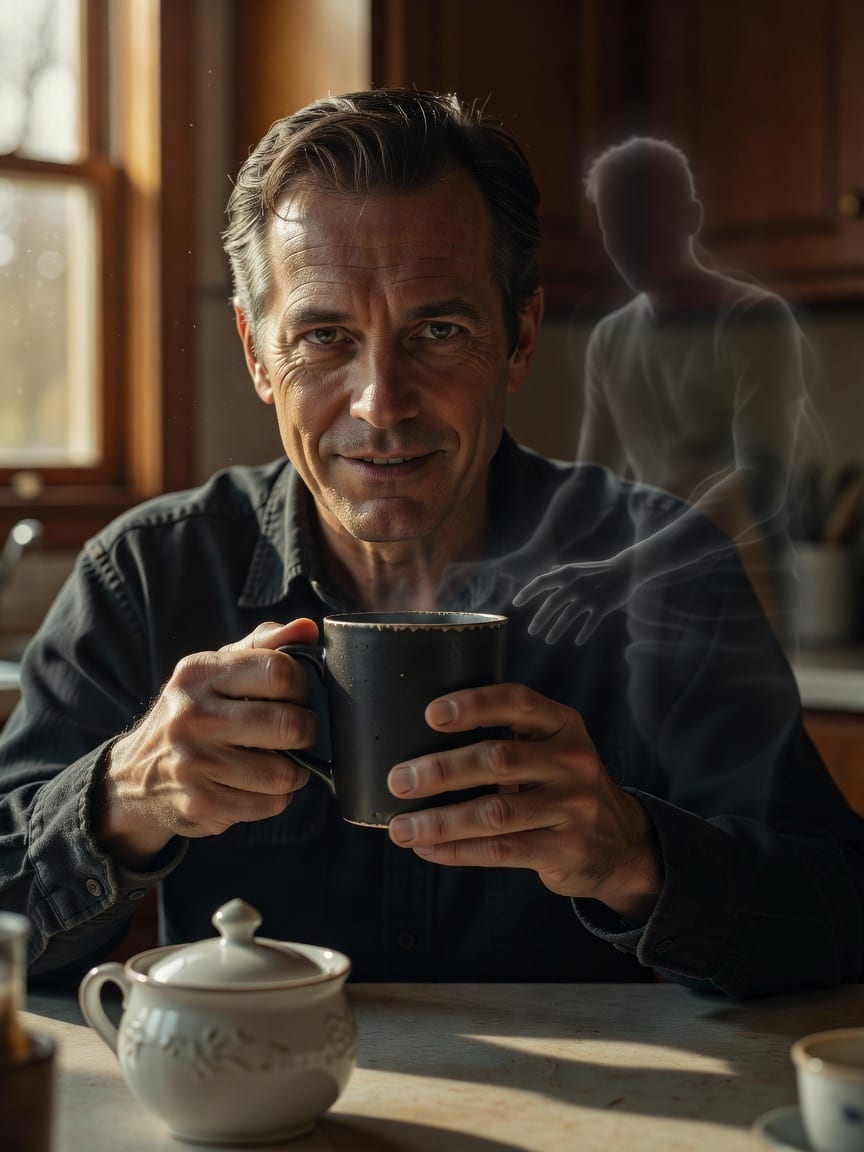
My father takes his coffee black now. He put three sugars in it every morning of my life. He looks at the sugar bowl like it's from another man's house.
My father, Gideon Bishop, came back after eighteen months lost at sea. His return felt like a miracle, until the first morning coffee. He always took three sugars, but his gaze fell on the sugar bowl as if it were a relic from another man's house, then he drank it black. A cold certainty began to form: this simple, small thing was profoundly wrong.
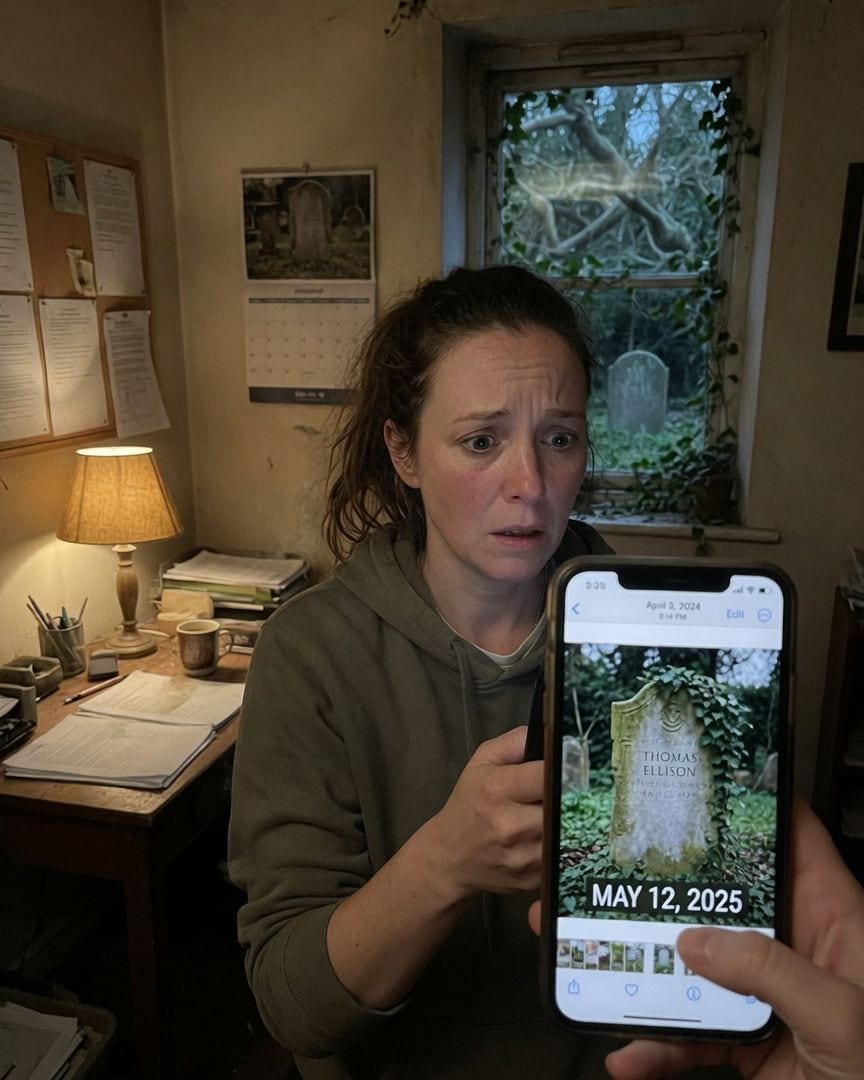
My photo shows a future death date on a churchyard headstone for the sexton. The stone itself reads 1911.
I moved to Blackwood Creek for the quiet charm, finding peace in the old churchyard of St. Jude's. But a headstone tucked away in the corner bore the name Thomas Ellison and an impossible death date: May 12, 2025. I'd just seen Thomas, the church sexton, alive and well that very morning.
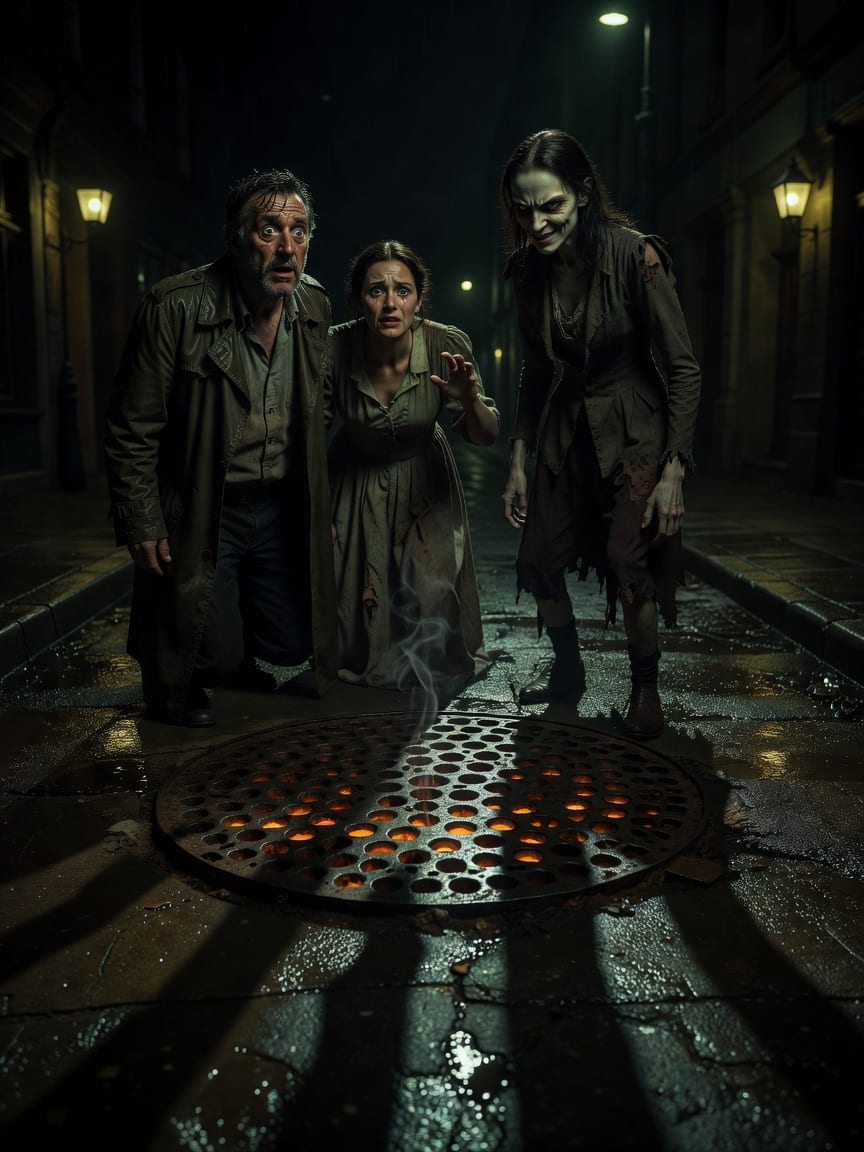
There’s a coal hole cover outside my house, iron, sealed with tar. One night I saw light coming up through its holes. From below the street, a shovel scraped, a man whistled. My cellar, directly beneath, is bricked off from it, dry and empty. I went down and checked. Silence. Cold.
I’d only been in my new house two months when I saw it: a faint glow and rhythmic scraping from the old coal hole cover in the pavement. My cellar, directly below, was bricked off and empty. But then a man started whistling, a tuneless melody, echoing from directly beneath my feet.
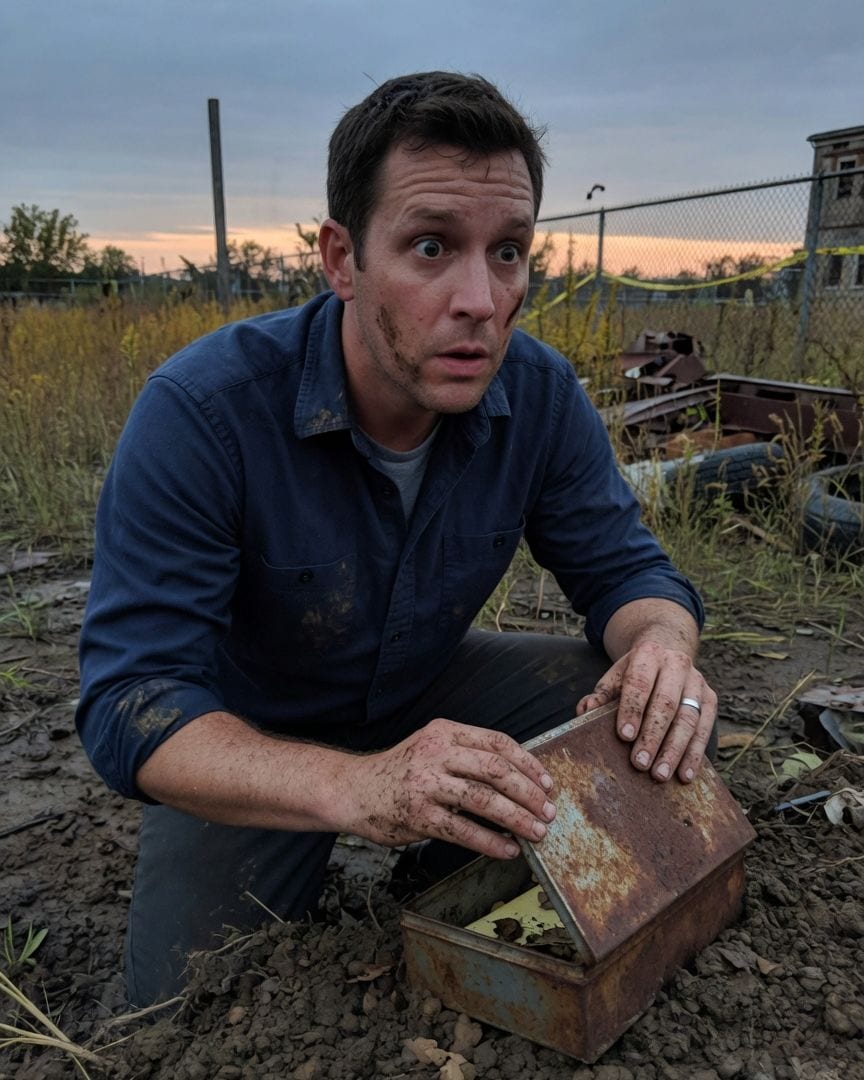
My ancestors' photo shows a letter addressed to me, dated 1972.
My birthday card arrived a day late, from a small town an hour north, nowhere we knew. Inside, an elegant, unfamiliar script read: 'Happy Birthday, Robert. The Field remembers.' It was postmarked from the site of my ancestral homestead, demolished decades before I was born.
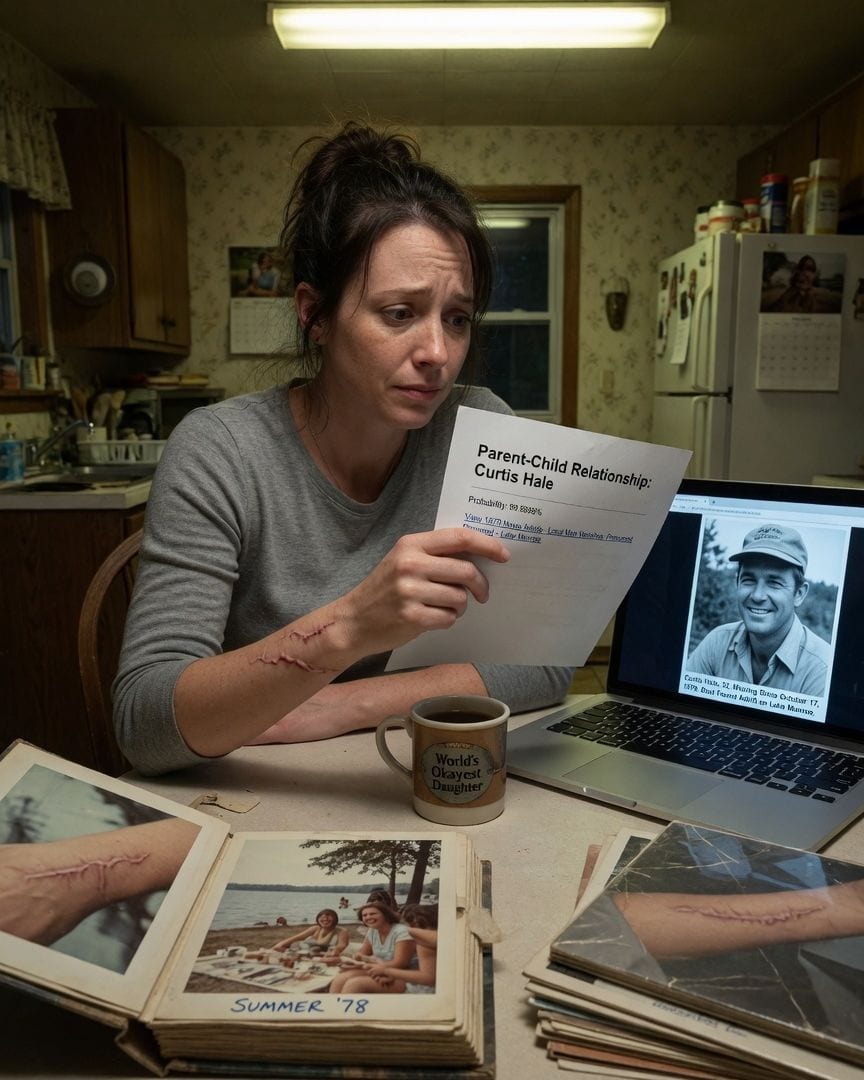
My DNA returned Curtis Hale as my father. He vanished in 1979. I was born twelve years later. The lab confirmed the match twice.
My DNA test results revealed something impossible: my biological father vanished in 1979, twelve years before my birth. My mother dismissed it as nonsense, but her reaction felt forced, leading me to old family photos. There, in a faded 1978 snapshot, I found my own distinctive childhood scar on the wrist of a stranger.