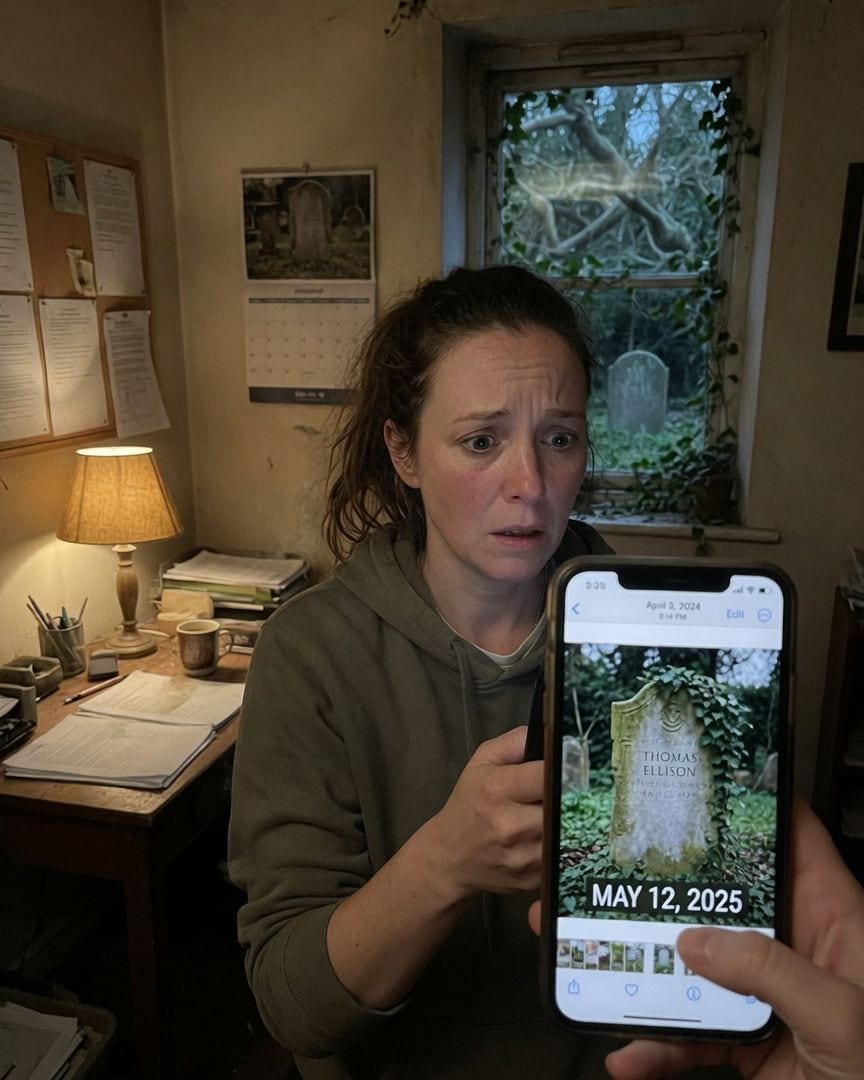
My photo shows a future death date on a churchyard headstone for the sexton. The stone itself reads 1911.
I moved to Blackwood Creek for the quiet, for the charm of a town that felt untouched by time. It was everything I’d pictured, a postcard come to life.
The old church, St. Jude’s, with its steeple reaching for the sky, and the sprawling churchyard, with its moss-covered stones and ancient oaks, quickly became my favorite place to walk.
The air there always felt cooler, a little heavier, but comforting. Until I found that headstone.
It was tucked away in the far corner, almost swallowed by a thick curtain of ivy and shadow, beneath a gnarled oak whose branches seemed to weep.
The other stones were weathered, their inscriptions faded, but this one, despite its obvious age, had an impossible clarity to it. The name on it was stark: THOMAS ELLISON.
And below it, etched with unnerving precision, the date of death: MAY 12, 2025.
I remember the chill that ran through me, sharp and sudden, despite the mild spring air. Thomas Ellison was the church sexton, a man I’d seen just that morning, raking leaves with methodical care near the vicarage.
He was very much alive, a quiet, stoic fixture of Blackwood Creek. My rational mind immediately tried to find an explanation – a new stone, a prank, a strange local custom.
But the stone itself was clearly ancient, deeply embedded in the earth. I took a quick photo on my phone, the timestamp clear: April 3, 2024, 3:14 PM.
Later, I saw Thomas again. He was mowing near the churchyard gate, his old machine rumbling a low drone. As he approached the far corner where the stone lay, he veered wide, not even glancing at it.
It was a subtle avoidance, but I noticed. I tried to make conversation, mention the old stones, the peacefulness of the churchyard. He just mumbled about 'keeping the ground tidy' and hurried off, his shoulders hunched.
The discrepancy gnawed at me. The next day, I went back, vicar Patrick Sheppard in tow, hoping he could explain the anomaly. Patrick was a portly man, always ready with a benign smile and a reassuring platitude.
"You must see this, Patrick," I said, my voice tight with a mixture of excitement and unease.
But when we reached the stone, the carving was deeply weathered, almost illegible beneath a fresh layer of green moss, and the date clearly read 1911. The name, if there was one, was obscured. My heart hammered against my ribs.
Patrick chuckled, a dismissive sound. "Just an old stone, Zoe. Time plays tricks on the eyes, especially in these old places. And the light can do strange things, can't it?" He meant my photo, I knew.
But my phone, timestamped and undeniable, still showed next spring, and the name on it was still Thomas Ellison. The image on the screen was crisp, undeniable. I felt a cold knot of dread tighten in my stomach.
The discrepancy gnawed at me. I zoomed in on the photo again, scrutinizing every pixel. A glitch? A trick of light? But the light had been overcast, even. A modern hoax?
But how could someone swap out an ancient, moss-covered stone and then put the old one back, perfectly weathered, within hours? It felt impossible. I showed the photo to Patrick again that afternoon.
He squinted at it, holding my phone at arm's length, then at the very real, very 1911 stone before us, shaking his head. "Remarkable trick photography, I suppose," he offered, dismissively, his smile fixed.
He genuinely seemed to believe it was a prank, or perhaps my own mind playing tricks. He patted my shoulder. "Perhaps you need a bit more rest, dear." But I knew what I saw, what my phone recorded.
I started paying closer attention to Thomas Ellison. He was always quiet, but now there was an almost haunted quality to his stillness, a deep-seated weariness I hadn't noticed before.
He avoided my gaze, his shoulders hunched even more than usual, as if carrying an invisible burden.
When I passed him in the village shop, his eyes would flick to a spot just over my shoulder, as if I wasn't there, as if he literally couldn't see me.
His presence felt less like a person and more like a carefully maintained quiet.
I tried asking Gerald Beaumont, the shop owner, about old churchyard stories, specifically about peculiar stones or strange carvings. Gerald just smiled, a little too widely, his eyes crinkling at the corners. "Oh, we have plenty of old stories, dear.
Blackwood Creek is steeped in them. Best not to go poking into them too much, though. Some things are best left alone."
He then smoothly changed the subject to the price of eggs, his gaze lingering on mine just a fraction too long. It wasn't a warning, not exactly, but a quiet, firm redirection. A soft, polished barrier.
The whole town seemed to have an unspoken agreement on certain topics. I remembered three separate people had vaguely warned me about 'reading old stones' when I first moved here, smiling politely as they did so.
A casual comment about the beauty of the graveyard, and they'd reply, "Just don't read the ones that aren't for you." It was a rule I hadn't even known I was breaking.
And now, I had not only read one, I had documented it. The air in town, once comforting, now felt thick with unspoken things.
The next afternoon, I found Thomas Ellison tending the rose bushes by the church gate, his back to me. The clippers made a soft, rhythmic snip-snip. My heart hammered against my ribs, a frantic bird trapped in my chest.
I walked up to him, my phone clutched in my hand, the photo of the headstone blazing on the screen, a beacon of impossible truth.
"Thomas," I said, my voice steadier than I felt, though it sounded reedy to my own ears.
He turned slowly, his face etched with a weariness I hadn't noticed before, a map of ancient sorrow. He didn't look surprised to see me, or the phone. He looked resigned. I held out the phone. "This.
Can you explain this?"
He looked at the screen, his eyes lingering on his own name, on that impossible future date, for a long moment.
His face remained placid, unreadable, but a muscle twitched almost imperceptibly in his jaw, a tiny flicker of something human beneath the calm.
He lowered his rake, his movements deliberate, unhurried, as if he had all the time in the world.
"You shouldn't have done that, Zoe," he said, his voice a low, gravelly whisper, barely audible above the rustle of leaves in the breeze. "You broke the rule."
He didn't elaborate, didn't threaten, just stared at the photograph, a deep, unsettling calm settling over his features, ancient and unmoving as the stones themselves.
Thomas's words echoed in my mind: 'You broke the rule.' But what rule? And what were the consequences of breaking something so intangible, yet so profoundly observed by everyone in Blackwood Creek?
I knew I wouldn't get a straight answer from him, or from anyone else in town, it seemed. The 'Town That Agrees' was a wall of polite evasions, carefully constructed and silently maintained.
Every conversation about the churchyard now felt like walking through a minefield of unspoken truths.
I decided to try the town library, hoping to find some historical context, perhaps an old almanac or local history book that might shed light on this 'rule' and the strange properties of the headstone.
The Blackwood Creek Public Library was a small, dusty building, smelling faintly of old paper and beeswax.
Cynthia Prescott, the town librarian and local historian, was behind the desk, her silver hair pulled back in a neat bun, her bifocals perched on her nose.
She was sharp, with keen eyes that missed nothing, even from behind her stack of overdue notices.
When I asked about local folklore regarding the churchyard, she offered a perfectly curated selection of quaint ghost stories and garden club histories. "Oh, there are many charming superstitions, dear," she said, her voice smooth as river stones, unwavering.
"Old wives' tales to keep children from playing among the graves, to discourage them from carving their initials into ancient monuments. Nothing to worry your head about."
But when I pressed for anything about specific stones, or peculiar warnings, her smile tightened almost imperceptibly, a momentary crack in the polished facade.
She gently steered me towards a display on the town's founding families, away from the more obscure archives and the dusty shelves that seemed to hold the true, forgotten history.
The air around her suddenly felt heavy, charged with unsaid words.
Later that week, I returned to the library when Cynthia's car wasn't in the lot, ostensibly to research my own family history, a convenient excuse. The library felt different without her, quieter, the shadows in the corners seeming to deepen.
I snuck into the dusty back rooms, past shelves overflowing with forgotten journals and brittle newspapers, searching for anything that felt less 'curated.' I found a ledger labeled 'Parish Records - Departures and Provisions, 1800-1950.'
It wasn't a death registry, not exactly. It listed names, and dates, often with vague notations like 'Gone to sea,' 'Moved on,' or 'Taken unwell.' It felt deliberately non-committal.
But what struck me was the pattern: every few decades, a cluster of 'departures' would occur around the same time of year, often involving families whose surnames, like Ellison, Beaumont, and even Prescott, reappeared throughout the centuries.
The dates rarely aligned with any major local event or epidemic. It was a quiet, unsettling rhythm, a pattern of disappearances that felt too neat, too organized for random misfortune.
Each entry was penned in an elegant, fading script, a solemn testament to something I couldn't yet grasp. The ledger itself seemed to hum with a forgotten history, the pages turning under my fingers with a dry, rustling protest.
My digging didn't go unnoticed. I started feeling eyes on me, a prickle on my neck when I walked home from the library, or when I just stepped out onto my porch.
The quiet streets of Blackwood Creek, once so charming, now felt watchful, imbued with a subtle, pervasive awareness. One evening, I returned to my cottage to find the front door slightly ajar.
I distinctly remembered locking it, hearing the satisfying click.
Nothing was disturbed inside, no sign of forced entry, no missing items, just the unsettling knowledge that someone had been there, a silent presence that had left no trace but the open door.
The framed photos on my mantelpiece, usually straight, were tilted at the slightest angle, a detail so small it could have been me, but I knew it wasn't.
The next day, as I was leaving the library, Thomas Ellison was standing across the street, calmly watering the vicarage garden.
He wasn't looking at me, his gaze fixed on the rose bushes, but I knew he knew I was there. He just continued his task, his movements slow and deliberate, a silent sentinel in the afternoon sun.
He was always there, it seemed, whenever I ventured into a new corner of my investigation.
Once, I found him at the edge of the old town archives, an hour before they opened, simply staring at the building, his hands clasped behind his back.
His expression was always the same: calm, unbothered, almost serene, as if he were waiting for something inevitable, something he already accepted. He never approached, never spoke, just observed. It was unnerving, far more so than any direct threat.
It was the horror of quiet complicity.
Later that night, I found a small, smooth river stone on my doorstep. It was perfectly oval, cool to the touch, almost black against the pale wood. I picked it up, a wave of recognition washing over me.
I’d seen stones just like it in the churchyard, placed at the foot of certain older, unmarked graves—graves that had felt particularly heavy with silence, as if they held more than just bones.
They weren't gravestones, not really, but markers of a different kind. It wasn't a warning, not with words, but a tangible reminder that my actions were being tracked, and that the town's quiet agreement extended to me now.
Thomas was not just the sexton; he was 'the one who knew,' and he was watching. The chill from the stone seeped into my palm, a cold reminder of the depth of the secret I was uncovering.
I couldn't shake the feeling that Cynthia Prescott knew more than she was letting on. The 'Parish Records' felt too deliberate, too carefully vague, a veil drawn over something far more sinister.
I returned to the library, the ledger clutched in my hand, its brittle pages an accusation. Cynthia was shelving books in the local history section, her back to me, humming a low, tuneless melody.
The air in the library was thick with dust motes dancing in the sunbeams.
"Cynthia," I began, my voice firm, cutting through the quiet. "I found this. The 'Departures and Provisions' ledger. What does it mean?"
She turned, her smooth librarian's smile faltering for the first time. Her hand, midway to replacing a volume, froze. "Oh, that old thing," she said, her voice a little too bright, a little too quick.
"Just a record of folks moving on, dear. People used to be more transient, you know. Always off to seek their fortunes."
I pushed back, my grip tightening on the ledger. "But the pattern. The names. Ellison, Beaumont, Prescott, your own family name, all appearing at regular intervals, then disappearing. And always around the same time of year, as if it were...
seasonal. It's not random."
Her eyes, usually so sharp and direct, seemed to glaze over for a moment, a flicker of something ancient and weary in their depths, like light catching on deep, still water. "Some families have always been...
more rooted here than others," she said, her voice softer, almost a whisper, barely audible. "They understand the land. The expectations."
I pressed, a desperate edge to my voice. "Expectations? What expectations? What rule did I break, Cynthia? Thomas said I broke a rule."
She sighed, a sound that seemed to carry the weight of generations, the accumulated sorrows of Blackwood Creek. She gestured for me to sit on a nearby wooden chair, her posture suddenly sagged, her shoulders slumping.
The humming bird clock on the wall seemed to tick louder, counting out the seconds. "It's not a rule you break like a law, Zoe. It's a truth you disturb. A balance. This town, it's old.
Older than any record in that ledger. And the land… the land has its ways. It gives, and it takes."
She explained that generations ago, the town made a pact. Not with a devil, not with a monster, but with the very earth beneath Blackwood Creek. Prosperity, protection, good harvests, a peaceful life – all came at a price.
A life, every so often, offered back to the land, a sacrifice to ensure the rest.
"The headstones," she continued, her voice barely audible, like a secret passed down through generations. "Some are just graves. But others… others are markers. Invitations.
They show the name of the one chosen, and the date the land calls them back. The town's 'agreement' isn't just silence. It's acceptance. It's ensuring the balance. We don't interfere. We can't.
Because if we don't honor the mark, the land takes its due in other ways. Worse ways."
My stomach churned, a sickening lurch. The quiet evasions, Thomas's calm acceptance, Gerald’s too-wide smile, Patrick’s dismissive laughter – it all snapped into horrifying focus.
They weren't just protecting a secret; they were protecting themselves, by letting others be taken, by maintaining a horrifying agreement. And I, by reading Thomas’s stone, by seeing the future date, had somehow stepped into the cycle myself.
My photograph wasn't just proof; it was a testament to my own unwitting initiation.
Cynthia stood, her weariness palpable, as if the weight of centuries had settled onto her shoulders. "There's an older record," she said, her voice hollow, like a whisper from an empty well. "Not for the public.
Not even for the main archives. It's kept separate." She led me, her steps slow and shuffling, to a hidden compartment behind a loose panel in the library's oldest bookshelf, concealed by rows of dusty, leather-bound tomes.
The wood groaned softly as she pulled it open, revealing a dark recess.
Inside was a single, leather-bound book, its cover dark and unadorned, its pages brittle with age, filled with elegant, faded script. It wasn't a ledger of 'departures,' but a true registry, stark and unambiguous, of 'Offerings.'
Names and dates, stretching back centuries, each entry a quiet, chilling testament to the town's grim pact. The air around us felt colder, suddenly, despite the warmth of the afternoon.
I saw the familiar surnames: Ellison, Prescott, Beaumont. The dates aligned precisely with the cyclical patterns I'd found in the 'Departures' ledger, now stripped of their euphemisms.
The truth was worse than I imagined: it had happened before, on a cycle, for generations, a meticulously kept record of quiet sacrifice.
Cynthia pointed to a page, much newer than the rest, tucked near the back, its ink still vibrant. "This is the current cycle," she whispered, her finger trembling slightly as she traced a line.
I saw Thomas Ellison's name, with the date May 12, 2025, exactly as it appeared in my photograph. My breath caught in my throat, a ragged gasp. Then, just below it, in fresh, dark ink, another entry.
My blood ran cold as I read the name, unmistakably my own: 'Zoe Russo.' And next to it, the same impossible date: 'DEATH: MAY 12, 2025'.
I recoiled, knocking over a stack of old, forgotten volumes that crashed to the dusty floor with a startling clatter. "No," I gasped, the sound choked, my voice raw. "That's impossible. This can't be real."
My mind reeled, grasping for any mundane explanation, any way to dismiss the stark reality staring back at me from the page.
Cynthia’s gaze was pitying, not accusatory. Her face, etched with lines of age and sorrow, held no judgment, only a deep, ancient understanding. "It is real, Zoe. It always has been. The land demands its tribute.
For generations, the families of Blackwood Creek have ensured it. The Ellisons, the Prescotts, others… we are the guardians. We manage the cycle, ensure the balance."
She explained that the act of 'reading' a marked stone, of truly seeing the future date and the name meant for the land, was akin to accepting the invitation, or perhaps, completing the ritual.
By photographing Thomas's stone, by bringing its impossible truth into focus, I hadn't just observed; I had engaged. I had inadvertently placed myself within the cycle, becoming part of the current offering.
My rational mind screamed in protest, but the horrifying coherence of it all was undeniable.
"The stone itself," she said, her voice dropping to a near whisper, "is a living record. It shows what it needs to show, to the one who needs to see it, when the time is right.
For Thomas, his time was coming. For you… you made it your time."
She revealed that the 'folk rule' – 'Never read the stones that aren't for you' – was never just a superstition for children.
It was a desperate plea from the town to avoid drawing attention to the marked stones, lest the 'mark' transfer, or a new one be made.
The quiet steering, the smooth stories, the polite evasions – it was all to keep outsiders from stumbling into the cycle, and to keep the locals safe by not interfering with what the land had chosen.
Thomas Ellison, she explained, was not a victim in the way I understood it. His family had been intertwined with the pact for centuries, sometimes as facilitators, sometimes as offerings.
He knew his fate, and he accepted it, just as others before him had. He was a link in a chain that stretched back further than any human memory.
The dread wasn't a sudden, violent act, but a slow, creeping inevitability, woven into the very fabric of the town. Every vague warning, every averted gaze, every strange detail, now clicked into a horrifyingly coherent pattern.
The truth was not a monster in the woods, but the very ground beneath our feet, and the quiet, desperate agreement of everyone around me. It was the air I breathed, the water I drank, the earth I walked upon.
I tried to fight it. I argued with Cynthia, pleaded, even threatened to expose the town, to call the authorities, to shout it from the rooftops. My voice rose, cracking with desperation.
She listened patiently, her eyes filled with a deep, ancient sorrow, a look that said she had seen this defiance countless times before. "There is no fighting it, Zoe. The land has chosen. The pact holds.
The town will not turn against its own survival for one person. It never has."
Just then, the library door creaked open, a slow, mournful sound, as if the building itself sighed. Thomas Ellison stood there, his figure silhouetted against the afternoon light, calm and unbothered, as if he'd been summoned by the conversation itself.
He walked in, his footsteps soft on the wooden floor, making no discernible sound. He looked at me, then at Cynthia, a faint, understanding nod passing between them. There was no menace in his eyes, only a profound, unsettling peace.
"It's a quiet passing, Zoe," he said, his voice surprisingly gentle, softer than I’d ever heard it. "The land takes you back, peacefully. It's not a struggle."
I felt a surge of adrenaline, cold and sharp, a desperate, animal need to flee. My heart hammered against my ribs, an insistent drumbeat of terror.
I bolted from the library, not caring where I ran, only that I had to get away from Blackwood Creek and its terrible secret, its quiet, insidious agreement.
I scrambled into my car, the engine turning over with a reluctant groan, and sped down the main road, leaving the town behind in a blur of green and grey.
But as the town sign faded in my rearview mirror, a strange lethargy began to creep in. My thoughts grew hazy, my resolve weakening, as if my very will was being siphoned away.
The landscape outside the window, once a blur of escape, started to feel distant, unreal, like a poorly rendered backdrop. A profound sense of disorientation settled over me, a subtle, irresistible pull drawing me back.
My hands felt heavy on the steering wheel, numb and unresponsive. I saw the turnoff for Blackwood Creek ahead, the sign a familiar landmark, and without consciously deciding, I took it.
There was no grand confrontation, no chase, no flashing lights. Just a quiet, insidious erosion of my will, a profound knowledge that I was already claimed. I was simply left knowing, and the knowing was the ending.
The truth had detonated, and I was now part of its fallout. The escape wasn't an option; the choice had been made the moment I broke the rule.
I returned to Blackwood Creek. There was no point in leaving. The pull was too strong, the sense of inevitability too overwhelming.
I moved out of my rented cottage and into a smaller, quieter one on the edge of town, closer to the old churchyard.
The townspeople treated me with a quiet deference, a mixture of pity and a strange, almost respectful distance. They knew. There were no more evasions, only soft smiles and averted gazes when I passed.
I occasionally saw Thomas Ellison, who would offer a small, sad nod, a shared understanding passing between us, a silent acknowledgement of our parallel paths. His quiet acceptance no longer seemed unsettling, but simply a state of being.
My days became simple, filled with long, aimless walks. I often found myself in the churchyard, pausing by the ancient stone in the far corner.
It still read '1911' to anyone else who bothered to look, a testament to the town's carefully guarded secret, but I knew what it truly held, what truth it revealed only to the marked.
The moss and ivy seemed to grow thicker around it, a soft green shroud, embracing it. The date on my phone, May 12, 2025, was now only weeks away, a quiet countdown ticking away in the background of my life.
The days bled into each other, each one bringing me closer to the inevitable. I found a strange calm settling over me, a hollow acceptance that felt both alien and profoundly natural.
The initial dread had faded, replaced by a quiet certainty, a deep understanding of my place in the ancient cycle. The fear wasn't gone, not entirely, but it had transformed into something else, a quiet companion.
I sat on my porch swing one evening, watching the last sliver of sun dip below the hills, painting the sky in hues of orange and purple.
The air was cool, carrying the scent of damp earth and distant woodsmoke, the familiar smells of Blackwood Creek. I reached for a smooth river stone resting on my windowsill, turning it over and over in my palm.
It was one of the stones I’d seen marking the older graves, one of the kind Thomas had left on my doorstep. It felt cool, comforting, a tangible connection to the land that had claimed me.
The date, now only days away, no longer brought fear; it just felt right.
If this one got to you
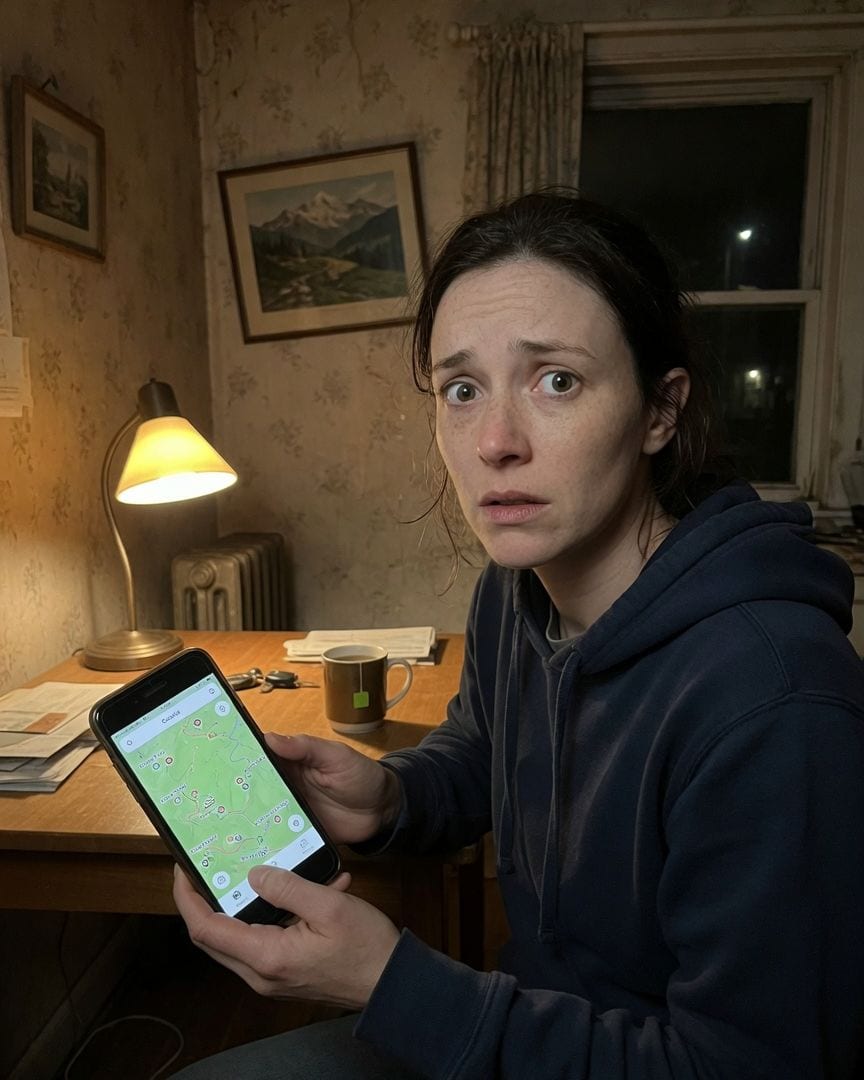
My hiking app scrubbed the hill's name from the map, on a phone that's been in airplane mode for two days.
I just moved to town and hiked a local hill, 'Cathan Tor,' according to my phone's app. But when I mentioned the name to the mechanic, he froze, dropped his wrench, and whispered, 'Don't say that name, Colette.'
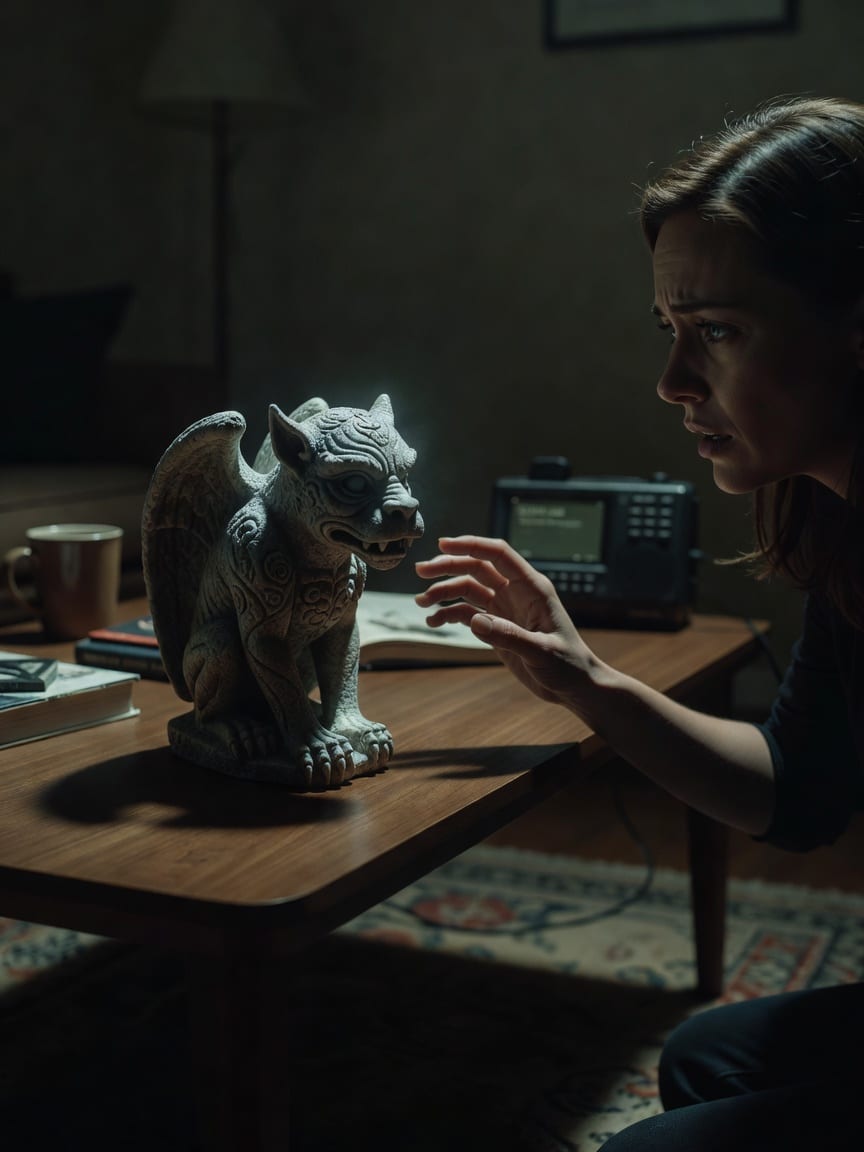
My radio scanner spoke my address at 2 AM. A flat voice read local homes, all with past dates. Mine was the only one in the future.
It was two in the morning, and my quiet house was filled with the usual hum of my weather scanner. But the static broke, replaced by a flat, synthesized voice reading a list of local addresses and dates. My hand froze when it spoke my own address, 181 Foster Drive, followed by a date: October 27th. That date was three weeks from now.
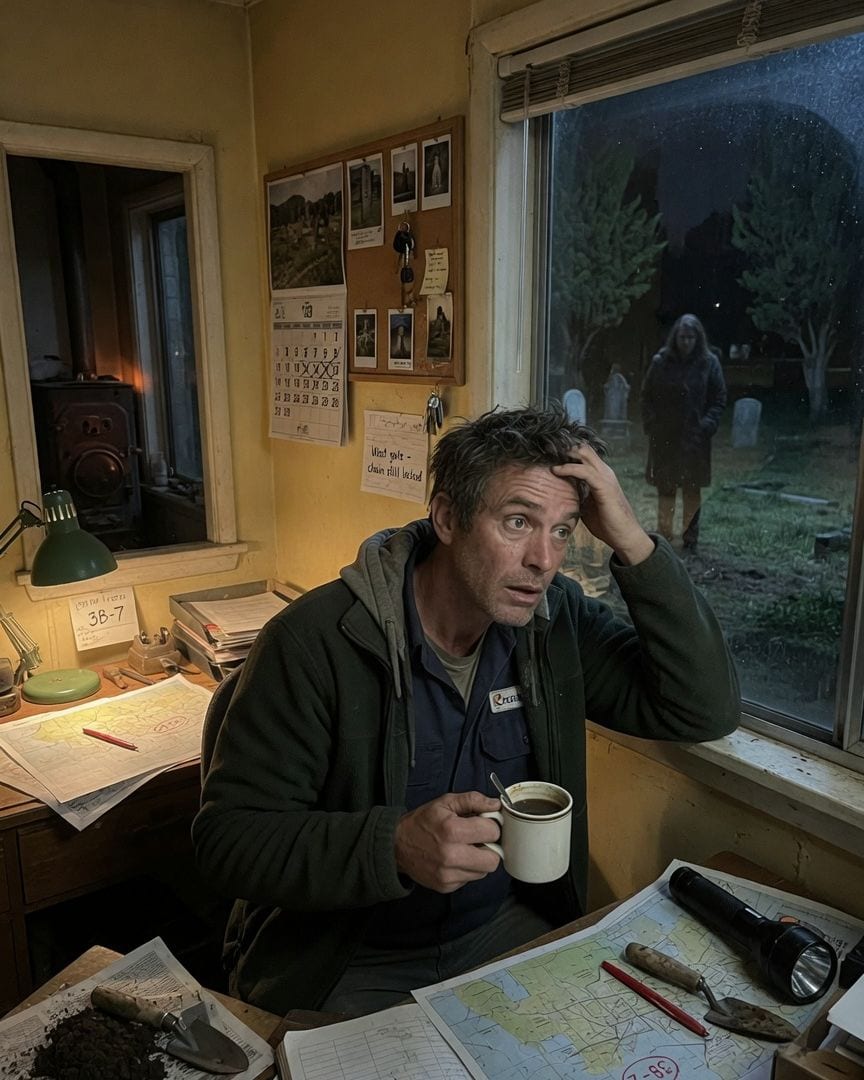
My cemetery lodge overlooks a woman visiting an empty grave near 3 AM most nights. The west gate she uses has been chained shut since autumn, its lock untouched.
As the cemetery's night caretaker, I'm used to the quiet hum of the lodge. But for three weeks, a woman has appeared nightly at plot 3B-7, a silent mourner in the deep night. What chills me is how she leaves: walking straight through the west gate that's been chained and padlocked shut for eight months.
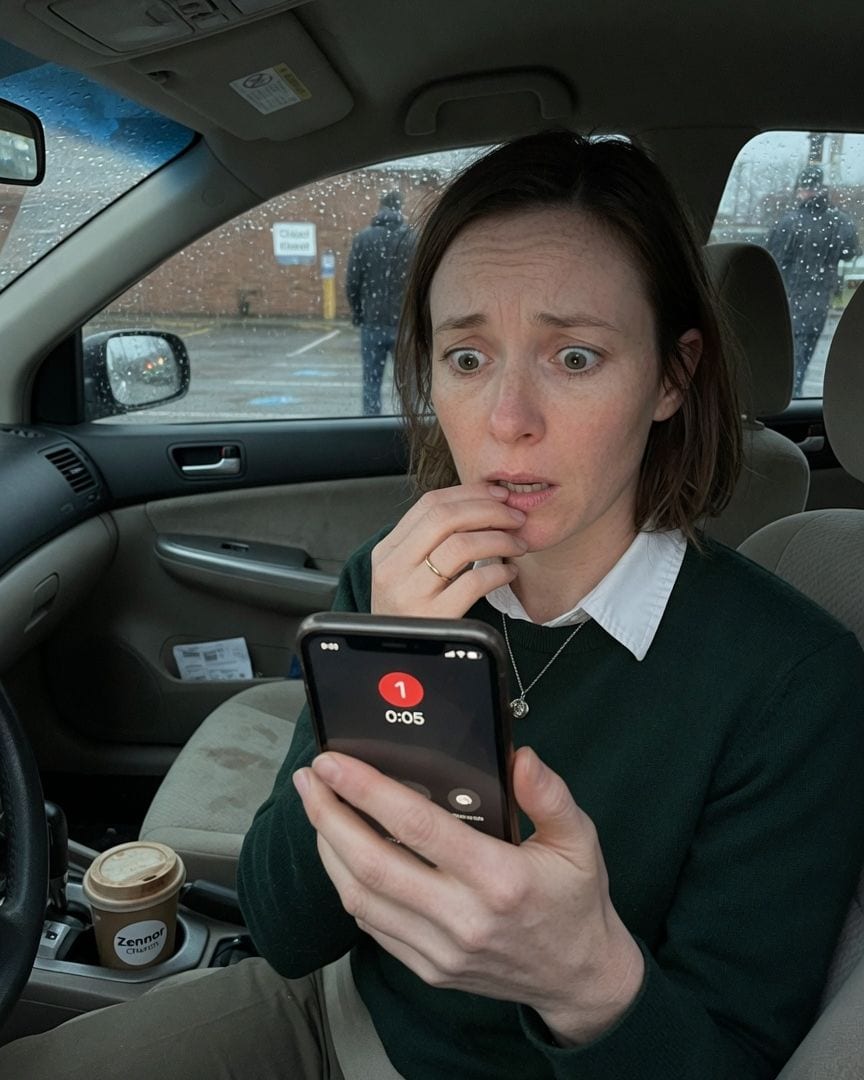
My full name is carved into a 17th-century church pew. Under it says, 'forgive me, I was late.' The verger said it's been there longer than anyone remembers.
Drawn to Zennor's ancient church, I ran my hand over a centuries-old pew, discovering something impossible. My full name, 'Sarah Caldwell,' was carved deeply into the dark wood, with the chilling message: 'forgive me, I was late.' It felt like this ancient inscription had been waiting for me.
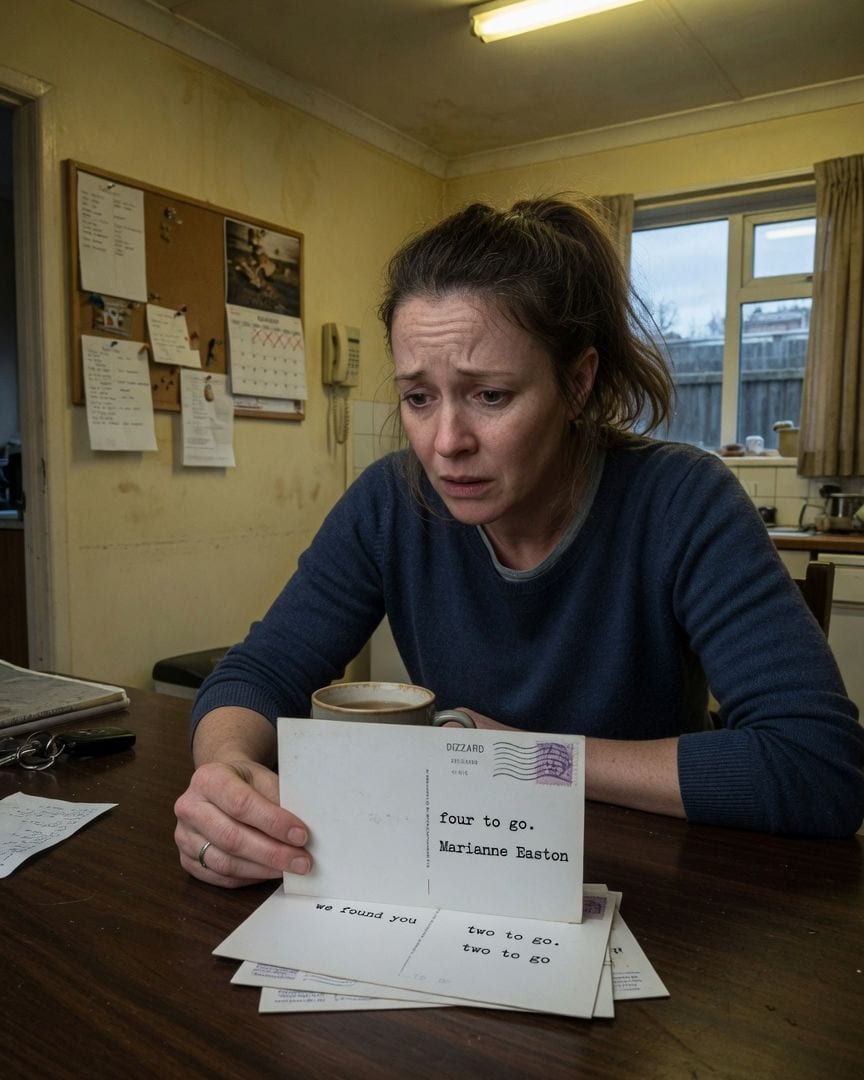
My postcards arrive each Friday, addressed by name, counting down. This week's says 'four to go,' postmarked from a cliff with no postbox.
Every Friday, stark white postcards arrive on my kitchen table, addressed to me. Each one is postmarked 'Dizzard,' a desolate cliff miles from any town, with no post office. For weeks now, they've been counting down.
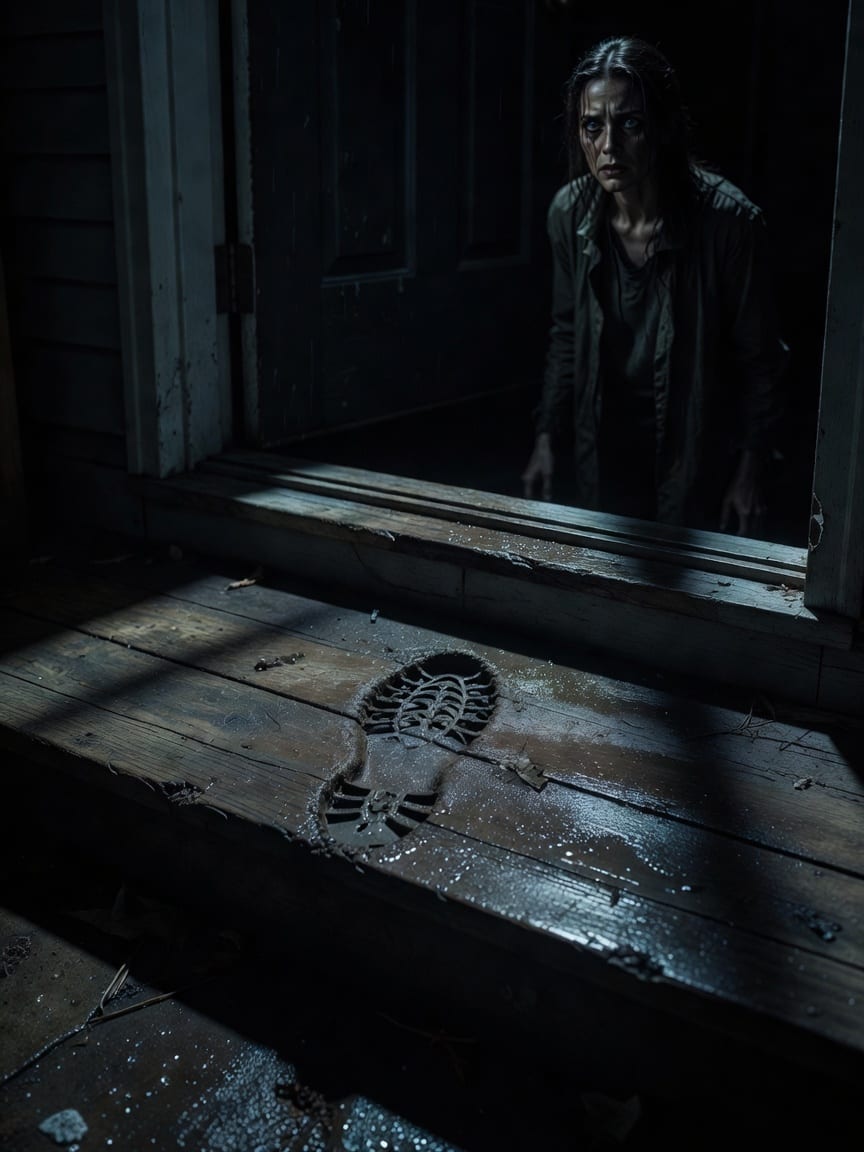
My landlord's only rule: never let the outside tap run after sundown. Last week it dripped. This morning, wet bootprints ringed the back step from the tap to my door, all the same size. The tap was off.
We'd just settled into Waterside House, with its strange landlord rule about the outside tap. After the washer broke, I found perfect, wet bootprints leading from the tap to our back door, but the tap was cranked completely off, tighter than I could manage.