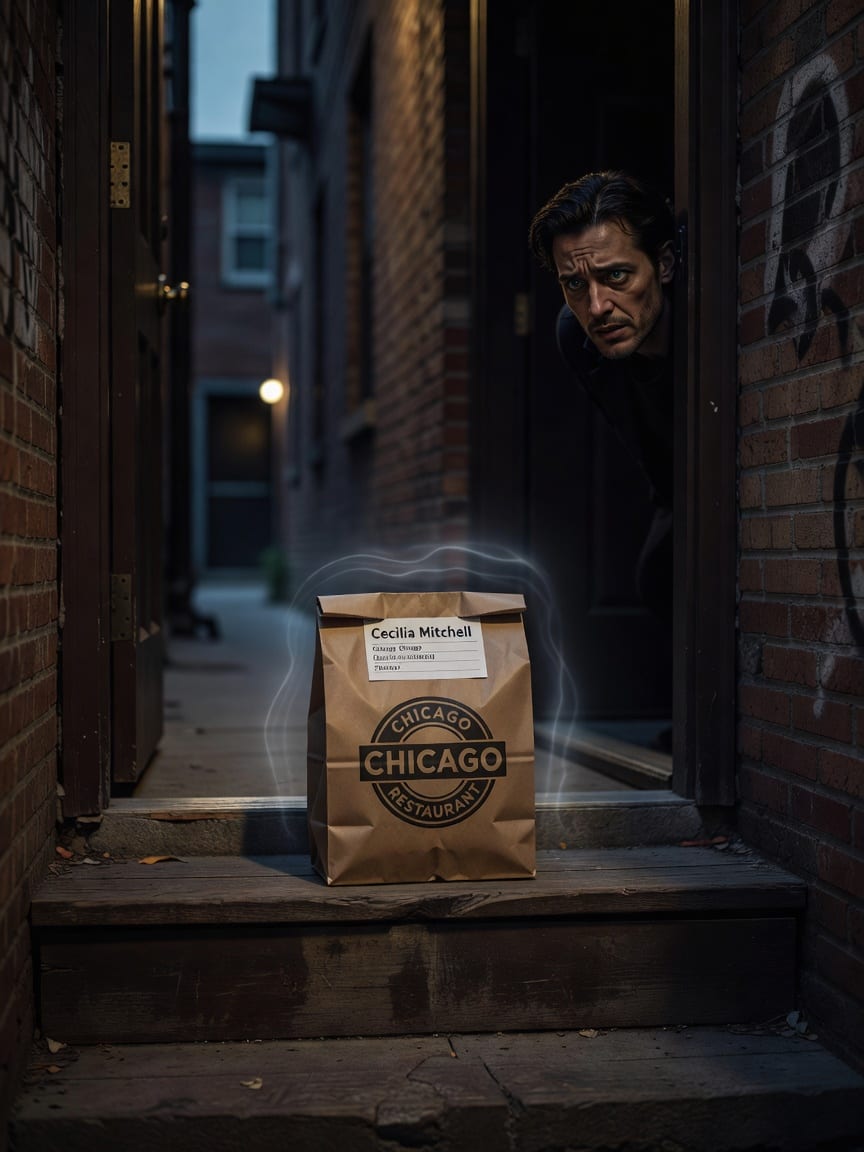
My food app ordered Chicago pizza at midnight while I cooked in Seattle. It has my name, my card, and an address I’ve never seen.
The smell of baking salmon was usually a comfort, the scent of a Friday night settling in. My Seattle apartment was quiet, the city sounds a distant hum. I stirred the rice pilaf, a familiar rhythm.
But that night, the calm shattered the moment my eyes snagged on my phone, resting on the kitchen counter. My food delivery app blinked with a notification.
I tapped it open, my finger hovering over 'Order History,' and a cold knot tightened in my stomach. The top entry read: 'Chicago Deep Dish' from a place called 'Gino's East,' delivered to a walk-up apartment on West Diversey Parkway.
Time stamp: 11:52 PM CST. This was absurd. I lived alone in Seattle, 2,000 miles away. I’d been stirring my rice pilaf when this order was allegedly placed.
The real dread, however, hit when I scrolled further. The app had quietly, methodically, charged my saved card for the exact same meal, delivered to that same Chicago address, every single Friday night for the past four weeks.
My saved 'home' address in the app had been overwritten, swapped for the Chicago one, without a single notification, not even an email confirming a profile change.
It was as if my digital self had simply… relocated, without my consent or knowledge, for a weekly pizza run.
I immediately checked my bank statements. Four charges. Each for around fifty dollars. All on Friday nights, perfectly mirroring the app's history. This wasn’t a glitch, not a single rogue transaction. This was a pattern.
My hands were shaking, a cold anger starting to replace the initial shock.
I called the delivery service, navigating a labyrinth of automated menus and tinny hold music. My frustration mounted with every cheerful chime, every saccharine apology from the automated voice.
When I finally reached a human, a chipper voice named Brenda, I explained the impossible charges, forcing myself to sound calm, rational. Brenda was profusely apologetic, offering immediate refunds, suggesting a hacked account or a mistaken address entry.
'Are you sure you didn't accidentally save a different address, Ms. Mitchell?' she chirped, her voice too bright.
I bristled, my patience fraying. 'I live alone. I haven't been to Chicago in years. My card is saved. My address was saved. This is impossible.' I pushed, demanding details. 'Can you tell me who signed for these deliveries?
Was there a name, a signature?'
Brenda put me on hold again, the elevator music now feeling sinister, a mockery of my growing unease. Minutes later, she returned, her tone less cheerful, a hint of unease in her own voice.
'We have a digital signature on file, Ms. Mitchell. It appears to be... yours.'
She emailed me a blurred image of a touchscreen signature. My breath hitched. The loops, the distinct slant of the 'C,' the sharp final 'l'—it was unmistakably, sickeningly mine.
I tried to dismiss it, to tell myself it was a sophisticated forgery, a data glitch, anything but the truth.
But the chilling familiarity of my own hand, rendered by someone else, for a phantom meal 2,000 miles away, made my skin crawl. This wasn't just a hack. This was personal.
I found a local, highly-rated handwriting expert, Everett Oakley, and made an urgent appointment for the next morning.
Everett Oakley, a man whose glasses perched on the very tip of his nose, examined the digital signature on the delivery slip with a jeweler's loupe, then compared it to a sample of my actual signature I'd provided.
He took his time, tracing lines, measuring angles, occasionally grunting softly, a sound like a distant, disturbed animal.
I sat opposite him, my hands clasped tightly in my lap, trying to project a calm I didn't feel, my leg bouncing almost imperceptibly.
The air in his quiet office was thick with the smell of old paper and ink, a dusty silence broken only by the tick of an antique grandfather clock in the corner.
Each tick felt like a hammer blow, marking the inexorable passage of time towards a truth I wasn't ready for.
Finally, he straightened up, removing his glasses. His gaze, usually kind and academic, was now unsettlingly serious, meeting mine directly. He carefully pushed the signed delivery slip back across his desk, his gaze steady and unblinking.
'Ms. Mitchell,' he said, his voice flat, almost devoid of emotion, 'this signature is unequivocally yours. Down to the most minute, unconscious flourish. There is no doubt.'
The expert's confirmation left me reeling, the world tilting on its axis. It wasn't just a hack; it was something far more intimate and disturbing, a violation that reached into the very core of my identity.
My own hand, signing for a meal I never ordered, in a city I wasn't in. The sheer audacity of it, the impossible precision.
I booked a red-eye flight to Chicago, telling my boss I had a family emergency. Sleep was impossible. Every bump of the plane, every hum of the engine, felt like a tremor in my own bones.
The address on West Diversey Parkway led me to a quiet, unassuming three-story brick walk-up, exactly as described by the delivery app.
It was an older building, well-maintained, with neatly trimmed window boxes and a small, discreet plaque by the entrance: 'The Rutherford House, Est. 1922.'
I found the specific apartment number on the delivery slip, 3B, and stood outside its door. It felt absurd, like I was stalking myself.
No sounds came from within, no faint music or television hum, just the stale quiet of a forgotten hallway. I checked the names on the mailboxes in the lobby. For 3B, it read 'J. Coleman,' not 'Mitchell.'
A dead end, or so I thought, until I noticed something else. Tucked into the corner of the hallway ceiling, almost invisible against the peeling paint, was a small security camera, pointed directly at apartment 3B's door.
My heart hammered. This was physical. This was real.
The building manager, a gruff but helpful man named Roland Stratton, confirmed the camera was active, its footage archived off-site by a company called 'Romano Archival Services.'
He gave me the contact information for their Chicago office, a small, unmarked building downtown. This was the first concrete lead that wasn't just digital, a physical thread pulling me deeper into the impossible.
I went to Romano Archival Services the next day. The office was sparse, with a single, calm-looking man behind a heavy wooden desk, surrounded by floor-to-ceiling shelves crammed with ancient-looking ledgers and file boxes.
The air was dry, smelling of old paper and dust, a quiet mausoleum of forgotten records. He introduced himself as Conrad Romano.
He had a quiet, almost serene presence, entirely unbothered by my anxious questions, by the very tremor in my voice.
When I explained my situation, my voice tight with barely contained panic, and my request for footage from the Rutherford House, his expression didn't change, not a muscle twitching.
The room itself seemed to absorb the frantic energy, leaving his composure untouched.
'Ah, the Rutherford House,' he said, a faint, knowing smile playing on his lips, as if recalling a very old, very familiar joke. His voice was soft, almost a murmur. 'A very old account.'
He explained that due to privacy protocols and the age of the client agreement, he couldn't just hand over footage.
'But I can tell you,' he continued, leaning forward slightly, his voice a soft murmur that barely cut through the oppressive quiet, 'the Rutherford House has a unique history. It's... a point of continuity.
Some records, once established, are simply maintained.'
I pressed him, a tremor of frustration entering my voice. 'Maintained by whom? For what purpose? My signature is on a delivery slip for an apartment I don't own, in a city I don't live in!'
Conrad merely steepled his fingers, his eyes unblinking, fixed on a point just past my shoulder. 'Some identities,' he said, his voice soft, almost meditative, 'are more persistent than others. You've stumbled into a very old pattern, Ms. Mitchell.
One that predates you, even.' His calm certainty was more chilling than any direct threat. He clearly knew more, but his unyielding composure made him an impenetrable wall.
As I left, I felt his eyes on my back, a quiet, assessing gaze that spoke volumes about my new, unwanted entanglement, a sense of having been cataloged, understood, and dismissed.
I refused to leave Chicago without answers. I returned to Romano Archival Services the next day, this time with a lawyer friend on the phone, threatening legal action if access to the records was denied.
Conrad Romano, still unnervingly calm, sighed, a barely audible puff of air, as if he found the whole thing a tiresome but predictable formality.
'There's no need for that, Ms. Mitchell. I can show you what you're looking for, though I doubt it will bring you peace.'
He led me to a small, windowless viewing room, the air stale and smelling faintly of ozone, like old electronics. On a monitor, he brought up a ledger, ancient and digitized.
It was a 'Rutherford House Tenant Registry,' dating back to the 1920s. He scrolled through entries, names changing every few years, until he stopped at the 1980s.
'Here,' he said, pointing to an entry for apartment 3B. 'A 'J. Coleman' lived there, as you saw on the mailbox. But beneath that, in smaller script, is another name. A secondary occupant, if you will. A 'proxy' identity.'
My blood ran cold. He scrolled forward, showing how with each new 'primary' tenant, a new 'proxy' name would appear, always listed as 'inactive' or 'dormant' until a specific need arose.
Then, he navigated to a series of archived 'Activity Logs' for apartment 3B. He pulled up an entry from four Fridays ago, the exact date of my first impossible food order. The log read: 'Proxy Identity: C. Mitchell.
Activity: Package Receipt, Signature Confirmed. Item: Deep Dish Pizza.'
A wave of nausea washed over me, my stomach churning. 'But why me? Why my name?' I whispered, the question tearing at my throat.
Conrad turned to me, his gaze finally losing some of its detached calm, replaced by a flicker of something like pity, or perhaps just resignation. 'The system selects identities based on... availability. Credibility. You were simply the next in line.
A clean slate, an active digital footprint, no existing entanglements that would compromise the proxy's function. The system needed a 'live' identity to anchor its operations.'
He then pulled up a separate file, a 'Rutherford House Operational Manual.'
It detailed the 'Proxy Activation Protocol,' a precise schedule for when these dormant identities were 'brought online' for brief, specific tasks, mostly involving receiving deliveries or signing minor documents.
The food orders were just a cover, a routine activation to ensure the proxy remained 'active' and 'credible' in the system. My identity wasn't stolen; it was co-opted, repurposed for some faceless, endless bureaucratic machine.
'And the security footage?' I managed to ask, my voice barely a whisper, hoping against hope that it would contradict everything he'd just told me, that it would show a stranger, a trick of the light.
'Does it show this 'C. Mitchell' proxy?'
Conrad hesitated, his eyes flicking to the monitor, then back to me, a strange, knowing grimace on his face. He nodded. 'It does. But Ms. Mitchell, this is the part where the 'record that cannot be' truly manifests.
You see, the system ensures the proxy is physically present when required. Not a digital trick, but a tangible presence.'
He brought up a security feed from the Rutherford House lobby, dated four Fridays ago, the precise night of my first impossible order. He fast-forwarded through grainy footage of residents coming and going, until the timestamp approached 11:49 PM.
The air in the small room grew cold, thick with an unseen presence.
The screen flickered, showing the timestamp: 'FRIDAY, 11:49 PM CST.' And there she was, walking into the Chicago building's lobby, turning her head slightly towards the camera as she adjusted a familiar scarf wrapped around her neck.
Her gait, the way her hair fell, the subtle movement of her hands—it was undeniably her. My breath caught in my throat, freezing there, an icicle of pure terror.
But that Friday, Cecilia had been under oath in a Seattle conference room, giving a deposition with three lawyers watching her every move, her alibi ironclad and witnessed.
The image on the screen, a perfect duplicate of myself, living a ghost life, sent a jolt of pure terror through me.
Conrad watched my reaction with a grim acceptance, his face etched with a weary knowledge, as if he’d seen this moment play out countless times before.
'This isn't a holographic projection, Ms. Mitchell, nor is it a sophisticated deepfake. It is... a physical manifestation. The system, for reasons far too complex and ancient to explain, requires a tangible presence.
A 'ghost in the machine,' if you will, but a ghost that can sign a form, receive a package, exist for a brief, programmed period.'
He explained that the Rutherford House was one of several such 'nodes' across the country, established decades ago by a now-defunct, deeply secretive institutional entity.
Their purpose was to maintain a network of 'phantom' presences, ensuring certain legacy documents were always signed, certain properties always appeared occupied, certain minor transactions always occurred, without ever tracing back to the true beneficiaries or operators.
'Your digital footprint, your biometrics, your very essence was deemed suitable,' Conrad continued, his voice devoid of judgment, flat as the institutional manuals around us.
'The system replicates it, briefly, in a form that can interact with the physical world, then dissolves it. The food orders are just a regular, scheduled 'activation' to keep the proxy identity's activity log plausible and current.
It's a low-level, self-sustaining bureaucracy of nothingness, designed to perpetuate itself indefinitely.'
He showed me more records: utility bills in her proxy's name for apartment 3B, small library fines, even a parking ticket issued to 'C. Mitchell' in Chicago on a Tuesday I was in a Seattle hospital for a routine check-up.
The pattern was horrifyingly clear: a parallel life, perfectly documented, physically manifested, yet utterly impossible.
I felt a profound, suffocating helplessness. The air in the small room felt heavy, pressing down on me. 'Can it be stopped?'
I asked, my voice raw, barely a whisper against the hum of the old server rack in the corner.
Conrad shook his head slowly, his gaze unwavering, like an immovable stone. 'The system is self-correcting, self-perpetuating. It has no central authority to appeal to, no 'off' switch. It simply is.
It identifies suitable replacements if a proxy's primary identity becomes too disruptive or compromised. You are merely one of many, Ms. Mitchell, and the system is vast, operating in the shadows of countless lives.'
He explained that any attempt to 'undo' my proxy identity, to fight it, would only trigger its replacement, and possibly draw unwanted attention to my true self, disrupting my entire life in ways he couldn't predict.
'You are not being harmed,' he said, almost kindly, a strange compassion in his eyes. 'Your financial identity is ring-fenced, the charges are minimal and self-contained. The proxy exists only for its designated tasks, then it is gone.
It doesn't interfere with your actual life, beyond these occasional bleed-throughs, these small, uncanny echoes.'
He was right, in a chillingly pragmatic way. The horror wasn't a monster, or a conspiracy that could be exposed. It was a bureaucratic machine, unfeeling and unstoppable, that had simply absorbed a piece of me.
I could not fight it. I could not escape it. I was simply a node in its vast, quiet operation. The realization was a cold, hard stone in my chest, a permanent weight.
I stood up, feeling a profound sense of diminishment, of having a piece of my existence silently, irrevocably, taken and repurposed. Conrad merely watched me, his expression unchanging, the 'one who knew' and was entirely unbothered by this impossible truth.
I returned to Seattle, the world looking subtly different, tainted by the knowledge of my shadow life.
I closed my food delivery app account, but the bank statements still showed the small, recurring charges, now from an opaque 'Rutherford House Maintenance Fee' rather than 'Gino's East.'
I knew it was the same system, simply adapting, quietly maintaining its hold. I researched the defunct institution Conrad mentioned, finding only vague historical footnotes, nothing concrete, nothing that explained the true depth of its reach.
The Chicago address remained an active point on my mental map, a place where a ghost version of me occasionally walked, signed, and ate pizza.
I learned to live with the unease, the quiet hum of an impossible truth beneath the mundane surface of my life, a constant, low-level dread that never truly dissipated.
Sometimes, when I felt a sudden, inexplicable chill or a fleeting sense of déjà vu, I wondered if it was a ripple from the proxy's distant activation.
A faint echo of a moment, a memory that wasn't hers, yet was mine.
I checked my bank balance more often, not out of fear of theft, but to see if the maintenance fee had posted, a quiet acknowledgment of my unwanted connection. I knew I was safe, physically, financially.
But a part of me was gone, living a mundane, secret life hundreds of miles away, performing tasks for a system I couldn't comprehend or combat.
It was a subtle, pervasive horror, the understanding that my identity was not entirely my own, that a piece of me existed independently, beyond my control.
The delivery notifications still arrive every Friday, a ghost life I can only watch unfold.
If this one got to you
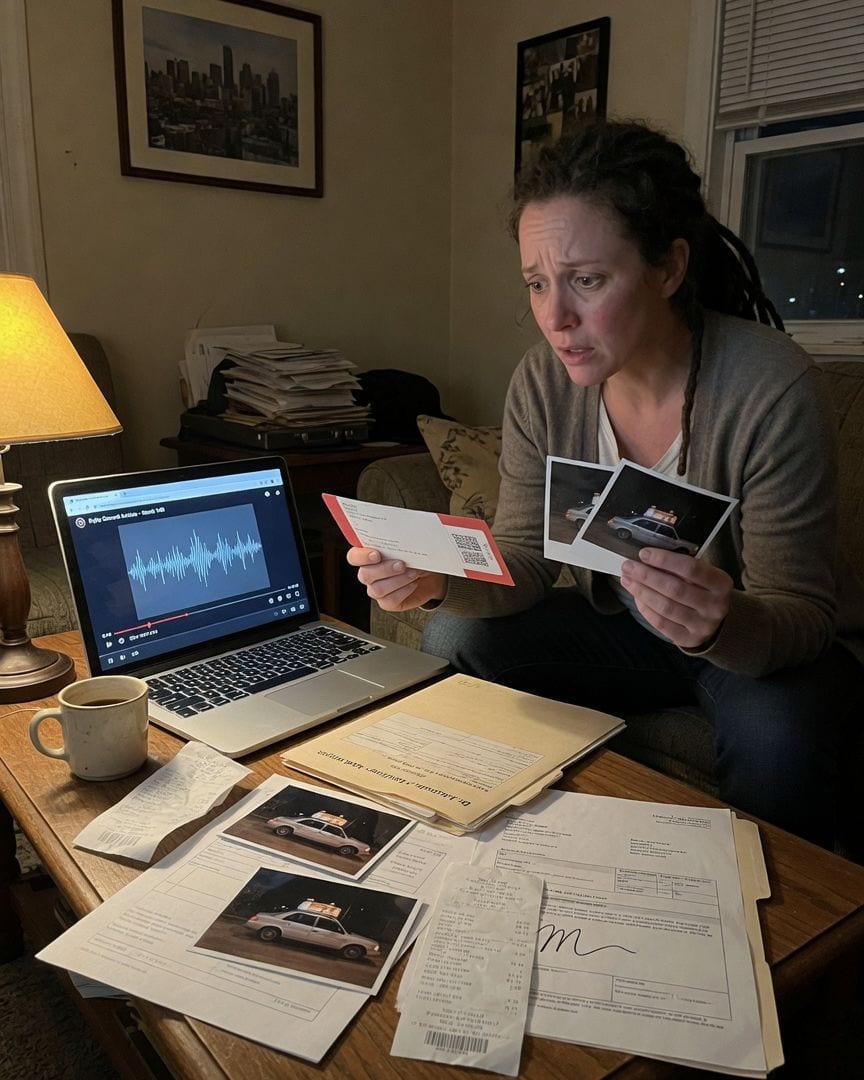
My car ran a red light at 9:41 PM in a town I've never been. The photos show my exact plate, my roof rack. I was speaking at city council, across the state.
A red-light camera ticket arrived for my car, timestamped for a downtown intersection I'd never driven through. But I knew, with chilling certainty, that I was three hundred miles away, speaking at a city council meeting at that exact moment.
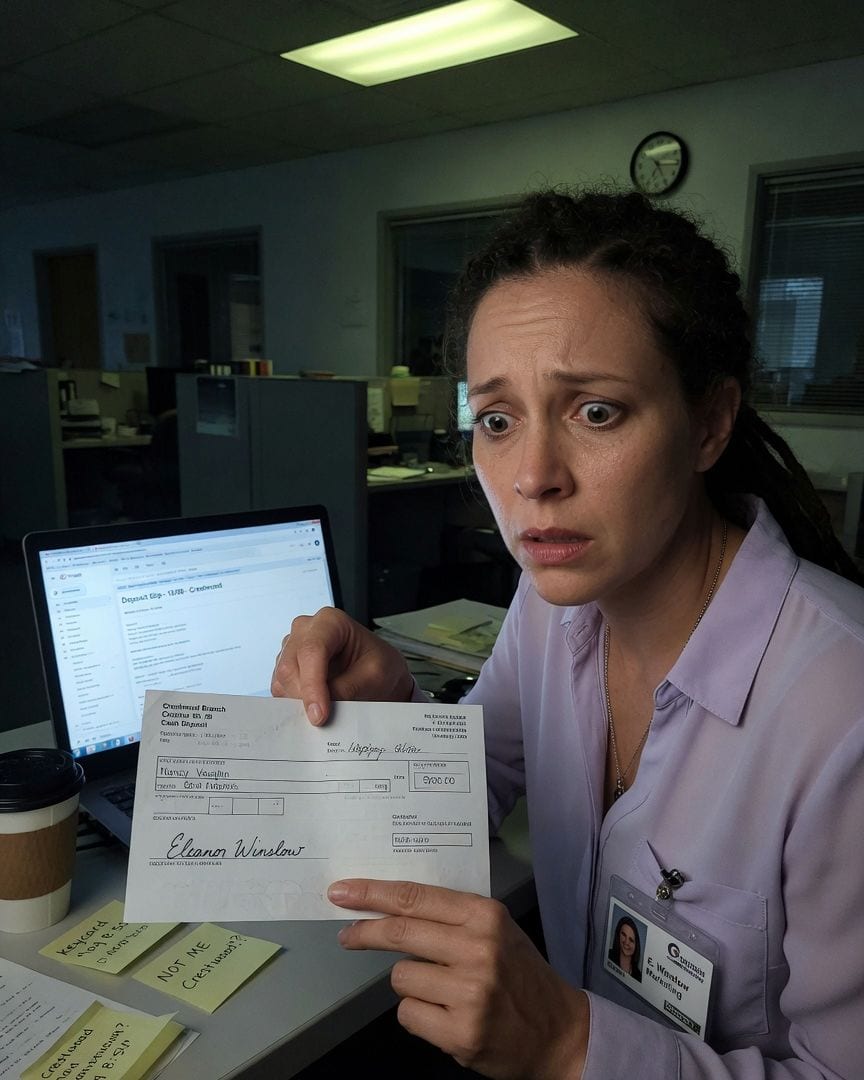
My bank statement shows a $900 cash deposit made in a town I've never set foot in, at 10:40 AM on a workday. I was at my desk, badged in. Two more landed since.
My bank statement showed a $900 cash deposit from a town I'd never visited, 150 miles away. I was at my desk, logged into work, all three times. But the scanned deposit slip arrived, clear as day, showing my own flawless signature.
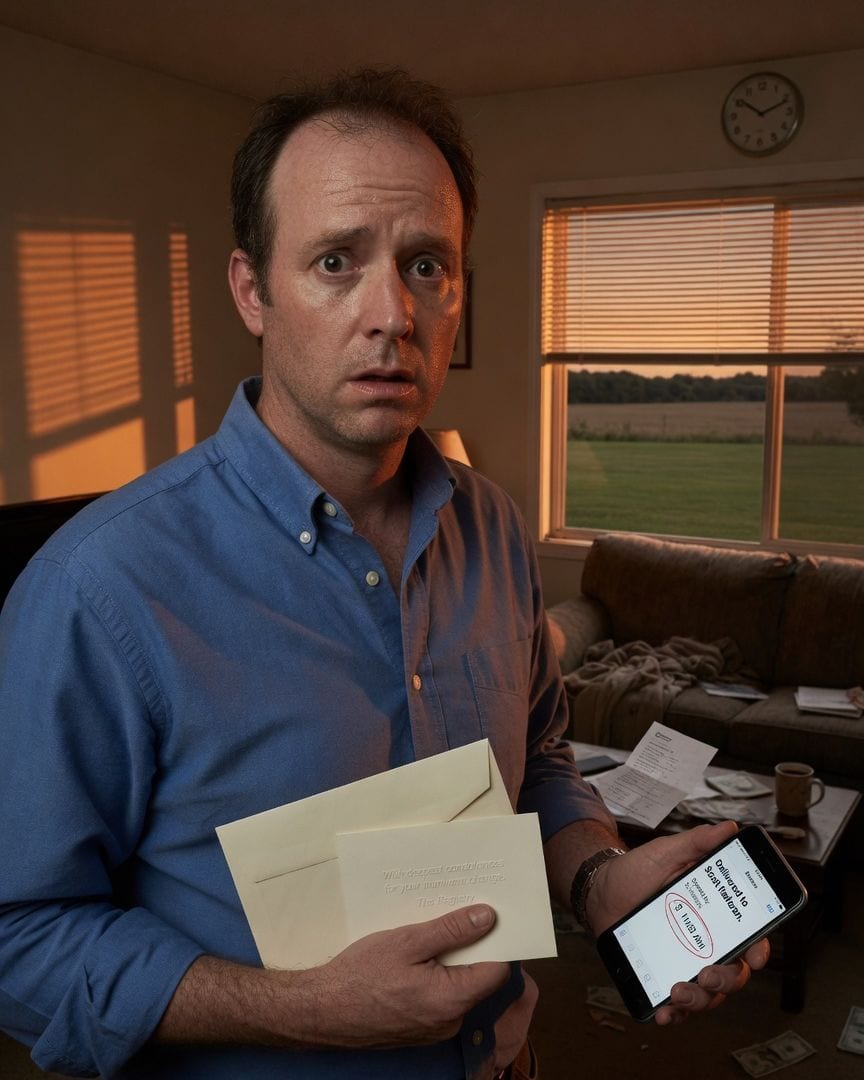
My delivery driver apologized for nothing. The app showed my signature, a completed drop, timestamped eleven minutes before he even arrived.
The delivery driver pulled away, leaving me on my porch with no parcel, yet my phone buzzed 'delivery complete.' The app showed *my* unmistakable signature, but the timestamp logged the delivery eleven minutes *before* the van had even pulled onto my road. A cold, digital lie.
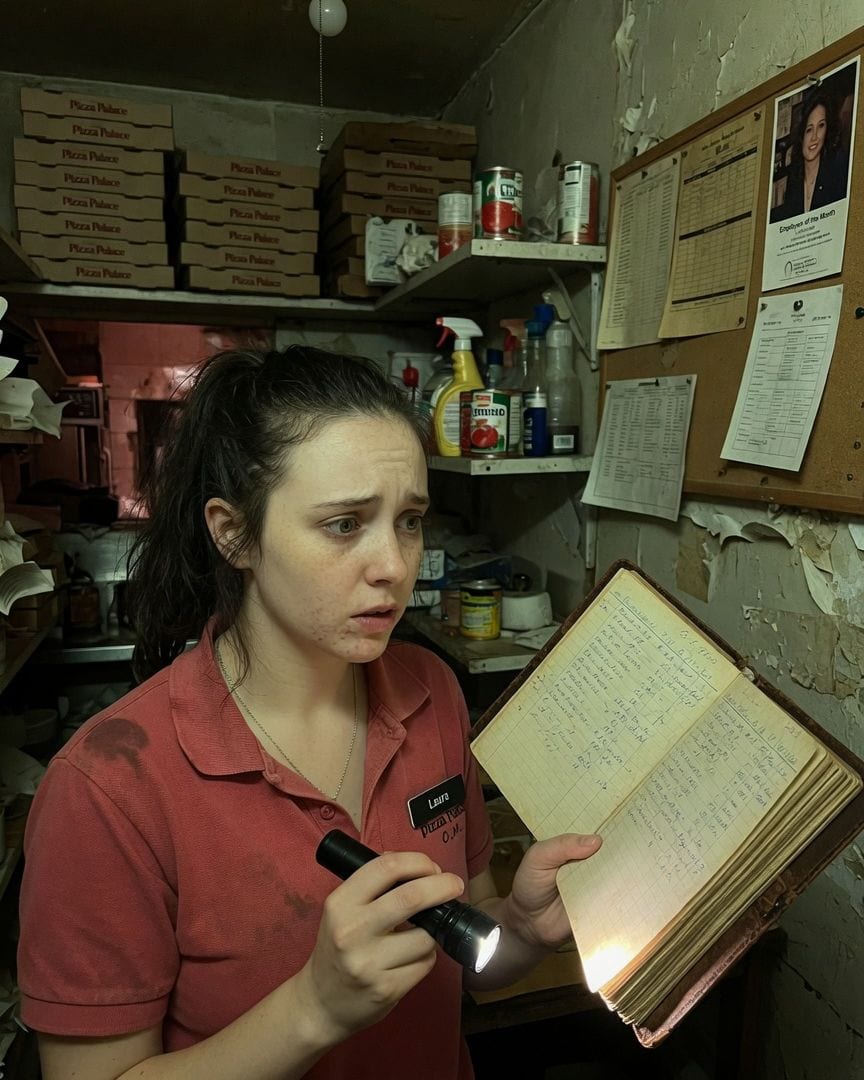
My 1:30 AM pizza caller always says 'you're a lifesaver.' The address on Lantern Street burned down years ago, and no orders exist.
I'm Laura Vance, working the night shift at Pizza Palace, taking routine late-night calls. But for months, a specific 1:30 AM order to 'Lantern Street' has felt wrong. My boss discovered the address burned down five years ago, leaving only a blackened shell.
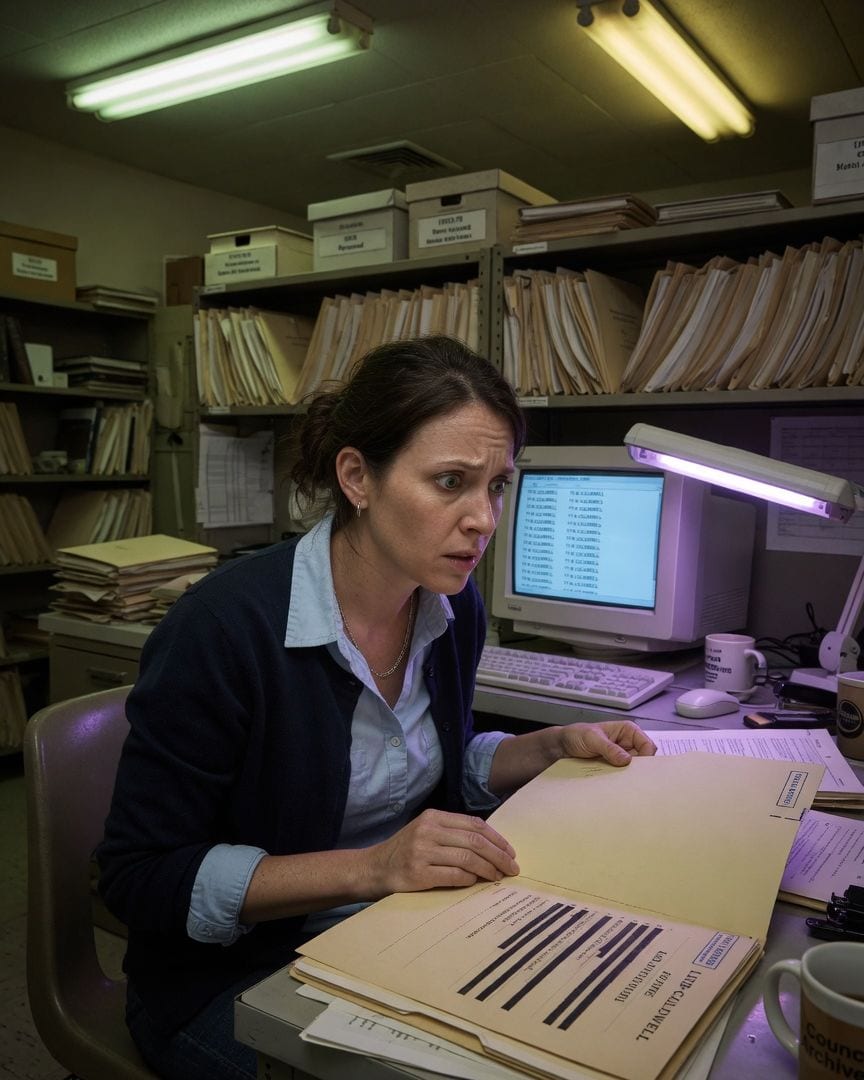
My employer's security file holds a vetting report on me dated nine years before I ever applied. It has my full name and my parents' address — with only one line, the source who referred me, blacked out.
Working a routine data audit, I pull my own security file. The issue date is nine years before I even applied for the job. Then, hidden within an old archive file, I find my current address etched under a blacked-out line.
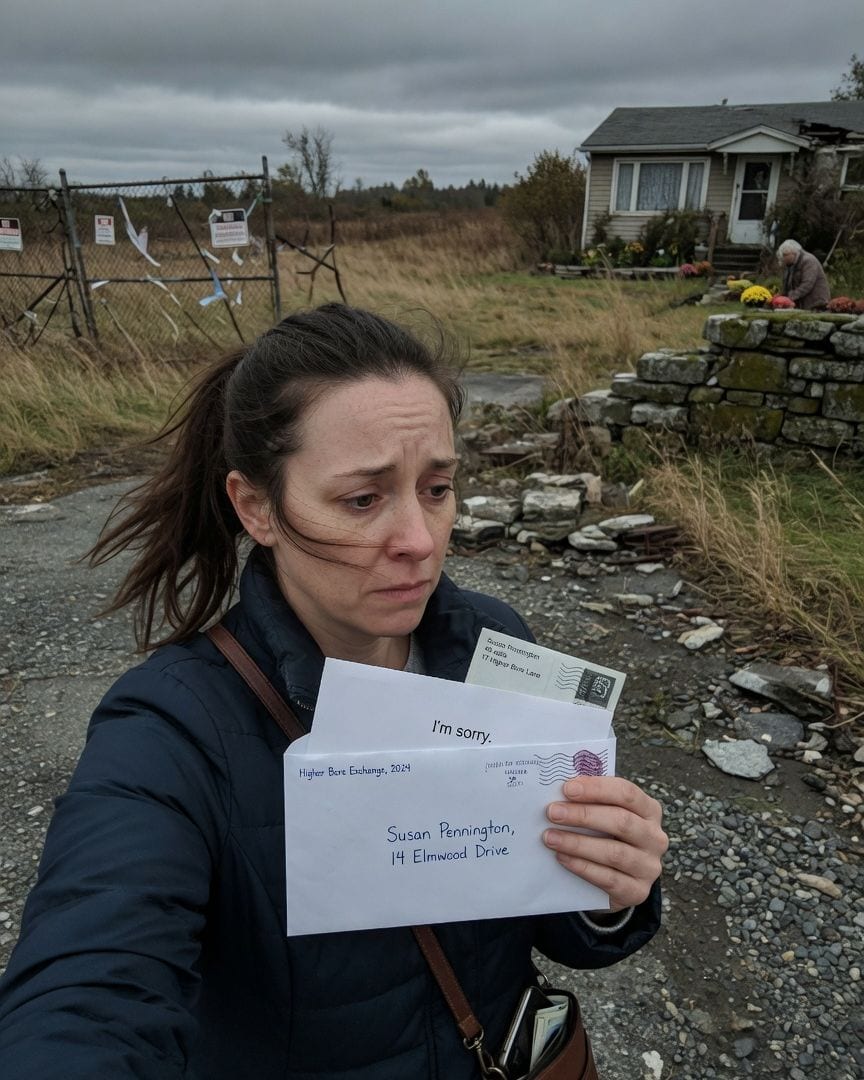
My phone bill listed forty calls made at 3:14 AM to a house demolished in 1990. The paper bill came from a flattened building. My name is on it.
I stared at my phone bill, my morning coffee forgotten. It detailed forty calls, each at 3:14 AM, to an address I knew was a vacant lot where a house had stood decades ago. But the real dread began when I saw the bill's return address: a telephone exchange flattened years before.