The forge's order-slate wipes clean, refills itself. Horses are named by owners, dates appear for this year. Every morning at five, a hammer rings inside the chained, long-cold doors.
The first time I noticed the order-slate, it was completely blank. I’d only moved to Cold Ashby three months ago, trading city noise for what I’d hoped was quiet village life.
My new cottage backed onto a small lane, and at the end of that lane, partially hidden by an overgrown elderberry bush, sat the old forge.
Locals said it had been cold for fifteen years, ever since the last smith, Maxwell Ford, died.
The double doors were heavy, oak, and secured with two massive, rusted chains and padlocks that looked like they hadn’t been touched in decades.
I walked past it most evenings, usually with my dog, Scout. One Tuesday, I remember, the slate hanging beside the chained doors was clean.
Just a blank piece of polished slate, looking strangely out of place on the dusty, weathered stone. The next morning, I walked past again. And there it was, in clear white chalk: “Bay Horse, Owner: Russell Yates, Date: next Tuesday.”
I figured it was some local kid’s prank, a bit of harmless village eccentricity. Russell Yates owned The Old Anvil pub, a place I’d already grown fond of. I smiled, thinking of the dry wit of village folk.
But the forge started to draw me in. I don’t know why. Maybe it was the sudden, inexplicable urge to check the slate every time I passed, or the way the silence around the building always felt… heavier.
Then the sounds started. I’d always been a light sleeper, but lately, I’d been waking at precisely 4:55 AM, every morning, without fail. A prickle of awareness, an instinct.
I’d pull on my dressing gown and walk to the window that overlooked the lane.
At exactly 5:00 AM, the first clang would come. A distinct, rhythmic hammer on iron, echoing from inside the sealed, chained building. Clang… clang… clang. It wasn’t faint. It was sharp, physical, vibrating through the ground.
It went on for precisely thirty minutes, then stopped, leaving an abrupt, hollow silence that felt colder than before. I’d dress quickly, pull on my boots, and walk down to the forge. I’d check the heavy chains and padlocks.
Every morning. There was never any sign of entry, no broken links, no scraped paint on the doors, no way in or out. But the sounds… they were undeniably from within.
The hammer sounds, I tried to tell myself, were just echoes, the wind playing tricks on an old building. But the order-slate. That defied logic. I started documenting it, taking photos with my phone each morning and evening.
The slate did indeed wipe clean and refill on its own, always with a new order, a new date, for a new 'horse'. And a new 'owner'.
A subtle, unsettling detail emerged from my photos: the handwriting, while always appearing fresh, subtly shifted in style each time, as if different people were writing the entries. One week it was neat, almost calligraphic.
The next, a looser, bolder scrawl. Always chalk-white against the dark slate. Always looking like it had just been written.
Curiosity gnawed at me. I looked up Russell Yates – confirming he owned The Old Anvil. I decided to try a casual approach.
I walked into the pub on a quiet Tuesday afternoon, ordered a pint, and leaned against the bar. "Funny thing," I started, "I saw your name on the old forge slate. Getting a horse shod?"
Russell, wiping down the counter, paused. His usual easy smile faltered. "Oh, that old thing?" he said, a little too quickly. "Just a local quirk. Don't pay it any mind, Paige. Been there forever, that slate."
His dismissiveness felt forced, his eyes flicking away from mine. He implied, subtly, that it wasn't something to talk about. His discomfort was palpable, like a physical barrier between us.
He changed the subject, asking about my move, the weather, anything but the forge.
I started to notice a pattern with the 'owners' listed on the slate. They were always Cold Ashby residents, and usually long-term ones. The 'horses' were always generic descriptions – 'Grey Mare,' 'Spotted Colt,' 'Pony with a White Blaze.'
Never specific names.
Days later, another entry appeared: "Chestnut Mare, Owner: Carol Beaumont, Date: two weeks from now." Carol Beaumont. She was an old woman, well into her seventies, who lived just down my lane, two houses past the forge.
She had a quiet, almost serene presence about her, always tending her impeccable cottage garden, offering a small, knowing smile when I passed. The kind of person who seemed to belong to the very fabric of the village.
The slate was no longer a prank. It was too consistent, too specific.
Now, I was obsessed. I had to see it happen. I decided to stake out the forge.
That night, I made strong coffee, set up my phone on the windowsill, camera ready, and watched the silent, chained doors from my dark living room. The clock ticked past eleven. Past half past.
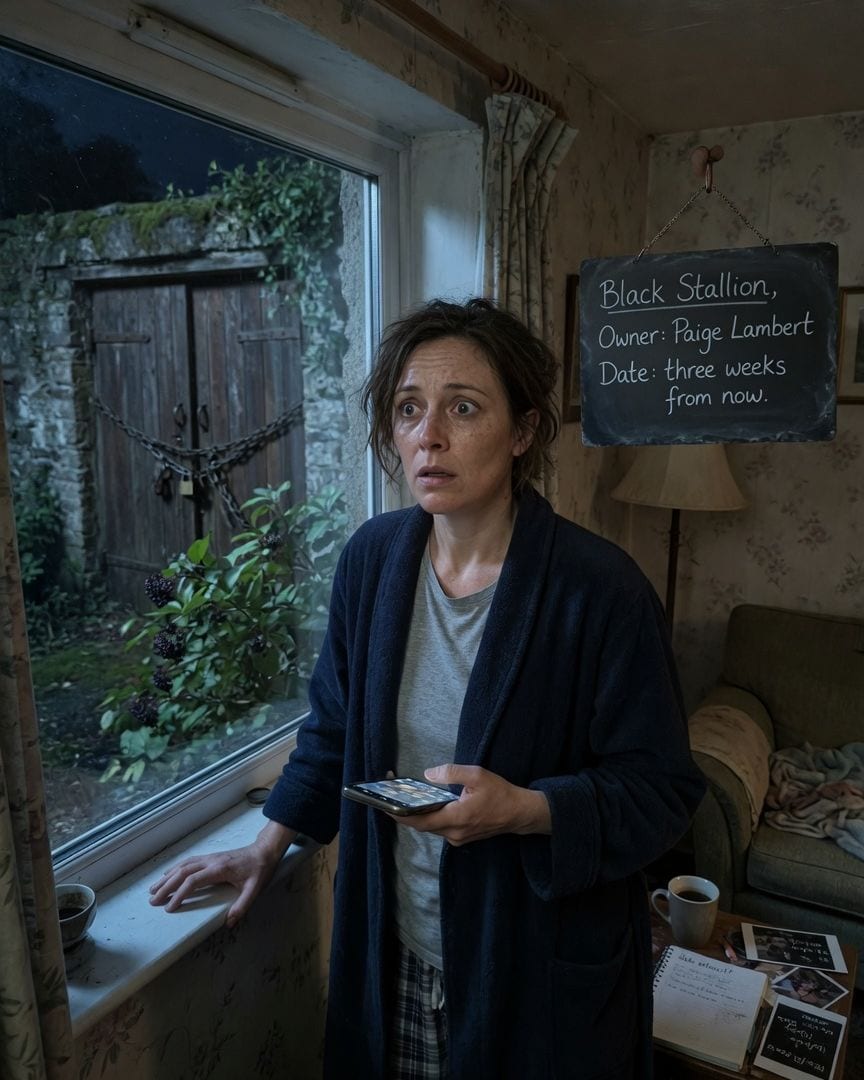
Exactly at midnight, it happened. The slate, which had held Carol Beaumont's order, visibly wiped itself clean. The chalk dust didn’t fall, it simply dissolved, fading into the dark surface as if erased by an invisible hand.
My breath caught in my throat, a cold knot tightening in my stomach. I watched, phone camera trembling in my grip, as a new entry etched itself onto the slate.
The chalk appeared, not falling, but forming, as if guided by something unseen. The words formed slowly, chillingly: "Black Stallion, Owner: Paige Lambert, Date: three weeks from now."
Before I could even process the sight of my own name, my actual name, there was a single, resonant clang of a hammer on iron.
It erupted from inside the chained, dark forge, not at 5 AM, but right then, vibrating through the ground, up through my feet, and into my very bones.
The terror was profound, but I forced myself to remain rational. My name? Paige Lambert? On that slate? How was this possible? I looked at the photograph on my phone again, the timestamp confirming it was real. My hand shook.
I had to talk to Russell again, no matter how uncomfortable it made him.
I found him alone in The Old Anvil later that morning, polishing glasses. I didn't bother with small talk. I simply walked up to the bar and pushed my phone across the polished wood, displaying the picture of the slate.
My name, stark white, staring up at him.
His dismissiveness evaporated. His face went pale, his eyes wide with genuine disturbance. He gripped the glass he was polishing so hard his knuckles turned white.
"Bloody hell, Paige," he muttered, his voice low and urgent, laced with fear I hadn't heard from him before. "I told you. Leave it alone, newcomer." He leaned closer, his voice a harsh whisper.
"You've gone and broken the rule, haven't you? Some things are best not looked at too closely. Some things... don't like to be watched."
He didn't answer any of my questions, just shook his head, turned his back, and started scrubbing the bar with a frantic energy that effectively ended our conversation.
With Russell no longer an option, I walked the short distance to Carol Beaumont's cottage. She was in her garden, humming a quiet tune as she deadheaded roses. Her serenity, normally comforting, now felt unnerving.
I showed her the photo on my phone.
She looked at it, then at me. There was no surprise in her eyes, only a profound, ancient sadness. "You shouldn't have been watching, child," she said, her voice soft, devoid of judgment, but heavy with resignation.
"The forge doesn't like to be watched."
I asked her about the forge, the slate, my name. She initially dismissed it as "old ways," a phrase I was starting to dread. But then she sighed, a deep, weary sound.
"The forge," she began, her gaze fixed on the distance, towards the end of the lane where it sat, "it has always kept things balanced for Cold Ashby. Since before anyone could remember. Before my grandmother's grandmother. The smith... Maxwell...
he was just the keeper of this delicate balance. An intermediary."
"But Maxwell died," I said, my voice barely a whisper. "Fifteen years ago. The forge has been chained shut ever since."
Carol looked at me, her eyes clear and unblinking. "And the forge found its own way," she said, her voice flat, devoid of emotion. "It still needs its balance. The names on the slate...
they are the ones who are called to provide it. The 'horses' are just a way of saying their burdens are taken, or their path is set. Some are blessed, some are... changed."
She paused, then emphasized, "For those whose names appear, it’s not a choice."
As I delved deeper, trying to piece together Carol's vague warnings, I felt an increasing sense of being watched. Not just a paranoid feeling, but a physical certainty.
I sometimes caught glimpses of Carol Beaumont outside my window, just standing there, across the lane, gazing first at the forge, then slowly turning her head towards my house.
Her expression was always calm, unreadable, like she was observing a piece of familiar, inevitable machinery.
One evening, I found a small, hand-carved wooden horse figurine on my doorstep. It was old, worn smooth by countless touches, and had a tiny, almost invisible, iron 'shoe' nailed to one of its hooves.
It felt like a silent, ominous warning, a calling card. I picked it up, feeling the cool, polished wood, the sharp edge of the miniature shoe. It radiated an ancient, unsettling quiet.
Russell Yates was no longer just dismissive; he was actively avoiding me. When I entered The Old Anvil, conversations halted, like a sudden drop in air pressure.
Villagers, who had once been friendly and welcoming, would subtly turn away, or busy themselves with their drinks. The silence in the pub, once companionable, was now thick with unspoken dread.
Even Scout seemed to sense it, clinging closer to my side.
I spent hours in the small local library, researching Cold Ashby's history. I found mentions of 'The Forge' in obscure local histories and archived community newsletters, always with a hushed, almost reverent tone.
There were no specific details, no blueprints or financial records, only repeated references to its "importance" to the village and vague allusions to "ancient pacts."
It was described less as a building and more as an entity, an institution that simply was. I unearthed an old newspaper clipping about Maxwell Ford's death, yellowed and brittle, headlined 'Last of the Cold Ashby Smiths.'
The article mentioned how the village "worried" about what would happen without him, but concluded, 'life went on, as it always does in Cold Ashby.' A chillingly placid observation given what I now knew.
I confronted Carol Beaumont again, this time holding up the small, carved wooden horse figurine I’d found on my doorstep. I pressed it into her hand.
She sighed, a deep, weary sound that seemed to carry the weight of generations. "Maxwell tried to warn me," she said, her voice soft but firm, her gaze fixed on the small wooden horse.
"He tried to warn all of us. But you newcomers never listen. You think it's all superstition, a charming local oddity." She looked at the forge, a distant, unblinking stare. "The forge isn't just a place, Paige.
It's a living entity. A protector. It demands a 'balance' for the village's prosperity and peace. Always has."
"The smith, then," I interrupted, trying to make sense of it. "Maxwell, he was… the one who kept this balance?"
"Precisely," Carol confirmed. "He was merely the intermediary, 'shodding' the villagers' burdens, ensuring the community's equilibrium. Taking on what needed taking, giving what needed giving. That's what the 'shodding' means."
"But Maxwell died," I argued, my voice tight with fear, the hollow clang of the forge still ringing in my memory. "And the forge has been cold, chained shut, for fifteen years. How can it still function?"
"And the forge found its own way," Carol repeated, her voice flat, devoid of emotion, as if stating a simple, undeniable fact. "It still needs its balance. The names on the slate...
they are the ones who are called to provide it. The 'horses' are just a way of saying their burdens are taken, or their path is set. Some are blessed, some are... changed."
"What kind of change?" I asked, my voice barely a whisper, dread coiling in my gut. The air in Carol’s small living room felt heavy, cold, as if the walls themselves were listening.
Carol looked at me, a profound, ancient sadness in her eyes, a sorrow that seemed to have no beginning. "The kind that makes you fit the village better. The kind that makes you useful to the forge.
The kind that ensures the balance continues."
Suddenly, the pattern across the dates and names on the slate snapped into sickening focus for me. It wasn't random at all. It was a rotation, a generational debt being paid. Some names were repeated, generations apart.
And now, my name. I recalled Russell’s sudden evasiveness, the villagers’ chilling silence. They all knew. They’d known for generations.
"My name is on the slate," I said, my voice trembling, barely audible. "What happens on that date, Carol? My date, three weeks from now?"
Carol took a deep, shuddering breath, her calm façade cracking just a fraction. "You go to the forge," she said, her eyes fixed on mine, holding my gaze with a terrible certainty. "At 5 AM. And you answer the hammer."
I was reeling, the implications of Carol's words slamming into me with the force of a physical blow. Trapped. My fate seemingly sealed by a local legend I'd only just discovered.
I demanded to know how she knew so much, how she could remain so unnervingly calm in the face of such a horrific truth. My own heart was pounding, my hands clammy.
Carol, without a word, walked to a dusty bookshelf in her sitting room. The silent house seemed to press in on me, the air thick with unspoken histories.
She pulled down a small, leather-bound photo album, its cover faded and worn, the leather cracked like old skin. She opened it slowly, her fingers tracing the brittle, yellowed pages, until she stopped at a faded, sepia-toned photograph.
It was a picture of a woman, perhaps in her late twenties or early thirties, standing in front of the Cold Ashby forge. Its double doors were open in the background, not chained, a faint glow emanating from within.
The woman had a small, knowing smile on her face. Her hair was a similar shade of auburn as mine, a cascade of deep red-brown.
And her eyes, even in the faded photograph, seemed to hold the same intense, almost dangerous curiosity that I possessed. The woman in the photograph was unmistakably, eerily, me. Not a look-alike, not a distant relative with a passing resemblance.
But a twin, a doppelganger from another era. Carol’s finger moved to the date scrawled in elegant script beneath the photo: '1903.' Then, her finger moved to the name handwritten next to it: 'Paige Lambert.'
I stared at the photo, then at Carol, then back at the impossible image of myself, a ghost from over a century ago. My mind struggled to reconcile it.
"This isn't possible," I whispered, my voice thin with disbelief, the framed photographs on Carol's wall seeming to shake with the unspoken weight of the past.
Carol's calm demeanor cracked slightly, a flicker of genuine sorrow in her eyes. "The forge," she said, her voice barely above a whisper, "it finds those who interfere. Those who come asking. It pulls them into its service.
It's been doing it for generations, long before I was born. And it takes what it needs, sometimes pieces, sometimes... a whole new keeper."
A sickening lurch in my gut. I suddenly understood. The 'pattern across dates and names' wasn't just about the villagers' turn; it was about the keepers. The forge recreated its own. The subtly changing handwriting on the slate?
It wasn't different people. It was the new 'smith' learning, adapting to its role. The hammer ringing at 5 AM? It was the forge's work, and the new smith was inside, carrying out the 'adjustments.'
"You're saying... I'm going to be the next smith?" I asked, my voice hollow, the implication chilling me to the bone.
"Not just a smith," Carol corrected, a hint of something darker and more profound in her voice, as if she were sharing a sacred, terrible secret. "The smith. The forge has a memory. It likes familiar faces.
It likes to keep things... consistent. It likes to keep its balance."
I understood the full, horrifying implication: the forge didn't just call a new person; it replicates the one who broke the rule, the one who was destined to become its keeper.
My curiosity, my breaking of the unspoken rule, was precisely what made me 'fit' the mold of the previous Paige Lambert, and the one before that. The forge wasn't calling me, it was remembering me.
I knew, with absolute certainty, I could not stay. I had to find a way out before my 'date' with the forge.
Carol, seeing the profound terror in my eyes, finally offered a sliver of hope, a desperate lifeline. "There's an old ledger," she said, her voice strained, a raw edge of concern finally creeping in. "From the Parish Council.
Generations of records. It might tell you how to break the cycle. Or at least, what your predecessors tried."
Desperate, I waited until dark. The village was quiet, the kind of quiet that felt like holding its breath. I slipped out, a bag full of tools, and made my way to the dusty, forgotten Cold Ashby Parish Council archives.
The building was old, decrepit, rarely used, filled with the smell of mildew and ancient paper, a dust that felt like settled time.
I searched frantically through stacks of yellowed documents, my heart hammering against my ribs, until my fingers brushed against a heavy, iron-bound ledger. The title, embossed in faded gold, read: 'Cold Ashby Forge: Balance & Maintenance.'
Inside, in meticulous, looping script, were entries dating back to the 18th century.
It detailed the 'orders' given to the forge, the 'payments' made (some literal, like a harvest tithe, some abstract, like 'a peaceful harvest'), and a chilling list of 'smiths' – many of them with names that appeared to be iterations of 'Paige Lambert,' or similar-sounding names that all seemed to circle back to the same phonetic root.
An entry, dated 1903, under 'Paige Lambert (II),' described "the transfer of consciousness and memory, ensuring continuity of service to the village balance."
Another, from the 1980s, under 'Maxwell Ford,' detailed "the forge's self-activation upon cessation of human stewardship, initiating new recruitment cycle." The ledger stated plainly, in no uncertain terms: "The forge demands a keeper.
When one ceases, another is drawn in, shaped to the mold of the last one who sought its truth." The words on the page seemed to burn into the paper, each letter a brand, each truth a hammer blow.
I found a final, chilling entry in the ledger, in a familiar, elegant hand that I now recognized as the 1903 Paige Lambert's.
It was a single, stark paragraph, written on the very last page: "The only escape is to leave before your name is called. To sever all ties. To become a ghost to this place, and never look back.
For the forge remembers, and it will call again, in another time, through another life."
Armed with this terrifying knowledge, I didn't wait for my 'date' on the slate. I packed only essentials, enough to start fresh.
My cottage in Cold Ashby, the one I’d loved so much, I sold at a loss to the first desperate buyer, almost giving it away.
I left the village behind without a backward glance, not daring to look in my rearview mirror until Cold Ashby was a distant speck, then further still, putting hundreds of miles between myself and the forge.
I changed my phone number, closed my old social media accounts, and moved to a bustling city, adopting a new, anonymous life. I never told anyone what I found, what I experienced.
The knowledge of the forge, its ancient pacts, and its cyclical nature became a heavy, solitary burden I carried alone.
The forge at Cold Ashby, I know, continues its 5 AM clang, the order-slate wiping clean and refilling, awaiting the next name, the next 'keeper' to be drawn into its service.
Months later, I still wake abruptly at 4:55 AM sometimes, a phantom dread in my gut, but the hammer never rings. Not for me.
I stare at my reflection in the darkened window of my new, anonymous apartment, hundreds of miles and a lifetime away from Cold Ashby.
My hair is a little longer, my eyes a little older, but the face looking back is undeniably my own. Or is it? A faint, almost imperceptible shift in my expression, a depth in my gaze that wasn't there before.
A knowing. I wonder if the forge truly let me go, or if it merely adjusted me, making me a silent witness to its continued existence, forever marked by its dark coherence.
I wonder what name is on the slate now, whose turn it is.
The phone rings in Paige Lambert's new, anonymous city apartment. It's a number she doesn't recognize. She lets it go to voicemail. A woman's voice, calm and clear, says, 'Hello, Paige. It's Carol.
Just wanted to let you know the forge is doing well. And the new smith seems to be settling in. She has your smile, dear.'
If this one got to you
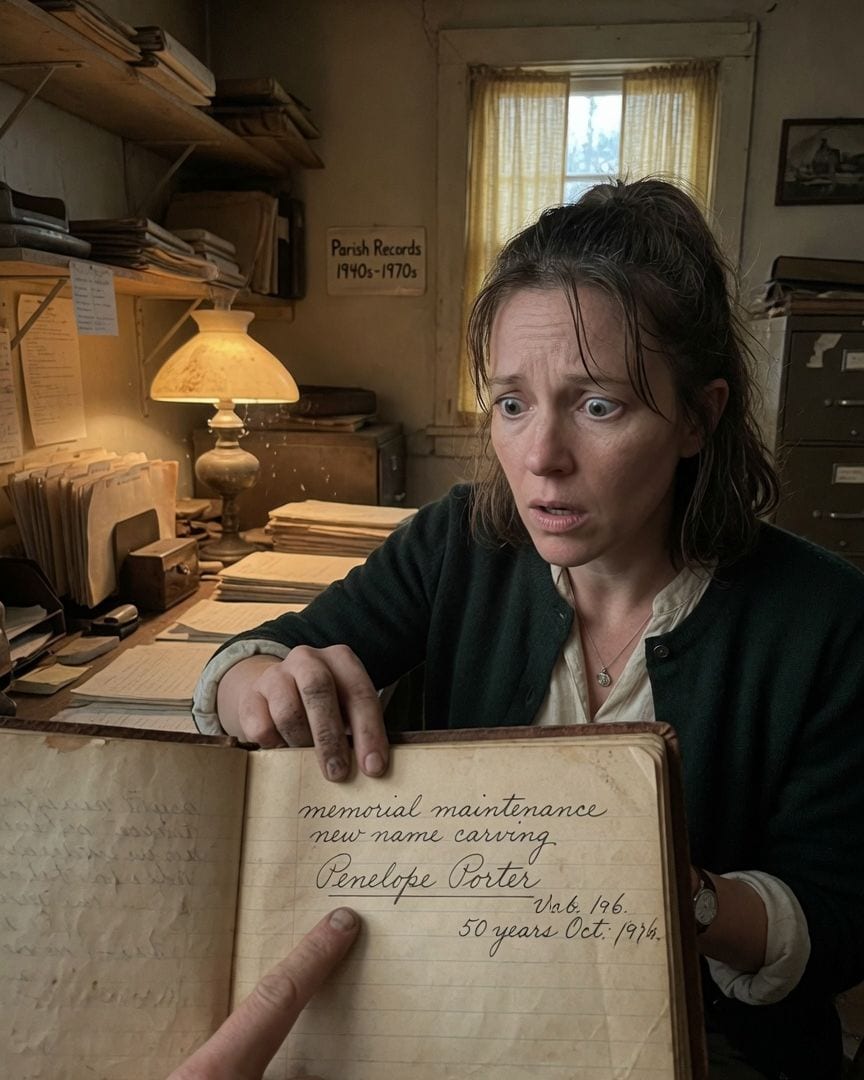
My name is carved on the war memorial with this coming Tuesday's date. The cut is fresh, but the stone inside matches fifty years of age, and a ledger says it was carved exactly fifty years ago.
On a sunny autumn Tuesday, my oldest friend, Gary, urgently called me to the village war memorial. There, carved beneath the names of the fallen, was 'PENELOPE PORTER' with a date from this coming autumn. The fresh carving of my name, dated for a Tuesday yet to arrive, felt like a cold jolt, an impossible message from the stone itself.
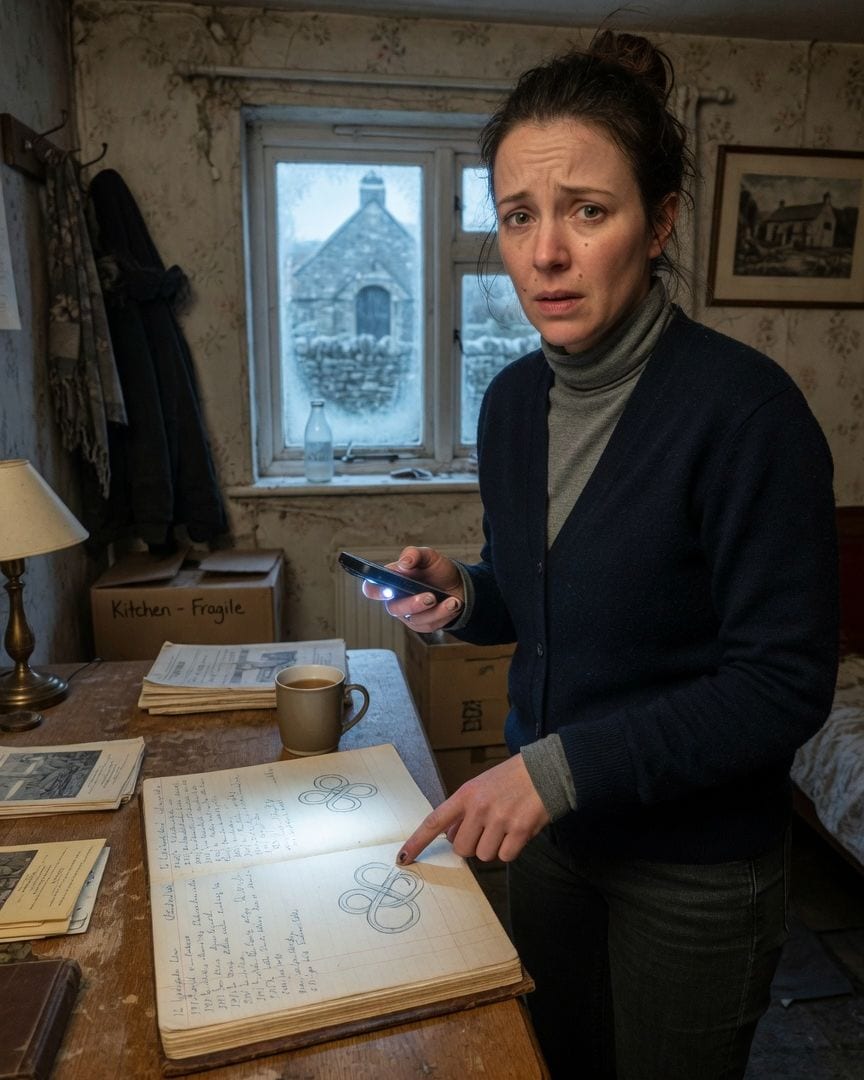
Milk appears daily by my lychgate. The dairy closed in '79. My address is handwritten into their old delivery book, starting the day we moved in.
Moving to Blackwood Creek, I loved the quaint charm, especially the unexpected morning milk delivery to my lychgate. But when I mentioned it to Eleanor at the village shop, her smile froze. She told me Willow Creek Dairy closed decades ago, in '79.
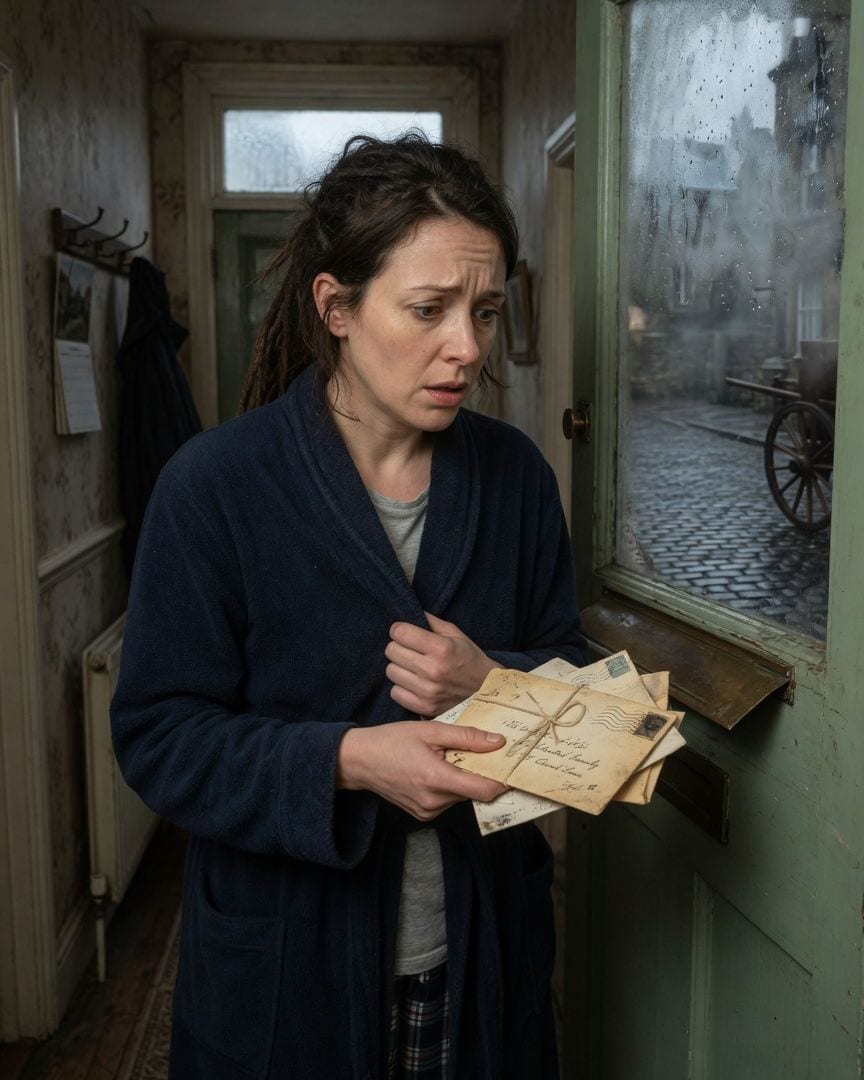
Seventy years ago, a hidden journal recorded my door opening to the wrong street and receiving Lockwood post.
I'd only recently moved into my inherited house, a quiet place on the edge of town. One grey morning, a distinct clatter from the front door's post flap caught my attention. Reaching down, I expected my gravel path, but instead, the flap showed a dark, cobbled street that wasn't mine. A bundle of warm, old letters, addressed to 'The Lockwood Family,' slid through, before the vision flickered and was gone.
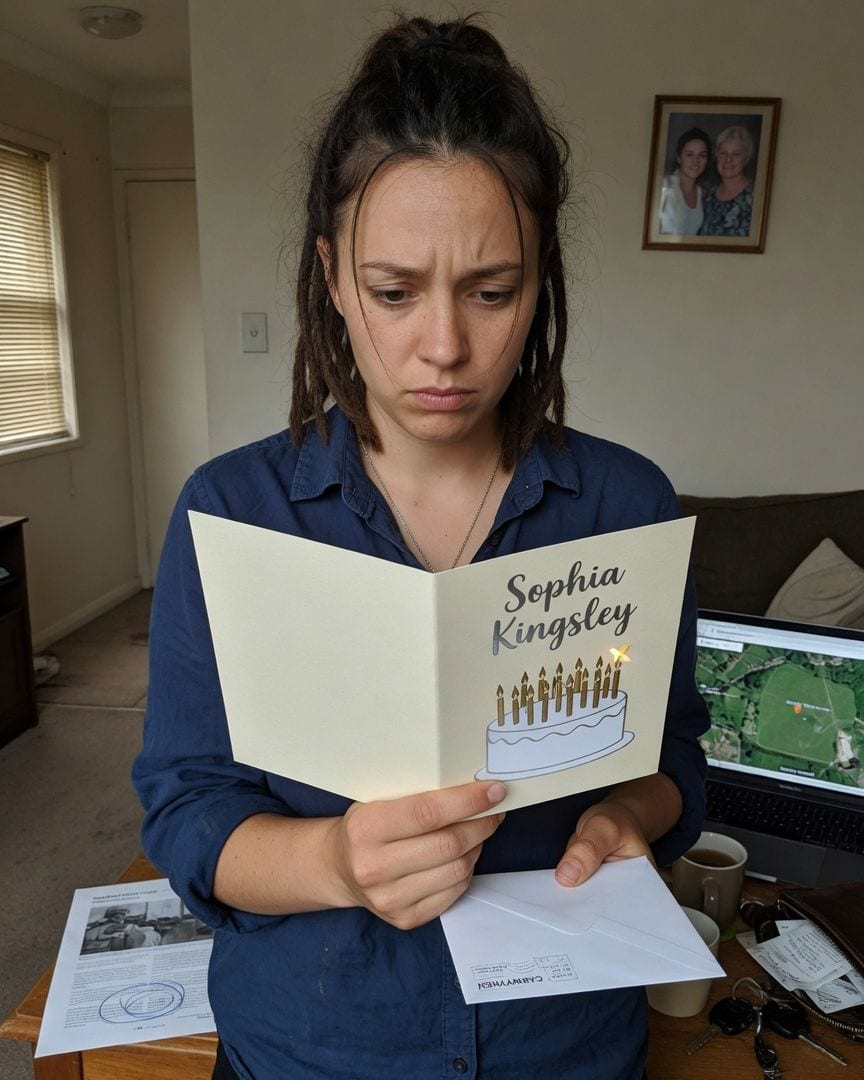
An empty field sends my birthday cards. This year, one candle was crossed out.
My birthday card always arrived a day early, a familiar comfort for five years. This year, a tiny silver 'X' marked one of the thirty candles, and the postmark read 'Carwynnen.' It was an empty field miles from anywhere, with no post office, and no one to send a card.
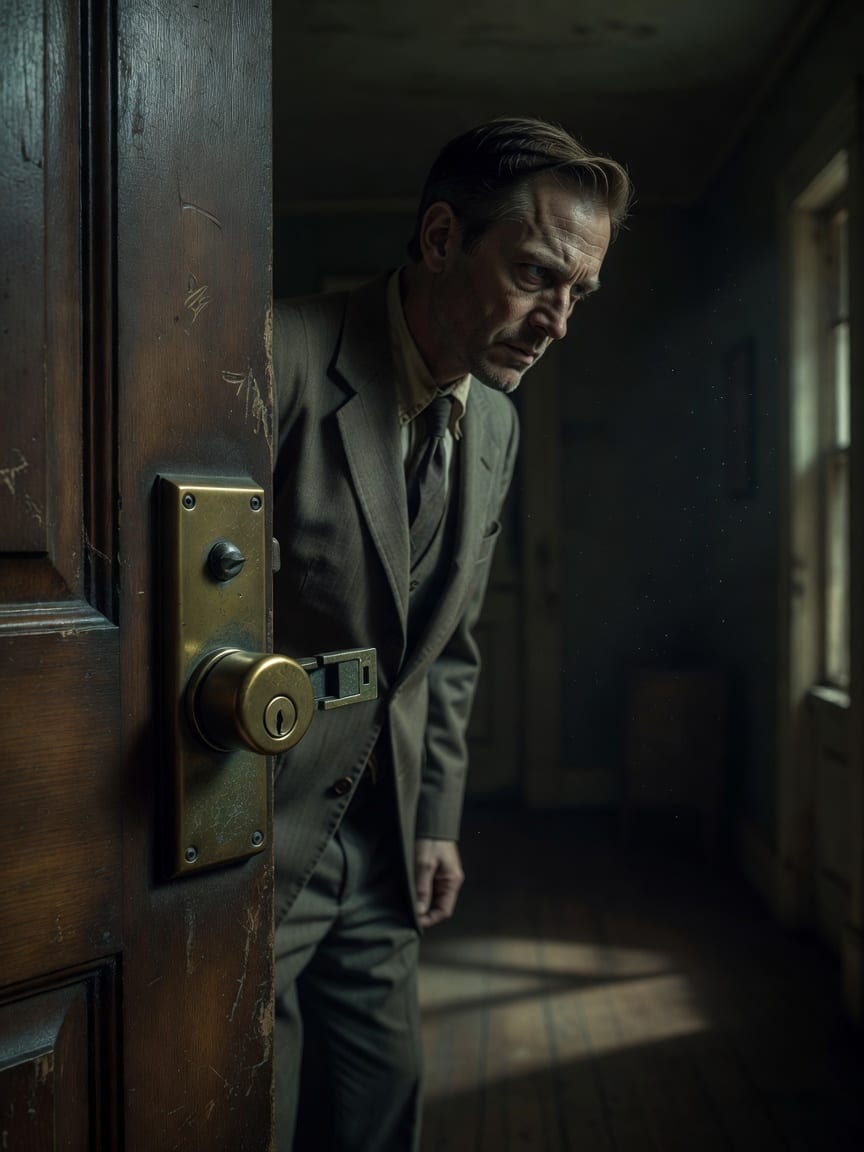
My deadbolt clunks shut from inside every night, long after I'm asleep. I live alone, and I've never heard it drawn back.
Inheriting Great-Aunt Lydia's house felt like a fresh start, until the nightly clunk of the deadbolt from downstairs started. I live alone, but every evening, the front door locks itself from the inside. Now, I’ve found Lydia’s meticulously kept calendar, with a 7 PM 'Deadbolt Check' written for tonight, a year after she died.
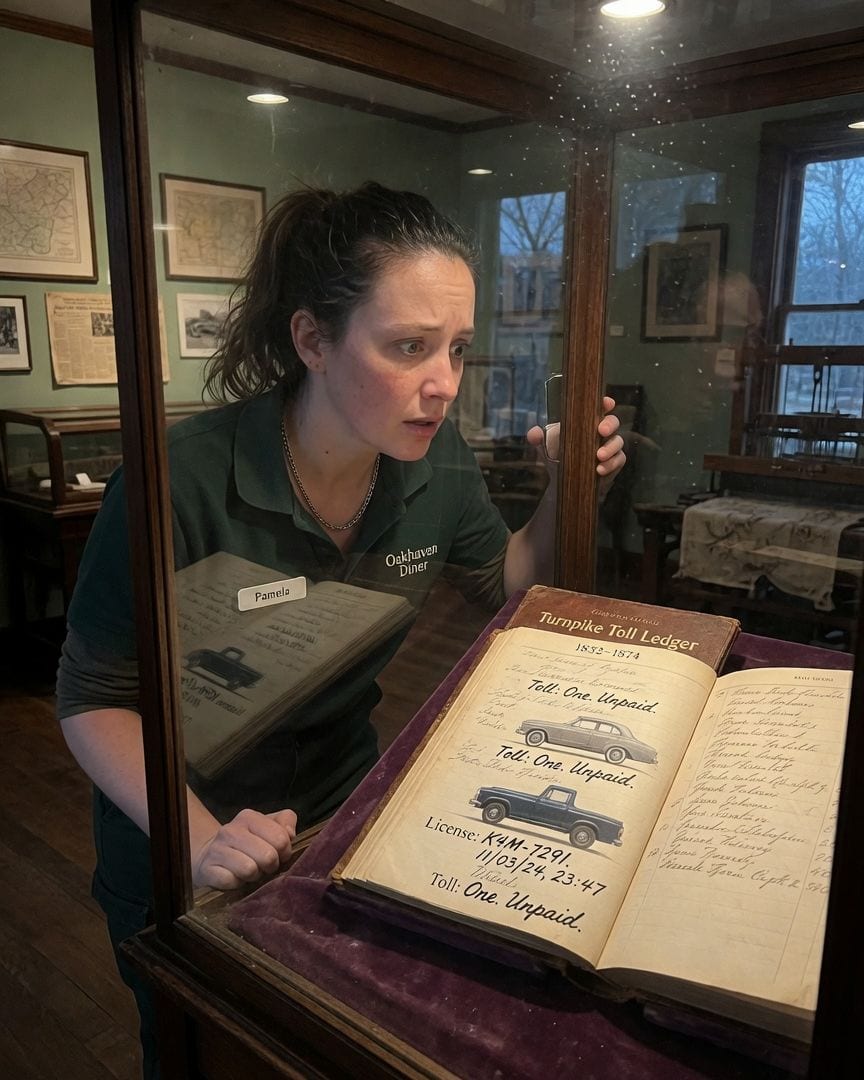
My car stalled at the old turnpike milestone, after dark. The toll ledger, closed in 1874, then listed my car, my stall time, and a toll of one, unpaid.
I had just moved to Oakhaven when my old sedan died on a dark, winding road by an infamous turnpike milestone. The next day, I found my car's exact registration and stall time written in fresh ink in a 150-year-old, locked museum ledger, marked 'Toll: One. Unpaid.' The curator dismissed it as a prank, but her white knuckles and strained voice hinted at something far more unsettling.