My garden's far end digs itself into neat beds each spring, though I own no fork and watch at dawn from the step. Potatoes grow where the deeds say it's paved.
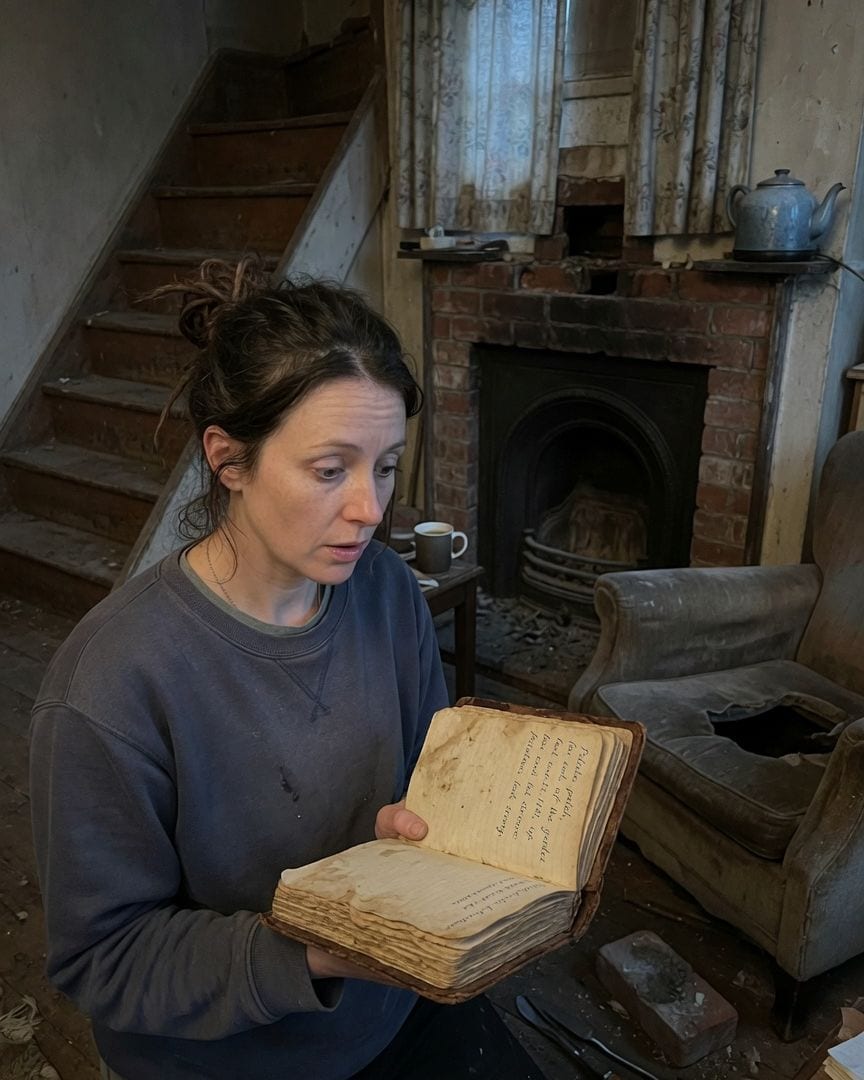
The first spring in the house, I started to notice things. Small things, at first, that I wrote off as quirks of an old place.
My deeds, when I bought the property, clearly described the far end of the garden as a "paved yard." Concrete. But each morning, when I stepped onto the porch with my lukewarm coffee, I’d see it.
Neat, dark beds, turned earth where the weeds had been. String lines, held by small wooden pegs, ran perfectly straight. And then, standing upright in the damp soil, an old, rust-pitted gardening fork. I own no gardening tools.
I don't garden. And I'd certainly never seen anyone out there, not at dawn, not ever. By June, where the deeds promised concrete, there were lush, green rows of potatoes.
Inside, the house had its own rhythm. Every morning, without fail, my ceramic kettle would whistle its high-pitched call at 6 am.
I’d wake up to it, stumble to the kitchen, and find it boiling, even though I hadn't set a timer or touched it since the night before. I’m a late riser, a 9 am coffee drinker, at best.
Then there was the third stair on the main staircase, its wood worn smooth and deep in one spot, almost a concave dip, as if someone had placed their foot there daily for decades, favoring it.
And the armchair in the living room, a sturdy thing upholstered in faded velvet, had a permanent, deep indentation in its cushion.
Not just a slight dip; a compressed, flattened hollow, as if someone sat there for hours, every single day. I live alone.
The potatoes growing in the 'paved yard' were what finally broke my calm. It was too much. I started searching the house, systematically, looking for an explanation. I pulled up loose floorboards, checked behind built-in shelves. Nothing.
But when I finally got around to the old, unused fireplace in the living room, cleaning out decades of dust and disuse, I noticed it. A brick, set slightly askew, with a hairline crack tracing its mortar.
I worked at it with a butter knife, then a screwdriver, until it finally came loose with a faint, gritty pop. Behind it, tucked into the dark cavity, was a small, leather-bound journal.
Brittle with age, the leather cracked like old bark, it smelled faintly of damp earth and something else, something green and herbal.
It was a gardening journal. The pages were filled with elegant, looping handwriting, small and precise. Detailed entries on planting schedules, observations about the soil, the weather, and the growth of specific plants.
I flipped through it, my heart starting to knock against my ribs. "Potato patch, far end of the garden," one entry read. Another: "Herb beds by the old stone wall." Exactly where my deeds said "paved yard."
My first thought was that it must have been a previous owner's hobby, before the paving, before the current layout. A simple explanation. But the dates. The dates ran continuously, without interruption, from the late 1960s, deep into the 1980s.
Past the supposed paving date, past when my deeds claimed the land was concrete.
And then I saw entries that resonated with the house’s own strange rhythm: "6 am tea in the blue kettle, watching the sunrise over the patch" and "the ache in my knee on the third step, always worse when rain is coming."
My ceramic kettle. My worn stair.
I stared at the last entry in the damp, soil-stained journal, my finger tracing the date: 'August 14th, 1988. Last earthing up. Potatoes look strong.'
My own deeds showed the Blackwood family purchased the property in 1987, and the garden was officially a paved yard by then.
The sound of my ceramic kettle, whistling its 6 am call, echoed from the kitchen, a routine she has never set.
Unnerved but determined, I took the journal to the local council archives.
I wanted to find records of previous owners, someone who might have lived here before the Blackwoods, someone who would explain the impossible potatoes and the persistent habits of the house.
The clerk, a dour man named Mr. Henderson, tapped at his computer. "No, Miss Delaney. Blackwood family from 1987. Before that...
well, the records are vague, but certainly no mention of a garden being paved over after 1987, or before, for that matter. The plot was described as having a paved yard then, as now."
He looked at me with an air of dismissal. My mundane explanation, that perhaps the paving was a later addition, died right there.
Frustrated, I remembered a distant relative, Aunt Clara, mentioning an old, retired local historian, Felix Sinclair. Someone who knew the town’s real history, not just the official records. It took a few calls, but I found him.
He lived in a small, cluttered house on the edge of town, surrounded by towering stacks of books and yellowing documents. Felix was a kindly, sharp-eyed man, probably in his late seventies, with spectacles perched on his nose.
He offered me a cup of tea, a proper one, not a phantom kettle’s offering.
As I described the house, the potatoes, the journal, his eyes widened slightly. He nodded. "Ah, your house. Yes. There were always vague local rumors, you know. About a Miss Whitfield. Sarah Whitfield.
A real character, passionate gardener, lived there for decades." He paused, adjusting his spectacles. "But her name... never appeared on any official property records, that's the odd thing. Always seemed to be 'unofficial,' or just... forgotten, from a legal standpoint."
He leaned forward, conspiratorial. "Local anecdote had it she loved her 6 am tea, first thing. And had a bad knee, poor thing. Favored that third stair, she did, always a bit of a shuffle."
After leaving Felix Sinclair’s house, I felt a peculiar blend of unease and validation. Sarah Whitfield. The house’s routines now had a name. But the unease lingered, twisting into something more sinister. I started to feel watched.
The day after my visit to Felix, I noticed a dark sedan parked down the street from my own home.
It was late afternoon, windows tinted, and I couldn't make out anyone inside, but it stayed there for hours, its presence a cold, quiet weight. I told myself it was nothing, a neighbor's visitor, but the feeling persisted.
A few days later, while I was tending to the burgeoning potato plants, kneeling in the rich, dark soil, a man approached my fence. He was in a perfectly tailored business suit, utterly out of place in my wild garden.
He introduced himself as Marcus Blackwood, son of the previous official owners. His smile was too thin, his gaze too direct.
"Miss Delaney," he began, his voice smooth, "Just wondering about your plans for that unruly patch at the back there." He gestured vaguely towards the potatoes. "My family, we always kept it neatly paved, you know. For aesthetic reasons.
It's in the deeds, after all." His eyes lingered on the green foliage, a flicker of something unreadable in their depths. I felt a chill, a prickle of alarm on my skin.
He was testing me, I realized, trying to gauge what I knew, what I'd discovered. I deflected, claiming I hadn't decided on any major landscaping yet, still settling in. He nodded, but his presence was a clear, silent warning.
The house's past was stirring up its present.
I went straight back to Felix Sinclair, the details of Marcus Blackwood's visit spilling out of me in a rush. Felix, visibly troubled, sat back in his armchair, a deep sigh escaping him. "Blackwoods," he muttered, shaking his head.
"Yes, there was always a whisper, you know, about how they acquired your house. Never anything concrete, mind you, just local gossip." He pushed himself up, moving to an old wooden chest in the corner of the room.
From it, he pulled out a dusty, cardboard box, brittle with age. "Unofficial community records," he explained, "stuff the council never bothered with. Local club minutes, forgotten newsletters, old photographs people donated."
He began to rummage, his fingers, surprisingly nimble, sifting through the yellowed papers. "Ah, here." He pulled out a faded photograph, black and white, creased down the middle. It showed a smiling older woman, holding up a truly enormous potato.
'Sarah Whitfield,' the caption read, 'Village Fete, 1985. Winner of the Magnificent Potato Crop.' The backdrop was unmistakable: my house, the exact angle from my kitchen window.
And where the deeds said 'paved yard,' the area was overflowing with lush, verdant potato plants, exactly as it was now. "She truly loved her garden," Felix said, his voice soft.
He continued searching, a sense of urgency now about him. "And this..." He held up a brittle, browning community newsletter from late 1988. The headline read, 'Our Dear Sarah Whitfield, Suddenly Absent.'
The small article noted 'the sudden absence of our dear Sarah Whitfield from her home, now occupied by the Blackwood family.' Suddenly, the pieces crashed together. Sarah Whitfield was the gardener. Her routines were the routines of the house.
And the Blackwoods, the 'official' owners, had deliberately, cruelly, erased her.
Felix Sinclair continued to rummage through the box, his hand shaking slightly as he pulled out a folded, brittle piece of paper, distinct from the other official-looking documents.
It was a crude, hand-written bill of sale for the house, dated August 16th, 1988 – just two days after Sarah’s last journal entry. The seller was listed as 'Sarah Whitfield.'
The buyer: 'Marcus Blackwood Sr.' But it was unsigned by Sarah. And witnessed by no official. My breath hitched.
Felix's face went pale as he looked from the unofficial bill of sale to a photo I’d found in one of the community newsletters—a younger Marcus Blackwood, standing with his father. He whispered, "This... this isn't possible.
The Blackwoods have owned that house clean for decades." Just then, a sharp, insistent knock rattled Emily's front door, and a man's voice, deep and familiar, called out, "Miss Delaney? We need to talk about that garden."
It was Marcus Blackwood.
I let a grim-faced Marcus Blackwood into my living room. He didn’t wait for me to offer him a seat, standing stiffly in the middle of the room, his eyes hard.
"Miss Delaney," he began, his voice tight, "I think you're digging up old history that's best left buried. It's causing trouble." He tried to intimidate, his gaze flicking to the journal I had placed on the coffee table.
I met his stare, then calmly laid out the evidence. Sarah Whitfield's journal, its last entry dated two days before the fraudulent sale. The faded photograph from the village fete, showing her potatoes in my 'paved yard.'
Felix's unofficial records, detailing her long occupancy and sudden disappearance. And finally, the crude, unsigned bill of sale. I pushed it towards him across the polished wood.
He looked at it, his shoulders slumping, the veneer of composure finally cracking. His voice, when it came, was tight with resentment, but laced with a deeper, hidden fear. "My father," he confessed, "he was... eager for this house.
Sarah Whitfield, she was old, no family. She passed away quietly, in the house. Father, he saw an opportunity. He quickly drew up that fake bill of sale, cleared out her belongings, reported her as having 'abandoned' the property."
He looked up, his eyes meeting mine. "He even paved over the garden in the deeds. To remove any trace of her. Her true ownership." He swallowed hard. "We've been trying to cover it up ever since.
Always fearing someone would find out. And now you have." He looked around the room, as if seeing it for the first time, not as a property, but as a silent witness.
"The house," he added, almost to himself, "in its own way, had been fighting back for decades."
Marcus Blackwood, defeated, finally agreed to formally acknowledge Sarah Whitfield's prior occupancy and the fraudulent sale. He offered to work with me to correct the historical record, his family’s long-held secret now exposed.
He left, the front door closing with a soft click that echoed in the quiet house. I felt no triumph, no sense of vindication. Instead, the house felt different now, almost heavier with its revealed truth.
The air was still, yet it thrummed with a presence I couldn't name, but knew.
I walked through the garden, touching the rich soil where the potatoes were thriving. The old, rust-pitted fork stood upright, just as it always did, a silent sentinel.
Inside, the ceramic kettle whistled its 6 am call, though it was now early afternoon.
The third stair creaked under my weight as I ascended, and I noticed the armchair cushion seemed to deepen further as I passed, as if someone had just risen from it. The ordinary explanation was dead.
The journal, the unrecorded deed, the photographs — they had proven the impossible. The house's memory wasn't fading; it was simply continuing, now with me as its knowing, helpless witness. The routines were ingrained, a loop without an end.
I worked with Felix Sinclair, and together, we formally amended the local historical archives, ensuring Sarah Whitfield's name was recorded as a true occupant of the house.
The Blackwood family faced local scrutiny, a quiet but potent condemnation, though no legal action was taken due to the sheer passage of time. I remain in the house. I tried to sell it, but I couldn't. I couldn't leave.
The garden continues its meticulous seasonal work, the potatoes always returning, always strong. The internal routines of the house—the kettle, the stair, the armchair—persist with unwavering regularity.
I've learned to live around them, a quiet, constant presence in a life not entirely my own.
Sometimes, when the morning sun hits the kitchen just right, a faint scent of lavender and old tea lingers in the air, just for a moment, before fading.
I often find myself pausing on the third stair, my hand instinctively reaching for the worn patch, before remembering it isn't my habit. I know the house is not hers, not truly.
It belongs to Sarah, and Sarah is still here. I simply keep the garden tidy, a continuation of a routine that began long before me, and will likely continue long after.
She waters the potatoes, already earthed up for the season, in ground that the deeds still say is paved.
If this one got to you
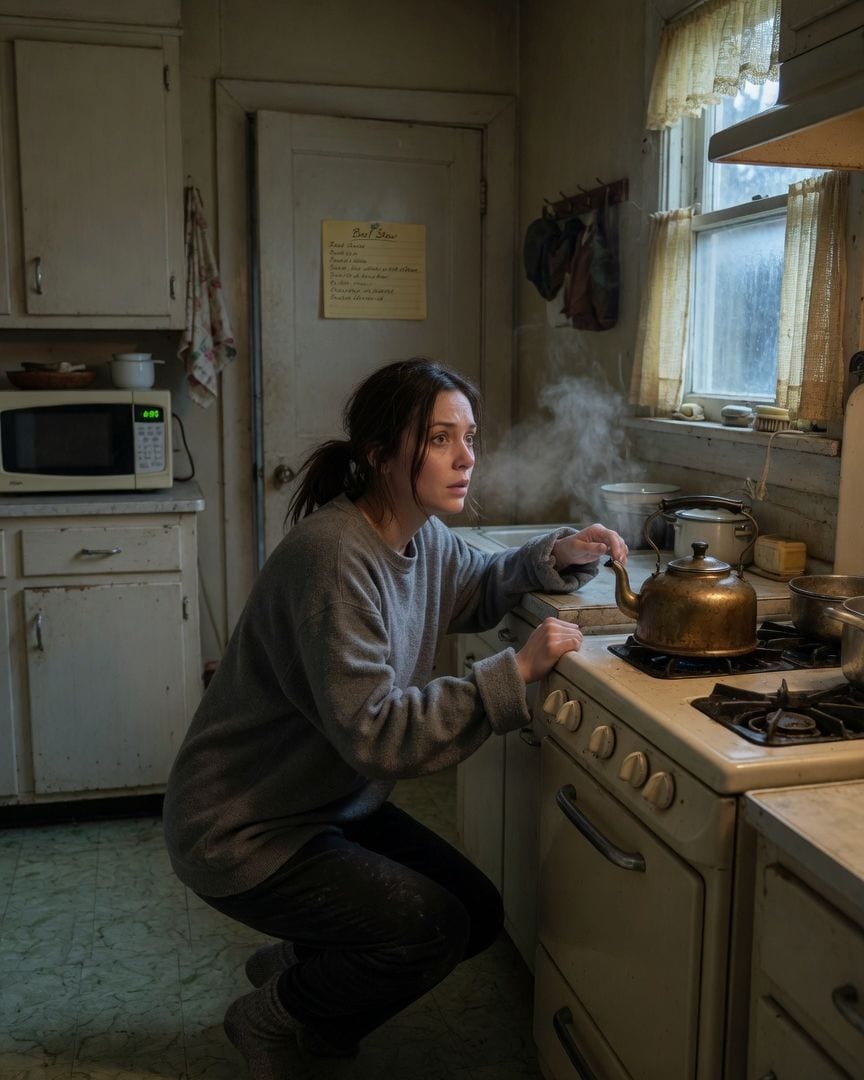
My front step is scrubbed white every Monday before dawn, wet stone and a bar of yellow soap left on the sill. I live alone. I've never scrubbed a step in my life.
Every Monday morning, before dawn, I find my front step scrubbed sparkling white. I live alone, haven't scrubbed it in years, and my security cameras show no one. Yet the damp stone always bears faint knee-prints and hand-marks, appearing as if by unseen hands.
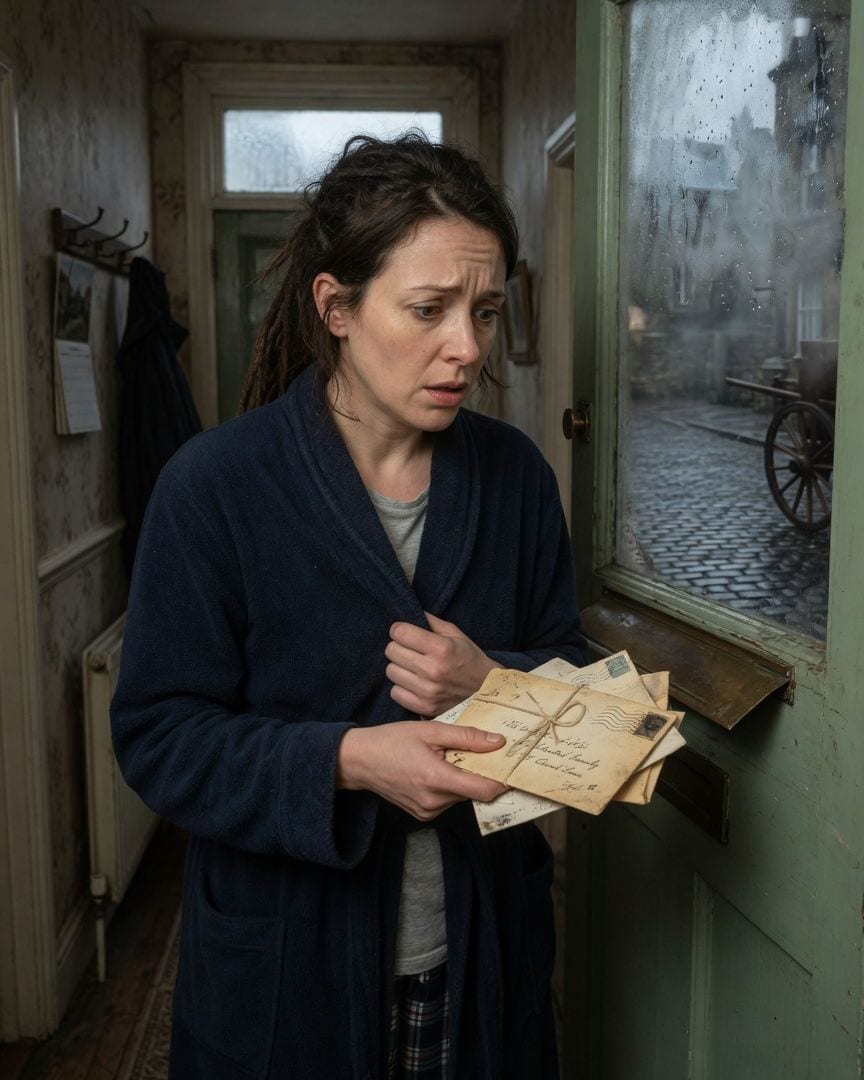
Seventy years ago, a hidden journal recorded my door opening to the wrong street and receiving Lockwood post.
I'd only recently moved into my inherited house, a quiet place on the edge of town. One grey morning, a distinct clatter from the front door's post flap caught my attention. Reaching down, I expected my gravel path, but instead, the flap showed a dark, cobbled street that wasn't mine. A bundle of warm, old letters, addressed to 'The Lockwood Family,' slid through, before the vision flickered and was gone.
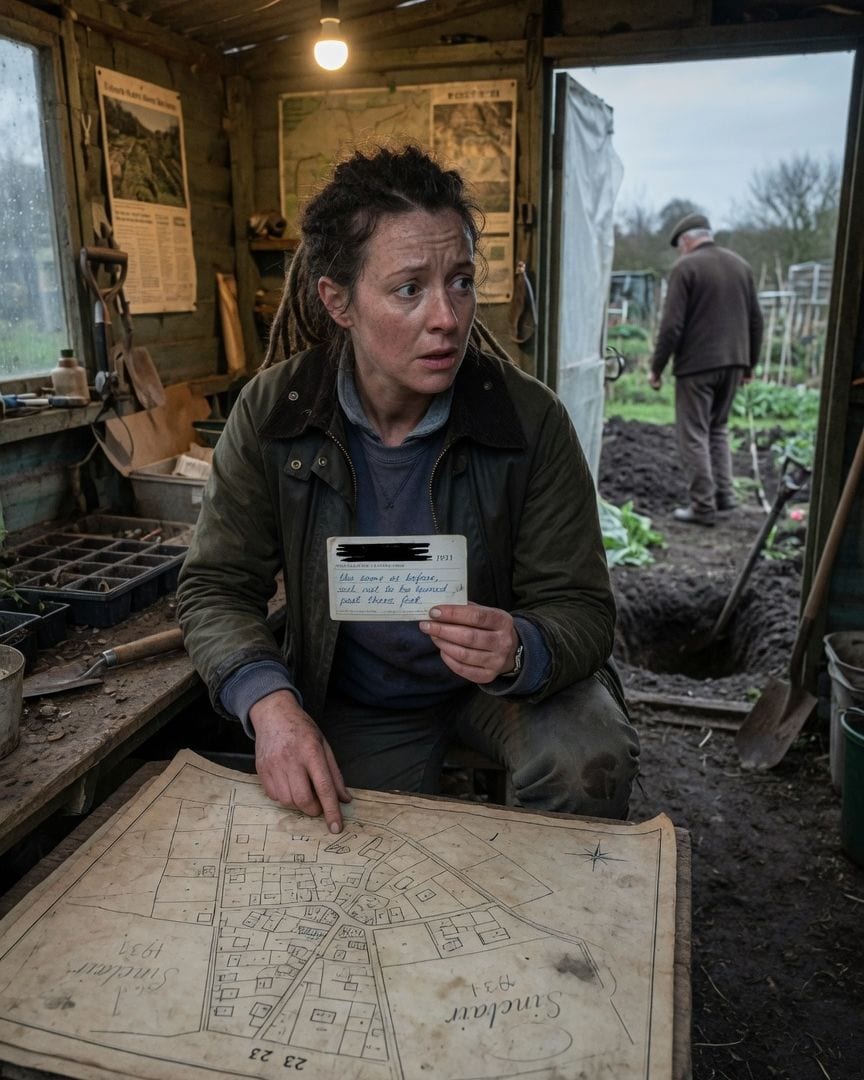
My allotment plot’s tenancy card has a redacted name from 1931. Under it, someone wrote 'the same as before, soil not to be turned past three feet,' and my dead grandfather signed it too.
My new allotment Plot 23 felt unnaturally still, the soil unusually dense and cool. The tenancy card warned 'soil not to be turned past three feet,' but my spade hit something hard and unyielding at that depth: a compacted, petrified layer that felt deliberately laid, a barrier.
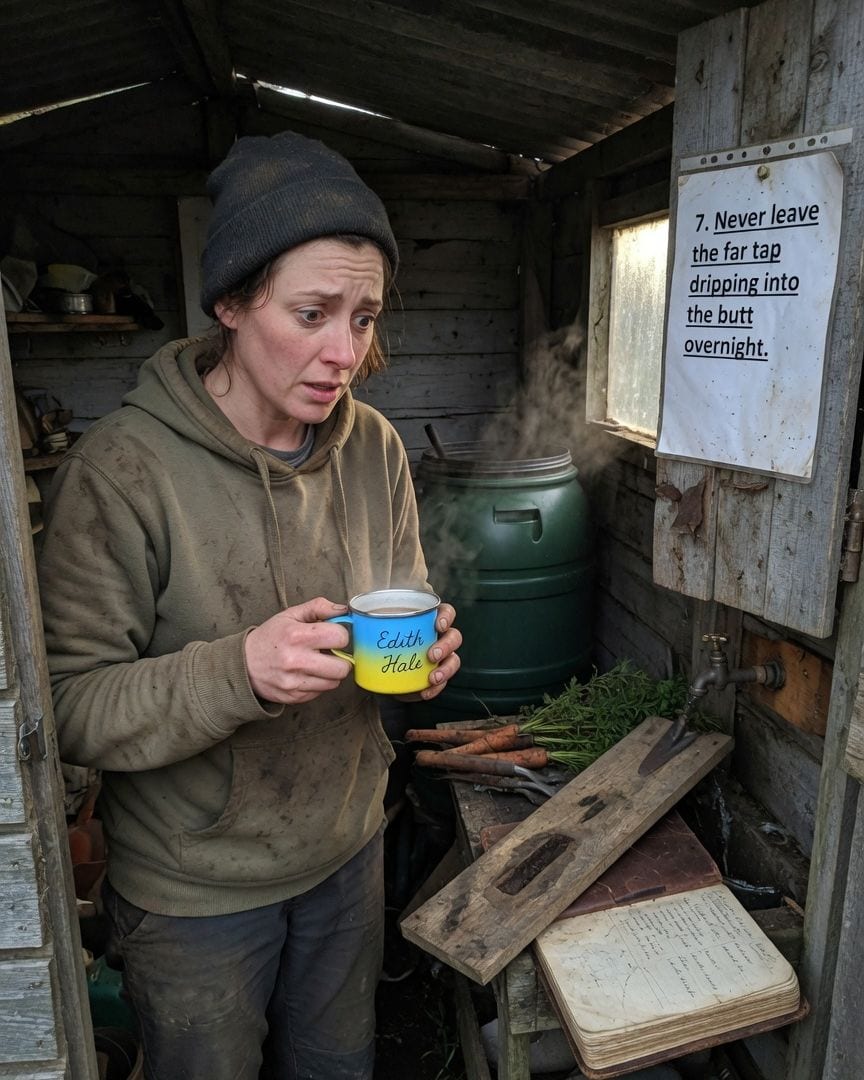
The one night I left the tap dripping, my allotment water butt was full to the brim and warm to the touch — with a child's unrusted tin cup floating on top.
Moving to Blackwood, I hoped my allotment would be a fresh start. But the shed's rulebook warned, 'Never leave the far tap dripping.' One morning, my water butt was full and steaming, an unnerving warmth rising from it. Inside, a child's tin cup floated, unrusted, etched with the name 'Edith Hale'.
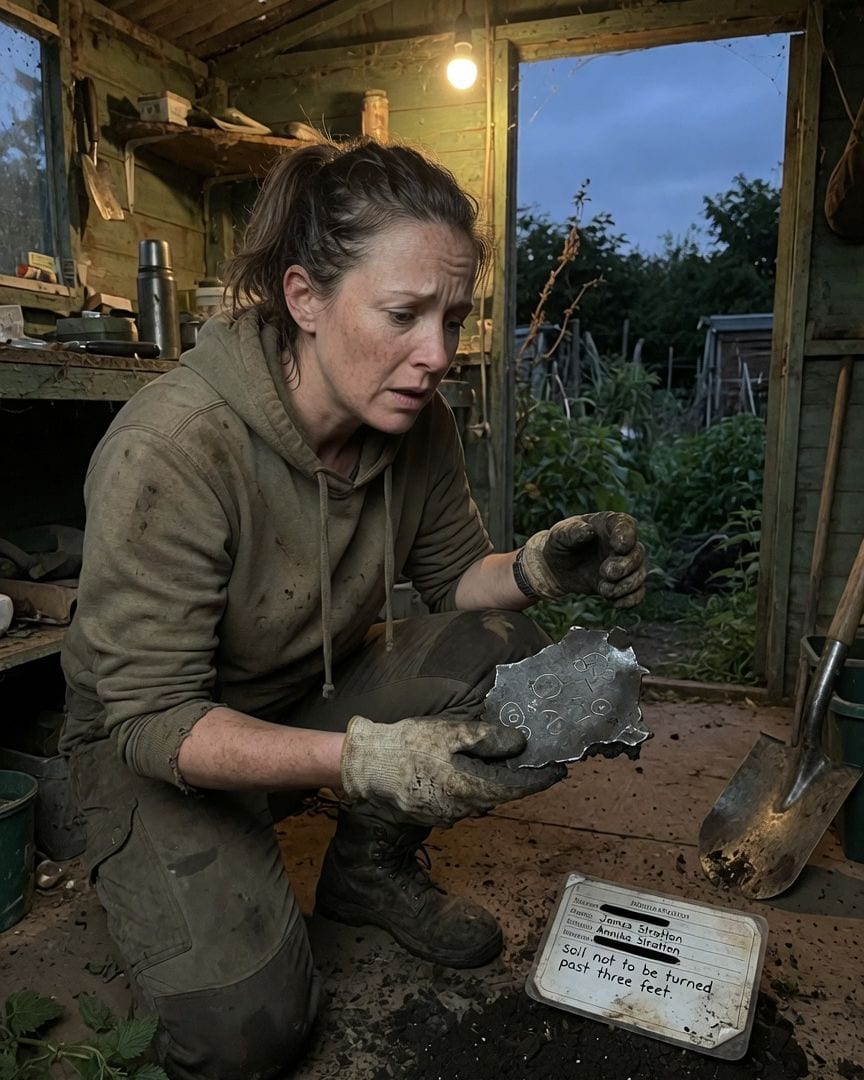
My spade struck something impossibly cold and metallic, pulsing with a slow, steady heartbeat, exactly where the old warning ended.
I took over a neglected allotment, Plot 23, and found a strange, handwritten rule on its tenancy card: 'Soil not to be turned past three feet.' I rationalized it as an old drainage issue, but when my spade hit something impossibly hard, a slow, steady heartbeat pulsed from the ground.
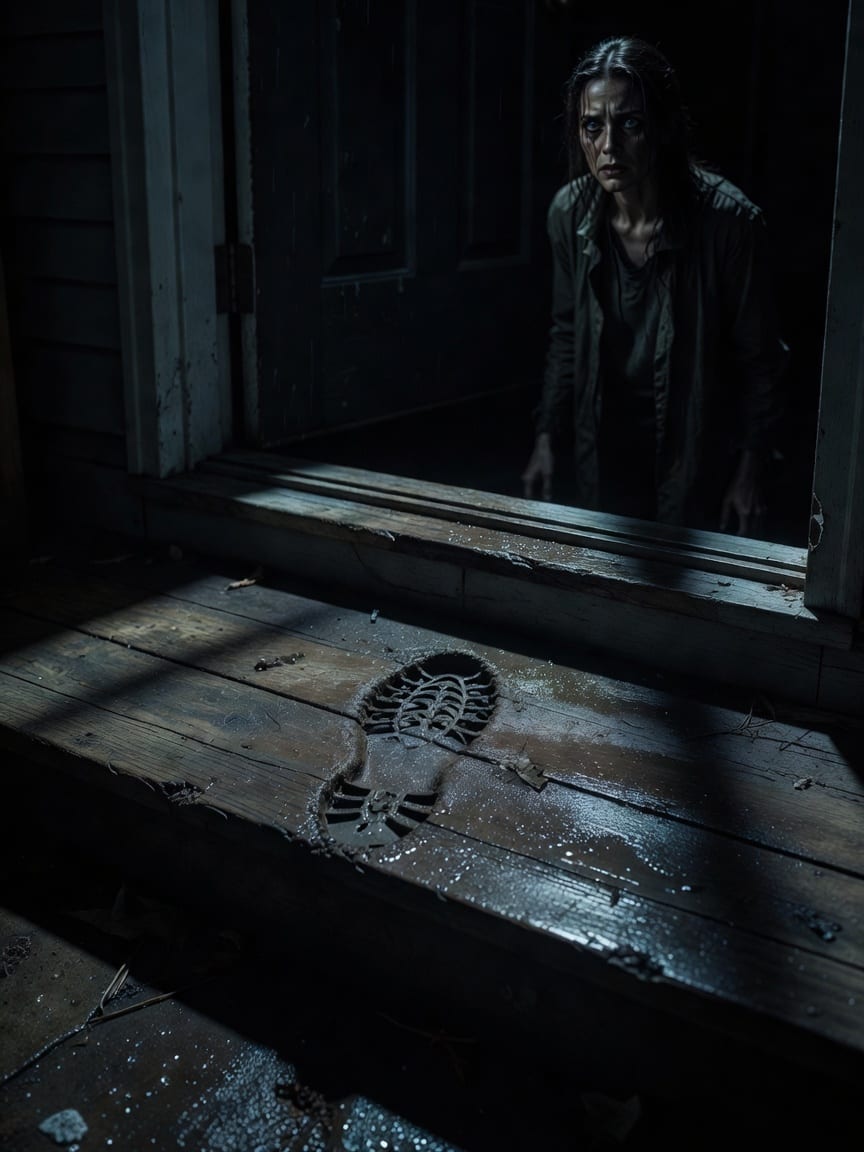
My landlord's only rule: never let the outside tap run after sundown. Last week it dripped. This morning, wet bootprints ringed the back step from the tap to my door, all the same size. The tap was off.
We'd just settled into Waterside House, with its strange landlord rule about the outside tap. After the washer broke, I found perfect, wet bootprints leading from the tap to our back door, but the tap was cranked completely off, tighter than I could manage.