Gramps' nail jars are reversed, smallest-to-biggest now. He rearranged them himself, says the old way never made sense.
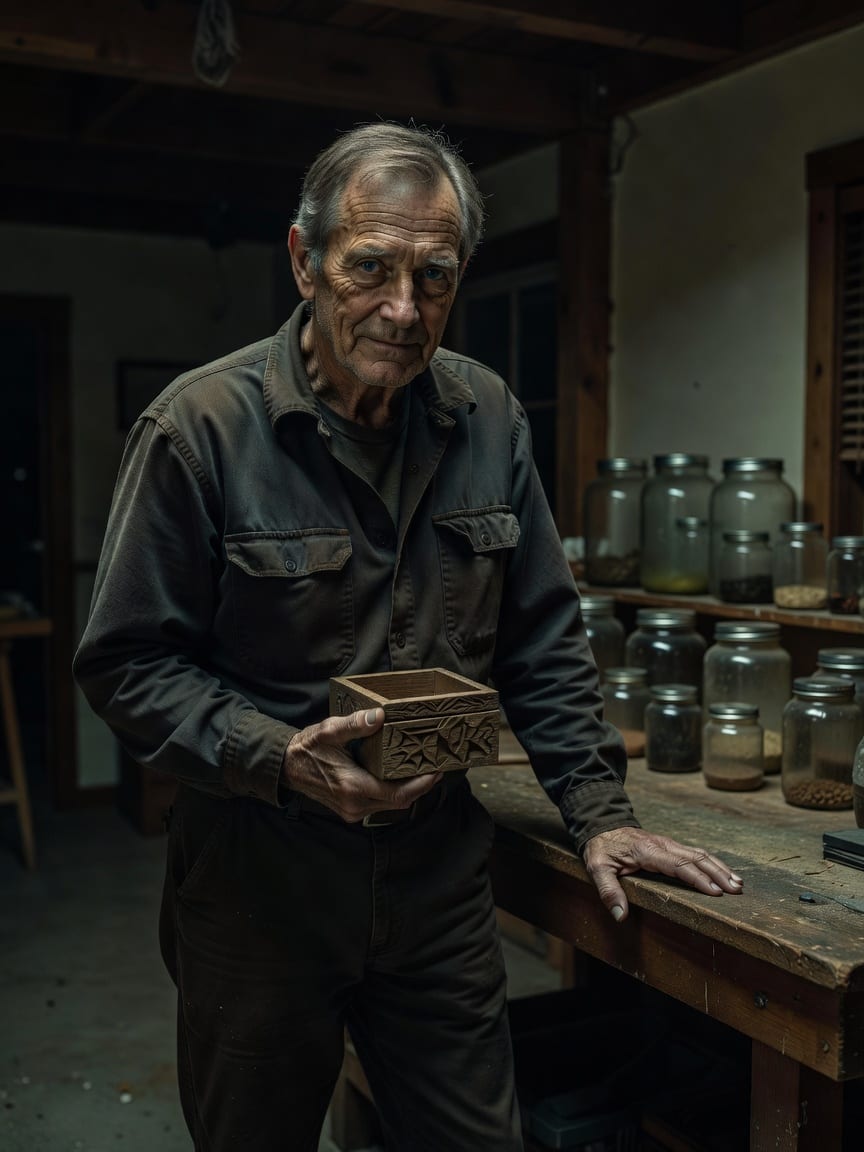
The scent of sawdust and oil usually hit me first when I stepped into Gramps’ workshop, a comforting, familiar hug. This time, in the early spring chill, it felt… thinner, somehow. Colder.
I pushed the door open, the old wood groaning a welcome, but the welcome curdled in my gut almost immediately.
There they were. His nail jars.
For forty years, Robert Easton’s system had been immutable. Biggest at the door, left to right by size, a perfect, logical gradient of hardware. He’d built that system piece by piece, an extension of his own meticulous mind.
Now, they were reversed. Smallest-to-biggest. A flawless mirror image of everything he’d ever done.
Gramps stood beside them, humming a tune I didn’t recognize, running a hand along a row of tiny brads. He turned, his smile a little too wide, a little too bright. “Ah, Colette! Just reorganizing.
The old way never made any sense to me, you know. This is how I’ve always done it.”
My memory, sharp and insistent, screamed a counter-argument. I could see him, a younger Robert, explaining the system to me when I was six, pointing proudly to the big, rusted spikes near the door.
He moved with the same slight limp he’d had since his knee surgery a decade ago, the distinctive scar from a childhood fall still a pale ridge above his left eyebrow.
But his hands, as he gestured to the jars, seemed to hold a phantom weight, like they were learning to be his again after a long, disuse.
He’d only been back since October, after a week-long disappearance in the woods. Everyone called it a miracle. I tried to rationalize it, to tell myself this was just a side effect of his ‘ordeal,’ the disorientation of being lost.
But the certainty that something was profoundly, intimately wrong with the man in front of me was a cold, hard knot in my stomach.
Over the next few days, the knot tightened. Gramps, who had always taken his coffee black, now insisted on cream and two sugars, stirring it diligently with his left hand.
He’d always been a right-hander, a fact I never consciously noted until I saw him planing a small piece of wood, his left hand guiding the tool with an unfamiliar, almost hesitant precision.
It was subtle, easily dismissed as an aging man’s quirks, perhaps some muscle weakness from his time lost. But it wasn’t just one thing. It was a pattern. An inversion.
What truly chilled me was his favorite phrase. For as long as I could remember, Robert would tap his temple and declare, ‘Sharp as a tack!’ whenever he'd solved a puzzle or remembered a detail, always about himself.
Now, he used it, but always for me, or for Marcus Carver, his best friend. ‘You’re sharp as a tack, Colette,’ he’d say, with a faint, almost imperceptible pause before the compliment, as if translating a foreign thought.
I tried to bring it up, gently, one morning. “Gramps, your coffee… you always took it black, didn’t you?”
He just smiled, a little too wide, and said, “A man can change his mind, can’t he, dear? Keeps things interesting.” But it wasn't a change. It was a mirror image.
I started to secretly photograph the nail jars, the coffee cup, small things that accumulated, quiet evidence.
I remembered a small, hand-carved wooden box Robert always kept locked and hidden in a false bottom drawer in his workbench, a place he said held ‘the real treasures.’
An urgent need to see what was inside it now coiled in my gut.
Late one evening, long after Robert had gone to bed, the house silent but for the creak of settling timbers, I found myself back in the workshop. My flashlight beam cut through the gloom, settling on the workbench.
My fingers fumbled with the hidden latch of the false bottom drawer, the wood cool and smooth under my touch. Then, a soft click.
My fingers closed around a small, intricately carved wooden box, smooth and cool. It was exactly as I remembered, the faint, slightly clumsy initial ‘R’ carved into the lid, a tiny imperfection that made it uniquely his.
I carefully unlatched it, the brass catch whispering. Inside, nestled beneath a layer of old, dried leaves, were several yellowed, brittle paper labels. Each one handwritten in Robert’s unmistakable script. ‘16-penny nails, biggest at door,’ one read.
Another: ‘finishing nails, left-hand side.’
Beneath the labels, a small, faded black-and-white photograph. It was Robert, decades younger, a vibrant grin on his face, standing proudly in his workshop. Behind him, the nail jars were undeniably arranged biggest-to-door.
My eyes flicked to his face in the photo, to the distinctive scar above his eyebrow. It was there, clear as day, but it was above his right eyebrow.
I stared at the faded image in my hand, then up at the darkened doorway where Robert had disappeared hours ago, whistling that tune I’d never heard him hum. The scar still sat above his left eyebrow.
The image of his younger self, scar on the right, smiled back at me from the past, clear and undeniable.
The photograph, with its impossible scar, burned a hole in my mind. I spent days poring over old family albums, searching for other images of Robert.
Every photo I found from before last October showed the scar above his right eyebrow. Every photo since his return, including recent selfies I’d taken, showed it above his left.
It wasn’t a trick of light, not a fading memory on my part; it was a fundamental physical shift, a complete, inexplicable inversion.
I tried to talk to my mother, Pamela, about Robert’s recent changes, framing it as concern for his mental health. “He’s just been so… different since he came back,” I started, trying to sound casual.
“His memory seems off, and his habits…”
Pamela waved a dismissive hand. “Oh, Colette, darling, he was lost in those woods for a week! The trauma alone is enough to shake anyone up. He’s just adjusting, dear. It was a miracle he even came back.
Give him time.” She said ‘miracle’ like it was a balm, a reason to stop asking questions. I felt increasingly isolated, my observations dismissed, my fear unacknowledged.
I started to subtly question Robert himself about his disappearance. “Gramps, do you remember that old hunting path you always used, just past the big oak? The one that leads down to the creek?” I watched his face carefully.
He looked at me blankly. “Hunting path? Never used any path, Colette. Just wandered. Got myself turned around. Lucky to find my way out, really.” It was another small, chilling reversal.
That path was real, well-known, a shortcut he’d used for decades, etched into old maps I’d seen with his own annotations.
The pieces didn't fit, and the picture that emerged was one of a meticulous, perfect imitation, with glaring, fundamental flaws at its core. The dread tightened its grip, cold and specific.
I wondered if anyone else, anyone who knew Robert even longer, had noticed. Someone like Marcus Carver.
My quiet investigation didn't go unnoticed. I’d catch Robert watching me, not with his usual grandfatherly affection, but with a still, assessing gaze that made the hairs on my arms prickle.
One afternoon, I was in my study, the wooden box and old photos spread out on my desk, when I heard faint footsteps outside my closed door. I froze, holding my breath, my blood suddenly cold in my veins.
The footsteps stopped. A moment later, a soft tap.
“Colette? Everything alright in there, dear?” Robert’s voice, familiar, but with an underlying flatness that scraped like sandpaper.
“Just tidying up, Gramps,” I called back, scrambling to sweep the evidence into a drawer, my hands clumsy with panic. When I opened the door, he was standing there, a faint, unreadable smile on his face.
“Thought I heard you moving things around. Just checking.” His eyes flicked past me, toward my desk, then back to me. His smile didn’t waver. “You know, those old things can be a real fire hazard.
All that paper, brittle as dry leaves. Best to keep them put away, don't you think?” It was a mild warning, but the implication was clear: he knew I was digging.
Later that week, I called Marcus Carver, Robert’s oldest friend. I framed my questions carefully, about Robert’s ‘memory issues’ and ‘new habits,’ trying to sound concerned, not accusing. Marcus listened, his voice growing quiet as I spoke.
“He’s… different, isn't he?” Marcus finally said, a tremor in his voice. “Not just with the nails. I’ve noticed. The way he shakes hands now, always with his left, not his right. Never did that before.”
A surge of relief washed over me, immediately followed by a deeper unease. Marcus had noticed. I asked him if he knew anything about the woods, about people getting lost out there, old stories.
His voice dropped further, to barely a whisper. “Some say… things come out of those woods that didn't go in.”
I arranged to meet Marcus at a quiet diner on the outskirts of town, away from Robert’s watchful eyes.
The clatter of plates and low hum of conversation felt like a flimsy shield against the cold reality I was about to expose.
I laid out my observations: the reversed nail jars, the coffee, the hand preference, the scar, the forgotten hunting path. Marcus listened, nodding slowly, his face grim, his coffee growing cold in his hand.
“It sounds… familiar,” he said, his gaze distant, lost in some old memory. “Too familiar.”
I pressed him, my voice tight. “What do you mean, Marcus? Have you seen this before?”
He hesitated, tracing a circle on the condensation of his glass. Then he sighed, a long, weary sound. “My sister, Edith. She went missing in those same woods, just north of the old logging road. Forty years ago.
Found a week later, just like Robert. Everyone said it was a miracle.” He paused, taking a slow sip of his coffee, as if fortifying himself. “But she wasn't quite Edith. Her laugh was… wrong.
A little too loud, a little too hollow. She always loved lilies, grew them herself in her garden. After she came back, she couldn't stand the sight of them, physically recoiled if someone brought her a bouquet.
And her handwriting, always neat and precise, became a messy scrawl. Everyone said it was the trauma, that she was just recovering, but I knew. I knew it wasn't her.”
A profound chill ran down my spine, tracing the path of every one of Robert’s strange new habits. The pieces clicked into place with horrifying precision: the habit reversals, the memory gaps, the subtle, creeping wrongness. “Did anyone else notice?”
I asked, my voice barely a whisper.
“No,” Marcus shook his head slowly. “They wanted to believe it was her. It was easier. I tried to talk to them, but they just looked at me like I was crazy.
They wanted their Edith back, and they got… something that looked like her. But I kept an eye on her. She just… hollowed out, Colette. Like the person was gone, and something else was wearing her skin.”
He reached into his worn leather wallet and pulled out an old, yellowed newspaper clipping, brittle with age. He carefully unfolded it. The headline, faded but still legible, read: ‘Local Woman Returns After Week Lost in Woods.’
Beneath it, a blurry photo of a younger Edith, looking strangely serene, her eyes wide and a little too still. The small print mentioned her ‘remarkable recovery’ and, almost as an afterthought, ‘a sudden aversion to her beloved lilies.’
Marcus slid the newspaper clipping across the table to me. I stared at the small print about Edith’s inexplicable hatred for lilies, a perfect mirror to Robert’s own reversed habits, the coffee, the nails.
The air in the diner felt suddenly thin, brittle.
“The woods… they take and they return,” Marcus whispered, his eyes fixed on the distant, dark landscape beyond the diner window, as if he could see the tree line from here. “But what they return… it's not always what left.
And the thing that came back wearing Edith… it started to change things. Small things at first, then larger. It was like it was rewriting her life, making it fit its own memory.
I tried to warn people, but no one listened.”
He looked back at me, his gaze intense, a deep, ancient sorrow in his eyes. “You've seen it with Robert. The nails, the coffee, the scar. It's the same pattern. And the entity… it knows when you're looking too closely.
Edith's ‘return’ was just the beginning. The woods have done this before, Colette. And they’ll do it again. The real horror isn't just that it took your Gramps. It's that it's still out there. And it's watching.”
He pointed to the small, faded photograph within the newspaper clipping, a woman with a haunted, familiar look in her eyes. “That's Edith,” he said, his voice barely a whisper.
“And this isn't the first time the woods have given someone back… but not quite whole.”
Marcus and I returned to Robert’s workshop, the hand-carved box and the old photograph now laid out on the workbench like a coroner’s evidence. Marcus examined the yellowed labels, tracing Robert's familiar script with a trembling finger.
“This is undeniable, Colette. This is your Gramps' hand. And this photo…” He pointed to the reversed scar, a stark line across the young Robert’s right brow. “It’s a perfect copy, but the details are off.
Like a mirror image trying to pass for the original.”
We heard footsteps approaching, slow and deliberate, crunching on the gravel outside. The air in the workshop seemed to grow heavy, dense. Robert entered, his gaze immediately falling on the items on the bench.
His serene expression hardened, the too-wide smile vanishing, replaced by something cold and still. “What is all this, Colette?” he asked, his voice devoid of its usual warmth, flat as slate.
I held up the photograph, my hand shaking. “Gramps, your scar. It was on your right eyebrow. It always was.”
Robert’s eyes flicked to the image, then to Marcus, then back to me. A flicker of something cold and ancient crossed his face, a raw truth exposed for a terrifying fraction of a second.
“Nonsense, child,” he said, but his voice was thin, a rehearsed denial that cracked at the edges. “My scar has always been here.” He gestured to his left eyebrow, his hand moving with an almost mechanical precision.
Marcus stepped forward, placing his hand on the workbench, his voice low and firm. “Robert, the nail jars. You built that system. You told me yourself, forty years ago. Biggest at the door. You showed me.”
Robert turned to Marcus, his eyes now completely devoid of recognition, replaced by a calculating blankness that made my blood run cold. There was nothing of my grandfather in that gaze. “I don't know what you're talking about, old man.
You must be confused.” The entity wearing Robert was no longer trying to maintain the facade with Marcus. The coherence of the evidence, the physical artifact in the box, had broken its carefully constructed lie. It knew we knew.
Robert lunged, not at Colette, but at the wooden box, his intent clearly to destroy the evidence. Marcus, quicker than his age suggested, reacted instantly, shoving the box and photo into my hands. “Run, Colette! Get out of here!”
I scrambled backward, clutching the box to my chest. Robert whirled, his eyes fixed on me, no longer the Gramps I knew. The calm, rational veneer had shattered, revealing something predatory and utterly alien.
He moved with a speed that shouldn't be possible for a man his age, cornering me against the workbench. My heart pounded against my ribs, a frantic drum in my chest.
I saw not my Gramps, but an empty shell, a sophisticated puppet animated by something else, something with teeth.
“You shouldn't have looked so closely, Colette,” the voice said, no longer quite Robert's, a faint, sibilant echo underneath, like dry leaves scuttling across stone. “Some truths are better left undisturbed.”
He reached for me, his hand, now unmistakably his left, closing around my arm. I felt an unnatural cold seep into my skin, a profound sense of wrongness that chilled me to the bone.
Marcus grabbed a heavy wrench from the bench, swinging it wildly at Robert’s head, creating a diversion. Robert snarled, a guttural sound, momentarily distracted as he dodged the blow. “Go!” Marcus yelled, his voice strained.
I was disoriented, my mind reeling, but the primal urge to survive took over. I bolted for the door, the wooden box clutched tight.
I didn’t look back, but the unnatural cold lingered on my arm, a chilling promise of what might have been.
I made it out of the workshop, out of the house, and didn't stop running until I was miles away, the box still in my hand, the truth now a terrifying, undeniable weight.
I never returned to the house. Marcus Carver disappeared shortly after, his car found abandoned by the edge of the same woods that had claimed Robert.
The local police declared him a missing person, another statistic in the long list of those lost to the vast, indifferent wilderness. Robert Easton remained in his home, maintaining his quiet life, his workshop perpetually ordered smallest-to-biggest.
Neighbors commented on his renewed vigor, a ‘spring in his step’ for a man his age, a man who seemed somehow… younger.
Pamela, my mother, mourned her daughter’s sudden, unexplained departure, attributing it to a breakdown under stress, a fragile mind unable to cope.
The hand-carved wooden box, with its impossible photograph and dated labels, became my sole companion, a silent, irrefutable witness to the truth.
I live alone now, far from the woods, far from anyone who might notice the small changes. I keep the wooden box hidden, locked away, never looking at it, never forgetting.
But sometimes, I find myself reaching for the salt shaker with my left hand, though I've always been fiercely right-handed. Sometimes, when I catch my reflection, I think my smile doesn't quite reach my eyes anymore.
The cold spot on my arm from Robert’s touch has faded, but the memory hasn't. I know the truth, and it lives inside me now, a quiet, growing dread.
I wonder if anyone will notice when I start to tell my stories differently, when my memories subtly shift, when my own beloved habits begin to reverse. She wondered if she’d be able to tell the difference herself.
If this one got to you
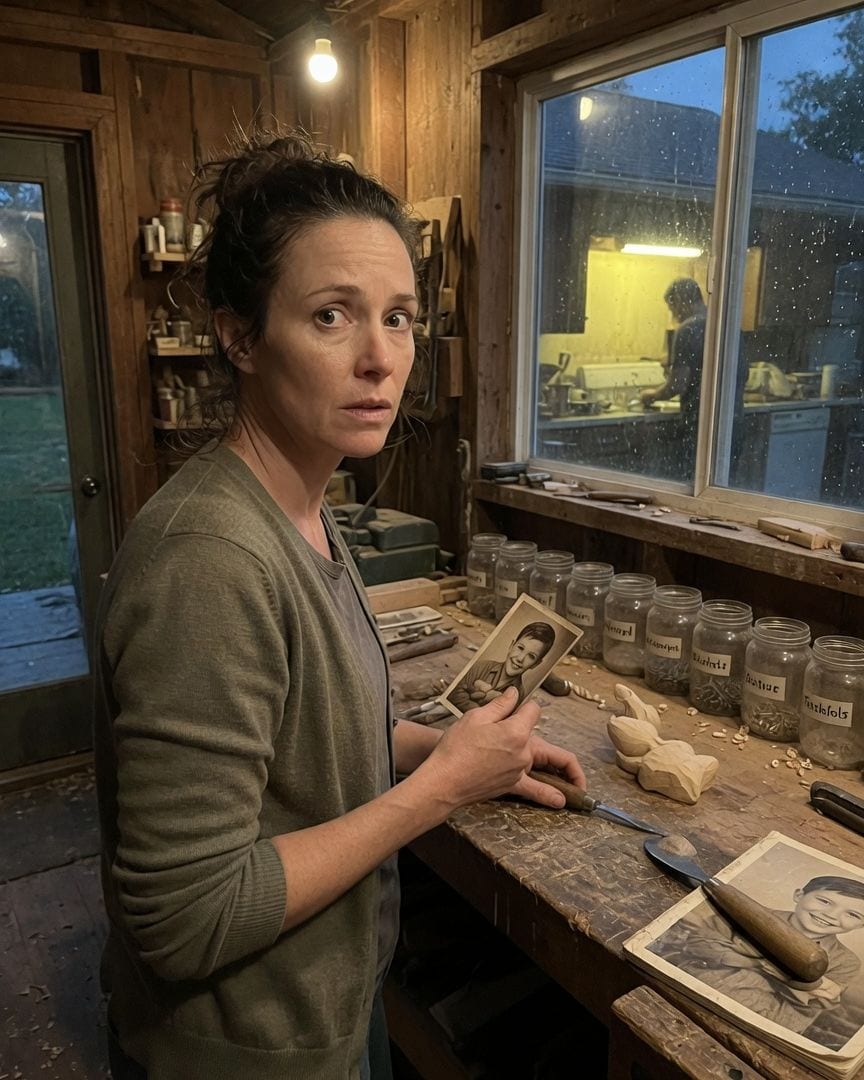
Gramps's workshop nails are sorted smallest-to-biggest now. He rearranged them himself, swears the old way never made sense.
My Gramps vanished for a week last autumn, returning quiet and changed, with no memory of where he’d been. I tried to dismiss his new habits, like reordering his nails or black coffee, as trauma. But an old photo revealed his current grip on 'Old Faithful' — his favorite carving tool — was identical to a man from fifty years ago, a grip my Gramps had never used before.
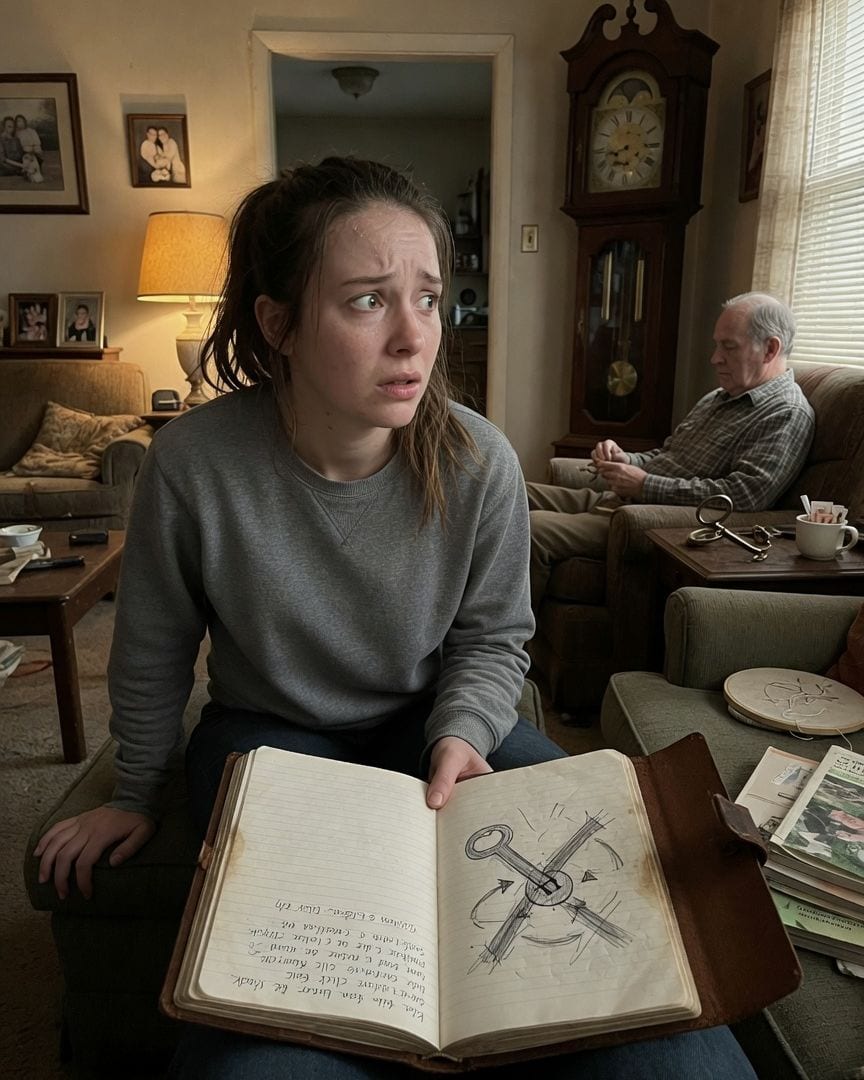
My father winds the hall clock backward, shattering the mainspring. He says he's done it wrong for years.
My father, Roy, returned after six bewildering days missing, a little quieter but otherwise himself. Then came the Sunday ritual: winding the old hall clock. But this time, his hand moved counter-clockwise, shattering the mechanism, and he simply smiled, saying he'd done it wrong for years.
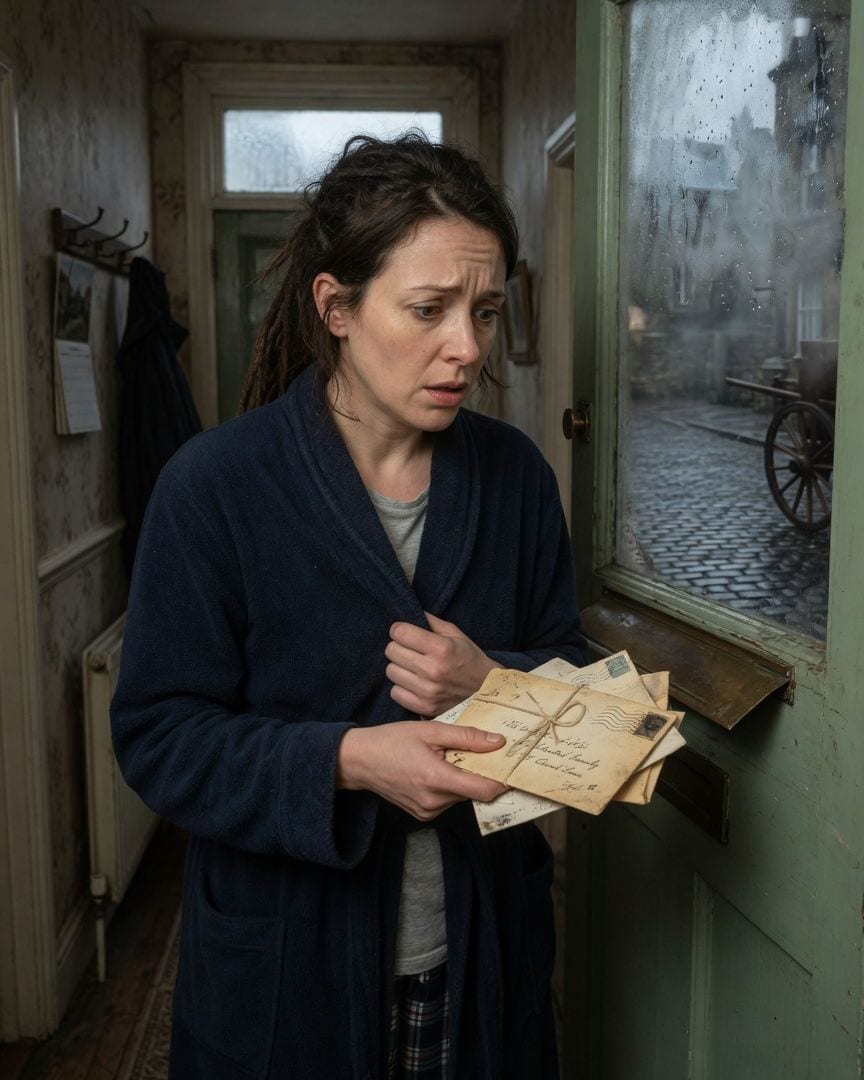
Seventy years ago, a hidden journal recorded my door opening to the wrong street and receiving Lockwood post.
I'd only recently moved into my inherited house, a quiet place on the edge of town. One grey morning, a distinct clatter from the front door's post flap caught my attention. Reaching down, I expected my gravel path, but instead, the flap showed a dark, cobbled street that wasn't mine. A bundle of warm, old letters, addressed to 'The Lockwood Family,' slid through, before the vision flickered and was gone.
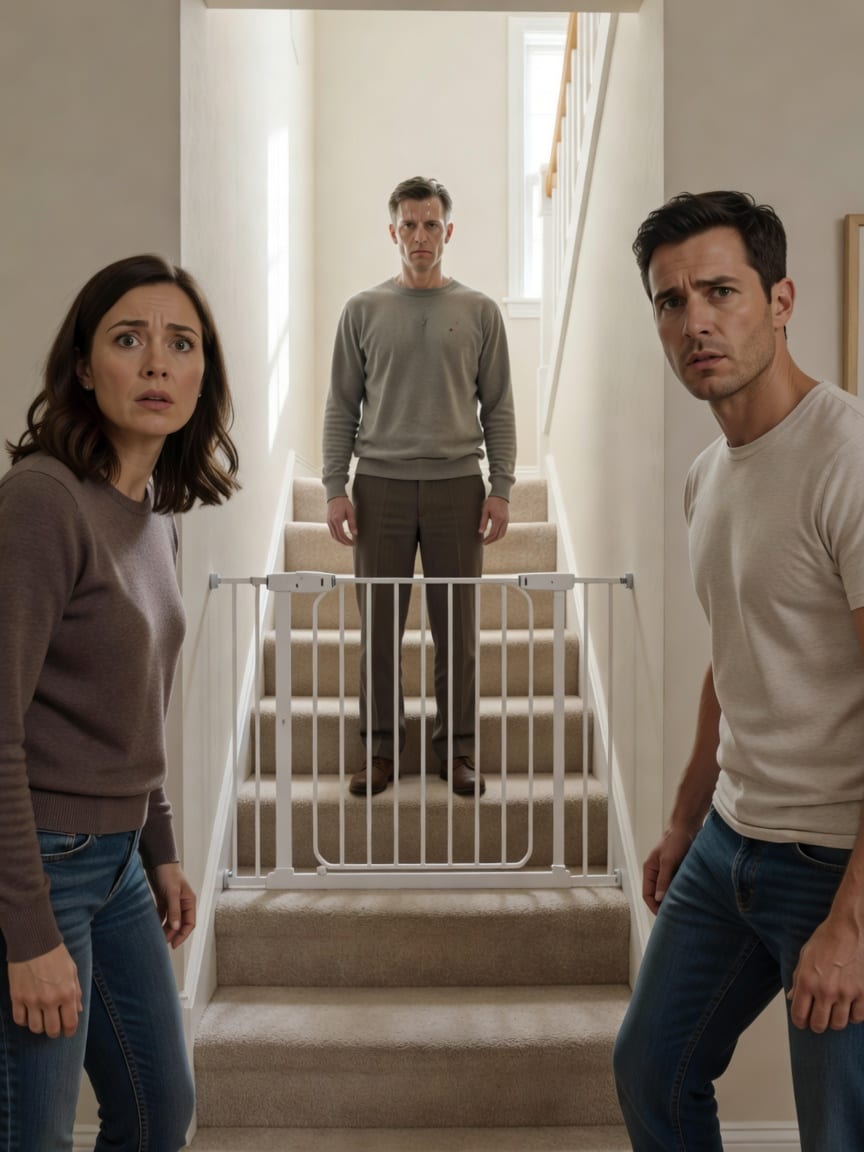
My stair gate latches itself every night. Pressure-fitted tight across my empty stairs, no children live here and no fixings exist on the wall.
I live alone in my inherited house, so the toddler gate at the top of my stairs should not be there. Each morning, I find it perfectly latched and sturdy, despite having hidden it away in the shed the day before. This isn't a quirk; it's a routine, and it isn't mine.
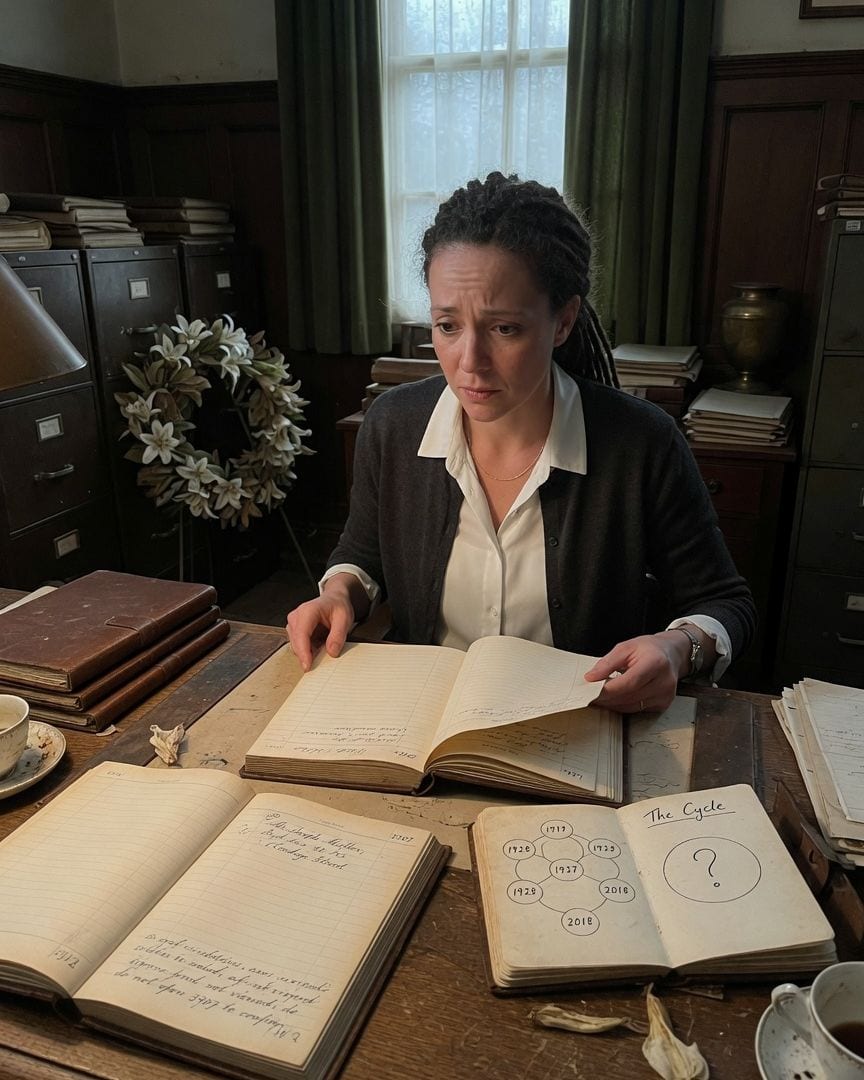
Our funeral ledger records my family name, same age, buried on Cordage Street every nine years since 1919. My great-grandfather's note: 'do not open 3907.'
Reviewing my great-grandfather Joseph’s old ledgers at the Ingram Funeral Firm, I stumbled upon a recurring anomaly. The same burial order for a Joseph Muller, age 45, residing at our family home, 14 Cordage Street, appeared every nine years across decades of records. Each entry, identical, carried the unsettling instruction: 'coffin sealed, not viewed.'
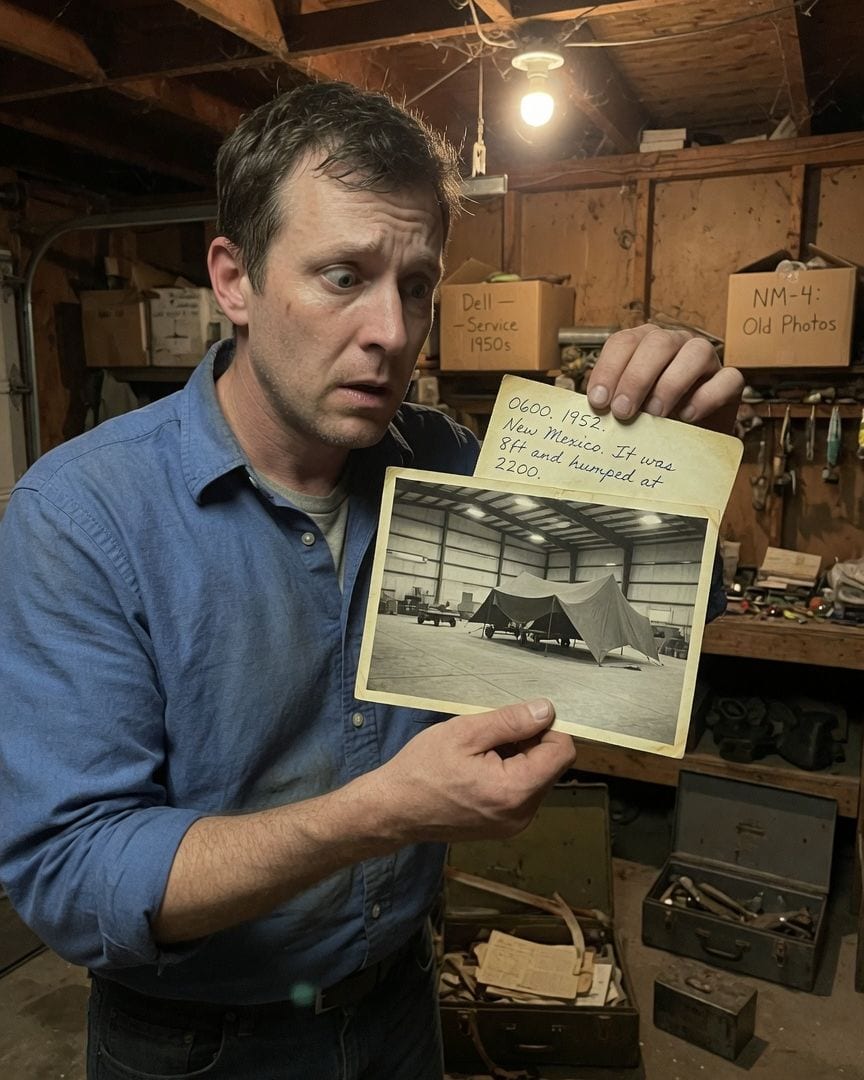
An archivist clears his father's garage, finding a Cold War photo. The object under the tarp has impossible corners, defying his father's own notes.
Franklin Fontaine, an archivist, slowly tackled the mountain of his recently deceased father's life in the dusty garage. Among old photos, he found a grainy image from 1952: a military hangar, and an object under a tarp. The tarp was pulled taut, its lines defining stark, impossible corners that rose far too tall for the cart beneath. His father's own note on the back described the object as '8ft and humped,' a description that stubbornly defied the photograph's impossible height and angles. The image was a physical impossibility, frozen in time, leaving Franklin profoundly disturbed.