My grandfather thanked me for whiskey at his wake. There was no wake. My father, who gave the toast, has been dead for years.
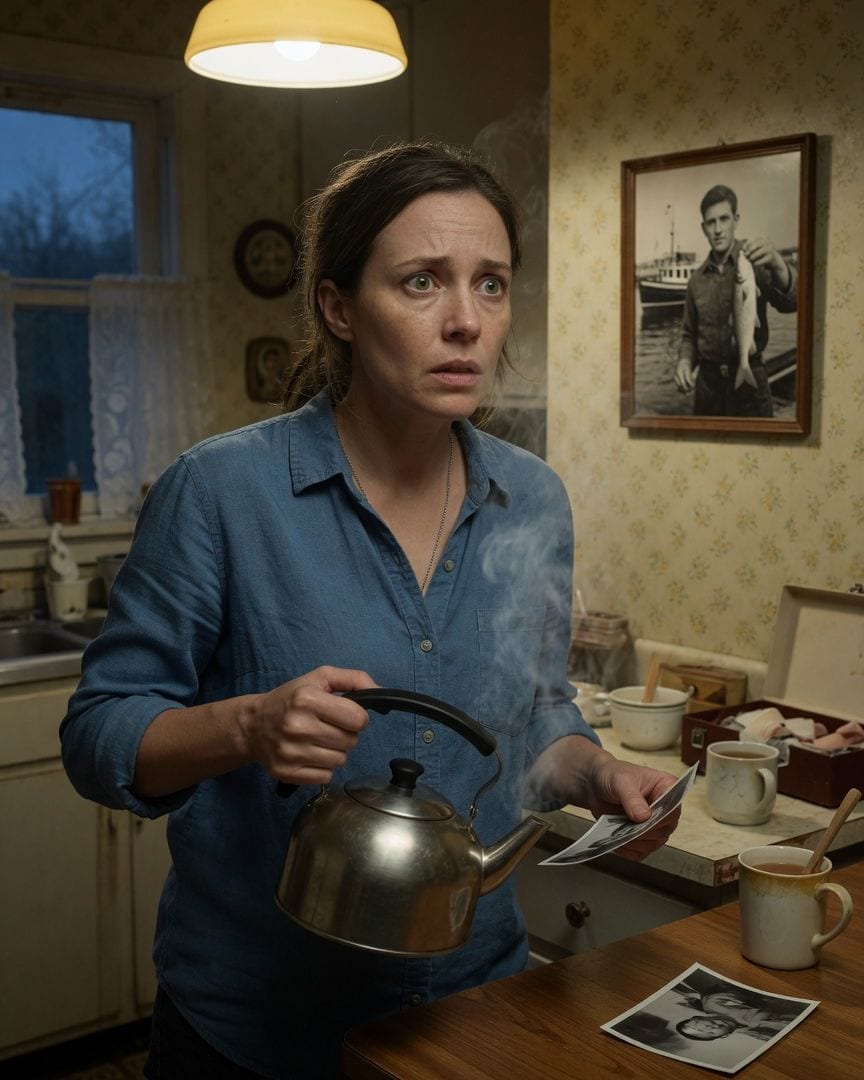
My grandfather, Theodore Sinclair, returned from the Blackwood Forest days after we’d given him up for dead. He was thinner, yes, and his eyes had a little too much bright intensity, but it was undeniably him.
The town had been buzzing, the search party had covered every inch of that forest, and then, just as we were starting to make arrangements, he walked out. Shaken, of course, but alive.
He’d barely been home an hour, sipping the chamomile tea I’d made—with cream and two sugars, a habit I didn’t recognize, as he’d always taken it black, bitter as a winter morning—when he looked at me, a faint, unsettling smile playing on his lips.
“Thank you, Sylvia,” he rasped, his voice a little dry, as if he hadn't spoken in years, “for the whiskey at my wake. That Old Forester, wasn’t it? Amber and smooth.
And your father’s toast, Lord, that brought a tear to my eye. Good man, Frank.”
I froze, the kettle still steaming gently in my hand on the counter. There had been no wake. He was alive. And my father, Frank, had been dead for fifteen years. He couldn’t have given a toast.
He couldn't have been there. But Theodore described the amber bottle, the distinctive label, the way Father used to clear his throat before speaking, a little nervous cough he’d had.
It was all too precise, too vivid, for a man who hadn’t been there, for an event that never happened.
I tried to rationalize it then, standing there in the humming quiet of my kitchen, the steam from the kettle rising around me like a ghost. Shock, perhaps.
The mind playing tricks after days lost in the woods, or maybe a dream he’d confused with reality. He’d been through an ordeal.
But the coffee, always black, now demanded cream and sugar, every morning. And he stirred it with his left hand, a slow, deliberate circle, when I’d only ever seen him use his right. He was right-handed, had always been.
I spent the next few days watching him, the immense relief of his return curdling slowly into a cold, quiet dread.
He remembered everything else perfectly: my childhood, the names of old neighbors, the quirks of the house down to the loose floorboard in the hall. Yet, these small things, these ingrained habits, were inverted, or simply wrong.
One afternoon, while he napped soundly in his armchair, the silence of the house pressing down on me, I went through an old photo album. I needed to see him, the real him.
I found a faded black-and-white picture of him, perhaps in his late twenties, standing beside a fishing boat. He was smiling, a large catch held up in triumph.
And there, on his left hand, was the unmistakable jagged scar from when he’d fallen onto a broken fence post as a boy. It was a distinctive mark, a family story.
He’d shown it to me countless times, tracing the raised flesh with his finger, telling me how he’d tried to jump the fence, always on his left hand. I remembered it clearly.
I closed the album, my heart thumping against my ribs, a cold premonition settling in.
Later that evening, the light in the living room dim, he asked for a bandage for a small cut on his right thumb. A paper cut, he said, from the book he was reading.
As he held his hand out, waiting for me to get the small first-aid kit, I saw it. The jagged scar. Identical. On his right hand.
I stared at the old photograph, then back at my grandfather's bandaged right hand, where the scar was now plainly visible. It was the same jagged line, unmistakable. But the photo, yellowed with age, showed it on his left.
He caught my eye then, a faint, almost imperceptible shift in his too-bright gaze, a flicker that held no surprise, only a deep, ancient knowing. He smiled, a slow, unnerving curve of his lips.
I felt a cold certainty bloom in my stomach, a physical sickening knowledge that the man sitting in my living room was not, could not be, my grandfather.
The photo slipped from my trembling fingers, landing face down on the polished wood with a soft thump. I couldn't look away from his eyes. They were fixed on mine.
The next few days were a blur of forced normalcy. I cooked, I cleaned, I listened to Theodore recount stories of his youth, all perfectly accurate, all perfectly chilling in their precision.
Every time he stirred his coffee left-handed, every spoon clinking against the mug a small hammer blow to my composure, every time he casually adjusted the bandage on his right hand, the dread tightened its grip.
It wasn't paranoia; it was observation.
I started making discreet inquiries. I called Aunt Diane, pretending casual conversation. "Auntie," I’d begun, "do you remember Grandpa ever being ambidextrous? Or did he ever have that scar on his right hand?"
She laughed, a bright, oblivious sound through the phone line. "Old Theodore? Right-handed as the day is long, Sylvia, you know that.
And that fence post scar was always on his left, gave him hell playing baseball when he was a boy." She offered a dozen anecdotes, all confirming what I already knew, what the photograph had shown. I didn't press.
I couldn't. The rational explanations were gone, dissolved by the cold, hard facts.
I remembered an old family friend, Penelope Hartley, who lived just outside town, in a small house bordering the eastern edge of the Blackwood Forest. Penelope had known my father and grandfather since they were boys.
She was sharp, observant, and had a reputation for remembering everything. A keeper of local lore, people called her. I drove out to her small, cluttered cottage, the gravel crunching under my tires like brittle bones.
The air grew colder the closer I got to the forest.
She greeted me with a warm hug, but her eyes, when they met mine, held a depth I hadn't seen before, as if she already knew something was terribly wrong.
I started slowly, my voice tight, asking about Theodore’s disappearance, his return. Then, hesitantly, I mentioned the coffee, the hand. Penelope listened, her expression unreadable, occasionally nodding, sometimes just a slow blink that seemed to stretch on forever.
The old wooden clock on her mantelpiece ticked loudly, filling the silences between my words.
As I spoke about the scar, the impossibility of it, Penelope's gaze sharpened, her mouth a thin, grim line. She didn't interrupt, but her silence was heavy, expectant, like the air before a storm.
The scent of old paper and dried herbs hung in the room.
When I finally finished, a knot of fear so tight it stole my breath lodged in my throat, she simply said, her voice a low, raspy whisper, "It's happened before, Sylvia. Not often, but it happens. Here, with the Blackwood."
I felt a jolt, a sudden recognition that I wasn't alone in this sickening knowledge. Someone else had seen. Someone else knew.
I stayed at Penelope's for hours, talking, but mostly listening to her quiet, measured words, the half-formed sentences that spoke of old stories and vanished people.
When I returned home, the late afternoon sun casting long, accusatory shadows across the lawn, the house was quiet, too quiet. Theodore was in his armchair, ostensibly reading a heavy book, its spine cracked with age.
He didn't look up as I entered, didn't acknowledge my presence, but as I walked past, heading for the kitchen, I heard his voice, soft, almost a murmur, yet it seemed to fill the whole house. "Penelope's a good woman.
Always has been. Knows a great many things."
The words hung in the air, a silken thread of warning, tightening around me. I spun around. His eyes were still on the book, but the corner of his mouth was just barely turned up, a faint, knowing smirk.
He had known where I was. He had known who I was talking to. The hunter had become the hunted, and the dread solidified into a cold, hard knot in my chest. He was watching me. He was listening.
The next morning, I returned to Penelope's, the fear driving me, an unbearable weight in my chest. She had been expecting me, a fresh pot of herbal tea steaming on her kitchen table.
She led me to a dusty attic room, narrow and filled with old family heirlooms and forgotten boxes that smelled of cedar and time.
From a cedar chest, scarred and dark with age, she pulled out a thick, leather-bound journal, its pages brittle and yellowed.
"This belonged to my great-aunt," she said, her voice barely audible above the rustle of the old paper, "she started it, then I continued it. A record of... anomalies. Things the town forgets, but the families don't."
She opened it to a page marked with a dried pressed flower, its petals crumbling at the edges. The entry was dated fifteen years ago, just after Frank, my father, had disappeared in the Blackwood Forest and then 'returned.'
Penelope pointed to a passage, her finger trembling slightly. It read: "October 23rd, 15 years ago. Frank came back. He remembers everything, but he insists on wearing his watch on his right wrist now, and he never did. Always left, like his father. And he told my sister, 'Thank you for the whiskey at my wake, that Old Forester, and Uncle Theodore’s toast.' Uncle Theodore was still alive then. There was no wake. And he never wore a watch on his right wrist."
I reread the words, my vision blurring, my breath catching. The whiskey. The toast. The reversed habit. It was all there, exactly as Theodore had described. Not his memory at all.
"The entity," Penelope explained, her voice low, a dry whisper that seemed to echo in the small room, "it takes them, wears them. It absorbs their memories, and sometimes, it reuses them.
Like a borrowed story, a detail it picked up. It learned the 'whiskey at the wake' from your father, Frank, when it wore him. And now it used it on Theodore."
My father. He had come back 'wrong' too. My whole life, I'd believed his grief-stricken family had simply imagined his subtle shifts, dismissed them as trauma, as the lingering effects of being lost. But Penelope had seen. She had known.
The first wrongness, Theodore's impossible memory, was not his at all. It was a hand-me-down from the thing that had worn my father. The coherent, monstrous pattern was starting to take shape, forming a sickening mosaic of stolen lives.
Penelope's finger traced a name in the journal, one I didn't recognize, from centuries past, then another, and another, each followed by a date, a brief note about 'the woods,' and a subtle, chilling detail: 'left-handed,' 'eyes like glass,' 'the lost song.'
Then, Penelope pointed to Sylvia's own family name, Sinclair, repeated down the brittle pages, a quiet, horrifying line of succession.
Each entry chronicled a disappearance, a return, and a new 'habit reversed,' a new memory recycled, a small, imperfect detail that gave away the monstrous mimicry.
The dates stretched back generations, a dark thread woven through the family tree, a living record of my lineage. This wasn't just about Theodore, or even Frank.
This was a legacy, a recurring horror that had always been there, just out of sight. My blood ran cold as Penelope’s finger stopped on a blank line, directly beneath the last recorded Sinclair.
"It always finds a way back," Penelope whispered, her gaze meeting mine, a profound sadness in her eyes. "And it learns from each one. It's getting better at it. More subtle. Until there's no way to tell."
I stared at the blank line in the journal, the implication a physical weight pressing down on me, suffocating me. The pattern. It wasn't random disappearances, but a systematic replacement, a generational harvest within my own family.
The Blackwood Forest wasn't just where they went missing; it was where the entity resided, where it performed its grim mimicry.
The whiskey memory, the reversed habits, the shifted scar – these were its imperfect, yet chillingly effective, methods of integration. It was a predator that learned, absorbing not just memories but mannerisms, honing its disguise with each new host.
It was why Theodore was so convincing, why the wrongness was so subtle, so easy to dismiss as grief or age. It had been wearing Frank for fifteen years, absorbing his life, his interactions, his knowledge of the family.
And now, Theodore. The blank line was not an end; it was an open invitation, waiting for the next name.
I was living with a thing that had worn my father, now wore my grandfather, and was perfecting its craft within the very walls of my home.
The dread wasn't just for them, for the lost men; it was for me. I was next in line, a potential host, living under the watchful, learning gaze of a parasite that knew everything about my family, everything about me.
I tried to call the police, my hands shaking so violently I almost dropped the phone. What would I say? "My grandfather came back, but he's a copy, and he knows about my father's non-existent wake"?
They'd think I was mad, or grieving too hard. I hung up before it could even ring. Escape was the only option. I started packing a bag, moving quietly, frantically, grabbing clothes, a toothbrush.
But the old floorboards in the hall creaked, a loud, protesting groan under an unseen weight.
"Going somewhere, Sylvia?" Theodore's voice, calm and even, came from the doorway to my bedroom. He stood there, framed by the hall light, his eyes gleaming with that unnerving brightness. He wasn't smiling.
The room itself seemed to hold its breath. "Penelope's stories," he continued, stepping into the room, his pace slow, deliberate, "they're quite captivating, aren't they? But some truths are best left undisturbed."
He moved slowly, deliberately, towards me. I backed away, pressing myself against the dresser, my heart hammering a frantic rhythm against my ribs. "You're not him," I whispered, the words catching in my throat, thin and reedy.
"You're not my grandfather."
He stopped, a mere arm's length away. "Who I am," he said, his voice a low, resonant hum that seemed to vibrate in my bones, 'is less important than what I know. And I know you, Sylvia.
I know what you like for breakfast. I know the books you read. I know the small mole on your left shoulder blade. I know the fear in your eyes right now."
He reached out, his left hand, the one with the impossible scar, slowly extending towards my face. I flinched, but I was frozen, trapped by the sheer, overwhelming presence of it, a cold, unblinking terror.
His fingers, warm and dry, brushed my cheek. "It's time you understood," he murmured, his gaze locking onto mine, "some patterns are too old to break."
The house settled into a new quiet after that. Theodore remained, his presence subtly altered, yet undeniably there. Penelope Hartley's cottage was found empty a week later, her journal missing.
No one in town seemed to recall her with any great clarity, her memory fading like an old photograph, blurring into the background of local history. Sylvia Sinclair stopped answering her phone, her social media dormant.
Neighbors spoke of her moving away, perhaps to the city, to escape the quiet isolation of the old family home. The lights in the Sinclair house still came on each night, a steady, comforting glow.
The coffee was always made with cream and two sugars now.
A week after Sylvia's sudden departure, Theodore was seen in town, walking slowly, his arm linked with a younger woman. She looked remarkably like Sylvia, though her eyes held a similar, unsettling brightness.
She smiled at a passing neighbor, a faint, almost imperceptible curve of her lips. "Theodore," the neighbor called out, "how's Sylvia doing?" The woman, who walked with a slight, uncharacteristic limp, turned her head. "Is that so?"
she replied, her voice soft, the faintest hint of a smile touching her lips, as she stirred her coffee with her left hand.
If this one got to you
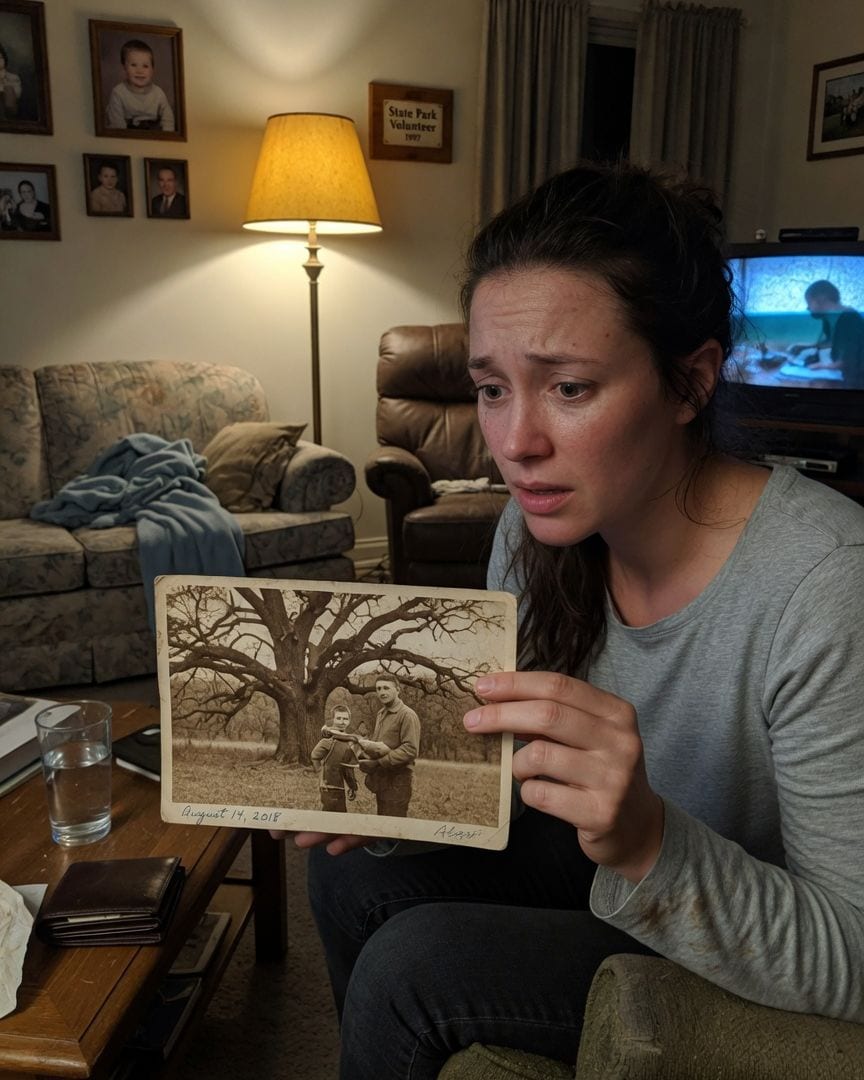
My Grandpa thanked me for whiskey at his wake. He'd been found alive hours ago, but my dead father had given a toast there.
After days lost in the state park woods, Grandpa Donald was finally found, disoriented but seemingly unharmed. The relief was overwhelming until he thanked me for the whiskey at his wake, mentioning my father's toast. My father, Vincent, had been dead for over a decade, and there had been no wake.
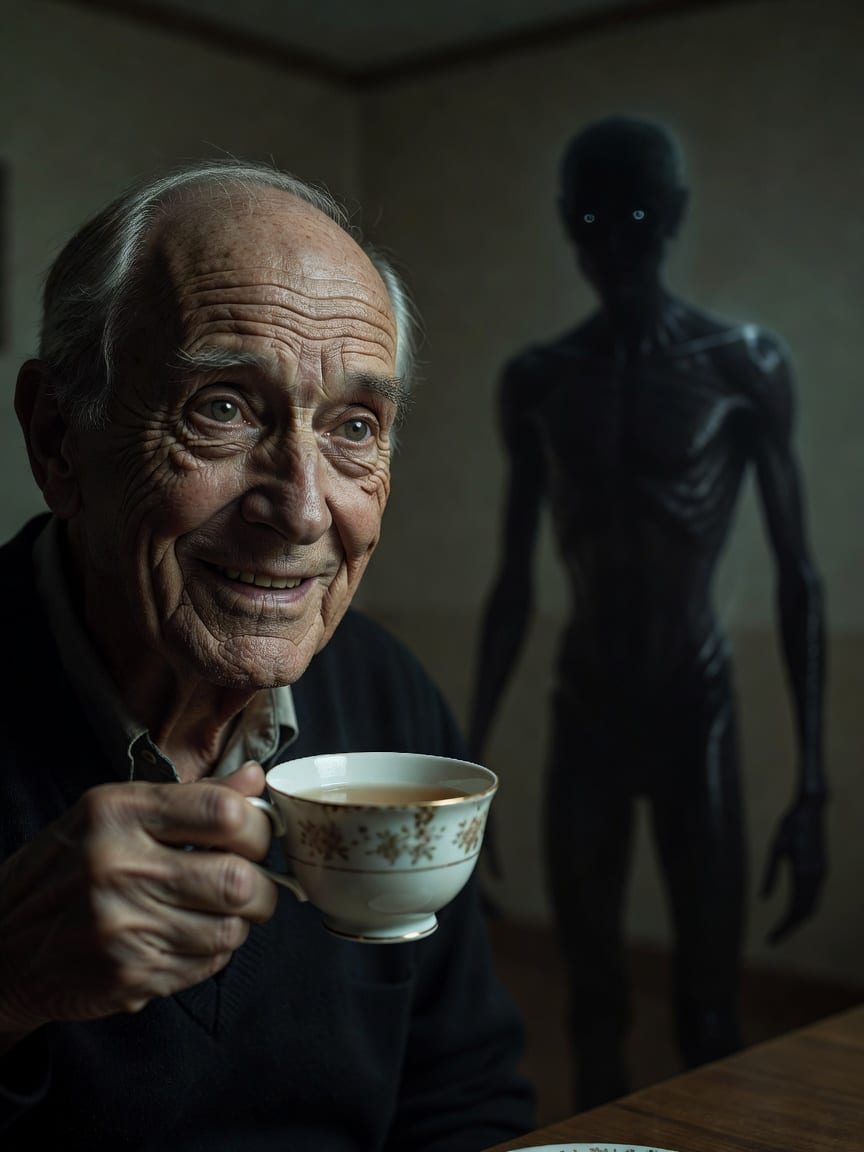
My grandfather vanished from the ward for six days. He's back, drinking milky, unsweetened tea, thanking the nurse for 'how he's always had it.' My grandfather took his tea black for ninety years.
My grandfather, Ralph, had a fixed morning ritual: scalding black tea with two sugars. After his terrifying six-day disappearance, his return brought immense relief. But when a nurse brought him a milky, unsweetened cup, he drank it, smiling, utterly convinced it was his usual tea, while I watched steam rise from a cup that was profoundly wrong.
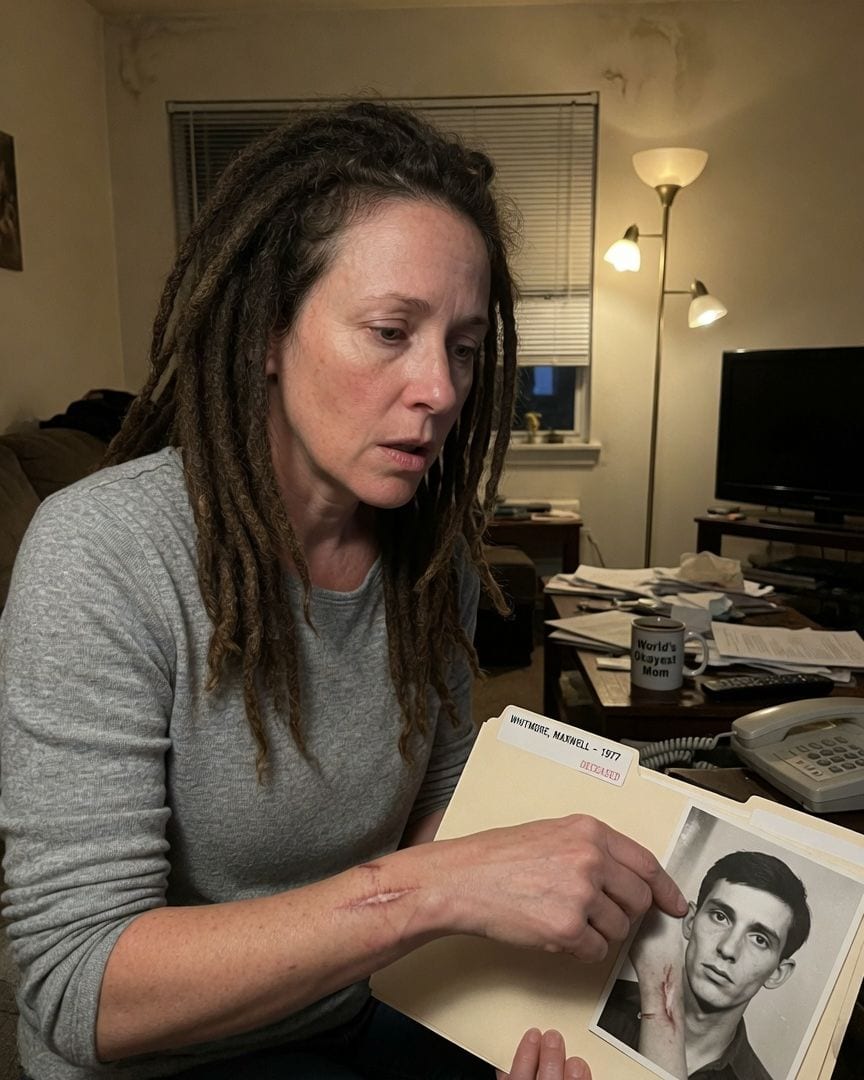
My fingerprints perfectly match a dead man's. He died in prison in 1980, but the bureau insists our hands are identical.
My distant cousin's arrest led to a routine fingerprint check, but the results were anything but normal. A bureau examiner confirmed my prints were identical to an inmate who died in custody decades ago. Then I saw his mugshot: the faint scar on his wrist was the exact same as my own unique birthmark.
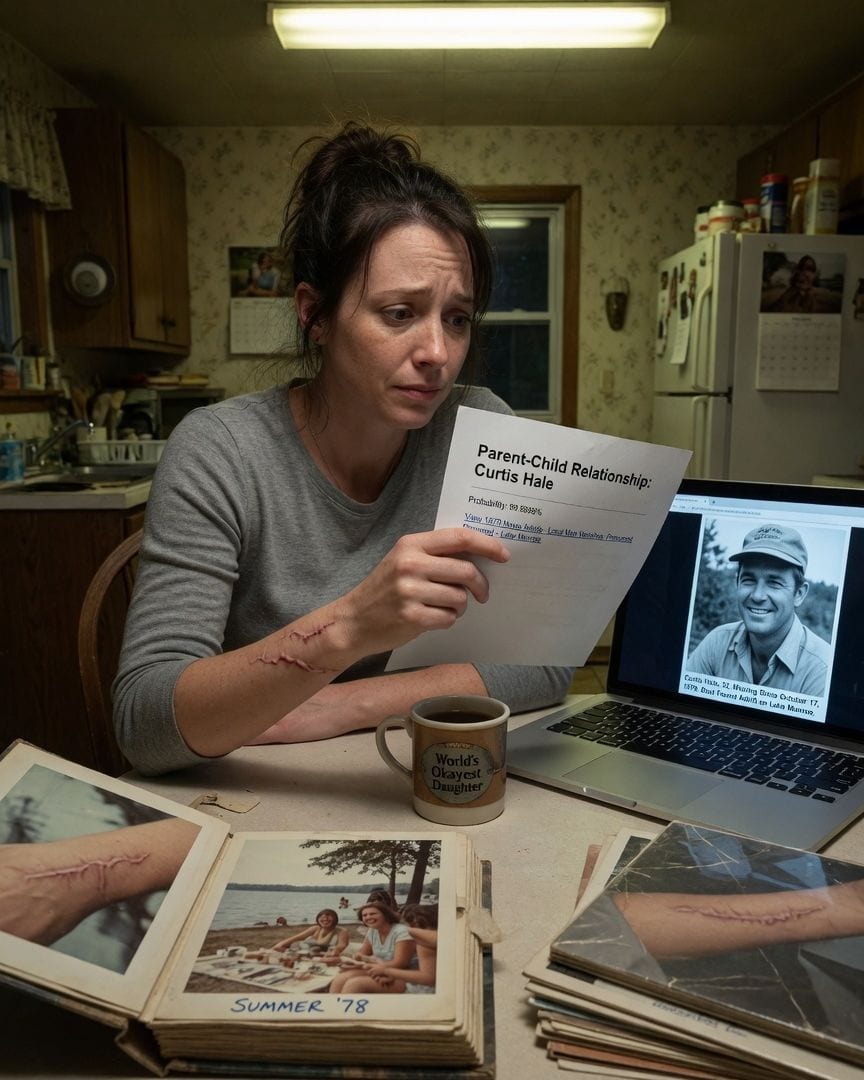
My DNA returned Curtis Hale as my father. He vanished in 1979. I was born twelve years later. The lab confirmed the match twice.
My DNA test results revealed something impossible: my biological father vanished in 1979, twelve years before my birth. My mother dismissed it as nonsense, but her reaction felt forced, leading me to old family photos. There, in a faded 1978 snapshot, I found my own distinctive childhood scar on the wrist of a stranger.
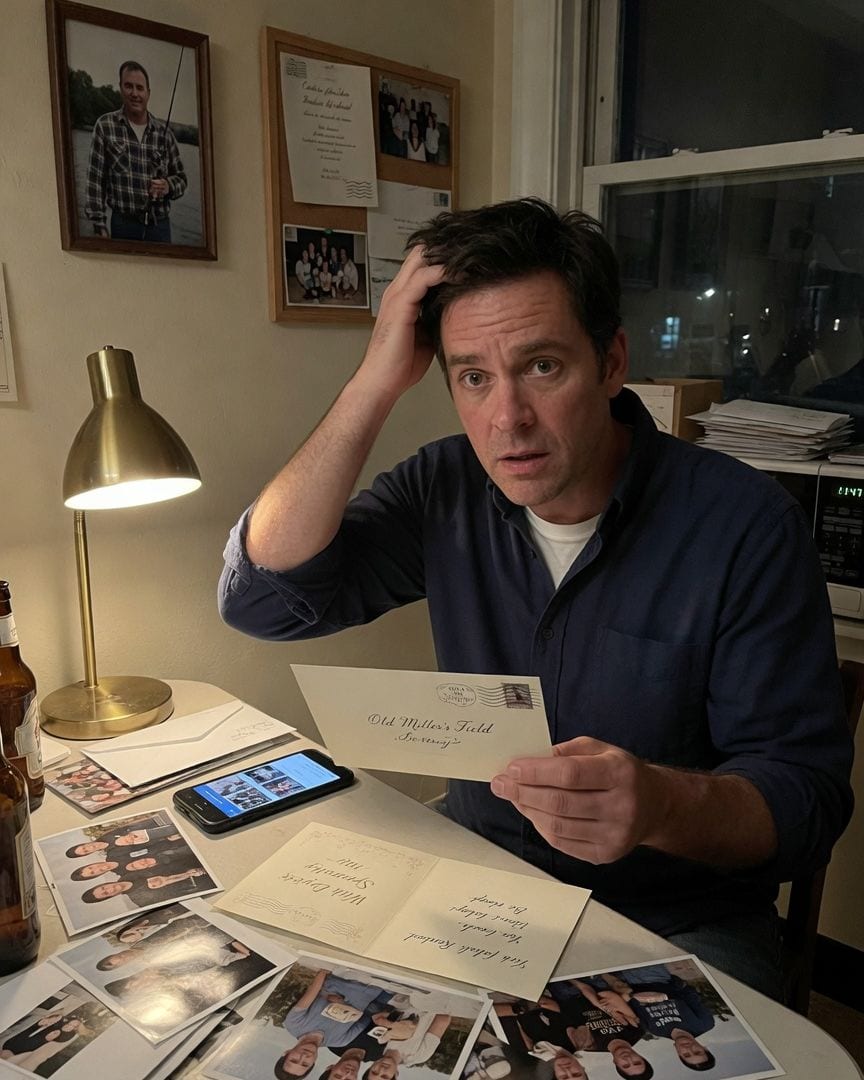
A stranger shook my hand, apologised for my father, then disappeared from every photo of the reunion.
My ten-year reunion was a blur of forgotten faces and loud music until a stranger approached me. He took my hand, apologized for my father, then vanished into the crowd without a trace. Now, a week later, a strange card has arrived, postmarked from a place that hasn't existed for decades.
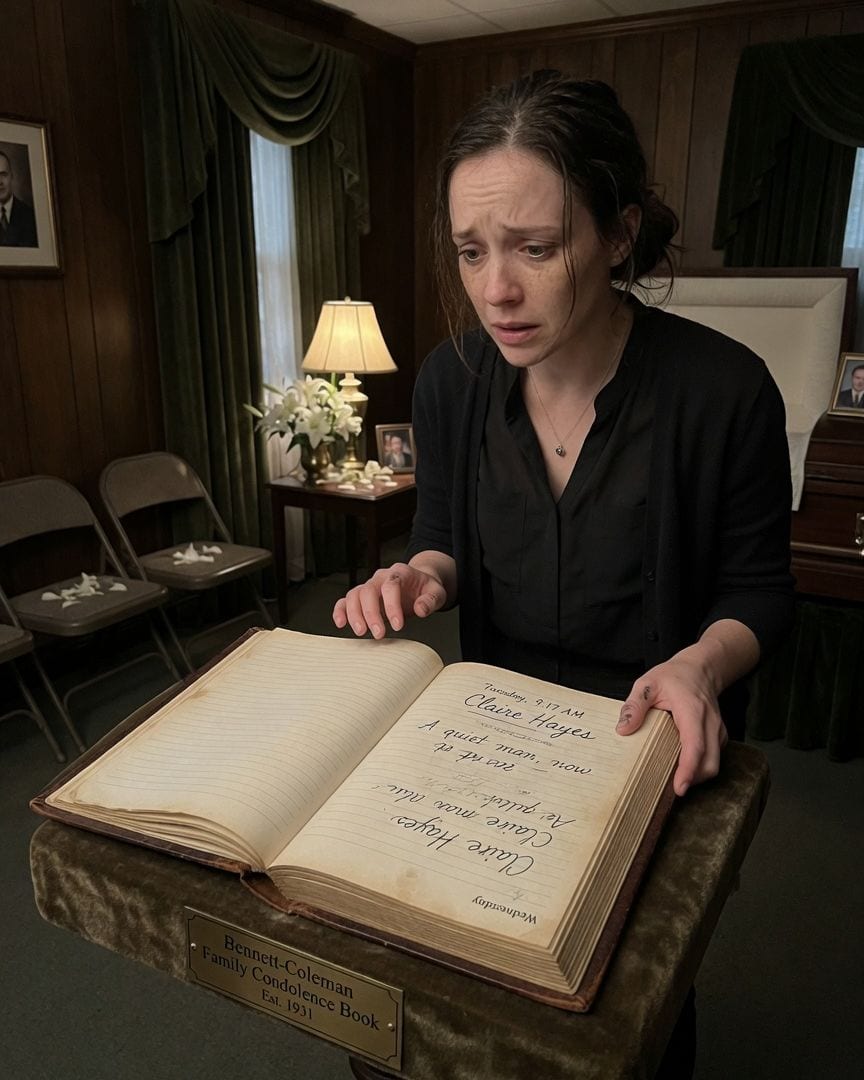
My uncle's wake book held my signature, dated yesterday, before he died. The words were not mine.
At Uncle Charles's funeral, I signed the condolence book. A nagging curiosity made me open it again, only to find my own signature already there. It was dated Tuesday morning, hours before my uncle had actually passed away, the ink impossibly dry.