My Grandpa thanked me for whiskey at his wake. He'd been found alive hours ago, but my dead father had given a toast there.
The relief had been overwhelming when the search party finally found Grandpa Donald alive, days after we’d begun to fear the worst.
He’d wandered into the state park woods on a Tuesday afternoon, a habit he’d kept since I was a little girl, but he hadn’t come back by evening. After two days, the local sheriff called in volunteers.
The woods had swallowed him whole, or so we thought. Then, on Sunday morning, a hiker stumbled upon him, disoriented but otherwise seemingly unharmed, near the northern trailhead.
He was thinner, a bit dazed, but here he was, sitting on our living room couch, wrapped in a borrowed blanket. My father, Vincent, had been gone for years, and the grief for Donald had been fresh and raw.
I brought him a glass of water, and he took it with a hand that trembled only slightly.
“Elena,” he said, his voice raspy, but with a familiar warmth that almost brought tears to my eyes. “Thank you for that whiskey at my wake. That old bottle of Jameson, just like your father used to keep.
Vincent gave a fine toast.”
My breath hitched. The glass of water almost slipped from my hand. There had been no wake. How could there have been? He’d been found alive only hours ago. And my father, Vincent, had been dead for over a decade.
I tried to tell myself it was shock, a senior moment, a common disorientation after days lost in the woods.
But the detail… the specific label of the whiskey, the idea of Vincent giving a toast… it was too vivid, too real, for something that simply never happened.
He just smiled then, a quiet, knowing smile that didn't quite reach his eyes, and took another sip of water.
Over the next few days, I tried to brush it off as post-trauma confusion. Grandpa Donald seemed to recover quickly, too quickly. The doctors released him, saying he was a marvel for his age. But small things were off.
He’d always been a meticulous man, a creature of habit, every morning starting his coffee with a splash of cream, then sugar. Now, I watched him spoon sugar into his mug first, then add the cream, every single time.
His workshop, usually a model of organized chaos, where tools were grouped by function and wear, was now sterile, everything alphabetized by manufacturer, gleaming in its assigned spot.
Each change was minor, easily explained away as a shift in routine after a traumatic event, but they accumulated, a growing pile of tiny, dissonant notes that struck me as profoundly wrong.
It was like watching a familiar song played on a slightly out-of-tune piano.
One evening, I watched him absentmindedly flicking through his old leather wallet. He sat across from me in his recliner, the television murmuring in the background, a show he’d never watched before now holding his rapt attention.
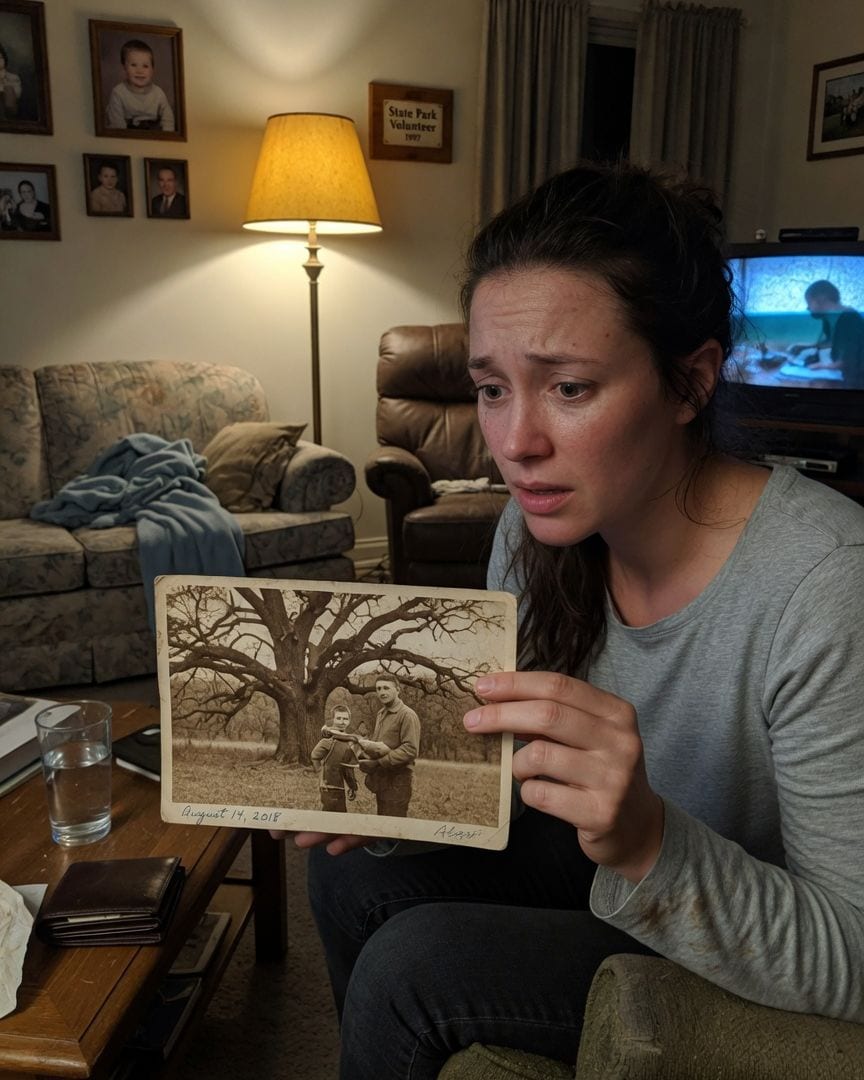
A corner of something faded caught my eye, tucked behind his driver's license. I’d never seen it before. It was an old, sepia-toned photograph, slightly bent at the edges.
It showed a younger Donald, perhaps in his late forties, standing by a colossal, gnarled oak tree, its branches twisted like arthritic fingers, deep in a section of the state park woods I vaguely recognized as a remote, seldom-visited area, miles from any trail.
In his hand, he held a small, unidentifiable wooden carving. The back of the photo was dated in faded ink: 'August 14, 2018.' My father, Vincent, died in 2010.
I felt a cold knot tighten in my stomach, a familiar dread returning with fresh intensity. “Grandpa,” I asked, trying to keep my voice light, “who took this picture?”
Donald looked up, his eyes clear and calm, utterly devoid of surprise or confusion at the sudden question. He took the photo from me, his thumb tracing the faded date on the back, almost caressing it.
“Oh, that was Vincent,” he said, a soft, almost wistful smile playing on his lips, as if recalling a pleasant afternoon. “Your father loved to hike out to the old Threshold Tree with me.
Said it was the only place he could truly think. He took this one right after I finished that little bird carving.” He gestured to the small, dark object in the photo, the wooden form blurred by time.
“Said I finally got the wing span right.” The air in the room seemed to thicken, pressing in on me, suddenly heavy and cold. Vincent had been dead for eight years by August 2018.
Donald’s gaze was steady, certain, his smile unwavering. He gently set the photo back down on the coffee table, his eyes lingering on me, a quiet, unreadable current running beneath their surface.
That night, sleep was impossible. The ‘Threshold Tree.’ The date on the photograph. The memory of my dead father, alive and hiking. My mind spun, trying to force the pieces together, but they remained stubbornly disjointed.
I pulled out my laptop, my fingers trembling slightly as I typed 'Threshold Tree State Park disappearances.' It was a long shot, born of a desperate need to find any explanation.
Local news archives, forums, even dusty old university papers on regional folklore began to pop up.
I found a few scattered articles, dating back decades, all mentioning unexplained disappearances in the 'northern sector' of the state park – the same remote area I recognized from the photograph.
A hunter in '97, a hiker in '72, a young couple in '53.
Each story ended with the missing person eventually 'stumbling out of the woods' days or weeks later, often with no memory of what had happened, but always, subtly, 'changed.'
'A quietness about them,' one article noted, describing a returned logger from the 1940s. 'A strange new habit,' another observed, detailing a woman who suddenly began speaking in rhymes after her return in the 60s.
It was vague, frustratingly so, lacking concrete answers, but the pattern was there, a faint, unsettling echo of Donald’s return.
I even found an old, hand-drawn map of the park from the 1940s, sold at a local antique shop’s digital storefront, that explicitly marked a 'Threshold Tree' near a long-forgotten logging trail in that exact northern sector.
Meanwhile, Donald had developed a new routine.
Every evening, just before dusk, he would sit by the living room window, staring out at the distant, dark line of the woods, his face utterly blank, a stillness about him that was profoundly unsettling.
He wasn't watching anything in particular; he was simply... observing, a silent sentinel.
The more I dug, the more I felt Donald’s unnerving calm shift from passive observation to something more pointed. The house, once a comfort, began to feel like a cage under his gaze.
I’d be researching old newspaper clippings on my tablet, hunched over the glowing screen, and I’d catch his reflection in the dark glass, standing silently in the doorway of the living room, watching me.
He never commented, never asked what I was doing, but his presence was a cold weight that settled on my shoulders, making the hairs on my arms prickle. It was the quietest surveillance I’d ever experienced.
One afternoon, desperate for more clues, I was in the attic, pulling out old photo albums, trying to find any other pictures of the Threshold Tree, any context for Donald’s impossible memory.
Dust motes danced in the single shaft of light from the small, grimy window, illuminated like tiny spirits. I heard the floorboards creak on the stairs, a slow, deliberate ascent.
My heart hammered against my ribs, suddenly loud in the musty silence. Donald. I knew it. He reached the top, his shadow stretching long and thin into the attic’s deepest corners, distorting against the packed boxes and draped furniture.
I quickly shoved the album I was holding under a stack of old blankets, feigning a frantic search for winter clothes. He just stood there, his hands clasped behind his back, that faint, unreadable smile on his lips.
“Looking for something, Elena?” he asked, his voice soft, almost melodic, cutting through the silence. “It’s getting cold. Thought you might need that old coat.”
He pointed to a rack of forgotten garments directly opposite where I was kneeling, a dusty tweed jacket hanging forlornly. I stammered out a “yes,” my voice thin and reedy.
He simply nodded, then turned and descended the stairs, the slow, deliberate creaks fading away, leaving me alone in the dusty silence, my hands shaking, knowing he hadn't come up for a coat.
I knew I couldn't keep this to myself. My great-aunt, Christine Vaughn, Donald’s sister, was the only one left who had known him for decades, who might remember the nuances of his past, the stories, the precise timelines.
I drove to her quiet, meticulously kept house on the edge of town, the newspaper clippings and the old park map clutched tightly in my bag, feeling like I was carrying forbidden knowledge.
She greeted me with her usual reserved warmth, the scent of lavender and old books filling her study as she offered me tea.
I laid out the evidence, piece by painful piece: Donald's wake memory, the reversed habits, the impossible photograph, the dates that contradicted reality, the articles about the other disappearances from the northern woods, the growing sense of being watched.
Christine listened, her face impassive, her hands clasped tightly in her lap, knuckles white. The old porcelain teacups on the tray between us seemed to vibrate with the tension.
“Elena, my dear,” she began, her voice gentle but firm, a practiced calm, “your grandfather has been through a terrible ordeal. People change after such things. Memory plays tricks.”
I shook my head, my frustration mounting, refusing the easy out. “It’s more than tricks, Aunt Christine. He described Dad taking a photo eight years after Dad died. He thanked me for a wake that never happened.
And these articles… from the same part of the woods…” I pushed the old, crinkled map across the table, pointing to the hand-drawn label, 'Threshold Tree.'
Christine's eyes, usually so sharp and discerning, seemed to lose focus for a moment, distant, looking inward. “The Threshold Tree,” she murmured, a faint tremor in her voice, barely audible above the ticking grandfather clock in the hall.
She looked at me then, her composure finally cracking, a deep, ancient sadness clouding her gaze. “It happened before, Elena. With my brother, your great-uncle Edward. He went missing in those woods, decades ago. Came back changed, just like Donald.
Quiet. Too calm. He had memories he shouldn't have, too. Told me about a fishing trip we took, a specific catch, that never occurred. Mother insisted it was just his mind mending. But I knew. I always knew.”
She looked away, her voice barely a whisper, thin as old paper. “It was never just Donald.”
Christine's confession hung heavy in the air, a chilling confirmation of my darkest fears, deepening the cold knot in my stomach.
She had known, all these years, quietly bearing the weight of a secret I was only just beginning to grasp. I stared at her, a hundred questions forming on my lips, but she held up a hand, silencing me.
Her gaze was steady again, but now it held an unnerving resignation, a weary acceptance.
“There’s more,” she said, her voice regaining a steely resolve, stripped bare of all emotion.
She rose from her chair and walked to a small, antique wooden chest, tucked away in a dusty corner of her study, almost hidden behind a tall bookshelf laden with forgotten volumes.
The air in the room suddenly felt colder, despite the late afternoon light. She produced a delicate silver key from a chain around her neck, her fingers fumbling slightly as she inserted it into the lock.
With a soft click, the lid sprang open, revealing a thick, leather-bound journal inside, its pages yellowed with age, an artifact of a hidden history.
“You need to see,” Christine whispered, her voice flat, devoid of emotion, “what else he took from them.” The implication was clear: the entity took more than just a body or memories.
It took pieces of lives, fragments to weave into its own monstrous tapestry, and it had done so many times, over many generations.
My hands trembled as I took the journal from Christine. Its cover was unadorned, save for a faint, embossed 'C.V.' in faded gold leaf. The first entry was dated 1948.
Inside, Christine had meticulously documented every 'return' from the northern woods she could trace: dates, names, the specific discrepancies.
My great-uncle Edward's entry detailed his impossible fishing memory, a specific spot near the river where a massive trout had supposedly been caught, and his new habit of humming a tune he’d never known, a wordless melody that drifted eerily through the house.
Another entry from 1965 described a returned woman, Margaret Finch, who vividly recalled a family picnic at a specific clearing in the park that had never happened, and whose new, unnerving calm was noted by her relatives.
And there, starkly detailed, was an account of a wake held in 1982 for a local farmer, Thomas Miller, who had also gone missing.
The entry included a precise description of the Jameson whiskey bottle and a toast given by his son, Robert, who had been dead for years by then. The pattern snapped into place, horrifyingly clear and coherent.
The entity absorbed not just the latest victim's memories and personality traits, but fragments from previous ones, stitching them together into a patchwork identity.
Donald’s wake memory wasn't his own; it was a recycled detail from the farmer's 'return,' absorbed and repurposed.
The 'Threshold Tree' was consistently named as the point of entry, the boundary between our world and whatever lay beyond, a permanent tear in the fabric of reality.
The journal also noted a chilling detail, repeated across generations: the 'returned' person would often develop a specific, unsettling interest in the lives of those who 'knew too much,' subtly observing them, learning their routines, almost… preparing.
I looked up from the journal, my blood cold in my veins. The last entry, undated, was a single, stark sentence scrawled across the page: 'The watcher always knows when it is known.' I knew Donald knew.
I thanked Christine, my voice hollow, a mere whisper, and clutched the journal to my chest.
Returning home, the house felt different, predatory, as if the air itself had thinned. Donald was in his armchair, staring out the window, just as he had been every evening. But as I entered, his head slowly turned.
His eyes, usually placid and calm, now held a glint of something ancient and knowing, a deep, cold intelligence.
“You’ve been to see Christine,” he stated, not a question, his voice softer than usual, almost a purr that raised goosebumps on my arms. “She always was a keeper of secrets.” My heart pounded against my ribs, a frantic drumbeat.
I tried to feign ignorance, to say something mundane, but the words caught in my throat, useless. He simply smiled then, a slow, deliberate stretching of his lips that didn’t reach his eyes, which remained fixed on mine.
“The woods,” he said, his gaze unwavering, “they teach you things. About patterns. About inevitability.” He rose, slowly, gracefully, for a man his age, his movements unnervingly fluid. “You understand the pattern now, don’t you, Elena?
You understand what happens to those who break it.” He took a step towards me, his calm unwavering, and I felt a primal terror seize me, gripping my very bones. He wasn’t going to rage, or threaten.
He was simply going to take. I didn't wait for another step. I turned and ran, the journal still clutched to my chest, out the back door, into the gathering dusk. I didn’t pack. I didn’t look back.
I just ran.
I never returned home.
I left town that night, driving until the gas tank was nearly empty, then abandoned the car in a nondescript parking lot and bought a bus ticket to a city hundreds of miles away, a place where the nearest woods were carefully cultivated parks.
I tried to explain what I’d found, what Donald was, to a distant cousin, to a bewildered police officer over the phone. My words were met with pity, concern for my mental state, and polite dismissal.
Donald Foster remained in his house, a quiet, unremarkable figure in the neighborhood, a pillar of the community. Life went on.
A few weeks later, a short piece in the local paper reported another missing person from the state park’s northern sector, a young man who had gone hiking alone.
No trace was found, but the article mentioned his family 'holding onto hope.' I knew better.
I live under a new name now, in a small apartment far from any woods, far from any 'Threshold Tree.' The journal is hidden, locked away, its yellowed pages a constant, chilling reminder.
I add to it occasionally, noting the subtle shifts in the world around me, the faces in crowds that seem just a little too calm, a little too knowing, that unnerving placid certainty.
I’ve learned to blend in, to observe without being observed, a shadow among shadows. But the vigilance is exhausting.
Every shadow seems to hold a shape, every quiet glance from a stranger feels like a recognition, a subtle acknowledgment of a shared, terrible secret.
Yesterday, walking through a bustling market, the air thick with the scent of fresh bread and flowers, I saw a woman, perhaps in her fifties, buying tulips.
Her face was ordinary, plain, but her eyes held that same unnerving serenity, that quiet, certain knowledge I now recognized with a sickening lurch in my gut.
She met my gaze, a faint, almost imperceptible smile touching her lips, and then turned away. I knew she wasn't from the woods, not directly. But she knew the pattern.
The woods, I realized, were never just a place; they were a hunger that followed.
If this one got to you
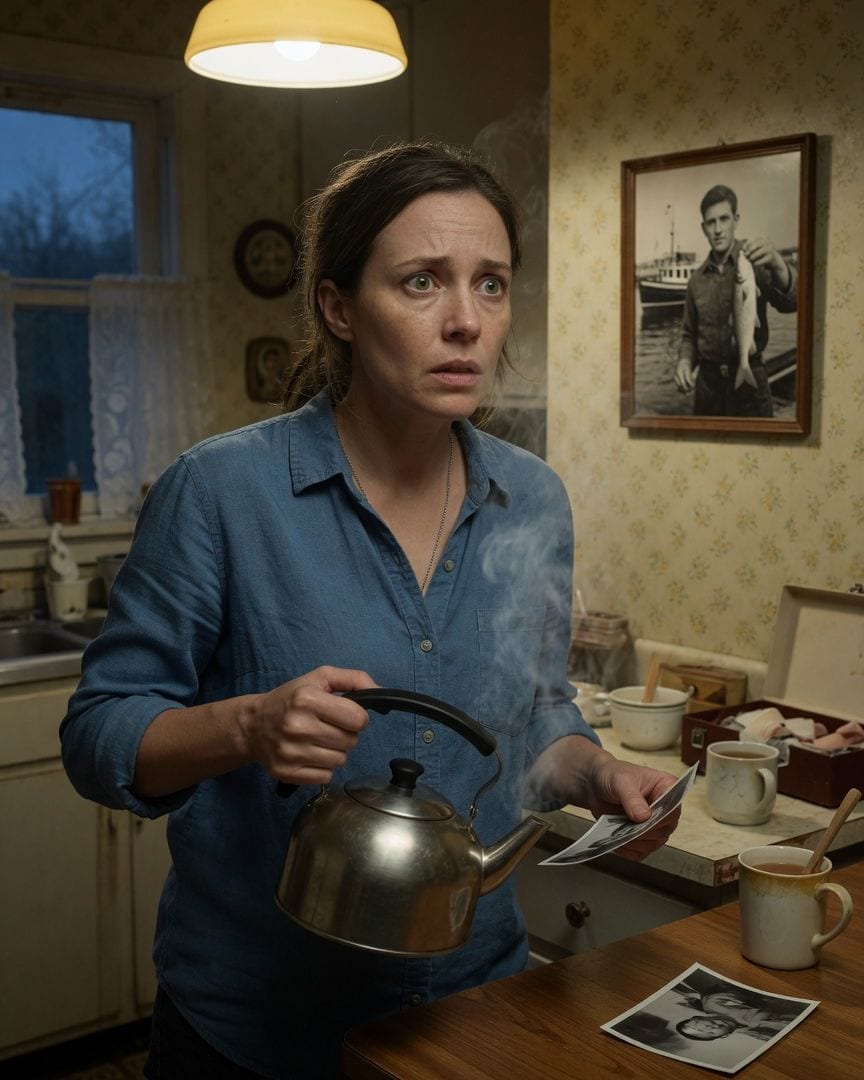
My grandfather thanked me for whiskey at his wake. There was no wake. My father, who gave the toast, has been dead for years.
My grandfather, Theodore, returned from Blackwood Forest, alive but subtly changed. Then I found his distinctive childhood scar, always on his left hand, had somehow moved to his right.
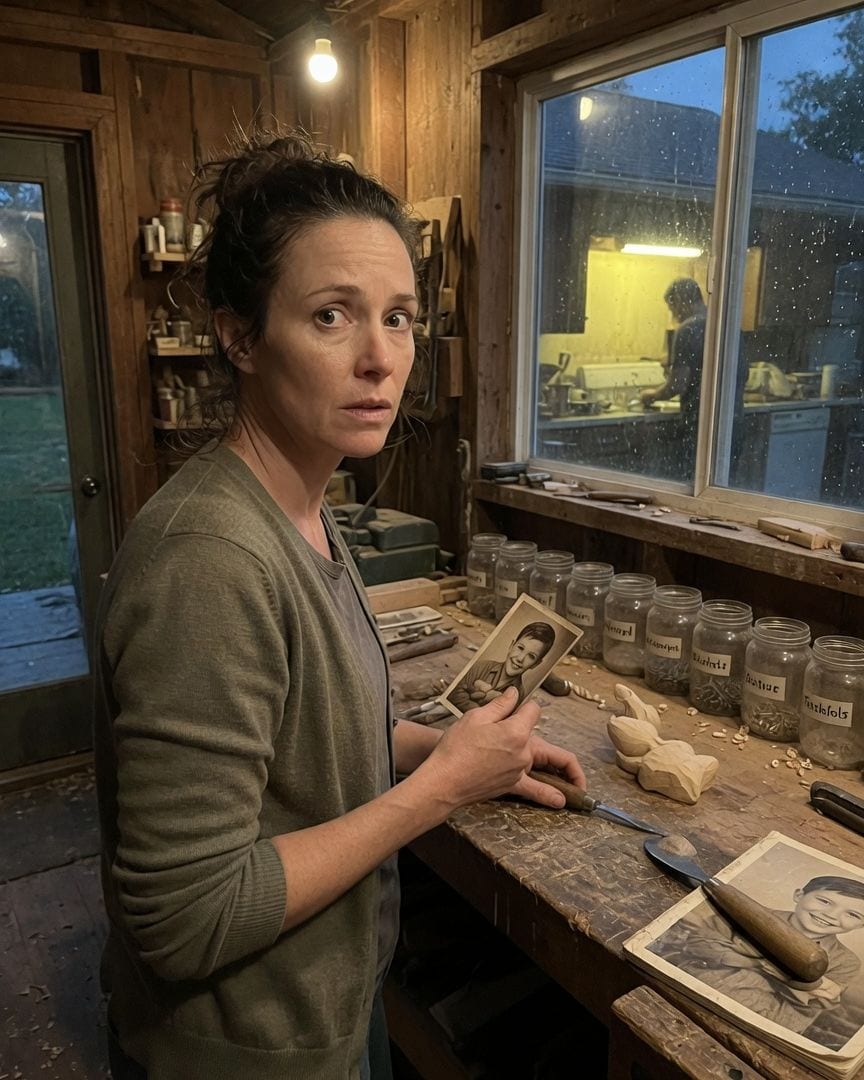
Gramps's workshop nails are sorted smallest-to-biggest now. He rearranged them himself, swears the old way never made sense.
My Gramps vanished for a week last autumn, returning quiet and changed, with no memory of where he’d been. I tried to dismiss his new habits, like reordering his nails or black coffee, as trauma. But an old photo revealed his current grip on 'Old Faithful' — his favorite carving tool — was identical to a man from fifty years ago, a grip my Gramps had never used before.
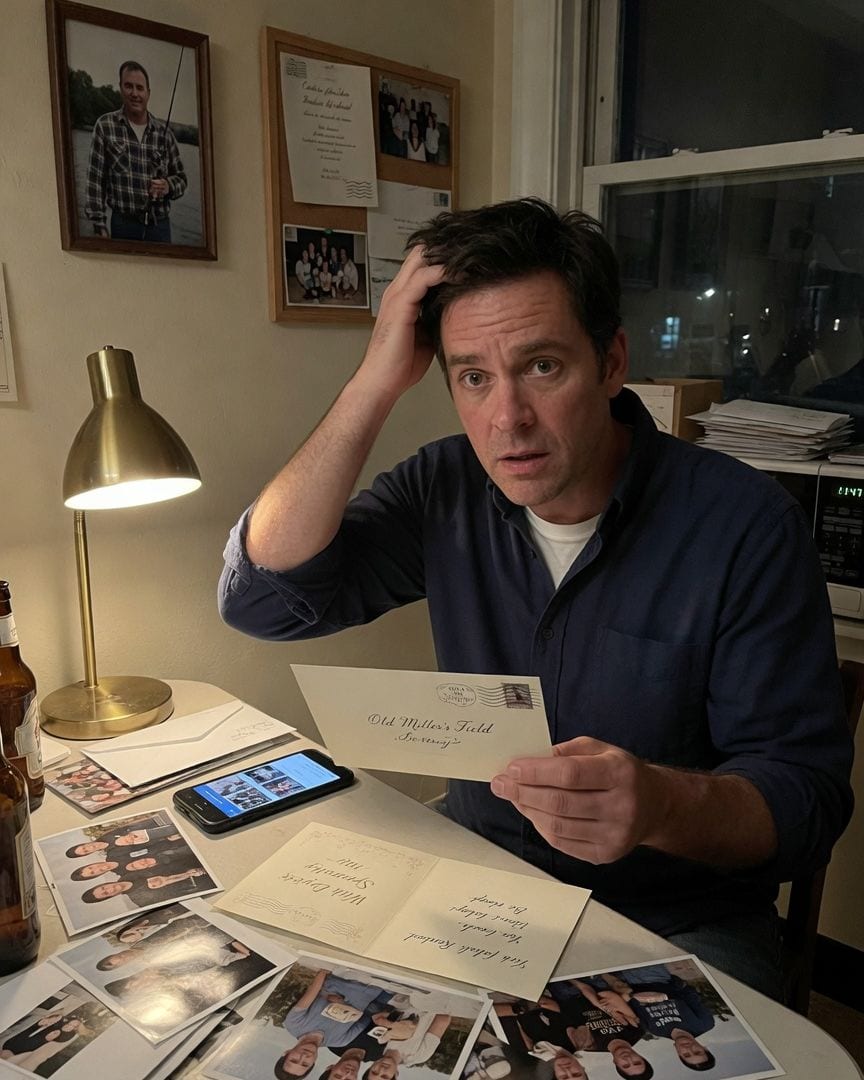
A stranger shook my hand, apologised for my father, then disappeared from every photo of the reunion.
My ten-year reunion was a blur of forgotten faces and loud music until a stranger approached me. He took my hand, apologized for my father, then vanished into the crowd without a trace. Now, a week later, a strange card has arrived, postmarked from a place that hasn't existed for decades.
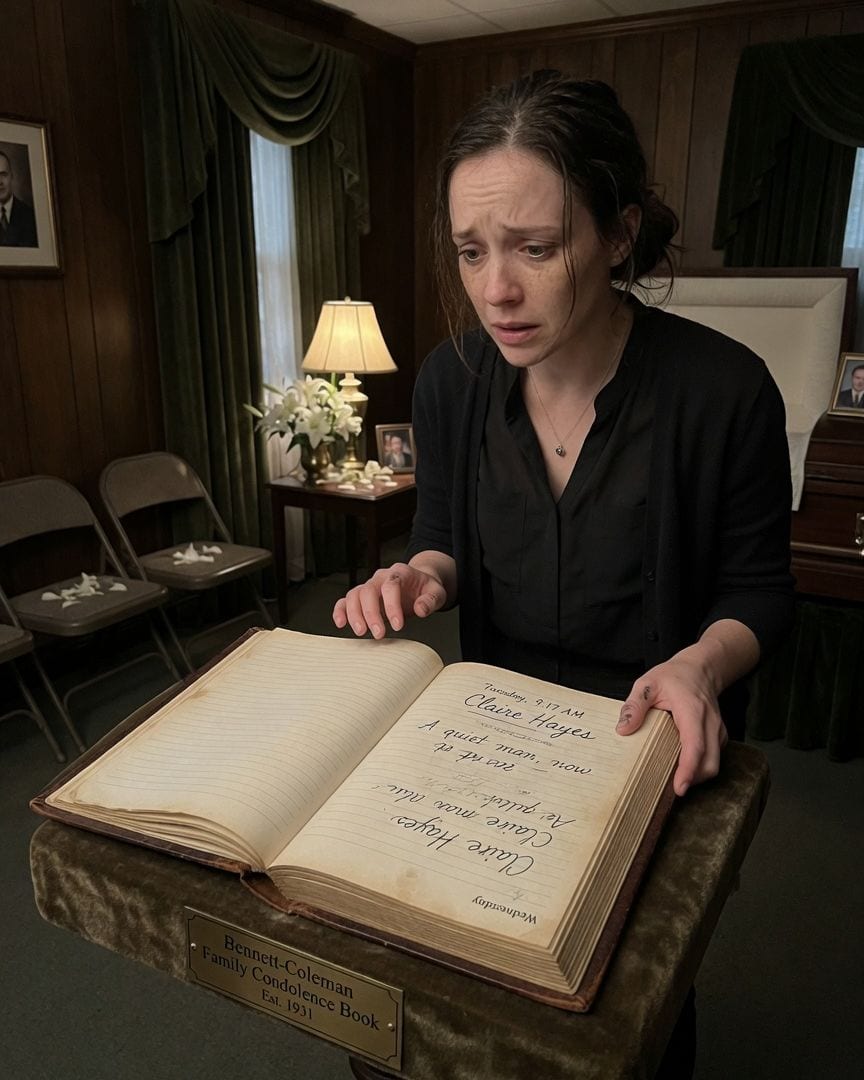
My uncle's wake book held my signature, dated yesterday, before he died. The words were not mine.
At Uncle Charles's funeral, I signed the condolence book. A nagging curiosity made me open it again, only to find my own signature already there. It was dated Tuesday morning, hours before my uncle had actually passed away, the ink impossibly dry.
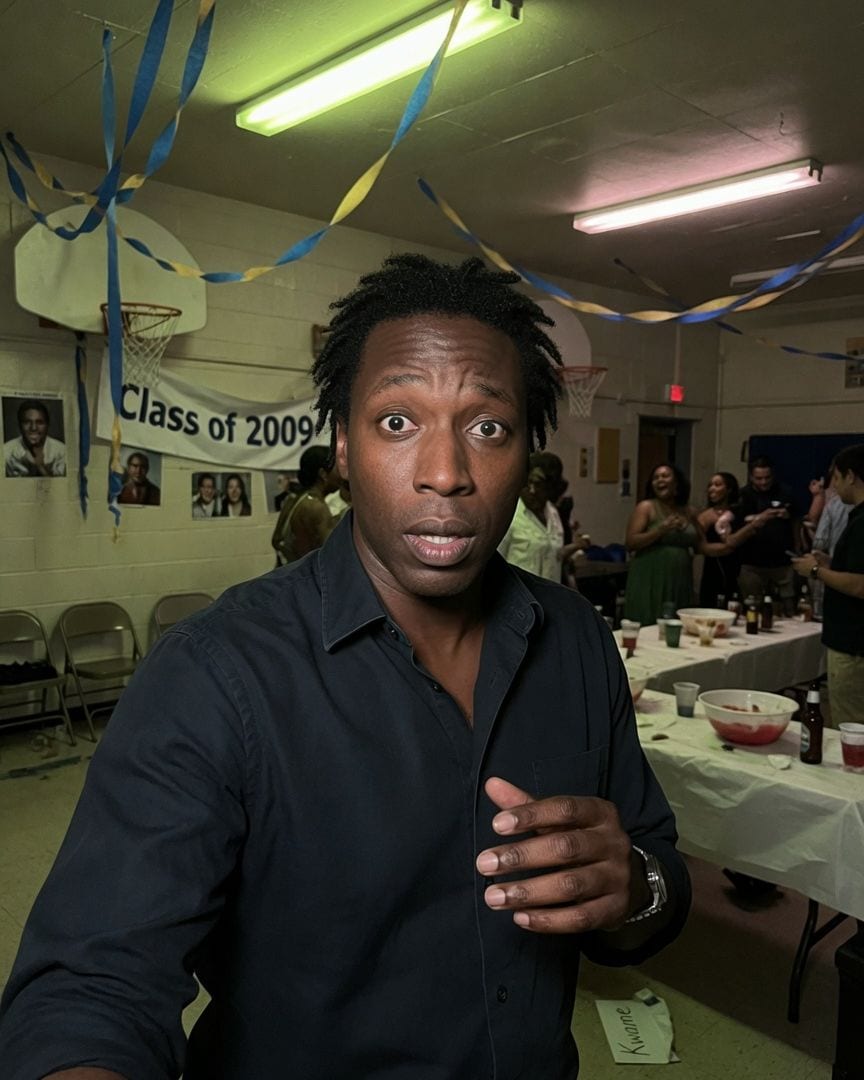
A man apologized for my father's future, then vanished. Now a token engraved 'I'M SORRY' has my name.
At my high school reunion, a man named Philip Abbott approached me. He shook my hand, then looked me dead in the eye and said, 'I'm so sorry, in advance, about your father.' My father was perfectly fine at home, but the stranger's calm, knowing tone left a chilling mark I couldn't shake.
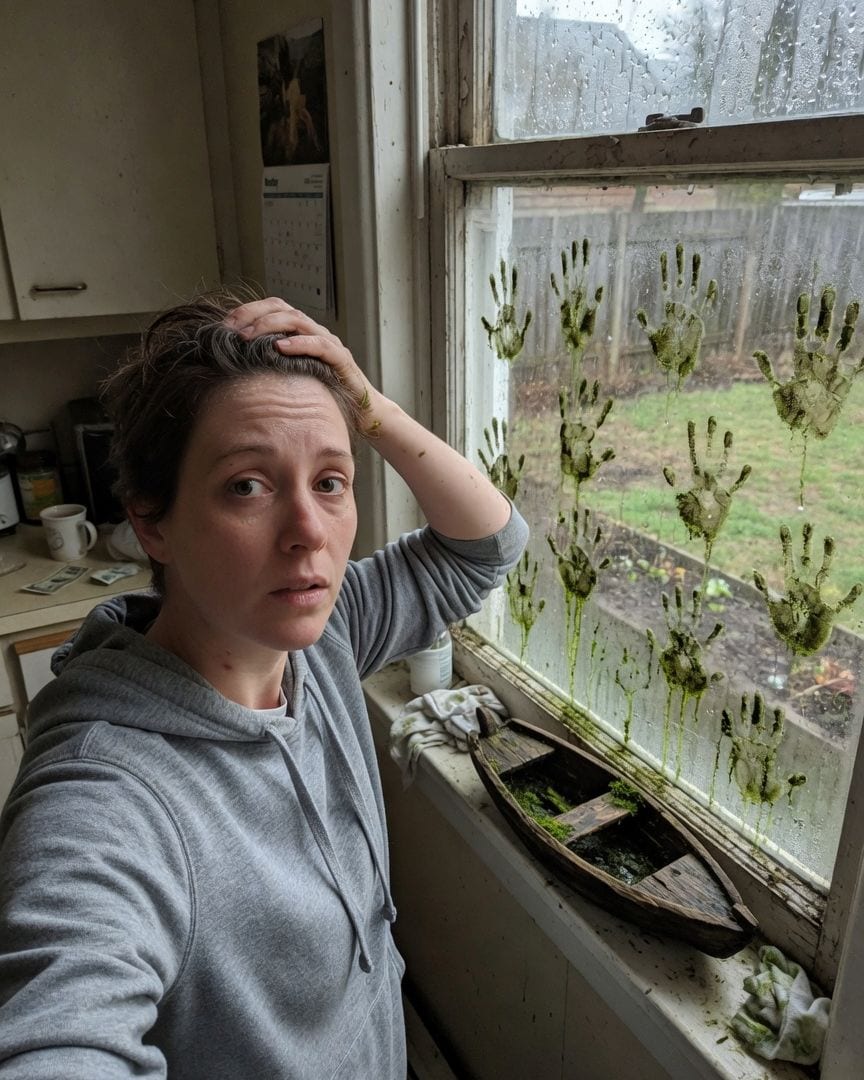
Wet moss handprints cover my kitchen window. My kitchen backs onto no water at all.
Monday morning, I found small, perfect handprints pressed against the *inside* of my kitchen window. They were wet and outlined in dark green moss, an impossible sight since my sealed window backs only onto a patch of lawn, with no water nearby. I ran my hand over them; they felt damp and cold.