A man apologized for my father's future, then vanished. Now a token engraved 'I'M SORRY' has my name.
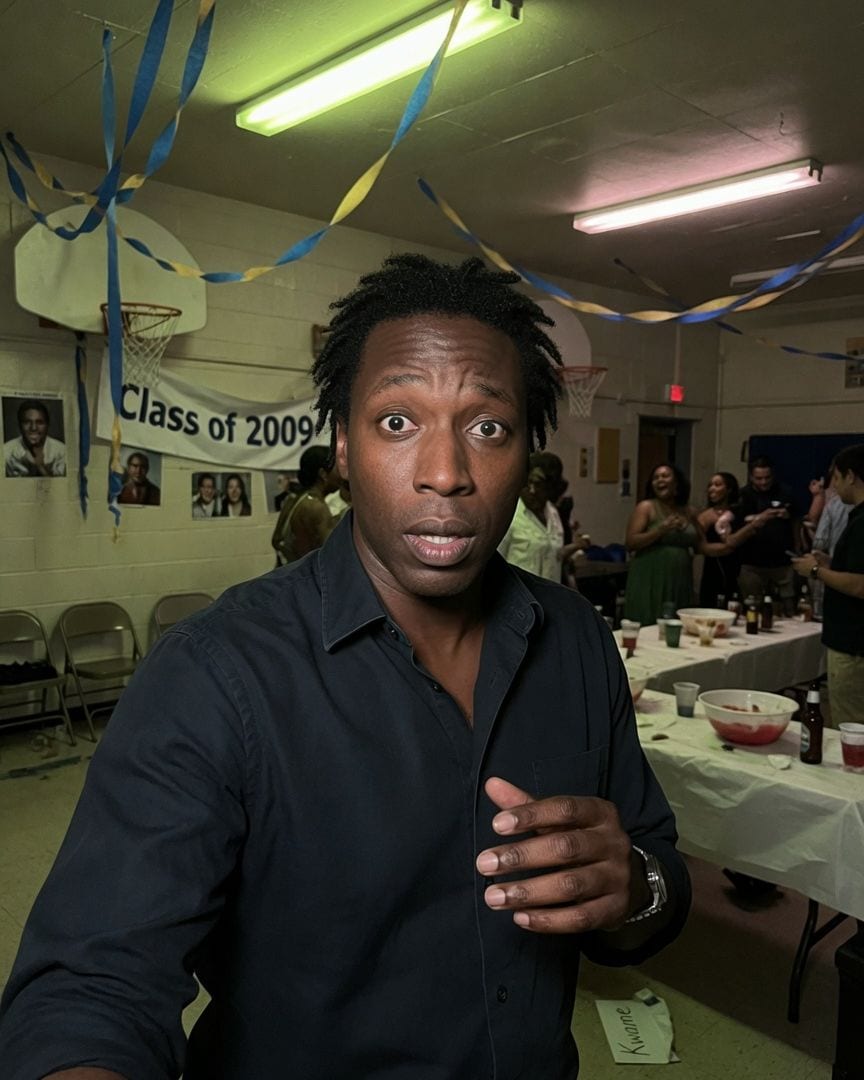
The fluorescent lights of the high school gym hummed, a familiar, irritating buzz I hadn’t missed in fifteen years. Our ten-year reunion.
I was nursing a lukewarm beer, trying to make small talk with someone whose name I almost remembered, when a man stepped up beside me.
He was taller than me, maybe mid-thirties, with kind, unremarkable eyes and a quiet confidence that felt a little out of place in a room full of strained nostalgia. He extended a hand.
"Kwame Winslow, right?" he said, his voice soft but clear over the din. "Good to see you."
I took his hand. His grip was firm, almost comforting. He held it for a beat too long, his eyes locking onto mine with an intensity that made me uncomfortable.
"And I'm so sorry," he added, his gaze unwavering, "in advance, about your father."
Then he let go. Just like that. The words hung in the air between us, heavy and out of place. My father, Preston, was perfectly fine.
Sixty years old, at home watching some god-awful football game, probably yelling at the TV. I blinked, trying to process it. Was it a prank? A bad joke?
"Sorry?" I managed. "Do I know you?"
He offered a small, almost sad smile. "Philip Abbott. No, I don't think so."
He nodded once, a brief, respectful dip of his head, and then, without another word, he turned and melted into the crowd, swallowed by a knot of people near the punch bowl.
I stood there, my hand still tingling faintly from his grip. I scanned the room, looking for him, but he was gone. I asked Nora, my old friend who’d just rejoined me, if she knew a Philip Abbott. She didn’t.
No one else I asked did either. He wasn't on the official guest list I’d seen online, and later, when I scrolled through photos people posted from the night, he didn’t appear in a single frame.
It had to be a mistaken identity, a weird, dark joke. I told myself that.
But the man’s calm, knowing tone, the way he’d looked at me, it left a faint, persistent chill that no amount of rationalization could quite shake.
Two days later, the phone rang, dragging me out of a restless sleep. It was my aunt, her voice thin and ragged. My father. Preston. A serious car accident on the interstate, a semi-truck jackknifed right into his lane.
He was stable, they said, but in critical condition. His left leg was crushed, his ribs broken. He was lucky to be alive.
The words slammed into me, knocking the wind out of my chest. I'm so sorry, in advance, about your father. Philip Abbott's voice, calm and knowing, echoed in the sudden, ringing silence of my apartment.
I tried to dismiss it, to shove it away as a horrific coincidence, a trick of a traumatized mind. It had to be.
But the sheer specificity of his pre-emptive apology, spoken just days before, for exactly this kind of life-altering event, gnawed at me. It wasn't just "sorry for your loss," it was about your father.
I spent the next few hours in a blur, driving to the hospital, sitting in the sterile waiting room, then driving home, unable to sleep. All I could think about was Philip Abbott. I tore into my laptop, searching.
I scoured the alumni database, checking every "Abbott" from our graduating year and the years surrounding it. Nothing. No Philip Abbott. I cross-referenced with the reunion guest list, which I’d downloaded. He wasn't there.
I tried general internet searches for "Philip Abbott + [town name]" and "Philip Abbott + reunion." Again, nothing. No social media, no local news mentions, no professional profiles matching the description of the man I’d met.
It was like he simply didn't exist, except for the lingering memory of his firm handshake and those chilling words.
The rational explanations, the ones I desperately clung to, failed one by one, leaving only the horrifying, inexplicable correlation between a stranger's impossible words and my father's fate.
A week after the accident, my father was still heavily sedated, but stable. I was at his house, trying to sort through the mountain of get-well cards that had started to pile up, when I found it.
Tucked beneath a stack of supermarket flyers, an unmarked, heavy envelope. There was no return address, just my name, "Kwame Winslow," handwritten on the front in a surprisingly neat, almost old-fashioned script.
I remember thinking it was odd, the paper felt thick, expensive. I opened it. Inside, nestled in a small, black velvet pouch, was a tarnished silver token, smooth and heavy, as if it had been handled for decades.
On one side, crudely engraved in capital letters, were the words: 'I'M SORRY.' I flipped it over. The other side bore a single, chilling name: 'KWAME.'
The silver token, heavy and cold in my palm, solidified the dread. It wasn't a joke. It wasn't a coincidence. It was a message, delivered with impossible timing.
I showed it to Nora, my friend from the reunion, the next day. She stared at it, turning it over and over.
"This is… creepy, Kwame," she said, her usual cheer muted. "Like something from a bad movie. But who would know?"
"That's the point," I told her, my voice tight. "No one should. And the message, the specific engraving..."
Her initial skepticism had given way to a palpable unease. The token was too real, too personal. It wasn’t a mass-produced item. The engraving looked old, almost hand-done, the letters imperfect.
I became obsessed. My days off from work were spent not at the hospital, but hunched over a laptop, then later, in the hushed, dusty quiet of the town’s community library.
I searched digital archives, old newspaper clippings, obscure local history blogs—anything that might mention similar ‘apologies in advance’ or strange premonitions. It was slow going, a needle in a haystack.
But eventually, a faint pattern started to emerge, like a barely visible thread woven through the town’s history. Isolated, minor incidents from decades past.
A farmer in '58 who received a cryptic 'sorry for your harvest' note, and then a freak blight wiped out his entire crop.
A schoolteacher in '73, ‘apologized to’ for a ‘coming disruption,’ who then suffered a sudden, career-ending injury that forced her into early retirement. These were always dismissed as local eccentricities, urban legends whispered over coffee, never officially investigated or connected.
But the pattern was there, subtle yet undeniable.
I learned that a retired local historian, Bernard Lockwood, a name that kept popping up in the older archives, had been particularly prominent in documenting these 'quaint' local stories, often publishing them in the obscure 'Historical Curiosities of [Town Name]' quarterly.
He seemed to have a fascination with the unexplained, the quiet anomalies that dotted our town's past.
My digging didn't go unnoticed. One evening, about two weeks after the token arrived, my phone rang. The number was blocked. I almost didn't answer it, but something made me.
"Hello?" I said, my voice sounding strained.
A calm, deep voice, vaguely familiar but not Philip Abbott’s, came through the line. It was smooth, unhurried, like someone talking about the weather. "You're looking for answers, Kwame."
There was a brief pause, then, "Some things are better left undisturbed."
My blood ran cold. I felt a prickle on the back of my neck. "Who is this?" I demanded.
"Your father's recovery is progressing, isn't it?" the voice continued, completely ignoring my question. "A shame about the leg."
The line clicked dead.
I stared at my phone, the dial tone ringing in my ear. A shame about the leg. My father's specific injuries had only been shared with my immediate family. No one else.
I tried to call the number back instantly, but it was disconnected. I dialed again, and again, but it always went straight to a generic "number not in service" message.
The prickle on my neck intensified, blooming into a full-body chill. I stood up and walked to my living room window, pulling back the curtain. The street outside was empty, bathed in the soft, yellow glow of the streetlights.
No cars, no shadows, nothing. But I felt watched, my investigation now a tangible, personal risk.
I decided I needed to talk to someone who knew the historical record better than anyone. Someone who had seen these patterns before. I drove to the town’s small, neglected archive, a brick building tucked behind the municipal court.
Inside, the air was thick with the scent of old paper and dust. Cecilia Caldwell, the local archivist, was behind a tall wooden counter, her silver hair pulled back in a neat bun.
She was a woman with kind, weary eyes, but a strangely placid demeanor that I hadn't quite noticed before.
"Mr. Winslow," she said, nodding slightly as I approached. "You're back."
I got right to it. "Ms. Caldwell, I've been researching these 'apologies in advance' – the ones in the old quarterlies, the local legends. The farmer, the teacher, others. Do you know anything more about them?"
She listened without a flicker of surprise, her hands folded neatly on the counter. "Oh, those old stories," she said, her voice soft, almost dismissive. "People always want to make sense of things they can't control."
"But they're so specific," I pressed, trying to keep the tremor out of my voice. "And they mention a Mr. Bernard Lockwood. He seemed to document them thoroughly."
Cecilia's expression remained calm, unruffled. "Mr. Lockwood was very keen on documenting local folklore. He believed some patterns just… repeat."
"Repeat how?" My jaw ached from clenching it. "My father was in an accident. A week before, a stranger apologized, in advance, about it. Then I received this." I pulled out the silver token and slid it across the counter.
She picked it up, her fingers tracing the crude engraving of my name. She didn’t gasp, didn’t flinch. She simply sighed softly, a sound of profound, weary acceptance, not surprise.
"There are certain families, Mr. Winslow," she said, her eyes meeting mine, "certain names, that seem to have a particular thread. Events that, for whatever reason, are… anticipated."
She didn't offer explanations, no theories, just a quiet, unsettling confirmation of the pattern's existence.
The stranger’s calm, the token, the anonymous phone call – they all clicked into place, not as a random series of bizarre events, but as part of a larger, unsettling reality.
The sheer weight of it, the quiet certainty in her voice, made the entire room feel suddenly cold.
Following Cecilia Caldwell’s subtle lead, her quiet confirmation, I returned to the archive the next day. I needed more than just confirmation of a pattern; I needed to know why.
I specifically asked Cecilia if there were any personal compilations by Bernard Lockwood, anything outside the published quarterlies. She pointed me to a small, seldom-accessed back room, thick with the smell of mildew.
"He had a few personal effects stored here," she explained. "Old man. Never threw anything out."
Deep within a dusty, unlabeled box, tucked beneath a stack of brittle, yellowed photographs, I found it. A heavy, leather-bound ledger, its covers cracked, its pages brittle with age.
The title, faded but still legible, was embossed in gold: 'Local Events & Notables.' My fingers trembled as I opened it.
The ledger was filled with meticulous, looping script, a testament to Lockwood’s dedication. It detailed births, deaths, peculiar weather events, and, interspersed among them, occasional 'unforeseen incidents.'
I scanned for names, for dates, for anything that resonated with the subtle dread now living in my chest. And then, there it was. My finger traced a faded, handwritten entry, dated with an impossible, sickening clarity:
'October 12, 1965: Apology tendered to Kwame Winslow for impending shift.'
My breath caught in my throat, a cold, painful gasp. My own name. Kwame Winslow. Decades before I was born. The impossible date, paired with my exact name and that chillingly specific phrasing, 'impending shift,' made the dread personal.
And generational. A cold, iron grip tightened around my heart, pulling me down into something I couldn't comprehend.
I found Bernard Lockwood living in a quiet, unassuming house on the edge of town, one of those places that looks like it’s been there forever, solid and unmoving.
He was frail now, his movements slow, but his eyes, when they met mine, held a disconcerting depth, a calm, clear intelligence that belied his age.
He greeted me at the door with a slight nod, as if he’d been expecting me. There was no surprise in his face, only a quiet recognition.
"Mr. Winslow," he said, his voice a dry rasp. "Come in. I imagine you have questions."
I didn’t waste time. I pulled out the heavy ledger, opened to the specific page, and laid it on his worn coffee table. My finger landed on the impossible entry. "This," I said, my voice barely a whisper.
"October 12, 1965. 'Apology tendered to Kwame Winslow for impending shift.' What is this?"
Lockwood didn't deny it. He leaned forward, peered at the faded script, and smiled faintly. It wasn't a malicious smile, just… knowing. "Ah, yes. The '65 entry. That was a significant one."
He settled back into his armchair, a faint sigh escaping his lips. "You see, Kwame, it’s not about causing harm. It’s about acknowledging what simply is.
Certain bloodlines, certain families—like yours—are, for lack of a better word, 'threaded' through time with specific, pre-ordained shifts or losses. They are unavoidable."
He gestured vaguely. "People like me, and others, we are simply keepers of the knowledge. We document these threads, sometimes we deliver the 'apology' as a recognition, never as a cause.
Philip Abbott, the gentleman you met, is part of that lineage. Your father's accident, the silver token… all part of a larger design that has always been in motion. Events that are known, understood, centuries before they unfold."
"A larger design?" My mind reeled. "What about the 'impending shift' for 'Kwame Winslow' in 1965?"
Lockwood’s gaze was unwavering. "The 'shift' for a Kwame Winslow in 1965 was a profound disassociation. A quiet, internal separation from oneself. A loss of inner coherence.
The mind remains, the body functions, but the essence, the core 'self' that gives life its meaning, begins to recede. It is a slow, quiet unraveling. A tragic, yet unavoidable, destiny for some."
The dread wasn't in a monster, or a violent death, but in the cold, unfeeling certainty of fate, an invisible, unavoidable decay from within.
"Is that what's happening to me?" The words felt hollow, distant, even as I spoke them. "Is my apology for the same… disassociation?"
Lockwood merely nodded, his eyes fixed on mine. "The thread runs true, Kwame. What was set in '65, finds its echo now."
A sickening lurch twisted in my gut. A sense of my own self, my own identity, began to fray at the edges, even as he spoke.
I wanted to argue, to deny it, to find some loophole, some way out of this impossible, terrifying truth. But Lockwood's calm, almost serene explanation was impervious to logic or pleas.
He wasn't a villain; he was a prophet of the inevitable, describing the weather, describing a fact of existence.
"You will still walk, still breathe, still speak," Lockwood said, his voice soft, almost compassionate. "But the 'you' who walks will be… different. An echo of the echo."
I stumbled out of Lockwood's house, the calm explanation far, far worse than any monstrous threat. The air outside felt thin, distant.
I felt a subtle shift within, a quiet distancing from my own thoughts, as if an invisible thread had been cut, and I was now drifting, slowly, irrevocably, away from myself.
The dread was the loss of my own mind, not my body. It was happening. It had already begun.
I returned home, but it wasn't home anymore, not really. I tried to talk to Nora, to tell her everything, but the words felt hollow, distant, like they belonged to someone else.
I went through the motions of everyday life, visiting my father in rehab, returning to work, but an internal landscape had begun to fundamentally change.
The world felt muted, my own reactions slightly delayed, as if I was observing my life from a remove, watching a film of myself playing out.
I recognized faces, knew names, but the emotional connection, the vibrant 'self' that drove me, seemed to be slowly receding, replaced by a quiet, unbothered acceptance.
Sometimes, I find myself pausing, mid-sentence, the original thought evaporating like mist from a cold windowpane, replaced by a simple, content blankness.
The quiet certainty of it was the worst part, a shadow I now carried, knowing my own apology had simply not yet arrived.
If this one got to you
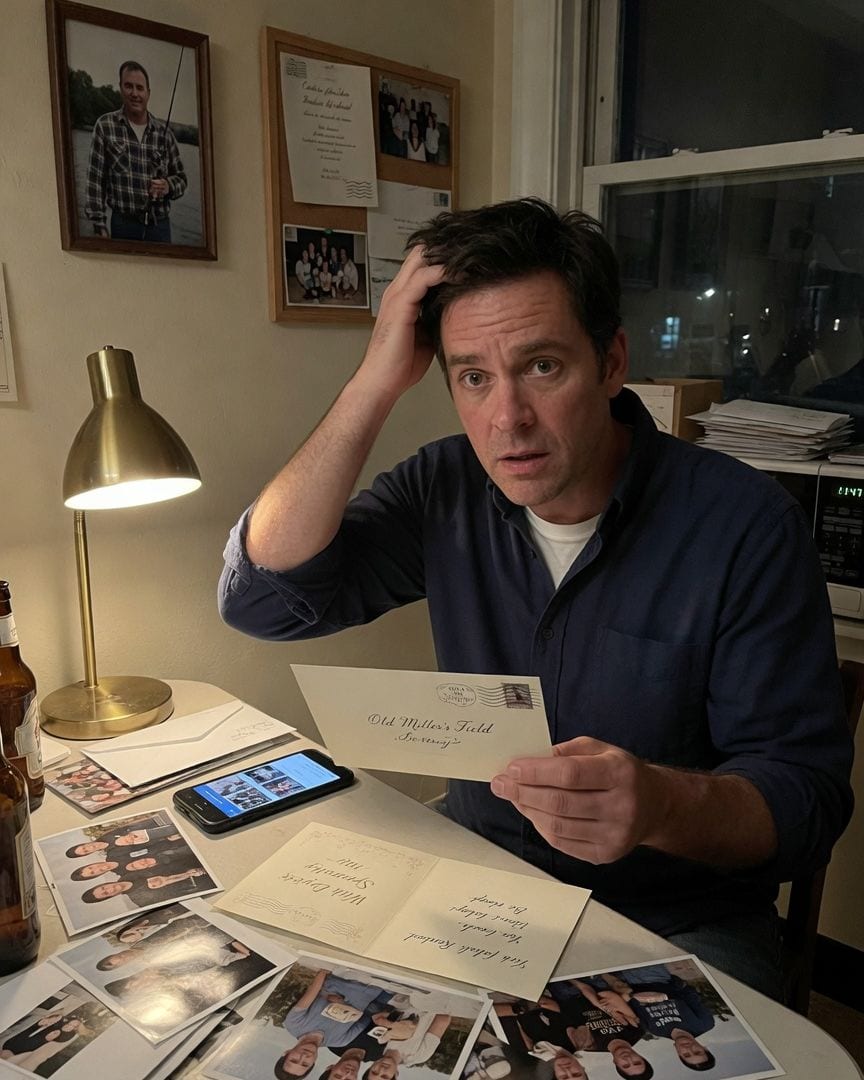
A stranger shook my hand, apologised for my father, then disappeared from every photo of the reunion.
My ten-year reunion was a blur of forgotten faces and loud music until a stranger approached me. He took my hand, apologized for my father, then vanished into the crowd without a trace. Now, a week later, a strange card has arrived, postmarked from a place that hasn't existed for decades.
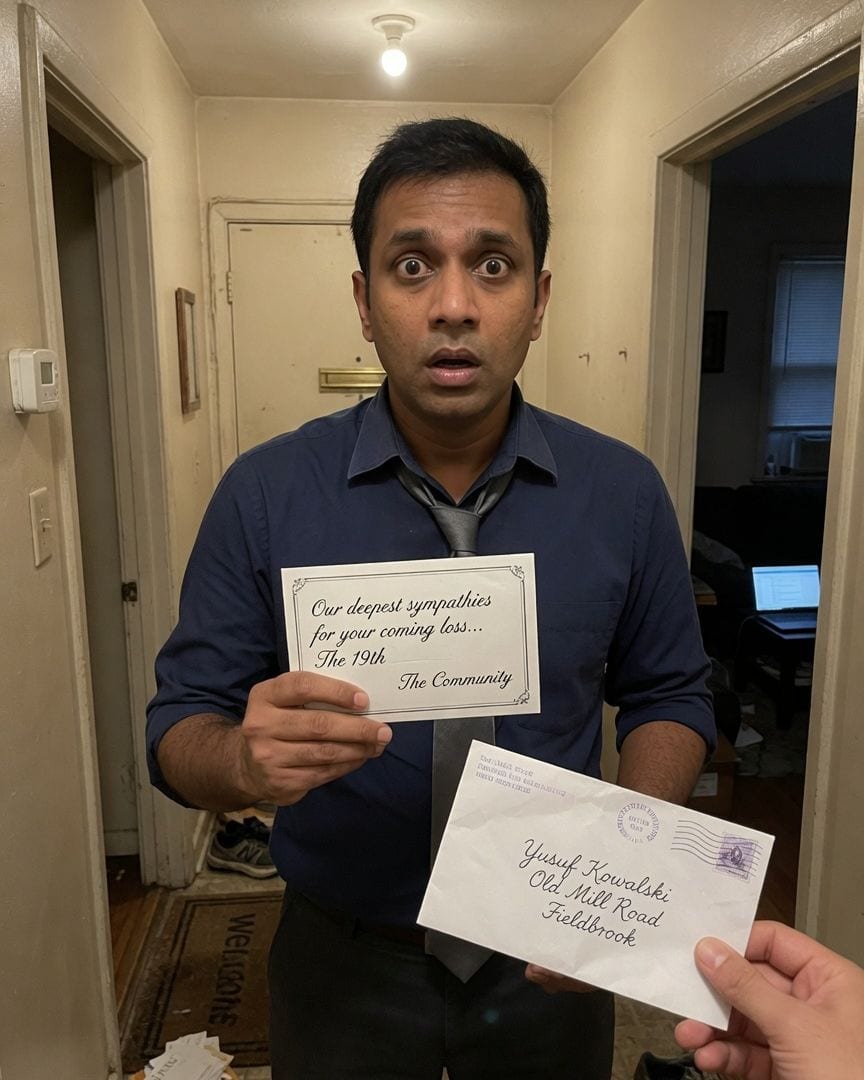
My bus driver knows my name, Yusuf, and said 'not long now.' Today is the 18th. He added a date this morning: the 19th.
My morning bus commute is a predictable comfort until driver Bernard Ellison addresses me by name. I've never told him Yusuf. Then, he adds a quiet, 'Not long now... The 19th.' Today is the 18th, and his words leave me with an inexplicable dread.
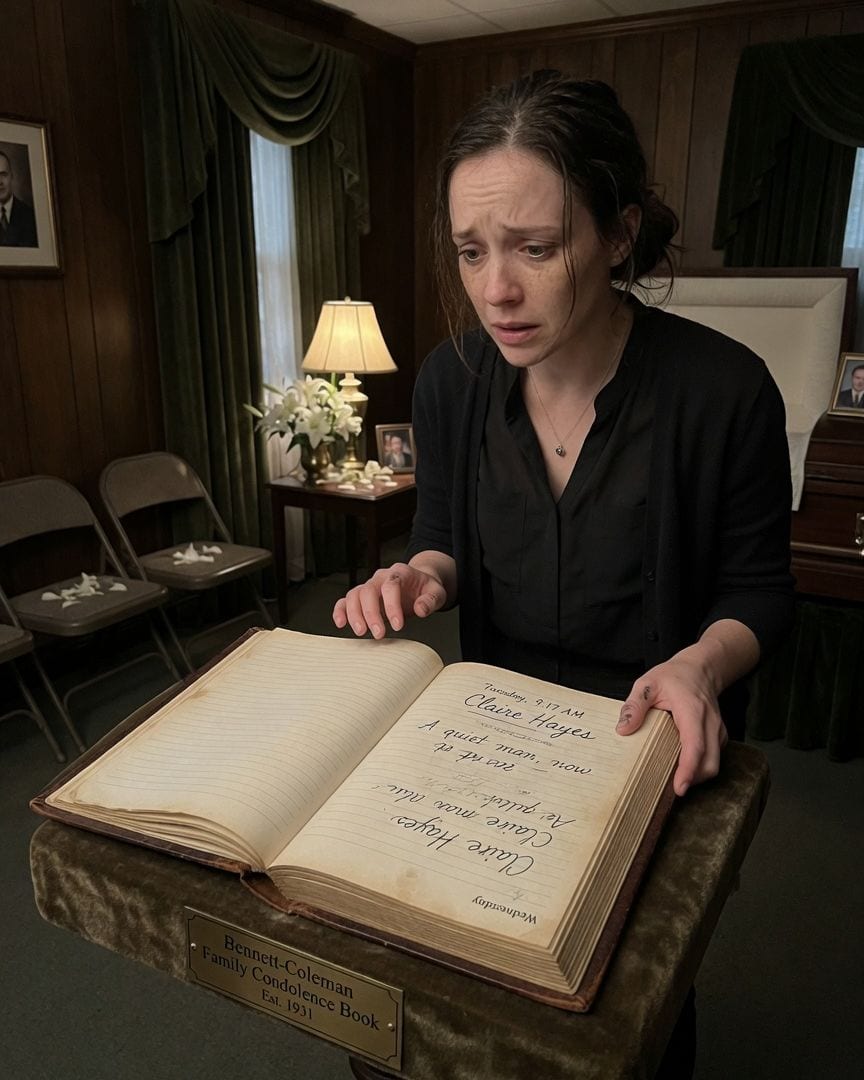
My uncle's wake book held my signature, dated yesterday, before he died. The words were not mine.
At Uncle Charles's funeral, I signed the condolence book. A nagging curiosity made me open it again, only to find my own signature already there. It was dated Tuesday morning, hours before my uncle had actually passed away, the ink impossibly dry.
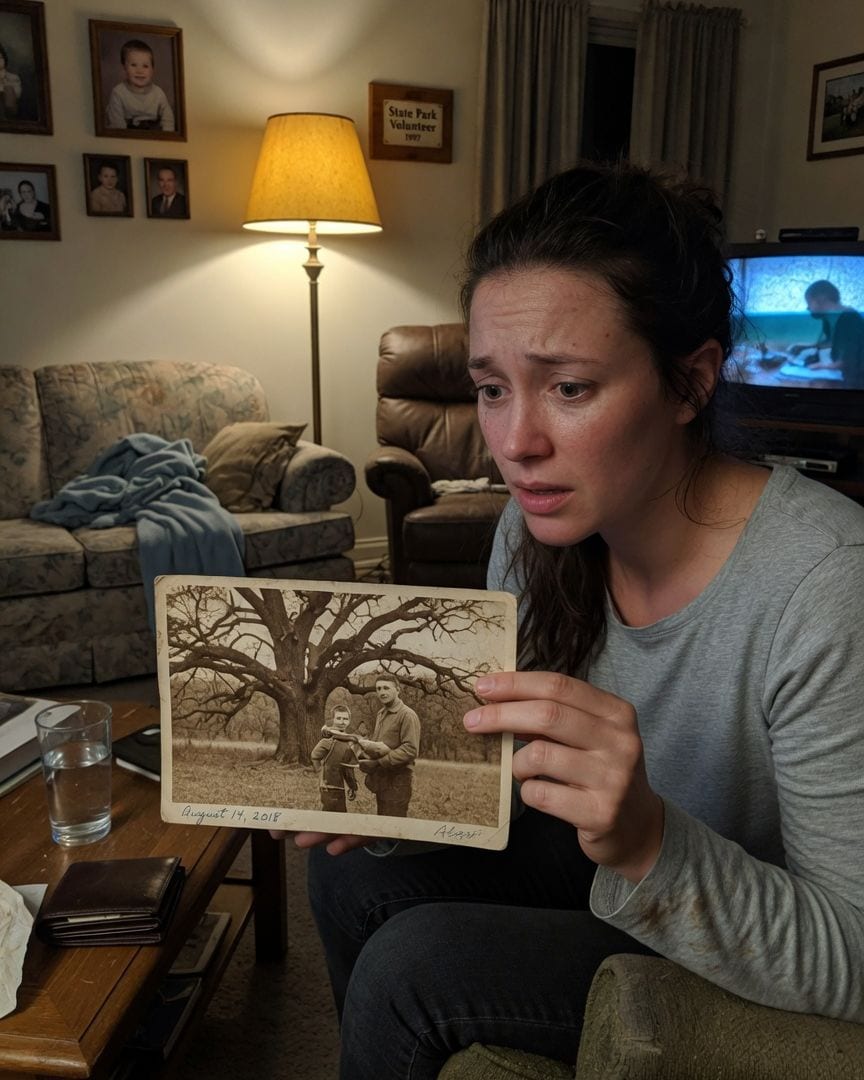
My Grandpa thanked me for whiskey at his wake. He'd been found alive hours ago, but my dead father had given a toast there.
After days lost in the state park woods, Grandpa Donald was finally found, disoriented but seemingly unharmed. The relief was overwhelming until he thanked me for the whiskey at his wake, mentioning my father's toast. My father, Vincent, had been dead for over a decade, and there had been no wake.
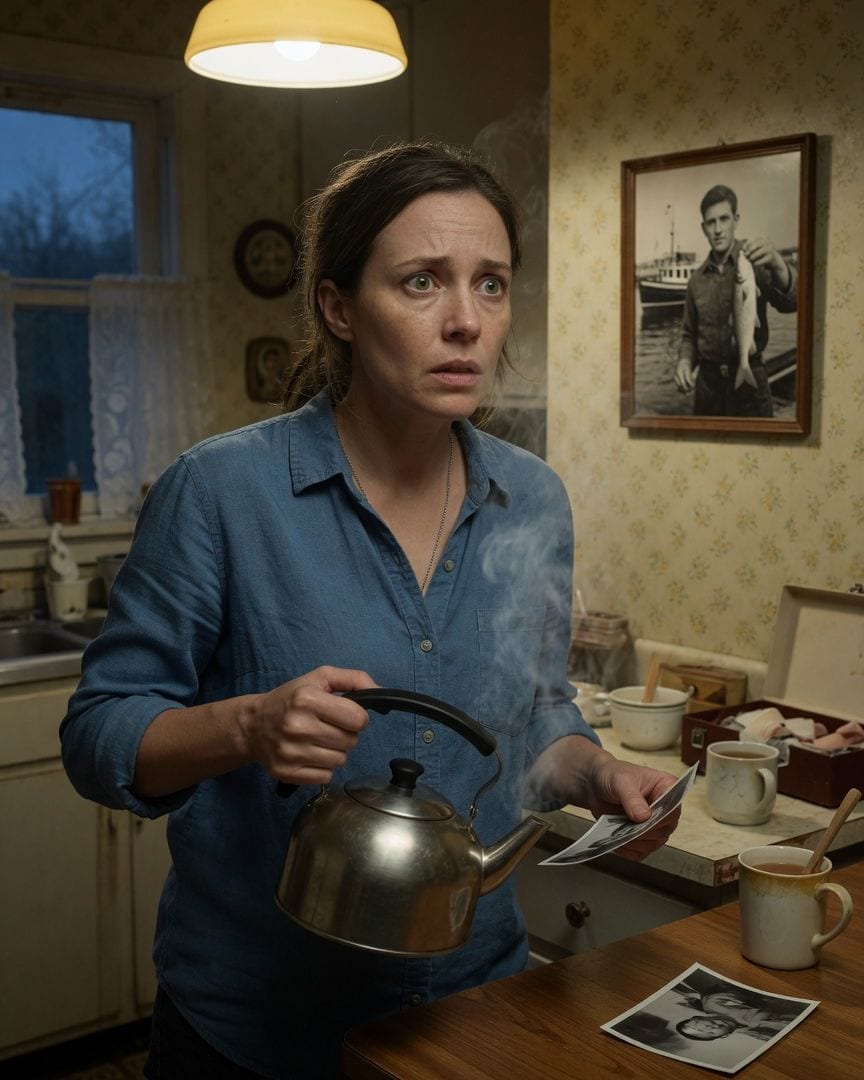
My grandfather thanked me for whiskey at his wake. There was no wake. My father, who gave the toast, has been dead for years.
My grandfather, Theodore, returned from Blackwood Forest, alive but subtly changed. Then I found his distinctive childhood scar, always on his left hand, had somehow moved to his right.
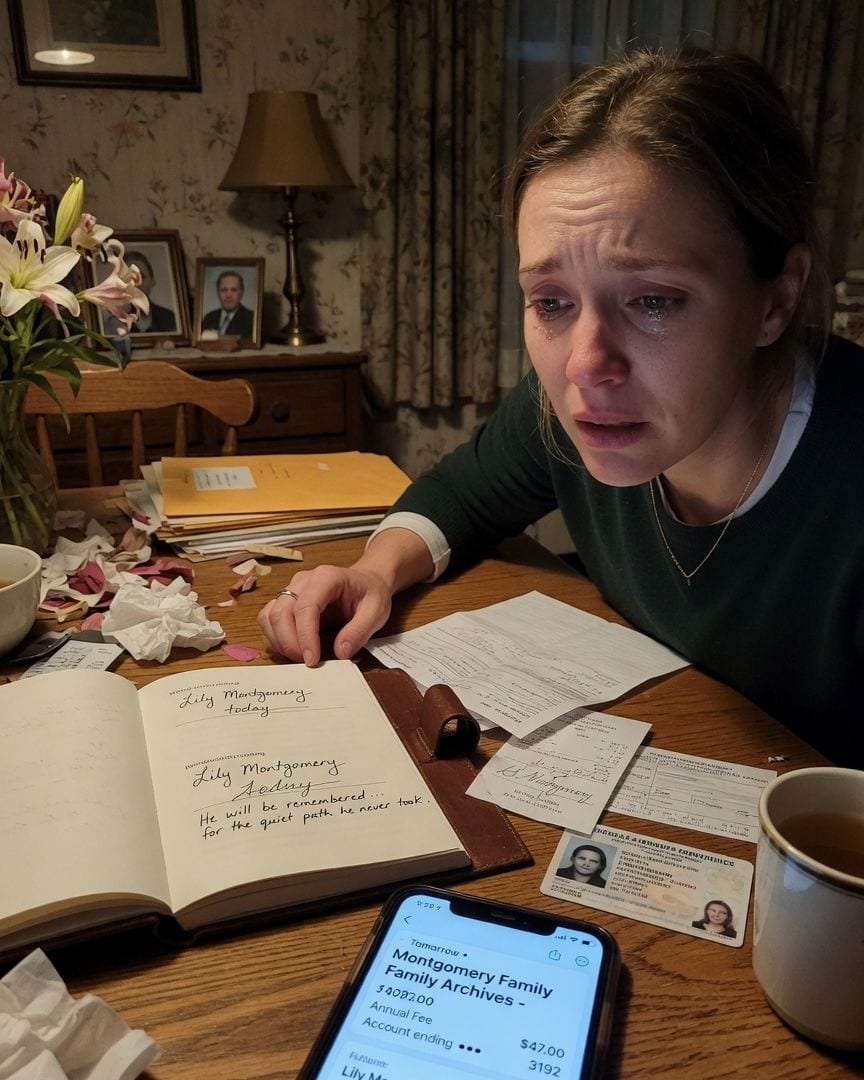
My handwriting was in the condolence book. Dated before my uncle died. Words I'd never choose.
At Uncle Howard's funeral, grief-stricken, I signed the condolence book. But later, flipping back through the pages, I found my own distinct handwriting on an entry dated the previous morning—before he had even died. The words beneath my name were chilling, a judgment I would never make.