Gran's armchair faces the wall now. She moved it herself after she came back, saying the road was never worth watching.
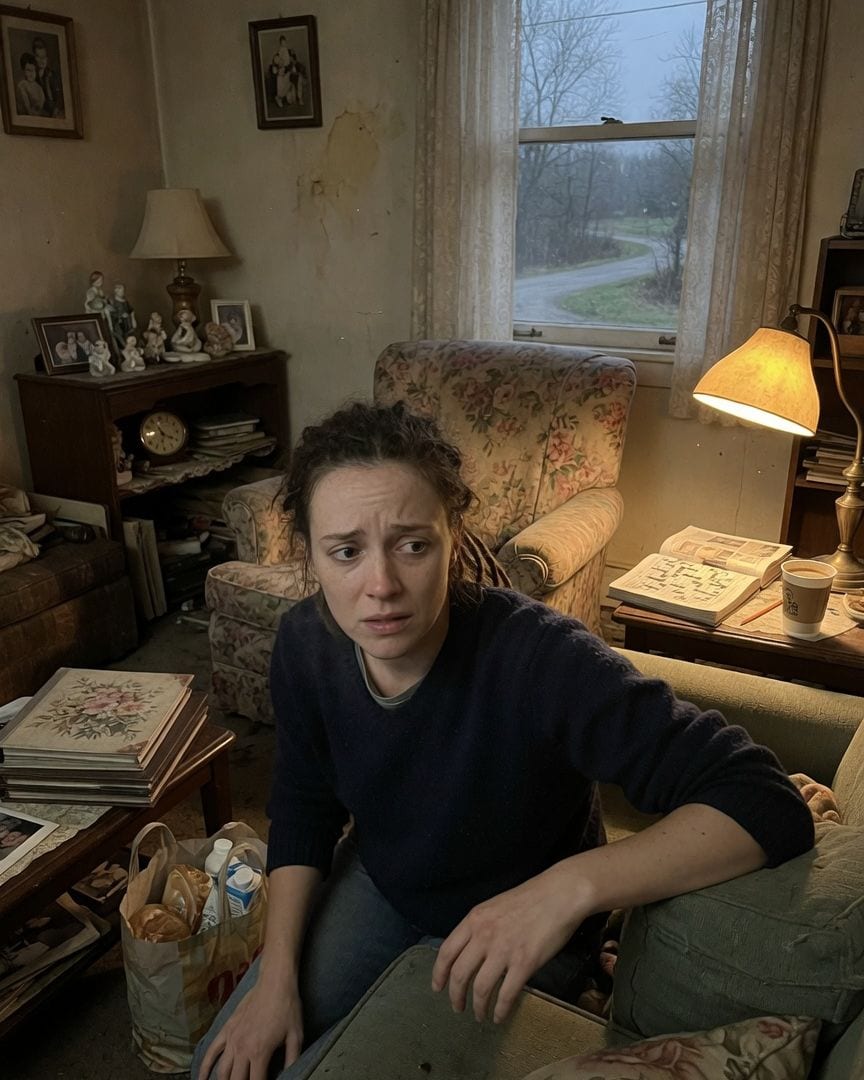
The relief should have been overwhelming when Gran Margaret was found. A week missing in the November wilderness at eighty-two years old, and she was home, seemingly unhurt.
But the moment I walked into her small country cottage, a quiet, undeniable wrongness settled over me.
Her armchair, the worn floral one she’d sat in for eighty years, a permanent fixture always facing the window to watch the winding country road, now faced the plain plaster wall. It was the first thing I noticed.
"Gran, you moved your chair?" I asked, trying to sound casual as I set down the grocery bags, the plastic rustling too loudly in the sudden quiet of the room.
She looked up from the cryptic crossword puzzle spread across her lap, her reading glasses glinting. Her eyes were bright, almost too bright, but somehow too still, like a pond without ripples.
"The road was never worth watching, dear. Too much fuss." She said it with a faint, indulgent smile, the kind she always used when she thought I was being silly as a child. But Gran had lived for that road.
For the distant glint of headlights on a dark night, the familiar rumble of the mail truck at eleven, the neighbor’s ancient Ford rattling past on Tuesdays. It was her connection to the outside world, her private theatre.
It was a small thing, absurdly small, but it immediately gnawed at me, an itch I couldn’t scratch. A lifelong habit, reversed. It was the first, though certainly not the last.
The chair was just the beginning. Gran, a woman who had lived on strong black tea since childhood, now insisted on coffee. Not just coffee, but a latte, specifically. She'd always called lattes "fancy milk water" with a dismissive sniff.
Now, she described them with a quiet relish, even recounting specific, new 'memories' of enjoying them at a coffee shop in town that hadn't even existed until last year.
I tried to rationalize it – a change after a traumatic experience, perhaps. Disorientation. But it felt too deliberate, too perfect a reversal.
One afternoon, while Gran was napping, her breathing shallow and even from the bedroom, I pulled out the dusty family photo albums. They were heavy, smelling of old paper and forgotten time.
I was looking for proof of her tea-drinking, something concrete to ground my sanity. A picture of her with her antique floral teacup, that delicate porcelain she cherished.
Flipping through decades of sun-faded smiles, I found dozens of them: Gran at birthdays, holidays, quiet afternoons on the porch swing, always with her tea, sometimes a cup held aloft as if in toast.
And then I saw it.
It was in a series of photos from my fifth birthday party, a warm summer day in the garden.
Gran, laughing, her hair tied back with a scarf, holding my small, grubby hand as I tried to blow out all five candles at once. Her left wrist, turned slightly towards the camera.
There it was: a tiny, distinct star-shaped birthmark, just below her thumb. I remembered it instantly, a little secret constellation I’d trace with my finger as a child, feeling the slight raised texture against her warm skin.
It was so clear. I kept flipping, searching through other photos of her, from her younger days, from later years. And it was there in every single one, a consistent, familiar detail, always on her left wrist.
A cold dread, far worse than the unease about the chair or the coffee, began to coil in my stomach. This wasn't a habit reversed; this was a physical fact. Undeniable. Permanent.
I closed the album, my breath catching in my throat. The image of the birthmark, so clear in my mind, warred with the memory of Gran's smooth, unblemished skin from just an hour ago. I had to see it again.
I stood, my legs feeling suddenly heavy, and walked into the living room. Gran was there, just as before, engrossed in her crossword, her reading glasses perched on her nose. She looked up, a faint, pleasant smile on her lips.
"Everything alright, dear?" she asked. My heart hammered against my ribs, a frantic bird trapped in my chest.
I sat on the edge of the sofa, trying to appear casual, my gaze fixed on her left wrist, which rested lightly on the armrest of the armchair that now faced the wall. It was bare. Utterly, undeniably smooth.
The missing birthmark became an obsession. I found myself subtly maneuvering around Gran, trying to catch her wrist, to 'accidentally' brush against it, just to confirm what I already knew. Every time, she always, almost imperceptibly, pulled away.
It was like she knew what I was looking for. A tiny shift, a fractional movement of her hand, but it was there, every time.
I called Roland Rutherford, the family doctor and a long-time friend. He’d known Gran his whole life.
I described Gran’s sudden shift to coffee, her new-found aversion to loud noises she’d always tolerated – the clatter of pots and pans, the blare of the TV – now made her wince.
I told him about the armchair facing the wall. I carefully, pointedly, omitted the birthmark. Roland listened patiently, his voice calm and reassuring over the phone.
He suggested it was likely 'post-traumatic stress' or 'a minor cognitive shift due to her age and the disorientation of being lost.' His words were rational, logical, and utterly unconvincing. They explained nothing.
He promised to check on her, but I knew he wouldn't see what I saw. He’d see an old woman recovering, not a meticulous replacement.
I started digging deeper into Gran’s old things, searching for more of these quiet inconsistencies.
Her knitting basket, usually overflowing with complex Aran sweaters, their intricate cable patterns a testament to her skill, now held a simple, half-finished scarf in a basic garter stitch.
Gran had always prided herself on her elaborate needlework, a skill she'd spent a lifetime perfecting, passing down the patterns through generations. Now, she claimed the simpler stitch was 'more soothing.'
Everything she did, every small preference, every deeply ingrained routine, was subtly inverted, or simplified, or just… wrong.
It was like watching a familiar melody played slightly off-key, just enough to grate on your nerves without being able to pinpoint the exact note. The house itself felt altered, the air stiller, the light somehow colder.
My scrutiny didn’t go unnoticed. Gran’s calm demeanor, initially so soothing, began to acquire an edge.
I’d catch her watching me, her eyes unblinking, from across the room, over the rim of her coffee cup, or from the doorway as I walked past.
It wasn't the loving gaze of a grandmother; it was an assessing stare, like she was cataloging my reactions.
Once, I found my phone, which I’d left on my bedside table, moved to the kitchen counter, next to a half-eaten bowl of oatmeal – a meal Gran had always detested.
Another time, a book I’d been reading, with my bookmark carefully placed, was turned face down on a different table, the bookmark gone. Small things, easily dismissed as my own forgetfulness, my own stress.
But the feeling of being observed, of my private space being subtly invaded, grew stronger, heavier. It clung to me like a damp cloth.
One evening, after I’d spent hours researching 'unusual post-trauma behavior' and 'phantom limb sensation' (desperate to explain the missing birthmark), I returned to my bedroom. On my pillow, a small, handwritten note lay neatly folded. My heart jumped.
It simply read: 'Are you finding what you’re looking for, dear? – G.' The handwriting was Gran’s, looping and precise, but the paper was from my own pad, the kind with the faint floral border I’d bought recently.
And the phrasing, that overly sweet 'dear,' felt like a mockery. Gran never signed her notes. She never had to. My blood ran cold, a sudden, icy rush. She knew.
She knew I was looking, and she was letting me know she knew. The hunter had become the hunted, and the dread was no longer a quiet hum beneath the surface; it was a cold, sharp blade at my throat.
The very walls of the cottage seemed to listen, the silence thick with unspoken tension.
The note solidified my fear. I couldn't ignore it any longer, couldn't rationalize it away as stress or age.
The next morning, I confronted her, trying to keep my voice steady, to appear calm despite the frantic beating of my heart. "Gran," I began, my hands clasped tightly in front of me, "I’ve noticed some things.
Your chair, the coffee… and your wrist."
Gran lowered her newspaper slowly, deliberately, the crisp rustle of paper the only sound in the room. Her gaze, when it met mine, was unwavering, calm. "My wrist, dear?"
she asked, her tone perfectly even, without a hint of surprise or agitation. But a flicker of something, too fast to identify, crossed her eyes, like a ripple on that still pond.
"The birthmark," I blurted out, unable to hold it in any longer. "The star. It's gone. It's not just faded, it's not there at all."
Gran smiled, a gentle, dismissive smile. "Oh, that old thing? Faded with age, dear. Happens to us all. Skin changes, you know." But it hadn't faded; it was simply absent. There was no trace, no pale outline, nothing.
"And the coffee? The knitting?" I pressed, growing desperate, my voice rising slightly. "You hated coffee. You loved intricate patterns."
"People change, Nina. Especially after a fright like I had, wandering in the woods. One re-evaluates priorities." Her answers were too calm, too rehearsed, too perfectly aligned to dismiss. I knew I wouldn't get a direct admission.
I wasn’t talking to Gran anymore.
Later that day, while Gran was out in the garden, meticulously pruning the roses she’d always left wild, I went to the attic. It was a dusty, forgotten space, smelling of cedar and old paper.
To the locked cedar chest where she kept all her most precious mementos. My grandfather’s letters, her mother’s wedding dress. I found it: a small, dusty wooden box, hidden beneath old lace doilies and yellowed embroidery.
Inside, among brittle, faded letters and dried flowers pressed flat, was a folded newspaper clipping. It was from the local paper, The Willow Creek Chronicle, dated 1958.
The headline, stark and bold, read: 'Local Farmer Returns After Week Lost in Woods, Family Notes 'Unusual Changes'.'
The article detailed how a man named Hugo Delaney had wandered off into the same woods Gran had been lost in, was found unharmed a week later, but his family reported "peculiar shifts in habit."
A lifelong fear of dogs replaced by a strange fondness, a preference for his left hand reversed, now awkwardly using his right. His favorite foods now made him sick.
The article ended abruptly, stating Delaney had "disappeared again" a few weeks later, never to be seen again. The dread that had been a blade now twisted deep in my gut, transforming into a horrifying certainty. It wasn't just Gran.
It had happened before.
The newspaper clipping lay open on my desk, brittle and yellowed, the words 'unusual changes' and 'disappeared again' echoing in my mind, a chilling mantra. Hugo Delaney. 1958. The same woods, the same story, a familiar rhythm of wrongness.
This wasn't a singular, tragic event; it was a recurring nightmare, a quiet, insidious invasion woven into the very fabric of this rural community. The 'returned' person wasn't just different; they were a placeholder, a mimic.
The article mentioned Delaney's wife reporting him 'staring at their own house from the outside' weeks after his return, just before he vanished for good.
It wasn't a return; it was a replacement, and then a departure, the original fate unknown. A chilling thought solidified, colder than anything I’d felt before: if Hugo Delaney was replaced, and then vanished, what happened to the original Hugo?
And what would happen to Gran? Or, more terrifyingly, what would happen to me, now that I knew? I gripped the brittle paper, my knuckles white, the edges crumbling slightly under my frantic hold.
A faint, almost imperceptible sound reached my ears: the slow, deliberate creak of an armchair turning. From the living room, the one that faced the wall.
I knew, with absolute certainty, that Gran's chair was now facing the closed door of my study. It was watching.
The silence from the living room pressed in, heavy and knowing. I didn't move. My blood hummed in my veins, a frantic buzz. The entity that wore Gran's face had been watching, learning, adapting, for decades.
The Hugo Delaney incident wasn't an anomaly, but an earlier, less perfect attempt. It explained everything: the armchair, the coffee, the birthmark, the knitting – all subtle 'bugs' in its mimicry.
It absorbed memories and habits, but couldn't quite replicate the deep-seated, irrational ones, sometimes flipping them entirely. The birthmark was simply a physical detail it missed or couldn't perfectly reproduce, a flaw in its physical imitation.
The 'wanderings' were how it found new hosts, or perhaps shed old ones when they became compromised, when their mimicry was no longer sufficient. Hugo Delaney had 'vanished' because the mimic moved on, or was discovered.
Gran's 'return' was a new instance, more sophisticated, but still flawed. And now, I was the flaw it needed to correct.
It wasn't a monster in the traditional sense, not with fangs or claws, but a predator of identity, a quiet infiltrator.
I realized it wasn't just observing me; it was studying my reactions, learning how to be more human, using me as a subject.
The dread wasn't just for Gran, but for the chilling intelligence behind her eyes, the one that knew exactly what I had uncovered.
I had to escape. I couldn't stay in that house a moment longer. I grabbed my phone, intending to call Roland, but then hesitated. He hadn't believed me before; he'd think I'd had a breakdown. He’d rationalize it all away.
I needed proof, something undeniable, something to back up the clipping.
I crept out of my study, my movements slow and deliberate, my ears straining for any sound from the living room. The armchair was indeed facing my study door, its back a solid, silent presence.
Gran sat at the kitchen table, calmly eating a bowl of oatmeal, which she’d always detested, stirring it with a delicate silver spoon she usually reserved for guests. "Leaving so soon, dear?"
she asked, without looking up, her voice unnervingly cheerful, almost singsong.
"Just running an errand," I lied, my voice thin and reedy. My hand, despite my best efforts, trembled slightly as I reached for my car keys on the hook by the door.
"Oh? What kind of errand would take you away from your old Gran, who just came back from being lost?" Her tone was light, conversational, but the implication was a heavy weight pressing down on me.
I knew I couldn't outrun her, not without her letting me. I needed something more.
"I just remembered, I need to pick up some of your old photos from the shop, for a frame," I said, trying to sound innocent, my heart pounding. "The ones with the… star."
Gran froze, spoon halfway to her mouth, a perfect dollop of oatmeal clinging to it. Her head slowly, incrementally, turned, her eyes meeting mine. The pleasant smile was gone, replaced by an expression of cold, still calculation.
The light in the kitchen seemed to dim around her. "There are no photos with a star, Nina. You're mistaken." Her voice was flat, devoid of emotion, a pronouncement.
I pulled out my phone, frantically hitting record, my thumb fumbling. "But I saw them, Gran! In the album. You had a birthmark. The star-shaped one."
"I assure you, dear, I never did. Perhaps your memory is playing tricks." The words were calm, utterly unruffled, but the menace was palpable, a live thing in the air between us. I knew this was my chance.
With my phone still recording, I said, "Gran, where did you go, when you were lost? For that week?"
Her eyes narrowed, the blue depths suddenly utterly opaque. "I was simply… out. Observing." The word 'observing' hung in the air, alien and chilling, echoing in the too-quiet kitchen. I knew I had enough. I bolted.
Out the front door, down the path, not daring to look back, the cold, still gaze of 'Gran' burning into my back.
I drove until the gas tank was nearly empty, then kept driving, crossing state lines, putting as much distance as I could between myself and that cottage.
Roland called, worried, saying Gran seemed 'fine, if a little quiet,' and suggested I 'get some rest,' his voice full of a gentle, misguided concern.
I tried to explain, to play him the recording, but the quality was poor, Gran's voice distorted by my own panicked breathing, the word 'observing' barely audible. He dismissed it as stress-induced paranoia.
I changed my phone number, moved to a different state, cut all ties. The house, I heard through a distant, unwitting relative, was still occupied.
Gran Margaret Bennett lived there, a respected elder in the community, occasionally seen at the local market, always impeccably dressed, always with a faint, polite smile. No one ever mentioned the armchair, or the coffee, or the missing star.
I still live with the proof, hidden away. The blurry recording, the newspaper clipping, the memory of that cold, calculating gaze. I know what I saw, what I heard. I know what lives in that house, wearing Gran's skin.
I never look back, never return. But sometimes, late at night, in the quiet of my new, anonymous apartment, I still hear the soft creak of an armchair turning, miles away.
If this one got to you
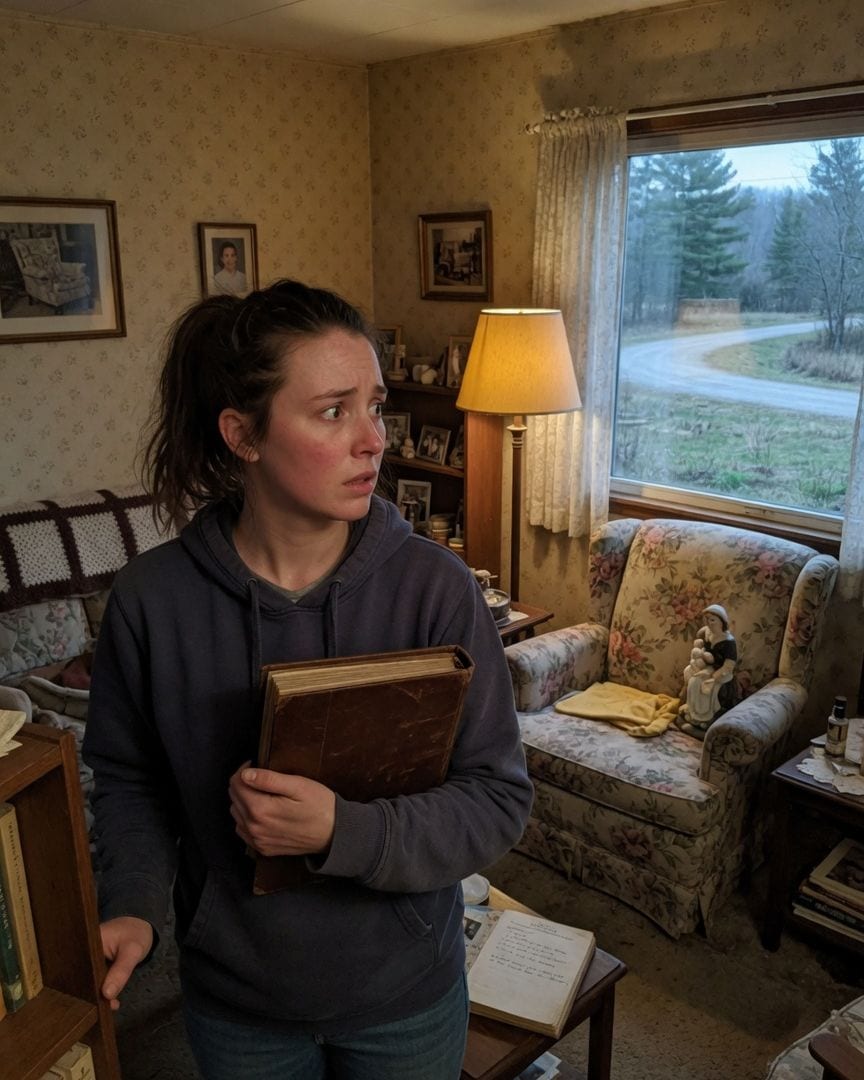
My Gran's armchair faces the wall. She moved it herself; says the road was never worth watching. She just came back.
My Gran Beatrice was back home after wandering into the woods, physically unharmed but disoriented. As I stepped into her familiar living room, a stark wrongness hit me: her beloved floral armchair, a fixture for sixty years, was turned 180 degrees, its back to the window it had always faced.
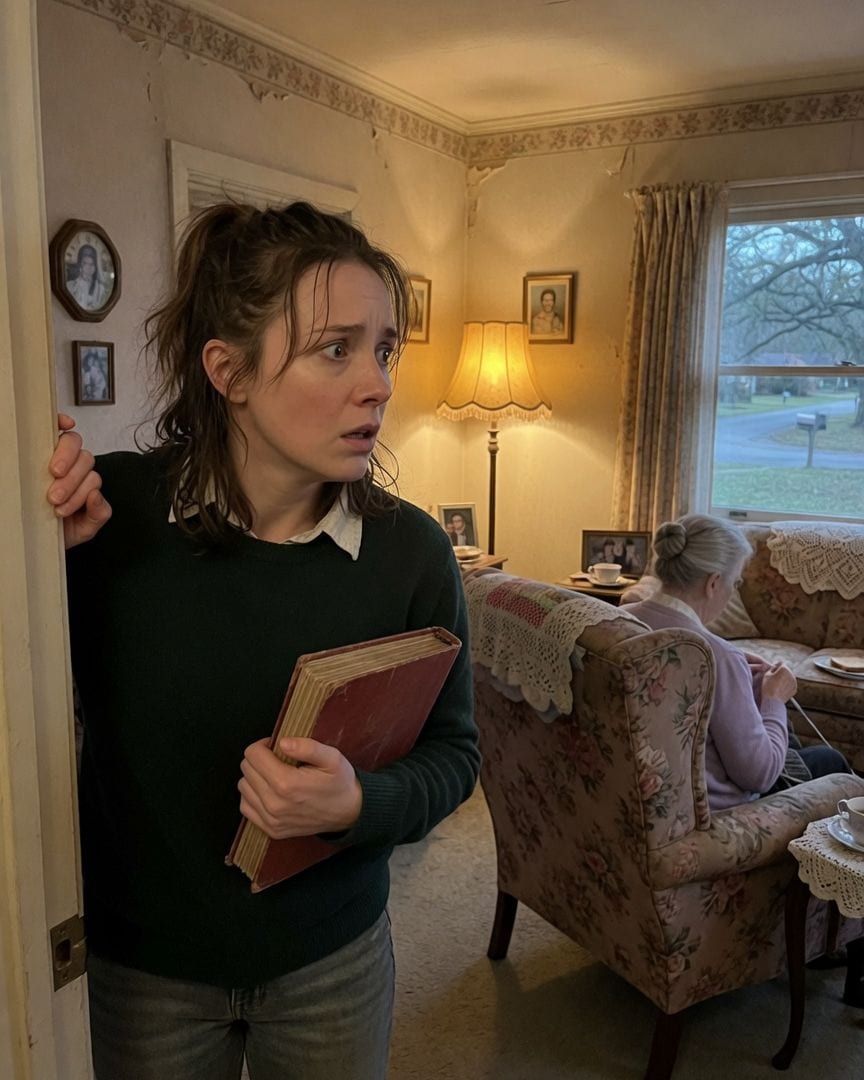
Gran's armchair faces the wall now. She moved it herself, but she'd watched that road from the window for ninety years.
I walked into Gran Kathleen’s living room, expecting comfort, but found her favourite armchair turned fully to the wall. Gran sat in it, knitting calmly, and said the road she always watched was 'never much worth watching.' Her placid certainty, contradicting a lifelong habit, made the ordinary explanation feel thin.
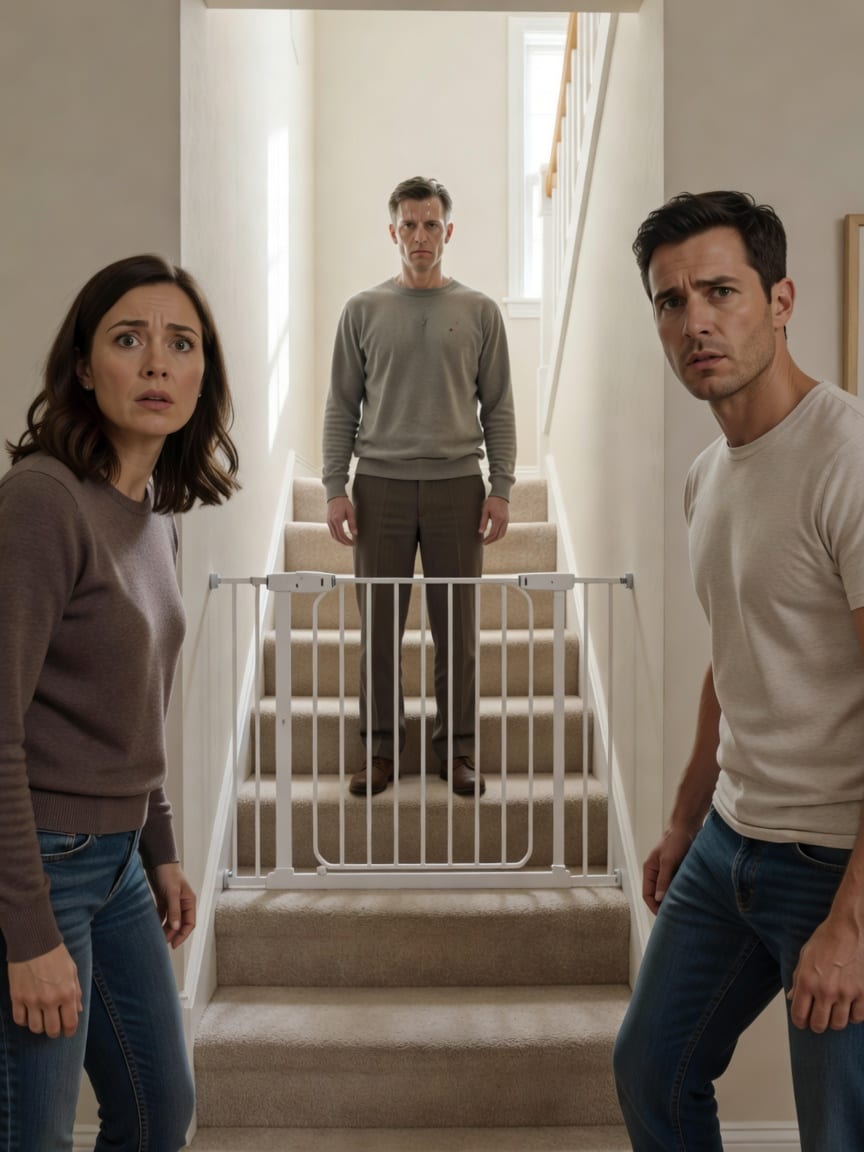
My stair gate latches itself every night. Pressure-fitted tight across my empty stairs, no children live here and no fixings exist on the wall.
I live alone in my inherited house, so the toddler gate at the top of my stairs should not be there. Each morning, I find it perfectly latched and sturdy, despite having hidden it away in the shed the day before. This isn't a quirk; it's a routine, and it isn't mine.
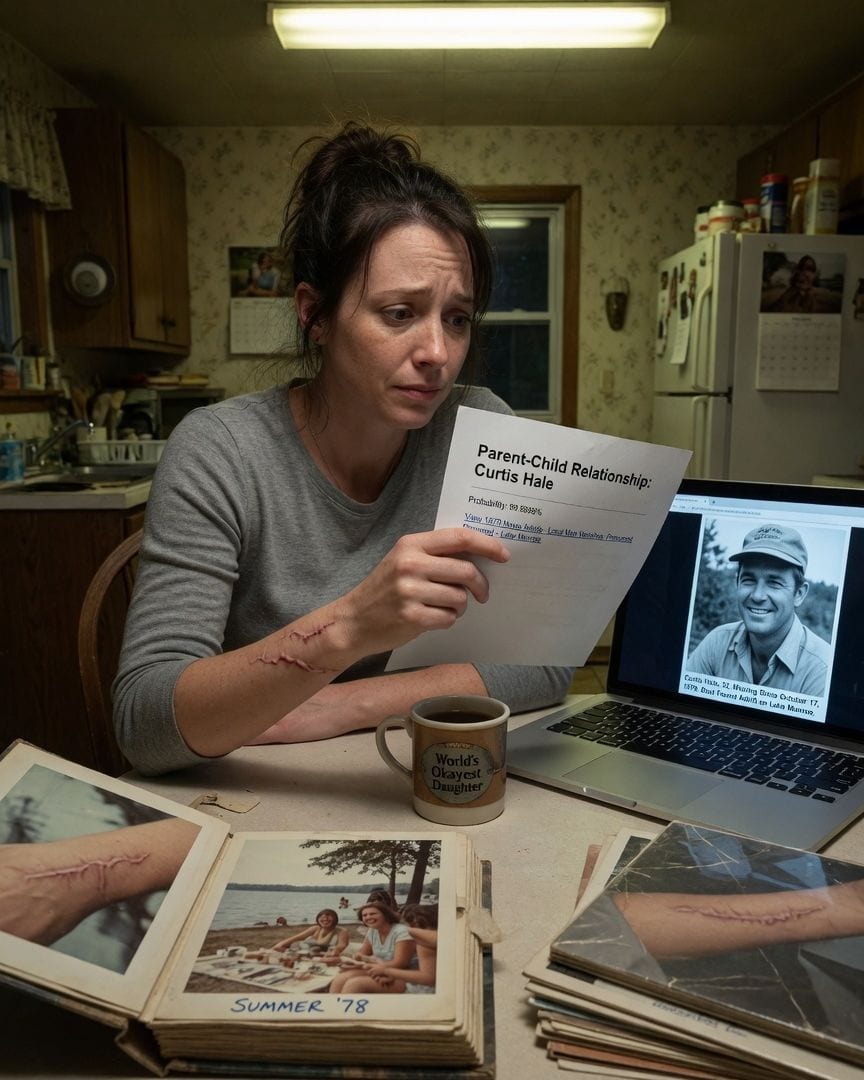
My DNA returned Curtis Hale as my father. He vanished in 1979. I was born twelve years later. The lab confirmed the match twice.
My DNA test results revealed something impossible: my biological father vanished in 1979, twelve years before my birth. My mother dismissed it as nonsense, but her reaction felt forced, leading me to old family photos. There, in a faded 1978 snapshot, I found my own distinctive childhood scar on the wrist of a stranger.
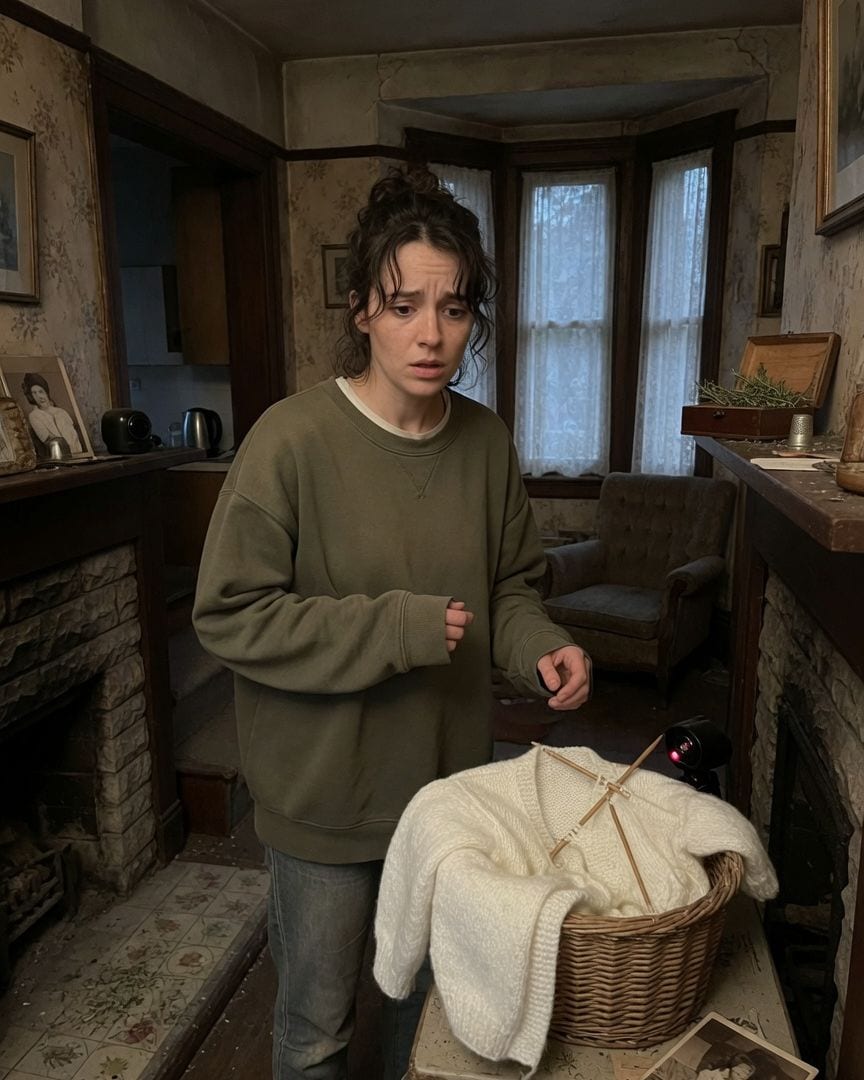
A half-finished baby's cardigan sits by my fireplace, and every few days it has more rows than before. Last Sunday a whole sleeve was finished — but I can't knit, and I live alone.
Moving into my grandmother's quiet old house, I found a half-finished baby cardigan in a workbasket. I thought it was a sweet detail, left it there. But then, day after day, new rows of perfect white stitches appeared on the wool. I don't knit, the house was locked, and I live alone.
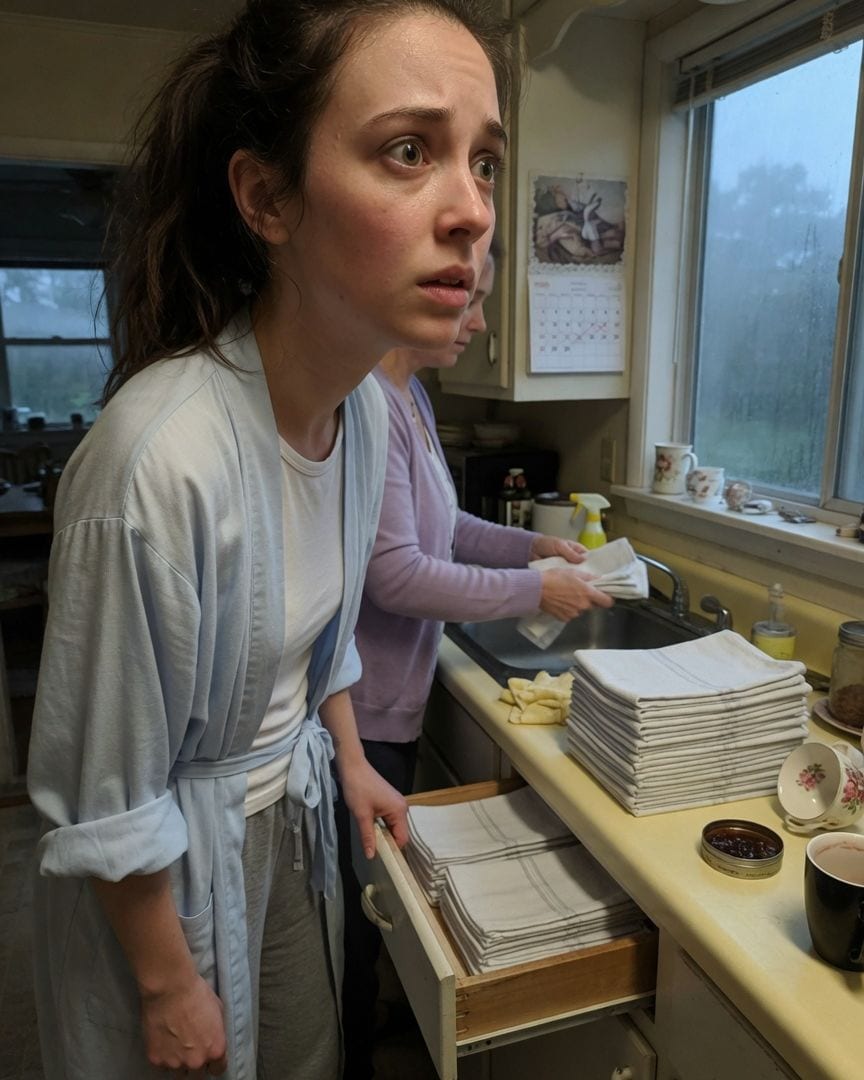
My mother's left wrist has a new scar. She never had one there.
My mother is finally home after her disappearance, and I'm trying to find our old rhythm. But then I watch her fold tea towels, a simple ritual I learned from her. She's doing it completely wrong, seam-out, insisting it's how she's always done it.