My hall barometer taps itself every night at six. From the next room, with nobody there.
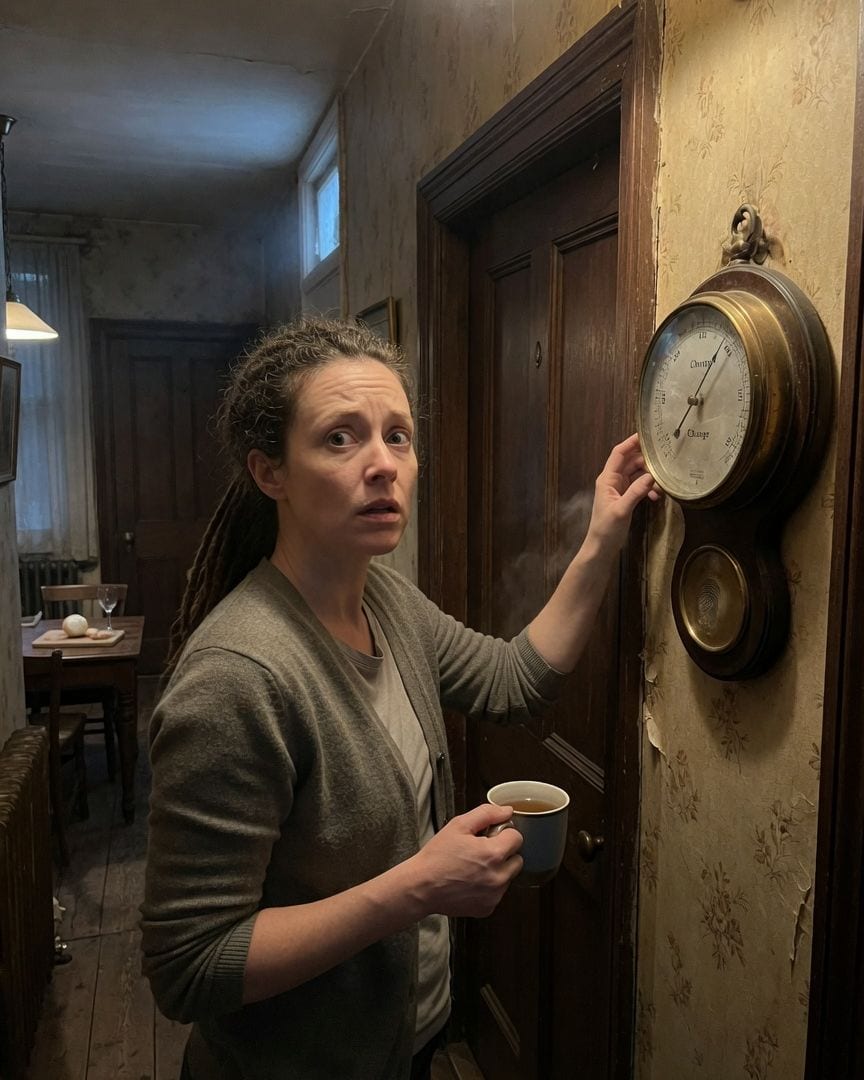
I remember making tea, just a few weeks after moving into Oscar Vaughn’s old house. It was a cold October evening, early, the kind that promised a long winter.
The kettle was just starting its low hum when a soft tap-tap-tap came from the hall. I paused, listening. Old houses make noises. Settling. Wind. The usual.
I put it down to that, poured the hot water, and carried my mug back to the living room.
Then, precisely at six o’clock, the tapping started again. This time it was more distinct, rhythmic, like someone gently knocking on wood. Tap-tap-tap. It definitely came from the hall. My breath hitched a little.
I live alone, and every door and window was locked. Still, I tried to rationalize it. A branch brushing against the wall? A faulty pipe? I finished my tea, waiting for it to stop. It did.
Curiosity, or maybe something less logical, pulled me into the hall. The first thing I saw was the old banjo barometer hanging by the front door.
It had been there when I bought the place, a charming, if slightly dusty, antique. Its needle, which I’d last seen pointing to ‘Fair’, had flicked sharply, pointing squarely at ‘Change’.
And on the tarnished brass casing, just beneath the glass, was a faint, almost invisible smudge. A fingerprint.
I ran my thumb over it. My own finger made a faint smear across the surface. I took a microfibre cloth from the utility closet and carefully wiped the brass clean.
It felt ridiculous, wiping away what was probably just a dusty mark from a previous owner, but I did it anyway.
The next evening, I was in the kitchen, chopping vegetables for dinner. Six o’clock chimed on my phone. And from the hall, tap-tap-tap. My hand froze mid-chop. I walked slowly to the hall.
The needle on the banjo barometer had jumped to ‘Change’. And there it was again. The same faint smudge on the brass, a perfect, ghostly echo of the one I’d wiped away.
A partial print, definitely too small to be my own. My heart thumped, a sudden, frantic rhythm against my ribs. The house was locked. I was alone.
I tried to ignore it the next night. I turned up the TV, blasted music. But even through the noise, at precisely six, I felt the vibration, a dull thud against the silence, and I knew. The barometer was tapped.
The smudge was back.
It stopped being a casual observation. I started trying to find where the taps were actually coming from. They weren't just emanating from the barometer itself, but seemed to have a source, a focal point.
My search led me to the dining room, the wall directly opposite the hall. I pressed my ear to the plaster, listening. Nothing obvious.
I ran my hand over the wallpaper, feeling for loose panels, for anything that could explain the sound.
But it wasn't just the sound. There was a smell too. Faint at first, then more persistent, especially in the dining room. Old pipe tobacco, distinct and musky, mingled with something else – rich, savory, like a slow-cooked stew.
It was comforting in a strange, unsettling way, like walking into a house where someone else was just finishing dinner. Except I don’t smoke, and I certainly hadn’t been cooking anything like that.
I checked my pantry, thinking maybe some spices had spilled, but everything was sealed. The smell was just… there.
My nose led me along the wall. It grew strongest near a section that had always seemed a little… off. A heavy, dark oak door, flush with the wallpaper, had always been there.
I’d assumed it was a pantry, a built-in cupboard, but I’d never been able to open it. It was solid, imposing, and always locked.
I’d tried a few keys when I moved in, but none fit, and I’d largely forgotten about it.
One evening, I was sitting at the dining table, nursing a glass of wine, staring at that door. Six o’clock arrived. The taps from the hall. My head snapped to the oak door.
This time, as the last tap faded, I saw it. A sliver of darkness along the edge, where the door met the frame. It was ajar, barely a crack.
A cold, musty draft, smelling faintly of old paper and that same pipe tobacco, emanated from within. It was impossible. I hadn’t touched it. No one had.
My heart was hammering, but I couldn’t look away. I put my wine glass down, the clink echoing too loudly in the sudden, heavy silence. I pushed myself up from the table, walked towards the door.
My fingers, trembling slightly, brushed against the cold, rough wood. I hesitated, then with a deep breath, I cautiously pushed it open a little further.
Nora pushes the heavy oak door open again, just a crack. Through the narrow gap, she sees the study, dimly lit by a desk lamp. An elderly man is writing at a cluttered desk.
Beyond him, through a window, a garden from another era. On the wall, a calendar shows 'October 1978'. Then, with a soft click, the door swings shut, locked tight.
The calendar showing October 1978. The old man. The way the door had just clicked shut and locked itself. I stood there, my hand still outstretched, staring at the solid, unyielding oak. It was real. I wasn't dreaming.
I tried every key I owned on that door. The front door key, the back door key, the shed key, even an old blank key I found in a drawer. Nothing. The lock was absolute.
It was like the brief glimpse had never happened. But the lingering scent of pipe tobacco, stronger now, caught in my throat, telling me it had.
The next day, I drove to the local archives. I needed answers, not just a confirmation of my sanity. The house’s history wasn't hard to find.
It had belonged to a man named Oscar Vaughn, a reclusive academic, who had died in the house in… 1978. The date on the calendar. My stomach twisted.
I found old property photos, faded black and white images of the house from the 1950s and 60s. One of them showed the dining room, and there it was, the heavy oak door.
And another, a rare interior shot, briefly revealed a glimpse of a study beyond it, filled with books. My study. Oscar Vaughn’s study.
Back at the house, I started paying closer attention to everything. The subtle sensory details that had been background noise now screamed for attention.
The definite, almost regular creak on the main stairs at exactly 7 AM, as if someone heavy was descending. The faint, rich aroma of strong coffee at 8 AM, wafting from the kitchen.
And at 4 PM, from the drawing-room – the soft, distinct clinking of teacups. Not random sounds. These were precise, daily routines. As if the house itself was on a schedule.
One afternoon, rummaging through a box of Oscar Vaughn’s old books I’d found in the attic, I found it. Tucked inside a crumbling copy of The Theory of Relativity, a brittle, handwritten fragment. A page torn from a journal.
The ink was faded, the handwriting precise, almost scholarly. It mentioned ‘the study where time folds’ and ‘the recurring visitor.’ I reread it, my fingers tracing the faded words.
It was like Oscar Vaughn himself was speaking to me, across the decades.
I started a log. A meticulous, detailed account of every occurrence. Time, sound, smell, my location. Mapping the phantom schedule of the house. I needed to understand.
As my log grew, a creeping sense of unease began to replace the simple curiosity. The house wasn't just replaying; it felt like it was reacting. The barometer taps, once a rigid 6 PM occurrence, became more insistent.
Sometimes they'd come earlier, a tentative tap-tap at 5:45, as if testing for my presence.
Other times, later, a rapid, almost frantic succession of taps at 6:15, as if trying to draw my attention, or perhaps, chastising me for not being there. The finger smudge reappeared, always.
One evening, I was sitting in the dining room, staring at the oak door, my logbook open on the table. The air was still, heavy with that familiar scent of pipe tobacco. I heard it then.
A distinct, faint whisper, not a voice, not really, but a dry, papery sound, like old pages turning rapidly, rustling. It came from behind the door. And it said, or rather, implied, the words: "Don't look."
My heart jumped into my throat. The air around the door grew noticeably colder, a chilling draft that raised goosebumps on my arms. I snatched up the journal fragment from the table.
I remembered a vague sense of unease from it before, but now I looked closer. Scrawled in a shaky hand, almost an afterthought at the bottom of the page, was a new entry, one I hadn't registered before. 'They see me too. The pattern holds. I must warn them.'
It was as if Oscar Vaughn knew he was being watched, just as I was now watching his echoes.
I had to talk to someone. Someone who had been here, who remembered Oscar Vaughn. My elderly next-door neighbor, Margaret Sullivan, was 85 and had lived on this street since 1960.
I introduced myself properly, offered her some homemade cookies, and steered the conversation towards local history, trying to be casual.
Margaret, initially, was a closed book, polite but wary. "Oh, that house," she said, her lips pursed. "Always a quiet place. And the man who lived there, Mr. Vaughn... Oscar.
A very peculiar man, always with his nose in a book." She remembered him well, which both thrilled and terrified me.
I mentioned the barometer, trying to keep my voice even. "I noticed an old barometer in the hall, quaint, but a bit of a fixer-upper."
Margaret's eyes, sharp behind her spectacles, fixed on mine. "Oh, that old thing. Oscar was very particular about that. Always tapped it at six, like clockwork. Said it was important to 'wake up the day,' or some such nonsense.
Then his dinner, then his studies. Very rigid, Mr. Vaughn was."
My internal logbook was screaming. Barometer at six. Dinner. Studies. The pipe tobacco, the stew smell. It was all there. I pressed on, carefully. "Did he have a particular room for his studies?"
Margaret looked away, a flicker of something unreadable – old fear, perhaps, or just dismissal – in her gaze. "His favorite room, always locked. Said he did his strange work in there. Never let anyone in.
Not even the cleaning lady." She shivered slightly. "After he passed, the house was empty for years. Sad, really. But sometimes, late at night, I'd still hear his barometer. Or smell his pipe, clear as day, drifting over the fence."
She patted my hand. "Just the wind, I suppose. Old houses, they have funny ways about them."
Just the wind. But the look in her eyes, the way her voice had dropped, told a different story. It wasn't just the wind.
Nora's earlier observations about the barometer, the smells, the fixed routines, all clicked into place with horrifying clarity. The house wasn't just haunted by echoes. It was a recording, playing back Oscar Vaughn's life, endlessly. And he knew it.
I walked home in a daze. The pieces fit. Oscar, the house, the patterns. The house wasn't just echoing; it was looping. Replaying.
And I was now a witness to a routine that had persisted for decades, long after its creator was gone. As I approached my front door, I saw it. The heavy oak door to the study stood ajar.
Nora takes a breath, then steps across the threshold. The air is still, thick with the scent of old paper and pipe tobacco. Oscar Vaughn is at his desk, quill in hand.
He slowly raises his head, his eyes, dark and knowing, fix on Nora. He doesn't flinch, doesn't react with fear or surprise.
Instead, a faint, almost imperceptible smile touches his lips as he inclines his head, gesturing with his quill toward a leather-bound journal open on his desk.
Trembling, I stepped fully into the study. The air was cold, despite the warm glow of the desk lamp, and that overwhelming scent of old paper and pipe tobacco clung to everything.
Oscar Vaughn, unmoving, his eyes still fixed on mine, pointed again to the leather-bound journal. My hand felt heavy, my arm stiff, but I forced myself to move.
I reached for the journal. Its cover was worn smooth, the leather darkened with age. It was open to a page dated 'October 27, 1978'.
My heart pounded a frantic drum against my ribs as I looked down at the precise, careful handwriting. Oscar’s hand. And then I read.
She stands there now, in the doorway. The woman from the future, or perhaps, the past's echo of a future I have already seen. Her hair is dark, pulled back. She wears a simple grey sweater, her hands clutched tight. There is fear in her eyes, but also a fierce curiosity. She reaches for this journal now.
My breath caught. It was me. He was describing me, exactly, in that moment. The grey sweater, the way my hands were shaking. I read on, my gaze darting from the page to Oscar's calm, knowing face.
He wrote about the house's 'retained memory,' how it didn't just hold events, but fixed moments, preserving them in a perpetual cycle.
It trapped those who became too deeply intertwined with its routines, turning them into echoes of themselves, forever replaying their part.
He described seeing 'others' before me, fleeting visions of people watching him from the doorway, just as I was watching him now. He had once been an observer, he wrote, intrigued by the house's temporal quirks.
But the more he documented, the more he watched, the more he became 'fixed' within the cycle. He was now a part of the house's perpetual routine, a living echo.
I wasn’t just witnessing. I was participating. This loop, this exact moment, had already happened. And it was happening again.
I tried to speak, to ask him, to tell him, but my voice caught in my throat, a dry, pathetic sound. Oscar Vaughn's gaze remained fixed, knowing, utterly unblinking. It was then that I saw it.
A faint, shimmering outline, like heat haze, of myself. A ghostly double, standing where I had first peered through the door, observing Oscar, just as his journal had described. I was here. And I was there.
The study felt impossibly real, yet utterly trapped. I looked down at the journal again, then at Oscar, whose quill remained poised above the page, eternally waiting.
On the edge of his desk, partially obscured by an inkwell, I spotted a small, tarnished silver locket. It was old, intricately engraved with swirling patterns. I reached for it, my fingers brushing Oscar's motionless hand.
His skin was cold, like marble.
The locket was cold, heavy, shockingly real in my palm. I turned it over. On its back, etched clearly in elegant script, were the initials 'NH' and the date '1942'. My own initials.
A date long before I was born, long before Oscar Vaughn died. An artifact from a past that wasn't mine, yet bore my mark. This locket, solid and undeniably real, should not exist in 1978, let alone bear my initials.
As my fingers closed around it, clutching it tight, the lamplight flickered violently. The study shivered around me. Oscar Vaughn's figure blurred, then elongated, dissolving into a dizzying blur of dust and darkness.
I stumbled backward, clutching the locket, landing hard on the familiar wooden floor of my dining room. The heavy oak door was solid, shut, locked. The study was gone.
I sat there, breathing hard, the locket cold and real in my hand. 'NH'. '1942'. My initials. The impossible date.
I tried to open it, to see what was inside, but it was stuck fast, sealed by age or something more profound. The house was silent now, but the silence felt heavier, watchful.
I looked at the barometer in the hall, but its needle was still. It was after six.
I sold the house within weeks. I didn’t care about the market, about profit. I just needed to be out. I moved cross-country, never looking back.
I never touched another barometer, not a weather station, not even the little ones in my car. The locket, a constant, tangible proof, remained with me, a cold weight in my pocket or on my bedside table.
Years passed. The phantom taps, the faint smells of pipe tobacco and stew, they faded but never fully disappeared from my memory, or my senses.
Nora Hartley lived a quiet life, always aware of the echoes, the quiet routines that played out in the corners of her mind.
One evening, alone in my new apartment, I finally managed to pry open the tarnished locket. It had taken years of casual attempts, then one desperate, quiet moment.
Inside, on one side, a tiny, faded photograph of a younger Oscar Vaughn, his eyes already holding that distant, knowing look. The other side was a blank, polished silver.
Nora lifts the locket, and her own reflection stares back from the empty space, a silent, unblinking witness.
If this one got to you
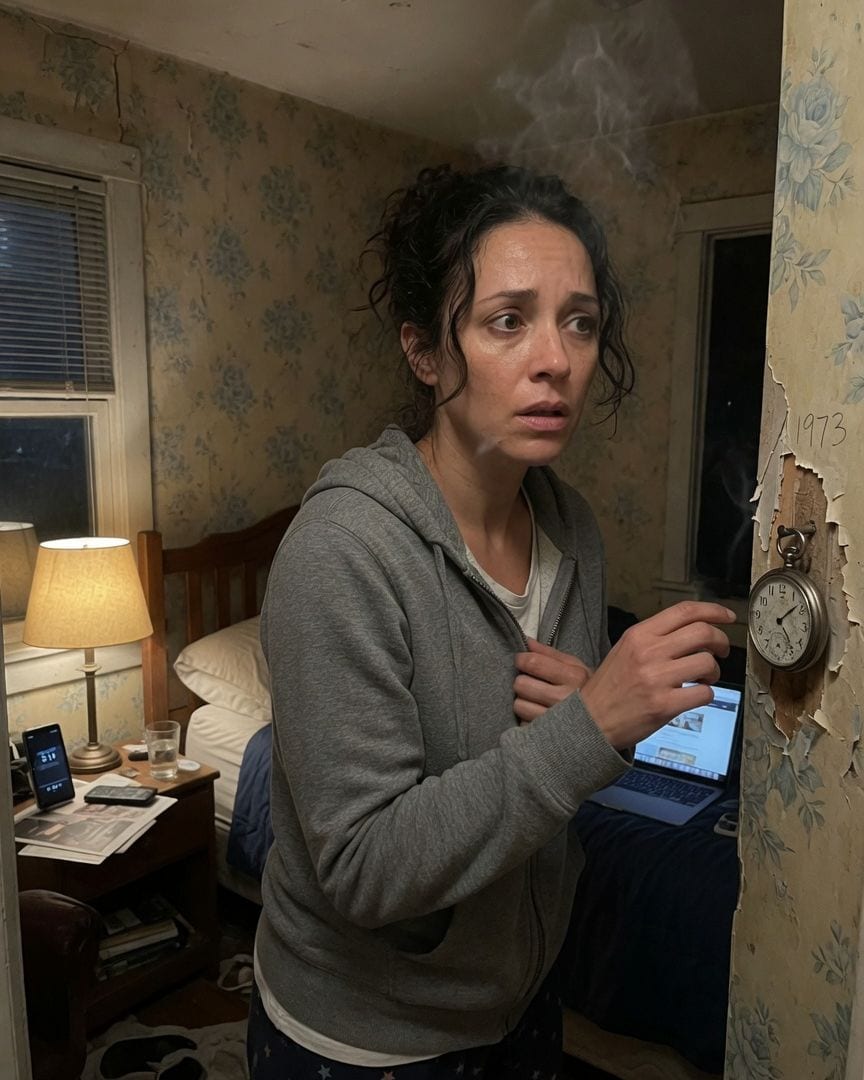
My pocket watch ticks at 3:14 every morning, warm in my hand. I’ve thrown it away; it’s back on its nail by dawn.
I’m a rational person, but my new old house came with a pocket watch I couldn't explain. I meant to discard the broken relic, yet a few mornings later, I woke to its faint ticking at 3:14 AM. It was warm, and no matter where I put it, the watch kept reappearing on its nail.
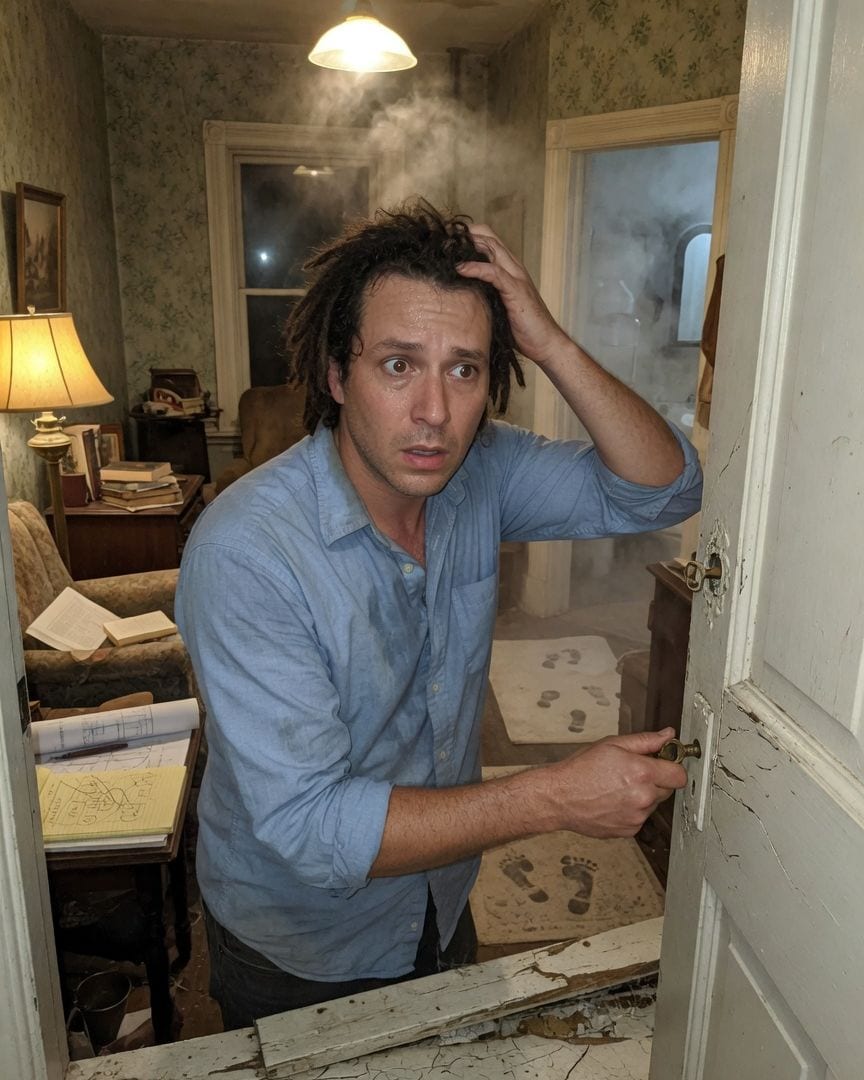
The bath filled itself at 9:30 PM. My main house water was off. Wet footprints led from the tub to a locked airing cupboard.
As an architect, I pride myself on logic. Moving into my inherited Victorian house was supposed to be a quiet fresh start, but on the third night, I heard the impossible. Even after I shut off the main water to the entire house, my clawfoot bath upstairs ran full, warm, and steaming at 9:30 PM.
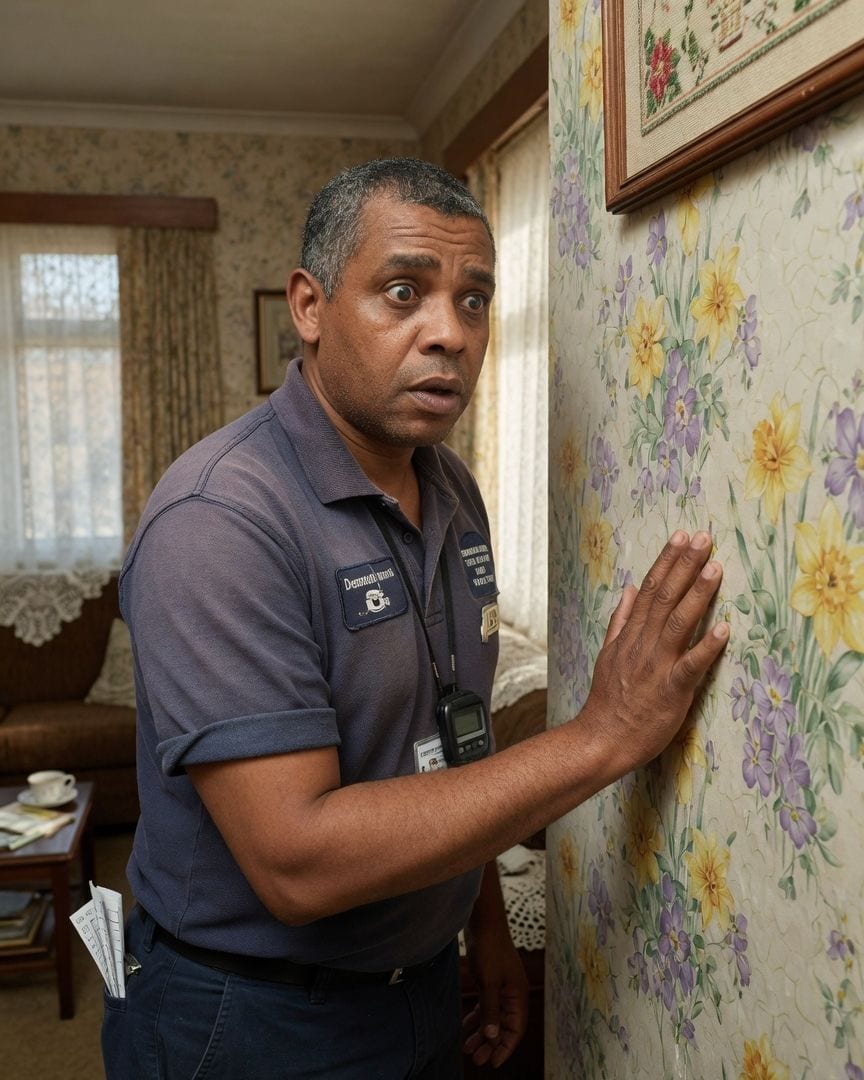
I read the water meters on this street, and this month number 30 grew a second one in pavement that was solid last month — its pipe runs back under a front door I cannot find.
I'm Desmond Drummond, a city water meter reader, used to the predictable rhythm of my fifteen-year route. But this month, Mrs. Crane's house on Elm Street showed a second meter reading. It led to a new meter pointed at a blank brick wall, and later, to a hidden door behind her living room wallpaper where no door should exist.
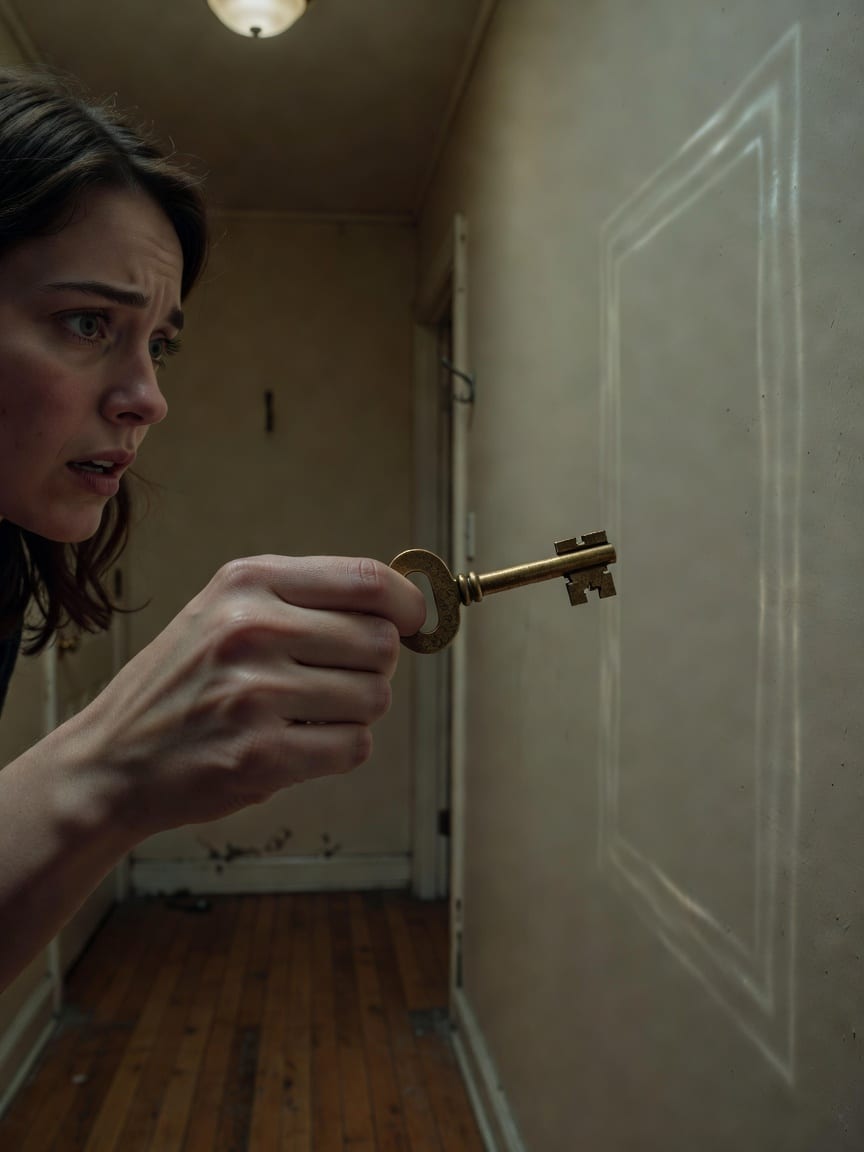
My new house has seven rooms. The removal men counted six. Now one of them asks who's in the locked seventh, on a landing with only six doors.
Moving into my new house, I supervised the removal men hauling boxes. But on the landing, Paul, the senior man, asked about a locked seventh room upstairs, pointing to a blank wall. His quiet certainty, despite the clear absence of a door, filled me with a sudden, icy dread.
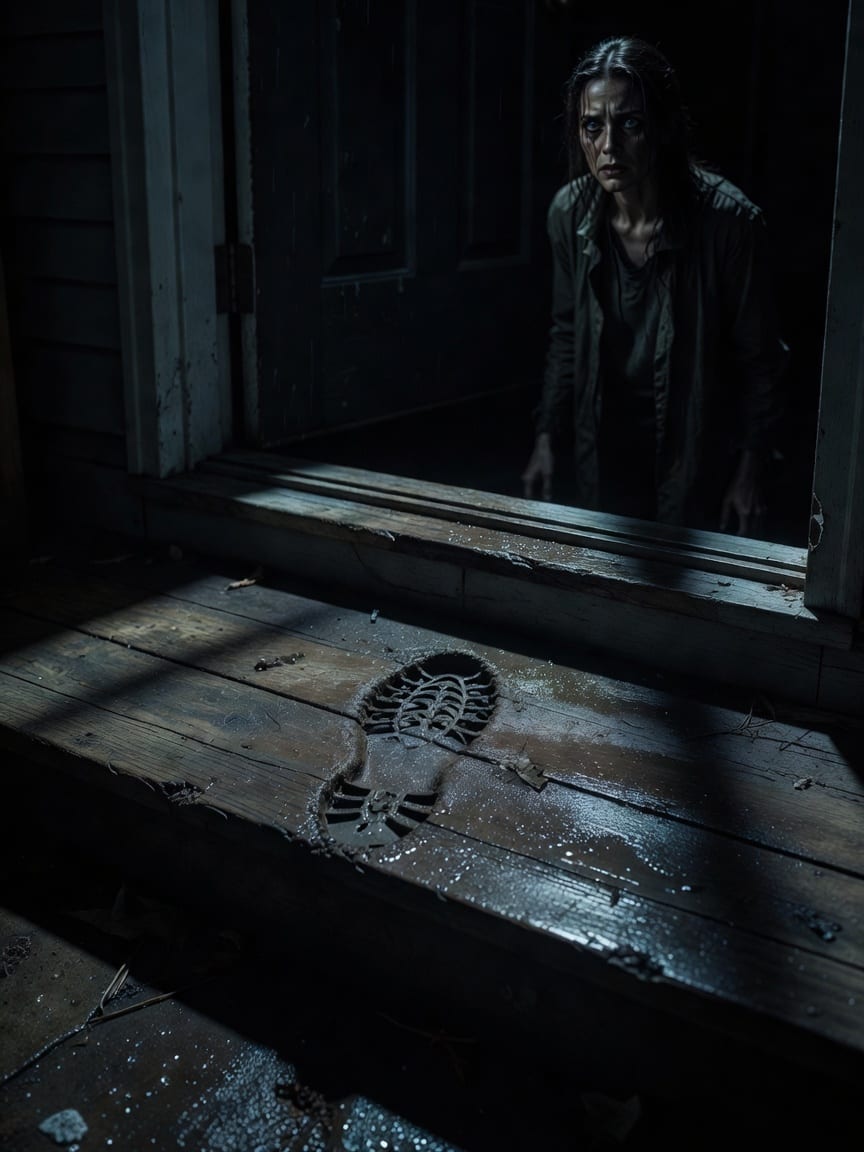
My landlord's only rule: never let the outside tap run after sundown. Last week it dripped. This morning, wet bootprints ringed the back step from the tap to my door, all the same size. The tap was off.
We'd just settled into Waterside House, with its strange landlord rule about the outside tap. After the washer broke, I found perfect, wet bootprints leading from the tap to our back door, but the tap was cranked completely off, tighter than I could manage.
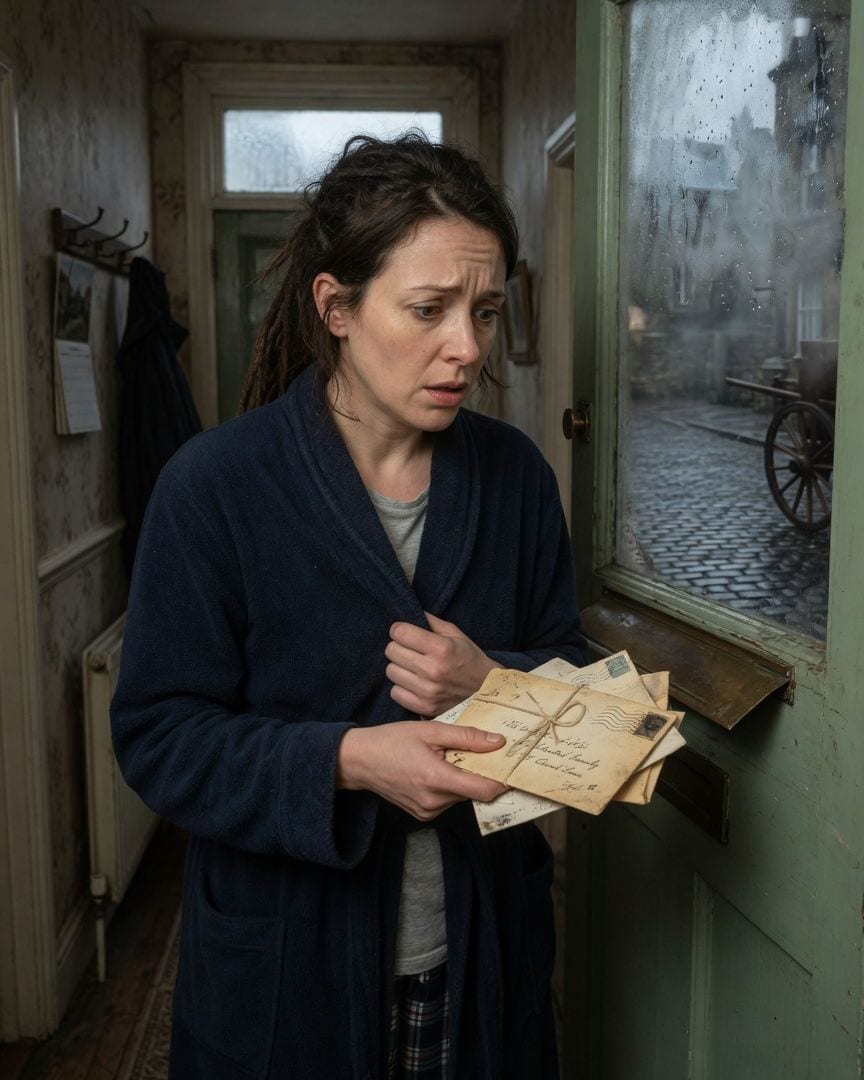
Seventy years ago, a hidden journal recorded my door opening to the wrong street and receiving Lockwood post.
I'd only recently moved into my inherited house, a quiet place on the edge of town. One grey morning, a distinct clatter from the front door's post flap caught my attention. Reaching down, I expected my gravel path, but instead, the flap showed a dark, cobbled street that wasn't mine. A bundle of warm, old letters, addressed to 'The Lockwood Family,' slid through, before the vision flickered and was gone.