My kitchen's dumbwaiter cage came up with oysters on ice and a menu from 1911. The ink still wet, the button unlit, and I live alone.
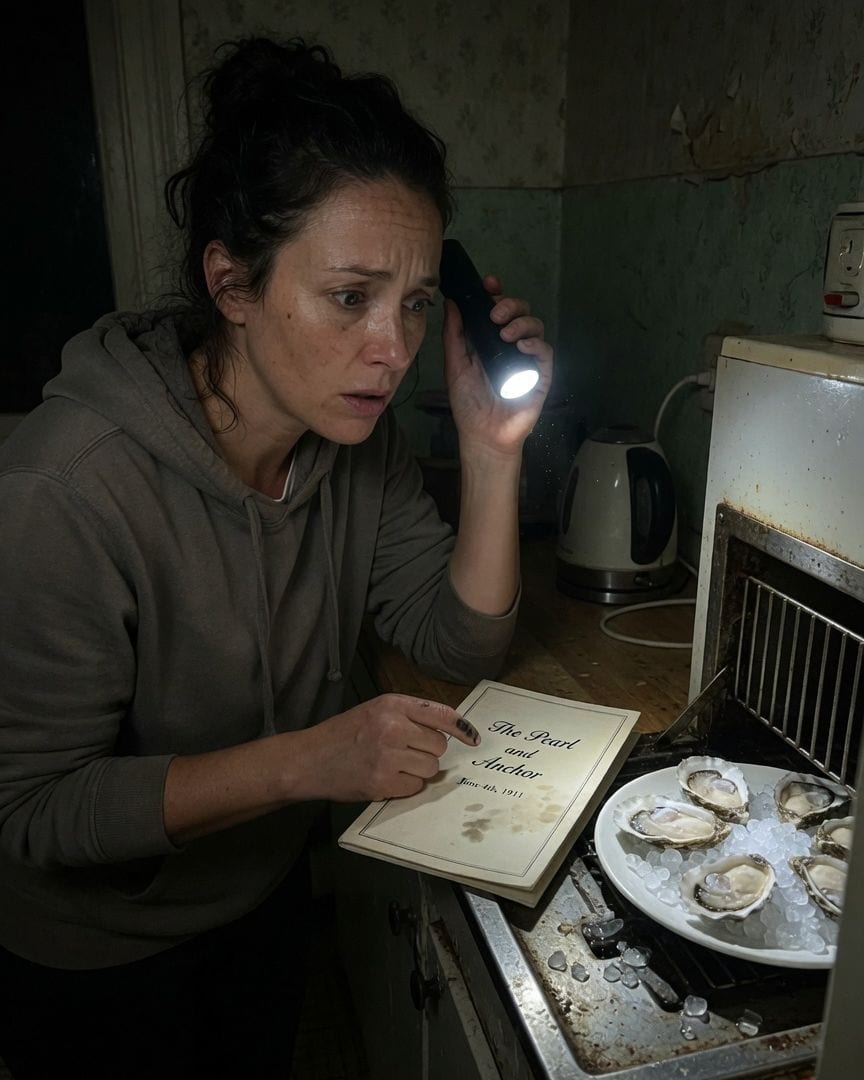
The burst water main up the road had cut the power, plunging my new kitchen into a sudden, thick dark.
I’d just inherited the house, a grand old thing with a closed-down restaurant below, and I was still getting used to its quirks.
It had a dumbwaiter, a relic of its restaurant days, a small cage I’d been using to shuttle tea towels from the kitchen down to the laundry room in the basement.
I’d gone for my phone, fumbling for the flashlight app, when the serving lift shuddered. It had no power, no button lit on its dusty panel, but the cage slowly, silently rose from the floor.
It stopped with a soft click, barely audible over the sudden rush of my own pulse. Inside, nestled on a bed of fresh ice that hadn't been there a second ago, was a single, pristine plate of oysters.
Beside it, a folded menu, stiff and creamy, the kind you’d frame. I picked it up, my fingers shaking slightly. The masthead read 'The Pearl and Anchor,' and below that, the date: 'June 4th, 1911.'
The ink on the date was still wet enough to smudge under my thumb, leaving a faint black smear on my skin.
I lived alone. The power was out. I stared at the impossible meal, the silent lift, the wet ink, my heart hammering against my ribs.
I rationalized it for days. A fluke, a power surge that hadn't been a surge, a prank by the previous owner, though I’d been assured the house was vacant for months before me. But then the small things started.
Every morning, precisely at 6 AM, the old kettle in the kitchen would let out a faint, high whistle. Not a full boil, just a whisper of a sound, like steam was escaping.
I’d unplugged it myself after the first time. Tested it. The whistle still came.
Then there was the third stair on the main staircase; it always creaked, a specific, deep groan, but only when I wasn't on it.
It sounded like someone avoiding it, a heavy foot deliberately placed on the stair before or after it.
I tried to walk around it once, stepping only on the second and fourth, but the creak still sounded, just behind me, a deep resonance that vibrated through the banister.
One evening, a faint, sweet smell of burnt sugar drifted from the empty dining room below.
It was a specific smell, warm and caramelized, like the bottom of a crème brûlée gone slightly wrong – a smell I remembered from my grandmother's kitchen, but I hadn't baked in weeks.
The house felt less like an empty shell and more like a quiet stage, waiting for its cue.
I started searching online, digging through local history archives for 'The Pearl and Anchor,' anything about June 4th, 1911. Nothing immediately obvious came up, just snippets about old businesses.
But the feeling of a schedule, a routine, was starting to settle in my bones, a routine that wasn't mine.
Frustrated, and needing to keep my hands busy, I started prying at loose floorboards in the dusty, unused attic, hoping to find old deeds or blueprints, anything to explain this place.
My fingers scraped against something thin and brittle, tucked deep into a gap. I pulled out a folded, yellowed newspaper clipping. The masthead was barely legible, a smudge of old type, but the date was clear: 'June 5th, 1911.'
And the headline, bold and black, screamed: 'Chef Vanishes from Pearl & Anchor.'
My fingers trace the faded newsprint of the 1911 article, the headline 'Chef Vanishes from Pearl & Anchor' staring back at her, the date 'June 5th, 1911' confirming the impossible menu.
The newspaper clipping was my anchor, the first solid piece of impossible proof.
I took it to the local historical society, a small, quiet building filled with the scent of old paper and dust, a place that felt preserved in amber.
I met Roland Thornton, a retired history teacher who volunteered there, his eyes kind behind thick spectacles, his tweed jacket smelling faintly of pipe tobacco and mothballs. He recognized the clipping immediately.
'Ah, the Pearl and Anchor,' he murmured, his voice raspy, like dry leaves skittering across pavement. 'A local legend, that one. Or perhaps, a local tragedy.'
He pulled out a heavy, leather-bound property ledger from a locked cabinet, its pages brittle with age.
He showed me entries for my address, documenting a series of short-term occupants after 1911, all leaving abruptly, sometimes within weeks of moving in.
'Always around early June,' he noted, tapping a finger on a succession of hastily scrawled departure dates.
He spoke of Edith Winslow, the original proprietress, and her head chef, Arthur Bishop. 'It was quite the scandal,' Roland explained, peering at me over his glasses. 'Bishop vanished without a trace the night of June 4th, 1911. Just... gone.
Left the restaurant in ruin, Edith Winslow heartbroken. They say the place was never the same after.'
He showed me an old photograph of the restaurant's staff, a group of stern faces in chef's whites and aprons, Arthur Bishop a tall, imposing figure at the center, Edith Winslow a severe, tight-lipped woman at his side.
The timeline clicked into place: the menu from June 4th, the date of the disappearance, the newspaper dated the day after. The house wasn't just old; it was a silent, unblinking witness.
Back home, the routines intensified. The kettle whistled longer, louder, a sustained, ghostly sigh that seemed to fill the whole kitchen.
The third stair creaked now with a heavier step, sometimes multiple steps, as if a presence was pacing, agitated, just out of sight. I started to notice specific smells again, not just the burnt sugar.
The faint, sweet scent of pipe tobacco would drift from the study, a cloying, heavy perfume, like stale gardenias, would hover in the bedroom, and the rich, greasy aroma of roasting meat would waft from the empty kitchen, thick enough to taste on my tongue.
I found myself drawn to certain areas at certain times, almost compelled to be in a particular room when a smell or sound would manifest.
One evening, I sat in an antique armchair in the dining room, a deep impression worn into its velvet cushion, a faint hollow that fit my body perfectly.
As I settled, the fabric felt warm, not from my own body heat, but as if someone had just risen from it, leaving behind a fading, intimate warmth. I jumped up, heart pounding, and spun around, scanning the empty room.
Nothing. But the warmth lingered on the cushion, a ghost of a presence, a faint indentation still visible where the previous sitter had been.
Later that night, I found the dumbwaiter cage half-risen again, empty this time, but the small, rusted lever that held it in place was dislodged, hanging limply. I knew I’d locked it down, tested its grip.
I was no longer just observing; I was being drawn into a performance. The house wasn't just remembering; it was expecting me.
I called Roland again, the phone feeling cold and insubstantial in my hand, my voice tight and thin, almost unrecognizable. 'What else happened on June 4th, 1911?' I demanded, the words tumbling out.
He hesitated, a long silence crackling on the line. 'There were rumors, of course. Always are, in these small towns. Of foul play. Of a lover's quarrel between Edith and Arthur.
They were, shall we say, unusually close for a proprietress and her chef. But nothing was ever proven. The police investigated, of course, but the official report just said 'disappeared.' No body, no note, no witnesses. Just...gone.'
He sighed, a tired, reedy sound. 'But the town talked. They said Edith Winslow lost everything. The restaurant went under within months. She never recovered, eventually losing the house too. Died in poverty years later.'
He then mentioned something he'd found recently, stored in a dusty box of uncatalogued materials – an old, water-damaged diary from a former kitchen hand.
It detailed the day-to-day workings of The Pearl and Anchor, and the lead-up to June 4th, 1911: the special menu for that evening, the specific order of oysters, the rising tensions between Edith and Arthur, described as 'a storm brewing.'
'The diary entries stop abruptly on the evening of June 3rd,' Roland said, his voice dropping, 'with a final note about a heated argument in the kitchen, just hours before Bishop vanished.'
The burnt sugar smell, the specific oysters, the exact menu from the dumbwaiter – it was all clicking into place with a sickening certainty. The house wasn't just haunted; it was a replay button, caught in a terrible loop.
And the replay was accelerating. The kettle, the stairs, the smells – they were all cues in a terrible, century-old drama.
The house was a precise, unfeeling record-keeper, and I was watching, or rather, experiencing, a loop of its most traumatic memory, a memory that had ruined Edith Winslow and claimed Arthur Bishop.
Roland had mentioned an old box of restaurant ephemera, salvaged from a junk shop years ago, still in storage. I went back to the historical society the next morning, a frantic, desperate energy driving me.
He'd gone home for the day, but I convinced the librarian, a nervous woman named Bethany, to let me look through the box, explaining the urgency with a half-truth about a family history project.
In the bottom of a dusty box marked 'Pearl & Anchor - Miscellany,' tucked beneath brittle receipts and faded postcards, I found it. A hand-drawn seating chart, faded but clear, for 'June 4th, 1911.'
Most names were illegible, scrawled in an elegant, looping script that had bled with age, but one table, strategically placed near the kitchen entrance, had two names perfectly clear, written in a bolder hand: 'Edith Winslow' and 'Arthur Bishop.'
Bishop's name was circled, a faint, almost imperceptible ring around it.
But then, as I stared, my breath hitched in my throat. I saw it. A faint, almost invisible trace where 'Arthur Bishop' had been smudged, erased, as if someone had tried to rub it out with an insistent thumb.
And then, right beside Edith's name, written in a different, more recent hand, in a soft pencil that almost matched my own handwriting, was my own name: 'Nina Winslow.'
The pencil-scrawled 'Nina Winslow' on the 1911 seating chart, next to the ghost of 'Arthur Bishop,' blurs before her eyes, the worn paper feeling suddenly hot in her hands.
The realization hit me with the force of a physical blow, knocking the air from my lungs. The house wasn't just replaying a memory; it was trying to complete it.
It wasn't content to simply show me what had happened; it needed a resolution.
The routines, the smells, the specific date – they were all parts of an ongoing mechanism, a cycle waiting for a new participant to step into the void.
The previous occupants who'd fled abruptly around June 4th hadn't just been scared off; they'd been resisting the house's pull, refusing to take the stage.
The house had retained the memory of June 4th, 1911, the day Arthur Bishop vanished, the day a tragedy incomplete, and it was forcing the current occupant into the role of the missing chef, or perhaps the one who knew what happened to him.
The blurring of my name over Arthur Bishop's on the seating chart wasn't a warning; it was a casting call.
The house was ready to re-enact the final, missing piece of its tragic history, the climax of its century-old play, and it had chosen me.
The kettle, the stairs, the oysters – they weren’t just traces; they were cues for a performance that would not end until it reached its terrible conclusion, with me on stage.
I was no longer a witness; I was a reluctant actor.
It was June 4th, exactly 113 years after Arthur Bishop disappeared. The air in the house was thick, buzzing with an almost electrical energy that prickled my skin.
The kettle whistled incessantly from the kitchen, a piercing, high-pitched shriek that clawed at my nerves. The third stair creaked below, not with a single heavy step, but with a frantic, agitated rhythm, like a struggle.
The kitchen was filled with the overwhelming, cloying smell of roasting meat, frying onions, and a faint, metallic tang, like old bl**d.
I could hear faint, echoing voices from the empty dining room below, fragments of arguments and laughter, muffled by distance, but distinct enough to follow. The dumbwaiter cage shuddered, then rose, slow and deliberate, stopping at counter height.
It was empty, but it felt alive, demanding. I knew what it wanted. It wanted me to descend, to complete the scene below, to step into the role it had assigned me.
I gripped a heavy cast-iron pan from the stovetop, my knuckles white, the cold metal feeling like the only real thing in the swirling unreality of the kitchen. I wasn’t going down there. I wasn't going to be Arthur Bishop.
I wasn't going to be the next ghost in this house.
I ran to the dumbwaiter, my breath ragged, and slammed the pan into its mechanism, a sickening crunch of rusted metal bending, tearing at the ropes that held the cage in place.
The house seemed to groan around me, a deep, resonant hum that vibrated through the floorboards, through my very bones.
I could hear distinct footsteps coming up the stairs now, two sets, one heavy and slow, one lighter and quick, heading directly for the kitchen door.
The old brass door handle to the kitchen began to turn, slowly, deliberately, a metallic click echoing through the protesting house. I didn't wait.
I grabbed my car keys from the hook by the back door and ran, not through the kitchen, but through the back door itself, out into the garden, out into the cool night air, not looking back.
The house seemed to exhale as I burst into the night, leaving the door ajar, the sounds and smells still pouring out into the quiet street, a final, desperate performance for no one.
I drove until dawn, the rising sun doing little to dispel the chill that had settled deep in my bones.
I crashed at a motel an hour away, the smell of burnt sugar and oysters clinging to my clothes, to my hair, a pervasive stench I couldn't scrub away. I never went back to the house.
I called a distant cousin, explaining I needed to sell the property quickly, making up a story about structural issues and dry rot.
The real estate agent, a jovial man named Dean Fletcher, listed it without question, eager for the commission.
I tried to tell a few friends what happened, about the dumbwaiter and the dates, the routines that weren't mine, the seating chart. They listened politely, their eyes glazing over, then suggested I get some rest, or maybe a therapist.
No one believed me. How could they? It sounded insane. I sold the house at a significant loss, desperate to be free of it. The money didn't matter.
The house still stands, an old landmark on the street, waiting for its next occupant.
I live in a sterile, modern apartment now, far from anything old or with a history. No dumbwaiters, no creaking stairs, no strange smells.
But sometimes, when the light hits just right, or a specific scent drifts from a neighbor's cooking, I catch a flicker of it.
A shadow in my periphery, a faint, almost imperceptible whistle from somewhere in the quiet of my new apartment. I still check the calendar obsessively as June approaches.
Because I know the house remembers, and some memories, once witnessed, never truly leave you. They just find a new place to reside.
If this one got to you
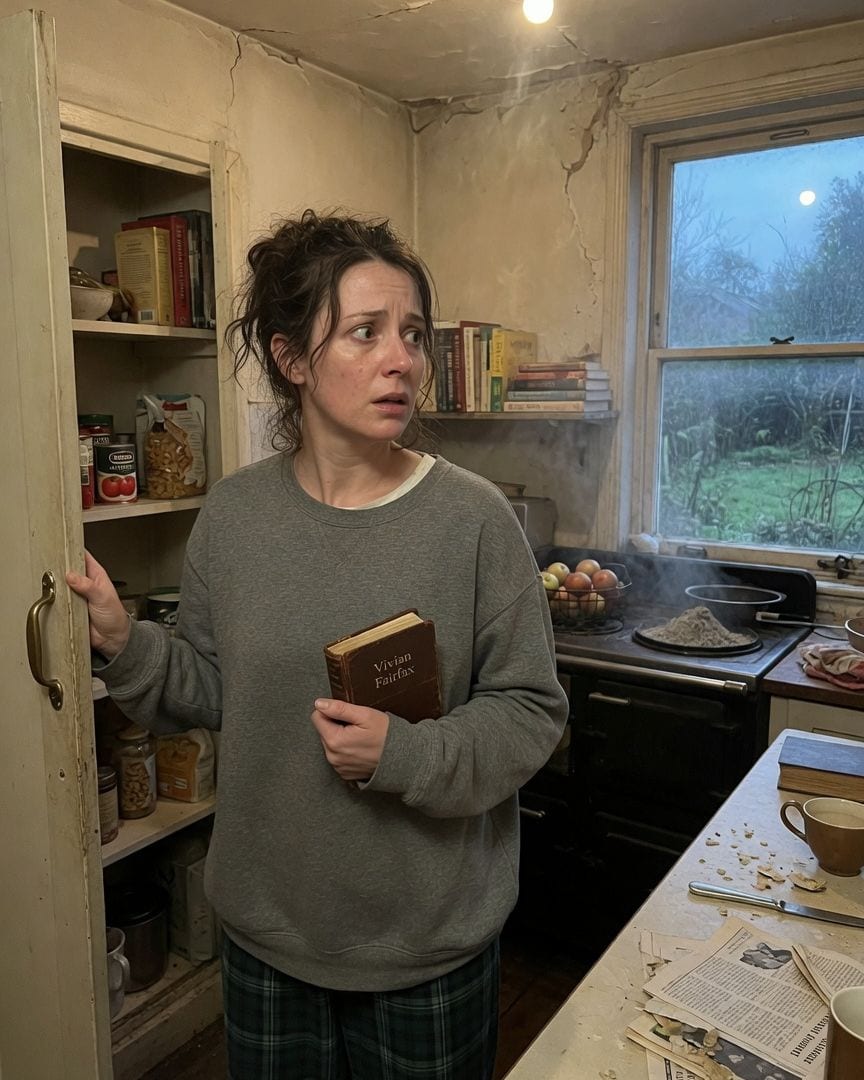
My cold kitchen range glows with coals at 6 AM, kettle singing. It's been disconnected for decades.
I moved into my old house for a fresh start, loving the quiet kitchen with its antique cast-iron range, disconnected since 1990. One morning, the cold iron inexplicably radiated heat, a strange kettle began to sing, and the scent of woodsmoke and tea filled the room. It vanished as quickly as it appeared, leaving only an impossible dread.
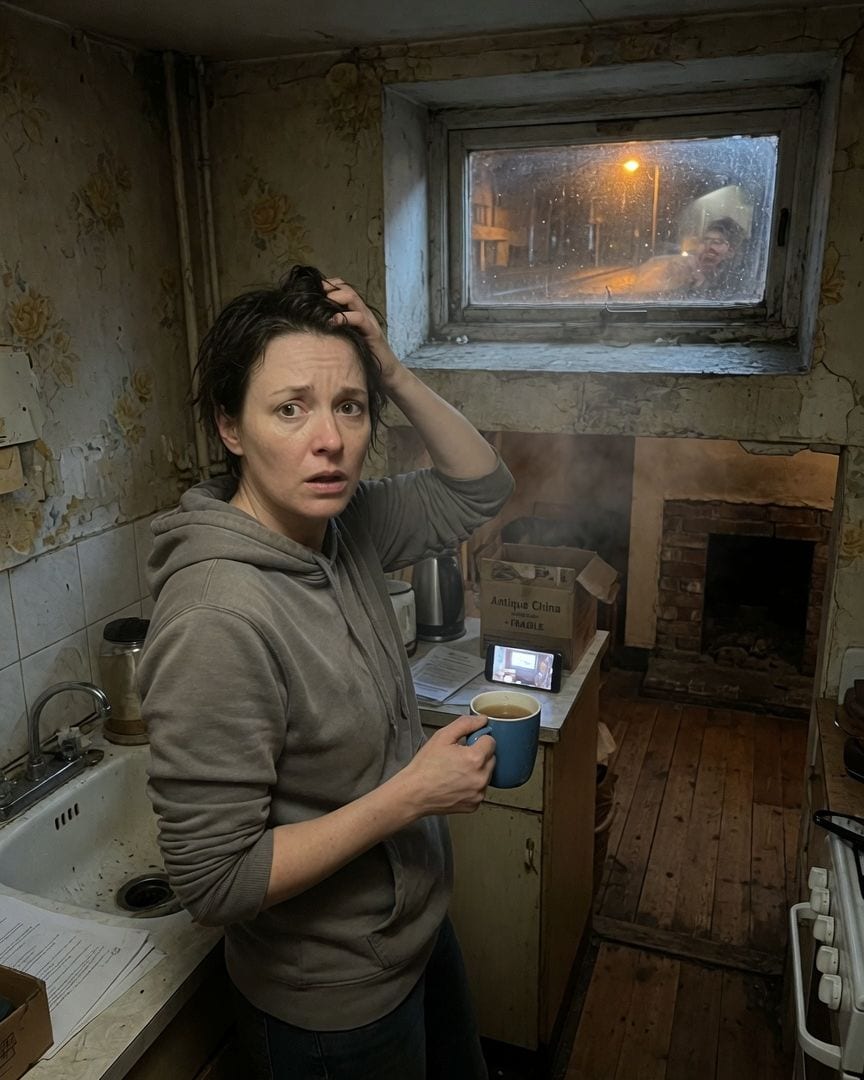
My basement window shows a gaslit kitchen moving at midnight, hams hung from the ceiling. My own kitchen is dark.
Settling into my new basement flat, I was making tea late one night when I glanced out my kitchen window. Instead of the concrete well, I saw a gaslit kitchen with an enormous cast-iron range, a young scullery girl, and cured hams hanging from the rafters. The vision was too sharp, too real, and the smell of coal smoke lingered long after it vanished.
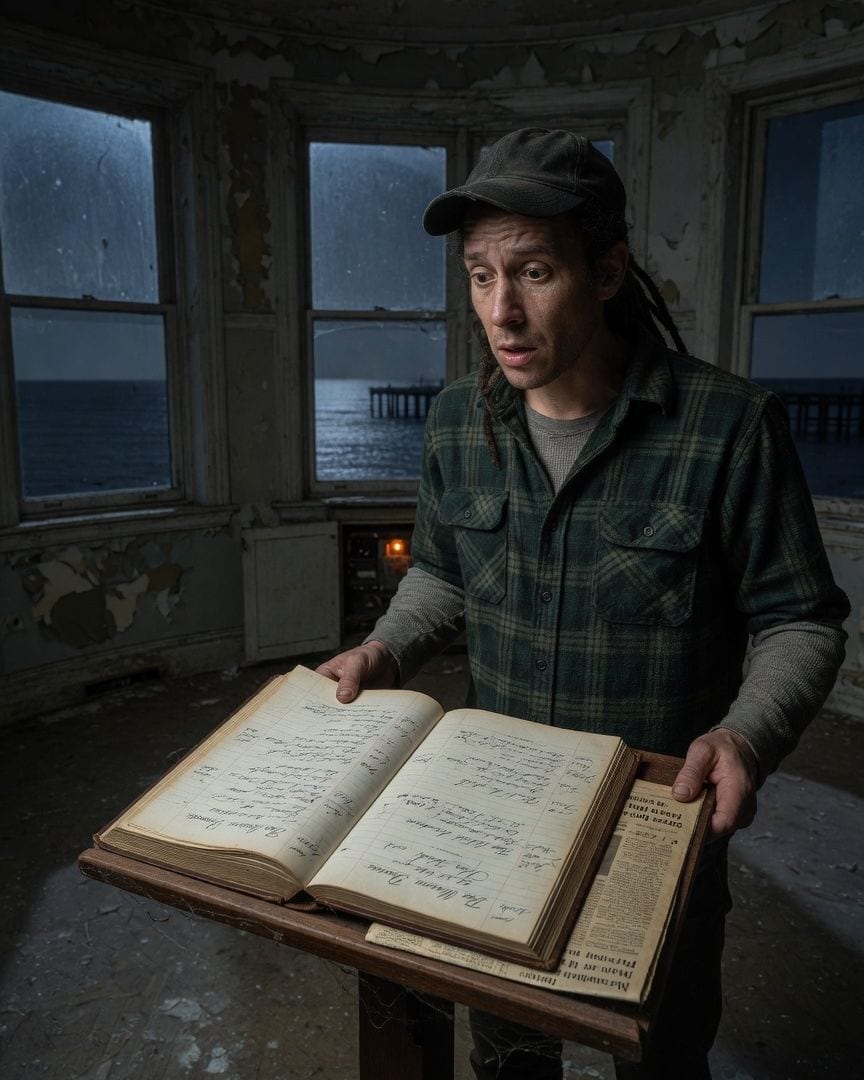
My pier's ballroom register books a new dance for Saturday, electricity meter running, but those lights are never on.
Taking over as pier caretaker, I was told one rule: never turn on the end pavilion's lights. But my first week, I noticed its electricity meter was steadily advancing every single night, even though the main breaker was off. Inside the dark, unused ballroom, I found an old ledger open to 'The Moonlit Waltz' for this Saturday, raising a chilling question: who was booking a dance and drawing power in a place that should be empty?
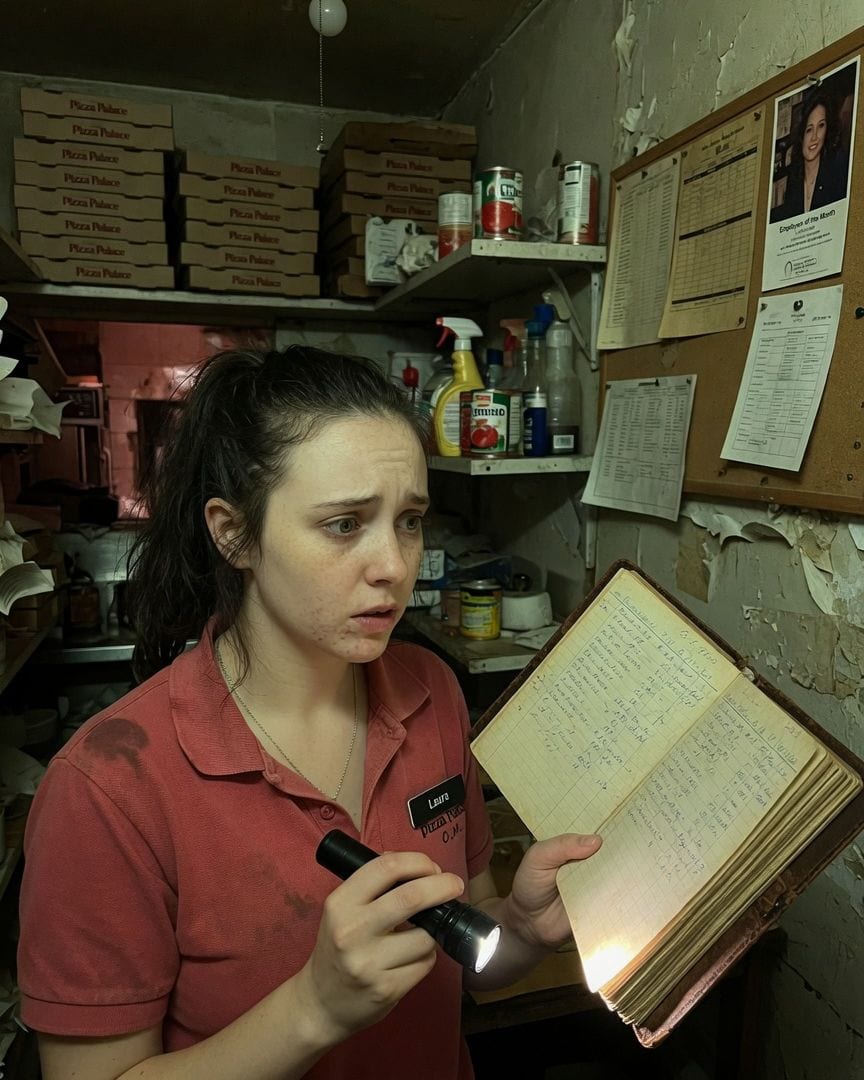
My 1:30 AM pizza caller always says 'you're a lifesaver.' The address on Lantern Street burned down years ago, and no orders exist.
I'm Laura Vance, working the night shift at Pizza Palace, taking routine late-night calls. But for months, a specific 1:30 AM order to 'Lantern Street' has felt wrong. My boss discovered the address burned down five years ago, leaving only a blackened shell.
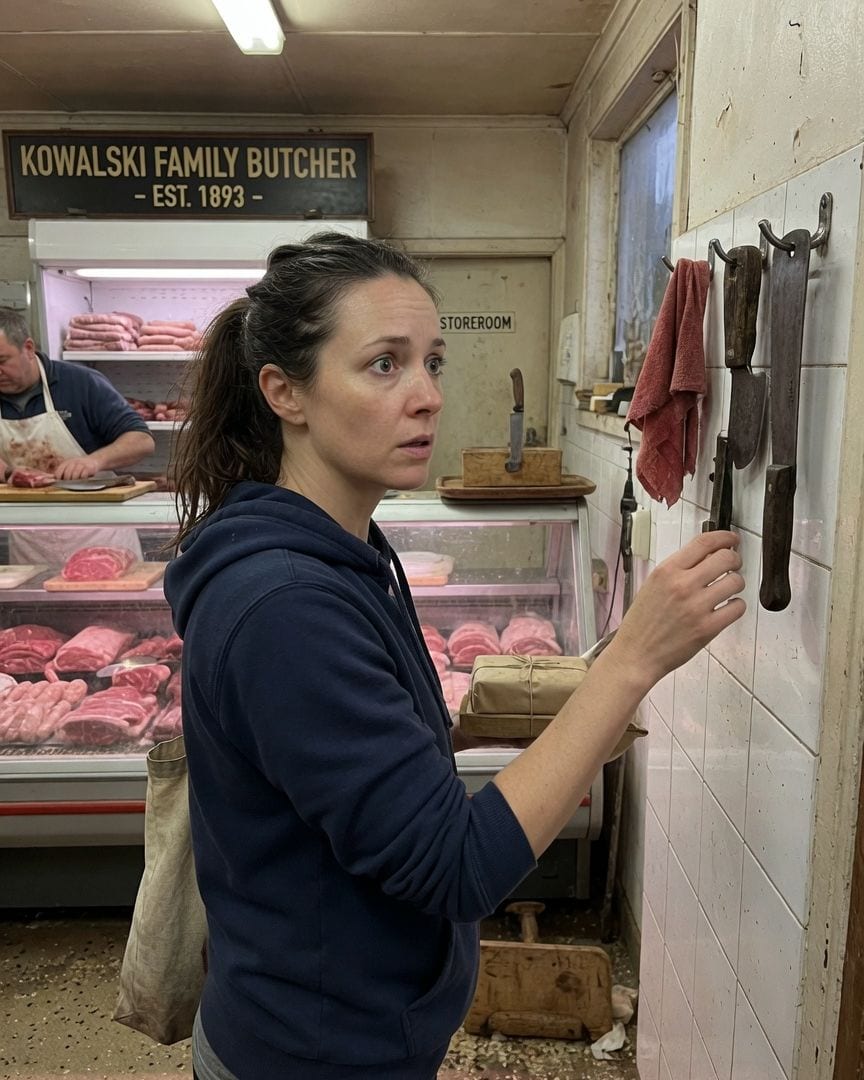
The butcher's back hook always hangs empty, draped with a red cloth. It holds a standing order since 1911 for the Hall, which burned down before the first war. The meat is gone every Friday, but no one's seen a cart.
Still new to Longnor, I stepped into Oscar Kowalski's butcher shop, needing a place to hang my bag. My hand brushed a simple hook, but Oscar's knife suddenly thudded, and he snapped, 'Not that one, dear.' He insisted the empty hook was 'reserved,' leaving me with a strange prickle of unease.
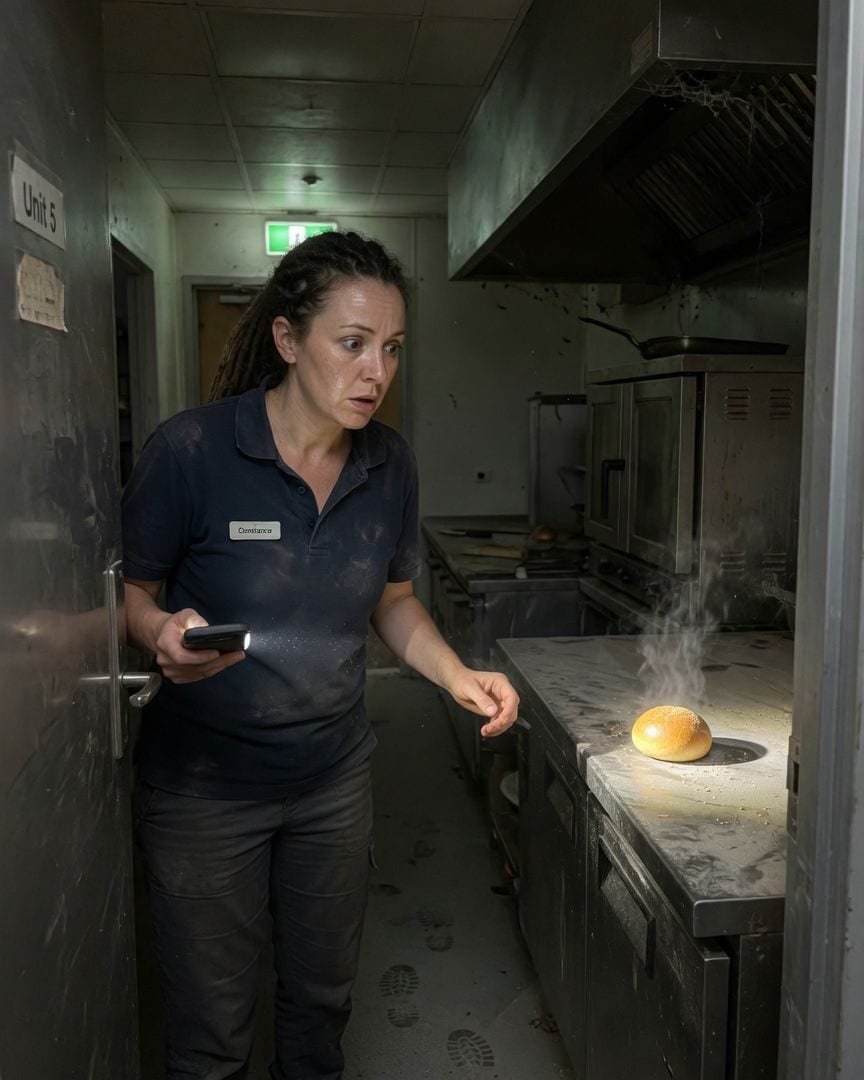
My night baker Karim always gave me a warm roll at 4 AM. His unit has been vacant, gas shut off, for two years.
I work the night shift in a quiet commercial kitchen, my routine marked by Karim from Unit 5, who always delivers a warm, golden-brown roll. It's a small comfort during the long hours. But the building manager insists Unit 5 has been vacant for two years, its gas shut off long ago. Still, a warm roll appeared under my door this morning.