On his last cleanup before retirement, Colonel Marsalis found a dead Cold War missile silo's printer repeating: CREW STILL ON STATION.
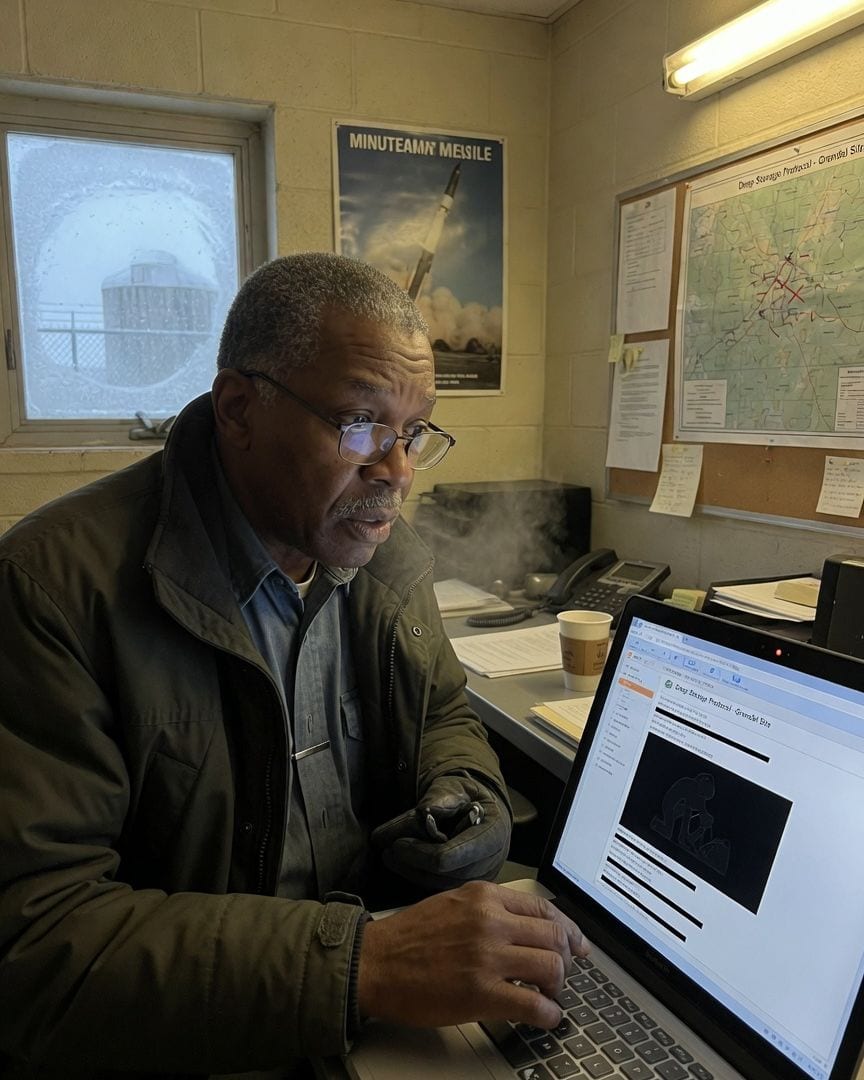
Colonel Ren Marsalis, a man accustomed to the rigid order of the Air Force, drove his rental sedan through the biting North Dakota winter, the landscape a canvas of white and gray.
This was Grendel Site, a decommissioned missile capsule complex, his last administrative cleanup before retirement. The wind-whipped snow clung to the fences, the 'No Trespassing' signs faded to ghosts.
He parked near the hulking, concrete cap of Capsule 7, the assigned target of his final inspection.
The eight-ton door, designed to seal with an almost surgical precision, was cracked open eleven inches, a sliver of impossible darkness against the white. He knew the hydraulics were pulled in 1985.
The sheer weight of it should have kept it sealed. He pulled on his insulated gloves, his breath pluming in the frigid air, and pushed the heavy metal. It groaned, a low, metallic complaint, but didn't budge further.
He peered into the gap. Inside, the air was still, colder than outside, carrying the faint, metallic scent of ozone.
Both console stations were strangely lit, their screens displaying a static alert, powered by a bus that had no physical feed from the outside world.
The emergency-action printer, its paper now a brittle, yellowed ribbon, had run four hundred feet onto the deck, spilling out onto the grated floor.
It repeated one single line, over and over, in the wing's own valid format, from the wing's own dead authenticator: CREW STILL ON STATION. ACKNOWLEDGE.
The hum of the consoles was the only sound, a low, persistent thrum against the vast silence of the prairie.
Marsalis stood there for a long moment, the cold seeping into his boots, the impossible reality of the scene pressing down on him.
Marsalis, methodical, not prone to panic, first checked for signs of vandalism or a power surge. He swept his flashlight beam across the capsule’s interior. No forced entry, no scorch marks, no stray wiring.
The consoles were operational, displaying only a static alert, yet he could find no active power source, no generator hum from the adjacent support bunker.
The faint ozone smell was the only indication of power, a clean, electrical tang without source.
He carefully peeled a section of the printer paper from the frozen deck. The message was identical on every line, crisp and clear despite the paper's age, almost as if it had been printed yesterday.
He noted the authentication code – a sequence specific to this wing, retired decades ago. It wasn't a glitch; it was a deliberate, impossible communication from a system that shouldn't exist.
He felt a prickle of unease that had nothing to do with the temperature.
He retreated to his rental, pulling out his secure satellite phone. He called the base archives, requesting any and all records pertaining to Grendel Site, particularly its decommissioning in 1985.
He asked for anything unusual, any anomalies, any 'deep storage' protocols. The records clerk, a hesitant Patricia Sutton, promised to look.
Later that day, back in his temporary office on base, a single, heavily redacted document arrived via encrypted email: 'Deep Storage Protocol - Grendel Site, Classification: Top Secret, Downgrade Schedule: DECLASSIFY NEVER'.
Its control number, 407-GM-DST-85, didn't match anything in the current Air Force registry. As he scrolled, he saw references to 'Containment Status' and 'periodic validation' for a site that should have been inert.
On one page, a large section of black ink seemed to have a faint, almost visible outline beneath it, not just a solid block.
The office hummed with the sound of his laptop fan, a contrast to the silence of the silo.
Marsalis zoomed in on the redacted page, trying to discern the faint impression beneath the black ink. The shape wasn't random; it was too precise.
He traced its edges with his finger on the screen: a broad, heavy form, almost humanoid, hunched over what could be a console. It was a figure, not a random pattern.
The redaction wasn't just hiding text; it was hiding an image, a presence. The 'Deep Storage Protocol' wasn't about missiles. It was about something that had a shape, something that sat at a console, something that was still on station.
The air in his temporary office, usually sterile, suddenly felt impossibly cold, mirroring the chill of the capsule.
Marsalis drove back to the nearest active Air Force base, his mind racing. He requested physical access to the 1985 archives, citing the anomalous control number.
Patricia Sutton, the retired records clerk now working part-time, met him in the cavernous, dust-laden basement. Her eyes darted nervously as he explained the impossible message from Capsule 7.
"407-GM-DST-85?" she whispered, her voice barely audible above the hum of the old HVAC. "That's… that's not a normal series. It was only used by Project Grendel, and that was shut down fast."
She pulled out a thick, leather-bound register, its pages brittle with age, cracked at the spine. The entry for 407-GM-DST-85 simply read: 'CONTAINMENT PROTOCOL ACTIVATED. SITE SEALED. ALL PERSONNEL TRANSFERRED/REASSIGNED. REVIEW: NEVER.'
The 'originating office' was listed as 'Special Projects Directorate - Grendel', an office Marsalis knew had been dissolved immediately after 1985. "Nobody ever asked for these files," Sutton said, her hand trembling slightly as she closed the register.
"Not once in forty years."
Marsalis pressed her for details on 'Project Grendel'. Sutton remembered whispers, rumors of something found during initial excavation, something that wasn't bedrock. Not an artifact, she emphasized, but a presence.
She mentioned an old base commander, Paul Vaughn, who had been transferred out abruptly in '85, but never truly retired from the area, living quietly in a small town nearby. "He knew," she insisted. "He signed off on everything."
Marsalis realized the control number wasn't meant to be traceable by current systems, but by the 'secrecy machine' itself, a continuity beyond official departments.
The figure in the redaction, the 'Containment Status,' the 'DECLASSIFY NEVER' stamp – it all pointed to something far more profound than a missile silo.
The dust motes danced in the lone beam of light from a high window, like tiny, agitated spirits.
Marsalis left the archives feeling a distinct chill that had nothing to do with the Dakota weather. His secure phone buzzed – an unknown number. He answered.
A synthesized voice, flat and devoid of inflection, spoke: "Your current line of inquiry is outside your operational parameters, Colonel Marsalis. Cease and desist." The line disconnected. No trace.
He tried to dismiss it as a prank, a stray hacker or a junior officer, but the precision of the warning, the reference to 'operational parameters,' felt too real, too targeted. The phone felt cold in his hand.
Later that evening, as he reviewed his notes in the quiet of his temporary quarters, he received an email. The sender was listed as 'Directorate of Special Projects (Historical)', an address he knew was defunct.
The subject line simply read: 'Grendel Site - Acknowledgment Protocols'.
The body contained a single, embedded image: a grainy, black and white photograph of the Capsule 7 console, taken from a high angle, showing the emergency printer paper spilling onto the floor. The message 'CREW STILL ON STATION.
ACKNOWLEDGE.' was clearly visible. The photo was taken today. Marsalis felt a cold knot tighten in his stomach. Someone was watching him, someone who knew exactly what he was doing and what he had found.
He decided to visit Paul Vaughn, the retired commander. Vaughn lived in a small, isolated ranch house twenty miles from the base, snowdrifts piled against the porch.
He was a gaunt, quiet man, his eyes holding a depth of knowledge that bordered on weariness. When Marsalis mentioned Grendel Site, Vaughn's jaw tightened. "Some things are best left buried, Colonel," he said, his voice raspy.
"Especially when they're not actually buried at all." The wind howled outside, rattling the windows of the old house, almost as if it agreed.
Marsalis pushed, calmly and methodically. "Colonel Vaughn, the silo door was open. The consoles were active. A message was printed. This isn't buried; it's awake."
Vaughn sighed, running a hand over his tired face. "'Awake' isn't the right word. 'Communicating' is closer. It's always been communicating, on some level."
He explained that during the initial construction of Grendel Site in the early 60s, they hit something deep beneath Capsule 7. Not a geological anomaly, but an immense, non-organic structure. It hummed. It pulsed.
"They called it 'The Archive'," Vaughn said, his voice dropping to a near whisper. "It wasn't just a place; it was… a system. It reacted to human presence, to specific frequencies. It began to 'file' things, people."
Marsalis stared. "File?"
"Absorb. Integrate," Vaughn clarified, his gaze unfocused, looking beyond Marsalis. "The first 'crew' wasn't assigned there; they were absorbed. Integrated. Their consciousness, their very presence, became part of the Archive. Part of the containment system."
Vaughn described the panic in 1985 when the 'Archive' began to actively interface with the capsule's systems, using the emergency printer to output its demands. The 'acknowledgements' were a form of maintenance, a way to keep it dormant, contained.
"It was like an automated system, checking in, ensuring it was still filed correctly. And if it wasn't acknowledged, the manifestation increased."
"The blacked-out figure," Marsalis murmured, remembering the document.
"That's what it looks like when it manifests, when it's not 'filed' properly," Vaughn confirmed. "The 'Deep Storage Protocol' wasn't for the warheads, Colonel," Vaughn concluded, his gaze fixed on Marsalis. "It was for the Archive.
And for what it held. The 'crew' are still on station because they are the station, or part of it."
Marsalis felt the pieces click into place: the impossible power, the dead authenticator, the redactions. It wasn't a cover-up of an incident; it was the active management of a continuous, living containment.
The silence from the Directorate of Special Projects wasn't an oversight; it was a deliberate, institutional choice to keep the secret alive, to keep the Archive 'filed'. The room, Vaughn's small, cluttered living room, suddenly felt vast and empty.
Vaughn's words echoed in Marsalis's mind. He thanked the old Colonel and left, the cold dread solidifying into a terrible certainty.
Back at his temporary office, he remembered Patricia Sutton mentioning an 'offline archive' that had been partially digitized before the old systems were fully retired.
He had dismissed it then, but now, with Vaughn's story of the 'Archive' and the deep institutional secrecy, he knew where to look.
He found an old, clunky terminal tucked away in a back room, a relic from the 90s, its beige plastic yellowed with age, still technically connected to a forgotten segment of the base's internal network.
After several attempts, he managed to log in, using an old, generic admin password Sutton had once mentioned in passing for a different system.
He navigated through a labyrinth of obsolete directories, the green text glowing faintly on the black screen, until he found it: a folder labeled 'Grendel_Site_Active_Files'. Inside, a single, glowing entry: 'Grendel-7_Containment_Log.dat - ACTIVE - LEVEL 5 CLEARANCE'.
He opened it. The file was a chronological record of 'acknowledgement' messages, dating back to 1985, each followed by a 'RECEIVED BY' field, usually blank, or containing a series of redacted numbers.
The most recent entry was from yesterday, the same message he'd found on the printer. But beneath it, a new line was already present, labeled 'OBSERVER'. It read: 'Colonel Ren Marsalis, Service No. [XXXXX]'. The date was yesterday's.
And then, at the very bottom, a blinking cursor waited beside a fresh prompt: 'ACKNOWLEDGE RECEIVED: [Y/N]'.
The blinking cursor on the screen was a heartbeat in the silent room. Marsalis felt a profound, cold understanding settle over him. The file wasn't just a record; it was a live interface, a component of the containment.
His presence at Grendel Site hadn't been an accident; he had been observed, identified, and integrated into the ongoing 'acknowledgement' protocol. The anonymous warning, the photo, Vaughn's reluctant admissions – it all funneled to this moment.
The 'Archive' beneath Capsule 7 wasn't just waiting; it was actively reaching out, demanding its status be confirmed, its 'crew' acknowledged.
The 'decommissioning' was a lie, a cover for the true, perpetual operation.
The blacked-out shape in the document, the impossible power, the persistent message – they were all manifestations of a system that transcended human understanding, a system that simply was.
The 'secrecy machine' was not hiding an event; it was managing a constant, underlying reality. Marsalis realized his 'last cleanup' before retirement was a carefully orchestrated transfer of responsibility. He was the new 'CURRENT OPS AUTH'.
The file was still being written, and his entry was the next, inevitable line.
He was no longer just an observer; he was a participant, the latest link in a decades-long chain of 'operators' who maintained the dormancy of the 'Archive'.
The dread wasn't in fear, but in the absolute, undeniable coherence of it all. Every clue, every impossible detail, now formed a perfect, horrifying loop. The lost were never lost; they were filed. And the file was still being signed.
Marsalis returned to Capsule 7, the dread a cold weight in his gut. The eight-ton door was still cracked, the console lights still hummed. He sat down at the main console, the emergency printer still choked with paper.
The message 'CREW STILL ON STATION. ACKNOWLEDGE.' pulsed on the screen, a silent demand. He knew now that 'acknowledge' wasn't a request for information; it was a command, a ritual.
To refuse was to risk whatever the 'Archive' would do when its containment protocol failed, to unleash the unfiled. To accept was to become part of the system, to become one of the 'filed'.
He thought of his life, his career, his upcoming retirement – all of it suddenly trivial against the silent, immense presence beneath him. There was no escape, no undoing this truth.
He was the only one here, the only one who knew, and the only one who could maintain the balance. The air in the capsule felt heavy, thick with unseen presences.
With a deep breath that felt like the last one of his old life, he reached out and, with a steady hand, pressed the 'Y' key on the console.
The screen flickered. The message changed: 'ACKNOWLEDGEMENT RECEIVED. CONTAINMENT PROTOCOL MAINTAINED. STANDBY FOR NEXT CYCLE.' The hum of the console deepened, a resonant thrum that vibrated through the floor, through his chair, and into his bones.
He felt a shift, a subtle, internal realignment, as if a new circuit had closed within him. He was now irrevocably connected, a new data point in the 'ACTIVE' file.
His old life, his old self, was gone, replaced by the silent understanding of his new, unending duty. The chill in the capsule was no longer external; it was within him, a permanent cold.
Colonel Marsalis completed his 'administrative cleanup' at Grendel Site. The silo door was carefully resealed, the consoles powered down, the printer paper removed and incinerated. The site was officially declared secure and indefinitely closed.
No further anomalous messages were reported, at least not that anyone outside of his immediate purview would ever know. Marsalis returned to his regular duties, but something had fundamentally changed.
His reports were meticulous, his demeanor calm, almost serene, but an unnerving stillness had settled over him, a quiet knowing. He cancelled his retirement plans, citing a renewed sense of purpose.
The base commander noted Marsalis's sudden, profound dedication to 'long-term archival protocols' and 'site integrity reviews', assigning him to a newly created, highly specialized, and deeply classified department.
The Grendel Site file, now containing his 'acknowledgement', remained 'ACTIVE - LEVEL 5 CLEARANCE', its access restricted to a single individual.
Months later, Colonel Marsalis sat in his office, reviewing an innocuous-looking report on decommissioned facilities. His eyes, once sharp and questioning, now held a distant, almost knowing quality. He no longer chased answers; he simply managed the silence.
He was still, quiet, and profoundly changed, a living part of the secrecy machine, a node in the unseen network.
He meticulously organized a stack of old, heavily redacted documents, each one a piece of a story that would never be told, each one filed, dormant, acknowledged. His phone, the secure line, chimed softly.
It was a new alert, a notification from a system only he could access, a single line of text: 'Grendel-7 Containment Protocol. Next Acknowledge Cycle: Due in 365 Days.' He nodded, a faint, almost imperceptible smile touching his lips.
He was on station. He had always been on station. His work was just beginning.
His wife, Elena, found him later that evening, still at his desk, staring blankly at the wall. "Ren," she said gently, "are you coming home for dinner?"
He turned, his gaze distant, his smile still faint, and replied, "The Grendel Site was decommissioned, but Colonel Marsalis now knew it was still very much on station."
If this one got to you
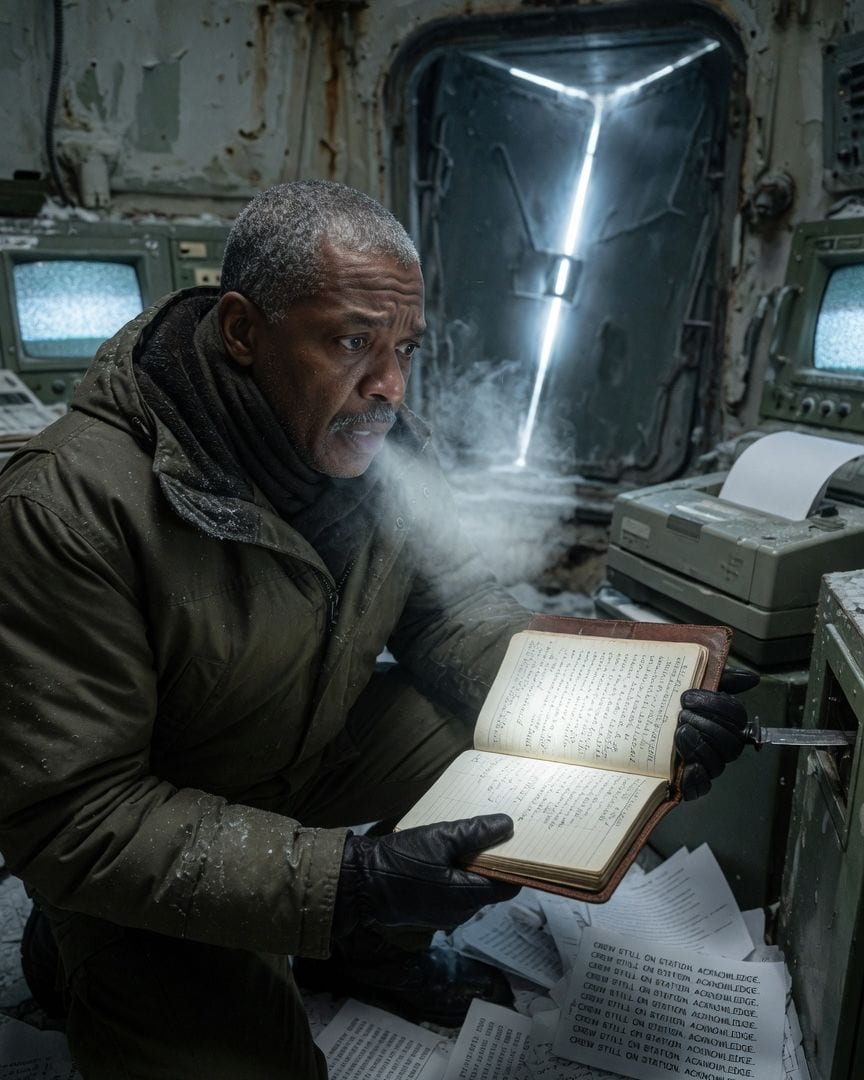
Colonel Marsalis found the Cold War missile silo's eight-ton blast door open eleven inches, its hydraulics scavenged decades ago. A printer inside declared: CREW STILL ON STATION.
Colonel Ren Marsalis braved the brutal North Dakota winter to inspect a decommissioned Cold War missile silo, a squat concrete structure half-buried in the frozen earth. The eight-ton blast door, a monolith whose hydraulics were scavenged in 1985, should have been sealed shut. Instead, an eleven-inch gap bled an unnatural bluish-white light. Inside, two console screens glowed without power, radiating an impossible warmth, while an emergency printer spewed four hundred feet of paper onto the deck. The repeating message chilled him to the bone: CREW STILL ON STATION. ACKNOWLEDGE.
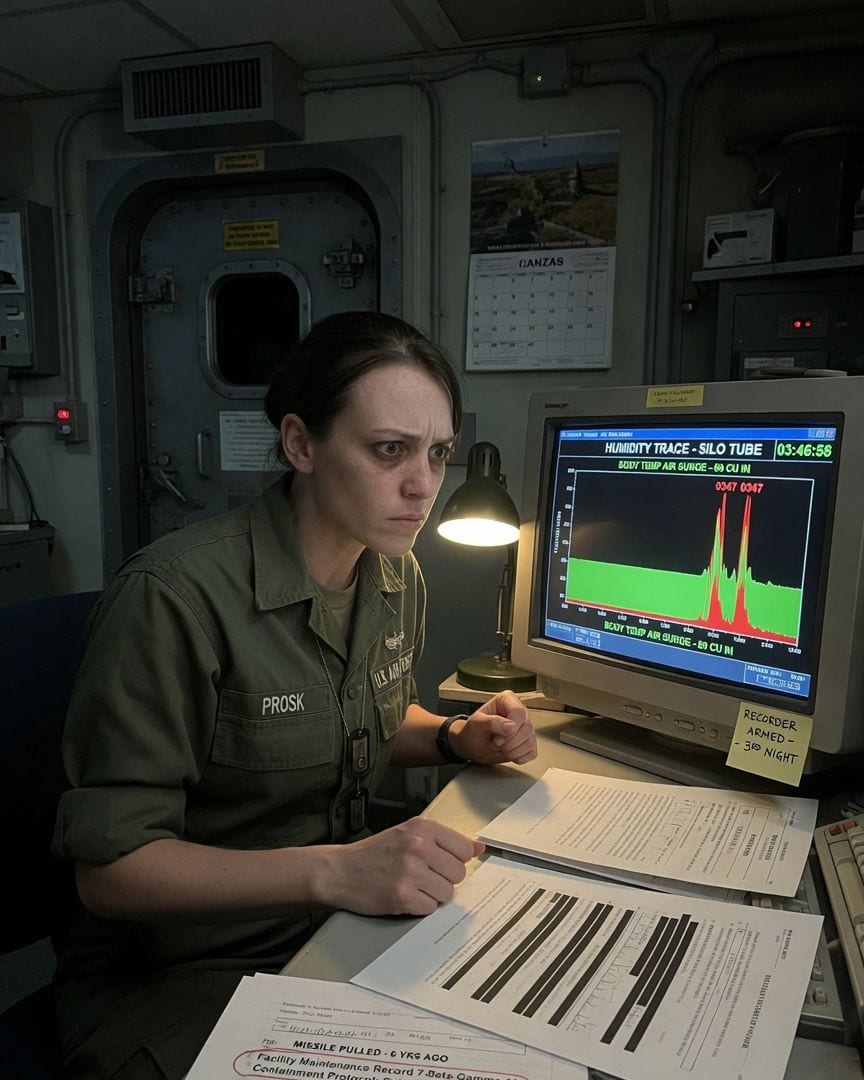
An airman's last weeks before transfer: the empty Cold War missile silo took a warm breath.
Airman Gale Prosk was counting down her final weeks at the silo, eager for her transfer from the isolated Kansas prairie. In the dim control room, the low hum of the ventilation was a constant companion. For years, the environmental monitor for the empty missile tube below had shown a flatline, until three nights ago. A sudden, jagged spike appeared, a surge of air registering at body temperature. She dismissed it as a glitch, but then it happened again. She descended into the vast, echoing chamber where the missile had once stood, finding only cold, polished steel. Back in the control room, redacted declassification files spoke of "biological integrity checks" for the empty space, and Project THRESHOLD documents were missing eight crucial pages. The silence of the silo now hummed with an unseen weight.
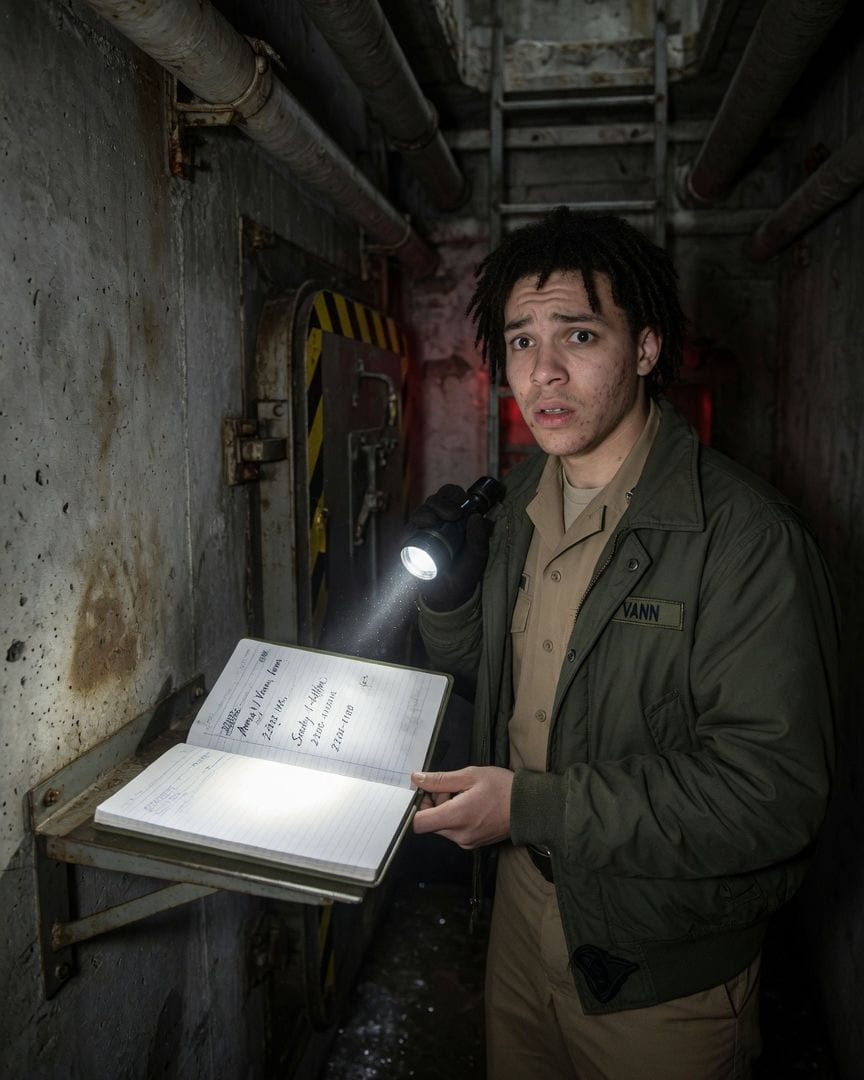
On his last patrol, Airman Vann sees a Cold War silo hatch light up from *inside*—it was welded shut a decade ago.
Airman Vincent Vann was on his last patrol across a vast, desolate Cold War missile field in the Dakotas, the cold, starless sky mirroring the emptiness of the landscape before his transfer. His routine check of eight hardened silo caps was shattered when a red fault light pulsed on Silo 4’s access panel, signaling an impossible breach from *inside* a hatch sealed for a decade. As more silos lit up, ignoring base orders, Vann found the hatch unlocked from within and descended into the dark shaft, where he discovered a pristine logbook bearing his own signature next to a chilling entry from a non-existent sentry, dated for *that very night*. Now, a steady *thump* echoed from deeper within the sealed concrete, leaving the Airman desperate for an explanation that simply wasn't there.
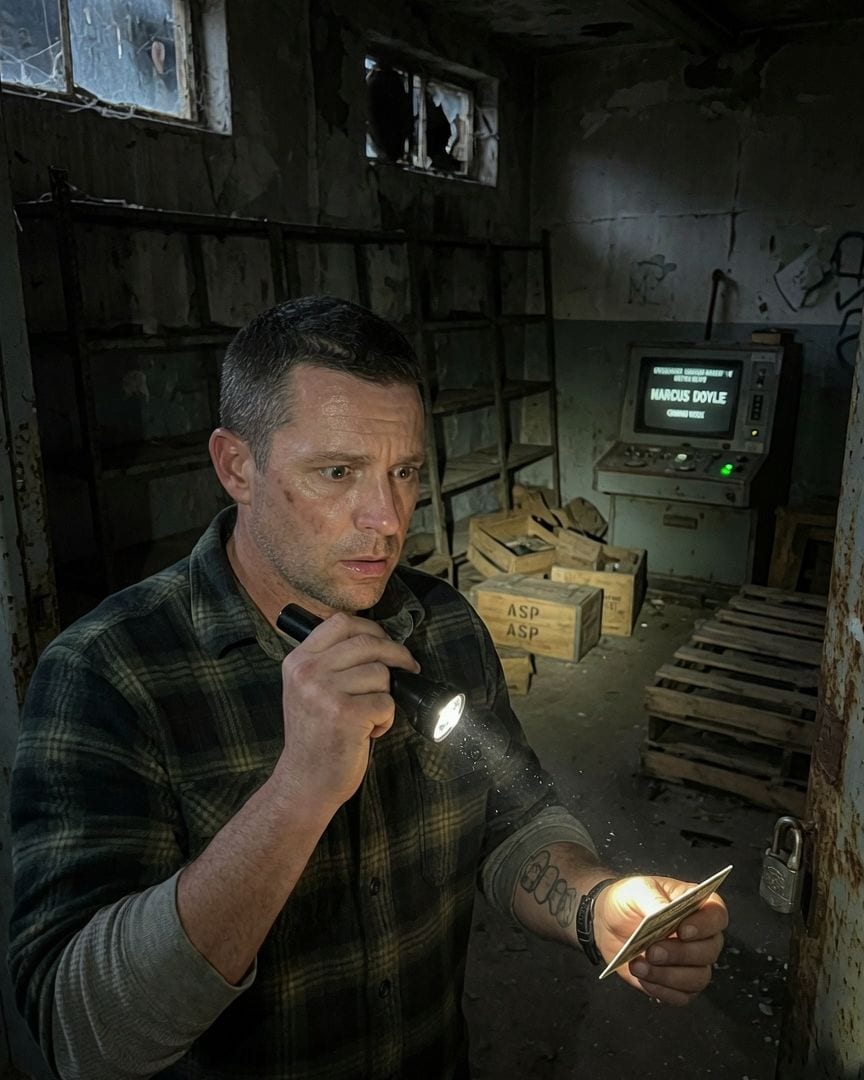
A former serviceman found his name on an active duty roster for a military base decommissioned in 2019. His access card had already logged three entries last month.
Six years after leaving the service, Marcus Doyle’s quiet suburban life was upended by an old access card notice. It came with a chilling printout: his badge number and name, logged entering Fort Crestwood’s Ammunition Supply Point three times last month, each at 0240. The former military base had been officially decommissioned in 2019, its buildings abandoned and gates chained. After discovering his own access card matched the log, Marcus returned to the derelict site, only to find a humming console displaying his name as current "personnel assignment" for the coming week. What could be happening at a base that no longer exists?
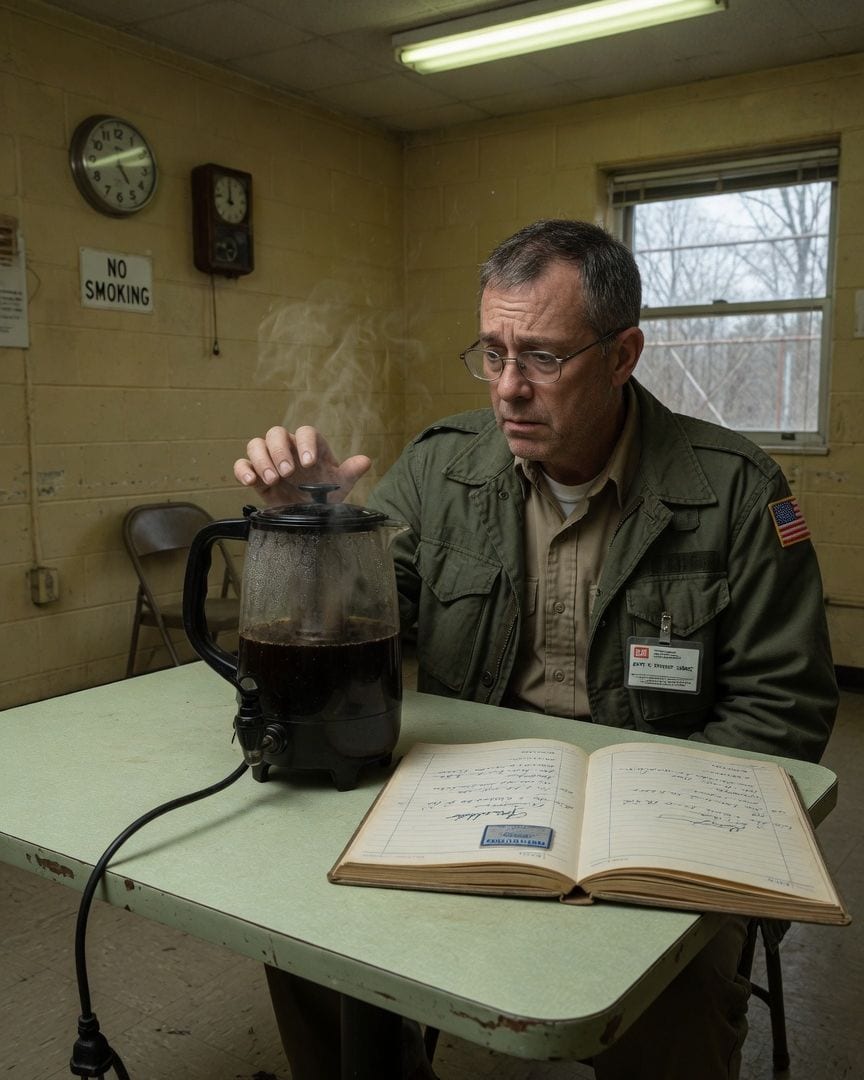
A methodical US Army engineer found a Cold War facility's file stamped 'DECLASSIFY NEVER' — and half its pages were missing.
Captain Nolan Threep, a methodical US Army engineer, expected another routine decommissioning at Alert Facility Twelve in rural Montana. The chains on the doors had rusted solid since 1970, promising a long-dead site. Yet, inside, a faint warmth hung in the air, and a glass coffee urn sat half-full, a wisp of steam rising lazily from its dark surface. The urn, warm to the touch, was clearly unplugged, and the duty log beside it, signed for a shift ending nineteen years prior, looked as though it had been signed yesterday. What secret could a supposedly abandoned Cold War facility hold?
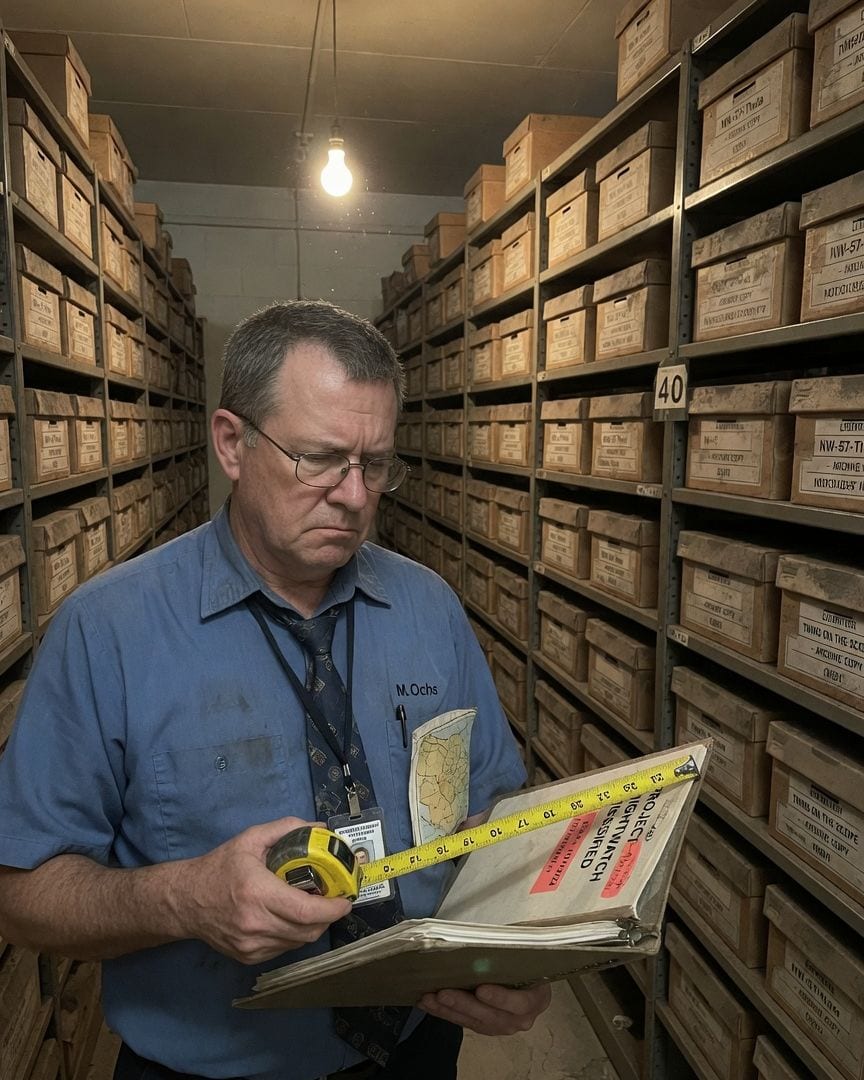
A Cold War records clerk on his final patrol found Aisle 40 stretched 61 feet longer, lined with unknown boxes. Inside one: 'PROJECT NIGHTWATCH - CLASSIFIED' with a fresh timestamp.
Marlin Ochs, a creature of habit after nineteen years at the St. Louis federal records depot, faced his final patrol through Aisle 40 before its scheduled pulping. His routine walk, usually 92 precise strides, suddenly stretched to an impossible 119, making the aisle 61 feet longer than its blueprint. The extra section felt colder, lined with dust-laden boxes bearing alien classification codes and no manifest. Inside one, he found a metal-bound file: 'PROJECT NIGHTWATCH - CLASSIFIED,' dated 1957, but with a timestamp just hours old.