This locket was sold 'unengraved' five years ago. Now it's etched with my maiden name, unused for eleven years, and 'until the ninth'.
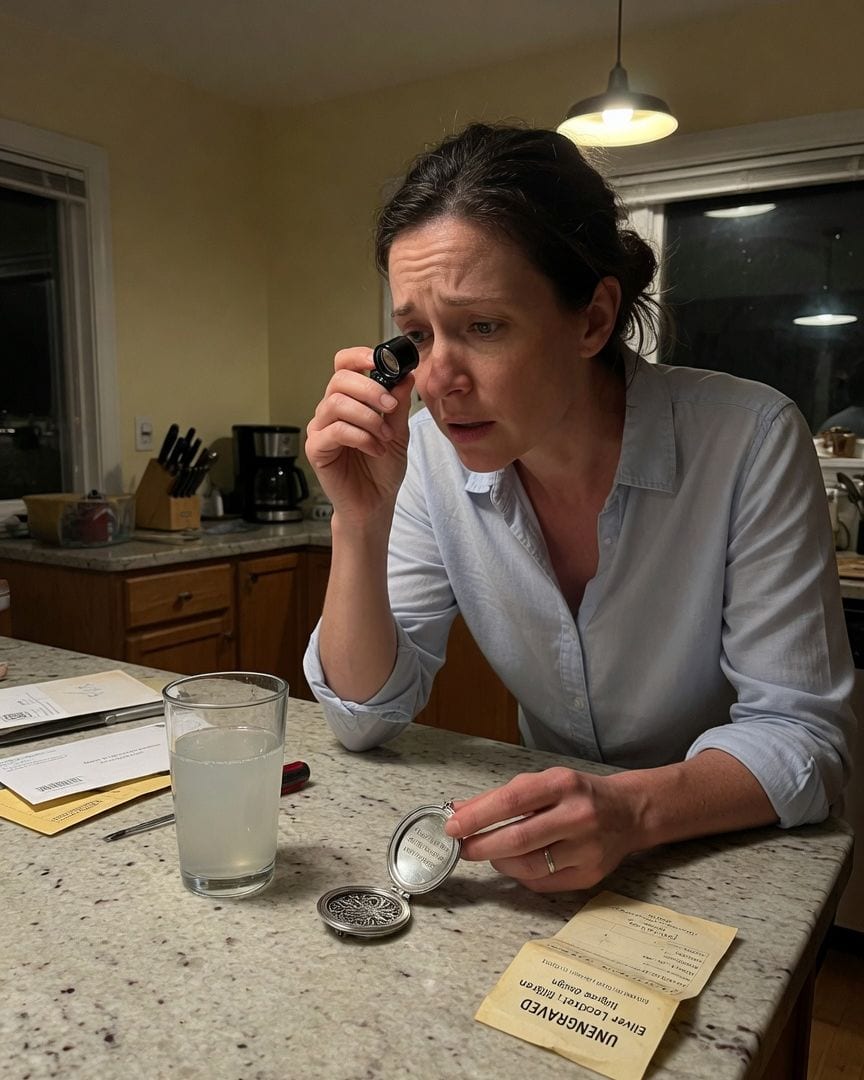
My husband, Vincent, has a soft spot for trinkets, especially antique ones. He brought me a locket from Truro market last month, a heavy silver oval with intricate filigree that caught the morning light.
"Thought of you," he said, handing it over. It was beautiful, undeniably. That night, sitting at the kitchen island, a glass of water growing cloudy beside me, I decided to open it.
It looked sealed, so I borrowed the tiny screwdriver from his jeweler’s loupe kit – a collection of precision tools he barely used but loved to own.
The tiny hinge clicked with a faint, metallic sound, and the locket sprang open, revealing a smooth, unadorned inner surface. I sighed, a little disappointed. Just a pretty shell.
But as I tilted it, catching the light from the overhead fixture, an impossibly fine engraving caught my eye. It was almost invisible, a whisper against the silver. I needed Vincent’s loupe.
He keeps it in the utility drawer, tucked inside a velvet pouch. I pulled it out, brought the locket close, and peered through the magnified glass. There, etched in microscopic script, was 'Marsh' – my maiden name.
I haven't used that name in eleven years, not since I married Vincent and became Sarah Easton. And below it, even more unsettling, were the words 'until the ninth.'
The dealer, Ronald Mercer, had mentioned it was from a house clearance. An old woman's things. He'd even said she kept it wrapped in a peculiar note that read only: 'for her, when she comes.'
The locket felt cold in my palm, suddenly heavy with an impossible weight, as if it had absorbed the chill of the words etched inside. I closed it slowly, the click echoing in the quiet kitchen.
The next morning, the locket was still on the counter, its presence a dull throb in my awareness. Vincent, ever practical, tried to soothe my unease. "Marsh is a common enough name, Sarah," he’d said, as he poured his coffee.
"Probably a coincidence. Maybe a distant relative?" He even spent an hour on an ancestry site, trying to find another 'Marsh' in our family history, a distant cousin or an ancestor who might have owned such a locket.
He came up empty. He shrugged it off as nothing. But I couldn't.
I called Ronald Mercer, the antique dealer, that afternoon. He remembered the locket immediately. "Ah, the Fairfax piece," he’d said, his voice crinkling with age over the phone.
He described the house clearance in vivid detail – a quaint, cluttered cottage belonging to an Iris Fairfax, a spinster who had recently passed. "She didn't have much family, dear. Quite a collector, though, in her own way."
He reiterated the note, 'for her, when she comes,' almost verbatim. Then he added, almost as an afterthought, "She was a bit particular about her things, kept meticulous records. Everything in its place.
I remember finding an old, yellowed receipt for that locket, tucked away in a box of Iris's other effects. Proves its provenance, you know."
He offered to look for it if he had time, if it hadn't been lost in the shuffle of the clearance.
I thanked him, trying to sound casual, but a seed of unease had already taken root, cold and deep. It wasn't just a name, not anymore.
It was my name, and the specific, chilling phrase 'until the ninth' that refused to be dismissed as mere happenstance. The air in the kitchen, usually so bright and open, felt suddenly thick, as if holding its breath.
Ronald called back two days later, just as I was debating whether to call him again myself. His voice was apologetic, a little breathless. "Found that receipt, Sarah. Bit of a shock, actually.
It specifically says the locket was sold to Ms. Fairfax five years ago, and it's explicitly marked 'unengraved.' No inscription at all." He paused, then added, his voice dropping slightly, "I remember it clearly now. It was a blank slate.
A fresh start for someone, I suppose."
My breath hitched in my throat, a cold knot forming in my stomach. A blank slate. Five years ago. My hand trembled as I thanked him again, my mind already racing. He emailed me a scanned copy of the receipt.
The paper was yellowed, the ink faded but still legible. Dated five years ago, it listed the item: 'Silver Locket, filigree design.' And under 'condition,' it clearly stated, in bold, stark lettering: 'UNENGRAVED.'
I stared at the old, faded receipt in my hand, the ink still legible, confirming 'Locket, unengraved.' My gaze snapped back to the locket, now lying open on the table, its impossible inscription glaring up at her.
The 'unengraved' receipt shattered any remaining rational explanation. This wasn't a coincidence, a forgotten family heirloom. This was targeted. The inscription had appeared after Iris Fairfax bought it, after it was listed as blank. How? And why?
I began researching Iris Fairfax, the previous owner, with a renewed, frantic energy. The local library offered sparse details: she was a quiet, reclusive woman, no known relatives.
Her obituary, tucked away in microfiche, mentioned her house being left to a distant, unnamed charitable trust. It felt like trying to grasp smoke.
My search then led me to the local historical society, hoping to find records of the Fairfax family, anything that might explain her connection to this impossible locket.
Days blurred into a frantic investigation, pouring over old town records and property deeds. The historical society's archives smelled of dust and old paper, a smell that now felt less comforting and more oppressive.
One afternoon, as I was leaving, the heavy oak door swinging shut behind me with a low thud, a man stepped in front of me.
He was of medium height, with kind, tired eyes that seemed to hold a profound weariness. He stopped directly in my path, not aggressively, but with an unnerving purpose.
"Sarah Coleman?" he asked, his voice soft but firm, almost a lament.
I hesitated, my heart giving a little jump. "Yes?" I confirmed, my voice thinner than I intended.
He looked genuinely distressed, a line appearing between his brows. "My name is Felix Carter," he said, extending a hand that felt unexpectedly cold in mine. "I… I just wanted to apologize. For what’s going to happen.
I truly am sorry." He didn't elaborate, didn't explain, just squeezed my hand, his gaze heavy with a sorrow that felt too profound for a complete stranger.
Then, as abruptly as he’d appeared, he turned and walked away, melting into the passing crowd, leaving me stunned on the pavement. The echo of his words, 'what’s going to happen,' chilled me to the bone.
What was he apologizing for? And how in God's name did he know my name?
Felix Carter’s apology clung to me like a shroud. I spent the next few days trying to find him, asking around town, describing him to anyone who would listen. No one recognized his description.
It felt less like a warning and more like an acknowledgment of an inescapable truth, a grim certainty. The dread deepened, shifting from abstract wrongness to a personal, immediate threat.
My investigation into Iris Fairfax led to dead ends, until I stumbled across a dusty box of her donated personal effects at the historical society – mostly innocuous items like knitting needles, a worn thimble, and recipe cards for things like "Deviled Eggs (for socials)."
I almost dismissed it. But then, tucked beneath a stack of old postcards depicting quaint seaside towns, I found a small, leather-bound ledger.
It was surprisingly heavy, its cover worn smooth in places, almost slick to the touch, as if handled by countless hands over many years.
I felt a prickle of unease as I opened it. The first few pages were indeed mundane household expenses: 'Sugar, .50', 'Lamp oil, .25', dated decades ago. But then the entries changed. They were lists of names.
As I scanned the names, a shiver ran down my spine. Some were familiar from local history, names I’d seen on old town plaques. Others were utterly unknown.
But the pattern was what arrested me: each name was followed by a date, and every single date was the 'ninth' of a month. Not always the same month, no. But always the ninth.
My hands trembled slightly, a cold certainty settling in my gut. This wasn't a coincidence. This wasn't random. Someone knew what I was doing. Or perhaps, what was going to happen.
The air in the quiet archive seemed to press in on me, suddenly heavy and still.
The ledger held a terrifying, undeniable truth. I sat hunched over it in the quiet archives, oblivious to the dusty sunlight filtering through the high windows, oblivious to the hushed murmurs of other researchers.
The names stretched back decades, some even a century, all followed by a 'ninth' date. It was a macabre register, a record of… something. My mind raced back to the locket, to the inscription 'Marsh, until the ninth.'
The apology from Felix Carter echoed in my ears, his sorrowful face burned into my memory. He knew. He was part of this.
The locket wasn't just a random antique; it was a link, a marker. I remembered the dealer's words about Iris Fairfax, 'kept meticulous records,' and the note, 'for her, when she comes.'
Iris wasn't just an owner; she was the previous recipient, or perhaps the guardian of this gruesome ledger. The locket had been passed to me, not randomly, but as a deliberate act, an inheritance.
The 'ninth' was a date of significance, a recurring event, a deadline.
My eyes scanned the last few entries, the dates growing closer to the present. The last completed entry was for a 'Robert Coleman,' dated five years ago, the ninth of October.
My heart hammered against my ribs, a frantic bird trapped in a cage. Coleman was my married name.
Robert was Vincent's grandfather, a man who had died suddenly, inexplicably, five years ago, from what doctors called an 'aneurysm of unknown origin.'
I saw it all snapping into place with sickening clarity: the locket, the cryptic note, the stranger's apology, the ledger. It wasn't just my name; it was a family curse, a generational pattern.
The locket was a summons, and the ledger was a death-roll. A cold sweat broke out on my forehead. I flipped to the very last page, my fingers clumsy with dread, and there it was, the final entry.
The date column was blank for the current year, a stark, empty space, but the name written beneath it was 'Marsh,' undeniable, written in a delicate, unfamiliar hand. The same hand, I realized, that had recorded all the other names.
The pattern was sickeningly clear. The ledger recorded a history of 'takings,' always on the ninth. Robert Coleman, five years ago. Before him, an Eleanor Beaumont, twenty years prior.
And now, my maiden name, Marsh, stood at the bottom of the list, undated, waiting.
It was a horrifying inheritance, passed from Iris Fairfax – who must have been the previous keeper, perhaps even the writer of these entries – to me. The locket was merely the signpost, the delivery method.
Vincent, my husband, was oblivious, still trying to find a mundane explanation for my growing distress. He thought I was overworked, perhaps stressed. I couldn't tell him. How could I?
He would think I was losing my mind, or worse, he wouldn't believe me until it was too late.
I closed the ledger, the leather cover cold beneath my fingers, the weight of generations of names pressing down on me, crushing the air from my lungs. I had two days. Just two days. The current date was the seventh.
Two days until the ninth.
My finger traces the last entry in the dusty ledger, the date column blank for the current year, but the name 'Marsh' undeniable, written in a delicate, unfamiliar hand.
The blood drains from her face as she realizes the current date is the seventh.
The ledger, the locket, Felix's apology – it all coalesced into a monstrous, coherent shape. Iris Fairfax wasn't just a keeper; she was the one who 'knew.'
She had passed the locket, the symbol of the next chosen, to the dealer, knowing it would find its way to me.
The note, 'for her, when she comes,' wasn't just an instruction; it was an act of prophecy, of delivery.
Felix Carter, I realized, must be one of the 'watchers,' a descendant of a family tasked with observing or facilitating the pattern, hence his apology.
He wasn't malicious, just a sorrowful witness to an ancient, inescapable ritual, a cog in a terrible, indifferent machine.
The 'ninth' wasn't just a date; it was the designated time for the entity to claim its due. The names in the ledger weren't just a list; they were a record of a continuous, generational 'harvest.'
My great-grandmother, a Marsh, had died on a ninth, decades ago. Vincent’s grandfather, Robert Coleman, on a ninth. The entity didn't care about married names; it knew the bloodline, the original name, the specific lineage it had marked.
And now, it was my turn.
The horror was not in the mystery, but in the terrifying clarity that I had always been inside this pattern, a pre-ordained pawn, a name simply awaiting its date.
My struggle wasn't against an unknown threat, but against an inevitable fate, written down before I was born. The realization settled over me, cold and heavy, a blanket of ice.
The morning of the ninth dawned unnaturally quiet. The birds outside were silent, the usual hum of traffic muted. I hadn't slept, pacing the house, every shadow a potential threat, every creak of the floorboards a warning.
Vincent, concerned by my pallor, tried to coax me into talking, into eating, but how could I explain a generational death-ledger and an antique locket that wrote my maiden name? He watched me with worried eyes, helpless.
I clutched the locket, its silver now warm against my skin, almost pulsing with a faint, internal heat, as if alive. The grandfather clock in the hall chimed the half-hour.
At precisely noon, a soft chime echoed through the house – not from the doorbell, not from the clock, but from everywhere and nowhere, a sound that seemed to originate inside my very skull.
The air grew heavy, thick with a scent like damp earth and old leaves, the smell of something ancient rising from forgotten soil.
I saw it then, in the corner of my vision, a flicker of movement by the window.
Not a physical presence, but a distortion, a ripple in the fabric of the air, like heat haze off asphalt on a summer road, yet it was impossibly cold.
It began to coalesce, slowly, inexorably, a vaguely humanoid shape, tall and slender, darker than shadow, absorbing the light around it until the very air seemed to darken.
It didn't have features, no eyes or mouth, but I felt its focus, its terrible, intimate knowledge of me, burning into my very core.
It reached out a hand, not physical, but a distortion of space, stretching towards me, elongating, a void made tangible. I wanted to scream, to run, to flee, but my feet were rooted to the floor, heavy as lead.
The locket in my hand vibrated violently, then flew from my grasp, drawn by an invisible force to the approaching void. As it reached the entity, it dissolved into a faint shimmer, like dust motes catching the last light.
The entity then solidified, its form now a perfect, silent mirror of myself, a darker, emptier Sarah. It stepped forward, its gaze empty, yet somehow piercing, as if seeing through me to something beyond.
I felt a coldness spread through my limbs, a draining sensation, as if my very essence was being siphoned away, replaced by an echoing void. My consciousness flickered, the edges fraying, like an old film reel burning.
I heard Vincent’s voice, distant, as he walked in the door, calling my name, "Sarah? Are you home, love?" The mirrored figure turned, its head tilting slightly, a faint, wrong smile touching its lips.
Vincent found me standing perfectly still in the living room, staring blankly ahead, a faint scent of damp earth clinging to the air. "Sarah? Are you okay? You look pale. Have you eaten anything?"
he asked, his voice laced with concern. I answered him, my voice flat, distant, a little too even. He noticed the locket was gone from the side table where it usually lay, asked what happened to it.
I merely shrugged, my eyes still fixed on nothing. The house felt quiet, too quiet, as if sound itself had been dulled.
Later that day, Vincent noticed my favorite mug, the one I always used for my morning tea, was missing from its hook.
He searched the kitchen, then the rest of the house, calling out my name, his voice growing more anxious with each passing minute, but it was nowhere. I watched him, impassive, from the armchair.
The worry in his eyes grew, but I offered no explanation, no comfort. The ledger was gone too, vanished from where I’d left it in the historical society box.
It was as if the wrongness had never been, leaving only a quiet, unsettling absence in its wake.
Vincent still asks about the locket sometimes, or remarks on how much quieter I've become. He says I look tired, but my eyes are perfectly clear, sometimes unnervingly so. I tell him I'm fine, perfectly fine.
He doesn't notice the subtle changes: the way I no longer flinch at sudden noises, the way my reflection sometimes seems to hold a different, colder gaze than I remember, or the faint, almost imperceptible scent of damp earth that now clings to me, a quiet, persistent perfume.
Sometimes, late at night, I find myself tracing patterns on the windowpane, patterns that look vaguely like the filigree on a locket I can't quite recall. I remember nothing of the terror, only a profound, peaceful emptiness.
The world moves on, unaware. And I am here.
Vincent Easton often found his wife, Sarah, staring out the window, a faint, unreadable smile on her face. 'Are you alright, love?' he'd ask. She'd turn, her eyes clear but distant, and say, 'I'm perfectly fine.'
She had stopped using her maiden name, even in jest. It was as if it had never existed, wiped clean from her memory. He just wished she'd drink her tea.
She had always taken it black, but now, she left it untouched, a faint, wrong little smile playing on her lips.
If this one got to you
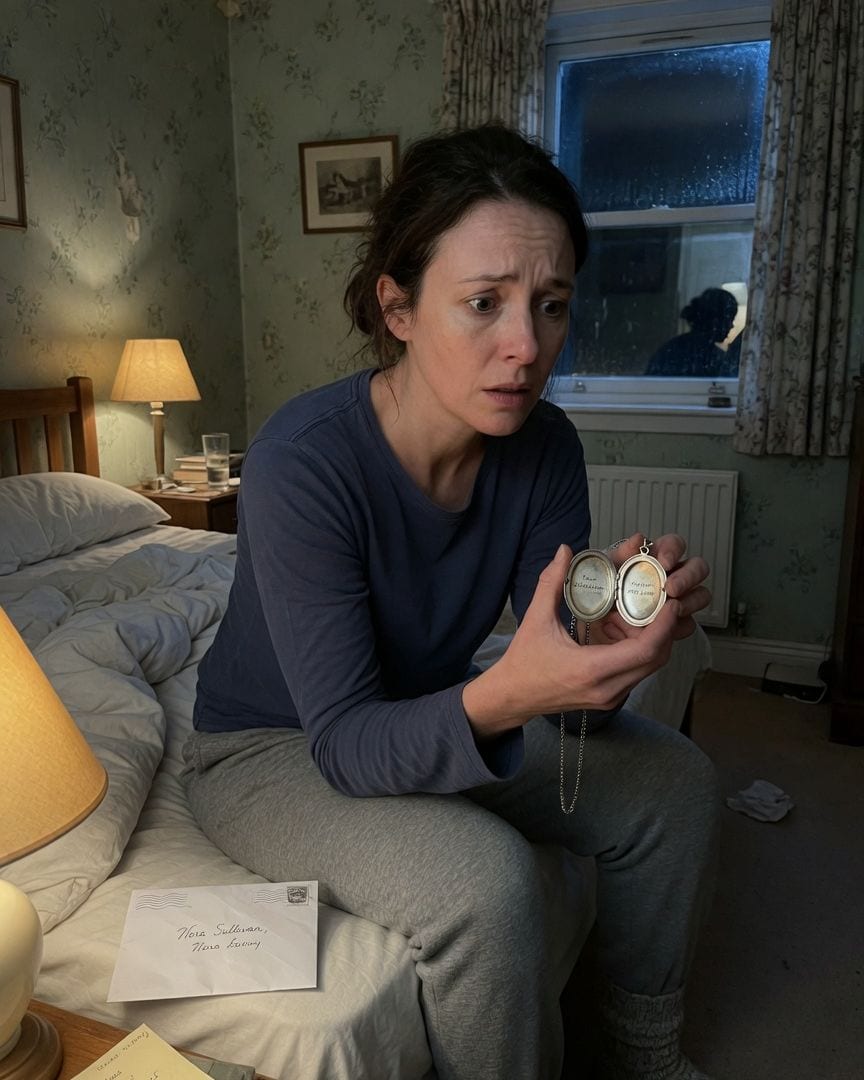
My antique locket held my maiden name, engraved with 'until the ninth.' The dealer said the woman who owned it left a note: 'for her, when she comes.'
My husband Scott, always finding unusual things, gave me an antique silver locket. Inside, engraved beneath my maiden name, Nora Sullivan, were three chilling words: 'until the ninth.' It felt like a direct, personal address, even though I hadn't used that name in years.
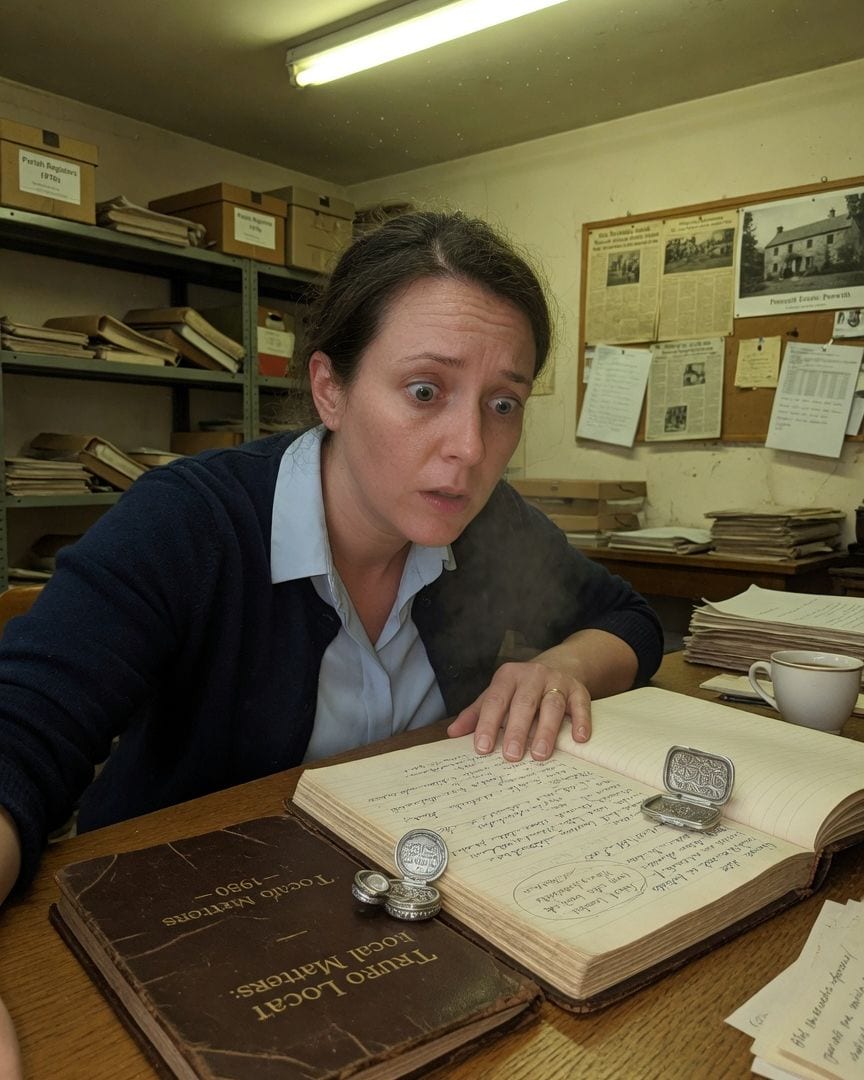
My antique locket held my maiden name, unused in eleven years, engraved 'until the ninth.' The dealer said it was 'for her, when she comes.'
After a tough week, Maxwell gifted me a beautiful antique locket from Truro market. Later, examining it with a jeweler’s loupe, I found my maiden name, 'Sheppard,' etched inside, along with the words 'until the ninth.' I haven't used that name in eleven years, and the impossible precision of the engraving sent a chill through me.
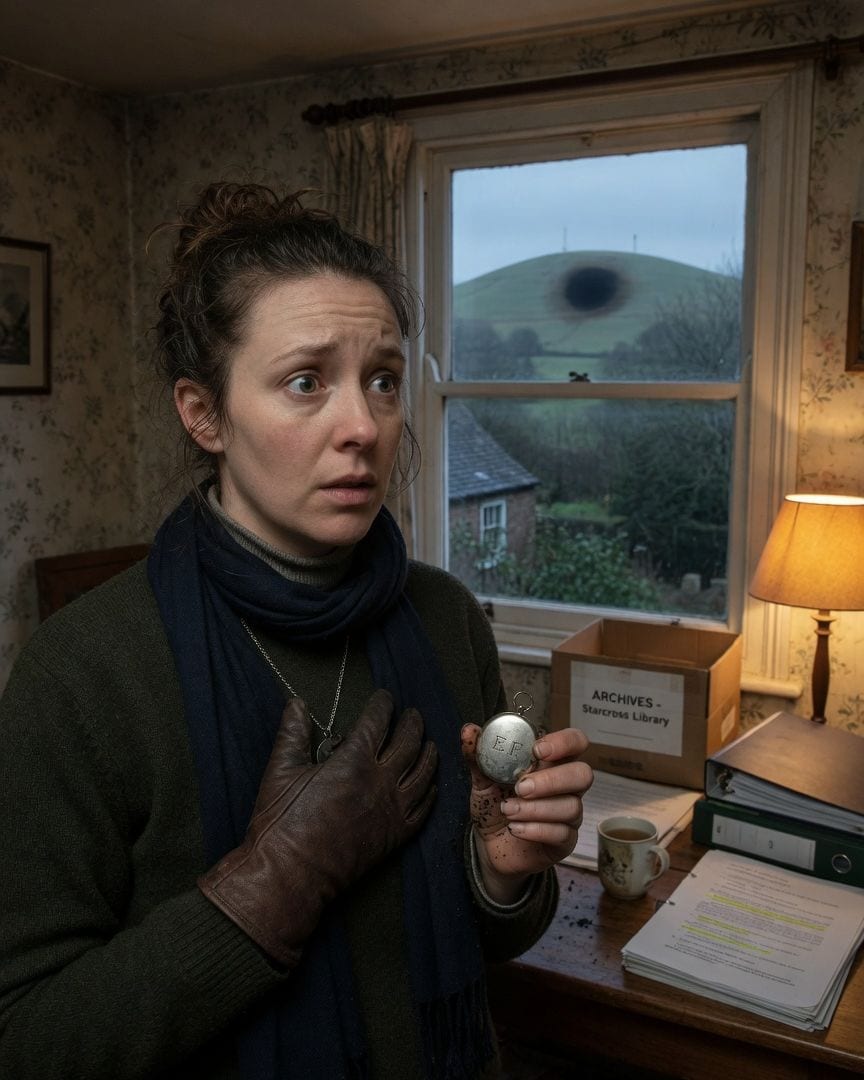
The hill behind Starcross village is scorched black every seven years. No fire brigade ever logs a call.
After moving to Starcross, I became fixated on Beacon Hill's peculiar, perfectly black scorch mark, which had no explanation in local fire records. While exploring the strange, glassy earth of the burn site, I unearthed a small, tarnished silver locket. It was later identified as belonging to Eileen Fairfax, a child who vanished decades ago and was officially presumed drowned in the local lake.
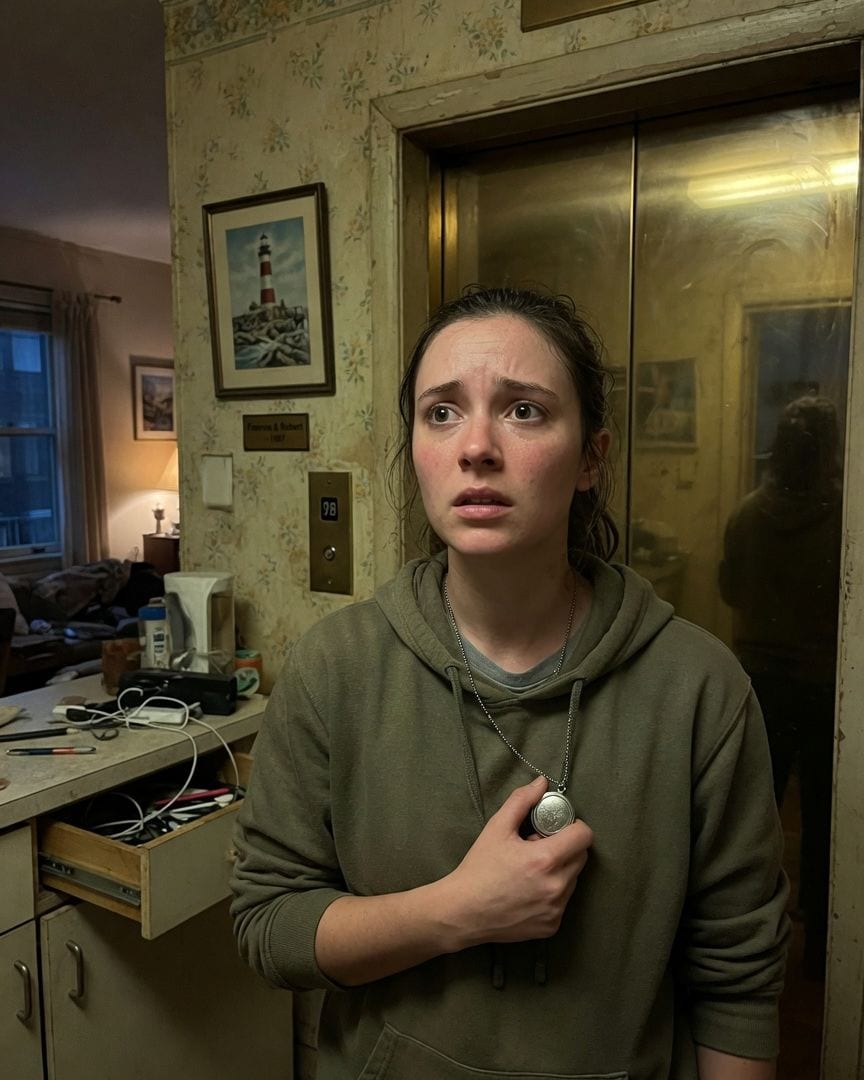
My aunt rode the elevator up, humming, at ease. She hadn't stepped in one since 1994, and told the story of why to anyone who'd listen.
My Aunt Frances stood beside me in the hospital elevator, humming a low tune. It felt deeply wrong; she hadn’t set foot in one since a traumatic incident in 1994, always taking the stairs. Now, after five days missing, she was completely at ease, denying she’d ever feared something so silly, her eyes holding an unsettling calm.
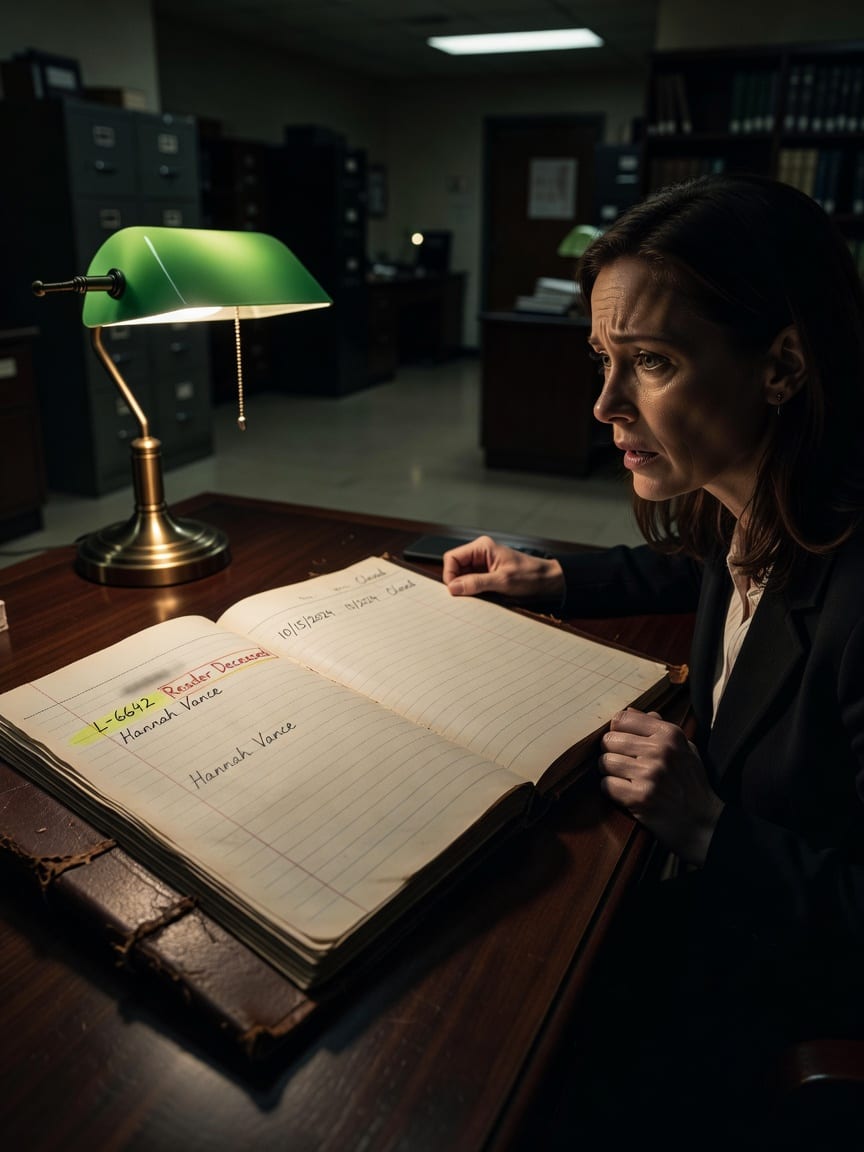
My library card number L-6642 was issued to me at seven — and the ledger shows that number has marked a reader 'deceased' every twelve years since 1949.
Returning my late father's library card to the old town library felt like a small act of closure. But the senior librarian's ancient ledger revealed a chilling pattern of 'reader deceased' entries tied to specific card numbers and borrowed books. My unease turned to cold dread when I secretly found my own name penciled in, marked for a future 'reader deceased' entry.
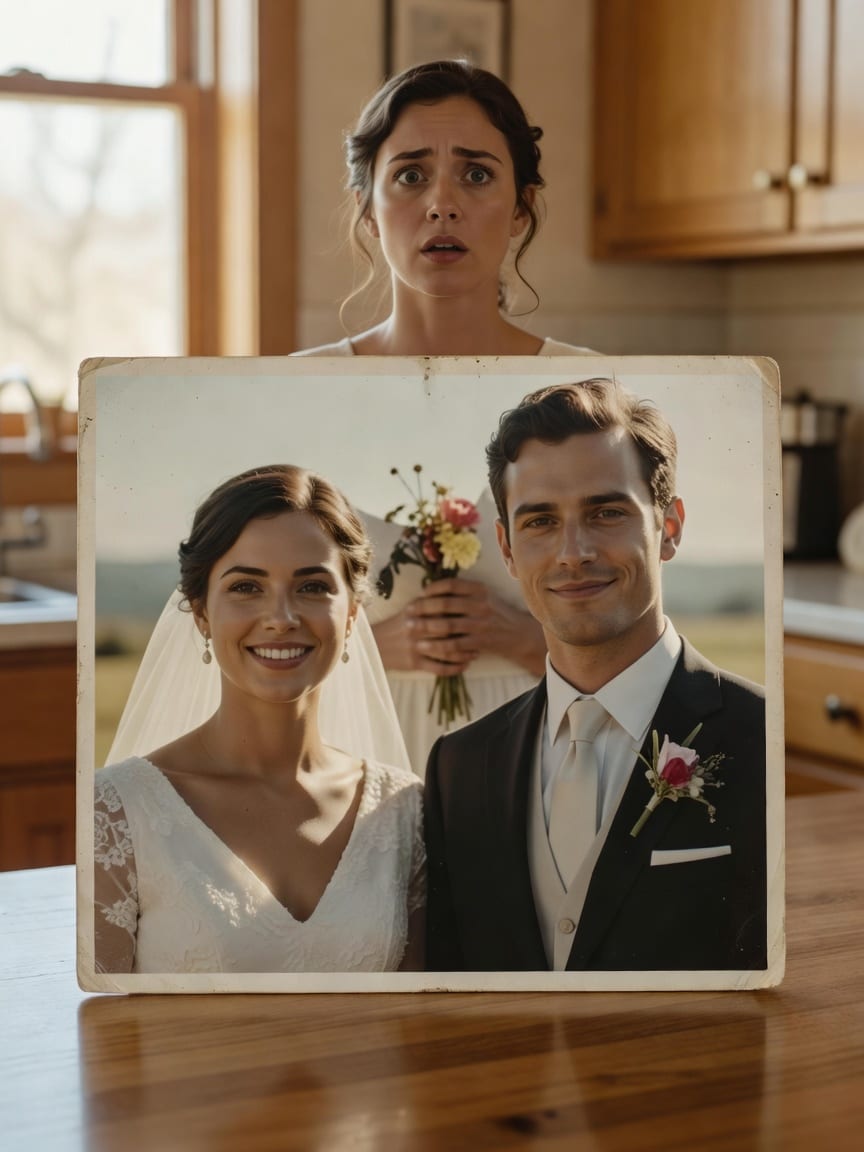
My best friend thanked me for standing up at his wedding. He isn't married. He described my speech, the ring, the bride's face — none of it real, but he remembered every detail.
My friend Julian Doyle vanished for two years, then reappeared acting like no time had passed. He talked about his wedding, where I supposedly gave a speech, describing every detail vividly. But Julian isn't married, and I have no memory of ever attending such an event.