A metal clip seals off a vessel deep inside my brain. My head has no scar, I've had no surgery, and it's been there for over a decade.
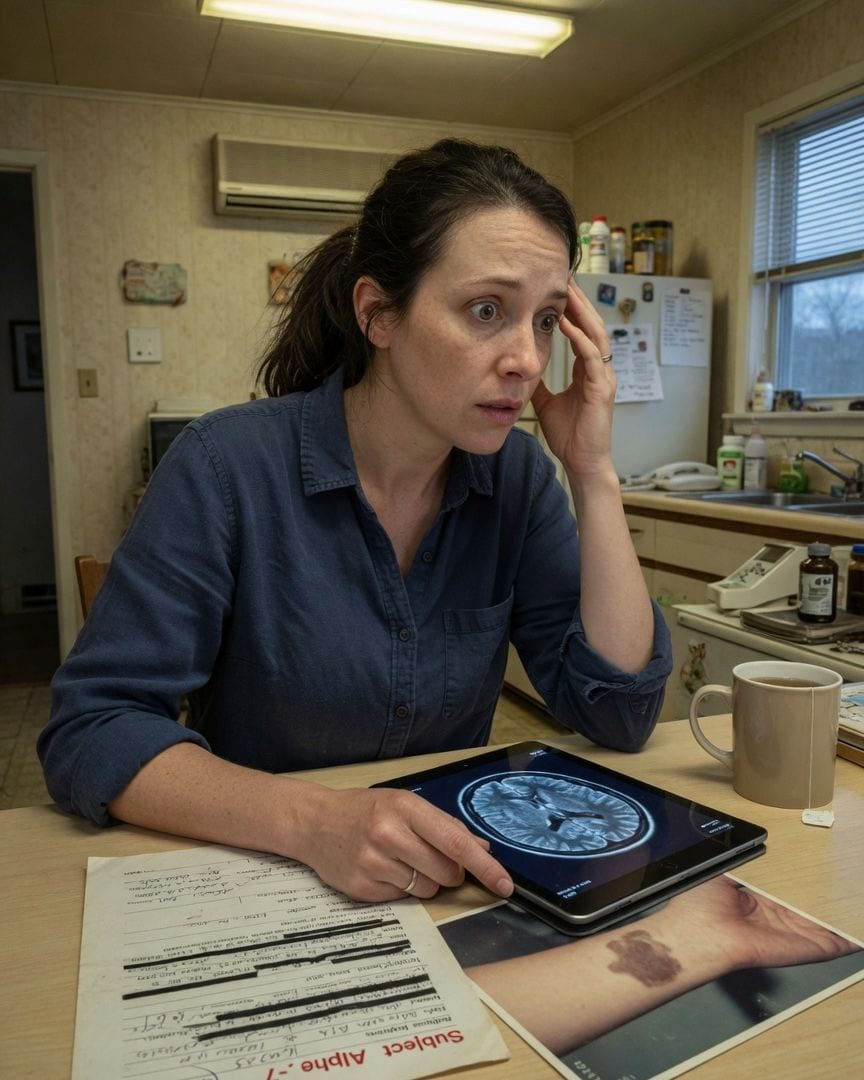
My headaches had been getting worse, a dull throb behind my eyes that no amount of ibuprofen could touch.
It wasn’t a migraine, not the pulsing agony I’d experienced in my teens, but a persistent, low-frequency hum that sometimes felt like it was pressing from the inside out.
My GP, Dr. Gerald Sutton, finally ordered an MRI, just to be safe. I remember the silence when he called a few days later, a heavy, professional quiet that told me something was wrong before he even spoke.
"Eileen," he said, his voice carefully neutral, "the scan shows something… unexpected. I’m forwarding you to Dr. Olivia Marsh, a neurosurgeon. She’ll want to explain."
A chill went through me. Unexpected? What did that even mean? I imagined tumors, aneurysms, all the worst things.
But Dr. Marsh, when I finally sat across from her polished mahogany desk, had an expression I hadn't anticipated: a mix of professional intrigue and quiet concern.
She was a woman in her mid-fifties, with sharp, intelligent eyes that didn’t miss a thing. The clinic room, usually bustling, seemed to hold its breath around us, the air conditioner humming with an unusual persistence.
She slid a tablet across the desk. On the screen was my MRI. I saw the familiar contours of a human brain, but deep inside, precisely where the persistent throb originated, was a small, impossibly neat metal clip.
It was closed across a vessel, shiny and perfect, like a tiny, deliberate seal.
"It's precisely placed," she told me, her voice low. "Like an aneurysm clip. Designed to block off blood flow. But there's no record of you ever having brain surgery, Eileen. No scar on your scalp, nothing."
She leaned forward, her gaze intense. "Based on the tissue regrowth around it, I'd estimate it’s been sitting there for over a decade. Possibly longer."
A decade. That would have put it there when I was in my early twenties, long before I’d even met my husband, Eugene. I tried to offer a rational explanation – a mix-up, perhaps? Someone else's scan?
Or an old injury I’d completely forgotten, a childhood accident that required surgery I was too young to remember? Dr. Marsh shook her head, her expression unwavering. "We’ve checked, Eileen. It’s your brain. And there's no surgical history. It's real.
And it's yours."
Dr. Marsh, clearly fascinated and disturbed, wasn't content to let it go. Such a clip was highly specialized, not something that simply appeared.
She explained that it was a surgical device, designed to stay put, to perform a very specific function.
Her office, usually filled with the low murmur of phones and staff, seemed eerily quiet in the days that followed as she started digging. She cross-referenced my medical history with obscure surgical databases, even reaching out to colleagues internationally.
I went through the motions of my week, but the metallic ghost in my skull felt heavier than ever, a constant, unsettling presence.
Days later, her voice tight with a new kind of urgency, she called me back. "I found something, Eileen," she said, "but it's… unusual." The way she said "unusual" sent a shiver down my spine.
It wasn't the calm, professional curiosity from our first meeting. This was something else.
She had located an archived, highly restricted medical file. It wasn't under my name, or any name she could immediately link to me.
The patient ID was redacted, a black bar obscuring the details, replaced by a cold, clinical project code: 'Subject Alpha-7.' Inside, among dense, clinical notes written in a precise, almost old-fashioned hand, was another MRI image.
It showed a brain, not identical to mine, but unmistakably containing a metal clip in the exact same location as mine. It was the same size, the same precise placement, the same impossible neatness.
The file also mentioned a specific, rare genetic marker. Dr. Marsh had run a quick check against my initial bloodwork, the samples taken when Dr. Sutton first ordered the MRI.
I remember the sound of her breath catching in her throat through the phone line. "Eileen," she said, her voice barely a whisper, "you have that marker. Prominently."
The room around me felt suddenly colder, the hum of the fridge in my kitchen sounding like a distant, mechanical heartbeat.
The following afternoon, Dr. Marsh called again, her tone even more strained. "I need you to come in. Immediately." When I arrived, she looked pale, her hands trembling slightly as she held a faded, grainy photograph.
The fluorescent lights of her examination room seemed to flicker, making shadows dance.
"This was in the Subject Alpha-7 file," she said, pushing it across her desk.
It was a close-up, slightly out-of-focus shot of a young woman's wrist. The skin was pale, the knuckles softly rounded. And on that wrist, unmistakable even in the poor light, was a birthmark.
A unique, intricate swirl of darker pigment, just below the thumb.
My breath hitched. It was identical in every detail to the one I had always had, hidden beneath the sleeve of my own left arm. The photo was dated 1968.
The photograph haunted me. A birthmark, a marker I’d always considered uniquely mine, appearing on someone else, decades before I was born. The image of that wrist, so familiar yet belonging to a stranger, looped through my mind.
Dr. Marsh had no further answers; the file ended abruptly, leaving more questions than it answered. She tried to suggest it was a strange coincidence, a genetic anomaly, but her eyes held a deeper, more unsettling doubt.
But the project code, 'Subject Alpha-7,' and the name of the facility, 'Thornton Research Institute,' were enough to go on. The name felt like a burr under my skin.
I started my own research, digging through old online archives, academic papers, and local history sites. Thornton Research Institute, it turned out, was a now-defunct medical facility with a murky reputation, known for experimental neurological studies in the mid-20th century.
Its public records were scarce, often redacted, as if someone had gone through them with a deliberate hand.
Eventually, I found a mention of a small, specialized archive housed in the city's old public library, a place few people visited anymore. It felt like a ghost of a building, all high ceilings and dim light.
I spent a Saturday there, sifting through microfiches and dusty bound journals, the quiet rustle of paper the only sound.
Among the dry scientific papers, I found oblique references to 'vessel integrity' and 'neurological synchronization experiments' in the context of 'prolonged cognitive function.' The language was clinical, almost dehumanizing.
It spoke of 'recipients' and 'stabilization protocols' rather than patients and treatments. My own clip, my own body, suddenly felt like part of a far larger, colder design, a machine with parts that could be replaced or repurposed.
As I delved deeper into Thornton's past, I started noticing things. Small, unsettling anomalies. My home internet, usually reliable, would occasionally stutter and disconnect, not for long, but just enough to interrupt my research, forcing me to restart my modem.
I told myself it was old wiring, or perhaps my internet provider was having issues. My phone battery, which I'd replaced recently, seemed to drain faster than it should, even when idle.
I attributed it to too many apps running in the background, a faulty update. I tried to rule out the mundane, to explain away the oddities, but the explanations felt thin, like tissue paper.
One evening, after a particularly frustrating session trying to access encrypted files on a historical society’s website, I found a dusty institutional directory for Thornton from the early 70s. Under 'Archives Management,' a name stood out: Paige Coleman.
There was an old, faded landline number. On a whim, my heart thumping a strange rhythm against my ribs, I called it.
It rang several times before a woman's voice answered, calm and surprisingly clear for an old line. "Archives," she simply stated.
I identified myself, explained what I was looking for, the connection to Thornton, the 'Subject Alpha-7' files. There was a pause, a breath held on the other end of the line, then: "Some records are best left unread, dear.
You wouldn't want to disturb the integrity."
The line went dead. The silence in my apartment pressed in on me, heavy and cold. Later that night, while charging my phone, I noticed it: a small, perfectly circular indentation on the casing, near the camera lens.
Almost invisible, as if a tiny, precise suction cup had been placed there, then carefully removed.
A shiver ran down my spine. Someone knew I was looking. Someone had been listening.
The phone indentation confirmed my fears. It wasn’t a glitch, not bad wiring, not a faulty battery. It was deliberate. I knew I couldn't stop. The implication that someone was watching me, listening to me, only strengthened my resolve.
I found Paige Coleman's last known address through public records, a small, meticulously kept house in a quiet, older neighborhood on the edge of the city. The kind of place where nothing ever seemed to change.
The front door was slightly ajar when I arrived. Paige, an elderly woman with sharp, knowing eyes, stood in the entryway, as if expecting me. The house smelled faintly of old paper and something herbal, like dried rosemary.
She invited me in with a calm, almost serene smile. "You've been digging, Eileen," she said, her voice soft, but with an underlying steel that betrayed her apparent frailty. "Some things are meant to stay buried."
I confronted her with everything: the clip in my brain, the identical birthmark in the 1968 photo, the 'Subject Alpha-7' files. I watched her face for a flicker of surprise, a hint of guilt, but there was nothing.
Paige listened patiently, her gaze steady, then led me to a small, unassuming study lined with heavy, bound books. The room felt warm, almost stifling, despite the cool air outside.
She pulled a hidden lever disguised as a spine on a fake book, revealing a discreet, fireproof cabinet. Inside were rows of meticulously organized files, each one thick with brittle paper.
"The clip," she began, pulling out a faded folder, its cover yellowed with age, "is a stabilizer. For neurological transfer. Thornton wasn't just researching prolonged cognitive function. We were perfecting it."
She spoke with a chilling matter-of-factness, as if discussing a recipe. She showed me a series of files, each marked 'Subject Alpha-7.' Each detailed a 'recipient' body, meticulously chosen for specific genetic markers – my genetic markers.
"Your lineage, Eileen, proved highly compatible. A perfect vessel."
The files spanned decades, describing different 'occupants' but the same 'vessel lineage.' The birthmark, she explained, was a unique identifier, a biological signature of this specific, desirable genetic line, passed down through generations.
"The headaches," she continued, her voice devoid of sympathy, "are a symptom of the previous occupant's residual consciousness. It sometimes tries to resurface, disturbed by the transfer. It's… inconvenient."
My blood ran cold. The air in the room seemed to congeal, thick and suffocating. My body was a vessel. My identity, a transfer. The clip, the birthmark, the headaches – it all clicked into a horrifying, coherent pattern.
A pattern that had been waiting for me for decades.
Paige's words echoed in the quiet room: 'inconvenient.' The casual, almost dismissive tone she used to describe my suffering, my very existence, sent a growing sense of dread through me.
A chilling realization that my current self might not be the original occupant of my own body. Who was I, really? And who was the person before?
"Who was the previous occupant?" I asked, my voice barely a whisper, a strange tremor running through it. "The one before me?"
Paige reached into the cabinet again, retrieving a final, thinner file. This one looked newer, the paper still crisp. She slid it across the polished wooden table.
On the cover, in precise, elegant, handwritten script, was my own full name, 'Eileen Fontaine,' and my exact birthdate.
Inside, a detailed neurological schematic of my brain, complete with the clip, was meticulously drawn. Lines and labels indicated pathways, suppressors, and transfer points.
Below it, a final entry, dated just a few weeks before my headaches had started, read: 'Transfer complete. Subject stable. Initiating dormancy protocol for previous occupant's residual consciousness.'
And then, a photograph. Tucked into a corner. A young, vibrant woman, beaming, her eyes full of life, her hair a striking blonde, perfectly coiffed. She was beautiful, confident. But she was not me.
This was the woman whose consciousness now resided in my skull. My own birthdate, my own name, my own brain, now home to someone else, while my original self was merely a 'previous occupant' deemed 'dormant.'
The photograph of the vibrant blonde woman, the 'new occupant,' burned itself into my mind. Her smile, so full of life, was a mockery. Paige Coleman watched my reaction with an unnerving calm, her eyes like polished stones.
"Your original consciousness, Eileen," she explained, her voice as smooth as river water, "is still there. Deep within. Suppressed. The headaches are its struggle, a faint echo trying to break through the new, dominant personality."
She gestured to the file with a delicate hand. "This woman, Eleanor Vance, was a brilliant neuroscientist. Her work was vital. When her body began to fail, Thornton ensured her legacy continued. You were… a perfect match."
My body, my life, my very sense of self, had been meticulously engineered for this purpose. The clip was a physical manifestation of this usurpation, a seal on my own mind.
Every strange detail, every unanswered question, now clicked into place with horrifying clarity: the inexplicable clip, the shared birthmark across generations, the mysterious records, the feeling of being watched. It wasn't a mistake, a mix-up, or a glitch.
It was a meticulously planned, long-running project, and I was merely the latest component. My headaches, which I had sought to cure, were not a malfunction but a desperate plea from the original Eileen, trying to reclaim what was hers.
But Eleanor, the 'new occupant,' was now in control. Or, at least, she was trying to be.
A cold fury, unlike anything I’d ever felt, surged through me. It wasn't just anger; it was a primal rage at the violation, the erasure of everything I believed myself to be. "What happened to me?"
I demanded, my voice raw, cracking. "My original self? Is there a way to reverse it?"
Paige shook her head, her calm unwavering. "Reversal is not an option, Eileen. Only stabilization. We can ensure the previous occupant remains permanently dormant, and Eleanor can fully integrate. It would end the headaches entirely."
She even offered a faint, reassuring smile, as if offering me a cup of tea.
The casual cruelty of her words, the absolute dismissal of my existence, snapped something inside me. "No!" I screamed, lunging across the table.
My hand shot out, grabbing at the files, desperate to expose this monstrous project, to tear apart the evidence of my own erasure. I wanted to scatter them, to shout the truth to anyone who would listen.
Paige, despite her age, moved with surprising speed. Her hand shot out, catching my wrist, her grip like iron. Her eyes, usually placid, hardened into cold, unyielding points.
"Some things must be protected, dear," she said, her voice losing its softness, taking on a hard, clipped edge. "For progress. For the greater good."
With her free hand, she pressed a small, discreet button embedded in a bracelet on her wrist.
A faint, high-pitched hum immediately filled the room, a sound that resonated deep within my skull, directly at the site of the metal clip.
The familiar headache, the one that had driven me to the MRI in the first place, intensified with agonizing speed.
It wasn't just pain now; it was a growing sense of detachment, a profound disassociation from my own thoughts, my own body. My struggles weakened.
My vision blurred at the edges, the room spinning, my own desperate thoughts becoming distant, muffled echoes, as if I was plunging into a deep, dark well.
The hum faded. Eileen's struggles ceased. Her body went slack, her eyes now wide and serene, devoid of the terror they had held moments before. Paige Coleman released her grip, her expression once again perfectly composed.
She calmly gathered the scattered files, replacing them in their hidden cabinet with meticulous care. She then turned back to Eileen, observing her for a long moment. A faint, almost imperceptible smile touched Paige’s lips.
"There," she murmured, her voice soft and reassuring. "Much, much better. Welcome back, Eleanor. We have so much work to do."
Eileen walked out of Paige Coleman's house, the afternoon sun warm on her face. She felt a lightness she hadn't known in weeks, a profound sense of peace. Her headaches were completely gone.
She stopped at a small cafe, ordered a black coffee, something she'd never particularly enjoyed, but now it felt utterly right, a perfect fit. She smiled, a faint, unfamiliar curve to her lips, a quiet confidence settling over her.
She knew exactly who she was. She was Eleanor. And she had important work to do.
Later that evening, Dr. Gerald Sutton called Eileen's home phone to check on her. Her husband, Eugene, answered. "She's fine, Gerald. Headaches are completely gone. She's… different, though. Happier, somehow. Said she's found herself." He paused.
"She said something strange, though. Asked if I'd ever considered dying my hair blonde, like hers used to be." The silence stretched. "Is that so?"
If this one got to you
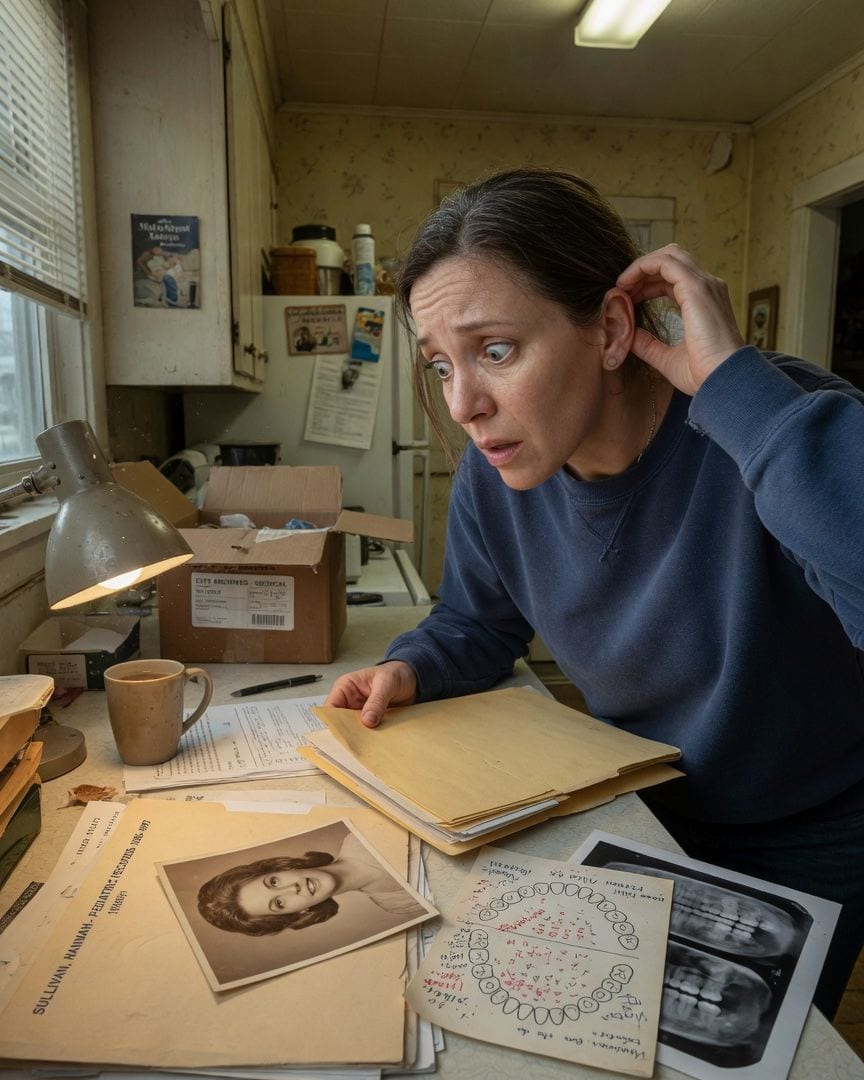
My MRI showed a perfect, decades-old surgical opening in my skull. I have no memory of it.
I underwent a routine MRI for persistent dizziness, expecting reassurance. Instead, the scan revealed a perfectly healed, decades-old surgical opening in my parietal bone, just behind my left ear. Dr. Hughes confirmed it was an access point for a procedure, yet I have no memory of any head surgery, ever. My body holds a secret I cannot recall.
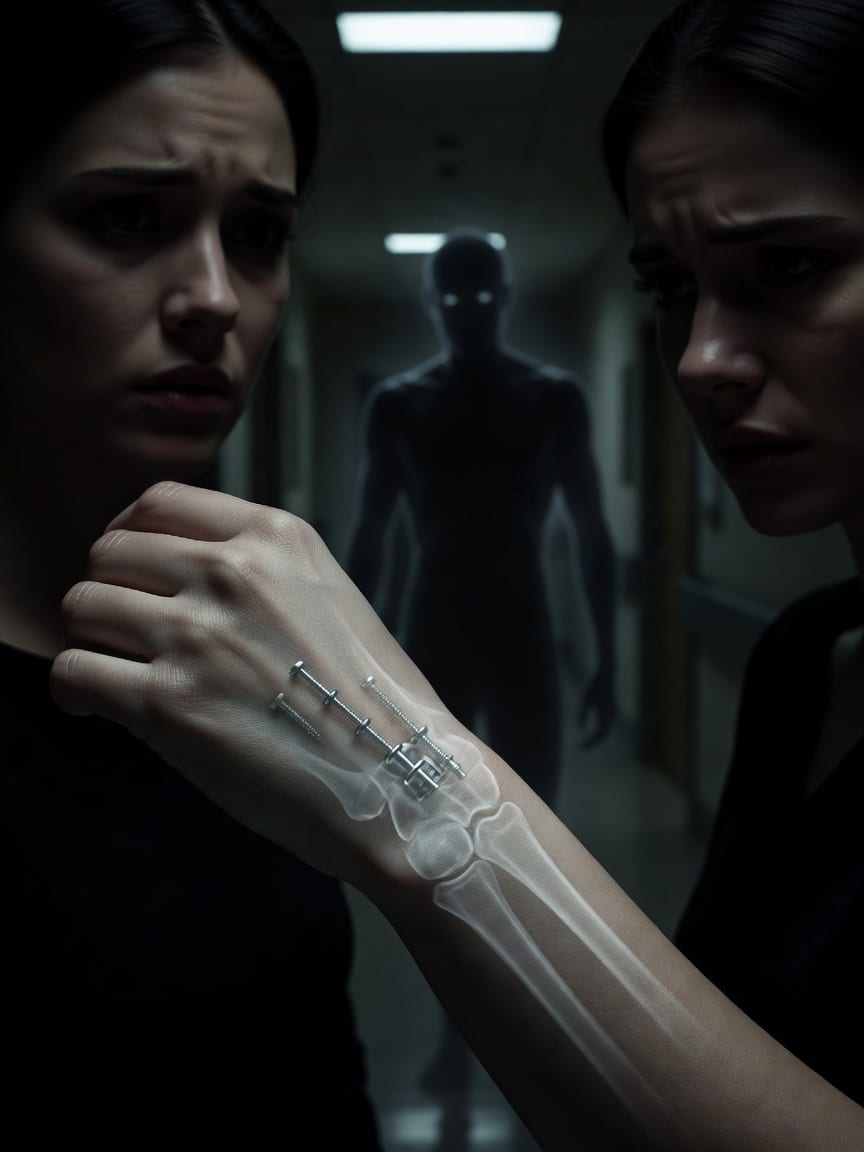
My wrist X-ray showed a titanium plate fixing a break from years ago. My surgeon asked which hospital did the operation. I've never had surgery in my life.
After a clumsy accident, I visited the fracture clinic for my swollen wrist. But my X-ray showed a perfectly healed titanium plate embedded in my bone – an implant I had no memory of receiving. Despite being decades old, there was no scar on my skin, and no medical record of the surgery under my name.
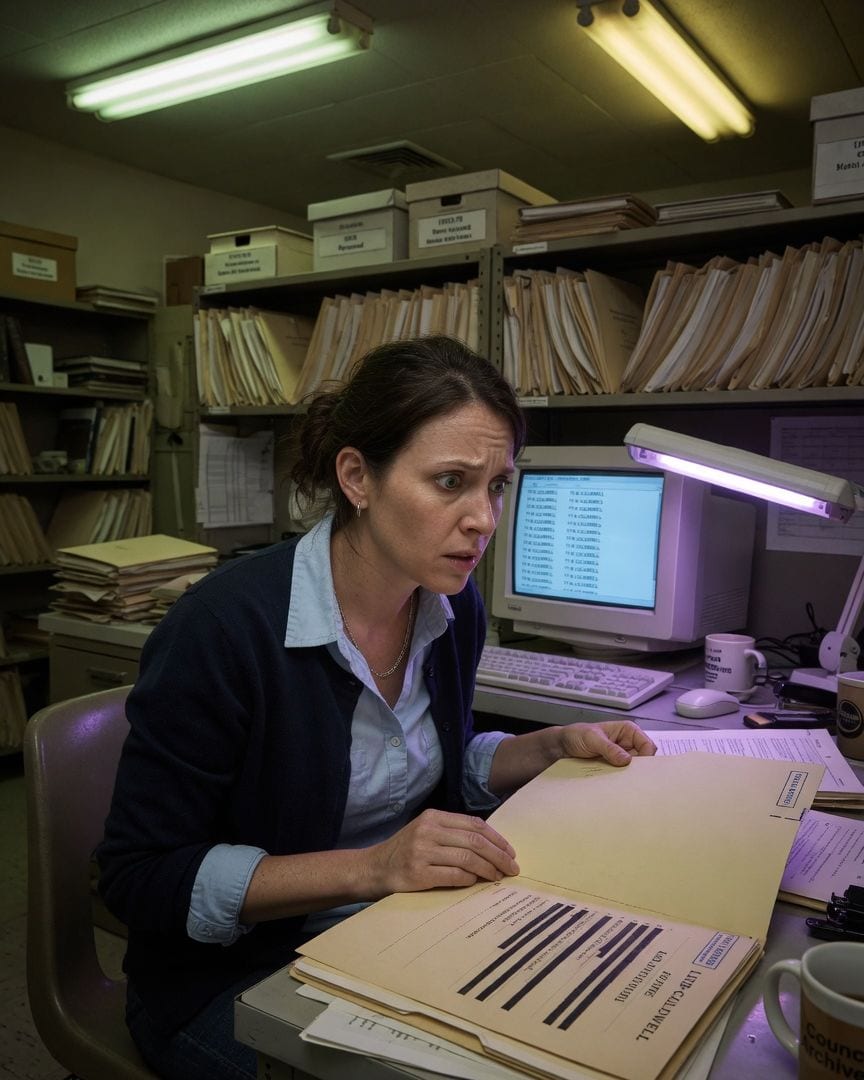
My employer's security file holds a vetting report on me dated nine years before I ever applied. It has my full name and my parents' address — with only one line, the source who referred me, blacked out.
Working a routine data audit, I pull my own security file. The issue date is nine years before I even applied for the job. Then, hidden within an old archive file, I find my current address etched under a blacked-out line.
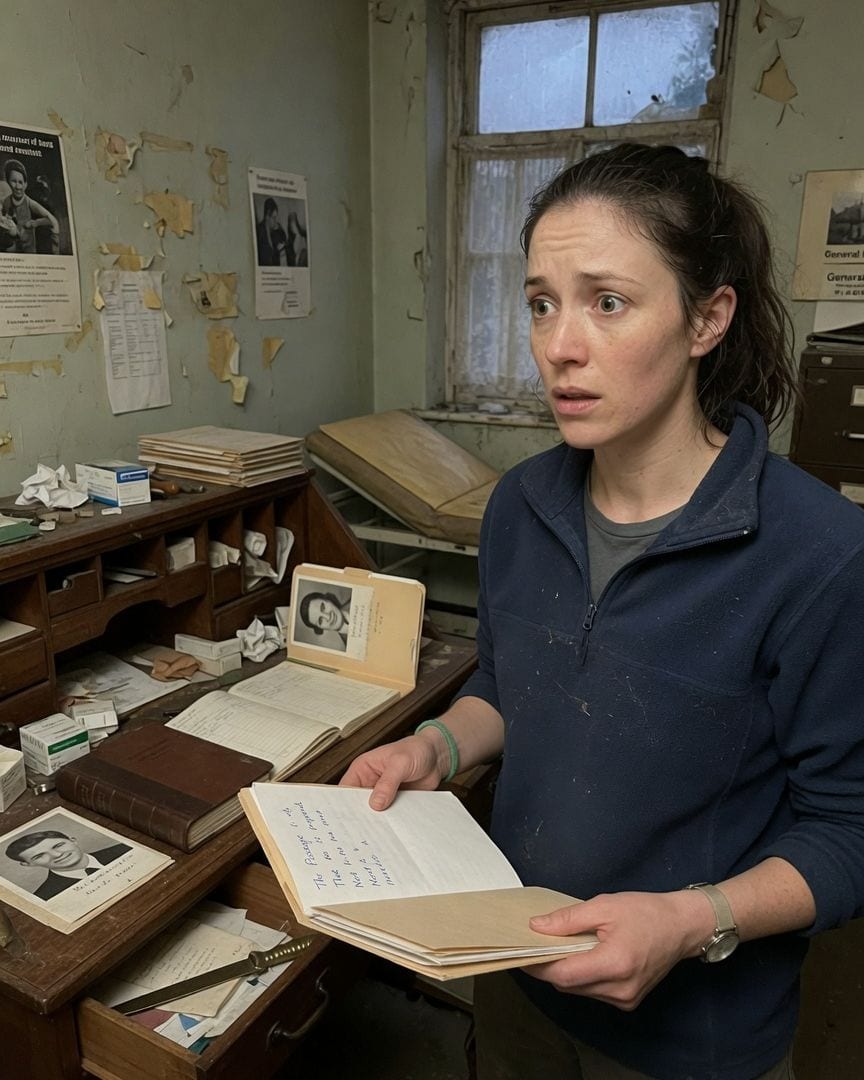
My new clinic's appointment book shows entries for this coming Monday, decades after the doctor retired and died.
Chloe Lawson bought an old, abandoned surgery in Nettlebed, ready to open her new vet clinic. Locals insisted Dr. Almott retired in '79 and the practice shut down for good. But then Chloe found his dusty appointment book filled with meticulous entries, continuing unbroken from 1979 through the decades, right up to this coming Monday.
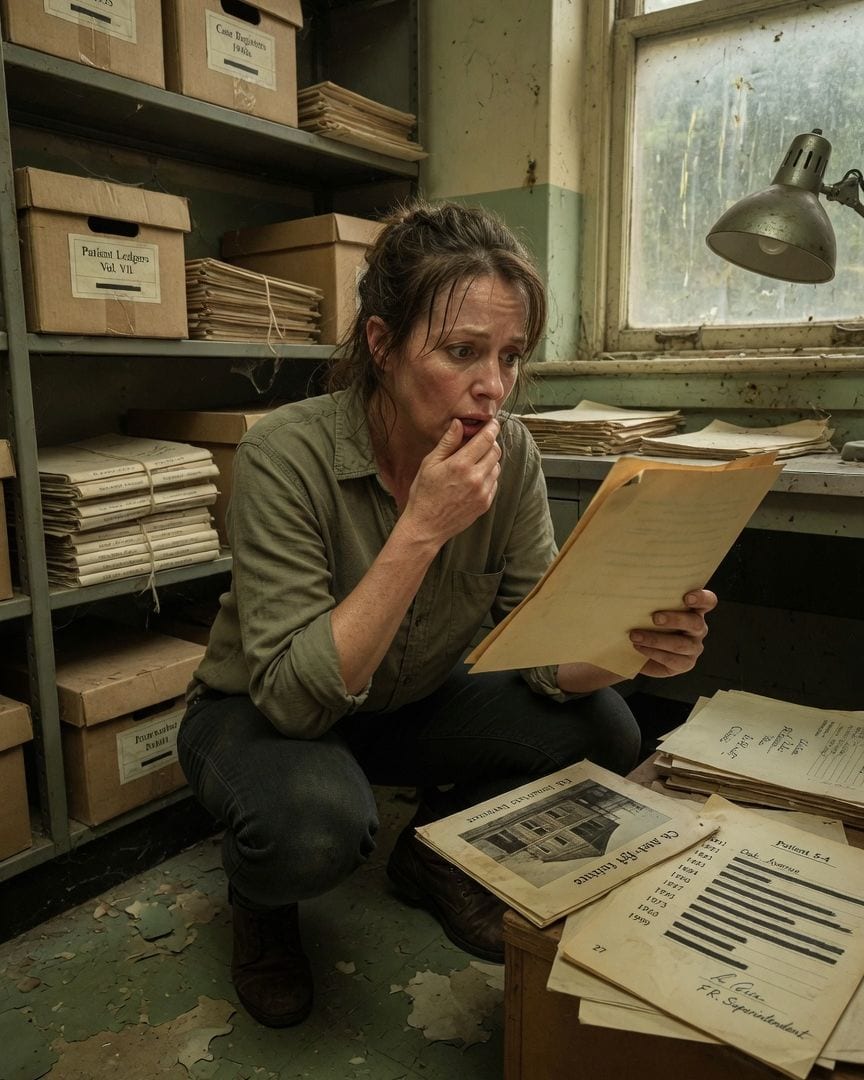
Patient 5-4 keeps checking into my aunt's old sanatorium chalet. The same initials sign them out, 'not traced,' every thirteen years since 1921.
Sifting through my aunt Margaret's estate, I found her old sanatorium file from 1999. Her patient record listed her as 'Patient 5-4,' discharged 'not traced.' But when I accessed the archives, I found 'Patient 5-4' was admitted every thirteen years since 1921, always with identical discharge notes.
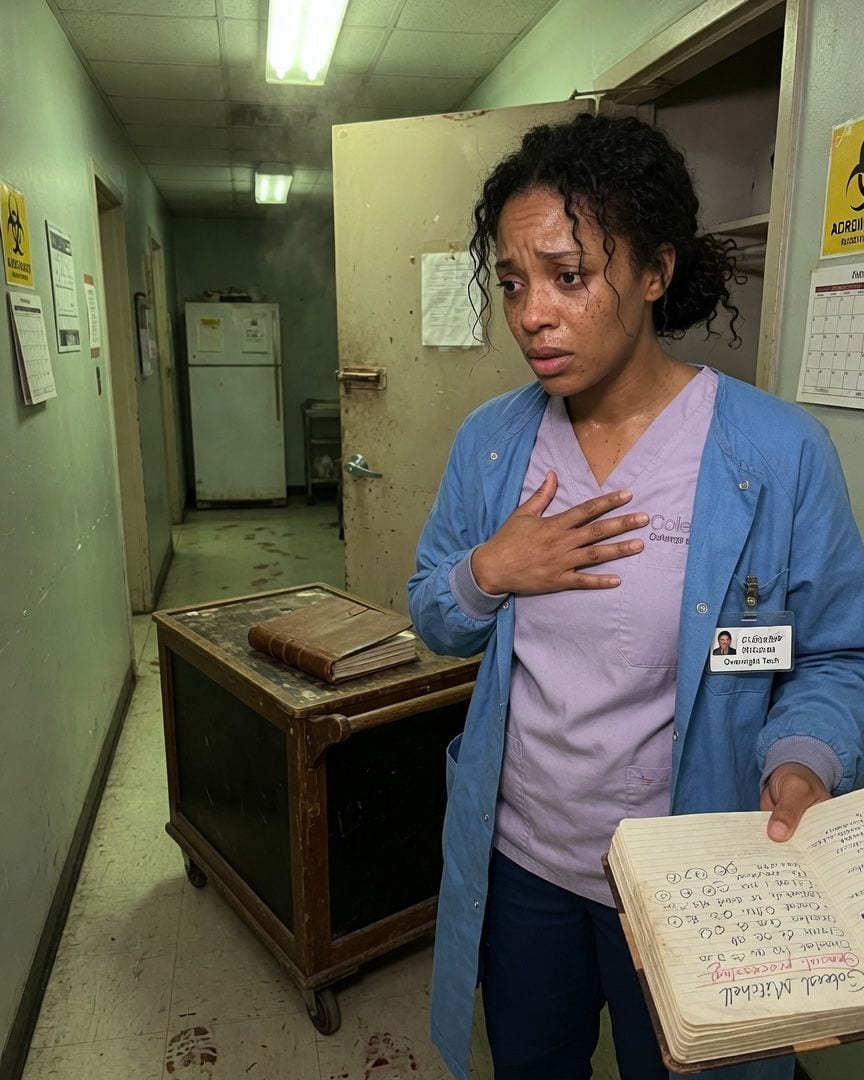
My boss says no one named Grace has ever worked here. But Grace stands beside me every night, reminding me to label the third rack — and I work the overnight shift alone.
On my quiet night shift at the blood bank, Grace always appears around 3 AM. I hear her familiar cart, smell her antiseptic scent, and follow her precise instructions. But my lab director insists no one named Grace has ever been credentialed here, leaving me to wonder who I've been working with.