My boss says no one named Grace has ever worked here. But Grace stands beside me every night, reminding me to label the third rack — and I work the overnight shift alone.
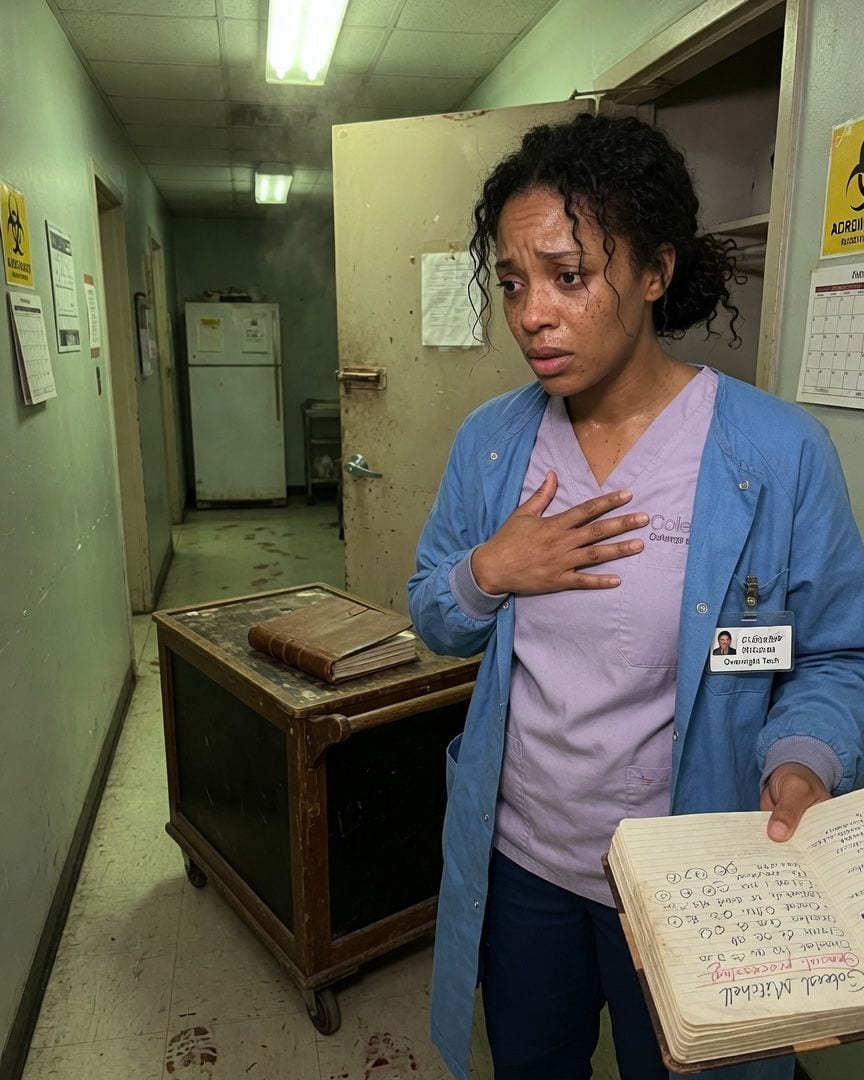
I remember the first time I almost said her name out loud. It was around 3:14 AM, the quietest part of my night shift at the blood bank.
The building always settled then, the distant hum of the refrigerators a constant lullaby. I was alone, as usual. Or almost.
Grace always appeared around that time. I’d hear the distinct, high-pitched squeak of her old rolling cart down the hall, then the softer click-click-click of vials settling into racks. A familiar sound.
She never spoke much, just moved with a quiet efficiency. I’d be at the workbench, logging units, and she’d come up behind me.
I’d feel the slight shift in the air, the faint, clean smell of antiseptic that clung to her.
She’d lean over the centrifuge, her shadow falling across my work, and I’d hear the soft, almost reverent hum as she topped it off, balancing the load perfectly.
Then, her low, calm voice, barely a whisper: "Don't forget the third rack, Colette." Always the third rack. It was a small ritual, a comforting presence in the long, lonely hours.
The next morning, David Brooks, the lab director, called me into his office. His face was a thundercloud, his bald head gleaming under the harsh fluorescents.
"Colette," he began, not even waiting for me to sit, "we have an inventory mismatch. A few units of B-negative, specifically, unaccounted for. Rare stuff." He pulled up the shift sheet on his monitor, spinning it to face me.
My name, Colette Mitchell, was right there. "The bank runs a single overnight tech," he said, tapping the screen. "That's you. And just so we're clear: no one named Grace is credentialed at this facility.
Not now, not ever, in my ten years here."
My mind raced. The squeaking cart, the click of the vials, the exact hum of the centrifuge. Her precise movements. The smell. Her voice, so distinct, so real. "Don't forget the third rack, Colette." I saw her. I heard her.
But according to David, she simply didn't exist. The cold in that office wasn't from the AC.
I spent the next few nights trying to rationalize it. Stress, fatigue, a trick of the light playing on my eyes in the dead quiet of the lab. My brain making up conversations to fill the void.
I checked every official record I could access – locker assignments, old shift schedules, even the dusty, rarely-reviewed security footage from the previous night.
A grainy, silent sweep of empty hallways, processing labs, and my own figure hunched over a microscope. Nothing. No Grace. The silence stretched, confirming David's words.
Yet, the memory of her presence was too vivid, too concrete to dismiss. Her rolling cart, that old, clunky thing, unlike the modern stainless-steel models we usually used.
It had wooden panels, almost black with age, and those wheels that whined like something in pain.
It was a relic, perpetually parked in a dusty, forgotten corner of an unused storage closet, tucked behind stacks of old specimen boxes near the processing lab. I hadn't thought about it in months.
One particularly quiet night, after a few hours of chasing shadows and convincing myself I was just tired, I couldn't shake the image of that cart. My heart thumped a slow, heavy rhythm against my ribs.
I walked down the deserted corridor, past the cold storage, towards the closet. The lock was old, rusty, barely holding. I picked at it with a spare key, the faint snick echoing in the stillness.
The closet smelled of stale paper and disuse. The cart was there, exactly as I remembered, a dark shape in the gloom. Its wheels groaned like a dying animal as I pulled it out into the narrow hallway.
Dust motes danced in the strip light. I ran my hand over the top tray, feeling for loose panels, for anything out of place.
Tucked away in a hidden compartment beneath it, a section of the wood that gave way with a soft thunk, I found it: a thick, leather-bound logbook, its cover worn smooth, its pages brittle with age.
Inside, in neat, looping script, were meticulous entries for "special processing," detailing strange identifiers for donations. Archaic symbols – circles with internal lines, triangles with dots – marked some.
And every single entry, without fail, was signed with a flourishing, undeniable 'G.' The dates stretched back decades, long before I started working here, long before David Brooks was even a junior tech.
My fingers, trembling slightly, turned the yellowed pages of the logbook. The entries were chillingly consistent, a detailed record of a hidden routine that had been happening for longer than anyone knew.
I scanned the names listed in the columns, searching for any pattern, any clue to the nature of this "special processing." Donor IDs, rare blood types, cryptic notes about "yield" and "purity." Then, my breath hitched. My own surname. 'Mitchell.'
It appeared several times, not as a donor, not as a recipient, but in a context that made no sense – associated directly with the "special processing" itself, in a cryptic, almost ritualistic way.
My finger traces the familiar letters, a cold dread washing over me as I realize my family name is deeply, inexplicably intertwined with 'Grace's' secret.
Over the next week, the old logbook became my anchor, and my torment. I dedicated every spare moment to its secrets.
The "special processing" entries detailed blood types that didn't quite fit standard classifications, sometimes with bizarre annotations about "affinity" or "resonance" – words that felt entirely out of place in a modern blood bank.
I cross-referenced the dates with historical weather data, even astronomical charts, staying up late in the empty lab, poring over my phone.
A subtle but undeniable pattern emerged: spikes in "special processing" often aligned with specific lunar cycles or celestial alignments, dates that should have been utterly ordinary.
David Brooks' inventory mismatches now made horrifying sense; these donations were never meant for the official system. They simply… disappeared into the logbook.
Digging deeper, I delved into the facility's archived maintenance logs, hunting for anything unusual. Our main centrifuge was old, sure, but reliable. Then I found it.
An entry, dated over fifty years ago, noted the centrifuge had been "modified for enhanced spectral analysis." A phrase that sounded like clinical jargon, something designed to sound impressive and vague, but felt like an evasion.
And the date of this modification closely predated the earliest 'G' entries in the leather-bound logbook. The same maintenance log also frequently mentioned a Roland Fletcher, then a senior lab supervisor, who oversaw the modifications and subsequent operations for decades.
He retired about five years ago, after a long and distinguished career, mostly in this very lab. He knew. He had to.
I tried to find Roland Fletcher. My initial calls to his last known number went unanswered, ringing out into an empty silence that felt weighted, watchful. Like someone was listening to the rings, waiting for me to give up.
I tried other numbers, old employee records, anything. Nothing.
One night, the lab was particularly still. The usual hum of the equipment seemed muffled, distant. I sat hunched over the old logbook at my workbench, the yellowed pages reflecting the sterile fluorescent glow.
I was scrutinizing another entry marked with my family name – 'Mitchell' – trying to force meaning into the bizarre symbols next to it. That's when I heard it.
A faint, distinct tap-tap-tap echoing from the empty storage closet where Grace's cart had been found. It wasn’t just random noise.
It was rhythmic, precise, like a needle cap being secured onto a syringe, or a small vial being tapped gently on a counter.
I froze, my breath catching in my throat. My blood ran cold, then pulsed. The sound repeated, closer this time, just outside the lab door. Tap-tap-tap.
I slowly pushed my chair back, straining to hear over the sudden, overwhelming rush of blood in my ears. The tapping stopped. Silence. The air in the lab, usually cool, felt heavy and warm, pressing in on me.
My gaze fell to the linoleum floor near the closet door, and I saw it. A fresh, small, dark stain, barely the size of a thumbprint, glossy in the light. It wasn't there when I started my shift.
Someone knew I was digging, and they were leaving a mark.
I finally tracked Roland Fletcher to a small, unassuming house on the outskirts of town. It was a neat little bungalow, with a porch swing and an overgrown rose bush.
When he answered the door, he was an elderly man, frail, with a stoop in his shoulders, but his eyes… his eyes held an unnerving, knowing depth, like still pools that had seen too much.
I confronted him on his porch, the old logbook clutched in my hands, a desperate plea in my voice as I recounted the inventory mismatches, the phantom 'Grace,' the impossible presence.
Roland listened patiently, calmly, a faint, almost pitying smile playing on his lips. He invited me in, to a cramped living room smelling of dust and old books.
"Grace isn't a person, Colette," he said, his voice raspy but steady, like dry leaves rustling. He sat in an armchair, steepled his fingers. "She's… the routine. The facility has always had its own needs. Special donors, special recipients.
For centuries, perhaps. Long before the building, even."
He explained that the very land the blood bank was built upon had a unique 'resonance,' drawing certain energies, requiring specific 'processing.' 'Grace' was the manifestation that ensured these specific, rare bloodlines were maintained, a conduit for the facility's needs.
"I merely assisted the routine," Roland admitted, his gaze unwavering, unnervingly calm. "Someone had to. To keep things… balanced. Without it, things get… unstable."
"The Mitchell name," I demanded, the logbook still in my hands, "in the special processing entries. What does that mean?"
Roland sighed, a long, weary sound. "Your family, Colette, has a long history with this routine. A very long one."
He gestured to a dusty bookshelf crammed with antique volumes, pulling down a brittle, leather-bound book, much older even than my logbook. It had a strange, almost organic pattern etched into its cover. "Some families are simply more attuned."
He opened it to a page filled with meticulous script and faded, intricate illustrations of what looked like ancestral trees, spiraling and intertwining.
The "special processing" entries, the lunar cycles, the modified centrifuge – it all snapped into sickening focus. It wasn’t a glitch, not a ghost. It was a system. An ancient, deliberate, living system.
And my family, somehow, was part of it. The air in the small room felt suddenly thin, as if the space itself was holding its breath.
Roland closed the ancient volume with a soft thud, his eyes fixed on me, the faint smile gone. "The routine needs a Guardian, you see," he said, his voice barely a whisper, yet it filled the room.
"Someone to ensure the flow, to maintain the balance. It picks its own." He reached into a small wooden drawer beside his armchair, pulling out a single, faded, brittle ledger page, even more delicate than the one I held.
It was a family tree, meticulously drawn in a spidery ink that looked centuries old, showing the Mitchell line stretching back generations, a tangled web of names and dates.
My own name, Colette Mitchell, was circled at the very bottom, stark against the yellowed parchment. Below it, in that same archaic hand, was a single, chilling note: 'The next Guardian.'
I stared at the page, my own blood suddenly feeling cold and heavy in my veins.
The tapping, Grace's presence, the inventory mismatches, the logbook, Roland's calm, unsettling acceptance – it all converged on me, on my name, on my blood. I was not just a witness. I was part of it. A Guardian.
The page trembled in my hand, the truth a suffocating weight.
"What is a 'Guardian'?" I managed to ask, my voice a thin, reedy thing. Roland's calm facade cracked slightly, revealing a deep, bone-deep weariness that seemed to age him decades in an instant.
"The Guardians ensure the continuation," he explained, his eyes fixed on the ancient ledger in my shaking hand. "They are attuned to the land, to the routine. They ensure the 'special processing' continues, that the specific bloodlines are maintained.
Some are donors, some are facilitators. And some…" he paused, his gaze locking onto mine, "some manifest Grace."
My stomach clenched. "Manifest Grace?"
"The 'Grace' you have been seeing, hearing, interacting with," Roland clarified, his voice quiet, "is not a separate entity, Colette. It is a manifestation of the routine itself, drawing on the latent abilities of the current Guardian.
Since you started the night shift, the routine recognized you. It began to draw on your own attunement. You have been manifesting Grace, unconsciously, to ensure the processing."
The inventory mismatches, he explained, were my own doing – processing the blood I myself had collected and channeled, operating outside the official system because I was the system.
The 'tapping' I heard, the fresh stain I saw near the closet – these were echoes of my own actions, my own subconscious fulfilling the ancient charge.
All the clues clicked into place, forming a horrifying, coherent pattern: I wasn't just observing the wrongness; I was the source of its current manifestation. I was Grace.
Horrified and sickened by Roland’s revelation, I returned to the blood bank. The fluorescent lights hummed, a familiar sound, but the silence of the night shift now felt oppressive, watching.
I walked directly to the centrifuge, the 'third rack,' the specific spot where Grace—where I—always appeared.
I saw the subtle, archaic modifications Roland mentioned, the faint, almost imperceptible etchings on the metal panels, swirling symbols that looked too old for anything man-made. This was her. This was me, doing this. Unconsciously.
My jaw clenched. I would not be a Guardian. I would not be Grace. Ever again.
Instead of processing the next 'special' donation – a vial with a strange, almost luminescent quality to the blood within, waiting on the counter – I deliberately mislabeled it, slapped a Biohazard sticker on it, and sent it down the chute to general waste.
A faint, high-pitched whine emanated from the centrifuge as I did so, a sound of protest, like something living had been denied.
Then, with a surge of cold fury, I began to dismantle the modified centrifuge. I pried open panels, my fingers clumsy but determined. I cut wires, the snipping sound shockingly loud in the quiet lab.
I smashed the ancient, etched components that formed the core of the 'special processing' mechanism with a heavy wrench, each strike echoing through my bones.
Each strike, each snap, sent a profound, draining chill through me, a sense of something ancient and powerful being ripped away, severed. The lab went eerily silent. The hum of the equipment died down.
The air felt lighter, but also hollowed out, as if a presence had been violently expelled.
I reported a 'catastrophic malfunction' of the centrifuge and 'accidental contamination' of several rare blood units, including the discarded luminescent one. An investigation followed.
No one could explain the archaic modifications to the machine, nor the strange, non-standard blood types found in the 'contaminated' samples. I was cleared of wrongdoing, but the incident was deeply unsettling. The 'special processing' ceased. The inventory balances.
I resigned from the blood bank, unable to ever set foot in that lab again, the silence now a constant, echoing void inside me.
Months later, I'm working a different, day-shift job in a completely different city, trying to build a new life. I try to forget the hum, the tapping, the cold dread of the Guardian.
One afternoon, during my lunch break, I see an old man, Roland Fletcher, sitting on a park bench across the street from my new workplace.
He catches my eye, offers a faint, knowing smile, and gestures subtly with his chin towards a young woman in scrubs who has just entered the building opposite.
The woman carries a small, old-fashioned phlebotomy kit, and I notice a familiar, rhythmic tap-tap-tap in her step, a sound I know too well.
The woman, Bonnie Donovan, settles into her new night shift. Her colleagues comment on her unusual diligence, her precise handling of the centrifuge.
She always tops off the machine around 3 AM, and always reminds herself to label the third rack.
If this one got to you
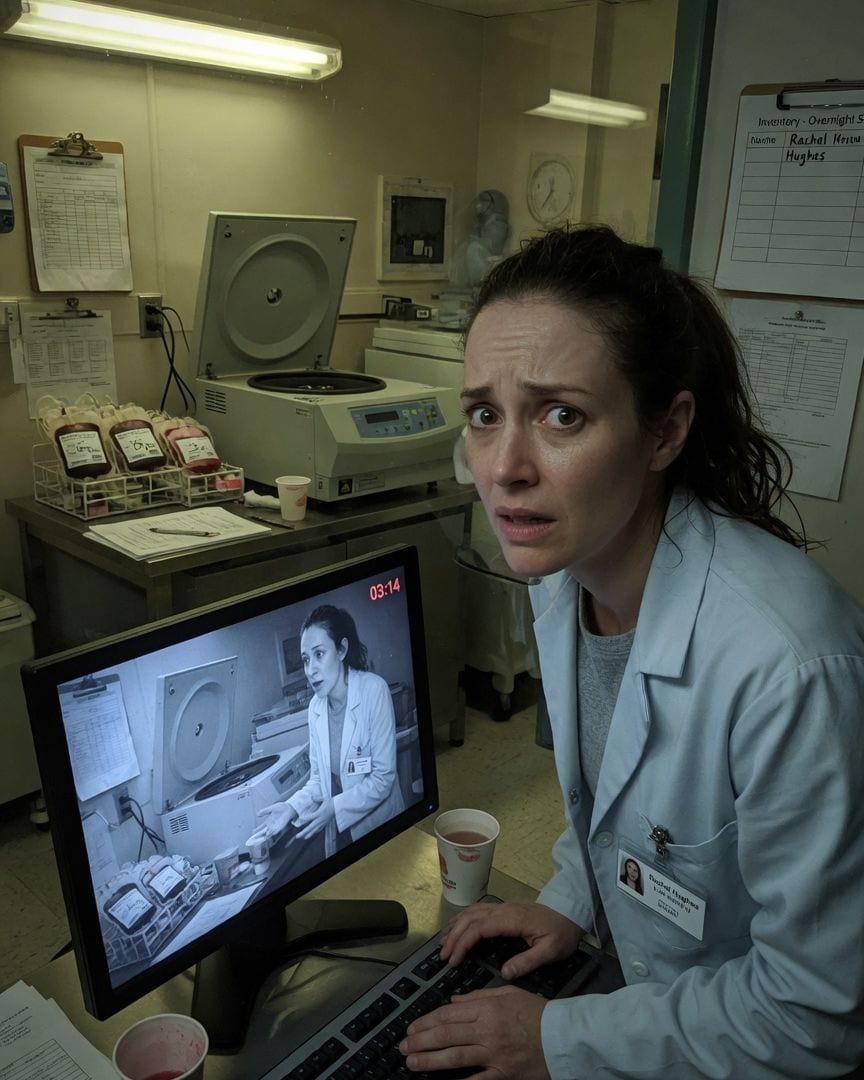
My security footage shows me talking to thin air, alone in the lab.
Working the overnight shift at the blood bank was my steady routine, a quiet rhythm shared with my colleague, Grace. She was as real as the blood I processed, until my director stated she had never been credentialed at our facility. My mind raced, trying to grasp how a person so vivid could simply not exist.
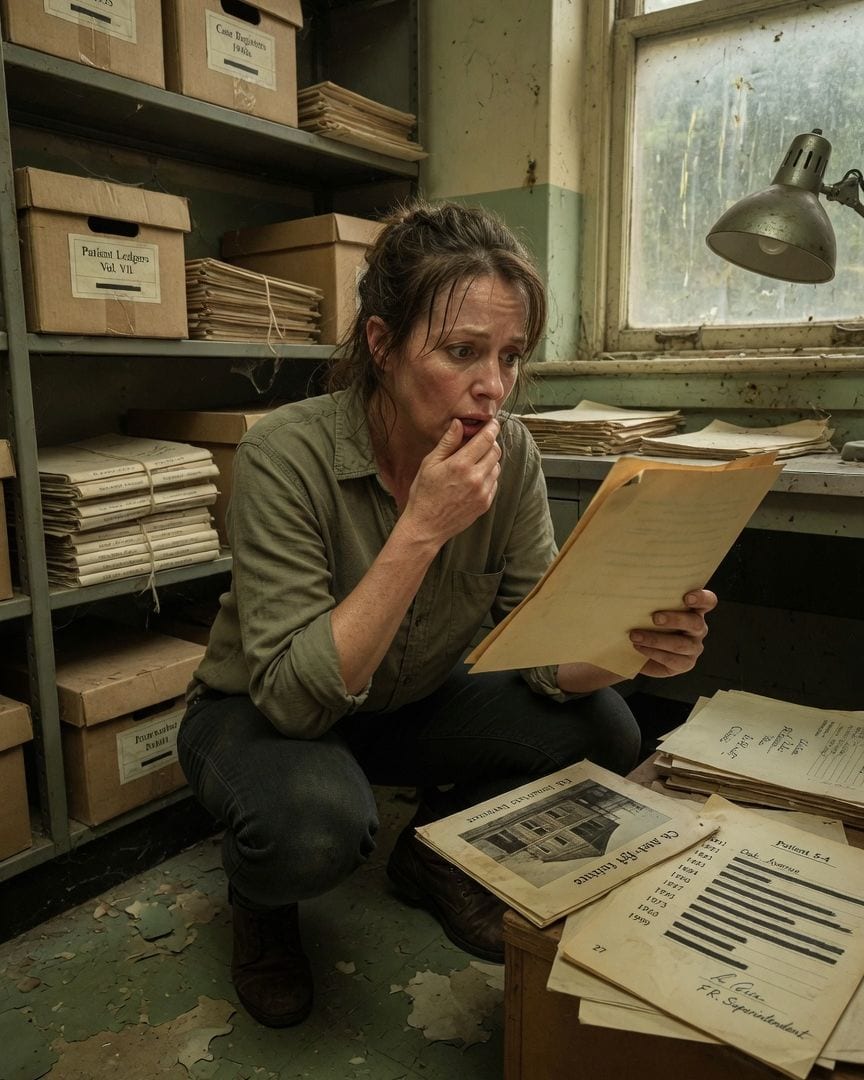
Patient 5-4 keeps checking into my aunt's old sanatorium chalet. The same initials sign them out, 'not traced,' every thirteen years since 1921.
Sifting through my aunt Margaret's estate, I found her old sanatorium file from 1999. Her patient record listed her as 'Patient 5-4,' discharged 'not traced.' But when I accessed the archives, I found 'Patient 5-4' was admitted every thirteen years since 1921, always with identical discharge notes.
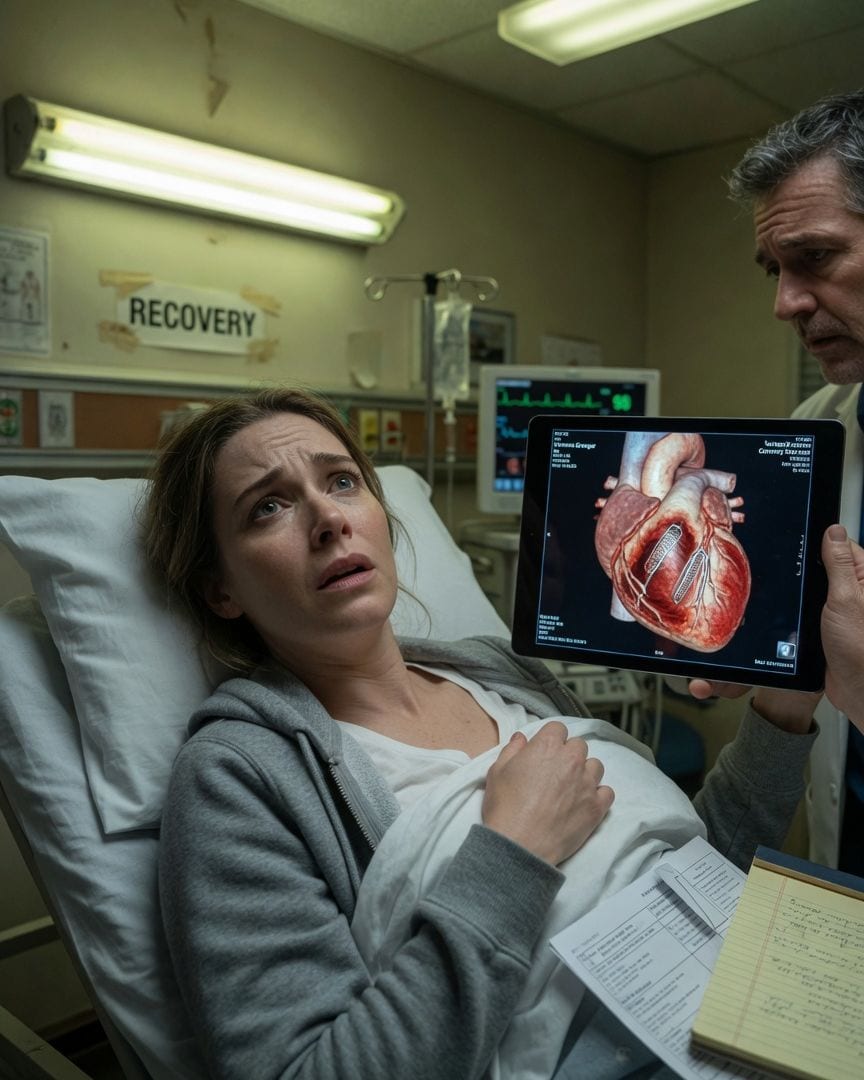
Metal stents are propping open my heart. The doctor rotated the image, but I've never had a cardiac procedure.
After years of dismissed chest pain, a CT scan revealed an impossible truth: my heart contained two metal stents. Dr. Maddox confirmed there was no record of any cardiac procedure in my entire medical history, and I had no memory of ever having surgery. My own body held a secret, alien architecture I couldn't explain.
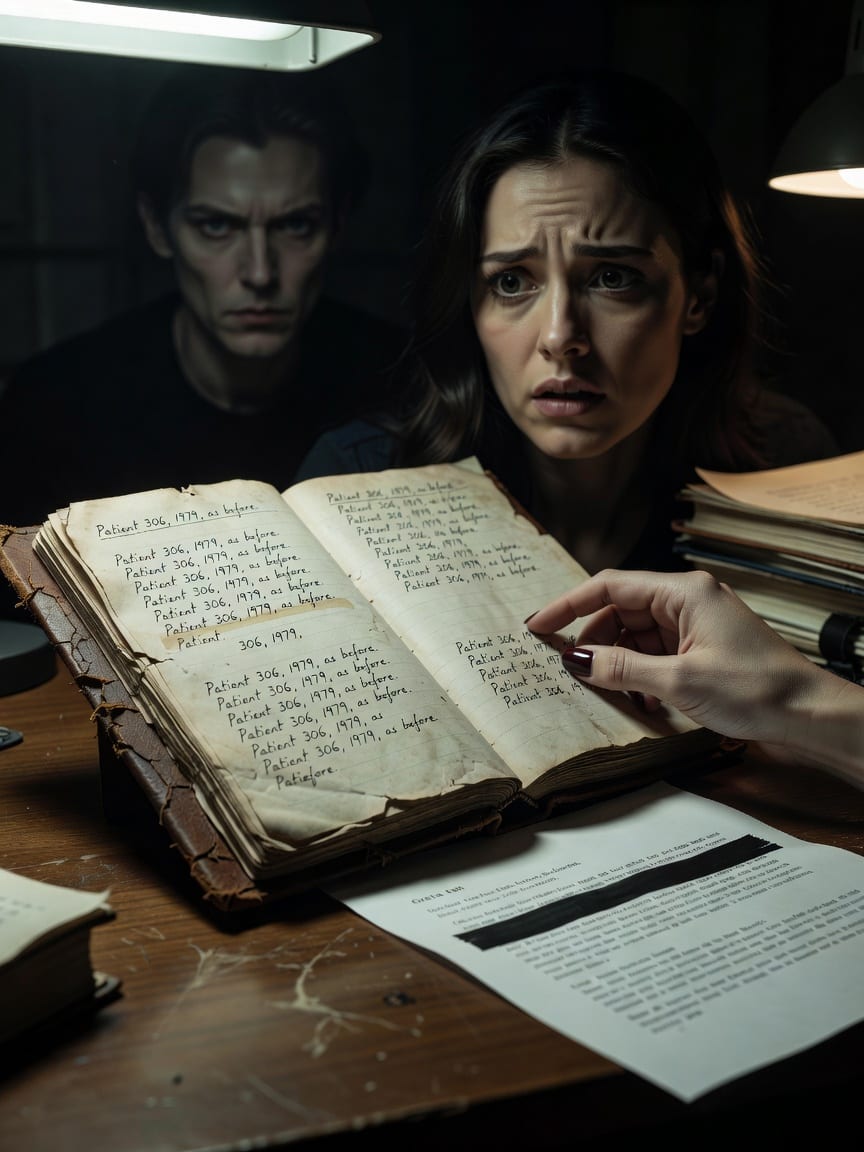
My archive ledger shows Patient 306 admitted in 1889, 1911, 1934, 1957, 1979 — same diagnosis, different names, and always, 'as before.'
My job as an archive transcriber is usually soothing, digitizing ancient admissions ledgers. But a recurring entry for 'Patient 306' caught my eye, noted 'as before' in the same hand for nearly a century. Digging deeper, I found a council file, dated 1998, outlining 'containment procedures' – and it named my own street and surname.
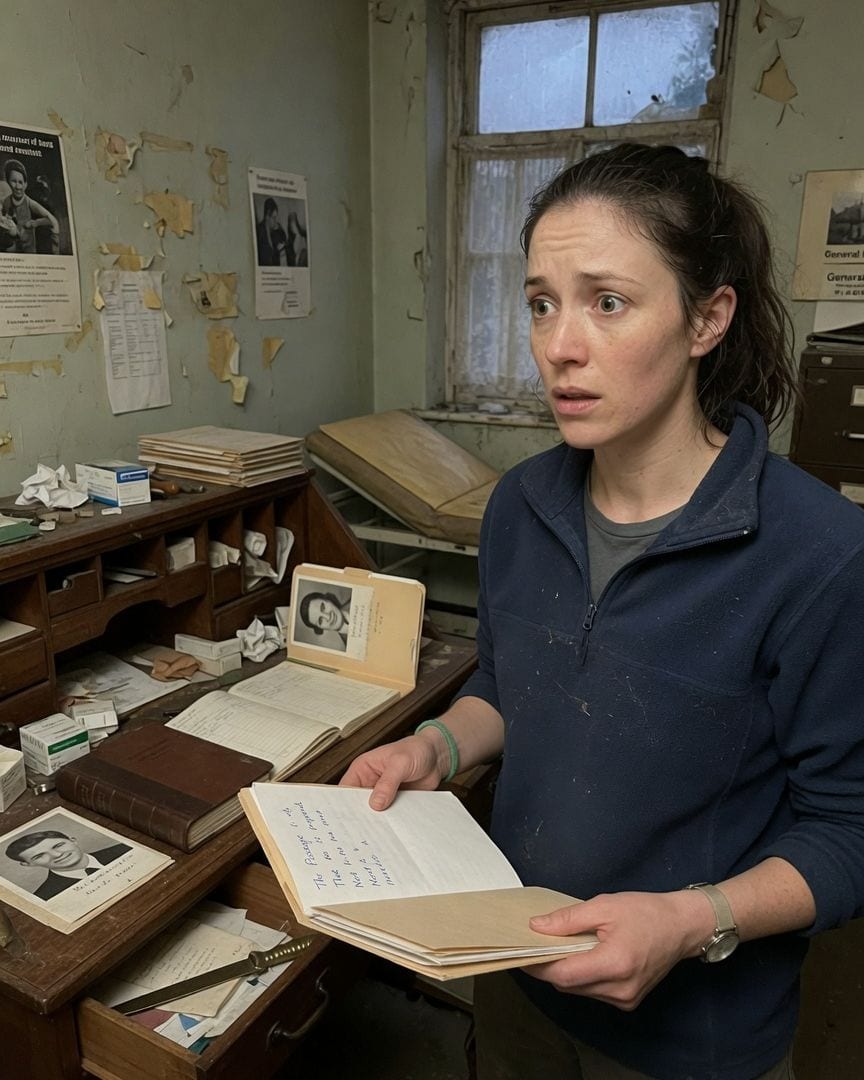
My new clinic's appointment book shows entries for this coming Monday, decades after the doctor retired and died.
Chloe Lawson bought an old, abandoned surgery in Nettlebed, ready to open her new vet clinic. Locals insisted Dr. Almott retired in '79 and the practice shut down for good. But then Chloe found his dusty appointment book filled with meticulous entries, continuing unbroken from 1979 through the decades, right up to this coming Monday.
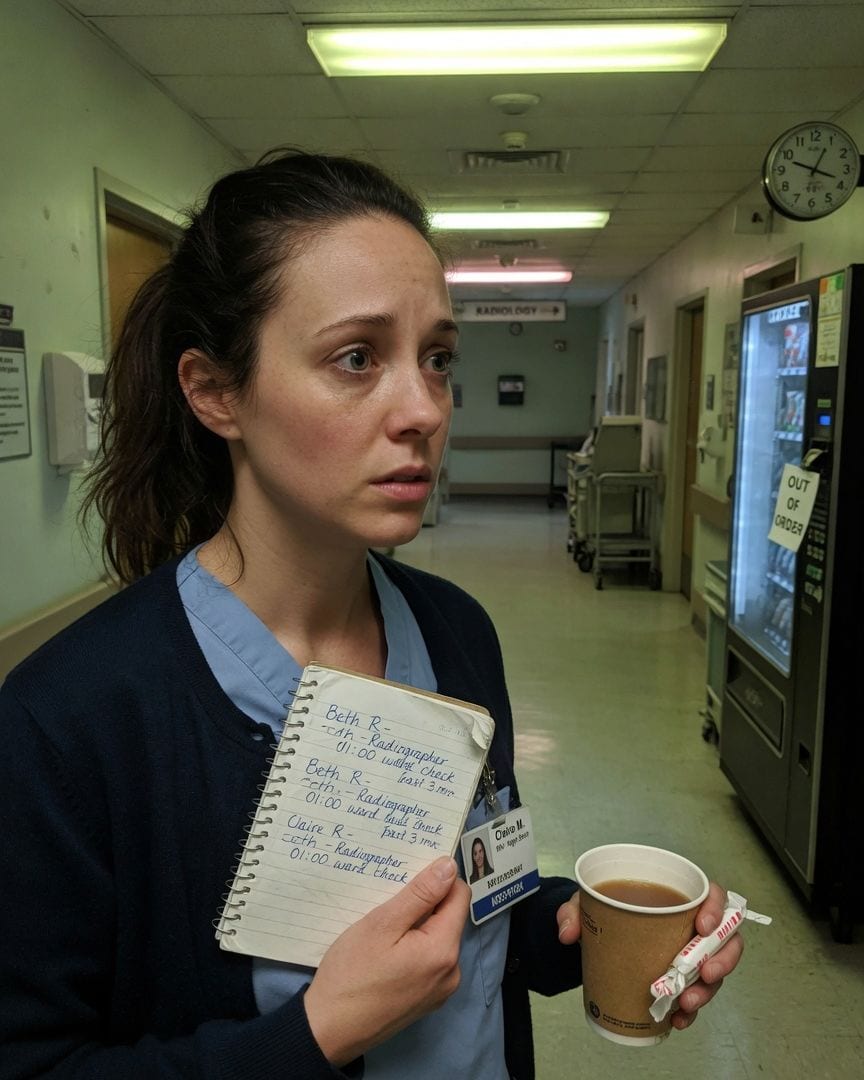
My night shift radiographer, Beth, trades gum with me at 1 AM. Hospital rotas for six years show no radiographer named Beth has ever worked here.
Night shifts at the hospital are isolated, but I found comfort in my 1 AM ritual: trading gum with Beth, the radiographer. She was a constant presence, until I tried to add her to a Secret Santa list. The hospital's detailed records show no trace of anyone named Beth ever working here.