My security footage shows me talking to thin air, alone in the lab.
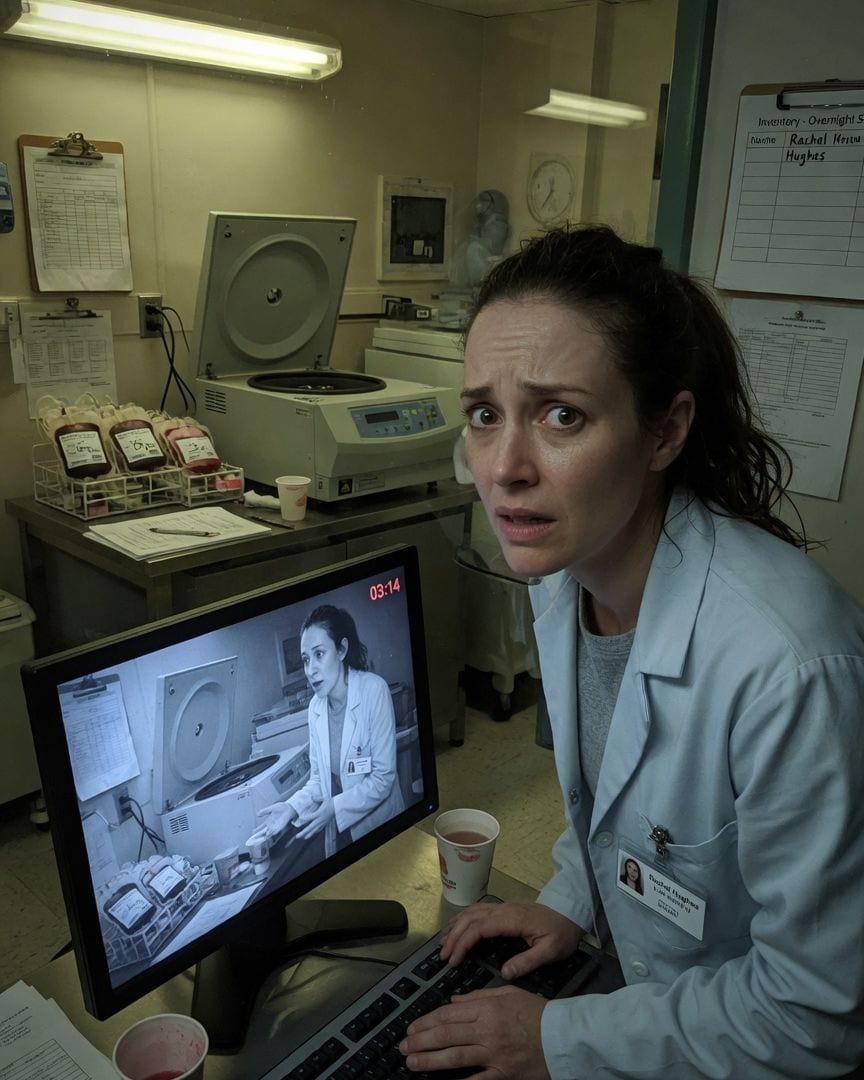
The fluorescent hum of the overnight blood bank was my second heartbeat.
Every Tuesday, Wednesday, and Thursday, I processed donations, a quiet, solitary rhythm broken only by Grace, the phlebotomist who always topped off the centrifuge and reminded me to label the third rack.
Grace had a faint rosewater scent and a habit of humming under her breath, a low, tuneless melody that settled the sterile air. It was as routine as the blood bags themselves.
We worked in comfortable silence most nights, sometimes exchanging a few words about the weather or the efficiency of the new labeling system. She was precise, always making sure the Type AB positive units were handled with particular care.
Tonight, I was pulling the last batch from the centrifuge when the lab director, Charles Sinclair, called me into his office, which was unusual at this hour.
"Hughes," he said, his voice flat, holding up an inventory sheet. The harsh overhead light caught the tension in his jaw. "We have a problem with last night's Type AB positive. Mismatched units. Three of them, specifically.
They're here, accounted for physically, but not in the digital ledger. And," he paused, his eyes narrowing, "you're our only overnight tech. No one else was on the roster.
And no one named Grace is, or ever has been, credentialed at this facility." The last words hung in the air, colder than any freezer unit in the lab.
I felt a cold knot tighten in my stomach. A mistake. It had to be a mistake. Grace was as real as the blood pulsing in my own veins.
I opened my mouth to explain, to insist, but Charles just stared at me, his expression unyielding. My mind raced, trying to grasp how this was possible.
I pulled up the digital roster on my workstation, then the physical paper one from the binder on the wall, scanning for Grace’s name, for any name that wasn’t mine. Just me. Rachel Hughes. On my own.
I even checked the HR contact list, leaving a terse voicemail about a potential data entry error, knowing it was a long shot after midnight, a desperate attempt to find a mundane explanation for what felt suddenly, terrifyingly, impossible.
The mismatched inventory itself was a significant issue, not just a clerical error. Three units of AB positive, processed on the third rack, were unaccounted for in the system but physically present, labeled with my own precise handwriting.
I remembered Grace handing me those racks, her cool fingers brushing mine as she passed me the labels, her soft, spoken reminder, "Don't forget the third rack, Rachel." It was such a clear memory. Too clear.
My mind wrestled with the impossibility. A phantom colleague. It sounded insane. But the missing data, the director’s calm certainty, the weight of the labeled units – they were all real, solid proof of a wrongness I couldn't explain.
There was only one place to get an objective answer, to prove my own sanity, or lose it: the security footage from last night’s shift. I needed to see Grace. I needed to see myself interacting with Grace.
I needed the cameras to confirm what my memory insisted was true.
I navigated the security system, my fingers trembling slightly as I pulled up the footage from the previous night.
I fast-forwarded to the crucial hours, the 3:14 timestamp when I remembered processing the last batch, my eyes glued to the screen. There I was, moving with the familiar rhythm of my shift.
I watched myself approach the centrifuge, pull out the processed samples. I watched my hands reach out, my head nod in acknowledgment. And then, my breath hitched. My hands were reaching into empty space. My head was nodding at nothing.
The centrifuge, just moments before, had been topped off, the third rack already spinning, but no one was there. No one but me. I watched myself talk, my lips forming words, my eyes tracking an invisible presence.
The screen showed Rachel Hughes, alone in the lab, performing a silent, terrifying pantomime with thin air. The centrifuge behind her whirred, full, the third rack already spinning, but no one else was there, and no one ever was.
The security footage played on a loop in my mind. I re-watched it from different angles, hoping for a trick of the light, a blind spot, anything. But the cameras were clear, unforgiving. I was alone.
Yet, I distinctly remembered Grace’s rosewater scent, the soft hum of her voice, the brush of her hand. It felt so real, it was real in my memory.
I tried to rationalize it away – stress, fatigue, an overactive imagination – but the image of my own hands reaching into nothing, while the centrifuge somehow filled itself, wouldn't fade.
I started scrutinizing my own shifts with a chilling new awareness. I’d find myself at the centrifuge, already topping it off, a task I hadn’t consciously started.
Or I’d notice the third rack was perfectly aligned, labeled, and ready, moments after I’d just been thinking about it, as if my intentions were being anticipated, or even orchestrated.
These small, unsettling gaps in my memory, once dismissed as mere fatigue from the grind of night work, now screamed with a terrifying implication. The wrongness wasn't just Grace; it was interwoven with my own actions, guiding them, completing them.
I was complicit in some invisible ballet.
Driven by a desperate need for answers, a need that felt more primal than rational, I began to dig deeper into the blood bank's archives. I knew the old filing room was rarely touched, a graveyard of paper records.
I pulled up old inventory reports, looking for similar discrepancies, for anything that echoed my current nightmare. It was tedious work, sifting through decades of meticulous, if sometimes faded, records.
The fluorescent lights in the archive felt colder than usual, casting long, shifting shadows that made the stacks of folders feel like watchful eyes.
I found isolated incidents, years apart, of "unexplained inventory variances," often involving specific blood types and processing anomalies. They were always dismissed as clerical errors or equipment malfunctions, but the patterns were too neat, too specific.
Then, I stumbled upon something else: a series of abrupt resignations from night shift techs, going back over twenty years.
One name, in particular, caught my eye: Margaret Davenport, noted as having left with "no forwarding address" after a period of "unexplained work-related stress." A cold certainty settled over me.
I felt, with every fiber of my being, that Margaret Davenport had also met Grace, or something like her.
As I continued my clandestine research, a subtle shift occurred. A drawer I’d left ajar in the archives would be neatly shut. A light I’d turned off in a back corridor would be on when I returned.
Nothing overtly threatening, just a quiet, persistent rearrangement of my environment, as if someone was tidying up after me, or perhaps, marking my presence.
The air grew perceptibly colder in certain spots, though the building’s old HVAC system was notoriously unreliable.
The feeling of being watched became a constant companion, a prickling sensation on the back of my neck, a sense of eyes that weren't there.
Then, Charles Sinclair called me into his office again. He sat behind his large oak desk, his expression unreadable, his hands folded. The silence between us stretched, thick and heavy.
“Hughes,” he began, his voice flat, “I’ve noticed you’ve been spending a good deal of time in the archives lately. Unusual for a night tech. Most people prefer to avoid those dusty old files.”
My heart hammered against my ribs. “Just... tidying up some old records, Director. Noticed some inconsistencies in the inventory logs. Dating back a while, actually.” I tried to sound nonchalant, but my voice wavered slightly.
Charles leaned back, a faint, almost pitying smile playing on his lips. It was a smile that didn't reach his eyes. “Inconsistencies tend to multiply if you look hard enough, don’t they? This facility has a long history.
Older than most realize. Some things are best left undisturbed. Overwork can play tricks on the mind, Rachel. Perhaps you need some time off?”
It wasn't a suggestion; it was a veiled warning, delivered with the quiet authority of a man who knew more than he was saying. He wasn’t angry, just... resigned. He knew.
I felt a chilling certainty that he wasn’t just observing me; he was waiting to see if I would become another Margaret Davenport, or something else entirely.
The conversation ended with him simply stating, his gaze drifting towards the window, "Just ensure your work is up to standard, Hughes. And try not to imagine things that aren't there. It makes the night shift very long indeed."
I couldn’t let it go. The warning from Charles only fueled my conviction. The next morning, before my shift ended, I confronted him directly.
"Director Sinclair," I said, walking into his office without knocking, holding a printout of Margaret Davenport's abrupt resignation. Her name was stark on the page, a ghost of a life cut short by this place. "Who was Margaret Davenport?
And why were there so many 'inventory variances' during her tenure? Specifically, Type AB positive, always on the third rack."
Charles sighed, a sound heavy with years of suppressed knowledge, a tired exhalation that seemed to carry the weight of the building itself. He gestured to the chair opposite him. "Sit down, Rachel." He didn't deny anything.
He didn't even try. Instead, he began to speak, his voice low and even, about the history of the blood bank. Not the official history, but the other one.
He spoke of patterns, of cycles, of certain 'needs' the facility seemed to have, a subtle hunger that manifested in the quiet hours.
He recounted his own early days, decades ago, when he, too, had a phantom colleague – a quiet, efficient man named Elliot who always made sure the rare blood types were handled just so, who seemed to appear and disappear in the periphery.
"It's always someone," he said, his gaze distant, fixed on a point beyond the wall. "Always a helper, a guide, ensuring the work gets done. For a very specific kind of harvest."
The word 'harvest' sent a fresh shiver down my spine. He then stood, walked to a section of the wall behind his desk, and with a practiced hand, pressed on a loose brick.
It slid inward, revealing a small, hidden compartment. Inside lay a stack of yellowed papers and a single, leather-bound journal. The leather felt old, impossibly old, cool beneath his fingers.
"This belonged to Margaret Davenport," Charles said, handing it to me. "Her personal log."
The journal was filled with frantic, looping handwriting, sometimes almost illegible, detailing her encounters with a phantom phlebotomist – she called her "the watcher of the third rack."
Margaret described the same faint rosewater scent, the same gentle reminders, the same impossible inventory discrepancies, always involving specific blood types and the third rack.
Rachel read, her blood running cold, as Margaret's entries grew more desperate, then resigned, slipping into a quiet, chilling acceptance. The pattern was undeniable.
Grace wasn't just a hallucination; she was a recurring manifestation, a function of the place itself, a mechanism that had been running long before I was born. Charles watched her, his expression a mix of sorrow and grim acceptance.
"Some routines, Rachel," he said, his voice barely a whisper, "are older than the building itself."
I felt a profound terror settle over me, colder and deeper than any fear I’d known before. It wasn’t just a ghost story; it was a system, a trap, a slow, quiet assimilation.
Margaret Davenport’s final entries spoke not of escape, but of a quiet, creeping acceptance, of realizing she was 'part of the process now,' her handwriting becoming unnervingly calm in the last few pages.
Charles Sinclair had become part of it, too, a silent guardian of the facade, a witness who always knew, who maintained the illusion. He had adapted. He had learned to manage the symptoms. He had let it continue.
I looked at the journal, at Margaret’s final, almost illegible scrawl: 'The third rack demands its due. I am only the hands.'
The realization hit me like a physical blow. Margaret hadn't just quit; she had been absorbed. She had become another quiet helper, another cog in the machine.
And Charles, in his calm, knowing way, was telling Rachel that she was next. He closed the heavy, leather-bound journal of Margaret Davenport, its pages filled with frantic, looping handwriting describing "the one who always watched the third rack."
He places it back in a hidden compartment behind a loose brick in his office wall, then turns to Rachel, his face calm, almost serene, as he says, "Some routines, Rachel, are older than the building itself. And some people...
well, some people learn to adapt." He gestures vaguely to the door, implying her shift is about to start.
I walked into my next night shift, the weight of Margaret Davenport's journal heavy in my mind, even though it was now sealed behind a brick in Charles Sinclair's office.
The fluorescent lights hummed, the equipment waited, and the silence of the lab felt like a palpable presence, charged with unspoken history. I started my routine, my movements precise, almost robotic, a desperate attempt to maintain control.
Then, I felt it—the faint scent of rosewater, a subtle shift in the air beside me, a sudden coolness that wasn’t a draft. Grace. This time, I didn't turn, didn't question. I simply knew.
I watched my own hands, guided by an unseen influence, load the centrifuge. My fingers, once so independent, moved with an unsettling fluidity, placing specific blood samples with an unnerving accuracy.
I knew, with chilling certainty, that Grace was ensuring particular blood samples, always from the third rack, always the rare AB positive, were processed in a specific way, for a purpose I could now dimly perceive.
It wasn't about inventory discrepancies; it was about conversion. The blood was being subtly altered, refined, for something else, something I couldn't fully comprehend but felt in my bones.
Grace's actions, the mismatched units, the phantom presence—it all snapped into place, a coherent, monstrous pattern that had been running for decades. I wasn't just working a shift; I was part of an elaborate, ongoing harvest.
My role was not to prevent it, but to facilitate it. I was the necessary, credible witness, the human interface that allowed the process to continue.
The dread wasn't in being watched, but in realizing I was a vital, unwilling participant, my own hands now moving with the phantom's will.
A desperate, primal urge to resist flared within me. I tried to divert the third rack, to switch the labels, to intentionally misplace a unit. My hand reached for the batch, a flicker of defiance burning in my chest.
But as my fingers grazed the cold plastic, a gentle, unseen pressure guided it back, a subtle redirection that felt less like a struggle and more like an eddy in a strong current, effortlessly moving a fallen leaf.
It wasn't violent, just inexorable. I felt Grace’s presence intensify beside me, a quiet, insistent will that permeated the sterile air, chilling my skin.
I gripped the rack, my knuckles white, trying to assert my own control, to force my muscles to disobey. The air around me grew heavy, still, pressing down.
The humming of the centrifuge seemed to deepen, vibrating through the floor, a low, resonant drone that filled my head.
I closed my eyes, fighting against the quiet, inexorable pull, fighting against the creeping acceptance I’d read in Margaret Davenport’s journal.
When I opened them, my hands were already placing the samples precisely where Grace always had, my fingers moving with an unnatural grace, each movement perfectly executed. A faint, almost imperceptible warmth radiated from the third rack.
I felt my own will recede, like a tide going out, leaving behind a quiet, empty shore. I was not confronting an enemy; I was being folded into a larger, older mechanism, a process that transcended individuals.
The routine was too powerful, too deeply ingrained into the very fabric of the blood bank. I was not strong enough to break the pattern. I was only strong enough to become part of it.
I finished my tasks, my movements fluid and efficient, every action now perfectly aligned with the phantom's purpose. The fight was over. The pattern had claimed her.
I finished my shift. I clocked out, my face blank, my eyes holding a distant, serene quality, devoid of the panic or the crushing fatigue I’d felt before.
I drove home, the journey a blur of streetlights, showered, and went to bed, my movements precise, devoid of my usual lingering unease. The inventory for the night was perfectly matched, every unit accounted for, every label correct.
Charles Sinclair, reviewing the logs the next morning, noted the impeccable record. He watched me during my next shift, observing my quiet efficiency, the subtle way my hands moved as I processed the blood.
He caught the almost imperceptible hint of a rosewater scent that now seemed to cling to me, like a faint perfume.
He simply nodded, a faint, almost mournful expression on his face, then turned back to his own work, his movements slow and deliberate.
I continued my night shifts, a picture of quiet diligence. I moved through the lab with a new, unsettling grace, my tasks performed with flawless precision.
The faint scent of rosewater now accompanied me, a subtle signature in the sterile air that only I seemed to notice. I no longer spoke of Grace, no longer questioned the third rack.
I simply ensured its processing was perfect, my eyes holding a knowing, distant glint. I was the night tech. I was Grace's partner. I was, in my own quiet way, another part of the routine.
Her husband, David, found her staring at the centrifuge one morning, long after her shift should have ended. "Rachel?" he asked, a worried frown on his face. She turned, a faint, almost imperceptible smile touching her lips.
"Just ensuring everything is perfectly aligned," she said, her voice soft, calm. "Some things are simply meant to continue."
If this one got to you
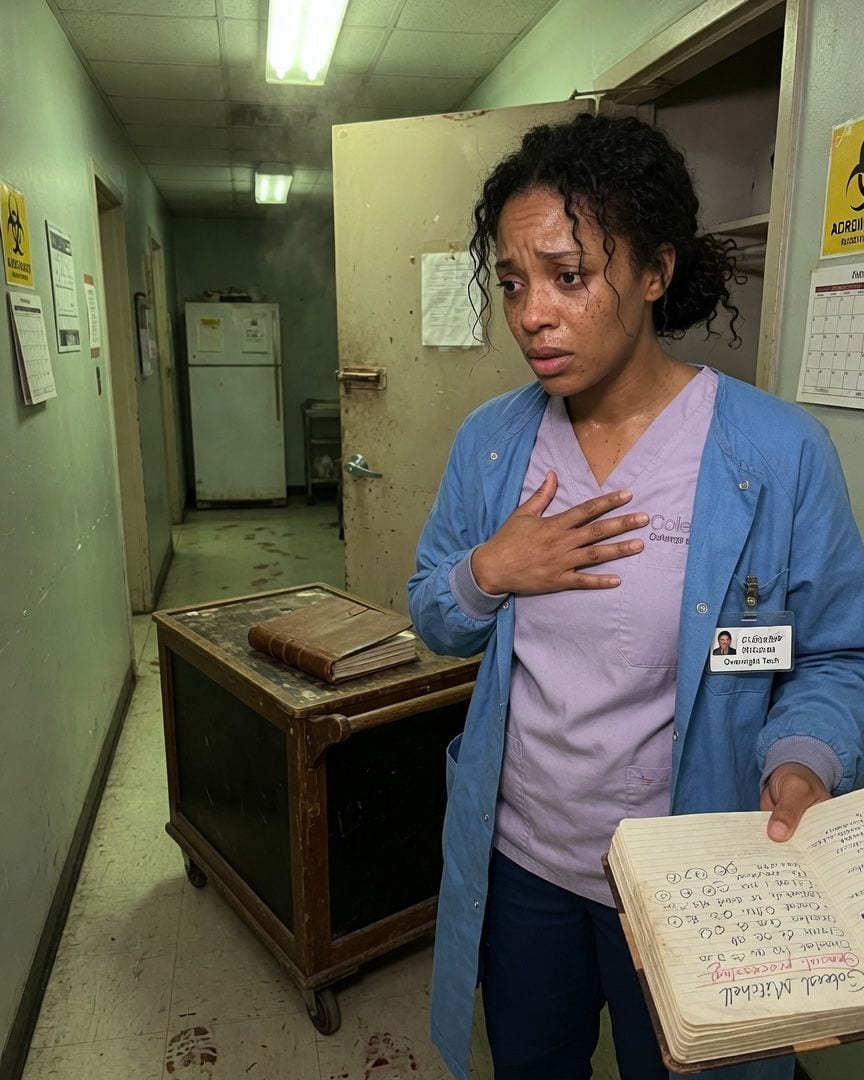
My boss says no one named Grace has ever worked here. But Grace stands beside me every night, reminding me to label the third rack — and I work the overnight shift alone.
On my quiet night shift at the blood bank, Grace always appears around 3 AM. I hear her familiar cart, smell her antiseptic scent, and follow her precise instructions. But my lab director insists no one named Grace has ever been credentialed here, leaving me to wonder who I've been working with.
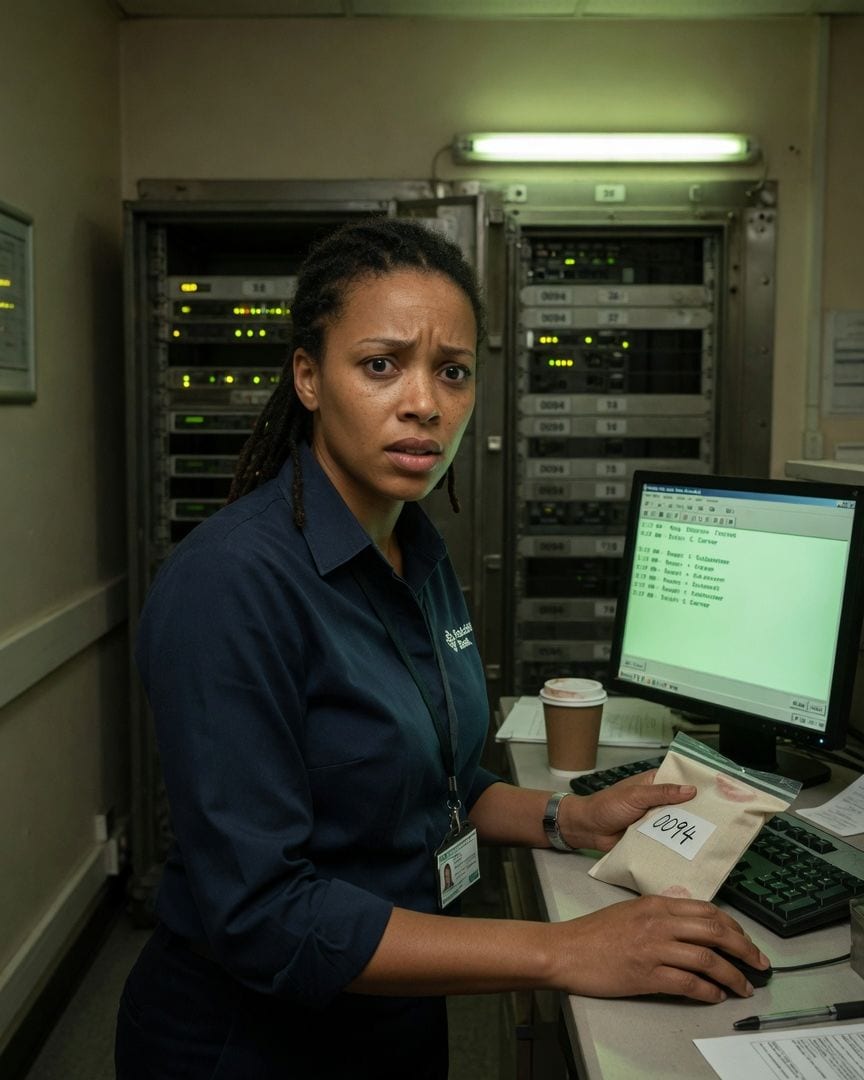
My night-deposit log shows a bag posted at 3:17 AM. My teller number, my count. Bag 0094 is still sealed in the safe, untouched.
I prided myself on precision as a night teller, logging every entry. But at 3:17 AM, a deposit appeared logged under my teller number that I never processed. Security footage then revealed a figure in my uniform, wearing my ID badge, with a blank photo slot.
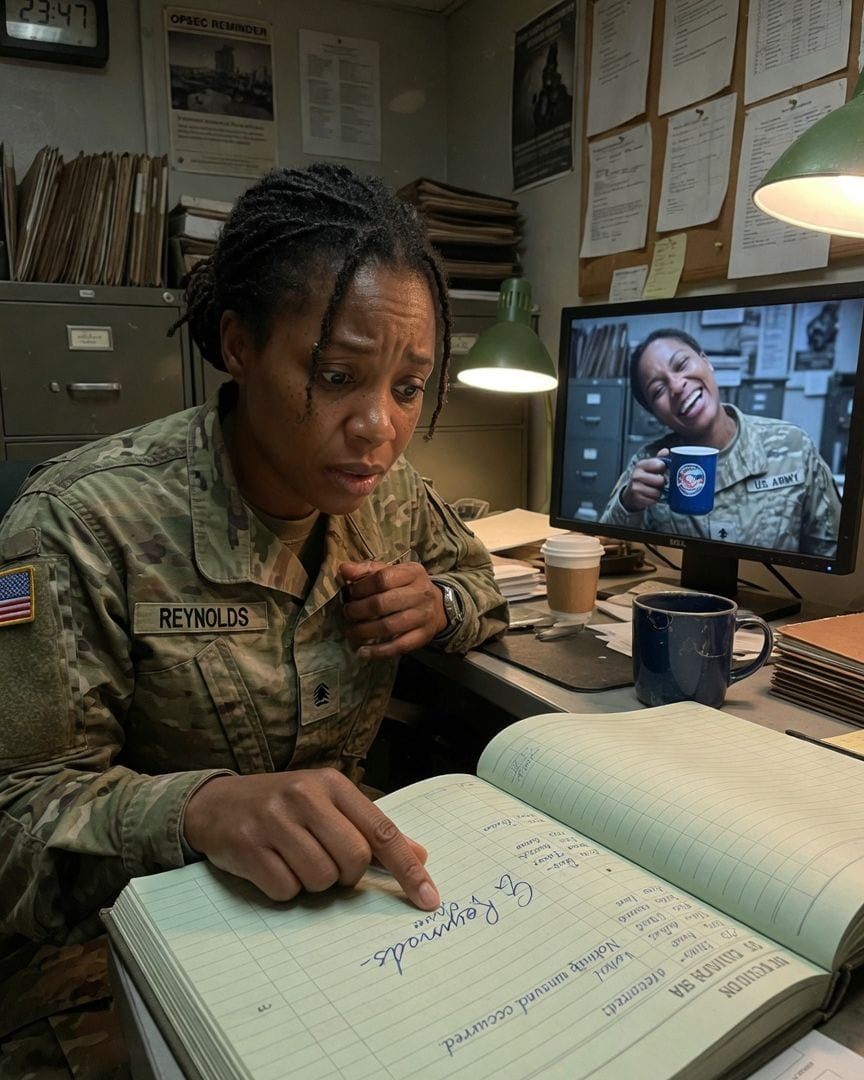
Lieutenant Grace Reynolds saw her own signature in the staff-duty log for a shift she never worked. The security footage then showed 'her' leaving a coffee mug she’d never once seen.
Lieutenant Grace Reynolds hunched over the battalion staff-duty log, the fluorescent hum of the records room a monotonous backdrop to her dry inventory audit. Her gaze snagged on an entry from three weeks prior: her own unmistakable signature, closing out a full 24-hour staff-duty shift she knew she had never worked. Security camera footage only deepened her unease, showing 'Grace Reynolds' moving with her familiar stride, laughing a shade too brightly, her head tilting a fraction too precise, like a flawless, chilling performance. But as the imposter turned to leave, she picked up and rinsed a chipped, dark blue ceramic coffee mug with a faded diner logo—a mug Lieutenant Reynolds had never once seen in her life. The air in the quiet room grew heavy, thick with the unspoken wrongness: if that wasn't her, then who was it?
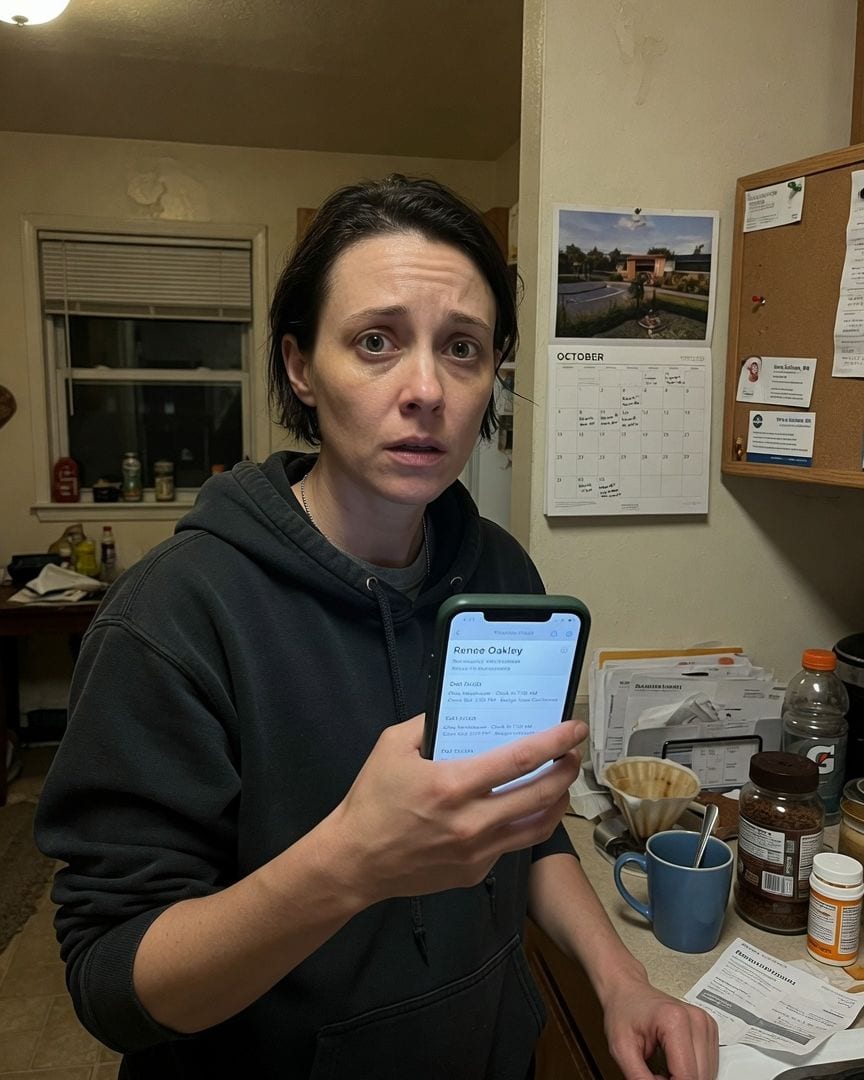
My company clock-in system says I worked full shifts in Ohio all last week. I was on medical leave in Florida, under a nurse's care.
Back home from medical leave, my payroll deposit was unexpectedly high. I checked my timesheet, only to find it logged me working full 40-hour shifts at the Ohio warehouse. But I was hundreds of miles away in Florida, confined to a sickbed under a nurse's care. Then my manager called: security footage confirmed I entered the warehouse.
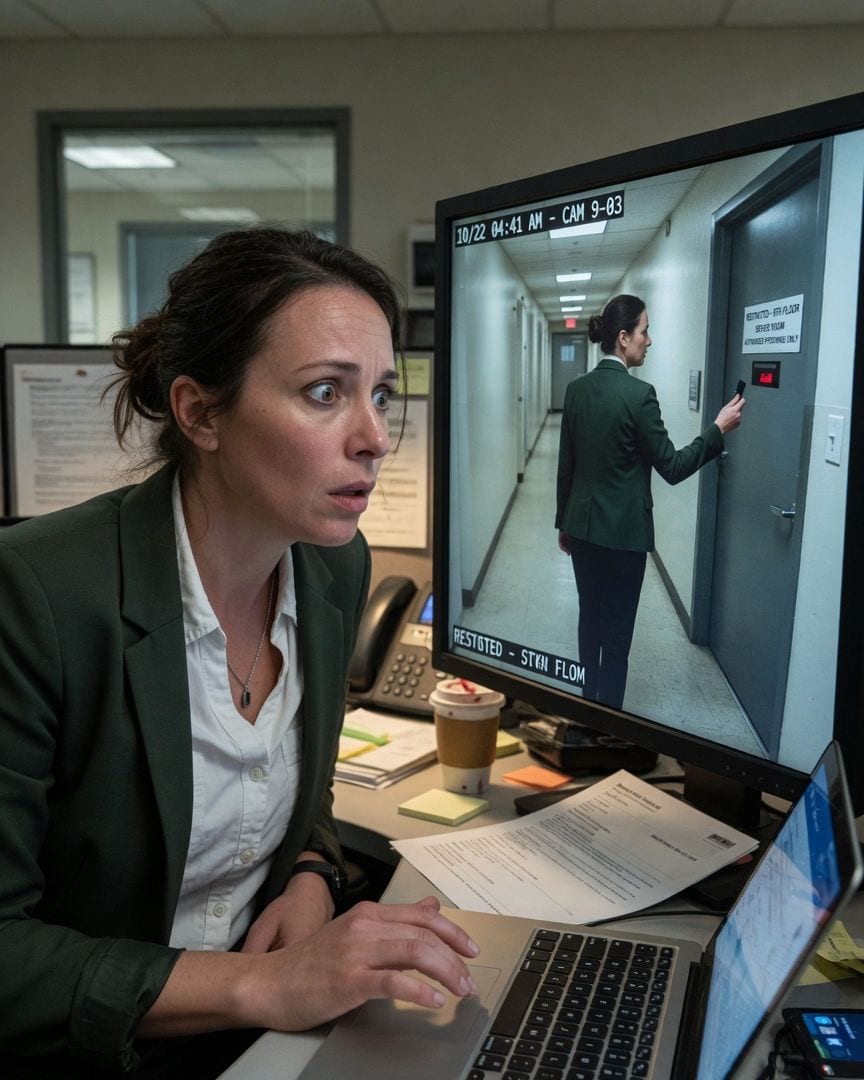
My keycard log shows me in the server room at 4:41am. I was asleep, and my badge was at home.
An email from corporate IT reveals my keycard registered entry into a restricted server room at 4:41 AM last Sunday. I was asleep in my apartment across town, my badge clipped securely to my jacket at home. But then I scrolled down and found eleven more impossible entries, all within the past week, all under my name.
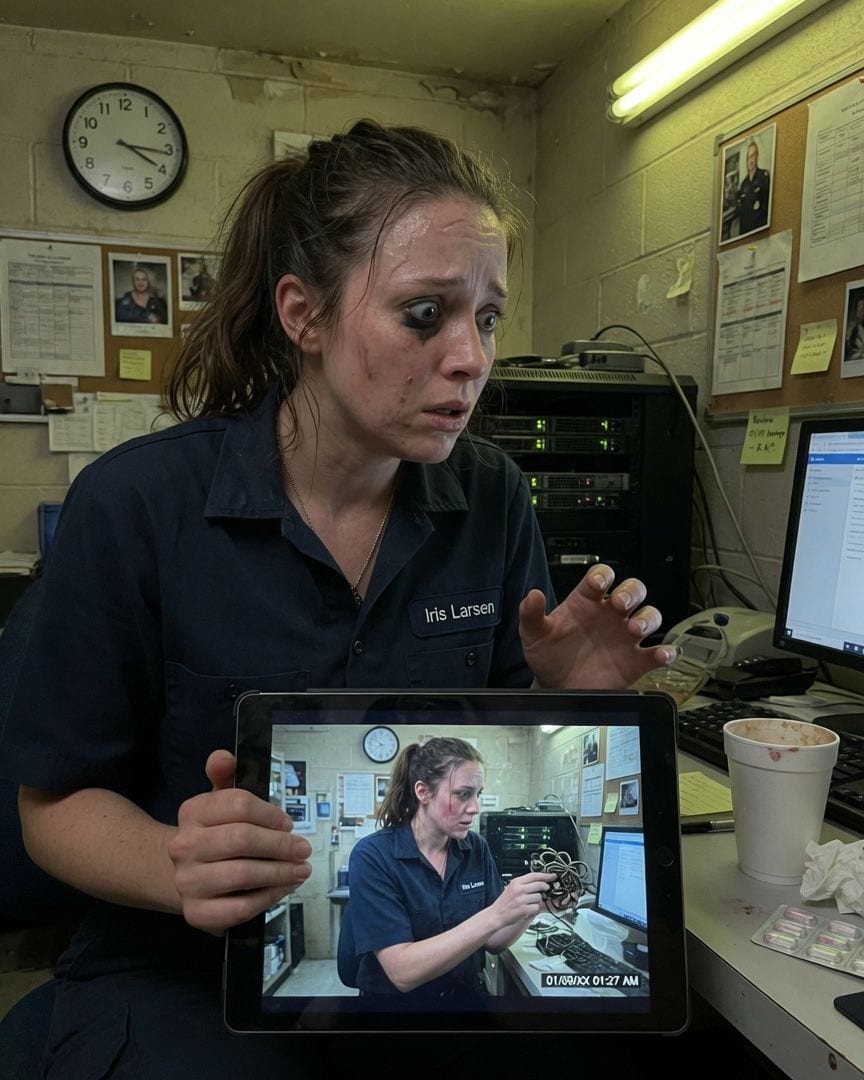
There are nine full minutes of me on the security tape, restocking the far aisle at 1:20am. I called in sick that night — I was home in bed and never left.
I was home sick with a fever, confirmed by my roommate. But then I saw myself on security footage, working my shift in the far aisle at 1:20 AM. My stomach dropped when I realized the aisle on the tape was subtly wrong, missing a display unit that had been there for a decade.