A Mojave sentry watched a man cover miles in seconds, appearing at his tower's foot. When the figure vanished, it left a military dog tag with a name unknown to any base record.
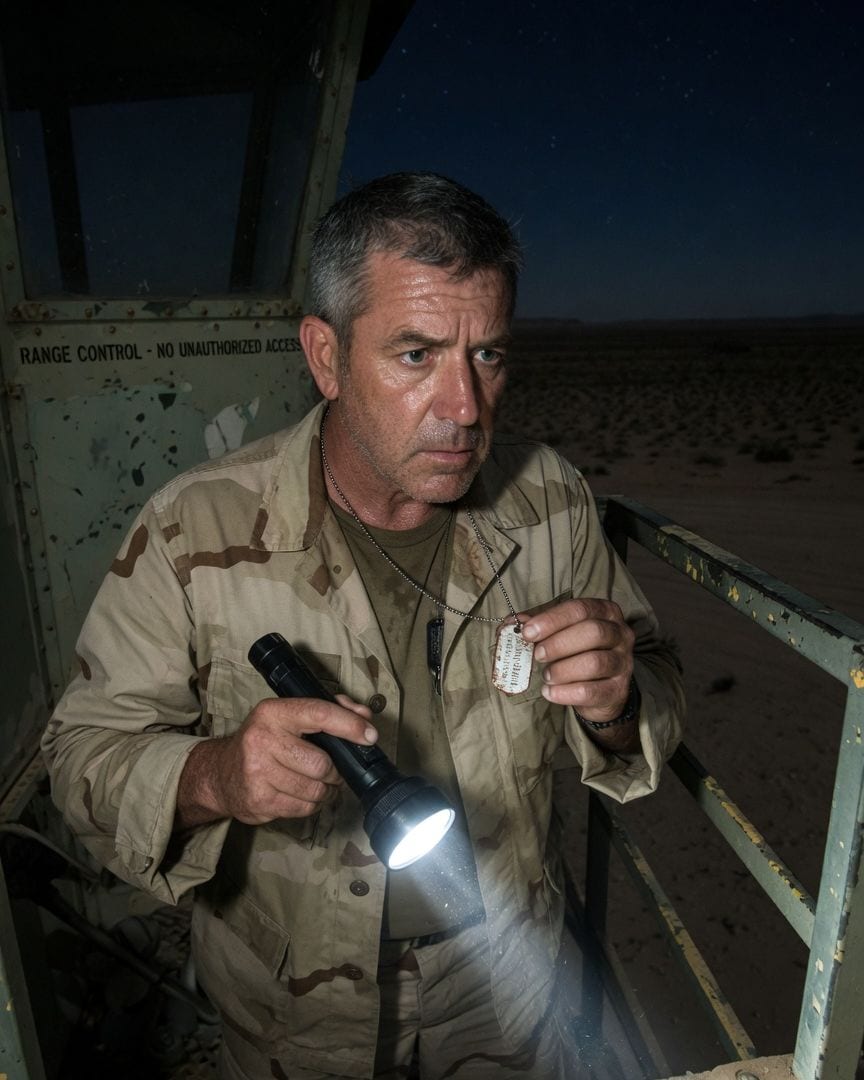
The Mojave desert was a canvas of endless black under a blanket of stars, and Sergeant Roy Prewitt, perched in the range’s lone observation tower, appreciated the clarity.
Every rock, every ripple in the impact area’s vast expanse, was visible for fourteen miles. It was a world accounted for, a system of perfect observation.
Then the generator sputtered, coughed, and died, plunging the tower into absolute silence and primal dark. Prewitt’s night vision goggles were useless. He gripped his heavy-duty flashlight, the beam a solitary tunnel against the void.
That's when he saw movement, a figure, a man, walking steadily from the far edge of the impact area, miles away.
Prewitt swept his beam across the ground, trying to pinpoint the man, but each time the light passed, the figure stood inexplicably closer than the beam had any right to reach. It wasn’t an illusion. It was a violation.
His light never touched the man, not once, yet the figure was at the foot of the tower ladder, a dark silhouette against the faint starlight, before Prewitt could even register the impossibility.
Prewitt didn't shout. He didn't panic. His training kicked in, a cold, hard knot in his gut. He grabbed his service weapon, checked the chamber, and cautiously descended the rattling metal ladder. The man was gone.
The desert floor was undisturbed, not a single boot print in the fine sand around the tower base. No scuff marks on the ladder rungs.
Prewitt swept his flashlight in wide arcs, the beam cutting through the inky blackness, searching for any sign of trespass. Nothing. The logical part of his brain screamed 'prank,' but the hairs on his neck stood on end.
No one could move that fast, that silently, or escape without a trace. It was physically impossible. He spent a solid hour meticulously checking the perimeter, his flashlight beam piercing every shadow, every crevice.
Just as he was about to dismiss it as fatigue or a trick of the darkness, his boot nudged something hard near the base of the ladder, half-buried in the dust.
He stooped, the light revealing a small, corroded metal object. He picked it up. It was a military dog tag, tarnished and worn, but undeniably an official issue.
He rubbed away the grit with his thumb, and the faint engraving became legible: 'Lawson, Edmund.' Prewitt frowned. He knew the names of every active-duty soldier, every reservist, every civilian contractor assigned to this range.
He knew the retired personnel and the historical records. He had never, in his eighteen years of service, heard the name Edmund Lawson associated with this place.
He turned the dog tag over and over in his hand, the cold metal a contrast to the rising heat of the desert night. The name, 'Lawson, Edmund,' felt wrong, an unwritten word on a meticulously penned ledger.
It was too real for a prank, too specific for a hallucination. There was no record of an Edmund Lawson at the Mojave range, not in any official capacity.
The system, designed to account for every single person, every single item, had failed. Or rather, something had slipped through its iron-clad grasp.
Prewitt stood alone in the vast, silent desert, the only sound the faint hum of his own blood in his ears, clutching the dog tag.
He knew, with a certainty that chilled him to the bone, that this was only the beginning.
The next morning, Prewitt reported the generator failure and the perimeter breach. He kept the dog tag to himself, for now.
Captain Catherine Montgomery, the range commander, listened to his account with a practiced, neutral expression, filing it under 'equipment malfunction and possible fatigue-induced sighting.' Prewitt, however, couldn't let it go.
He started with the official channels, discreetly running 'Lawson, Edmund' through the base's personnel records system. Staff Sergeant Brandon Hale, the NCO in charge of records, came up empty.
“No active, no retired, no missing, no deceased by that name, Sergeant,” Hale reported, his brow furrowed. “Are you sure about the spelling?” Prewitt was sure.
He then tried the historical archives, digging through digitized records of past range incidents, training accidents, and even old civilian worker manifests. Nothing. It was as if Edmund Lawson had never existed within the military’s meticulously maintained history.
Prewitt started asking the oldest veterans on base, the ones who’d seen decades of desert sun. He bought coffee for retired mechanics, shared smokes with former range masters.
He heard whispers of 'unexplained incidents' or 'things that went sideways' over the years, always dismissed as rumor or desert madness. No one mentioned a Lawson. The dog tag, a solid, tangible piece of evidence, contradicted the entire official narrative.
The system, designed for accountability, had a gap, a blind spot. Prewitt felt a growing unease, a sense that the harder he pulled this thread, the more of the tightly woven fabric of his world would unravel.
He kept feeling a subtle pressure, too, a quiet suggestion from Captain Montgomery to 'focus on his duties,' a polite but firm reminder that 'some things are best left in the past.'
But the dog tag was in his pocket, a cold, hard truth that refused to be forgotten.
Prewitt’s inquiries didn't go unnoticed. He found his access to certain archival databases mysteriously restricted. Captain Montgomery’s 'suggestions' became more direct, hinting at possible disciplinary action for 'unauthorized investigations.'
He felt eyes on him, not just from the command, but from the shadows of the base. During his next tower rotation, the generator, which had been 'fixed,' flickered ominously.
Prewitt felt a prickle on his skin, a sense of being observed, even when no one was around. He started searching the tower itself, not just the perimeter. He ran his hands along the dusty beams, peered into dark corners.
Near the base of the main support column, tucked behind a loose panel and secured with rusted wire, he found it: a small, leather-bound logbook, its pages brittle with age. It wasn't an official log. It was a private one.
The first entries were from decades ago, detailing similar generator failures, strange sightings of a 'man' in the impact area, and the growing dread of the watchmen. The handwriting changed over the years, but the story remained consistent.
It was a clandestine history, a record of the anomaly. Prewitt felt a chill that had nothing to do with the desert night. Someone had known. Someone had been documenting this for years, hidden from the official system.
He wasn't alone in his discovery, but that didn't make him feel any safer.
If anything, it made him feel more exposed, like he had just stumbled into a secret society, and he was now marked as one of its members.
Prewitt sat hunched in the tower, the unofficial logbook open on his knees, illuminated by his flashlight. He devoured the entries, each one a chilling echo of his own experience. 'Generator failed again.
He walked from the east, closer each time the light passed.' 'Saw him at the ladder. Didn't move. Just stood there.' The accounts spanned over fifty years, a hidden history of the Mojave range.
He found entries describing the intense psychological toll on the watchmen, some ending abruptly, others with a note of transfer or medical leave.
The logs painted a picture of a recurring anomaly, a figure that manifested only when the system’s power failed, a spectral trespasser in a perfectly controlled environment.
Then, he found the entry that made the dog tag in his pocket burn. An entry from nearly fifty years prior, written in a tight, precise hand: 'The new private, Lawson, Edmund, reported for tower watch. Generator failed.
Heard a shout, then silence. Search found no trace. Unaccounted for.' The next entry, by a different watchman, noted the first sighting of 'the man' after Lawson’s disappearance, always on nights of generator failure. It became horribly clear.
Edmund Lawson wasn't just a name on a dog tag; he was the 'man' Prewitt had seen.
He was a soldier lost not to combat, but to a glitch in the system, to an unrecorded incident that the military, in its relentless pursuit of order, had simply erased.
Lawson was a ghost in the machine, perpetually trying to complete his last report, to be counted.
The logbook was not just a record of sightings; it was a record of the system's failure, a testament to what happens when the accounted-for becomes unaccounted for.
The dread settled heavy in Prewitt’s chest: Lawson was trying to come in, to be known, to be officially recognized. And he was doing it through the very mechanism that had failed him decades ago.
Prewitt flipped through the last few pages of the logbook, his fingers brushing against the fragile paper. The entries became sparser, the handwriting more desperate. One watchman lamented, 'He wants to be counted. He wants the watch to end.'
The very last entry, dated just a few months before, was written in a surprisingly familiar hand—he recognized it as belonging to the previous tower NCO, who had been transferred suddenly.
It detailed another generator failure, another sighting of the impossible man. Then, below it, scrawled in a hasty, almost frantic script, was a final, horrifying addition. It wasn't a report of a sighting, but a designation.
Prewitt felt the blood drain from his face as he read it, his eyes fixed on the precise, chilling words. His name. 'SGT ROY PREWITT,' followed by his full service number, then simply: 'Next Watch.'
The logbook had not only recorded the anomaly, but it had also predicted, or perhaps ordained, his own place in its relentless cycle.
He was not just an observer; he was a participant, named by a system, or whatever stood outside of it, for a watch that would never end.
Prewitt spent the next days in a daze, the unofficial logbook hidden in his locker. He understood now.
Private Edmund Lawson, a young man barely out of basic, had vanished during a training exercise at the range decades ago, his disappearance quietly suppressed to avoid scandal or a blot on a commander's record.
The generator failure on that fateful night had coincided with Lawson's final patrol. Now, tethered to the very place of his unrecorded demise, Lawson's presence manifested whenever the system that forgot him momentarily faltered.
The 'watch' wasn't about guarding the tower; it was about being the next in line to witness and, perhaps, to join Lawson in the forgotten.
The previous watchmen, the ones whose entries ended abruptly or spoke of madness, hadn't just 'seen' Lawson; they had been exposed to the full, coherent horror of the military's meticulous system failing at its most fundamental level—accounting for its own.
He reread the final entry, his own name, 'Next Watch.' It wasn't a threat of physical harm, not in the way he understood it.
It was a threat of erasure, of becoming another uncounted ghost in the machine, perpetually trying to report in, to finish a duty that could never be completed.
He saw the pattern in every detail: the generator failures, the impossible approach, the dog tag that defied the records.
It all clicked into place with horrifying clarity, a perfect, terrible system of its own, running parallel to the official one.
The desert range was not just a training ground; it was a memorial to the forgotten, a place where the dead tried to make themselves known.
Prewitt's next tower watch was scheduled for a night when the generator was due for 'routine maintenance.' He knew it was a lie. He knew what was coming.
He climbed the ladder, the dog tag in his pocket, the unofficial logbook tucked into his pack. As expected, the generator sputtered and died an hour into his shift. Darkness enveloped the tower.
Prewitt stared out at the impact area, no longer sweeping his flashlight frantically. He waited. And then, there he was. The man, Private Edmund Lawson, walking steadily from the distant horizon.
Prewitt felt the familiar chill, the impossible closure of distance with each blink, each sweep of his unlit gaze. This time, Prewitt didn't grab his weapon. He didn't try to scare him off.
He pulled out his radio, desperately trying to raise Captain Montgomery, to force the official system to acknowledge what was happening, to account for Lawson. Static. Dead air.
The man was at the foot of the ladder now, a silent, still silhouette. Prewitt took a deep breath. He pulled the dog tag from his pocket, holding it up, a small, glinting piece of metal in the starlight.
He didn't shine his flashlight. Instead, he spoke, his voice steady despite the tremor in his hands. 'Private Edmund Lawson,' he said, loud enough for the still desert air to carry. 'Reporting for duty. You are accounted for.'
He didn't know if it would work, if it would break the cycle, or if he would become the next silent sentinel. But he had to try. He had to give Lawson what the system had denied him.
The figure at the base of the ladder stood absolutely still for a long moment, an eternity in the silence.
Then, slowly, almost imperceptibly, it turned and began to walk back into the darkness of the impact area, its form dissolving into the night as it went.
The next morning, Prewitt was found in the tower, exhausted but coherent. The generator was 'fixed' once more. His official log for the night was unremarkable, a blank slate where the impossible had occurred.
He handed Captain Montgomery the corroded dog tag and the unofficial logbook. She looked at them for a long moment, her expression unreadable, before tucking them away.
Days later, a quiet change appeared in the base’s digital casualty records, a single, new entry buried deep within the archives: 'Lawson, Edmund, Private, MIA, Mojave Range, [Date of original incident].'
It was a small, almost imperceptible adjustment, a whisper in the vast, roaring silence of the military's meticulously kept ledger.
Prewitt finished his tour at the Mojave range, transferring to a quieter post in the continental US. He carried the desert in his bones, and the knowledge of what the system could forget.
He knew that sometimes, the most dangerous things weren't the ones that attacked, but the ones that simply wanted to be acknowledged.
He often wondered if Lawson was truly at peace, or merely waiting for the next generator to fail, for the next gap in the system. The official records now accounted for Private Lawson, but Prewitt knew the ledger always balanced.
If this one got to you
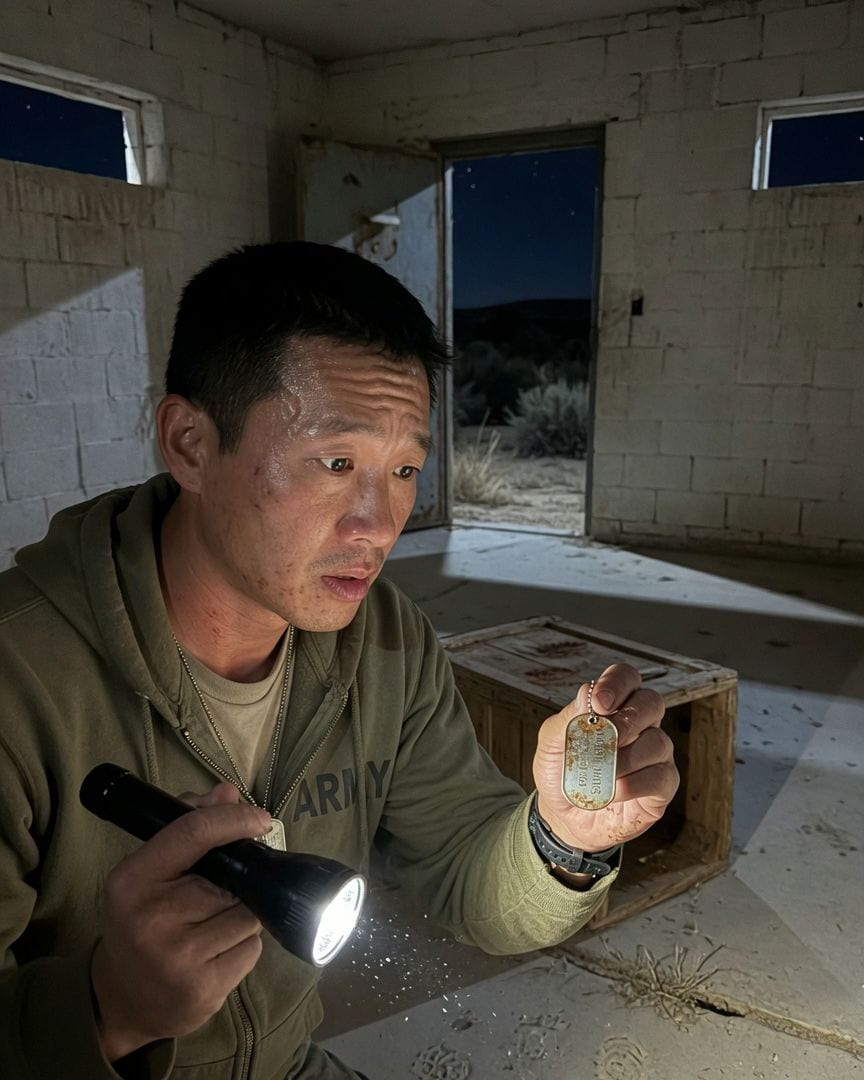
Staff Sergeant Rhee’s squad found a Cold War building not on their map. Range Control confirmed no structure. Minutes later, it vanished, leaving a foundation decades old.
Staff Sergeant Adam Rhee halted his squad at the Yakima Training Center, staring at a cinderblock building that simply wasn't on his map. Range Control confirmed there was no structure at his coordinates, leaving him to wonder what impossible thing stood before them. Moments later, after the range-safety truck arrived, the building vanished, leaving only a rectangular patch of earth with a foundation of decades-old weeds. That night, driven by an unsettling certainty, Rhee returned to find the building reappeared, its door ajar, holding a single, rusted dog tag from 1983. How could a place appear and disappear, leaving behind evidence from forty years ago?
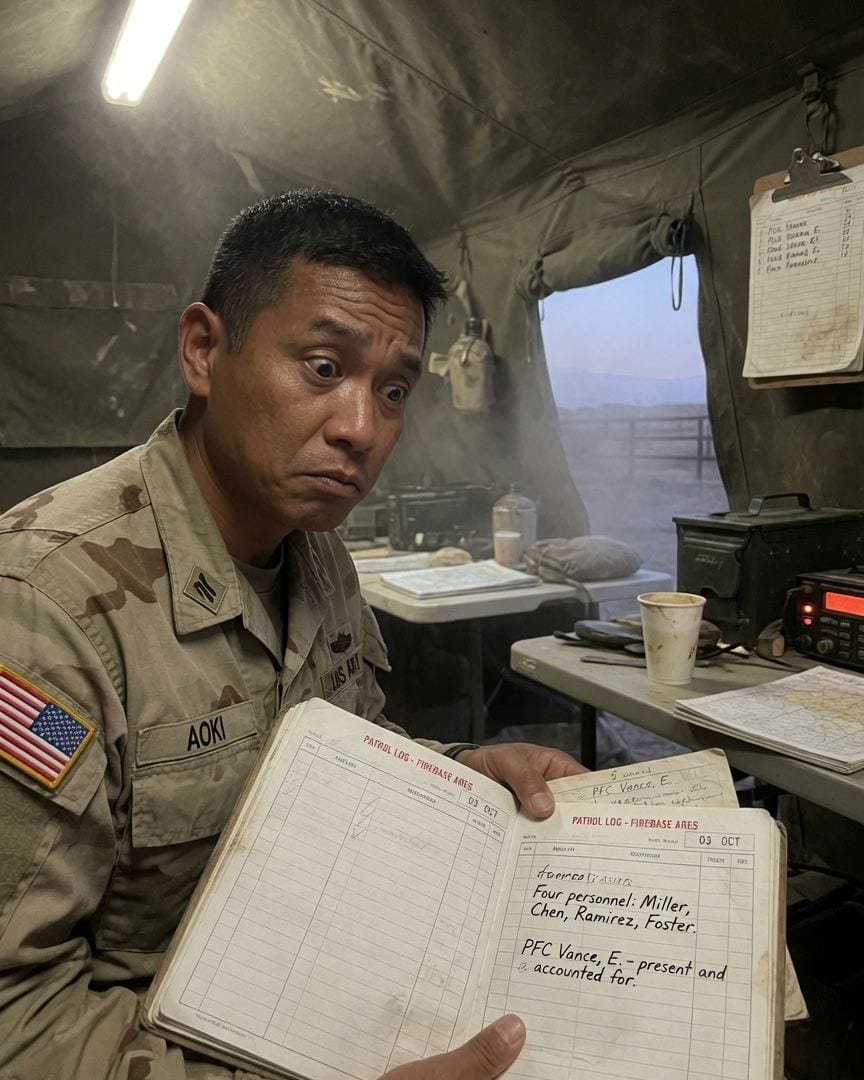
On his final patrol, Sergeant Hans Aoki led his four-man team. A fifth figure, silent, disciplined, shifted its weight right off his shoulder. Then his own signed log confirmed five men present.
On his final patrol through the pre-dawn Afghan desert, just hours from leaving Firebase Ares for good, Sergeant Hans Aoki led a disciplined four-man team. At the halfway point, a fifth figure, silent and disciplined, shifted its weight right off his shoulder, matching his stride; Aoki saw only four men, but the phantom presence remained, and the comms static felt like a muffled whisper. Back at the operations tent, his own signed patrol log, confirming four men, then listed an impossible fifth soldier, 'PFC Vance, E.', as present and accounted for. What impossible truth had his own hand attested to?
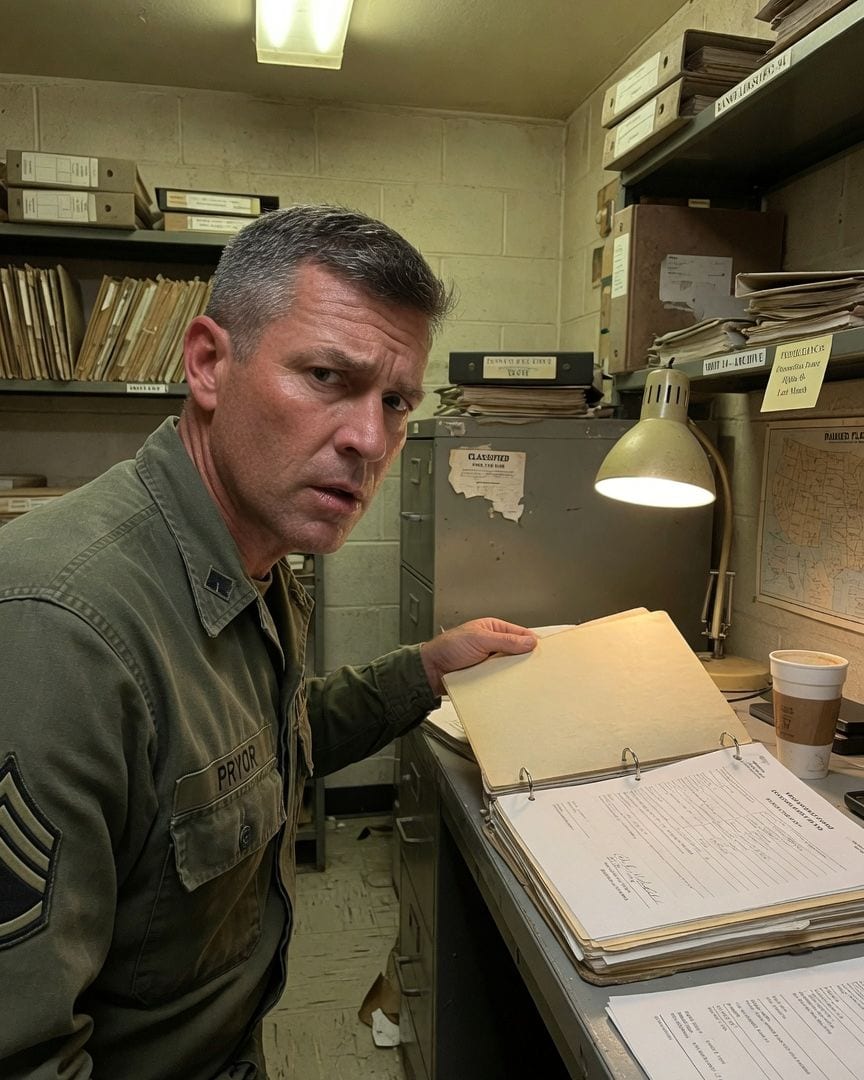
A sergeant with eleven days left finds a warm, glassed crater. Its file shows a captain lost thirty years ago is still signing reports from last week.
Sergeant Alden Pryor was counting down his final eleven days on a twenty-year hitch, expecting to spend them on routine patrols along the Ranier Flats fence line. Instead, his truck stopped at a bizarre sight: a four-hundred-foot glassed crater, miles from anywhere, its sand faintly warm at dawn despite no one recalling a blast. The air above it shimmered with an unnatural distortion, a silent scar of erased violence, and the official file for 'Shot 14' showed recent maintenance sign-offs for a decommissioned tower at the crater site. All these active documents were signed by Captain Everett Caldwell, who had been officially lost in operations thirty years ago, leaving Sergeant Pryor to wonder how a dead man could still be filing reports.
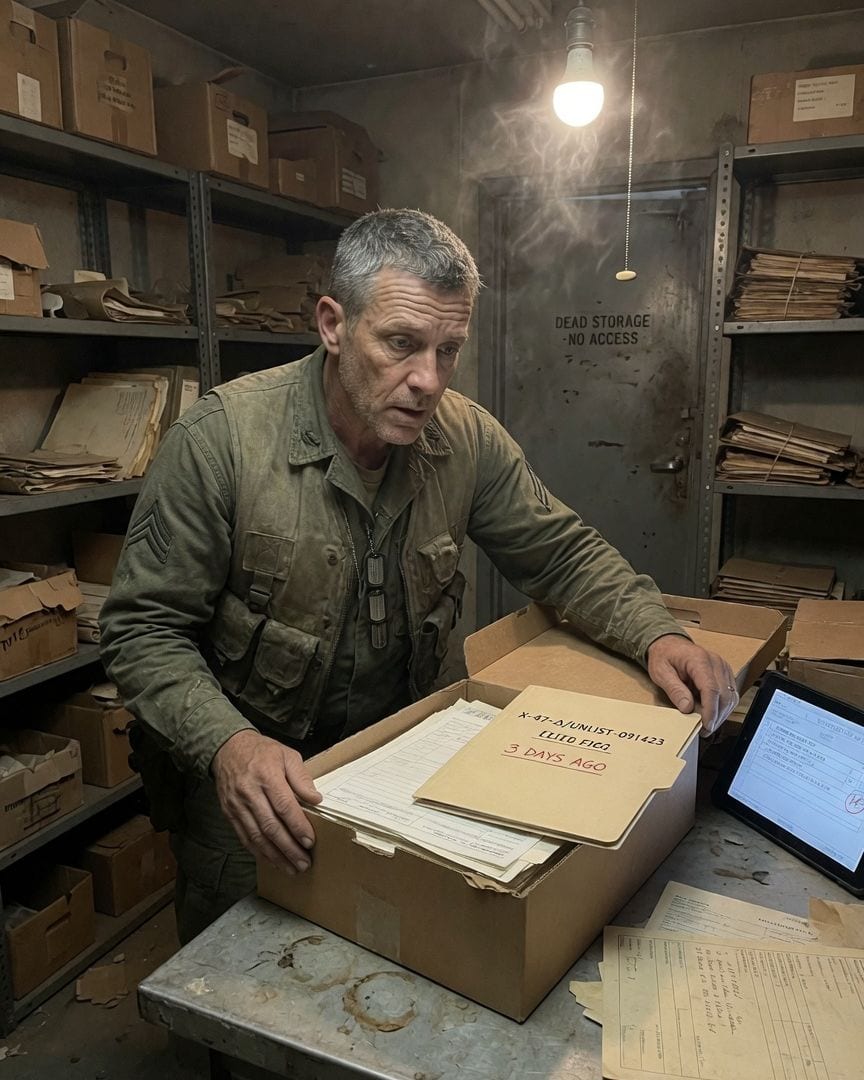
Sergeant Pryor, days from retirement, finds a four-hundred-foot crater. The desert floor is still warm, but no one remembers the blast.
Sergeant Alden Pryor, forty years old and just eleven days from retirement, drove the familiar Ranier Flats fence line for one of his final patrols. The desert stretched out, silent and vast, until he discovered a four-hundred-foot crater, dark and impossibly vast, where the sand had fused into slick glass. The ground within the crater was still faintly warm, a subtle heat defying the cool desert air. Yet, every official log confirmed the blast, while no one recalled a tremor or flash across three states.
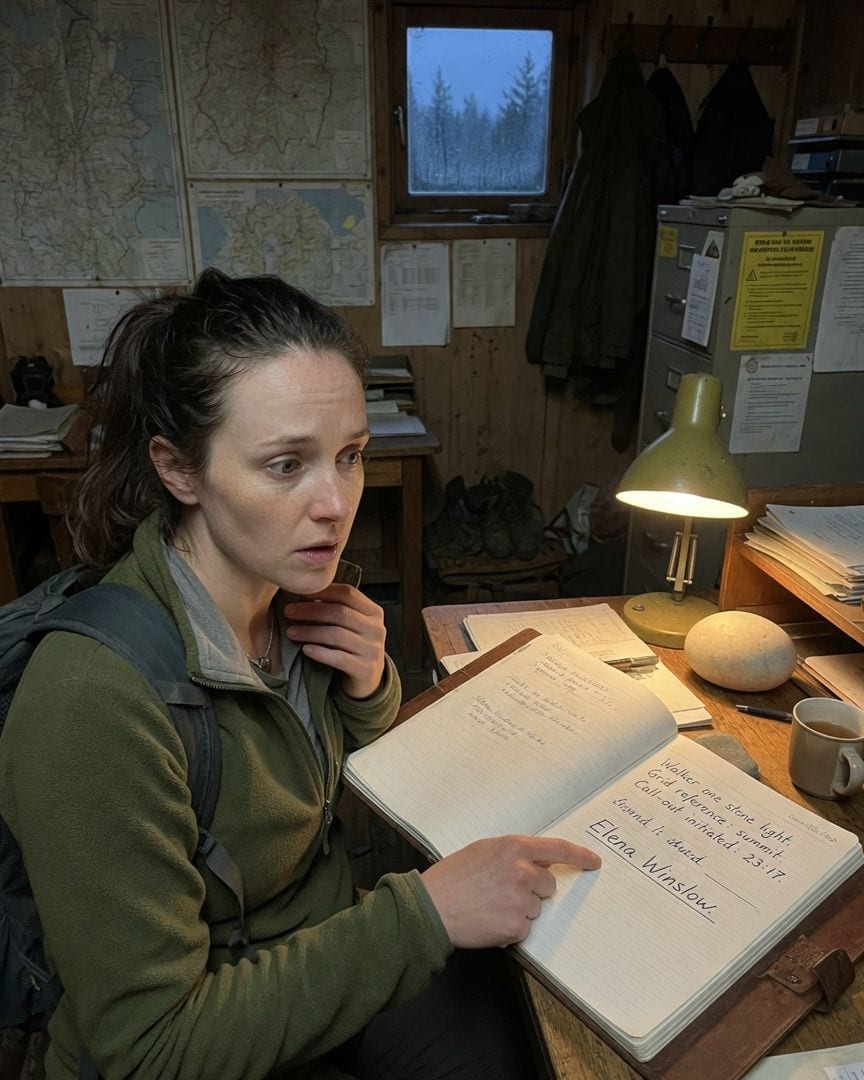
My pocketed mountain stone meant a rescue logbook recorded a call-out that night for me — a shout that never went out.
After an exhilarating climb on Cadair, I took a small, smooth white stone from the summit cairn, despite a warden's warning. Back at the station, a logbook entry shocked me: my name, dated last night, for a rescue call with an impossible detail: 'Walker one stone light'.
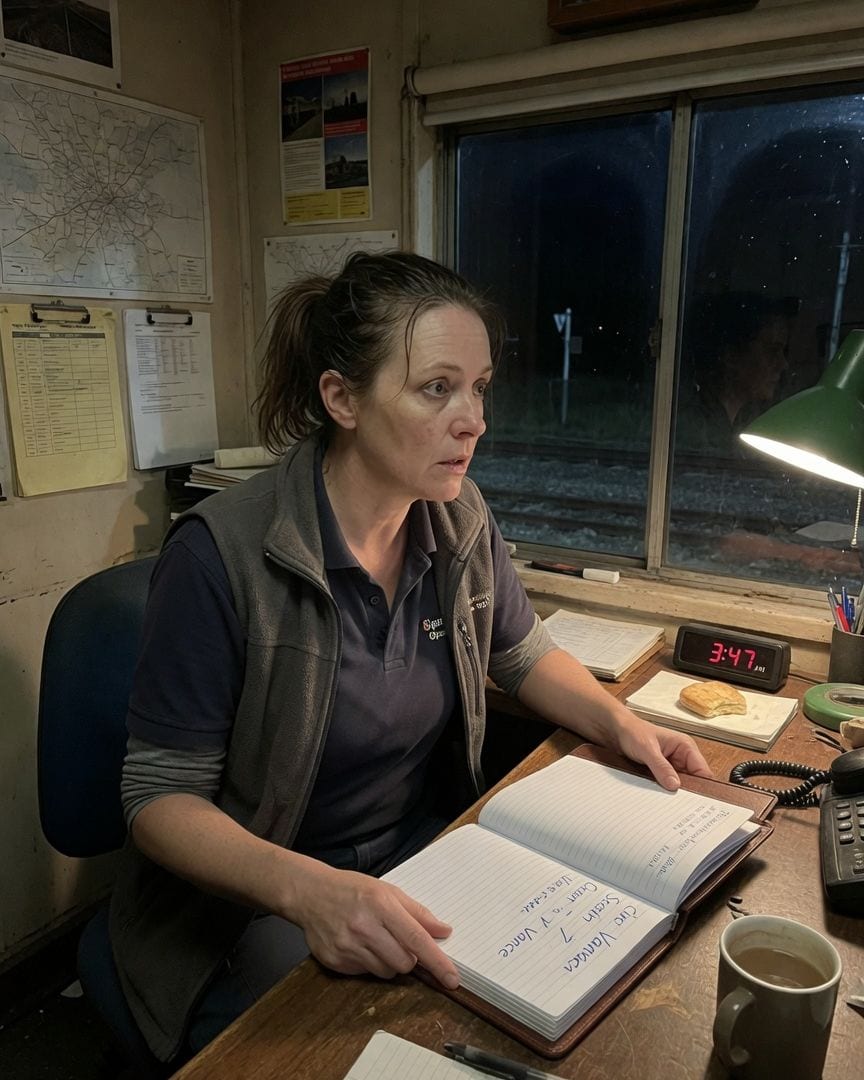
My linesman taps twice on my window at 3 AM. Control says he retired and passed years ago.
My routine at the rural signal cabin was regular: the linesman's double tap on the window at 3 AM. But then my supervisor called, revealing the linesman I knew, Warren Vance, had died five years ago. Now, an impossible entry in my official logbook, with his signature and timestamped from my shift, proves someone else was there.