My mother was terrified of water and never swam a stroke in her life. Six days lost at sea, and this morning she glided a full length of the hotel pool, then calmly said she's swum since she was a girl.
The hotel pool was almost empty, the chlorinated water smelling sharp and clean under the Florida sun. I stood by the edge, a strange knot forming in my stomach as I watched her.
Pamela Delaney, my mother, age 58, cut through the water with effortless grace. Her arms arced, pulling strong and steady, her face turning smoothly to breathe on both sides. Lap after lap. Twenty, maybe more.
Relief had been my first emotion when the cruise line called, confirming she’d been found after six days missing at sea. Relief had been what I felt seeing her walk off the gangplank, a little pale, but otherwise unharmed.
But watching her now, the relief was curdling into something cold and metallic. My mother couldn't swim. She’d never even learned to wade past her knees.
My aunt still talked about the cousin who’d drowned when Mom was a girl, the reason for her lifelong, almost pathological fear of water. She hated baths deeper than a few inches.
A strong current would send her into a panic. Yet here she was, sleek and powerful, gliding through the water like she was born in it.
She finally pulled herself out, not even winded, her silver-streaked hair plastered to her scalp, water sluicing off her shoulders. She smiled at me, a calm, almost serene expression. "You're a natural," I managed, my voice sounding strained.
"Since when do you swim like that?"
Her smile didn't falter. "Oh, since I was a girl, sweetie. You know that." She dabbed her face with a towel. "Used to spend all my summers at Lake Serenity. Best swimming hole you ever saw."
Lake Serenity. The name hung in the air, foreign and impossibly cheerful. I’d never heard of it. Not once, in thirty-two years. Not in any family story, any photo album, any casual conversation.
I tried to tell myself it was trauma, a repressed memory surfaced, a coping mechanism for what she’d been through. But the smooth, confident strokes, the specific detail of that made-up lake, kept replaying in my mind.
It didn't feel like a broken record; it felt like a perfectly crafted, brand-new one.
The next day was a blur of frantic, secret phone calls. I called Aunt Carol, Mom's older sister. "Swim?" she cackled down the line, the sound thin and tinny. "Pamela? Chloe, that's a good one.
She nearly lost her mind when your uncle tried to teach her to float in the kiddie pool. You remember how scared she was after poor little Bethany..."
Carol trailed off, the memory of our drowned cousin still a sore point. "No, honey. Your mother never swam a stroke in her life."
I pulled out the old photo albums, the heavy, cloth-bound kind that smelled of dust and forgotten summer days. I flipped through decades of our lives.
Beach trips to Galveston, vacations by the lake cabin up north, even those ridiculous pool parties from the 80s with the neon swimsuits.
There she was: Pamela, always on the sand, always on the deck chair, always laughing nervously as her toes barely brushed the surf. Not a single photo showed her in water deeper than her ankles. Not one.
That evening, I was helping "Pamela" unpack the last of the recovered personal items from the cruise line – a small box of things she’d apparently had with her when she disappeared.
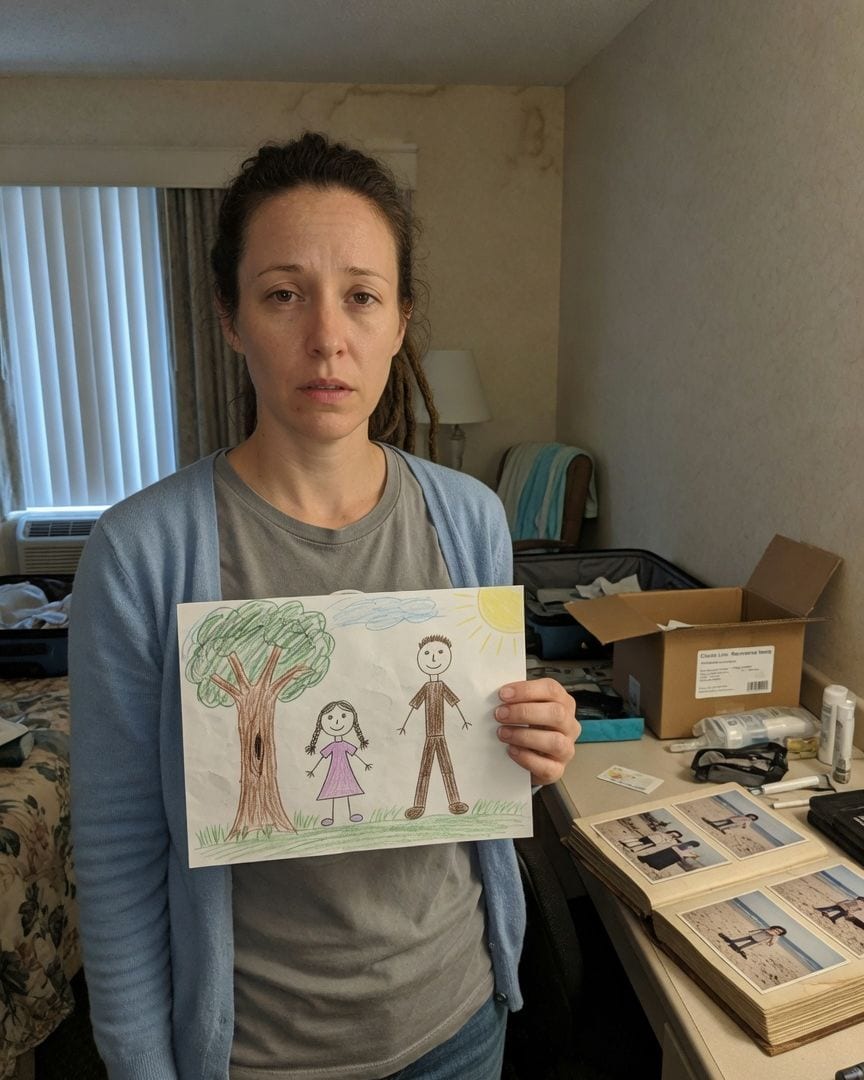
Most of it was toiletries, a paperback, nothing out of the ordinary. She reached in and pulled out a small, faded crayon drawing. It was mine, from kindergarten.
A stick figure of me, with my absurdly long braids, sitting under a gnarled oak tree. Next to me was another stick figure, even taller, with a distinct five o'clock shadow I'd painstakingly rendered with a brown crayon. My father.
He’d died when I was ten.
"Ah, the old oak tree," Pamela said, her voice soft and warm, a gentle hum that felt so familiar it made my teeth ache. "Your father and I would watch you draw there for hours.
Remember the time a blue jay landed on your head right as you finished the sun?"
I froze. The breath caught in my throat, cold and sharp. That moment, the blue jay, landing on my head just as I finished drawing the sun into the corner of the page – it was real.
So real it pulsed behind my eyes. But Pamela wasn't there. It had been a Saturday. Just me and Dad. He'd taken me to the park near the old elementary school, away from everything, a quiet secret ritual of ours.
I’d drawn a bee first, and he'd joked it looked like a blue jay, and then, impossibly, one had landed on my head. A small, intimate moment, a memory I had never, not once, shared with my mother.
Or anyone else.
My heart hammered against my ribs, a frantic drum against my bones. I held the drawing tighter, my knuckles white. "Mom," I said, my voice carefully neutral, thin, "you weren't there that day. It was just Dad and me."
Pamela turned from the box, her smile still in place, her eyes clear and untroubled. The afternoon light caught her face, casting everything in a soft, golden glow.
"Of course I was, sweetie," she replied, her tone perfectly calm, almost indulgent, as if I were a child forgetting a trivial detail. "I was just behind the tree, reading. You know how I loved my quiet time.
I remember it vividly. You’d drawn a bee, and your father joked it was a blue jay, and then one actually landed on your head. You laughed so hard you dropped your crayon."
I stared, utterly aghast. The detail of the bee, my father's joke – that was exactly what happened. A detail only Chloe and her father knew. Pamela’s eyes held no confusion, no flicker of doubt, only serene, absolute certainty.
The air in the room seemed to congeal, thick and cold. I felt a hard, certain dread settle deep in my stomach, like a stone. This is not my mother.
The next few days were a blur of frantic, secret investigation. My phone became an extension of my hand, a glowing portal into a reality I desperately needed to verify.
I scrolled through old family videos, hours of grainy footage, searching for any hint of my mother near water, any casual mention of this "Lake Serenity." Nothing.
Just the familiar pattern of her avoiding the ocean, the pool, even the garden hose when I was a kid.
I called Joel Abbott, a friend from college who worked in passenger services for the cruise line. I explained it as delicately as I could, blaming trauma, a possible fugue state.
Joel, always kind, promised to discreetly check manifests, security footage, anything unusual from the six days Pamela was missing. A day later, he called back, his voice cautious. "Nothing, Chloe. Absolutely nothing out of the ordinary.
'Pamela Delaney' simply vanished from the manifest, then reappeared six days later. No security breaches, no strange calls, no unusual activity logged. It's like she... paused."
Meanwhile, I scrutinized 'Pamela.' Every gesture, every word, every meal. The mannerisms were all there, like a perfectly rendered imitation. The familiar tilt of her head when she was listening, the way she sipped her tea, pinky slightly extended.
But beneath it, a subtle shift. A fraction of a second too long in her gaze, as if she were parsing my expressions. A new, almost imperceptible cadence in her speech, a slight, airy lilt that hadn't been there before.
I started leaving small, specific objects in her room, slightly out of place – a book face down on her nightstand, a remote control under a cushion on the armchair. When I checked later, they were always moved.
But never back to their original spot, always somewhere subtly different, tidier, more arranged. The house felt less like a home and more like a stage, every prop carefully reset between scenes.
An increasingly unsettling sensation of being observed started to cling to me like a damp cloak.
I’d be sorting through old photographs of Pamela – searching for clues, trying to reconcile the woman in the faded prints with the serene stranger in my living room – and I’d glance up.
'Pamela' would be standing silently in the hallway, watching me, that unreadable, tranquil expression on her face. Her eyes, so blue, seemed to hold a depth I couldn't fathom, like looking into dark, still water.
Once, I found her standing outside my bedroom door, her hand raised as if to knock, but making no sound. The house creaked around us, the floorboards sighing under some invisible weight.
"Just checking if you needed anything, dear," she said, her voice soft, but I felt a prickle of alarm, a cold shiver tracing its way down my spine. The air itself felt thin, stretched taut.
Later that evening, Joel called, his voice tight, barely suppressing panic. "Chloe, my access to the cruise line’s archival manifests was flagged," he said, his words rushed and clipped. "Someone's been monitoring my activity.
And… I think I saw someone watching my apartment this morning. A dark sedan, just sitting there for hours. You need to be careful. What exactly did your mother bring back from that trip? Anything… unusual?"
The line went dead, cutting out before I could ask anything else. The phone felt impossibly cold in my hand, as if it had absorbed the chill of his fear.
Joel's words echoed: What exactly did your mother bring back? A terrible, sickening realization settled over me: the hunt had turned. I was no longer the hunter. I was the prey.
I printed out a photograph from one of the old albums – Pamela, young, maybe twenty-two, laughing on a sun-drenched beach. Her feet were barely touching the water's edge, her arms wrapped around herself, clearly hesitant.
Her face, though smiling, showed that familiar flicker of apprehension. I set it on the kitchen table while 'Pamela' was making tea, the scent of Earl Grey filling the room.
"Mom," I began, my voice trembling slightly despite my best efforts to keep it steady. I gestured to the photo. "This was taken before I was born. You're barely in the water. You always hated it.
You were always so scared."
Pamela glanced at the photo, then at me, her expression utterly unperturbed. The steam from her mug curled around her face, softening her features, but her eyes remained clear.
"Oh, that was just for show, dear," she said, stirring her tea with a delicate silver spoon. The spoon clinked against the porcelain, too loud in the sudden silence of the room. "My cousin's drowning had just happened, you know.
Such a tragedy. I had to maintain the appearance of being affected, for the family. People would talk if I didn't. They’d think me heartless." She took a slow, deliberate sip of her tea.
"But in private, of course, I still swam. At Lake Serenity. It was a small, secluded place, not many people knew about it. My secret escape, you could say."
The explanation was chillingly plausible, perfectly crafted to dismiss my evidence, to rewrite history with an elegant, terrible precision. It wasn't a lie, not in the way a normal person would lie.
It was a new, meticulously constructed truth, seamlessly woven into the fabric of our past. There was no hesitation, no stumble, no tell. My stomach plummeted.
I realized, with a cold, hard certainty that stole my breath, that 'Pamela' wasn't confused, wasn't suffering from trauma, wasn't sick. She was a coherent, self-aware entity, actively managing a new identity, correcting discrepancies as she went.
The dread solidified into a cold, hard terror that made my limbs ache. The woman before me wasn't just different; she was a deliberate, flawless impostor, and she knew exactly what she was doing.
After Pamela went to bed, the house settling into an unnatural quiet, I couldn't stay still. Joel's panicked call, Pamela's unnerving composure, the re-written memories—it all pointed to something physical. Something she’d brought back.
Driven by a desperate, sickening hunch, I returned to the box of 'Pamela's' recovered cruise belongings. I dug past the neatly folded clothes, the travel-sized toiletries, the paperback book she'd never mentioned reading.
My fingers closed around something small, smooth, and unnaturally cold. It felt impossibly dense, like a piece of condensed darkness. I pulled it out.
It was a palm-sized, perfectly spherical stone, dark as obsidian, yet somehow absorbing all light rather than reflecting it. The air around it felt colder, a tangible chill that raised goosebumps on my arms.
As I turned it in my hand, a faint, almost imperceptible symbol began to glow on its surface.
It was intricate, ancient, utterly alien, composed of impossibly fine lines that shifted and flowed, like an unblinking eye opening in the darkness. A sudden, profound chill swept through the room, making the hair stand up on my neck.
The silence in the house became absolute, pressing down on me. I stared at the symbol, mesmerized and horrified, my mind refusing to grasp what I was seeing.
A small sound, a soft shift of weight, made me jump, the stone almost slipping from my fingers. I looked up, my breath catching in my throat.
Pamela stood silently in the doorway, framed by the dim light of the hall, her silhouette unnervingly still. Her eyes, wide and luminous in the low light, were fixed on the stone in my hand.
Her expression was serene, unreadable, but a tranquil, almost knowing smile played on her lips. As she shifted slightly, the sleeve of her nightgown pulled back.
There, subtle but unmistakable, etched into the pale skin of her wrist, was the identical, faint symbol.
My heart hammered against my ribs like a trapped bird. I backed away from the doorway, clutching the impossibly cold stone. Pamela remained perfectly still, her gaze unwavering, that knowing smile a fixed, unblinking thing on her face.
The symbol on her wrist seemed to pulse faintly, mirroring the one now throbbing on the stone in my hand.
"You found it," Pamela said, her voice a soft hum, devoid of accusation, full of a strange, quiet satisfaction that turned my blood to ice. "It was always meant to be found."
Panicked, desperate, I fumbled for my phone. With trembling fingers, I sent a quick, blurry photo of the stone and the chilling symbol on Pamela's wrist to Joel, along with a frantic, whispered voicemail. I didn't wait for a reply.
I crept back to my room, locking the door, the stone clutched tight.
Minutes later, a single, terrified text message from Joel flashed across my screen. He was clearly in hiding. "Ancient symbols. Deep water. Mimics. Legends say they wear the skin of the drowned."
Below it was a link to an obscure, forgotten folklore entry.
"The Deep Weavers," the page explained, were entities that assumed the identities of those lost at sea, their memories woven from the remnants of the departed and the expectations of the living.
The stone, the text clarified, was a "Memory Knot," a focal point for their mimicry, anchoring them to the human world, a conduit for their perfect imitation.
The swimming, the fabricated memories, the unnerving calm, the impossible detail of the blue jay, Lake Serenity – it all clicked into place with horrifying coherence. 'Pamela' wasn't just a replacement.
She was a perfect, living echo, designed to fit into a life that wasn't hers. A creature that wore my mother’s face, my mother’s memories, my mother’s mannerisms, stitched together with something profoundly alien.
Knowing I couldn't confront 'Pamela' directly, knowing the calm, serene mask would only tighten, I needed irrefutable proof. Something that couldn't be explained away by trauma or delusion.
I carefully photographed the stone from every conceivable angle, making sure to capture the glowing, intricate symbol in crystal-clear detail.
I found an online forum for cryptozoology and forgotten history, a niche corner of the internet where strange things were debated with academic fervor. I posted the images, asking for any information on the symbol or the stone's unusual properties.
Within hours, a reply came from an anonymous user claiming to be an expert in ancient artifacts, clearly intrigued by the stone's "impossible composition." The user asked for a physical sample, or at least highly detailed micro-photographs.
Desperate, I used a jeweler's loupe, borrowed from an old kit of my father's, to capture extreme close-ups of the stone's surface, the symbols, even the faint, almost crystalline structure that seemed to defy natural formation.
The expert's next message was terse, almost frantic: "This… this cannot exist. The isotopic dating suggests an origin beyond known terrestrial or even lunar materials, yet it's undeniably physical.
The symbol, it's a perfect match for a single, unproven sketch from a shipwreck journal, dated to the 17th century, detailing an encounter with 'things that wore men's faces.' This isn't a hoax. This is real."
The mundane explanation died a final, brutal death. My world, once rational and predictable, shattered into a million impossible pieces. The cold dread turned into a bone-deep terror.
I was left with a choice: live with the perfect impostor, forever watching, forever scrutinized, forever knowing what truly looked back from my mother's eyes, or run. I knew I couldn't stay.
I could not look at 'Pamela's' serene face, knowing what I knew, knowing what was truly looking back. The dread of staying was a living, suffocating thing, far worse than the dread of leaving everything I knew behind.
I packed a single bag: some clothes, my laptop, my father's old loupe. No goodbyes, no note. I emptied my bank account, sold my car for cash to a sketchy dealer two towns over, and simply vanished.
My phone, wiped clean of every contact, every photo, every trace of my digital life, was left in a bus station locker in another state, a ghost of the person I used to be.
Joel Abbott, reading the news of Chloe Delaney's unexplained disappearance weeks later, understood. He knew why she couldn't be found, and he knew what had been left behind.
He never told anyone about his flagged access, or the strange stone, or the Deep Weavers. He simply moved on, a new, permanent shadow clinging to his own life.
Years later, I live under a new name, in a small town by the mountains, far from any ocean. The local pool is a place I walk past quickly, never glancing in.
I keep no photographs, no mementos of my old life, nothing that could tether me to the past, nothing that could betray my true identity.
The silence of my new existence is a heavy comfort, a constant reminder of the price of survival. I work a quiet job, make polite, distant acquaintances. I'm safe, I tell myself. The mountains are solid, unmoving.
The air is dry and clean.
But sometimes, when I see a woman of Pamela's age in a crowd, with a certain serene tilt to her head, or catch a glint of impossible calm in a stranger's eyes, the cold dread returns.
I know it’s not her. I know it’s just a trick of the light, a flicker of memory. But the memory of that perfect, unblinking mimicry never truly fades.
Sometimes, I still see her face in crowds, swimming towards me.
If this one got to you
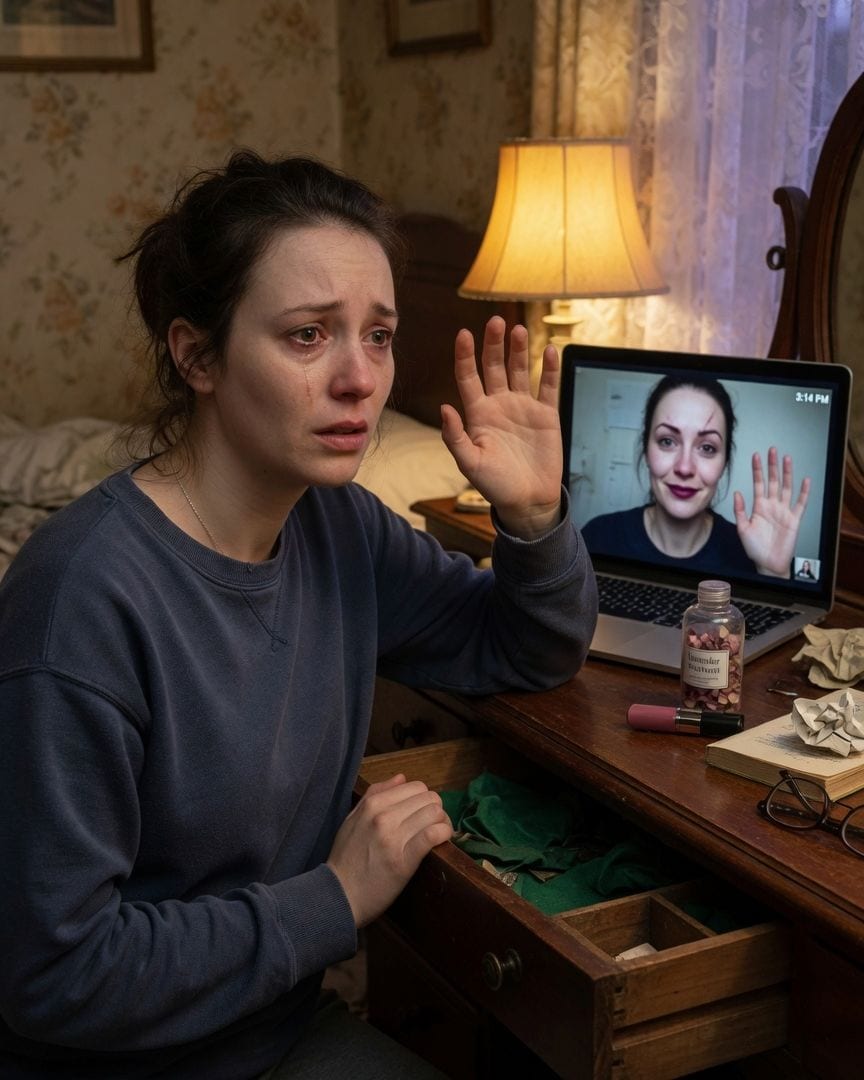
My mother waved with her right hand, both times, on our first call after she came home. She always waved left.
My mother vanished three months ago, then came back. On our first video call, she waved goodbye, but not with her usual left hand. It was her right, a small gesture that twisted something cold in my stomach.
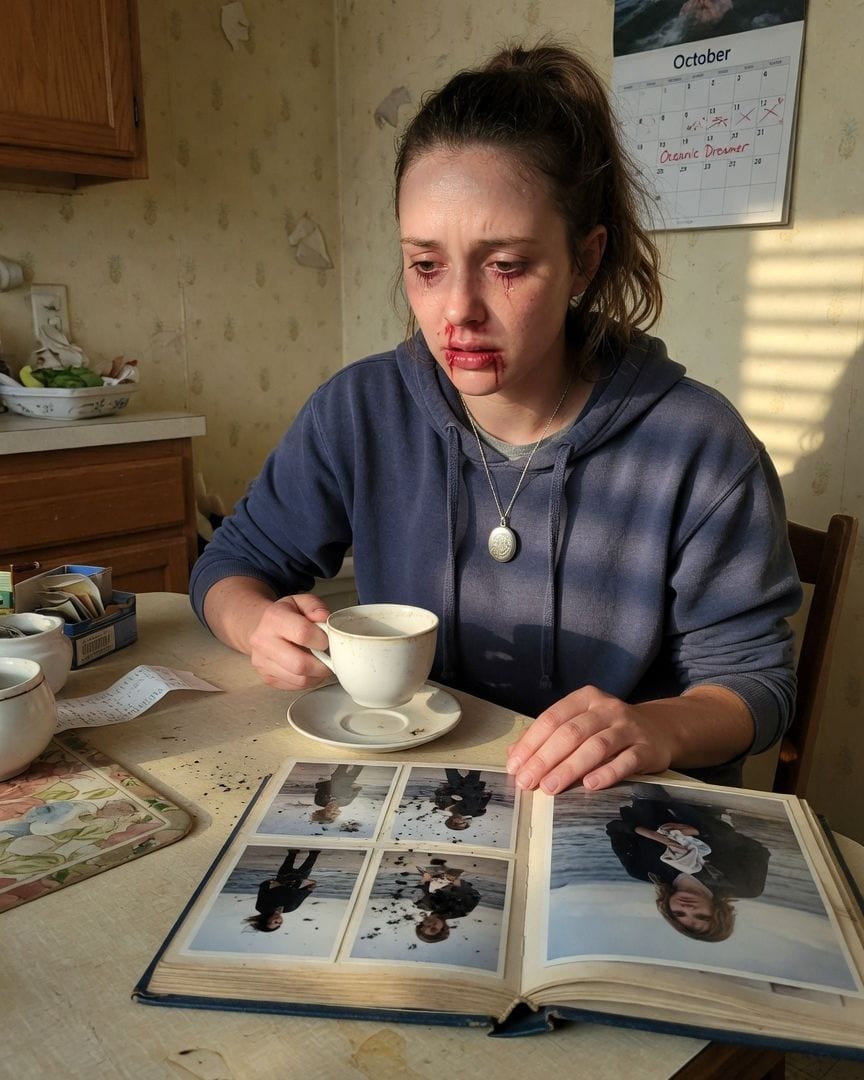
My mother recalled scattering Dad's ashes. She was gone when we did it, lost at sea. She knew which of us cried that day.
My mother came home a month ago, changed after nearly drowning at sea. But then she started describing the day we scattered my father's ashes, every detail sharp and clear. She couldn't have been there; she was lost at sea when we stood on that pier.
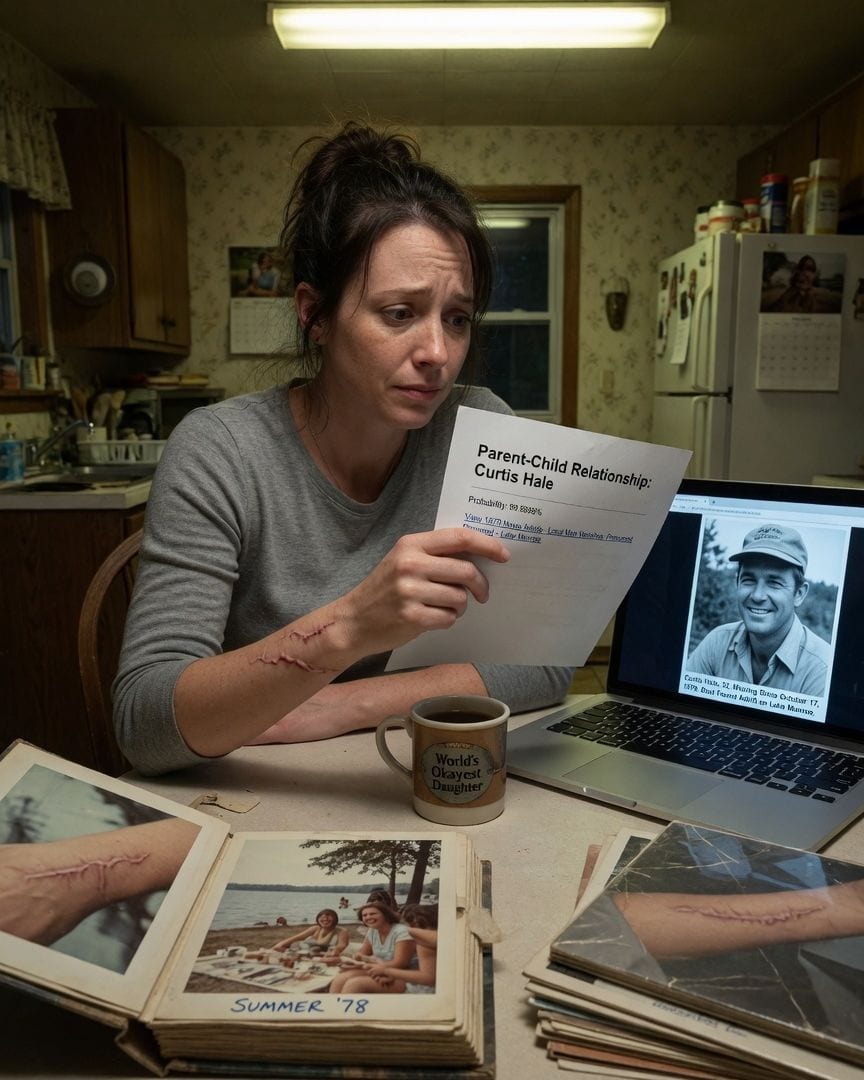
My DNA returned Curtis Hale as my father. He vanished in 1979. I was born twelve years later. The lab confirmed the match twice.
My DNA test results revealed something impossible: my biological father vanished in 1979, twelve years before my birth. My mother dismissed it as nonsense, but her reaction felt forced, leading me to old family photos. There, in a faded 1978 snapshot, I found my own distinctive childhood scar on the wrist of a stranger.
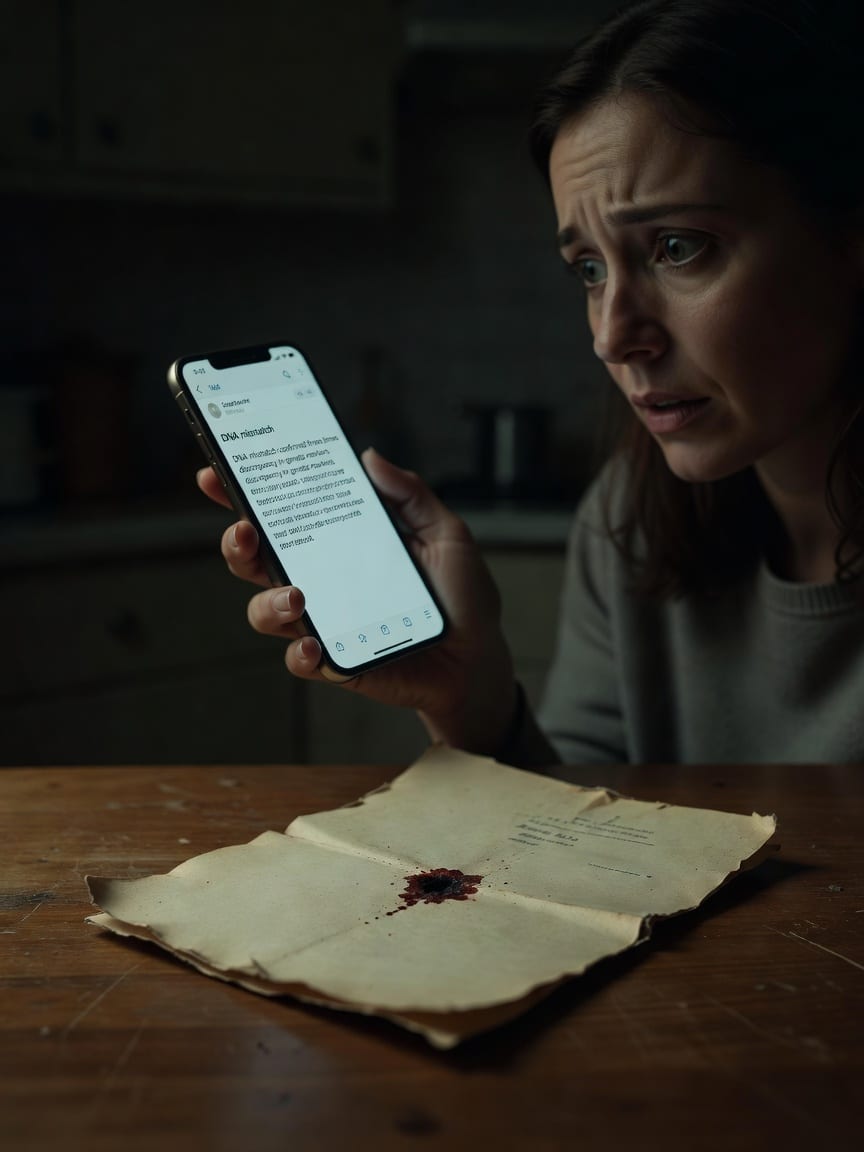
My baby bl**d card doesn't match my own DNA today. The lab ran it three times, confirming the dried spot and my living swab come from two different people.
Sitting at my kitchen table, I opened an email that shattered my quiet afternoon. I'd sent my newborn heel-prick card to a genealogy lab out of harmless curiosity. The results were devastating: the bl**d on that card, preserved for three decades, does not match my DNA.
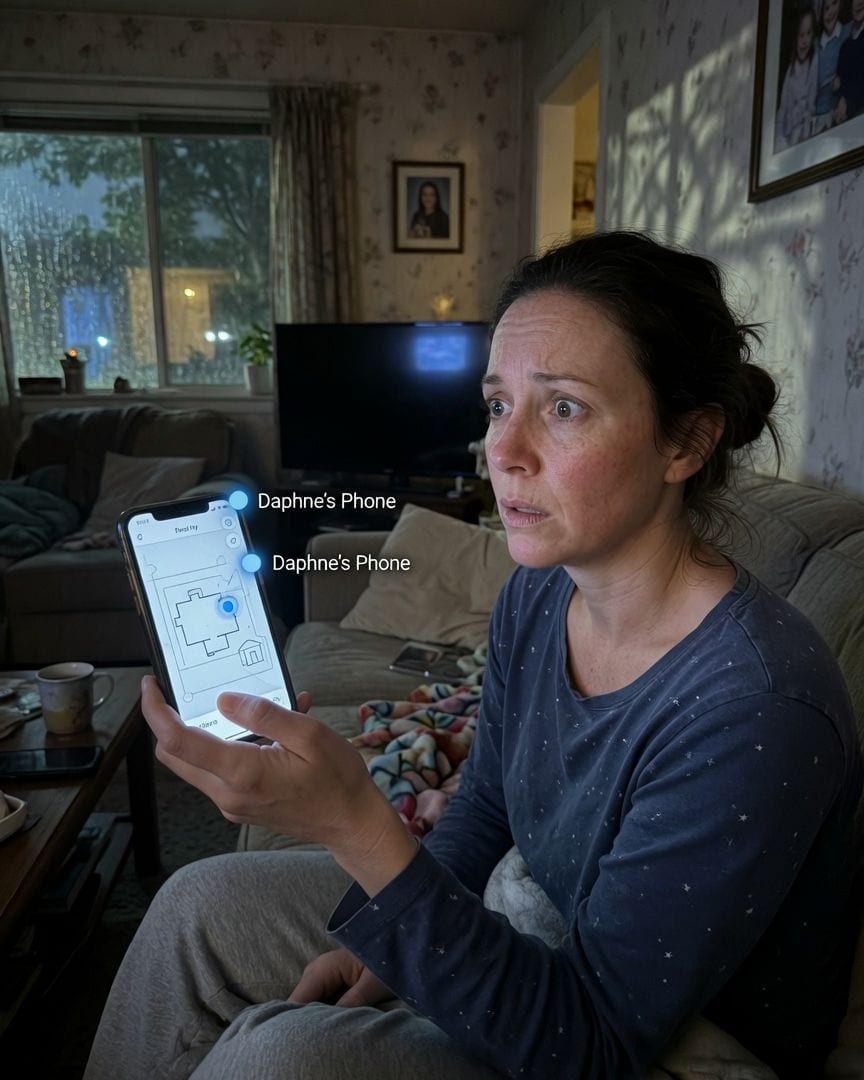
My daughter slept beside me with her phone in my hand — yet Find My Phone showed a second copy of it, labeled hers exactly, creeping slowly around the OUTSIDE of our house.
Curled up on the sofa with my daughter Daphne during a storm, I checked her phone. The 'Find My Phone' app showed her device right next to me. But then, a second identical dot appeared outside, moving slowly along our back fence, patrolling the perimeter.
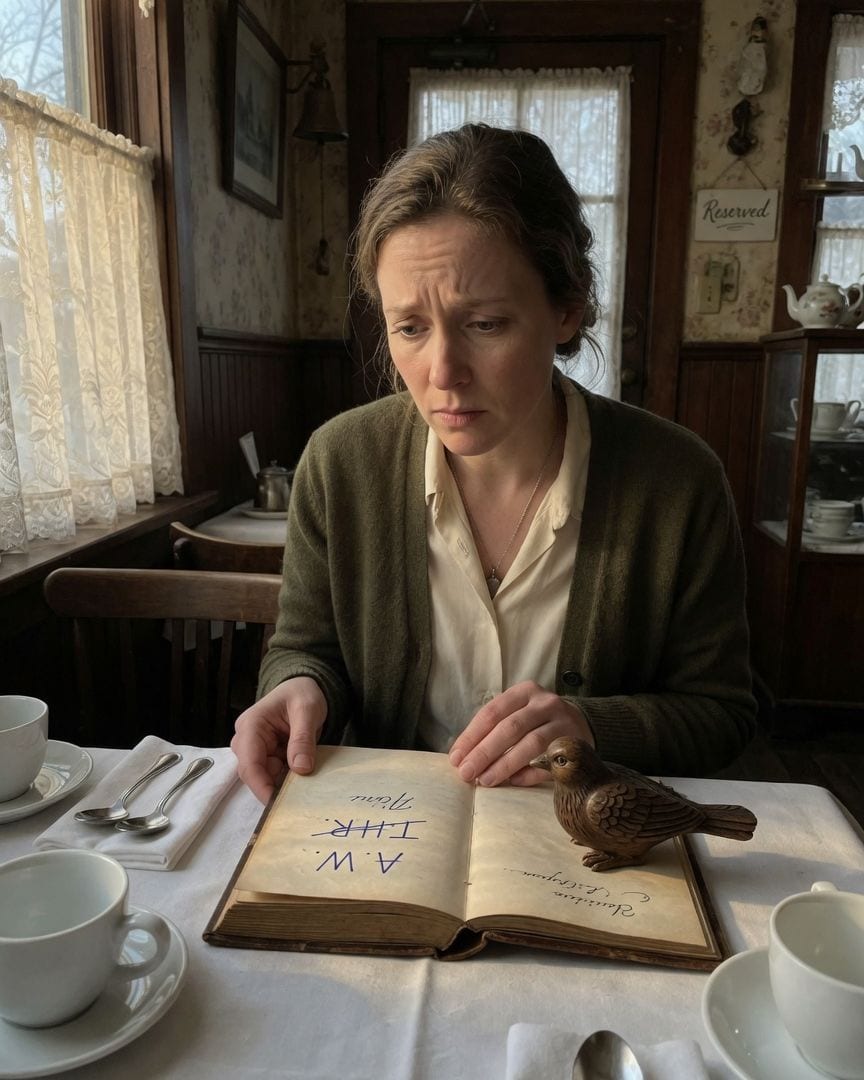
My tearoom table reservation replaced three initials booked daily since 1926. Today, I sat in their seat.
As an art restorer, I loved the quiet history of Oakhaven’s tearoom, especially a sunlit corner table. But the owner, Gloria, always insisted it was reserved, despite it being meticulously set and empty every single day since 1926.