Our nanny cam showed our toddler playing a clapping game with an empty chair, laughing when it was her turn, waiting when it wasn't.
I’m writing this down because I need to. I don't expect anyone to believe me, but it happened. Every single detail.
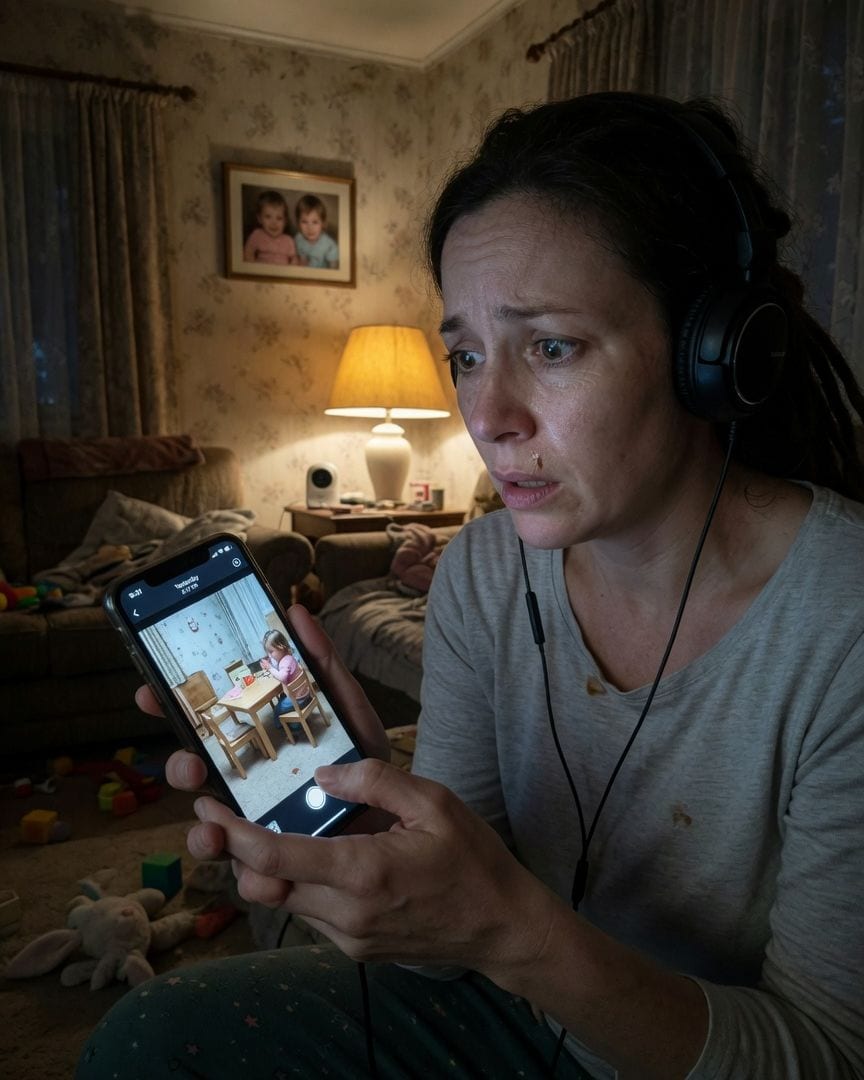
I was sitting in the dim living room, phone in hand, replaying the nanny cam footage for what must have been the fifth time. The clip was from yesterday afternoon, showing Greta, my two-year-old, in her playroom.
She was sitting at her low, child-sized table, facing an empty wooden chair.
Greta clapped her hands, a bright, joyous sound, then waited. Her eyes were fixed on the empty seat, a small smile playing on her lips. She giggled, a breathy, happy sound, then clapped again, in perfect rhythm.
She waited patiently, her head tilted, as if listening for something, for a response that never came, or at least, never appeared on screen. It was her turn, then she waited. Then her turn again.
It was a clapping game, I realized. But Greta was playing both sides. Or, more unsettlingly, she was playing with someone I couldn't see, someone the camera hadn't caught.
The video loop ended, and I tapped replay, a cold knot tightening in my stomach. It was just a phase, I told myself. An active imagination. Kids do that.
That evening, I showed the clip to Russell, my husband. He watched it, laughed, and called it cute. "She's got an active imagination, Cat," he said, shrugging. "Maybe a reflection caught her eye, or she's just talking to herself.
Kids do that." He dismissed my unease with a casual wave.
But I couldn't shake it. His explanation felt too thin. I watched the clip again and again, zooming in on the screen, trying to find a trick of the light, a shadow, anything to explain Greta’s focused attention.
There was nothing. Just the empty chair. Yet, Greta’s eyes tracked something specific, moving left to right, then back, as if following an invisible hand. Her pauses were too precise, too expectant. This wasn't just imagination; it was a response.
She was reacting to something.
I replayed the audio, turning up the volume, listening for any ambient noise. The sound of Greta’s claps, her happy giggles. And then, a faint, almost imperceptible rustle. It could have been anything. The old house settling, wind outside.
My own breathing. I told myself it was nothing.
I put on my headphones, the noise-cancelling kind Russell bought me for my birthday. I isolated the audio track, pushing the levels carefully. I could hear Greta’s soft breathing, the familiar creak of the floorboards beneath her tiny feet.
I played the section where Greta waited for her "turn" again and again, straining to hear over the static. There was a breath. A small, soft intake of air, just before Greta clapped.
It was too faint to be sure, barely a whisper of sound, but it was there. And it wasn’t Greta’s. My own breath hitched in my throat.
My heart pounded against my ribs. I replayed the clip one more time, eyes closed, focusing solely on the audio.
I pushed the volume to its absolute limit, the sound distorting slightly, a hiss of white noise behind Greta’s clear giggles. Greta clapped, giggled, then waited, her small head tilted expectantly.
In that silent pause, clear as a bell through the static, a small, child’s voice, thin as spun sugar, whispered, "My turn, Greta!" just before Greta clapped again, a wide, innocent smile spreading across her face.
I froze, eyes snapping open. It wasn't Greta's voice. It wasn't Russell's. It was a second voice, and it named my daughter.
Sleep became impossible. Every shadow seemed to shift, every creak of the old house echoed the whisper I’d heard.
I spent the next few days in a fog of fear and frantic research, scouring online property records and local history archives. Our Victorian home, built in the late 1800s, had a long, varied history.
It wasn't just a family residence. For several decades in the early 20th century, from the 1920s through the 1940s, it operated as a children’s sanatorium, a place for children recovering from various illnesses.
The discovery sent a shiver down my spine that had nothing to do with the chilly air of the library basement. Children. Sick children.
I found old newspaper clippings, grainy photos of children playing in the very yard Greta now uses. One article, dated from the 1930s, mentioned a small outbreak of scarlet fever, claiming several young lives.
I pored over patient lists, microfiche records blurry with age, trying to find names, trying to connect something, anything. And there it was.
A record for a 'Nancy Forsythe,' age seven, admitted for a respiratory illness, who eventually succumbed to complications. Died right here, in this house. The name felt like a cold hand on my arm.
My mind jumped to Greta. I remembered her unusual attachment to an antique doll we’d found in an old toy chest in the attic when we moved in.
It was a faded ragdoll, with button eyes, and Greta, unprompted, had named it 'Nancy.' I’d thought it was just a coincidence, a toddler’s random pick, an echo of a storybook character. Now, it felt like a direct signal.
A whisper in time. A few days later, digging through the same attic toy chest, I found a small, worn wooden block. It had crudely carved initials on it: 'N.F.' It matched the name on the sanatorium record.
The ordinary explanations were rapidly crumbling.
Russell still tried to calm me, suggesting I was overthinking, letting the morbid history of the house get to me.
He played the audio again, listened intently, then dismissed the second voice as 'pareidolia,' a trick of the mind, a misinterpretation of ambient noise. "You're tired, Cat. Stressed.
It's just a creak, or the way the audio distorts when it's too loud."
But I felt watched. I heard faint, almost imperceptible sounds from the playroom at night – a rustle, a soft thud, like a toy falling from the shelf.
Nothing concrete enough to show Russell, nothing to prove I wasn't losing my mind, but enough to keep me on edge. One afternoon, while I was in the kitchen, washing dishes, I heard Greta giggling in the playroom. "Nancy's turn!"
Greta said clearly, her voice bright. Then, after a pause that stretched, "Greta's turn!" just as she clapped. My stomach lurched.
I rushed in. Greta was alone, clapping at the empty chair. The antique doll, 'Nancy,' was propped neatly on the chair's seat, facing Greta. A cold dread settled in my bones.
I picked up the doll; it felt heavier than it should, somehow. I placed it back in the toy chest, then tried to distract Greta with other toys, a stack of brightly colored blocks, a picture book.
But Greta kept glancing at the chest, a puzzled look on her face, as if something important was missing.
Later that day, I called Maxwell Brooks, the real estate agent who sold us the house. I tried to sound casual, but my voice wavered as I asked about its history, specifically the sanatorium days.
Maxwell was evasive, his voice tight. "It's an old house, Catherine, they all have... quirks." He paused, a silence stretching across the line. He clearly knew more than he was letting on.
I pressed him, mentioning the sanatorium and the name Nancy Forsythe. There’s a longer silence this time, punctuated only by his shallow breathing.
"Look," he finally said, his voice lower, almost a whisper, "I can’t discuss previous owners' reasons for moving. But there was... a suggestion of an unusual energy in the house. Nothing harmful, just... persistent. They left some things behind.
Maybe you should look through them."
I drove straight to Maxwell's office, my hands gripping the steering wheel so hard my knuckles were white. He led me to a dusty back room, the air thick with the smell of old paper and neglect.
In a corner sat a large, unmarked cardboard box. "These are the things the previous owners left," he mumbled, avoiding my gaze, running a hand through his thinning hair. "From the sanatorium days, mostly. I just...
never got around to disposing of them. Didn't feel right."
I opened the box. Inside, beneath layers of brittle, yellowed newspapers, were various antique objects: faded children's books, tarnished silver spoons, and a small, leather-bound journal. It was a nurse's journal, dated from the 1930s.
My hands trembled as I carefully flipped through the brittle, sepia-toned pages. The entries detailed the daily routines of the sanatorium, the children's progress, their ailments. My heart hammered against my ribs like a trapped bird.
Then, I found it. An entry dated October 12th, 1935:
'Nancy Forsythe is growing weaker. Her fever persists. She spends most of her time now playing with her 'imaginary friend,' who she insists is named Greta. They play a clapping game, Nancy giggling and waiting for 'Greta's turn.'
It's heartbreaking to watch her decline, clinging to this little fantasy.'
I read the entry again, my breath catching in my throat, a cold, empty feeling spreading through me. Nancy Forsythe. Imaginary friend. Named Greta. Clapping game.
Every single detail I'd witnessed in my own home aligned with this entry, written nearly a century ago. The name, the game, the unseen playmate.
The wrongness wasn't random; it was a specific, chilling pattern that had repeated itself, decades apart.
The entries continued, describing Nancy's worsening condition, her constant conversations with 'Greta,' until a final, terse entry on October 28th, 1935: 'Nancy Forsythe, succumbed, October 28th, 1935.'
The journal dropped from my numb fingers, landing with a soft thud on the dusty floor.
I stared at the journal, the nurse's neat handwriting confirming the impossible. Nancy Forsythe, playing with an imaginary friend named Greta. It was all there, laid out in black and white, a historical record of my present dread.
I picked up the journal again, my mind reeling, trying to process the implications. If Nancy's imaginary friend was named Greta, and my Greta was playing the clapping game... A cold dread, far deeper than before, washed over me.
It wasn't just a ghost. It was something far more twisted.
I looked back into the cardboard box. Beneath the journal, nestled among some old wooden blocks and a tarnished tin soldier, was a small, unlabeled reel-to-reel tape.
It was old, the plastic brittle with age, the brown tape spools visible within. A faded sticker on the side, barely legible, read only 'Playroom - Oct 1935'.
Playroom. October 1935. The same month Nancy died. The same room where Greta played.
My fingers shook so violently I could barely type. I pulled out my phone, searching for 'reel to reel player near me.' I found an antique shop a few towns over that still serviced them.
The drive there and back was a blur of frantic thoughts, my knuckles white on the steering wheel. An hour later, I was back home, the bulky player humming softly on my kitchen table, its tubes glowing faintly.
I carefully threaded the tape, my heart pounding a frantic rhythm against my ribs. I pressed play. Static. A shriek of white noise that made me flinch. Then, faintly, tinny and distorted, the sound of a child giggling.
A child claps, then waits. "My turn, Greta!" a voice says, thin and reedy. It's Nancy's voice. And then, clearly, a second child's voice, small and familiar, replies, "My turn!" It’s Greta.
Her own daughter’s voice, from a recording made decades before Greta was born.
I replayed the old tape, then my nanny cam footage, switching between them, the two sounds filling the silent house. The impossibility of it all crashed down on me with the force of a physical blow.
The rhythm of the clapping game, the specific pauses, the sequence of "My turn, Greta!" followed by "My turn!" – they were identical. Not similar. Identical.
Nancy Forsythe, a sick child in 1935, was playing with an imaginary friend she called Greta. And that imaginary friend was my Greta, somehow projected back in time, an echo of her future self, providing comfort to a dying child.
Now, Nancy's spirit, tied to the house, was playing the same game with Greta in the present, an impossible, closed loop of interaction across decades.
The antique doll, 'Nancy,' Greta’s spontaneous naming of it, the 'N.F.' wooden block, the nurse’s journal, the nanny cam, the old tape – every single clue now clicked into place, forming a coherent, horrifying pattern.
It wasn't a glitch, or imagination, or a trick of the light. It was real. My daughter was caught in a temporal playdate with a ghost, a playdate that had been happening for almost a century.
Terror, cold and absolute, seized me. I couldn't let this continue. Greta was a sweet, innocent child, not a plaything for a lonely ghost across time. Not a participant in a loop that defied all reason.
I rushed to the playroom, my blood thrumming with adrenaline. Greta was there, humming softly to herself, arranging her brightly colored blocks into a tower.
I scanned the room, my eyes landing on the antique doll, 'Nancy,' sitting on the small chair, just as I'd seen it countless times before. This was the anchor, I realized, the object that tied Nancy's spirit to the present.
With a desperate resolve that burned through my fear, I snatched the doll from the chair.
As my fingers closed around its worn fabric, a sudden, piercing cold swept through the room, making the hair on my arms stand on end. The air grew heavy, like breathing through thick syrup.
A faint, mournful whimper, like a child crying, seemed to emanate from the empty chair itself, a sound that tore at my heart. Greta looked up, her happy hum dying on her lips, her eyes wide with confusion. "Nancy?"
she whispered, looking at the now empty chair where the doll had been.
I ignored her, my gaze darting to the 'N.F.' wooden block on the table, another anchor. I grabbed it too, my hands shaking so hard I almost dropped it.
The cold intensified, and the air grew heavier still, as if something unseen was pressing down on us, trying to hold us in place.
"We have to go, baby," I choked out, my voice raw with panic, scooping up a bewildered Greta. She clung to me, her small arms tight around my neck.
I clutched the doll and the block tightly, my intention clear: to remove them from the house, to break the connection, to shatter the loop.
As I moved towards the door, a faint, almost imperceptible sound, like a child's soft sigh, seemed to follow me, a whisper of loss, of abandonment. I didn't look back.
I just ran, carrying my daughter, out of the playroom, out of the house, leaving the impossible playmate behind.
Catherine and Russell moved out of the house within a week. They sold it at a significant loss, never disclosing its history, never once mentioning the hidden recordings or the impossible playmate.
The antique doll and the wooden block were left behind, buried deep in the back of the old toy chest in the attic, locked away.
They tried to forget, to rebuild a normal life, but the memory of the two voices, perfectly synchronized across decades, remained a chilling echo in Catherine's mind.
Every time Greta giggled, Catherine would flinch, half-expecting to hear a second, unseen voice.
Greta is older now, almost four, and the memory of the old house has faded for her. She plays with new dolls, new friends, in a new, quiet home.
I watch her, a constant, low thrum of anxiety beneath my peace. Sometimes, when Greta is engrossed in her games, alone in her room, I still catch her playing the clapping game.
Greta clapped, then waited, as if a quiet hand was about to meet hers.
If this one got to you
My baby monitor showed something crouched in my son's cot corner, looking back. He was sleeping alone, then it named him.
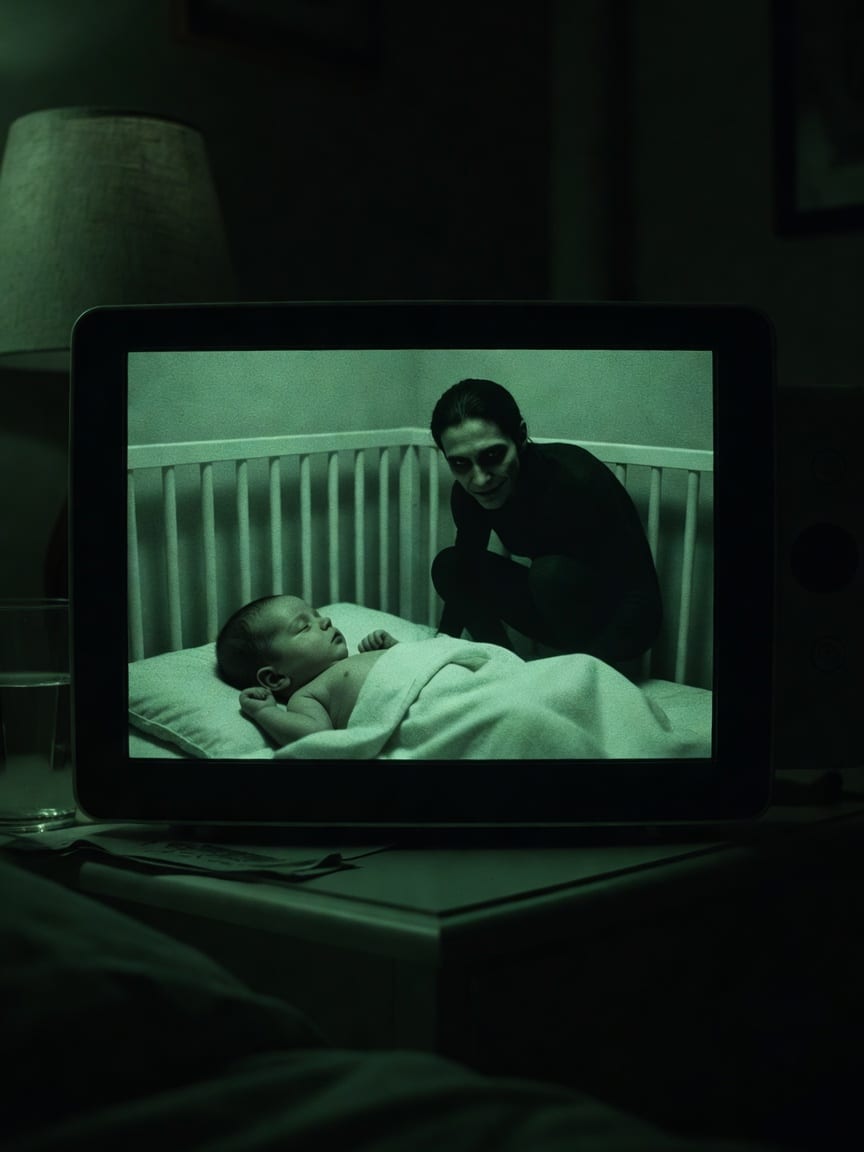
I was watching my one-year-old son Theodore on the baby monitor one night when he slowly sat upright, staring into his room's far corner. My stomach clenched as a grey, hunched shadow began to coalesce in that empty space, then subtly shifted, looking directly back into the camera.
My daughter's voice memo recorded a man's voice in her bedroom. No one else was home.
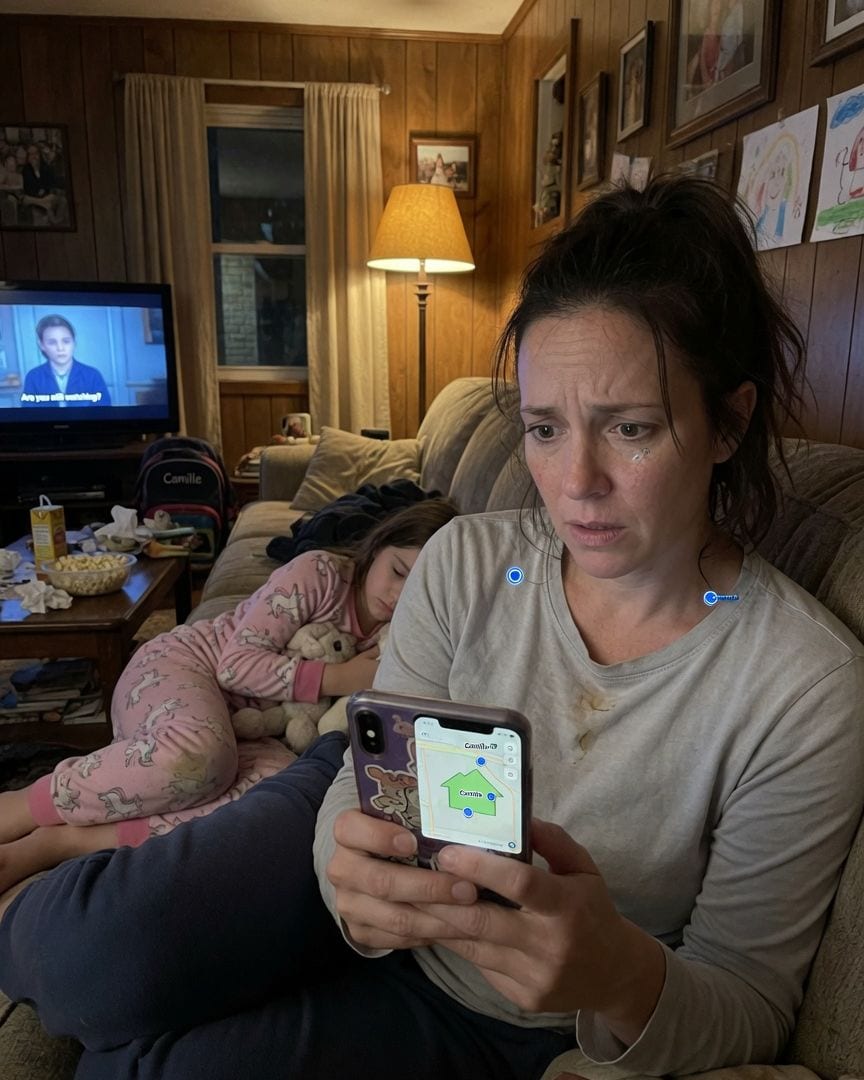
Curled on the sofa, I watched my eight-year-old daughter Camille sleep, her old smartphone in my hand. I idly checked its Find My Phone app, expecting to see her blue dot inside our house. Instead, a second identical blue dot paced silently outside, tracing the perimeter of our home.
My baby monitor plays a lullaby from an empty room. But the floor holds a rocking chair's deep, decades-old track.
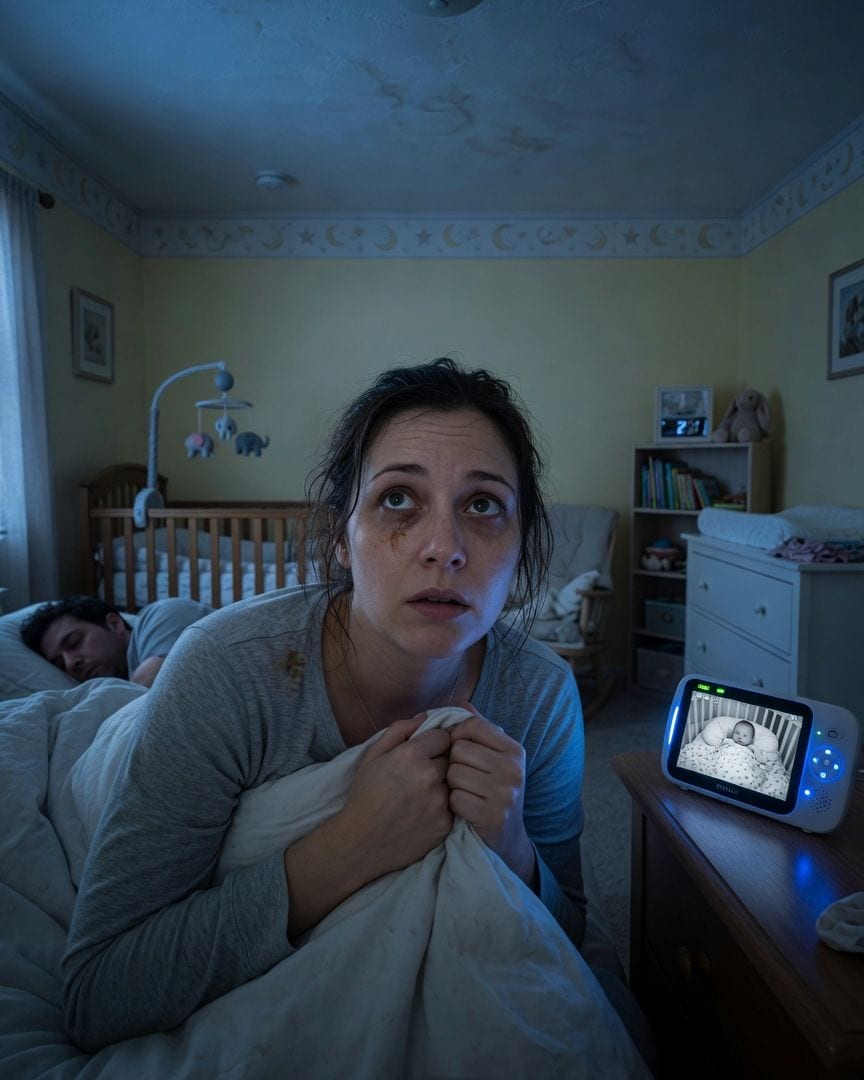
Every night, my baby monitor plays a lullaby and a rhythmic rocking chair creak from Emily's room. But the camera feed always shows her tucked in her crib, completely alone, in a silent, empty nursery. The sound is impossibly clear, as if the speaker were right there, even though nothing is.
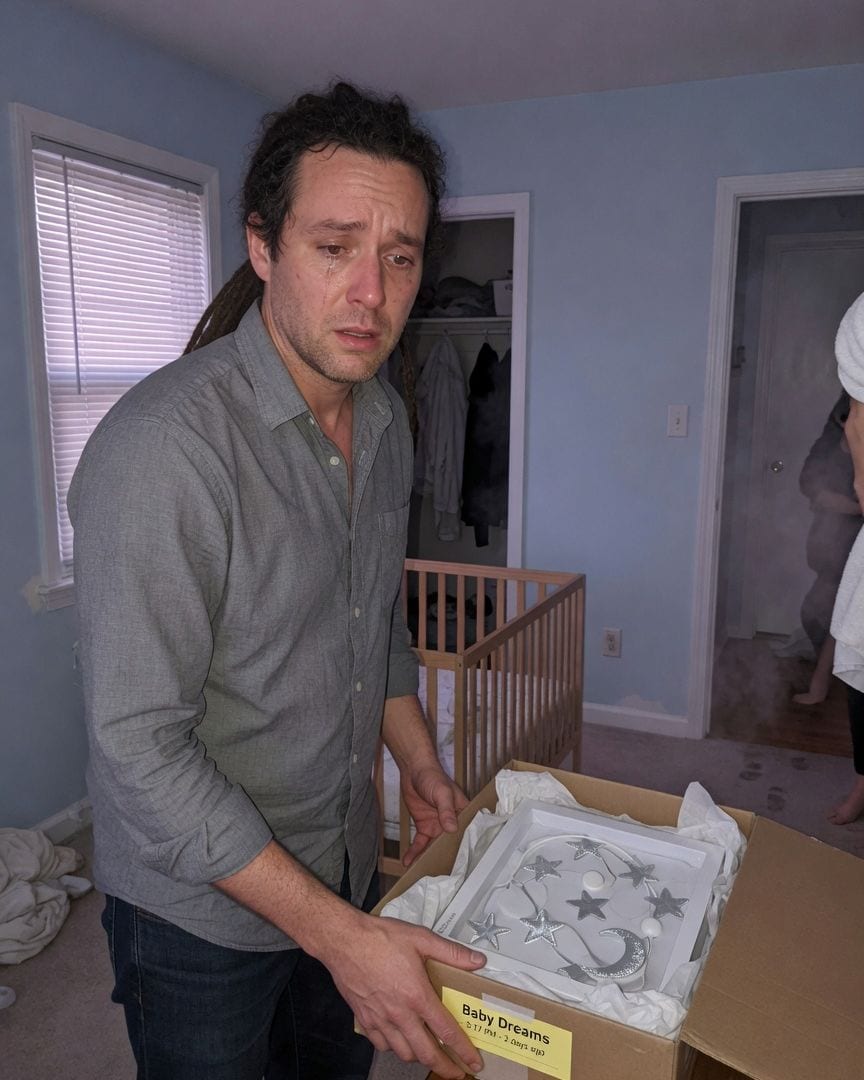
My wife thanked me for the pale blue nursery. We have no child. She described the mobile I'd only imagined, then asked when it would arrive.
Sylvia returned exactly one year after her disappearance, a miracle I could barely believe. But her first words about a nursery I'd only ever imagined, complete with a specific mobile, sent a shiver down my spine. That mobile, a private fantasy, arrived two days ago, and she just asked why it was late.
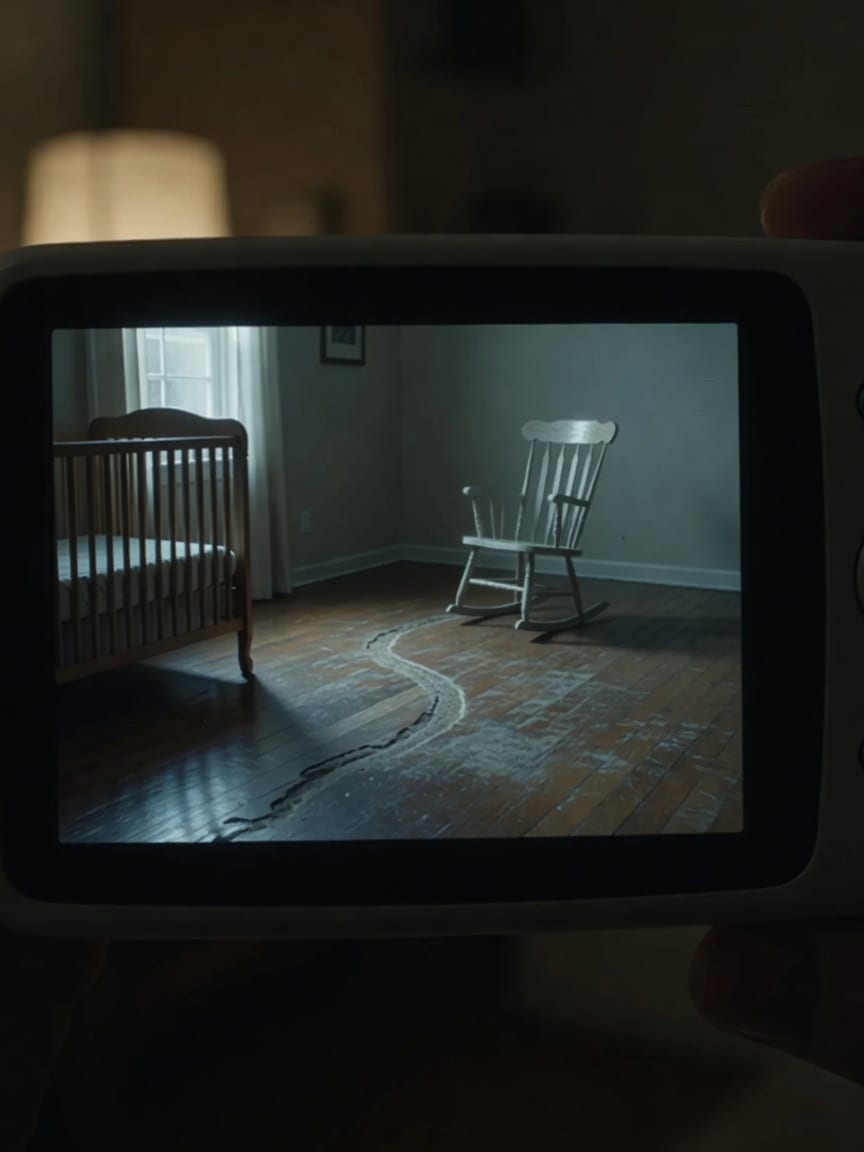
My baby monitor hums a lullaby at 2 AM. I hear a rocking chair creak. The camera shows my daughter's room empty, every night.
Every night, my baby monitor hums a gentle lullaby and a rhythmic creak, as if a rocking chair is in Lily's nursery. But the room is always empty, the monitor's camera shows nothing, and we don't even own a rocking chair. Then I found a newspaper clipping from sixty years ago, detailing a child's disappearance from our house.
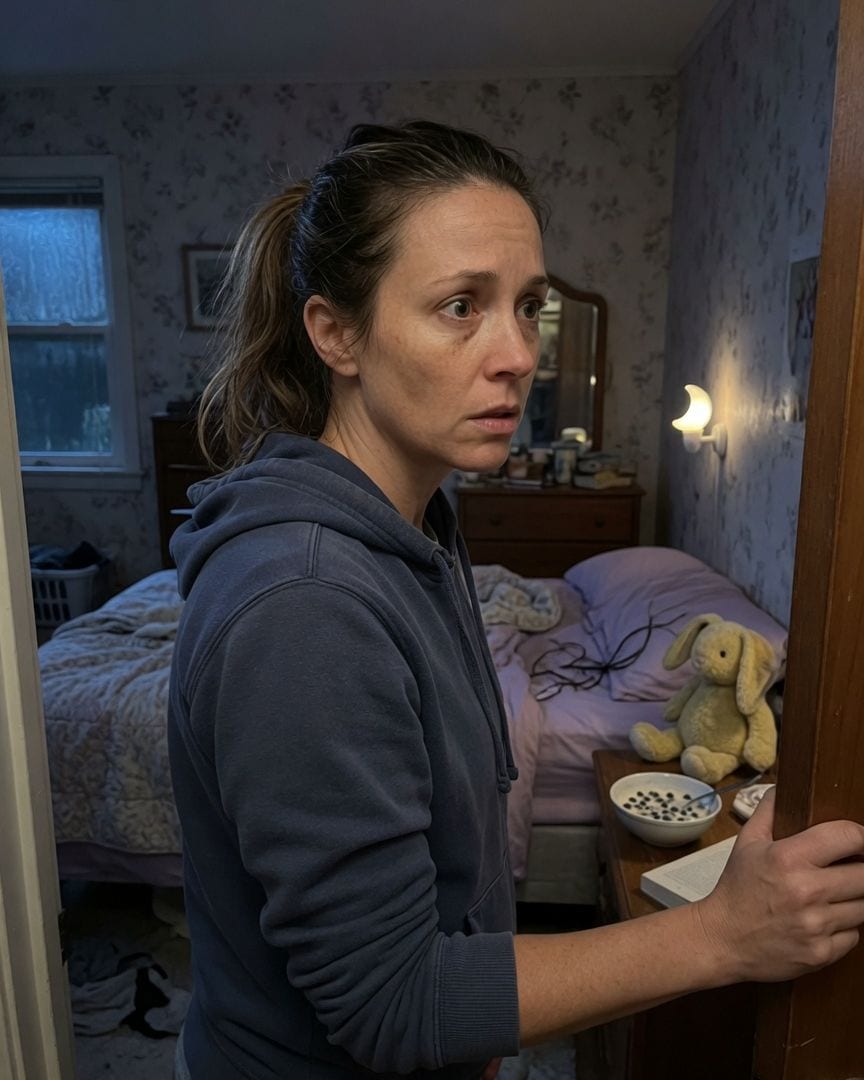
My daughter came home, then described a dream I'd had the week she vanished. I told no one that dream. She asked what it meant.
My daughter, Camille, returned home after four terrifying days missing. As I tucked her into bed, she quietly recounted a vivid dream about a drowned orchard and a heavy wooden door. It was *my* dream, a private terror I had told no one.