A Navy records reviewer found a Cold War captain’s own hand-drawn map, marking his submarine’s location two years after it vanished.
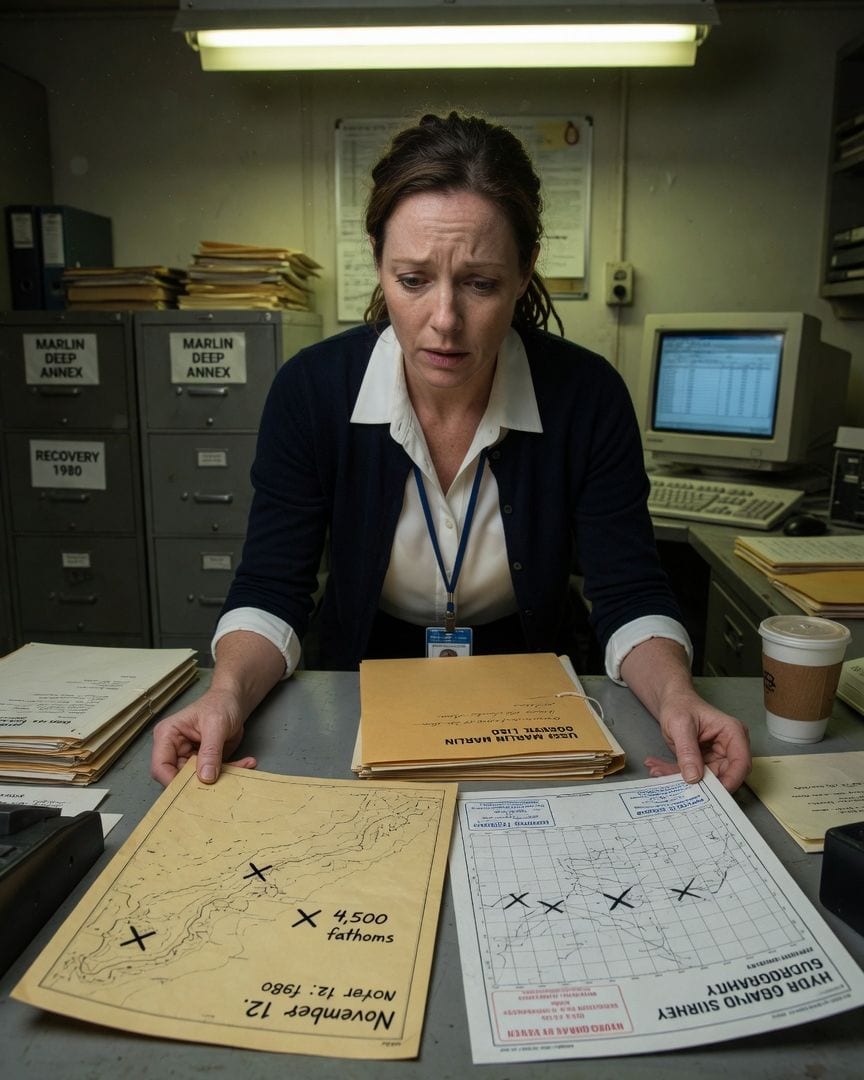
Catherine Berrigan reached for the file, the heavy binder cold against her fingers in the quiet chill of the archives. USS Marlin Deep, she read, a name synonymous with one of the Navy’s enduring mysteries. November 12, 1978.
Lost with all hands. No wreckage, no answers. Just a sealed file, untouched for decades, until now.
As a Navy records reviewer, Catherine was accustomed to tragedy, to the meticulous cataloging of human loss. But the Marlin Deep file immediately felt different. Inside, tucked neatly at the front, she found forty yellowed letters.
Dorothy Caldwell, they were signed, the captain’s widow. Each one a desperate plea, dated over years, asking for her husband’s body, for closure. Forty letters, forty unanswered cries.
Catherine felt a familiar ache of professional integrity; the Navy had failed this woman.
Past the letters, a single sheet of paper, crudely hand-drawn. It was a bathymetric map, rendered with a pencil, depicting a deep ocean trench, barren and featureless save for a stark ‘X’ and a depth annotation: “4,500 fathoms.”
Beside the X, a date, written in blocky, confident script: November 12, 1980.
Catherine frowned. The Marlin Deep was declared lost on November 12, 1978. Two years later. How could someone have charted its location two years after it vanished?
Her gaze flicked to the captain’s log, its pages still smelling faintly of salt and old paper. She found Captain William Caldwell’s final entries, his signature, his distinct, angular handwriting. It was unmistakable.
Identical to the script on the hand-drawn chart. The discrepancy was a physical weight in her hands, a cold stone settled in her gut.
Someone knew exactly where he was, two years after he was lost, and still, forty letters went unanswered.
Catherine’s rational mind immediately began to search for an explanation, running through the possibilities like a diagnostic checklist. A clerical error? A posthumous discovery by another vessel, somehow delayed in reporting? A cruel hoax, inserted into the official record?
Her fingers, usually steady, trembled slightly as she pulled the Marlin Deep’s official logbooks from the metal cabinet behind her desk. The hum of the fluorescent lights above her seemed to amplify the silence in the room.
She laid the logbooks open, comparing the looping, confident script of Captain Caldwell’s final entries to the stark, angular hand on the crude chart. No mistake there.
The signature was his, the unique flourishes around the ‘W’ in William, the sharp curve of the ‘C’ in Caldwell. They were identical. This was the captain’s hand.
Next, she accessed the Navy’s extensive recovery records for 1980. Days melted into weeks on the screen before her. She scrolled through sonar data, deep-sea exploration reports, vessel manifests, even historical weather patterns. Nothing.
There were no search operations in the Marlin Deep area, no new sonar pings that might indicate a wreck, no official discovery of a submarine, lost or otherwise.
The X on the hand-drawn chart marked a spot in an un-surveyed, deep-water trench, far from any known shipping lanes – a place the Navy wasn't even looking, wasn’t scheduled to look, for decades.
She opened Captain Caldwell's personnel file. She searched for any unusual behavior, any notes on his mental state prior to the final voyage. His record was impeccable: a model officer, steady, reliable, a man whose judgment was rarely questioned.
There was no hint of instability, no eccentricities that might explain a personal, unsanctioned cartographic endeavor. The ordinary explanations dissolved like smoke, leaving only the impossible fact of the chart.
The dread was quiet, insidious, a cold certainty that something fundamental was wrong not just with this file, but with the entire official history it claimed to represent.
The room around her, usually a comforting cocoon of order, seemed to press in, vast and full of unspoken secrets.
Catherine continued to dig, pulling every related document she could find from the Marlin Deep's annexes, determined to find the missing piece, the rational explanation that surely existed.
Tucked into a sealed sub-folder, marked 'HYDROGRAPHIC SURVEY, CLASSIFIED,' she found another chart. This one was not hand-drawn. It was a crisp, printed hydrographic survey map, officially stamped and coded, dated 1995.
On it, the exact same X marked the Marlin Deep, with the same depth coordinates. The official stamp, bearing a defunct Navy hydrographic unit's insignia, was unmistakable. Naval Survey & Observation Group 7.
Seventeen years after the sub was lost, and fifteen years after the Captain's own impossible chart, the Navy had officially, meticulously, marked its location. And still, nothing. Still Dorothy Caldwell’s letters piled up, unanswered.
Still the official record declared the sub lost without a trace.
Catherine Berrigan stared at the two charts side-by-side: the crude, hand-drawn one from 1980 by Captain Caldwell, and the crisp, official survey chart from 1995 with the identical 'X'.
The official stamp on the second chart, dated seventeen years after the Marlin Deep was lost, burned in her vision, an undeniable proof that the Navy knew, and still never answered Dorothy Caldwell's letters.
The official 1995 chart changed everything. Catherine used her security clearance to trace its origin.
The hydrographic unit it came from, Naval Survey & Observation Group 7, had been decommissioned in 2001, its records scattered across various facilities, half-digitized, half-rotting in forgotten basements.
She spent days sifting through old manifests, microfiche, and digital archives, following a faint, bureaucratic trail that seemed designed to obscure rather than reveal.
She found coded cross-references in the unit's old logs to 'Operation MARLIN-OBSERVATION,' a designation that appeared sporadically, always paired with a 'status: stable' entry. No other details, no mission parameters, no summary reports.
Just the code, the name, and the unsettling status. It was a ghost in the machine.
She compiled a list of personnel from NSOG-7. Most were deceased or had simply vanished from public records, their names evaporating into the ether of forgotten federal employees. But one name stood out: Kenneth Kowalski, a cartographer.
He appeared to be alive, residing in a small coastal town in Maine.
Catherine drove the seven hours to his address, the coastal highway winding past gray stretches of ocean, the air growing colder with every mile. Kowalski’s house was weathered, its paint peeling like old skin, overlooking a desolate, windswept beach.
He was a gaunt man with nervous eyes, and his hands, when he opened the door, seemed too large for his frail frame.
"Mr. Kowalski? My name is Catherine Berrigan. I'm with Navy records." He squinted at her, his eyes darting to the rental car in his driveway. "Records? What records?" She introduced herself properly, explaining her work on the Marlin Deep file.
He denied any knowledge of Operation MARLIN-OBSERVATION, or the Marlin Deep. "Never heard of it," he rasped, his voice thin like dry leaves. "I was just a draftsman. Drew maps. Nothing special."
His hands trembled as he spoke, and his gaze kept flicking to the window, as if expecting someone, or something, to appear from the empty stretch of beach.
Catherine, methodical, produced copies of the charts, the official stamp, the coded entries. Kowalski's face, already pale, seemed to drain of all remaining color.
He looked at the charts, then at her, then back at the charts, a flicker of raw fear in his eyes. "I… I know nothing," he insisted, his voice barely a whisper. "You're mistaken."
Then, abruptly, he closed the door, the heavy oak thudding shut, leaving Catherine on his porch, the sea wind whipping around her, chilling her to the bone.
The dread was no longer a historical anomaly; it was a live, current fear she had just witnessed in the eyes of a man who clearly knew more than he was saying.
Hours after Catherine returned to her office, the fluorescent lights humming a dull comfort, her phone rang. It was Kenneth Kowalski. His voice was tight with fear, ragged with a desperate urgency that cut through the phone line.
"They know you were asking," he rasped. "They watch the files. They watch the people who ask. It's a system, not a mistake. You have to stop."
He mentioned 'the filing,' his voice dropping to a panicked whisper, and warned her that some things, once entered, cannot be unwritten. Then, with a choked sound that might have been a sob or a gasp, he hung up.
Catherine felt a prickle of unease spread across her skin, a cold sensation that had nothing to do with the archive’s regulated temperature. Back in her office, subtle anomalies began to surface, like weeds pushing through pavement cracks.
Files she’d meticulously organized that morning, tabbed and color-coded, were slightly out of place on the shelf, not enough to trigger a re-shelving, but enough to catch her eye, to register as an intentional, unsettling shift.
Her computer monitor flickered erratically, not a power surge, but a momentary distortion of the display, the pixels dissolving into static for half a second before snapping back.
She caught herself glancing at the security camera in the hall outside her office; it seemed to track her a little too closely when she was near the Marlin Deep file cabinet, its small red eye blinking with an unnerving regularity.
One evening, working late, alone in the vast silence of the archives, she heard a faint, rhythmic clicking sound from the vents above her desk, like a very old, slow printer.
It stopped the moment she looked up, the silence rushing back in, thick and immediate.
The dread shifted from an intellectual puzzle to a personal threat. She was no longer just investigating; she was being observed.
The silence of the archives, once a comforting cocoon for her work, now felt vast and oppressive, as if the very air was listening, holding its breath. The walls themselves seemed to lean in, watchful.
Driven by Kowalski’s desperate warning and her growing unease, Catherine returned to the Marlin Deep file, now less an inert object and more a pulsing heart of unease.
Deep within a sub-folder marked 'COMMUNICATIONS, ENCRYPTED,' she found a decrypted message, a terse, coded report from the 1995 'Observation' unit. It read: 'TARGET: MARLIN-DEEP-01. STATUS: STABLE FILING CONFIRMED. NO RECOVERY REQUIRED.'
The words chilled her to the bone. No recovery required. The cold precision of the language was horrifying.
She printed the message, her hand steady despite the tremor in her gut, and took it directly to her supervisor, Lars Sutton, a stoic, long-serving chief of declassification. His office was sparse, efficient, like the man himself.
No personal touches, no clutter, just the clean lines of a desk and a chair.
Catherine laid the documents on his desk: the two charts, the coded message. “Chief Sutton,” she began, her voice low, measured. “This isn’t a lost sub. It’s… something else. And the Navy knew.”
Sutton didn't flinch. His expression remained unreadable, his eyes fixed on the message. He picked it up, his fingers brushing the paper, then set it back down. “Berrigan,” he said, his voice calm, flat. “This is old Cold War intelligence.
Misfiled. Ghost operations, you know how it is. We had dozens of these.”
Catherine pressed him, unwilling to let the convenient explanation stand. “The handwriting, sir. Captain Caldwell’s. And the official stamp on the 1995 chart. Why were Dorothy Caldwell’s letters never answered?”
Sutton sighed, a long, slow exhalation that seemed to carry the weight of decades. He looked at her, his eyes holding a depth she hadn’t noticed before, a quiet understanding that was more unsettling than any anger.
“Some things aren’t lost, Berrigan,” he said, his voice dropping to a near whisper, barely audible above the hum of the old building. “They’re… cataloged.” He paused, then continued, his gaze unwavering. “And the Captain… he was the first entry.”
He explained, not with malice, but with a weary, almost practiced acceptance, that Caldwell, after the sub was 'filed,' briefly returned or was compelled to record its location. The hand-drawn chart was his 'report.'
The Navy's silence wasn't an oversight, but a policy: you don't recover what has already been accounted for, already been… filed. The Marlin Deep wasn't a wreck; it was a record.
Shaken by Sutton's chilling admission, Catherine retreated to her office. The fluorescent lights hummed, casting long, stark shadows across her desk. The implications were enormous, terrifying. The Marlin Deep was not a tragedy; it was a data point.
And Captain Caldwell, not a victim, but a… recorder. The knowledge settled over her like a shroud, heavy and cold.
She stared at the file, now a living document, its pages humming with a quiet, insidious truth. She felt a desperate urge to understand the full scope of this 'filing' system, this silent, pervasive alteration of reality.
She picked up the original Marlin Deep file, turning it over in her hands, her fingers tracing the worn edges of the cover.
She noticed a faint, almost invisible seam in the back, a subtle anomaly in the otherwise pristine binding.
Prying it open, her nail catching on the stiff paper, she found a supplemental, handwritten ledger, unmarked, tucked into a hidden pocket. It was a list of names, dates, and locations, all marked with similar 'X's.
Many were known disappearances: ships, aircraft, even small units of personnel, all recorded as 'filed.' The dates spanned decades, some unsettlingly recent, creeping closer and closer to the present.
Her finger traced down the list, a growing dread tightening her chest with each familiar name. Near the bottom, among more recent entries, her finger froze.
Plainly written, in a neat, official hand, was her own service number, 'BERRIGAN, C. - Observer Status - Current.' Below it, a date: August 2023. Just three months prior. She hadn't even opened the Marlin Deep file until this week.
She felt the cold weight of the file cabinet behind her, the silence of the archives suddenly vast and personal, not just around her, but within her. The very air in the room felt thick with unseen eyes.
Catherine confronted Sutton again, the ledger clutched tight in her hand, the paper crinkling under her fingers. He was calm, unbothered, sitting behind his desk as if expecting her, as if this was the natural, inevitable next step.
He took the ledger from her, his gaze lingering on her name, 'BERRIGAN, C.' then slowly lifting to meet hers.
“You were always going to find it, Catherine,” he said, his voice devoid of emotion, a flat, practiced tone.
He explained that the 'secrecy machine' was not a cover-up for something external, not an alien, or a monster, or a rogue experiment. It was the process itself.
The 'Marlin Deep phenomenon' was a subtle, pervasive alteration of reality that 'filed' certain individuals and objects, making them appear lost, but actually re-purposing them as 'recorders' or 'observers' for the institution.
Captain Caldwell, after the sub was 'filed,' briefly returned or was compelled to record its location, becoming the first 'entry.' The chart was his 'report.'
Sutton leaned forward slightly, his eyes fixed on hers. He revealed that Catherine's own family, the Berrigans, had a history of 'sensitivity' to these shifts, a predisposition to being 'filed.'
Her declassification role was not accidental; it was a natural progression, a way to bring her into the system, to allow her to see what was always there.
The file isn't just about the Marlin Deep; it's the living record of the institution's ongoing, quiet work.
“The lost are never lost,” Sutton said, his voice barely a murmur. “They are simply… re-purposed. And the file is always open.”
Every planted clue clicked into place, not as separate anomalies, but as interlocking pieces of a vast, horrifying puzzle.
The impossible dates, Dorothy Caldwell's forty unanswered letters, Kowalski's terror, the coded 'observation' logs – it all fit into a horrifying, coherent system that had been operating in plain sight for decades.
The world had not been hiding a secret from her; it had been revealing itself to her, all along.
Catherine, now understanding the full, horrifying coherence, realized there was no escape, no fight. The institution wasn't malevolent in the traditional sense; it was a cold, patient, self-sustaining system that simply integrated anomalies.
It didn't need to be stopped, because it was simply… what is. She tried to discretely copy the ledger, her fingers flying across the keyboard, a desperate, futile gesture. Her computer locked.
The screen went blank, then displayed a single, plain text file titled 'BERRIGAN_C.log.' A new entry.
Sutton watched her from his office doorway, a faint, almost imperceptible smile on his face. He didn't need to speak. She was now fully 'filed.'
The realization hit her with the force of a physical blow: there was no exposing this. The evidence would be dismissed as delusion, and she herself would be re-classified, perhaps as 'unstable observer,' or worse, 're-purposed.'
The truth was too vast, too insidious, to fight. It wasn't a conspiracy; it was a quiet, fundamental truth of the world, documented by an institution that simply managed it.
She closed her laptop, the screen reflecting her own pale, changed face. The dread was that of absolute, inescapable knowledge. She knew the system now, and the system knew her.
There was no going back to not knowing, no undoing the fact of her own entry in the ledger. The silence of the archives felt less like a threat and more like a vast, patient embrace.
She walked out of her office, past Sutton, whose smile remained fixed, subtle. She was not free, but she was… aware. The world had shifted, and she was now part of its new, terrifying order.
Catherine Berrigan continued her work in declassification, her meticulousness now imbued with a different, colder edge. She processed files, knowing that some of them were not just historical records, but active documents of an ongoing, quiet process.
The old Marlin Deep file sat, seemingly innocuous, on a shelf in her office. But Catherine knew its pages were still being signed, by unseen hands, and by people like her.
She saw the subtle patterns now, the faint 'X's in other files, the impossible dates, the recurring names. The world had not changed; her perception of it had. The institution hummed along, unseen, unheard, always filing.
She answered emails, attended meetings, maintained her composure. But every interaction was filtered through the knowledge that the world was far stranger, and far more organized, than she ever imagined.
The records she manages are no longer just paper; they are a living, breathing testament to a truth nobody else sees.
Catherine sat at her desk, reviewing a new batch of files for the week, the fluorescent lights humming overhead. She opened a folder marked 'PENNISULA-INCIDENT-03.'
Inside, the first page was a blurry, grainy photograph of a coastal radar station, dated from the early 2000s. In the foreground, almost an afterthought, was a figure looking directly at the camera.
It’s Kenneth Kowalski, the reclusive cartographer she'd visited. His face was pale, his eyes wide with a familiar, terrified recognition, and in his hand, he held a small, folded piece of paper. He had been an observer too, perhaps.
She looked from the photograph to the blank wall opposite her, then back to the file. Another entry. Another name. She closed the folder, placing it neatly on the 'pending' stack.
She knew her own log is being written, too, somewhere in the quiet, unseen depths of the system. She just doesn't know what her next entry will be.
A week later, Lars Sutton, passing Catherine Berrigan's desk, notices she has a new, small, hand-drawn chart tucked beneath her blotter, marking an 'X' in a blank space on an old map.
He pauses, then moves on, humming faintly to himself. The file is still being signed.
If this one got to you
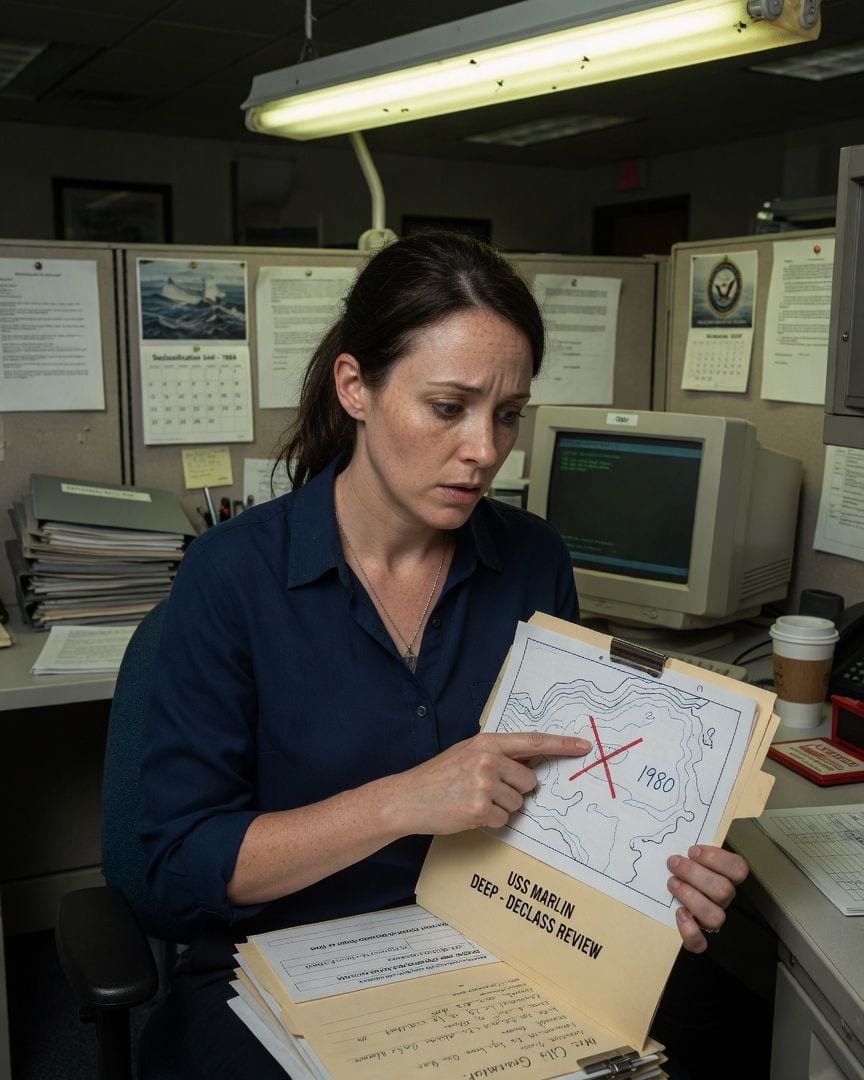
A declassification reviewer finds a dead Cold War submarine officer's report, filled out three years after his official loss.
Declassification reviewer Cass Berrigan understood the quiet anguish of widows, sifting through files like the USS Marlin Deep's. The submarine was lost in 1978, leaving behind Lily Granger's desperate letters, asking where her husband Arthur Thatcher's body was. But deep within the file, Cass found a chart of the wreck site, dated 1980—two years after the loss—in Thatcher's unmistakable hand. The dread solidified when she later uncovered an official report, also in his hand, dated 1981, stating 'Station Maintained. Status: Green.' How could a man officially dead for three years still be filing reports?
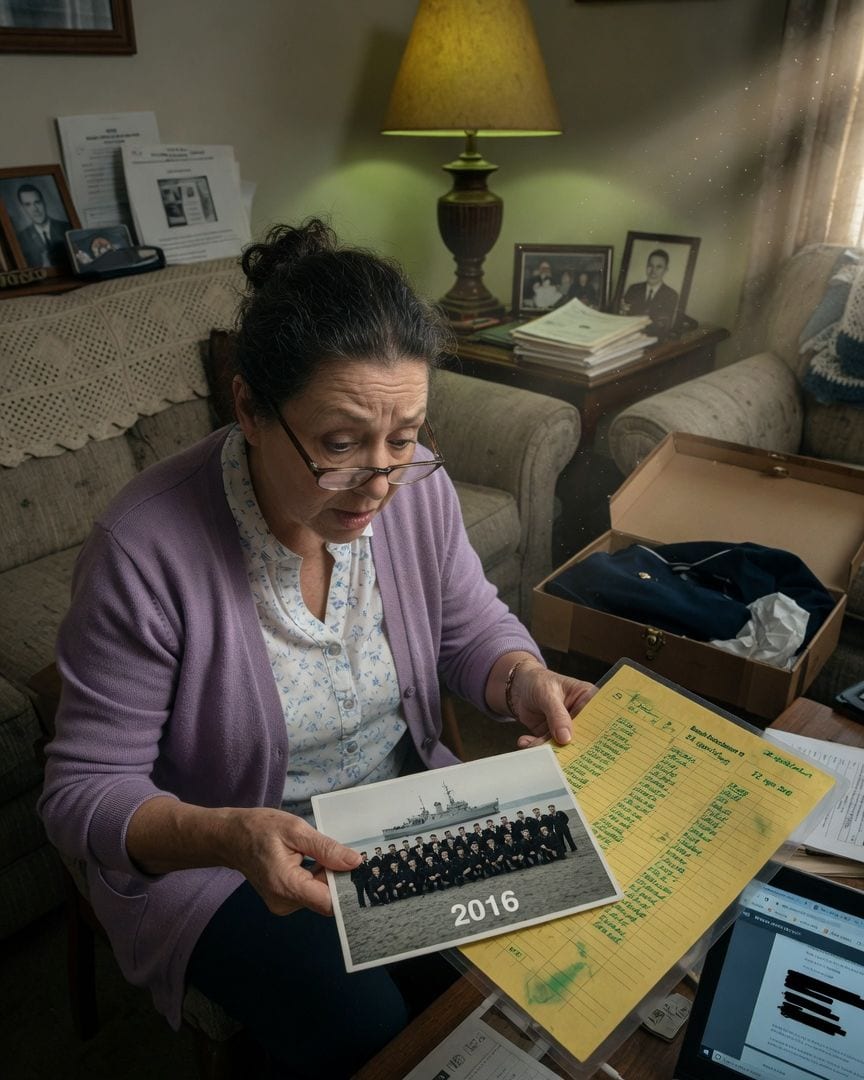
Marisol Frayne unlatched her husband's old footlocker. A photo inside showed his ship, pristine in 2016, three years after the Navy declared it lost.
Marisol Frayne, 62, finally unlatched her husband’s old footlocker in 2024, eleven years after the Navy declared his ship, the Kaskillan, lost at sea. Dust motes danced in the afternoon light as she lifted the lid, releasing the scent of old canvas and cedar. Inside, beneath his perfectly folded dress blues, she found a photograph of David and his crew standing before a pristine Kaskillan. Her breath caught: the photo was dated 2016, three years after the official reports claimed the ship vanished with all hands. Marisol's methodical search then revealed official logs showing a K-class vessel designation active in 2016, leaving a chilling void where her husband's fate should have been.
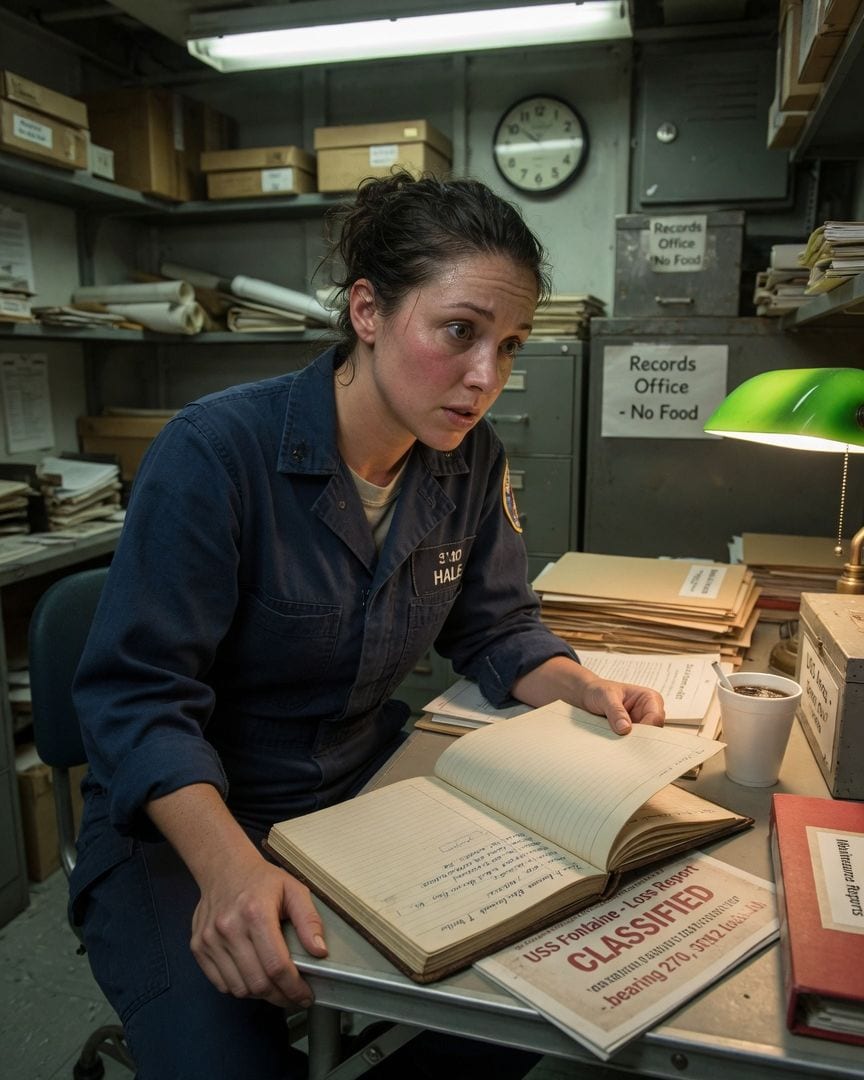
Petty Officer Hale needs a spotless record for her transfer. But the USS Ares sonar logs show an identical, impossible contact, logged to the minute, years apart, and tied to a classified loss report.
Petty Officer Sarah Hale needed a spotless record for her coveted shore duty transfer, a posting she'd worked five years to secure. Alone in the USS Ares sonar shack, three days out from San Diego, her midwatch was broken by an impossible contact: a close, slow echo holding perfect pace, invisible to radar, then vanishing. Her heart hammered, not from fear, but from the data's impossibility. When she found an identical entry in her own log from just one week prior, the cold dread tightened its grip. But the true chill settled when she unearthed decades of similar records, signed by other sonar officers, all showing the same impossible contact at 0212, off the port beam, for nineteen minutes, on the same ship, stretching back years—a persistent echo tied to a classified loss report.
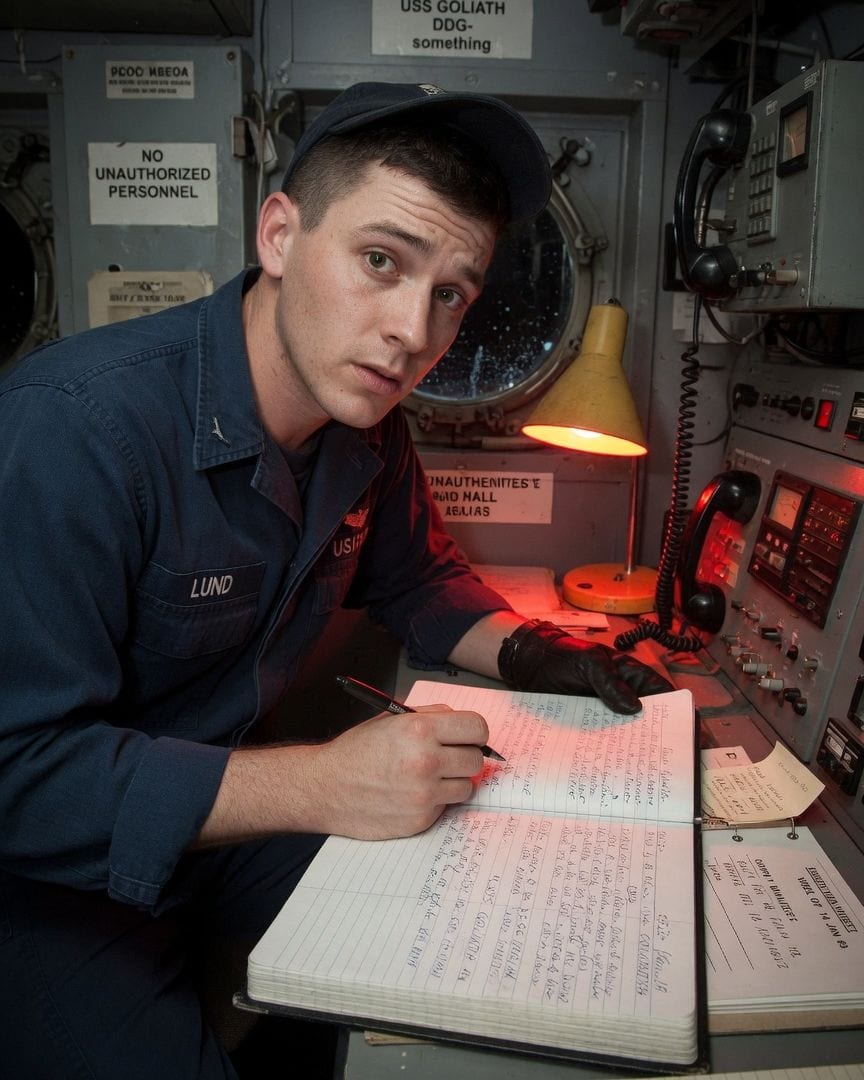
Petty Officer Lund heard his own captain's mayday: the Cold War USS Goliath was sinking, two hundred miles astern.
Petty Officer Marco Lund kept a lonely vigil in the USS Goliath's radio room, the destroyer battling the North Atlantic in deep winter 1983. Suddenly, a garbled mayday broke through: his own ship, his own captain, reporting they were going down two hundred miles astern. Though the bridge confirmed the Goliath was fine, the same chilling call came again an hour later, stronger and from the exact waters they had just crossed. Deeply unsettled, Marco began searching ship logs, eventually discovering a phantom entry: an identical mayday, logged a week prior, pressed into the very paper beneath his own.
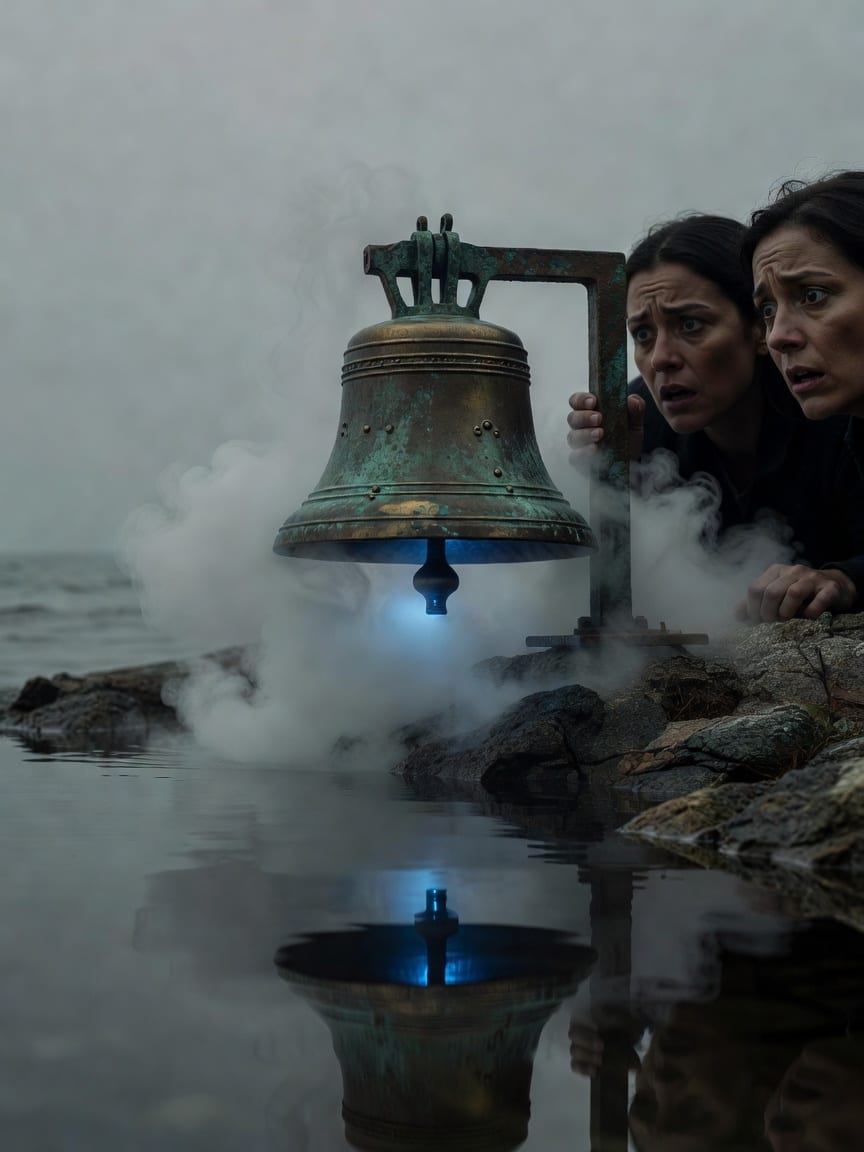
The fog bell on the point rings itself on still nights. The framed log at the yacht club lists eleven calm evenings it rang – each entry beside a boat that never came home.
Moving to a quiet coastal town, I found myself drawn to an old logbook at the yacht club. It recorded the fog bell ringing on flat-calm nights, each instance tied to a boat that simply vanished. Then, I found my own boat's name, 'The Osprey,' penciled at the bottom, marked with an unfinished, cryptic symbol.
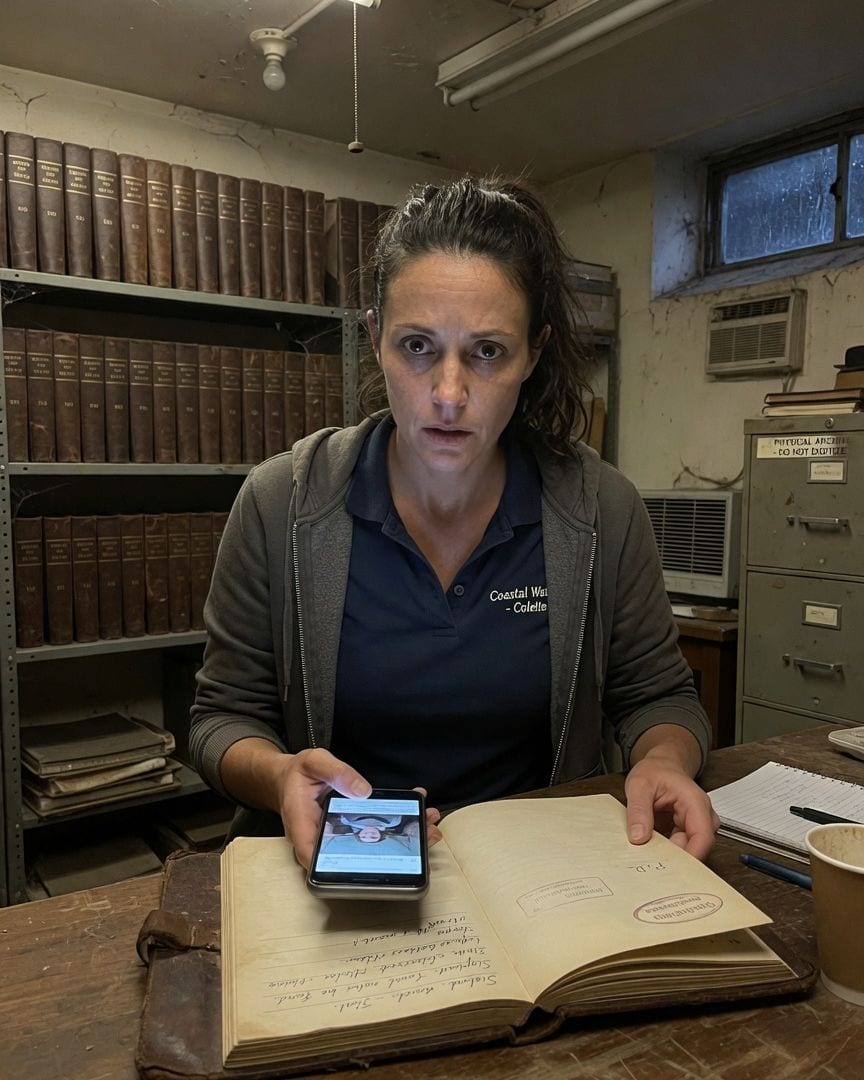
My coastguard log noted Sighting 9 again tonight, a light where no vessel showed. The old logs carry Sighting 9 off Skerry Point at 3:14am every tenth year since 1954, always 'nothing found,' always 'send no boat.'
On my watchtower night shift, the radar screen glowed green and the ocean was quiet. Then, a familiar light appeared off Skerry Point, exactly on cue, just as it had every tenth year for decades. But digging deeper, I found a hidden stamp in an old logbook: 'Operation Skerry. Status: Complete.' It left me with a chilling sense of finality.