Number 30's second water meter appeared last month. Its pipe runs under a house I cannot find.
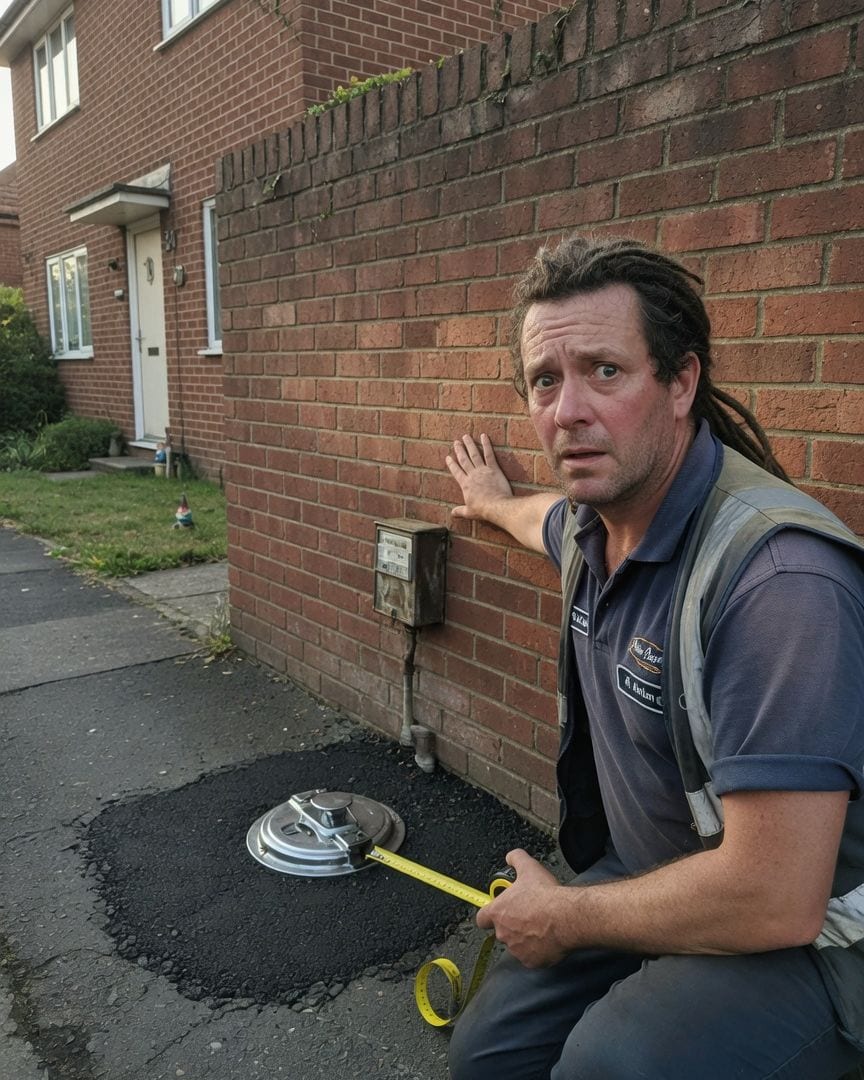
The late afternoon sun was already weak when I pulled my utility van onto Maple Street, route 14, last month. It was the usual run: check the meter, log the reading, move to the next house.
Number 30 was a perfectly ordinary brick semi-detached, the kind built in the early 50s, with a small, neat garden.
My log, meticulously kept for seven years, clearly showed one water meter, just like its twin, Number 32, right next door.
But as I stepped out of the van, my eyes snagged on something new. Barely a foot from the original meter cover, a perfect metallic circle gleamed against the cracked, old asphalt. Freshly set.
The pavement around it was a newer, darker patch, distinct from the faded grey of the rest of the sidewalk. I blinked, then checked my log again. Still one meter for 30 Maple.
I knelt down, my fingers tracing the cold metal. It was undeniable. I lifted the cover. Beneath it, a working stop-tap, a clear reading, and a pipe disappearing into the ground, definitely running back under the house.
The numbers on my current log for Number 30 showed two readings, both climbing, both active.
I stood up slowly, scanning the house, trying to reconcile what I saw with what I knew. Where the pipe would logically lead, there was only a solid, unbroken expanse of brick.
No window, no second door, not even a faint seam. Just a continuous, unyielding facade that stretched from the corner of the house to the existing front door. It was impossible.
Two meters meant two connections, two points of entry, but Number 30 stood there, utterly normal, utterly single-faced, refusing to explain its second hidden artery.
Back at the office, the fluorescent lights buzzed, making the discrepancy feel even more jarring. I pulled up the official blueprints for Maple Street, filed back when Eisenhower was president. Number 30, plain as day, showed one meter.
A standard, symmetrical layout. No annex, no odd additions, certainly no second entrance where a meter pipe might lead. I tapped the screen, then scrolled through the other houses on the block, then back to 30. Nothing.
Just one house, one connection.
The next day, I went back, armed with my surveyor's tape. I walked the perimeter of Number 30, counting windows, measuring the frontage against its perfectly identical neighbor, Number 32.
It was like trying to fit a square peg into a round hole. Visually, the houses were exact copies.
But my measurements of Number 30's frontage, from the corner to the edge of the original front door, were consistently a few feet longer than its twin.
The numbers simply didn't add up; that extra section where the second meter's pipe disappeared under the brick was there in my tape, but nowhere in my sight.
I ran my hand along the cool brick where that impossible second entrance should be, searching for any seam, any indentation, any sign of a doorway that had been bricked over. But there was nothing. Just solid, unyielding brick.
I even tapped it, knuckle against masonry, listening for a hollow sound. It was dense. Firm. Completely, maddeningly blank. The house stood there, mocking me with its ordinary appearance, hiding its impossible geometry behind a perfectly normal facade.
Frustrated, I pressed my palm flat against the brick, trying to feel for any slight vibration, any give. For a long moment, there was only the dull resistance of masonry, the coolness seeping into my skin.
Then, faint but insistent, I felt it: a persistent, low-frequency hum, a deep thrumming that seemed to vibrate through the very structure of the house. It was too steady to be traffic, too deep to be plumbing.
And then, from somewhere deep within the wall, almost imperceptible, a soft, rhythmic thump-thump-thump.
It wasn't a sound of distress, but a quiet, almost mechanical pulse that didn't match any street noise, or anything I’d ever heard from a house before.
I went back to Number 30 with a surveyor's tape the following Tuesday. The hum and the thumping from the wall had been dismissed by Joseph, my supervisor, as "old house settling," but they hadn't settled in my mind.
I meticulously measured the house's frontage, its side walls, the distance to the neighboring properties.
Comparing my findings to the blueprints I’d printed, a consistent discrepancy emerged: the house was either one room short or one room too long, depending on how you interpreted the 'missing' section. Its dimensions refused to reconcile.
It felt like standing in front of a simple math problem that somehow defied arithmetic.
The current residents, the Montgomery family—a couple with a young child—were home. I knocked, explained I was checking on the peculiar second meter. They seemed oddly distant, their smiles tight.
Their answers were vague, punctuated by long, uncomfortable pauses, especially when I mentioned the extra pipe. Mr. Montgomery just said, “Oh, that? Probably just an old line from when the street was built. Never bothered us.”
But his wife shot him a quick, uneasy glance. As I spoke, I noticed a child's bright red teddy bear lying near the impossible wall, its fur faintly disturbed, as if it had just been placed there.
It looked old, with a few worn patches. I leaned closer to get a better look, and for a fleeting second, the bear seemed to vibrate with the same faint hum I’d felt in the wall.
The air around it felt strangely still, almost heavy.
I tried to discuss my findings with Joseph Sterling again, laying out my measurements, the blueprint discrepancies, the two meter readings. He cut me off, his voice sharper than usual. "Monica, some houses are just quirky.
Log the anomaly, move on. Don't go chasing ghosts." His dismissal was too quick, too absolute, the kind of finality that makes you question why someone is trying so hard to shut you up.
I just stared at him, my mouth slightly open, the facts I’d gathered feeling heavy and useless in my hand.
Later that week, I noticed Joseph Sterling’s distinctive dark sedan parked two streets over from my own house, lights off. It was just sitting there, for over an hour, long after it was dark. Too far to be a coincidence.
My stomach twisted. The next morning, an anonymous, untraceable text message arrived on my phone. The screen lit up with three words: "Some things are better left uncounted." The sender was unknown, but the message chilled me to the bone.
Someone knew. And they didn’t want me looking.
The dread settled in. This wasn't just a quirky house or a bureaucratic error. It was something else. I knew Constance Prescott, the elderly neighbor who lived at Number 28 for over fifty years, might have answers.
Her house was a time capsule, and she’d seen it all. I walked over, armed with coffee and a carefully casual demeanor.
“Number 30?” Constance, a frail woman with sharp eyes that missed nothing, initially feigned ignorance. “Lovely family, the Montgomerys.” But I pressed, describing the impossible meter, the vibrating wall, Joseph Sterling’s warnings. I watched her carefully. Her composure finally cracked.
She sighed, a deep, weary sound, and the fragile porcelain figurines on her mantelpiece seemed to shiver in the sudden silence. “The house changes sometimes, dear. It always has.”
She recounted vague stories from her childhood, of families who “just moved away suddenly, no goodbyes, leaving everything behind.” She pointed to an old, faded patch of concrete on her own property line.
“That’s where the old one used to be. It moves.” Her voice dropped to a conspiratorial whisper.
She spoke of a local legend, hushed among the older residents, about the 'shifting house' at Number 30, a place that ‘takes’ things, and sometimes people, but always returns to normal eventually. The dread settled in deeper, colder.
The anomaly wasn’t new; it was a recurring pattern, a part of the street’s hidden history.
Constance, seeing my horrified realization, slowly shuffled into her dusty attic. The old floorboards creaked under her weight. She returned a long moment later, clutching something carefully wrapped in plastic. It was a brittle, yellowed newspaper clipping, fragile with age.
The date, printed faintly at the top, was 22 years ago. The headline screamed: 'FAMILY VANISHES FROM NUMBER 30 – MYSTERY DEEPENS.'
The article detailed the sudden disappearance of the 'Patterson family,' leaving all their belongings, including their car, behind. An accompanying grainy photograph showed a smiling family, their faces blurred by time and poor print quality.
The youngest child, a girl with wide eyes, clutched a distinctive, patched teddy bear. My breath caught in my throat. My mind flashed back to the Montgomerys' windowsill, just yesterday.
The exact same teddy bear, faded but unmistakable, sat there, its red fur slightly matted.
The implication hit me like a physical blow: the house didn't just make people vanish; it kept them, or their things, across cycles, recycling their presence into the next manifestation.
I raced back to Constance’s house, the newspaper clipping clutched tight in my hand. "The teddy bear," I choked out, pushing the article across her antique kitchen table. "The Montgomerys have it. The exact same one."
Constance’s face, already etched with old grief, seemed to crumple further. She nodded, a slow, weary motion. “I know, dear. It always reappears. It’s a calling card.” Her voice was barely a whisper.
“My own sister, Vera… she vanished from a house just like this, on this very street, 44 years ago. Not Number 30 then, but a house that… changed.”
She disappeared into a back room, returning with a small, leather-bound diary, its pages swollen and brittle. “Vera’s. She started writing in it just before she disappeared.” I took it, my hands shaking slightly. Vera's last entries were chilling.
She described a new room appearing in their house, a 'bonus' space that wasn't there before, slowly expanding. She wrote of feeling a strange, persistent 'pull,' a sense of disorientation, a constant feeling of cold in the air.
Her final entry, dated precisely 44 years ago, detailed finding a familiar teddy bear in the newly manifested room—a bear she recognized from an old neighbor's child who had vanished years prior—and then a strange, cold draft from a wall that wasn't there before, a wall that shouldn't exist.
The pattern became sickeningly clear: the house was a repeating geometric trap, consuming people across generations, and the items were passed on, macabre inheritances.
The Montgomerys were already 'inside,' their reality dissolving into the house's impossible geometry, just like Vera and the Pattersons before them.
Armed with Constance's devastating truth, I raced to Number 30. The early evening sun was already casting long shadows, but the house seemed to suck the light out of the air.
I banged on the front door, shouting the Montgomerys' names, desperate to warn them. Silence. The house felt utterly still, yet humming with an unseen energy, a low vibration that thrummed in my teeth.
I noticed the second meter cover, the one I'd found, was now slightly ajar, resting crookedly on its edge. A faint, cold mist, smelling faintly of ozone, rose from the gap, even though it was a warm afternoon.
The air around it was frigid, making my breath plume.
I grabbed a heavy wrench from my utility van, the cold metal a comfort in my hand. As I approached the impossible wall, where the 'missing' front door should be, the brick shivered, just for a split second.
A faint, distorted image of a child's pale, unblinking face briefly appeared in the wall, looking out at me, then vanished, leaving only the solid brick behind. The wall itself radiated an impossible cold, a silent scream of unnatural physics.
Realizing the house was actively shifting, consuming, I knew I had to sever its connection. With a desperate heave, I brought the wrench down, smashing the second meter, severing the pipe with a sickening crack of ceramic and metal.
The house shuddered violently, a deep, guttural groan echoing from within its impossible depths, as if something ancient and vast was in pain. The cold mist intensified, swirling around my ankles before dissipating into nothingness.
The next morning, the second meter cover was gone. The patch of fresh asphalt was also gone, replaced by the old, cracked pavement I remembered from my first visit. Number 30 looked completely normal, with only one meter now.
The Montgomery family was gone, their car still in the driveway, their belongings inside. Joseph Sterling arrived quickly, officially closing the case as an 'unexplained relocation,' his face grim but unyielding.
The street itself seemed to exhale, the oppressive stillness gone, replaced by the mundane sounds of everyday life. I drove my route in a daze, the dread a cold knot in my stomach that no amount of coffee could warm.
I returned to my meter reading routine, the familiar rhythm now a hollow shell. I passed Number 30, now just another house on my route, its history buried again, its dark secret invisible to all but me.
But two streets over, on Willow Lane, as I checked Number 12, I noticed a new, freshly paved patch in front of the curb.
A second water meter cover, barely visible, was set into it, its metallic gleam catching the sun. It's almost identical to the one I found at Number 30.
The official report listed Monica Foster as having resigned her position, citing stress and an immediate relocation. Joseph Sterling approved it without question.
No one at the company knew she'd left a note on her desk, a single sentence scrawled on a blank water bill: 'It wasn't just Number 30.'
If this one got to you
I read the water meters on this street, and this month number 30 grew a second one in pavement that was solid last month — its pipe runs back under a front door I cannot find.
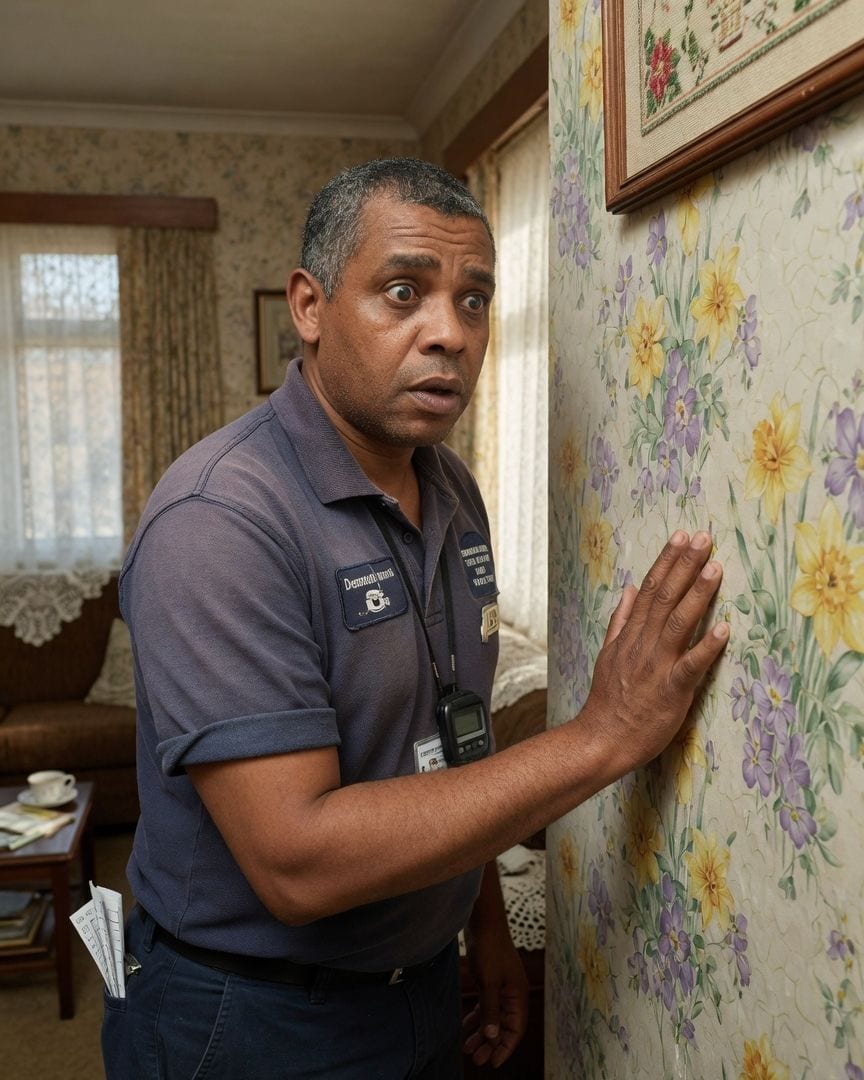
I'm Desmond Drummond, a city water meter reader, used to the predictable rhythm of my fifteen-year route. But this month, Mrs. Crane's house on Elm Street showed a second meter reading. It led to a new meter pointed at a blank brick wall, and later, to a hidden door behind her living room wallpaper where no door should exist.
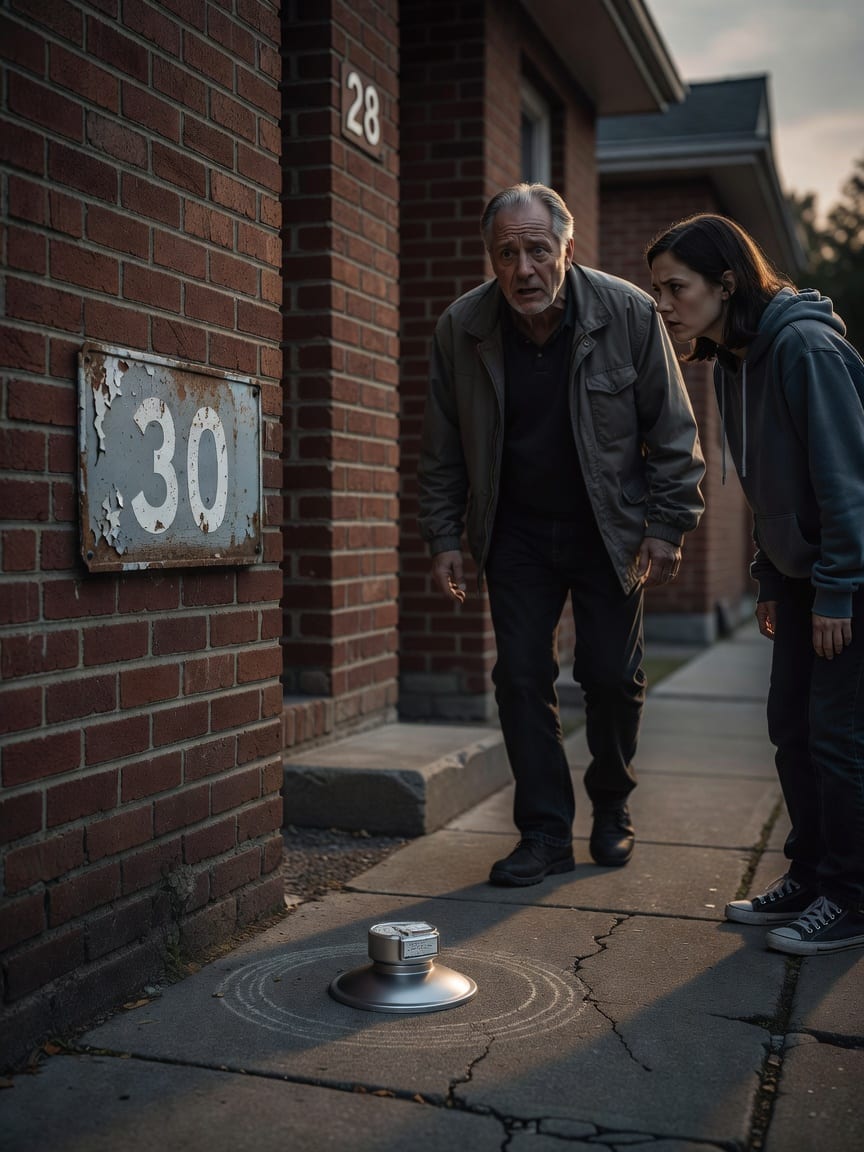
My log flagged two readings for Number 30. Its second meter, freshly set in solid pavement, fed a pipe under a house whose front door I cannot find.
Kneeling on Elm Street, my meter reader logbook showed two entries for a house that always had one. A foot away, a brand-new water meter was set into impossibly fresh asphalt. But Number 30, the house it was meant to service, had simply vanished, its space swallowed by its neighbors.
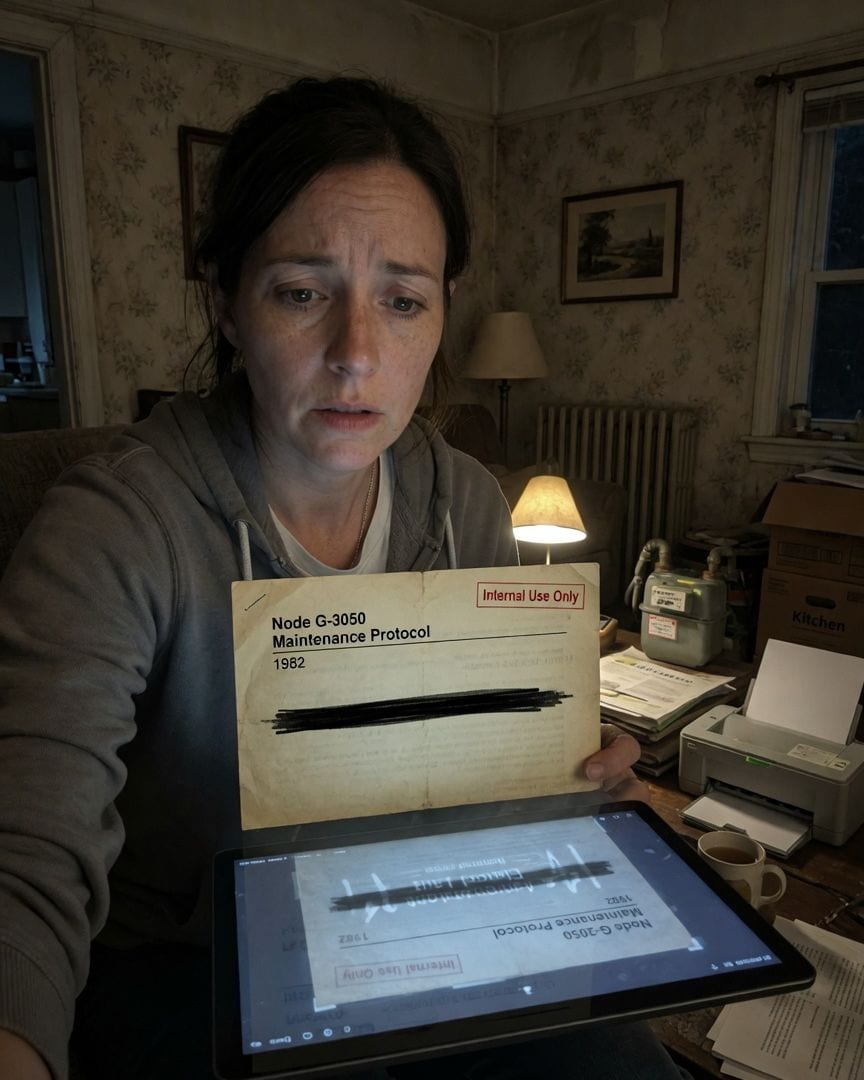
A different tenant every decade since 1949, each one gone — yet our gas meter's final reading comes back identical every time, though the house sat empty in between.
My new house at 14 Elmwood Lane was meant to be a fresh start, a normal home. But the gas bill was wrong. It showed my account, G-3050, active since 1949, with a meter reading of 3050 that had never changed, even when the house stood empty for decades.
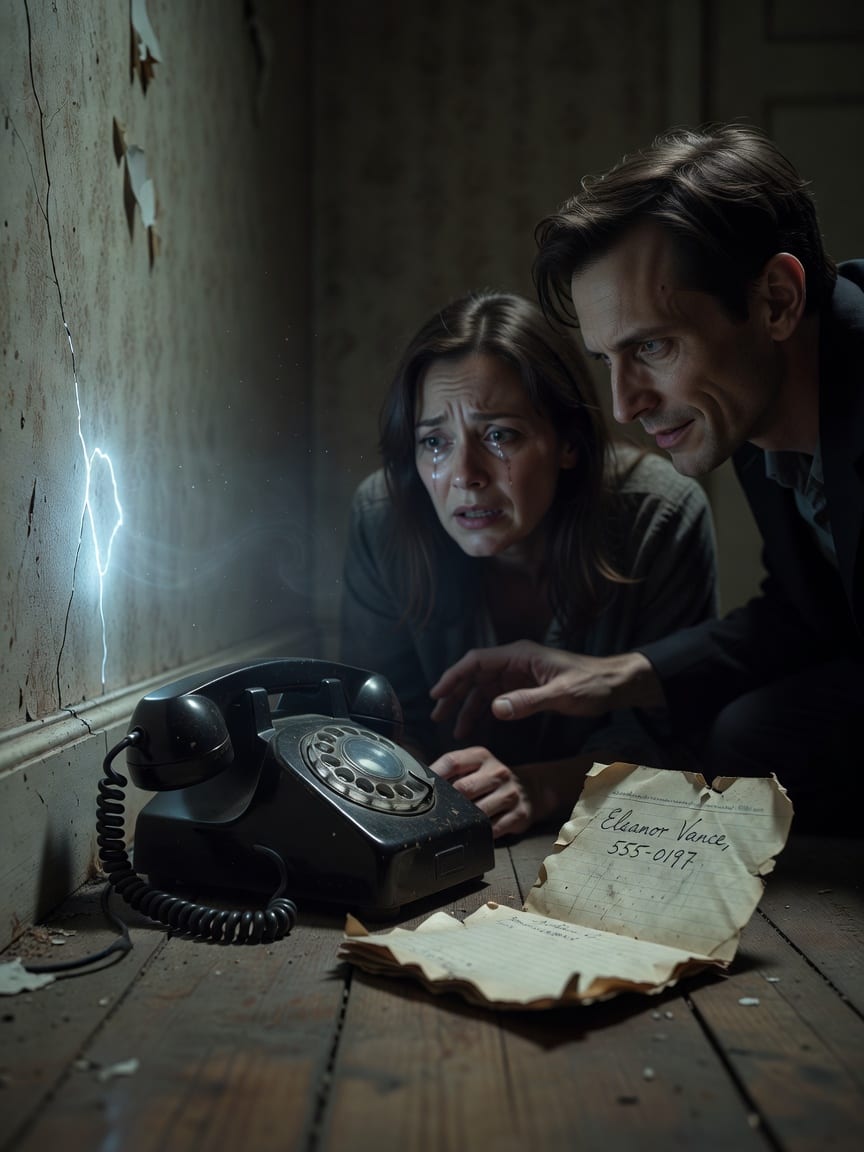
My house's walls ring when I dial a phone number from a 1974 directory. My neighbors said that directory was trash.
I was sifting boxes in my new house when I found an old 1974 telephone directory for my street. It listed my address, 12 Elm Street, under the name "Mr. & Mrs. Sheppard." On a whim, I called the faded seven-digit number. My cell phone rang, but a low, muffled sound also vibrated from the wall beside me.
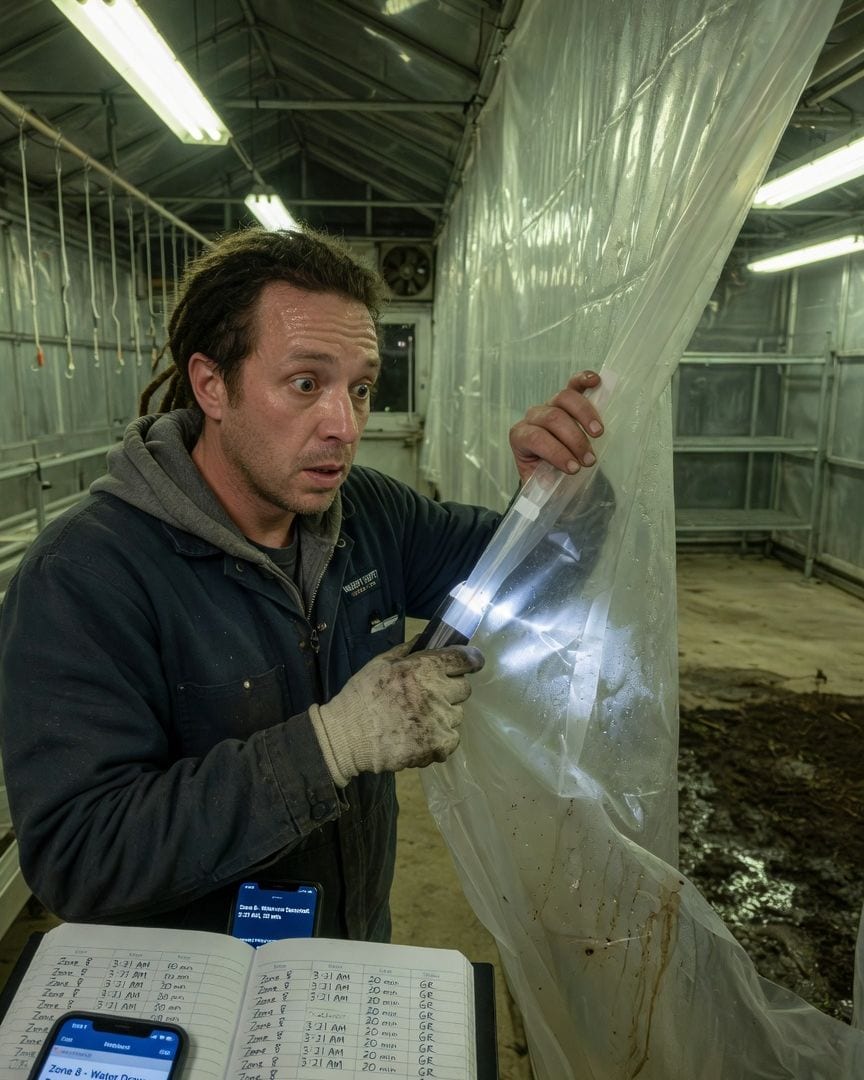
My own handwriting logs watering Zone 8 at 3:21 AM. Zone 8 has been sealed for fumigation for weeks, nothing growing.
My overnight watch at the commercial greenhouse is usually a predictable routine, ending with the logbook. But for the past week, an entry appears in my own handwriting, logging a 3:21 AM watering in Zone 8 — a section sealed for fumigation and completely empty. The system confirms the water flow, leaving me with an impossible fact.
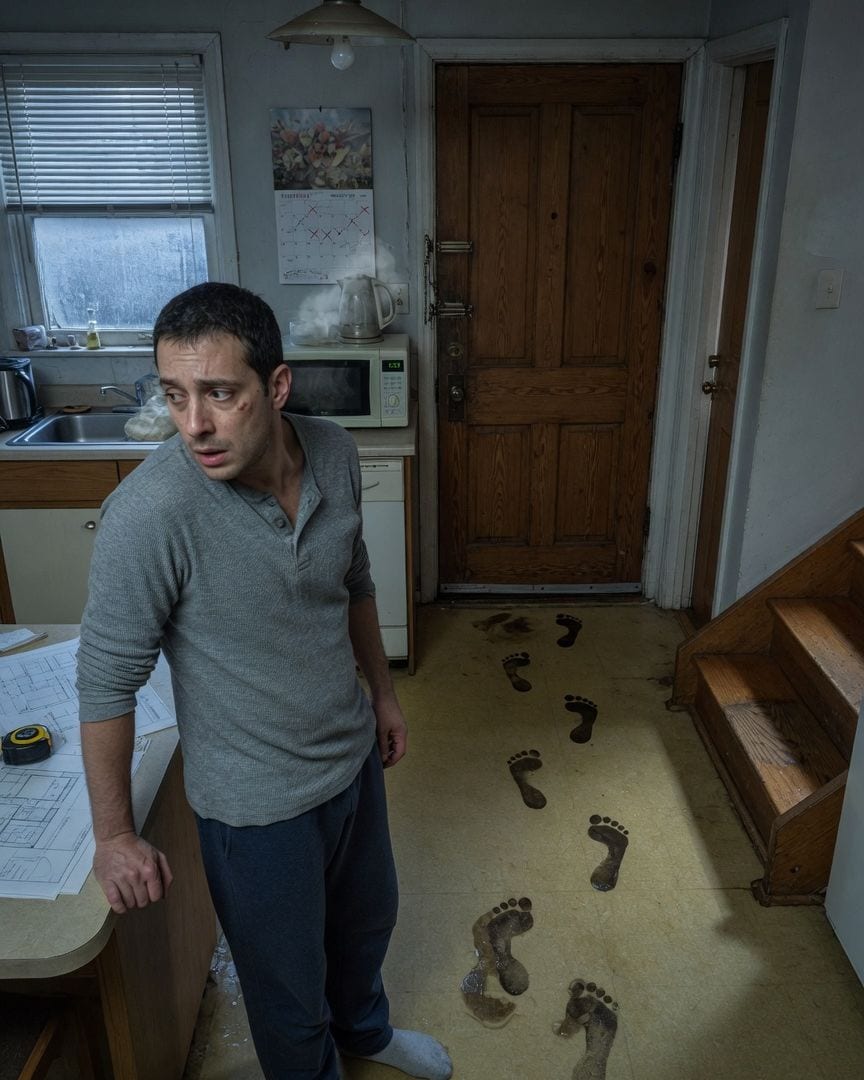
Bare wet footprints cross my locked kitchen floor every morning. Larger than mine, leading from the bolted back door to the stairs, fading from the toes as I watch.
As an architect, I notice details, but nothing in my old house's plans accounted for this. Every morning, wet, bare footprints appear across my kitchen floor, stretching from the bolted back door to the main staircase. They are larger than my own, colder than winter, and simply materialize from nothing.