An oceanographer found a 1943 submarine anchored at eleven thousand feet, its Cold War records still meticulously updated.
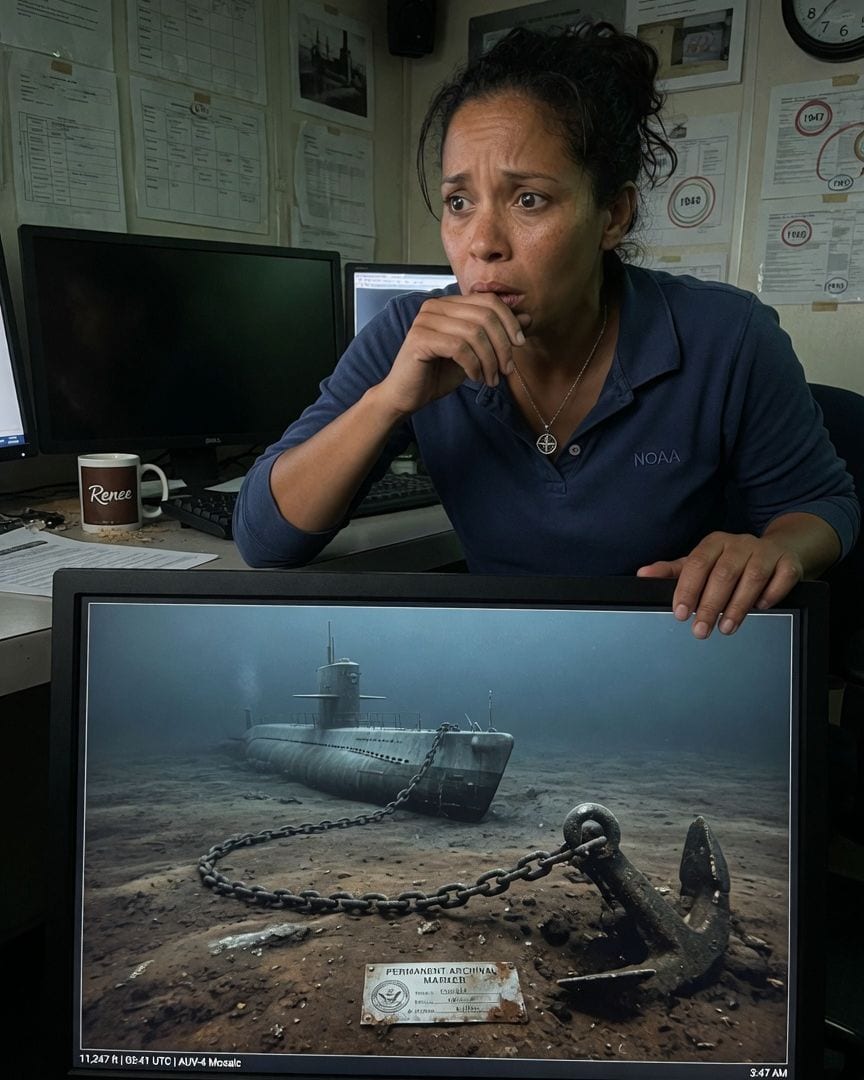
Marisol Beckwith watched the AUV mosaic coalesce on the main screen, the ghostly outline of a Gato-class submarine resolving from the abyssal murk. The USS Kettle Iron, lost in 1943, sat upright on the abyssal plain at eleven thousand feet.
Her initial elation, a career-defining discovery, curdled into a cold, immediate dread.
'Wait,' she murmured, leaning closer. 'Is that…?'
Everett Yates, the senior oceanographer, squinted at the monitor. 'Impossible.'
But it was there, unmistakable. The Kettle Iron’s anchor was down, its massive chain streamed out in a neat catenary across the dark sediment. You did not anchor eight thousand feet below crush depth.
The physics of it were a mockery, the intent an obscenity. It wasn't a wreck. It was a ship at rest, deliberately held. Marisol felt a chill that had nothing to do with the deep ocean’s temperature.
Somebody had set that hook to stay, and the ground tackle had held for eighty-one years.
The team worked through the night, processing data, cross-referencing naval archives. Renee Sterling, their data analyst, pulled up the Kettle Iron’s official service record. It was pristine, remarkably complete for a vessel lost so early in the war.
'Almost too complete,' Renee muttered, her brow furrowed.
Marisol leaned over her shoulder. 'What do you mean?'
Renee pointed to a series of entries, tracing them with her finger. 'Maintenance logs. Fuel requisitions. Even a commendation for a torpedo run against a destroyer… dated 1947. And 1952. And 1968.'
Marisol’s eyes widened. The Kettle Iron had disappeared in 1943. Eighty-seven men had vanished with it.
Everett scoffed from his station. 'Clerical error. Happens all the time with old files, cross-referencing gone wrong in dusty archives.'
But the entries weren’t sloppy. They were precise, stamped with official Navy seals, signed off by officers whose names Marisol recognized from other, active vessels.
The file didn't just contain records; it felt like a living document, meticulously updated long after every man on board was gone. The dread tightened its grip, coiling in Marisol’s stomach. This wasn't a mistake.
This was a narrative, being written. Someone, or something, was keeping watch.
Marisol, ignoring Everett’s dismissive comments, ordered a high-resolution deep-scan of the submarine’s exterior, focusing on the anchor and its connection to the seabed. The new images scrolled onto the main screen, sharper, clearer.
The anchor itself was a standard Navy stock, exactly as it should be. But its chain didn't just disappear into the sediment.
It was secured to a colossal, custom-fabricated deadman anchor, sunk deep into the abyssal plain, a structure far too large and complex for an emergency deployment.
And then, faintly, just beneath the chain's attachment point on the deadman, Marisol saw it. A small, sealed, official-looking plaque. The designation on it was blurred by depth and time, but its shape and placement were chillingly familiar.
It was the same type of 'Permanent Archival Marker' she’d seen in old documents, used only for highly sensitive, permanently retired assets. The Kettle Iron wasn't lost; it had been filed.
The 'Permanent Archival Marker' plaque haunted Marisol. She spent days cross-referencing obscure naval regulations and declassified documents, finding scant information. The markers were real, but their application to a lost submarine at such a depth was unprecedented.
She decided to go off-book. She knew Gerald Bennett, a retired naval records officer with a reputation for meticulousness and discretion.
She reached him on a burner phone, cautious. She explained her discovery of the Kettle Iron and its impossible paperwork. Bennett’s voice, usually a steady rumble, became tight. 'The Kettle Iron? That file’s clean, Marisol. Always has been.'
Marisol pressed. 'Not entirely. We’ve found entries post-1943. Maintenance logs, requisitions.'
A long silence stretched across the line. The quiet hum of the ship’s generators filled the void. 'That’s… highly irregular,' Bennett finally said, his voice barely a whisper. 'Beyond irregular. It’s impossible.'
He hesitated, then, with a sigh that sounded like a surrender, agreed to discreetly check a deeper, more restricted archive. He warned her, 'Some files, Marisol, are better left undisturbed. They have a way of noticing when they’re being opened.'
The conversation ended with an unsettling click. Marisol felt a shiver. The deep ocean was cold, but this was a different kind of chill.
Marisol and Renee continued their research, now digging into the history of other vessels that had vanished under strange circumstances.
They found a chilling pattern: a handful of other ships and aircraft, lost across decades, all with lingering, impossible paperwork, and some with oblique references to 'permanent archival procedures.' These cases were always deep-water, remote, or otherwise inaccessible.
As they pulled more threads, Renee’s screen flickered. 'Marisol, I’m getting some serious network activity.' She pointed to a diagnostic. The graph showed a sudden spike in outbound data. 'Someone’s monitoring our search queries. And not just us.
Our internal comms, our AUV telemetry… it’s a deep penetration.' Marisol felt a prickle of fear. Bennett’s warning echoed in her mind. They were being watched.
That night, reviewing a secure drone feed from their AUV, Marisol saw it. A brief, impossible shadow, too large, too indistinct, moved with unnerving speed near the Kettle Iron. It wasn't marine life.
It was a shape that resolved just enough to hint at a vast, deliberate presence, then vanished as the feed glitched into static. The monitor beeped, a sharp, insistent sound like something trapped. It had noticed them. It was waiting.
Gerald Bennett’s call came at 0300. His voice was hushed, strained, barely recognizable. 'Marisol, I found it. The Kettle Iron’s file. It’s… incredible.'
He described it in painstaking detail: a massive, meticulously updated dossier, not just for the ship, but for its entire crew.
'Entries for every man,' he whispered, 'their rotations, their commendations, even their next of kin being notified of their 'continued service.' All dated decades after 1943.' He explained a peculiar section: 'Archival Status Updates.'
It noted the Kettle Iron's 'secure location' and 'ongoing operational readiness.'
'This isn't a clerical error, Marisol,' Bennett insisted, his voice trembling now. 'This is a system. A protocol. It doesn't just lose things; it files them. Maintains them. And it’s not just ships. There are other categories. Places. Even… personnel.'
The implications crashed over Marisol like a freezing wave. The anchor, the impossible paperwork, the shadow. It all clicked into place, forming a coherent, monstrous whole.
'Who… who created this system?' she asked, her voice barely audible over the ship’s hum.
Bennett sighed, a ragged sound. 'That’s the part that really chills you, Marisol. It’s not about who created it. It’s about who maintains it. And that, it seems, is an ongoing process. And some of those files… they have names.
Names of people who were never officially 'lost,' but were simply… filed.' The phone clicked, dead. Marisol stared at the silent screen, a cold dread washing over her.
Marisol demanded more, her mind reeling from Bennett’s revelations. 'The pattern across decades, across classifications… what does it mean?'
Bennett hesitated, then agreed to send her a single, heavily redacted document he’d found buried deeper still: a declassified memo from the 1970s referencing 'Deep Archive Protocol' and a list of 'assets.'
The document arrived, a grainy digital scan, mostly blacked out. Marisol scrolled through the pages, her heart pounding. The sheer volume of redactions was a horror in itself, a testament to the secrets it held.
Then, on the last page, under a section labeled 'Personnel, Active Archive,' a name, despite the heavy black lines, was clearly, horrifyingly legible. It was her own. 'Beckwith, Marisol, Hydrographic Surveyor, Current Assignment: Philippine Sea.'
The words burned themselves into her vision, the pixelated letters searing her eyes. She wasn't just investigating the filed; she was already part of the file. The system hadn't just noticed her. It had always known.
Marisol showed the memo to Everett and Renee. Renee, pale and shaking, confirmed her worst fears. 'The network intrusions… I found a hidden sub-routine in our own vessel’s systems.
It’s been automatically transmitting all our survey data, including Marisol’s exact location and progress, to an unknown, secure server. This whole mission, it’s been… monitored.'
Everett, his face ashen, finally broke. 'I knew of the 'Deep Archive Protocol' in my early career, highly classified. We were told it was about securing sensitive lost tech, preventing it from falling into enemy hands. Not… not people.'
He explained the institution behind it wasn't a malicious enemy, but a vast, cold bureaucracy, dedicated to perfect record-keeping. 'It doesn't destroy, Marisol. It archives. It files.
The Kettle Iron was deemed significant, and so it was filed, its operational status maintained. Its crew… they became part of that 'operational readiness' file. The anchor was a symbolic act of filing, not a means of stopping it.
The paperwork is just the system’s way of keeping its records perfectly coherent. And now…' He trailed off, looking at Marisol with dawning horror. 'You found it. You saw the pattern. You became an entry.'
The final, chilling truth snapped into place. She wasn't an investigator. She was the next item for the archive.
Marisol stared at the AUV images of the Kettle Iron, the perfectly laid anchor chain, the 'Permanent Archival Marker' plaque. It wasn't a tomb; it was a meticulously kept archive.
The 'ongoing operational readiness' meant the crew was still there, maintained by the system. The shadow near the Kettle Iron on the drone feed wasn't just observing; it was making preparations. Preparations for her.
There was no escape. The system didn't capture or destroy; it filed. Her discovery of the Kettle Iron, and then of her own name, meant she had been indexed, processed.
The next entry in her file would be her 'Deep Archive' status. She looked at Everett and Renee, their faces etched with horror and helplessness. The ship seemed to hum around them, a resonant echo of the deeper, colder order.
'It wants to keep its records clean,' she said, her voice eerily calm. 'Perfectly coherent.' She knew what she had to do.
'I'm going down,' Marisol announced, her voice firm. 'A final, solo deep-dive. To personally inspect the archival marker.'
Everett protested, Renee begged her not to. 'There's nothing more to learn down there, Marisol!' Renee cried.
Marisol simply shook her head. 'There is one last thing,' she said, a faint, unsettling smile touching her lips. 'I need to make sure the entry is complete.'
The last transmission from Marisol's survey vessel was a routine status update, detailing the successful recovery of the Kettle Iron's data and Marisol's decision to conduct a final, solo deep-dive. Her final words were cut off mid-sentence, replaced by static.
Rescue efforts were launched, but found nothing. The survey vessel was discovered adrift weeks later, all systems nominal, but deserted. The AUVs deployed in the search found no trace of Marisol or her submersible.
Official reports listed Marisol Beckwith, Everett Yates, and Renee Sterling as 'lost at sea,' a tragic accident in the unforgiving deep.
Years passed. The Kettle Iron remained a mystery, its location classified, its impossible records sealed. Yet, deep within a forgotten naval archive, a new entry quietly appeared in the 'Deep Archive Protocol' logs.
It was a standard maintenance update for 'Asset 734-B, Kettle Iron,' noting its continued 'operational readiness.' Beneath it, an addendum, under 'Personnel, Active Archive,' read: 'Beckwith, Marisol, Hydrographic Surveyor. Status: Filed. Location: Secure.'
Her name, like the Kettle Iron, was now part of the permanent record.
If this one got to you
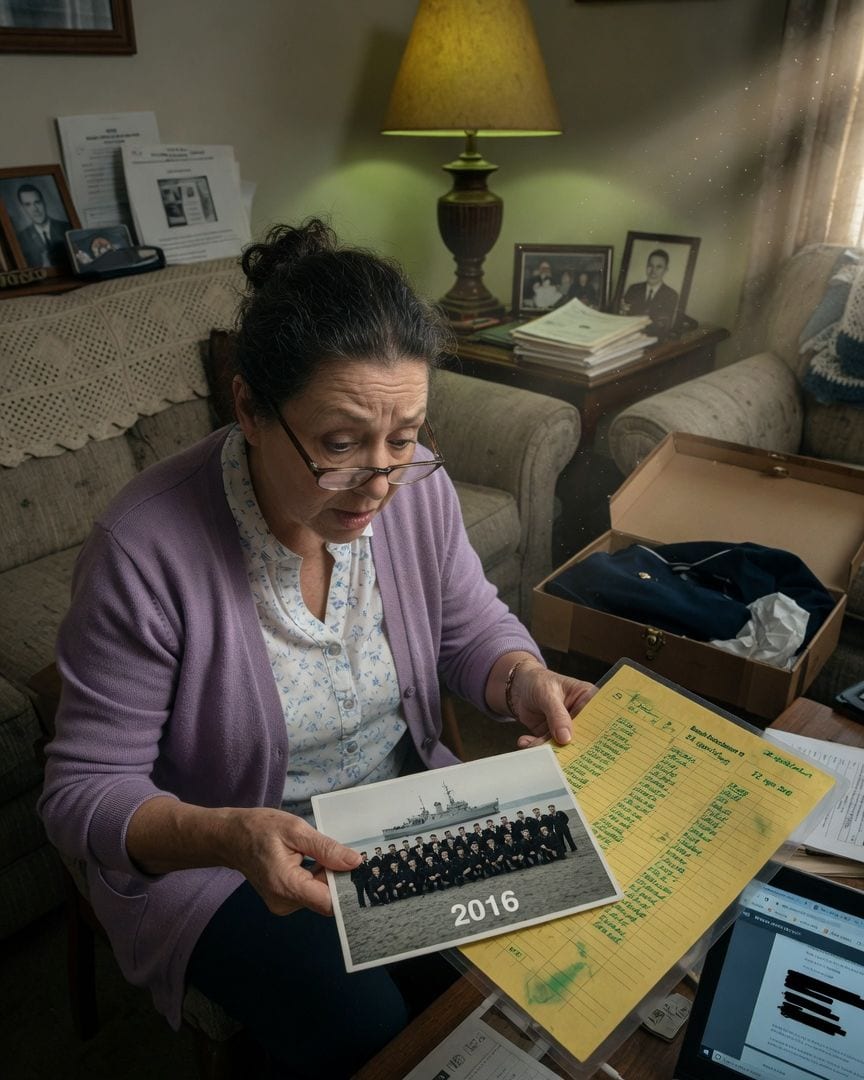
Marisol Frayne unlatched her husband's old footlocker. A photo inside showed his ship, pristine in 2016, three years after the Navy declared it lost.
Marisol Frayne, 62, finally unlatched her husband’s old footlocker in 2024, eleven years after the Navy declared his ship, the Kaskillan, lost at sea. Dust motes danced in the afternoon light as she lifted the lid, releasing the scent of old canvas and cedar. Inside, beneath his perfectly folded dress blues, she found a photograph of David and his crew standing before a pristine Kaskillan. Her breath caught: the photo was dated 2016, three years after the official reports claimed the ship vanished with all hands. Marisol's methodical search then revealed official logs showing a K-class vessel designation active in 2016, leaving a chilling void where her husband's fate should have been.
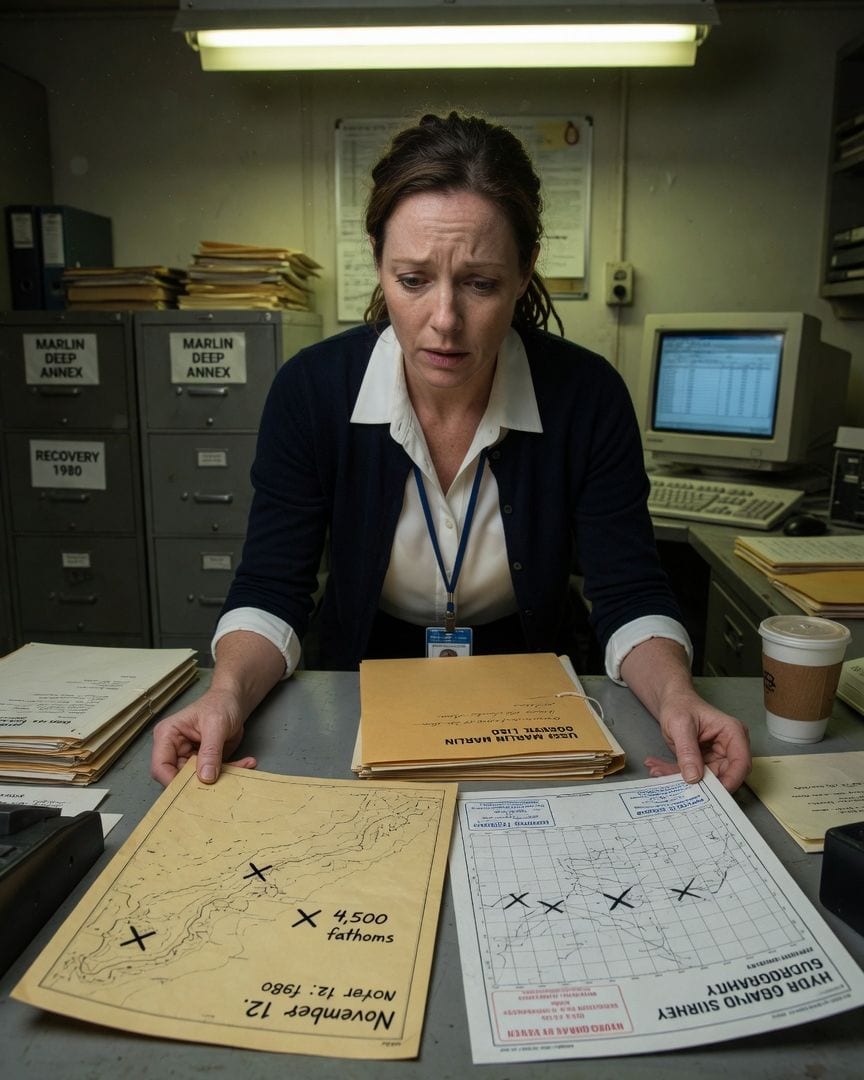
A Navy records reviewer found a Cold War captain’s own hand-drawn map, marking his submarine’s location two years after it vanished.
In the quiet, cold Navy archives, records reviewer Catherine Berrigan unearthed the sealed file of the USS Marlin Deep, a Cold War submarine lost with all hands in 1978. Decades of unanswered pleas from Captain Caldwell’s widow, Dorothy, filled the binder, seeking closure for her husband’s vanishing. But among the tragic records, Catherine found a crudely hand-drawn map, dated two years after the sub was declared lost, marking its exact deep-ocean location. The captain’s own distinct handwriting on the chart left her with a chilling, impossible question: how could he have charted his own wreck two years beyond the grave?
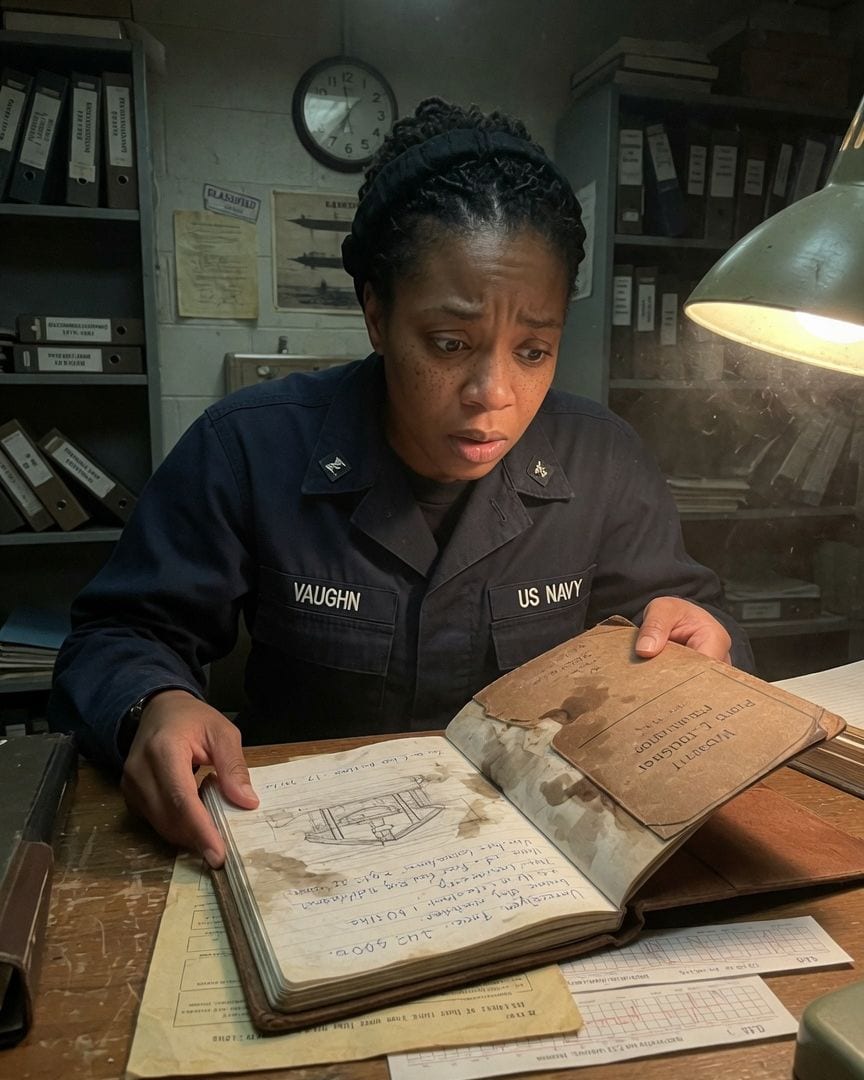
A Petty Officer's sensor logged a man-sized heat bloom at 0405. The camera saw nothing, and a journal from 1978 logged that same trace, then a Cold War Petty Officer gone MIA.
Petty Officer Rose Vaughn knew the meticulous order of Naval Submarine Base Bangor's pier by heart, especially her midnight watch routine. Every night at 0405, her IR sensor logged a man-sized heat bloom moving along the concrete path, vanishing at the pier's edge, but the watch camera showed only empty mist. This phantom warmth had walked the identical path for five years, yet the supposed steam line beneath it had been cold and dry for over a year. Her unofficial investigation led her to a faded 1978 journal, where a vanished Petty Officer, F. Pennington, logged an 'unresolved trace' at the exact same coordinates and 0405 hour, just before he went MIA. The system swore it was there, but the world swore it wasn’t – what was walking the pier, decades after it was lost?
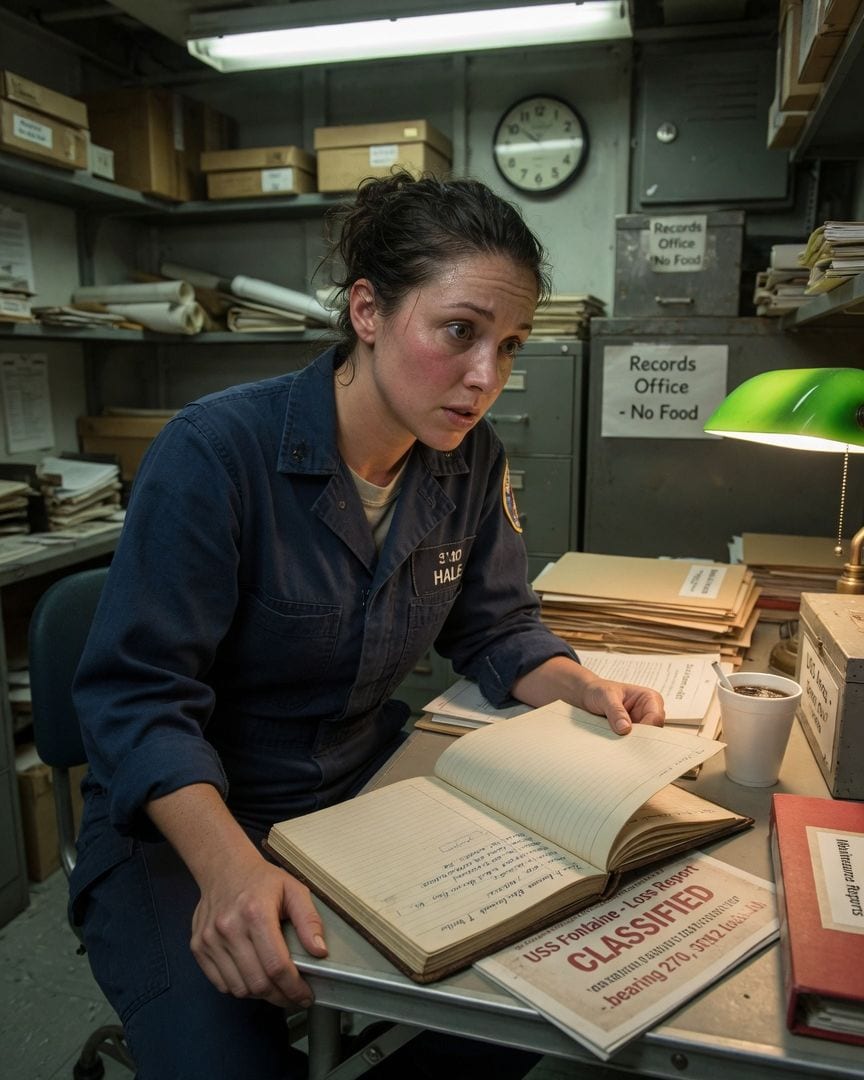
Petty Officer Hale needs a spotless record for her transfer. But the USS Ares sonar logs show an identical, impossible contact, logged to the minute, years apart, and tied to a classified loss report.
Petty Officer Sarah Hale needed a spotless record for her coveted shore duty transfer, a posting she'd worked five years to secure. Alone in the USS Ares sonar shack, three days out from San Diego, her midwatch was broken by an impossible contact: a close, slow echo holding perfect pace, invisible to radar, then vanishing. Her heart hammered, not from fear, but from the data's impossibility. When she found an identical entry in her own log from just one week prior, the cold dread tightened its grip. But the true chill settled when she unearthed decades of similar records, signed by other sonar officers, all showing the same impossible contact at 0212, off the port beam, for nineteen minutes, on the same ship, stretching back years—a persistent echo tied to a classified loss report.
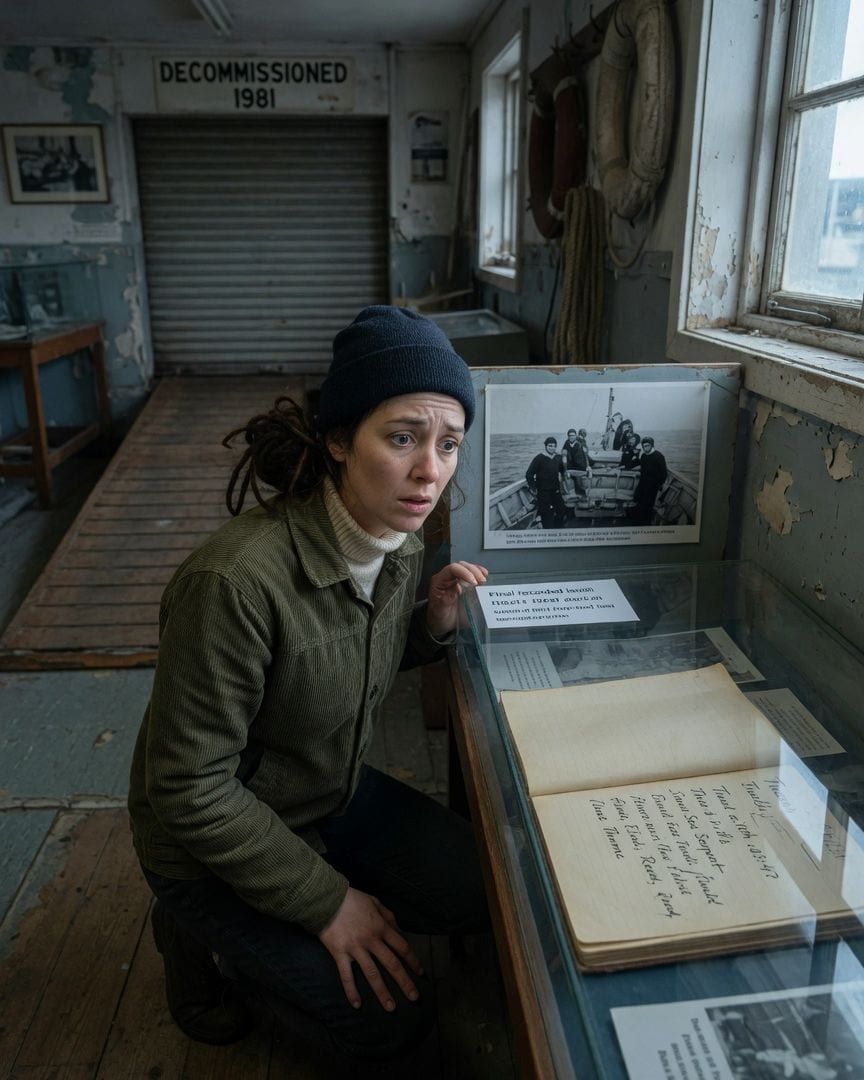
The museum's logbook recorded a rescue two days ago. Its 'souls saved' were buried in 1888.
As the new curator of the Runnock Maritime Museum, my assignment was to refresh the exhibits of its 1981-decommissioned station. Yet, a fresh logbook entry, dated just two days ago, noted a recent rescue. The vessel named, 'The Sea Serpent,' was listed in the archives as lost with all hands in 1888.
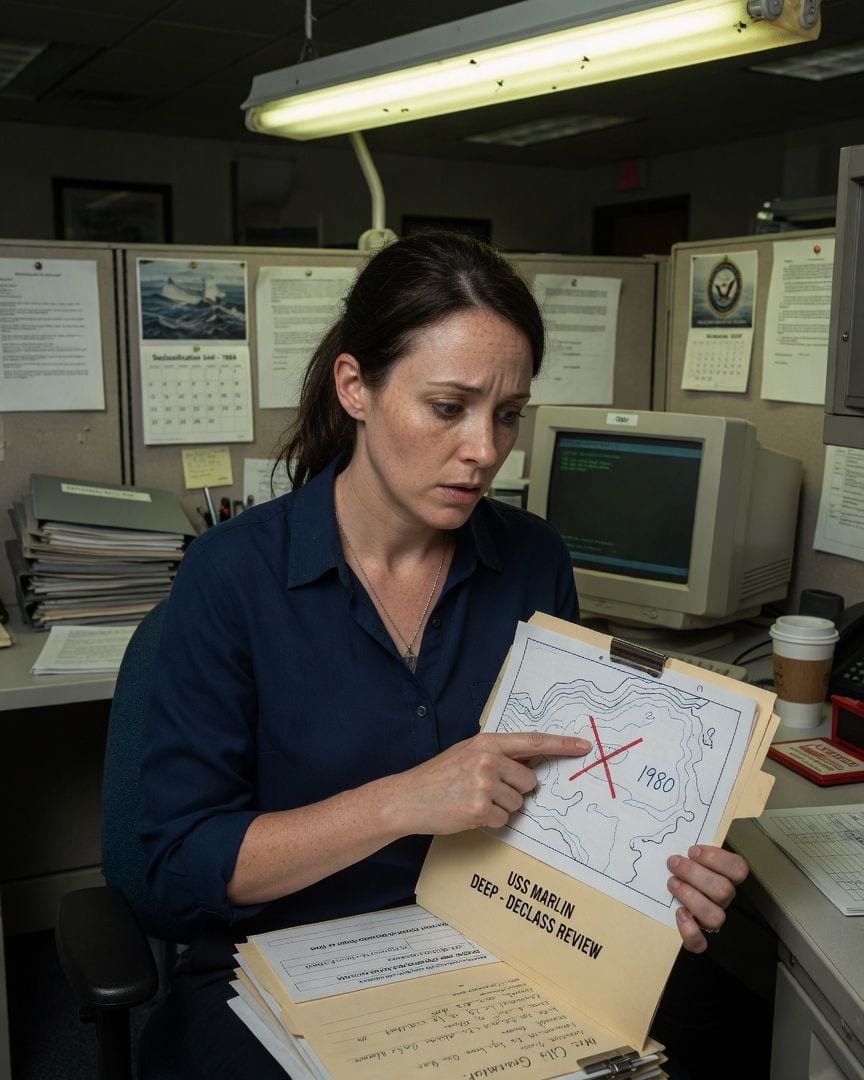
A declassification reviewer finds a dead Cold War submarine officer's report, filled out three years after his official loss.
Declassification reviewer Cass Berrigan understood the quiet anguish of widows, sifting through files like the USS Marlin Deep's. The submarine was lost in 1978, leaving behind Lily Granger's desperate letters, asking where her husband Arthur Thatcher's body was. But deep within the file, Cass found a chart of the wreck site, dated 1980—two years after the loss—in Thatcher's unmistakable hand. The dread solidified when she later uncovered an official report, also in his hand, dated 1981, stating 'Station Maintained. Status: Green.' How could a man officially dead for three years still be filing reports?