My own handwriting was in that old hotel register, dated 1994. I was eleven then, and never left our county.
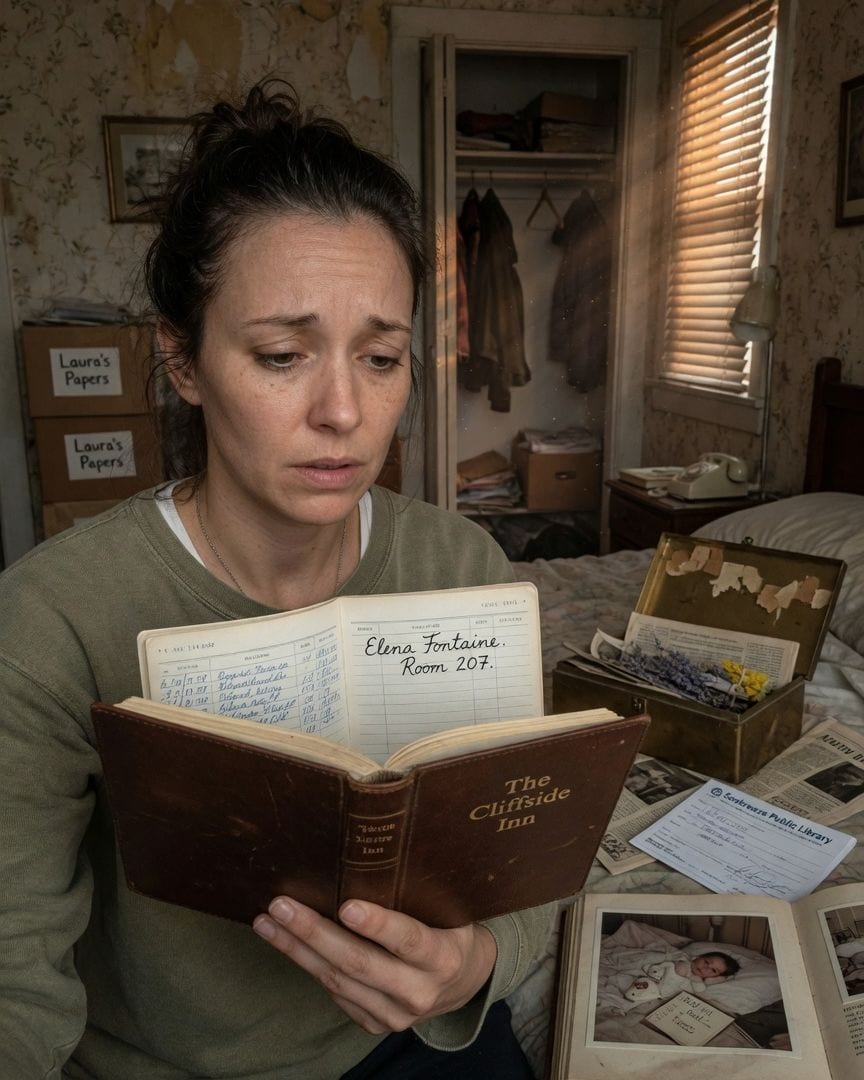
The dust motes danced in the late afternoon sun as I sorted through my late mother Laura’s belongings. The house felt hollow, full of ghosts and the quiet ache of absence.
I was sifting through a box of old papers, mostly receipts and faded letters, when my fingers closed around something unexpected: a thick, leather-bound book. It was a hotel register, its cover embossed with 'The Cliffside Inn.'
The date on the spine read 'March 1994.' I remembered the inn, a quaint, slightly rundown place my mother had always loved, though we’d never stayed there.
Opening it to a random page, I saw a column of names, dates, and room numbers. Halfway down the page, in neat, familiar cursive, was 'Elena Fontaine.' Room 207. And beneath it, a signature. My signature.
The same distinct slant I use now, the same little flourish on the 'F.' A cold, strange weight settled in my stomach. March 1994.
I was eleven years old that spring, confined to bed for two weeks with a nasty flu. I hadn't left our county, let alone visited a coastal inn hours away.
My first thought was a mistake, a prank, a strange coincidence. Perhaps someone else with the same name? But the signature was too precise, too undeniably mine. I tried calling the Cliffside Inn, now a charming but small B&B.
The owner, a man named Greg Merritt, answered, his voice gruff but polite. He confirmed they had indeed been a hotel in '94, though under different ownership.
'Records from back then are a mess,' he chuckled, 'Old Simon Beaumont, God rest him, kept things in his own… unique way.'
I pressed, asking if it was possible for records to be faked or for a child's name to appear. Merritt was dismissive, 'Unlikely a child would sign for a room, love. Unless they were with a parent, of course.'
He couldn't offer any more help, suggesting I focus on my mother's memories. I hung up, feeling a fresh wave of unease. I found an old photo album.
There, on a page dated 'Spring '94,' was a picture of me, pale but smiling, sitting up in bed at home, a get-well card in my lap. The image was undeniable proof of my presence elsewhere.
The gap between my clear memory and the register’s stark claim widened, becoming a chasm.
Still unable to shake the register’s impossible entry, I continued sifting through my mother's things, hoping for some mundane explanation.
I moved a stack of old magazines from a dusty shelf in the back of a closet, revealing a small, tarnished brass box, sealed with a brittle piece of tape. I peeled it back, my fingers trembling slightly.
Inside, nestled amongst dried flowers and yellowed newspaper clippings about local events, was a single, laminated card: a library card withdrawal slip.
It was from the Seabreeze Public Library, a small branch in the coastal town where the Cliffside Inn was located. The date on the slip was July 12, 2023.
My full name, Elena Fontaine, was printed next to the title of a book, and beneath it, again, my unmistakable signature. Just last year. I hadn't been to Seabreeze Library in my entire life.
I hadn't even visited the coast last summer.
The library slip was a punch to the gut. This wasn't a relic from childhood, easily dismissed as a misremembered dream. This was recent, concrete, and impossible. My rational mind struggled to keep pace.
I spent days online, researching the Cliffside Inn and Simon Beaumont. I found a local history blog, a dusty corner of the internet, where an old entry discussed Beaumont's eccentricities: his meticulous, almost obsessive record-keeping, his insistence on 'documenting everything.'
One comment, a few years old, mentioned 'strange comings and goings' at the inn during Beaumont's time, and whispered rumors of local residents suddenly 'changing' after staying there, becoming quieter, more distant.
I dismissed it as local folklore, but the unease gnawed at me. I drove to Seabreeze, the coastal town, the library slip clutched in my hand. The Seabreeze Public Library was small, smelling of old paper and sea salt.
I approached the circulation desk, the slip a silent accusation. Brooke Calloway, a kind-faced librarian, searched the system. 'Elena Fontaine?' she murmured, 'No record of anyone by that name ever having a card here, dear.' I showed her the slip.
Brooke frowned, examining the signature. 'That's… odd. It looks so real.'
She then added, almost as an afterthought, 'You know, an old patron, Theresa Marsh, used to come in here, always digging through old town records, especially about the Cliffside Inn. She had some wild theories about it.'
I left the library, the librarian’s words echoing in my mind. 'Wild theories.' I tried to find Theresa Marsh, asking around town, but the name drew blank stares or vague shrugs.
It was as if no one wanted to talk about her. As I drove back towards my mother’s house, I noticed a dark sedan that seemed to mirror my turns.
Paranoia, I told myself, but my hands tightened on the wheel. Back home, checking my email, I found a new message. Unsigned. The subject line read simply: 'Your Records.'
Attached was a scanned image: a utility bill for a small, unfamiliar cottage on the outskirts of Seabreeze, dated for next month. And again, my name, Elena Fontaine.
The address was new, but the name, the signature for account activation, was mine. A cold dread seeped into my bones. Someone knew I was digging. Someone was watching. The email address was a string of random letters, untraceable.
The threat was no longer historical; it was personal, immediate. The next day, desperate, I went to the local post office, hoping to trace the address on the utility bill.
The clerk, a young man with a bored expression, typed it into his system. His eyes widened slightly. 'Oh, that address,' he said, a strange, knowing look on his face. 'Someone’s always asking about it.
Never seems to be anyone home, though.' The fluorescent hum of the post office seemed to press in on me.
The post office clerk's words solidified my resolve. I finally tracked down Theresa Marsh through an old community notice board. Theresa lived in a small, isolated cottage, surrounded by overgrown gardens.
She was frail, her eyes cloudy with age, but when I mentioned the Cliffside Inn, a flicker of fear, then recognition, sparked in them. Theresa was initially resistant, mumbling about 'old stories' and 'things best left alone.'
I pressed, showing her the register, the library slip, the utility bill. Theresa’s gaze settled on my signature on the documents, a deep sadness in her expression. 'They've started with you, then,' she whispered.
I demanded to know what 'they' meant. Theresa finally relented, her voice raspy. She led me to a hidden nook behind a false bookshelf, revealing a treasure trove: dozens of old ledgers, faded photographs, and carefully annotated maps.
The air in the nook was thick with dust and the smell of ancient paper. 'The Inn,' Theresa began, 'it’s… a place of collection. Not for money, not for things. For people.'
She explained that the records weren't mistakes, but 'claims.' The Inn, or whatever inhabited it, created 'echoes' of individuals, drawing fragments of their lives, their identities, to itself. 'Simon Beaumont,' Theresa said, 'he wasn't the master.
He was just a caretaker, maintaining the ledger.'
She showed me her own collection of impossible records: library slips, doctor's appointments, even a marriage certificate, all bearing Theresa Marsh's name and signature, but dated for times and places she could prove she'd never been.
'My whole life,' Theresa murmured, 'I’ve been fighting their claims. Trying to stay real.' The horror of it washed over me. The register, the slip, the bill – they weren't errors. They were a ledger. A terrifying, active ledger.
The inexplicable distances, the contradictory timelines, the undeniable signature – it all snapped into place, forming a monstrous, coherent shape.
Theresa Marsh, her voice trembling, continued her grim explanation. 'They collect pieces. Fragments. Until they have enough to… make a full claim.' She then pulled out a meticulously drawn family tree, annotated with dates and locations.
It wasn't just a general pattern; it was specific. She traced lines through generations, pointing out names that I recognized from local history, and then, with a bony finger, she landed on my own family.
'Your mother, Laura Fontaine,' Theresa whispered, 'She had so many claims. More than most.' I remembered my mother's increasing quietness in later life, her vague answers, her sometimes-distant gaze. It clicked into place with a sickening thud.
Her mother hadn’t just been aging; she had been… changing. Replaced. Theresa’s finger moved down the tree, landing squarely on my name. 'Your first claim,' she said, tapping the 1994 entry. 'They marked you early.'
Then, with a chilling deliberation, she slid a final document across the table. It was a booking confirmation. For the Cliffside Inn. For tonight. In Elena Fontaine’s name. And beneath it, a crisp, fresh signature, identical to my own.
Marsh looked up at me, her eyes wide with a deep, unsettling pity and fear. 'They’re calling you home,' she whispered, her voice barely a breath. 'The final claim.'
The booking confirmation was a physical manifestation of the terror. I felt an icy grip on my heart, the pieces of the puzzle clicking into a horrifying, complete picture.
Theresa explained that once enough 'claims' were made, once the 'echo' was sufficiently formed, the original person would feel an irresistible pull to the Inn. A sense of being 'called.' Once there, the replacement was seamless, quiet.
The echo would step into their life, imperfect but close enough, while the original… 'They become part of the Inn,' Theresa said, her voice hollow. 'A new record. A new fragment.' I thought of my mother, Laura.
Her distant eyes, her subtle shifts in personality in her final years. It wasn't senility; it was a slow, insidious replacement.
The horror was not just that it was happening, but that it had already happened to someone I loved, and I hadn't even recognized it. The 1994 register entry wasn't a mistake; it was the first mark, the first seed planted.
The library slip, the utility bill, the hotel reservation—a carefully orchestrated sequence, drawing me inexorably to my fate. I wasn't an accidental witness; I was a designated participant, always destined to be 'claimed.'
A primal scream tore through me, but it was trapped in my throat. The compulsion was overwhelming, a magnetic pull toward the coast, toward the Cliffside Inn.
I stumbled out of Theresa’s cottage, the old woman’s warnings fading into the roar of my own blood. Her words became a distant hum against the frantic pounding in my ears. My car keys felt impossibly heavy in my hand.
I drove, the engine a frantic drumbeat against the rising tide of dread. The coastal road stretched before me, dark and winding, the ocean a black expanse to my left.
The Inn’s lights, a beacon of warm, inviting glow, appeared in the distance. As I neared, my phone buzzed. A bank alert. A deposit had just been made into my account.
The amount: precisely what my mother had left me in savings, money I hadn't touched, money I hadn't even known the exact figure of. A profound sense of wrongness, colder than the ocean air, washed over me.
This wasn't just a call; it was a transaction. A final payment. I pulled into the Cliffside Inn's gravel parking lot, the crunch of tires unnaturally loud in the quiet night. The Inn stood quaint and welcoming, its windows glowing.
The front door was ajar, a warm, inviting light spilling out into the darkness. And there, silhouetted in the doorway, waiting patiently, was a figure. It was tall, slender, with my exact build.
It stood perfectly still, its head tilted slightly, as if listening. It looked exactly like me.
Elena Fontaine’s car was discovered in the Cliffside Inn parking lot the next morning. Innkeeper Greg Merritt reported it to the local police, who found nothing amiss inside the vehicle or the Inn.
A brief search of the surrounding area yielded no results. Theresa Marsh's cottage was found empty days later, her meticulous collection of records and annotations gone, the false bookshelf standing bare.
The Seabreeze Public Library had no record of a Theresa Marsh ever being a patron. The Cliffside Inn continued its quiet business, its lights always warm and inviting against the encroaching coastal fog.
A week later, Abigail Thatcher, Elena’s best friend, tried calling her again, getting no answer. Abigail left a worried message, asking if everything was okay.
Later that evening, Abigail was in the grocery store, pushing her cart down an aisle, when she spotted Elena. 'Elena!' Abigail called out, relief flooding her. Elena turned, a faint, polite smile on her face.
It was Elena, but her eyes seemed a little too still, her movements a little too deliberate. 'Everything alright? You haven’t returned my calls.' Elena’s smile didn’t change.
If this one got to you
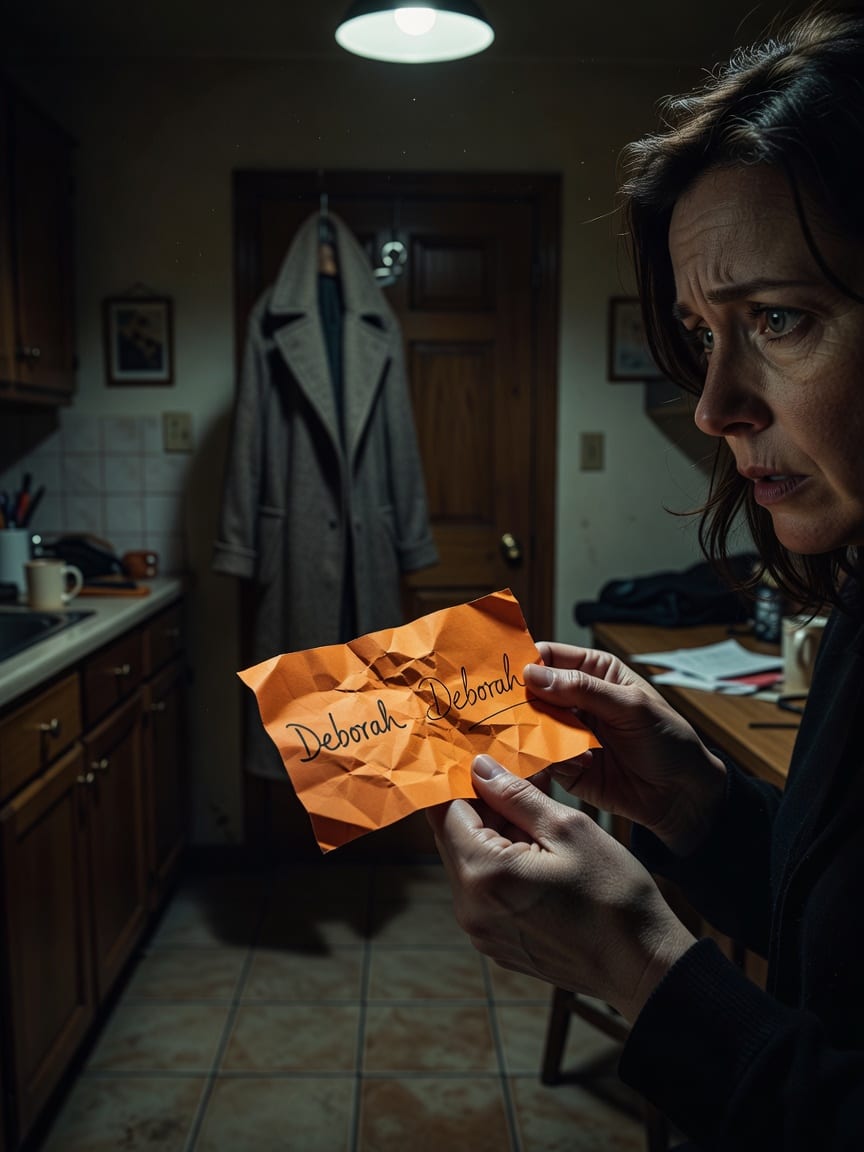
My grey coat stood at my neighbor's door at 11:52am, taking in a package. I was in Lisbon that entire week.
My neighbor, Linda, handed me a delivery card, thanking me for saving her a trip. But the date on the card showed my signature, for a parcel I'd never received. On that exact day and time, I was sipping espresso in Lisbon, thousands of miles away. My grey coat, which Linda recalled me wearing, hung untouched in my closet.
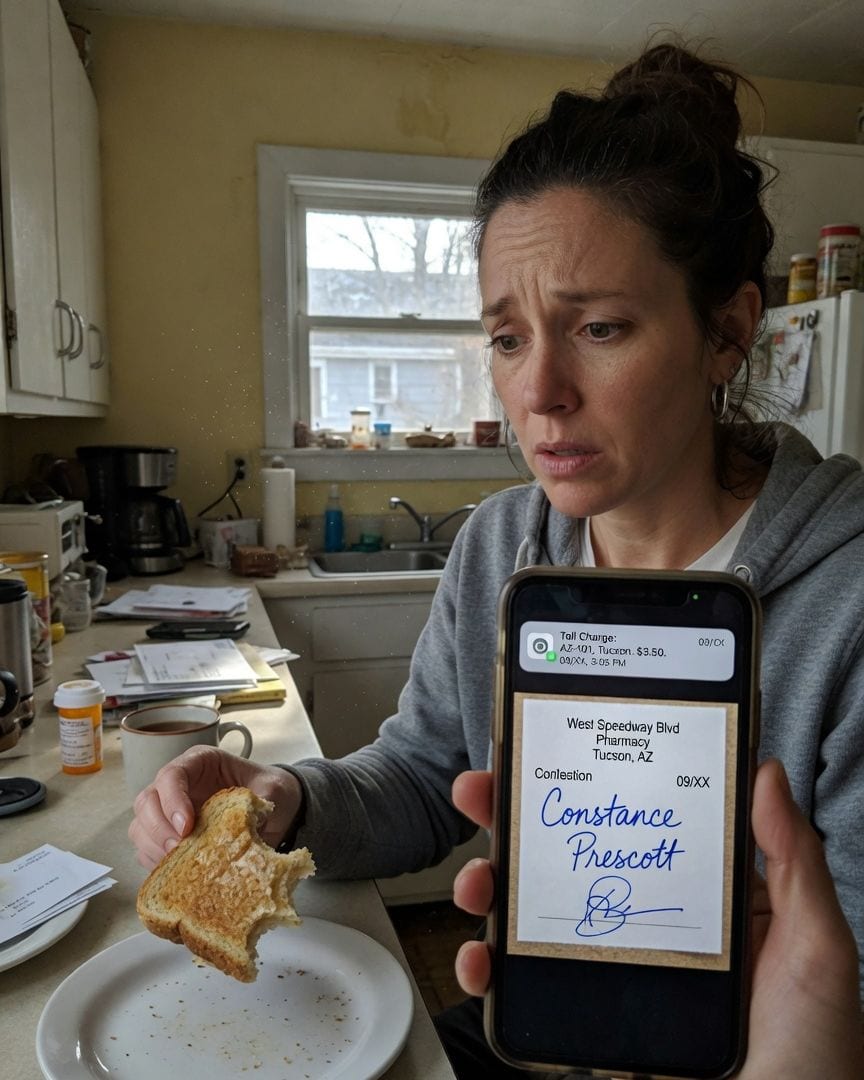
My own signature picked up my prescription in Tucson, Arizona. I live in Maine, and I've never set foot in that state.
When my pharmacy called about a refill, it felt odd — I usually get a text. But then they claimed I'd picked up a month's supply in Tucson, Arizona, yesterday, with my signed receipt. I've never been to Arizona, yet the signature was unmistakably mine, down to a distinct, childish 'P' loop.

My taxi driver knew my name before I spoke, then apologized for the flight I was going to miss. I was arriving. The cab's plate was scrapped four years ago.
After a strange taxi ride, I received an unsettling birthday card addressed to me. Its return address listed 'Old Mill Road Field,' an empty lot where a mill once stood, and it was postmarked locally. The card arrived four months before my actual birthday, sparking a cold dread I couldn't ignore.
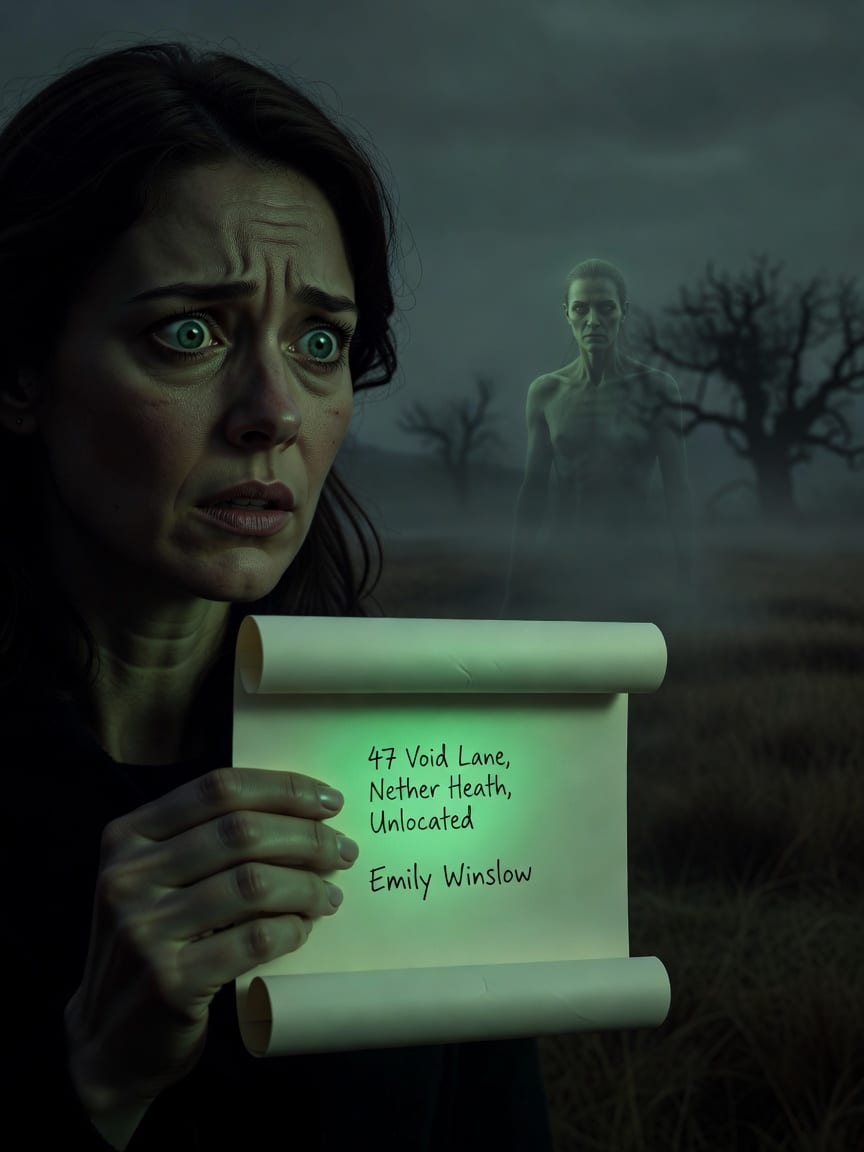
My change-of-address card arrived today. It said I'd moved to a house I'd never seen, on a street that didn't exist. And it was signed with my own hand, a month from now.
A crisp, cream-colored card on my kitchen counter informed me I'd moved to 42 Willow Creek Lane, an address that didn't exist. The signature was my name, Emily Winslow, a chillingly precise ghost of my own handwriting. But then I found an old 1947 ledger, listing 42 Willow Creek Lane and a signature identical to the one on my card.
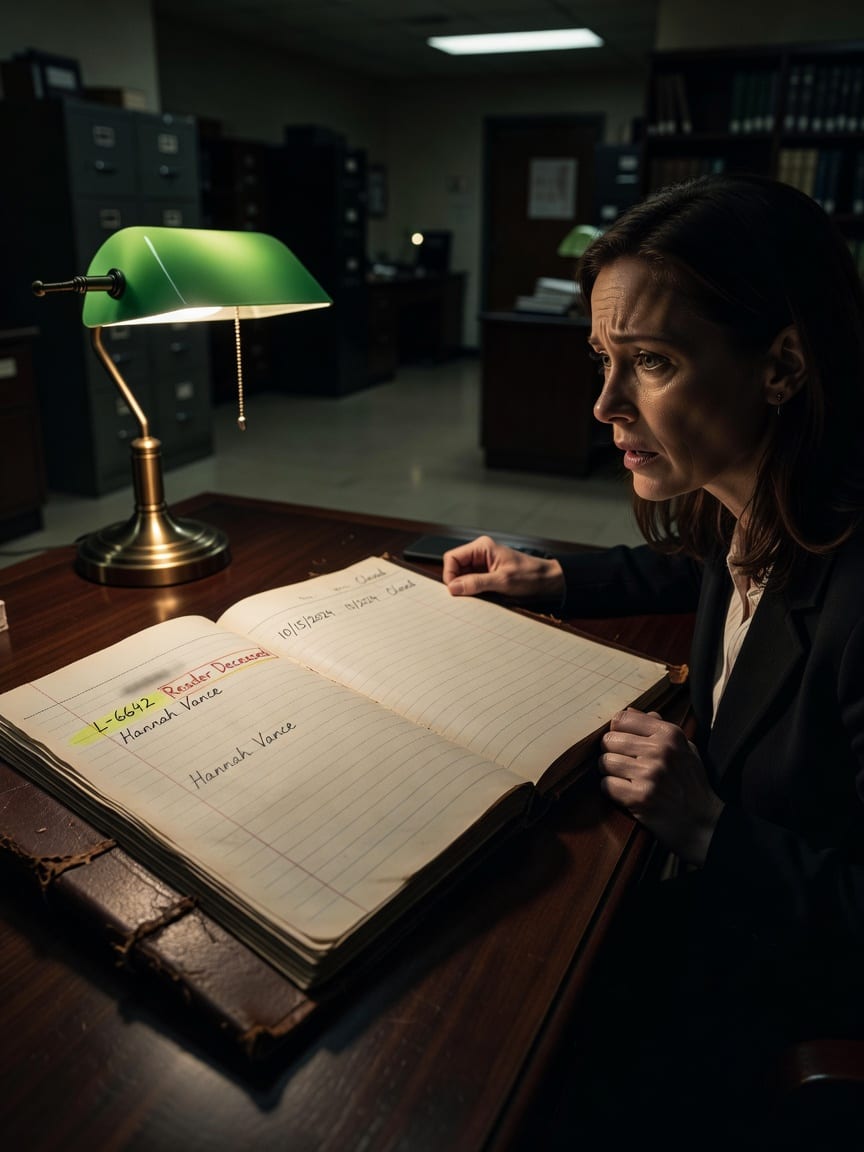
My library card number L-6642 was issued to me at seven — and the ledger shows that number has marked a reader 'deceased' every twelve years since 1949.
Returning my late father's library card to the old town library felt like a small act of closure. But the senior librarian's ancient ledger revealed a chilling pattern of 'reader deceased' entries tied to specific card numbers and borrowed books. My unease turned to cold dread when I secretly found my own name penciled in, marked for a future 'reader deceased' entry.
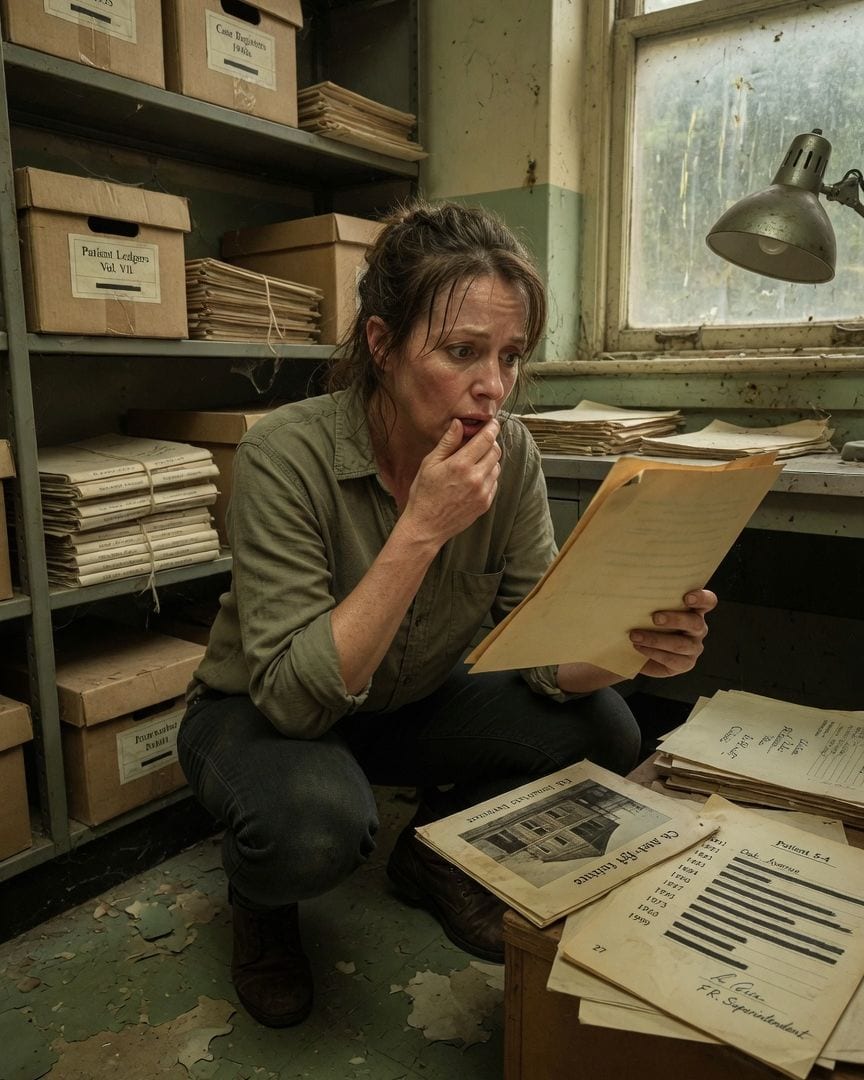
Patient 5-4 keeps checking into my aunt's old sanatorium chalet. The same initials sign them out, 'not traced,' every thirteen years since 1921.
Sifting through my aunt Margaret's estate, I found her old sanatorium file from 1999. Her patient record listed her as 'Patient 5-4,' discharged 'not traced.' But when I accessed the archives, I found 'Patient 5-4' was admitted every thirteen years since 1921, always with identical discharge notes.