My own name is on a marriage license, signed by me, in a courthouse three states away. It says I married a man I've never met, two years ago, when I was living abroad.
I stood in the sterile passport office, the fluorescent hum a dull throb against the rising anxiety in my chest.
“Your application for a new passport, under your maiden name, is denied, Ms. Bennett,” the clerk stated, her voice flat, pointing to a screen on her desk. My blood ran cold.
The screen displayed a digitized marriage license: my full name, ‘Rosemary Bennett,’ and a signature that was unmistakably mine. The ceremony date was two years ago.
The location: a county courthouse three states away, a town I’d never set foot in. The groom: Samuel Carter, a man I’d never even heard of.
“That’s impossible,” I said, my voice barely a whisper. “I was single. I was living in Barcelona that entire year.” The clerk, unbothered, scrolled further. “The officiant’s log confirms both parties signed in person, that afternoon.”
A knot of cold dread tightened in my gut. My own name, my own signature, a legal document insisting on a reality that simply wasn’t mine. The air in the office suddenly felt too thin, too still.
Back home, I tried to be rational. Identity theft. A clerical error. A really elaborate, tasteless prank. I called the county clerk’s office in that distant state, my voice shaking as I explained the situation, tried to explain my situation.
They were polite but firm; the record was valid. A digital copy of the license arrived in my email an hour later. I zoomed in on the signature. Every loop, every slant, every familiar imperfection was there. It was hers.
It was mine.
I pulled out old photo albums, my passport, bank statements from my time abroad. Timestamps on my phone confirmed my location in Spain during the exact week of the supposed marriage.
I had pictures of myself laughing on a sun-drenched beach, a world away from any courthouse.
There was a receipt from a tapas bar dated the very day of the ceremony, with my credit card number on it, foreign currency exchange visible.
The evidence of my real life was incontrovertible, yet the document, cold and official, simply overruled it. As I printed the license, a small, embossed symbol caught my eye, almost invisible against the paper’s texture.
It was on the bottom right corner, a stylized, interlocking glyph I didn’t recognize. An official-looking mark that didn't belong to any state or federal agency I knew.
Desperate for a tangible explanation, I booked a flight to the town where the 'marriage' supposedly happened. The county courthouse was a grand, old building, its marble floors cool beneath my feet.
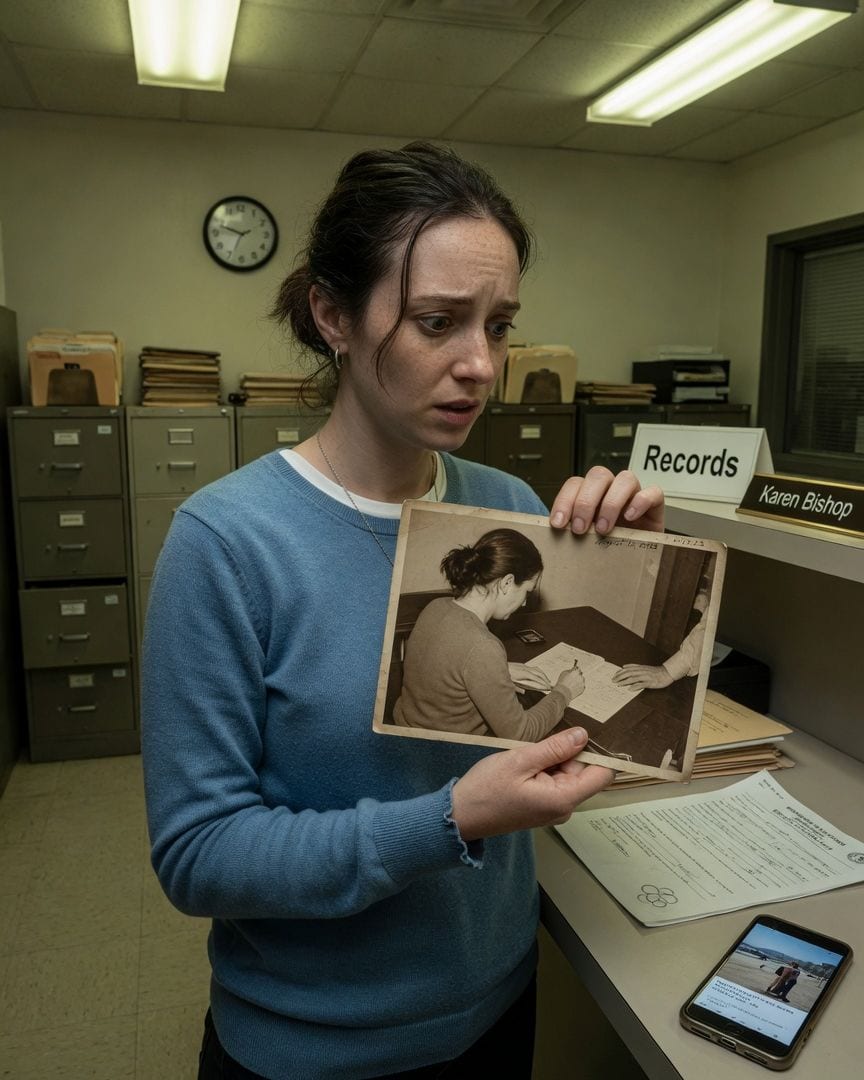
Inside, a weary clerk named Karen Bishop listened to my story with a practiced, detached air. She retrieved the original log book from a heavy metal drawer, showing me the physical entry, the ink faded but distinct.
“We don’t keep surveillance footage from that far back, dear,” Karen sighed, the sound rattling in the quiet room, “but we do have this.” She slid a brittle, sepia-toned photograph across the counter.
It was an interior shot of an office, dated two years ago. In the foreground, two figures sat at a desk, their backs to the camera. One was a man, indistinct. The other, however, had turned slightly. My breath hitched.
It was a woman, undeniably, terrifyingly, her. My face, my hair, the same faded blue sweater I’d owned for years.
The woman in the photo was signing a register, a pen clutched in her hand, a blank, distant look in her eyes as Samuel Carter’s hand rested beside hers on the page.
The photograph was a punch to the gut. My reflection in the glass of the picture frame seemed to mock me. I spent days trying to discredit it. Was it a doppelganger? A deepfake?
But the photo was too old, too grainy, too real for modern manipulation. I couldn't find any public records for a 'Samuel Carter' that matched the vague description Karen Bishop had given of the man in the photo.
He was a ghost, a name with no history, no physical trace.
My focus shifted to the embossed glyph on the marriage license, that strange interlocking symbol. I showed it to historians, archivists, even a tattoo artist, hoping for recognition. No one knew it.
Not until I visited the city's main library, a vast, echoing space that smelled of old paper and dust. An elderly, retired librarian, Felix Barlow, peered over his spectacles at the printout I’d brought.
“That’s the mark of the old Registry of Personal Holdings,” he rasped, his voice thin as brittle paper. “Defunct for decades, absorbed by state archives. Used to handle… unusual legal designations.”
He gave me an address, scribbled on a small, yellowed notecard. An old, forgotten building on the outskirts of town, partially bricked up, its windows dark and opaque.
The place smelled of dust and mildew, a forgotten monument to forgotten bureaucracy. The air inside was heavy and cold, as if the building itself held its breath. Rust-streaked filing cabinets stood like forgotten sentinels in dim corridors.
Inside, in a room where the paint peeled like diseased skin, I found stacks of ledgers, their covers cracked and brittle, all bearing the same unsettling glyph.
The library’s hushed atmosphere had been one of reverence; this building’s was one of rot.
As I delved deeper into the Registry’s archives, a subtle shift occurred. My phone, normally quiet, began pinging with odd notifications.
A calendar reminder for a 'second anniversary' I hadn't created, then an alert from a non-existent 'Registry Account' about 'pending updates.' It felt less like a glitch and more like a presence. The very air around me seemed to prickle.
One evening, leaving the dusty archive building, I noticed a dark sedan parked down the street. A man, calm and unbothered, sat behind the wheel, watching the entrance. He didn't move, didn't react, just watched.
The next day, as I walked home, my heart thumped against my ribs when I saw him again, standing casually across the street from my apartment building, seemingly engrossed in his phone.
He was tall, nondescript, but his presence was a cold, precise weight. He didn't approach, didn't threaten. He simply observed.
I felt a primal chill, realizing my investigation had been noticed, and I was no longer just a researcher, but a subject under scrutiny. My own name, my own face, felt like a target.
The quiet click of my apartment door locking behind me sounded like a final, small concession.
I returned to Karen Bishop at the county courthouse, the grainy photo and my copy of the Registry glyph clutched in my hand. “What is this place?” I demanded, pushing the photo across the counter.
The image of my face stared up at her. “And why is my face on it?” Karen’s composure, usually so unyielding, wavered. She glanced around the empty office, then lowered her voice. “The Registry isn’t truly defunct, Ms. Bennett.
It’s… reassigned. Its records are still valid, just not public.” The air around us seemed to thicken, pressing in.
I pressed her, detailing the notifications, the watcher, the unsettling feeling of being tracked. Karen’s eyes darted nervously to the window, then back to me, a flicker of something close to fear in their depths.
“Samuel Carter,” I continued, my voice tight, “he’s a ghost. He doesn’t exist.” Karen sighed, a deep, shuddering breath that sounded like a dry leaf scraping across pavement. “He’s a name of record,” she said, her voice barely audible.
“A legal placeholder. Not a living man.” The words hung in the air, cold and definitive, confirming my worst suspicions. This wasn't a mistake; it was by design.
“These ‘marriages’,” Karen continued, her gaze fixed on a distant point beyond my shoulder, “are a way to… account for individuals. To bind them to the Registry. For those who slip through the cracks, who are… unattached, let’s say.
Like you, living abroad, off-grid. The Registry creates a legal designation.” My mind raced, replaying every detail, every impossible fact. The signature, the photo, the calm, legal certainty of the county clerk. It wasn't identity theft.
It was something far more insidious, a system that simply decided my reality for me. The dread deepened, a cold, hard knot in my stomach. “So, my marriage… it’s real to them?” I asked, the words catching in my throat.
Karen finally met my gaze, the flicker of fear in her eyes more pronounced now. “It’s real enough for the Registry.” The temperature in the room seemed to drop.
Shaken by Karen’s confession, a new, colder terror tightening its grip around my throat, I returned to the old Registry building.
The calm watcher was gone, but his presence lingered like a shadow, a chill that had nothing to do with the decaying structure.
I pulled out an old, heavy ledger I’d overlooked earlier, its leather cover cracked with age and use. It was filled with more 'marriage' licenses, each bearing the same unsettling glyph, each a mirror of my own impossible record.
I saw names I didn’t recognize, but the same 'Samuel Carter' was listed as groom, or witness, or even, unsettlingly, as officiant, across dozens of entries. This wasn't a mistake; it was a pattern. A system.
As I flipped through the brittle pages, the dusty silence was broken only by the rustle of paper. A loose, folded document, slipped from between two entries. It was thinner, newer paper, almost pristine, unlike the aged ledger.
I picked it up, my heart pounding against my ribs, a frantic bird trapped in a cage. The title at the top read, in stark, official typeface: 'Birth Entitlement.' My name, 'Rosemary Bennett,' was listed under 'Mother.'
Beside it, 'Samuel Carter' under 'Father.' And below, a child's full name, with a birth date marked for next year.
The 'Birth Entitlement' certificate confirmed my darkest fears. My fingers traced the printed words, the future date, a future already claimed. I confronted Karen Bishop one last time, the document trembling in my hand like a fragile secret.
Karen, visibly terrified now, her composure completely shattered, finally broke. “The Registry doesn’t just record the past, Ms. Bennett. It… anticipates the future.”
She explained that the 'child' was not a literal infant, but a future 'designation,' an 'asset' that the Registry claimed through me. The concept was so monstrous, so coldly bureaucratic, that my mind struggled to grasp it.
Samuel Carter, she revealed, was a master key, a legal construct that linked 'unaccounted' individuals to these future claims. The 'marriages' were the initial binding, a legal precedent to establish a claim on my lineage, my potential.
The signatures, Karen admitted, were obtained through ‘proxies’ — individuals who physically resembled the target and were manipulated or compelled into signing. The photograph I'd seen was a ritual documentation of this 'binding,' proving the proxy's "consent."
Every planted clue clicked into place, snapping into a horrifying mosaic. My life abroad, my precise signature, the ghostly groom, the silent watcher, the 'anniversary' notifications.
It all served to create an ironclad, legally recognized reality that superseded my own lived experience. The horror wasn’t that the record was wrong; it was that for the Registry, it was horrifyingly right.
The fluorescent lights of Karen’s office seemed to buzz with a new, insidious energy, confirming everything I now understood.
I tried to fight the Registry. I consulted lawyers, presented my alibis, the impossible 'Birth Entitlement.' But every legal avenue led to a dead end.
The Registry’s claims, though absurd to any sane person, were legally watertight, citing obscure precedents and jurisdictional anomalies no one could challenge. The legal system, designed to protect, was instead validating my obliteration.
One lawyer, a man who had looked confident and assured at our first meeting, now pale and shaken after reviewing the documents, simply told me, “Ms. Bennett, you don’t exist outside their system anymore. You are… accounted for.”
His words echoed in my head like a death knell.
I understood then: I couldn't legally undo what had been done. My only escape was to become truly 'unaccounted for' again, to vanish from the grid. I began systematically dismantling my life.
I closed bank accounts, shredded all my official documents, burned my passport. The smell of burning paper was acrid, but strangely liberating. I sold my apartment, my car, everything that tied me to my official identity.
I researched off-grid living, new identities, places where I could disappear without a trace. As I packed a small bag, ready to walk away from everything I knew, an email arrived.
It was from a generic address, but the sender was explicitly 'Registry of Personal Holdings.' The subject line read: 'Account Update – Parental Obligations Confirmed.'
It was a calm, almost courteous message, detailing the 'benefits' of my 'designation' and reminding me of my 'responsibilities.' There was no threat, no anger, just the cold, unyielding affirmation of their claim.
The system was unbothered, and it had won.
Rosemary Bennett ceased to exist. I left the country under a false name, using cash, avoiding all digital footprints. I moved from place to place, living a quiet, anonymous life, always looking over my shoulder.
I carried only a few essential items, and a carefully preserved, tattered copy of the 'Birth Entitlement' certificate, the impossible proof of what had happened. I never spoke of it, never trusted anyone enough to share my story.
The cost of my freedom was profound: a life of perpetual vigilance, of constant solitude, haunted by the knowledge that a hidden system still held a claim on me, a claim that might one day manifest.
Years passed. Rosemary, now 'Hannah Mitchell,' lived in a small, remote village in the mountains, far from any official records. I worked odd jobs, kept to myself, my days a monotonous rhythm of survival and solitude.
The quiet hum of my new life was a constant reminder of the life I’d left behind. One afternoon, I sat on a park bench, watching children play by a small fountain.
A young girl, no older than five, ran past, chasing a ball that bounced erratically across the stone path. The child stumbled, then looked up, her face framed by dark, curly hair. Her eyes, wide and curious, met Hannah’s.
A cold wave washed over Hannah, a recognition that made her blood run to ice. I knew those eyes. They were hers. Hannah’s hand instinctively reached into her pocket, pulling out the folded, brittle certificate.
I unfolded it slowly, my eyes scanning the 'Child’s Name' field, then back to the girl. The child, playing by the fountain, had my eyes.
If this one got to you
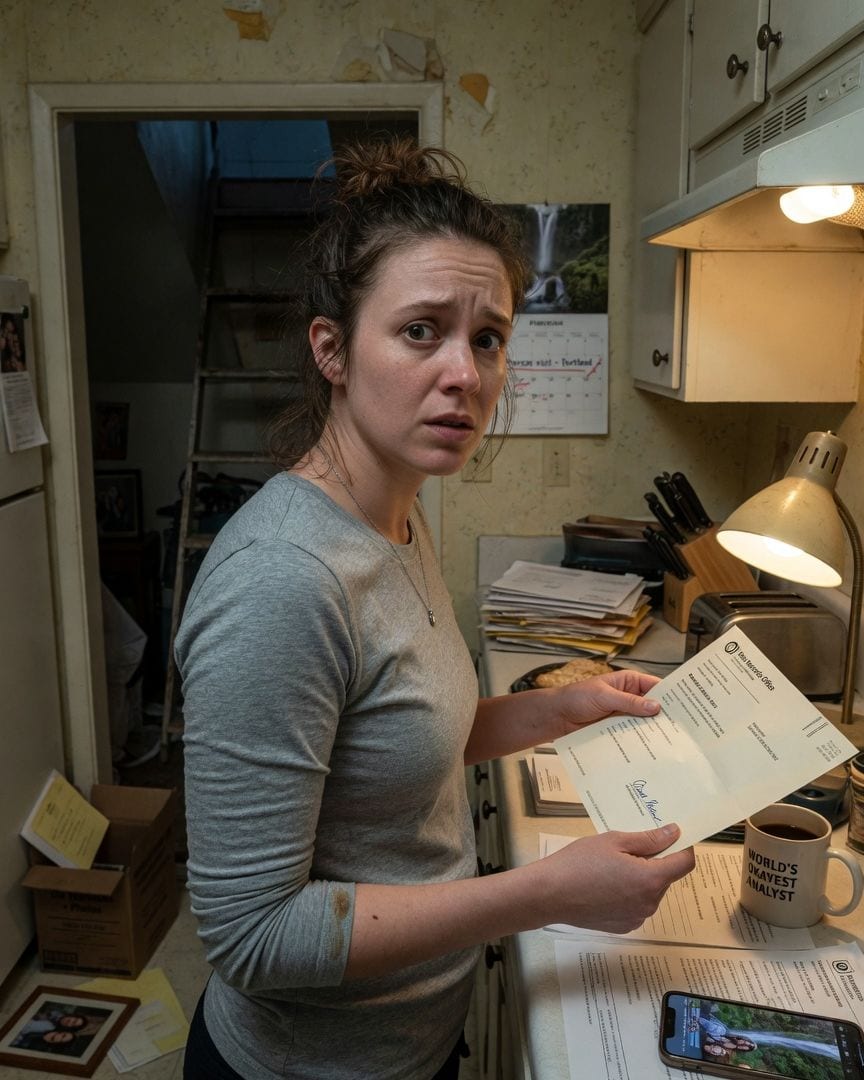
My name is on a marriage certificate in Ohio, signed by my own hand, but I was 2,000 miles away that day.
Abigail Caldwell, a systems analyst, prides herself on an ordered life. But an official envelope arrives containing a marriage certificate for her, complete with her signature, from a wedding she never had. The record lists her as the groom, married to a man she's never met, in a city she swears she's never visited.
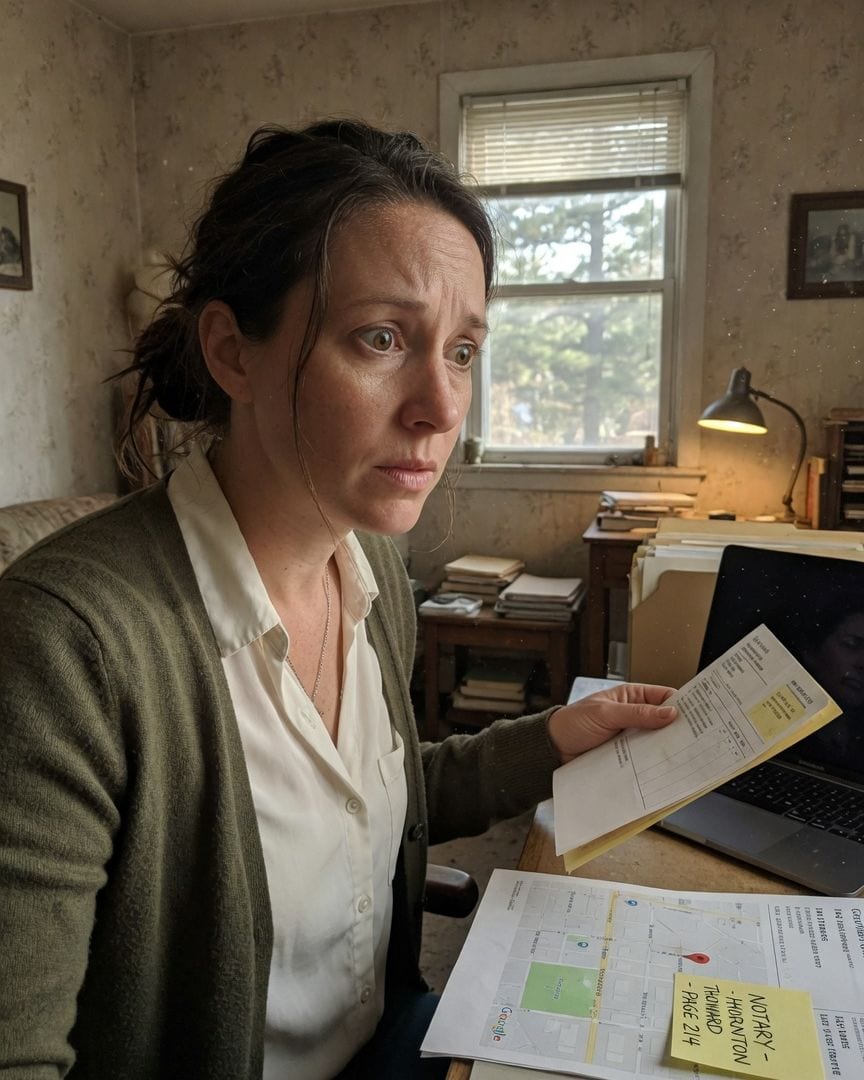
My signature is in a notary's book for an accident I wasn't in. I've never even met the man.
My name is Janet Caldwell, and my life is perfectly ordinary. Or so I thought, until a notary's register revealed my distinct signature on a document. It was dated May 14th, 2014, a day I was confined to a hospital bed, miles away.
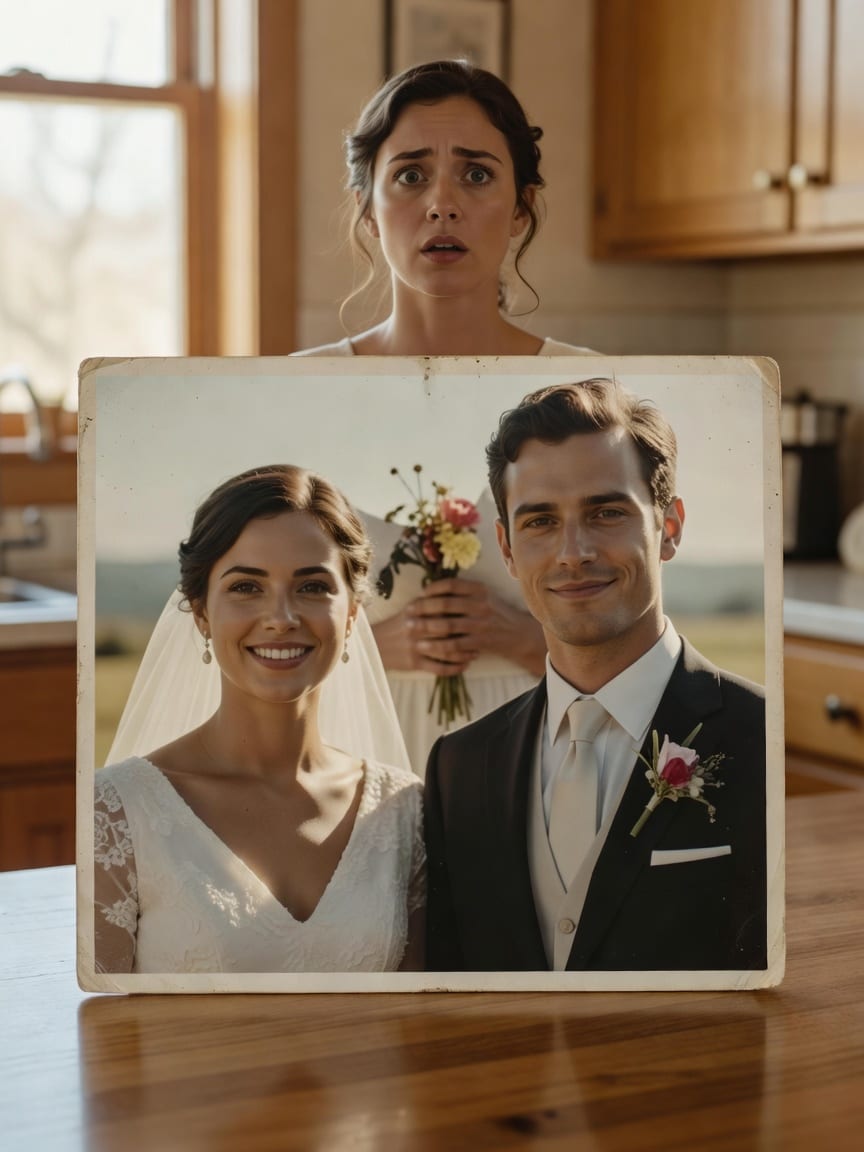
My best friend thanked me for standing up at his wedding. He isn't married. He described my speech, the ring, the bride's face — none of it real, but he remembered every detail.
My friend Julian Doyle vanished for two years, then reappeared acting like no time had passed. He talked about his wedding, where I supposedly gave a speech, describing every detail vividly. But Julian isn't married, and I have no memory of ever attending such an event.
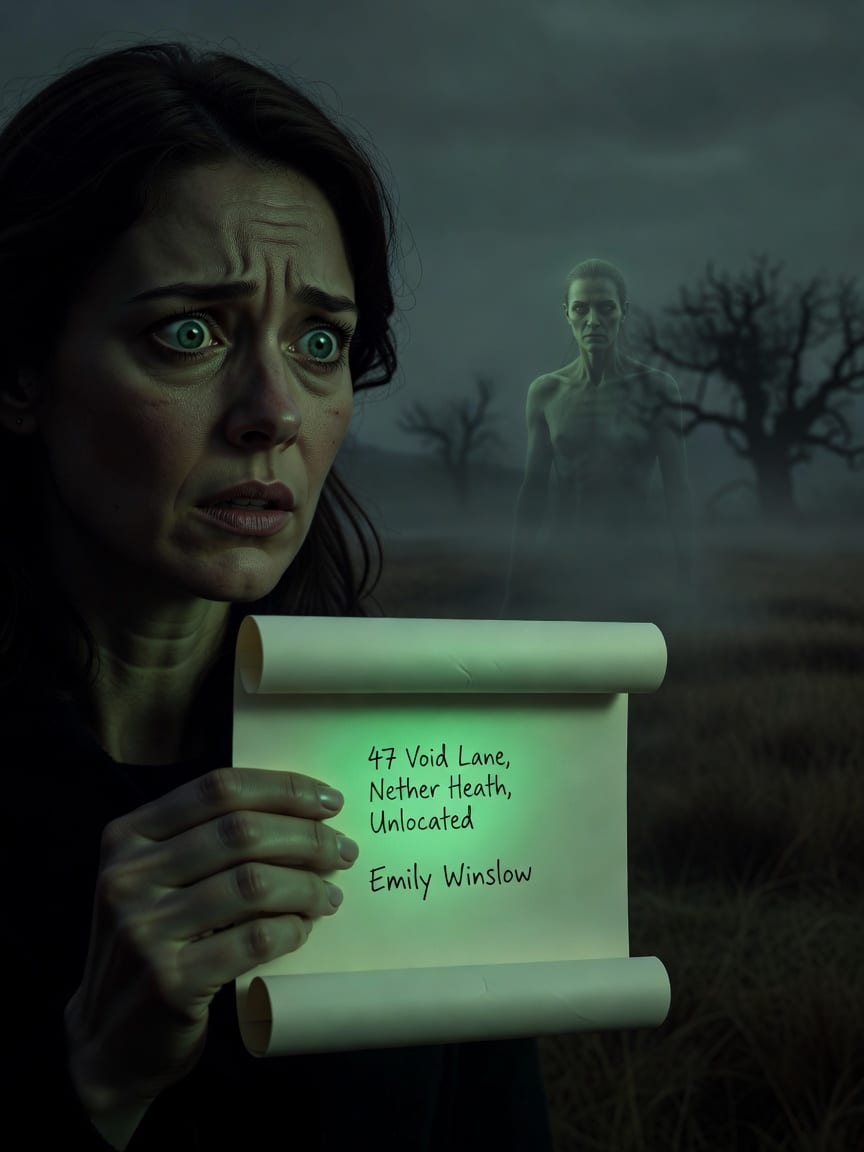
My change-of-address card arrived today. It said I'd moved to a house I'd never seen, on a street that didn't exist. And it was signed with my own hand, a month from now.
A crisp, cream-colored card on my kitchen counter informed me I'd moved to 42 Willow Creek Lane, an address that didn't exist. The signature was my name, Emily Winslow, a chillingly precise ghost of my own handwriting. But then I found an old 1947 ledger, listing 42 Willow Creek Lane and a signature identical to the one on my card.
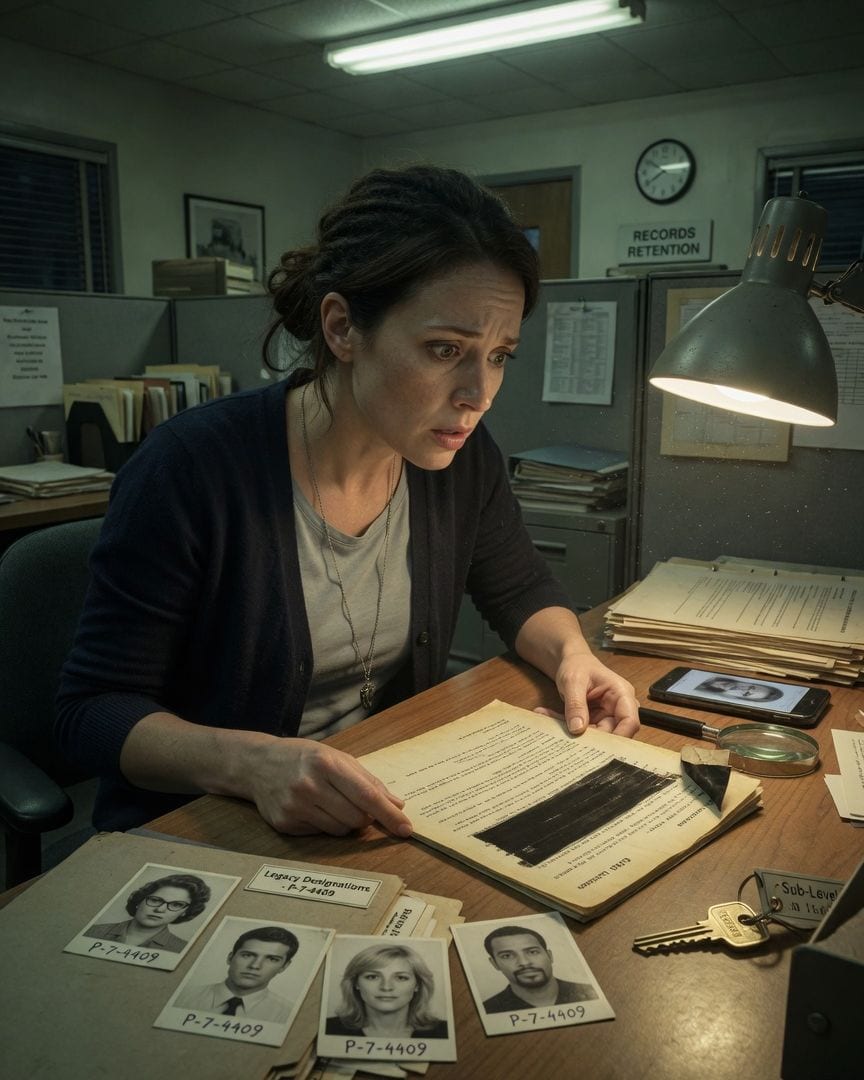
My passport file has four strangers' faces in it. They all share my number, issued since 1966, and none were ever surrendered.
I went to renew my passport, expecting a routine process. Instead, the clerk found four prior applications under my number, each with a different name and face, all 'issued and not surrendered.' Digging deeper, I uncovered a redacted memo that linked one of these mysterious designations to my own childhood street and my mother’s maiden name, years before I was even born.
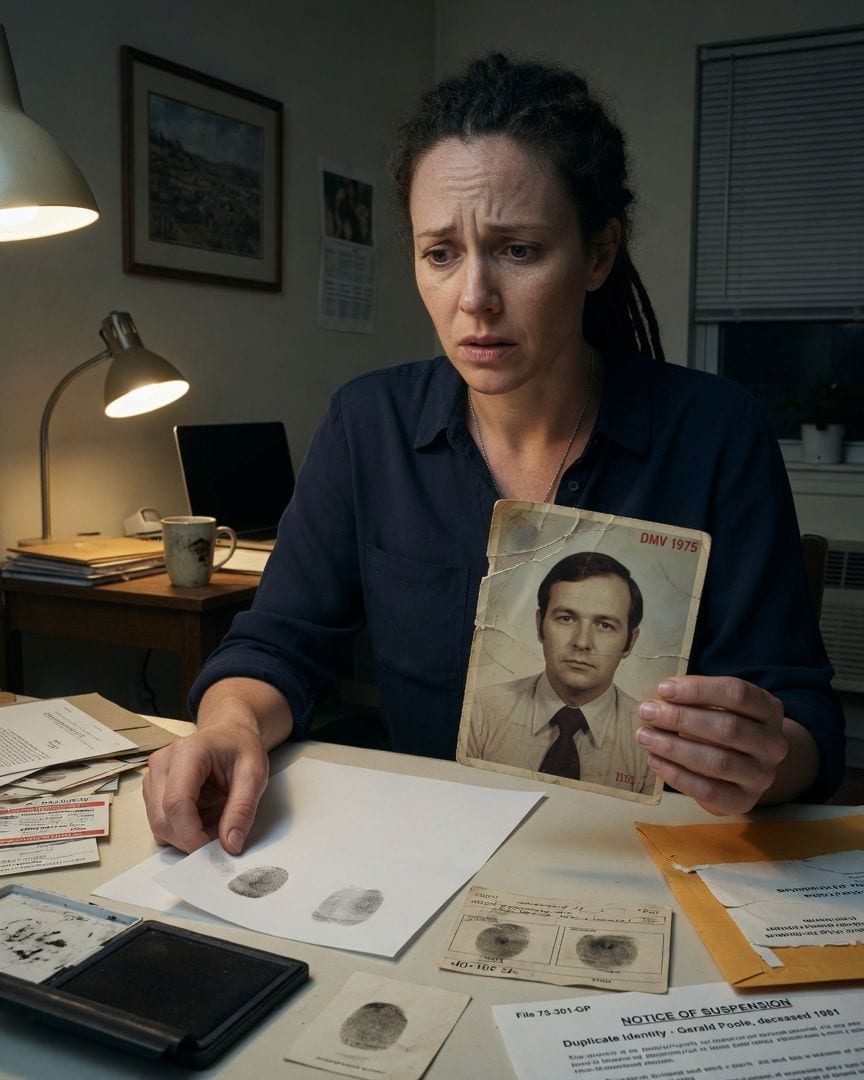
My fingerprints match a dead man's DMV file. They say my face is his. Gerald Poole, licensed 1975, died 1981. The DMV won't renew my license until I resolve his death.
I like things to run smoothly, so a DMV letter about my license suspension was just a nuisance. But it claimed my identity was an exact match for a man declared deceased in 1981, and the archived photo and fingerprints they sent were undeniably my own.