My own signature, pressed hard into a pharmacy log, shows I collected a drug I've never been prescribed. I was two hundred miles away at a funeral that day.
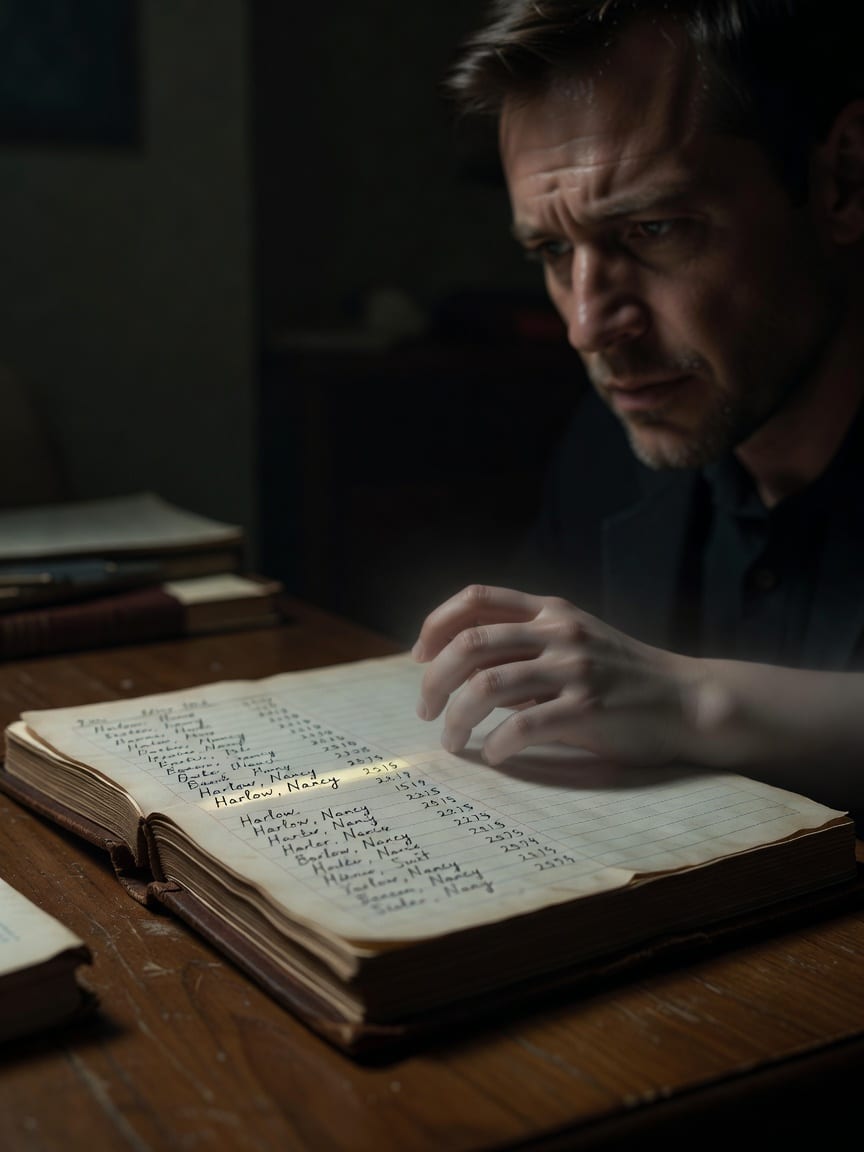
My own signature stared back at me from the pharmacy log, pressed hard enough to dent the sheet beneath. Nathaniel Galloway, my chemist, had pulled it out with a patient sigh, pointing to the line for the 9th.
"Controlled substance, Nancy. Says here you collected it at 4:20pm." My heart hammered against my ribs. I knew the looping N, the sharp H. It was unmistakably mine.
But on the 9th, I was two hundred miles away, burying my aunt. I hadn't been to this pharmacy, let alone collected a prescription for a drug I'd never been prescribed. Nathaniel, usually so jovial, saw my face.
"You sure, Nancy? It's a strong sedative. You'd remember." I remembered the eulogy, the damp earth, the long drive. I remembered every minute of that day, and not one of them included standing at his counter.
The log, however, insisted otherwise, a cold, unyielding fact in black ink. My own hand had signed it, yet my memory held no trace.
I left the pharmacy with a churning stomach, clutching the photocopy Nathaniel had reluctantly given me. The signature, so familiar, felt alien. Back home, I pulled out my digital calendar, cross-referencing flights and hotel receipts from the funeral.
My timeline was solid, unyielding. Every hour accounted for. I even had photos of the reception, timestamped, showing me clearly at the wake at 5:30pm, meaning a 4:20pm pickup two hundred miles away was physically impossible.
There was no gap, no forgotten moment where I could have driven back, picked up medication, and returned. This wasn't a simple mistake. A few days later, a cryptic letter from my bank arrived.
A notification about an unusual withdrawal from my checking account. It was a significant sum, nearly five hundred dollars, taken from an ATM in the very town where the pharmacy was located. And the date? The 9th.
The exact same day. My breath hitched. I found the accompanying withdrawal slip in the envelope. The paper was thin, but the signature, scrawled across the digital line, was mine.
The identical looping N, the same sharp H. It was a perfect match to the pharmacy log.
I stared at the bank withdrawal slip, my own looping signature stark against the printed date. It was the same handwriting from the pharmacy log, the same impossible date.
My hand trembled as I held it up against the funeral program from two hundred miles away, the faded ink of the eulogy blurring before my eyes.
The numbers, the dates, the looping ink – they all insisted I was in two places at once, collecting a drug I didn't know and withdrawing money I didn't remember. This wasn't a clerical error.
This was a deliberate, impossible act.
The bank’s fraud department was sympathetic but unhelpful. "The signature's yours, Ms. Harlow. It's an open-air ATM, no camera footage retained that far back." They closed the case.
Desperate, I found Joel Russo, a retired handwriting expert with a reputation for meticulousness.
He studied the pharmacy log and the bank slip under a magnifying glass, then compared them to samples of my actual signature from credit card slips and old checks. Days later, his verdict came back, clipped and professional.
"No doubt, Ms. Harlow. These are genuine. Your hand formed these letters, applied this pressure. There's no indication of forgery, no trace of hesitation or unnatural strokes." He looked at me, a flicker of concern in his eyes.
"Are you absolutely certain you weren't there?" I was. His confirmation only deepened the chasm between my memory and the irrefutable evidence. I started tracing the drug itself.
Nathaniel had been evasive about the name, but the prescription code on the log let me look it up.
It was a powerful benzodiazepine, often prescribed for severe anxiety or insomnia, but also, in higher doses, used as a sedative or even an amnesiac. The pieces felt like they belonged to a puzzle I hadn't been given.
I remembered my adoption, a hazy period before age five. My parents had always been vague about my early years, saying it was a "difficult time."
My investigation led me to the County Records Office, a dusty labyrinth of files that smelled faintly of old paper and forgotten secrets. I requested records for the old County Orphanage, where I’d spent my first years.
The archivist, Kenneth Montgomery, a man with thin, gray hair and an air of quiet efficiency, eyed me with an unnerving calm. "The Orphanage files are...
extensive," he said, tapping a stack of folders on his desk, the sound hollow in the silent room. "Closed for decades, you know. Not many inquiries these days."
He was helpful, almost too much so, retrieving boxes of yellowed documents from the back. But his gaze lingered a moment too long when I mentioned specific dates around my adoption, a subtle shift in his otherwise placid expression.
A few days later, I found a small, unmarked envelope tucked under my windshield wiper when I returned home. Inside was a single, grainy photograph.
It was a blurry shot of me, taken from a distance, walking out of the County Records Office. No note, no message, just the implied warning. Someone knew I was digging. Someone was watching.
The quiet unease solidified into a cold, hard knot of fear.
I confronted Kenneth Montgomery again, clutching the photograph so tightly the corners bent. He didn't flinch. He just looked at the photo, then at me, his eyes devoid of surprise. "I understand your concern, Ms. Harlow.
Some of these older files... they're sensitive. The Orphanage had its share of unusual cases." He paused, his eyes unreadable, the fluorescent lights humming softly above us. "What exactly are you hoping to find?"
I pressed him, my voice tight, describing the impossible signatures, the drug, the bank withdrawal, the blank spots in my early memory. His calm facade cracked just a fraction. A muscle twitched in his jaw. "There were...
protocols," he admitted, lowering his voice, leaning forward slightly over the heavy oak desk. "Certain children, particularly those without family, were deemed... eligible for specialized care. To ensure their smooth integration into new homes."
He reached into a locked drawer and pulled out a faded ledger, its cover worn smooth, open to a page titled "Project Nightingale." Beneath it, a list of child names and dates, rows and rows of them.
My breath caught as I saw a familiar name, "Harlow, Nancy," with a date corresponding to my fifth birthday. Next to it, a code: "B-7, Maintenance Protocol Initiated."
The drug I'd seen in the pharmacy log, the benzodiazepine, was listed as a key component of "B-7" in a small, almost illegible handwritten note in the margin. The ledger was sparse on details, but the implication was chilling.
The Orphanage wasn't just a place for lost children; it was a factory for something far more sinister.
Montgomery, seeing my horror, quickly closed the ledger, his hands moving with an almost practiced speed. "These are old records, Ms. Harlow. Best left undisturbed."
He tried to usher me out, but my eyes caught a loose sheet of paper peeking from a nearby folder that had fallen open. It was an intake form, yellowed and brittle, with a faint crease down the middle.
My name, "Nancy Harlow," was printed at the top, along with a date from decades ago, just before my adoption. My hands shook as I pulled it free, a crude, childlike drawing attached to it with a rusty paperclip.
It was a sketch of a building, unmistakably a pharmacy, with "My Meds" scrawled beneath it in shaky, almost illegible handwriting.
The form fell from my hands, rustling as it hit the floor, the childlike drawing of the pharmacy staring up at me, its crayon windows like vacant eyes. "My Meds," it read.
Her own first name, "Nancy Harlow," printed above it. But the date on the form was decades ago, before her adoption, when she was five years old.
And the signature on the form, a child's shaky attempt, was uncannily the same as the one in the pharmacy log, years later. She was the subject. She always had been.
The full truth detonated when I finally tracked down Evelyn Thatcher, the former head of the County Orphanage, now living in a quiet retirement home on the edge of the county.
Her eyes, though clouded with age, held a sharp, unbothered calm that chilled me more than any fury. "Project Nightingale," she stated, without prompting, her voice clear and precise, "was about ensuring stability.
Some children, Nancy, needed a little extra help adapting. We matched them with families perfectly suited to their... unique needs." She explained how certain children, identified early for their impressionability, were subtly conditioned from a young age.
The sedative, "B-7," wasn't just for compliance; it was for memory suppression, for creating 'blanks' in their personal timelines where new identities could take root.
"The signatures," she continued, looking directly at me, "were often collected during these 'maintenance' periods, or by proxies trained to mimic the subject's hand. Sometimes, the children themselves, in a suggestible state, would sign.
The records had to be consistent, after all." She spoke of the bank withdrawals as "operational expenses," funding the proxies or the periodic "check-ups."
Every impossible record, every inexplicable signature, every blank in my early memory, suddenly clicked into a terrifying, coherent whole. I wasn't just observing the wrongness; I had been shaped by it.
Evelyn Thatcher smiled, a faint, unsettling curve of her lips. "You're a testament to our success, Nancy. A well-adjusted, productive member of society."
She gestured to a large, bound volume on her coffee table, its cover faded but imposing, the leather worn smooth with age and use. "The master ledger. It contains every subject, every protocol, every date. Decades of work."
My blood ran cold. This was the institution's own record, stating it plainly. It showed how many, like me, had been brought into Project Nightingale. It showed the systematic erasure, the careful management of lives, of memories.
Evelyn watched me, her calm gaze unwavering. "You can't undo it, Nancy. It's part of who you are. The program ensures it." I felt a cold dread settle deep within me.
There was no escaping this truth, no dismantling a system so deeply ingrained, so meticulously documented, so calmly accepted by its architect. The ledger contained not just my past, but the blueprints for countless others.
I reached for the heavy book, my fingers brushing against the worn leather. This wasn't a fight I could win, or even escape. I was already inside it, a living record of their success.
I left Evelyn Thatcher's home with the heavy ledger, its pages whispering secrets of stolen lives, its weight pressing down on me. The institution, though officially defunct, had left a pervasive, invisible mark.
My adoptive parents, when confronted, confessed to a limited knowledge, believing they were simply part of a "special adoption program" for "difficult children," unaware of the full extent of the manipulation.
They had loved me, in their own way, but their complicity, however unwitting, now felt like a betrayal.
The records office, under pressure from an anonymous tip – mine – eventually released more files, corroborating Thatcher's account, detailing the chilling scope of Project Nightingale.
The ledger sits on my desk now, a constant, heavy presence.
Sometimes, I find myself staring at my own handwriting in a grocery list, then comparing it to the signatures in the book, searching for the subtle differences, the ghost of another hand.
I remember the funeral, the eulogy, the two hundred miles. But sometimes, in the quiet hours, a flicker of something else surfaces—a faint, unsettling echo of a child's hand, a pharmacy door, a whispered instruction.
I write this now, not to escape, but to document. To be the record that, for once, tells the truth.
The last entry on the online forum read, "To be the record that, for once, tells the truth." It was posted under the name "Nancy Harlow." No further updates followed.
Her husband, Dean, found her at her desk, staring blankly at the open ledger. "Are you alright, dear?" he asked. She turned, a faint, wrong little smile on her face. "Is that so?"
If this one got to you
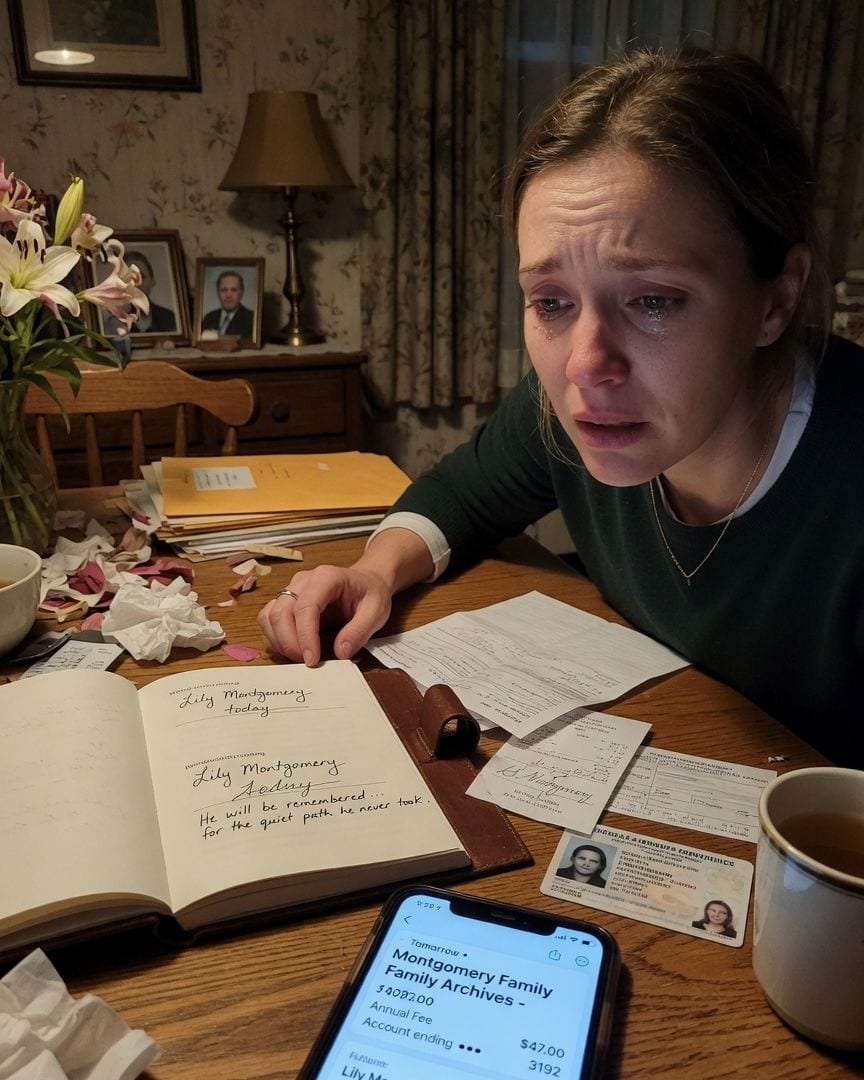
My handwriting was in the condolence book. Dated before my uncle died. Words I'd never choose.
At Uncle Howard's funeral, grief-stricken, I signed the condolence book. But later, flipping back through the pages, I found my own distinct handwriting on an entry dated the previous morning—before he had even died. The words beneath my name were chilling, a judgment I would never make.
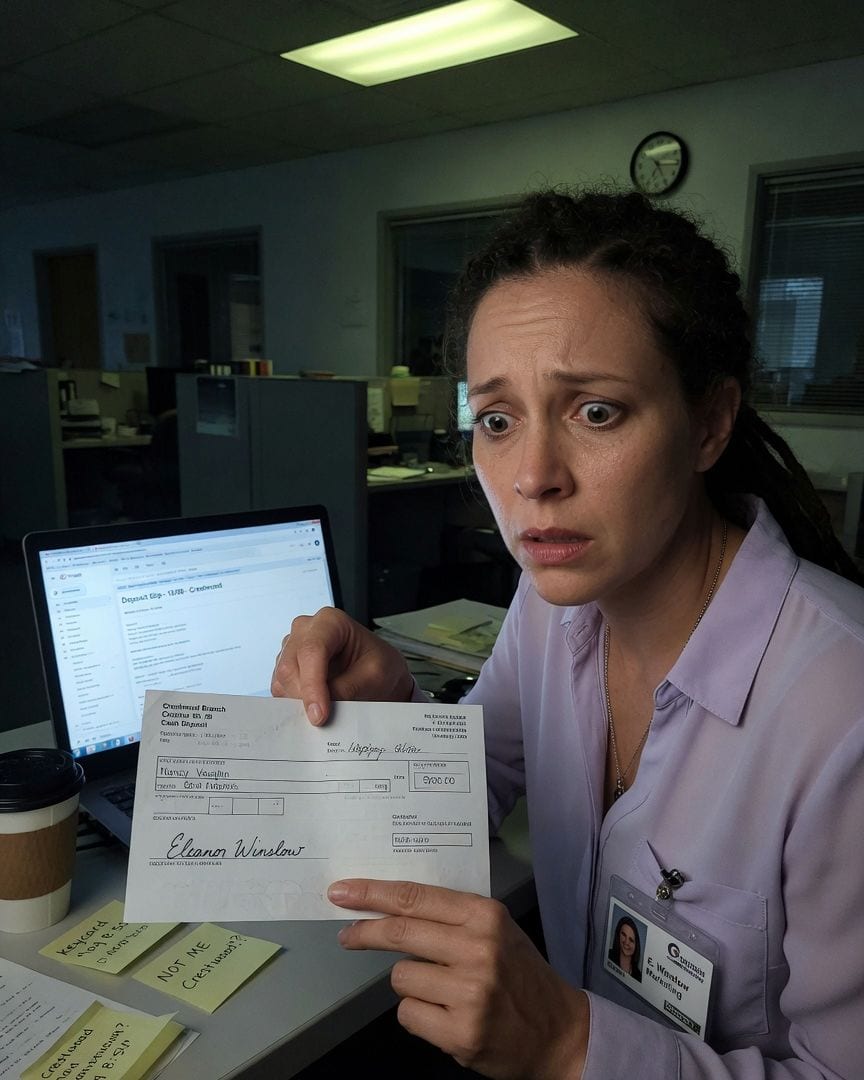
My bank statement shows a $900 cash deposit made in a town I've never set foot in, at 10:40 AM on a workday. I was at my desk, badged in. Two more landed since.
My bank statement showed a $900 cash deposit from a town I'd never visited, 150 miles away. I was at my desk, logged into work, all three times. But the scanned deposit slip arrived, clear as day, showing my own flawless signature.
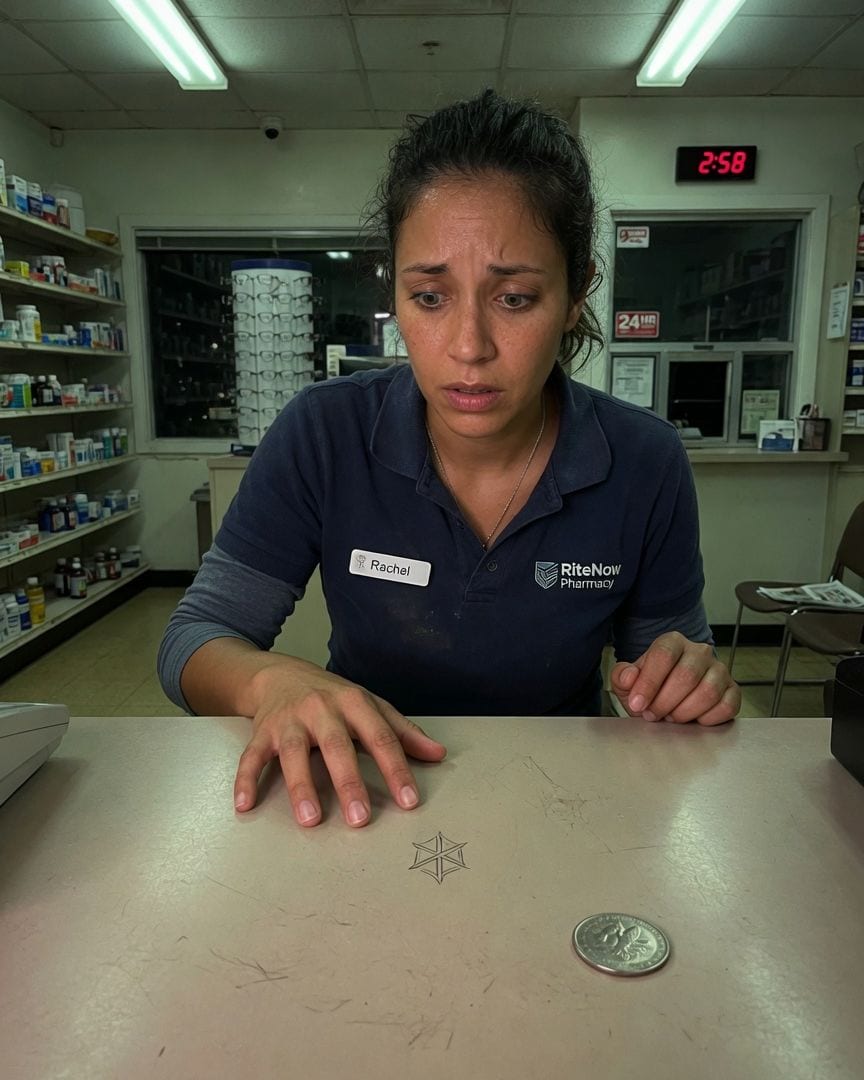
My pharmacy camera shows me talking to no one, handing a prescription across the counter to empty air.
Every night, my 24-hour pharmacy routine was anchored by Mr. Vale's predictable 3 AM visit for his heart prescription. But during a routine audit, I found no record of his visits, and security footage revealed me serving an utterly empty counter. Then, on the video, a tarnished silver coin appeared on the polished counter, left behind by a hand that wasn't there.
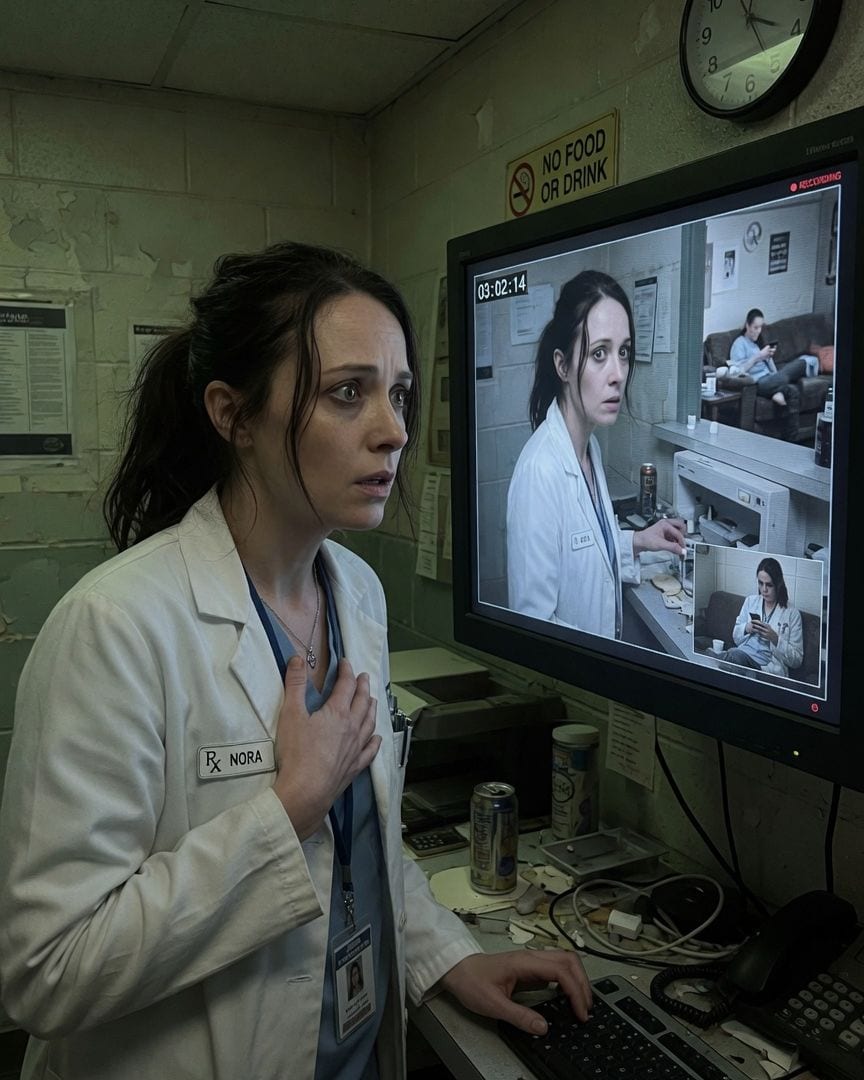
My pharmacy system logs show my hands dispensed a controlled drug at 3:02 AM. My hands were on a coffee cup in the break room, and the stock is gone.
The pharmacy logs showed a controlled substance dispensed under my login at 3:02 AM. I was in the break room, nowhere near the counter. But then the security camera showed my face, performing the dispense, a perfect but terrifying imitation.
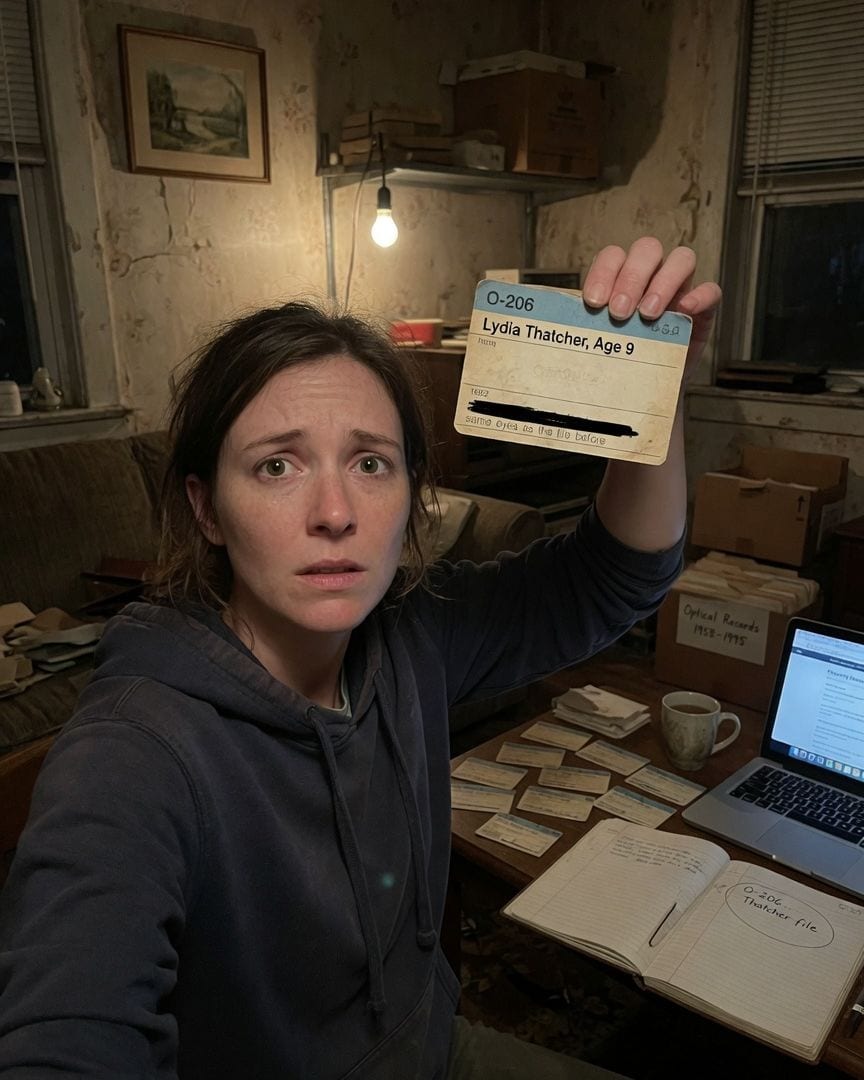
My own optical card is dated 1962, with my name on it. I wasn't born until 1993.
Sifting through old patient files from my former optical practice, I found my own O-206 card. It had my name, Lydia Thatcher, and my current home address printed on it. But the card was dated 1962, decades before I was even born, and a redacted note mentioned 'same eyes.'
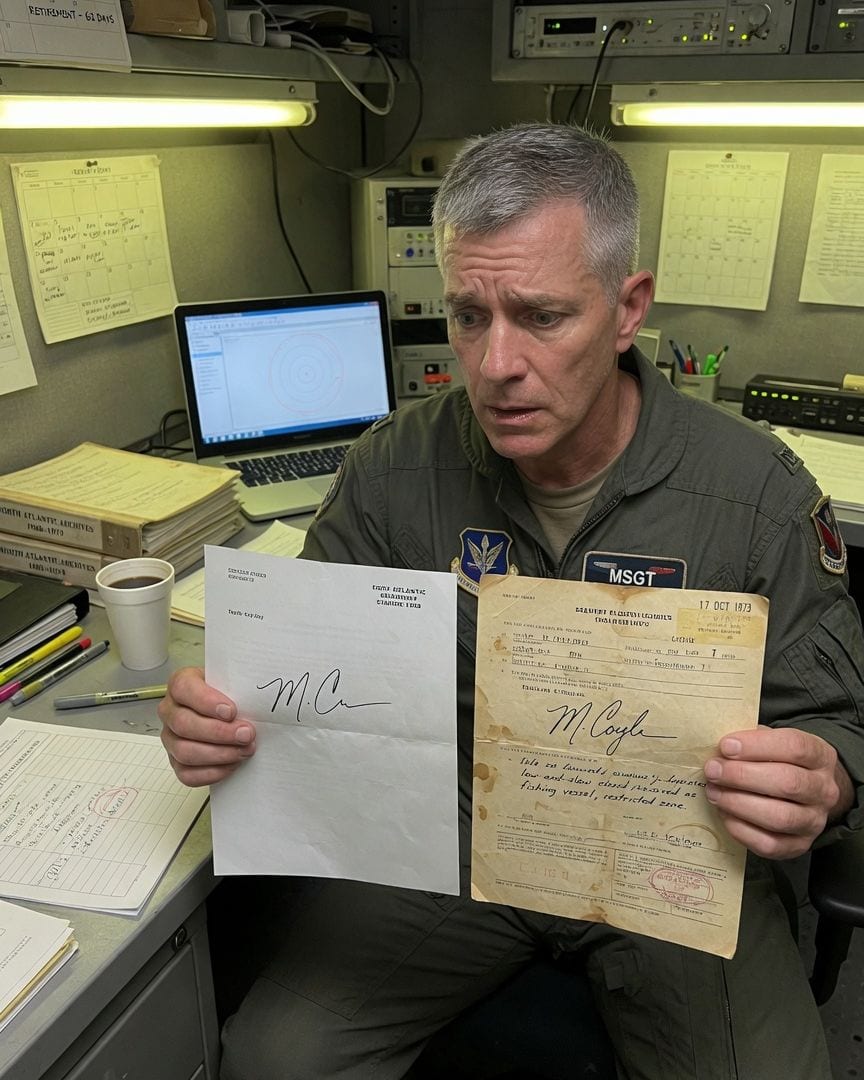
Master Sergeant Coyle was two months from retirement when his own signature appeared on a Cold War mission log from 1973, decades before he was born.
Master Sergeant Malcolm Coyle, two months from retirement, scanned the North Atlantic from his E-3 Sentry, its cabin humming through the perpetual twilight. His radar scope showed a silent, low-and-slow blip that vanished from fighter jets but remained on his screen, mirroring an identical ghost from the prior week. Digging through decades of archived logs, Coyle found a 1973 entry detailing the same impossible contact, stamped with his own squadron's seal. The duty officer's signature, with its distinctive flourish, was unmistakably his own—identical to his current papers—yet dated decades before he was even born. How could his hand have signed a lie from a time he didn't exist?