My pharmacy system logs show my hands dispensed a controlled drug at 3:02 AM. My hands were on a coffee cup in the break room, and the stock is gone.
The morning dispenses usually blurred together, a quiet rhythm of counts and cross-checks. Not today. My stomach tightened around the cold coffee cup in my hand as I scanned the system logs for the 3:00 AM hour.
Every entry bore the login of the pharmacist who’d filled it. Mine. But at precisely 3:02 AM, there it was: a controlled substance, drug name, quantity, patient, and my full login credentials. Signed off. Verified.
The problem? I’d been in the back break room, scrolling through my phone, half-asleep, not touching a single vial. My coffee was still hot then. I remembered the exact meme I’d scrolled past at 3:07 AM.
There was no way I’d stepped onto the floor.
I pulled the physical stock report. Sure enough, the controlled substance was short by exactly the amount listed in the impossible dispense. A void where the medication should be. And my name, digitally etched onto a hand-off I never made.
The quiet hum of the pharmacy, usually a comforting backdrop, felt suddenly loud, almost accusatory, the fluorescent lights too bright on that single, impossible line item. My hands felt cold, even around the warm mug. This wasn’t a mistake.
This was wrong.
I immediately flagged the discrepancy to Samuel Marsh, the night security guard. He was slumped in his chair in the small, cramped security room, an episode of something forgettable playing quietly on his phone.
“Think the system glitched, Nora,” he mumbled, barely looking up as I pointed at the monitor. “Happens.”
“Not with controlled substances, Samuel. Not with inventory missing.” My voice was sharper than I intended. “I need to see the CCTV footage. From 3:00 AM to 3:15 AM.”
He sighed, clicked a few keys, and brought up the feed. The grainy black and white flickered to life.
I watched myself, clear as day, walking into the break room at 3:00:12 AM, phone already in hand, and settling onto the worn couch. That was right. That was me.
Then, at precisely 3:01:45 AM, a figure emerged from the back storage area, moved with a strange, deliberate grace towards the controlled substance cabinet. It wore my uniform, my hair was tied back just like mine, its build identical.
It opened the cabinet, retrieved the specific drug, and moved to the dispense counter. My heart started to hammer against my ribs.
The figure processed the script, just as the log said. My login. My dispense.
As it turned slightly to place the vial into the chute, the face came into clearer view, catching the low light from the counter display. It was me. My face. My eyes. But something was off.
The way the light caught its eye seemed… hollow. The slight stiffness in the shoulders, which I knew from countless night shifts were usually relaxed after an hour or two. It was a perfect, terrible imitation.
My breath caught, a silent gasp trapped in my throat.
I tried to rationalize it. A trick of the light, a delayed recording, a reflection. Anything. But the figure's movements, though precise, lacked my familiar rhythm.
It was a performance, flawless save for a subtle, unsettling fluidity, a fraction too smooth. It didn't breathe the way I did. The screen showed me, but it wasn't me.
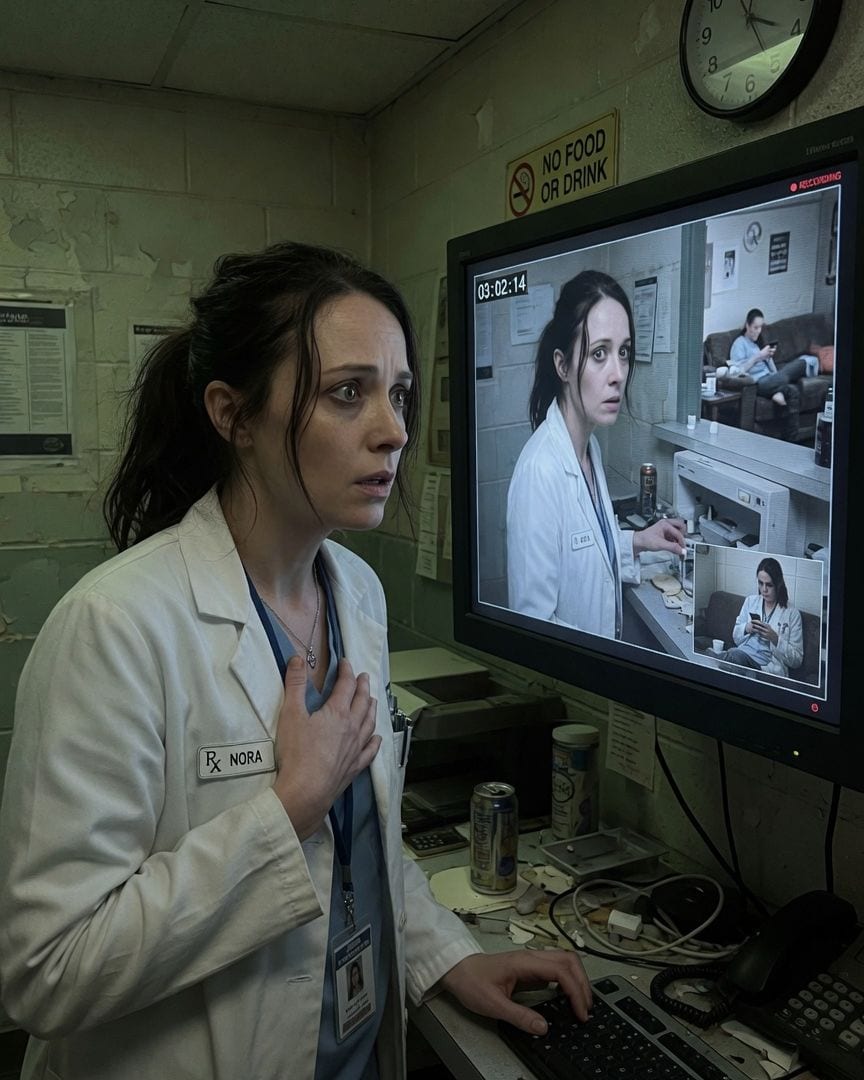
Nora freezes, staring at the grainy monitor in the security room. On the screen, a figure with her face, her uniform, her exact posture, stands at the pharmacy counter, completing the controlled substance dispense.
It turns its head slightly, as if looking directly at the camera, and the movement is just a fraction too slow, too smooth, an echo of her own. Her breath catches, a silent gasp trapped in her throat.
The figure finishes, places the vial in the dispense chute, and then, without looking back, walks silently into the same back storage area it emerged from.
On a smaller inset frame, visible through the breakroom door, the real Nora is still scrolling on her phone. The two images, split across time on the same screen, are impossible.
The next few days passed in a fog. Every quiet hum of the pharmacy, every flicker of the overhead lights, felt loaded with a new, insidious meaning.
I replayed that security footage endlessly, zoomed in, slowed down, trying to find a flaw, a trick of light, anything that would make it less impossible.
Finally, I showed it to Leonard Kingsley, our manager. He watched the clip on my phone, his face a mask of practiced neutrality. His eyes, usually sharp, seemed distant, almost fixed on something beyond the screen.
When it finished, he cleared his throat.
“Interesting,” he said, his voice flat. “Likely a digital artifact, Nora. Or a reflection anomaly, perhaps.” He dismissed it with a wave of his hand, as if swatting away a fly.
His calm, almost practiced dismissal only deepened the knot of unease in my gut. He didn’t question it, didn’t try to find a solution. He simply… moved on.
I spent my next shifts poring over system logs from other nights, looking for any similar phantom dispenses under my login. Nothing. It was a singular event. I cross-referenced inventory with dispense logs for every controlled substance.
Everything else appeared to reconcile perfectly. Just my 3:02 AM incident.
Desperate, I even tried to replicate the figure's movements myself, studying my reflection in the pharmacy's dark windows at night. I walked with the same deliberate pace, lifted my arm to the cabinet, turned my head to the side.
I searched for that subtle 'wrongness' I'd felt watching the video. The more I looked, the more the figure on screen became both undeniably me and undeniably alien. A perfect mimicry, but somehow, it didn't breathe.
The silence of the night shift, once comforting, now felt like a held breath, waiting.
Leonard Kingsley started observing me. Subtly at first. He stopped by during my night shifts more often, ostensibly to 'check on inventory' or 'review schedules.'
His eyes would linger on me, not in a predatory way, but with a quiet, assessing gaze that made my skin crawl. Like he was watching a clock, or a mechanism, rather than a person.
One night, he found me in the stock room, buried under stacks of old inventory sheets I’d pulled from a back shelf, looking for any other historical anomalies. He cleared his throat, a soft, deliberate sound that made me jump.
“Everything in order, Nora?” he asked, his voice soft, almost a warning. It had a peculiar, smooth quality, like polished stone.
“Just checking discrepancies,” I replied, trying to sound casual, my heart thumping against my ribs. I picked up a random sheet, pretending to study it.
Leonard smiled, a tight, unreadable expression that didn't reach his eyes. “Some things,” he said, his gaze drifting around the cavernous stockroom, as if addressing the shelves themselves, “are best left undisturbed. The system has its rhythms.”
He paused, then casually mentioned a 'former colleague' who became 'overly focused' on 'minor anomalies' and ended up transferring to a much smaller, quieter pharmacy out of state. “A shame,” he added, but his tone lacked any genuine regret.
The implication hung heavy in the air, thick enough to taste. Dig too deep, and you might disappear. Not literally, maybe, but certainly from this place. I felt a cold dread settle over me, realizing my investigation had been noticed.
Leonard wasn't just a manager; he was a guardian of something I'd barely glimpsed, something he clearly wanted me to leave alone.
The veiled threat, more than anything, solidified my resolve. I couldn't ignore this. The next morning, I confronted Leonard directly. I brought my phone, the footage looped on the screen.
“This isn't a glitch, Leonard,” I said, my voice steady despite the tremor in my hands.
I held the phone out, then pulled up a quick video I’d taken of myself walking to the counter yesterday, comparing it frame by frame to the 3:02 AM footage. “Look at the hesitation, the way the light reflects.
This is someone, or something, pretending to be me. And you know it.”
Leonard’s calm façade finally cracked. He sighed, running a hand over his face, pushing his glasses up his nose. The weight of years seemed to settle on his shoulders. “It’s not pretending, Nora,” he said, his voice low, resigned.
“It is you. Or a part of you. In a way.”
He leaned back in his chair, staring at the ceiling, as if gathering his thoughts. “This pharmacy,” he began, his voice flat, “it has a… resident. Not a ghost. Not a person in the way you mean.
More like a routine. A presence that has been ‘filling shifts’ for decades.”
My blood ran cold. “What are you talking about?”
“It takes on the appearance of the current overnight pharmacist,” he explained, finally looking at me, his eyes now holding a profound weariness. “Always at 3:02 AM. Always a controlled substance. It’s just… what it does.”
He looked away, out the window at the morning light. “The building itself, or something within it, requires these dispenses. It’s a maintenance cycle. An ancient hunger that predates the pharmacy, adapting to its current function.”
He told me of other pharmacists who noticed. Those who became ‘overly focused.’ How they tried to fight it, tried to expose it. “They were moved on,” he said, the phrase sounding clinical, absolute. “Transferred, retired early, or just… left.
The owner prefers things to remain… harmonious.”
The impossible log entry, the phantom figure on camera, the subtle wrongness – it all snapped into focus with a sickening click. It wasn't a person. It was an ingrained, adaptive pattern, using my identity, my access, as a key.
The dread I felt wasn’t from malice, but from the sheer, indifferent inevitability of it. A cold, mechanical hunger, running on a decades-old schedule.
Leonard, seeing the dawning horror on my face, offered a grim piece of advice. “You want to understand? Really understand? Look at the past. But don't say I didn't warn you.”
He gestured vaguely towards a locked, dusty cabinet in his office, a forgotten relic built into the wall behind a stack of supply boxes.
That night, my hands trembling, I used a spare key I'd 'found' on a forgotten hook in the supply closet earlier that day – an old, tarnished brass key that felt heavy and cold in my palm.
It slipped easily into the lock of Leonard's cabinet. The old metal groaned open, releasing a stale, musty smell of ancient paper and dust. Inside, stacks of yellowed night shift logs, thick binders, some dating back to the 1970s.
I pulled out the top file, a heavy binder labeled 'Overnight Dispenses - 1978.' My fingers, slick with sweat, flipped through the brittle pages, past legitimate entries for cold medicine and antibiotics. And then I saw it.
A dispense log for a controlled substance, dated 3:02 AM. Signed by 'Patricia Kowalski,' the pharmacist on duty that year.
My stomach dropped. I pulled another binder, then another. 'Overnight Dispenses - 1985,' 'Overnight Dispenses - 1993.' Each time, the same thing.
The last log from the 1970s fell open in my hands, revealing another 3:02 AM controlled dispense, signed by a 'Patricia Kowalski.'
My finger traced the name, then skimmed down the column of identical impossible entries, stretching back through the years, each one a different pharmacist, each one a phantom dispense.
The file felt cold in my hands, a record of quiet, ceaseless consumption.
The next day, I confronted Leonard with the binders, slamming them gently on his desk. The dull thud echoed in the quiet office. “This isn’t just about me, is it? It’s been happening for decades.”
Leonard didn't even flinch. He just nodded, his face etched with a profound, weary resignation. “The building was built on something ancient, Nora. Something that required regular… offerings. When it became a pharmacy, the ‘offerings’ adapted. Controlled substances.
Always at 3:02 AM. It's a cyclical hunger, a routine. It takes the form of whoever is on shift, uses their access, and then… it’s done until the next cycle.”
He explained that the facility’s owners, generations ago, had made a silent pact to maintain the building’s ‘rhythm.’ To keep it ‘healthy,’ ensuring the smooth operation of the business above.
He was simply the latest in a long line of managers tasked with monitoring and covering up the ‘Night Dispenser’s’ activities.
He spoke of the subtle ways it influenced the staff, ensuring breaks were taken at the right time, that no one lingered at the counter around 3 AM. Not maliciously, he insisted, but as an instinct.
Like a spider weaving its web, it merely created the conditions for its routine.
The horror solidified: it wasn’t a monster to be fought, but an integral, unchangeable part of the very structure I worked within. A quiet, horrifying symbiosis.
Every missing vial, every impossible log entry, every ‘glitch’ I’d ever heard about in passing – it all now made chilling, perfect sense.
I tried to break the cycle. That night, I refused to take my break at 3 AM. My phone stayed in my locker.
I stood vigil at the counter, my eyes fixed on the back storage door, a small, irrational hope flickering that if I was there, truly present, it couldn’t be.
As 3:00 AM approached, the air in the pharmacy grew heavy, thick with an unseen pressure. The fluorescent lights above flickered, a barely perceptible hum filling the space, vibrating in my teeth.
At 3:01:30, the back door began to open, slowly, silently, without a sound from its hinges.
My heart pounded, a frantic drum against my ribs, but I held my ground, gripping the edge of the counter until my knuckles were white.
The door opened wider, revealing the dim interior of the storage room. A form began to coalesce in the shadows, indistinct at first, then solidifying. It was me, stepping out into the pharmacy.
The ‘other Nora’ looked at me, a perfect mirror image, its eyes dark, unblinking. It didn't speak. It didn't move with aggression. It simply stood there, blocking its own path to the controlled substances cabinet.
The silence stretched, taut and unbearable, broken only by the frantic beat of my own heart. Then, a profound, overwhelming weariness washed over me, like a physical blow. A sudden, debilitating urge to simply rest. My knees buckled.
I stumbled backward, away from the counter, away from the waiting figure, and collapsed onto a nearby stool, my head lolling back against the wall. I couldn't fight it. I couldn't even stay awake.
My eyelids grew heavy, my will dissolving into an all-consuming lethargy. The ‘other Nora’ watched me, then slowly, deliberately, stepped past the counter, its form shimmering faintly as it reached for the controlled substance cabinet.
My last conscious thought was the metallic click of the cabinet lock.
I woke an hour later, slumped on the stool, a dull ache in my neck and the taste of stale fear in my mouth. The pharmacy was quiet. The air was normal. The controlled substance cabinet was locked.
The dispense log showed the 3:02 AM entry, signed by me. The stock was short. Everything was back to its horrifying, normal routine.
Leonard Kingsley found me later, doing his usual morning rounds. He saw me, tired but otherwise fine. He offered a sympathetic glance, a silent acknowledgment of my failed defiance. He didn't say a word. He didn't have to.
The next night, I took my break exactly on time. I sat in the back, scrolling my phone, trying not to listen for the faint, impossible sounds from the pharmacy floor.
The overhead lights in the old pharmacy hum with a steady, unyielding rhythm now.
The system logs tick over, waiting for 3:02 AM, and I just watch the clock.
If this one got to you
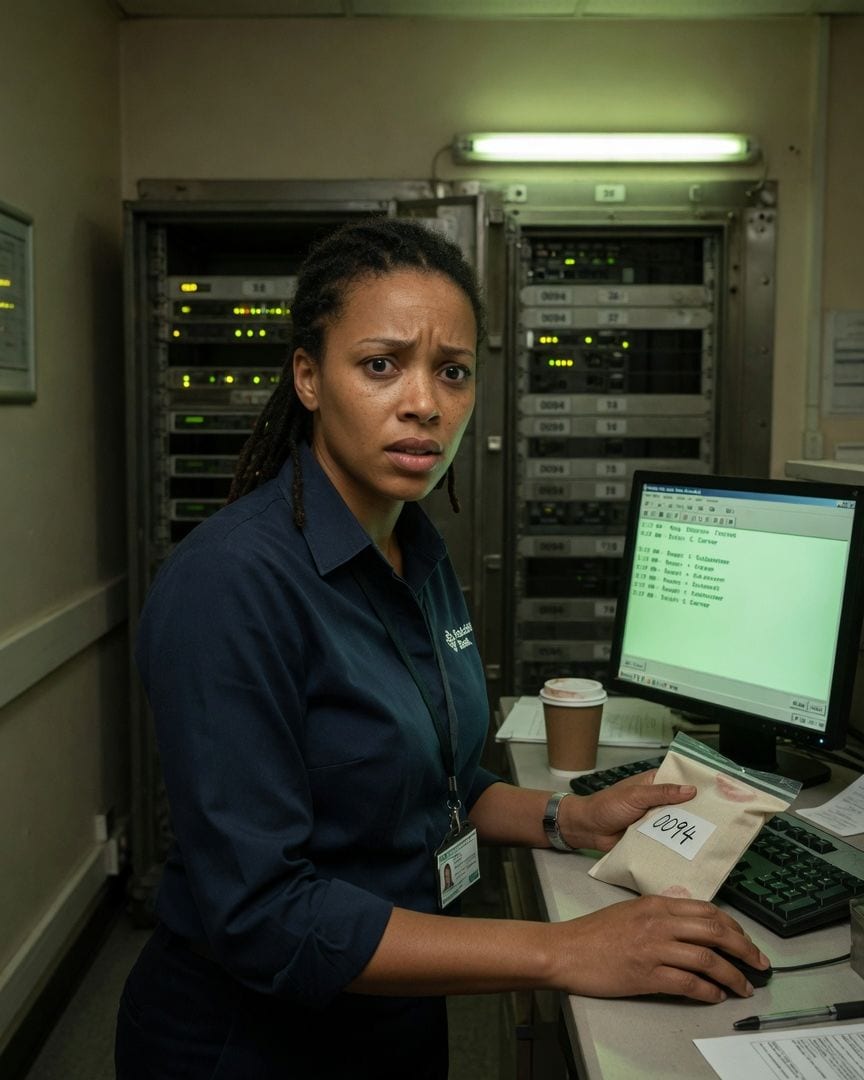
My night-deposit log shows a bag posted at 3:17 AM. My teller number, my count. Bag 0094 is still sealed in the safe, untouched.
I prided myself on precision as a night teller, logging every entry. But at 3:17 AM, a deposit appeared logged under my teller number that I never processed. Security footage then revealed a figure in my uniform, wearing my ID badge, with a blank photo slot.
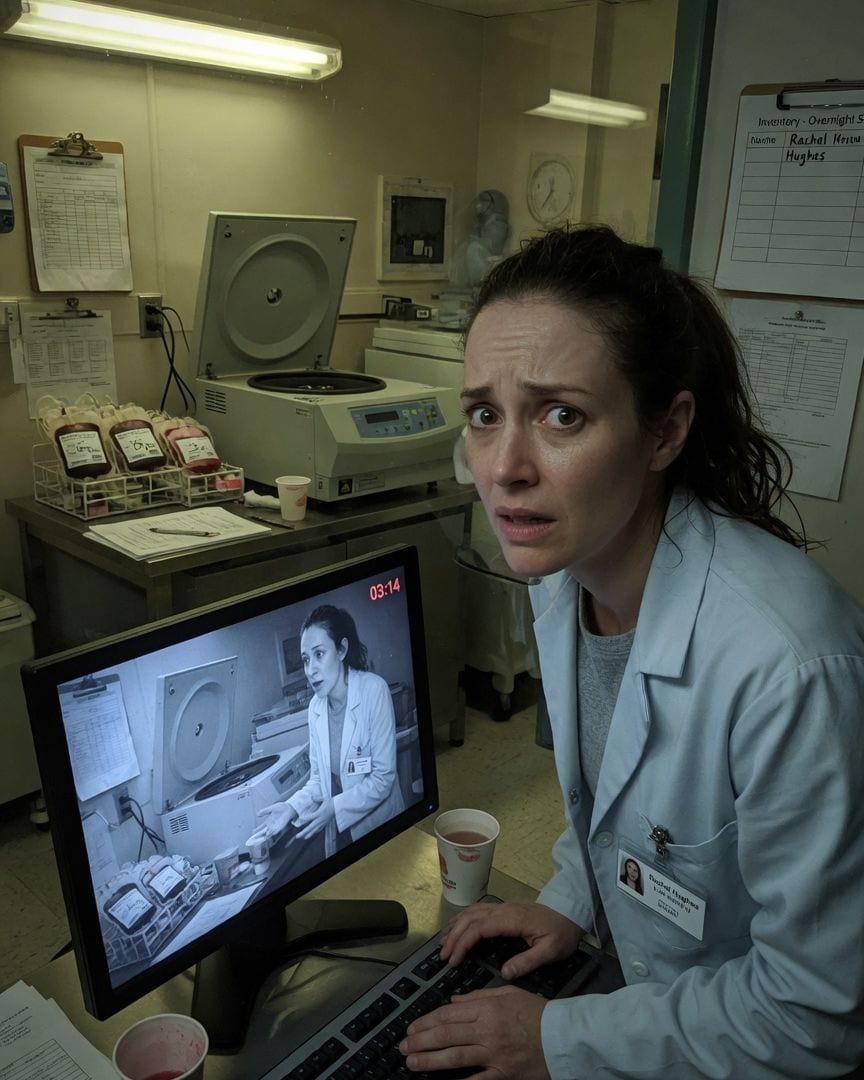
My security footage shows me talking to thin air, alone in the lab.
Working the overnight shift at the blood bank was my steady routine, a quiet rhythm shared with my colleague, Grace. She was as real as the blood I processed, until my director stated she had never been credentialed at our facility. My mind raced, trying to grasp how a person so vivid could simply not exist.
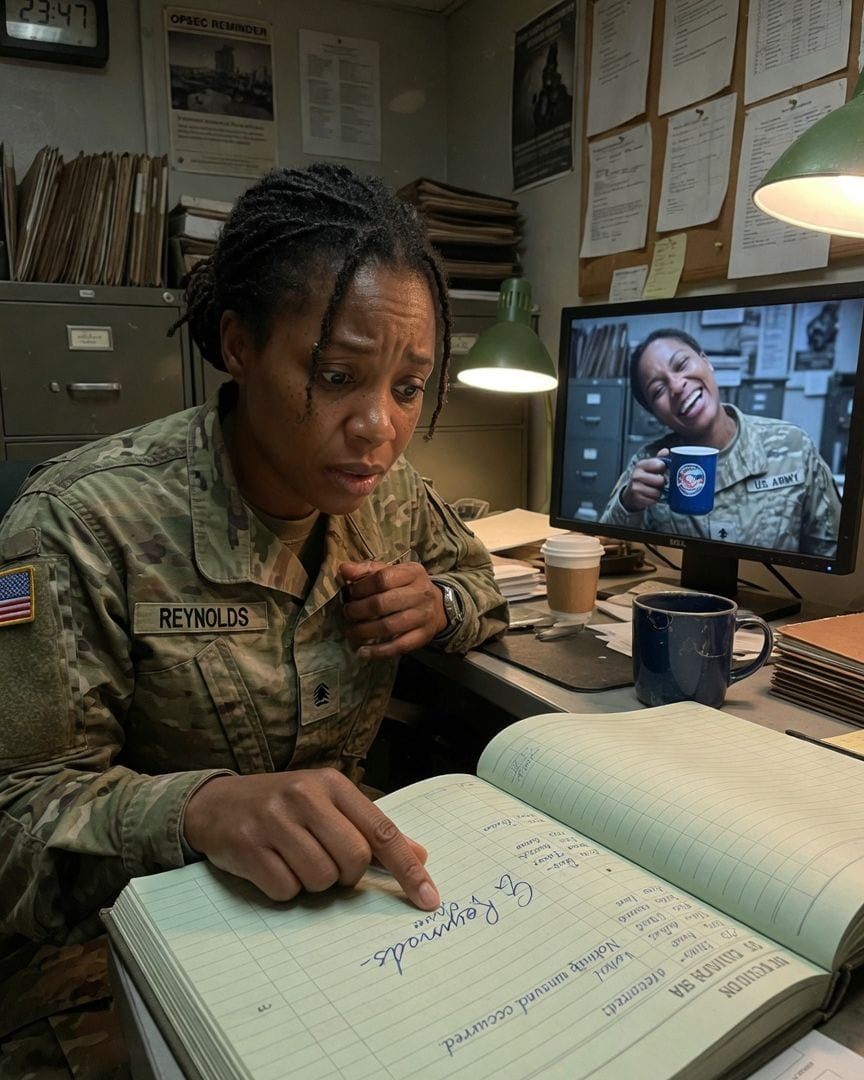
Lieutenant Grace Reynolds saw her own signature in the staff-duty log for a shift she never worked. The security footage then showed 'her' leaving a coffee mug she’d never once seen.
Lieutenant Grace Reynolds hunched over the battalion staff-duty log, the fluorescent hum of the records room a monotonous backdrop to her dry inventory audit. Her gaze snagged on an entry from three weeks prior: her own unmistakable signature, closing out a full 24-hour staff-duty shift she knew she had never worked. Security camera footage only deepened her unease, showing 'Grace Reynolds' moving with her familiar stride, laughing a shade too brightly, her head tilting a fraction too precise, like a flawless, chilling performance. But as the imposter turned to leave, she picked up and rinsed a chipped, dark blue ceramic coffee mug with a faded diner logo—a mug Lieutenant Reynolds had never once seen in her life. The air in the quiet room grew heavy, thick with the unspoken wrongness: if that wasn't her, then who was it?
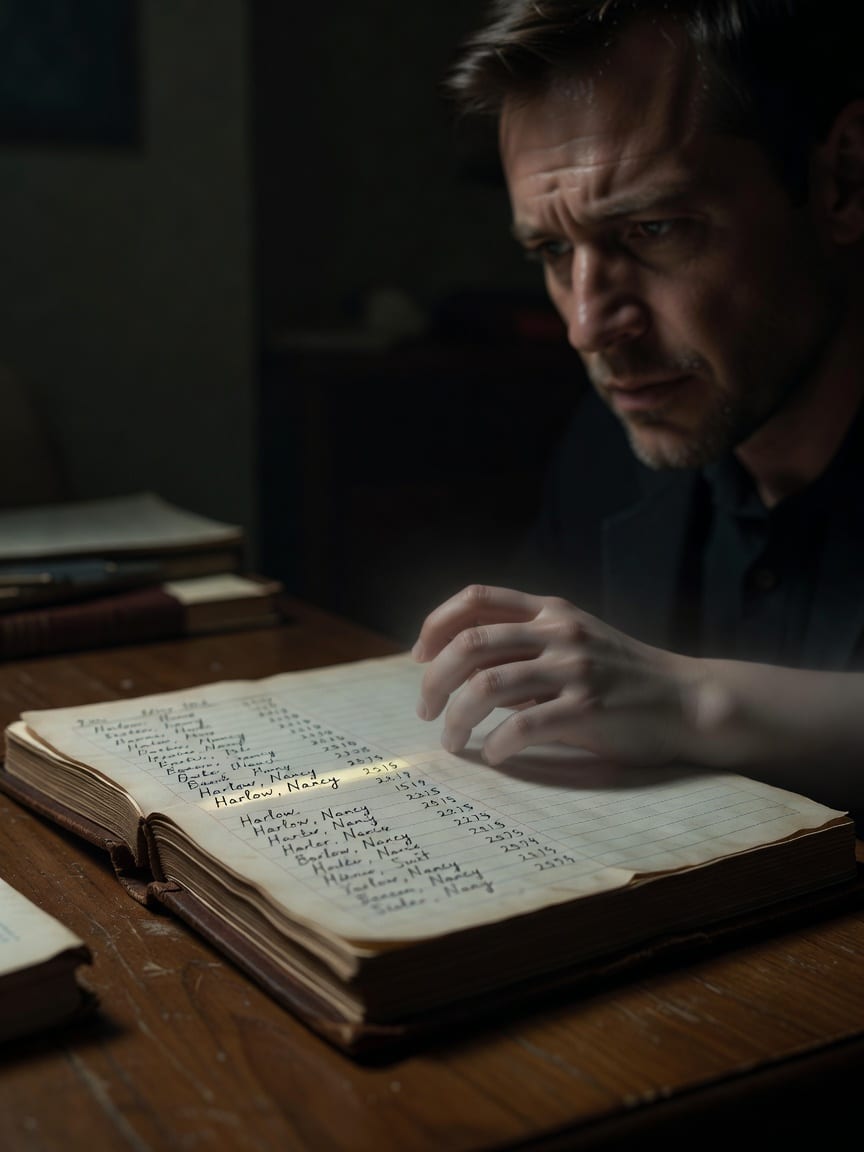
My own signature, pressed hard into a pharmacy log, shows I collected a drug I've never been prescribed. I was two hundred miles away at a funeral that day.
My chemist pulled out the pharmacy log, and my own looping signature stared back from the 9th. It insisted I'd collected a strong sedative at 4:20pm, but on that exact day, I was two hundred miles away burying my aunt. My memory held no trace of ever being there, yet the signature was unmistakably mine.
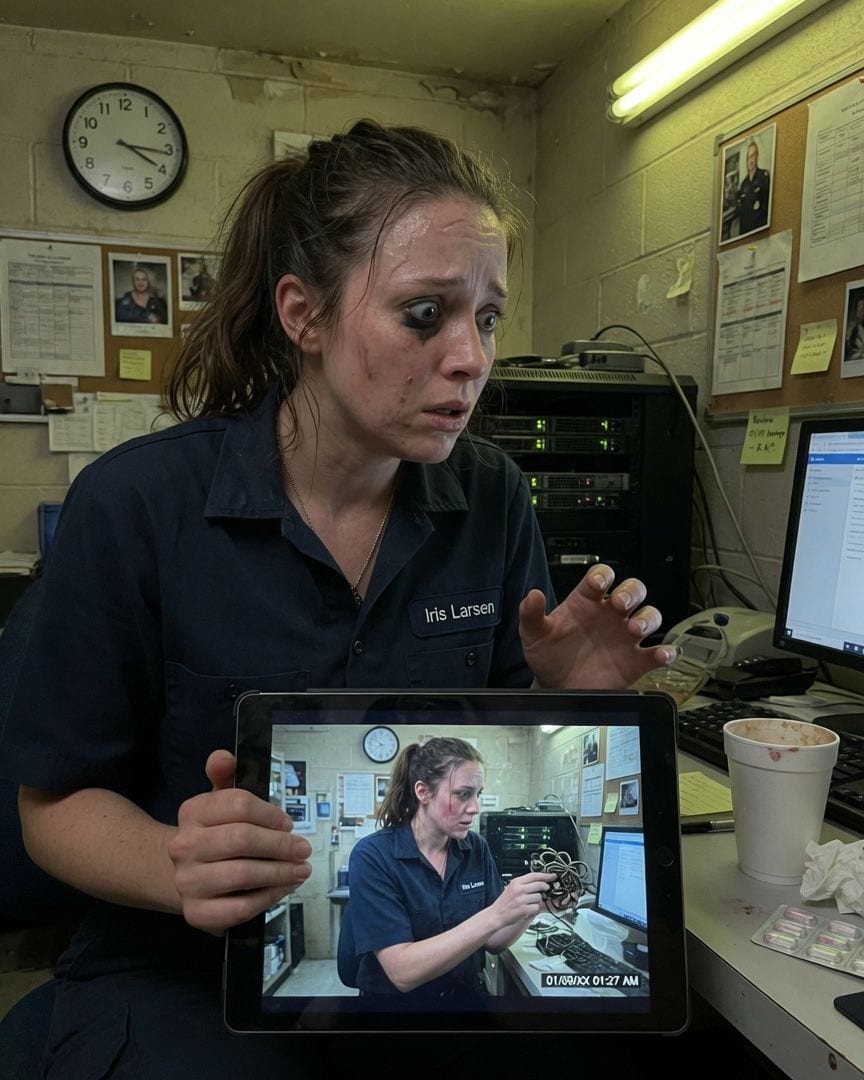
There are nine full minutes of me on the security tape, restocking the far aisle at 1:20am. I called in sick that night — I was home in bed and never left.
I was home sick with a fever, confirmed by my roommate. But then I saw myself on security footage, working my shift in the far aisle at 1:20 AM. My stomach dropped when I realized the aisle on the tape was subtly wrong, missing a display unit that had been there for a decade.
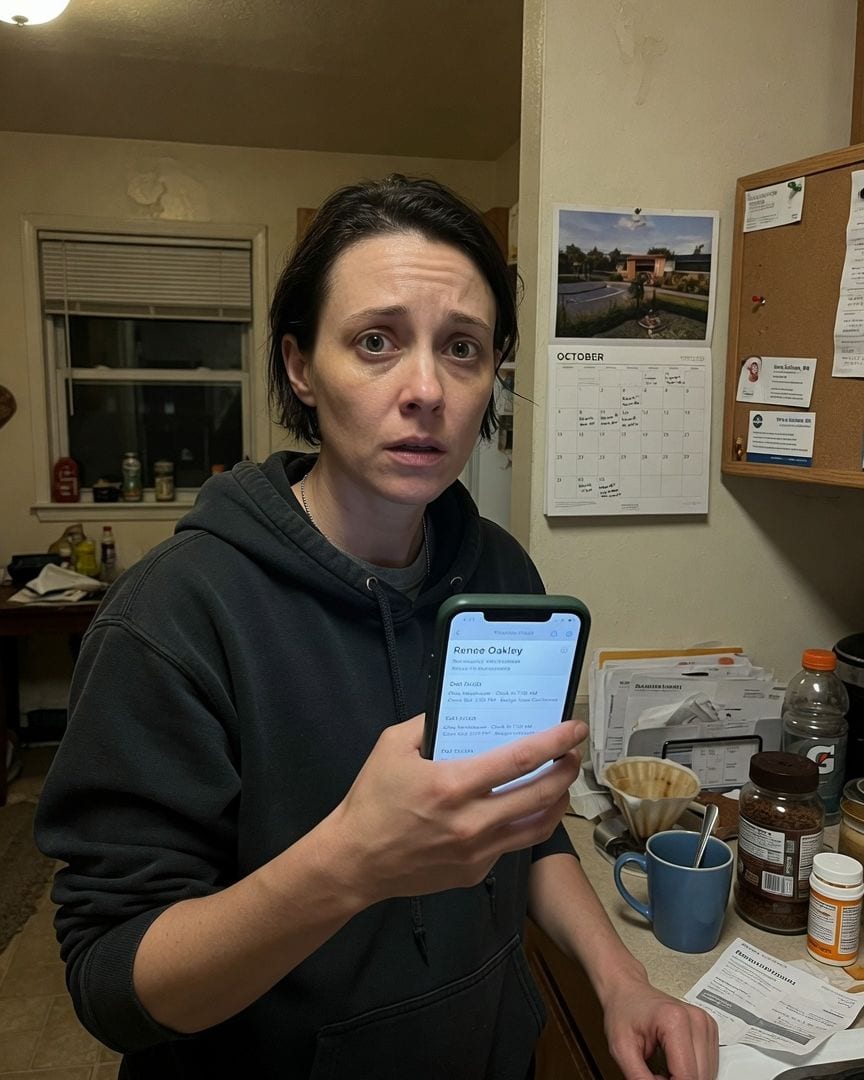
My company clock-in system says I worked full shifts in Ohio all last week. I was on medical leave in Florida, under a nurse's care.
Back home from medical leave, my payroll deposit was unexpectedly high. I checked my timesheet, only to find it logged me working full 40-hour shifts at the Ohio warehouse. But I was hundreds of miles away in Florida, confined to a sickbed under a nurse's care. Then my manager called: security footage confirmed I entered the warehouse.