A perimeter guard's camera logs a man at 0033 every night. His uniform says 'Brooks', but no such name exists in 40 years of records.
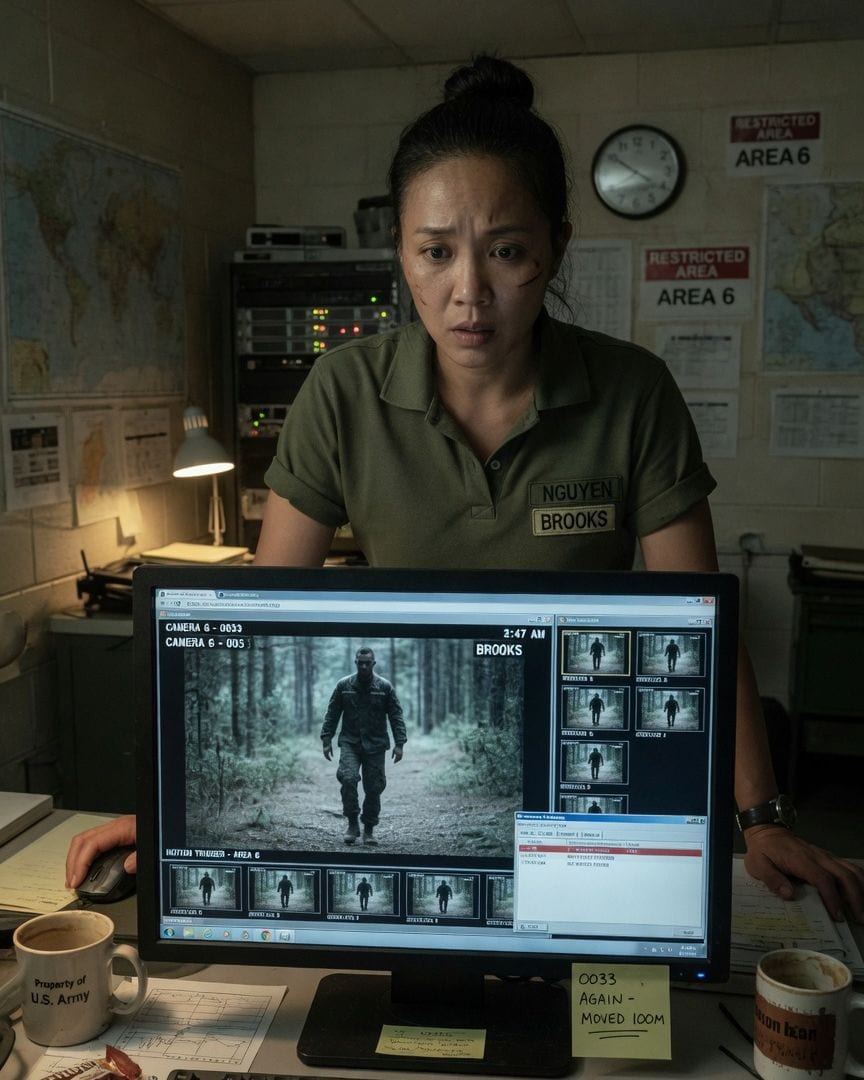
Specialist Alice Nguyen walked the perimeter trail, the humid Louisiana air thick around her, tasting of pine and damp earth. Her duties in the remote training area were usually monotonous, a rhythm of patrol, maintenance, and data checks.
For weeks, however, camera six had broken that rhythm. Every night, precisely at 0033, its motion sensor would trigger, capturing a full-frame exposure. It wasn’t a squirrel, or a stray deer. It was always a man.
Alice, disciplined and detail-oriented, initially dismissed it as a sensor glitch. Area 6, as this sector was designated, had its quirks. She checked the adjacent cameras, numbers four and eight, placed only meters away along the same trail.
Their logs remained dark for that time, empty before or after the 0033 mark. No movement. Only camera six fired.
She drove out to the site, unmounted camera six, and moved it a hundred meters up the trail. She recalibrated its sensitivity, tightened its mounts, and ran diagnostics until the green light pulsed steady.
The next morning, back at her console in the air-conditioned office, the new log showed it had fired again at 0033. Still on a man mid-stride.
A single, unbroken column of identical, impossible images stretched across the screen, each one a phantom captured in perfect synchronicity.
The hum of the server racks seemed to deepen, a low, resonant thrum that resonated with the growing chill in the room.
Alice spent her off-duty hours meticulously reviewing the images from camera six. Each night, the man stood caught in the flash, always mid-stride, always facing slightly away, his face obscured by shadow or angle.
At first, she thought it was the same image, somehow cached or repeated. But as she zoomed in, pixel by painstaking pixel, she noticed subtle, impossible details.
A distinctive, yellowed leaf on the ground might be present in one frame, gone in the next, only to reappear a week later in an identical image, perfectly positioned.
His uniform, though standard-issue, seemed to subtly shift in style; the cut of the fatigue blouse, the design of the pockets, almost imperceptibly, as if from different eras.
It was like looking at a flipbook where each page was identical, yet subtly, impossibly altered.
She ran the files through enhancement filters, adjusted contrast, sharpened focus. She tried to rationalize it: a local hunter, perhaps, slipping through the restricted area night after night; a rogue trainee, playing a bizarre prank.
But the consistency, the precise timing, the complete failure of flanking cameras to capture anything, defied every logical explanation.
A hunter wouldn't pass through the exact same spot, mid-stride, every night at the same impossible minute, while remaining invisible to other sensors.
A prank wouldn't withstand the camera being moved, only to continue its uncanny performance in a new location.
The image was a ghost in the machine, a ‘plus one’ in a system designed for exact counts, for perfect accountability.
The more she looked, the more the man felt not like a malfunction, but a deliberate, impossible presence, a constant error in the military’s most accounted-for world.
The silent office pressed in around her, the air growing heavy, charged with something she couldn't name.
She felt a growing, cold certainty that this wasn’t a glitch; it was a message, or a pattern, waiting to be read, an unreconciled tally that defied the base’s meticulous ledgers.
Alice stared at the screen, the magnified image of the phantom man filling her view. After hours of painstaking enhancement, the name 'BROOKS' was stitched clearly above his left breast pocket.
It was an old, faded font, barely legible at first, but now unmistakable, sharpened by the digital filters. Her heart pounded with a sudden, cold dread.
She checked the system again, her fingers flying across the keyboard, cross-referencing every manifest, every record, every long-term assignment for the past forty years, pulling up every 'Brooks' who had ever served at this base, in this area.
She scanned the results, the names scrolling by, but the one she searched for was absent. Nothing. Not a single 'Brooks' connected to the training area, not even a temporary detail.
The man on camera six didn't exist in any official count.
Alice compiled her evidence into an organized, fact-based report, printing out the enhanced images, logging the camera data, and detailing her failed attempts at rationalization. Then she brought it to her superior, Sergeant First Class Sean Vance.
Vance, a by-the-book NCO with a long-suffering mustache and a deep trust in established procedure, initially scoffed at what he called her "ghost story." He leaned back in his chair, arms crossed, listening with an expression of patient skepticism.
But Alice's methodical presentation—the consistent timestamps, the impossibility of the flanking cameras seeing nothing, the repeated failure of moving the camera, and finally, the phantom name 'Brooks' on the uniform—was too compelling.
Vance was a man who trusted numbers, and Alice presented him with a count that simply refused to reconcile. She showed him the blank records for any 'Brooks' associated with the base.
He pushed his chair back, a faint crease appearing between his brows. "Alright, Specialist," he said, his voice clipped. "This… this defies protocol. We'll start with the base archives. Not just digital, but the physical records. Everything."
Together, they descended into the dimly lit, humid archive beneath the administration building, a place usually only visited for audits or the occasional forgotten form.
The air was thick with the scent of old paper and dust motes danced in the single bare bulb that hung from the ceiling.
For days, they sifted through brittle paper, logbooks with faded ink, and file boxes that hadn't seen daylight in decades. Vance, initially grim, grew quiet, the weight of the past pressing in.
Then, deep in a forgotten corner, behind a stack of moth-eaten payroll receipts, Alice’s finger traced a faded entry in a handwritten logbook from the early 1980s.
It was for a training exercise in Area 6 that had gone catastrophically wrong: a patrol, designated 'Ghost Squad', had disappeared without a trace. The logbook listed the patrol members.
Her finger, almost of its own accord, landed on a name: 'Pvt. Thomas Brooks'. The official report at the time had been a terse 'lost in training, presumed enemy action', a vague, unsatisfying explanation even then.
But the logbook contained a handwritten addendum, scrawled in a different hand than the main entry, hinting at something far more unsettling: an 'environmental anomaly' that had swallowed the patrol.
The Count That Won't Reconcile now extended back decades, a historical blank spot filled only by a phantom image on Alice's camera.
As Alice and Vance dug deeper into the forgotten corners of the archive, the base's meticulous systems, usually so efficient, began to subtly resist them.
Files they requested from other departments were 'misplaced' or required additional, nebulous levels of authorization that never seemed to materialize. Access to certain old digital logs was revoked, citing 'security upgrades' that hadn't been announced anywhere else.
It was like trying to walk through thick, invisible cobwebs that clung and pulled back.
Captain Harold Hayes, who had initially approved Vance's archive access, grew distant. His responses to Vance's questions became clipped, his eyes evasive, always darting away from Alice's direct gaze.
Alice felt a prickle of unease that wasn't just about red tape. The air in the usually bustling adjutant's office seemed to drop a few degrees whenever Hayes was present, a subtle, unnatural chill.
Late one night, returning to her barracks after another fruitless search through the archives, she heard faint, dragging footsteps outside her window.
They stopped just beyond the grates, a scuffing sound like worn boots on gravel, then receded into the silence of the base.
She dismissed it as fatigue, as shadows playing tricks, but the feeling of being watched persisted, a cold brush against her neck.
The next morning, she found a crisp, folded piece of paper tucked into her locker, nestled among her pressed fatigues. A single sentence was typed on it, stark and without punctuation: 'Stop counting.'
It wasn't a threat, not in a violent sense, but a chillingly calm warning, delivered with an unsettling precision. It was too specific, too personal.
Vance, too, noticed the resistance. A supply request he'd put in for new archive lighting, a simple administrative task, was mysteriously delayed again and again. Later that day, he found a small, unmarked USB drive slipped into his office mailbox.
It contained only a single, corrupted file titled 'Area6_Incident_Log.exe' that refused to open, showing only a fragmented, static-filled image. The message was clear: someone knew they were digging, and they wanted them to stop.
The anomaly wasn't just a historical oddity from the 80s; it was actively protected, actively watched, and Alice and Vance had become targets in a count they barely understood.
Alice and Vance confronted Captain Hayes in his office, the note 'Stop counting' laid flat on his desk between them. Hayes’s usual composure crumbled. His face, usually unreadable, contorted with a mix of fear and resignation.
The fluorescent lights hummed, casting a sickly yellow glow on the taut lines around his mouth.
“They didn’t just get lost, Specialist,” Hayes said, his voice low, almost a whisper, as if afraid the walls themselves were listening. “They walked into something. An anomaly. Area Six… it’s not just a training ground.
It’s a place that takes. And it imprints.” He explained that the patrol, including Pvt. Brooks, encountered a localized temporal-spatial distortion. It was like a tear in the fabric of reality, a spot where time and space buckled.
The official story was fabricated to prevent panic, to maintain the base’s operational integrity, to keep the count, as it were, balanced.
Hayes retrieved a faded, unmarked folder from a locked drawer in his desk, its edges softened with age. Inside was an unofficial after-action report from a previous incident in the late 1960s.
It detailed similar 'phantom' presences detected by early motion sensors in the exact same coordinates of Area 6. The report spoke of 'persistent non-corporeal signatures' and 'unreconcilable personnel counts'—the phrase echoing Alice's own observation.
Hayes revealed that the anomaly wasn't just a spot on a map; it was something that adhered to the area, leaving traces, echoes.
The images on Alice’s camera weren't just a glitch; they were a manifestation of this imprint, a persistent echo of what the anomaly consumed.
He told them the true horror wasn't just that the anomaly took, but that it left a 'record' behind, a perverse form of accountability that defied explanation.
The name 'Brooks' on the camera, the missing official record, the constant 0033 timestamp—it all snapped into chilling focus for Alice.
The system, designed for absolute accountability, for precise counts of personnel and matériel, had been subverted by an internal, impossible ledger. Hayes rubbed his temples, his gaze distant.
“Once it counts you,” he said, the words hanging heavy in the room, “it expects you.”
Armed with Hayes’s confession, Alice and Vance returned to the archive, their search now focused on the classified 'Area 6 Anomaly' files Hayes had hinted at.
The air in the archive felt colder, heavier, charged with the revelations that had just unfolded. They located a small, locked metal box, hidden behind a stack of old quartermaster reports, its surface dusty and forgotten.
Vance, his hands shaking slightly, used a set of master keys to click it open. The metallic clack echoed unnaturally in the quiet.
Inside, among the brittle, yellowed files of the disappeared 1980s patrol—Pvt. Brooks's official service record, his last known photograph showing a young man with an earnest, slightly bewildered smile—was a single, more recent file.
It was pristine, almost new, its edges crisp, standing out starkly against the aged documents surrounding it. It felt cold to the touch, colder than the humid air should allow.
Vance’s hand trembled as he pulled the file from the box, the paper cool beneath his fingers. He opened the cover. The name on it was unmistakable, printed in bold, stark black, filling the top line: NGUYEN, ALICE.
His eyes darted to the date stamped beneath it, then to Alice, who stood frozen, her breath caught in her throat. The date was for next week.
He looked back at the file, then to her again, his face draining of color. It was next week’s date.
The disposition report was already written, already filed, already detailing her disappearance from Area 6, listing her as 'missing, presumed anomaly-imprinted'.
The pristine file in Vance’s trembling hand detonated the full, horrifying truth.
It was a detailed, classified 'Disposition Report' for Specialist Alice Nguyen, complete with her service number, unit, and a precise date for a patrol in Area 6 next week.
The report outlined her 'symptoms'—including an 'unhealthy obsession with unreconciled counts and phantom visual phenomena'—leading to her 'disappearance and presumed anomaly-imprintation'. It was a pre-written future, meticulously documented within the very system designed to prevent such things.
Vance was aghast, his face pale, his jaw slack. He flipped through the pages, a sickening sense of inevitability radiating from the formal language.
Hayes’s evasiveness, the subtle warnings, the 'Stop counting' note, the missing files—it all clicked into place, forming a terrifyingly coherent picture.
He wasn't just covering up the past; he was monitoring an ongoing process, knowing Alice was the next subject, watching the anomaly’s dark ledger unfold.
The anomaly wasn't just a place that took; it anticipated and recorded those it would affect, weaving them into its own impossible ledger before the events even occurred.
The camera images weren't just a trace of the past, or even a present manifestation; they were a premonition, a countdown for Alice.
The 'Count That Won't Reconcile' wasn't just a flaw in the system; it was the anomaly's own perverse, inescapable method of accounting for its victims, a parallel, darker bureaucracy that dictated fates.
Alice’s name was always in it, a future already filed, waiting for its appointed time. The archive, usually a repository of history, had become a chilling record of future events.
Alice, armed with the knowledge of her pre-written fate, refused to accept it. The disposition report was a challenge, a cold, bureaucratic prophecy she intended to defy.
She and Vance devised a desperate plan: they would use the base's own meticulous accountability system against the anomaly.
Their goal was to create an official, irrefutable record of Alice's transfer out of the base, out of Area 6, before the date stamped on her disposition report.
It was a race against the clock, against a future already inked into existence.
They worked through the night, navigating the labyrinthine military bureaucracy. They foraged signatures on emergency reassignment papers, leveraging Vance's encyclopedic knowledge of base protocols and Alice's meticulous attention to detail.
They made calls to distant commands, fabricating a plausible, urgent reason for Alice's immediate transfer to a remote, obscure posting thousands of miles away – a logistical nightmare spun into a necessity.
The 'artifact that cannot exist'—Alice's future disposition report—became their weapon, its chillingly precise date their immovable deadline. They worked with an almost feverish intensity, powered by fear and a stubborn refusal to be counted.
The climax was a tense, drawn-out scene in the adjutant's office the next morning. They pushed through the final approvals, facing a skeptical, overworked clerk who kept eyeing the clock, and then them, with suspicion.
Every form filled out, every stamp applied, every signature obtained felt like a tiny, monumental victory against an unseen, pre-ordained force. The air in the office grew heavy with unspoken tension, the fluorescent lights buzzing like a trapped insect.
Finally, with mere hours to spare before her 'disappearance date', the transfer orders were officially logged and approved. Alice Nguyen was reassigned, her presence at the Louisiana base officially terminated. She was out.
They had bent the system, creating an alternate, undeniable record that, for now, overrode the anomaly's dark account.
Alice Nguyen was successfully transferred out of the Louisiana base, far away from the humid Louisiana pines and Area 6. Her new posting was mundane, a quiet administrative role in a logistics unit in a desert state.
The sun beat down relentlessly there, washing out all shadows, a contrast to the oppressive green twilight of Area 6.
Sean Vance remained at the old base, quietly monitoring the archive, ensuring the 'Area 6 Anomaly - Personnel Files' remained undisturbed, and that Alice's new, official record stood firm, a bulwark against the impossible.
Captain Hayes, his face etched with a permanent weariness that seemed to have settled deep into his bones, never spoke of the incident again.
But his eyes held a knowing, haunted look whenever he saw Vance, a silent acknowledgment of the impossible truth they shared.
The system, for once, had been manipulated to work for an individual, not against them, but the effort had left its own indelible mark. But the dread, a cold, persistent shadow, followed Alice, a silent passenger in her new life.
Alice lived a quiet life now, far from the humid pines and the oppressive quiet of Area 6. She completed her deployment, then took an honorable discharge, opting for civilian life.
She worked in a quiet office, managing inventory for a small, unassuming firm, far from any military installation. But the meticulousness of her past training never left her.
Every time she saw a manifest, a ledger, or a simple head count, a cold knot tightened in her stomach.
She kept a small, laminated copy of 'her' disposition report, folded precisely, tucked away in a locked box in her closet.
It was a constant, chilling reminder of the count that almost claimed her, a paper ghost whispering from the future that never was.
It was a permanent scar on her consciousness, a ghost in the machine of her memory, forever challenging the reality she now inhabited.
She knew that some counts, once started, could never truly reconcile.
If this one got to you
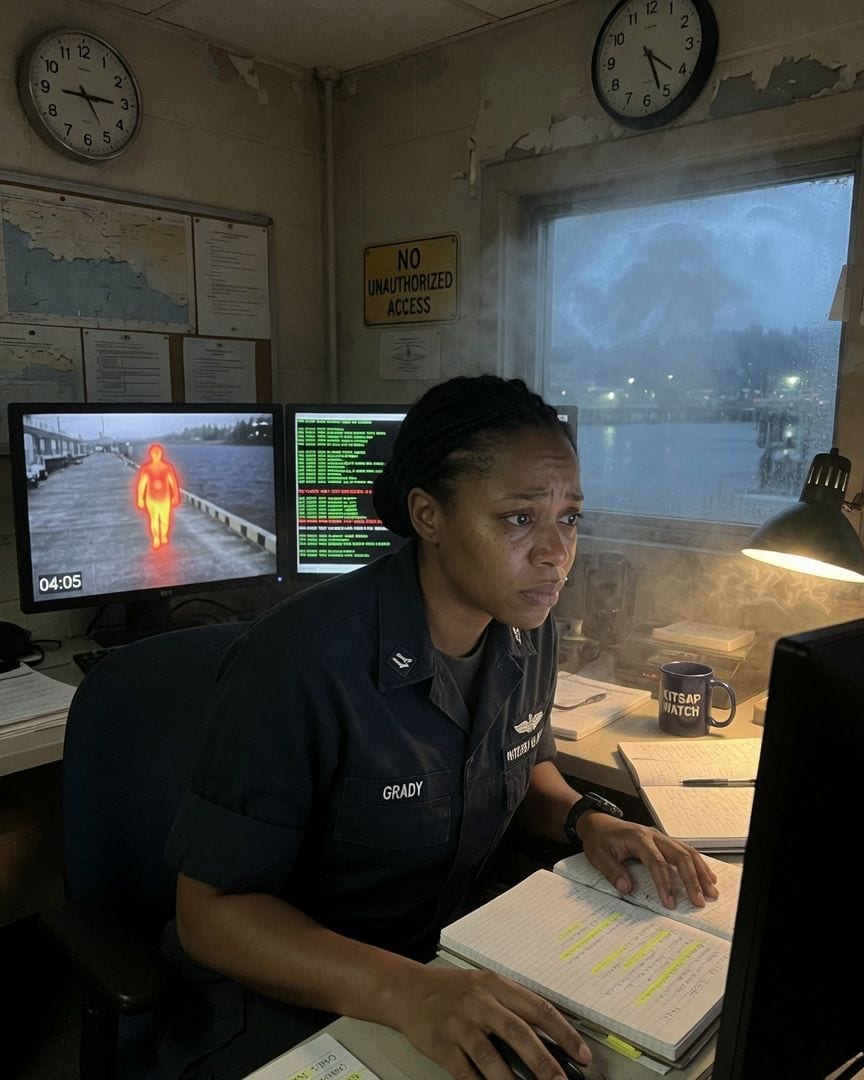
Petty Officer Olivia Grady found the base system logging impossible access at 0405. Every night for years, a blank ID walks Pier 7.
Petty Officer Olivia Grady stood her predawn watch on Pier 7, the cold mist of Puget Sound a familiar companion. Her routine scan of monitors at 0405 was shattered when an IR sensor flared with a man-sized heat bloom moving along the pier. Yet the camera feed showed only empty concrete and swirling mist. When historical logs confirmed the invisible presence had walked that exact path every night for years, Olivia dug deeper. She found a ghost "access log" entry with a unique ID but no name attached, meticulously aligned with the 0405 bloom. What impossible entity was the base system logging, night after night?
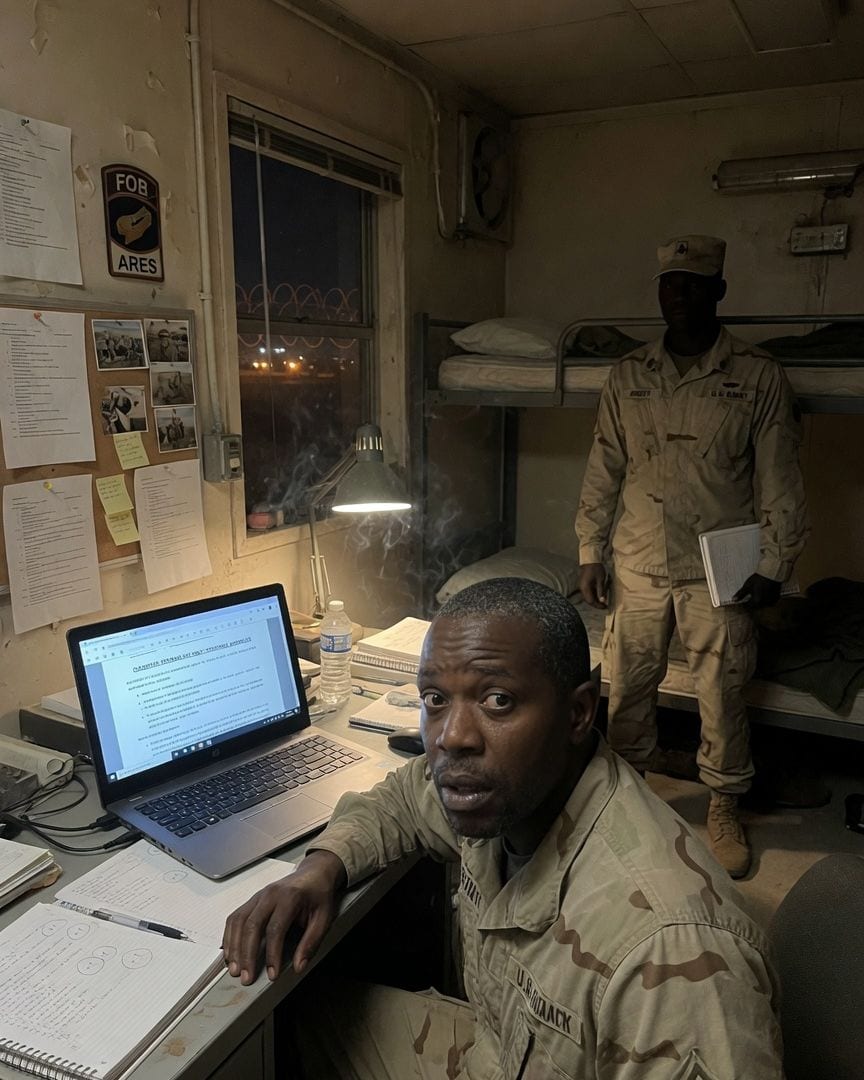
On his final rotation home, Sergeant Abbott counted his platoon: one man too many. The base’s secret files called them 'phantom units,' always watching him.
Sergeant First Class Malcolm Abbott was on his final rotation at FOB Ares, ready for transfer home. He called his platoon to formation, watching the sun break over the desolate desert as he counted each man. But the numbers didn't add up; there was always one extra soldier, standing at rigid attention, perfectly aligned with the others, yet only Malcolm could see him. Despite cross-referencing every manifest, the phantom remained, its face obscured in shadow, a silent sentinel that defied all logic. What secret did the base archives hold about these unacknowledged personnel?
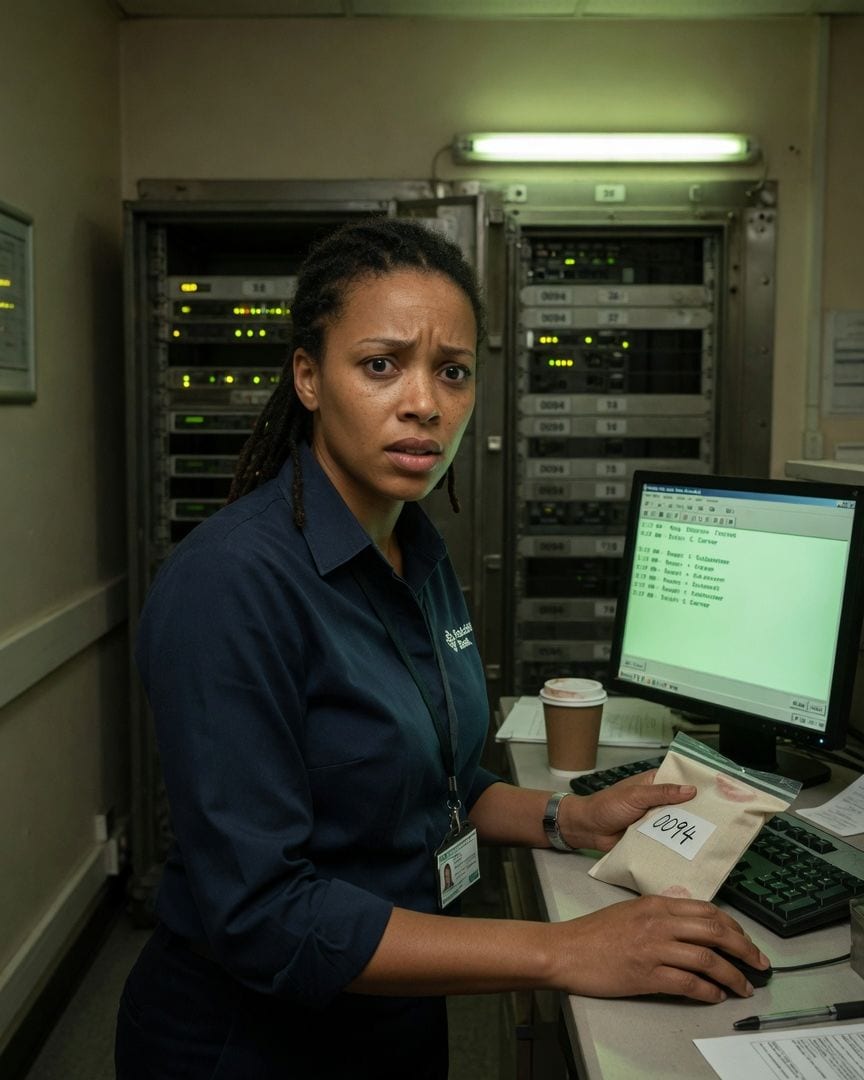
My night-deposit log shows a bag posted at 3:17 AM. My teller number, my count. Bag 0094 is still sealed in the safe, untouched.
I prided myself on precision as a night teller, logging every entry. But at 3:17 AM, a deposit appeared logged under my teller number that I never processed. Security footage then revealed a figure in my uniform, wearing my ID badge, with a blank photo slot.
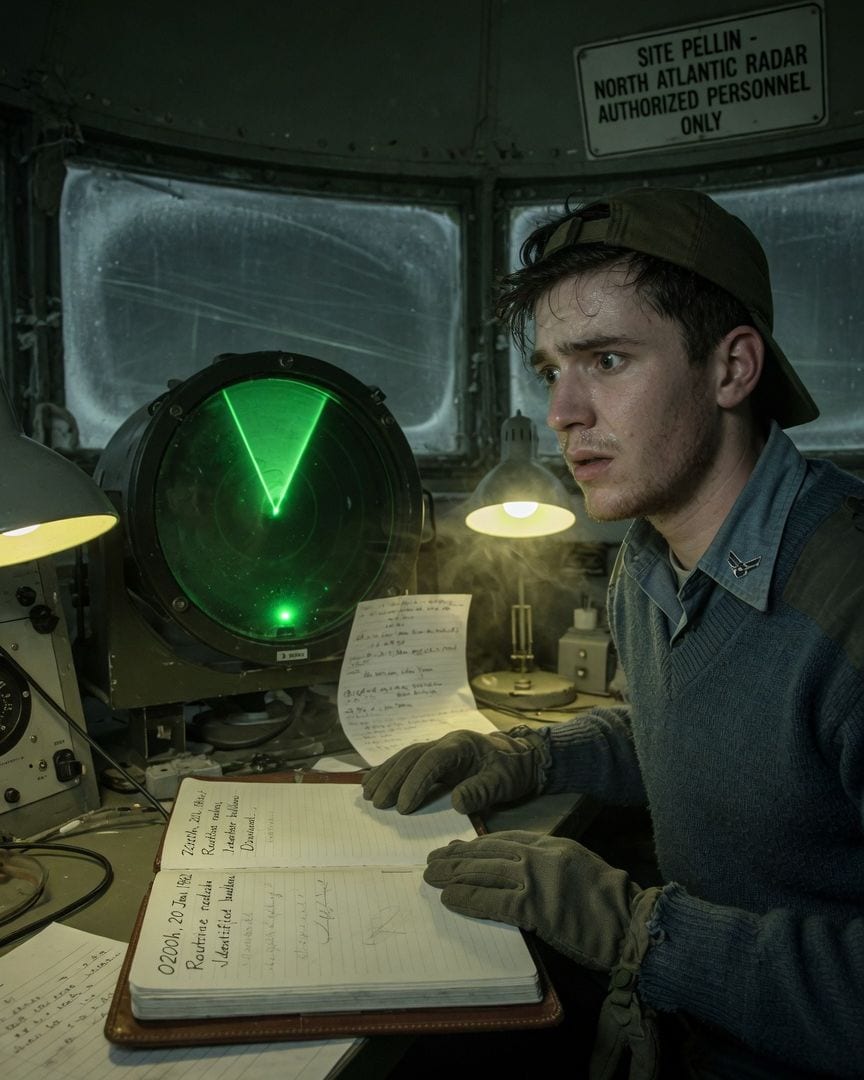
Nine days from closing, Cold War Site Pellin's Airman Vance watched his radar track a solid blip moving closer, dead in open sea where nothing could exist.
In the dimly lit dome of Site Pellin, Airman Ordway Vance, just days from discharge, ran his final radar sweeps before the base closed for good. Outside, the North Atlantic wind howled, but inside, only the hum of his console broke the silence. His last calibration had been clean, yet a single, unwavering green blip appeared on the scope, forty miles out, in open water where no vessel should be. The impossible return moved closer with each sweep, defying all logic and other sensors, until it sat static just beyond the coast fence line. What unseen presence did the radar truly hold in its unwavering green grip, contradicting the official record?
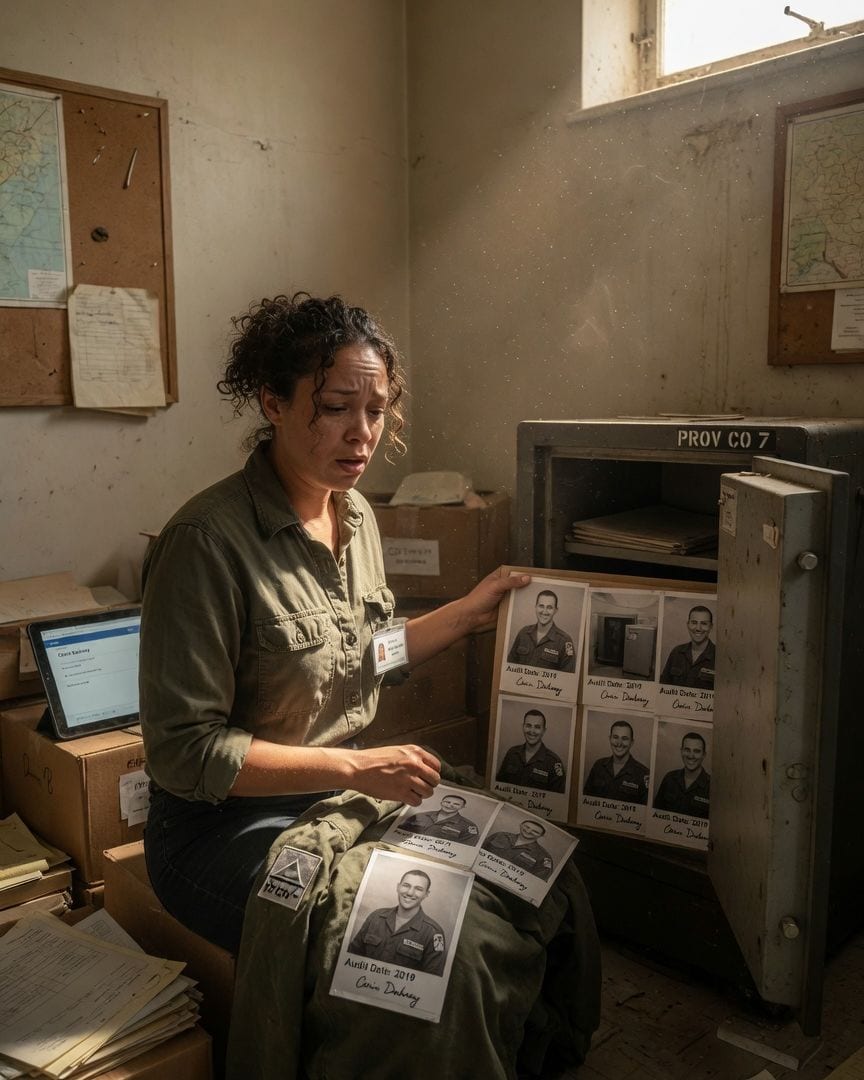
With eight days to clear a Cold War fort, Corin Calloway found files signed 'Corin Dabney' from 2019.
With just eight days left before Fort Halloway was gutted by demolition crews, Corin Calloway worked to clear half a century of forgotten lives from its dusty archives. As she meticulously sorted through records, she discovered an old, unlisted safe, its pitted door stenciled with a phantom designation. Inside, Corin found seven personnel jackets, each dated '2019' and signed with the name 'Corin Dabney.' But Corin Calloway knew she had never set foot in the building before this week, and the name 'Corin Dabney' existed nowhere in the base's official history. What secret was Fort Halloway's forgotten safe trying to reveal?
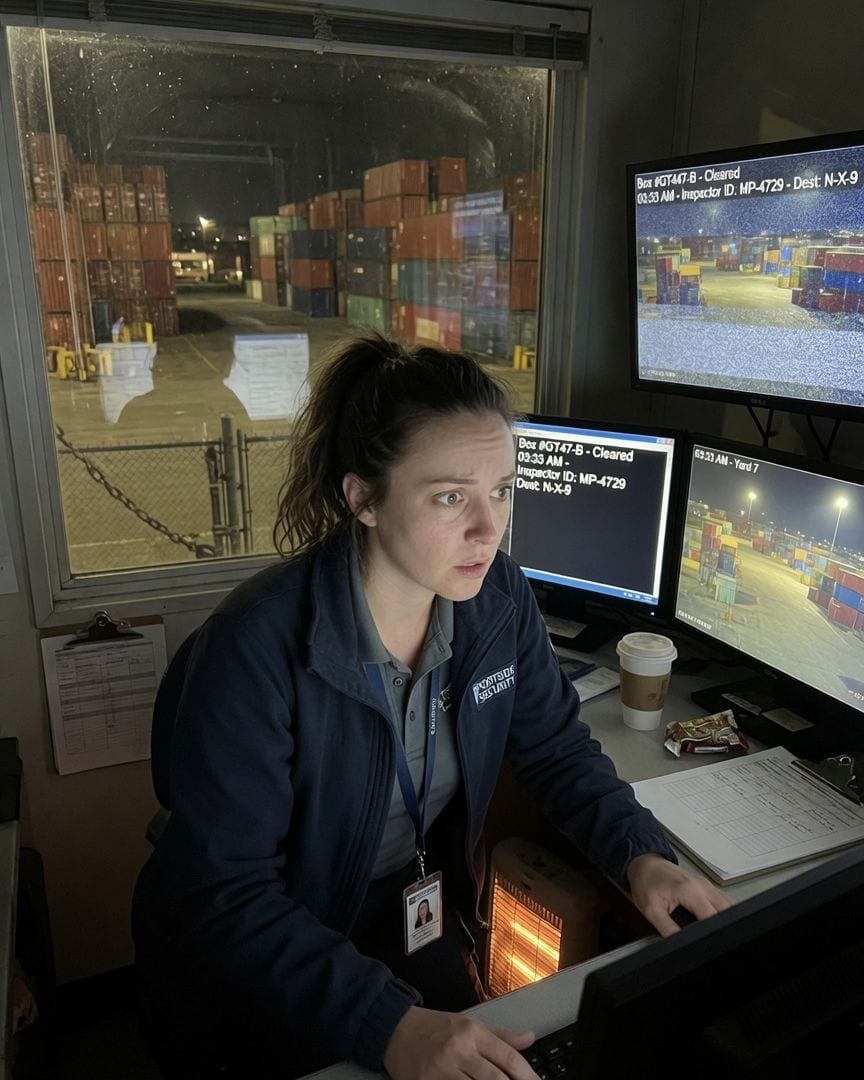
The log says a container cleared my gate at 3:33 AM, stamped with my ID — but the gate was chained and locked, and the yard beyond it was dark and empty. No truck was ever booked.
My night shift at Portside Container Terminal is usually a predictable drone of monitors and stale coffee. But then I saw a familiar guard, Arthur Larsen, on a live feed, smiling unsettlingly at the camera. The next morning, my supervisor searched for him; the employee database returned 'No results found.'