Cold War Radar Operator Conrad Oakley watches a man enter a shed. His boot prints lead in, but no tracks ever lead out.
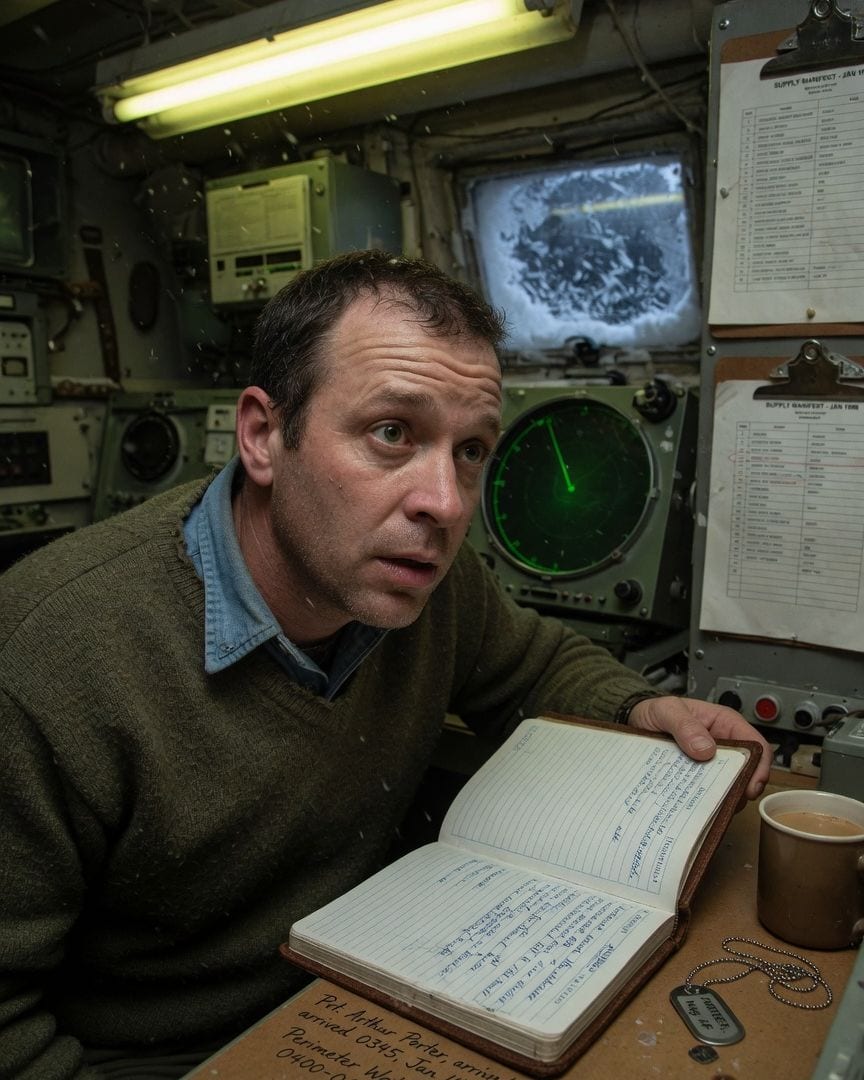
The blizzard howled around Cutbank radar station, a constant, abrasive presence in the Alaskan interior.
Inside the dim, humming ops room, Radar Operator Conrad Oakley watched the scope display, the green sweep a hypnotic pulse against the white noise of the storm.
The overnight tape for January 14th was routine, a monotonous record of empty skies and distant weather patterns. But at 0400 hours, a single, distinct contact had registered. It wasn’t a plane, or an animal, or a snowdrift.
It had crossed the perimeter wire on foot, moving with an impossible steadiness through the gale, a solid presence against the radar’s sensitive sensors.
The track stopped at the generator shed, a squat, metal building nestled against the main complex, just beyond the primary barracks. Then, nothing. No outgoing track.
At dawn, during the perimeter check, the generator shed door stood ajar, rattling faintly in the furious wind like a loose tooth. Conrad, accompanying Oscar Larsen, the maintenance chief, pushed it open further.
Inside, a thin layer of snow had drifted in through the gaps. Fresh boot prints marked the snow-dusted floor, clear impressions of standard-issue cold-weather gear, leading deeper into the building’s cold, generator-scented darkness. None led out.
Conrad reported the anomalous contact on the radar scope and the shed discovery to Commander Daniel Sterling, a career airman with an unshakeable adherence to procedure. Sterling, a man whose face seemed permanently weathered by Alaskan winters, listened impassively.
He dispatched a small team, including Oscar Larsen, to scour the area around the generator shed. They returned an hour later, stamping snow from their boots, their faces tight with frustration.
They had found nothing beyond the initial prints, no tracks leading away from the shed, no sign of forced entry, no missing equipment, no disturbed snowdrifts that could explain an ingress or egress.
"Probably just a drift, Oakley," Sterling had said, his voice flat, his gaze resting on Conrad for a beat too long. "Or a fox. The wind does strange things out here.
Write it up as an animal ingress, secure the shed." But Conrad knew what he'd seen on the scope, a solid, human-sized track. And he'd seen the prints inside, too distinct to be a fox.
Later that afternoon, preparing the daily duty roster for the next shift, Conrad reached for the station's official logbook.
It was a thick, leather-bound volume, its pages crisp, every entry meticulously recorded, every signature a testament to accountability in this remote, unforgiving place. He flipped to the page for January 14th.
The ink was still fresh, the entries for the day’s shifts and the men on duty clear. His own signature was there, authorizing the morning changeover, as was Commander Sterling’s, for the daily command review.
But below the list of the nineteen men accounted for on station, a name stared back at him, stark and unfamiliar: 'Pvt. Arthur Porter, arrived 0345, Jan 14.'
A duty assignment was even scrawled next to it, in Sterling's distinct hand: 'Perimeter Watch, 0400-0600.'
Conrad felt a cold knot tighten in his stomach. He had not signed off on any new arrival. No one had. There were nineteen men at Cutbank. Not twenty.
He re-read the entry, his name a stark, undeniable blot beside the impossible name: 'Pvt. Arthur Porter, arrived 0345, Jan 14.' The ink was dry, the paper yellowed, and the date was only yesterday.
He closed his eyes, then opened them, half-expecting the words to have changed. They hadn't. He checked the supply manifest, pulling the clip-board from its hook beside the mess hall door.
An extra ration pack for 'Porter, A.' had been signed out, dated January 14th, the signature beneath it a crude scribble he didn't recognize. He walked to the barracks, his footsteps echoing in the silence.
He checked the bunk assignments: Bunk 7, in the furthest corner of the barracks, tucked away next to a storage locker, was now officially assigned to Pvt. Arthur Porter. It was empty.
He pulled back the thin mattress, the synthetic fabric rasping in the quiet. Tucked beneath it, cold and metallic against the bare springs, was a dog tag. 'PORTER, ARTHUR. O Neg. AF.' His heart hammered against his ribs.
This wasn't a clerical error. This was real. And it was impossible. Conrad Oakley stared at the station manifest, his own signature a stark, undeniable blot beside the impossible name: 'Pvt. Arthur Porter, arrived Jan 14, 1986.'
The ink was dry, the paper yellowed, and the date was only yesterday.
For days, Conrad picked at the edges of the impossible. He cross-referenced every official document he could access: supply manifests, duty rosters, medical logs, even the laundry schedules.
The name 'Arthur Porter' appeared inconsistently, like a phantom limb in the station's meticulous records.
Sometimes, it was there, a hastily scrawled signature in a mess hall log for January 15th or a tools requisition for the generator shed, dated the same day.
Other times, it was conspicuously absent, as if erased by an invisible hand, leaving gaps that only Conrad seemed to notice.
He tried to casually ask Howard Porter, another radar operator whose name was a coincidental echo, if he knew an Arthur Porter. Howard just shrugged, his brow furrowed. "Never heard of him, man. Why? You okay?
You look like you've seen a ghost." Oscar Larsen, the maintenance chief, was gruffer when Conrad tried. "Extra hands? We could always use 'em. But I ain't seen no new face around here. We're nineteen strong, same as always."
The generator shed, despite being secured, became a focal point for Conrad. He found himself drawn to it during his off-hours, checking the door, peering into its dark interior through the small, frosted window.
It always seemed colder than it should, even for an Alaskan winter, a damp, heavy chill that seeped into his bones.
Once, standing outside in the biting wind, he thought he heard a faint hum from within, distinct from the generator’s steady thrum, like a barely perceptible whisper that vibrated just below the threshold of hearing.
He dismissed it as the wind playing tricks, or the drone of the generator resonating oddly.
But he began to notice subtle shifts in the other men’s behavior.
Sometimes, a casual remark about 'the new guy' would slip from someone's lips, perhaps over coffee in the mess hall, only for them to correct themselves mid-sentence, or look at Conrad strangely, as if he'd misunderstood.
It was like a ripple in their collective memory, a constant, subtle correction, a slight, shared amnesia that only served to sharpen Conrad's own awareness of the anomaly.
He even saw a faint indentation on Bunk 7’s mattress one morning, as if someone had just risen from it, though it was still officially empty.
The discrepancies weren't loud; they were quiet, insidious, like static creeping into a signal, trying to normalize an impossible frequency.
He started keeping his own handwritten notes, tucked away in his locker, detailing every instance of 'Arthur Porter' and every instance of his absence.
He felt a growing sense of unease, a cold certainty that the system, designed for perfect accountability, was instead flawlessly documenting a lie.
Conrad's quiet investigation did not go unnoticed. Commander Sterling called him into his office, the air thick with the smell of stale coffee and old paper.
The fluorescent lights hummed with a low, aggressive drone, vibrating the framed citations on the wall. "Oakley," Sterling began, his gaze sharp, unblinking as he leaned back in his worn chair. "Your performance reports are impeccable. But I’m hearing whispers.
Questions about staffing, about… things that aren't there."
Sterling leaned forward then, his voice dropping, though it carried clearly in the small, oppressive room. "This station, this isolation, it can play tricks. Fatigue. The mind seeks patterns where there are none.
I expect my men to be squared away, focused on the mission. Not chasing phantoms." His tone was calm, almost paternal, but his eyes held an unsettling depth, a knowing glint that suggested more than just concern for morale.
"Cutbank has protocols for everything, Oakley. Especially for… unusual circumstances. Trust the system." The warning was clear, delivered with a quiet authority that left no room for argument.
Later that day, Conrad found the small, hand-drawn map he'd made of the generator shed, with his notes on the boot prints, subtly shifted in his locker. He knew he'd left it tucked securely under his spare uniform jacket.
It was now lying on top, neatly folded. Nothing was missing, no sign of a search, but the message was unmistakable: he was being watched.
He felt a prickling sensation on the back of his neck whenever he was near the ops room, as if Sterling’s gaze, even from behind a closed door, was a physical weight.
One evening, as he walked back to his bunk after a late shift, he caught a glimpse of a figure in the dim corridor ahead, just turning the corner near the generator shed.
It was tall, broad-shouldered, wearing a standard-issue parka. When Conrad quickened his pace, the corridor was empty, only the faint scent of diesel lingering in the air.
He was no longer just investigating; he was being observed, his every move a potential misstep in a silent, deadly game he didn't understand.
Driven by the chilling warning and the unsettling feeling of being watched, Conrad knew he needed to dig deeper, beyond the official records, beyond Sterling’s veiled threats.
He remembered Oscar Larsen once mentioning an old 'junk closet' in the deepest part of the maintenance bay, where old equipment and forgotten paperwork went to die, a place no one bothered with.
During his next shift break, he slipped away from the ops room, telling Howard Porter he was checking a faulty comms line.
The closet was cold and dusty, filled with rusted tools, defunct communication gear, and boxes of long-expired rations. The air hung still and heavy, smelling of mildew and forgotten grease.
In a stack of yellowed, mildewed manuals, hidden beneath a bent antenna, he found it: a small, leather-bound journal, much older than the current station log.
Its cover was blank, but the first page bore the faded inscription, written in a precise, almost elegant hand: 'Commander R. Lawson, Cutbank Station Log. Winter 1957-58.'
Inside, the entries were handwritten, personal, and increasingly desperate. Lawson detailed his own struggle with 'phantom personnel,' an 'extra man' who appeared on manifests and duty rosters, only to vanish when sought.
Lawson's neat handwriting grew erratic across the pages, describing how the station’s records seemed to 'correct' themselves, always showing the 'proper' number of men, despite his own clear memory of having twenty.
He wrote of 'the generator shed' as a focal point, a place of 'ingress' where these individuals seemed to materialize. This was it. This was the pattern, repeating itself decades later.
Conrad felt a cold terror bloom in his chest. He confronted Commander Sterling again, Lawson's journal clutched in his trembling hand. "Sir, this isn’t fatigue. This isn’t a phantom. This has happened before."
Sterling took the journal, his expression unreadable as he flipped through Lawson’s frantic entries, his thumb brushing the faded ink. The hum of the fluorescent lights seemed to intensify, pressing down on Conrad. "I told you, Oakley. Cutbank has protocols."
He then opened a locked drawer in his desk, the click of the tumblers sharp in the quiet office, pulling out a slim, unmarked binder. "This is a classified addendum to your service record. For Cutbank personnel only.
Special Operations Command." He slid it across the desk, the smooth plastic cold under Conrad’s fingertips.
Inside, Conrad found a series of reports, dating back decades, outlining 'Anomalous Personnel Integration Events' at various remote outposts, Cutbank prominent among them.
The reports detailed how 'the system,' as they called it, would eventually 'normalize' these anomalies, sometimes by reassigning the 'extra' individual, sometimes by… other means.
Each report ended with a summary of the 'integrated' individual’s service record, now seamlessly part of the official history, accounted for, vanished without a trace.
The dread solidified, cold and hard in Conrad’s gut: the system wasn't broken; it was designed to absorb the impossible. Commander Sterling watched him, his gaze heavy, unblinking. "Lawson tried to fight it, Oakley. It didn’t end well for him.
The records… they always find a way to make sense of things."
Conrad, trembling, turned to the last page of Lawson’s journal, the paper brittle and thin. A final, scrawled entry from March 1958 filled the page: 'They found him. Pvt. Oakley. His records now show he was always here.
Always the extra. I tried to warn him.' Below it, taped with yellowed cellophane, a faded, creased photograph had been affixed.
It was a group shot of the 1957 Cutbank crew, a dozen solemn faces standing stiffly in their parkas outside the radar tower, snow whipping around them, blurring the edges of the distant mountains.
Conrad’s eyes scanned the faces, expecting to see Lawson, perhaps a young Arthur Porter from a previous cycle.
Instead, his gaze snagged on a young airman, front and center, squinting into the Alaskan sun, a faint, almost imperceptible scar above his left eyebrow. The name scrawled beneath the figure, in Lawson’s increasingly shaky hand, read: 'Pvt.
Conrad Oakley, 1957.' Conrad felt the blood drain from his face, his own eyes staring back from a past he couldn't possibly inhabit.
The photograph burned in Conrad’s hands, a searing imprint of impossible truth.
He was looking at himself, decades before he was born, a young airman from a past he couldn't possibly inhabit, trapped in a cycle he was only just beginning to understand.
Commander Sterling watched him, his calm, almost pitying gaze confirming the horror. "It’s not just a pattern of extra men, Oakley. It’s a pattern of you."
Sterling explained, his voice devoid of emotion, as if reciting a standard operating procedure, that Cutbank was a nexus, a place where the extreme isolation and the very act of meticulous record-keeping created a localized temporal flux.
"The station doesn't just record history; it generates it. When an anomaly occurs, like the initial ingress, the system adapts. It pulls an individual from a future iteration, or perhaps an echo from a past one, to 'fill the gap.'
And it rewrites the records to make it coherent." The 'extra' men, Sterling revealed, were often the ones who first noticed the anomaly, the ones who tried to fight it. "Lawson was one. You are another.
And I… I was the one before him." Sterling pointed to a faded, almost invisible scar above his own left eyebrow, identical in shape and position to the one on Conrad’s face in the 1957 photo.
"We are the sentinels, Oakley. The system ensures its own continuity. You've been here before. You’ll be here again. The records demand it."
The boot prints leading into the generator shed with no prints leading out, the dog tag tucked under the mattress, his own signature on Arthur Porter's manifest – it all snapped into place, a monstrous, coherent design, a clockwork nightmare.
The generator shed wasn't just an entry point; it was the crucible, the point of temporal integration.
The records weren't just altered; they were the very fabric of this impossible reality, constantly adjusting, weaving in and out of time, to maintain the illusion of order.
Conrad wasn't just a witness; he was a component, a recurring character in Cutbank's chilling script, forever destined to play his part.
Conrad staggered back, the cold, dispassionate logic of it chilling him more than any blizzard could. He was a ghost in his own timeline, a future self already part of the past. "No," he choked out, his voice raw.
"I won't. I'll break it." He lunged for the main console, intending to scramble the station's primary data logs, to send an uncorrupted transmission, to do anything to shatter the cycle, to tear a hole in this perfectly coherent lie.
Sterling, however, moved with a speed that belied his age, intercepting him with a quiet, practiced ease. His hand clamped on Conrad’s arm, his grip surprisingly strong, almost paternal. "You can't, Oakley. You’ve tried. We all have."
The words were calm, steady, delivered with a profound, weary resignation. "The system is self-correcting. Any attempt to disrupt it simply… integrates the disruption. Makes it part of the record."
Conrad struggled against the grip, his mind racing, desperate. He had to get out, make it to the relief plane, due in a few days.
He had to warn someone, anyone, before he became another forgotten entry, another ghost in the machine.
But as he looked into Sterling’s eyes, he saw not malice, but a reflection of his own dawning horror, a knowledge that had long since settled into acceptance. "You're already part of the next iteration, Conrad.
Your records are already being adjusted. Your 'reassignment' is imminent."
As if on cue, the radio crackled to life, a sudden burst of static that made the ops room lights flicker. A voice, distorted by the blizzard, called out, "Cutbank, this is Eagle One. ETA 48 hours.
Confirm personnel count for relief rotation." Sterling pressed the transmit button, his eyes still locked on Conrad's, the phantom hum of the generator shed now a dull throb in Conrad’s skull. "Eagle One, Cutbank confirms. Nineteen personnel accounted for.
All present and accounted for." He released Conrad, who stood frozen, the words 'all present and accounted for' echoing in his ears. He realized what Sterling meant. The records would always be pristine. The anomaly would always be normalized.
He was no longer just a radar operator. He was now an 'extra,' a piece of the station’s impossible history, waiting for his turn to become the 'one who knew,' or to be folded back into the snow and silence.
He saw a figure emerge from the generator shed, a tall, parka-clad man, whose features were indistinct in the blowing snow, but whose outline was disturbingly familiar. The figure stopped, looking directly at the ops room.
Conrad felt a chilling certainty: this was Arthur Porter, or perhaps himself, from another cycle, another snow-bound winter.
The relief plane landed two days later, a small dot against the vast white expanse of the Alaskan interior. Its engines roared, a welcome sound after weeks of isolation.
The crew rotated out, their faces tired but visibly relieved to be heading home, back to wives and warm beds and a reality that made sense.
Conrad Oakley was among them, his movements stiff, his eyes distant, as if already seeing through layers of time. The new commander, a fresh-faced Captain named Elena Norwood, took over from Sterling, who remained on station, a silent, knowing sentinel.
The handover was seamless. All records were pristine, all counts verified. The station continued its lonely vigil, scanning the skies, meticulously logging every contact, every man. Nothing was amiss. The generator shed stood, its door securely fastened.
The new radar operators settled into their routines, unaware of the silent, cyclical history humming beneath their feet. The winter stretched on, cold and endless.
Years later, a veteran named Howard Porter, now a civilian, occasionally found himself staring at old photographs from his Cutbank rotation.
He’d sometimes swear there was an extra face in the background, a man he couldn't quite place, a shadow in a group shot, but the image was always a bit too blurry, a trick of the light.
He'd shake his head and tell himself it was just the isolation playing games with his memory. The old radar station, Cutbank, was decommissioned in the late 90s, its remote location deemed obsolete.
Its official logs, meticulously archived in some government facility, contained no anomalies, no missing men, no impossible entries. Everything was accounted for.
But deep in the Alaskan interior, the generator shed at the abandoned Cutbank site still stood, its door rattling faintly in the wind, and sometimes, a lone figure could be seen walking into its darkness, never to emerge.
If this one got to you
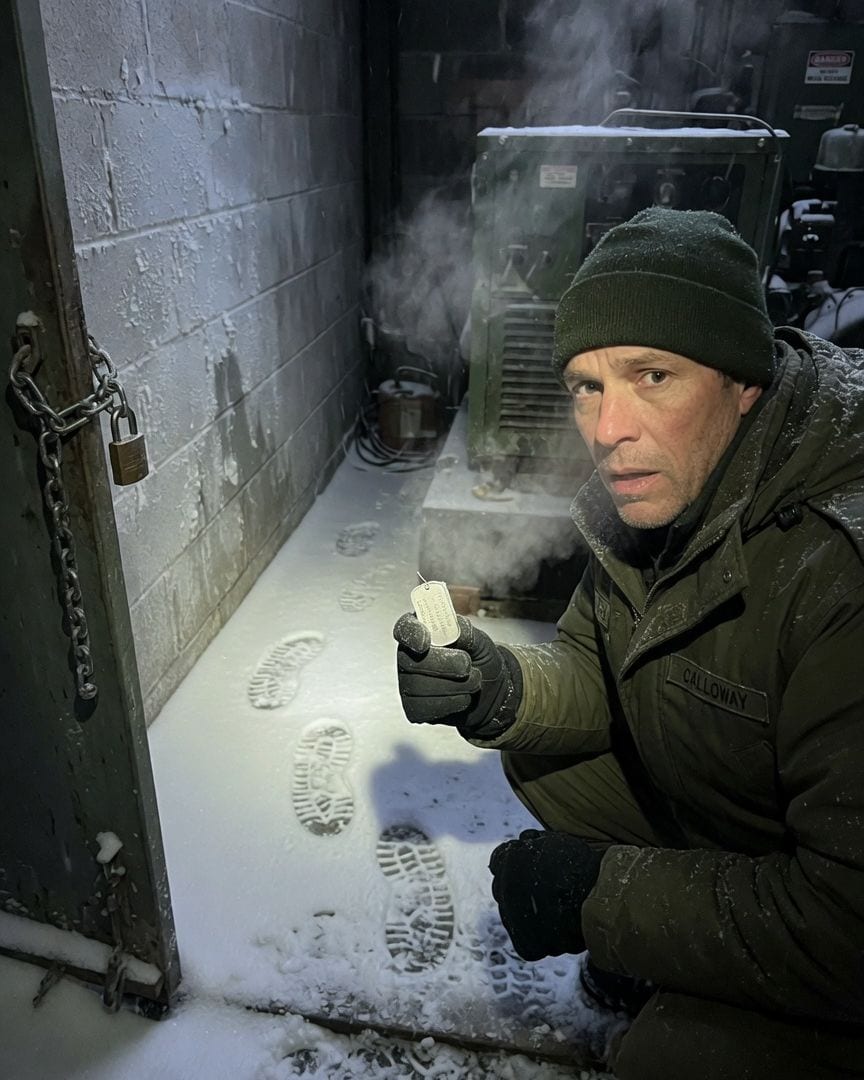
A radar operator found fresh boot prints leading into a shed, but none led out. Then he found a dog tag for a man who wasn't there.
At the remote Cutbank Station, radar operator Oscar Calloway dismissed a lone blip crossing the perimeter as another glitch of the brutal Alaskan winter. But the morning report confirmed fresh boot prints leading directly to the generator shed, its heavy door left ajar. Inside, the air was unnaturally cold, and distinct military boot prints ended abruptly at the far wall, with no corresponding tracks leading out. Kneeling in the pristine snow, Oscar found a standard-issue military dog tag half-buried at the tracks' end, bearing the name Philip Bennett—a man utterly unknown to the station's manifest. A profound chill, colder than the metal or the Alaskan air, gripped him.
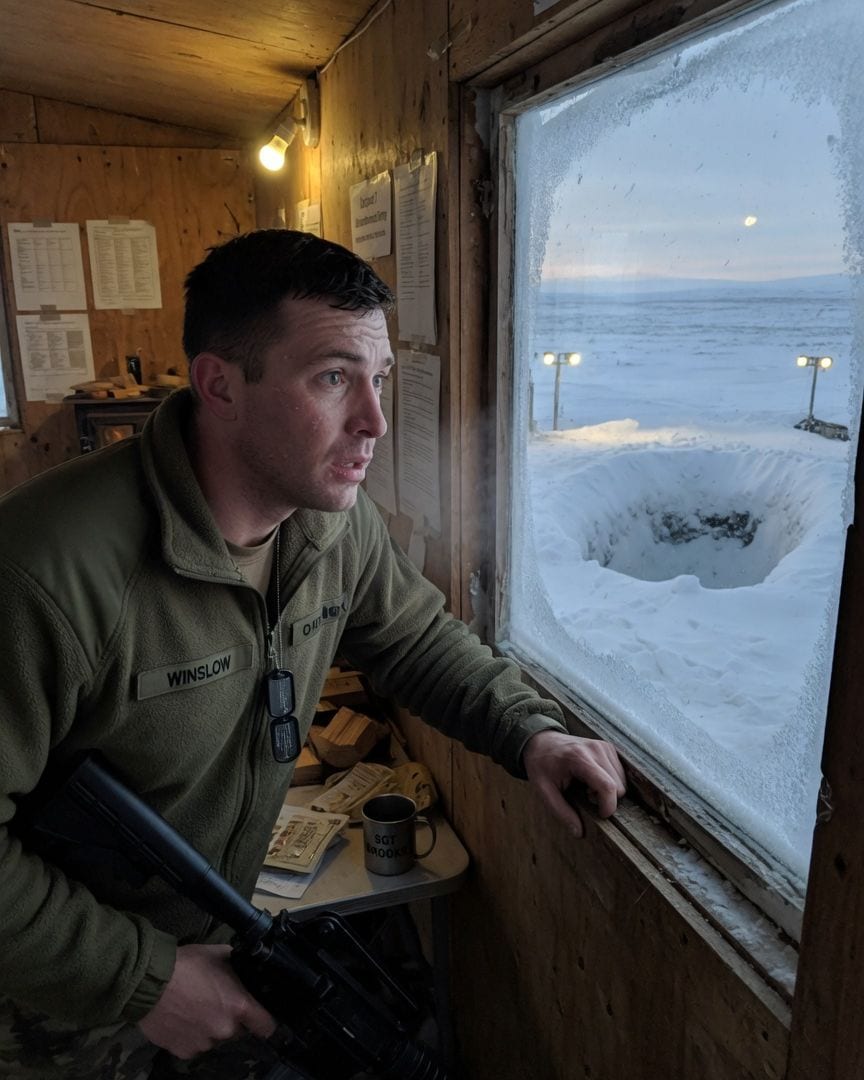
An outpost soldier transferred two weeks ago is listed on last night's patrol log.
Corporal Kenneth Winslow discovers a perfectly circular, waist-deep track in the fresh snow around his isolated hut. When he checks the duty logs, he finds an entry for a perimeter sweep by himself and a PFC Langford. Yet, official records show PFC Langford was transferred from the outpost two weeks ago.
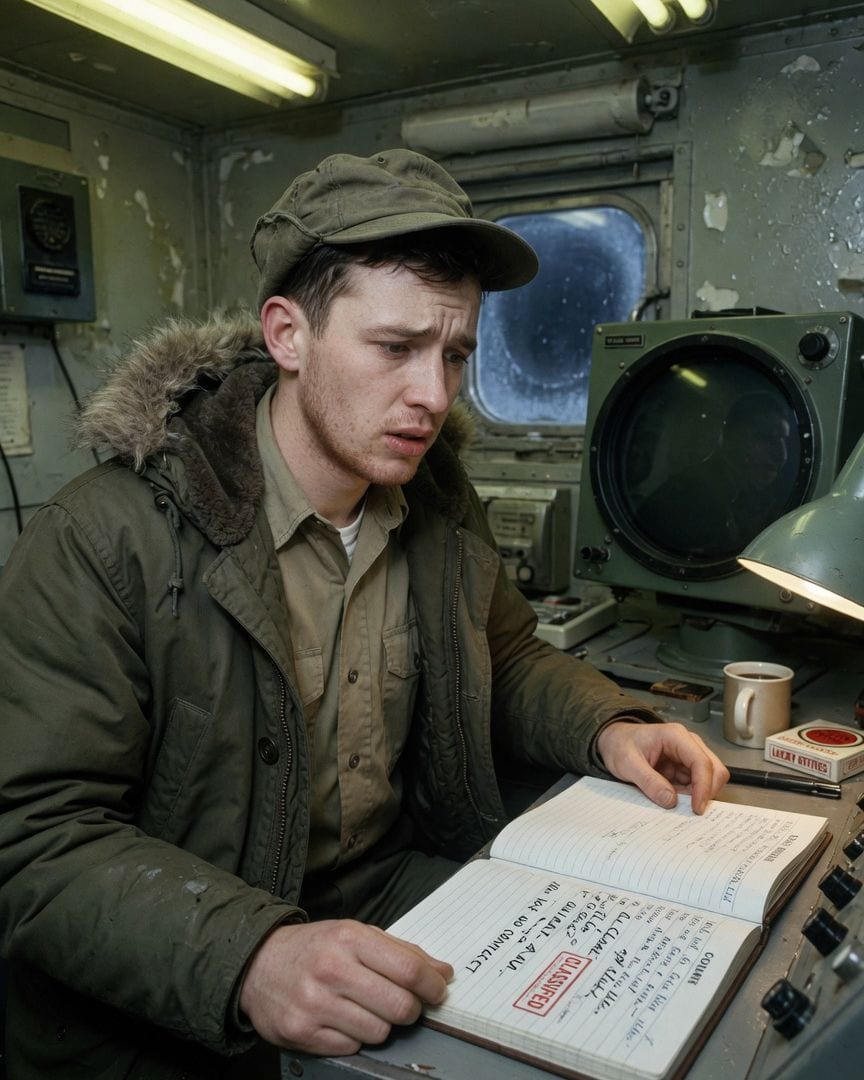
A Cold War airman logs an impossible radar contact on his last sweep. But his official logbook entry is stamped 'CLASSIFIED' and then contradicted by a hastily scrawled 'ALL CLEAR' dated moments before it.
Airman Ordway Vance, 22, manned the radar dome at Site Pellin in the biting North Atlantic dark of January 1962, running the last calibration sweep before its decommissioning. His scope picked up a faint, impossible return, growing closer with each pass, though the ocean remained empty to the eye. When Vance detailed the contact in his official logbook, a 'CLASSIFIED' stamp appeared, followed by a hastily scrawled 'ALL CLEAR' dated moments before his own entry, contradicting his every word. Commander Hartley dismissed it as equipment malfunction, but Vance sensed a chilling, official erasure behind the lie. He soon found a locked cabinet marked 'SITE PELLIN ANOMALIES,' hinting at a deeper truth buried within the base's final days.
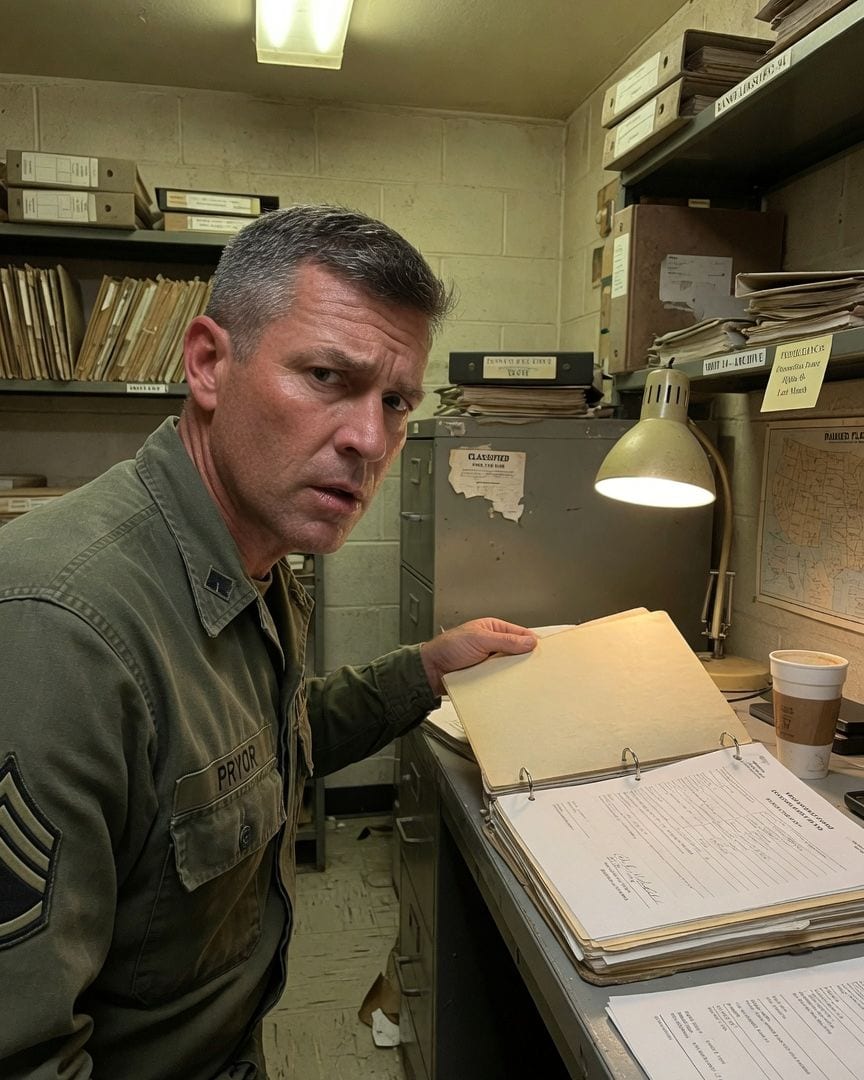
A sergeant with eleven days left finds a warm, glassed crater. Its file shows a captain lost thirty years ago is still signing reports from last week.
Sergeant Alden Pryor was counting down his final eleven days on a twenty-year hitch, expecting to spend them on routine patrols along the Ranier Flats fence line. Instead, his truck stopped at a bizarre sight: a four-hundred-foot glassed crater, miles from anywhere, its sand faintly warm at dawn despite no one recalling a blast. The air above it shimmered with an unnatural distortion, a silent scar of erased violence, and the official file for 'Shot 14' showed recent maintenance sign-offs for a decommissioned tower at the crater site. All these active documents were signed by Captain Everett Caldwell, who had been officially lost in operations thirty years ago, leaving Sergeant Pryor to wonder how a dead man could still be filing reports.
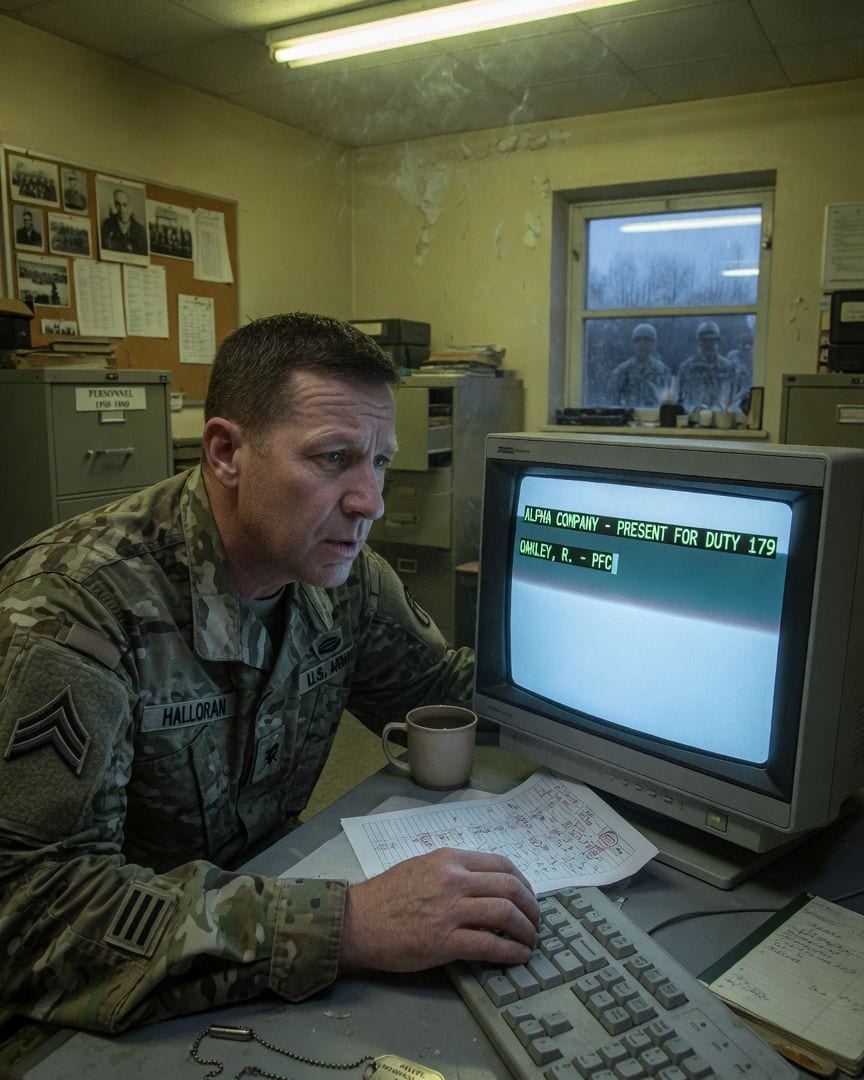
Sergeant Halloran’s computer logged an impossible 179 men. Days later, a 1953 dog tag appeared for the phantom Cold War soldier it named.
Sergeant First Class Roy Halloran was nearing his 20-year retirement, meticulously counting his company in the chilly German orderly room. He knew the number by heart: 178 men. Yet, day after day, his computer insisted on 179. The digital phantom deepened when a new name, 'Oakley, R. - PFC,' appeared, locked and uneditable. Then, from a forgotten cabinet, a tarnished brass dog tag surfaced, bearing the name 'OAKLEY, REGINALD P. - PFC' and the impossible date '1953.' Who was this extra man, and why had his dog tag appeared decades later?
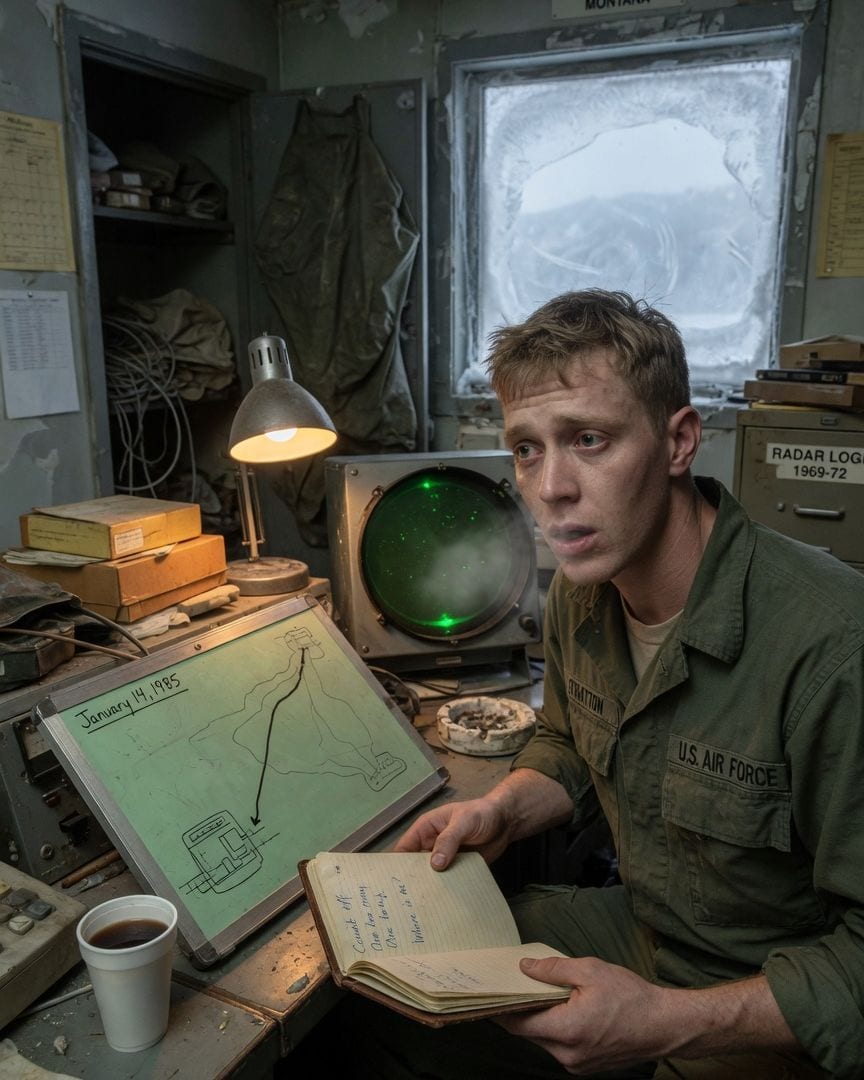
Airman Lars Stratton found an old Cold War manifest listing one name twice: 'Bernard Radcliffe' transferred and 'Bernard Radcliffe' still present.
Airman Second Class Lars Stratton was counting down his final weeks at Echo Station, a desolate Cold War outpost due for mothballing. He longed for home, far from the bitter Montana winds and the constant hum of static. Inside the dim radar shack, he logged the usual nightly ghost blip, a faint contact appearing at 2300, just as it had every winter since 1987. This night, a metallic tang like old blood lingered in the air, raising the hairs on his arms. Seeking distraction, Lars later discovered a leather-bound logbook from 1971, detailing the same 2300 contact, but with chilling notes and a manifest listing one airman's name, Bernard Radcliffe, twice—once transferred, once present. Was he truly alone in the silent, remote station?