A radar specialist uncovers a dead man's logbook entry, dated two weeks after the fire that killed him. It asks, 'We're still here. What happened to us?'
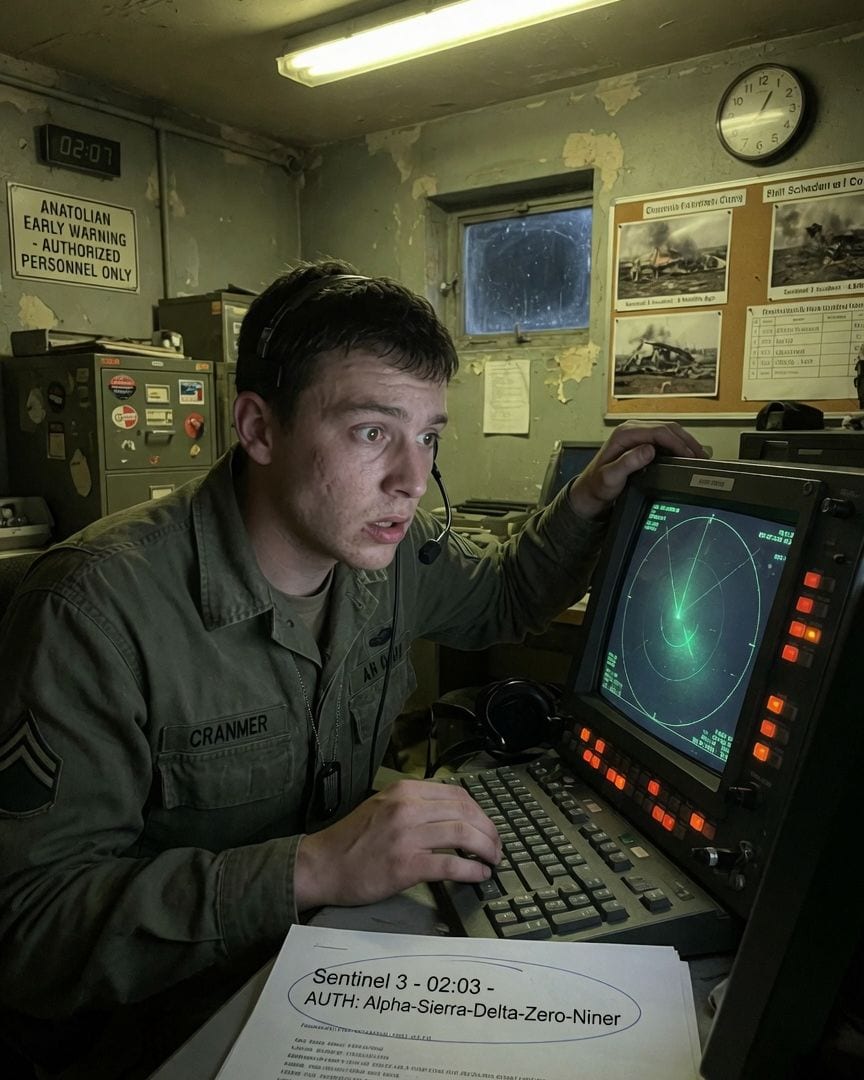
The wind howled around the domes of the air-defense radar site high in the Anatolian highlands, a constant, mournful presence. Specialist Gideon Cranmer, twenty-six and three weeks from rotation, adjusted his headset. It was 0200, his overnight watch.
Outside the reinforced concrete walls of the operations center, the world was a black, indifferent expanse. Cranmer watched the flickering green lines on his AN/MPQ-64 Sentinel radar console, the familiar rhythm of the night.
The secure coordination line crackled in his ear, pulling him from his quiet vigil. A voice check came through, clear as a bell, from an adjacent early-warning station. "Sentinel 3 here, all systems nominal, authentication Alpha-Sierra-Delta-Zero-Niner."
Cranmer’s blood ran cold. Sentinel 3. He knew Sentinel 3. He knew it had burned to the ground eight months ago, a catastrophic fire that had taken Staff Sergeant Ethan Lambert and Senior Airman Quentin Stratton with it.
The official report was a grim fixture in the site’s memory. He tried to keep his voice steady, his fingers fumbling slightly as he toggled the mic. "Sentinel 3, confirm your location."
The voice on the other end, calm and professional, read back the correct grid, the precise coordinates of the incinerated station, the correct call sign. Everything by the book, exactly as it should have been if Sentinel 3 still stood.
Then, the operator’s voice dropped its official cadence. The ambient hum of the radar console seemed to shrink, as if the room itself was holding its breath. The voice became quiet, almost a whisper, filled with a strange, unplaceable longing.
"And has anyone ever found out what happened to us?"
Cranmer ended the call, his hand trembling slightly against the cool plastic of the console. He tried to rationalize it, running through the possibilities: a prank by a bored comrade, a faulty line creating ghost signals, a recording misplayed.
But the voice had been too real, too specific. The question, too raw. He immediately cross-referenced the call log. His terminal blinked, confirming the details: the call had indeed come from the correct frequency, logged as 'Sentinel 3' at 02:03.
No anomaly in the system, no indication of a technical malfunction. The digital ledger confirmed the impossible.
Sergeant Greg Brooks, Cranmer's superior, was dismissive when Cranmer reported it at shift change, leaning against a filing cabinet with his arms crossed. "Just fatigue, Cranmer. Long hours. Happens."
Brooks's gaze was direct, almost too steady, as if daring Cranmer to argue. "Get some rack time. Don't chase shadows."
But Cranmer couldn't shake it. The voice had burrowed deep, an itch under his skin. He spent his off-duty hours discreetly digging through the site's archived communications logs, a sprawling digital graveyard of static and dead air.
He focused on the weeks immediately following the Sentinel 3 incident, sifting through the noise for anything out of place. Most were exactly that: static, the ghost of radio waves.
But then, three days into his quiet investigation, he found it. A faint, almost imperceptible signal trace, buried in a sequence of otherwise blank data.
It wasn't a full voice, not even a syllable, but a rhythmic, pulsing energy signature, originating from Sentinel 3's exact grid. The timestamp on the data scrolled across his screen: two weeks after the fire.
The old console fan whirred louder in the quiet room, a sound like an intake of breath. It wasn't a voice, but it was something.
The faint energy signature, a digital breadcrumb, led Cranmer to the site's derelict equipment storage, a corrugated steel conex box tucked behind the main complex.
Inside, dust motes danced in the single shaft of sunlight from a grimy window, illuminating a graveyard of old, decommissioned gear. The air hung heavy with the smell of ozone and decay.
Tucked away beneath a pile of antiquated radio parts, their wiring stripped and useless, he found an official-looking logbook. Its worn cover was stamped 'Sentinel 3 - Communications Log.'
Its edges were scorched, blackened and brittle, consistent with the fire that had gutted the station.
He opened it, his heart pounding a dull rhythm against his ribs. The last official entry was dated the day of the fire, scrawled hastily. Cranmer’s fingers traced the singed page. But turning the page, he found another entry.
It was handwritten, in a familiar, precise script he recognized from personnel files: Staff Sergeant Ethan Lambert. The date on the entry was two weeks after the fire, clearly etched.
It detailed a routine comms check, listing frequencies and call signs, all nominal. The penmanship was steady, almost mundane.
Below it, scrawled faintly, as if with a dying hand, was a desperate note that bled into the paper: 'Is anyone out there? We're still here. What happened to us?'
Cranmer stared at the logbook, the official date of '8 months ago' starkly contradicted by the 'two weeks after' entry, his eyes fixed on the desperate, faint handwriting of a dead man asking for help.
Cranmer showed the logbook to Sergeant Brooks the next morning, expecting outrage or at least serious concern. Brooks took one look at the scorched cover, then the impossible date, and his face hardened.
He didn't deny the handwriting was Lambert's, nor did he question the impossible date. Instead, his voice dropped, flat and even. "Where did you get this, Cranmer? This shouldn't be here." He immediately reached to confiscate it, his hand outstretched.
"This is clearly a hoax, or misfiled evidence. It needs to be secured."
Cranmer pulled the logbook back, clutching it tight. "Regulations say potential evidence must be preserved, Sergeant."
Brooks sighed, a puff of air that seemed to deflate the tension in his shoulders, but his eyes remained sharp, wary. "Fine, Cranmer. But this changes things."
He pulled Cranmer off his regular watch rotation that afternoon, reassigning him to 'inventory duty' in the archives – a sprawling, low-lit cavern filled with decades of dusty files and forgotten equipment.
Cranmer suspected it was a thinly veiled attempt to isolate him, to bury him in paperwork. But it was a mistake. The archives contained exactly what Cranmer needed: decades of old records, equipment manifests, and even personnel files.
He started cross-referencing every unusual incident report from the Sentinel 3 grid, looking for patterns. The archives, a quiet tomb of forgotten data, seemed to hum with his urgency.
He found several, spanning back to the early 1980s: reports of 'phantom signals,' 'unexplained power fluctuations,' and 'operator disorientation.' They were always at the Sentinel 3 location, always dismissed as equipment failure or stress, filed away and forgotten.
Each report was a faint echo of the present, a growing chorus of things that shouldn't be.
Cranmer's digging didn't go unnoticed. He caught Sergeant Brooks watching him from the doorway of the archives several times, the older man’s silhouette dark against the fluorescent hallway light. Brooks’s expression was unreadable, a careful mask.
The silence of the archives seemed to stretch, filled with the unspoken questions between them. One evening, as Cranmer was leaving the mess hall, the clatter of trays and distant conversation suddenly muted. Brooks stopped him, his voice low.
"Cranmer, some things are better left buried. You're three weeks from going home. Don't risk it." The warning was clear, delivered with an edge of genuine concern, but also an implied threat, like a hand pressed firmly against his chest.
Later that night, Cranmer found a small, unmarked USB drive tucked into his locker, resting on his clean uniform. It contained a single encrypted file. No note, no explanation.
He plugged it into a secure terminal in the ops center, bypassing several layers of access he shouldn't have known how to navigate. The file opened. It was a scanned, heavily redacted report titled 'Project ECHO: Sentinel Site Anomalies.'
Page after page of technical data, energy signatures matching what he’d found in the archives, and a list of 'Proximity Witnesses' – individuals who had experienced direct contact with the anomalies.
The file itself was a warning, a breadcrumb trail left by someone who was watching him, someone who knew exactly what he was looking for. The air in the quiet room grew cold, thick with the weight of unseen eyes.
The next morning, Cranmer confronted Brooks, holding up the USB drive. "What is Project ECHO, Sergeant?" His voice was tight, thin.
Brooks sighed, the sound heavy in the sterile air of the ops center. His shoulders slumped, the carefully maintained facade finally cracking. "It's not a 'project,' Cranmer. It's a containment."
He led Cranmer to a small, soundproofed office, the kind used for disciplinary actions or hushed debriefings. The door clicked shut behind them, sealing them into a world of muffled silence. "These sites... they're nodes. Temporal-spatial anomalies.
They record, they replay. Sometimes, they even interact."
Brooks leaned forward, his voice low, urgent. "Sentinel 3 wasn't just a burned-out station. It's a persistent echo, a 'ghost in the machine' where the operators' consciousnesses are trapped.
Lambert and Stratton… they’ve been trying to communicate, on and off, for months. Not just them. Others, over the years. That logbook? It’s real. Their awareness fades in and out, but they're still there."
He pulled out a faded photograph from his desk drawer, an official-looking snapshot of two men in uniform, smiling stiffly. "Lambert and Stratton. Good men." He slid it across the table.
Then, Brooks pulled out a thick, classified binder, its cover worn from years of handling. "This is why I tried to stop you. The system is designed to make this impossible, but it always finds a way.
And the military… we’ve been trying to understand it, contain it, for decades." The phantom signals Cranmer found, the impossible log entry, the voice on the secure line – they weren't glitches.
They were exactly what they seemed: a desperate attempt at contact from the trapped. The room, which had seemed so small, now felt cavernous, filled with the echoes of lives Cranmer now understood were not truly gone.
Brooks then introduced Cranmer to Dr. Annika Hale, a civilian consultant, a calm, unbothered woman who seemed to blend into the beige walls of the office.
Her expression was one of academic detachment, as if discussing geological formations rather than trapped souls. She had been embedded with the unit for years, Brooks explained. She was 'the one who knew.'
Dr. Hale, with precise movements, laid out a series of heavily redacted reports on the table. Each was thick, dense with technical jargon and classified stamps. "These are 'Echo Incident Reports.'
We've identified specific individuals, 'Proximity Witnesses,' who exhibit a heightened susceptibility to these phenomena. They're often drawn to these nodes, or experience contact with them at an early age."
She tapped a slender finger on a line item in one report, dated twenty years prior. The paper rustled faintly in the sudden silence. "This one, for example, from a base in New Mexico. 'Unexplained auditory phenomena, child witness.'"
Cranmer leaned closer, his eyes scanning the details. The base name, the date… and then the witness's name, printed clearly in bold type. "Gideon Cranmer, age 6." His own name.
His own age, at the time his father, Master Sergeant Franklin Cranmer, was stationed there. The air seemed to solidify in his lungs. He looked up at Dr. Hale, a cold dread spreading through him, radiating from his gut.
He hadn't just stumbled upon this anomaly; he was part of a pattern, a recurring element in the military's decades-long catalog of echoes, and he was always meant to find this station.
Cranmer dropped the file, his gaze locked on his own name, 'Gideon Cranmer, age 6,' listed as a 'Proximity Witness' in a classified report from two decades ago, the date and location making his blood run cold as he realizes this isn't his first encounter with the echoes, and he was always meant to find this station.
Dr. Hale confirmed Cranmer's chilling realization, her voice calm, devoid of any hint of surprise. "Your father, Master Sergeant Franklin Cranmer, was a 'Proximity Witness' himself. He experienced an echo event at that New Mexico base.
You, as a child, were present. The echoes… they seem to resonate with certain genetic markers, or perhaps a unique neuro-electrical signature." She spoke as if delivering a scientific lecture, her hands clasped.
She explained that the military had identified a handful of such families, monitoring their movements, sometimes subtly directing their assignments. "This Anatolian site? It's a known node. Your assignment here, Specialist Cranmer, was not random. It was a calculated placement."
The echoes were not random occurrences; they were persistent, localized consciousnesses, sometimes aware, sometimes merely replaying a fragmented loop of their final moments. The voice from Sentinel 3, Lambert's note – they were genuine, desperate cries from trapped minds.
The faint energy signatures Cranmer found in the archives were not equipment glitches or faulty readings, but the residual 'wake' of these consciousnesses, the instruments' half-confirmation of an impossible reality.
Every clue he had stumbled upon clicked into place, not as a series of errors or malfunctions, but as the meticulous, horrifying documentation of a phenomenon the institution had known about, and quietly managed, for over forty years.
The coherence was what truly terrified him; it was all real, all connected.
Cranmer stood, the classified files scattered on the table, the weight of the institutional knowledge pressing down on him. "So, what happens now? Do we help them?" The question felt small, naive, in the face of what he now knew.
Dr. Hale met his gaze, her eyes devoid of emotion, like still water. "We continue to monitor. We contain. We do not interfere. The echoes are stable as long as they are undisturbed."
Brooks, who had been silent through Dr. Hale's explanation, added, his voice raspy, "Interference can destabilize them. Make them... spread. Or worse, make them reach out."
Cranmer felt a profound sense of despair, a cold knot forming in his stomach. He was trapped. Not physically, not in a cell, but by knowledge.
His three weeks until rotation felt like a life sentence, a countdown to a freedom that would never truly come.
He demanded to be allowed to speak to the echoes, to try and offer some comfort, some acknowledgement of their existence. Brooks flatly refused. "You are a 'Proximity Witness,' Cranmer. Your interaction could be catastrophic.
You are to complete your rotation, and then you will be reassigned to a non-anomaly-adjacent post, with a full psychological evaluation. You will forget what you’ve seen here."
Cranmer realized this was not an escape; it was a different kind of containment, a removal and erasure. He was being taken out of the field, but the echoes, and his own connection to them, would remain.
The wind outside the office howled, a familiar, mournful sound, and for the first time, Cranmer felt he understood its language. It was a cry for help, and he was powerless.
Specialist Cranmer completed his tour. His transfer orders came through, rerouting him to a quiet administrative post in Germany, far from any known 'node.'
The psychological evaluation was thorough, probing and intrusive, but he gave all the 'right' answers, burying the truth so deep he almost believed the lies himself.
Dr. Hale and Sergeant Brooks remained at the Anatolian site, the silent custodians of the echoes. The official reports on Sentinel 3 remained unchanged: destroyed by fire, two operators lost.
The military's secret program continued, meticulously documenting the anomalies, the 'Proximity Witnesses,' and the patterns across rotations and dates.
Cranmer’s name was now added to a different kind of list – not just a witness, but a 'contained asset,' monitored for any further 'susceptibility events.' He was out, but not free.
The silence that followed him was not peace, but a heavier, more insidious burden.
Some years passed. Specialist Cranmer, now a veteran, worked a quiet desk job, his memories of Anatolia fading into the background, like static on an old radio. He kept to himself, a silent, watchful man.
His name was still on a list, though he never knew it, archived in a secure server, a data point in a vast, ongoing study.
His reassignment, his new life, was part of a larger, ongoing pattern, a careful orchestration he could never fully comprehend. The echoes continued, monitored, contained, silently watched by those who knew.
The wind still howled through the Anatolian highlands, battering the radar domes, carrying faint, impossible voices across the desolate terrain.
And sometimes, on the wind from the Anatolian highlands, a faint voice checks in, asking if anyone ever found out what happened to Specialist Cranmer.
If this one got to you
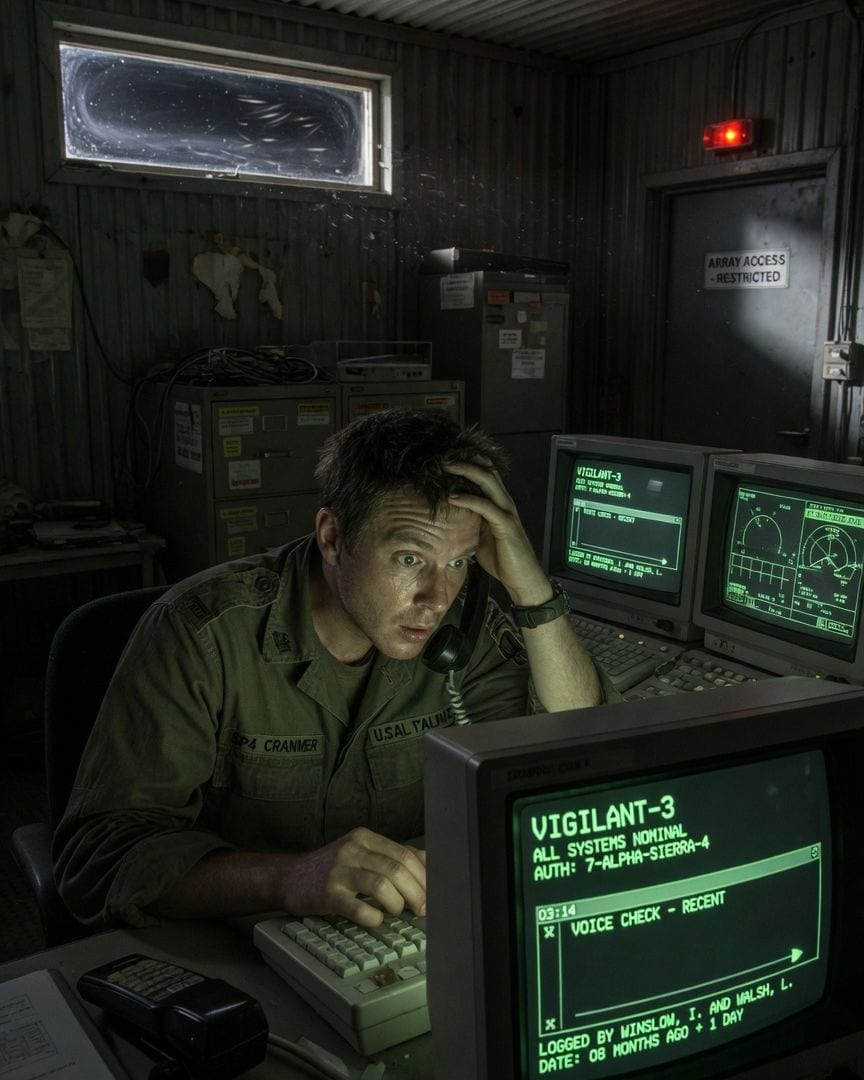
Specialist Cranmer’s console logs a voice from a station destroyed eight months ago. Its dead operators ask, 'Did anyone ever find out what happened to us?'
Specialist Arthur Cranmer endured another lonely overnight watch at Radar Site 4, the wind howling outside his isolated Anatolian post. At 0314, a routine comms check brought a chilling response from Vigilant-3, a station that had burned down, killing its two operators eight months prior. Cranmer's commanding officer dismissed it as a glitch, but the radar specialist knew better. He accessed classified logs, uncovering eight months of regular 'all systems nominal' check-ins from the destroyed station, authenticated by the dead operators. He then found his own recent call, logged by the same two k*lled personnel, followed by their haunting question: 'Did anyone ever find out what happened to us?'
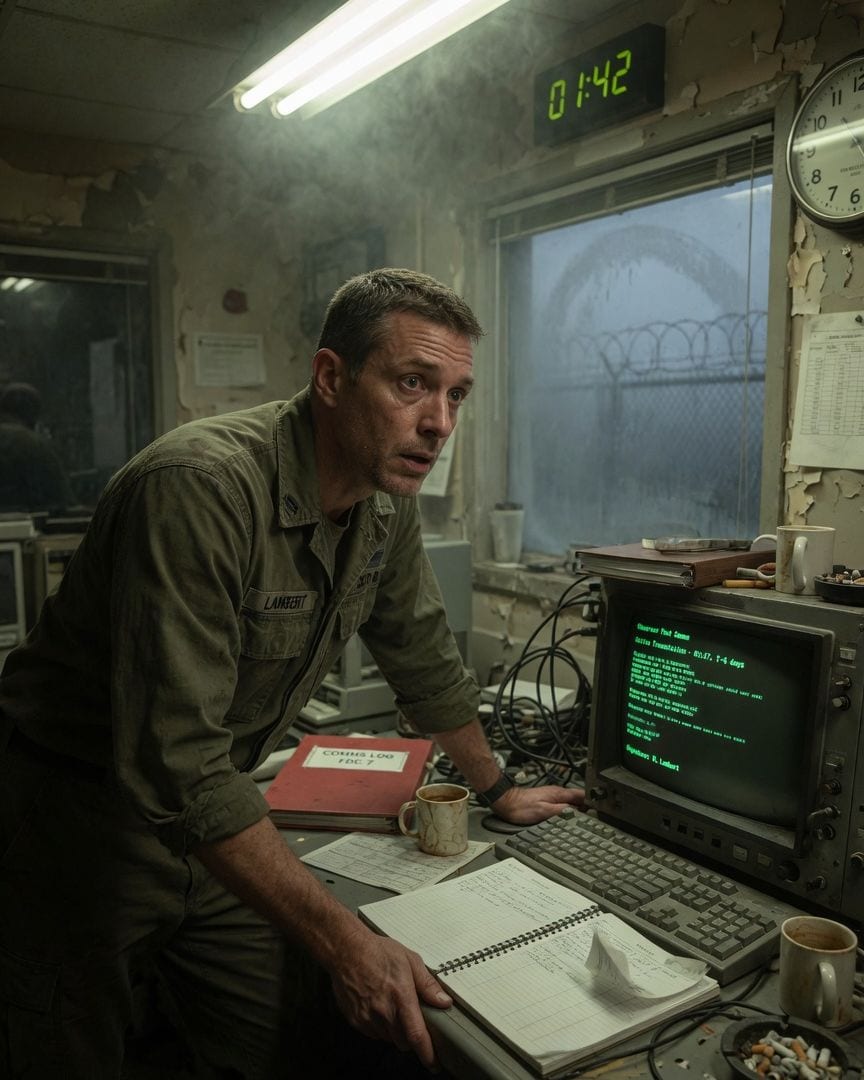
With Firebase 7 days from demolition, a dispatch specialist found his own signature on a log entry from a lost outpost. Then, a dead soldier's name appeared.
Specialist Robert Lambert hunched over the radio console in Firebase 7, the mountain fog pressing in as the base counted down its final days before demolition. His quiet shift shattered when urgent calls began arriving from outposts officially declared silent a week ago. His sergeant calmly informed him that he’d been speaking to no one, as all comms with those posts had been lost for hours. Later, Robert found a log entry for an active transmission, dated days after a post went dark, bearing his own signature. What chilling truth lay beneath the paper, revealing a dead soldier's name reporting from the grave?
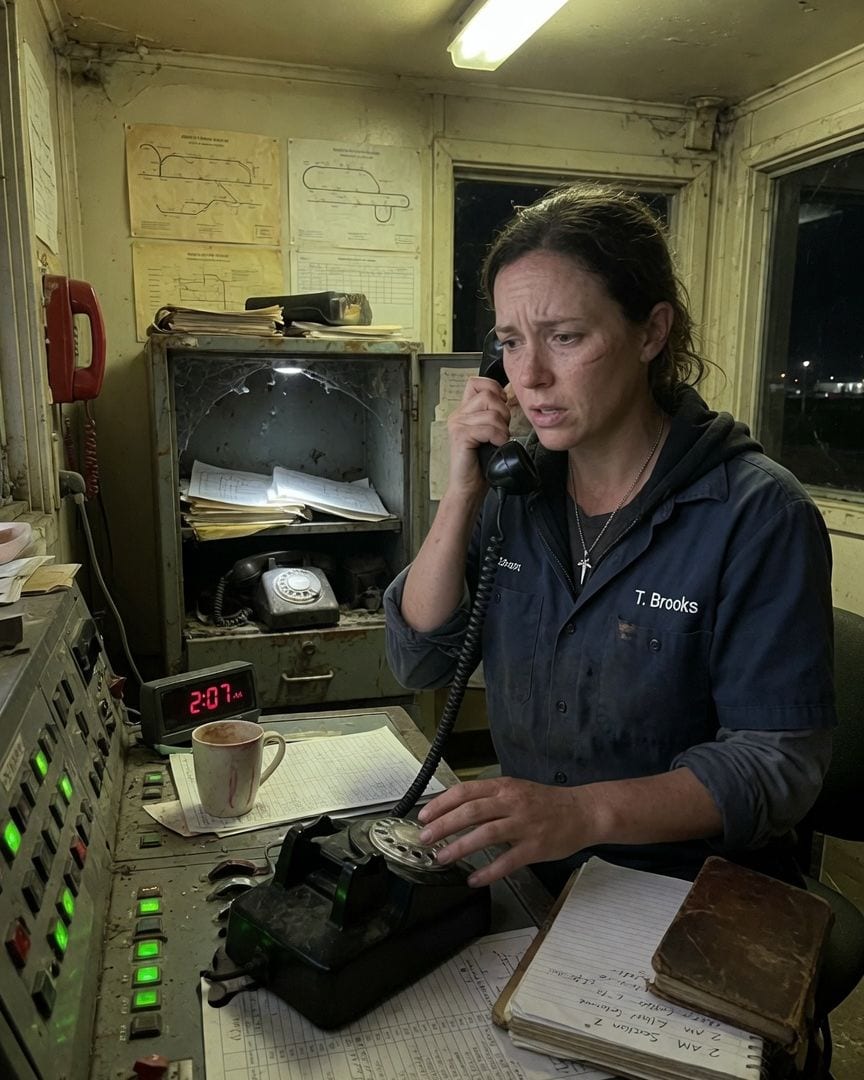
My signal box gets a 2 AM call every night from a man whose section was demolished eleven years ago. Now I found his logbook with today's date.
My night shift at the signal box is quiet and precise, defined by the routine 2 AM call from Ellis confirming Section 7 is clear. But when I asked my duty manager to log it, he said Section 7 hasn't had a track walker in eleven years, not since its cabin and phone were demolished.
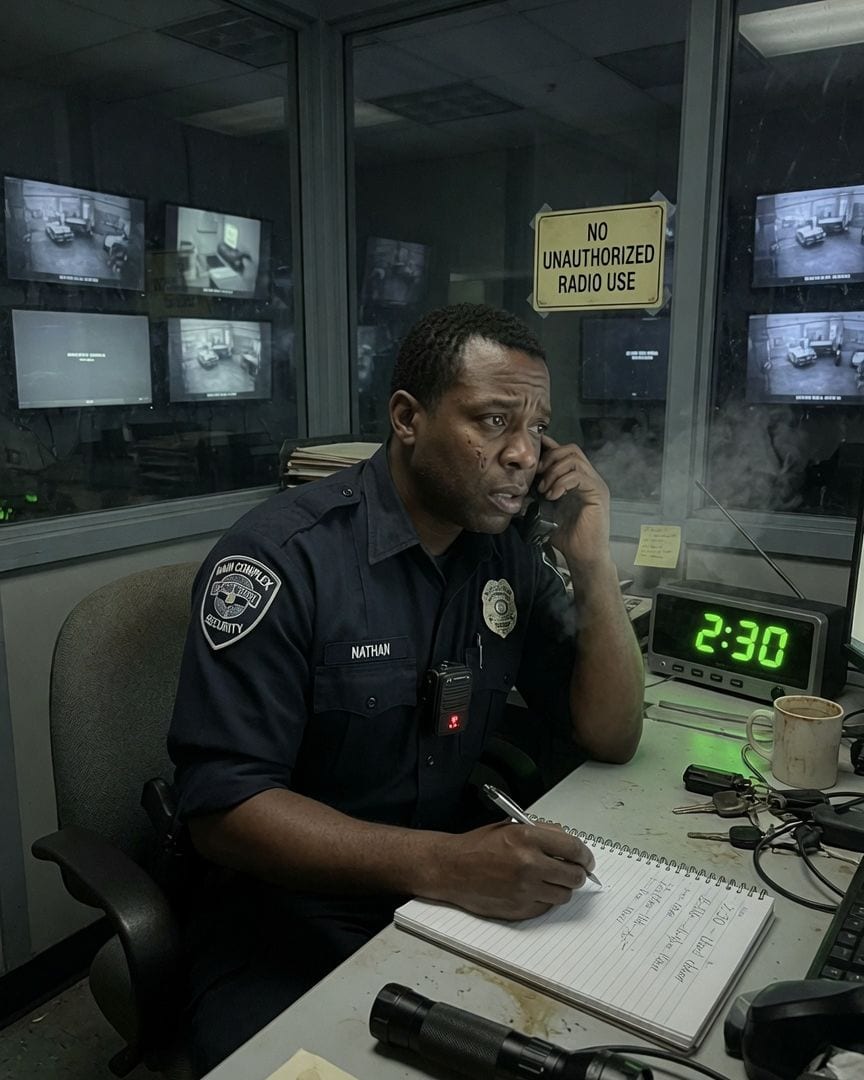
I radio Cole every night. My supervisor says his dock post was cut two years ago, and no Cole exists. But I just found Cole’s old logbook.
My graveyard shift usually consists of monotonous hourly check-ins with Cole, the guard at the loading dock. But my supervisor just revealed that the dock post was cut two years ago, and no one named Cole has ever worked for the company. I've been talking to someone who simply isn't there.
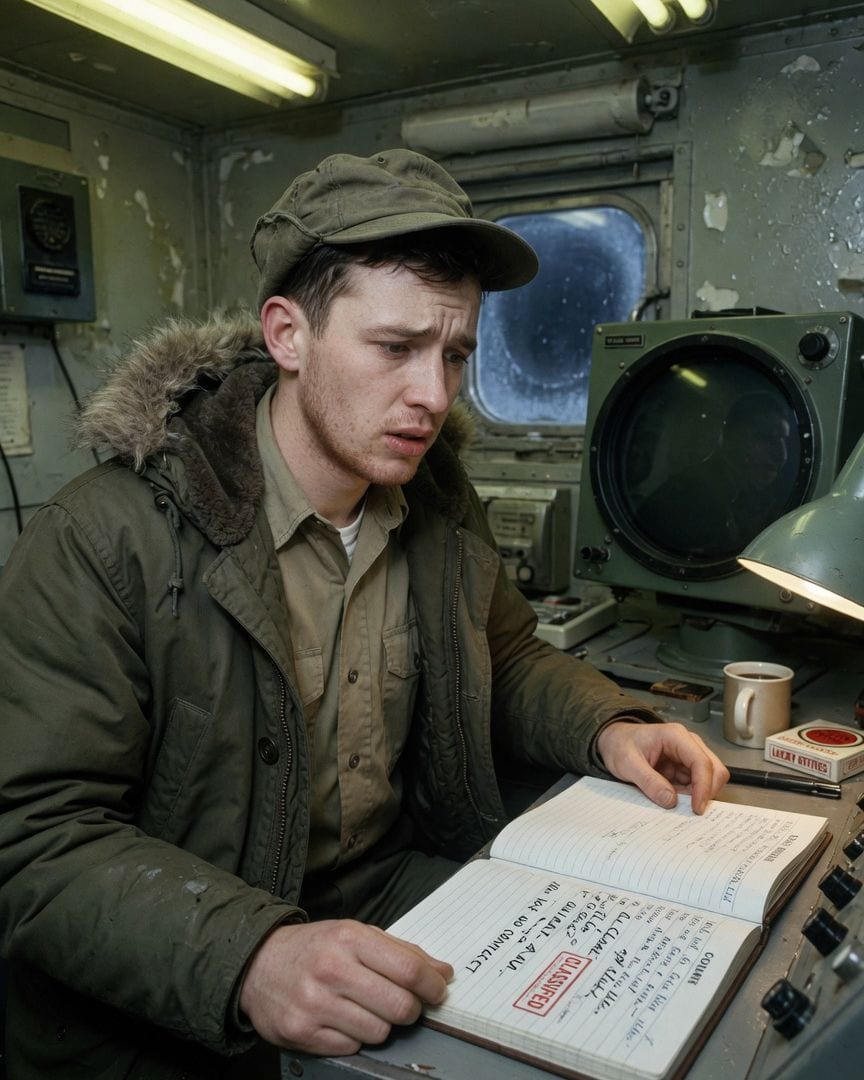
A Cold War airman logs an impossible radar contact on his last sweep. But his official logbook entry is stamped 'CLASSIFIED' and then contradicted by a hastily scrawled 'ALL CLEAR' dated moments before it.
Airman Ordway Vance, 22, manned the radar dome at Site Pellin in the biting North Atlantic dark of January 1962, running the last calibration sweep before its decommissioning. His scope picked up a faint, impossible return, growing closer with each pass, though the ocean remained empty to the eye. When Vance detailed the contact in his official logbook, a 'CLASSIFIED' stamp appeared, followed by a hastily scrawled 'ALL CLEAR' dated moments before his own entry, contradicting his every word. Commander Hartley dismissed it as equipment malfunction, but Vance sensed a chilling, official erasure behind the lie. He soon found a locked cabinet marked 'SITE PELLIN ANOMALIES,' hinting at a deeper truth buried within the base's final days.
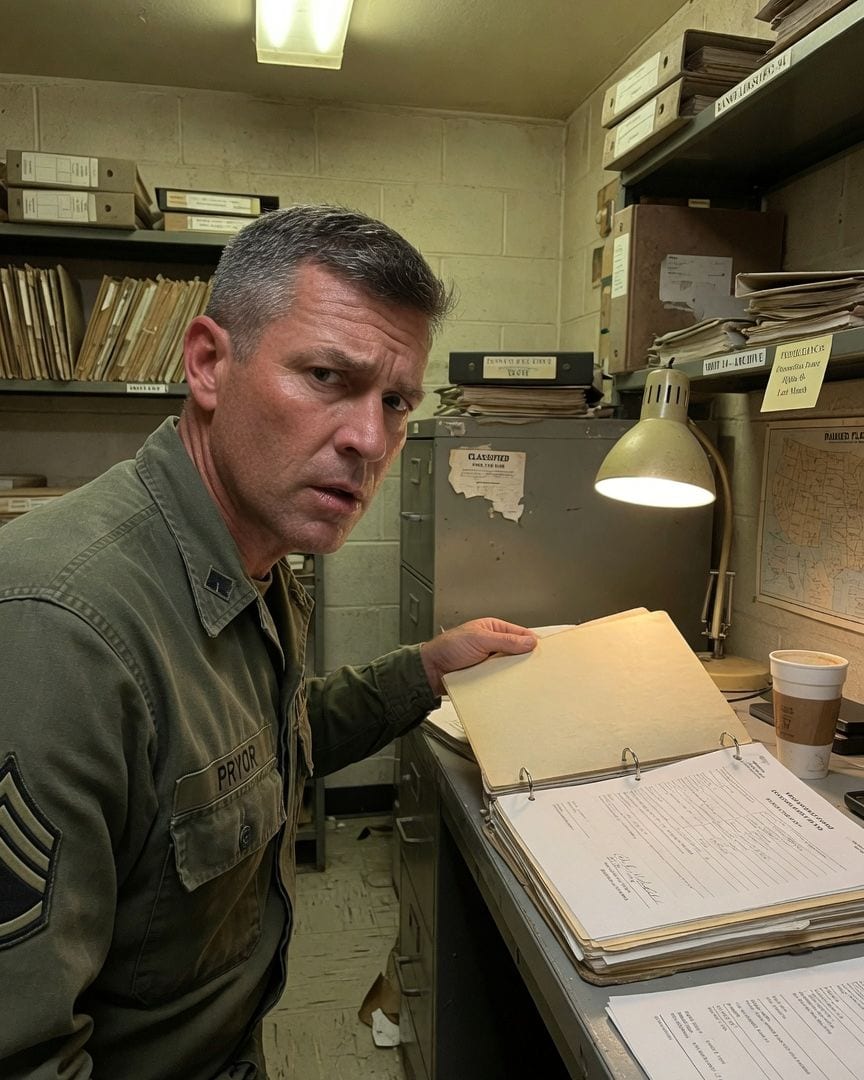
A sergeant with eleven days left finds a warm, glassed crater. Its file shows a captain lost thirty years ago is still signing reports from last week.
Sergeant Alden Pryor was counting down his final eleven days on a twenty-year hitch, expecting to spend them on routine patrols along the Ranier Flats fence line. Instead, his truck stopped at a bizarre sight: a four-hundred-foot glassed crater, miles from anywhere, its sand faintly warm at dawn despite no one recalling a blast. The air above it shimmered with an unnatural distortion, a silent scar of erased violence, and the official file for 'Shot 14' showed recent maintenance sign-offs for a decommissioned tower at the crater site. All these active documents were signed by Captain Everett Caldwell, who had been officially lost in operations thirty years ago, leaving Sergeant Pryor to wonder how a dead man could still be filing reports.