A retired librarian's father, declared dead 74 years ago, has a current medical bill from a secret Cold War facility, asking for his daughter.
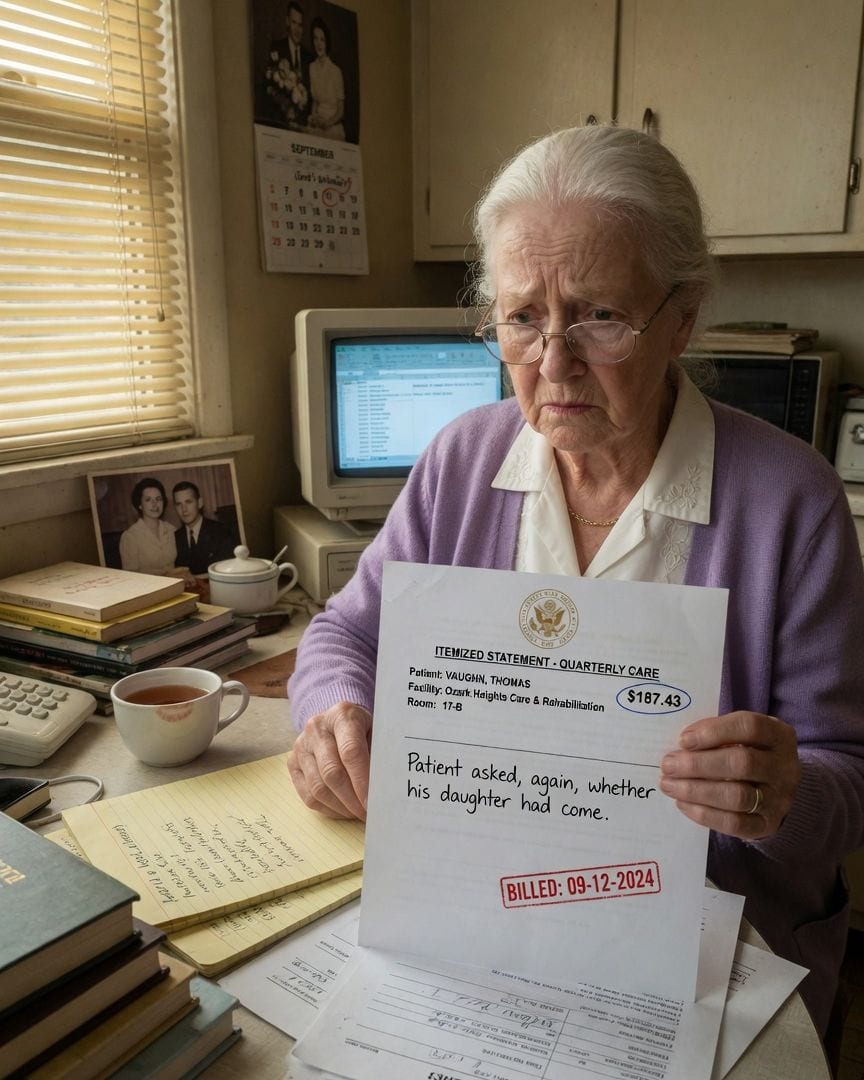
Odette Cardew, 76, sat at her kitchen table, the morning sun glinting off the official Army seal on the crisp paper.
She was methodical by nature, a retired librarian who appreciated order, but the document in her hand shredded every expectation.
It was an itemized medical bill for Thomas Vaughn, her father, for care rendered this quarter at a facility in the Ozarks. A small, current balance.
Her father, a Marine, had been declared dead of exposure in the Chosin cold in 1950, when she was two years old. Seventy-four years.
The bill listed his room number, his dietary restrictions, and a handwritten note tucked at the bottom: ‘Patient asked, again, whether his daughter had come.’
A stark, red ink stamp bled slightly into the paper: the exact date of Odette’s own birthday.
The world tilted, a quiet, sickening lurch that left her grasping for a rational explanation, but finding only an impossible, cold knot in her gut.
Odette’s initial calls to Army records and billing departments yielded only automated responses or polite denials of any active file for a Thomas Vaughn. The facility address listed on the bill, 'Ozark Heights Care & Rehabilitation,' yielded no public listings.
The phone rang with the flat drone of an empty line, or a polite voice informing her that no such active record existed.
She spent days, her old research skills honed by decades in the library, cross-referencing defunct government directories and obscure historical archives. The hum of her old desktop computer filled the silent house, a constant companion to her growing unease.
She found mention of 'Special Observation Unit Gamma' in heavily redacted Cold War-era documents, a discreet facility linked to 'personnel re-integration challenges' and 'classified incident management.'
The coordinates, when she painstakingly cross-referenced them with satellite maps, matched the Ozark Heights address. It wasn't a hospital; it was a black hole on the map.
The facility gates, visible on blurry satellite images, were formidable, suggesting a different kind of institution entirely.
Through an old contact, Diane Pennington, a records clerk at the National Archives, Odette managed to request a declassified manifest for personnel declared missing in action during the Chosin campaign.
Diane, a kind woman with a perpetually worried frown, initially dismissed it as a clerical error, but Odette insisted. The mundane explanation—a ghost bill, a misprint—was already failing, unraveling with each click of her keyboard, each dead-end phone call.
The dread was no longer abstract; it had a name and an address, even if the address led nowhere the public could find.
Days later, Diane emailed a scanned document: a partial, heavily redacted 'patient transfer manifest' from late 1950. Most names were blacked out, entire columns obscured by thick black bars. Odette scrolled down, her breath catching.
Near the bottom, one name remained partially visible: 'Vaughn, Thomas.' The adjacent column, unredacted, contained an entry code she didn't recognize: 'RELOC, INDET TERM.' Not 'deceased,' not 'missing.' Relocated. Her father.
And then, a small, chilling line, tucked in the margin, also unredacted, in a different hand: 'Dependent: Cardew, Odette. Status: Monitored.'
Odette stared at the words, cold and precise, not a mistake, but a designation that had been waiting for her all along.
Odette immediately called Diane, her voice tight, a cold tremor running through it. "What is 'RELOC, INDET TERM'?" she demanded, the redacted manifest still glowing on her screen. Diane, already on edge, explained that it wasn't standard military parlance.
Her voice was barely a whisper through the phone, as if the office itself might be listening. "It... it belongs to a highly restricted classification," Diane said.
"A system for individuals whose 'status' was determined by something beyond conventional military service." Odette pressed her, and Diane, after a moment of heavy silence, agreed to discreetly search for other instances of this code.
Over the next week, a chilling pattern emerged. Diane found dozens of similar manifests, spanning from the Korean War to the late 1980s, all bearing the same 'RELOC, INDET TERM' code.
These were for sailors whose ships vanished without a trace, pilots whose planes disappeared in clear skies, soldiers reported lost in ambushes with no bodies recovered.
Each individual had a 'file' that continued to accrue, with periodic 'status updates,' 'maintenance requisitions,' and even 'dietary adjustments'—the very details on her father's bill—long after their official declarations of death.
The paperwork wasn't stopping; it was meticulously documenting a parallel existence. The facilities were always remote, often decommissioned military installations in isolated regions: the Ozarks, the New Mexico desert, a forgotten island in the Great Lakes.
The more Diane searched, the more the files piled up, a monument to unseen lives. Odette felt a cold, bureaucratic hand reaching across decades, proving that the lost were never truly lost.
They were simply moved, and their administrative lives continued, patiently, officially, in the dark.
As Odette and Diane deepened their search, subtle shifts began. Odette’s secure browser history for archived government sites occasionally wiped itself clean, inexplicable data corruption that left her staring at blank screens.
The desktop fan whirred louder in the sudden silence of the wiped files. Diane, visibly more nervous, reported a quiet visit from an 'auditor,' a man named Russell Fairfax, from 'Inter-Agency Records Compliance.'
He hadn't asked about anything specific, just reviewed her recent access logs with a calm, unnerving thoroughness, lingering on the dates she'd helped Odette. Diane described him as having eyes like chips of granite, utterly unreadable.
One evening, Odette returned home to find a small, unmarked manila envelope slipped under her front door. No stamp, no address. The paper felt thick, cold, in her hand. Inside was a single, grainy black-and-white photograph.
It showed a young Odette, perhaps three years old, standing awkwardly beside a uniformed man who was unmistakably her father, Thomas Vaughn. Behind them, partially visible, was a low-slung, utilitarian building with a familiar architectural style—the Ozark Heights facility.
The photo was dated, a faint stamp on the back, and the date matched the birthday stamp on the medical bill. Her father had asked if she had come. She had come. But she remembered nothing of it.
The photograph wasn't a warning; it was a quiet, undeniable statement: We know you're looking. We know what you'll find.
Odette confronted Diane with the photograph, her hand trembling as she laid it on Diane’s desk. The fluorescent lights of the archive office hummed, casting a pale glow on the old photo.
"This is me, with my father, at that facility. How? Why don't I remember?" Diane swallowed hard, glancing nervously at the office door, as if expecting the granite-eyed auditor to appear. "They're not dead, Odette. Not really."
She spoke in hushed, urgent tones, leaning forward across the desk. "I've seen these files for years. People declared KIA, MIA, lost at sea... but their records, their administrative lives, kept going.
Pension adjustments, medical reviews, even 'visitor logs' for family members who were never informed." Diane’s eyes were wide with fear, a contrast to her usually placid expression. "The facilities... they're for 'special cases.' People who witnessed things.
Things the government couldn't risk revealing. They weren't killed, Odette. They were simply... filed away."
She confessed that her own uncle, reported lost in Vietnam, still had pension checks arriving at a P.O. box in a small New Mexico town, decades later.
The institution wasn't a shadowy cabal of murderers, but a cold, patient bureaucratic machine. "Your father... he didn't die in Korea. He saw something, or was exposed to something, and they scooped him up.
And because you were his dependent, you were... associated." The bill, the room number, the dietary restrictions—they weren't mistakes. They were proof of his continued, albeit confined, existence.
The birthday stamp on the bill, the photo of her as a child at the facility—it all snapped into chilling focus. Her father wasn't lost to the cold. He was filed. And she, by extension, was part of that file.
The realization hit Odette with sickening force: her father was alive, a ghost in the machine, and she had visited him, unknowingly, as a child. Her own life, her own memories, had been selectively edited.
"My 'Monitored' status," she whispered, the words catching in her throat, "What does that mean?" Diane, her face pale, hesitated, clearly terrified of going further. The air in the small office seemed to thicken, pressing in on them. "It means...
you're on a list. A watch list. As a dependent of a... filed individual." Odette's mind raced, connecting the dots: the birthday stamp on the bill, the photo, the note about her father asking if she had come.
It wasn't just monitoring. It was something more. "Is there... a deeper classification?" Odette pressed, her voice barely audible, almost a plea. Diane, after a moment of agonizing internal debate, nodded slowly.
Her hand shook as she reached for her keyboard. "There's one more level. For dependents deemed... a risk. Or designated for transfer if they become one."
With trembling fingers, Diane accessed a deeper, more secure database, her eyes darting to the door, a bead of sweat tracing her temple. She typed in Odette’s full name, her birthdate.
The screen flashed, refreshing to show a new, stark line in Odette's file, timestamped just days ago: 'File Activation: Cardew, Odette. Subject Status: Impending Relocation.' The letters glowed, a cold, official pronouncement of her own imminent disappearance.
The full horror of it settled over Odette, heavier than any grief for a father she’d believed dead.
Her 'Monitored' status wasn't just observation; it was a pre-approval, a designation that she, as a direct dependent of a 'filed' individual, was also slated to be 'filed' if she ever became a risk to the institution's secrecy.
Her own relentless inquiries, her determination to find the truth, had triggered her file's activation.
The chilling efficiency of the system meant her father's desperate, repeated plea – 'whether his daughter had come' – was a cry from within his confinement, a ghost reaching across decades.
The birthday stamp on the bill wasn't just a date; it was a chilling reminder of her own connection, her own countdown, a pre-scheduled review for her own potential 'transfer.'
The pattern Diane had uncovered across decades and classifications wasn't just about witnesses; it was about the self-perpetuating nature of the secrecy machine, inheriting legacies of silence, 'filing' entire bloodlines.
The institution wasn't an antagonist to be fought, but a patient, bureaucratic force of nature. It didn't kill; it simply absorbed.
It consumed lives, converting them into meticulously maintained paperwork, erasing them from the public while preserving them in a hidden, active state. And now, she was next.
Confrontation was futile. Odette understood this with a cold clarity that settled deep in her bones. The institution wasn't a person to reason with, nor a corrupt department to expose.
It was a system, vast and patient, that had operated in the shadows for generations, impenetrable and silent.
Her only option was to disappear, to become as un-filed as possible, to sever every thread that connected her to the meticulously kept records.
She acted with the same methodical precision she'd applied to her research, a chilling mirror of the institution’s own efficiency. She emptied her bank accounts, withdrawing everything in cash, the crisp bills feeling strangely alien in her hands.
Her house, the only home she'd known for half a century, was put on the market with a rushed, cash-only sale.
She shredded every personal document, every piece of mail, every photograph that connected her to her past, the paper screaming as it tore. Her laptop was wiped clean and then physically destroyed with a hammer, the screen splintering like ice.
Her phone, shattered. She bought a burner phone, then another, discarding each after only a few calls, leaving a trail of discarded electronics behind her. She left no forwarding address, no digital footprint.
She moved to a small, forgotten town in rural Maine, far from the Ozarks, far from any major city, paying cash for a small, rented room above a quiet general store, its windows looking out onto a perpetually gray sky.
She knew it wasn't an escape; it was a temporary reprieve. A system this patient, this thorough, would eventually find her. But she would make it difficult. She would make them work for it.
She would live, for however long she could, outside the lines of their endless, meticulous files.
Odette lived a ghost of a life, a shadow in a quiet town. No more bills arrived. No strange packages. Her old house sold quickly, the new owners oblivious to the history it contained.
Diane Pennington vanished from her job at the National Archives, her desk cleared, her name removed from the directory, a blank space where she had been.
The records Odette had glimpsed, the manifests and the designations, were gone, scrubbed clean from any public-facing database, as if they had never existed.
The world moved on, seamless and undisturbed, leaving no trace of the lives it had quietly absorbed. Odette knew she had been erased from public record, her identity dissolved, but the chilling implication was that the system hadn't forgotten her.
It was simply waiting. Her absence from the official world was now, ironically, a confirmation of her 'filed' status, a quiet victory for the institution she had tried to evade.
Odette sat by the window of her rented room, watching the rain sheet against the glass. She hadn't used her real name in months.
She paid for everything in cash, avoided eye contact, and never stayed in one place for too long, always feeling the subtle pull of an invisible leash.
She had become a master of anonymity, a phantom in her own life, living in the spaces between. One afternoon, a small, unmarked package arrived at the general store's P.O. box, addressed simply to 'Resident.'
The clerk, a kindly old woman with flour on her apron, handed it to Odette without a second thought. Inside, carefully folded, was a single, crisp paper napkin. On it, in a steady, official hand, were written three words.
Days later, the old woman at the general store would notice the 'Resident' hadn't come down for her morning coffee. She'd find the small room empty, the bed neatly made, a single paper napkin lying on the dresser.
The words written on it were perfectly legible, betraying no haste, no emotion, just a quiet, undeniable truth. Your file is current.
If this one got to you
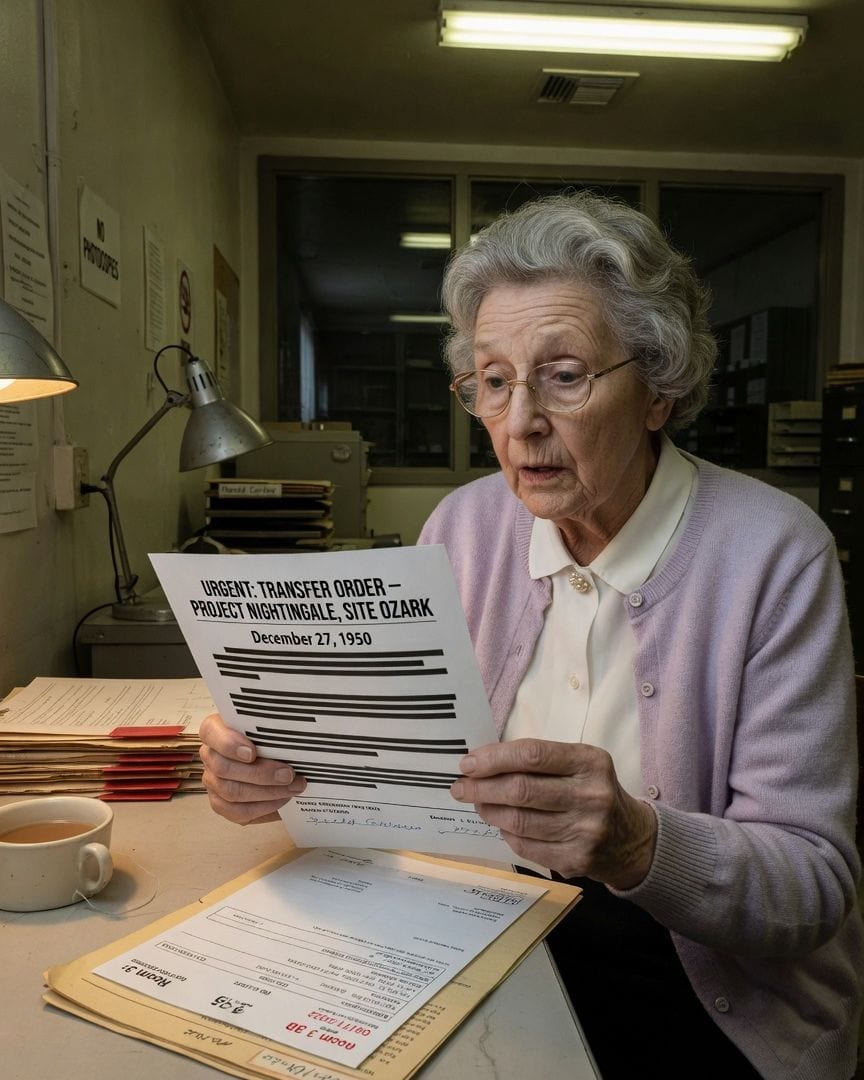
An elderly woman finds a current bill for her Cold War father's care, dated 72 years after he was declared dead.
Odette Cardew, a woman in her seventies, spent her days sifting through her father's old Army papers, a quiet ritual honoring a man she knew only as a ghost. Harold Cardew had been declared dead in the brutal Chosin cold of 1950, when she was just two years old. But among the yellowed documents, a crisp, modern medical bill for his current care arrived, detailing his room number and dietary needs at an Ozarks facility, dated her own birthday in 2022. When Army records confirmed his death decades ago, Odette then found an impossible transfer order, dated two weeks after he was officially gone, linking him to a mysterious 'Project Nightingale.' How could a man officially dead still be receiving care and be subject to a secret transfer?
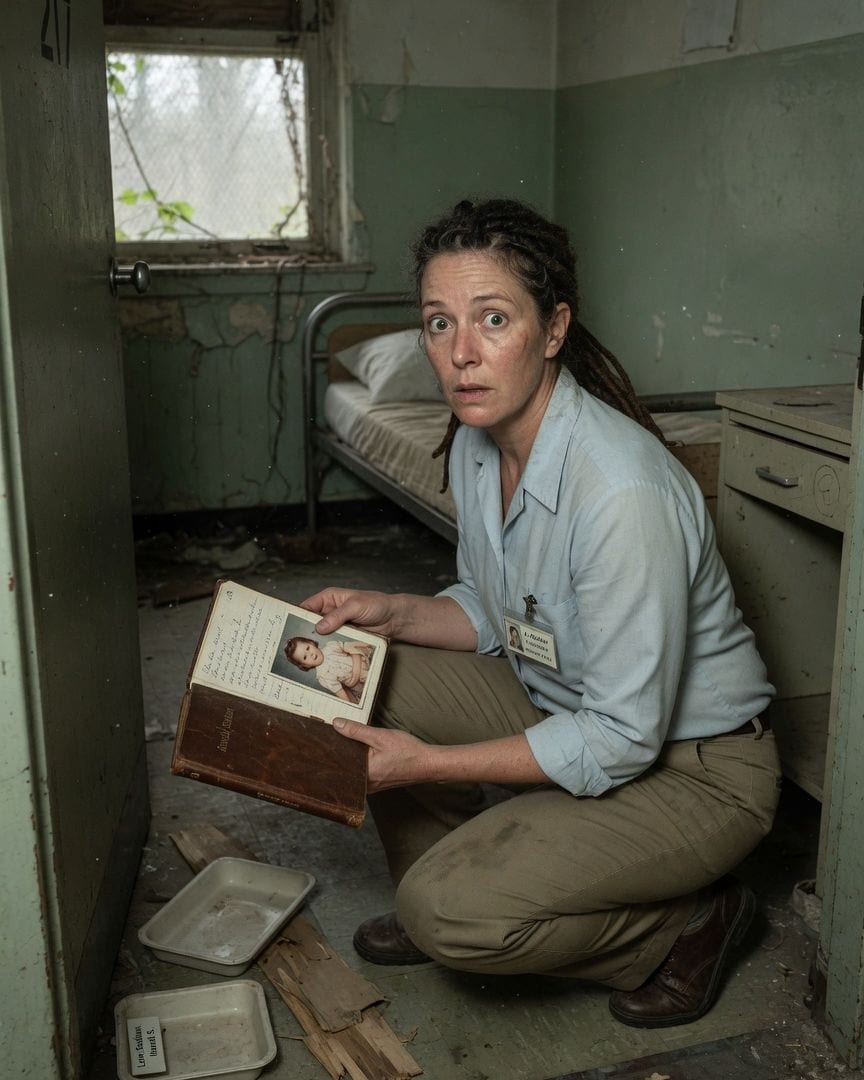
An Army records clerk's dead father just received a medical bill from a Cold War sanatorium closed since 1968, asking for his daughter.
An Army records clerk named Odette Cardew found routine comfort in the archives' dusty quiet, a place that also held the official record of her father, Harold Sutton, who died in the Korean War when she was two. One morning, a declassified medical release with his name appeared, but the bill was dated last month, from a sanatorium in the Ozarks. The facility had closed in 1968, yet the account was active. A chilling handwritten note asked, "Patient asked, again, whether his daughter had come." Driven by dread, Odette visited the crumbling, overgrown sanatorium, where in Room 217, she found a recent meal tray and her father's journal, holding a photo of her as a child and a question dated just last week: "Did she come?"
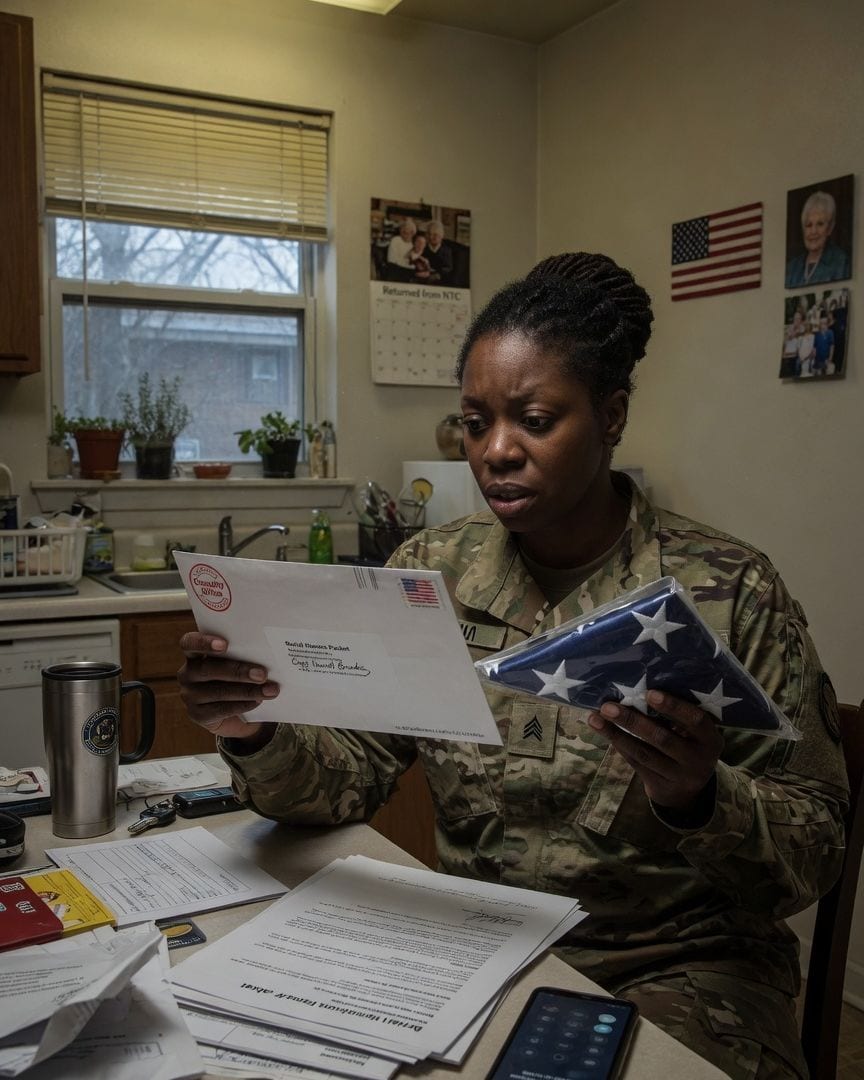
A Sergeant finds her own complete burial packet, dated for the coming spring, then finds a stack of identical ones for others.
Sergeant First Class Bree Alcott returned from a grueling training exercise, looking forward to peace, but found her kitchen table piled with mail, one official package heavy with dread. Inside was her own complete burial-honors packet, every detail filled, from Arlington plot to her grandmother’s chosen hymn, all dated for a specific day in the coming spring. The casualty office dismissed it as a 'glitch,' but Bree found a cryptic code leading to a decommissioned desert station and a stack of identical packets for other soldiers. What meticulous hand had prepared these packets, and why was Bree Alcott’s name on a list for a future she shouldn't have known?
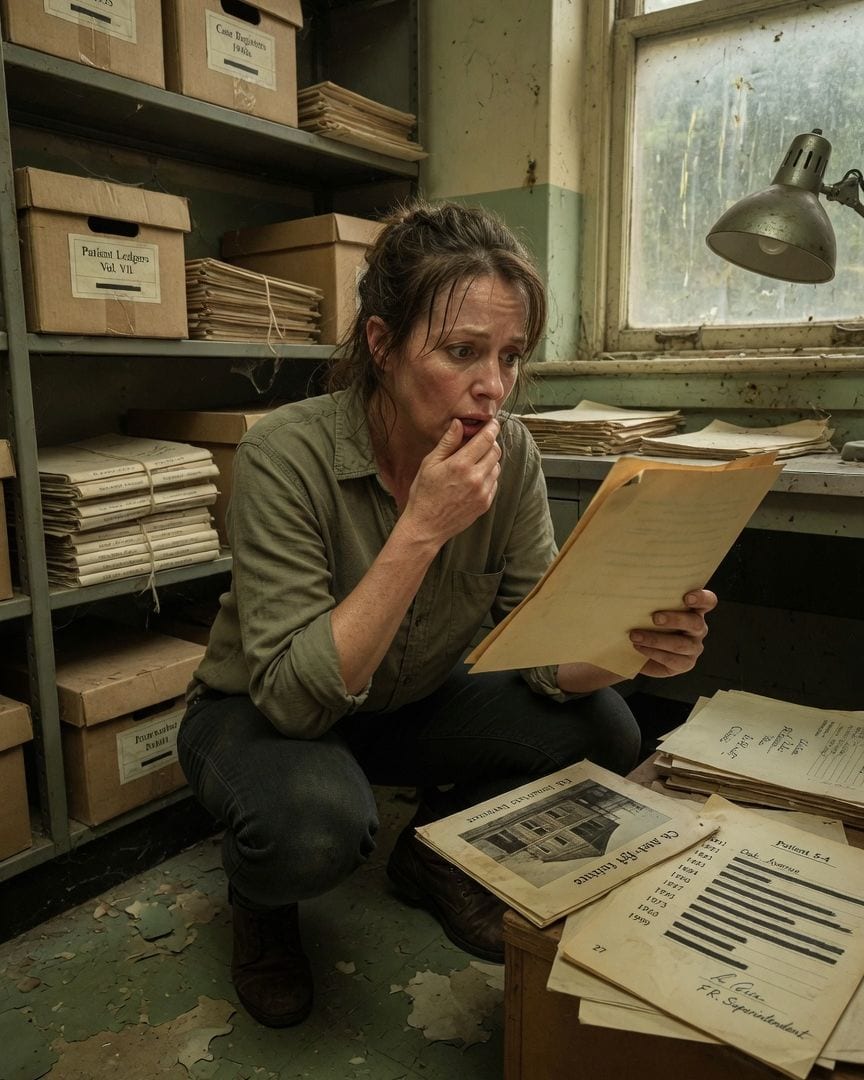
Patient 5-4 keeps checking into my aunt's old sanatorium chalet. The same initials sign them out, 'not traced,' every thirteen years since 1921.
Sifting through my aunt Margaret's estate, I found her old sanatorium file from 1999. Her patient record listed her as 'Patient 5-4,' discharged 'not traced.' But when I accessed the archives, I found 'Patient 5-4' was admitted every thirteen years since 1921, always with identical discharge notes.
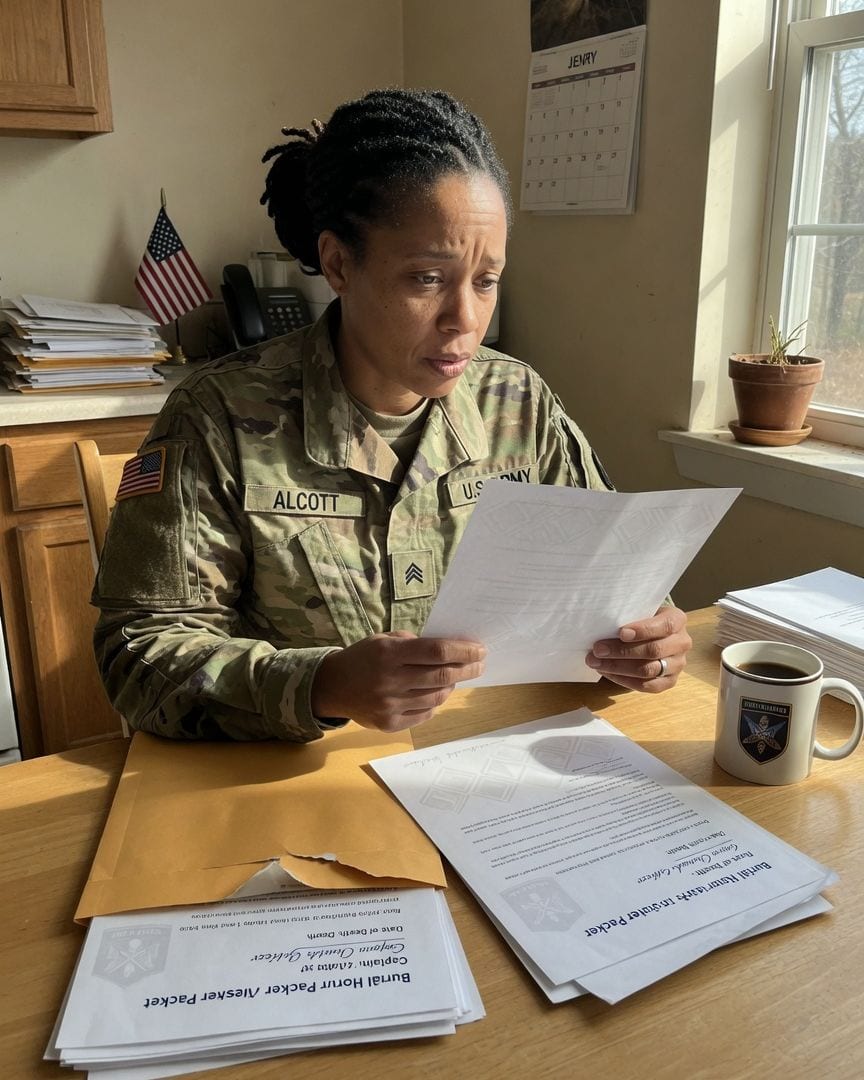
Sergeant First Class Bree Alcott found her own completed burial packet, signed with a confident flourish. It stated her death date was April 17th, next spring, but she was very much alive.
Sergeant First Class Bree Alcott, 38, found her own completed burial honors packet on her kitchen table one quiet autumn morning. It was signed, sealed, and dated for April 17th, next spring, despite her being very much alive. When she took the impossible paperwork to the Fort Claiborne Casualty Affairs office, the staff sergeant there denied any record, even as he traced a faint, archaic watermark on the document. Later, deep in the post's archives, Bree uncovered other packets for soldiers long missing, all bearing the same unsettling watermark and future-dated signature, their 'death' dates now long past – until she found one for tomorrow.
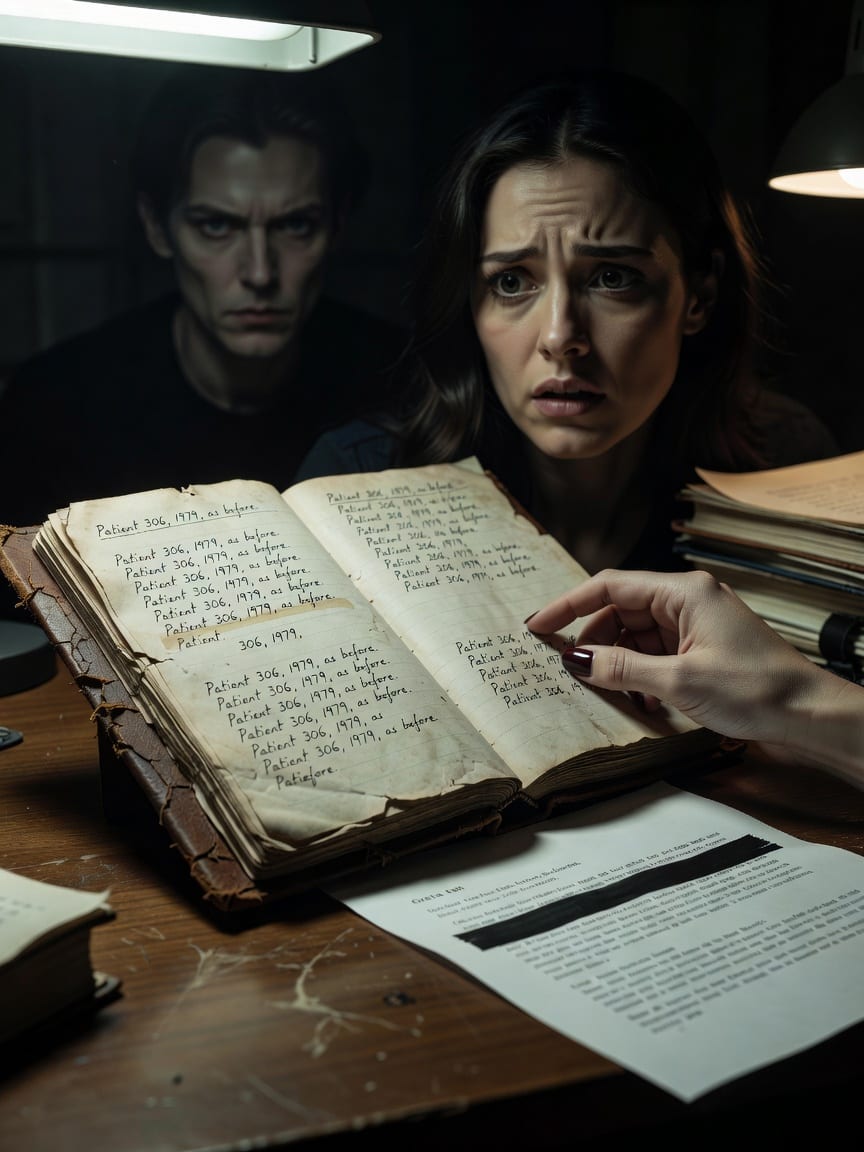
My archive ledger shows Patient 306 admitted in 1889, 1911, 1934, 1957, 1979 — same diagnosis, different names, and always, 'as before.'
My job as an archive transcriber is usually soothing, digitizing ancient admissions ledgers. But a recurring entry for 'Patient 306' caught my eye, noted 'as before' in the same hand for nearly a century. Digging deeper, I found a council file, dated 1998, outlining 'containment procedures' – and it named my own street and surname.