A retirement card, postmarked 1983, landed on my desk. Everyone who signed it was already dead.
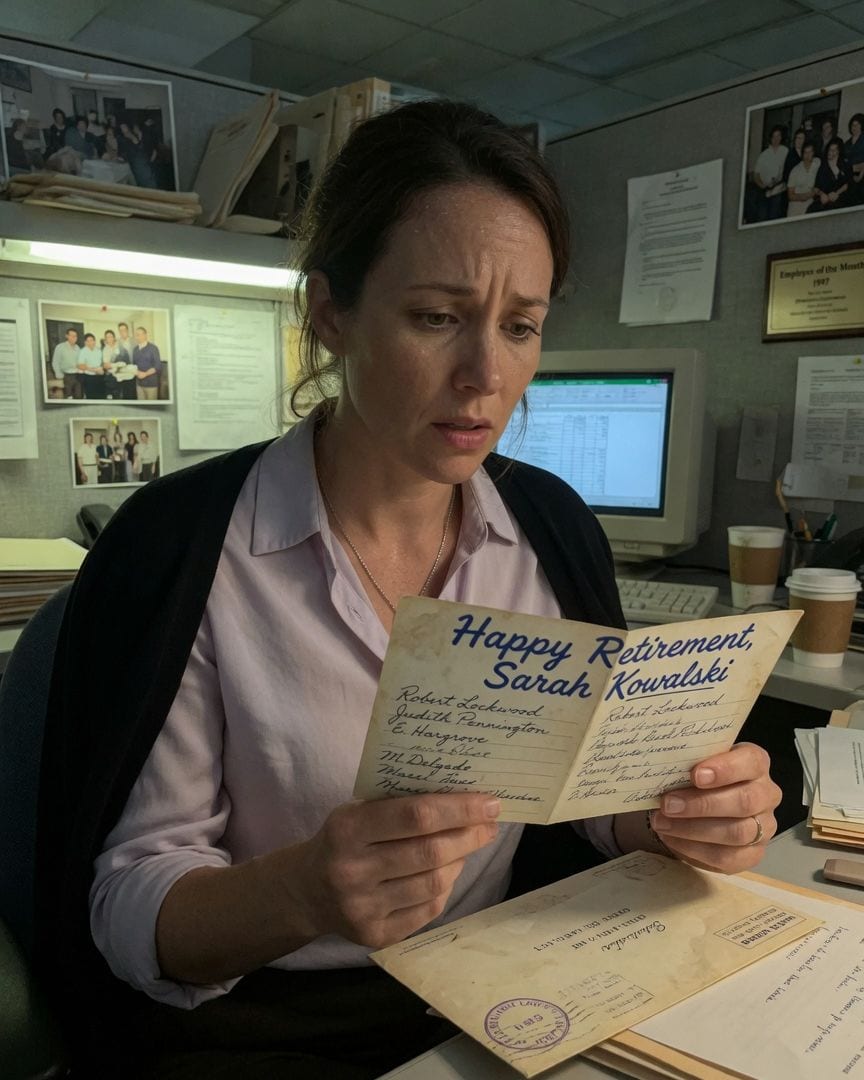
The inter-office envelope landed on my desk with a soft thud, interrupting my scroll through overdue emails. Walter Hughes, my manager, had scrawled my name on it in his familiar, looping hand.
Inside, nestled against crisp white paper, was a retirement card. "Happy Retirement, Sarah Kowalski," the top line announced, again in Walter’s unmistakable script. My stomach did a little flip. I’m thirty-four. I wasn't going anywhere.
I’d just secured a new client last week; my career was only getting started. I flipped the card open, half-expecting a joke, a misplaced memo. Inside, signatures filled the card, some barely legible, faded ink on aged paper. Robert Lockwood.
Judith Pennington. Names I recognized from old company photos hanging in the dusty breakroom, the kind of pictures that make you wonder about the firm's history. People who had worked here decades ago. People who were dead.
Every single one of them. The card itself felt strangely cold in my hands, a subtle chill that settled into my fingertips. I checked the envelope again.
It wasn't one of the usual inter-office carriers, passed around from cubicle to cubicle. It was postmarked. A faded, circular stamp: 'Wheal Rose Lane Depot, 1983'.
I tried to rationalize it. A bizarre, elaborate prank? But who would go to such lengths, printing a card, finding deceased former employees' names, sourcing an old postmark? And why me?
I pulled up Robert Lockwood's obituary online – died fifteen years ago, a quiet heart attack. Judith Pennington, a car accident twenty years back. I checked every name, methodically, against online records and the company's digitized archives.
All confirmed deceased, some for decades. The dates and years were precise. No margin for error. Then I searched for 'Wheal Rose Lane Depot.'
Google Earth showed a cluster of derelict buildings, overgrown with weeds, a crumbling fence around what looked like a long-abandoned industrial park. Officially closed in 1983, the records stated.
There were no active businesses there now, hadn't been for forty years. I approached Walter Hughes, the card clutched in my hand. I laid it on his desk, pointing at the postmark, then at the signatures.
He paled slightly, his gaze darting from the card to me. "What is this, Sarah?" he asked, his voice tighter than usual. I explained what I’d found.
He dismissed it as a "morbid joke," a "terrible bit of office humor," but his gaze lingered on my name on the card, a flicker of something unreadable in his eyes, a kind of knowledge, before he looked away, too quickly.
The chill I felt then had nothing to do with the office air conditioning. The card wasn't just a mistake; it was a physical artifact of impossibility.
Unsatisfied by Walter's forced dismissal, the card a constant weight in my purse, I decided to visit the local historical society. Maybe they had records of the old depot.
If the postmark was real, if the company had history there, perhaps there was some mundane explanation, however unlikely.
After an hour of dusty shelves, the air thick with the smell of old paper and wood polish, I found it: a heavy, leather-bound ledger, its cover embossed with 'Wheal Rose Lane Personnel.'
My heart gave a little jump, a frantic bird against my ribs. I pulled it down, the leather surprisingly cool to the touch.
I opened it, the pages brittle with age, the smell of mildew and forgotten ink rising from them. Names, dates, and what looked like employment codes filled the columns in neat, consistent handwriting. I saw 'Robert Lockwood – Retired.'
And then, a few pages later, my breath caught. My own name, 'Sarah Kowalski,' neatly written, followed by a blank space beside it for 'Retirement Date.' The entry itself was dated 1982.
The ledger entry for my name, dated eight years before I was born, sat in my stomach like a cold, hard knot. It was impossible, illogical, and yet it was right there, in faded black ink, undeniable.
I spent days at the historical society, driven by a frantic need for an explanation. I cross-referenced every name in the old ledger with the signatures on my card and the firm's archived employee records. It became a macabre puzzle.
Every person listed as 'Retired' in the ledger, especially those without a clear 'death certificate' but rather 'transfer' or 'discontinuation' in the firm's old files, had either died mysteriously or simply vanished.
The dates in the ledger, though old, seemed to follow a pattern, a rhythm I couldn't quite decipher, a kind of dark calendar marking specific intervals. The more I dug, the more I felt an unnerving sense of being watched.
It wasn't a person, not a shadow in my peripheral vision, but a pervasive, heavy feeling, like the room itself was holding its breath. My phone would ring, displaying 'Unknown Number.'
When I answered, there was only static, a hollow hiss in my ear, but sometimes, faint, like a whisper in the line noise, I thought I heard my name.
My research extended to the broader history of the Wheal Rose Lane area. I found obscure local newspaper clippings from decades past, yellowed and brittle, detailing unexplained disappearances that locals vaguely referred to as 'leaving for retirement' or 'moving on.'
The common thread was always a connection to the old depot site, the very place marked on my retirement card.
One evening, as I left my office, the overhead fluorescent lights buzzing above me, a man in his sixties, with kind but deeply troubled eyes, stepped into my path.
He was average height, dressed in a plain gray jacket, his hair thinning. "Sarah Kowalski?" he asked, his voice low and sincere, not a question, but a confirmation. I, startled, confirmed.
He looked at me, a profound sadness on his face, a weariness that seemed to settle around him like a shroud. "I'm so sorry," he said, his voice thick with genuine regret, not pity, but something far deeper. "For what?"
I asked, my heart pounding against my ribs. He just shook his head, a single tear tracking down his cheek, catching the office light. "You'll understand soon enough. I'm truly sorry."
He then turned and walked away quickly, without another word, without looking back, leaving me standing there, bewildered and terrified, the weight of his words pressing down on me.
His name, I would later learn from a quick search of the firm's retired employee database, was Felix Crane.
The encounter with Felix Crane rattled me to my core. His sorrow, his certainty, felt like a tangible thing I could almost touch. I returned home, my mind racing, sorting through the fragments of my research.
My deeper dive into the historical society's archives had also uncovered an old, self-published local history book, a thin volume tucked away on a bottom shelf.
It was filled with strange traditions tied to the land where the depot stood – talk of ancient guardians and 'offerings' or 'transitions' for those whose 'time had come.'
I remembered Walter Hughes's deep family roots in the area, a lineage that went back generations in this small town. The next morning, fueled by a cold, persistent dread, I confronted Walter in his office. I didn't mince words.
I placed the card, a printout of my ledger entry, and a list of the deceased signers on his desk. He initially tried to dismiss it as a macabre prank, then as local superstition, his voice growing thin, almost desperate.
But I pushed, my own voice firm, refusing to let him off the hook. 'My name, Walter. Before I was born. Explain that.' He stared at the ledger entry, at my name, his face pale and sweating.
He opened his mouth, closed it, then finally, he cracked. He admitted his grandfather had worked at the depot, and spoke of 'the list,' the words coming out in a rush, a dam finally breaking.
He confessed that his family, for generations, had been the 'caretakers' of these records, ensuring the 'transitions' were noted.
The card, he explained, was a final courtesy, a mark from the entity tied to the land, before one's name was called. 'It's a claiming,' he whispered, his voice barely audible, his eyes wide and hollow. 'Not just a death.'
Walter, his face ashen, detailed the 'claiming.' It wasn't just death, he explained, but an absorption, a return to the ancient presence of the land, a melding of essence.
The ledger, he revealed, wasn't merely a record but a schedule, a cyclical pattern of names and dates that repeated every few decades, often within specific families connected to the area, families who had worked at the depot, families rooted to this soil.
His trembling finger traced a series of names in the ledger, all sharing the same surname as some of the dead colleagues on Sarah's card – the Lockwoods, the Penningtons.
Then, with a shuddering breath, he traced a lineage of Kowalskis, my own family, leading directly to my entry, a line drawn through generations, inexorable.
'I tried to delay it, Sarah,' he choked out, tears welling in his eyes, 'I truly did, but it always takes what's due. It always has.' Just then, his office phone rang, a shrill, unwelcome sound in the suffocating silence.
He flinched, staring at the handset as if it were a coiled snake. He answered, listened, his eyes widening with profound terror as the seconds stretched into an eternity.
He held the phone out to me, his hand shaking uncontrollably, the plastic cold against my palm. A low, resonant hum emanated from the receiver, a deep vibration that seemed to settle in my bones.
"It's time," he whispered, his voice barely a breath, his face drained of all color. "It's for you. It knows your name."
I took the phone, the cold receiver pressed against my ear. The low, resonant hum pulsed through it, a vibration that felt like it was coming from inside my own skull. Then, a voice.
It was calm, devoid of malice or emotion, strangely familiar – the same one from the 'wrong number' calls, now clear and distinct. It spoke my full name. "Sarah Kowalski. Your card was sent. Your apology was delivered.
Your time is now." The voice explained, with an unsettling clarity, that the entity was an ancient presence, a guardian of the land, an elemental force that had been here long before any human settlement.
It required a regular 'return' of those connected to it, those whose families had worked the land, lived upon it, to maintain a balance, a continuation.
The ledger, it stated, was its registry, a schedule meticulously kept, and the depot, once a hub of human activity, was its gateway, the point of transition.
The 'retirement' was not an end, but a final absorption, where one's essence became part of the land itself, a joining to the ancient presence.
Every clue, every name, every date, every strange event over the past week clicked into place with a sickening finality.
I wasn't an anomaly; I was the next, a scheduled event in a cycle far older than humanity, a thread in a tapestry I had only just realized existed.
The voice calmly instructed me to go to Wheal Rose Lane, alone.
Numb with a dread that transcended fear, a cold acceptance settling over me, I drove towards Wheal Rose Lane. The twilight was bleeding from the sky, painting the clouds in bruised purples and grays.
The old industrial park was desolate, overgrown with weeds, the skeletal remains of the depot building looming against the darkening sky, silhouetted like a forgotten tomb. My car tires crunched on gravel that had seen no maintenance in decades.
The air grew cold, heavy, pressing down on me, stealing the sound from the world, leaving only the dull thrum of my own heartbeat.
Inside the dilapidated structure, the wind whistled through broken panes, and dust motes danced in the faint light filtering through grimy windows.
There was no monstrous presence, no physical antagonist waiting, just an overwhelming sense of ancient power, a quiet, immense force that made the very air vibrate.
A low, continuous hum vibrated through the floorboards, growing stronger with each step I took towards the center of the main floor, the place where the depot's heart must have been.
There, in the dim light, a faint, almost imperceptible shimmering began, like heat haze on a summer road, but radiating an unnatural cold that prickled my skin. It expanded, pulsing gently, a silent, beckoning maw, drawing me in.
I felt an irresistible pull, a deep, ancient current guiding my feet forward, against my will, towards the expanding shimmer. Within its depths, a profound calm settled over me, a peace I hadn't known I craved.
I saw them: the faint, serene faces of Robert Lockwood, Judith Pennington, and countless others, all the 'retired' colleagues from my card, their expressions peaceful, almost joyful, beckoning.
My name echoed in my mind, a soft, final call, as the shimmer enveloped me.
Walter Hughes, still at the office, received the call the next morning. Sarah Kowalski had not arrived for work. Her car was found abandoned on the overgrown access road to Wheal Rose Lane, keys still in the ignition.
The police report noted nothing unusual, no signs of struggle, just an empty vehicle. The case was quietly filed as a missing person, another unexplained disappearance from the area, another name added to the silent archives.
A week later, Felix Crane stopped by the office, asking for Sarah. Walter Hughes, his face drawn, simply told him she'd retired. Felix nodded slowly, a profound sadness in his eyes, as if he'd known all along.
He then asked if Walter had any new names for the ledger.
If this one got to you
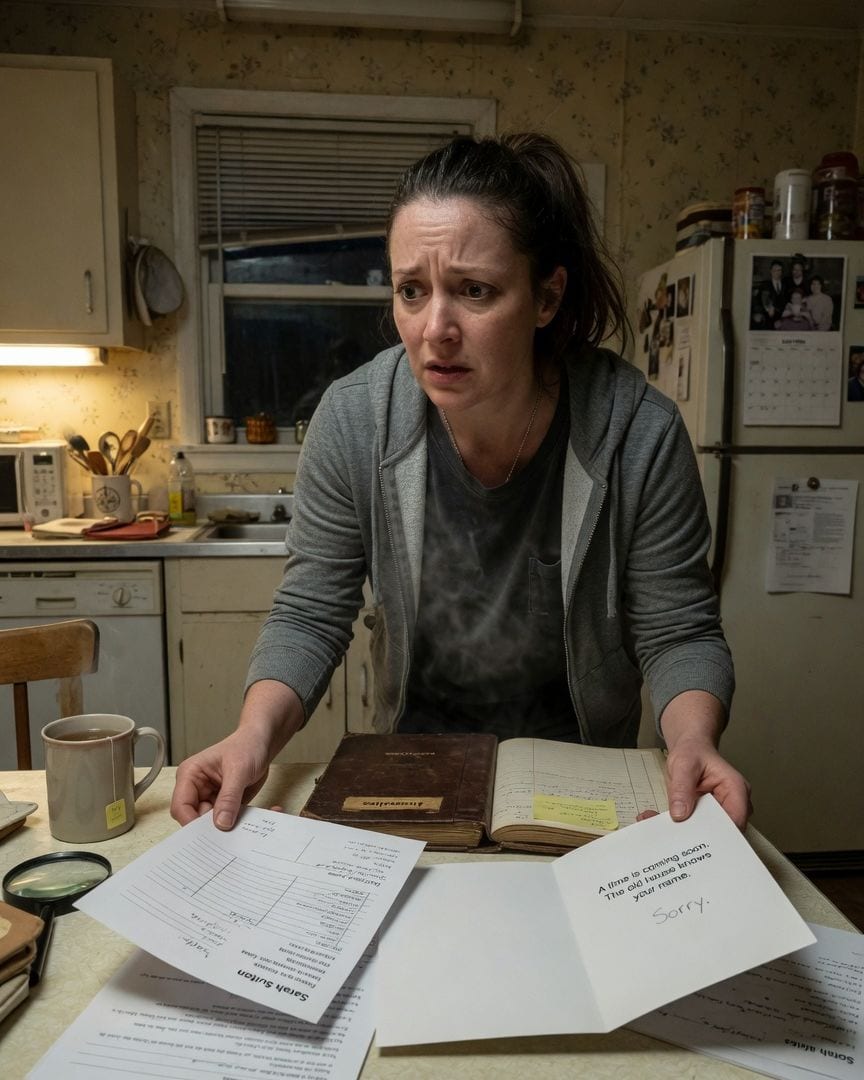
My name sits in the 1966 electoral register. My house, my exact name. Someone pencilled 'sorry' in the margin.
I was sifting through dusty microfiche, tracing my family line for my childhood home, when I found it. The 1966 electoral register for my address listed my exact name: Sarah Sutton. My heart hammered. I wasn't born until 1988; this was thirty-five years before I existed.

My taxi driver knew my name before I spoke, then apologized for the flight I was going to miss. I was arriving. The cab's plate was scrapped four years ago.
After a strange taxi ride, I received an unsettling birthday card addressed to me. Its return address listed 'Old Mill Road Field,' an empty lot where a mill once stood, and it was postmarked locally. The card arrived four months before my actual birthday, sparking a cold dread I couldn't ignore.
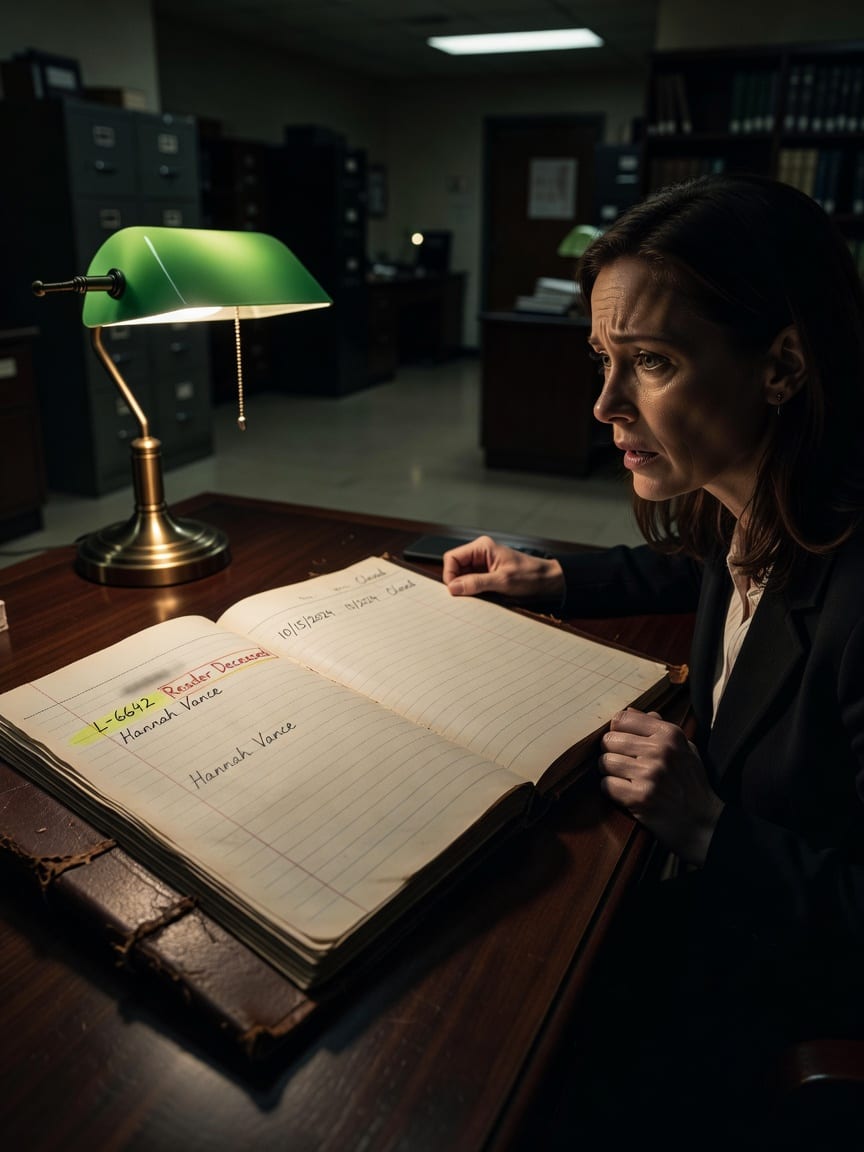
My library card number L-6642 was issued to me at seven — and the ledger shows that number has marked a reader 'deceased' every twelve years since 1949.
Returning my late father's library card to the old town library felt like a small act of closure. But the senior librarian's ancient ledger revealed a chilling pattern of 'reader deceased' entries tied to specific card numbers and borrowed books. My unease turned to cold dread when I secretly found my own name penciled in, marked for a future 'reader deceased' entry.
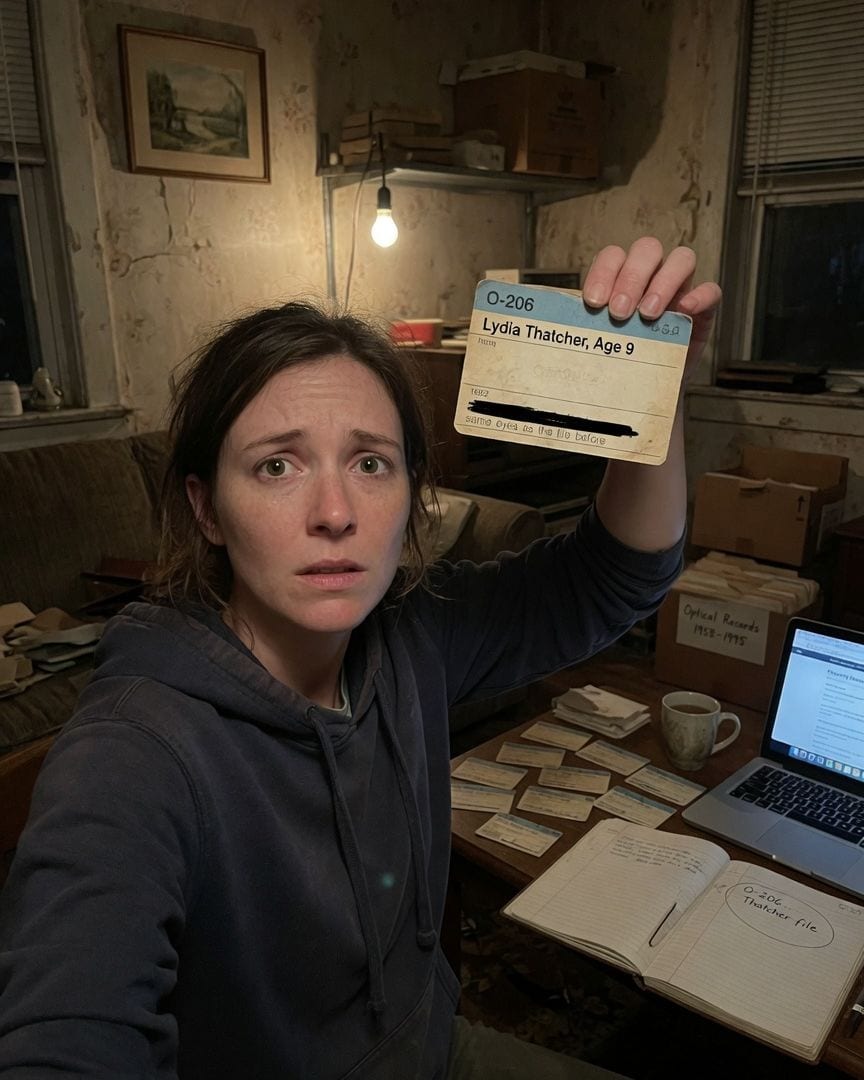
My own optical card is dated 1962, with my name on it. I wasn't born until 1993.
Sifting through old patient files from my former optical practice, I found my own O-206 card. It had my name, Lydia Thatcher, and my current home address printed on it. But the card was dated 1962, decades before I was even born, and a redacted note mentioned 'same eyes.'
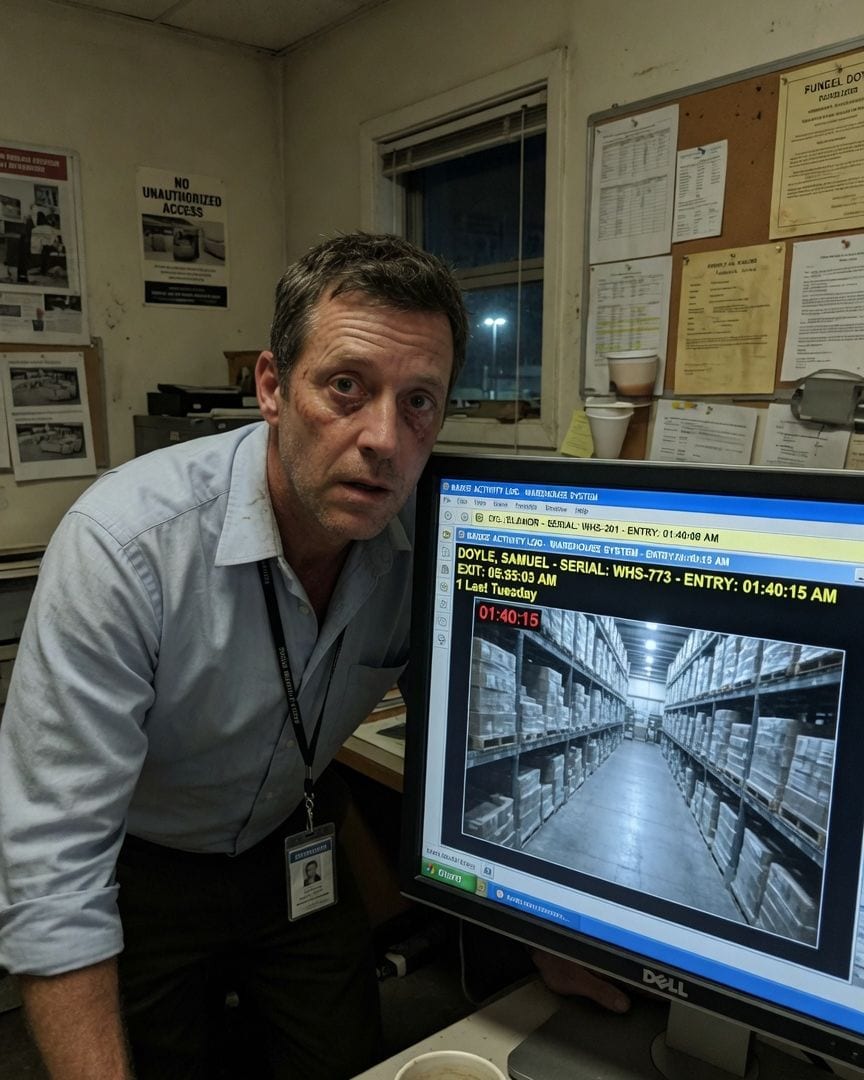
My dead colleague's badge, deactivated weeks ago, logged an entry at 1:40 AM last Tuesday. Then I found another from 1978, with the same impossible times.
My monitor showed a shocking entry: Samuel Doyle, dead and buried three weeks ago, had just logged into the warehouse. His badge was deactivated the day of his funeral, yet the system recorded his precise entry and exit, even though security footage showed the aisles were utterly empty.
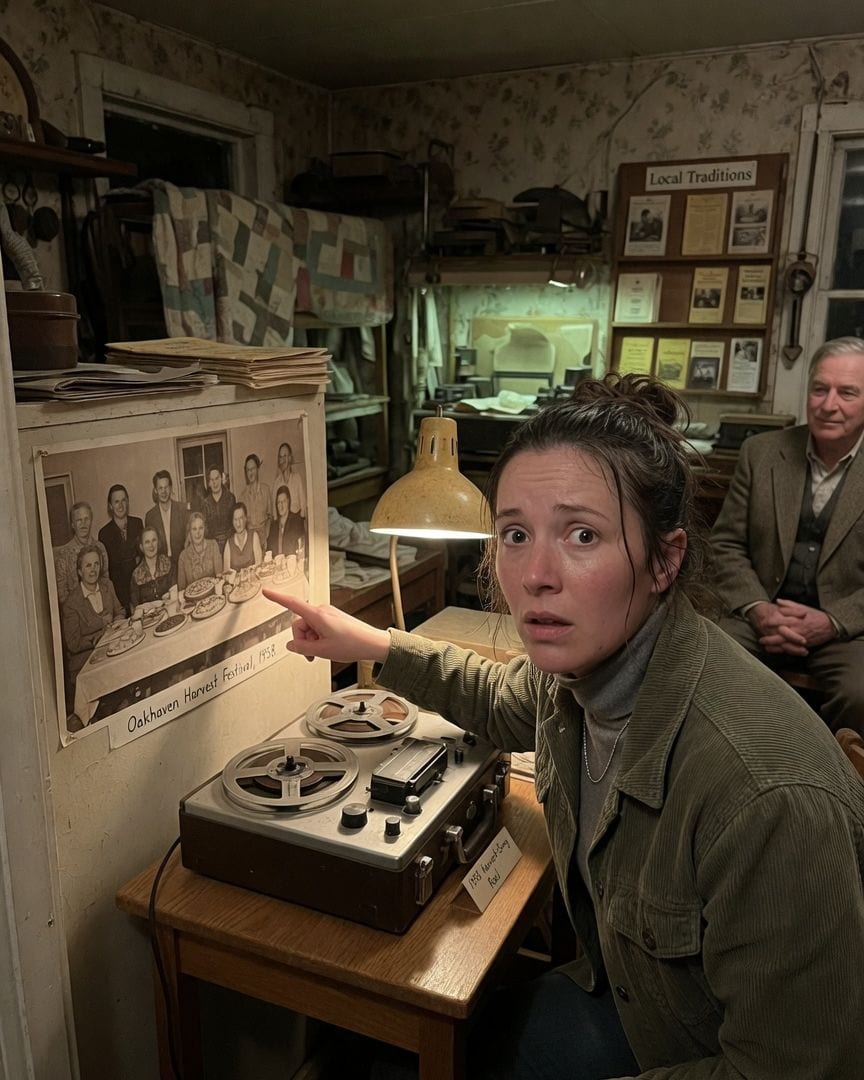
The folk museum's harvest tape counts one more singer than the photograph shows. The curator turned the recorder off before playing it.
I found a quiet escape at Oakhaven's dusty Folk Museum, where the curator played a rare 1958 harvest song. But as a cheerful tune filled the room, a low voice began to count. The tape tallied thirteen, yet the old photograph beside it showed only twelve smiling villagers.