Sergeant Holloway's final platoon had seventy-nine recruits. That night, eighty voices answered the evening count.
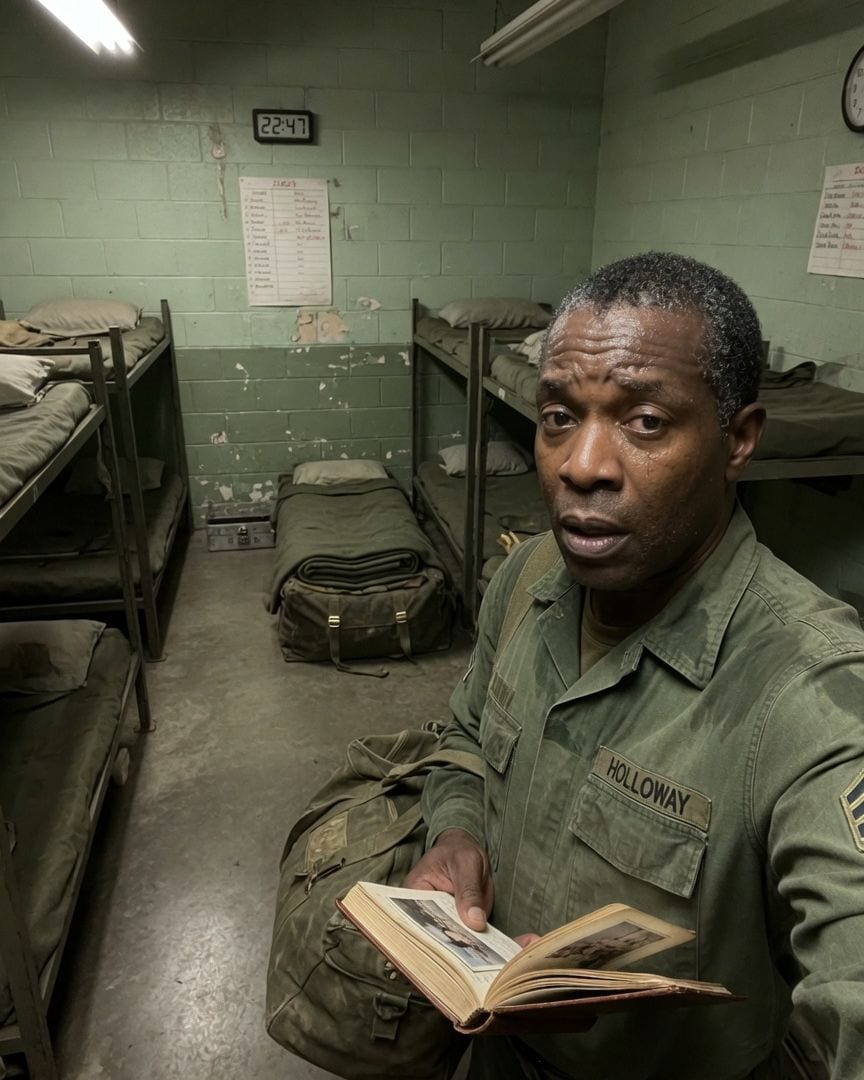
Sergeant Raymond Holloway, his uniform damp with Carolina summer humidity, stood before his last platoon. Seventy-nine recruits, two days from graduating, stood ramrod straight in the squad bay.
The air, thick with the scent of sweat and cleaning solution, felt heavy. He called evening count, his voice echoing off the cinder block walls. “All present and accounted for?”
The chorus of “Aye, Sergeant!” was followed by a chilling, impossible number from the junior DI, Donald Bishop, his face pale in the fluorescent light. “Eighty, Sergeant.”
Holloway stared. Bishop, a stickler for detail, never made errors like this. Holloway walked the rack line himself, his boots thudding a precise rhythm on the polished concrete, counting each bunk, one through seventy-nine.
Every footlocker was aligned, every blanket crisply folded. He returned to the front, pulled out his official roll book, and called each name, waiting for the inevitable discrepancy. Eighty voices answered seventy-nine names, and not a single name went unclaimed.
A cold knot tightened in Holloway’s stomach, a feeling he tried to rationalize as exhaustion from long hours.
He dismissed the platoon, but the ghost of that extra voice clung to the air, an unresolved hum in the meticulous order of the squad bay.
The next morning, the impossible repeated. Junior DI Bishop, even paler and agitated, reported the same count anomaly. “Eighty, Sergeant. Again.” Holloway, now wide awake, knew this wasn’t fatigue or a simple mistake. This was something else.
He marched into the squad bay, his gaze sweeping over the racks. Every bunk was made to perfection, every corner tight enough to bounce a quarter. He double-checked the roster, then walked the line again, his jaw tight.
Near the far wall, tucked between two standard issue bunks, was a third, impeccably made-up bed. A duffel bag, old and faded canvas, not the current issue, sat at its foot. No name tag.
No signs of occupation beyond the perfect sheet and blanket. It looked as if it had always been there, yet it was undeniably new to Holloway’s memory.
The cinder block wall behind it seemed to subtly shift, absorbing the new detail as if it were always meant to be. Holloway ran his hand over the rough canvas of the duffel.
It felt cool to the touch, but not cold, just… neutral. He considered a prank, a recruit trying to mess with the DIs on their last days before graduation.
But the duffel was too old, too worn, its brass buckles tarnished with true age, not artificial distressing. He tried to pull it out, but it seemed wedged, immovable, as if rooted to the floor.
The rational explanation felt thin, translucent, like a threadbare sheet. He made a mental note to check the base’s forgotten storage lockers for old gear, a thread of unease pulling him deeper into the mystery.
Holloway spent his lunch break sifting through a forgotten storage locker beneath the old mess hall, a place smelling of dust, stale canvas, and forgotten history.
He was looking for old-issue duffels, anything that might explain the one in the squad bay. Deep in the back, behind crates of obsolete field rations, he found a stack of ancient, leather-bound logbooks, marked ‘DI Records - 1970s.’
The spines were cracked, the leather dry to the touch. He pulled one out, dated 1974. Tucked inside, between pages detailing drill schedules and disciplinary actions, was a single, faded photograph.
It showed a platoon formation, recruits in crisp uniforms, standing on the same parade ground he used every day. Holloway counted the faces, his finger tracing each one, a cold dread seizing him as he reached eighty.
One figure, almost a blur in the back row, appeared to be staring directly out of the picture at him, its eyes indistinct but unnervingly fixed.
The photograph was a punch to the gut. This wasn’t a prank, or fatigue, or a one-off error. This was a pattern, decades old, buried deep within the base’s history.
Holloway spent the next few hours cross-referencing the 1974 logbook with other records from that era. He found scattered mentions of ‘unexplained roster discrepancies’ and ‘unreconciled personnel’ in the margins of other drill instructors’ notes, always around graduation cycles.
It was vague, never explicit, but the implication was clear: sometimes the numbers didn’t add up, and nobody could explain why. He knew where to go next. The base archives.
He found Constance Barlow, the base archivist, a woman in her mid-fifties with shrewd, intelligent eyes and an air of quiet authority that permeated the very shelves around her.
She initially dismissed his inquiries about old count sheets as ‘clerical anomalies,’ the kind of minor errors that always cropped up in any large institution. “Paperwork, Sergeant,” she’d said, her voice dry, “it’s never perfect.”
But Holloway persisted, showing her the faded photograph. He watched her carefully. Her eyes, usually so quick, lingered on the blurry figure in the back row for a fraction too long, a flicker of something unreadable crossing her face.
He requested access to all historical records pertaining to recruit platoons from the 1970s and 80s. Barlow, after a moment of hesitation that stretched like taffy, granted it, her demeanor shifting from dismissive to oddly watchful.
She handed him a heavy brass key to a back room, filled with towering, dusty filing cabinets, and told him, her voice low, to “be careful what he wished for.”
The words hung in the air, heavy and thick, like the dust motes dancing in the archive’s dim light.
Holloway spent the rest of the day and most of the night in the archives’ back room, surrounded by decades of paper, the quiet hum of the building itself seeming to breathe around him. He found more.
Faint mentions, hushed notes, a pattern of ‘ghost recruits’ that briefly appeared, then vanished from the records entirely, leaving no trace.
Sometimes they were listed as ‘transferred out,’ sometimes simply ‘absent without explanation,’ but always, the headcount at some point was off by one. He noticed Barlow.
She seemed to always be nearby, ostensibly shelving new files, her movements quiet and deliberate, but her eyes would flick towards him whenever he pulled out a particularly old manifest or a binder marked 'Personnel.'
The hair on his neck prickled. The fluorescent lights above seemed to buzz louder whenever she was close.
At one point, he stepped out for a break, leaving his comms device on the table, face down.
When he returned, a new, untraceable message blinked on the screen, a stark white text against the black background: 'Some things are better left counted as they are.'
The message was chillingly terse, without a sender, and wiped itself from the device’s memory the moment he finished reading it. He looked up, his gaze sweeping the quiet archive.
Barlow was at the far end, her back to him, humming a tuneless melody that seemed to curdle the air. Holloway knew he was being watched, and someone knew exactly what he was finding.
The silence of the archive, once comforting, now felt like a predatory crouch.
The next morning, Holloway confronted Barlow.
He laid out the evidence on her desk: the 1974 photograph, its edges curled with age, the recurring ‘unreconciled personnel’ notes he’d photocopied, the anonymous message, which she feigned ignorance of but her eyes betrayed her.
He watched her face, searching for fear, for denial, but found only a deep, weary resignation that seemed etched into the lines around her eyes.
“It’s been going on longer than you think, Sergeant,” she said, her voice flat, devoid of emotion. “Before my time, before the base was even fully built, they say. The first written record, not just whispers, is from ’68.”
She explained it wasn't a ghost in the traditional sense, but an ‘operational anomaly,’ a flaw in the system itself, a persistent error in the perfectly ordered world of military accounting.
“It’s like a persistent error code in the manifest,” she continued, picking up a faded paperclip and turning it over in her fingers. “Always trying to complete itself. It just… adds itself to the count. It wants a slot.”
She pulled out a drawer from her desk, revealing a stack of internal memos, their covers stark, official, and stamped ‘CLASSIFIED - PROJECT ECHO.’ The oldest was from 1968, exactly as she’d said.
“The brass tried to fight it for decades,” she explained, her gaze fixed on a distant point beyond Holloway’s shoulder. “Every time they ‘corrected’ the count, every time they forcefully removed the extra number… a real recruit would vanish.
No trace, perfect service record, just… gone. The eighty-first would be gone, but so would a legitimate seventy-ninth. A perfect exchange.” The pattern of ‘ghost recruits’ and vanishing personnel clicked into place in Holloway’s mind, sickeningly coherent.
The horror wasn’t the extra number, but the cost of trying to make the numbers match. The room felt suddenly colder, as if the very air had sucked itself inwards, chilled by the weight of decades of unspoken truth.
Barlow’s words hung heavy in the air, congealing into a terrible, inescapable truth. The institution knew. They had simply learned to live with it, to manage the impossible, to contain the anomaly within their rigid structure.
“So, what do they do now?” Holloway asked, his voice barely a whisper, a thin thread against the suffocating silence.
Barlow sighed, a sound heavy with decades of unspoken dread, the weight of the past pressing down on her shoulders. “They manage the risk, Sergeant. They let the count be. And they identify… certain sensitivities.”
She pushed her chair back, the scrape of metal on linoleum loud in the sudden quiet, and walked over to a locked cabinet. With a precise, practiced movement, she retrieved a specific, heavily classified file.
Its cover was stark, black-and-white, marked ‘PROJECT ECHO - PERSONNEL DESIGNATIONS.’ The title alone sent a shiver down Holloway’s spine. She opened it to a section titled ‘Familial Designations.’ Holloway’s breath hitched.
His own surname, ‘Holloway,’ jumped out at him, highlighted in bright yellow, a contrast against the official document. Next to it, a series of numbers that, with a sickening lurch, he realized encoded his precise birth date.
He was not just a witness; he was a designated variable.
Barlow's eyes, devoid of emotion, met Holloway's. "Project Echo isn't about stopping it, Sergeant," she stated, her voice even, almost clinical. "It's about containing it. Or, more accurately, containing us."
She explained that certain family lines, like Holloway's, had a historical 'sensitivity' to the anomaly. They weren't targets, not exactly, but rather resonant frequencies, drawing the 'extra' into physical manifestation more readily.
The designation wasn't a curse, but a bureaucratic flag – a 'Holloway Protocol' existed.
When a designated individual was nearing a significant transition, like a rotation or discharge, the anomaly became more active, seeking a 'slot' to follow them, or to take their place.
The goal, chillingly, was to ensure the anomaly didn't leave the base. It was a self-sustaining entity, a piece of the base's own history, made real by the rigid order and accountability of the military.
Every 'unreconciled personnel' from the past, every vanished recruit, was a testament to the anomaly's success in finding a new host.
The pattern, the photograph, the old logbook, the duffel bag, the count that wouldn't reconcile – it all clicked into a horrifying, coherent whole.
The dread was the cold, clinical logic of it all, a system meticulously designed not to solve a problem, but to manage an impossible truth.
The full truth detonated in Holloway's mind, a cold, hard blast. His rotation, two days away, wasn't just a career move; it was a potential transfer point for the anomaly. He was the next designated conduit. He had to act.
He tried to access his own service record through the base's secure network. It was flagged. A new entry, just added, read: 'Personnel Reassignment - Status: Pending Reconciliation.' The dread turned to a desperate panic.
The chair in the small office seemed to grip him, reluctant to let him go. He rushed out of the archives, sprinting towards the squad bay, the fear a sour taste in his mouth.
The recruits were already forming up for their final graduation rehearsal, their voices a familiar murmur in the late afternoon heat, a low thrum of anticipation. He scanned the lines, his heart pounding a frantic rhythm against his ribs. There.
In the third row, perfectly aligned with the others, was the eighty-first figure. Taller than the others, its uniform just a shade darker, its face indistinct, a blur, but undeniably present, watching him.
It was the same figure from the photograph, now solid, waiting.
Holloway lunged forward, intending to grab a recruit, any recruit, to pull them out of formation, to break the count, to disrupt the 'slot' before it could be filled permanently.
As his hand reached out, a quiet, firm grip clamped onto his shoulder. It was Barlow. Her eyes, filled with a deep, pleading sorrow, met his. “Don’t, Sergeant,” she whispered, her voice barely audible over the recruits’ cadence.
“You’ll only make it worse.”
Sergeant Raymond Holloway's transfer orders were abruptly changed. His rotation to the fleet was cancelled. Instead, he was reassigned to a remote, inactive equipment depot in the high desert, far from any active training facility.
His service record showed a clean transfer, no disciplinary action, but a note about 'extended psychological evaluation completed' was added to his file, a small, insidious stain on an otherwise perfect record.
The news of his sudden, unexplained reassignment spread through the base as a quiet rumor, a cautionary tale whispered in hushed tones among the DIs who had known him.
The 'Project Echo' file was returned to its locked cabinet, and the count in the Carolina squad bay, for the graduating platoon, came back seventy-nine. All present. All accounted for.
Months later, in a lonely office overlooking a barren desert landscape, Raymond Holloway meticulously reviewed a manifest for a decommissioned equipment depot.
The silence was absolute, broken only by the hum of the old fluorescent lights and the faint whisper of wind outside. He finished, eyes scanning the final line, his finger tracing the numbers. It was off by one.
He re-counted, slowly, deliberately, each item. It was off by one again. He leaned back in his chair, a faint, almost imperceptible smile touching his lips. He knew. It had followed him.
He closed the manifest and picked up a worn, leather-bound book, idly flipping through its pages. An old, faded photograph fell out, showing a platoon formation. He counted the faces. Eighty.
One figure, blurred and indistinct, stood in the back row, looking directly out of the picture. He knew that face. He knew that count. "All present and accounted for," he murmured to the empty room.
His smile widened, just a fraction too much.
If this one got to you
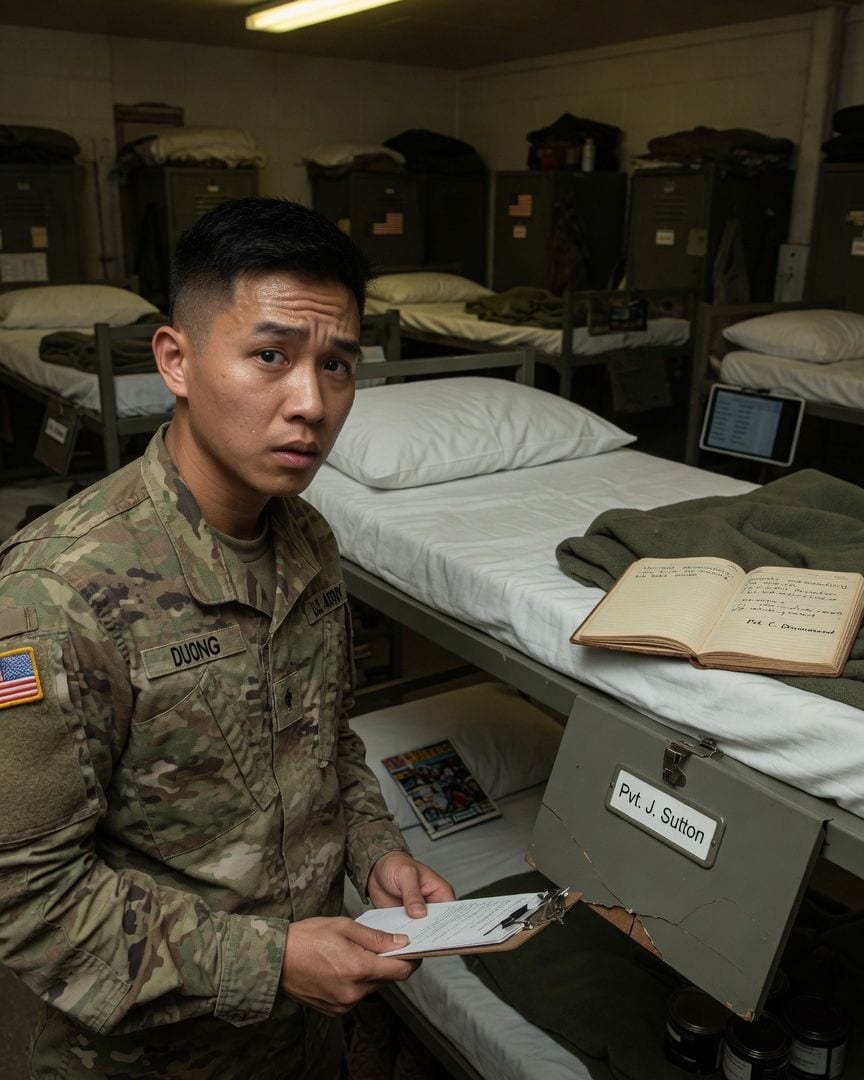
Specialist Duong’s final check unearths a logbook from decades past: an entry for '9 men present, 10 bunks made'.
Specialist Quentin Duong meticulously conducted his platoon's final barracks accountability check before graduation, the air thick with stale boot polish. He confirmed nine men against the roster, but the tenth bunk in the bay stood apart, always perfectly made and tagged 'Pvt. J. Sutton,' a name not on any current manifest. Despite dismissals from his battle buddy and sergeant, Duong couldn't shake the quiet unease. He returned to the immaculate bunk, uncovering a false bottom in its footlocker holding a decades-old logbook. Inside, a chilling entry from a previous cycle detailed '9 men present, 10 bunks made,' signed with a hand eerily similar to his own.
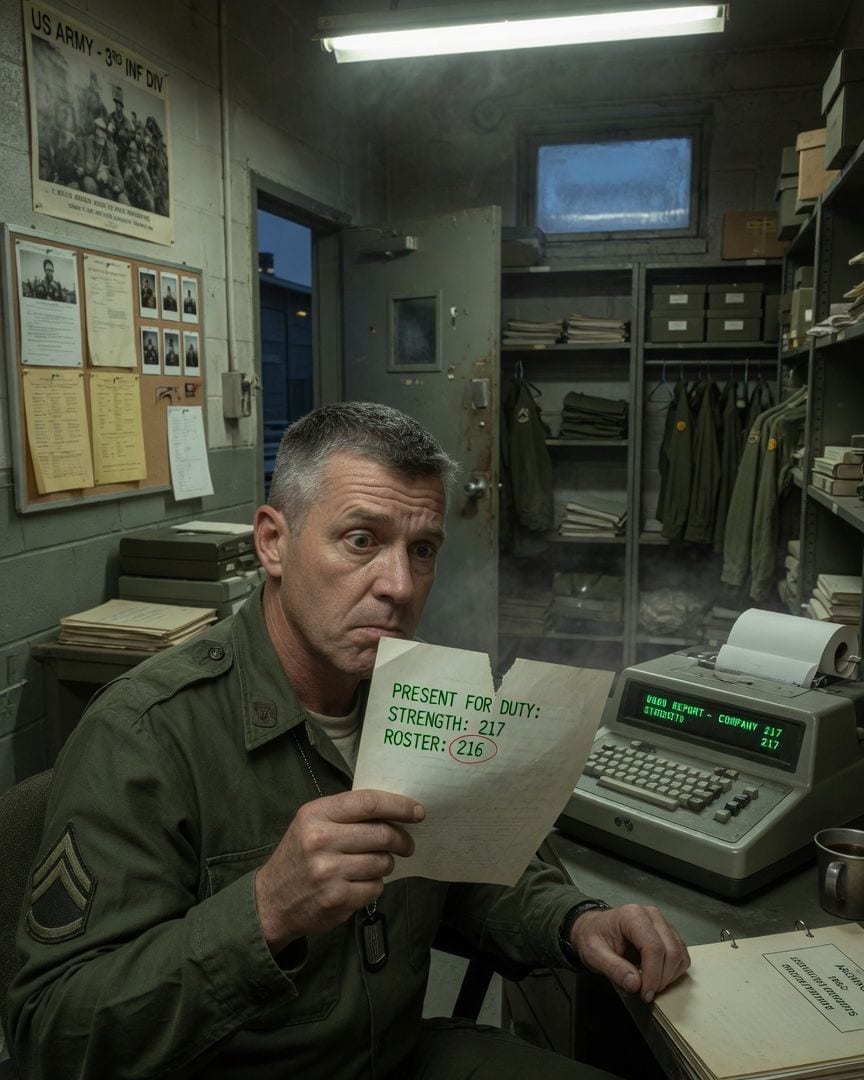
Sergeant Halloran is three months from a promotion, but his Cold War morning report shows 217 men. He counted only 216. A cold, hidden log from 1963 records the same impossible count.
Sergeant First Class Joseph Halloran, three months from a promotion and stateside transfer, faced the chilly 0600 darkness of his West German garrison in 1987, his career built on impeccable order now threatened. For a week, his morning reports had defied him: a meticulous physical count of 216 shivering soldiers always resulted in the Teletype machine blinking 217. His exhaustive double-checks confirmed no error, yet the impossible 'plus one' persisted, leading him to a distinctly colder section of the supply room. Behind ancient manuals, a hidden alcove revealed a worn leather log, where a Sergeant Hayes in 1963 had recorded the identical, chilling discrepancy.
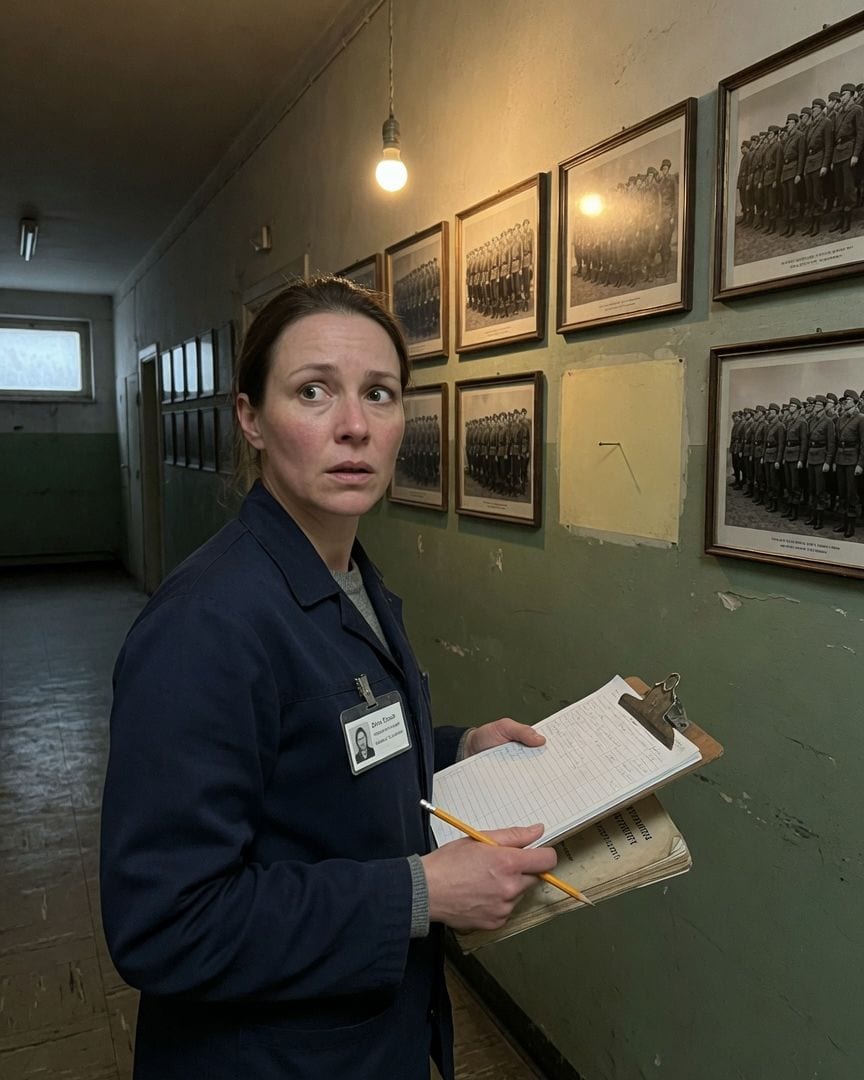
On a closing Cold War base, an inventory clerk finds every soldier in old photos staring at an empty wall. Her own name is on a hidden footlocker holding the missing picture: a dark, blurred figure among them.
Delia Straub has eleven days to inventory Kaserne Ottmarsheim, a former German base slated for demolition. The air in its echoing, abandoned halls smells of coal smoke and old wax as she races against the clock. Her task takes an unsettling turn when she discovers a phantom unit, the '604th Ordnance Detachment,' explicitly listed in old records despite never existing. Even more unnerving, every soldier in adjacent photos stares fixedly at the empty space where its picture should be. But why does a hidden footlocker, bearing Delia's own name, hold the missing photograph, revealing a dark, blurred figure among the men?
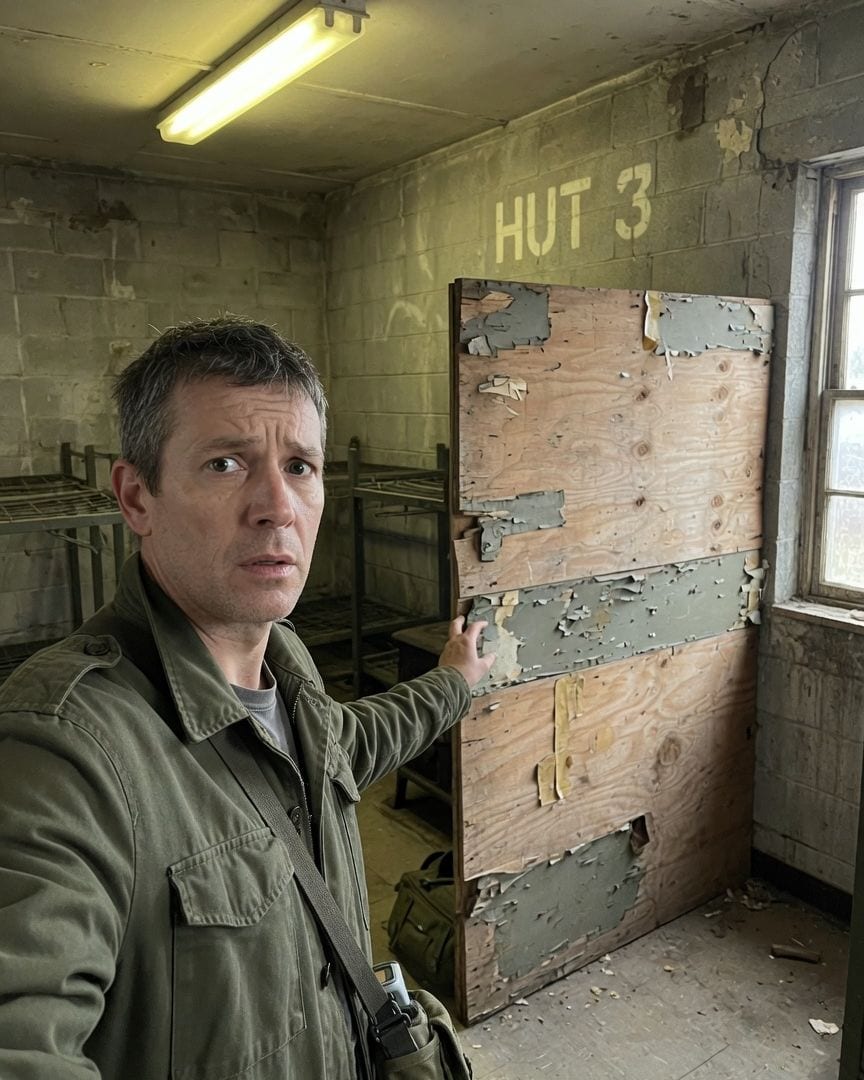
One morning there were twenty-one bunks in a hut built for twenty — the extra one made up tight at the far end past the stove, a kitbag beneath it stencilled with a name no roll could match. By nightfall the sergeant had that end boarded over.
I was a young recruit in a barracks hut built for twenty men, each bunk accounted for. But one morning, a twenty-first bunk appeared, impossibly tucked into a corner, meticulously made up for a man who didn't exist on any roster. Twenty-eight years later, the boarded-up wall concealing its secret remains, defying all logic and every measurement.
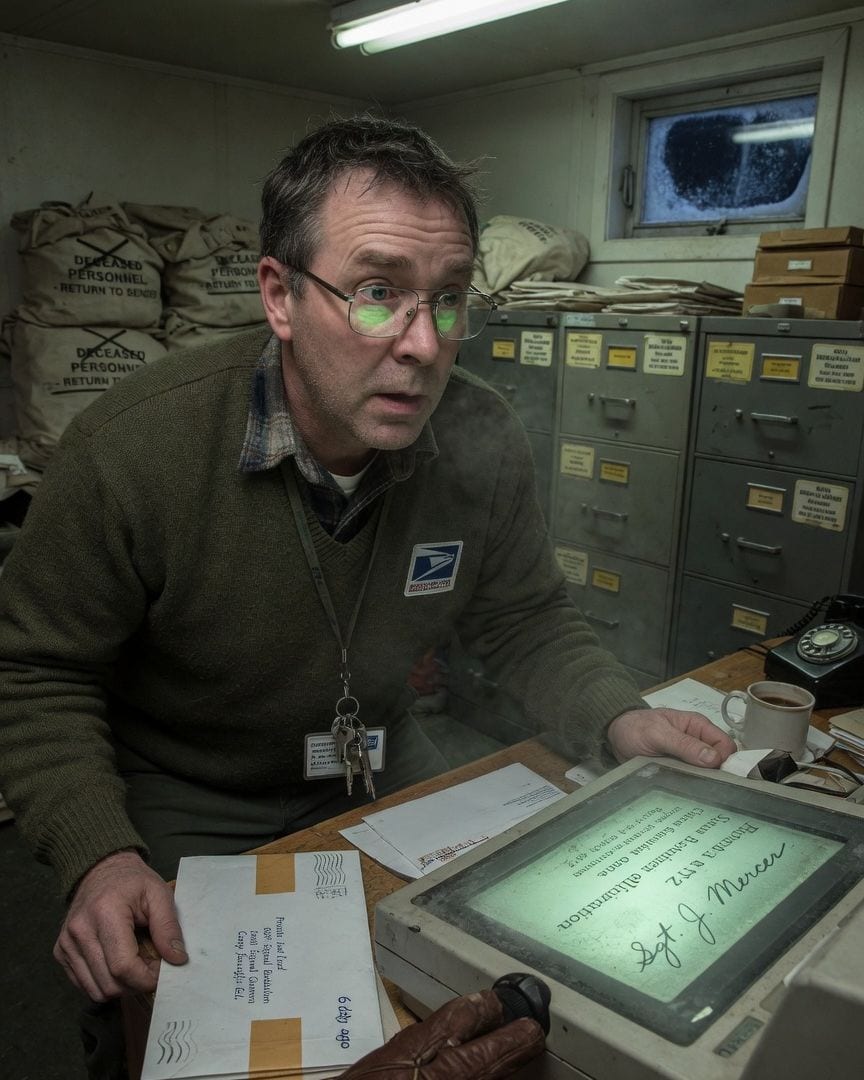
A postmaster at a Cold War Alaskan outpost still received mail for soldiers declared dead in 1969. Then he found their base was active three years later.
Postmaster Rowan Ashcroft had spent two decades watching the weekly mail plane land at Camp Bidwell Annex, a lonely outpost in the bitter Alaskan wind. His methodical mind, accustomed to order, was jolted when the latest mail sack contained forty-three letters for men officially declared dead in 1969. Each envelope, postmarked within days, was addressed to a soldier who wasn't coming back, and Rowan found one already opened and neatly resealed. Driven by duty, he began to sift through declassified Army archives, only to uncover a chilling maintenance log entry for the camp's equipment, dated three years after the base was officially shuttered. What was still happening at Camp Bidwell?
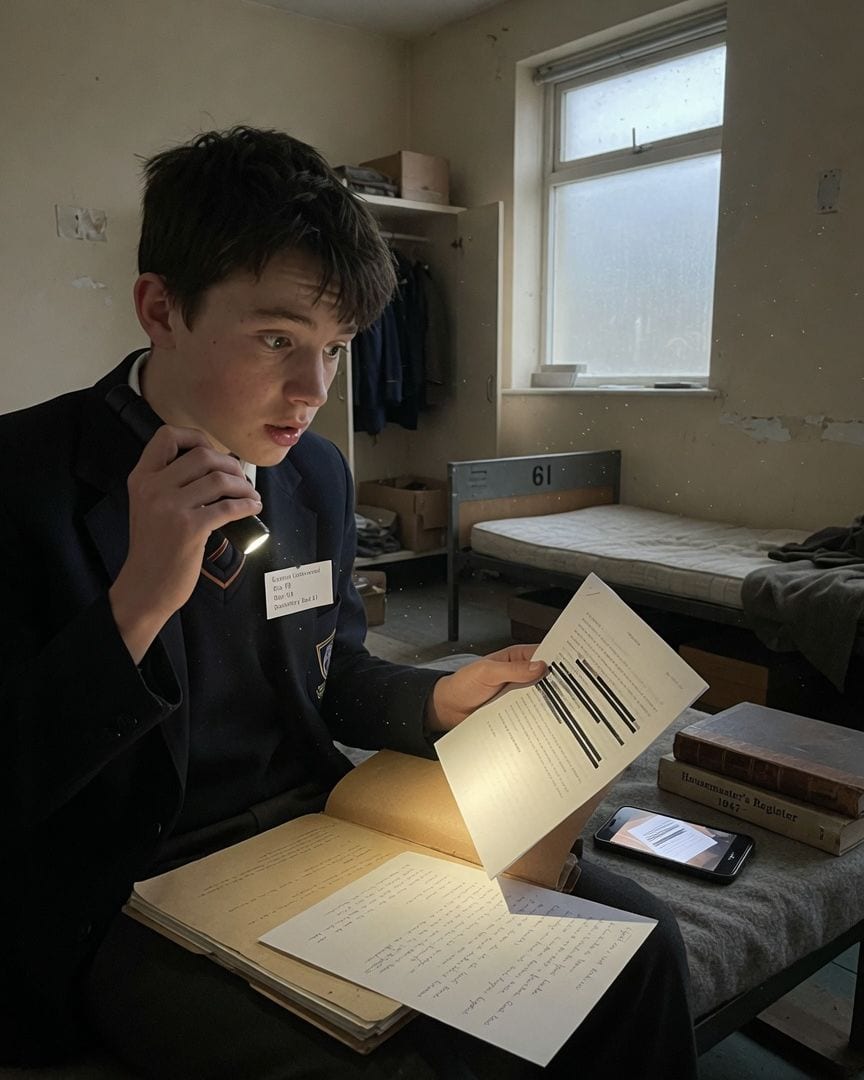
My boarding school bed number was 61, and the archive shows a boy assigned it every eight years since 1947, each leaving mid-term with the bed 'to remain made up'.
I found my matriculation card, listing me as 'Boy 61, Dormitory Bed 61.' Later, an old ledger revealed every boy assigned that bed since 1947 left mid-term, with an unsettling note: 'bed to remain made up.' Our housemaster’s recent scribble, 'as the others,' only deepened the dread around my own assigned bed.