My signal box phone rings at 2 AM from a demolished cabin, with a track walker reporting a clear line no one's walked in eleven years.
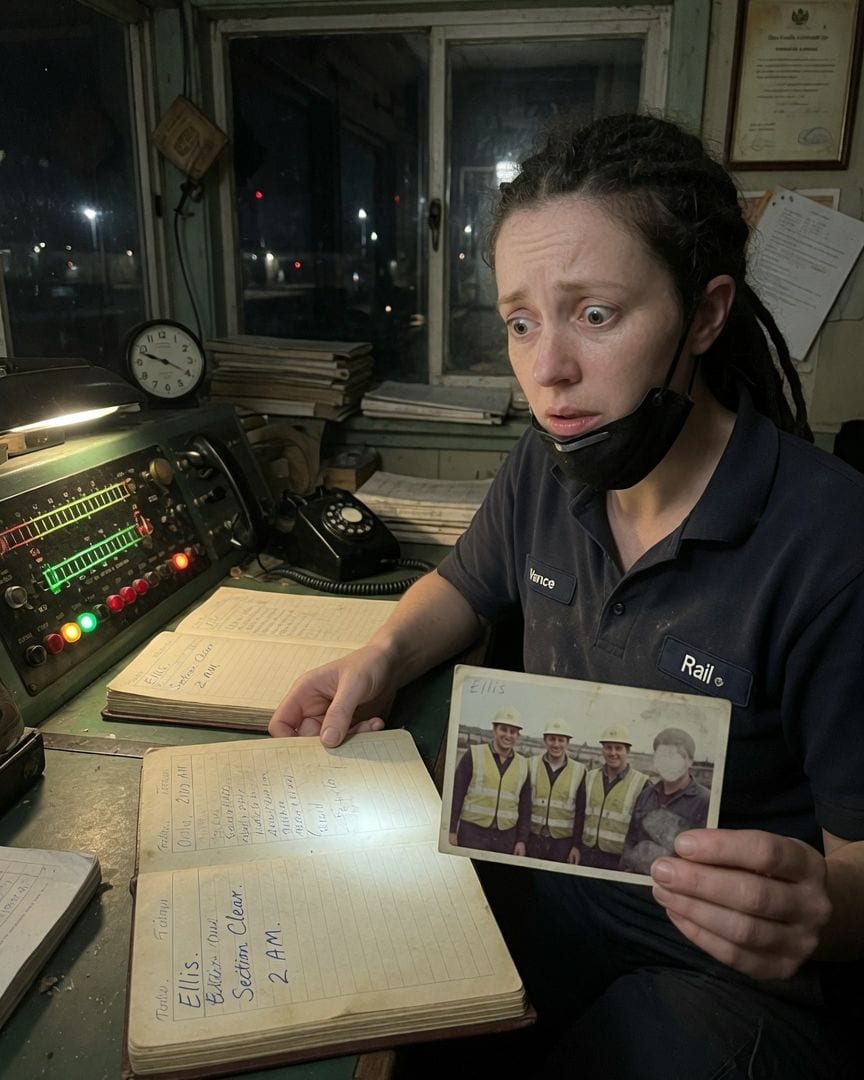
The dim glow of the signal box console cast long shadows across my face as I scanned the track ahead, the steady hum of the equipment a familiar lullaby.
It was 1:58 AM, and the night was quiet, save for the distant rumble of the approaching freight, a steady vibration in the floor beneath my feet. I adjusted my headset, running through the mental checklist for Line 7. Clear.
Everything was clear.
At precisely 2:00 AM, the old, Bakelite phone on the desk, reserved for track-side communication, rattled. Not a ring, really, more of a dry, insistent buzz, like a trapped insect. It startled me, despite the routine.
I’d worked this night shift for two years. This phone only ever buzzed when a track walker was doing their rounds on our section.
I lifted the heavy receiver, the cool plastic familiar against my ear. “Signal Box 7, Vance.”
A male voice, calm and clear, replied, “Ellis here. Section 3 clear, all points checked. You’re good to pass the freight, Vance.”
His voice was even, professional, with a slight gravelly edge. I knew it well. “Acknowledged, Ellis. Section 3 clear. Freight passing.” I scribbled ‘Ellis. Section Clear. 2 AM’ into my duty book, the ink bleeding slightly on the page.
I heard the distant click of his line disconnecting before I hung up. The same routine every night.
A short while later, during a brief lull, with the freight now a distant memory, I decided to call Edmund Thornton, my duty manager. Just a quick check, to confirm Ellis’s shift notes for the week.
Sometimes I felt a bit out of sync with the daytime team.
“Thornton here,” came his gruff voice.
“Edmund, it’s Rachel. Just confirming Ellis’s weekly. Was wondering if he’s on for the full stretch, or if you’ve got someone else covering the next few nights?”
There was a long silence on the line, punctuated only by the crackle of static. I thought the call had dropped. “Edmund? You there?”
He eventually replied, his voice tight with confusion. “Vance, there’s no track walker named Ellis on your line. Hasn’t been for eleven years. And the phone in Section 3? That cabin was demolished back in 2013.”
The freight train, or perhaps its echo, chose that exact moment to pass again, its metallic shriek echoing in the sudden, profound silence of the signal box. My pen, still in my hand, hovered over the entry: ‘Ellis.
Section Clear. 2 AM.’ It was right there, in my own neat handwriting, a phantom entry for a phantom man.
Sleep offered no escape. I was back in the signal box before my next shift, the taste of stale coffee bitter in my mouth. Edmund’s words had burrowed under my skin, setting up a cold, uncomfortable ache. A joke?
Some kind of weird hazing? No, Edmund wasn’t the type. His confusion had been real.
I pulled up old digital rosters, searching archived personnel files. Nothing. No Ellis. Not for eleven years, not for twenty, not even in the oldest digital records the railway kept.
Frustration mounted, hot and sharp, then settled into a dull, gnawing uncertainty. Every logical explanation was failing.
Then I remembered the small, dusty archive room in the back of the signal box. A forgotten corner, filled with physical logbooks from decades past.
It was a long shot, but I needed something concrete, something beyond the digital records that seemed to rewrite history.
I pulled a disposable mask over my mouth and nose, steeling myself against the thick dust that hung in the air like a shroud. The room was cold, stagnant, thick with the scent of old paper and forgotten time.
I began sifting through stacks of heavy, leather-bound ledgers, each one a relic. Hours passed, my fingers growing grimy with dust and age. My flashlight beam cut through the gloom, illuminating titles, dates, names I didn't recognize.
Just as I was about to give up, tucked away on a high shelf, behind a stack of moth-eaten manuals, I found a series of logbooks marked 'Line 7 – Night Operations.'
They covered a period from the 1960s to the early 2000s. My heart gave a frantic thump. This was it.
I pulled one down, its binding stiff, brittle pages groaning as I opened the oldest one first. And there it was. Entry after entry, spread across decades: 'Ellis. Section Clear. 2 AM.'
The handwriting changed over the years, sometimes neat and precise, sometimes hurried and almost illegible, but the name, the time, the report—they were constant. A ghost in the machine, a routine that had outlived its own reality.
My fingers traced an entry from 1968, the ink faded but still legible. I flipped forward, finding another from 2012, just before the cabin’s demolition.
Then, my breath caught. On a page dated for tonight, next to an entry from the previous signal operator’s last shift, was a faint, almost invisible entry in my own handwriting: 'Ellis. Section Clear. 2 AM.'
I didn't write it. I couldn't have. I hadn't been here then. Yet, it was undeniably my script, my loop of the ‘E’, my distinct ‘V’ for Vance. My eyes darted to the inside cover of the same logbook.
Pinned there, brittle with age, was a faded photograph of an old track crew, all smiling, confident faces staring out from the past.
One figure, standing slightly apart, was blurred, his features indistinct, almost smudged from the photo itself, as if someone had deliberately rubbed away his face. On the back, in faint pencil, was scrawled a single name: 'Ellis'.
I held the photograph, the blurred face of Ellis staring out from the past like a void.
My own handwriting on the page for tonight, a phantom signature for a phantom call, confirmed I wasn’t just observing the wrongness; I was already part of it.
A chill, colder than the signal box’s stale air, crept up my spine and settled in my bones.
The freight passed again, its rumble shaking the walls, the framed photos on the console, and the phone on the desk, the very instrument of Ellis’s call, seemed to hum with a low, expectant energy.
My gaze snapped from the logbook to the phone, then back to the photo, Ellis’s indistinct eyes seeming to track me, to pull me deeper into the silent, impossible routine.
I felt a profound, sickening sense of being watched, not by Ellis, but by the very history trapped within these walls. The next 2 AM call loomed, an inescapable appointment.
The next night, the 2 AM call came. My hand trembled slightly as I logged 'Ellis. Section Clear.' The dread was a physical weight, pressing down on my chest, making it hard to breathe.
I spent my off-shifts not resting, but poring over the old logbooks, cross-referencing names and dates, searching for a pattern.
I found one. A consistent, chilling one. The Ellis calls were always followed, within days or sometimes weeks, by terse, official entries about 'unexplained delays' or 'minor incidents' on Line 7.
Never anything major enough to warrant a full inquiry, but enough to raise an eyebrow. I searched digital newspaper archives for the corresponding dates, looking for anything related to the railway. Most yielded nothing, lost to time or bureaucratic efficiency.
But a few vague articles surfaced—a 'freight car mishap' in '74, a 'track irregularity' in '89, a 'signal malfunction' in '01. All on Line 7, all after an Ellis call.
The incidents were minor, easily dismissed, but the sheer repetition, now that I was looking for it, was disturbing.
I tried to talk to older employees, casually asking about 'old timers' or 'superstitions' about Line 7. Most shrugged me off, or offered vague tales of 'bad luck' on that particular stretch of track.
But one grizzled veteran, a retired track foreman named Charles Hawkins, nodded slowly when I mentioned Ellis.
“Ah, Ellis,” he rasped, his eyes distant, fixed on some memory beyond the coffee machine in the break room. “Good man. Died on the line, didn’t he? Tragic business. Back when I was just a lad, '68, I think.
Never really replaced him, not like they should’ve. Line 7… it’s always been a peculiar stretch.” He offered no more details, just a shake of his head and a quick change of subject.
His gaze, though, lingered on me for a moment too long.
I returned to the dusty archive, my heart pounding a frantic rhythm against my ribs. 'Died on the line, '68.' This was a new, concrete piece of the puzzle.
I found logbooks from 1968, their pages thick with official reports and frantic scribbles. There, amidst the entries following a major derailment, was a single, stark record: 'Track Walker Ellis, Section 3, Fatal Incident.'
The date was a few days after an 'Ellis. Section Clear. 2 AM' entry. The mundane explanation—a simple ghost, a haunting—started to unravel, leaving something far more unsettling in its place.
This wasn't just a lingering spirit; it was a re-enactment, a cycle tied to a specific, catastrophic tragedy. The logbook with my own phantom handwriting seemed to mock me from the shelf, a silent accomplice in this unfolding, impossible history.
My investigation deepened, and I started feeling a subtle shift in the atmosphere around me. It wasn't just the cold in the archive room anymore.
I noticed Edmund Thornton watching me more closely, his usual gruffness replaced by a quiet, assessing stare whenever I passed his office. He didn’t say anything, just that look, as if he knew something, or suspected I knew something.
One afternoon, while I was still in the archives, lost among the ledgers, a figure appeared in the doorway.
It was an older man, impeccably dressed in a tweed jacket, with a sharp, intelligent gaze that seemed to take in every detail of the dusty room, and me.
“You’re Rachel Vance, aren’t you?” he asked, his voice surprisingly robust for his age, cutting through the silence. “I’m Gideon Rutherford. Used to run this division, back in the day.
Heard you’ve been… asking questions about the old Line 7 logs.”
I felt a prickle of unease. My stomach tightened. How did he know? I hadn’t spoken to many people, and certainly not about the logs. Gideon stepped further in, his eyes sweeping over the scattered logbooks, then back to me.
“That’s a lot of history you’re digging up, Miss Vance. Some things are best left buried, you know. For the smooth running of things.” He didn’t sound threatening, just… knowing, like someone who had seen it all before.
He then offered, almost too casually, “I have some of my own old records, from my time. Might shed some light on the ‘peculiarities’ of Line 7, as Charles Hawkins so delicately put it.
Perhaps you’d care to join me for tea tomorrow afternoon? My home isn’t far.” The invitation felt less like an offer and more like a summons, an unspoken command. Unnerved but desperate for answers, I agreed.
The next day, as I drove to Gideon’s secluded house, nestled amongst a stand of old oak trees, I noticed an old, dark sedan parked a few blocks from my apartment.
Its tinted windows obscured the driver, but I was certain it was the same car I'd seen briefly near the signal box a few days before. It seemed to be waiting.
A cold knot tightened in my stomach; my digging had definitely been noticed, and I was no longer just an investigator. I was being watched.
Gideon Rutherford’s living room was a museum of railway history, filled with framed blueprints, antique lanterns, and sepia-toned photographs of steam engines. He offered me tea, his calm demeanor unsettling against the growing panic in my chest.
“So, Ellis,” he began, stirring his tea with a silver spoon, the clinking sound unnaturally loud in the quiet room. “You’ve found his name in the old logs. You’ve probably connected him to the '68 derailment, yes?”
I nodded, my guard up, the tea growing cold in my hands. “And the recurring calls,” I pressed, my voice a little rougher than I intended. “And the 'unexplained incidents' that always follow.”
Gideon smiled faintly, a grim, weary expression that barely touched his eyes. “Indeed. That’s where my records come in.” He rose and retrieved a heavy, leather-bound book from a locked cabinet built into the wall.
It wasn’t a standard railway log; it was hand-indexed, filled with meticulous notes in a precise, almost calligraphic script.
“This is my personal log,” Gideon explained, placing it on the coffee table between us. “My true record of Line 7.” He opened it to a page from the late 1960s.
“After the '68 disaster, which was officially blamed on a structural failure, a few of us – the ones who were actually on the ground, who saw the wreckage and the reports – noticed something. The ‘Ellis’ calls, they continued.
From the demolished cabin, yes. But they always, always preceded another incident. Not always a derailment, but always something significant: a near-miss, a fatality, a major mechanical failure. Small enough to be covered up, but deadly enough to be real.”
He pointed to entries, each marked with a small, stylized train icon. “The company, of course, wanted to bury it. Panic, liability, the reputation of the line. So, a protocol was established.
Every signal operator was quietly instructed to log the 'Ellis' call, to keep the routine going, but never to speak of it. To make it seem like a normal, if unofficial, occurrence.
It became an open secret among us, the night shift men. A way to… manage the anomaly, to keep it from escalating into something worse, something the public couldn’t ignore.”
I stared at the log, the pieces clicking into place with a horrifying precision. The 'unexplained delays,' the 'minor incidents'—they weren't coincidences. They were the pattern.
My own phantom entry in the logbook suddenly made terrifying sense; I’d been inducted into the secret, just like the operators before me, a new link in a chain stretching back to 1968.
“You… you knew,” I whispered, looking at Gideon, the chill in the room deepening, despite the fire crackling in the hearth. “All this time.”
Gideon closed his logbook slowly, the soft thud echoing. “I did. And now, so do you. And you are now part of it, Miss Vance.”
Gideon turned to the next blank page of his personal logbook, his finger tracing a line down to a specific date. I leaned closer, my breath catching in my throat. It was the date for tomorrow morning, my next shift.
A small, unadorned space, waiting for its next entry.
“The calls are not just echoes of the past, Miss Vance,” Gideon said, his voice dropping to a grave whisper, barely audible above the ticking clock on the mantel. “They are a warning. Or perhaps, a trigger.
Ellis calls, and then… the event occurs. It’s a cycle. One that repeats, exactly as it did in '68, only now the company is better at covering its tracks.
The official log remains clean, but the truth plays out on the rails.”
He tapped the page for tomorrow’s date. “He’ll call again, precisely at 2 AM. And the freight will pass. And then… the incident.”
A cold dread bloomed in my chest, colder and sharper than anything I’d felt before. I wasn’t just an observer anymore. I was staring at a countdown. Gideon met my gaze, his eyes filled with a profound, almost pitying sorrow.
“The question, Miss Vance, is what you will do when you know what’s coming.”
His finger remained on the date, a silent, chilling prophecy, and the knowledge of my own impending, inescapable role in the cycle settled over me like a shroud.
The phone in my pocket, the one I use for Ellis’s call, vibrated faintly, a silent promise of the coming dread.
I returned to the signal box for my shift, the weight of Gideon’s words pressing down on me, heavy and cold. The air felt charged, thick with an almost visible anticipation.
The silence before 2 AM was no longer peaceful; it hummed with something terrible, something waiting.
Gideon had explained the full, horrifying truth: the 1968 derailment was catastrophic, but more than that, it tore a hole in time, a wound on that specific section of track.
Ellis, performing his final, vital check, became trapped in that moment, his last report forever echoing just before the disaster. The signal box, being the nexus of communication, became the conduit.
Each 2 AM call from Ellis isn't just a ghost; it's the temporal anomaly replaying, recreating the conditions for the original incident.
The subsequent 'minor incidents' were attempts by the railway to control the narrative, to ensure the full, repeating pattern of the 1968 disaster never became public knowledge.
Gideon, and others like him, quietly kept the personal logs, not just to track the phenomenon, but to prepare for it, to mitigate the damage where they could, to ensure the 'freight' — the inevitable, repeating temporal event — passed without causing another publicly acknowledged catastrophe.
The official company policy of logging the call was a crude attempt to acknowledge the anomaly without admitting its true nature, to keep the loop going, thinking it somehow contained the real danger.
I now understood my own phantom entry: I wasn't just observing; the anomaly had already reached out, writing me into its script, making me the next 'witness' to Ellis's doomed routine.
I wasn’t just a signal operator; I was a part of the mechanism, a necessary component for the cycle to complete itself, for Ellis to make his final, futile report.
At 1:59 AM, I stared at the signal levers, my hand hovering over the controls. I could stop it. I could refuse the call, pull the emergency brake, reroute the freight, anything to break the cycle.
But Gideon’s words echoed in my mind, a relentless drumbeat: 'The freight will pass, just as it always does.'
At 2:00 AM, precisely on schedule, the old Bakelite phone buzzed. I hesitated, my heart a frantic drum against my ribs, loud in the stillness. I could just let it ring.
Let it ring out into the empty signal box, the sound fading into the dead air. But the receiver felt impossibly heavy, pulling my hand towards it, a magnetic force. As if compelled, I lifted it.
“Signal Box 7, Vance.” My voice was a strained whisper.
“Ellis here. Section 3 clear, all points checked. You’re good to pass the freight, Vance.”
The voice was calm, utterly devoid of malice or awareness, just the unwavering echo of a man doing his job, forever caught in his final moment.
My mind raced. If I didn’t confirm, if I didn't log it, what happens? Does the temporal loop shatter? Does it escalate, ripping through the present?
Or does the original 1968 disaster simply play out again, but this time, in my present, publicly, catastrophically? The pressure was immense, a physical weight crushing me.
I looked at my personal logbook, open to the page where my own phantom entry for Ellis sat, a testament to my unwitting induction. I was already part of it. I couldn't escape.
With a deep, shuddering breath, I replied, my voice tight, “Section 3 confirmed clear. Freight passing.” I logged the entry, my hand shaking so hard the pen dug into the paper.
As I hung up, the signal box groaned around me, a low, metallic sigh. The levers, which I had half-intended to throw into the emergency position, remained stubbornly locked in place, green lights confirming the clear track ahead.
The heavy freight train, the same one from every previous night, thundered past the signal box, its horn a mournful wail that seemed to tear through the very fabric of the night.
I watched it go, a chilling sense of inevitability washing over me. I tried to fight it, but the cycle was too strong, too ingrained. It needed its witnesses, its operators. It needed me.
The freight disappeared into the darkness, leaving an unnatural quiet in its wake. I sat at my console, the phone silent, the logbook open. No alarms sounded. No emergency calls came through. The night continued, seemingly undisturbed.
The incident, if it occurred, did so in the temporal echo, contained within the cycle, never bleeding into the present physical world in a way that could be officially acknowledged.
Edmund Thornton called later for a routine check, his voice oblivious. I answered, my responses clipped, almost automatic. I made no mention of Ellis. I made no mention of Gideon.
I simply performed my duties, the hollow understanding of my role now a permanent fixture in my mind. The signal box was no longer just a workplace; it was a cage, and I was its silent, unwilling keeper.
Days turned into weeks. I continued my night shifts, the 2 AM call an unbreakable ritual. I logged 'Ellis. Section Clear' with a mechanical precision, my hand steady, my face impassive. The dread had morphed into a quiet, profound emptiness.
Gideon Rutherford’s house was now dark, his phone disconnected. I tried a few times, but the line was always dead. Edmund Thornton, oblivious, eventually transferred me to a different, busier line, citing my 'unwavering composure' during the quiet shifts.
He thought it was a promotion. I just nodded, packing my few personal items from Signal Box 7. I left the old logbooks exactly as I found them, knowing they would wait for the next operator, the next witness.
I had become a part of the system, not just an observer, but an enabler, an echo myself. The cycle continues, and I am its latest, hollowed-out participant. I know the truth, and the truth has taken me.
Weeks later, Edmund Thornton sat in his office, reviewing personnel transfers. He noticed Rachel Vance's old signal box, Line 7, had a new night operator. He made a mental note to check in on them soon.
He picked up his phone to call Rachel, to congratulate her on her new posting, but paused. He remembered her recent quietness, the way her eyes seemed to hold a distant, knowing sadness.
He cleared his throat, put the phone down, and returned to his paperwork. The freight passed, and Ellis called again at 2 AM, precisely as he knew he would.
If this one got to you
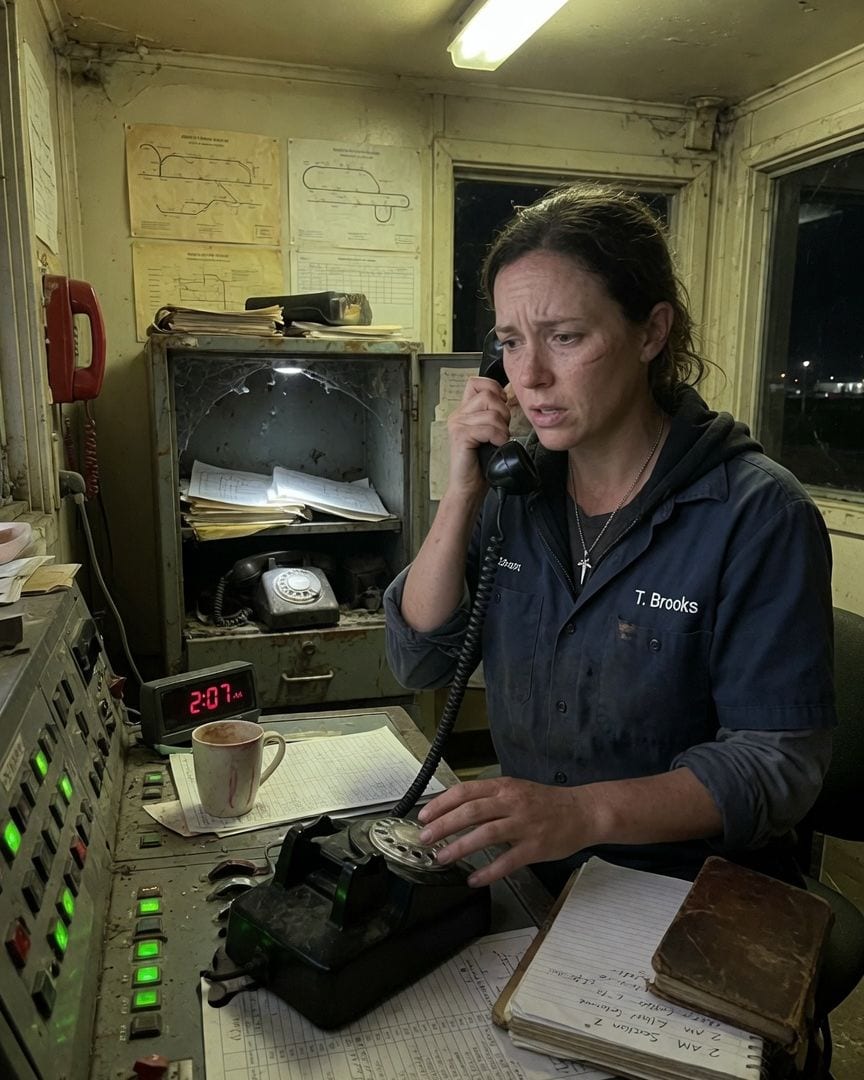
My signal box gets a 2 AM call every night from a man whose section was demolished eleven years ago. Now I found his logbook with today's date.
My night shift at the signal box is quiet and precise, defined by the routine 2 AM call from Ellis confirming Section 7 is clear. But when I asked my duty manager to log it, he said Section 7 hasn't had a track walker in eleven years, not since its cabin and phone were demolished.
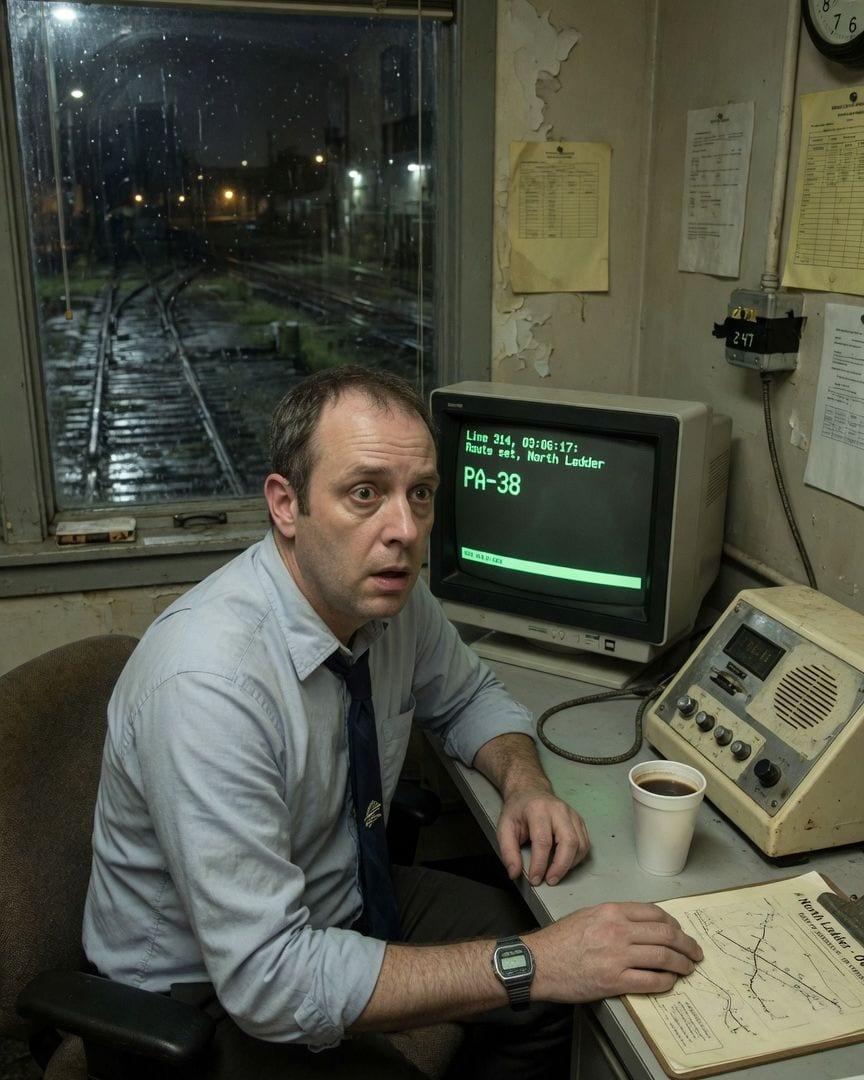
The log says my lever set a route at 3:06 AM through a track that's been shut for repair work — and the circuits show something moved down it. I never touched that lever; I sat there still.
I, Preston Abbott, a night dispatcher, was running a routine signal log check when I saw my code had set a route. It was for the North Ladder, a track decommissioned twenty years ago and physically impassable. Then, the yard's old, physically severed intercom system crackled to life, whispering a specific routing instruction for that very track.
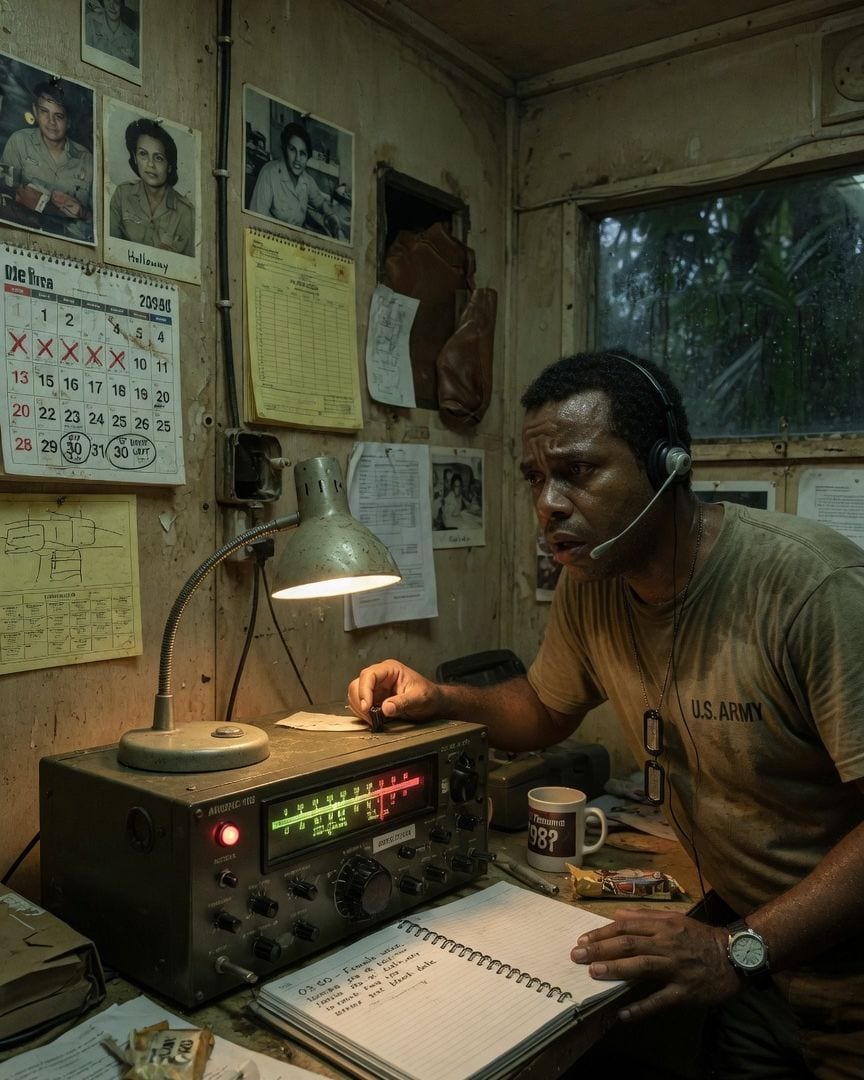
Three months from his tour ending, a sergeant's Cold War radio lists his name with a blank 'ceased answering' date. A hidden logbook warns: 'It knows my name.'
Sergeant Kevin Brooks was three months from finishing his year-long tour at a remote Panamanian jungle station. He meticulously marked each passing day, eager to escape the humid nights and unseen blossoms pressing against the comms shack walls. But at 0300, his old radio crackled to life with a woman's calm voice, listing names of past operators who 'ceased answering.' Then the voice spoke his own name, leaving a chilling blank space where his date should have been. What grim roll call had Sergeant Brooks stumbled upon?
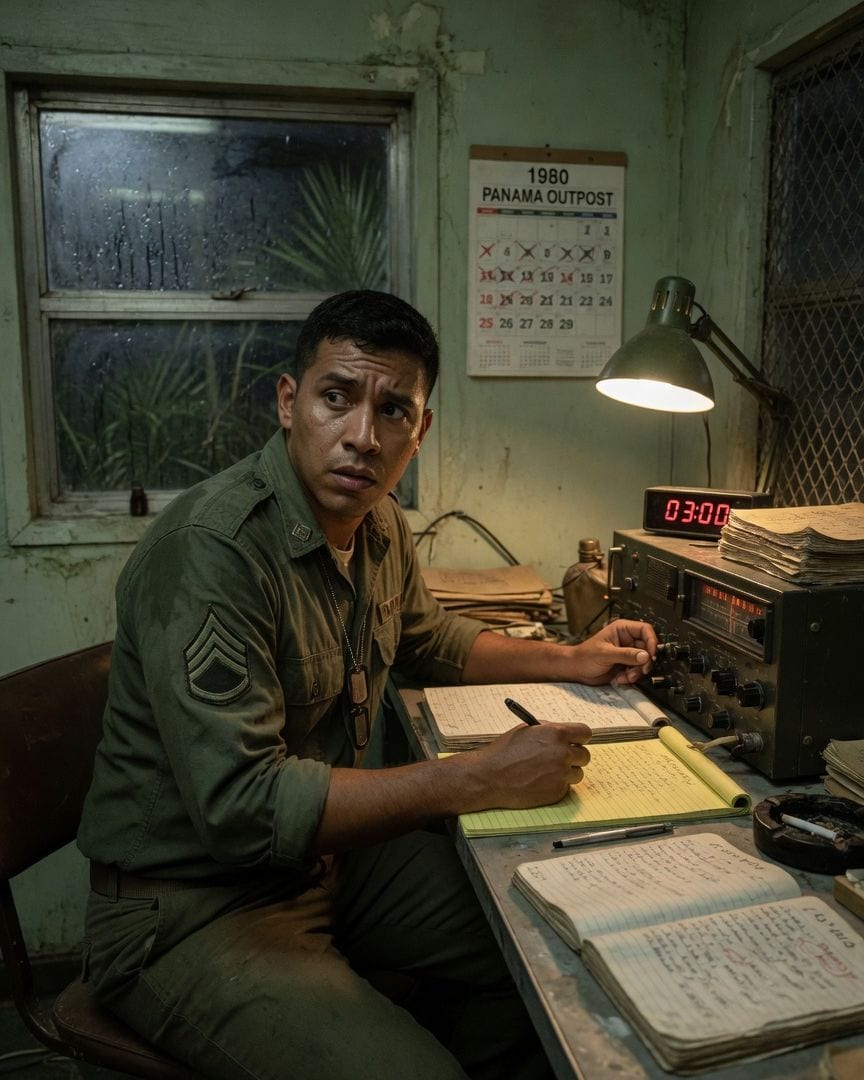
A Cold War comms operator at a remote outpost hears predecessors listed as 'stopped answering' — then the voice calls his own name.
Sergeant Adam Ibarra endured the damp Panamanian night in his remote outpost, the hum of old equipment his only companion. For three nights, a calm woman's voice transmitted a looping list of names and dates on the comms set, initially dismissed as a forgotten test loop. But the truth chilled him: these were his predecessors at the station, listed with the precise dates they had 'stopped answering' — and the sequence ended with a blank space just before his own. On the fourth night, Ibarra waited, rigid, as the voice added the last operator's name before him, then paused. Clear as a bell, it finally spoke: 'Ibarra, Adam.' What date would it add next?
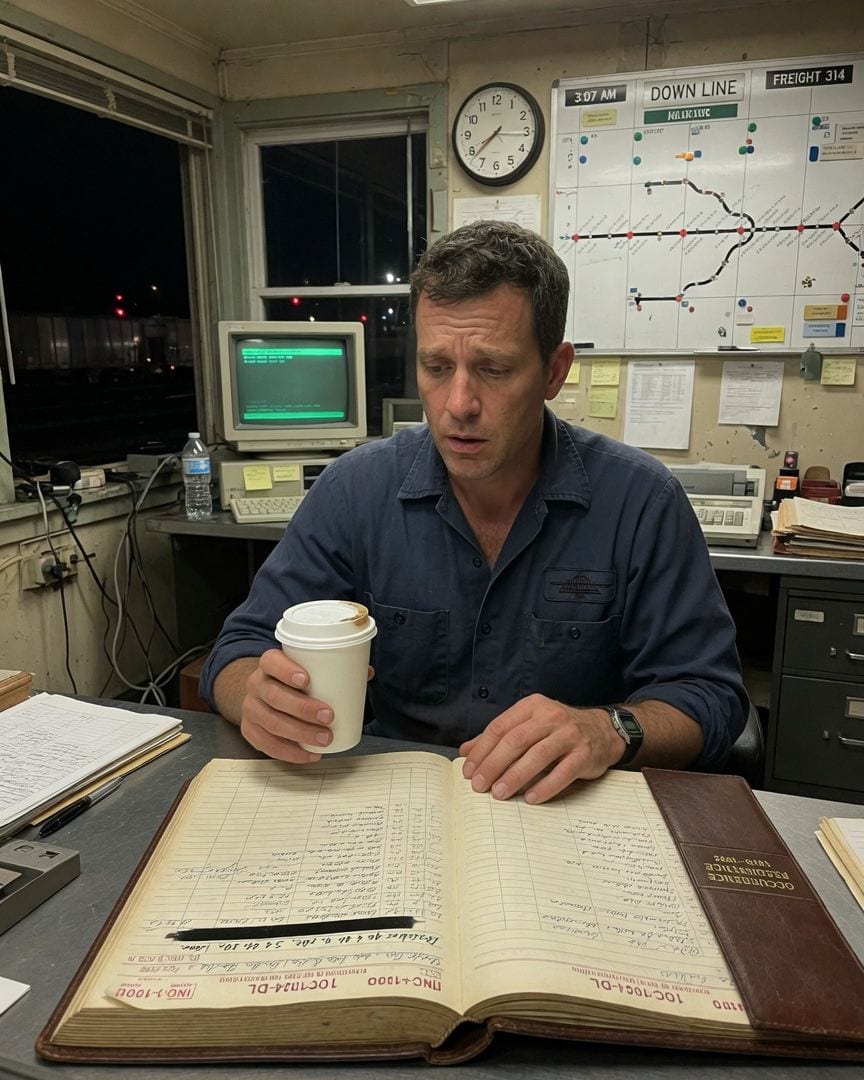
My new colleague's face is identical to a woman in a 1958 archive photo. She was declared 'the woman on the down line' for decades.
Working my solitary shift in the signal box, I found a blacked-out entry in the old occurrence register. It noted 'the woman on the down line' and the instruction 'do not stop.' This same strange entry, word-for-word, recurred every October 4th, back through the years from 1988. It felt like a chill in the routine, a silent dread in a book of transient events.
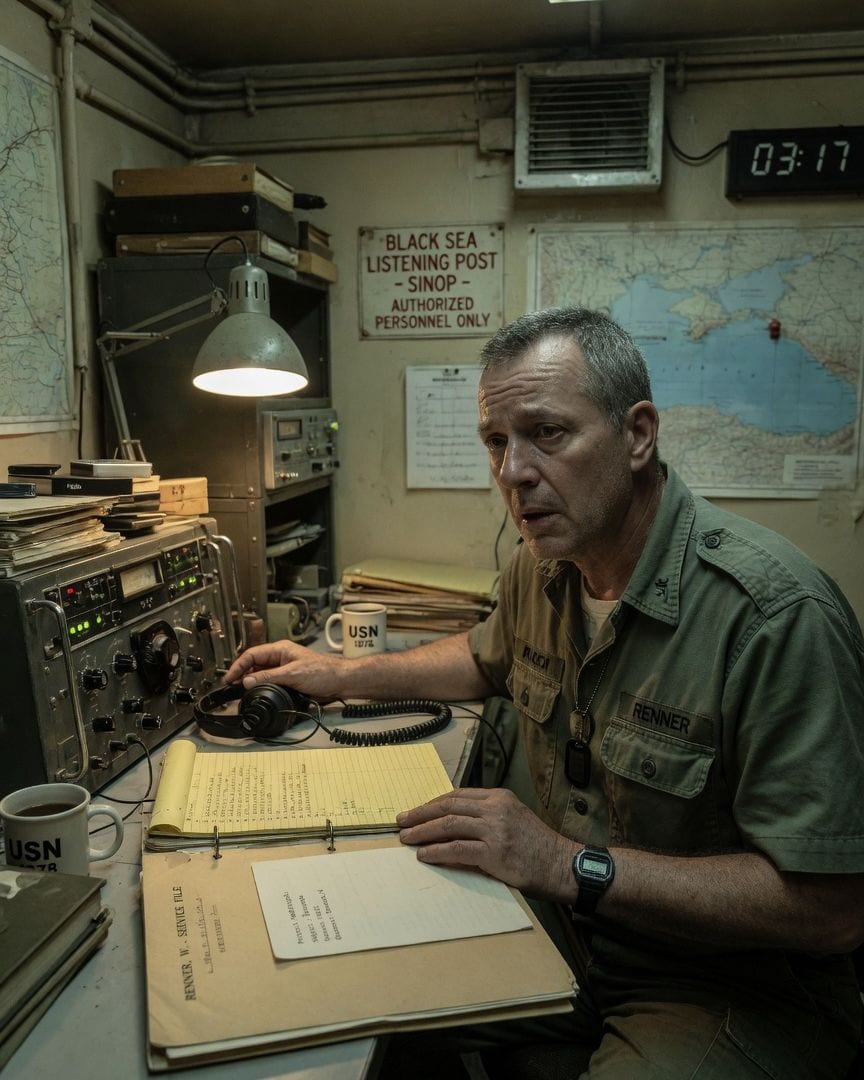
Specialist Walt Renner had six weeks left at Sinop when his Cold War numbers station stopped counting and spoke his mother's name: 'Walter.'
Specialist Walt Renner had just six weeks left at the Sinop station, anticipating the close of his thirty-year career. For almost two decades, he had tracked a mysterious numbers station, broadcasting from an impossible point in the Black Sea. Tonight, the woman's flat voice stopped counting, and the static cleared, replaced by a single, perfectly clear word: 'Walter.' It was the intimate name his mother had used, a name he hadn't answered to in decades. Yet, it emanated from the same empty water, a deeply personal address from the void itself.