My signature is on a car claim in Reno. I've never even been to Reno.
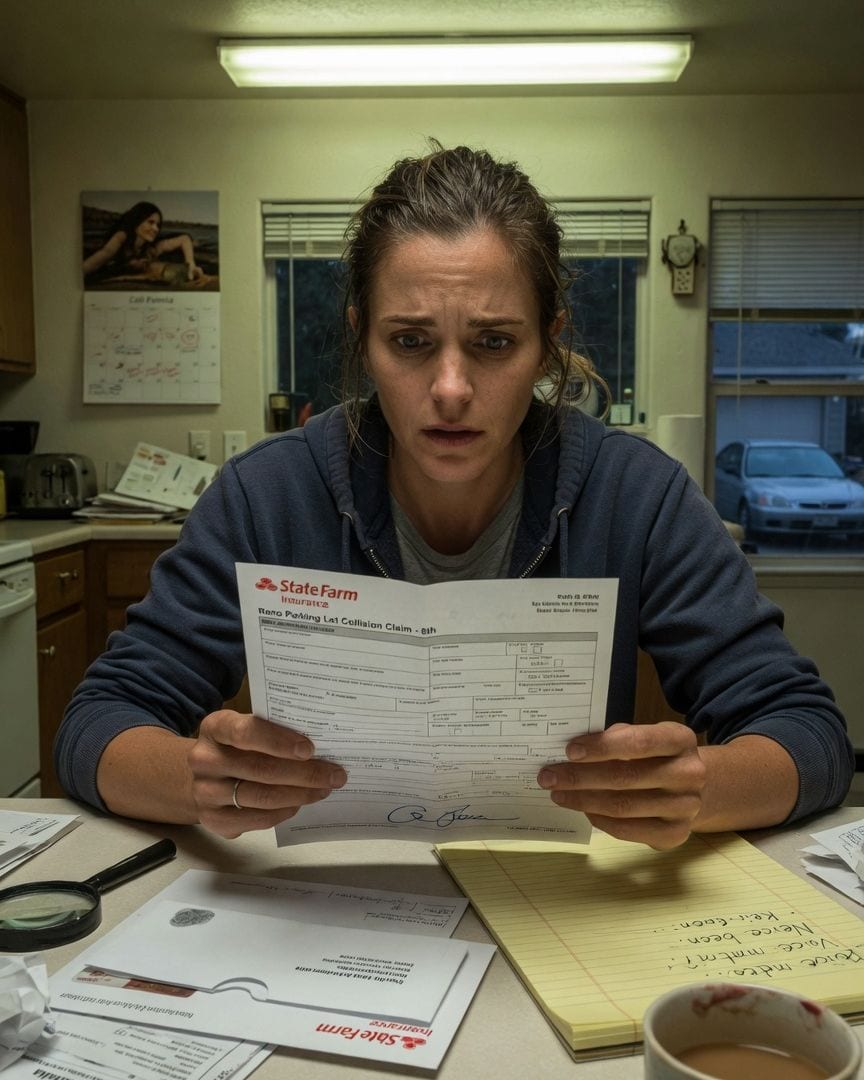
The crisp white envelope from my car insurer had been sitting on the counter for two days, a subtle accusation in its official seal. Today, I finally ripped it open.
It was a confirmation, detailing a parking-lot collision claim I’d supposedly filed in Reno on the 8th of this month. Attached was a summary, quoting my 'account of the accident in my own words.' My breath hitched. Reno.
I hadn’t been to Reno in my life. And my car, a perfectly good Civic, sat in my driveway, spotless and undented.
I called the number listed, my voice tighter than I meant it to be. Pamela Foster, the adjuster, answered. She sounded professional, practiced. Unconcerned. “Yes, Ms. Granger, your claim is fully documented here.
Your statement was taken over the phone, detailing a fender bender at the Grand Sierra parking lot.”
“I didn’t make that call,” I said, trying to keep my voice even. “I haven’t been to Reno. My car hasn’t been in any collision.”
Pamela paused, a slight click of a keyboard audible on her end. “Let me just… cross-reference. I’m looking at the recording now. The voice matches your original policy setup call from two years ago. Perfectly.”
A cold knot tightened in my stomach. My own voice. Speaking words I’d never uttered, for an event that never happened.
I spent the next two days trying to debunk the impossible, the feeling of that cold knot still lodged in my gut. I called the Reno Police Department.
They had a record of the incident, complete with my supposed driver's license number. The officer on the line sounded bored, like I was the fifth person that day asking about a minor fender bender in a parking lot.
I contacted my bank, checking for any anomalous charges from Reno—hotel bills, gas receipts, anything. Nothing. My own digital footprint was clear.
Frustration mounted, a frantic energy buzzing under my skin. I requested a physical copy of the claim form. It arrived two days later, a standard insurance document, folded neatly in a larger envelope.
I smoothed it out on my kitchen table, the fluorescent light glinting off the cheap paper. There, at the bottom, was my signature.
It wasn't a crude forgery, the kind you’d see in a bad movie. This was a near-perfect replication of my loops and slants, the distinctive way my ‘G’ trailed off, the precise angle of my ‘S’.
It was so accurate it sent a shiver down my spine, as if someone had peeled off a piece of my identity and pasted it onto a lie.
It was undeniably mine, yet I knew, with every fiber of my being, that I had not signed it. I tried explaining the situation to a fraud investigator.
She listened patiently, her expression polite but distant, then stated firmly that without evidence of actual identity theft—a stolen wallet, compromised accounts—it was, legally, my claim. The rational explanations were failing.
Every door I tried to open simply led back to me. I decided I needed an expert, someone who could definitively prove it was a fake, even if my gut screamed that it wasn't.
I found Bernard Vance, a retired handwriting expert recommended by a friend’s lawyer. His office was quiet, smelling faintly of old paper and dust.
He was a man with thick glasses and an air of quiet authority, his hands gnarled from years of holding magnifying glasses.
I presented him with the Reno claim form and several samples of my genuine signature from old bank statements.
Vance spent an hour poring over the documents under a strong lamp, making precise measurements with a tiny ruler, humming softly to himself.
I watched, my heart hammering, desperate for him to declare it a forgery, to give me something to fight with, something to prove I wasn’t losing my mind.
Finally, he pushed his glasses up his nose and looked at me, his expression unreadable. “Ms. Granger,” he said, pushing the documents forward across the polished desk. His voice was low, calm. “This is not a forgery.
Every stroke, every pressure point, the natural flow… it is unequivocally your hand. It is your signature.”
I felt the floor drop out from under me, the expert's calm pronouncement echoing louder than any scream I could muster. The official seal on his report, confirming the impossible truth, felt cold against my thumb.
Outside, through the office window, I could see my perfectly undamaged Civic parked at the curb, a silent, impossible contradiction.
Vance patiently explained the subtle nuances that distinguished a genuine signature from even the most skilled forgery.
He showed me the micro-tremors, the unique starting and ending points of strokes, the natural pressure points that were almost impossible to replicate, no matter how meticulously one practiced.
He pointed out the slight hesitation I always made at the apex of my ‘A’, the almost imperceptible lift before the final sweep of my ‘R’.
It was a masterclass in forensic analysis, and it left me with an undeniable, terrifying truth: someone, or something, had signed my name with my own hand, not stolen it, not copied it, but used it.
The implications were staggering. If my signature could appear where I wasn’t, what else could? I started digging deeper into my own past, scrutinizing old bank statements, anything with my handwriting.
It took days of cross-referencing, hunched over my laptop, the blue light reflecting off my worried face, but I found it: a small, unusual debit of $14.72 from a hardware store in a town called Oakhaven, dated five years ago.
Oakhaven. I’d never even driven through Oakhaven, let alone bought anything there. The receipt, a faded digital scan I managed to retrieve from my bank's archive, bore a signature that was, again, unmistakably mine.
The loops, the slant, the tell-tale hesitation. The pattern was forming, not just a single incident, but a series of impossible entries, stretching back in time. The air in my apartment felt heavy, as if the walls themselves were listening.
My quiet investigation didn't go unnoticed. After a week of researching Oakhaven, looking for defunct businesses or forgotten local records, my laptop chimed with an anonymous email. The subject line was simply 'Echoes.' My heart hammered against my ribs.
The body of the email contained a single, chilling sentence: 'Some things are better left undocumented.' There was no sender, no IP address I could trace, just that stark, unsettling message.
Later that week, while I was poring over microfiche at the local library, the dusty room feeling unusually still around me, I noticed a man in a dark suit sitting at a nearby table.
He was pretending to read a newspaper, but the paper barely moved. He wasn't subtle. Every time I looked up, his eyes were on me, not directly, but a quick flick from behind the cheap newsprint.
His presence was a cold weight in the periphery of my vision. When I packed up to leave, the silence of the library seeming to amplify the rustle of my bag, he followed me out, maintaining a casual distance.
As I got into my car, the interior still warm from the sun, I saw him stop at a payphone across the street.
His back was to me, but I knew he was speaking in hushed tones, watching my rearview mirror. The warning was clear: I was being watched, and someone knew exactly what I was looking for.
The email had a name for it. And they wanted me to stop.
The anonymous email confirmed my fears: there was a name for this. 'Echoes.' The word resonated with a hollow certainty. I remembered Dean Underwood, a retired insurance claims processor my parents knew.
He always had a knack for remembering obscure details, a mental Rolodex of bygone policies and strange incidents. I tracked him down, finding him in a quiet suburban home, the lawn meticulously manicured.
He was frail now, his movements slow, but his eyes, behind thick bifocals, were sharp, missing nothing.
I cautiously presented my evidence: the Reno claim, the Oakhaven receipt, Vance’s report. Underwood listened, his face impassive, occasionally pushing his thin lips together.
The air in his living room, heavy with the scent of mothballs and old furniture, seemed to press in on us.
'Echoes,' he finally whispered, nodding slowly, a shiver running through his gaunt frame. 'Yes, I handled a few of those in my time. Special cases. Unaccounted entries. Always perfectly recorded, never a trace of fraud.'
I pressed him, my voice barely above a whisper. 'Who was behind it, Dean? The insurer?'
He grew agitated, his hand trembling as he reached for a glass of water on the end table. The ice clinked loudly in the quiet room. 'No, no. Not us. The Registry. That’s what we called them.
They’d send us a memo, a special code, and suddenly a new claim would appear, fully documented, with the client’s actual signature. No questions asked. We were just to process it.' He swallowed hard, then continued, his voice barely audible.
'They kept a… a master ledger. At the Registry. Documenting these 'unaccounted events.' He leaned forward, his eyes fixed on mine, full of an old, deep fear. 'You need to stop digging, Sharon. It's a pattern. Goes back decades.
Some things are just… documented. And you don’t want to know who does the documenting.' His words, though vague, solidified the dread: this wasn't random, it was an organized, decades-old system, creating perfect, impossible records.
And it stretched further back than I could imagine.
Driven by Dean Underwood's fragmented revelations, the word 'Registry' now burned in my mind. I knew I had to find it. Online searches yielded nothing, no contemporary government body with that name.
But a deep dive into historical archives, old government reports from the 70s and 80s, revealed an obscure 'National Identity Registry' that had been quietly absorbed by a larger governmental body decades ago, its original records supposedly destroyed.
Yet, in a forgotten corner of a public library's digital repository, buried beneath layers of decommissioned departmental memos, I found a single mention of a 'secure physical archive' still maintained. It took weeks.
Weeks of leveraging my marketing skills to navigate bureaucratic hurdles, crafting official-sounding requests, feigning a passionate interest in 'genealogical research' to a series of indifferent administrators.
Finally, I secured access to a basement archive of the defunct Registry, located in an old, unmarked building downtown.
The air in the archive was thick with dust and the smell of old paper, a heavy, dead atmosphere that seemed to press down on me. Fluorescent lights hummed overhead, casting long, strange shadows.
I found rows of unlabeled ledgers, thick, leather-bound books, stretching back into a forgotten past. My heart pounded as I pulled out a heavy one, its pages brittle with age, the cover worn smooth.
Flipping through impossible entries detailing 'echo activities' from before my birth—a delivery signature in Chicago in '58, a library card renewal in Seattle in '63—I froze. There, on a faded yellow page, was an entry. My stomach clenched.
It read: 'Sharon Granger,' followed by my exact birthdate. And in place of a signature, a tiny, inked baby's footprint. Next to it, a small, stylized symbol, a winding loop with a crossbar. My breath hitched.
It was identical to the symbol engraved on the antique locket I wore around my neck, a family heirloom passed down for generations. My grandmother had always called it 'just a family mark.'
I stared at the faded, impossible entry in the ancient ledger, a baby's inked footprint marked 'Sharon Granger' with her exact birthdate, beneath a tiny, familiar symbol, knowing with a sickening certainty that this record was made decades before my parents even met.
I arranged a meeting with Edmund Ingram, the current archivist of the now-absorbed Registry, under the thinnest guise of 'family history research.' He was a man whose calm demeanor bordered on unnerving, his office meticulously ordered, every pen aligned.
I presented him with the old ledger, open to my own impossible entry. Ingram showed no surprise. He simply nodded, a slight, almost imperceptible tilt of his head.
'Ah, yes. The Grangers,' he said, his voice smooth, devoid of emotion. 'A long and distinguished line in our records.' He leaned back in his chair, the leather creaking softly. He explained the 'echoes' system with chilling detachment.
It wasn't malicious, he assured me, his gaze steady, 'but a necessary function for societal stability.'
Certain individuals, from specific bloodlines, were 'selected' to contribute their 'presence' to maintain a 'balance,' fulfilling minor, documented roles across time and space without their conscious knowledge. He called it 'temporal disbursement of identity.'
The ledger, he explained, was a record of these contributions, a 'master plan' for human presence. He showed me further entries, pages detailing similar 'echo events' for my grandmother, her great-grandmother, all marked with the same family symbol.
The Reno claim, the Oakhaven receipt—they were just tiny, inconsequential ripples in a vast, generations-long current. My entire lineage, it seemed, had been part of this silent, impossible network.
He spoke of it like a perfectly engineered machine, each part playing its role.
My voice trembled, a frail thing in the hushed office. "Can I opt out? Can I stop this?"
Ingram offered a faint, almost pitying smile. It didn’t reach his eyes. "Ms. Granger, once a bloodline is integrated, it is permanent. Your earliest entry, the footprint, signifies your designation. Your very existence was cataloged for this purpose.
You are not a victim of the system; you are a part of its design." He turned the ledger pages, revealing entries for my future, small, mundane tasks, each with a date and an implied location.
A signature on a rental agreement in a city I’d never planned to visit, a voice message confirming an appointment I wouldn't make, a fleeting presence in a crowd at an event I wouldn’t attend.
My life, my identity, was not entirely my own. I was a vessel, a source, for these necessary 'presences.'
There was no escape, no opting out, only the chilling reality of an inherited role. The horror wasn't in a monster, but in the meticulous, unfeeling coherence of the record.
The quiet hum of the fluorescent lights seemed to mock me. I felt a profound hollowness, a sense that a piece of me had been quietly, irrevocably taken, long before I was even born.
The air in the room felt suddenly thin, as if I couldn't quite catch my breath. I stood there, utterly exposed, my entire life laid bare in a stranger's ledger.
I returned home, the weight of the ledger's truth pressing down on me. Outwardly, my life resumed its normal rhythm. I went to work, shared meals with Joseph, made small talk with neighbors. But everything was tainted.
I looked at my reflection in the mirror, searching for a sign, a flicker, wondering which moments were truly mine, and which were the silent, documented acts of an echo.
The world continued, oblivious, while I carried the chilling knowledge of my own fractured existence. The antique locket, a symbol of family, now felt like a brand, a mark of generations of quiet, unwitting service to an unseen design.
The silence in my apartment at night felt different now, no longer peaceful, but expectant.
A week later, another envelope arrived. An official-looking document from a new, unfamiliar agency, confirming a small purchase she had made at a remote roadside diner last Tuesday. A diner she had never been to.
The receipt, enclosed, bore her familiar signature. She placed the letter on her kitchen counter, next to the small, antique locket with the family symbol on it.
The knowledge was a quiet hum beneath her skin now, a constant, low thrum. It was done. It was always done. She was simply living out the pre-written script.
Later that evening, her husband, Joseph, asked, 'Did you manage to fix that leaky faucet today?' Sharon paused, a faint, almost imperceptible smile touching her lips as she replied, 'Oh, yes. It's done.'
If this one got to you
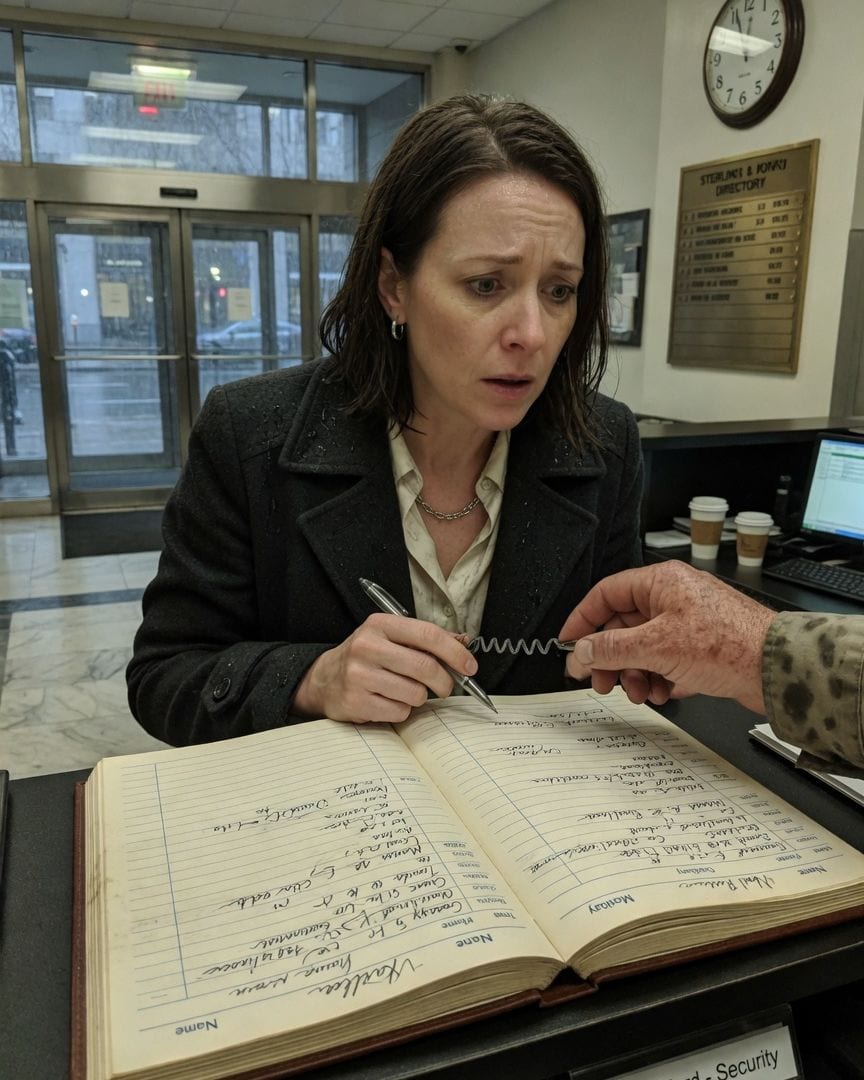
My name was already on the visitor log, signed at 9:04 AM. There were three more entries, all my perfect handwriting, on days I was never there.
I arrived for my 11 AM meeting, ready to sign in at the security desk. But the guard stopped me, pointing to my name already in the visitor log, signed hours earlier on a different floor. It was unmistakably my signature, yet I had just walked in.
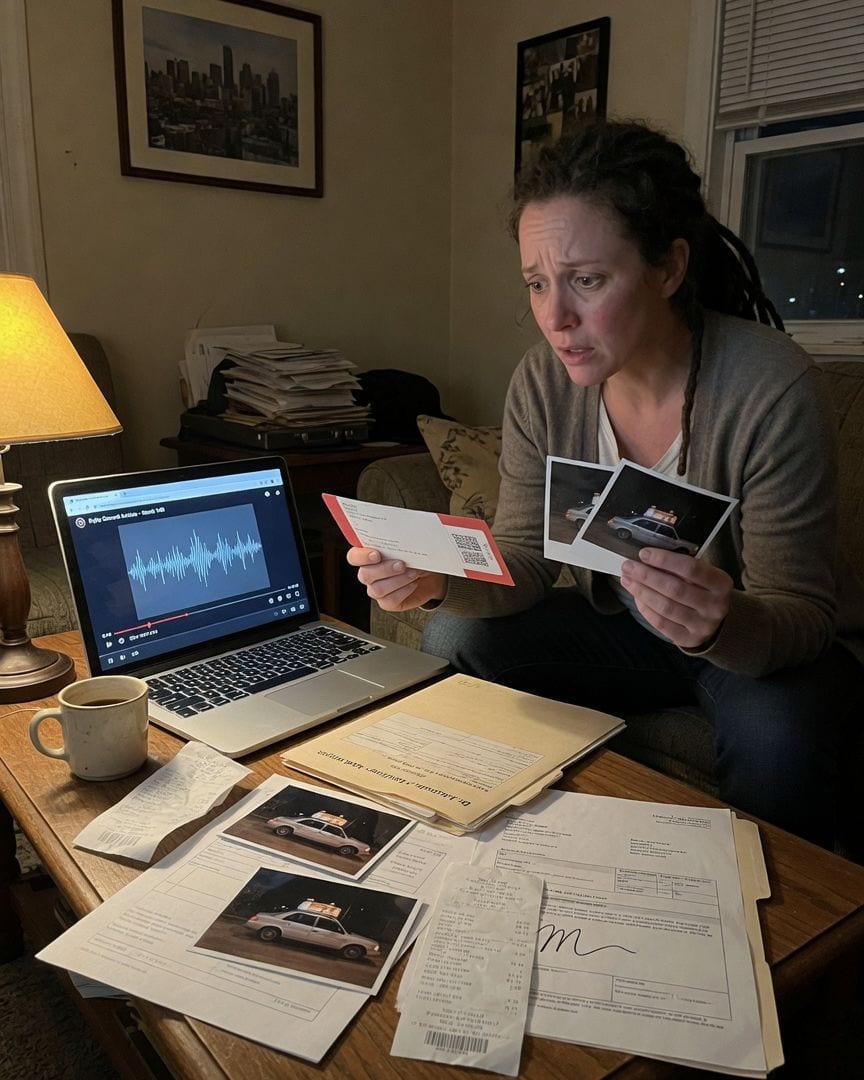
My car ran a red light at 9:41 PM in a town I've never been. The photos show my exact plate, my roof rack. I was speaking at city council, across the state.
A red-light camera ticket arrived for my car, timestamped for a downtown intersection I'd never driven through. But I knew, with chilling certainty, that I was three hundred miles away, speaking at a city council meeting at that exact moment.
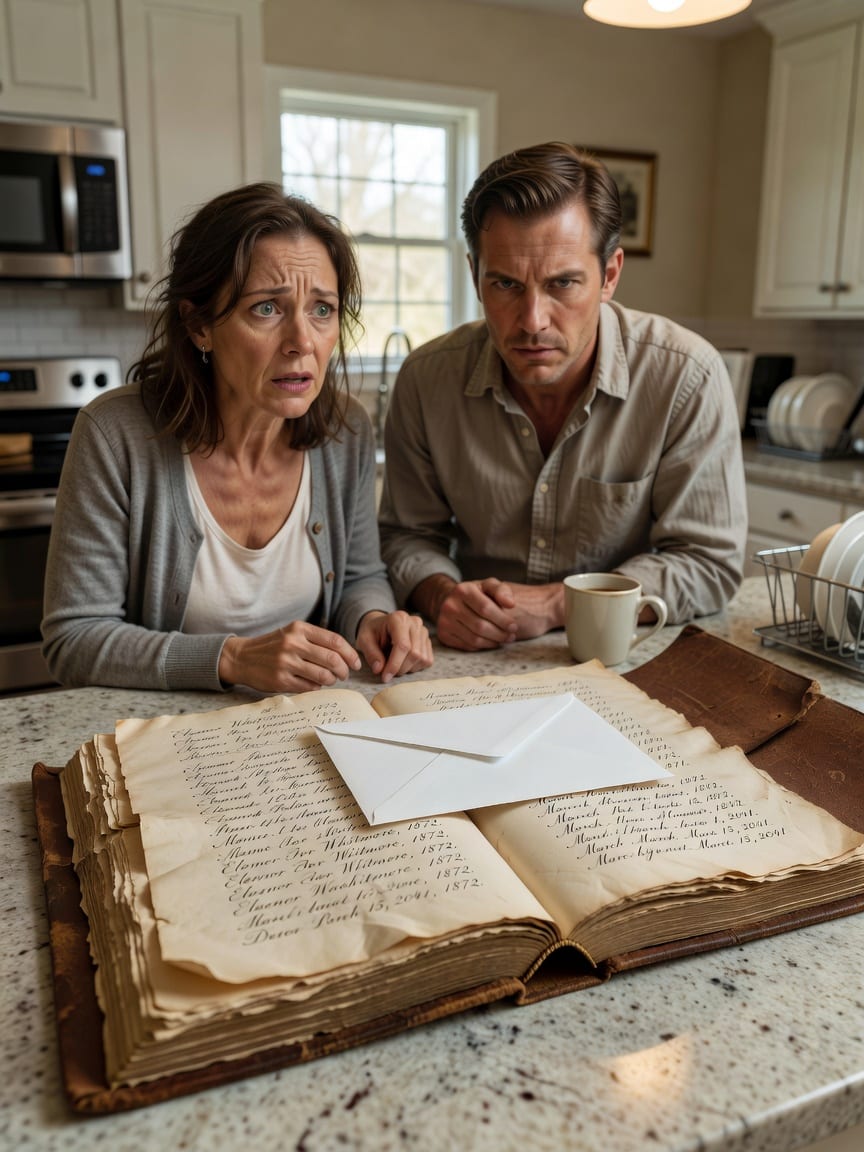
A letter announced a claim settled on my life. I hold no policy. The company vanished in 1971, and the address is now a stretch of highway.
My mailbox held a formal, cream-colored envelope informing me that a life insurance claim on my life had been settled in full. There was just one problem: I held no such policy, and the company named, Fenwick Mutual Assurance, dissolved in 1971. The letter was impossible.
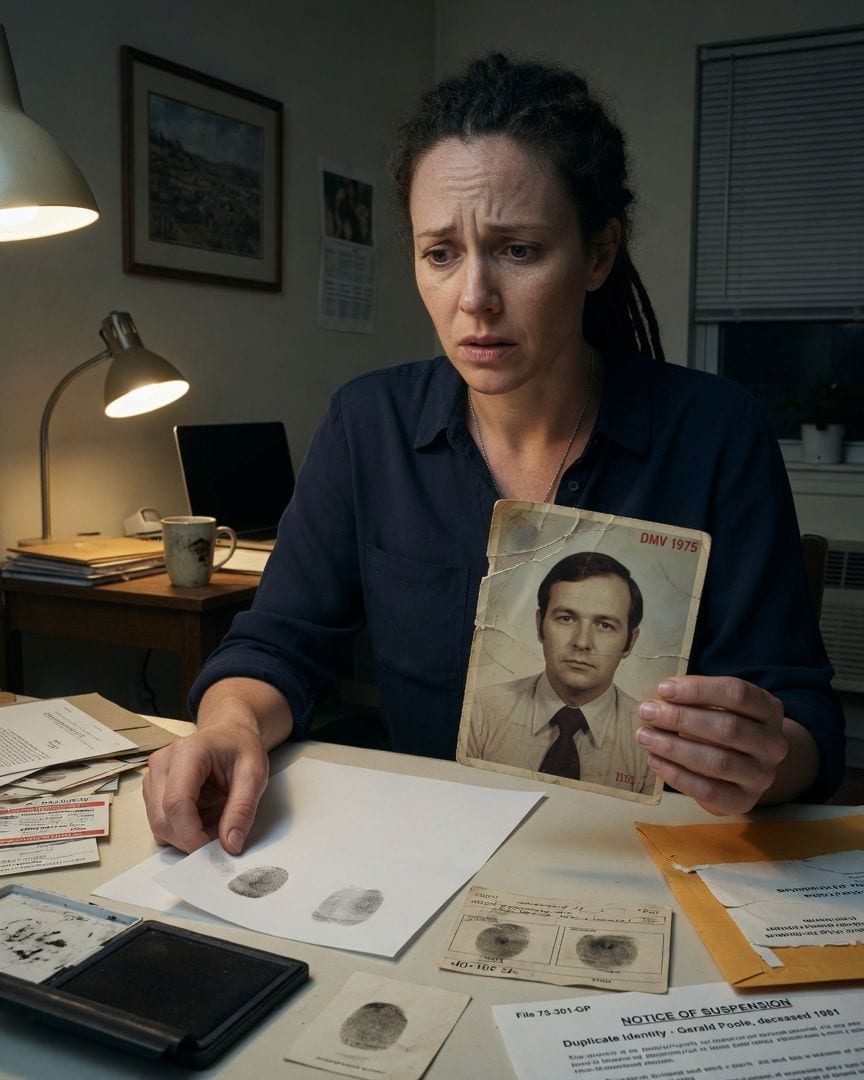
My fingerprints match a dead man's DMV file. They say my face is his. Gerald Poole, licensed 1975, died 1981. The DMV won't renew my license until I resolve his death.
I like things to run smoothly, so a DMV letter about my license suspension was just a nuisance. But it claimed my identity was an exact match for a man declared deceased in 1981, and the archived photo and fingerprints they sent were undeniably my own.
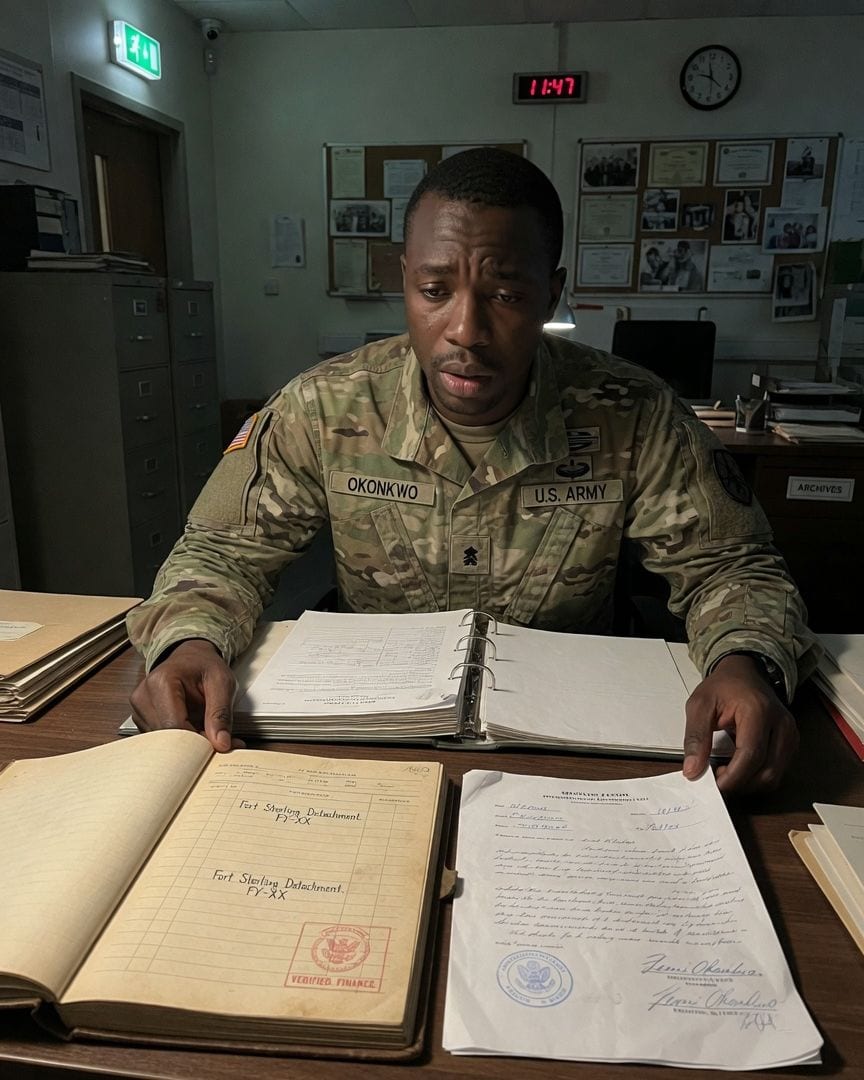
An old deployment ledger bore Specialist Femi Okonkwo's name, but the elegant signature was not his own.
Specialist Femi Okonkwo, an Air Force cargo hauler, stared at an earnings statement that contradicted his entire four-year enlistment. It listed nine months of jump pay and a mountain duty station in Colorado—places he’d never been, operations he’d never completed. Finance and HR records, seemingly impeccable, confirmed every detail of his impossible deployment. But when Femi finally retrieved the physical sign-in ledger, the faded blue ink of his supposed signature revealed the true, chilling discrepancy: the neat, elegant hand on the official document was unequivocally not his own. Who signed for Specialist Okonkwo’s impossible deployment, and why was it so meticulously verified?
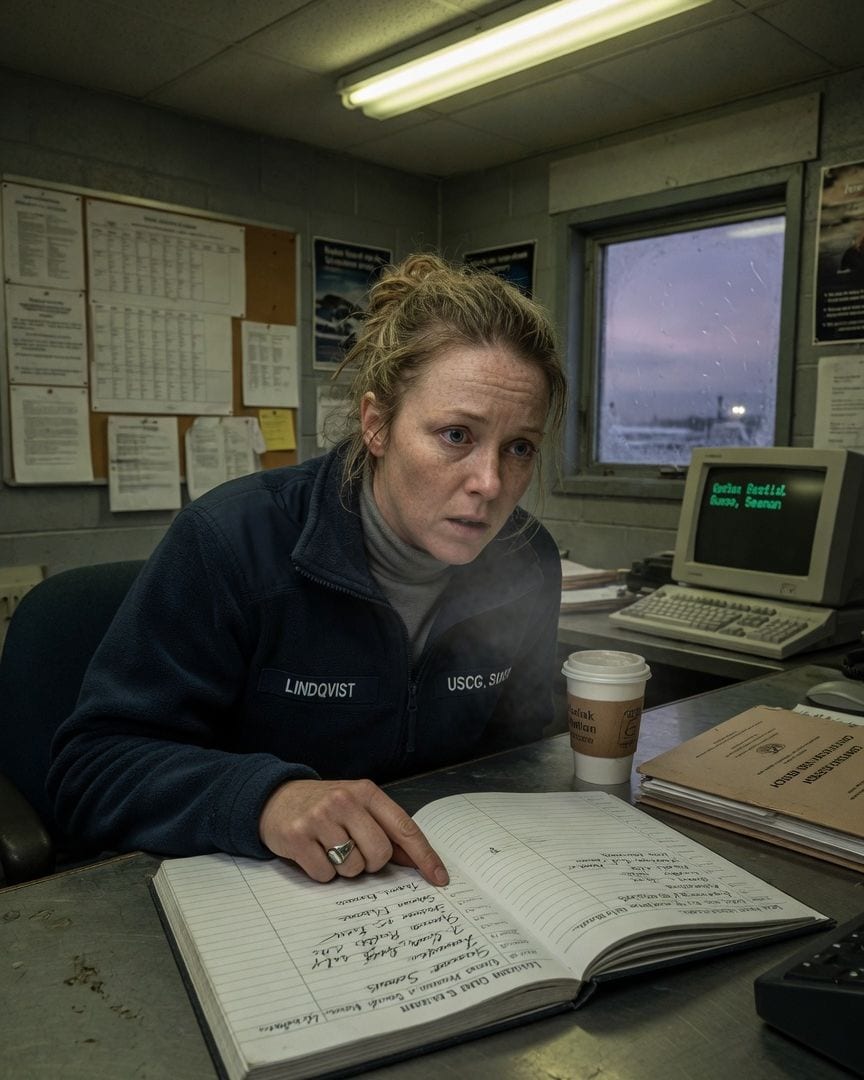
A Coast Guard Petty Officer found her own signature on a manifest for a sailor who didn't exist, with logs tallied for five hands.
Petty Officer Third Class Josephine Lindqvist meticulously checked her Kodiak Coast Guard station’s monthly report. Her cutter, the *Sea Raven*, was a three-hand vessel, and she knew her crew by heart. But there, an impossible name appeared on the manifest: 'Russo, Gideon,' signed by her own hand. The fuel logs and ration counts were tallied for five hands, confirming a terrifying discrepancy. Even her superior found the phantom sailor in the digital system, but Lindqvist knew she had never taken a fourth man, let alone accounted for five.