My silver cup arrived engraved with my name, winner of a 1953 race. I was born decades later.
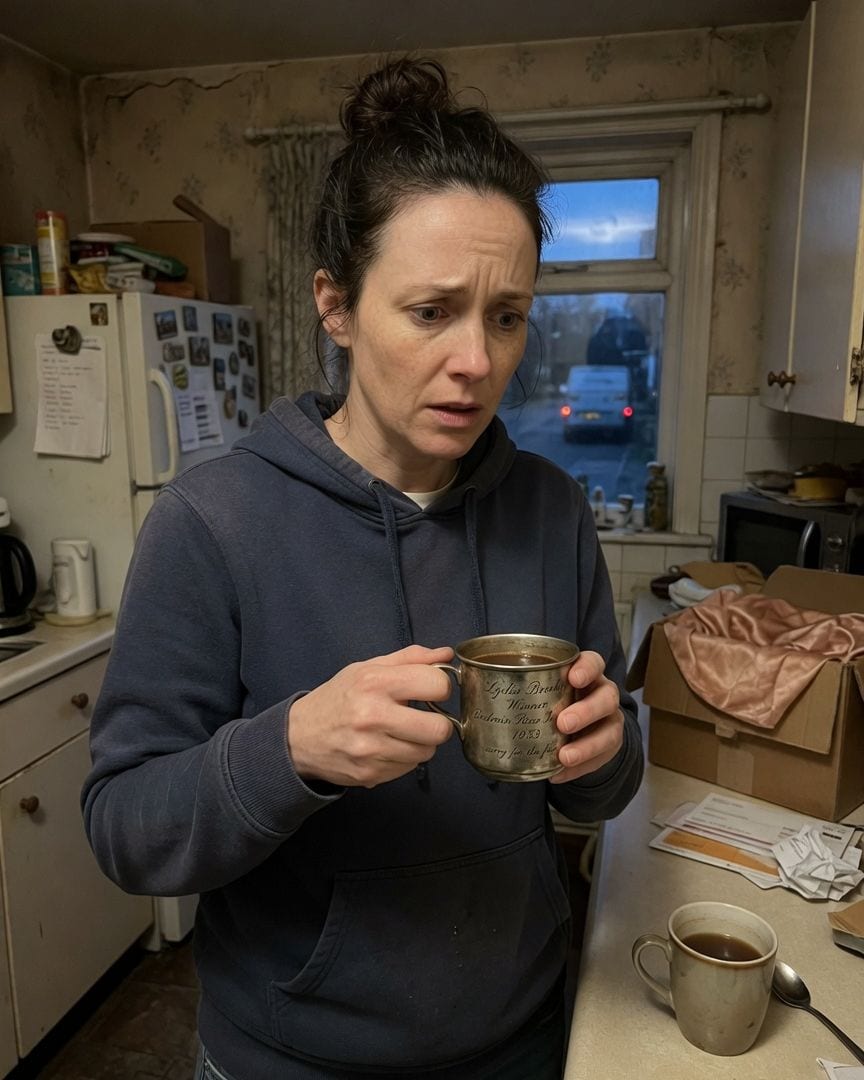
The courier didn't even knock. I was at my kitchen window, making coffee, when I saw him drop the small, heavy box on the doorstep, too quickly, as if it was hot.
He was already jogging back to his van before I could open the door. The box felt surprisingly cold through the packaging when I picked it up.
Inside, nestled on a bed of old, faded silk, was a tarnished silver cup. It was clearly antique, a dull gleam underneath years of neglect. My fingers traced the raised letters on its side. My breath caught.
"Lydia Brooks," it read, etched in a flowing, elegant script. Below that, "Winner, Bodmin Race Meeting, 1953."
My name. Lydia Brooks. Born in 1988. I stared at the date, then back at my name. My coffee, forgotten, started to cool on the counter.
Below the main inscription, in much smaller, almost apologetic letters, were two more words: "sorry for the finish." What did that even mean?
I flipped the cup over, my thumb brushing the rim. On the base, barely visible through the tarnish, was a tiny maker's stamp: "Delaney & Sons, Est. 1901."
The silver felt heavier than it looked, cold and solid in my hands, as if it had been waiting a long, long time.
My first thought was a prank. An elaborate, deeply bizarre prank. Who would even know my name and bother to send something like this? I tried the courier company first.
The tracking number confirmed delivery, but the sender field was blank, just a pre-paid label generated online from an anonymous account. No name, no return address, nothing. It was like the cup had simply manifested.
Next, I turned to the internet. "Delaney & Sons, Est. 1901." A quick search brought up an old digital archive of local newspaper clippings.
The top result was an article from 1960, yellowed and pixelated, announcing the closure of Delaney & Sons, "Jewelers and Engravers, serving the community for nearly sixty years." They'd been gone for over six decades.
How could they have engraved a cup for an event seven years after they’d shut their doors? The lack of an ordinary explanation gnawed at me, a persistent itch under my skin.
Bodmin. The name resonated with a familiar, distant echo. I pulled up Google Maps, tracing a route south. Three days later, I drove to Bodmin, the cup wrapped carefully in a blanket on the passenger seat.
The local history society was housed in a charmingly dusty old building, smelling of old paper and wood polish. I explained my bizarre parcel to the archivist, a man named Everett Sterling.
He was thin, spectacled, with a quiet, observant air about him.
"Bodmin Race Meeting, 1953, you say?" Everett repeated, his brow furrowed as I recounted the tale of the cup. "And your name, Lydia Brooks?"
I nodded. "Yes. I was born in '88. And the engraver's closed in 1960. It makes no sense."
He gave me a strange, almost knowing look, his eyes lingering on mine a fraction too long when I mentioned the date. A faint, unsettling smile played on his lips.
"Well, 'Bodmin Race Meeting' isn't something I immediately recall from that year. Not a well-known sporting event, if it happened at all. But old traditions here... they can be quiet.
Perhaps you should check our local newspaper archives, or the ledgers from that period. You never know what a small town keeps buried."
He pointed me to a dim corner of the room, stacked high with dusty boxes. The cold feeling of the cup still ghosted on my palms.
Days later, my fingers sore and stained with ink, I found it. A leather-bound ledger, thick with age, its cover cracked. 'Bodmin Town Records, 1950-1955,' read the faded label.
I opened it to 1953, flipping through pages filled with meticulous, looping script. Then, a section caught my eye: 'Bodmin Trials: Registrants and Outcomes.'
My heart leaped, then plummeted with a sickening lurch. There, in elegant script, my own name stared back at me: 'Lydia Brooks.' Beside it, not 'Winner,' not 'Participant,' but a chilling entry.
The words seemed to bloom from the page, cold and precise: 'Registered for the Trials – Accounted For.'
The ledger entry clawed at me. 'Accounted For.' It wasn't just a record; it was an explanation, cold and final, for a Lydia Brooks in 1953. But what kind of explanation?
I drove straight back to Everett Sterling at the history society, the ledger page seared into my mind.
"Everett," I said, my voice tight, pushing the open ledger across his desk. "What does this mean? 'Bodmin Trials'? 'Accounted For'? And why is my name here? There was another Lydia Brooks?"
He peered at the page, his expression carefully blank, but I saw a flicker of something in his eyes, a brief tension around his mouth. He cleared his throat. "Ah, yes. The... 'Trials.' A local tradition, you see. Very old.
Not a public event, never was. More of a... local custom." He mumbled, avoiding my gaze, fiddling with a pen on his desk. "Names, you know, they carry history in these parts. Some families are... tied to the land."
"Tied to the land? What are you talking about?" I pressed. "And 'Accounted For' isn't an outcome for a race, Everett. It sounds like a census, or a police report."
He just shook his head, looking away. "Some things are best left... undisturbed, Miss Brooks. The moor has its ways." His evasiveness was infuriating, and unsettling. It solidified the feeling that he knew far more than he was letting on.
I left the history society more confused and agitated than before. That night, I drove to the coordinates Everett had given me earlier, the supposed site of the 'Bodmin Race Meeting.' It wasn't a track, or even a clearing.
It was just an expanse of desolate, windswept moor, gorse and heather stretching endlessly under a low, bruised sky. The silence here wasn't peaceful; it felt held, expectant, like the moor itself was listening.
As I stood there, the wind whipping my hair around my face, my phone buzzed in my pocket. A text notification, from an unknown number. "Check your mail." My mail? Out here? A shiver ran down my spine.
I started back towards my car. Tucked under the wiper blade, a plain brown envelope, thick and stiff. The postmark blurred: "Bodmin Moor." Not a town, not a post office, but the moor itself.
It contained a single, dried sprig of gorse, brittle and sharp, and nothing else. No words, no return address. The silence of the moor deepened, now a suffocating weight.
My research continued, but my agitation grew. I kept trying to find a mundane explanation for the cup, for the ledger, for that goddamn letter, and failing. The lack of normal answers was becoming the most terrifying thing.
Then I started noticing the car. A dark, older model saloon, nondescript, parked a few streets from my house. Sometimes it was opposite the coffee shop I frequented, sometimes near the library. Always empty, always just... there.
It was never the same driver, or I never saw one. Just the car. It was subtle, easily dismissed as coincidence, but after the third time, the pattern became undeniable.
A cold prickle spread across my skin; I was being watched.
One evening, after a late visit to the library, the car was parked across the street from my house again. I hurried inside, fumbling with my keys, trying to tell myself it was nothing.
But as I opened my car door the next morning, another envelope was tucked into my wiper blade. This one contained a crude, almost childlike drawing of the silver cup, sketched in a thick, dark pencil.
Below it, in shaky, block letters, a single word: "Wait."
The feeling of being watched intensified, blooming into outright paranoia. My heart hammered against my ribs. I tried to call the police, but what did I say?
"Someone sent me a mysterious cup, then a weird letter with a twig, and now a drawing of the cup with one word, and I think a car is watching me?"
Without a concrete threat, they dismissed my concerns politely, but firmly. "Perhaps you're just feeling a bit stressed, Miss Brooks."
Stressed wasn't the word. Terrified was. I knew I couldn't just "wait." Not anymore. I needed answers, real ones. Everett Sterling was the only lead I had left.
The next morning, I confronted him, my voice shaking with a mix of fear and cold determination. I slapped the cup down on his desk, the tarnished silver clanking against the wood.
Next to it, the open ledger, showing my name. And then, the crude drawing from the letter.
"No more evasions, Everett," I said, my voice barely a whisper. "What is this? What does 'Accounted For' really mean for the other Lydia Brooks? And why are people watching me? Why am I getting these letters?"
He flinched, his composure finally cracking. He looked from the cup to the drawing, then back to the ledger. He sighed, a deep, weary sound, and removed his glasses, pinching the bridge of his nose.
The faint scent of dust and old paper seemed to thicken around us.
"The 'Bodmin Race' isn't a race, Lydia," he said, his voice low, resigned. "It's a Trial. A generational one. An obligation. Tied to certain family names, families with deep roots here on the moor."
He looked directly at me, his eyes now holding a profound, ancient sorrow. "The Brooks name is one of them."
He explained that 'Accounted For' wasn't a census mark. It meant the 1953 Lydia Brooks – your distant relative, I imagine – she disappeared on the moor. Never returned. Presumed to have failed the Trial.
"Sorry for the finish," he repeated, looking at the cup, "is a lament. Not an apology from the sender, but a regret for what happened. For her failure."
"A failure?" I whispered, my voice hoarse. "What kind of failure?"
Everett leaned forward, his voice dropping further. "I am... we are... a network of keepers. Locals. Our families have maintained this tradition, ensuring the cycle continues. We observe. Sometimes, we guide. We ensure the summoned names... respond."
He gestured to the cup. "This is a summons, Lydia. The letters are attempts at contact, at preparation. To warn you. For what's coming. A finish... you might not survive."
The room seemed to shrink around me. The air grew heavy, thick with the weight of generations, of something unseen and terrible on the moor. Everything clicked into place, not reassuringly, but terrifyingly.
The dead engraver, the empty moor, the 'Accounted For' ledger. It was all real. And it was all for me.
I drove home in a daze, the words 'summons,' 'Trial,' and 'failure' echoing in my head. The silver cup sat on my kitchen table, no longer a curious antique, but a menacing, tangible threat.
Its tarnished surface seemed to absorb the light, a black hole of dread.
As I stared at it, my phone rang. The number was blocked. My heart hammered against my ribs, a frantic bird trapped in a cage. My hand trembled as I reached for it, hesitating for what felt like an eternity.
Hesitantly, I answered.
A calm, resonant, elderly voice, distinct from Everett's, filled the silence. "Lydia Brooks." The sound of my full name, spoken by this unknown voice, sent a jolt of ice through me.
"You've been asking too many questions about the finish, haven't you? It's time you understood your part."
The voice on the phone was clear, unhurried, almost serene. "My name is Maureen Granger," she said, before I could even find my voice. "Everett is a good man, but he tends to overcomplicate things. He means well, of course.
He wants you to understand." She paused, and I imagined her smiling, a calm, unsettling smile. "But there are some things you simply cannot intellectualize, Lydia."
Maureen Granger, as it turned out, was the true head of the 'keepers.' Her voice carried an authority that Everett's had lacked, a chilling matter-of-factness that bypassed my fear and went straight to a cold dread.
She calmly explained the 'Trial' wasn't just a tradition; it was an ancient pact. A cyclical appeasement to something deep within the moor, something that demanded a balance. Certain family lines, she told me, were 'marked.'
The Brooks name was one of the oldest.
"The cup is the formal summons," she said, her voice like dry leaves skittering across stone. "A physical token, a call that cannot be ignored.
The letters you received were initial guidance, a way to gently nudge you towards your destiny. And this phone call is the final, direct instruction."
I could barely breathe. "My destiny? What happened to the other Lydia Brooks? The one from 1953?"
"She tried to refuse," Maureen answered, no hint of judgment or sadness in her tone. "She thought she could simply leave, ignore the summons. But the moor... the moor reclaims its own. She was 'Accounted For.'
Her 'finish' was a failure to appear, to accept. A reclamation." The words were like tiny, sharp stones rattling in a tin can. "The 'sorry for the finish' isn't an apology for your impending doom, Lydia.
It's a lament for their failure. For those who didn't understand, or refused to comply."
She then laid out the chilling pattern. The 'Trials,' she explained, occurred roughly every seventy years. The old ledgers, the ones I had been sifting through, held the proof.
A Brooks name had appeared four times in the last three centuries, always roughly 70 years apart. Each entry beside their name? 'Accounted For.' My name, my very existence, was part of a terrifying, preordained cycle.
Armed with this horrifying truth, a desperate resolve ignited within me. I couldn't simply "wait." I couldn't be "Accounted For." I started packing a bag, shoving clothes, my passport, my wallet into a duffel.
I booked the first available train ticket to anywhere far away, anywhere that wasn't Bodmin. I was fleeing.
But as I drove towards the station, my hands tight on the wheel, another envelope appeared. This time, it wasn't under the wiper. It was simply on the driver's seat, despite my car being locked. A final 'Letter From Nowhere.'
Inside, a single, tarnished silver coin, ancient and heavy. On one side, barely visible through the grime, my name was faintly etched: 'Lydia Brooks.'
A cold certainty settled in my gut. Escape was futile. The 'Trial' wasn't a place I could run from. It wasn't a finish line I could avoid.
It was a state of being, a connection to the moor that ran deeper than I could ever comprehend. I wouldn't escape it. I had to face it.
I changed course, turning my car around, away from the station, back towards Bodmin Moor. Towards the desolate field. The wind howled as I parked, a mournful, hungry sound. The moor stretched endlessly before me, an open, waiting maw.
I walked to its center, the silver cup clutched in my hand, the tarnished coin burning in my pocket. I placed the cup on the ground, then the coin beside it. I didn't know what would happen.
I only knew I refused to run. I stood, facing the unseen presence, the dread a cold, solid weight in my gut.
I survived the moor. How, I never fully understood. I returned, changed. The 'keepers' left me alone, for now. The dark car that had stalked me was gone.
Everett Sterling resigned from the archives, citing health reasons, and Maureen Granger's phone number was disconnected, her voice replaced by a sterile, automated message.
The silver cup, however, remained on my mantelpiece, a stark, silent reminder of the bargain struck, the cycle temporarily appeased.
Life returned to a semblance of normal, but the quiet dread never fully lifted. Every parcel delivery made my heart race. Every unknown number on my phone screen sent a chill down my spine.
I still find myself checking the postmark on every letter, just in case.
If this one got to you
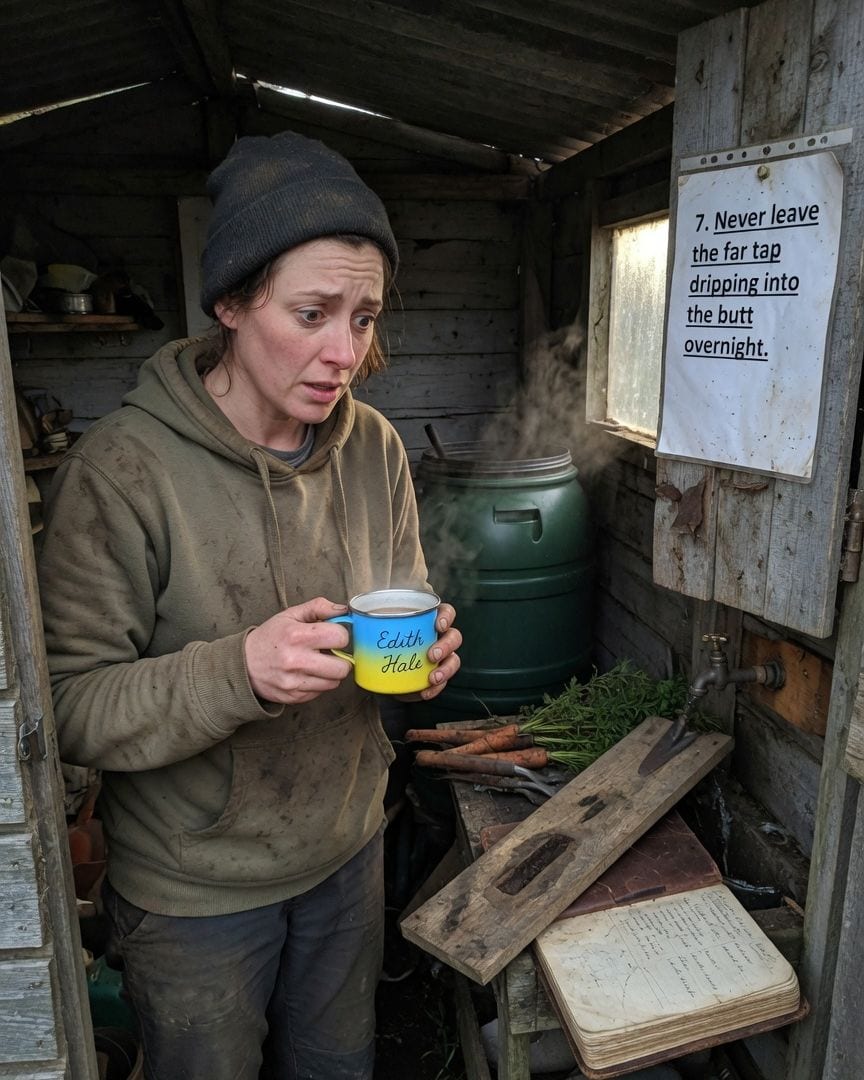
The one night I left the tap dripping, my allotment water butt was full to the brim and warm to the touch — with a child's unrusted tin cup floating on top.
Moving to Blackwood, I hoped my allotment would be a fresh start. But the shed's rulebook warned, 'Never leave the far tap dripping.' One morning, my water butt was full and steaming, an unnerving warmth rising from it. Inside, a child's tin cup floated, unrusted, etched with the name 'Edith Hale'.
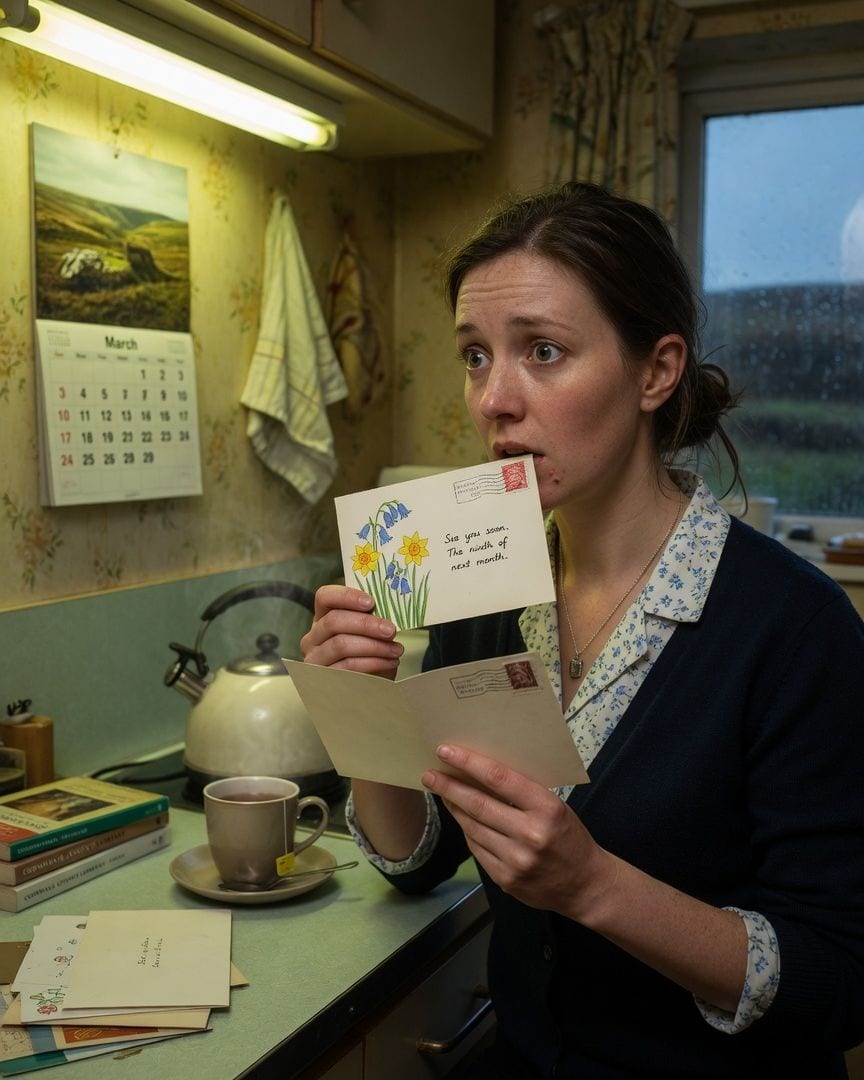
My get-well card arrived from a field, postmarked from a sanatorium that burned down in 1963. It wished me well for an operation I've never had, scheduled for next month.
I was just making tea on an ordinary Tuesday when a strange letter arrived. It was postmarked from Treneglos Sanatorium, a place that burned to nothing over sixty years ago, and contained a get-well card for an operation I'd never had. My research into this impossible message then led me to an old patient register where I found my own name, dated 1958.
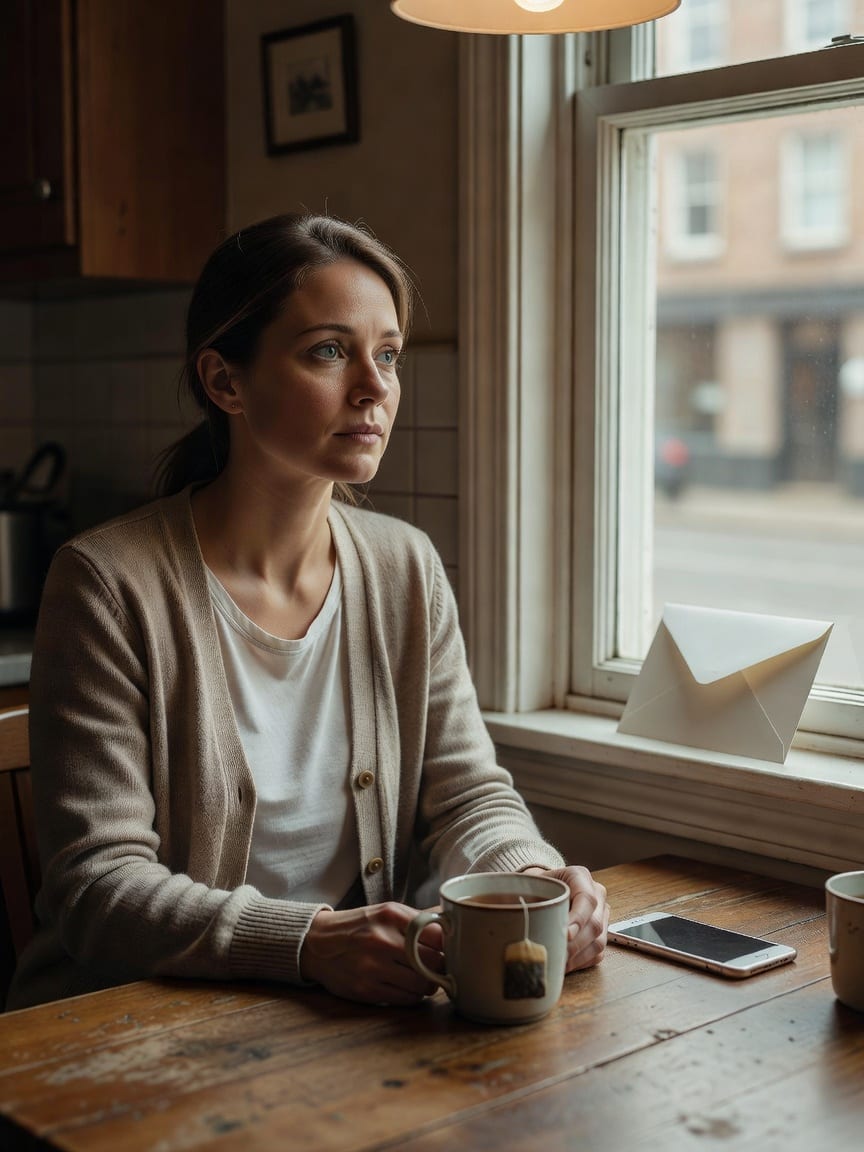
My taxi driver knew my name before I spoke, then apologized for the flight I was going to miss. I was arriving. The cab's plate was scrapped four years ago.
After a strange taxi ride, I received an unsettling birthday card addressed to me. Its return address listed 'Old Mill Road Field,' an empty lot where a mill once stood, and it was postmarked locally. The card arrived four months before my actual birthday, sparking a cold dread I couldn't ignore.
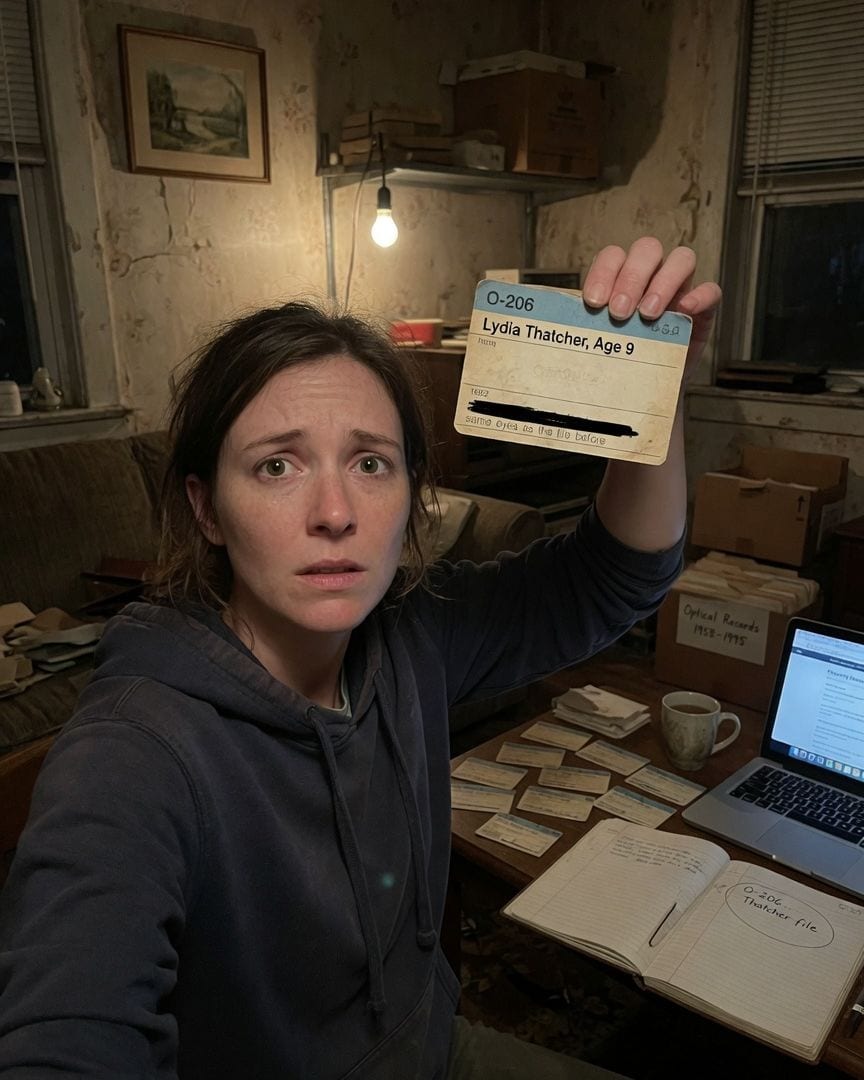
My own optical card is dated 1962, with my name on it. I wasn't born until 1993.
Sifting through old patient files from my former optical practice, I found my own O-206 card. It had my name, Lydia Thatcher, and my current home address printed on it. But the card was dated 1962, decades before I was even born, and a redacted note mentioned 'same eyes.'
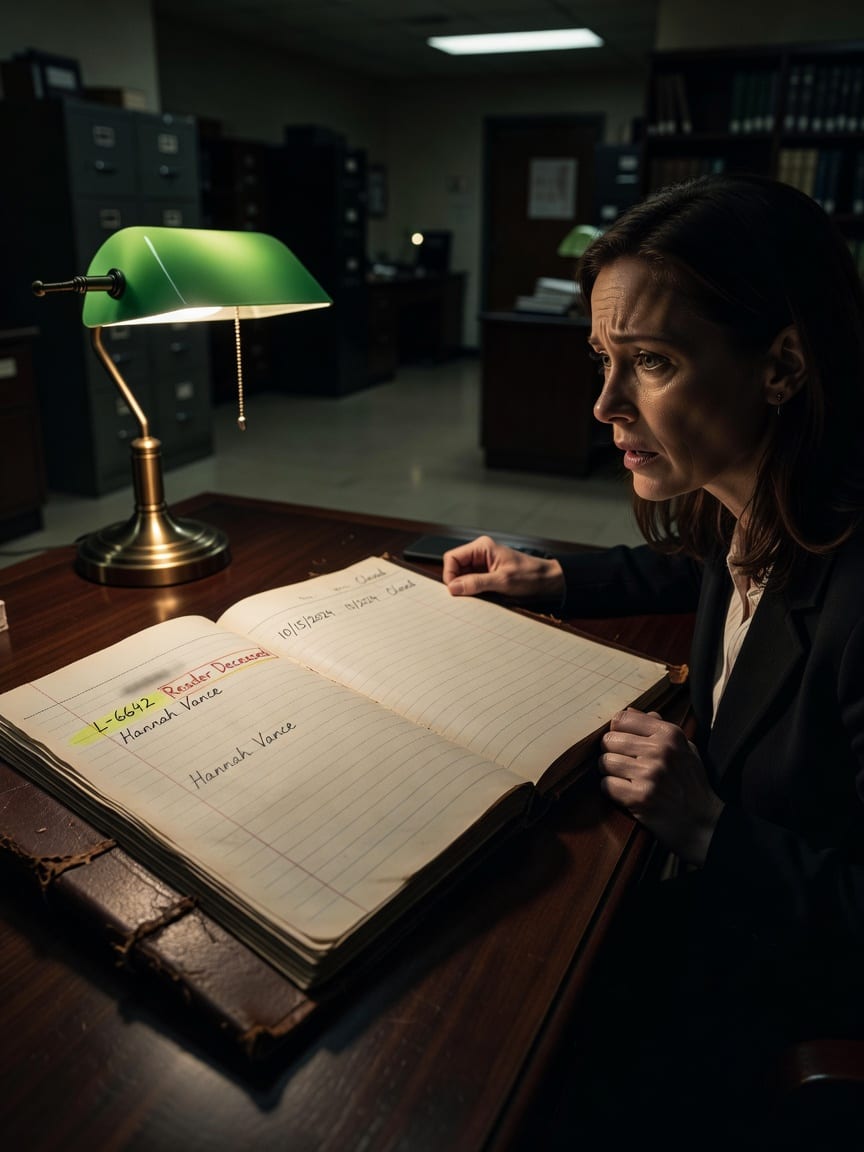
My library card number L-6642 was issued to me at seven — and the ledger shows that number has marked a reader 'deceased' every twelve years since 1949.
Returning my late father's library card to the old town library felt like a small act of closure. But the senior librarian's ancient ledger revealed a chilling pattern of 'reader deceased' entries tied to specific card numbers and borrowed books. My unease turned to cold dread when I secretly found my own name penciled in, marked for a future 'reader deceased' entry.
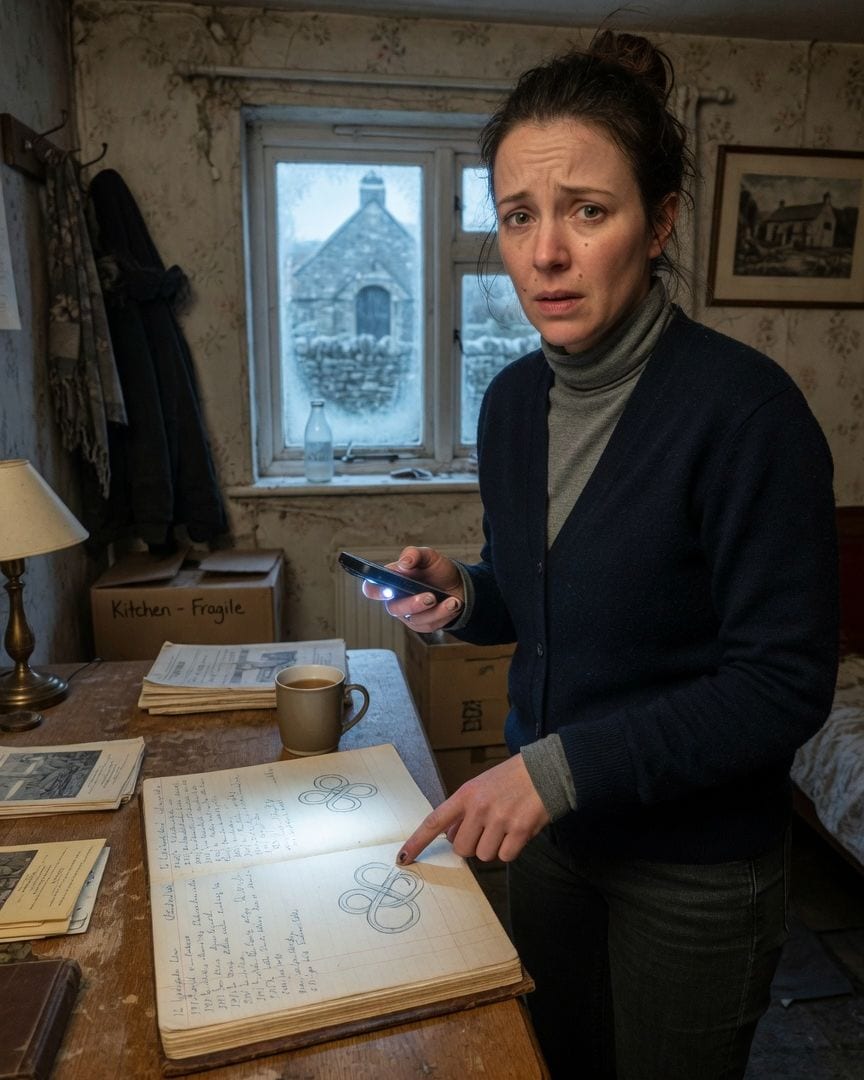
Milk appears daily by my lychgate. The dairy closed in '79. My address is handwritten into their old delivery book, starting the day we moved in.
Moving to Blackwood Creek, I loved the quaint charm, especially the unexpected morning milk delivery to my lychgate. But when I mentioned it to Eleanor at the village shop, her smile froze. She told me Willow Creek Dairy closed decades ago, in '79.