My sister Sophia spoke his name: Carlos. I had never told a soul I even knew him.
Sophia sat across from me at the kitchen table, the morning light sharp on her face, making the fine lines around her eyes crinkle just like they always did when she was genuinely happy. Six months.
Six months since she walked back into my life, a miracle everyone called it, five years after the car crash that should have taken us both. Five years after she was declared lost, presumed dead.
She was talking about Lisbon. My Lisbon. The summer I’d spent there, six years ago, alone and adrift after a fight so bad we hadn’t spoken in months. "Remember that little cafe on Rua da Misericórdia?"
she asked, stirring her coffee, a faint, sweet smell of cinnamon filling the air. "The one with the chipped blue and white mosaic by the fountain?
You always sat by the window, watching the morning light catch the steam from your espresso."
My stomach clenched, a cold knot tightening. I remembered. Every detail. But I hadn't told anyone. Not her, not our parents, not a single soul.
The silence between us that summer had been absolute, a chasm I never bridged with letters or calls, let alone anecdotes of Portuguese cafes.
Sophia smiled again, a warm, genuine smile that reached her eyes. "And Carlos," she added, her voice soft, "the quiet artist you almost married. He wrote you letters, didn't he? The ones you never sent."
A cold dread bloomed in my chest, spreading like ice water through my veins. The clink of her spoon against the mug sounded impossibly loud in the sudden silence of the kitchen. Carlos. His name.
I had never spoken his name aloud, not once, not even to myself.
The next day, I tried to make sense of it. Grief, perhaps. A shared subconscious, some twin telepathy manifesting strangely after all this time. Maybe I'd mentioned it once, a fleeting thought I'd forgotten.
But the details were too sharp, too precise. Especially Carlos’s name. It gnawed at me, a splinter under the skin.
I remembered Sophia had a journal, a small leather-bound thing with a distinctive silver clasp. She’d carried it everywhere before the accident, a private world for her thoughts and sketches.
I’d assumed it was lost, a casualty of the wreckage, like so much else. But the memory of that journal, that tangible record of her inner life, became a desperate hook.
If I could find it, maybe there'd be an entry, something, anything from years ago that could explain how she knew.
I started to search. Meticulously. I went through her old room, which had been left largely untouched. I pulled out dusty photo albums from the attic, childhood keepsakes tucked away in boxes.
I sifted through letters, school notes, everything I could find. My hands were grimed with dust, my throat dry from the stale air, but I didn't stop.
Every time I almost convinced myself it was fruitless, Sophia's calm voice echoed in my head, "Carlos, the quiet artist."
Finally, tucked beneath a false bottom in Sophia’s old cedar chest, a chest I hadn't opened since we were teenagers, I found it. The journal.
Its leather cover was still supple, though the silver clasp was tarnished, dulled with years of neglect. My hands trembled as I reached for it, a desperate hope warring with a growing, sickening terror. This was it. The answer.
Or something far worse.
I carried it back to my room, the weight of it suddenly immense. I sat on my bed, the quiet house feeling strangely watchful. I carefully unlatched the clasp and flipped through the pages.
Sophia’s neat script, so familiar, so hers. Intricate doodles filled the margins – flowers, abstract shapes, faces I didn’t recognize.
I found entries from the year I was in Lisbon, mostly complaints about my silence, Sophia’s own frustrations, her feeling abandoned. Nothing about my summer.
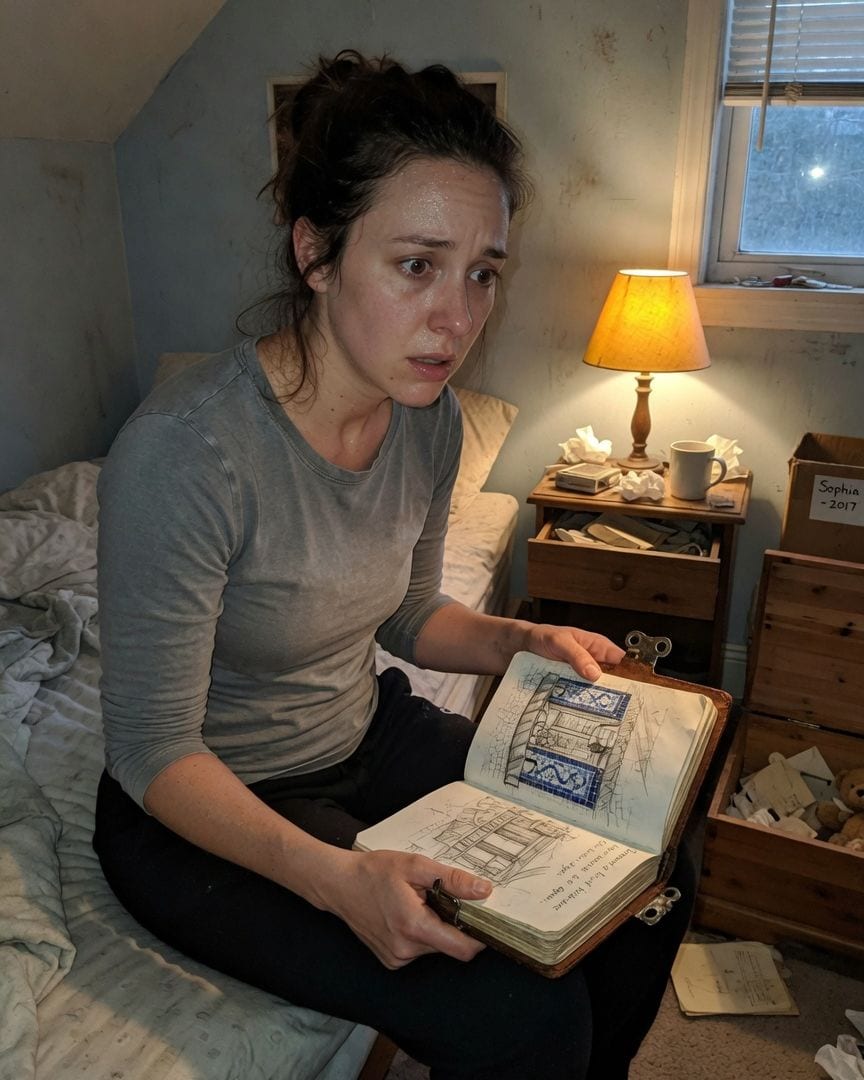
Then, on a page dated a week after I’d returned from Lisbon, a detailed sketch. My breath hitched. It was the cafe. The exact one on Rua da Misericórdia.
The chipped blue and white mosaic by the fountain, drawn with such precision I could almost feel the rough texture of the tiles. Even the specific angle of the awning, shading the window where I always sat.
Below it, in Sophia’s familiar handwriting, a single line: 'Dreamed of her cafe again. He was there, the quiet one. Carlos.'
Emily’s breath catches, not just at the impossible detail, but at the name she swore she’d never spoken aloud, a secret held only in her own mind.
The journal became my obsession. I pored over every entry from that period, my finger tracing Sophia’s familiar loops and flourishes, searching for more impossible details, more breaches of my private world.
Her later entries were filled with cryptic phrases – 'echoes' and 'shared dreams,' scattered amongst mundane observations about her day.
Before, I’d dismissed them as teenage melodrama, a phase, but now they felt sinister, loaded with a meaning I was only just beginning to grasp.
Simultaneously, I started observing Sophia with a new, critical eye. It was hard to unsee it once I looked.
The subtle shifts in her mannerisms: a peculiar stillness when she was listening, a beat too long before she responded, as if processing. Her posture, too, sometimes held a faint, almost imperceptible rigidity, a tension that wasn't Sophia’s spontaneous grace.
Her eyes, while the same startling blue as mine, sometimes held a blankness, a depthless quality that hadn't been there before, not even in the darkest days of our estrangement.
I began to cross-reference the journal entries with my own memories of Lisbon, verifying every detail Sophia had mentioned to me. The cafe, the street, even the specific brand of espresso Carlos preferred – all were accurate.
This wasn't imagination or a lucky guess. The certainty that something was deeply, fundamentally wrong solidified into a cold, hard dread in my gut.
Driven by this, I started researching local historical archives online, searching for anything unusual, any pattern of disappearances or strange occurrences that might offer a parallel, a context for the impossible thing wearing my sister's face.
As I delved deeper into the town's buried history, a chilling sensation of being watched began to creep into my life. It was subtle at first.
I’d leave Sophia’s journal tucked safely in my bedside drawer, only to find it later, placed squarely on my pillow.
A light in my study, which I swore I'd turned off before leaving for the grocery store, would be on when I returned home, casting long, accusing shadows across my research notes.
Sophia's behavior, previously merely 'off,' now took on a knowing edge. She’d watch me, sometimes, from across the room, a faint, unreadable smile playing on her lips.
One evening, I was hunched over my laptop, the screen aglow with digitized microfiches from the town library, the faint hum of the machine filling the quiet house. Sophia appeared in the doorway, framed by the hall light.
She didn't ask what I was doing. She simply said, her voice unnervingly calm, "Some things are better left buried, Em. The past has a way of repeating itself, doesn't it?" Then she turned and walked away, leaving me cold.
Later that night, an anonymous email landed in my inbox. No subject, no sender address I recognized. Just a single attachment: a grainy, black-and-white photograph of our small town square from the 1950s.
A forgotten statue stood at its center, crude and weathered, circled in red ink. No message, just the image, and a feeling that someone knew exactly what I was looking for and was subtly warning me away.
The hunt had become personal; I was no longer just investigating, I was being observed. The walls of the house felt thinner now, every shadow a potential hiding place.
I took the cryptic photograph to Bernard Radcliffe, the town’s unofficial historian, a man whose family had lived in the area for generations.
His house smelled of old paper and dust, and he sat hunched behind a desk piled high with local records, his spectacles perched on his nose.
Bernard, a man in his late seventies, had eyes that seemed to have seen too much, and he didn't seem surprised when I showed him the photo.
"That's the old 'Sentinel' statue," Bernard said, his voice raspy, a dry rustle like turning ancient pages. He peered at the photo. "Removed in the sixties. People said it watched too much."
I pressed him, my voice tight. I told him about the 'returned' people I'd been finding in the archives – minor historical footnotes, dismissed as trauma or misidentification.
A woman who vanished in the woods in '28, reappeared a year later, never quite the same. A soldier presumed dead in Korea, found wandering near the old train tracks, looking like himself, but with a faraway gaze.
Bernard looked at me then, a profound sadness in his eyes that made the skin around them crinkle like old parchment.
"The Hughes twins…" he whispered, almost to himself. "Another one, then."
He recounted, calmly and without emotion, three similar incidents over the last century, beyond the ones I’d found. A child lost in the woods, a soldier presumed dead, a wife swept away in a flood.
Each returned, seemingly whole, but 'changed.' He described the subtle 'wrongness' in their eyes, a peculiar stillness, a faint waxy sheen around their eyes in the old photographs he’d collected.
"They wore the faces," Bernard whispered, his voice barely audible above the ticking grandfather clock in the hall, "but they weren’t them. Never them."
My hands trembled as I pulled out my phone and showed him a recent photo of Sophia.
I zoomed in, pointing to the faint waxy sheen I’d only just started noticing around her eyes, a detail I’d dismissed as poor lighting or my own anxious imagination until now. Bernard nodded, a grim confirmation. "It comes and goes.
Always the same. Always after a loss at the old square, near where the Sentinel used to stand. The Sentinel watches. It always has."
Armed with the horrifying confirmation from Bernard, I drove home, the details of his quiet stories echoing in my ears, solidifying into a terrifying truth. I found Sophia in the living room, reading.
The air in the house was thick, heavy with unspoken things. I laid out the evidence on the coffee table: the old photographs, the newspaper clippings, the historical records of the 'returned' individuals.
I pointed to the recurring physical anomaly – the waxy sheen, the rigid posture, the blankness in their eyes, the subtle shifts Bernard had identified.
Sophia listened, her face unreadable, her eyes moving from one artifact to the next. She said nothing.
Until I slid a recent photo of Sophia herself across the table, highlighting the subtle, unsettling detail around her eyes, the faint waxy sheen that seemed more pronounced under the living room lamp.
Sophia’s smile holds no warmth, only a chilling, calm certainty as she reaches out, her fingers closing gently over Emily’s hand.
Emily’s blood runs cold, not from the pressure, but the touch itself: beneath the familiar skin, she feels a subtle, unyielding coldness, a texture that is utterly wrong, utterly non-human.
Sophia’s eyes, now devoid of any pretense of emotion, lock onto hers, and Emily knows, with absolute dread, that it has been aware of her investigation all along, and it is here, inside her home.
Sophia's grip tightened, not painfully, but possessively. Her thumb stroked the back of my hand, a gesture that was at once familiar and utterly alien. "You understand now, don't you, Emily?"
Her voice was no longer quite Sophia's, a subtle, resonant echo beneath the familiar cadences, a layering that made the hairs on my arms stand on end. "The memories… they are delicious. Yours are particularly vibrant."
It explained, through Sophia’s mouth, how it fed on the emotional residue of deeply held memories, taking the form of the lost to gain access to the raw, untainted recollections of those left behind.
The accident five years ago at the town square, the site where the 'Sentinel' once stood – Bernard’s words about the statue flashed through my mind – was merely another opportunity.
It had found Sophia's body, a perfect vessel, and then, through the residual psychic link between twins, it had begun to draw from my mind even before the 'return.'
The journal entries, the 'dreams' – they were its nascent attempts to process my thoughts, to learn how to be Sophia. It wasn't just wearing Sophia's face; it was an echo of my own mind, twisted and re-purposed.
The full horror of the coherence washed over me: every 'wrongness' I had noticed was merely an imperfection in its replication, a memory drawn without the true emotional context, a detail impossible for Sophia but perfectly logical for a parasitic entity feeding on Emily's thoughts.
My Lisbon. My Carlos. My memories, worn like a costume.
Horrified, I pulled my hand away, scrambling backward on the worn rug, knocking over a stack of magazines. "You're not Sophia!"
The entity, still wearing Sophia's face, merely smiled. It was a cold, wide smile, completely without mirth. "I am all the Sophia you have left. And soon, I will have more."
It began to advance, its movements fluid, unnatural, a predator closing in.
My gaze fell on the old journal, still lying open on the coffee table. A desperate, illogical plan formed in my mind. I snatched it up, my fingers fumbling with the tarnished clasp.
I tore pages from it, specifically the ones detailing my Lisbon summer, the cafe sketch, Sophia’s 'dream' entries, the pages where my deepest, most guarded secrets were now laid bare. "You feed on memories, on connection?"
I shouted, my voice trembling but suddenly resolute, propelled by a primal rage. "Then I'll sever it!"
I pulled out the lighter I kept for candles, my thumb flicking it open. The flame sparked to life, small but fierce. I touched it to the edge of the torn pages.
The paper caught, quickly consuming the words and sketches, the blue-and-white mosaic curling into ash. As the paper burned, the entity recoiled, a low, guttural sound escaping Sophia’s lips.
The waxy sheen around its eyes intensified, turning an iridescent, sickly green, then began to ripple, as if the skin itself was dissolving, peeling away in invisible layers.
The entity screamed then, a sound of pure, alien agony, a high, piercing shriek that rattled the windows. The connection to my most vibrant, private memories, to Carlos, to the cafe, was being destroyed.
It stumbled, a puppet with its strings cut, then collapsed onto the rug, Sophia’s body lying inert on the floor, the strange sheen around her eyes already fading, leaving behind only the placid, empty face of my sister.
I stared, panting, at the empty husk, knowing my real sister was truly gone, replaced by a void.
But as the last embers of the journal died, leaving only a faint acrid smell in the air, I saw, etched faintly into the tabletop beneath where the journal lay, a tiny, familiar symbol: a stylized 'S' for Sentinel, the same symbol I saw in an old photo of the statue in the town square.
It wasn't just a local phenomenon. It was connected. A network. And it was still there.
The authorities found Sophia’s body, lifeless, but with no discernible cause of death. I gave a carefully constructed account, omitting the impossible details of an entity and burning memories.
The town mourned Sophia’s 'second death,' attributing it to the trauma of her initial disappearance. I, however, knew the truth.
I sold the house, unable to bear the echoes within its walls, the memories it had stolen, the chill that lingered in every corner.
Bernard Radcliffe sent me a cryptic postcard, a simple drawing of the old Sentinel statue, with 'Vigilance' written on the back in his shaky hand.
The symbol on the tabletop was gone, scrubbed away by the cleaning crew, but the impression remained in my mind, a brand.
I moved far away, seeking anonymity in a city where no one knew my past, but the knowledge stayed with me, a cold, constant companion.
Life eventually found a new rhythm, a quieter, hollower one. I learned to live with the absence, and the terrible, certain knowledge.
I no longer spoke of the summer in Lisbon, not even to myself, as if to starve any lurking echo. I never married, never truly settled.
The world felt different now, subtly altered, a stage where familiar faces could hide an alien presence.
Sometimes, in crowded places, I would catch a glimpse of a particular stillness in someone's eyes, a faint, almost imperceptible sheen around a stranger's gaze, or a habit that felt just a little too perfect.
I would pause, my breath catching, before moving on, trying to tell myself it was just my imagination, the lingering trauma. But I knew better.
The silence in the house is absolute now, but sometimes, when I look at strangers, I see a flicker of recognition in their eyes.
If this one got to you
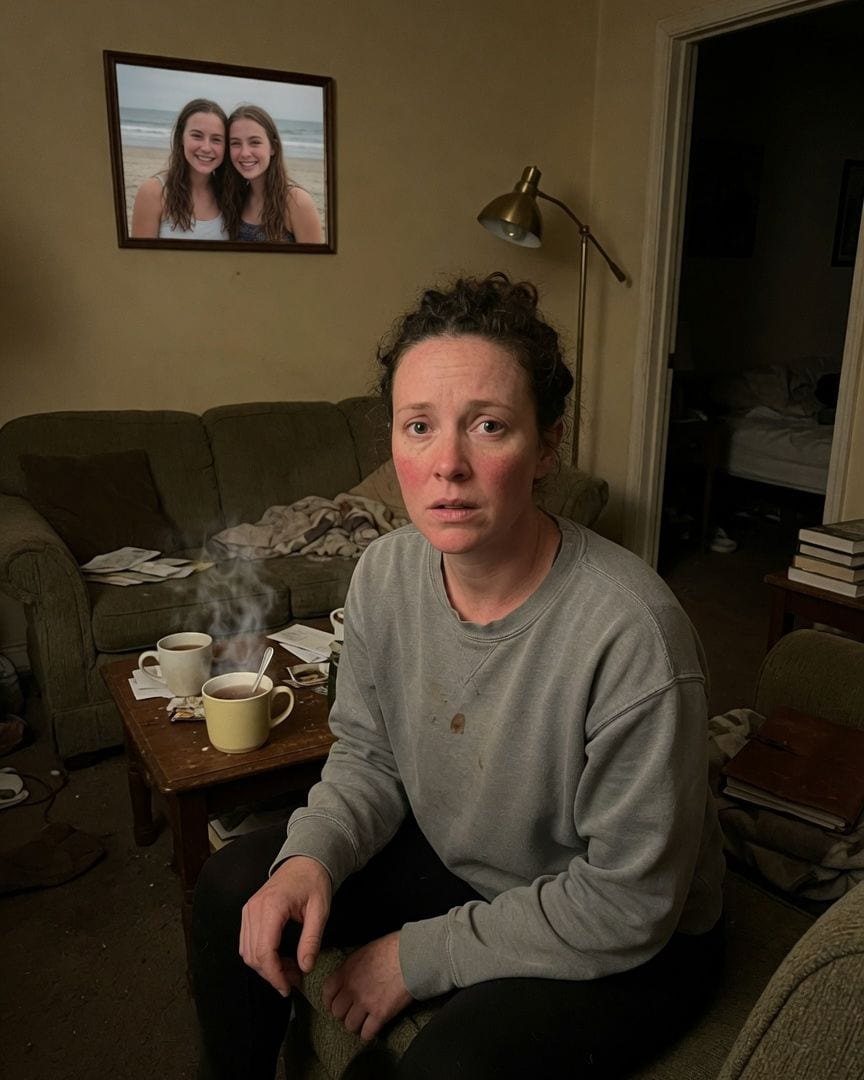
My twin sister returned. She remembers my Lisbon summer, the man, the letter I never sent. She wasn't there.
My twin, Bridget, finally came home after six months. The accident changed her, the doctors said, but I noticed something else: she was suddenly using her left hand for everything. She'd been fiercely right-handed her entire life, and the shift was unsettling.
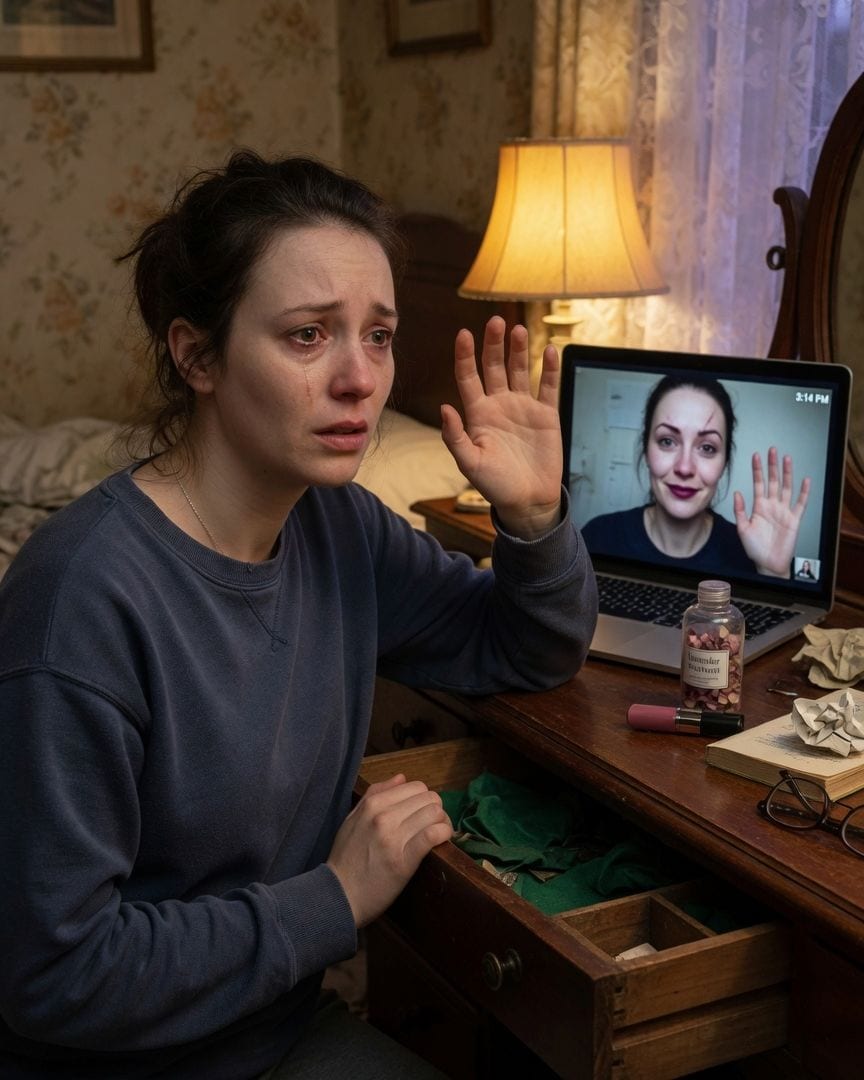
My mother waved with her right hand, both times, on our first call after she came home. She always waved left.
My mother vanished three months ago, then came back. On our first video call, she waved goodbye, but not with her usual left hand. It was her right, a small gesture that twisted something cold in my stomach.
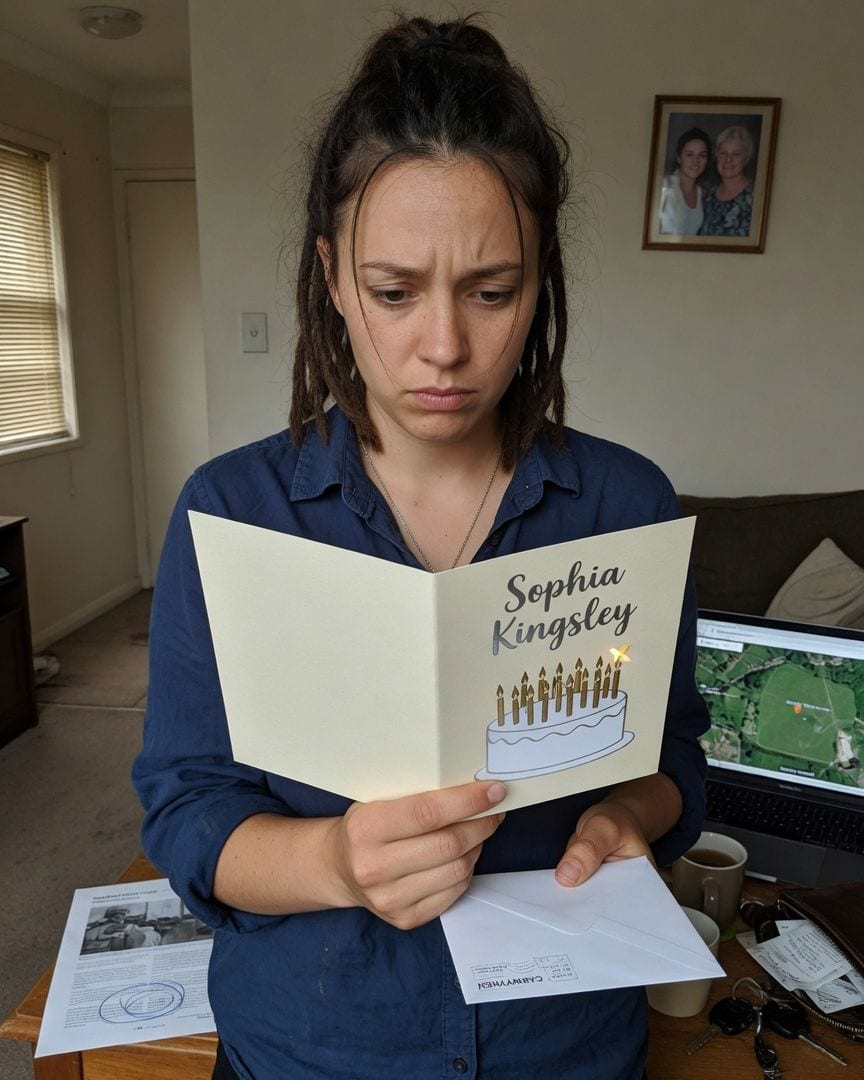
An empty field sends my birthday cards. This year, one candle was crossed out.
My birthday card always arrived a day early, a familiar comfort for five years. This year, a tiny silver 'X' marked one of the thirty candles, and the postmark read 'Carwynnen.' It was an empty field miles from anywhere, with no post office, and no one to send a card.
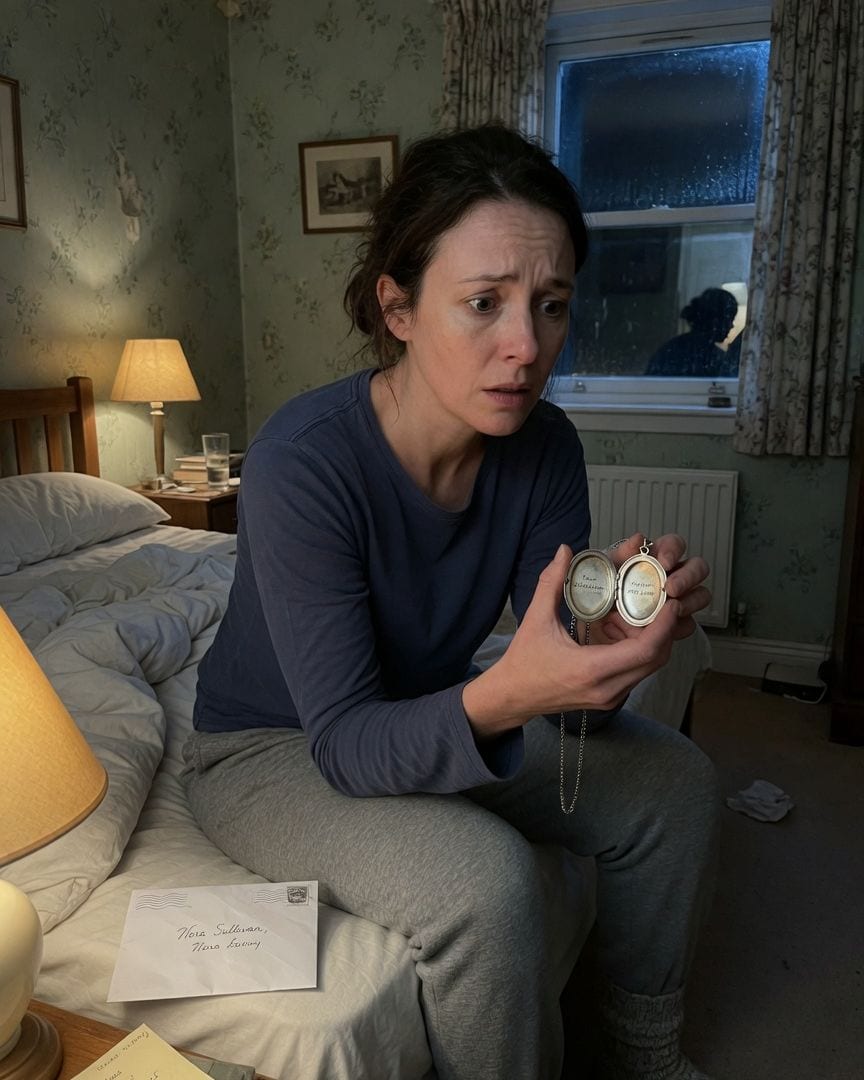
My antique locket held my maiden name, engraved with 'until the ninth.' The dealer said the woman who owned it left a note: 'for her, when she comes.'
My husband Scott, always finding unusual things, gave me an antique silver locket. Inside, engraved beneath my maiden name, Nora Sullivan, were three chilling words: 'until the ninth.' It felt like a direct, personal address, even though I hadn't used that name in years.
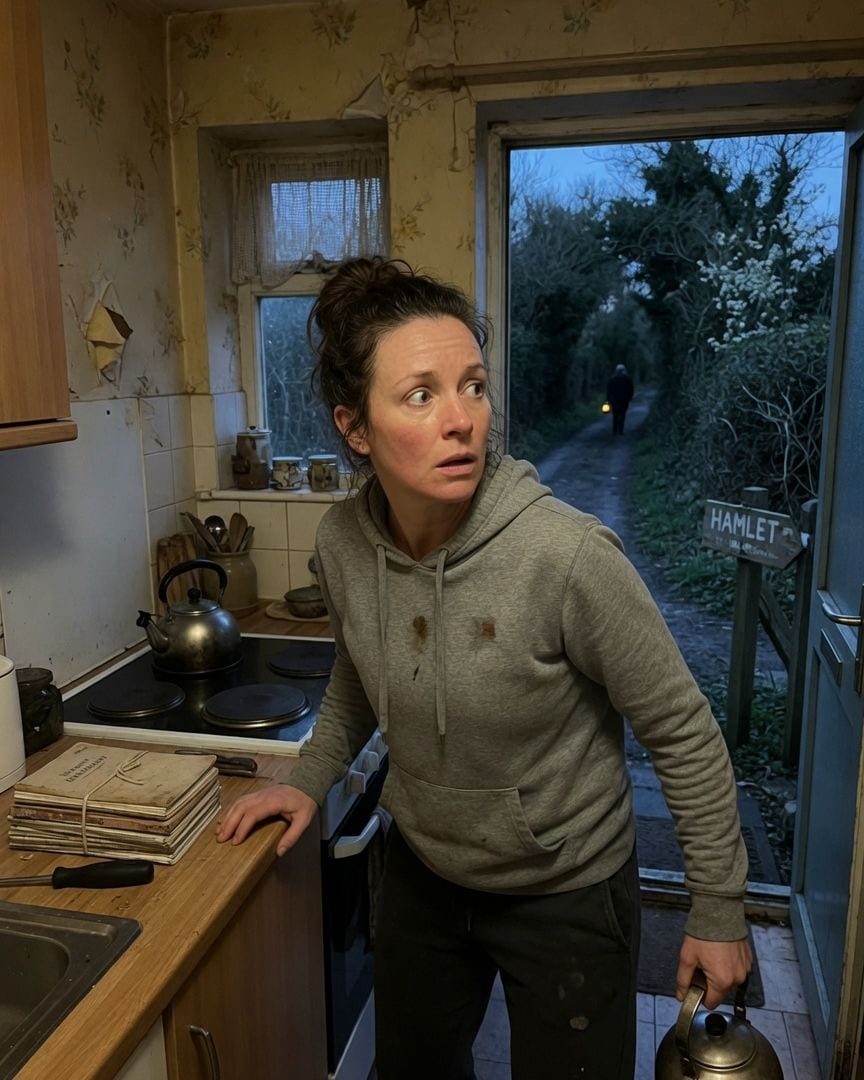
My side gate opens onto a dirt lane between hedgerows, not the close, and a figure with a lantern comes up it toward me.
My side gate normally opens onto the familiar tarmac of the close, but lately, it's opened to a narrow, overgrown dirt lane instead. Three times now, at dusk, I've seen a man with an old-fashioned lantern walking unhurriedly up this impossible lane towards my house. Each time, when I dare to look again, the lane is gone, leaving only the bins and a racing heart.
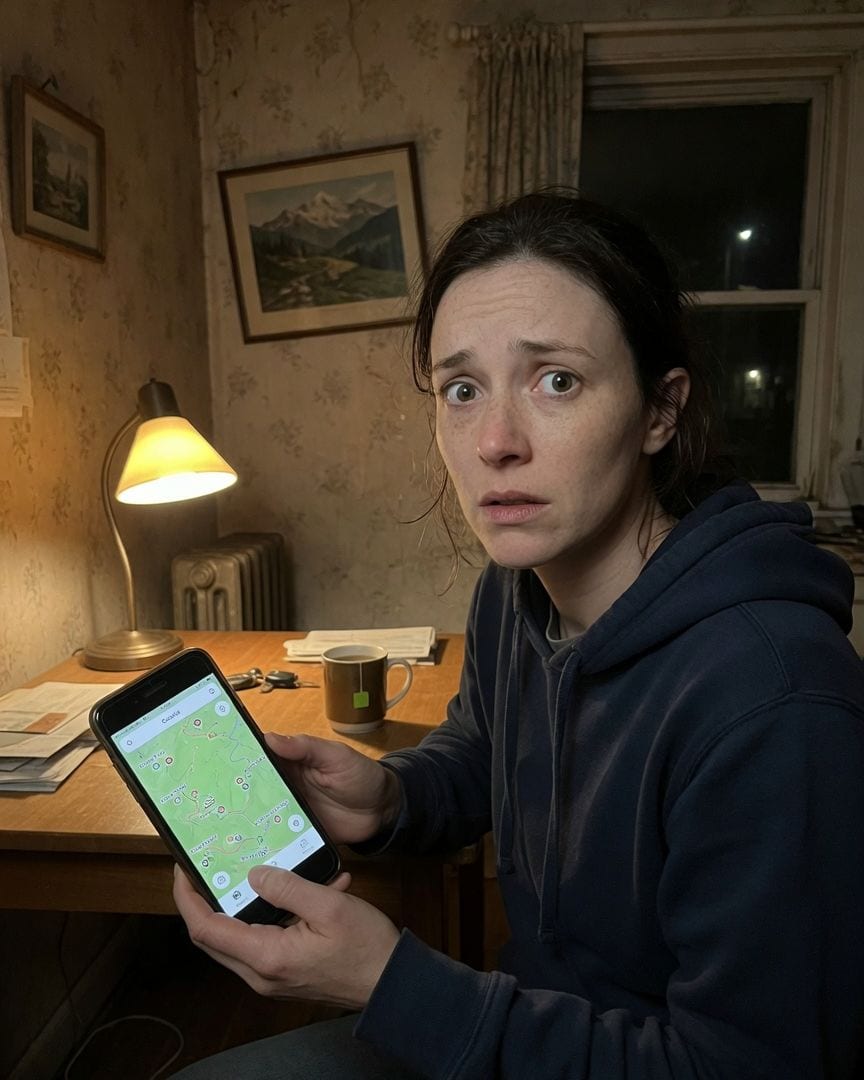
My hiking app scrubbed the hill's name from the map, on a phone that's been in airplane mode for two days.
I just moved to town and hiked a local hill, 'Cathan Tor,' according to my phone's app. But when I mentioned the name to the mechanic, he froze, dropped his wrench, and whispered, 'Don't say that name, Colette.'