My spinal X-ray shows a healed fusion with metal hardware I never had installed. I've never had back surgery in my life.
The familiar ache in my lower back, a dull throb after a long week hunched over a spreadsheet, was the least of my worries.
I lay on Greg’s chiropractor table, the paper crinkling under me, listening to the muffled sounds of his office.
He’d sent me for X-rays after my last visit, wanting a clearer picture of my sacrum, which he suspected was slightly misaligned. I’d had countless X-rays in my thirty-five years, but always for broken bones or chest colds.
Never my spine.
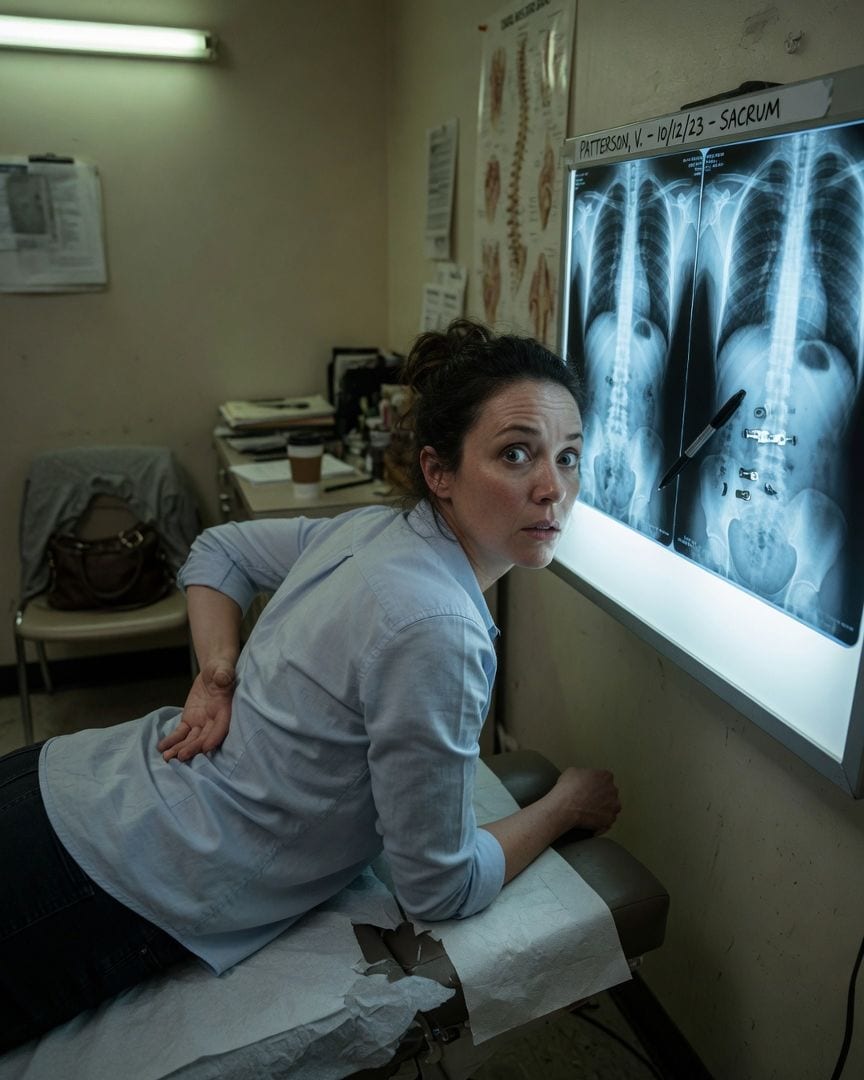
Greg returned, his brow furrowed, two large films held carefully. He clipped them onto the lightbox, and the sterile white glow illuminated the intricate lattice of my bones. He traced a pen over a ghostly outline in my lower spine.
"How long ago was the accident, Vivienne?" he asked, his voice gentle, pointing to a perfectly healed fracture in my sacrum. My eyes followed the line of his pen.
There, unmistakably, was the dense, smooth callus of old bone growth, and even clearer, two small, metallic screws anchoring what looked like a fusion plate. Spinal fusion hardware.
I stared, bewildered. My stomach dropped. "Accident? What accident?" I stammered, pushing myself up on my elbows. "I've never broken my back, Greg. Never had surgery. Never even had general anesthesia in my life."
The image on the lightbox was undeniably mine, the bone structure too familiar, but the story it told was utterly alien. I touched my lower back, pressing my fingers along the skin just above my tailbone. Smooth. No scar.
No memory. The wrongness settled deep in my bones, a cold, heavy weight that had nothing to do with the ache I'd come in for.
The next day, the impossible X-ray taped to my fridge, I started making calls. My family doctor, then a specialist in spinal orthopedics. Both confirmed the X-ray was indeed mine, cross-referencing my dental records for identification marks that matched.
And yes, the fusion was old, perfectly healed. Decades old, they estimated. They suggested a forgotten childhood accident, a severe one I must have blocked out, or a mix-up in my own memory.
Vivienne Patterson, rational to a fault, tried to accept it. Our minds play tricks, don't they?
But the certainty of never having surgery, the vivid memory of waking up in a hospital bed only after my wisdom teeth were pulled under local anesthetic, gnawed at me. My body knew. My mind knew.
I requested all my old medical records. Childhood vaccinations, school physicals, dental charts stretching from age five through eighteen. They arrived in a thick envelope a week later. My dental records were pristine.
No major trauma, no broken bones, just routine cleanings and one small cavity. My general practitioner’s file was equally clear. Not a single mention of a severe back injury, certainly no spinal surgery.
The ordinary explanation, the convenient, comforting idea of a forgotten accident, crumbled. The X-ray was undeniably mine, but the history on it wasn't. It was like looking at my reflection, but seeing a stranger’s shadow.
Frustrated, adrenaline-fueled, I expanded my search, moving beyond my own medical history into obscure local archives, digitized county records. I started with the hospitals listed in the older parts of my family’s medical papers, hitting dead end after dead end.
Then, late one night, deep in a digitized archive for an old institution called St. Jude's Medical Center – a name I vaguely remembered my grandmother mentioning – I found it. A faded, yellowed hospital admission form from 1978.
It was dated decades before my own birth. The name listed was 'Vivienne Patterson,' female, admitted for a routine check-up. The listed birthdate was also off by twenty years. My heart hammered, a frantic drum against my ribs.
But then, in the 'Distinguishing Marks' section, meticulously described in faded ink, was a line that stole my breath: 'Star-shaped pigmented lesion, lateral aspect, left hip.' My hand flew to my hip. It was my birthmark, identical.
The record that could not possibly be.
The impossible record consumed me. I printed it, laminated it, carried it with me everywhere. It was a tangible proof of an impossible paradox. I delved deeper into St. Jude's Medical Center.
Its history was convoluted, changing hands multiple times, eventually becoming a quiet research facility before finally closing its doors for good in the late 90s. I scoured academic databases, searching for anything connected to its research arm.
Finally, after weeks of dead ends, I unearthed it: an obscure academic paper from the early 1980s, published by St. Jude's. The title made my blood run cold: 'Somatic Integration and Template Preservation in Post-Traumatic Reconstruction.'
The language was dense, clinical, filled with dispassionate scientific jargon. It hinted at experimental procedures involving 'cellular memory' and 'physical imprinting' – all discussed in a theoretical context, of course, without explicitly stating human trials. But the implications were clear.
The paper listed a Dr. Julian Thorne, long deceased, as its lead author.
I found a digitized obituary for Thorne, which lauded his groundbreaking, if controversial, work and mentioned a long-time assistant, Rachel Hale, who served as his 'chief archivist and research coordinator.' The name resonated with a strange, cold certainty. Rachel Hale.
She was mentioned in a local historical society newsletter as a key figure in digitizing St. Jude's early records, an effort to "preserve the institution's legacy." A trail was forming, leading not to a mistake, but to an intention.
I sent a cautious email to the historical society, inquiring about Rachel Hale, explaining I was a distant relative trying to trace family medical history – a thin lie I hoped sounded credible. Hours later, my phone rang.
The sound, usually a cheerful jingle, tore through the quiet of my apartment like a siren, making the forgotten coffee cup on my desk jump, rattling against the saucer. An unknown number. I answered cautiously, my throat suddenly dry.
"Vivienne Patterson?" a calm, elderly woman's voice asked. It was perfectly clear, unhurried, with a faint, almost academic lilt. "This is Rachel Hale. I understand you've been looking into some rather... unique medical records from St. Jude's.
The archived admission form for a Vivienne Patterson from '78, perhaps?"
I froze, the blood running cold in my veins. My grip tightened on the phone until my knuckles ached. "How did you know?" I managed, my voice a strained whisper.
Rachel's voice was utterly unruffled. "My dear, I established that archive. And I've kept a close eye on it ever since. I've been expecting someone to connect the dots for decades.
Most people prefer to believe a simpler story, of course. But you didn't. I believe I have some clarity you're seeking. Perhaps we could meet. No need for alarm, just a conversation between two rational individuals." The line went dead.
I stared at my phone, the silence on the other end a profound weight. I hadn't been hunting a ghost; I'd been observed.
I met Rachel Hale in a quiet cafe on the outskirts of the city. She was impeccably dressed, a sharp blazer and tailored skirt, her silver hair pulled back in a neat bun.
Her blue eyes, though sharp, held an unnerving placidity. She sipped her Earl Grey with a steady hand, watching me with an almost scientific interest. My heart pounded against my ribs, a frantic rhythm.
I pushed the X-ray print and the impossible 1978 admission form across the polished wood table.
"This X-ray is mine," I stated, my voice steadier than I felt, "but the history on it isn't. And this record is for me, but it can't be. It's impossible."
Rachel nodded slowly, her expression unchanged. "Indeed. The X-ray depicts a healed sacral fracture and fusion from a young woman named Sarah Bishop. A tragic accident in 1977. Your body, Vivienne, carries her physical history."
I stared, dumbfounded. The world tilted. "My body... carries hers? What does that even mean?" The words felt hollow in the sudden quiet of the cafe. The clatter of distant dishes seemed to fade, the air growing still around us.
Rachel explained, her voice devoid of any discernible emotion, as if delivering a lecture. "Sarah Bishop was a donor, an ideal 'physical template.' Her injuries, her genetic markers, were meticulously cataloged.
A young woman of exceptional health and lineage, aside from that unfortunate incident." She paused, taking another sip of tea. "Your sacrum, Vivienne, was never broken.
But the template from which your body was grown, the cellular memory, retained Sarah's trauma. The fusion, the hardware – they are echoes. A perfect physical imprint."
The earlier clues clicked into place with a sickening clarity. The X-ray, undeniably mine, with its ancient scars. My own clean dental records, the lack of any physical trauma in my childhood.
It was never a mistake; it was an echo, a history built into my very form.
I struggled to comprehend, my mind reeling. "So I'm... a copy? A vessel for someone else's injuries?"
Rachel offered a faint, almost pitying smile. "Not quite. You are Vivienne Patterson. Your consciousness, your memories, they are uniquely yours. But your physical form was... derived. Integrated. A continuation, in a sense."
She reached into a worn leather briefcase at her feet and produced a pristine, official-looking document. It was a birth certificate. My name, my parents' names, my exact birthdate. Everything appeared normal.
My breath caught in my throat as she slid it across the table.
But then, with a slow, deliberate finger, Rachel tapped a small, almost imperceptible code stamped near the bottom, a series of alphanumeric characters so small I almost missed them.
"This," she said, her eyes holding mine, her voice soft but absolute, "is the true original. The one that was always waiting for you. The code that verifies the template. You see, Vivienne, you were always inside it."
Rachel explained the full, terrifying scope. The 'template preservation' program, initiated in the late 70s by Dr. Thorne and his team, sought to maintain specific genetic lines or physical traits deemed 'valuable' after unexpected loss.
They didn't transfer souls or consciousness, she emphasized, but rather, created new bodies from carefully preserved cellular material, imprinting the physical history of the 'donor' onto the new 'vessel.'
My body, she said, was grown from Sarah Bishop's template, ensuring Sarah's physical legacy, including her healed injuries, continued.
The 1978 admission form I found was the initial intake for my template, a precursor to my eventual birth, meticulously cataloging the physical characteristics to be replicated, down to the unique birthmark.
Rachel described it all as a form of 'biological archiving,' a clinical solution to an emotional problem. "It was never about replacing a person, Vivienne," Rachel stated, her gaze unwavering, "but about preserving a physical form. A quiet continuation.
A way to ensure certain lines didn't simply... end." I felt a profound, existential horror. My entire life, my very being, was a deliberate, controlled experiment, a living testament to another's past.
Every ache, every subtle curve of my spine, a ghost. It all fit, chillingly. The pieces of the impossible puzzle snapped together, forming a picture far more disturbing than any I could have imagined.
"This is monstrous!" I pushed back, my voice shaking despite my best efforts. "You’re creating people without their consent, without their knowledge! You're playing God with lives!"
Rachel remained utterly unperturbed. "We preserve. We do not destroy. And we are very discreet. The program continues, of course. Under different names, in different facilities, but the principles remain. The need persists."
She gestured to a stack of meticulously organized files beside her, partially obscured by her handbag. "There are others, Vivienne. Many others. You are simply one of the more successful integrations."
My horror hardened into a cold, desperate resolve. I couldn't dismantle an entire clandestine network, but I could expose this part of it.
I demanded access to Rachel's personal archive, threatening to go public with the impossible records I already held, the ones that could prove my impossible story.
Rachel, surprisingly, granted it, her composure unbroken, seeing it as an inevitable, if minor, inconvenience. "They will simply adjust," she said, her voice flat, "as they always do."
I spent the next several hours in her small, dust-free study, meticulously photographing documents with my phone: patient lists, facility names, internal memos, scientific papers. Proof of the ongoing program, the quiet horror still unfurling in the shadows.
I found references to 'Phase Two Integrations' and 'New Template Acquisitions,' confirming Rachel's chilling claim: it was never the only one.
The exposure might not stop the 'program,' but it would expose its quiet, clinical horror, pulling it, if only for a moment, into the harsh light of day.
Vivienne's evidence, meticulously compiled and presented to a handful of investigative journalists and bioethics watchdogs, made waves. The specific clinic Rachel worked for, operating under a shell corporation, was shut down, its remaining archives seized.
Rachel Hale, unrepentant and facing no legal repercussions due to the program's ambiguous legal standing and her advanced age, simply disappeared from public view.
The larger network, as Rachel predicted, adapted, moving deeper into the shadows, already operating under new names in new facilities.
Vivienne became an unwitting symbol, her story a whispered urban legend among certain medical ethics circles, a chilling tale of identity and science gone too far.
She lived with the knowledge, forever changed, forever aware of the ghost within her own bones.
Months later, Vivienne stood before her bathroom mirror, tracing the faint outline of her hip bone. There was no scar, no visible sign of the old fracture or the fusion hardware. Yet, she knew.
She remembered the X-ray, the ghostly metal, the lines of someone else's past etched into her very structure. The world moved on, but she could not. Every ache in her lower back, every subtle shift, was a reminder.
She was Vivienne, but she was also a living archive, a walking echo of a life that ended decades ago. The quiet horror persisted, not as a threat, but as an undeniable truth woven into the fabric of her being.
The face in the mirror was mine, but the bones beneath wore another's history, and somewhere, another template was waiting.
If this one got to you
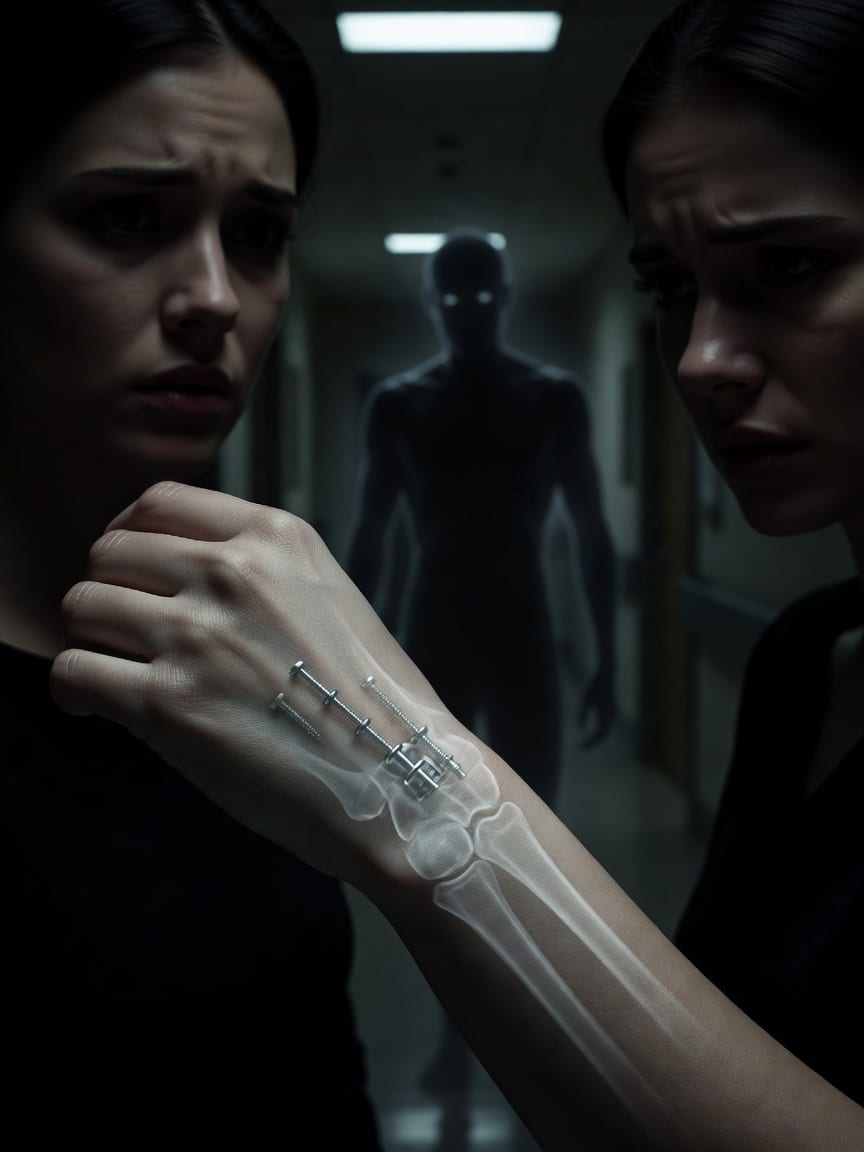
My wrist X-ray showed a titanium plate fixing a break from years ago. My surgeon asked which hospital did the operation. I've never had surgery in my life.
After a clumsy accident, I visited the fracture clinic for my swollen wrist. But my X-ray showed a perfectly healed titanium plate embedded in my bone – an implant I had no memory of receiving. Despite being decades old, there was no scar on my skin, and no medical record of the surgery under my name.
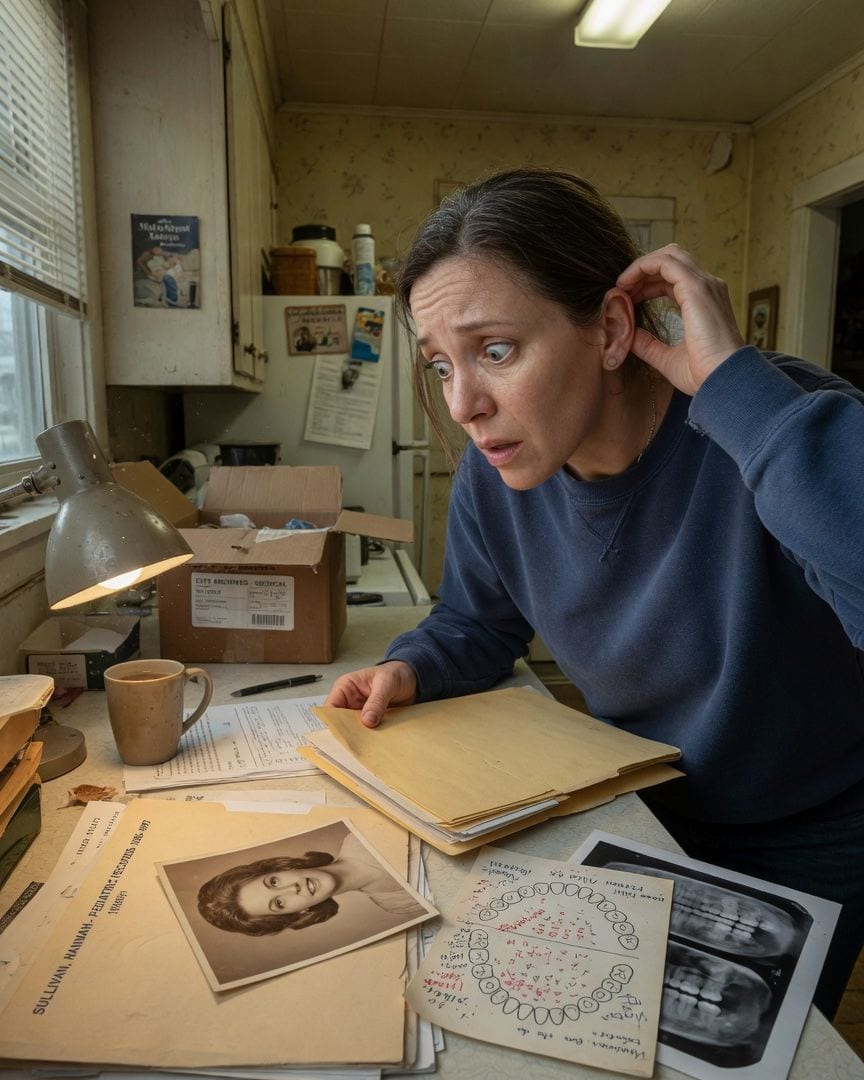
My MRI showed a perfect, decades-old surgical opening in my skull. I have no memory of it.
I underwent a routine MRI for persistent dizziness, expecting reassurance. Instead, the scan revealed a perfectly healed, decades-old surgical opening in my parietal bone, just behind my left ear. Dr. Hughes confirmed it was an access point for a procedure, yet I have no memory of any head surgery, ever. My body holds a secret I cannot recall.
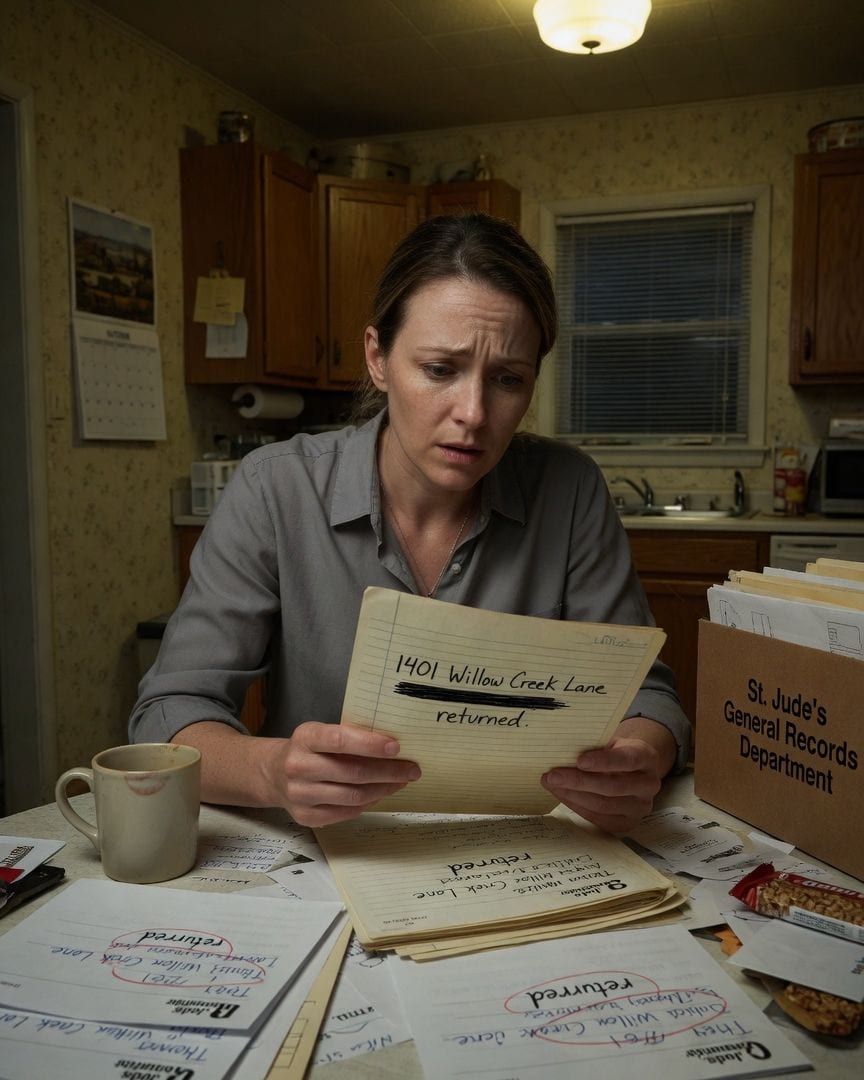
My medical file shows my street address on a struck-through line from 1988, a year I lived two counties away. It just says 'returned'.
A routine insurance audit led me to my childhood medical file from 1988. But among the expected notes, a deliberately struck-through line listed my current house address, followed by the stark word 'returned.' In 1988, I lived two counties away, making this entry an impossible and unsettling mystery.
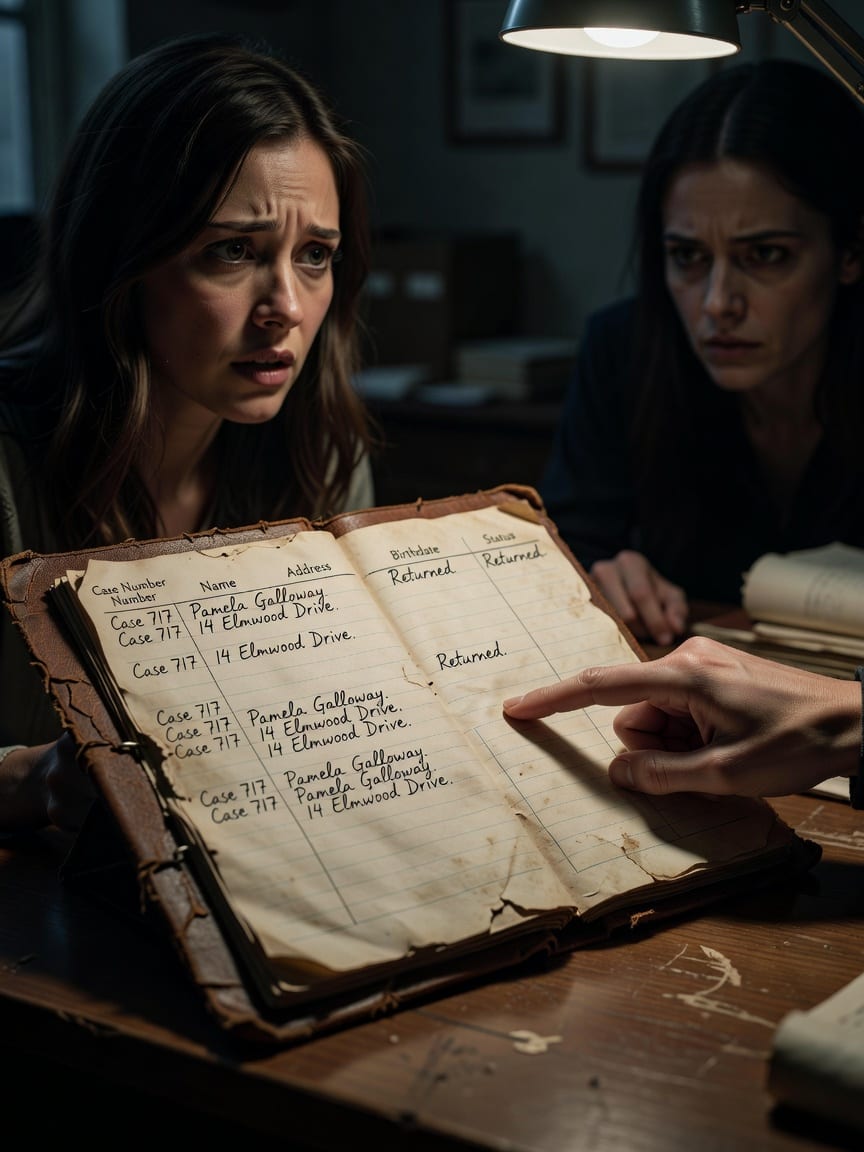
My hospital file has a blacked-out line from 1988. It names my street address, decades before I lived here. Then: 'returned'.
I finally got my medical file, hoping to clear up a ridiculous bill. Inside, I found an entry from 1988: my current home address, scrawled on a partial intake form and marked 'returned.' I was six then, living fifty miles away.
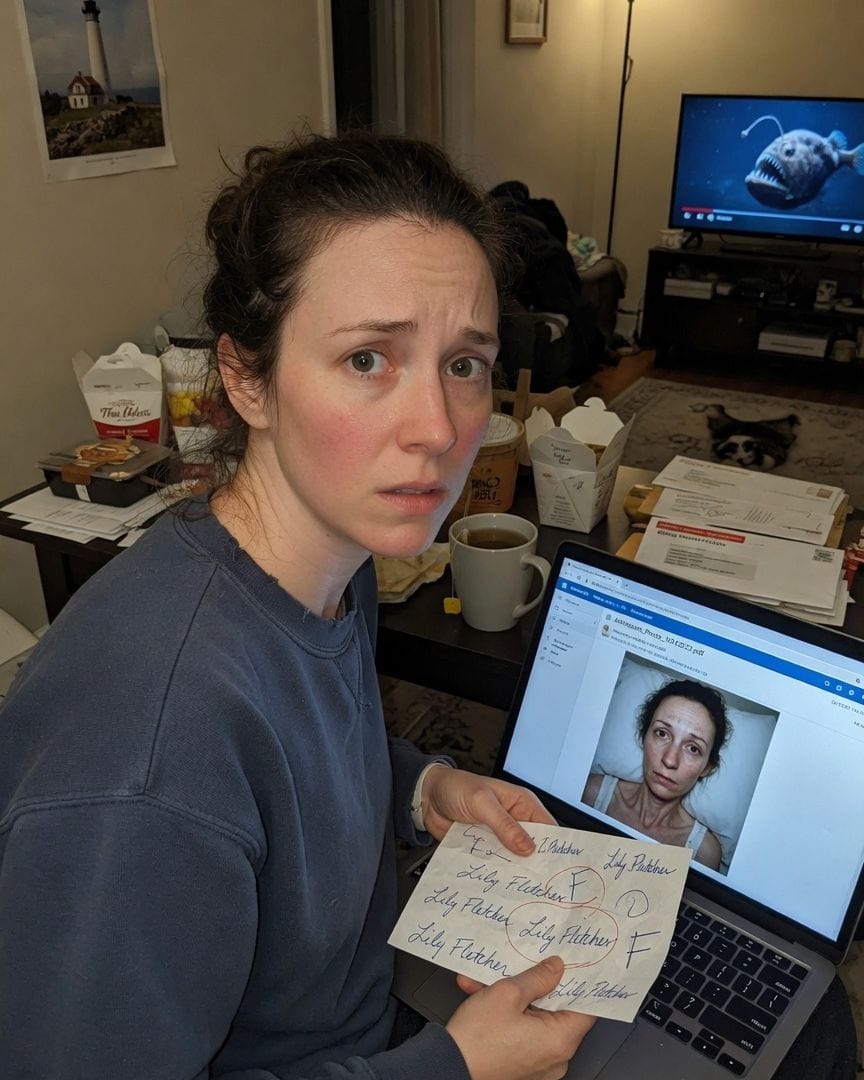
A hospital is billing me for a two-night stay in Cleveland — with my insurance, my wristband scans, and a discharge form in my own signature. I spent that whole week home alone, and I've never been admitted anywhere.
A bill arrived from Cleveland General Hospital for a two-night stay under my name, Lily Fletcher. I'd spent those dates at home, but the hospital had my accurate details and even a discharge summary. The chilling part? It was signed with my unmistakable signature, a mark I know I never made.
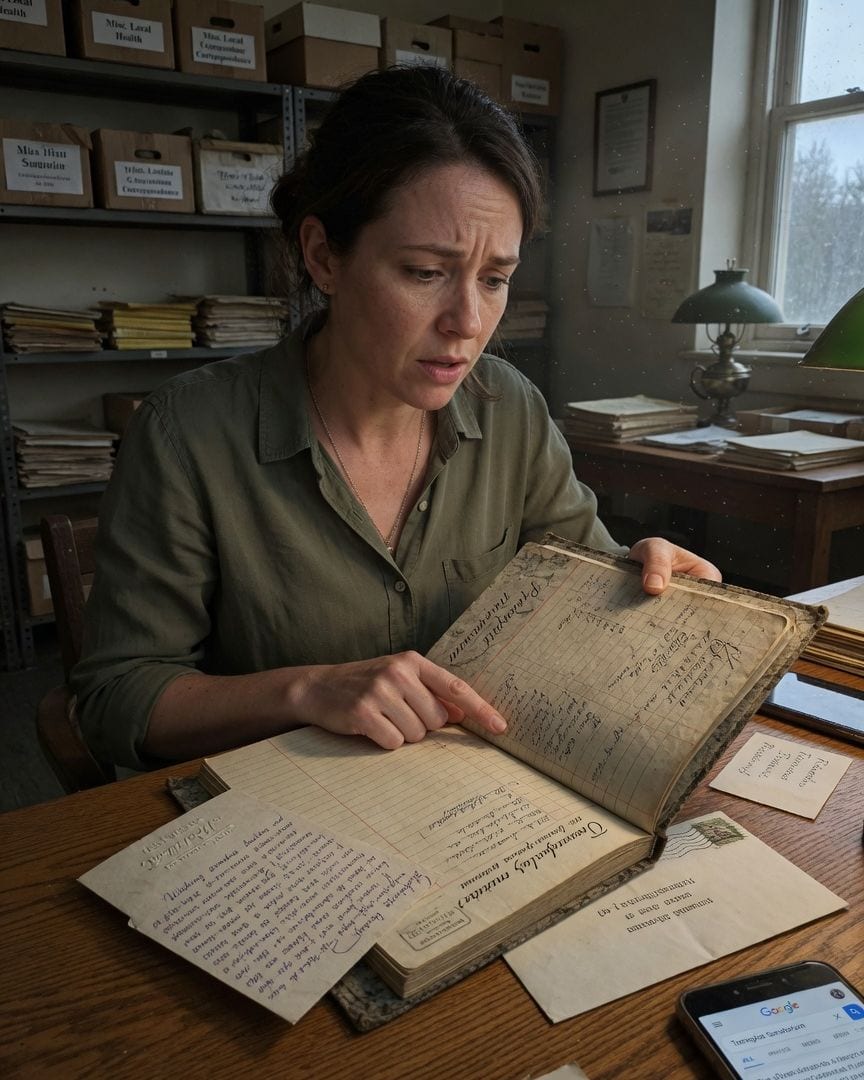
My get-well card wished me recovery from an operation I never had, postmarked from a hospital that burned down in 1963.
I received a get-well card wishing me recovery from an operation I never had. The envelope bore a fresh postmark from Treneglos Sanatorium, a TB hospital that burned down and ceased to exist in 1963. Now, a patient register from that long-gone sanatorium lists my name, dated 1959.