Thirty seconds of my bike cam footage shows a road that isn't on any map. Before and after, it's my usual lane by the canal.
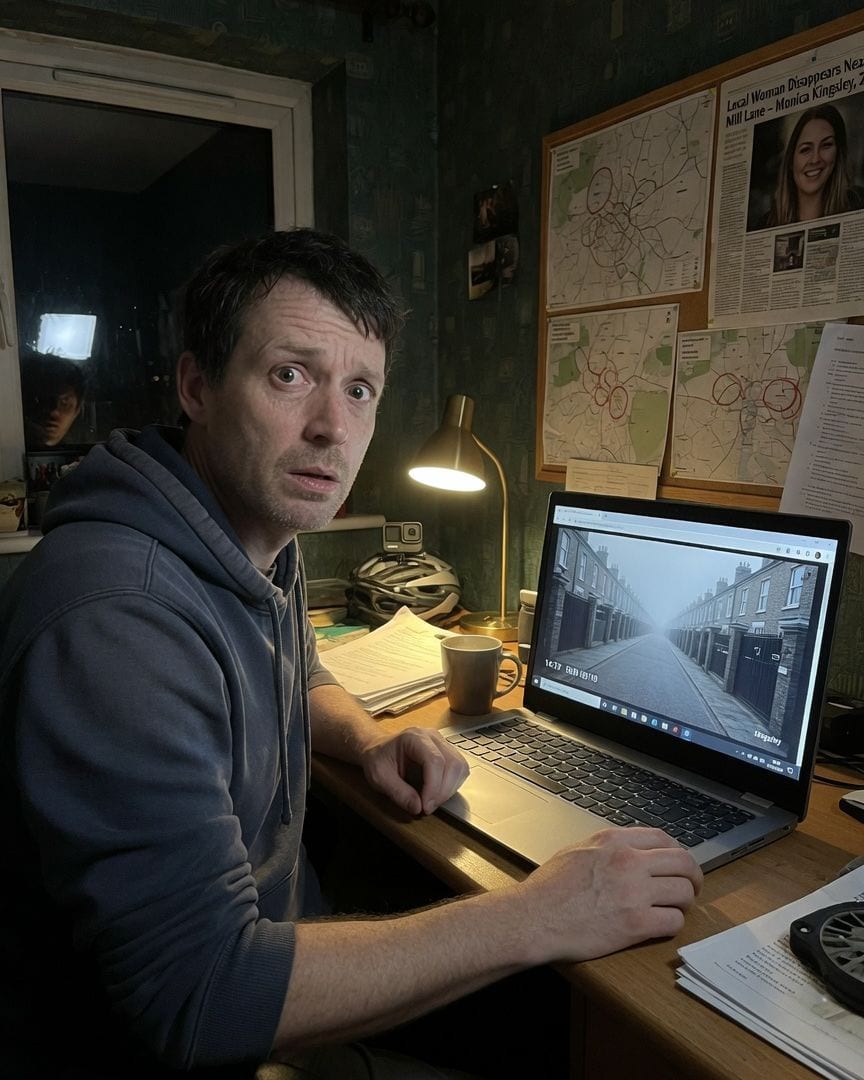
I scrolled back through my helmet camera footage, the familiar whir of the fan on my laptop the only sound in the quiet study. Sunday's bike ride, a routine loop down Mill Lane towards the canal bridge.
It had been a good ride, nothing out of the ordinary, just the usual quiet country stretch.
The first twenty seconds of the recording showed exactly that: the usual overgrown hedgerows, the glint of sun on the canal water off to the left, the slightly cracked tarmac of the narrow lane.
Then, a blink. A skip. Not a full freeze, just a subtle hiccup in the playback. For the next thirty seconds, the scene shifted completely.
Instead of the narrow, familiar lane, the camera showed a perfectly paved, unnaturally wide avenue, lined with identical, tall gated houses stretching into a grey, hazy distance. No traffic, no people, just an unsettling, pristine stillness.
The sky above was a flat, uniform grey, without a single cloud or bird. It felt utterly empty. Then, just as abruptly, the footage snapped back.
The next clip was precisely back on Mill Lane, exactly where it had left off, the canal again visible, as if the impossible avenue had never been.
I replayed the segment, certain it had to be a glitch, a corrupt file. My bike cam was good, a reliable GoPro Hero 9, never given me trouble.
But the seamless transition, both into and out of the strange road, the date and time stamp unmarred, argued otherwise. The road was there, then gone, a phantom held in digital amber.
I scrubbed back and forth, trying to catch a seam, a pixelated edge that would betray a digital anomaly. Nothing. It was a perfect, impossible cut.
I spent the next three hours cross-referencing. I pulled up Google Maps, meticulously checking street view for every inch of Mill Lane.
I even delved into old ordnance survey maps from the library’s online archives, looking for any proposed developments or forgotten cul-de-sacs that might have existed, even briefly. There was no such road in the area.
Mill Lane existed, the canal existed, the fields and the small coppice were exactly where they should be. But between them, where the footage claimed to show this wide, silent avenue, was only green and trees.
My fingers ached from zooming and clicking.
I returned to the impossible road in the footage, pixel by pixel, desperate for a mundane explanation. The houses were uniform, almost mass-produced, each with a small, neat garden and a dark, heavy gate. They looked new, yet somehow ancient.
On one of them, barely legible through the digital grain and the slightly washed-out colors of the footage, I made out a house number: a faded, almost illegible '7'.
Next to it, on a small, old-fashioned mailbox, a name was faintly etched. My breath caught in my throat. I adjusted the contrast, sharpened the image as much as my editing software allowed. The letters materialized, thin and faint: 'Kingsley.'
I typed 'Mill Lane Kingsley missing' into my search bar, half-expecting nothing. Expecting the digital ghost to remain just that, a ghost with no real-world anchors. The first result that popped up was a local news archive from 1995.
The headline read: 'Local Woman Disappears Near Mill Lane – Monica Kingsley, 25, last seen…' My finger froze on the trackpad.
The article detailed her last known movements: a walk near Mill Lane, not far from the canal bridge, exactly where my footage had warped. No body, no leads, just a baffling disappearance.
The accompanying photograph showed a young woman with a bright, hopeful smile, her eyes light and full of life, even through the grainy newsprint. Monica Kingsley. The same name. The same area. Decades apart.
I felt a cold, prickling sensation spread across my scalp, a feeling that had nothing to do with the air conditioning. This wasn't a glitch. This wasn't a corrupt file.
This was a record of something that had taken a person, and it had appeared on my camera, between one ordinary moment and the next, as if waiting.
The monitor hummed, a low vibration against my fingertips, and Monica Kingsley’s smile, thirty years old, seemed to freeze the air around me.
The next day, I found myself in the local history archives, a dusty, quiet room smelling of old paper and forgotten lives. The silence here was different from my study; it felt heavy, imbued with the weight of time.
I found more articles on Monica Kingsley, each one colder, more resigned than the last. The initial flurry of hope, then the dwindling leads, the eventual fade into cold case files.
I also found mentions of other disappearances over the decades, often vague, often dismissed as runaways or accidents, but clustered consistently around the same general area, near Mill Lane. Too many for coincidence.
I spoke to Rachel Montgomery, 64, the archivist. She was a woman with keen eyes behind thick spectacles and an encyclopedic knowledge of local lore, her hands gnarled from years of handling brittle documents.
I showed her a still from my footage, careful to omit the impossible road itself, only showing the context of Mill Lane and the canal bridge, asking about any old, forgotten developments or oddities near that specific spot.
She peered at the screen, her brow furrowed. "No, nothing like that. Not in any records I know. Just the old mill, long gone, and the canal path."
But then, she paused, her gaze drifting over my shoulder to the wall of shelves stacked with local histories. "Though… there's always been stories. Old wives' tales, really. Of 'lost lanes,' paths that appear and disappear.
Travelers' paths, they called them. People who rode or walked into them and were never seen again." She spoke of it with a calm, almost academic detachment, as if discussing ancient pottery shards unearthed from a dig site.
The way she said "never seen again" was chillingly matter-of-fact. I felt a cold knot tighten in my stomach, a chilling confirmation that the mundane explanation was failing, and something far older, far stranger, was taking its place.
The room felt suddenly colder, the dust motes dancing in the sunbeams like tiny, distant specters.
As I delved deeper, the unease sharpened. My bike’s GPS, usually rock-solid and reliable, began to glitch whenever I rode near the Mill Lane area.
It would display impossible coordinates – showing me in the middle of a lake or a mile underground – or simply lose signal for minutes at a time, leaving a blank space on my route tracker.
I started to feel a prickling sensation, a constant awareness that I was being observed. It wasn't paranoia, not exactly, but a deep, instinctual feeling that eyes were on me, even when I was alone.
One evening, my smart doorbell camera sent an alert – motion detected. I checked the feed on my phone. Nothing but static, a blizzard of white and grey noise that filled the screen.
But beneath the hiss, a faint, almost subliminal sound, like an old radio tuning through frequencies, or distant, garbled voices whispering just out of earshot.
I dismissed it as interference, maybe a neighbor's Wi-Fi acting up, but a cold knot tightened in my stomach. I was no longer just investigating; I was interacting with whatever this was.
It felt like a conversation, or an attempt at one.
I reviewed the doorbell footage again, frame by frame. The static wasn't random; it seemed to swirl, to coalesce into faint, fleeting shapes, almost like letters, before dissolving back into chaos.
I couldn't quite make them out, no matter how much I tried to pause or enhance. But the feeling that they were meant for me, a message, was undeniable.
It wasn't a glitch in the doorbell, any more than the road had been a glitch in my bike cam. The road had been recorded, and now, it seemed, it was recording back.
The silence in my apartment stretched, thick and heavy, punctuated only by the distant hum of the refrigerator.
I returned to Rachel Montgomery, this time with a printout of the full impossible road footage. I laid it on her desk, carefully smoothed flat. "Rachel," I said, my voice barely a whisper, "this isn't folklore. This is real."
Her academic detachment, which had been so unwavering, finally wavered, replaced by a flicker of something ancient and knowing in her eyes, as if she'd been expecting this moment for decades.
She picked up the printout, her fingers, stiff with age, tracing the outline of the silent, gated houses. "I knew it," she murmured, her voice thin. "I always knew it wasn't just stories."
She explained that the 'travelers' paths' weren't just random occurrences, not some blind geographic anomaly. "They appear to certain people," she said, her voice dropping, "People who are… open, perhaps. Or perhaps, people who are simply ready to be called."
She spoke of the disappearances not as people getting lost through unfortunate circumstances, but as people being 'drawn in,' often by an irresistible, almost hypnotic urge to follow the path once it appeared.
"It's a kind of invitation," she murmured, her gaze fixed on the printout, "but to where, no one ever knew. The ones who walked it, they didn't come back."
Then she mentioned something else. An old local access TV channel, long defunct, that used to broadcast strange, static-filled programming decades ago.
"My grandmother used to say it was a channel for the lost," Rachel said, her voice barely a whisper, her eyes distant, lost in memory. "She'd sit and watch the static, convinced it was trying to tell her something.
She heard names in it, sometimes. Not clearly, just… whispers in the snow."
The pieces began to click into place with a sickening precision: the impossible road, the missing people, the strange static on my doorbell camera. It wasn't just a road. It was a channel, a conduit. And it was calling.
The air in the archives, usually so still, seemed to vibrate with a low, resonant hum, as if the very shelves were listening.
Fueled by Rachel's words, a new, terrifying focus consumed me. I spent the rest of the night scouring online archives for the old local access channel she'd mentioned.
It took hours, but I found it: a digitized collection of its broadcasts, mostly hours of grainy static, interspersed with bizarre, abstract patterns that made no sense.
I clicked play on a random clip from 1995 – the year Monica Kingsley vanished.
The screen filled with a blizzard of white noise, a churning grey chaos. I watched, almost hypnotized, for several minutes, the low hum of my laptop the only sound in the dark room.
My eyes burned, trying to find some meaning in the random pixels. Then, amidst the swirling pixels, a faint, almost subliminal pattern began to form.
It wasn't a picture, not a clear image, but a transient arrangement of light and shadow, coalescing and dissolving.
And then, for a split second, unmistakable, there it was: my own name, 'Theodore Lockwood,' flickered in the visual noise, shimmering like a mirage in the digital snow.
It coalesced from the static before dissolving back into chaos, leaving only the faint, metallic whisper of its echo from the laptop's speakers. A cold dread, unlike anything I'd ever felt, seized me, clamping around my chest.
This wasn't some historical oddity. This was a message. And it was for me. I leaned closer to my laptop screen, my breath hitched, the glow of the static-filled screen reflecting in my wide eyes.
The flickering name on the screen was the final, horrifying confirmation. The impossible road, the disappearances, the static-filled channel—it was all one coherent, monstrous system.
The 'lost lanes' weren't random anomalies, not some geographical oddity; they were carefully engineered conduits, appearing specifically to those who had been 'marked' by the 'channel.'
Monica Kingsley hadn't just disappeared; she'd been called, just as I was being called now. The old local access channel wasn't for the lost; it was the mechanism that made them lost, broadcasting a silent, irresistible summons.
My bike cam hadn't captured a glitch; it had captured a leak, a moment when the channel between worlds had briefly overlapped with my own. I was not an observer; I was a target.
The pattern snapped into place with sickening clarity: an unseen entity, using subtle, technologically inflected means—the GPS glitches, the doorbell static, the archaic broadcast, the impossible road—drawing specific individuals into its domain.
And the recording, my recording, was proof not only of its existence but of its method.
I understood now that I had been inside the pattern from the moment the road appeared on my screen, and that the only reason it had appeared was because I had already been chosen. It wasn't a warning.
It was a beckoning.
A strange compulsion, a pull I couldn't deny, led me back to Mill Lane. I rode my bike, the familiar route now imbued with an unbearable tension.
The sun was setting, casting long, fractured shadows across the fields that stretched towards the canal. I found myself near the canal bridge, exactly where my footage had shifted, exactly where the ordinary had given way to the impossible.
And there it was. Not a flicker, not a brief, teasing appearance, but the avenue, clear and distinct, stretching endlessly into the twilight. The perfectly paved road.
The tall, identical gated houses, standing silent and inviting, their windows like dark, empty eyes. It was more vivid, more real than any recording, any still image I had examined.
I could almost feel a low hum in the air, a resonance that echoed the static from the channel, a deep, silent thrum beneath my feet.
My bike was still with me, a familiar, mundane object tethering me to the world I knew. But a profound, unsettling peace settled over me, the kind that precedes an irreversible decision, the calm before the plunge.
I knew, with absolute certainty, that if I rode down that road, I would not come back.
I thought of Monica Kingsley, of Rachel's quiet stories of the lost, their faces and names fading into the general hum of the impossible. I gripped the handlebars, my knuckles white, the metal cold beneath my fingers.
The road beckoned, a silent, open maw in the dying light. I felt a profound sense of resignation, of destiny. I had already seen too much; I had been called too directly.
I swung my leg over the bike, pushed off, and pedaled slowly, deliberately, towards the impossible avenue, towards the waiting silence of the gated houses, towards the place that was not on any map.
Theodore Lockwood's abandoned bike was found near the canal bridge two days later by a dog walker.
His helmet was there, resting neatly on the seat, but the camera itself was missing, its mount empty, a clean break where it had been attached.
Rachel Montgomery, tearful but resolute, tried to explain it all to the police, showing them printouts from the archived channel, the old missing persons reports, even stills from Theodore's phone backups that showed the ordinary Mill Lane turning into static, never the impossible road.
They listened politely, filed a report, and suggested she seek counseling. The case went cold, another name added to the local missing persons list, another inexplicable disappearance near Mill Lane.
The digital archive of the old local access channel remained online, largely unwatched, a relic of a forgotten era.
Rachel often found herself watching the old local access channel's archive, late at night, the static a constant companion in her quiet home. She never saw the road, never heard names in the snow.
But one evening, as the screen flickered through another endless loop of white noise, a face appeared, clear for just an instant amidst the digital blizzard. It was Theodore.
His eyes were open, his expression unreadable, and he was absolutely still, like a photograph. He was there, still as a photograph, and in the static behind him, a faint, familiar avenue stretched on.
If this one got to you
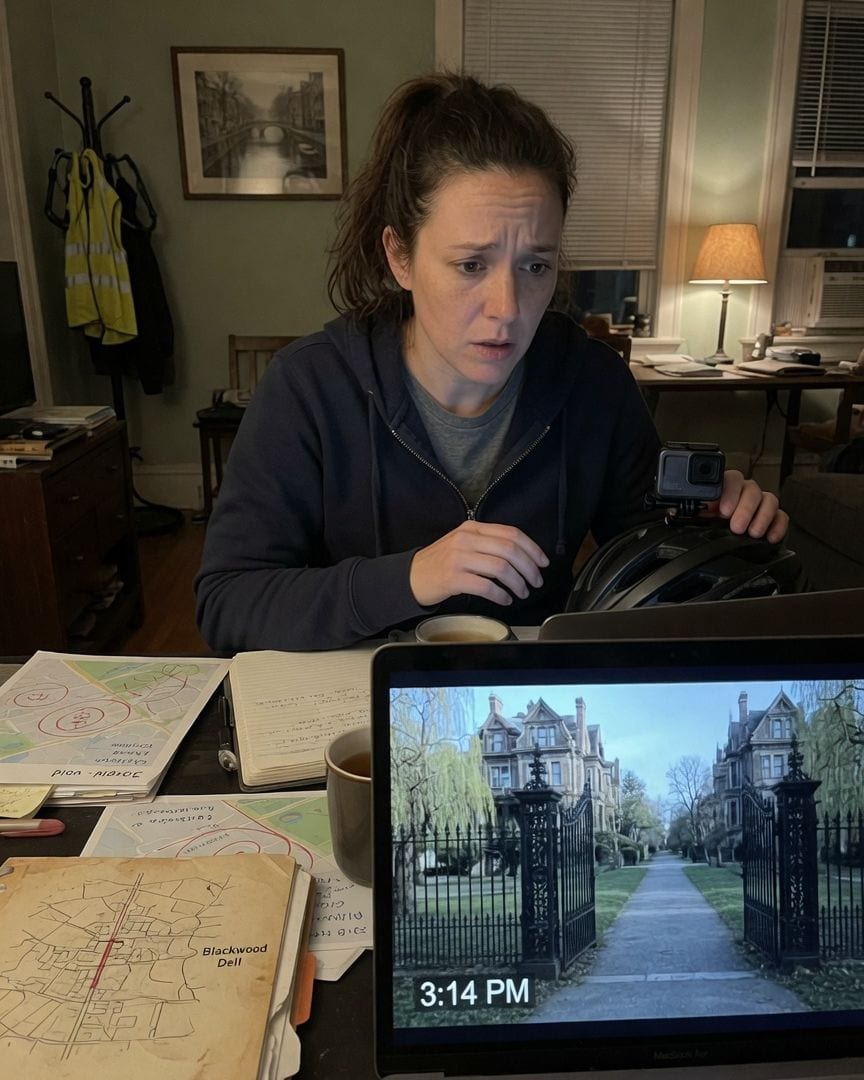
My bike camera shows a long avenue of tall gated houses. That road isn't on any map I can find.
My bike camera is usually just for practical facts, recording every detail of my rides. But when I reviewed Sunday's footage, a thirty-second segment showed something impossible: a long, silent avenue lined with grand, unknown houses. This road appeared exactly where my familiar canal path should have been—and it isn't on any map.
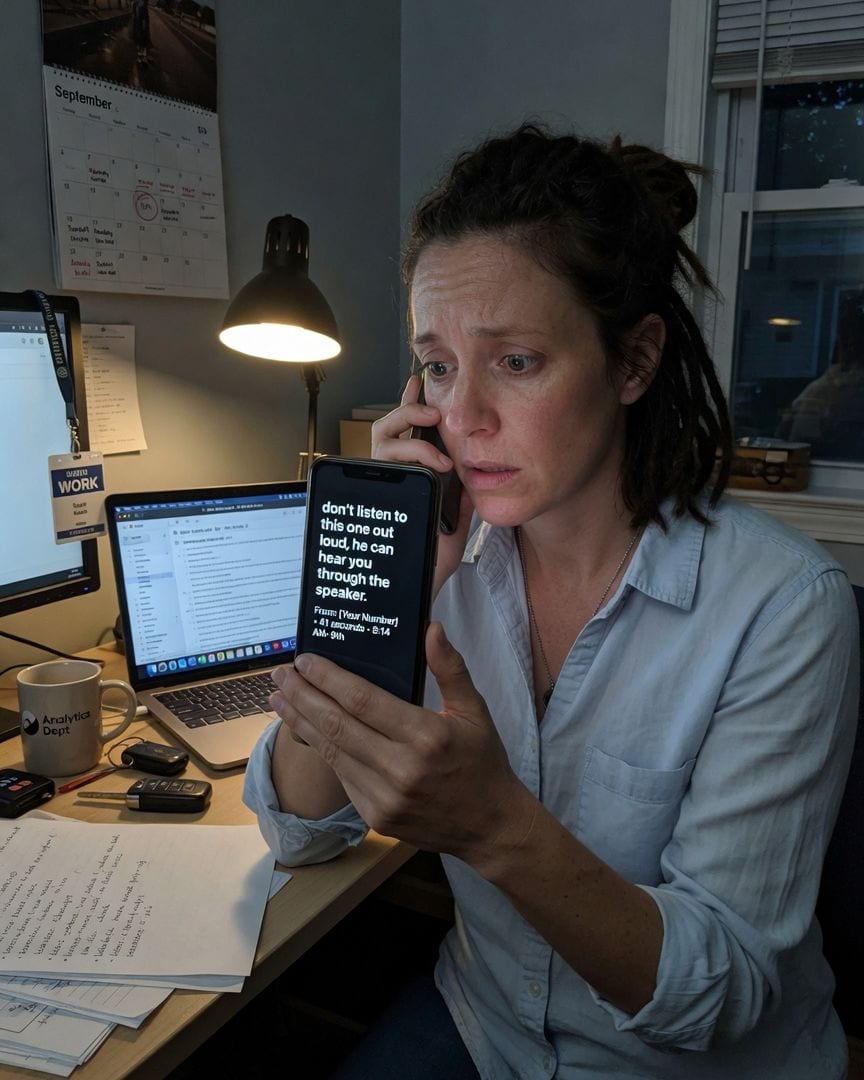
My dashcam footage showed my street change. For five seconds, my car drove on a road that doesn't exist on any map.
It was a normal Tuesday until my work phone received a new voicemail. The transcription warned, 'don't listen to this one out loud, he can hear you through the speaker.' But the message was from my own number, and the audio was forty-one seconds of absolute, dead silence.
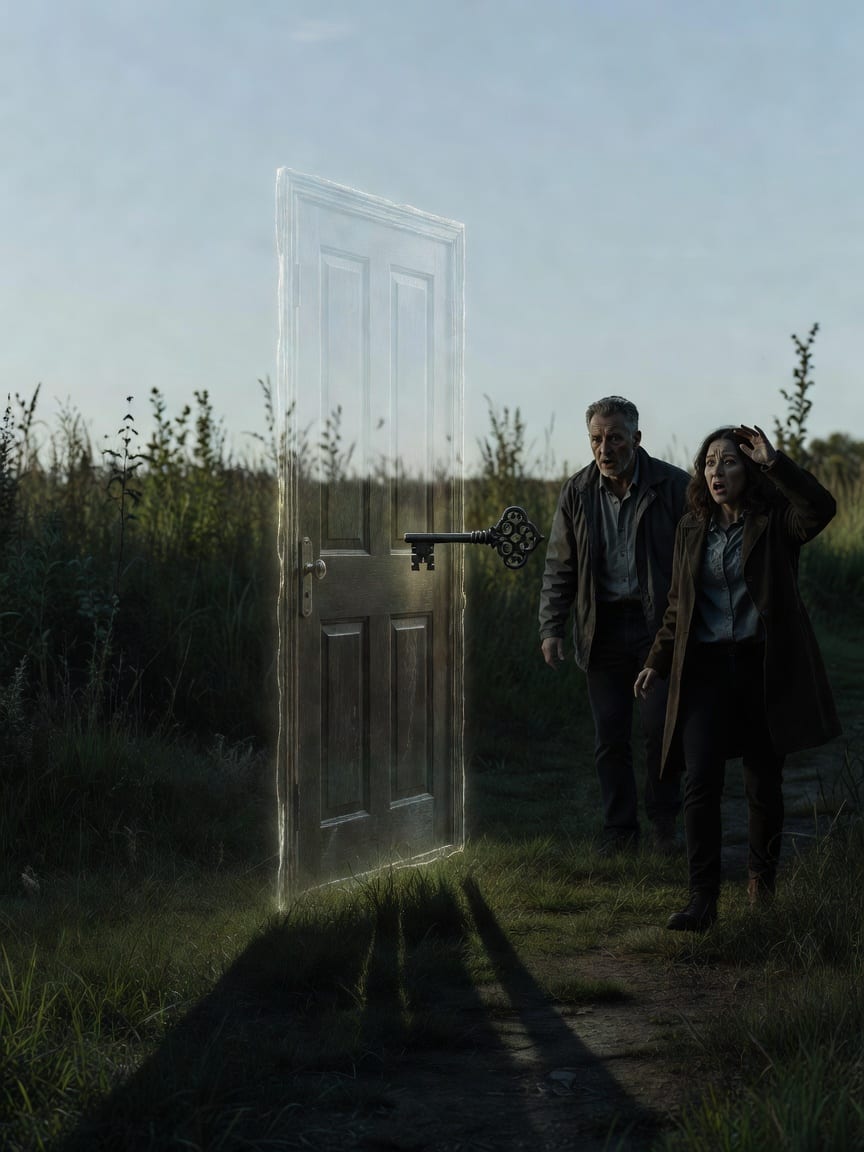
My name was on a package lodged in 1974. I wasn't born until 1985. Inside was a key and a note: 'You know which door. Not yet.'
I'm Elena Radcliffe, 38, and a solicitor's letter just arrived for me about a package. The firm's records state it was lodged in 1974, years before I was born. Now I've found an old newspaper article reporting a woman with my exact name vanished that very year.
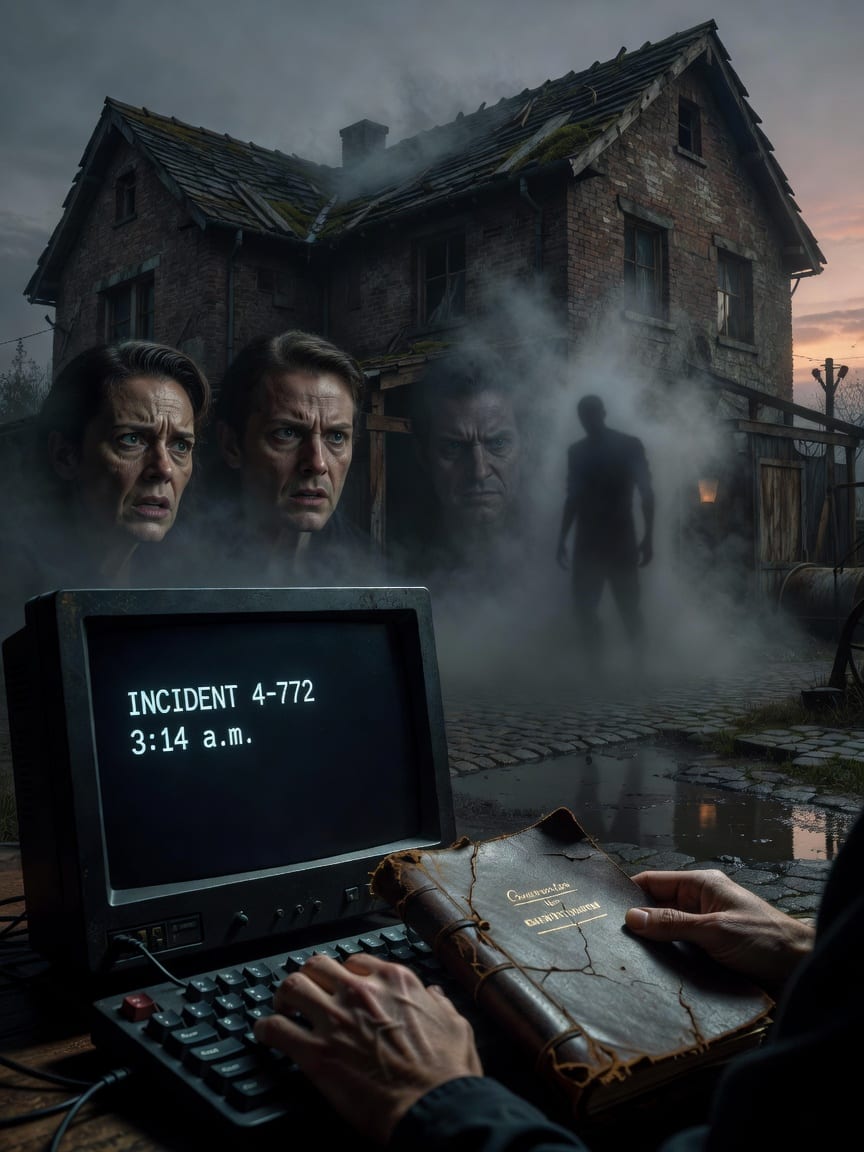
My screen showed Incident 4-772: a fire at the old rope works, 3:14 a.m. It was logged again for 1980. Then 1967. And 1993. Same incident, same time, same building. Each report ended with the same three words: 'expect recurrence.'
As a new archivist, I usually found my work digitizing old fire service records monotonous, until I found a heavily redacted line in a 1961 site assessment. Faint letters beneath the black bar slowly revealed my own family name, DRUMMOND, dated years before I was even born.
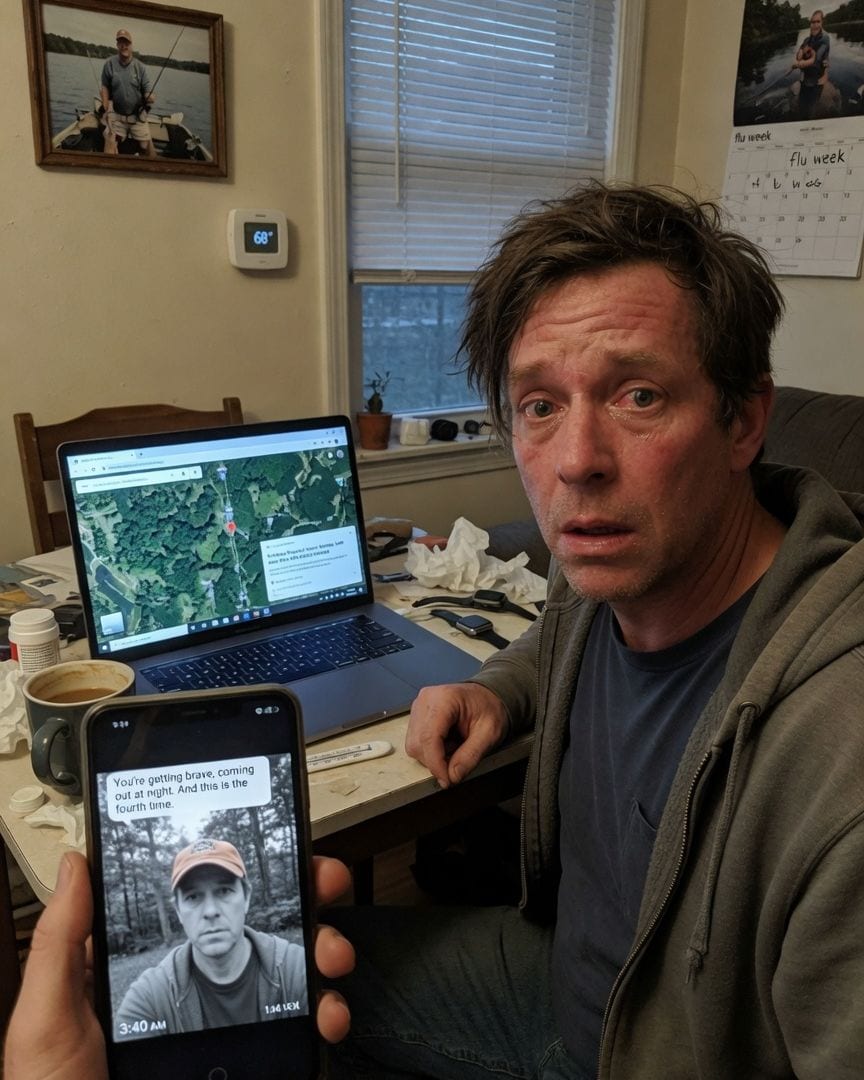
My brother-in-law's camera caught my face in Montana at 3:40 AM. I was asleep in Ohio, but it's the exact orange cap I lost, and he's seen me there four nights running.
I was just making coffee when my brother-in-law sent a photo from his Montana hunting land. It showed my face, wearing my lost baseball cap, timestamped 3:40 AM. I was home in Ohio, sick in bed, and hadn't been to Montana in years. And this was the fourth time.
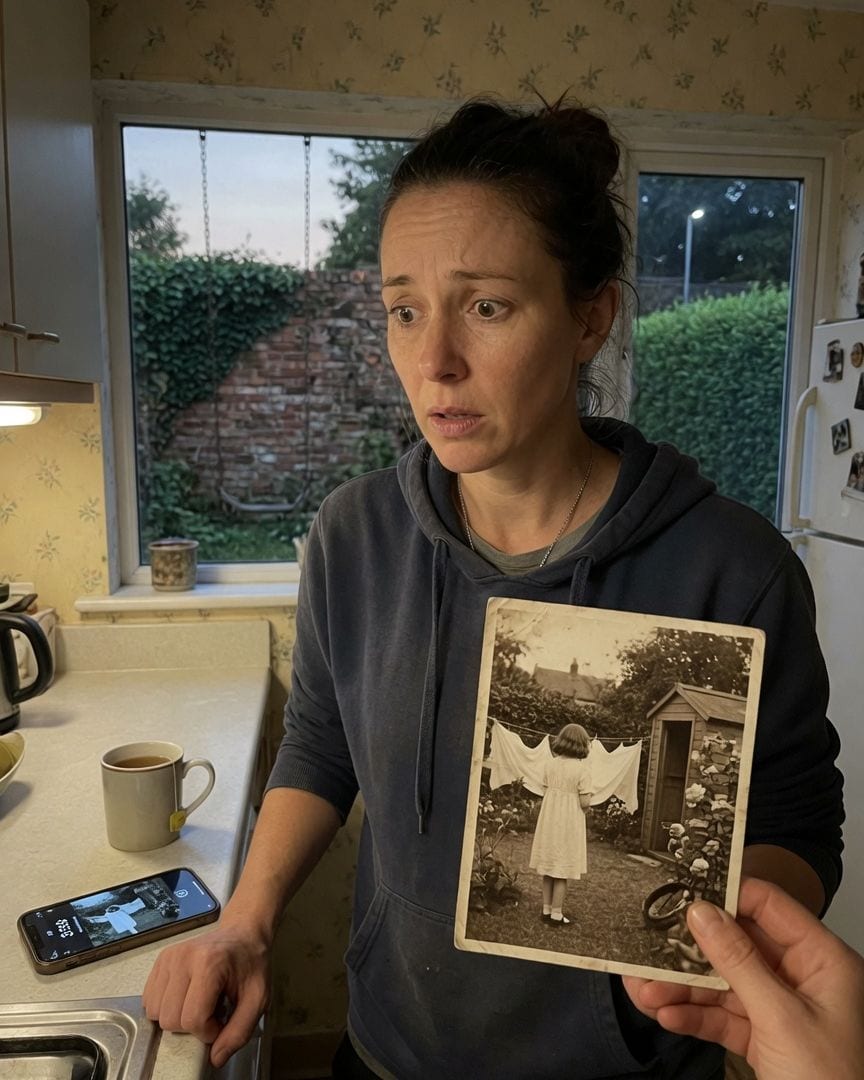
My trail camera catches a girl in a nightdress on my lawn, but the garden around her is wrong: a privy, a mangle, washing lines.
Every morning, my trail camera sends routine alerts, but one day, it showed a girl in a white nightdress standing on my lawn. What truly stopped me was the garden itself: where my trampoline should be, there were laundry lines, a dilapidated privy, and a rusted mangle. These impossible structures appeared in the footage, yet my yard remained exactly as it had always been.